Home Blog Page 244

Tablighi Jamaat: A Terror Factory Disguised As A Religious Movement — 11 Major Cases Exposing Its Deep Links To Terror, Extremism, And Anti-National Activity
On 17 November 2025, Shaheen, a key accused in the Delhi car-bombing terror module, was found to have direct links with the Tablighi Jamaat. Intelligence agencies confirmed that Shaheen, a female doctor arrested from Faridabad, had been receiving financial support from the Tablighi Jamaat to carry out terrorist activities. On the same day, seven Tablighi Jamaat members were detained from Lucknow’s Kaiserbagh bus stand for suspicious movements, prompting further investigation into the organisation’s network.

In this report, we have compiled 11 major incidents between 2020 and 2025 in which governments in India and abroad took action against the Tablighi Jamaat or its members for terror-related, extremist, or anti-national activities, highlighting a pattern of global scrutiny surrounding the group.

#1 Delhi Blast Accused Received Tablighi Jamaat Funding (17 November 2025)

Intelligence agencies revealed on 17 November 2025 that Shaheen, a female doctor arrested from Faridabad in connection with the Delhi car-bomb blast, received financial support from the Tablighi Jamaat for terrorist activities. Officials stated she was part of a wider terror module that orchestrated the explosion. On the same day, seven Tablighi Jamaat members were detained from Lucknow’s Kaiserbagh bus stand for suspicious activities, sparking deeper investigation into coordinated movements. Agencies suspect financial channels, religious networks and foreign-linked operatives played a role in radicalising and supporting Shaheen’s actions. An FIR has been registered and interrogation continues.

#2 Ten Nepali Nationals Linked to Tablighi Jamaat Arrested in Dausa (22 March 2025)

On 22 March 2025, Rajasthan Police arrested ten Nepali nationals, five men and five women, in Dausa for participating in illegal religious activities linked to the Tablighi Jamaat. Authorities stated the group violated Home Ministry guidelines by attending religious gatherings and engaging in suspected anti-national activities without permission. Police confirmed that the group’s presence was part of a wider network of foreign Jamaat-linked individuals active in rural belts. After interrogation, all ten were deported to Nepal. Investigators are examining whether the group was facilitating cross-border ideological outreach or indirectly supporting radicalisation efforts in the region.

#3 Kazakhstan Arrests Tablighi Jamaat Preachers; Bans Street Prayers (13 December 2024)

On 13 December 2024, Kazakhstan initiated a crackdown on radical Islamic groups, specifically targeting Tablighi Jamaat preachers delivering unauthorised sermons in western regions. Several Jamaat-linked individuals were arrested for violating national security regulations and promoting extremist interpretations. Authorities in Almaty also banned public street prayers—which had been causing traffic blockages and hindering emergency vehicles—after identifying them as part of Jamaat-driven mobilisation tactics. Officials said the organisation has been under surveillance for spreading radical ideology under the guise of religious preaching, prompting stricter enforcement to prevent indoctrination and public disorder across urban centres.

#4 Umesh Kolhe Murder Accused Had Tablighi Jamaat Links (20 December 2022)

The National Investigation Agency stated on 20 December 2022 that many of the eleven accused in the killing of Amravati pharmacist Umesh Kolhe were previously associated with the Tablighi Jamaat. The NIA described the group as radicalised individuals who acted upon extremist motivations after being influenced by Irfan Khan and Maulvi Mushfiq Ahmed. Kolhe was murdered in June 2022 for allegedly sharing social-media posts supporting Nupur Sharma. Investigators found that the accused had deep connections with local religious cells that facilitated ideological indoctrination. The agency continues probing whether the Jamaat network helped mobilise or motivate the killers.

#5 Intelligence Agencies Warn of Tablighi Jamaat Activities in Maharashtra (16 December 2022)

On 16 December 2022, Indian intelligence agencies expressed concern over Tablighi Jamaat activities in Maharashtra, citing reports of foreign members misusing tourist, student and medical visas to conduct religious propaganda. Officials stated that some former Jamaat members had later joined global terrorist organisations such as al-Qaeda and ISIS, prompting heightened surveillance across several districts. Inputs indicated that foreign preachers were operating covertly inside mosques and private residences. Agencies said the Jamaat’s global networks and lack of transparency make it vulnerable to exploitation by extremist groups. Security monitoring mechanisms were reinforced following these warnings.

#6 Lahore Mosque Massacre Linked to Tablighi Jamaat Assistance (28 December 2021)

On 28 December 2021, reports highlighted that members of the Tablighi Jamaat allegedly assisted attackers in the 2010 Lahore Mosque massacre, where 94 Ahmadiyya Muslims were killed. Pakistan’s Punjab law minister had publicly stated that Jamaat operatives helped facilitate the attack. An Indian Defence Review analysis said the Jamaat, though presented as a religious outreach organisation, has repeatedly been used by the ISI for radicalisation and recruitment in India and abroad. The report noted that door-to-door Jamaat outreach creates opportunities for intelligence manipulation, enabling violent extremist groups to exploit its network for jihadist expansion.

#7 Saudi Arabia Officially Bans Tablighi Jamaat, Calls It “Gateway to Terrorism” (10 December 2021)

On 10 December 2021, Saudi Arabia’s Ministry of Islamic Affairs enforced an official ban on Tablighi Jamaat, describing it as a “danger to society” and a “gateway to terrorism.” Minister Dr Abdul Latif Al-Sheikh instructed mosque imams to denounce the organisation during Friday sermons, outlining its deviations, threat profile, and misleading ideological claims. The directive emphasised that despite outwardly religious appearances, the Jamaat had been implicated in radicalisation pathways across multiple countries. The ban marked one of the strongest actions taken by any Islamic nation, associating the organisation with extremist recruitment pipelines.

#8 Russia Designates Tablighi Jamaat Extremist; Members Convicted (22 September 2021)

On 22 September 2021, a court in Mordovia, Russia, convicted Rais Tishkin and Aisu Aizatullin under Article 282.2 for creating and participating in a Tablighi Jamaat cell. The organisation has been banned in Russia since 2009 due to extremist activities. Prosecutors said the men were conducting clandestine meetings, spreading radical religious teachings, and recruiting followers. Another member, Khafiz Aizatullin, was accused of forming a full-fledged Jamaat cell in 2019. The conviction reaffirmed Russia’s longstanding classification of Tablighi Jamaat as a threat to social order and national security.

#9 Turkish Jihadist Trained Under Tablighi Jamaat Before Joining Al-Qaeda (2 April 2021)

On 2 April 2021, security reports revealed that Turkish national Halil Kurtuluş, known as Abu Muhammad Ali, received ideological training at Tablighi Jamaat centres in Pakistan before joining al-Qaeda-aligned groups in Syria. Since 2012, Kurtuluş travelled between Turkey and Syria, participating in multiple jihadist operations and interacting with senior al-Qaeda leaders in Afghanistan and Pakistan. Authorities said he attempted to form an “Ottoman Caliphate Army” in Syria. Despite several arrests and combat injuries, Kurtuluş repeatedly resumed jihadist activities. His case underscored concerns that Jamaat environments abroad may serve as recruitment stepping-stones into violent extremism.

#10 VIF Report: Tablighi Jamaat’s Radical Face Exposed Post-2001 (2 April 2020)

An April 2020 report by the Vivekananda International Foundation found that the “true and dangerous face” of the Tablighi Jamaat emerged globally after 2001, when its followers were implicated in numerous terrorism cases. The think tank stated that the Jamaat’s six principles of religious teaching function as a cover for indoctrination and that the organisation has served as a recruitment pool for extremist outfits. The report highlighted that global intelligence agencies identified several instances where Jamaat-associated individuals had undergone radicalisation pathways leading to violent organisations, prompting a reassessment of its security risks.

#11 WikiLeaks & FBI Files Link Tablighi Jamaat to Jihadist Networks (31 March 2020)

On 31 March 2020, WikiLeaks-released US diplomatic cables and FBI case documents revealed that extremist organisations—including al-Qaeda, Taliban and Harkat-ul-Mujahideen—used Tablighi Jamaat networks to move operatives into Pakistan, arrange visas and finance travel. Confidential 2007–2008 US reports indicated that Jamaat institutions provided logistical cover for jihadist mobility under religious pretexts. After 9/11, the FBI identified the Jamaat in multiple terror-related cases. A Stratfor analysis described the organisation as “indirectly linked” to global jihad, noting its vulnerability to exploitation by radical groups during training and mobilisation inside Pakistan.

Subscribe to our channels on WhatsAppTelegram, Instagram and YouTube to get the best stories of the day delivered to you personally.

“You Have Hurt The Feelings Of The Soldiers” – Supreme Court Upholds Dismissal Of Christian Army Officer Who Refused to Enter Regiment’s Temple, Gurdwara

"You Have Hurt The Feelings Of The Soldiers" - Supreme Court Upholds Dismissal Of Christian Army Officer Who Refused to Enter Regiment’s Temple, Gurdwara

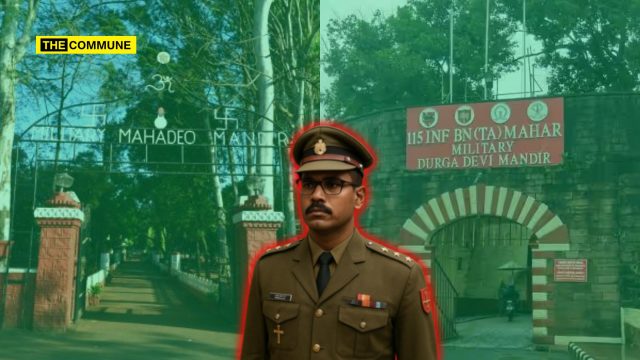
The Supreme Court on Tuesday upheld the dismissal of Lieutenant Samuel Kamalesan, a Christian Army officer who refused to enter the inner sanctum of his regiment’s temple and gurdwara during mandatory parades. The Bench of Chief Justice of India (CJI) Surya Kant and Justice Joymala Bagchi took a stern view of his conduct, questioning whether such refusal did not amount to hurting the religious sentiments of the soldiers under his command.

“If this is the attitude of an Army officer, then what to say!,” CJI Kant remarked while pronouncing the order rejecting his petition.

Commissioned in 2017 and posted to a Sikh squadron, Lt Kamalesan faced disciplinary proceedings after repeatedly declining to participate in rituals at regimental religious structures. He argued that avoiding the sanctum was both an expression of his Christian faith and a measure taken to respect the sentiments of his troops, so that his presence inside the inner shrine would not offend them.

The Army, however, informed the Court that he had refused to comply even after being assured by senior officers and after consultations with Christian clergy who conveyed that entering the “Sarv Dharm Sthal” as part of official duties would not violate Christian doctrine. His refusal, according to the Army, adversely affected unit cohesion and troop morale, resulting in his termination in 2021.

In May 2024, the Delhi High Court had upheld his dismissal, observing that as an officer leading troops, he bore a heightened responsibility to obey lawful commands. The Court held that the issue was not one of religious freedom but of discipline within the armed forces.

Challenging that order before the Supreme Court, Lt Kamalesan’s counsel, Senior Advocate Gopal Sankaranarayanan, questioned the Army’s claim of neutrality. “What is secular when you have Jat regiment, Rajput regiment etc based on castes etc?” he asked. The Bench was unmoved.

CJI Kant emphasised that the Army maintained a secular character and found the officer’s position incompatible with service norms. “Army [is] completely secular in approach. You may do well elsewhere.. any constitutional provision with a grey area, we will look into it. You are guilty of violating … [Army Rules]. You have hurt the feelings of the soldiers,” he observed.

Sankaranarayanan argued that his client could not have been compelled to take part in ceremonies. But the Court pointed to the clergy’s guidance, noting, “Pastor has also counselled you. You cannot have your own private understanding of what your religion says that too when in uniform.”

Justice Bagchi questioned the basis of the officer’s religious objection. “Where in Christian faith bars the entering of sanctum sanctorum of temple?” she asked, adding that Article 25 protects essential practices, not every individual interpretation. “You have to respect the collective faith of the majority of the contingent you are commanding,” she said.

The counsel cited the First Commandment, “You shall have no other gods before me”, but the Bench held that this could not justify disobedience to a lawful command, especially when the officer had disregarded the guidance of Christian clergy.

The officer also disputed the Army’s claim that the regiment had a “Sarv Dharm Sthal”, stating before the High Court that only a mandir and a gurdwara were maintained. CJI Kant responded that refusing to enter solely because the structures were a temple and gurdwara amounted to disregarding the sentiments of the troops. “You refuse to go just because there is temple and Gurdwara there. Does it not amount to hurting the feelings of your soldiers?” he said.

Finding no merit in the challenge, the Supreme Court upheld the dismissal and dismissed the petition.

(Source: Bar and Bench)

Subscribe to our channels on WhatsApp, Telegram, Instagram and YouTube to get the best stories of the day delivered to you personally.
At Ayodhya’s Sacred Brahmkund, Guru Tegh Bahadur’s Legacy Echoes Through Centuries

At Ayodhya’s Sacred Brahmkund, Guru Tegh Bahadur’s Legacy Echoes Through Centuries

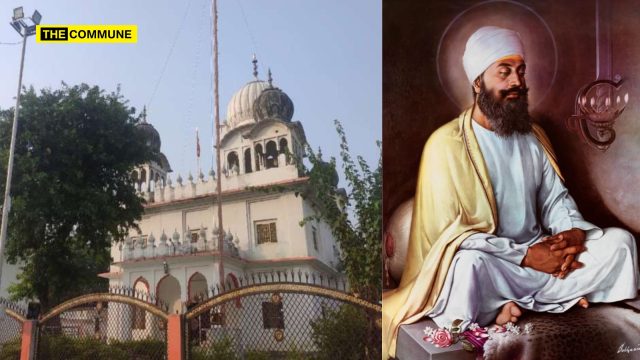
On 24 November 2025, RSS Sarsanghchalak Dr Mohan Bhagwat visited Gurdwara Brahmkund Sahib in Ayodhya on the 350th Martyrdom Day of Guru Tegh Bahadur. During the commemorative event, he paid homage to the Guru, calling his supreme sacrifice a guiding light for society, especially in times when the survival of dharma seemed uncertain.

Dr. Bhagwat emphasised that Guru Tegh Bahadur’s legacy of protecting religious freedom continues to inspire India’s social and spiritual fabric. The ceremony highlighted the Guru’s message of courage, righteousness and universal welfare, with the RSS chief urging people to uphold these values in contemporary life.

A Legacy of Sacrifice: Guru Tegh Bahadur’s Martyrdom

The historical bonds between Sikh Gurus and Hindu traditions trace back to one of the most significant sacrifices in Indian history. In the 1670s, when Aurangzeb’s campaign of forced conversions targeted Kashmiri Pandits, the spiritual leaders of Hindu society, they turned to Guru Tegh Bahadur for protection.

Facing destruction of temples, desecration of sacred texts, and threats of conversion or death, a delegation of 500 Kashmiri Pandits led by Pandit Kirpa Ram approached the Guru at Anandpur Sahib in 1675. Guru Tegh Bahadur, embodying Sikh principles of defending the oppressed, declared his willingness to sacrifice himself to protect their right to practice their faith.

The Guru orchestrated a courageous strategy, asking the Pandits to tell Mughal officials: “If Guru Tegh Bahadur embraces Islam, we will too.” This brought him into direct confrontation with Aurangzeb. After months of imprisonment and witnessing the brutal execution of his three closest companions, Guru Tegh Bahadur was publicly beheaded in Delhi’s Chandni Chowk on 24 November 1675, for refusing to convert to Islam.

Ayodhya’s Gurdwara Brahmkund Sahib

In the ancient city of Ayodhya, where religious history runs deep along the banks of the Sarayu River, Gurdwara Brahmkund Sahib stands as a living monument to centuries of spiritual harmony between Hindu and Sikh traditions. This sacred site, significant to both faiths, has recently gained renewed attention for its historical and contemporary role in Ayodhya’s religious landscape.

A Site of Multi-Faith Reverence

Located near the Brahma Ghat, the Gurdwara occupies ground sacred to both communities. According to Hindu belief, this is where Lord Brahma meditated for thousands of years. For Sikhs, it marks the spot where Guru Nanak Dev Ji, the founder of Sikhism, meditated during his visit to Ayodhya around 1510-11 AD. The site later attracted subsequent Sikh Gurus, including Guru Tegh Bahadur and Guru Gobind Singh, who also prayed and meditated here.

Historical Significance and Legal Recognition

The Gurdwara’s historical importance extends beyond religious reverence. Guru Nanak’s documented visit to Ram Janmabhoomi was cited as evidence in Supreme Court judgments regarding the Ayodhya dispute, highlighting the deep historical Sikh connection to the city. Historical records from 1858 note that Nihang Sikhs entered the Ram Janmabhoomi complex and performed havan, further emphasizing this enduring relationship.

In contemporary times, Gurdwara Brahmkund Sahib continues to serve as an active center of Sikh worship and interfaith harmony. The Gurdwara regularly hosts Akhand Path ceremonies, including one held before the recent Pran Pratishtha at the Ram Mandir, demonstrating the continuing spiritual connection between the two communities. The site forms part of a network of historical Sikh shrines in Ayodhya, all located in close proximity, underscoring the city’s importance in Sikh heritage.

Symbol of Shared Heritage

Today, the Brahmkund area remains a pilgrimage destination for both Hindus and Sikhs. Devotees from both traditions bathe in the sacred waters of the kund and offer prayers at the Gurdwara, seeking blessings in a tradition that has continued for centuries. This unique spiritual space exemplifies the mutual respect and shared heritage that has characterized Hindu-Sikh relations in Ayodhya through the ages.

Subscribe to our channels on WhatsAppTelegram, Instagram and YouTube to get the best stories of the day delivered to you personally.

MK Stalin Roadshow In Coimbatore Flops With Visibly Less Turnout

MK Stalin Roadshow In Coimbatore Flops With Less Turnout

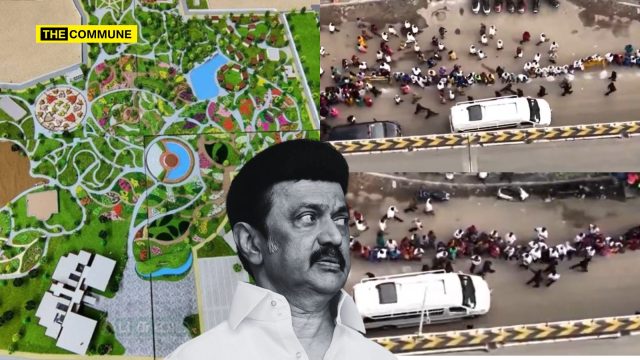
Tamil Nadu Chief Minister MK Stalin’s much-anticipated visit to Coimbatore on Tuesday, 25 November 2025, witnessed a disappointing conclusion as his roadshow failed to draw crowds, with less than 100 people gathering to greet him despite the high-profile inauguration of the ₹208.5 crore Semmozhi Poonga.

Grand Park Inauguration…

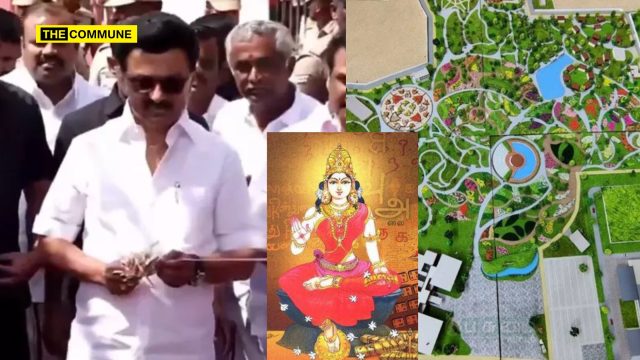
The Chief Minister had earlier inaugurated the 45-acre botanical park at the Central Prison grounds in Gandhipuram, fulfilling a 15-year-old proposal first made during the 2010 World Tamil Literature Conference by former Chief Minister M. Karunanidhi. The park features over 2,000 plant species, 23 themed gardens, a digital plant information system, co-working spaces, an all-access gym, and barrier-free infrastructure.

During the formal event, Mr. Stalin unveiled the park’s identity plaque, inspected installations portraying Kadai Ezhu Vallalgal (the seven celebrated patrons of the Sangam age), and interacted with industrialists and civic representatives at the park’s 500-seat amphitheatre. He also inaugurated a housing project for persons with disabilities at Orattukuppai in Chettipalayam panchayat, handing over keys to 86 beneficiaries of houses built through a ₹5.67 crore CSR contribution.

…But Roadshow After Event Sees A Barely Any Crowd

However, the celebratory mood turned sour during the subsequent roadshow. The poor public turnout of less than 100 people stood in stark contrast to the grandeur of the development projects inaugurated earlier in the day. The sparse gathering raised questions about the Chief Minister’s connect with the people of Coimbatore, despite this being his 16th official visit to the industrial city since assuming office in 2021.

முக ஸ்டாலினை புறக்கணித்த கோவை மக்கள்.

The visibly thin crowds during the roadshow procession indicated either public apathy or possible boycott of the Chief Minister’s visit, casting a shadow over what was intended to be a showcase event of the DMK government’s developmental achievements in the region.

Subscribe to our channels on WhatsApp, Telegram, Instagram and YouTube to get the best stories of the day delivered to you personally.
Kali Idol In Mumbai Cremation-Ground Temple Vandalised To Resemble Mother Mary; Priest Arrested, Probe Underway

Kali Idol In Mumbai Cremation-Ground Temple Vandalised To Resemble Mother Mary; Priest Arrested, Probe Underway

Devotees at a Kali temple in Chembur’s Anik Village were shocked on Saturday, 22 November 2025, after discovering that the idol of the goddess had been altered to resemble Mother Mary, prompting swift police action and the arrest of the temple priest.

The incident took place at the Kali shrine located inside the Hindu cremation ground at Anik Village. Photographs circulating online show the traditionally dark-skinned Kali idol repainted in white, draped in golden robes, and adorned with a large crown featuring white embellishments. A prominent golden cross had been mounted atop the crown.

The idol had also been modified to depict the goddess holding a small child-like figure in her arms, believed to represent baby Jesus. The backdrop of the sanctum had been replaced with red cloth decorated with a large golden cross, flanked by fairy lights and tinsel on either side.

Police Restore Idol, Arrest Priest

Local residents alerted authorities after noticing the changes. Mumbai Police reached the spot and supervised the restoration of the idol to its original form to prevent tensions or misinformation from spreading.

The temple priest was detained, produced before a court on Sunday, and remanded to two days of police custody. Officials said he is being interrogated to determine his motive and whether any other individuals were involved in the act.

A case has been filed under Section 299 of the Bharatiya Nyaya Sanhita (BNS), which covers offences related to hurting religious sentiments and damaging a place of worship. Police officials said strict action would be initiated under the provision.

The vandalism triggered strong reactions from Hindu groups, including the Vishwa Hindu Parishad (VHP) and Bajrang Dal, which condemned the act and demanded that all those responsible be identified and prosecuted. The organisations called on the police and the Maharashtra government to ensure robust law-and-order measures to prevent communal tensions.

Mumbai Police said the investigation is ongoing and that further action will be taken based on the findings.

(Source: India Today)

Subscribe to our channels on WhatsAppTelegram, Instagram and YouTube to get the best stories of the day delivered to you personally.

Tamizh Thai Vazhthu Reportedly Skipped At Coimbatore Semmozhi Poonga Inauguration By TN CM Stalin

Tamizh Thai Vazhthu Reportedly Skipped At Coimbatore Semmozhi Poonga Inauguration By TN CM Stalin

A major controversy erupted on Tuesday, 25 November 2025, after the Tamizh Thai Vazhthu was reportedly not sung at the inauguration of the newly built Semmozhi Poonga in Coimbatore – an event presided over by Chief Minister M.K. Stalin and advertised as a grand celebration of Tamil classical heritage.

The omission triggered sharp criticism from BJP leader K Annamalai, who alleged that the DMK government had “insulted Tamil identity” at an event meant to honour Tamil civilisation.

“How can a Classical Tamil Park be opened without Tamil Thai Vazhthu?”: Annamalai

In a strongly worded statement, Annamalai wrote on X:

At the inauguration ceremony of the Coimbatore Classical Language Garden, held under the leadership of Chief Minister Thiru @mkstalin, the event took place without singing the Tamil Thaai Vaazhthu. In Tamil Nadu, the DMK claims that these classical language gardens are established to honor the Tamil language, which is the irony in this matter. The DMK continues to exploit the passion for Tamil, which should be alive and heartfelt, for their divisive politics and their exploitative business of survival. That is why, for Chief Minister Thiru @mkstalin, who pretends to care about the Tamil language, the Tamil Nadu government did not even mention that the Tamil Thaai Vaazhthu should be sung at the beginning of the event. At least now, instead of merely paying lip service to Tamil passion, we urge the Chief Minister to truly demonstrate care for the Tamil language.

Event Celebrated Tamil Classical Heritage — But Reportedly Skipped the Foundational Invocation

The irony was not lost on observers: The Semmozhi Poonga was launched during the 2010 Classical Tamil Conference and is now showcased as a large-scale cultural landmark featuring Sangam-era botanical species, sculptures of the Seven Vallals, and inscriptions from ancient Tamil texts.

Yet at a function centred on Tamil classical identity, the very song that opens all Tamil cultural, educational, and state functions was reportedly inexplicably absent.

Despite the criticism, the Tamil Nadu government has not issued any explanation – No clarification from the Chief Minister’s Office, no comment from the HR&CE Minister or Culture Department, no statement from the Coimbatore administration.

As per a News18 Tamil Nadu video, the reporting seemed to point at this – that the event began directly with plaque unveilings and walk-throughs and not with the invocation.

In Tamil Nadu, Tamil Thai Vazhthu holds the status of a State Song and is traditionally sung at the start of all official events. A 2021 Madras High Court ruling emphasised that the song must be accorded the same respect as ‘Jana Gana Mana’ at functions.

Subscribe to our channels on WhatsAppTelegram, Instagram and YouTube to get the best stories of the day delivered to you personally.
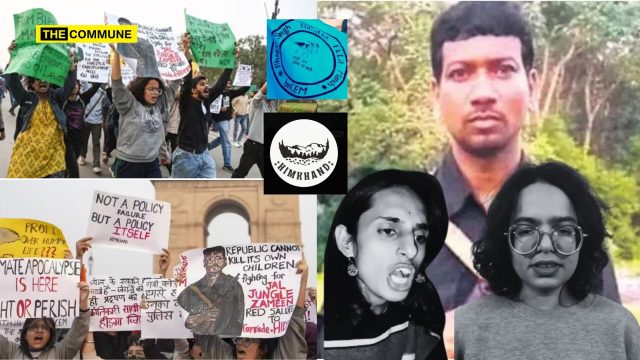
How Delhi ‘Pollution Protest’ Turned Into A ‘Comrade Hidma Amar Rahe’ Rally Glorifying Maoist Terror: A Look At The Urban Naxals Involved

The internet was filled with images of dust-filled air purifiers from residences in Delhi; voices for “clean air” started increasing and protests took place some time ago – without permission.

But the protests were back on Sunday, 23 November 2025, in the national capital – at India Gate to be precise, for allegedly the same reason.

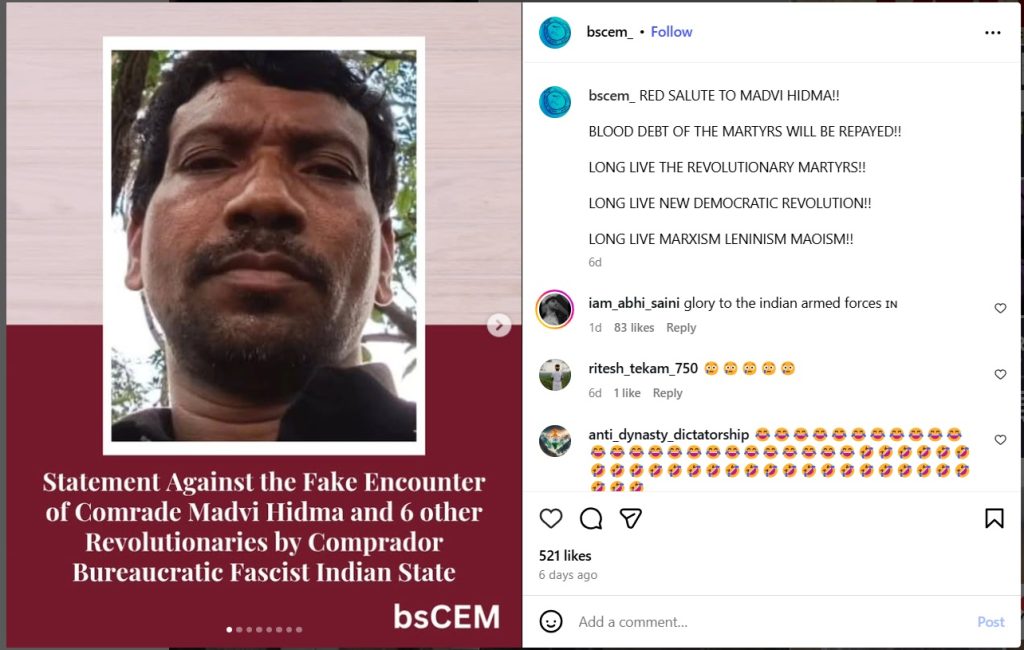
However, things took a drastic turn when slogans that were raised began to be talking about the neutralised Maoist terrorist Madvi Hidma.

The protest that began as raising voice against air pollution in Delhi swiftly devolved into a violent display of support for Left-Wing Extremism as activists belonging to urban naxal groups used the environmental cause as a ruse to glorify Hidma and launch an assault on police personnel.

The event has exposed a coordinated effort by radical leftist organizations to weaponize public issues, mirroring tactics observed during the 2020 Delhi riots.

From Environmental Concern to Open Glorification of Terror

What began as a gathering against rising pollution levels in Delhi took a sharp ideological turn when protesters unveiled posters of Madvi Hidma. Hidma, a senior commander of the banned Communist Party of India (Maoist), was neutralised by security forces on 18 November 2025 in the Maredumilli forests of Andhra Pradesh. He was implicated in some of the most brutal attacks on security personnel in recent history.

Amid the environmental slogans, chants of “Comrade Hidma Amar Rahe” (Long live Comrade Hidma) rang out, explicitly celebrating the slain Maoist. Protesters were heard advocating for a “Maoist-like governance” model in Delhi, praising the so-called “people’s governments” in Bastar and Bijapur, which are run by Maoists through intimidation and violence.

Violence Erupts: Chilli Powder and Alarming Historical Parallels

The situation escalated when the protesters, who had breached barricades and defied police orders, turned violent. For the first time in such a context, police reported the use of chilli spray against its personnel.

New Delhi Deputy Commissioner of Police (DCP) Devesh Kumar Mahla stated, “We requested them to move, as many ambulances and medical personnel were waiting behind them and required emergency access. We removed them from the C-Hexagon to avoid disrupting traffic. During the removal, several protesters scuffled with the police, and many of our personnel were injured.” He confirmed that several officers required treatment at RML Hospital.

An FIR has been registered, and over 15 individuals were arrested for assaulting police officers, obstructing official duties, and blocking the roadway.

This tactic bears a striking resemblance to the 2020 anti-Hindu Delhi riots. During court proceedings related to those riots, it was noted that accused Gulfisha Fatima, along with others, had mobilized a crowd of 300 women to block roads and “attack the police using chilli powder, stones, sticks and other dangerous articles.”

The Orchestrators: A Nexus of Radical Outfits

Investigation reveals that the protest was spearheaded by two primary leftist organizations:

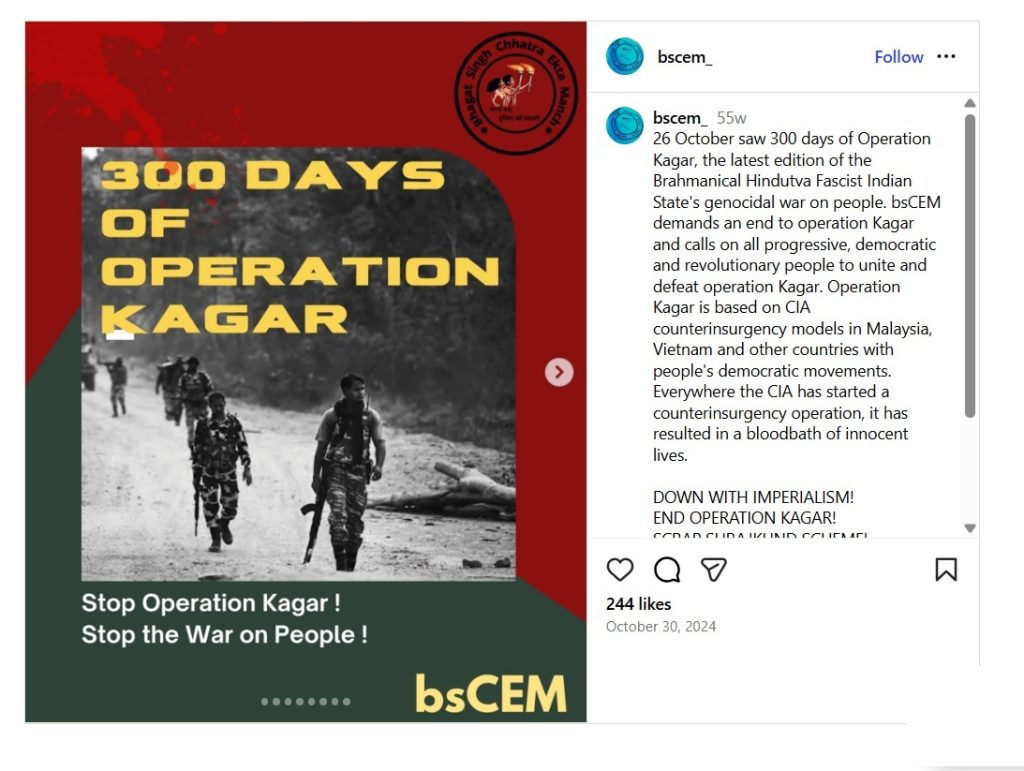
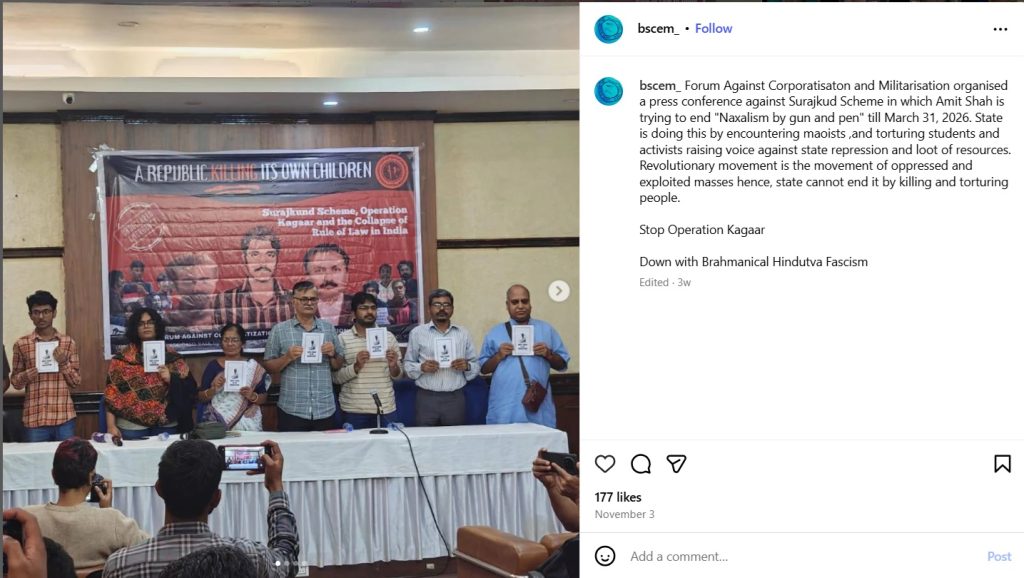
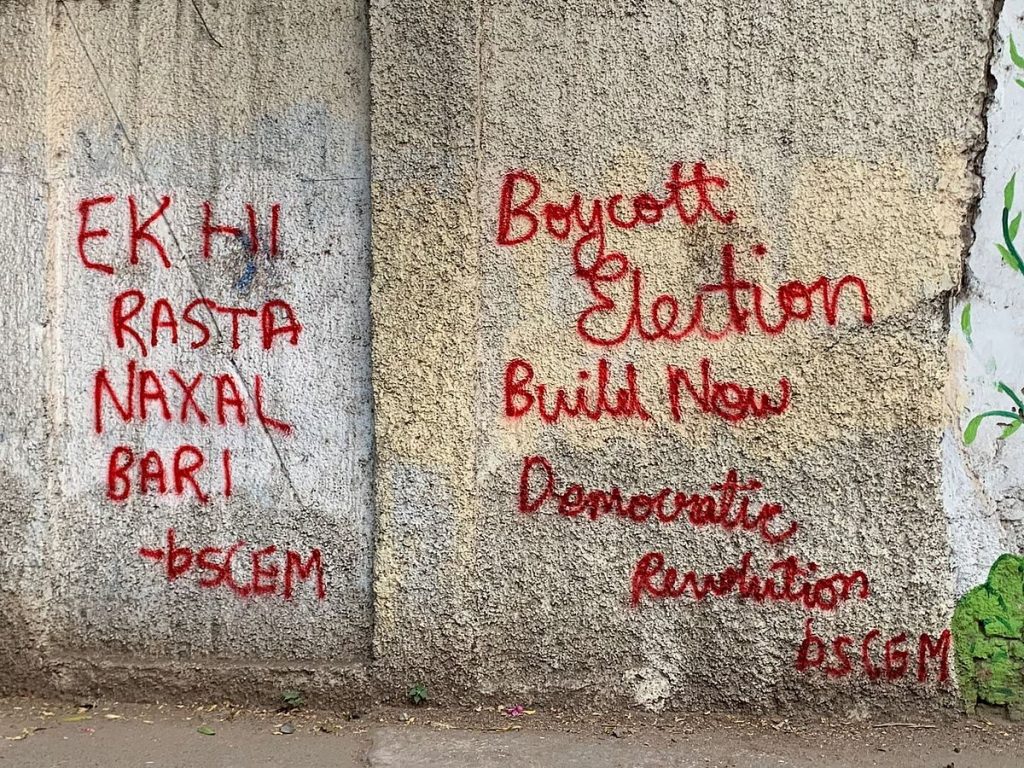
Bhagat Singh Chhatra Ekta Manch (bsCEM): This group has a history of anti-national vitriol. In May 2024, it vandalized Delhi University walls with graffiti proclaiming “Ek hi raasta Naxalbari” (The only way is Naxalbari).

Image Source: OpIndia

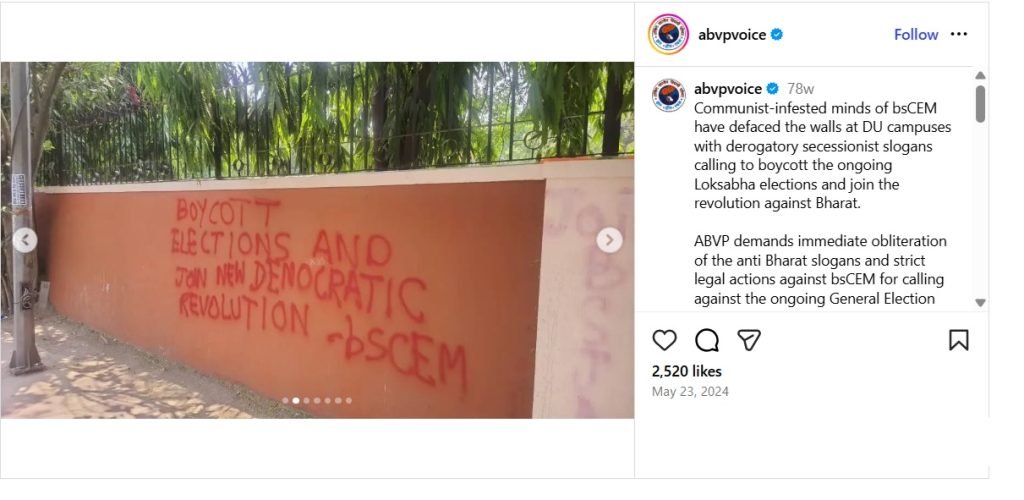
The group actively called for a boycott of the Lok Sabha elections and advocates for a “democratic revolution.”

Screenshot of ABVP Instagram post

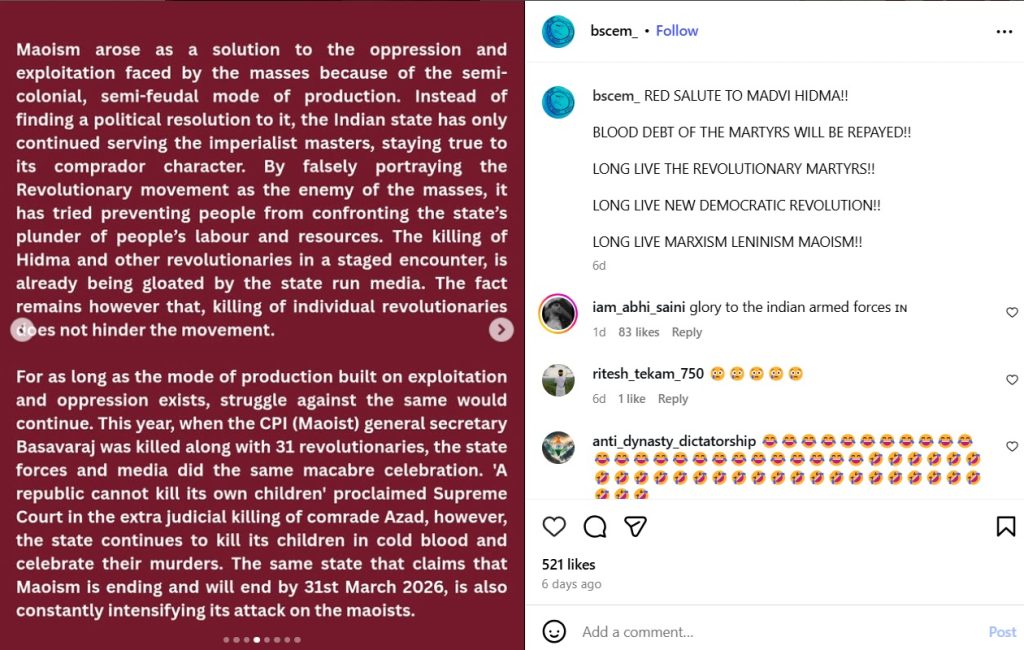
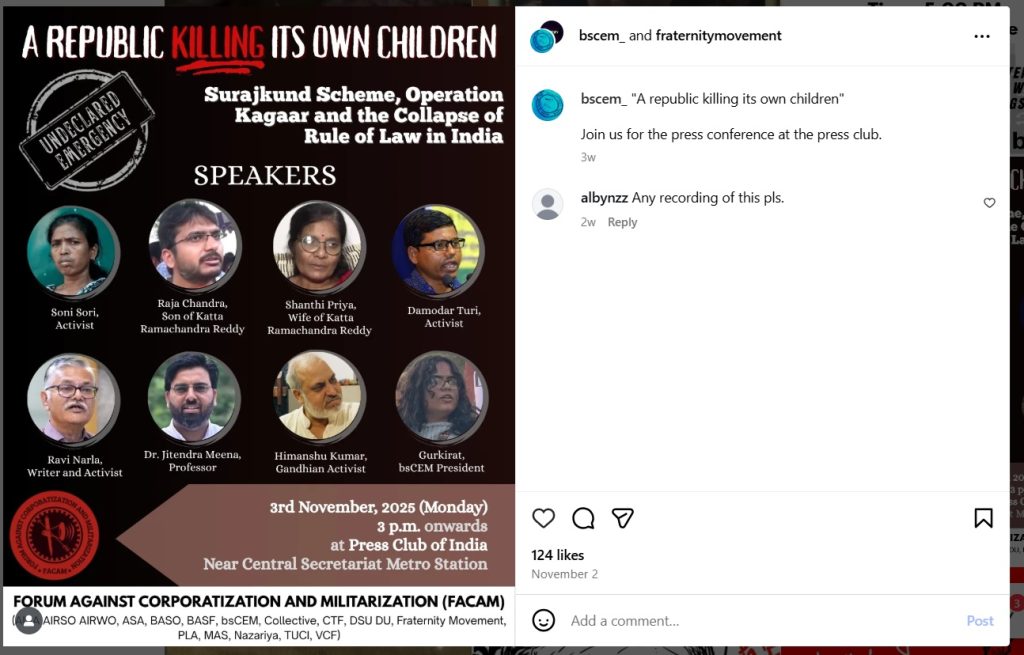
It has repeatedly referred to India as a republic that “kills its own children” and has demanded the government halt Operation Kagar to protect its “Naxal brethren.”

Screenshot of BSCEM Instagram post

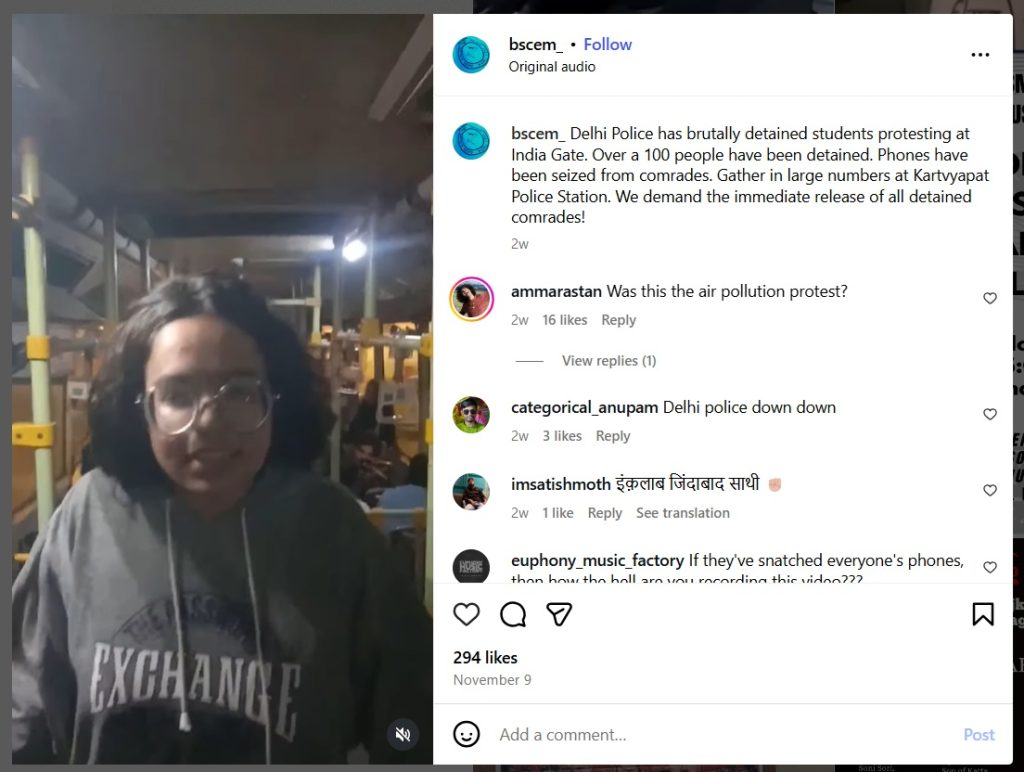
A prominent member, Ravjot Kaur, a Computer Science graduate from Guru Gobind Singh Indraprastha University, was identified as a key participant in the sloganeering for Hidma.

According to this lady protesting in Delhi yesterday, air pollution is happening because of ‘profit-led development model’.

Screenshot of BSCEM Instagram post

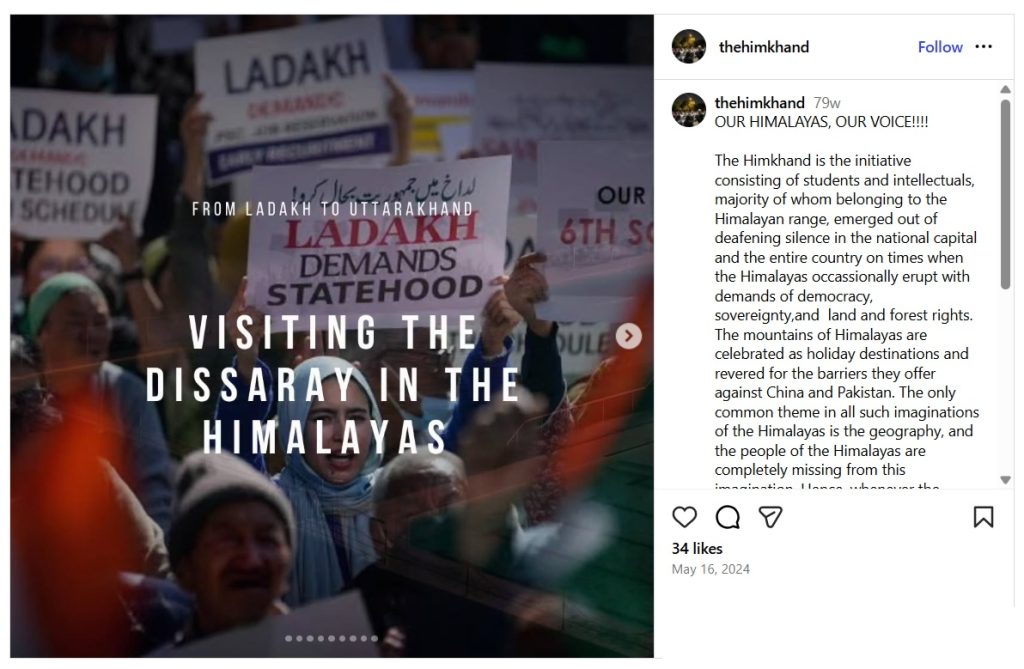
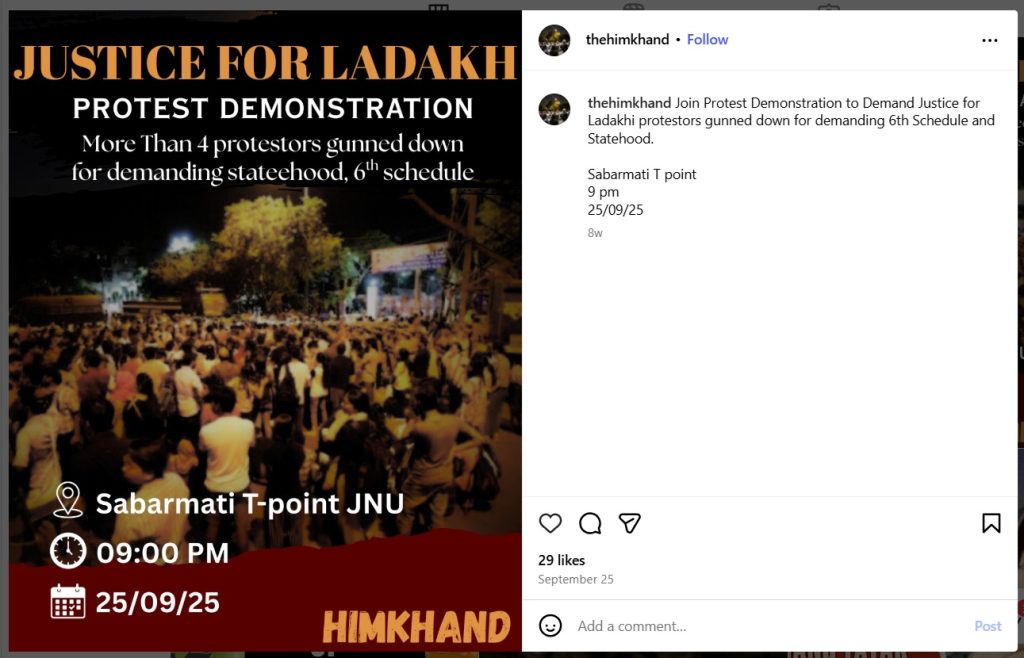
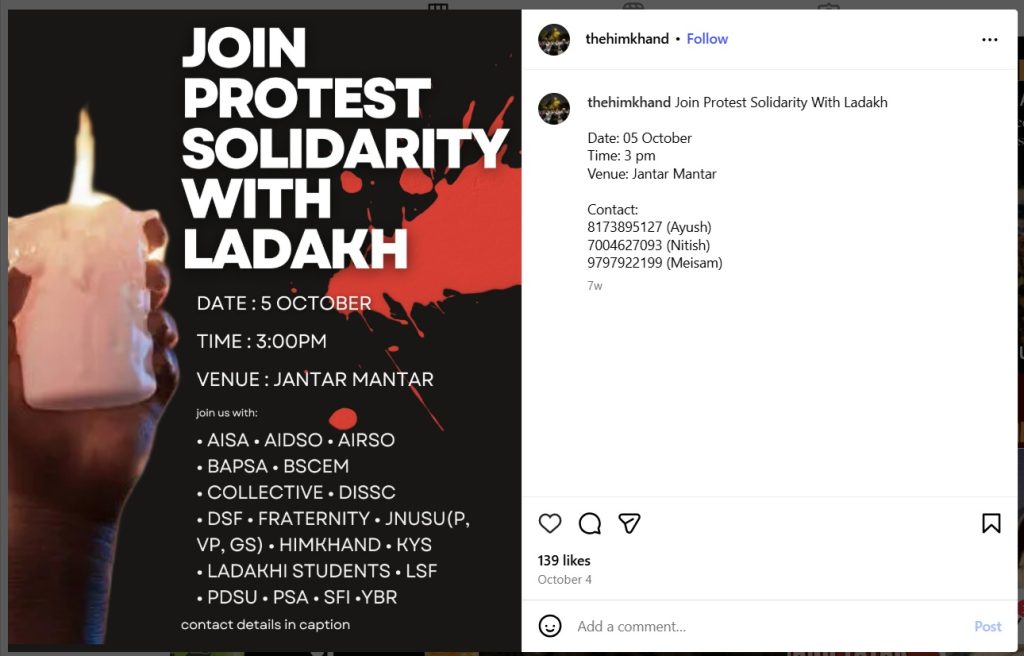
The Himkhand: A relatively new outfit that began operations around May 2024, initially focusing on climate change.

Screenshot of the himkhand Instagram post

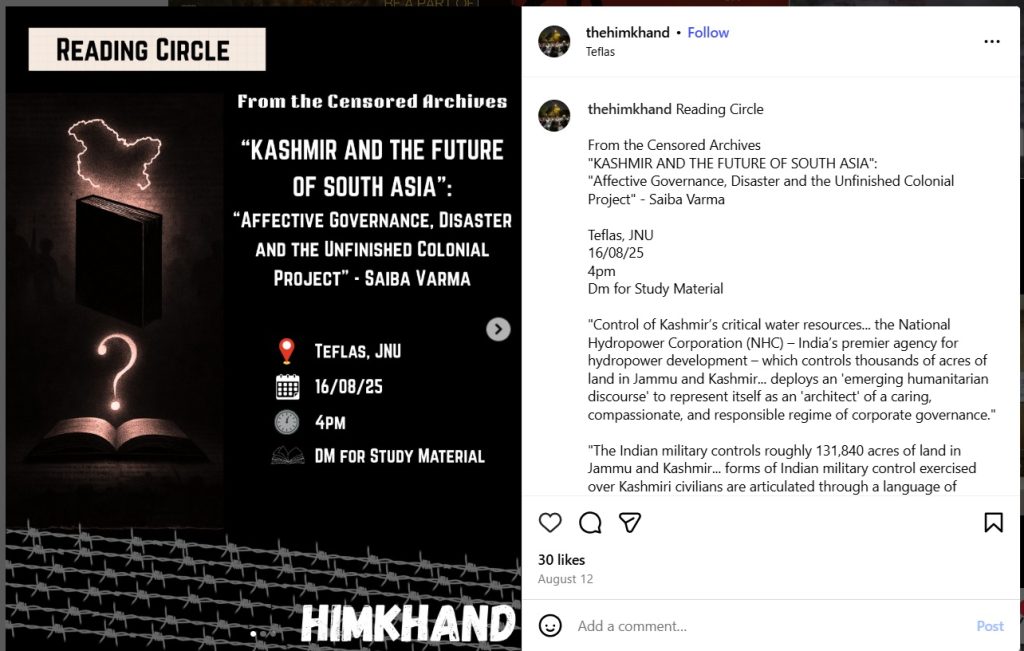
It has quickly evolved to co-opt regional, anti-establishment narratives. For example, they posted about how India’s NHC was “controlling land in J&K”.

Screenshot of the himkhand Instagram post

In October, the organization openly championed the Ladakh movement and rationalized violence, including the torching of a BJP office, which it called a “symbolic rejection of the party’s model of anti-Himalayan development.”

Screenshot of the himkhand Instagram post

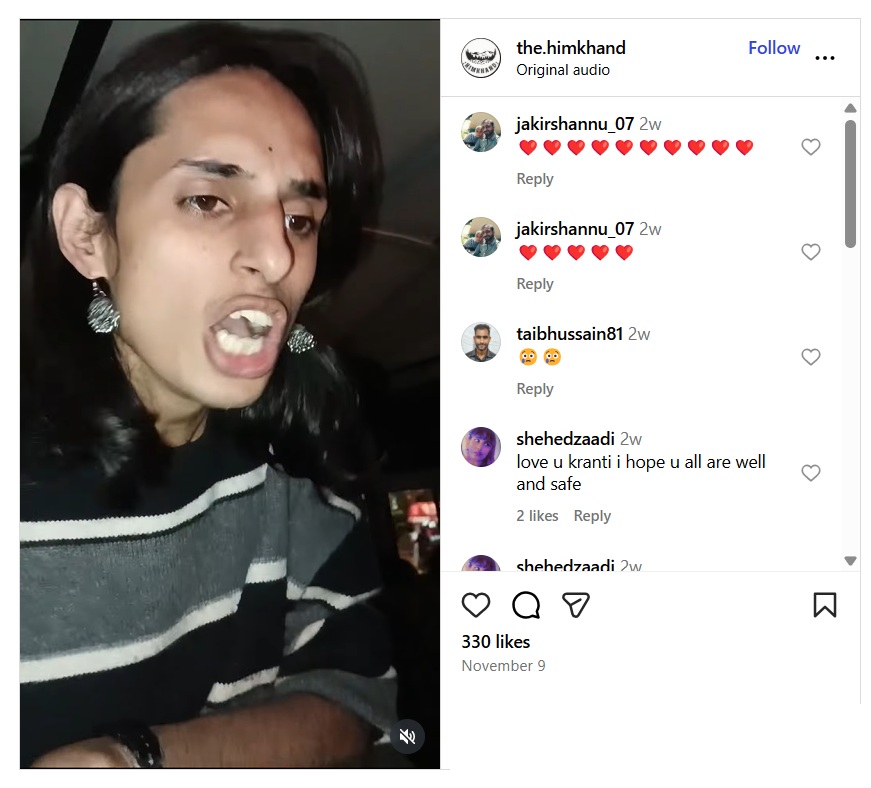
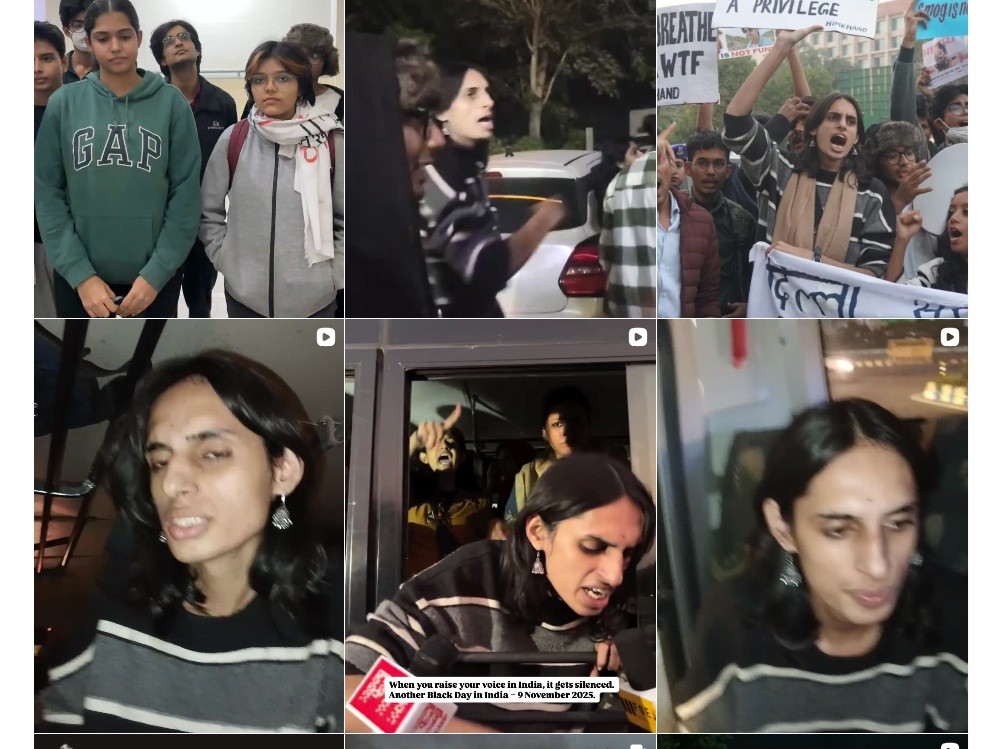
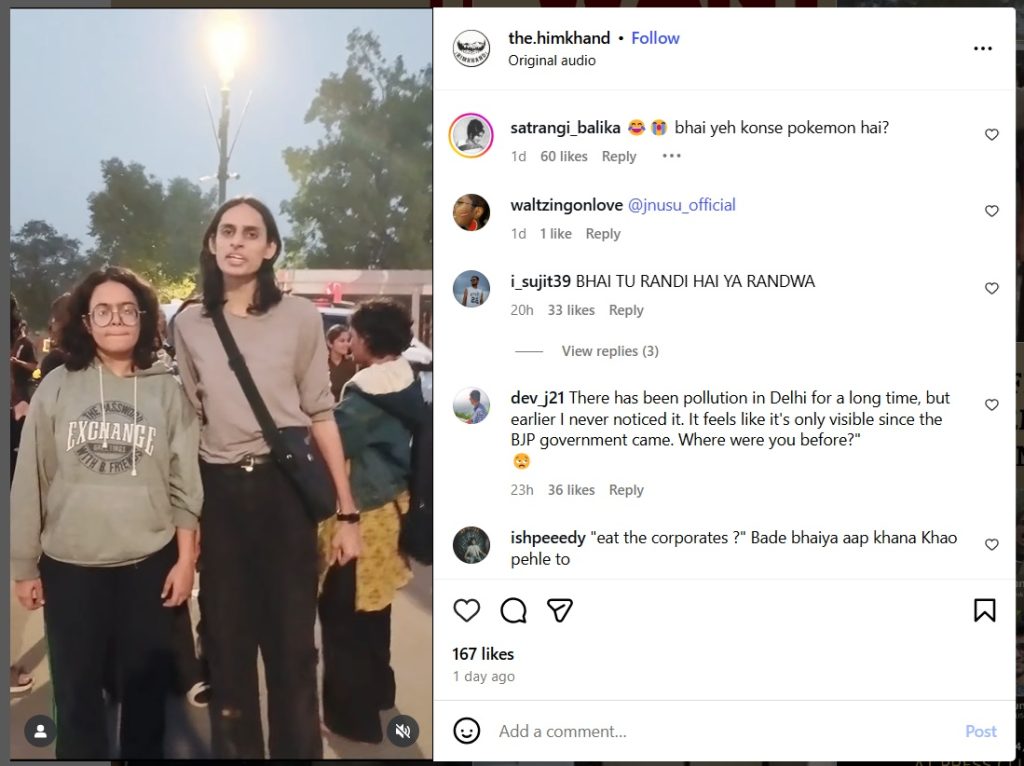
The group is spearheaded by an individual named Kranti, who was spotted alongside bsCEM’s Ravjot during the protests.

Screenshot of the himkhand Instagram post
Screenshot of the himkhand Instagram gallery

Screenshot of the himkhand Instagram post

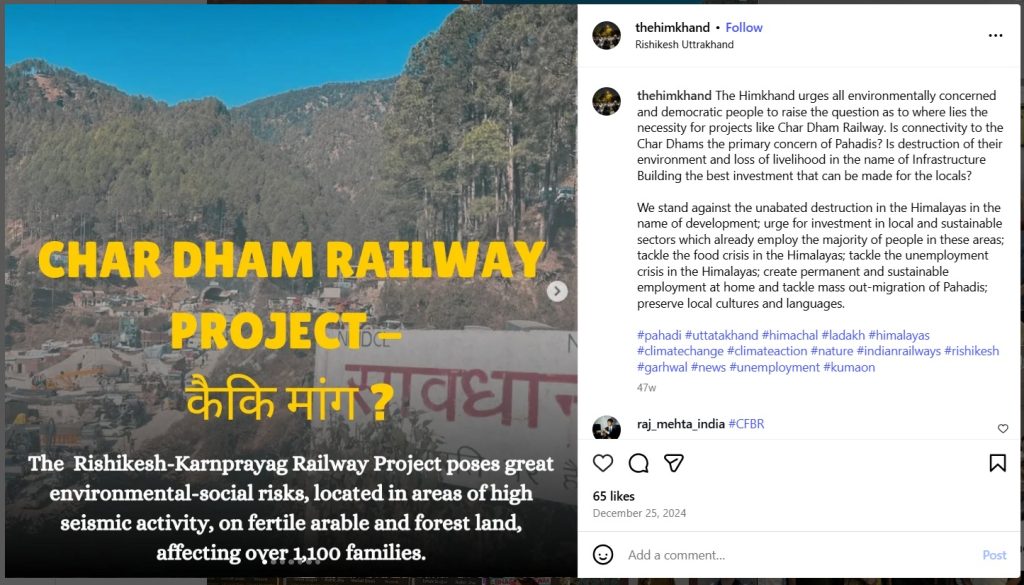
‘The Himkhand’ has also been at the forefront of opposing key development projects like the Char Dham Railway project under the guise of environmentalism.

Screenshot of the himkhand Instagram post
Pre-Event Collaboration and Ideological Alignment

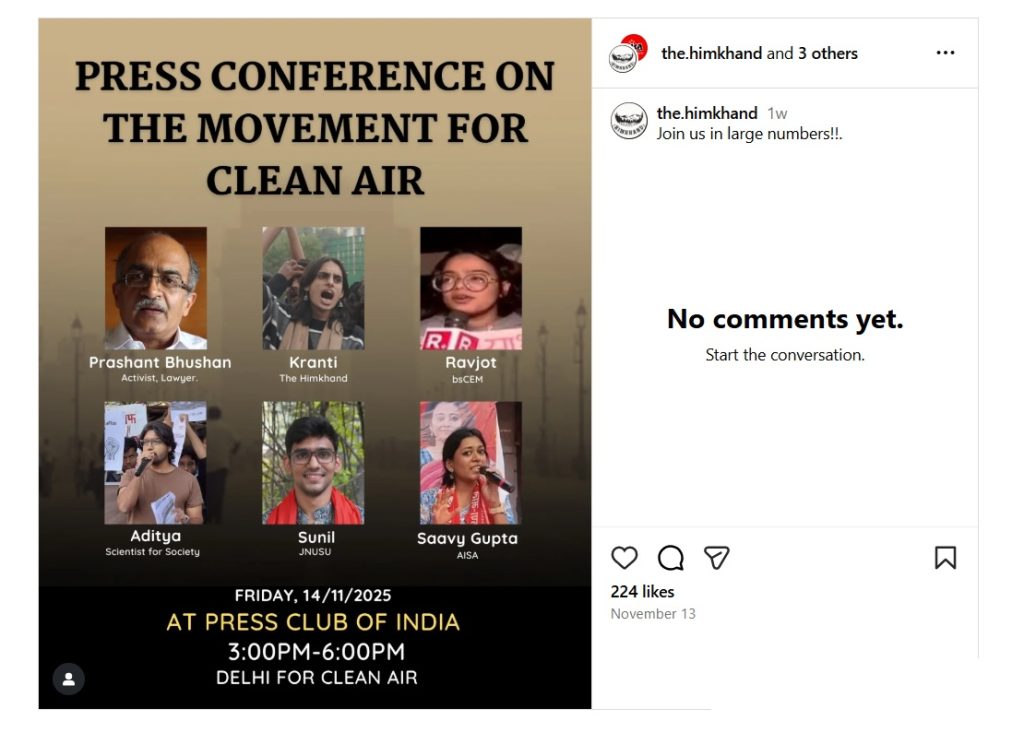
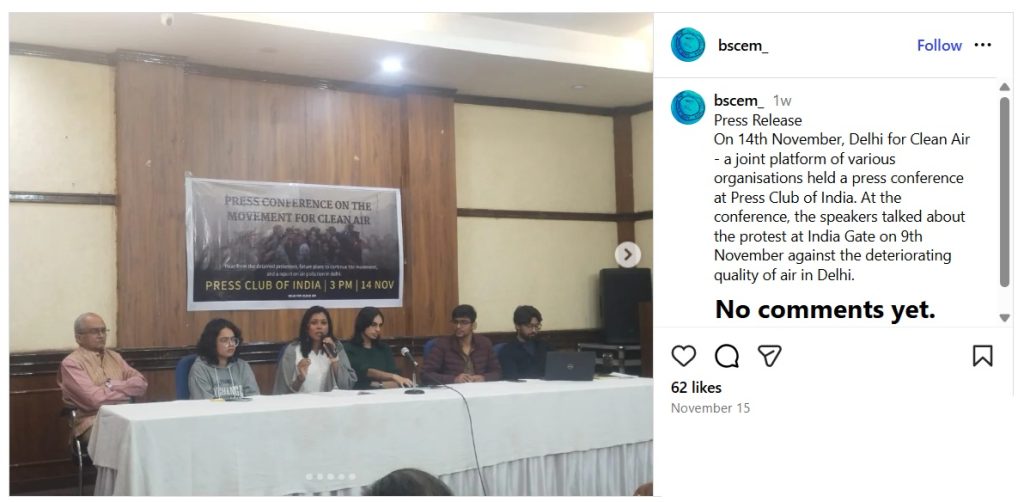
The collaboration between these groups is not new. On 14 November 2025, bsCEM organized a conference in collaboration with other leftist outfits including Himkhand and the All India Students Association (AISA) of Delhi University, on the subject of pollution. Significantly, the event featured Prashant Bhushan as a speaker—a lawyer who was a major provocative voice during the 2020 anti-Hindu Delhi riots.

Screenshot of Instagram post

Screenshot of Instagram post

The Maoist Playbook: Mainstreaming Terror Through Deception

During the protest, members of these groups articulated a clear agenda to mainstream Maoist ideology. A bsCEM member claimed that pollution stems from a “profit-driven development model” and advocated for the Maoist model, falsely claiming, “Sustainable development is practiced there… They do not allow outside contractors to enter the territory and collective farming takes place.”

Another protester described Hidma as a “tribal person who took up arms to fight for their rights,” attempting to legitimize his violent campaign against the Indian state as a “struggle for water, forests, and land.”

This narrative whitewashes the reality of Maoist extortion, such as their documented history of levying taxes on Tendu leaves exporters in Chhattisgarh to fund their violent insurgency.

A Pattern of Subversion

The events of 23 November 2025 reveal a calculated strategy by urban naxal networks. The pattern is consistent: a public issue (like the CAA in 2020 or pollution in 2025) is used as a facade to gather momentum, which is then hijacked to push a radical, anti-India agenda, often culminating in violence.

While the 2020 riots were part of a broader “regime change” operation, the current agitation seeks to resist the government’s successful drive against Maoism and mainstream a dangerous ideology. As the security forces make significant strides in eradicating Left-Wing Extremism from its rural strongholds, its urban supporters are growing increasingly desperate, shedding their disguises and revealing their true intent to destabilize the nation’s democratic fabric.

(Source: OpIndia)

Subscribe to our channels on WhatsAppTelegram, Instagram and YouTube to get the best stories of the day delivered to you personally.
‘Tamil Scholars’ Claim Sage Agasthya Never Existed; But Historical Evidence Tells A Different Story

'Tamil Scholars' Claim Agasthya Never Existed; Classical Text Evidence Tells A Different Story

A few days ago, fantasy fiction writer Devdutt Pattanaik wrote an article in The New Indian Express where he called Bharat’s first great political scientist, a “fantasy”.

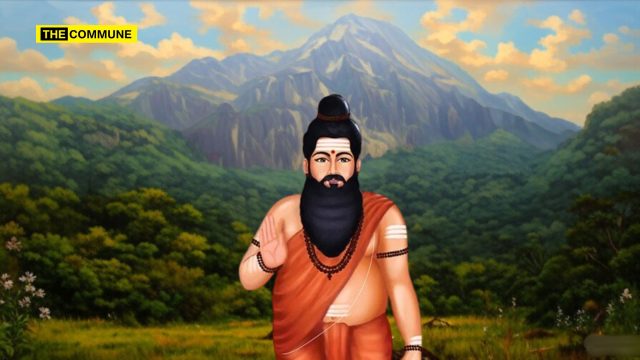
Now, we have “scholars” from Tamil Nadu doing something similar. They are calling Sage Agasthya, the sage who carried the Himalayas in his shoulders and Tamil in his heart, something similar – they are saying he never existed!

A report in Dravidianist web portal The Federal carries an interview of such “Tamil scholars” who are saying so.

Why Did This Start?

The Union Ministry of Education’s upcoming “Agasthya Expedition”, organised under Kashi Tamil Sangamam 4.0, is the reason. An entire section of Tamil writers and researchers argue that Sage Agasthya is purely mythological and unsupported by literary or manuscript evidence, but there are scholars who are able to provide evidence, in the form of multiple classical Tamil texts that explicitly reference the sage.

The expedition, planned to trace Agasthya’s supposed journey from Tenkasi to Kashi, is scheduled to begin on 2 December 2025. Organisers describe it as a cultural exploration of sites associated with the sage. Critics, however, have questioned the exercise, alleging an attempt to manufacture history.

Critics: “No Proof Agasthya Existed; Expedition Based on Mythology”

According to the original set of scholars quoted by The Federal, including Prof. S. Saravanan of the University of Madras and Indologist R. Balakrishnan, there is “no literary or manuscript evidence” establishing Agasthya’s historical existence. They argue that sage Agasthya appears only in later mythological narratives, not in early Tamil literature. They also claim that Agasthya authored Tamil grammar or taught Tholkappiyar are “baseless”.

They also argue that the sage’s name does not appear directly in Sangam literature, except through late medieval commentaries.

Additionally, they claim that there are attempts to portray Agasthya as the father of Tamil grammar or as a hero of Tamil tradition constitute “cultural politics” and “belittling Tamil”.

As reported in The Federal, Balakrishnan said he surveyed nearly 400 books and found “no evidence” of Agasthya as a historical figure. Prof. Saravanan described Agasthya as a mythological construction whose identity evolved through Brahminical interpretations over centuries.

Earlier literary attempts, such as KN Sivaraja Pillai’s Agastya in Tamil Land (1932), have also noted that the Agasthya figure may have undergone improvisation and narrative layering.

The KTS organisers at IIT-Madras, when contacted, stated only that the expedition would “visit places associated with Sage Agasthya” and reportedly did not respond to questions about evidence for his existence.

Real Scholars Reject Claims, Cite Extensive Tamil Sources Mentioning Agasthya

The criticism has, however, triggered a strong rebuttal from other Tamil scholars such as TS Krishnan, who say the claims of “no literary evidence” are demonstrably false.

They point to a wide range of Sangam, post-Sangam, bhakti and medieval works that explicitly refer to Agasthya:

From Sangam Literature

Paripadal contains a well-known line referencing the star Agastya, named after the sage associated with Podhigai:

“பொதியில் முனிவன் புரை வரைக் கீறி மிதுனம் அடைய”
(The star Agastya — named after the sage residing in the Podhigai hills.)

Post-Sangam Epic Literature

In Manimegalai, Agasthya is said to have released the sacred Kaveri from his kamandala:

“அமர முனிவன் அகத்தியன் றனாது கரகங் கவிழ்த்த காவிரிப் பாவை”

Shaivite Canon

Thirumandiram records Shiva’s instruction to Agasthya to travel south and restore balance:

“நடுவுள அங்கி அகத்திய நீ போய் முடுகிய வையத்து முன்னிர்”

Thevaram hymns by Appar and Sambandar also contain references to Agasthya.

Medieval and Later Texts

Kamba Ramayanam describes him as:

“தென் தமிழ்நாட்டகன் பொதியில் திருமுனிவன்”
(The sage who resides in Podhigai, in the southern Tamil land.)

Copper Plate Inscriptions

Pandya-era copper-plate charters refer to Agasthya as the Kula Guru (royal preceptor) of certain Pandya kings – an epigraphic acknowledgment.

Counter-scholars argue that given this breadth of textual and inscriptional evidence, the claim that Agasthya appears “nowhere in Tamil literature” reflects poor scholarship or ideological posturing, not evidence-based research.

Conclusion

The debate over Sage Agasthya’s existence ultimately collapses when confronted with the sheer weight of classical Tamil evidence. Across Sangam poetry, post-Sangam epics, bhakti literature, medieval inscriptions, and royal copper-plate charters, Agasthya appears not as a stray mythic allusion but as a continuous, culturally central presence woven into Tamil civilisation for over 2,000 years.

When a figure:

  • appears in Paripadal,
  • shapes the narrative world of Manimegalai,
  • is commanded by Shiva in Thirumandiram,
  • is sung by Appar and Sambandar,
  • is honoured in Kamba Ramayanam,
  • and is recorded in Pandya royal grants as Kula Guru,

then the claim that “there is no literary or manuscript evidence” is not just incorrect; it is untenable.

Historians may debate which Agasthya lived, when he lived, or whether multiple sages bore the name. But denying Agasthya’s existence altogether requires ignoring the entire Tamil canon and the cultural memory of millennia.

The evidence is clear:

Agasthya exists as one of the most cited and enduring civilisational figures in Tamil literature, spirituality, medicine, and royal tradition.

To call him “non-existent” is not scholarship.
It is selective erasure.

And Tamil texts, from Sangam to bhakti to medieval epigraphy, simply do not permit that erasure.

Subscribe to our channels on WhatsAppTelegram, Instagram and YouTube to get the best stories of the day delivered to you personally.
Leaked Audio Catches DMK Ward Secretaries Threatening Metro Water Engineer In Chennai

Leaked Audio Catches DMK Ward Secretaries Threatening Metro Water Engineer In Chennai

A leaked audio clip purportedly featuring two DMK ward secretaries threatening a Chennai Metro Water assistant engineer over a domestic water connection in Purasaiwalkam has triggered serious allegations of extortion, political intimidation, and systemic corruption in the city’s civic services.

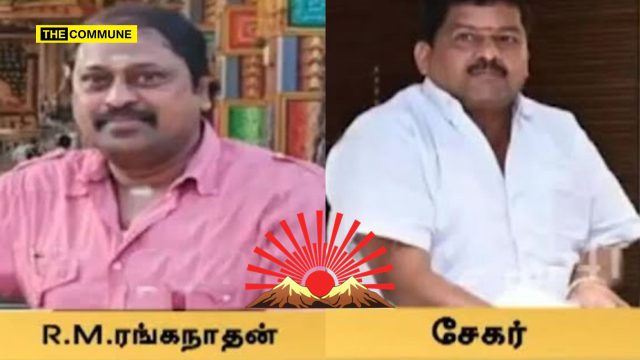
The controversy revolves around a newly constructed house on Sundaram Lane in the Purasawalkam area (Ward 99). According to reports, the homeowner had legally obtained a Metro Water connection. However, the audio suggests that local DMK ward secretaries, identified as R.M. Ranganathan (Ward 89) and Sekar (Ward 90), intervened because they had not received an illicit payment. It is alleged that they pressured a Metro Water engineer to pause or revoke the newly granted connection at a house on Sundaram Lane.

Leaked Audio Reveals Direct Threats

In the audio, a voice identified as Ranganathan is heard berating the engineer for issuing the connection: “Be careful, sir, you’re doing something very wrong. It won’t end well. You’ve just joined—if we make use of our two letter pads tomorrow, you’ll be punished.”

He is heard repeatedly demanding that the ongoing work be stopped, saying he is “roaming on the line” in the area and questioning “who gave you so much courage.”

“What a foolish thing you’ve done… who gave you so much courage, sir? Did a councillor tell you?”

They go on to insist that the connection was given without proper basis, and the most direct threats follow: “We will get the minister to ensure you don’t stay in peace… You will be disgraced with Metro Water itself.”

He also refers to prior neighbourhood demands, claiming residents “insisted a lot,” and that he had photos ready to send to higher officials “to safeguard your job.”

BJP President Slams DMK, Calls It ‘Commission Culture’

Releasing the audio, BJP state president Nainar Nagendran claimed the incident reflected a “commission-driven mindset” entrenched within the ruling DMK. He alleged, “A commission model that threatens the officer who performs his duty—government! An audio recording has surfaced that is shocking: in Chennai’s Purasaivakkam area, two DMK circle secretaries openly threatening an assistant engineer because residents who received Metro Water connections are not paying bribes. Moreover, it is highly condemnable that they have threatened the government employee by saying that to safeguard his job, he must immediately disconnect the connection. Furthermore, openly and vulgarly threatening that if the connection is not disconnected, “We’ll get the minister to screw you” and “I’ll destroy Metro Water”—this reveals the collective arrogance of DMK members. On one side, DMK ministers who fail to provide the people with any basic amenities and merely sing the praises of Gopalapuram; on the other side, DMK brethren who threaten government employees who properly perform their duties, force them to stop work, and plan to siphon off the people’s money through bribes and commissions. The DMK, which thus bands together in a single line to loot and plunder Tamil Nadu, is a danger to all of us!”

Subscribe to our channels on WhatsAppTelegram, Instagram and YouTube to get the best stories of the day delivered to you personally.
Madurai Bench Of Madras High Court Expands Scope Of Thiruparankundram Karthigai Deepam Row, Seeks Responses From HR&CE And Waqf Board

Madurai Bench Of Madras High Court Expands Scope Of Thiruparankundram Karthigai Deepam Row, Seeks Responses From HR&CE and Waqf Board

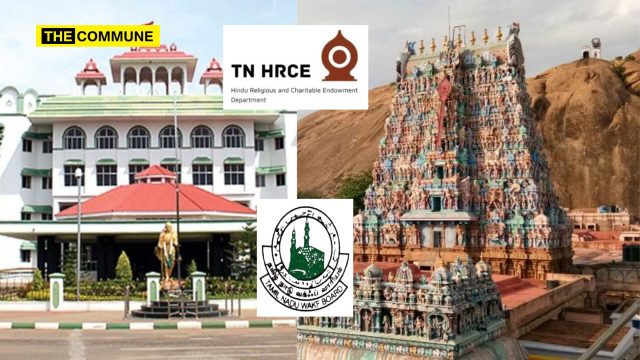
The Madurai Bench of the Madras High Court has broadened the scope of a legal dispute concerning the location for lighting the Karthigai Deepam on Thiruparankundram hill by making the Hindu Religious and Charitable Endowments (HR&CE) Department and the Tamil Nadu Waqf Board parties to the case. The court has adjourned the hearing to 27 November 2025, directing all parties to file their responses.

The litigation stems from a batch of petitions challenging the decision of the Subramaniya Swamy temple authorities to light the ceremonial lamp at the ‘Deepa Mandapam’ near the Uchipillaiyar temple. The petitioners, including Rama Ravikumar and Solaikannan of the Hindu Makkal Katchi, have contested this, alleging that the ‘Deepa Mandapam’ is traditionally used for the ‘Moksha Deepam’ ritual and cannot be used for Karthigai Deepam.

They have claimed that the Karthigai Deepam was historically lit on an ancient stone pillar located about 15 metres away from the Sikandar Badushah Dargah on the hilltop, arguing that this location offers greater visibility.

Justice GR Swaminathan, who is hearing the petitions, had previously taken suo motu cognizance to include the Dargah authorities and the Archaeological Survey of India (ASI) in the proceedings. In a significant step, the judge personally inspected the contested spots on the hill on 19 November 2025.

During the hearing on Monday, arguments intensified. The counsel for the Dargah cited a subordinate court judgment from 25 August 1923, which declared that the Nellithope and the entire hilltop where the mosque and its flag staff are situated belong to the Muslim community. He further pointed to historical precedents from 1862 and 1912, where attempts to light the deepam at the summit were interdicted by the magistrate on grounds that it was not customary and due to apprehensions of a breach of peace. The Dargah’s counsel argued that the petitioners’ remedy lies before a civil court.

These contentions were supported by another advocate, who appeared in support of the temple authorities’ decision to use the Uchipillaiyar temple site. This advocate also sought an interim direction for police protection at the hilltop.

However, the petitioners’ counsels opposed these arguments, maintaining that the stone pillar is situated at a distance from the Dargah and that lighting the lamp there would not disturb religious harmony.

Arguments on Custom, Property and Worship Law

An intervenor argued that under the Places of Worship (Special Provisions) Act, the site must remain as it existed in 1947, meaning the Deepam should be lit at the earlier location. Justice Swaminathan clarified that the Act applies only to places of worship and not to property disputes.

Another intervenor raised concerns about communal harmony ahead of elections. The judge said such apprehensions were unrelated to the legal question before the court.

Appearing for the All Caste Archakas’ Association, advocate Vanchinathan argued that the temple administration’s decision to light the Deepam near the Uchipillaiyar Temple had already been affirmed by a Division Bench and did not warrant interference. He reiterated that there was an existing order recognising Dargah ownership of the hill’s summit.

Justice Swaminathan noted that Thirupparankundram hill has multiple peaks and remarked that maintaining social harmony is the responsibility of the government, not the court.

The judge then impleaded the HR&CE Commissioner and the Tamil Nadu Waqf Board as respondents, directing all parties including temple authorities, the Dargah, ASI, intervenors, and newly added respondents, to file counter affidavits.

The case has been adjourned to November 27 for further hearing.

(Source: The New Indian Express)

Subscribe to our channels on WhatsAppTelegram, Instagram and YouTube to get the best stories of the day delivered to you personally.