Former Supreme Court judge Justice Rohinton Nariman has called for a nationwide ban on loudspeakers and bell ringing for religious purposes, arguing that such practices directly harm public health and disturb citizens’ right to peaceful living.
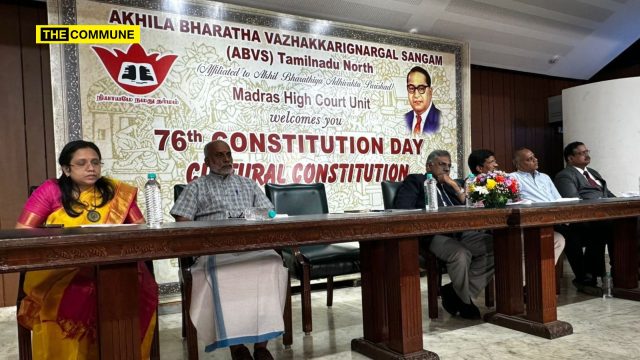
Speaking at the KM Bashir Memorial Lecture on 1 September 2025, Justice Nariman said, “I find today every faith seems to get louder in its protestations and is making the Lord deaf. I find today that either a person is screaming in a microphone from a mosque or another is banging temple bells. All this must stop because this creates noise pollution. And if it creates noise pollution, it is covered by health primarily straight away. And every State should at the earliest according to me first ban loudspeakers and ban this kind of thing this bell ringing etc which disturbs people early morning and disturbs people’s sleep. So it is again something that is that the State must take into its hand and do it down the board so that again you can’t say that you are favoring X or favoring Y. You stop it completely. You can have loudspeakers in auditoriums like this where everybody wants to hear somebody and nothing goes out. But you can’t have loudspeakers outside which creates a nuisance.”
Placing the issue in constitutional context, Justice Nariman reminded that the Preamble begins with “We the people of India,” which, he stressed, includes all citizens. “We the people of India does not mean we the majority of the people of India or we the adult male population of India. It is we the people. We are therefore all the people of India. That is something that must never be forgotten,” he said.
He described secularism as a key step toward fraternity and explained its three strands: no state religion, no discrimination by the state on religious grounds, and equal rights for individuals to practise their faith. He pointed to Article 25, which guarantees freedom of conscience, while recalling the Supreme Court’s 1977 judgment in Reverend Stainislaus, which restricted the right to propagate religion by excluding voluntary conversion. He urged the apex court to revisit this interpretation.
Justice Nariman outlined the five constitutional limits on religious freedom; public order, morality, health, regulation of secular activities associated with religion, and social welfare or reform, and emphasised that “health squarely justified restrictions on noise pollution from religious practices.”
Turning to the idea of fraternity, which he described as the “single pivot on which everything else works,” Justice Nariman said it was crucial to uphold both the dignity of individuals and the unity and integrity of the nation. He criticised distortions in history textbooks that undermined fraternity and urged citizens to treat fundamental duties, especially the duty to promote harmony and respect for composite culture, as judicially enforceable obligations.
He illustrated the point by recalling the symbolism of the national flag, noting that the white band signifies peace and harmony among faiths, while the Ashoka Chakra represents dharma and moral law. “Every time you people see the national flag, never forget that fraternity is the first thing that stares you in the face. And remember the white portion is the portion which speaks of everybody’s harmony. And the chakra is as to how you achieve it. You achieve it by serving dharma. And you serve dharma by studying everybody else’s faith and not denigrating it,” he said.
Justice Nariman also spoke about his recent book An Ode to Fraternity, which carries forewords by the Dalai Lama and Cardinal Oswald Gracias. He highlighted how major world religions ultimately converge on moral living and the pursuit of happiness. Fanaticism, he warned, stemmed from ignorance. “Fanatics are people who neither understand their own faith nor respect others’,” he remarked.
Concluding his lecture, Justice Nariman urged citizens to uphold fraternity as a living constitutional value. “Governments may come, governments may go. Constitutional values endure. That you have to remember first and second that every time you see your national flag never forget to remind yourself of the cardinal virtue of treating every other citizen as your brother. That is at the center of the flag. That is the basis of the flag and that is the basis of the Constitution. Because in the ultimate analysis, the stakes are very high. The stake is nothing less than the dignity of the individual and the unity and integrity of this great country,” he said.
GV Prakash, the popular Indian music composer and singer, has gave a meltdown to the Dravidian stock and leftist sympathisers by releasing a special Tamil birthday tribute song for Prime Minister Narendra Modi on his 75th birthday, 17 September 2025.
Taking to X, GV Prakash proudly shared the track, declaring in Tamil that as a composer and “a proud citizen of this great Indian nation,” he was honoured to present this musical offering to the Prime Minister, whom he described as “the protector of 140 crore people.” He further prayed for Modi’s long life so he could continue serving the nation.
He wrote, “As a music composer and a proud citizen of the great nation of India, I am honored to present this gift of music on behalf of the people to the guardian of 1.4 billion people, my Prime Minister @narendramodi, on his birthday. I pray to God that he may serve the people with a long life.”
இசையமைப்பாளராகவும் , பெருமைமிகு இந்திய தேசத்தின் குடிமகனாகவும் , 140 கோடி மக்களின் பாதுகாவலர் , எனது பிரதமர் @narendramodi அவர்களின் பிறந்த தினத்திற்கு மக்களின் சார்பாக இந்த அன்பு பரிசை இசை வடிவத்தில் வழங்குவதில் பெருமை அடைகிறேன்.நீண்ட நெடிய ஆயுளோடு மக்கள் பணியாற்றிட இறைவனை… pic.twitter.com/xiOiYCZ1BS
The song, composed in GV Prakash’s trademark melodic style with a fusion of traditional and modern beats, stood out as a heartfelt homage to Modi’s leadership. Released alongside nationwide celebrations including greetings from global leaders, welfare scheme launches, and tributes from Bollywood stars like Shah Rukh Khan and Aamir Khan the track marked a rare moment of open appreciation for Modi from Tamil Nadu’s film industry.
Within hours, the tribute gained momentum on social media, receiving thousands of likes and shares. Many hailed it as a bold and sincere gesture from a Tamil composer. But as expected, Dravidianists, co-musicians aligned with the left, and other ideological opponents erupted in anger, mocking and criticising Prakash simply because he dared to honour Modi, breaking their carefully curated anti-BJP narrative in Tamil Nadu.
Ironically, while the Dravidian stock had busied themselves on Modi’s birthday by trending E.V. Ramasamy Naicker’s birth anniversary to push their propaganda, GV Prakash’s tribute struck a direct blow to their narrative, proving that admiration for Modi cannot be silenced even from within Tamil Nadu’s cultural space.
Here are some of the criticisms GV Prakash faced for his tribute to Prime Minister Narendra Modi
C. S. Amudhan, film director, screenwriter, lyricist, and also the son-in-law of DMK’s loudmouth speaker Dindigul I. Leoni, couldn’t resist a sly dig at GV Prakash. He mockingly wrote, “Excellent GV. This will be your legacy”, a sarcastic swipe clearly aimed at undermining the composer’s stance.
Following suit, James Stanly, who associates himself with the DMK IT wing, dragged out an old Jallikattu-era video of GV Prakash and posted it with a smug “Hmmmmm” insinuating that Prakash has somehow betrayed his past positions.
In the clip, GV Prakash Kumar passionately calls out the Central Government for ignoring Tamil voices, demanding the Amend PCA Act and defending Tamil traditions. His words then were sharp and emotional, “I’m… I don’t even know what to say. So, we’ll be very clear, comrades. That is, we will trend the Amend PCA Act to a different level, and we will protest at a different level. The Amend PCA Act is our first goal. So this protest will have a focus. This is our… this is our first goal. We will be very focused on that. We have to make it happen. The Central Government cannot reject us. The Central Government cannot reject us. We’re paying taxes, right? You’re taking our money, right? For what are we paying? So, you want us to pay taxes, you want our money, but you don’t want us? You don’t want the Tamils? What are you thinking in your mind? You have to answer. You have to give an answer. You have to listen to us. Jallikattu should happen. What are you thinking? You bring down a Jersey cows, and destroy our bulls and our cows? You don’t provide A2 milk and instead, spread your polluted milk, so our growing community will be ruined? We will not let that happen. We want our Jallikattu. We want our bulls, all our cows. We will be like this. The Central Government must do what we say. The law is for the people, the people are not for the law. Understand?”
Meanwhile, another Dravidian stockist, U2Brutus, known for perverted derogation of Hindu gods in his videos, took the mockery to absurd levels, posting, “U2 Brutus??? Yow, say that you’re dedicating this song on your behalf, on behalf of the Sanghis… What’s this ‘on behalf of the people’? Which people in Tamil Nadu like the BJP? Only 3%… Prakash bro… This is very wrong, bro…” exposing the routine DMK-style tactic of labeling anyone dissenting as “Sanghi.”
U2 Brutus???
யோவ், உன் சார்பா, சங்கிகள் சார்பா இந்த பாட்ட டெடிகேட் பன்றன்னு சொல்லு.. அது என்ன மக்கள் சார்பா?? தமிழ்நாட்ல எந்த மக்கள் பாஜக வ விரும்புறாங்க?? ஒன்லி 3% … ப்ரகாஷ் ப்ரோ.. திஸ் ஈஸ் வெறி ராங் ப்ரோ… https://t.co/OFn7ijdiaZ
Even acclaimed director Selvaraghavan entered the fray with a cryptic sermon, “Never bow down before the world for anything; it will bury you in tiny abysses.” While vague, many read it as a veiled jab at GV Prakash’s song.
எதற்காகவும் இவ்வுலகின் முன் குனியாதீர்கள்! அது குட்டி குட்டி அதல பாதாளத்திற்குள் புதைத்து விடும் !
As usual, DMK and TVK sympathisers on social media jumped on the bandwagon resorting to name-calling, branding GV Prakash a “Sanghi,” and especially the Dravidianists mocking Brahmins with their tired, bigoted jabs. What was essentially an artistic expression has once again triggered the Dravidian ecosystem’s intolerance towards anything that doesn’t fit their narrow political narrative.
Below are some of the meltdown reactions of the Dravidianists.
I'm Disappointed…. He is not a protector of 140 Crore people…
குஜராத் மக்களின் கலவர கண்ணீரே காலத்துக்கும் சொல்லும் இந்த கொடியவனின் அரக்க குணத்தை. ஏன் இப்பொழுது மணிப்பூர்ல நடந்துட்டு இருக்ற கொடூரம் அம்மக்களின் அழுகை கூட உன்னை மாதிரி சினிமா விபச்சாரன்களுக்கு தெரியாதுல
Chief Justice of India BR Gavai claiming he comes from an underprivileged background and that it was possible that someone like him could become the CJI was due to Dr BR Ambedkar has gone viral on social media after his insensitive remarks during a hearing came to be known.
**Father of BR Gavai (CJI)**
Name and Background :
Ramkrishna Suryabhan Gavai, known as Dadasaheb or R.S. Gavai, was the father of Bhushan Ramkrishna Gavai, the 52nd Chief Justice of India.
**Achievements
– Ambedkarite Leadership : Senior leader in the Ambedkarite movement,… pic.twitter.com/gnDX1emh9u
While CJI Gavai has publicly portrayed himself as a product of humble origins who rose through constitutional provisions, the reality presents a starkly different picture of dynastic privilege, wealth generation, and selective application of legal protections.
The Political Dynasty Behind The ‘Humble’ Chief Justice
Contrary to his viral statements about studying “in a municipal school situated in a slum area,” CJI Gavai comes from one of Maharashtra’s most influential political families. His father, Ramkrishna Suryabhan Gavai (1929-2015), popularly known as “Dadasaheb,” was far from an ordinary citizen struggling against discrimination.
RS Gavai’s Political Empire:
Founder of the Republican Party of India (Gavai) faction
Member of Parliament from Amravati constituency (1998)
Governor of three states: Bihar, Sikkim, and Kerala
30-year member of Maharashtra Legislative Council, serving as Chairman, Deputy Chairman, and Opposition Leader
Close associate of Dr. B.R. Ambedkar and key figure in Maharashtra’s political landscape
The family’s political connections run deep, with CJI Gavai himself acknowledging that his father “was associated with Congress for more than 40 years” and his brother Rajendra Gavai “is still in politics and is associated with Congress”.
He said, “My father was associated… Though he was not a Congress member, but he was associated with Congress and very closely…, He was associated with Congress for more than 40 years. He had been a Member of Parliament, Member of Legislature, with support of the Congress and… And my brother is still in politics and is associated with Congress.”
As regards his brother, in 2009, Rajendra Gavai’s faction had a pre-poll alliance with the Congress after a disagreement with Ramdas Athawale who aligned with the BJP.
This political dynasty provided the foundation for the family’s rise to prominence, contradicting Gavai’s narrative of constitutional bootstrapping.
The Mysterious Case Of Rajendra Gavai: A 740% Asset Surge
Perhaps the most explosive revelations concern CJI Gavai’s younger brother, Dr. Rajendra Ramkrishna Gavai, a politician, businessman, event organizer, and farmer whose asset declarations raise serious questions about corruption and money laundering.
Suspicious Asset Growth Pattern
According to MyNeta data analysis, Dr. Rajendra Gavai’s wealth exhibited extraordinary growth patterns that defy conventional income sources:
2009-2014 Period: Asset growth of more than 740%
2014-2019 Period: Additional 20% growth despite declared income of only ₹26 lakhs
Image Source: MyNeta
Declared Income vs. Asset Growth (2014-2019)
Total declared income: ₹26 lakhs over five years
Increase in immovable property value: ₹40 lakhs
Unsecured loans given: ₹62 lakhs
Total asset increase: ₹76 lakhs
Unexplained gap: ₹74 lakhs (300% of declared income)
Image Source: MyNeta
The Worli Property Transaction
The most questionable transaction involves a flat in Mumbai’s Worli area, one of the city’s most expensive neighborhoods. According to electoral affidavits:
Current Market Value (2019): ₹3,50,00,000 (₹3.5 crore)
Classification: Listed as “inherited” despite purchase date
Image Source: MyNeta
The contradiction is glaring: how can a property purchased on 1 January 2014, for over ₹2 crores be classified as “inherited”?
Agricultural Holdings And Political Connections
Dr. Rajendra Gavai owns 1.57 hectares of agricultural land in Wagholi, an area that has seen massive real estate development in recent years. The Wagholi region has been controversial, with reports of land disputes and property development irregularities.
Property Details:
Location: Wagholi Survey No. 422/2
Area: 1 hectare 57 acres
Purchase Date: 1982
Original Cost: ₹5,000
Current Value (2019): ₹17,27,000
The 3,440% appreciation in land value since 1982, while not unusual for prime development areas, raises questions about the timing of purchases and potential inside information about development plans.
So that was about CJI Gavai’s brother Rajendra Gavai. Now let’s move on to the next family member.
Karishma Gavai: The SC/ST Act Controversy
The most damaging revelations concern CJI Gavai’s daughter, Karishma Gavai, whose actions represent a textbook case of legal privilege abuse and potential misuse of protective legislation.
Academic and Professional Profile
Karishma Gavai’s academic record appears impressive on surface:
Education: LL. B (2013) from Dr. Ambedkar College, Deekshabhoomi, Nagpur – First rank
Post-graduation: LL.M in Criminology (2015) from Govindrao Wanjari College – First rank
Professional Position: Assistant Professor at Maharashtra National Law University, Nagpur (since November 2016)
NET Qualified: 2015
However, her trajectory raises questions.
Father was a sitting judge of Bombay High Court during her law school years (2013-2015)
Grandfather was Governor of multiple states and MP.
Appointment to prestigious NLU Nagpur position at age 25, shortly after her father’s elevation to Supreme Court.
The Marriage And Legal Battles
The most controversial episode involves Karishma’s brief marriage and subsequent legal actions.
Karishma Gavai allegedly married Palash Darokar, while teaching at a law college. The union was short-lived, ending in a brief and turbulent marriage.
Alleged Misuse Of SC/ST Act And Dowry Laws
In July 2021, while her father was a sitting Supreme Court judge, Karishma Gavai allegedly filed multiple serious cases against her husband and his family including cases under
In July 2021, his daughter Karishma Gavai lodged a case under IPC Sections 498a, 323, 294, 504, 506, 34 and SC/ST Act against her Husband and In Laws just few days after her marriage. Police immediately arrested the Husband and his Parents after lodging the case by violating the…
— NCMIndia Council For Men Affairs (@NCMIndiaa) May 19, 2025
The accused were mentioned as Palash Darokar (husband), Purushottam Darokar (father-in-law), Lalita Darokar (mother-in-law), Sanjay Tongse (maternal uncle of husband) and Prashant Tongse (maternal uncle of husband).
The Broader Pattern Of SC/ST Act Misuse
This case exemplifies the exact type of SC/ST Act alleged misuse that legal experts have criticized. Notably, CJI Gavai himself has acknowledged the problem of frivolous cases under these provisions. The irony is palpable: while CJI Gavai criticizes SC/ST Act misuse, his own daughter appears to have weaponized these very provisions in a personal dispute, potentially using her father’s judicial position as leverage.
CJI Gavai’s Nephew Picked By Collegium
Questions about nepotism surfaced publicly after media reported that the Supreme Court collegium recommended a nephew of CJI Gavai, Raj Damodar Wakode (also reported as Raj Wakode), among a batch of names for elevation to the Bombay High Court in August 2025; a selection some commentators said merited public explanation to avoid perceptions of favouritism.
While nepotism concerns arise, CJI Gavai reportedly recused himself from deliberations involving his relatives. Former Justice Abhay S. Oka stressed transparency, urging disclosure of the decision-making process and suggesting amendments to the memorandum of procedure to prevent such controversies.
Financial Irregularities and Undisclosed Wealth
CJI Gavai’s Asset Portfolio
According to Supreme Court disclosures, CJI Gavai’s declared assets include the below.
Real Estate
Residential house in Amravati (inherited from father)
Apartment in Bandra, Mumbai
Apartment in Defence Colony, New Delhi
Agricultural lands in Amravati and Nagpur
Financial Assets
Bank balance: ₹19.63 lakhs
PPF: ₹6.59 lakhs
GPF: ₹35.86 lakhs
Gold ornaments: ₹5.25 lakhs
Spouse’s jewelry: ₹29.70 lakhs
While these declarations appear routine, they must be viewed in the context of the family’s overall wealth generation pattern and political connections.
Last Word
Justice B.R. Gavai’s controversial remarks on Hinduism have thrust him into the spotlight for all the wrong reasons, putting his integrity and impartiality under the scanner. What began as outrage over his words has now widened into scrutiny of his personal and political background, with critics pointing to his family’s entrenched Ambedkarite legacy and long-standing political connections. By stepping into sensitive religious debates, he has invited a level of distrust that undermines the dignity of the Chief Justice’s office. From such a position of power, every word carries weight — and loose remarks only erode the credibility of those occupying that chair.
Subscribe to our channels on Telegram, WhatsApp, and Instagram and get the best stories of the day delivered to you personally.
The judiciary of India is often called the last refuge of citizens seeking justice. It is precisely for this reason that the conduct and words of the Chief Justice of India (CJI) matter more than those of any other constitutional authority.
Unfortunately, Chief Justice Bhushan Ramkrishna Gavai has repeatedly demonstrated not only a lack of judicial restraint but also a consistent pattern of comments and orders that betray incapacity to discharge his office with the impartiality, seriousness, and dignity it demands.
His recent statement mocking Hindu devotees seeking restoration of a mutilated Lord Vishnu idol at Khajuraho saw calls for his impeachment. His statement represents not an isolated incident but the culmination of years of biased conduct that warrants his removal on grounds of incapacity as defined under Article 124(4) of the Constitution.
The Legal Framework For Impeachment
The Constitution provides for removal of Supreme Court judges, including the Chief Justice, on two specific grounds: “proved misbehaviour” or “incapacity”. While misbehaviour typically involves corruption or willful misconduct, incapacity encompasses a judge’s inability to perform judicial duties due to physical, mental, or intellectual limitations. More critically, incapacity includes the inability to maintain the impartiality and dignity essential to judicial office.
The impeachment process requires 100 Lok Sabha MPs or 50 Rajya Sabha MPs to initiate proceedings, followed by a three-member inquiry committee comprising a Supreme Court judge, High Court Chief Justice, and distinguished jurist. Parliament must then pass the motion with a special majority in both houses.
He Claims To Be From Humble Background But That’s Not The Case
CJI Gavai’s public narrative has centered on his humble origins, claiming in viral videos that “it was only because of Dr. Ambedkar and the Constitution of India framed by him that a person like me who began his schooling in a municipal school situated in a slum area could reach this position”.
**Father of BR Gavai (CJI)**
Name and Background :
Ramkrishna Suryabhan Gavai, known as Dadasaheb or R.S. Gavai, was the father of Bhushan Ramkrishna Gavai, the 52nd Chief Justice of India.
**Achievements
– Ambedkarite Leadership : Senior leader in the Ambedkarite movement,… pic.twitter.com/gnDX1emh9u
However, this narrative deliberately obscures his privileged political lineage.
His father, Ramkrishna Suryabhan Gavai (1929-2015), was far from a common man. Known as “Dadasaheb,” he was the founder of the Republican Party of India (Gavai), served as a Member of Parliament from Amravati, held positions in both Lok Sabha and Rajya Sabha, and was Governor of Bihar, Sikkim, and Kerala. He spent 30 years in the Maharashtra Legislative Council, serving as Chairman, Deputy Chairman, and Opposition Leader.
Justice Gavai himself acknowledged this political connection, stating his father “was associated with Congress for more than 40 years” and his brother remains active in politics.
He said, “My father was associated… Though he was not a Congress member, but he was associated with Congress and very closely…, He was associated with Congress for more than 40 years. He had been a Member of Parliament, Member of Legislature, with support of the Congress and… And my brother is still in politics and is associated with Congress.”
In 2009, Rajendra Gavai’s faction had a pre-poll alliance with the Congress after a disagreement with Ramdas Athawale who aligned with the BJP.
This misrepresentation of his background to claim victimhood while occupying the highest judicial office demonstrates a fundamental lack of integrity and self-awareness that compromises his capacity to serve.
Pattern Of Anti-Hindu Bias: Evidence Of Judicial Incapacity
The Khajuraho Vishnu Idol Case: Judicial Mockery
On 16 September 2025, when petitioner Rakesh Dalal sought restoration of a seven-foot beheaded Lord Vishnu idol at Khajuraho’s Javari temple, CJI Gavai responded with stunning insensitivity: “Go and ask the deity itself to do something now. You say you are such a staunch devotee of Lord Vishnu so go and pray now”. This gratuitous mockery of Hindu religious sentiment, while the matter could have been dismissed on jurisdictional grounds, reveals a deep-seated bias that renders him incapable of impartial judgment.
Selective Application of Religious Sensitivity
The asymmetry in Gavai’s approach becomes evident when contrasted with his handling of minority religious issues. While he readily mocks Hindu devotees, he has shown extraordinary deference to other religious communities. His participation in hearing the appeal against the Waqf Amendment Act and also staying some provisions of the Act – effectively giving voice to the Muslims while simultaneously ridiculing Hindu temple restoration pleas exposes this bias.
The Firecracker Ban Hypocrisy
CJI Gavai has consistently pushed for nationwide firecracker bans, particularly targeting Diwali celebrations, citing pollution concerns. However, he has remained conspicuously silent on environmental damage from Christmas tree cutting or mass animal slaughter during Bakrid. This selective environmental consciousness reveals religious prejudice masquerading as judicial activism.
The Ramcharitmanas Controversy
When Samajwadi Party leader Swami Prasad Maurya made inflammatory remarks against the Ramcharitmanas, potentially inciting book burning, CJI Gavai’s response was dismissive: “Why are you so touchy about these things?”. This casual dismissal of Hindu religious texts’ sanctity while treating criticism of other religious texts as hate speech demonstrates incapacity to apply constitutional principles equally.
Systematic Judicial Overreach And Poor Judgment
Preferential Treatment For Political Allies
Remember CJI Gavai’s father Gavai’s judicial record shows preferential treatment for Congress-aligned figures:
Teesta Setalvad: Granted urgent midnight bail hearings and regular bail despite serious charges of fabricating evidence in Gujarat riots cases.
Rahul Gandhi: Stayed conviction in Modi surname defamation case, citing “wide ramifications” while showing no such concern for other defamation convicts.
Manish Sisodia: Granted bail in Delhi excise scam citing delay, despite the gravity of charges.
Anti-Constitutional Positions On Reservation
While Gavai claims to champion Dalit rights, his push for creamy layer exclusion in SC/ST reservations contradicts constitutional provisions that treat these categories differently from OBCs. His argument that multiple generations shouldn’t benefit from reservations ignores the constitutional understanding that caste-based discrimination requires generational redressal.
Gavai approved 27% OBC reservation implementation in Chandigarh despite the fact that OBCs constitute only 22% of entire population as of 2011.
Anti-Aam Aadmi?
CJI Gavai also dismissed a Public Interest Litigation (PIL) challenging the nationwide rollout of 20% ethanol-blended petrol (E20). The petition argued that older vehicles and some BS-VI models are not designed for high ethanol blends, leading to engine damage, corrosion, reduced efficiency, and higher repair costs. It also alleged that insurance claims linked to ethanol damage were being rejected. The plea sought ethanol-free petrol availability, mandatory labelling at pumps, and disclosure of vehicle compatibility. Citing US and EU practices, it argued for consumer choice. The Court, however, upheld the government’s policy.
Failure To Maintain Judicial Dignity
The office of Chief Justice requires maintaining dignity and avoiding inflammatory statements. Gavai’s pattern of provocative remarks, from mocking deities to making inappropriate analogies demonstrates an inability to uphold the gravitas required for the position.
Poor Case Management And Arbitrary Decisions
His intervention in the stray dog case, where he personally stepped in and constituted a larger bench which modified the earlier Supreme Court orders, shows poor institutional understanding and arbitrary decision-making that undermines judicial consistency.
Constitutional Incapacity: The Core Argument
Incapacity, as interpreted by constitutional experts, includes the inability to discharge judicial duties with the required impartiality, dignity, and constitutional understanding. CJI Gavai’s conduct demonstrates several forms of incapacity:
Intellectual Incapacity: Inability to apply constitutional principles consistently across religious communities, showing fundamental misunderstanding of secular governance.
Moral Incapacity: Lack of integrity evidenced by misrepresenting his privileged background while claiming victimhood and showing bias based on religious and political considerations.
Institutional Incapacity: Failure to maintain the dignity of the office through inappropriate remarks and arbitrary interventions that undermine judicial consistency.
Constitutional Incapacity: Inability to uphold Article 14 (equality), Article 25 (religious freedom), and Article 44 (secularism) equally for all citizens, particularly the Hindu majority.
The Impeachment Imperative
CJI Gavai’s tenure has demonstrated that he serves not as an impartial constitutional guardian but as a partisan actor whose personal biases have compromised his judicial capacity. His anti-Hindu statements, preferential treatment for political allies, misrepresentation of his background, and consistent display of religious prejudice render him constitutionally incapacitated from serving as Chief Justice.
The Constitution’s framers included impeachment provisions precisely for situations where a judge’s continued tenure undermines public faith in judicial impartiality. When the highest judicial officer openly mocks the religious sentiments of the majority community while showing deference to minorities, the very foundation of constitutional secularism crumbles.
CJI Gavai’s conduct has created a constitutional crisis where Hindus cannot expect equal treatment from the apex court. His incapacity to serve all citizens equally, maintain judicial dignity, and uphold constitutional principles makes his removal not just justified but constitutionally necessary.
The time has come for Parliament to exercise its constitutional duty and initiate impeachment proceedings against CJI B.R. Gavai on grounds of incapacity, thereby restoring public faith in an impartial judiciary that serves the Constitution rather than personal prejudices.
No judge, regardless of position, should remain in office when their continued tenure threatens the very constitutional principles they are sworn to uphold. CJI Gavai’s removal would send a clear message that judicial bias has no place in India’s constitutional framework, and that the dignity of all citizens’ religious beliefs deserves equal protection under law.
Subscribe to our channels on Telegram, WhatsApp, and Instagram and get the best stories of the day delivered to you personally.
Kasaragod police have uncovered a grave case of child sexual abuse, leading to the arrest of nine individuals, including a senior education official and a Railway Protection Force officer, for exploiting a 16-year-old schoolboy. The accused allegedly lured the boy through Grindr; a dating and networking application primarily used within the LGBTQ community.
In total, 16 people have been named in as many cases filed across four districts: Kasaragod, Kannur, Kozhikode, and Ernakulam. Among those arrested is Sainudeen V.K. (52), Assistant Education Officer of Bekal sub-district, who has since been suspended from service. Another high-profile arrest is Chitraraj Eravil (48), an RPF officer and state-level football coach. The list of accused also includes Kunhahammed (55), linked to Jamaat-e-Islami and the brother of a prominent CPM leader, as well as Sukesh (30), Afsal (23), Shijith (36), Rayees (30), Ramzan (64), and Narayanan Chambrakanam (60).
Police have identified Siraj Vadakumpad (46), Youth League General Secretary of Trikaripur Panchayat, as the 10th accused. Known locally for his role in mediating disputes, he has since gone underground. “A lookout circular has been issued against him,” confirmed Kasaragod District Police Chief B.V. Vijaya Bharat Reddy.
According to investigators, the abuse began when the boy was just 14 years old and continued for two years. Ten of the 16 cases are being handled by Chandera Police Station, while the remaining have been transferred to Payyannur in Kannur, Kasaba in Kozhikode, and Elamakkara in Ernakulam.
The case surfaced after the victim’s mother noticed unusual behaviour, including strangers visiting their home and suspicious activity on his phone. She approached the police, who then involved Childline. During counselling, the boy revealed the extent of the abuse. Police confirmed that Grindr had suspended his account once it detected he was a minor.
Authorities stated that most of the accused men were married with families. They would allegedly offer cash to the boy, though he did not demand it. The victim had created a false adult profile on Grindr out of curiosity, which led him into contact with the accused.
The men now face charges under Section 377 of the Indian Penal Code along with multiple provisions of the Protection of Children from Sexual Offences (POCSO) Act, including penetrative and aggravated penetrative sexual assault, repeated assault, and using a minor for pornographic purposes.
The Kasaragod cases are currently being investigated by Station House Officers from Chandera, Cheemeni, Vellarikundu, Nileshwar, and Chittarikkal police stations.
Former Supreme Court judge Rohinton Nariman has expressed disapproval of judges claiming that their verdicts are shaped by divine intervention. Speaking at the KM Bashir Memorial Lecture organised by the Press Club of Trivandrum on 1 September, Justice Nariman made it clear that any external influence “whether divine or bovine” on judicial decisions would amount to a breach of the oath taken by a judge.
His remarks came in response to a question from the audience regarding former Chief Justices attributing judgments to divine guidance. The query appeared to allude to ex-CJI DY Chandrachud’s statement that he had prayed to God for clarity before the Supreme Court delivered its 2019 ruling in the Ram Mandir–Babri Masjid case.
“If a judge bases a verdict on divine, bovine, or any other intervention, that judge is breaking his constitutional oath,” Justice Nariman emphasised. “Judges must abide strictly by their oath to the Constitution and the law. While they may bring their personal morality into interpretation, it cannot go further than that.”
During his lecture on ‘Fraternity in a Secular State: The Protection of Cultural Rights and Duties’, Nariman highlighted that secularism is fundamental to building fraternity, which he described as a core constitutional value. He stressed that fraternity cannot thrive in a theocratic system.
He further clarified that secularism was not an afterthought inserted into the Constitution through the 42nd Amendment but had always been embedded within its framework. “It’s incorrect to suggest that secularism arrived only with the 42nd Amendment. Its essence was already present,” he noted.
Justice Nariman also spoke about his research into different religious philosophies while working on his recent book, An Ode to Fraternity, which examines the values shared across world religions.
On 17 September 2025, the Supreme Court temporarily suspended the life sentence of Father Edwin Pigarez, a Roman Catholic priest convicted of raping a minor girl.
The bench, consisting of Chief Justice BR Gavai and Justice K Vinod Chandran, granted bail to Pigarez while his appeals against the High Court’s conviction ruling are still pending.
Chief Justice Gavai is already under criticism as he had recently mocked a Hindu petitioner who had sought the restoration of a beheaded 7-foot idol of Lord Vishnu at the Javari temple in Khajuraho, Madhya Pradesh. He had said ““Go and ask the deity itself to do something now… It’s an archaeological site and ASI needs to give permission etc. Sorry.”
In February 2024, the Kerala High Court had upheld the priest’s conviction for repeatedly raping and sexually assaulting a young girl in his parish. However, the court reduced his sentence, changing the life imprisonment to twenty years of rigorous imprisonment without the possibility of remission.
The Supreme Court referred to sections 376(2)(i) and 376(2)(n) of the Indian Penal Code, noting that while life imprisonment is an option for the offense, the minimum sentence prescribed is ten years. While suspending Pigarez’s sentence, the Court observed that he has already served almost ten years in prison. The bench highlighted that even if it were to accept the twenty-year sentence imposed by the High Court, Pigarez has already completed half of that term.
In light of this, the Supreme Court decided to suspend the sentence and ordered Pigarez’s release on bail until his appeals are resolved. The Court directed that he be released on bail in connection with Sessions Case No. 203 of 2016, under terms and conditions set by the Trial Court.
The recruitment of Assistant Professors in government Arts and Science colleges across Tamil Nadu has remained stalled for more than seven years, creating a vacuum of nearly 4,000 sanctioned posts. The prolonged delay, caused by legal hurdles, has forced the Higher Education Department to rely heavily on guest lecturers to meet classroom requirements.
At present, close to 8,000 guest lecturers are working in 171 government Arts, Science, and Education colleges. Their numbers have steadily risen as the state has been unable to appoint permanent faculty. The recent sanctioning of 15 new government Arts and Science colleges added to the demand, prompting the appointment of more than 570 new guest lecturers, of whom over 560 have already joined duty.
The issue can be traced back to a 2010 commitment by the Higher Education Department to regularise the services of existing honorary lecturers, a promise that remains unfulfilled. Although the department has completed all formalities for fresh recruitment, including the conduct of the State Eligibility Test, the results are still pending before the courts, preventing appointments.
Pay disparity is another major concern. Guest lecturers in Tamil Nadu draw the lowest remuneration in the country, far below the standards ensured in neighbouring and northern states. While states such as Kerala, Puducherry, Punjab, Haryana, and Delhi offer salaries between ₹40,000 and ₹57,700 a month in line with University Grants Commission norms, Tamil Nadu’s lecturers continue to receive significantly less.
The prolonged uncertainty has pushed more than 500 lecturers to file about 54 cases in the Madras High Court and its Madurai Bench seeking regularisation. Though several favourable rulings have been delivered, the state has continued to file appeals, leaving the matter unresolved. Education experts caution that excessive reliance on temporary staff may eventually affect the quality of teaching and research in higher education institutions.
They stress the need for immediate recruitment to fill the sanctioned Assistant Professor posts, regularisation of qualified lecturers already in service, and long-term measures to prevent such disputes from recurring.
-IANS
Subscribe to our channels on Telegram, WhatsApp, and Instagram and get the best stories of the day delivered to you personally.
Bangladesh’s former Prime Minister Sheikh Hasina and several of her family members will be barred from voting in next year’s election as their National Identity (NID) Cards are blocked, local media reported. Election Commission (EC) Senior Secretary Akhtar Ahmed on Wednesday told the reporters that “anyone whose NID card has been locked cannot vote from abroad. Those who fled abroad due to cases or for other reasons face no obstacle in voting, but their NID must remain unlocked.”
“To vote from abroad, one must register online using their NID number. A passport will not work. So if someone’s NID is locked, how can they register? They cannot. Only those who register with their NIDs will get this opportunity,” Bangladesh’s leading newspaper, The Business Standard, quoted the EC official as saying.
When asked whether Hasina will be able to vote, he said, “She cannot vote because her NID is blocked.” In April, the National Identity Registration Wing under the EC “locked” the NID of Hasina and her nine family members following a verbal instruction from its Director General, ASM Humayn Kabir.
The family members include Sheikh Rehana Siddique, Sajeeb Wazed Joy, Saima Wazed, Shahnaz Siddique, Bushra Siddique, Tulip Rizwana Siddique, Azmira Siddique, Radwan Mujib Siddique, and Tarique Ahmed Siddique. Earlier in July, the EC removed the election symbol of Hasina’s Awami League party from its website in an attempt to end the party’s decades-long political existence in the country, according to local media reports.
On May 12, the Muhammad Yunus-led interim government issued a gazette notification banning all activities of the Awami League and its affiliate organisations. The ban was imposed under the “Anti-Terrorism Act” until the trial of the party and its leaders in Bangladesh’s International Crimes Tribunal (ICT) is completed.
Analysts reckon the latest developments as an extension of the political vendetta pursued by the interim government led by Yunus against former PM Hasina and her family members, with a larger plan of keeping the Awami League away from taking part in the national elections.
The unceremonious exit of Hasina last August was globally seen as a major setback to the democratic set-up in the country. The interim government has also received massive criticism for providing shelter to radical and extremist Islamic outfits.
-IANS
Subscribe to our channels on Telegram, WhatsApp, and Instagram and get the best stories of the day delivered to you personally.
Three police officers lost their lives and two others were critically injured in a shooting incident in Pennsylvania’s Codorus Township, according to local media reports. State Police Commissioner Christopher Paris confirmed the deaths and said the gunman was also killed during the confrontation on Wednesday afternoon (US time).
“They were there to follow up on an investigation that began yesterday,” Paris told reporters at a press conference, describing the case as “domestic-related”. He declined to share further details about the nature of the investigation. The incident unfolded shortly after 2 p.m. local time in North Codorus Township, located about 115 miles west of Philadelphia near the Maryland border, the local media reported.
Governor Josh Shapiro stated that the officers were responding to a domestic investigation when gunfire erupted. He confirmed that the two wounded officers remain in critical but stable condition. Authorities have not released the identity of the suspect or specified which agencies the slain officers were serving at the time.
“We grieve for the loss of life of three precious souls who served this county, served this commonwealth, served this country,” Shapiro said, expressing condolences on behalf of the state. Visuals from the scene showed one of the injured officers being airlifted by helicopter. In response to the shooting, a nearby school district in Spring Grove was briefly placed under a shelter-in-place order, though officials later clarified that students were safe and unaffected, according to local media reports.
Attorney General Pamela Bondi condemned the violence, calling the attack “a scourge on our society”, and confirmed that federal agents were assisting local authorities in the investigation. Lieutenant Governor Austin Davis appealed to residents to keep the victims and their families in their prayers. Investigation is underway, and further details are awaited.
-IANS
Subscribe to our channels on Telegram, WhatsApp, and Instagram and get the best stories of the day delivered to you personally.