Home Blog Page 242

“Rahul Gandhi Came To Save Infiltrators, Not Bihar’s Youth”, Says Union Home Minister Amit Shah

After Haryana Poll Win, Amit Shah Hits Out At Rahul Gandhi For Tarnishing India's Image Abroad

Union Home Minister Amit Shah, on Thursday, launched a sharp attack on Congress leader Rahul Gandhi over his recently concluded Voter Adhikar Yatra and termed it as an infiltrator saving campaign.

“Rahul Gandhi did not come to Bihar on a Voter Adhikar Yatra but on a ‘Save the Infiltrators Yatra’. His tour was not about education, jobs, electricity, or roads for Bihar, but about protecting infiltrators from Bangladesh. It was nothing less than an Infiltrator Rescue Tour,” Union Minister Shah said while addressing Bharatiya Janata Party (BJP) workers at Dehri in Bihar’s Rohtas district.

The Union Minister asked BJP workers to take this message to the people. “Should infiltrators get the right to vote? Should they get free ration, jobs, housing, and Ayushman Bharat medical treatment worth Rs 5 lakh while our country’s youth are left behind?” he asked. Accusing the Opposition of misleading people, Union Minister Shah said, “Rahul Gandhi and company are giving jobs to vote-bank infiltrators instead of our youth. If their (Opposition-led) government is formed by mistake, infiltrators will spread everywhere in Bihar.”

He added that the BJP would never allow the SC/ST/OBC reservation system to be dismantled, saying, “As long as even one BJP MP is in Parliament, reservations will remain protected.” He also praised the Prime Minister’s dedication, noting that Narendra Modi has served as the Chief Minister and Prime Minister for 24 years without taking a single day’s leave.

In an indirect swipe at Rahul Gandhi, he added, “Some leaders cannot sleep if they don’t go abroad every six months. But PM Modi always put the country first, then the party, then the party workers — never his family.” Union Minister Shah also responded to Rashtriya Janata Dal Chief Lalu Prasad Yadav, who had recently questioned Prime Minister Narendra Modi’s work.

“Lalu Prasad Yadav asked what PM Modi has done so far. I want to remind him — between 2004 and 2014, when he was a Union Minister, Bihar received Rs 2.8 lakh crore from the Centre. But from 2014 to 2024, under PM Modi, Bihar has received Rs 9.85 lakh crore,” he said. Admitting that the BJP had underperformed in the Magadh and Shahabad regions in the 2020 Assembly election, Union Minister Shah urged his party workers to ensure a strong poll performance this time.

“We must ensure NDA’s victory in more than 80 per cent of seats here. All workers should pledge that 80 per cent of these seats go to the BJP,” he said. Union Minister Shah addressed BJP workers from Bihar’s Shahabad and Magadh regions in Dehri, where he hailed the achievements of the Narendra Modi government.

“Could you have imagined that a Ram temple would be built in Ayodhya in 11 years? But PM Modi laid the foundation stone and consecrated it with the chants of ‘Jai Shri Ram’. He abolished Article 370, ended triple talaq, introduced the CAA, carried out surgical strikes, air strikes, and Operation Sindoor to destroy terrorists inside Pakistan. He even sent a spacecraft to the Moon’s South Pole and named it ‘Shiv Shakti Point’,” he said.

The Union Home Minister highlighted India’s rise on the global stage, claiming that the Indian economy has grown from 11th to fourth position under PM Modi’s leadership. He also announced that a Sita Mata temple worth Rs 800 crore is being built in Sitamarhi.

“By reducing GST rates, the burden on the kitchens of mothers and sisters has been reduced by 20 per cent. Bihar’s poor have benefited the most, with 81 crore people across India receiving free ration,” he added. Listing the NDA government’s welfare measures, Union Minister Shah said, “As many as 56 crore bank accounts were opened for the poor, 42 crore beneficiaries under Ayushman Bharat, 15 crore households provided tap water, 12 crore homes built toilets, 10 crore homes given gas connections, four crore families given housing, and 1.5 crore citizens became millionaires through entrepreneurship and support schemes.”

He predicted a massive victory for the NDA in the upcoming Assembly polls in Bihar, saying, “This time our majority will be such that the Opposition will be completely marginalised. Tejashwi Yadav will not even dare to contest the next Assembly election.” Directly targeting RJD Chief Lalu Prasad Yadav, Union Minister Shah said, “A government of ransom, kidnapping, and murder can never bring prosperity. Bihar needs a government under Narendra Modi and Nitish Kumar. Only this double-engine government can ensure development.”

The programme was also attended by Deputy Chief Minister Samrat Choudhary, State BJP President Dilip Jaiswal, Ministers Santosh Singh and Prem Kumar, party in-charge Bhikubhai Dalsaniya, former MP Gopal Narayan Singh, and MLC Nivedita Singh, among others.

-IANS

Subscribe to our channels on TelegramWhatsApp, and Instagram and get the best stories of the day delivered to you personally.
Quetta Carnage Shows How Militants Are Weaponised By Pakistan Against Baloch Nationalism

Pakistan: Militants Gun Down 7 Labourers In Balochistan

On 2 September 2025, Quetta once again became the stage of brutal violence when a suicide bomber struck a rally of the Balochistan National Party-Mengal (BNP-M), killing at least 14 people and injuring more than 30. The Islamic State Pakistan Province (ISPP), a branch of the so-called Islamic State Khorasan Province (ISKP), immediately claimed responsibility.

For many outside observers, this seemed like yet another tragic terror attack in Pakistan’s most volatile province. But for those who have long tracked the patterns of violence in Balochistan, it represented something far more disturbing: the culmination of years of Pakistani state policy that has deliberately allowed transnational jihadist groups to grow while targeting nationalist voices demanding rights for Baloch people.

The attack was not a random act of terror; it was the product of a strategy that has repeatedly favored militant Islamists over secular, nationalist, and democratic movements. For decades, the Pakistan Army and its intelligence wings have seen Baloch nationalism as a greater threat than extremist religious militancy. The demands of the Baloch people have consistently centered on political autonomy, economic justice, and an end to the exploitation of their land and resources by Islamabad.

Rather than responding with dialogue or reforms, the state has unleashed waves of military operations, enforced disappearances, extrajudicial killings, and a policy of divide-and-rule. In this environment of repression, international jihadist organizations have been given either tacit approval or outright support to act as counterweights against the Baloch struggle.

Groups like ISKP-ISPP thrive precisely because the Pakistani military establishment sees them as useful tools to weaken and delegitimize Baloch nationalist forces. The Quetta bombing of September 2025 was a direct reflection of this cynical calculation. The target was not a military installation or a state office but a political gathering of BNP-M, one of the largest and most moderate nationalist parties in the province.

BNP-M has historically chosen the path of electoral politics, working within Pakistan’s constitutional framework despite systemic discrimination against the Baloch. Yet even this moderate nationalism is intolerable for a military establishment that wishes to crush any sense of Baloch identity or demands for autonomy. By allowing ISKP-ISPP to operate in Balochistan, the Pakistan Army effectively enables attacks against groups like BNP-M while keeping its own hands clean.

The narrative then becomes one of “global terrorism”, not state repression, and the Army continues to claim legitimacy as the sole guarantor of Pakistan’s stability. The historical record is full of evidence pointing to the way Pakistan’s military rulers have used extremist groups as instruments of policy. From the Taliban in Afghanistan to sectarian outfits in Punjab, the Army has consistently backed those who espouse religious fanaticism while treating ethnic nationalists and secular activists as existential enemies.

In Balochistan, this strategy has been devastating. While entire villages are bulldozed in counterinsurgency campaigns and thousands of young men vanish into the dungeons of intelligence agencies, madrassas and extremist outfits are given space to expand. It is therefore no coincidence that ISKP-ISPP was able to establish strongholds in Balochistan despite the heavy presence of the Army and Frontier Corps.

The Pakistani state is quick to crush any sign of Baloch dissent but mysteriously incapable of dismantling the networks of radical jihadists who openly pledge allegiance to ISIS. The BNP-M rally attack illustrates the security vacuum that Pakistan has deliberately cultivated. Quetta is one of the most heavily militarized cities in the country, with checkpoints, intelligence posts, and Army patrols everywhere.

For a suicide bomber to reach a political rally and detonate himself in such an environment shows either colossal incompetence or, more plausibly, complicity. The Army’s history suggests the latter. By enabling jihadists to target Baloch groups, the military establishment ensures that nationalist politics remains delegitimized, associated with violence, and deprived of any safe space to flourish.

Every time ISKP-ISPP strikes in Balochistan, the ultimate beneficiaries are the generals in Rawalpindi, who use the chaos to tighten their grip and deflect international scrutiny from their abuses. The Pakistan Army’s duplicity becomes clearer when one examines its propaganda. On one hand, the military paints itself as fighting terrorism, seeking billions in aid and weapons from foreign powers under the guise of counterterrorism. On the other, it has a long record of nurturing and tolerating terrorist organizations as proxies.

This duality is central to its strategy in Balochistan. When Baloch nationalists organize peaceful rallies or demand a fair share of resources from gas fields and Gwadar port, they are met with bullets and abductions. When jihadist groups target those same nationalists, the state shrugs, hides behind claims of helplessness, and often refuses to investigate meaningfully. Such selective repression is not accidental but systematic policy. The human cost of this policy is immense. Families in Balochistan live under constant fear, not only of Army raids but also of extremist bombings.

Political life is suffocated from both directions. The BNP-M attack is only one in a series of violent incidents where secular or nationalist actors have borne the brunt of terrorist violence while the state looks the other way. Journalists who try to expose these links face censorship, threats, and exile. Human rights activists are silenced under draconian laws.

Meanwhile, the Army continues to present itself as the victim of “foreign conspiracies” while engaging in its own brutal repression at home. The rise of ISKP-ISPP in Pakistan cannot be separated from the Army’s regional games. With the Taliban returning to power in Afghanistan, Pakistan’s military establishment initially celebrated, believing it had regained “strategic depth.”

But that move has backfired, as ISKP has positioned itself as the Taliban’s rival, seeking recruits in Pakistan’s own backyard. Rather than genuinely confronting this threat, the Army seems to have redirected it against the Baloch. In doing so, it not only undermines the Baloch struggle but also exposes the entire region to the dangers of an expanding ISIS affiliate.

This reckless gamble shows how deeply entrenched the Pakistan Army’s hostility toward Baloch nationalism is, that it would risk international terrorism spreading further just to weaken an ethnic movement seeking autonomy. The BNP-M bombing reveals the hollowness of Pakistan’s counterterrorism claims.

If the state cannot protect a peaceful political rally in the heart of Quetta, then what exactly is the purpose of the massive military infrastructure in the province? The answer lies in priorities: the Army is not in Balochistan to protect its people but to control its resources and crush dissent. Gas, copper, gold, and the strategic coastline of Gwadar are what truly matter to Rawalpindi.

The people themselves are expendable, whether they are victims of enforced disappearances by soldiers or bombings by jihadists. The Army’s collaboration—active or passive—with ISKP-ISPP is simply another layer of exploitation against a people who have been treated as colonial subjects within their own land. The international community must recognize this reality. Treating Pakistan solely as a partner in counterterrorism is a dangerous illusion.

The Quetta bombing should be read as a warning that the Pakistan Army’s games with jihadists are far from over. By enabling ISKP-ISPP to target Baloch groups, the Army is exporting instability beyond its borders, as these groups inevitably link up with transnational networks. Allowing this duplicity to go unchecked only emboldens the generals who thrive on perpetual crises.

For the Baloch, however, the message is devastating. Even participation in electoral politics, as BNP-M has attempted, cannot guarantee safety from terror. The Army’s strategy leaves them trapped between the hammer of military repression and the anvil of jihadist violence. This is by design, as it seeks to erode the very possibility of a political solution to the Baloch question. In such an environment, more young Baloch may feel driven to abandon peaceful politics altogether, further fueling conflict.

The real responsibility for this lies not with the victims but with the state that has weaponized extremism for its own survival. The September 2025 attack should therefore not be viewed as an isolated atrocity but as part of a structural pattern of state behavior. The Pakistan Army, far from being the protector of the nation, has become its greatest destabilizer.

By fostering jihadist groups while crushing nationalist ones, it has turned Balochistan into a battleground where the voices of its people are drowned out by explosions and gunfire. Until this militarized policy is confronted, both within Pakistan and internationally, the cycle of violence will continue.

The BNP-M rally bombing is a grim reminder that Pakistan’s generals are not interested in peace, stability, or democracy in Balochistan. Their interest lies in domination, and for that they will collaborate with any force, no matter how extremist, as long as it helps them maintain their grip. The blood spilled in Quetta is therefore not only on the hands of ISKP-ISPP but also on the hands of the Pakistan Army, whose policies created the conditions for this attack.

As long as Rawalpindi views Baloch nationalism as an existential enemy and jihadists as useful instruments, the people of Balochistan will remain trapped in a cycle of state repression and extremist terror. The world must finally call out this dangerous duplicity, for the price of silence is paid in human lives.

-IANS

Subscribe to our channels on TelegramWhatsApp, and Instagram and get the best stories of the day delivered to you personally.
Puducherry Bomb Blast: NIA Arrests Two For Exposing Protected Witnesses

NIA Arrests One Person From Purasaiwakkam, Chennai During Raids Linked To ISIS Recruitment Network puducherry

The NIA on Thursday arrested two accused in the 2023 Villianur bomb blast case after extensive searches in four locations in Puducherry, including the Central Prison of the Union Territory.

The accused, identified as Heram alias Karthi alias TR and Udhayakumar alias Kumar, have been arrested for leaking sensitive information, including the names and other details about protected witnesses, in the case in which a political functionary, Senthil Kumaran, was brutally killed, said an NIA statement.

The NIA on Thursday conducted coordinated searches at Central Prison Kalapet and Yanam Prison, along with two other locations. The NIA teams seized mobile phones, SIM Cards and other incriminating documents, including materials revealing the identities of the protected witnesses. The probe agency said on the fateful evening, at around 9.30 p.m., six bike-borne assailants had hurled a country-made bomb to stun the victim before hacking him to death using machetes and knives in Villianur.

The NIA investigations revealed that the two accused arrested on Thursday had collude with others, including the prime accused Nithyanandam alias Nithi, to obtain and disseminate the names, identities and mobile numbers of the protected witness. Nithi, along with 12 others, was chargesheeted by NIA in the case on September 21, 2023.

While Nithi is currently lodged in Yanam Prison, the other accused are being held in Central Prison, Kalapet, Puducherry. Intelligence inputs received during the course of the investigation recently indicated that Nithi and his associates had illicitly obtained the names and identities of the protected witnesses in the bomb blast and murder case.

The information was allegedly used to threaten and coerce witnesses in an attempt to derail the legal process and obstruct justice. The NIA is continuing with its investigation to uncover the larger criminal conspiracy behind the killing, and to identify others who violated Section 17 of the NIA Act read with Section 44 of the UA(P) Act, 1967 to reveal the identity of the protected witnesses and jeopardise their safety.

-IANS

Subscribe to our channels on Telegram, WhatsApp, and Instagram and get the best stories of the day delivered to you personally.
TVK Functionary Held For Robbing Elderly Woman In Tiruvannamalai

tvk robbing

Police in Tiruvannamalai have arrested a Tamilaga Vettri Kazhagam (TVK) functionary accused of robbing jewellery from a 61-year-old woman after deceitfully offering her a lift.

The victim, Malar, from Ondikudisai near Arani, had reportedly sought a ride while walking along the road. The accused stopped and offered her a lift on his two-wheeler. However, midway, he allegedly forced her to get down, snatched her jewellery, and fled the spot.

Following her complaint, police registered a case and reviewed CCTV footage from the area, which led to the identification of the suspect. The accused, Gautham from Ranipet and a TVK party functionary, was subsequently arrested.

(With inputs from Nakkheeran)

Subscribe to our channels on TelegramWhatsApp, and Instagram and get the best stories of the day delivered to you personally.
MK Stalin Comments On Gaza Amidst Tamil Nadu Facing Crisis On Every Front

gaza stalin israel

Tamil Nadu Chief Minister M.K. Stalin has voiced alarm over the ongoing conflict in Gaza, highlighting reports that Israeli strikes killed at least 29 Palestinians, including 19 in Gaza City, on 18 September 2025. Through his official X account, Stalin wrote, Gaza is gasping, the world must not look away. I am shaken beyond words by what is unfolding in #Gaza. Every visual is gut wrenching. The cries of infants, the sight of starving children, the bombing of hospitals, and the declaration of genocide by the UN Commission of Inquiry together show the suffering that no human being should ever be subjected to. When innocent lives are being crushed in this way, silence is not an option. Every conscience must rise. India must speak firmly, the world must unite, and we must all act to end this horror now. #StopGazaGenocideNow #Palestine” 

However, Stalin’s show of concern for a global humanitarian crisis drew sharp criticism from opposition leaders, who accused him of turning a blind eye to the mounting law-and-order problems within Tamil Nadu itself. They pointed to the surge in murders, public assaults, and vandalism by drunken miscreants across the state. Example, two incidents of today gained severe attention

Pregnant Woman Attacked In Chennai

One shocking case unfolded in Padi, Chennai, where a pregnant woman was attacked by a gang of six men. Velmurugan, a grocery store owner, was allegedly threatened by the group demanding a monthly supply of groceries worth ₹5,000. When he refused, the gang attempted to stab his eight-months-pregnant wife, Tamil Mathi, injuring her back, head, and ear. The assailants fled after locals rushed in upon hearing her screams. Police have launched an investigation into the incident.

Cars Vandalized In Madurai

In another disturbing incident, residents of Narasingam Ammachiamman Nagar in Madurai woke up to find their cars vandalized by a group of intoxicated youths. The culprits smashed windshields and doors with stones. Othakadai police later arrested three youths Rajasanjay (19), Muthupandi (18), and Ganeshpandian (19) in connection with the attack.

Opposition parties argue that while the Chief Minister finds time to issue statements condemning international conflicts, he appears unwilling or unable to address the growing insecurity, crime, and breakdown of law and order on home soil.

Banned Gutka Sold Openly In Chennai Despite Prohibition

In a shocking incident, video footage has surfaced showing banned products like gutka and pan masala being sold openly in Royapuram, Chennai.

Though the Tamil Nadu government has outlawed gutka and similar substances, and police routinely crack down on smuggling from neighboring states, the footage reveals small packets of the banned items being sold in broad daylight on the steps of a closed shop at Singarath Thottam’s Third Street. The visuals have triggered public outrage, with residents demanding immediate and strict action against those behind the illegal trade.

DMK Town Panchayat President Arrested for Alleged Murder Of Whistleblower

On 11 September 2025, police arrested DMK Samalapuram Town Panchayat president Vinayagam Palanisamy, 60, on charges of murdering a local activist by deliberately ramming his car into the victim’s two-wheeler.

The deceased, Palanisamy (57) of Karugampalayam, was a social activist who had earlier filed a petition with the Tiruppur District Collector opposing a Panchayat road project. His complaint reportedly led to the suspension of the project, creating friction with the Town Panchayat president.

The fatal incident occurred on the evening of 10 September near Karugampalayam Government Primary School along the Samalapuram–Karnampettai Road. The activist was struck from behind, thrown off his bike, and died on the spot. Initially treated as a road accident, the case shifted when Mangalam police traced the vehicle to the Panchayat chief.

Investigators now suspect that Vinayagam Palanisamy, allegedly drunk at the time, intentionally targeted the activist in retaliation for his role in halting the project. The probe is ongoing.

DMK Councilor Arrested For Brewing And Selling Illicit Liquor In Erode

A DMK councillor has been arrested in connection with brewing and selling illicit liquor in Erode district. Police seized 7 liters of liquor and the materials used for distillation during the raid.

The incident came to light after the Erode District Maoist Prevention Unit police received confidential information that liquor was being illegally sold in the Appusamy garden, located in the Kuttaiya Kadu area near Kanchikoil in Perundurai taluka. Acting on the tip-off, police rushed to the spot and found evidence of brewing activity, along with ingredients required for making liquor.

Upon investigation, police identified the person responsible as Suresh Kumar (42), a DMK member from the Pethampalayam area near Kanchikoil. He is currently serving as the third ward councilor of the Pethampalayam Panchayat for the second term and also holds the position of deputy organizer of the Perundurai East Union DMK Youth Wing.

Police revealed that Suresh Kumar was engaged in the brewing and sale of liquor with the assistance of Muthusamy (50), who has been working in his garden for nearly 30 years.

Following this, police conducted searches at the residences of both men early yesterday morning. During the operation, about 7 liters of liquor kept for sale were seized, along with equipment used in distillation. Both Suresh Kumar and Muthusamy were arrested, interrogated, and later produced before the court, which remanded them to judicial custody.

Meanwhile, the Special Cell Police also confirmed receiving intelligence regarding illicit liquor operations in the Kuttaikadu area of Kanchikoil. A thorough search led to the discovery of brewing activities in the Appusamy estate. The arrests and seizure were subsequently handed over to the Erode District Prohibition Enforcement Police for further action.

Untouchability Wall Blocks Dalits’ Access In Tiruvarur

In Valangaiman, Tiruvarur district, a 200-metre wall built across a traditional pathway has sparked outrage among Dalit residents, who allege it is a caste barrier cutting them off from schools, workplaces, and public facilities.

The 10-foot structure, erected three years ago at Kovilpathu, now forces over 1,000 Dalit families including 800 schoolchildren to take a longer route via the main road. Activists call it an “untouchability wall,” accusing dominant caste groups of backing the blockade to exclude Dalits from a new housing layout.

Officials have so far termed it a private land dispute, but local residents demand urgent intervention, warning that their daily lives and livelihoods remain severely disrupted.

Past Instances Of Such “Untouchability Walls” In TN

In Dravidian model Tamil Nadu, the news of such ‘untouchability walls’ is not new. Here are a few:

August 2025: In Muthuladampatti, Karur, a 200-foot-long, 10-foot-high wall was constructed by the Thottia Naicker community on government land (poramboke). Arunthathiyar (SC) residents allege it is a “wall of untouchability” built to block their access to predominantly caste-Hindu areas, despite their complaints to revenue officials. The construction led to protests and peace talks, but no resolution was reached. Caste Hindus claim the wall was for “safety and security” from outsiders.

February 2024: Dalit residents of Sevur, Tiruppur, alleged a one-kilometer wall was built by dominant-caste residents to block a public road, forcing them to take a 2 km detour. The local panchayat president confirmed the wall was illegally built on a common pathway and had issued a demolition notice, which was ignored. The dominant-caste residents’ association denied allegations of untouchability, claiming the wall was for safety and crop protection. The district collector ordered an inspection to verify land records.

July 2021: A 9-foot-high, 150-meter-long wall was built by farm owners in Kalkandar Kottai, Trichy, allegedly to separate their land from a Dalit colony. Protesters, including local CPM members, claimed it was an “untouchability wall” erected because the owners planned to sell the land for real estate and wanted to segregate the community. Local civic officials confirmed no permission was given for the wall and promised to investigate.

Crumbling Education System

Tamil Nadu is facing a critical shortage, with over 1,000 headmaster positions and thousands of teaching roles unfilled in government schools. This lack of teachers has made it increasingly difficult for educators to effectively teach students.

While all government schools fall under the Department of School Education, various wings of the department are responsible for primary and secondary schools. In Tamil Nadu, approximately 25,50,997 students are enrolled in 31,336 primary schools, with around 1,08,537 teachers. In secondary schools, there are 6,218 institutions across the state, with 27,24,256 students and 1,16,863 teachers.

The shortage of teachers and headmasters is creating significant challenges for both educators and students. Despite this, the government has failed to address these vacancies. According to teachers’ unions, more than 1,000 headmaster positions remain vacant in the state’s 37,000 primary, middle, and high schools.

What is even more alarming is the fact that the last recruitment for primary school teachers took place in 2021-2022, filling a mere 14 positions. For secondary schools, 3,043 vacancies were filled in the 2022-2023 academic year. The DMK government, instead of addressing this shortage, has resorted to using temporary staff, allowing the education system to spiral into chaos.

The recent ASER 2024 report highlights a disturbing gap in foundational literacy and numeracy across India, with some states showing significant recovery from pandemic disruptions while others, like Tamil Nadu, are lagging behind in key educational indicators. The report compares the progress of various states, and despite Tamil Nadu’s reputation for educational advancements, it has notably fallen short, particularly in government school performance.

Crumbling Healthcare

Over the past year, multiple cases of medical negligence and facility failures have exposed cracks in what was long thought of as a robust public health system in Tamil Nadu. Many incidents expose the rotten state such as a patient who had to have her arm amputated after an angioplasty at Rajiv Gandhi Government Hospital, and a toddler who died after an amputation in Egmore due to an alleged IV error.

These aren’t isolated tragedies. They suggest systemic gaps in oversight, accountability, and standard of care — especially in government-run hospitals. The frequency of such incidents undermines public trust in institutional healthcare, even as the state claims people still prefer state hospitals due to faith in its legacy.

A second major issue is staffing — both in terms of numbers and specialization. Government data shows substantial shortfalls: over 30% of sanctioned doctor posts remain vacant in many state hospitals; obstetricians and gynaecologists are among the worst hit.

As more beds and services are added under the Dravidian model without matching increase in critical personnel, existing doctors are overstretched. This affects emergency care, maternal services, and reduces ability to respond to complications. The gaps become even more pronounced in rural areas, where specialist access is already weak.

Infrastructure and resource availability paint a similarly worrying picture. In several hospitals, basic facilities are missing or under-prepared: cribs for newborns were unavailable in Kallakurichi Government Maternity Hospital, leading to newborns lying on the floor.

Medicine and supply shortages have also been widely reported — from IV fluids to essential antibiotics. Primary Health Centres often lack the medicines needed for even standard treatments (including snakebite, in some rural PHCs) and injections.

Meanwhile, more than a hundred Urban Health & Wellness Centres (UHWCs) — built and staffed — remain unopened, depriving communities of promised health access.

Lastly, health outcomes — which once were a strong point of the Dravidian model — show signs of reversing or not improving as expected. Maternal mortality ratio (MMR) in Tamil Nadu, while claimed to be one of the lowest nationally, is now reported to be higher when real-time data are used compared to official estimates, pointing to under-reporting or data lags.

Infant mortality has improved in some districts like Coimbatore and in city corporations, yet significant inter-district disparities persist and high newborn healthcare failures continue to be reported.

Together, these suggest that the Dravidian healthcare model is no longer uniformly delivering, particularly for the vulnerable populations. Unless addressed, the model’s strengths may increasingly be believed to belong to the past.

Focus On Your Backyard

Chief Minister Stalin’s impassioned plea for Gaza may resonate internationally, but the daily headlines from Tamil Nadu tell a starkly different story. From brutal attacks on women and rampant vandalism by drunken gangs, to banned substances being sold in broad daylight, to ruling party functionaries themselves accused of murder and illicit liquor trade — law and order in the state is visibly deteriorating. Add to this the grim realities of caste walls, collapsing schools, and a crumbling healthcare system, and the contrast becomes glaring. A government that projects itself as the guardian of social justice and the champion of global humanitarian causes is increasingly being seen as blind to the suffering in its own backyard. For many, the so-called “Dravidian Model” today stands less as a success story, and more as a cautionary tale of rhetoric without results.

Subscribe to our channels on TelegramWhatsApp, and Instagram and get the best stories of the day delivered to you personally.
“If DMK Continues To Ignore Us, We Will Not Vote for Them in 2026”, VCK Cadre Lambasts DMK Minister Moorthy Over Unilaterally Deciding Assembly Candidate In Madurai

dmk vck minister moorthy

A viral video circulating on social media has stirred controversy, allegedly exposing growing tensions between ruling DMK and its ally VCK in the Madurai region. The clip, from a 14 September protest organised by the VCK over Panchami land rights, shows a speaker unleashing a fiery attack on DMK Minister Moorthy and the Stalin-led government for failing the scheduled caste community.

The VCK member accused the DMK of treating Dalits as mere vote banks, arguing that despite years of loyalty, the party has given them “neither respect nor recognition.” He pointed out that not a single Anganwadi or ration shop job had been allotted to VCK members, despite DMK’s tall claims on social justice.

The speaker cited a glaring example, Minister Moorthy had promised ₹10 lakh compensation, a house, and a government job to the family of Muthamma. None of those promises, he claimed, were fulfilled. He further lambasted the DMK for remaining silent on honour killings, citing cases like Kavin and Udumalai Sankar, accusing Stalin and his ministers of avoiding the issue to protect their vote bank.

His ire was particularly directed at Moorthy for unilaterally announcing Venkatesan as the DMK candidate for Sholavandan constituency, even before alliance negotiations began. “Who gave him the authority?” the speaker thundered, demanding that the seat be officially allocated to the VCK.

The speech took a harsher turn when he called upon members of the Dalit communities Pallars, Chakiliyars, and Paraiyars to stop blindly chanting “long live the minister, MLA, or Thalapathi” and instead demand real representation. “If the DMK refuses to give positions or jobs, walk out and join VCK,” he declared.

The protest, held at Alanganallur Kettukadai and presided over by VCK’s Western District Secretary Chinthanai Valavan, was attended by several district and state leaders. The speaker warned that unless the DMK concedes the constituency to VCK, his party will not extend its support in the 2026 Assembly elections. He reminded the crowd that in the past, DMK had betrayed VCK by promising seats during local polls but fielding its own candidates instead.

The fiery address ended with a direct warning, “If DMK continues to ignore us and impose its own candidate, the VCK will not vote for them in 2026. Our leader Thol. Thirumavalavan will take the final call.”

The VCK member said, “Why should we be in the DMK? All the Pallans, Chakiliyans, and Paraiyans with DMK veshti’s get out. I’m telling you openly, I declare it, get out. You won’t have any respect there. You’ll keep voting for them for ages, saying “Long live the Minister,” “Long live the MLA,” “Long live our Thalapathi,” “Long live Udhayanidhi.” No welfare will come towards you. So far, we have been in their alliance. We are saying this openly, we have been in the alliance. They haven’t given a single Anganwadi job to an alliance party member, nor a single ration shop job. But this minister talks about social justice. Where are you protecting social justice? Do the Pallans, Paraiyans, and Chakiliyans not have any talent? Don’t they have skill to become DMK union secretary? Ask the DMK for a position in the union, or paste posters, or get out of the DMK or come and join the Viduthalai Chiruthaigal Katchi. Why are we just there to vote and say “Long Live” all the time?

Kavin was brutally murdered. There were many honor killings in Udumalai Sankar’s case where people fell in love. They say they are talking about eradicating caste and then they are killing people. Even now, the DMK is in an alliance, and they keep saying they will pass a law against honor killings. Chief Minister, Stalin, and the ministers won’t even talk about it. If they talk about it, people won’t vote for them.”

He continued saying, “Again the candidate for the DMK’s Sholavandan constituency is Venkatesan, and who has announced this? Minister Moorthy. We’re asking, when did you become the DMK leader? We believe that the DMK leader is Stalin, and next in line is Udhayanidhi. When did you become the leader? The DMK alliance has the VCK, two Communist parties, Congress, other Muslim League movements, and other movements. Alliance talks haven’t even happened yet. It hasn’t been announced which constituency each person will run in. But this minister Moorthy has announced that Venkatesan will be the candidate for this constituency again. In Valayapatti, where our people have been protecting the land for 20 years and protesting for land deeds, did you give land deeds to even one person? There’s no formality; all the land deeds are for the Pallar community. In the Ponginayakka Committee, a building has been maintained for 60 years. Now the new Tamil party members are encroaching and causing problems. This Venkatesan has not opened his mouth about it. But when we talk to him, he says, “We’ve spoken to the MLA,” and that he’ll do it as soon as the MLA tells him. So, you’ll take the VCK votes and act against us. This is highly condemnable. In the coming times, in the upcoming 2026 assembly election, Tamilaga Vetri Kazhagam will field a candidate, Naam Tamilar will field a candidate, and similarly, the ADMK and BJP will field candidates. I’m telling you as it is, we need to tell Moorthy and the honorable Tamil Nadu Chief Minister Udhayanidhi to allocate this constituency to the VCK. If you come asking for votes after announcing your own candidate, the VCK will not vote for you. The leader, Thol. Thirumavalavan, will tell us.”

Subscribe to our channels on TelegramWhatsApp, and Instagram and get the best stories of the day delivered to you personally.
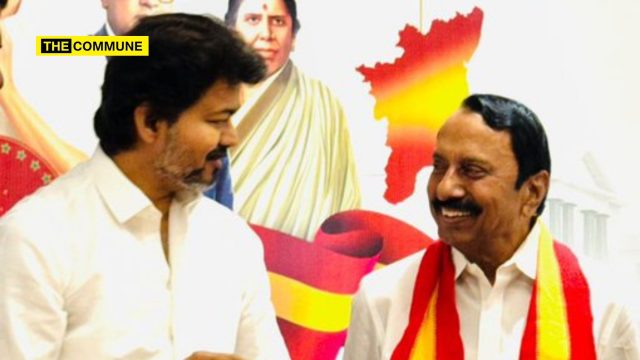
“You, As The leader, Should Control The Crowd, Set An Example By Telling Pregnant Women & Differently-Abled Not To Come”: Madras High Court Tells TVK Chief Vijay On Public Meetings

tvk vijay

The Madras High Court on 18 September 2025 emphasised the need for Tamil Nadu authorities to frame clear guidelines for collecting monetary deposits from political parties intending to hold public meetings and other events, so they can be penalised in case of damage to public property. Justice N. Sathish Kumar directed Additional Public Prosecutor E. Raj Thilak to submit a report by 24 September 2025 on the proposed guidelines, which should apply to all political parties and other organisations intending to conduct public events, “without any discrimination.”

The interim direction followed the submission of photographs by the APP showing damage to public property during a large gathering for the campaign of actor-turned-politician Vijay’s Tamilaga Vettri Kazhagam (TVK) in Tiruchi on 13 September 2025.

The photographs were presented during the hearing of a writ petition (criminal) filed by the TVK, which accused police of imposing “practically impossible and onerous conditions” whenever it sought permission for campaigns by its leader. Senior counsel V. Raghavachari told the court that the Tiruchi police had imposed as many as 23 conditions for the 13 September 2025 campaign, including barring pregnant women, elderly people, and persons with disabilities from attending the event. “How can we tell them not to come?” he asked.

The petition highlighted that the TVK is a registered political party with a core ideology of “secular social justice,” encompassing secularism, social equality, inclusive representation, linguistic harmony, democratic values, and the two-language policy. TVK’s deputy general secretary C.T.R. Nirmal Kumar filed a detailed affidavit, noting that the party’s rapid growth had drawn lakhs of supporters, particularly women, youth, and students, and had turned it into “a strong democratic force” in Tamil Nadu.

The affidavit further alleged that the rise of the TVK provoked resistance from a dominant political family, which “has continuously sought to obstruct our democratic activities,” resulting in party cadres facing difficulties in obtaining statutory permissions from police authorities despite full compliance with legal requirements.

The petition stated that general secretary ‘Bussy’ Anand (N. Anand) had submitted a representation to the Tiruchi Commissioner of Police on September 6 requesting permission to conduct a peaceful campaign at police-notified venues on 13 September 2025. Permission was only granted on 10 September 2025, with “arbitrary, onerous, and unreasonable” conditions, the petition claimed.

Despite these restrictions, Vijay’s campaign in Tiruchi was held peacefully and in strict adherence to the imposed conditions. The petition argued that police continued to apply “discriminatory and onerous” restrictions on the TVK while being more lenient with other parties. “The leaders of the ruling party as well as the other Opposition parties are conducting regular road shows, rallies, and public meetings at places of their choice without being subjected to such unreasonable conditions. In stark contrast, whenever the petitioner party applies for permission to conduct meetings in designated areas notified by the police, onerous and impractical conditions are consistently imposed,” it stated.

The petition also submitted a copy of permissions granted to another political party with more liberal conditions, highlighting the apparent bias. It requested a direction to the Director-General of Police to instruct subordinates to grant permissions for TVK campaigns between September 20 and December 20 in a “fair, uniform, and non-discriminatory manner.”

The High Court observed the need for the police to formulate uniform rules while granting permissions for public meetings. Justice N. Sathish Kumar suggested that parties could be required to deposit a fixed sum as compensation for potential damage to public property.

The court also emphasised the personal responsibility of Mr. Vijay in maintaining lawful conduct at his party events. “You, as the leader, should control the crowd,” Justice Sathish Kumar said, adding that Vijay could set an example by discouraging pregnant women and differently-abled individuals from attending large gatherings for their own safety.

Additional Public Prosecutor Raj Thilak informed the court that permission had not been denied but certain conditions were imposed to ensure law and order and presented photographs showing damage during the recent Trichy meeting. Senior Advocate V. Raghavachari argued that the conditions were impossible to comply with and were not imposed on other parties. “They have imposed conditions on the number of vehicles that should come, have said that pregnant women and differently abled people should not come. How can we tell them not to come?” he reiterated.

The court questioned whether compensation had been collected for the damage to public property, warning that it would intervene if necessary. The matter was adjourned to 24 September 2025 for further hearing.

Vijay’s campaign, which started in Trichy on 13 September 2025, will continue until 20 December 2025, covering districts across the state. Upcoming dates include Coimbatore, The Nilgiris, Tiruppur, and Erode on October 4-5, followed by Kanyakumari, Tirunelveli, and Thoothukudi on 11 October 2025, and Kancheepuram, Vellore, and Ranipet on 18 October 2025.

(With inputs from Live Law)

Subscribe to our channels on Telegram, WhatsApp, and Instagram and get the best stories of the day delivered to you personally.
Chief Justice Gavai Neither Retracts Nor Regrets Comments Mocking Hindu Petitioner’s Appeal To Restore Beheaded Vishnu Idol, Blames Social Media For Outrage

cji gavai chief justice gavai hindu beheaded vishnu idol

Chief Justice of India (CJI) BR Gavai on 18 September 2025 attributed the controversy over his recent remark in the Khajuraho Vishnu idol case to social media, while clarifying that he had intended no disrespect to religious sentiments.

“I respect all religions…This happened on social media,” the CJI said, indicating that the backlash was a product of online reactions rather than his intent.

The row stems from comments made by the CJI on 16 September 2025, when the Supreme Court refused to entertain a plea seeking restoration of a seven-foot beheaded idol of Lord Vishnu at the Javari temple in Madhya Pradesh. Directing the petitioner to approach the Archaeological Survey of India (ASI), the CJI had insensitively remarked: “Go and ask the deity itself to do something now. You say you are a staunch devotee of Lord Vishnu. So go and pray now. It’s an archaeological site and ASI needs to give permission etc. Sorry.”

The statement had prompted criticism from the majority Hindus, who described it as hurtful to Hindu beliefs.

During Thursday’s hearing, Solicitor General Tushar Mehta weighed in, observing how reactions on social media often escalate disproportionately. “We have seen this…There is Newton’s law which says every action has equal reaction, but now every action has disproportionate social media reaction, milord,” he remarked.

The petition at the centre of the dispute was filed by Rakesh Dalal, who argued that the Vishnu idol at the UNESCO-listed Khajuraho temple complex was mutilated during Mughal invasions and has remained unrestored despite decades of representations. He contended that the inaction violated devotees’ right to worship.

(With inputs from Bar and Bench)

Subscribe to our channels on TelegramWhatsApp, and Instagram and get the best stories of the day delivered to you personally.
Rohini Court Reserves Verdict In Paranjoy Guha Thakurta’s Plea Against Adani Gag Order

Delhi Court Refuses To Urgently Hear Paranjoy Guha Thakurta’s Plea Against Adani Gag Order

A Delhi court on Thursday reserved its order on an appeal filed by journalist Paranjoy Guha Thakurta challenging a gag order that restrained him from publishing allegedly defamatory stories against Adani Enterprises Limited (AEL).

District Judge Sunil Chaudhary of the Rohini Court reserved the verdict after hearing arguments from both sides at length.

Senior Advocate Trideep Pais, appearing for Thakurta, argued that the injunction was overbroad and lacked clarity. “The urgency is that an order has been passed by Central government to intermediaries to remove all the materials,” Pais submitted.

He contended that the companies mentioned in the impugned articles were not all Adani’s. “They say my reporting is damaging India’s energy interests. Trying to equate themselves with India. Court did not say how the material is defamatory or if the injunction is not granted it will cause irreparable loss…The order says they (AEL) have not been found guilty of anything. But that is not the test of defamation,” Pais argued.

Criticising the scope of the order, he added: “A site has many articles. The judge has left it to the plaintiff to write to the intermediaries and get removed anything they find defamatory…The plaintiff has been put in the shoes of a judge.”

Pais also questioned the role of the Central government, saying it had acted despite not being a party to the proceedings.

During the hearing, the court asked Adani’s counsel to clarify jurisdiction. Advocate Vijay Aggarwal, representing Adani, argued that the defamation was online and therefore fell under its scope. Another counsel sought an injunction until the case was decided.

However, Judge Chaudhary observed, “Till the court makes a declaration, how can the injunction be passed?” When Aggarwal said Adani had not yet filed a reply, the judge responded, “To aap reply file kare hum tab tak stay kar dete hain. Aapne to caveat file kar rakha tha. Inko to pata bhi nahi tha ki aap Rohini main suit file karoge. (You file a reply, till then we will stay the order. You have filed a caveat. They didn’t even know you would file a suit in Rohini Court).”

Senior Advocate Anurag Ahluwalia, also representing Adani Enterprises, said the Supreme Court had already given the company a clean chit. Taking the court through the order under challenge, he submitted, “The court has given a finding that the further publication and circulation may tarnish my image.”

When asked by the court to identify the defamatory material, Ahluwalia pointed to a line alleging that government norms were tweaked for Adani. The judge replied, “To isme aapko kya dikkat ho rahi hai? (What is your problem with that?).”

Ahluwalia also cited another article alleging the Modi government altered rules for the company’s benefit. At this point, the court pressed him to demonstrate how such reports affected Adani’s share price.

“Yesterday, they started with saying that the Central government is in our pocket,” Ahluwalia said. The judge interjected, “Aap bhi kisi ko pocket main hoge. Bolta rahe…Koi kuchh bhi bolta hai. (You are also in someone’s pocket. Let them say… people will say things).”

Ahluwalia further argued: “Is article ki language…they declare it as a scam. When you have such materials, you don’t publish but you go around and say there is a scam. Our agony is that the buck doesn’t stop here. Time and again, there are articles tarnishing me. If they are journalists…They are sitting and scheming in the room, making up stories. Should I wait for my shares to go down…My lord should ask them what is the China angle behind them.”

Aggarwal also pointed out that Thakurta was being investigated by the National Investigation Agency (NIA) in a terror case.

Responding, Pais reiterated that his reporting was based on publicly available information. “The US material was in public domain,” he said.

After hearing rejoinders, the court reserved its order.

The appeal was filed after Senior Civil Judge Anuj Kumar Singh of the Rohini Court, on 6 September 2025, ordered removal of allegedly defamatory content against AEL and restrained journalists from publishing unverified material about the company.

Thakurta and other journalists challenged the order, arguing that their reports referred to Gautam Adani and the Adani Group, not AEL specifically. “It is submitted that a bare perusal of the reproduced portions of the alleged defamatory articles clearly reveals that at no place has the Plaintiff been called out, referred to, or even remotely mentioned. In each and every impugned publication, the references are confined exclusively to Mr. Gautam Adani or to the Adani Group,” the petition stated.

Thakurta’s appeal also claimed the order was “over-broad and all-encompassing” as it did not identify which specific content was defamatory.

In its defamation suit, Adani Enterprises alleged that certain journalists, activists and organisations had damaged its reputation and caused stakeholders “billions of dollars” in losses. The company accused them of aligning with “anti-India interests” and targeting its infrastructure and energy projects.

The suit cited material published on websites including paranjoy.in, adaniwatch.org and adanifiles.com.au.

The appeal on behalf of Thakurta was filed through Advocates Apar Gupta, Indumugi C and Naman Kumar, while another appeal on behalf of journalists Ravi Nair, Abir Dasgupta, Ayaskant Das and Ayush Joshi was filed by NG Law Chambers through Advocate Nakul Gandhi.

(With inputs from Bar and Bench)

Subscribe to our channels on TelegramWhatsApp, and Instagram and get the best stories of the day delivered to you personally.
BJP Leader Annamalai Slams DMK Govt Over 256 Abandoned Govt Schemes

bjp dmk annamalai

Former Tamil Nadu BJP president K. Annamalai launched a scathing attack on the DMK regime, accusing it of abandoning the very promises it came to power with. He said the ruling party, which had been staging “daily dramas” without fulfilling even a fraction of its commitments, now stands exposed in its final year. His remarks came after reports confirmed that the DMK government has allegedly decided to scrap 256 Assembly-announced schemes across various departments.

Taking to X, Annamalai wrote, “A recent report has surfaced that the DMK government, which has been deceiving the public for the past four years by making hollow announcements for mere publicity since coming to power, has now decided to abandon 256 schemes it announced in the Assembly because they are not feasible. The true nature of the DMK government, which has not even fully implemented 10% of its election promises and has been staging a new drama every day, is now being exposed in its final year of rule. Chief Minister M.K. Stalin had said, “We will do what we promised, and we will do what we didn’t.” The abandonment of these 256 announcements is proof that nothing he promised has been done. The only thing the DMK government has done in its four-and-a-half years in power without promising it is erecting his father’s statues in every town.”

His criticism comes as officials confirmed that of the 8,634 announcements made since the DMK came to power in 2021, government orders have been issued for 4,516, with work underway on 3,455 of them. A total of 381 announcements remain pending, while 256 have now been dropped as unimplementable. These decisions were reviewed in a meeting led by Chief Secretary Shiv Das Meena, where departments were instructed to formally withdraw impractical proposals.

Among the scrapped projects are the Energy Department’s initiative to convert overhead cables into underground lines, the New Avadi Road–Perambur Barracks Road expansion in Chennai, and a proposed sky bridge connecting high-rises at Nandanam and Anna Salai.

Officials clarified that before issuing such announcements, departments must carefully assess whether there is at least a basic possibility of execution. Land acquisition hurdles, financial constraints, and feasibility concerns were cited as key reasons behind the cancellations.

(With inputs from Dinamalar)

Subscribe to our channels on TelegramWhatsApp, and Instagram and get the best stories of the day delivered to you personally.