Home Blog Page 240

13 Cases That Expose Systemic Cover-Up Of Child Sexual Abuse By Church Officials
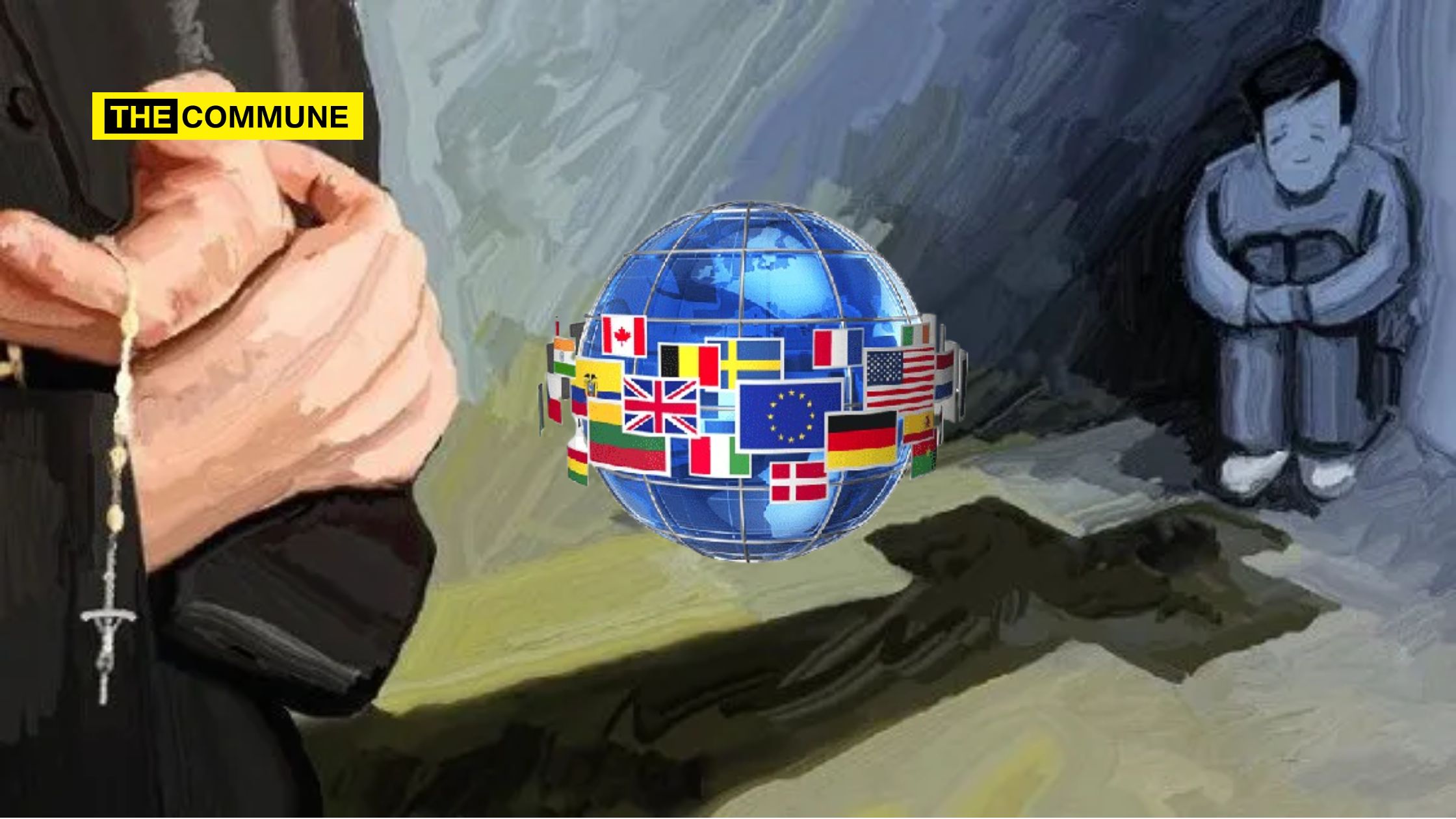
child Sexual Abuse In Churches: A Global Issue Of Systematic Cover-ups And Silenced Victims, Here Are 26 Instances sex abuse italy

In a case that exposes a deeply troubling pattern of institutional failure, church leaders within the Old Apostolic Lutheran Church (OALC) are accused of knowingly concealing the crimes of a serial child sex abuser for approximately two decades, allowing him to continue preying on victims across two states.

Clint Massie, a member of the OALC community, sexually abused children over a period of about 20 years. A recent report from 20 November 2025, reveals that church leaders, including prominent figure Daryl Bruckelmyer, were aware of Massie’s actions but deliberately chose not to report him to law enforcement.

Instead of involving the police, the leaders orchestrated so-called “forgiveness sessions.” In these meetings, victims were pressured to forgive Massie and were given a devastating ultimatum: they were told that if they spoke of the abuse again, the sin would become their own. This manipulative tactic effectively silenced the victims and created a protective shield for the abuser, enabling Massie to continue his cycle of abuse unchecked.

This case is not an isolated incident. It is part of a broader, global pattern of religious institutions prioritizing their reputation over the safety of children. In this report, we take a look at 13 separate incidents of child sexual abuse from 2016 to 2025 involving pastors, leaders, and members of various churches. In each case, the crimes were not only concealed internally but were also never reported to authorities, in direct violation of mandatory reporting laws designed to protect the most vulnerable.

#1 Church Shielded Abuser, Silenced Victims – November 2025 – Minnesota, USA

Church leaders in Duluth, Minnesota, concealed a serial child sex abuser for two decades. Clint Massie abused children within the Old Apostolic Lutheran Church (OALC). Preacher Daryl Bruckelmyer and other leaders knew but never reported him to police. Instead, they held “forgiveness sessions,” pressuring victims to forgive Massie. They were told speaking out again would make the sin theirs. This manipulation allowed Massie’s abuse to continue. Massie pleaded guilty in 2024 and was sentenced to 7.5 years in prison. While church officials faced no charges, prosecutors stated they should have done more to stop him, highlighting a systemic failure to protect children.

#2 Mississippi Pastor Arrested for Failing to Report Child Sex Abuse – November 2025

In Southaven, Mississippi, Pastor Jonathan Colvin was arrested on 18 November 2025, for allegedly failing to report a child sex crime. Colvin, a 38-year-old youth and family minister at the Goodman Oaks Church of Christ, is accused of violating Mississippi’s mandatory reporting laws. These laws require professionals who work with children to immediately report any known or suspected incidents of abuse to authorities. The charge stems from Colvin’s alleged knowledge of a sexual abuse incident, reported to involve minors, which he did not report to the police.

#3 NSW Church Hid Pedophile Leader – November 2025 – Maitland, Australia

Senior leaders of Maitland Evangelical Church, including Pastor Roger Burgess, were accused in parliament of concealing child sex abuse. They failed to disclose crimes by youth leader Matthew Briggs, a known pedophile. After Briggs’ death, Burgess misled the 500-member congregation, calling the matter “extreme domestic violence.” Additional allegations involved a separate cover-up of abuse against a teenage girl. When former member Phil Bear raised concerns, church leadership discredited him.

#4 Florida Pastor Charged for Silence – September 2025 – Gainesville, Florida

Pastor Mark Vega of Ignite Life Center was charged with willfully failing to report child sexual abuse. Despite receiving allegations starting in 2019, Vega managed cases internally, allowing accused youth leaders to continue working with minors. Church leaders discouraged families from involving police, proposing internal “restoration” plans instead. This failure enabled further abuse by multiple youth leaders, including Vega’s son. The case exposed how internal handling by the Florida Multicultural District of the Assemblies of God created an environment where predators could continue to operate with impunity.

#5 Arizona Pastor Arrested After Cover-Up – June 2025 – Tucson, Arizona

Tucson police arrested Pastor Isaac Noriega for failing to report repeated child sexual abuse allegations against church member Jose Mora. Noriega was informed of multiple incidents where Mora inappropri touched young boys from the congregation. Despite this knowledge and a direct admission from Mora, the pastor did not alert law enforcement. Noriega now faces two counts related to the neglect of a minor.

#6 Archbishop Resigns Over Abuse Scandal – November 2024 – United Kingdom

Archbishop of Canterbury Justin Welby resigned after an independent investigation found he failed to report serial abuse by John Smyth. Welby learned of the physical and sexual violence in 2013 but did not notify authorities, allowing Smyth’s abuse to continue. Smyth’s crimes, spanning decades, victimized over 100 boys and young men in the UK and Africa. Welby acknowledged personal and institutional failure, stating stepping aside was in the church’s best interest.

#7 San Diego Pastor Ignored Reporting Law – June 2024 – San Diego, California

San Diego authorities charged Pastor Eric Manuel Merino of Victory Outreach Church for failing to report the sexual abuse of a teenage girl by choir leader Rafael Valentin Magana. As a mandated reporter, Merino was legally required to notify law enforcement or child services after learning of the crime. Magana was later convicted of a felony lewd act with a minor.

#8 Oklahoma Megachurch Staff Charged – November 2019 – Tulsa, Oklahoma

Five Victory Christian Center employees were charged with failing to report child abuse. The charges followed the arrest of two former employees: Chris Denman, accused of raping a girl under 14, and Israel Castillo, accused of sending explicit messages to a 15-year-old. The five staff members, including pastors’ family members, knew of the allegations but did not report them as required by law. All were booked into jail and released on bond.

#9 Indiana Pastor Knew, Didn’t Report – July 2019 – Jasper, Indiana

Pastor Howard Geck of Jasper Apostolic Church was charged for failing to report child abuse allegations against church member Dexter Hensley. Police discovered that juveniles had disclosed incidents of molestation and sexual battery to Geck two years prior, but he never notified authorities. The failure to report allowed Hensley to remain a potential threat within the community. Geck faced a Class B misdemeanor, a charge critics argue is too lenient for such a grave failure of responsibility.

#10 Alabama Pastor Ignored Girl’s Plea – September 2017 – Huntsville, Alabama

Pastor Michael Walker of Southside Baptist Church was charged with a misdemeanor for failing to report suspected child sexual abuse. The victim, a 12-year-old girl, reported being fondled by former sheriff’s investigator Roland Campos to Walker in March 2017. Despite this direct disclosure, the pastor did not notify law enforcement or child protection services. Campos was arrested months later in August. Walker was released on bond, facing a Class C misdemeanor.

#11 Vatican Officials Probed in France – March 2016 – Lyon, France

Senior officials of the Catholic Diocese of Lyon, including Archbishop Cardinal Philippe Barbarin, were investigated for failing to report clergy sexual abuse. Father Bernard Preynat was indicted for abusing young Scouts between 1986 and 1991. Prosecutors found that senior Vatican officials were aware of Preynat’s crimes but did not report them to police, violating French law. Authorities investigated them for endangering lives and non-reporting of a crime.

#12 Tulsa Megachurch Delayed Reporting Rape – September 2012 – Tulsa, Oklahoma

Leaders at Victory Christian Center faced charges for delaying the report of a 13-year-old girl’s rape. The assault occurred on church property, and the victim disclosed it three days later. However, staff, including the senior pastor’s son and daughter-in-law, waited two weeks before notifying authorities, violating mandatory reporting laws. Two janitors were arrested; one for the rape and another for making a lewd proposal.

#13 Tongan Pastor Failed to Protect Boys – December 2012 – West Valley City, Utah

Former Tongan United Methodist pastor Filimone Havili Mone was charged and removed from his position for failing to report child abuse. Mone learned that an older boy in the congregation had sexually abused several young boys but did not alert authorities. This inaction violated both state law and the United Methodist Church’s mandatory reporting policy. His removal by national church leadership demonstrated an institutional attempt to enforce accountability.

Subscribe to our channels on WhatsAppTelegram, Instagram and YouTube to get the best stories of the day delivered to you personally.

Dravidian Model Aavin: Not Passing GST Cut Benefit To Customers, Discounts Withdrawn, Prices Up Again

Aavin’s decision to withdraw its festival-season discount on ghee from 1 December 2025 has triggered renewed criticism from milk dealers, who allege that the State-run cooperative has still not passed on the GST rate reduction to consumers.

The controversy dates back to the September 3 GST Council meeting, where the Union government announced a GST rate cut from 12% to 5% on ghee, butter and cheese, and from 18% to 5% on ice cream. UHT milk and paneer were fully exempted from GST. The revised rates officially came into effect on 22 September 2025.

According to milk dealers’ associations, cooperatives across the country and major private dairies revised their price charts soon after the GST cut came into force. However, the Tamil Nadu Cooperative Milk Producers’ Federation (Aavin), responsible for marketing milk and dairy products under the Aavin brand “failed to reduce the rate,” alleged the associations.

Instead of implementing the mandated post-GST price reduction, Aavin announced a temporary festival-season discount, keeping market prices unchanged until 30 October 2025. The Tamil Nadu Milk Dealers Employees Welfare Association (TNMDEWA) said the discount was “used as a substitute for the mandatory GST-linked price reduction.”

Tensions escalated following Aavin’s circular dated 28 November 2025, instructing all district unions and channel partners to withdraw the ghee discount from December 1 and adopt a revised price chart. As per the circular, Aavin restored its pre-GST retail prices, effectively increasing ghee prices by:

  • ₹40 per litre
  • ₹20 per 500 ml
  • ₹350 per 5 litres
  • ₹1,155 per 15 kg tin

Condemning this move, association president S.A. Ponnusamy said, “Aavin first avoided implementing the GST reduction, then masked it as a festival discount. Now it has once again placed an unnecessary financial burden on consumers.”

Dealers said Aavin’s refusal to reflect the GST cut “amounted to disguised tax evasion,” and demanded that the cooperative immediately restore the reduced rates, publish a proper post-GST price chart, and ensure that the benefit of the tax reduction reaches consumers directly.

TNMDEWA had also filed a complaint with the GST headquarters in Chennai on 24 September 2025. With the GST Council yet to respond, the association said it would intensify its campaign if corrective action was not taken soon.

(Source: DTNext)

Subscribe to our channels on WhatsAppTelegram, Instagram and YouTube to get the best stories of the day delivered to you personally.

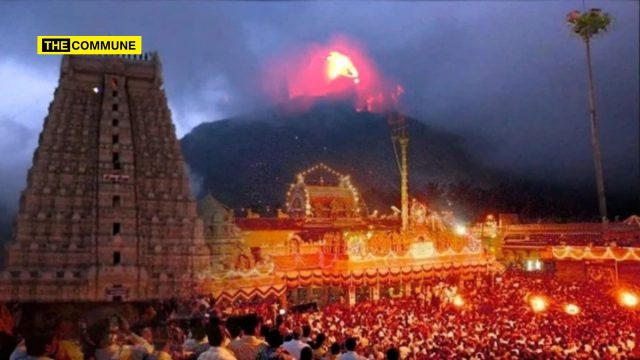
Madras High Court Steps In Ahead Of Deepam: Mandates Strict Crowd Control At Tiruvannamalai

Madras High Court Steps In Ahead Of Deepam: Mandates Strict Crowd Control At Tiruvannamalai

The Madras High Court has recorded comprehensive safety and crowd-management measures promised by various government departments for the peaceful conduct of the Tiruvannamalai Mahadeepam festival, following a writ petition filed by public-spirited advocate Elephant G. Rajendiran.

Justice PB Balaji pronounced the order in W.P. No. 44523 of 2025, which sought extensive directions to the State authorities to ensure safety and convenience for the lakhs of devotees undertaking Girivalam and visiting the Sri Arunachaleswarar Temple for the Deepam festival.

Rajendiran, appearing as party-in-person, highlighted issues faced annually by the “devotees who come not only from other parts of the country, but also from outside India,” and sought preventive steps to avoid hardship or harassment during the massive congregation that crosses 30 lakh pilgrims each year.

Court Took Up Case at Admission Stage

When the petition first came up, the Court directed officials including the Director General of Police, Tiruvannamalai District Collector, HR&CE Department, Municipality and others to file immediate status reports outlining preparations for the festival.

The Inspector General of Police, North Zone, filed a detailed report on 24 November 2025, followed by the District Collector’s report filed through the Additional Advocate General on the next hearing date. The Court noted that these were filed after “serving an advance copy to Mr. Elephant G. Rajendiran.”

Petitioner’s Key Concerns Presented Before Court

Rajendiran told the Court he was satisfied with most safety measures but raised three specific concerns:

  1. Harassment by fake Sadhus and persons belonging to the Aravani (Thirunangai) community, who “harass innocent devotees and go to the extent of even threatening them to part with huge sums of money.”
  2. Archakars allegedly demanding ransom money, especially at the Kubera Lingam.
  3. Mobile vans offering massages and other unrelated services along the Girivalam path.

Authorities Assure Action

The Additional Advocate General, citing the District Collector’s status report, informed the Court that “specific Committees have been formed to monitor such intrusion and excesses” along the Girivalam path and that this grievance “is being seriously addressed and the petitioner need not have any apprehensions.”

On the issue of Archakars, the State submitted that identity cards have been issued to all priests, adding that “this grievance of the petitioner is adequately taken care of.”

Regarding the unauthorized vans, the AAG said “this issue will also be addressed” and that instructions would be issued to police personnel deployed during festival days.

Court Records Reports; Expects Implementation “In True Letter and Spirit”

Justice Balaji noted, “This Court is confident that the various measures set out in the said status reports would not remain just on paper, but would be implemented in true letter and spirit.”

The Court formally recorded the status reports filed by the Inspector General of Police and the District Collector and then disposed of the writ petition, closing the connected miscellaneous petitions.

Subscribe to our channels on WhatsAppTelegram, Instagram and YouTube to get the best stories of the day delivered to you personally.

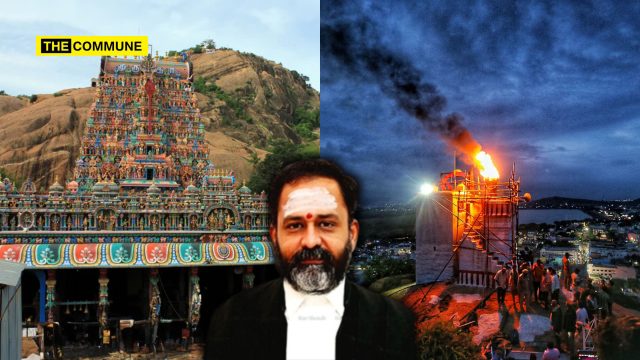
“Deepathoon Is Temple Property, Dargah Management Hasn’t Demonstrated How They’ll Be Affected, Lighting Lamp Atop Hill Is Tamil Tradition”: What Justice GR Swaminathan Told In His Order On Thiruparankundram Hill Karthigai Deepam Lighting

justice gr swaminathan karthigai deepam

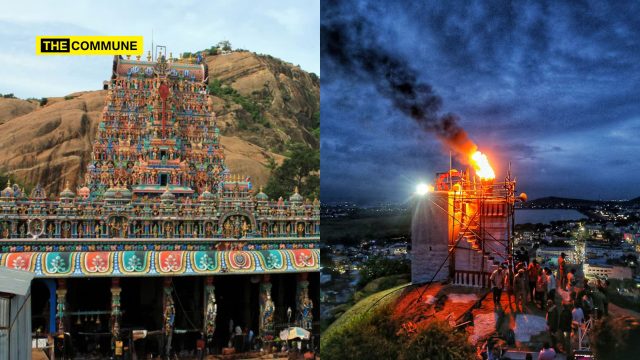
In a significant ruling, the Madurai Bench of the Madras High Court directed the management of the Arulmigu Subramania Swamy Temple in Thirupparankundram to light the Karthigai Deepam (festival lamp) at the ancient stone lamp pillar known as the “Deepathoon,” located on one of the hill’s peaks.

Justice GR. Swaminathan pronounced the common order on Monday, 1 December 2025, allowing four writ petitions that sought the lighting of the lamp at the Deepathoon, while dismissing one petition that opposed it.

Background Of The Dispute

The legal battle stems from a long-standing dispute over religious rights and property on Thirupparankundram Hill, which houses both the Hindu temple and the Muslim shrine, Sikkandar Badhusah Dharga.

The lead writ petition was filed by Rama Ravikumar, who claimed to be a devout Murugan devotee and sought quashing of a November 3, 2025 communication by the temple Executive Officer refusing permission to light the Karthigai Deepam at the Deepathoon and insisting that the lamp would be lit only near Uchi Pillaiyar Temple as per existing custom.​

Several other writ petitions by devotees, including M. Arasupandi, S. Paramasivam, A. Karthikeyan and R. Kanagavel Pandian, either sought directions to light the sacred lamp at the ancient stone lamp pillar atop the hill or opposed any deviation from the present practice of lighting only at the Uchi Pillaiyar location. The State, HR&CE officials, temple management, Sikkandar Badhusha Dharga, the Waqf Board and the Archaeological Survey of India were among the respondents, with multiple parties impleaded on both sides of the dispute.

Key Arguments And Court’s Findings

The court meticulously examined the century-old legal history, including a 1923 civil suit (O.S No.4 of 1920) which was upheld by the Privy Council. The judgment established that the temple holds title to the entire hill except three specific areas granted to the Muslim community: the Nellithope burial ground, the flight of steps leading to the mosque, and the mosque site itself.

“The unoccupied portion of the hill has been in the possession of the temple from time immemorial,” the judgment emphasized. Deepathoon, located on the lower peak, lies outside Muslim-owned portions.

That the Deepathoon is a temple property is proved by the
recent happenings.”, Justice GR Swaminathan said.

The judge also noted that the temple management itself had recently “hurriedly put up a covering” around the Deepathoon, proving it exercises control over the structure: “If the Deepathoon and the adjoining area belonged to the Dargha, the Dargha would not have kept quiet.”

Lighting lamp atop the hill is a Tamil tradition. There is a popular
saying “Kundrin Mel Itta Vilakkai Pola” (Like a lamp lit atop the hill).“, the judge noted.

Justice Swaminathan noted, “The Privy Council had held that other than these three, the devasthanam has title and possession over the rest of the hill.” He emphasized that the Deepathoon is not situated within any of these Muslim-owned areas but on a lower peak, at least 50 meters away from the mosque.

Rejecting the argument of res judicata, the judge clarified that earlier litigation dealt with lighting the lamp at the hilltop where the mosque stands, not at the Deepathoon on the lower peak. “A settled issue cannot be reopened. But the petitioners before me do not insist that on the hilltop, the lamp should be lit. They only want the lighting of the lamp at the Deepathoon,” he observed.

Locus Standi And Custom Vs. Right

The court held that the petitioners, as devotees, are “persons having interest” under the Tamil Nadu HR&CE Act and have the locus standi to seek protection of temple property. Importantly, the judge distinguished between a matter of “custom” and a matter of “right.”

“The contesting respondents have lost sight of a fundamental aspect. The question is not one of custom. The question is one of right. Lighting lamp atop the hill is a Tamil tradition.”

He quoted classical Tamil literature, including Seevaga Chinthamani, to establish the antiquity of hill-top Deepam lighting traditions atop hills during Karthigai month, as seen in Thiruvannamalai and Yanai Malai.

Property Protection and Duty of Temple

Justice Swaminathan underscored the temple management’s duty to assert its property rights to prevent encroachment or loss. “It is therefore necessary that the temple management remains vigilant throughout to foil any attempt to encroach on its property. This can be done only by regular and periodical assertion of title,” he noted.

He also referenced a 1996 court order (W.P.No.18884 of 1994) which permitted lighting the Deepam at any place on the hill with prior HR&CE permission, provided it was at least 15 meters away from the Dargah areas. The Deepathoon, being 50 meters away, complies with this condition.

Criticism Of Temple Management

The order expressed disappointment that the temple management had aligned with the Dargah trustees in opposing the petitioners. “The temple management in the instant case appears to have forgotten the lessons of history… But now the temple management is on the same page as that of the Dargha,” the judge remarked.

He further said, “While amity is to be celebrated, rights of both the parties have to be respected. Rights of one party cannot be sacrificed. When the Dargha management recently asserted that the hill is not Skandar hill (another name of Lord Muruga) but Sikkandar hill (Sikkandar is the name of the Fakir whose body is said to be interred in the Dargha) and attempts were made to offer animal sacrifice in the hill premises, the cause was taken up not by the temple management but by the devotees and
activists. The temple trustees are keeping quiet.” 

He also quashed the Executive Officer’s impugned decision as lacking jurisdiction, noting that such a vital issue should have been decided by the Temple Trust Board.

Peace Committee Resolution Mentioned

The Court held there would be no prejudice to the Dargah, “By lighting the lamp at Deepathoon, the rights of the Dargha or the Muslims will not in any way be affected… Deepathoon is located 50 meters away from the Dargha.”

Justice GR Swaminathan noted that the Dargah management has not demonstrated as to how they will be affected if the lamp is lit at the Deepathoon.

The court noted a 2005 peace committee resolution where the Dargah management had expressed “no objection” to lighting the lamp at Deepathoon, provided it was beyond 15 meters from the Dargah. “Though this is not an enforceable resolution, one can safely conclude that the opposition appears to be more at the instance of certain vested interests,” Justice Swaminathan observed.

Final Directions

The court directed the temple management/devasthanam “to light the Karthigai Deepam at Deepathoon also apart from the usual places” starting from this year, that the Commissioner of Police, Madurai City, had to ensure compliance and prevent any obstruction.

“Lighting a lamp is a sacred act. It cannot offend anybody’s sensibilities,” the judge concluded, dismissing the argument that the Places of Worship Act would be violated.

Subscribe to our channels on WhatsAppTelegram, Instagram and YouTube to get the best stories of the day delivered to you personally.

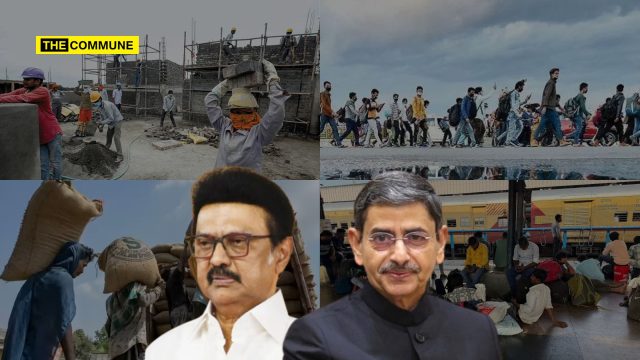
How DMK’s Anti-Hindi Politics Affected Migrant Labourers In Tamil Nadu, TN Governor RN Ravi Reveals

In a recent interview with Tamil Janam news channel, Tamil Nadu Governor RN Ravi alleged that the DMK government has systematically created a hostile environment for linguistic minorities and migrant workers, claiming this extended even to the denial of opportunities for children to learn their mother tongue in schools. His comments came in the context of a broader discussion on what he described as political attempts to project Hindi-speaking communities as a cultural threat to the state.

The Governor was responding to a question about Prime Minister Narendra Modi’s remarks during the Bihar election campaign, where he had stated that Biharis were being harassed in Tamil Nadu. Asked whether he had received “concrete evidence” of such harassment, he said he had no desire to “reopen a wound, a healing wound,” but went on to describe what he termed a sustained, politically driven atmosphere of intimidation between 2022 and 2023.

According to Ravi, the climate of hostility began when “senior ministers in the state government… had articulated their anti-Hindi position by speaking migrant laborers using the expression like panipuri selllers – “This is a guy who only bihari or the Hindi speaking guys are only fit for selling panipuri.”

He said that in April 2023, posters appeared across various parts of the state, featuring photographs of a political leader “threatening these Hindi speaking migrant laborers setting the deadline for them to leave Tamil Nadu.” He added, “Some of those posters are still with me… I have seen those posters myself.”

Ravi said these threats triggered “massive exodus” among workers in “labor intensive industries, construction, texile, printing,” which he said “heavily suffered” as a result. He described visiting several districts to meet frightened migrant workers: “I tell the people, don’t worry, people are very nice and hospitable.” He said he raised the issue with police officials, asking, “What is this hate campaign?”

Despite assurances from local officials, he stated that “some of the migrant laborers were assaulted, physically assaulted,” prompting him to issue a public message on May 5 to calm fears. “You don’t have to worry about it. People are so nice here they will not trouble you,” he said, recalling the social media appeal.

The Governor argued that the fear among migrants “was not ill-founded because there were evidence of open threat against them and some of them assaulted.” Industrial operators, he said, told him that their workforce had collapsed: “We are trying to get them back. They are not coming.”

He claimed the state government attempted “damage control” only after the economic impact became evident, maintaining that the climate of hostility had been built up which started from the middle of 2022, and it went on till mid 2023.

Governor Ravi repeatedly emphasised that Tamil Nadu’s people were not responsible. “People love them. People of Tamil Nadu who are very affectionate… know the worth of these migrant laborers.” Instead, he blamed “the perverse politics… projecting them as one those who have come to destroy our culture, our language,” which he said created imaginary fears leading to real consequences.

The remarks were made in a broadcast where Ravi also criticised the DMK government for preventing linguistic minorities from studying their own mother tongues in Tamil Nadu’s schools, linking this with what he described as an ideological push to frame non-Tamil linguistic groups as cultural outsiders.

Subscribe to our channels on WhatsApp, Telegram, Instagram and YouTube to get the best stories of the day delivered to you personally.
Dravidian Model Tamil Nadu: 85000 Teachers Fail In Tamil

More than 85,000 postgraduate teacher in Tamil Nadu have failed the mandatory Tamil language eligibility test conducted by the Teachers Recruitment Board (TRB), raising serious alarm over the quality of prospective teachers in a state that prides itself on linguistic identity.

The exam—introduced in 2022 as a compulsory qualifying test for all state competitive exams—required only 20 out of 50 marks and is widely considered equivalent to a Class 10–level Tamil paper. Despite this low bar, an overwhelming number of candidates, including many native Tamil speakers, failed to clear it.

The recruitment drive aimed to fill 1,996 PG teacher posts, with more than 2.2 lakh applicants appearing for the examination. Those who failed the Tamil eligibility paper were disqualified outright, as their primary subject answer sheets were not evaluated.

Educationists have expressed shock, calling the mass failure a reflection of deeper systemic problems in teacher training, linguistic proficiency, and academic standards in the state.

This mass failure is seen as a worrying indicator for Tamil proficiency and has prompted broader questions about the future quality of teaching and learning in government schools across the state, as many candidates had studied Tamil as their mother tongue throughout schooling but still failed to meet the minimum standard required for the teaching profession.

Source: Dinamalar

Subscribe to our channels on WhatsAppTelegram, Instagram and YouTube to get the best stories of the day delivered to you personally.

Madras High Court Madurai Bench Allows Karthigai Deepam To Be Lit At The Original Spot At Thirupparankundram Hill

Madras High Court Madurai Bench Allows Karthigai Deepam To Be Lit At The Original Spot At Thirupparankundram Hill

In a significant ruling, the Madurai Bench of the Madras High Court has permitted the lighting of the Karthigai Deepam at the original summit-lamp pillar atop Thirupparankundram hill on December 3, reviving a tradition that was halted during World War II under British-imposed safety restrictions.

The order was delivered while hearing a batch of petitions filed by Hindu Makkal Katchi members Rama Ravikumar and Solaikannan, who sought revival of the traditional ritual at its historic hilltop location.

For decades, the Deepam has been lit on a lower pillar near the Thirupparankundram temple, even though the historic “Deepa Thoon” at the hill’s summit was the traditional site.

The restriction dates back to 1912, when a legal case led to a prohibition on Hindus lighting the ceremonial lamp at the peak. Since then, the Deepam has been lit at an alternate spot known as the Moksha Deepam, a deviation that has long angered devotees who view it as a violation of their religious rights and an erosion of an ancient custom.

The petitions challenged the Subramaniya Swamy Temple administration’s decision to light the Deepam at the Deepa Mandapam, arguing it violates Agama Shastra principles and lacks historical precedent for that location. Petitioners claimed the summit pillar offers better visibility for devotees and aligns with ancient customs, citing 1862 and 1912 magistrate orders that restricted lighting elsewhere due to non-customary practices and potential law-and-order issues. They emphasized no communal risks, as the site is protected and monitored.

The court’s decision came in response to a petition seeking restoration of the original practice, arguing that no legal prohibition exists and that lighting the Deepam atop the hill carries greater spiritual significance and wider visibility.

The petitioners also highlighted that the summit pillar stands over 15 metres away from the nearby dargah, addressing concerns about religious sensitivities.

Temple authorities, supported by the Hindu Religious & Charitable Endowments Department and the Tamil Nadu Waqf Board, argued in favour of continuing the ritual at the lower pillar, citing logistical challenges and established practice.

After conducting a site inspection and hearing submissions from all sides, the High Court ruled that the centuries-old tradition should be restored. The bench held that there was no legal impediment to lighting the Deepam at the summit pillar and directed that the ritual be carried out there on December 3.

The order marks the reinstatement of a revered custom at one of Tamil Nadu’s oldest and most important Murugan shrines, ending a decades old dispute in the hilltop lighting of the Karthigai Deepam.

In October 2025, the Madras High Court – Madurai Bench issued a landmark order banning the sacrifice of goats and chickens, and prohibiting the cooking or serving of non-vegetarian food on Thiruparankundram Hill. The court also declared that the hill should no longer be referred to as “Sikandar Hill.”

Source: Dinamalar

Subscribe to our channels on WhatsAppTelegram, Instagram and YouTube to get the best stories of the day delivered to you personally.

India’s Diplomacy Of Restraint: The Global Outlier In A Zero-Sum World

In an era marked by geopolitical instability, nations increasingly resort to aggressive tactics, ranging from economic sanctions to outright military conflict, to assert dominance. This environment has eroded trust in concepts such as global peace and mutual cooperation, replacing traditional international relations with a zero-sum power dynamic.

Negotiations are often reduced to ultimatums, with weaker states subjected to exploitation and engineered dependencies as instruments of coercion. Powerful actors pursue disproportionate responses without restraint, driven by bloc formations centered on trade, commerce, and technological leverage.

National progress is frequently motivated by fear of vulnerability rather than shared aspirations for peace, prosperity, and human solidarity. Even advancements in science and technology, once dedicated to human betterment, have been repurposed as tools of suppression. Historically, diplomatic alliances resemble survival pacts in a predatory ecosystem, prioritizing short-term instincts over enduring partnerships grounded in common values.

Amid this landscape, India emerges as an outlier: a nation pursuing self-development without infringing on others’ sovereignty. Its growth model emphasizes domestic abundance and global prosperity, unencumbered by sectarian, religious, or economic biases. India’s actions reflect a deep civilizational ethos, exemplified by Operation Sindoor.

Despite enduring Pakistan-sponsored terrorism since independence, with the Pahalgam attack as a recent manifestation, India’s retaliation targeted only terrorism’s infrastructure and perpetrators, avoiding civilian casualties or escalation. This measured approach echoes the Mahabharata episode where Sage Vyasa intervened to prevent Arjuna from unleashing the Brahmastra against Ashwatthama, averting needless destruction.

In contrast, responses by other powers such as Israel’s against Hamas or Russia’s in Ukraine have drawn criticism for excess. While ancient civilizations like these retain historical legacies, their handling of adversarial interests often lacks restraint, bordering on the unrestrained. India, however, garners international acclaim for its firm yet proportionate stance against Pakistan, without leveraging geostrategic or economic influence to solicit approval.

India’s diplomatic engagements are fundamentally rooted in cultural foundations, evolving gradually unlike those of other nations, which prioritize security, finance, and trade. Prime Minister Narendra Modi’s personal outreach to global leaders fostering broad, informal connections stems from his formative experience as a swayamsevak in the Rashtriya Swayamsevak Sangh, the world’s largest sociocultural organization.

This contrasts with counterparts whose interactions are formal and tethered to immediate national interests. Such proactive engagement proved instrumental in countering provocations during India’s responses to the Uri and Pulwama attacks, by preemptively shaping global narratives on Pakistan-backed terrorism.

India consistently supports allies without endorsing violence. It has refrained from backing Russia’s invasion of Ukraine, advocating instead for regional peace, yet maintained ties with Moscow despite Western pressures – a testament to prioritizing enduring trust over transient alliances. During Sri Lanka’s economic crisis, precipitated by overreliance on China, India extended timely aid without retribution or demands for concessions, honoring ancient civilizational bonds. This mirrors Lord Rama’s post-victory conduct in the Ramayana: after defeating Ravana, he restored the kingdom to Vibhishana without annexation or expectations.

Prime Minister Modi’s diplomatic strategy is principled rather than opportunistic, aligning with the conventional imperatives of global politics. India views its historical resilience amid invasions as a mandate to advance humanity’s collective mission. While international relations often remain shortsighted and exploitative, India extends aid even to adversaries like Türkiye, despite its criticisms and support for India’s detractors.

The “Brand Bharat” embodies trust, mutual respect, and broader human goals. No other nation matches India’s reputation for reliability. Balancing power with self-respect underpins Indian diplomacy, promoting peace, development, and welfare. Its paramount aspiration envisions a global architecture grounded in universal Dharma; wherein sovereign interests converge in symbiotic harmony rather than antagonistic collision – a paradigm aptly designated as “Hindu Diplomacy.”


Subscribe to our channels on WhatsAppTelegram, Instagram and YouTube to get the best stories of the day delivered to you personally.

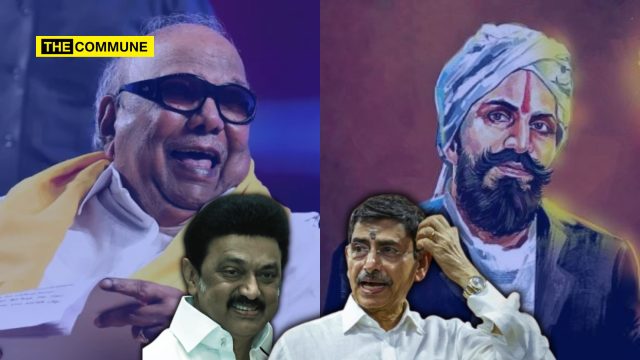
“DMK Opened 2 Chairs For Karunanidhi, None For Bharathi”: Tamil Nadu Governor RN Ravi Says

In a recent interview, Tamil Nadu Governor RN Ravi launched a scathing critique of the state’s ruling DMK government, questioning its commitment to the Tamil language and culture.

Governor Ravi pointed to the condition of state-run Tamil institutions as primary evidence of governmental neglect. The flagship example is the Thanjavur Tamil University, established in 1981 by former Chief Minister Dr. M.G. Ramachandran to promote Tamil language and heritage.

“Over 40 years down the line, this university is in the most pathetic condition,” Ravi stated. He revealed that the university struggles to even muster 1,000 students, a benchmark required by the UGC for central scheme benefits. “They are just adding up the PhD scholars somehow to reach the 1,000 mark.”, he noted.

The problems run deeper than enrollment numbers. The Governor highlighted a 50% vacancy in faculty posts, a complete lack of state-funded research grants for students, and a tragic situation where priceless Tamil heritage, over 11 lakh palm leaf manuscripts, is “rotting, getting destroyed” with no funds allotted for their preservation.

Political Patronage Over Cultural Icons

The critique then shifted from institutional neglect to a question of political priorities. Ravi contrasted the treatment of Dravidian political icons with that of Mahakavi Subramania Bharathi, a towering figure of Tamil literature and pride.

“There is not one chair in the name of Subramania Bharathi in our 20 state universities,” he asserted. Revealing a four-year personal struggle to establish such a chair, Ravi alleged that Vice-Chancellors are threatened by ministers and are “genuinely scared” of potential harassment and false police complaints.

This stands in stark contrast, he claims, to the establishment of “more than 15 chairs in our universities in the name of just three Dravidian icons.” Specifically, he noted that the current Chief Minister has established “two chairs in his father’s name [Kalaignar Karunanidhi] and two more chairs are coming up.”

For the governor, this disparity is telling. “This tells you their love for Tamil.”

The Central Government’s Initiatives: A Contrasting Narrative

To further underline the state government’s alleged failures, Ravi presented initiatives by the Central Government under Prime Minister Narendra Modi as a proactive force for Tamil culture.

He credited the Modi government with revitalizing the Central Institute of Classical Tamil (CICT) with a state-of-the-art building and taking the language to non-Tamil audiences. This includes:

  • A running diploma course in Tamil at Banaras Hindu University (BHU), which also hosts a Subramania Bharathi Chair.
  • A Tamil diploma course initiated at Guwahati University.
  • Promoting Tamil literature globally by setting up a Thiruvalluvar centre in Singapore, a Thiruvalluvar chair in a Malaysian university and at Boston University in the USA.
  • Funding Tamil language teachers in countries like Fiji.

“At this point of time,” Ravi concluded, “if I say that no leader has done as much service for Tamil language and culture than Prime Minister Modi.”

Subscribe to our channels on WhatsApp, Telegram, Instagram and YouTube to get the best stories of the day delivered to you personally.
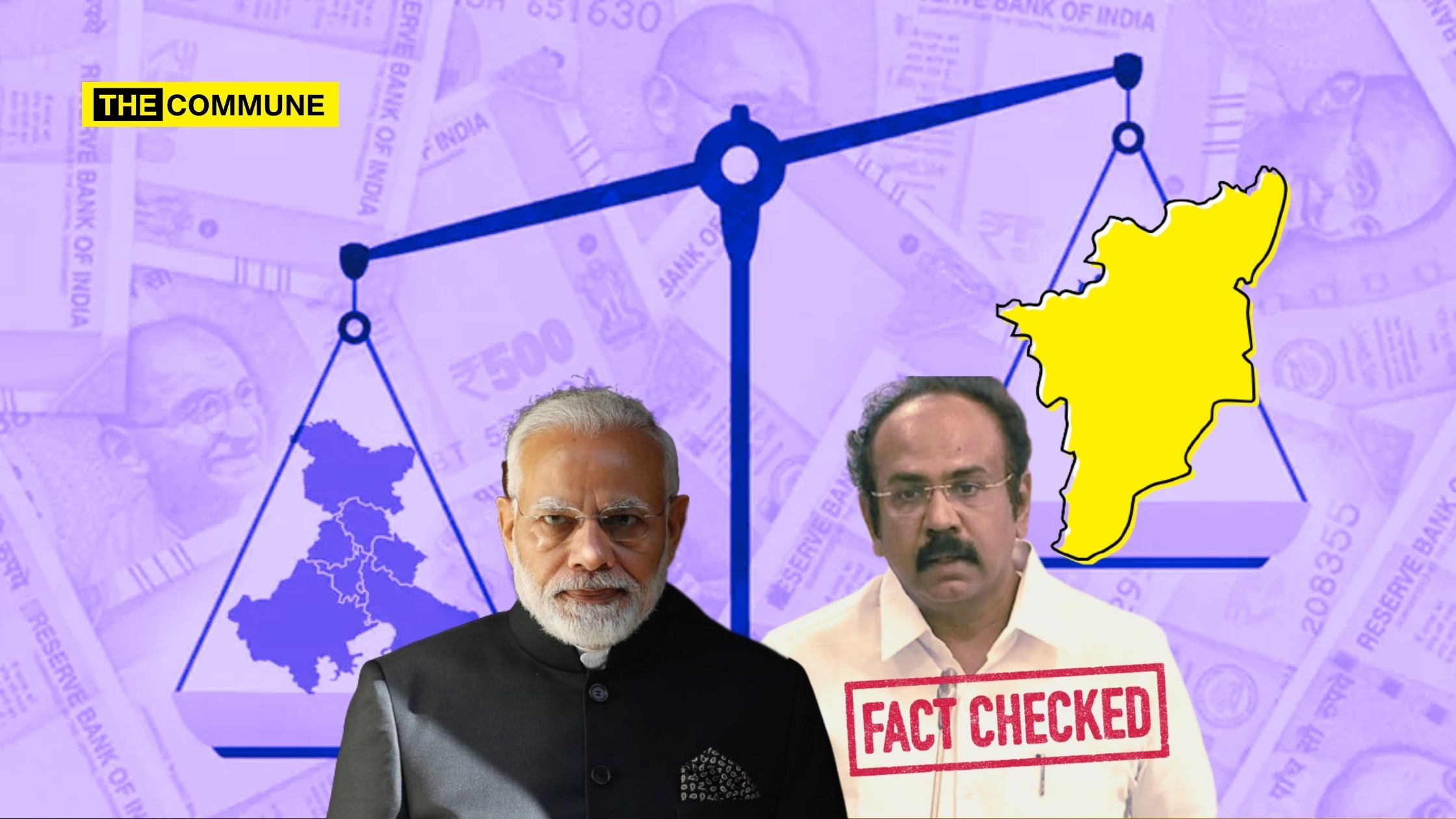
Fact-Check: BJP Govt Did Not Reduce Tamil Nadu’s Tax Share, Here’s The Proof

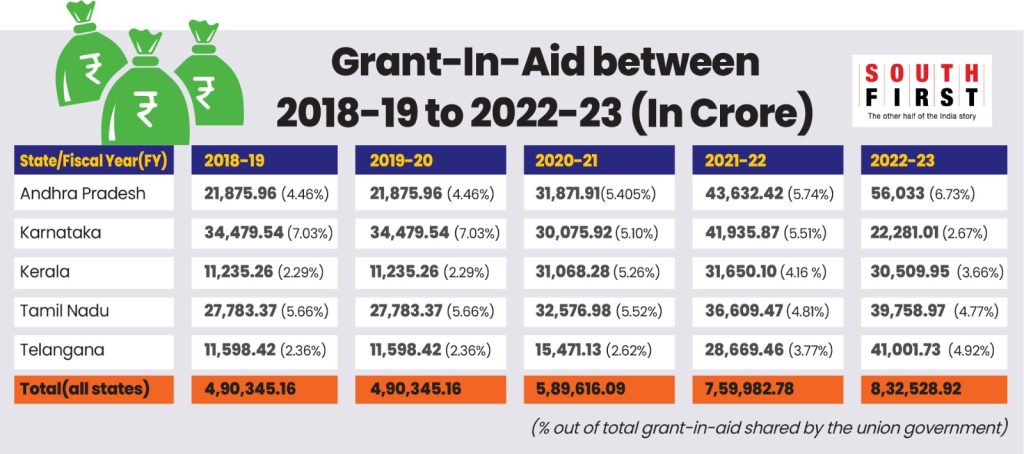
The DMK and its alliance parties have been relentlessly campaigning in Tamil Nadu that the BJP-led central government is siphoning off tax money from Tamils and giving it to North Indian states, particularly claiming that Bihar is being funded by Tamil Nadu’s taxes.

They use this narrative to:

  • Hide their political defeat,
  • Divert attention from the law and order problems under DMK rule,
  • Distract from the failures and ineptitude of their own administration.

The only weapon they wield is the claim that the BJP is betraying Tamil Nadu.

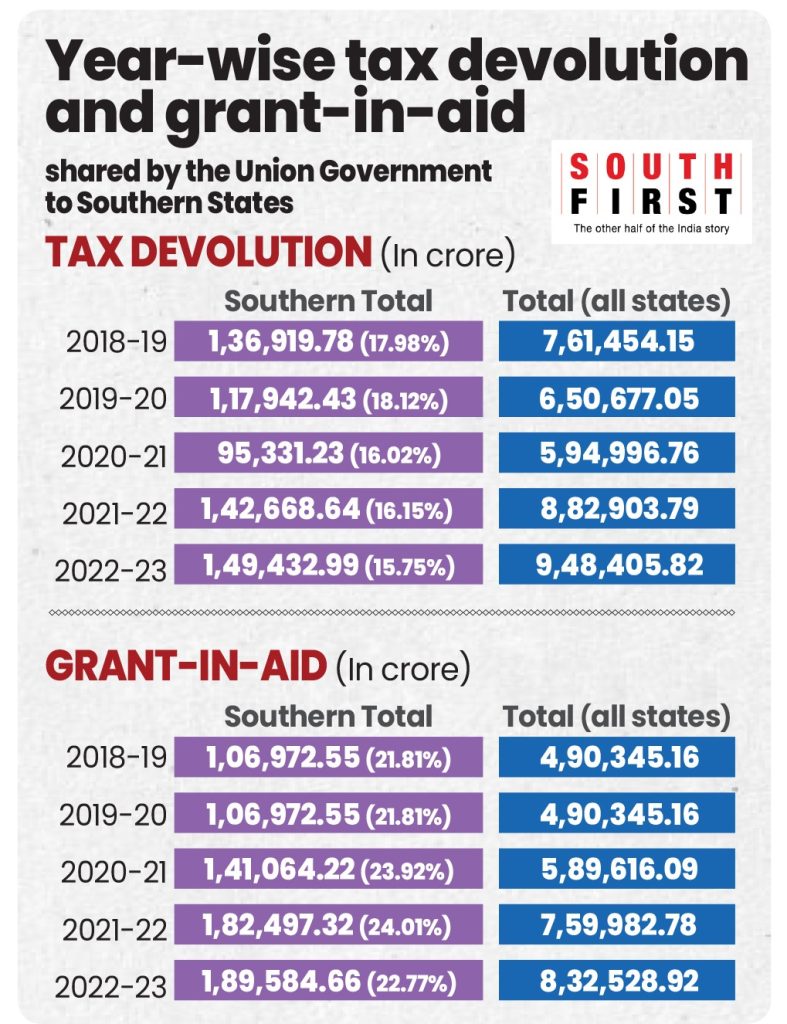
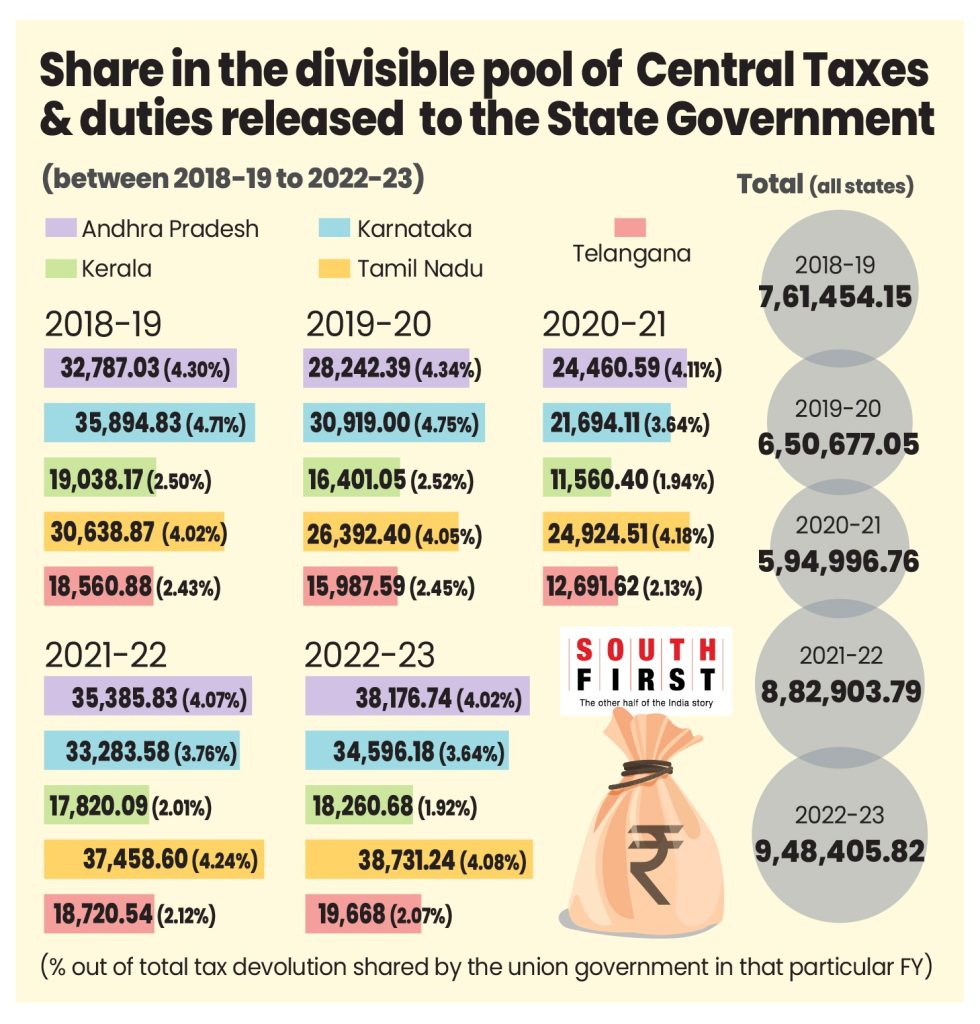
For example, when asked why the state has borrowed about ₹4.5 lakh crore in the last four years, the DMK says the Centre isn’t releasing Tamil Nadu’s rightful share and blames the BJP. Tamil Nadu Finance Minister Thangam Thennarasu stated that the Centre had reduced Tamil Nadu’s share in central taxes, dropping it from 7.931% to 4.079%.

As always, DMK mixes in a little truth with its lies. Yes, at one time Tamil Nadu’s tax devolution share was 7.9%. Yes, it is now 4%. However, what the finance minister did NOT explain is when and how this reduction occurred as distorting or hiding the truth is also a lie.

The Illusion Created By The DMK

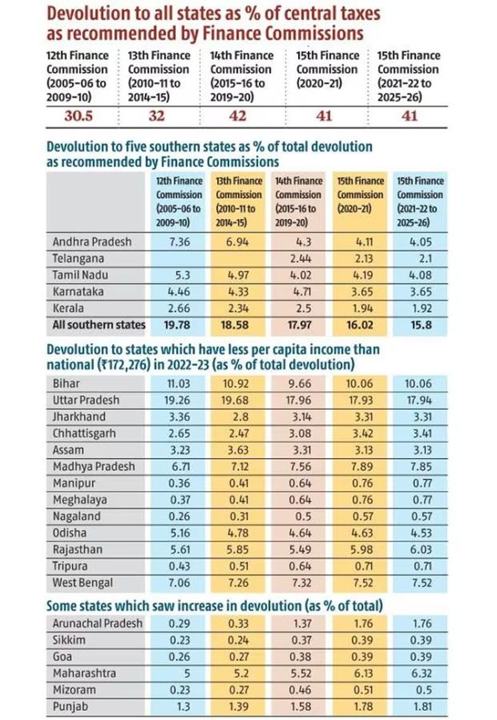
The DMK attempts to create an illusion that it was only after the BJP came to power that Tamil Nadu’s share was reduced. But when was Tamil Nadu’s share really 7%? During the 9th Finance Commission, between 1990 and 1995.

Since then, the proportion has steadily decreased:

  • 12th Finance Commission (2005–2010): 5.3%
  • 13th Finance Commission (2010–2015): 4.97%
  • 14th Finance Commission (2015–2020): 4.02%
  • 15th Finance Commission (2020–2025): 4.08%

That is, even before the BJP came to power, the rate had dropped from 7% to around 5%. It sits at about 4% during BJP rule.

So, Who Is Responsible For The Reduction?

It is the Congress and DMK themselves, especially the DMK, which was in power at the Centre for nearly 25 years, including 15 consecutive years from 1999 to 2014. Yet, not once in that period did they raise their voice or protest about the reduction in Tamil Nadu’s share.

In fact, during the Congress regime, the overall percentage of tax devolution to states was lower. The Modi government raised it from 30.5% to 41%. In a recent finance commission meeting, Chief Minister Stalin himself cited the increase and requested that it go higher to 50%. DMK, once silent when the share was 30%, now attacks the BJP after a historic increase to 41%.

The claim that Tamil Nadu’s taxes are being diverted to Bihar or Uttar Pradesh is false—even under Congress rule, these states received their constitutionally mandated shares. Not just Tamil Nadu, but states like Bihar, Uttar Pradesh, Madhya Pradesh, Gujarat, Maharashtra, Karnataka (many BJP-ruled) have all seen their shares decrease over successive commissions—yet DMK only mentions Bihar and UP for their anti-Hindi propaganda.

During the DMK and Congress coalition, Bihar’s share was 11.03% and Uttar Pradesh’s was around 19%—and no one complained then. The overall rate for all states was lower under Congress.

Let’s Look At Some Facts

The Modi government raised state devolution from 30.5% to 41%.

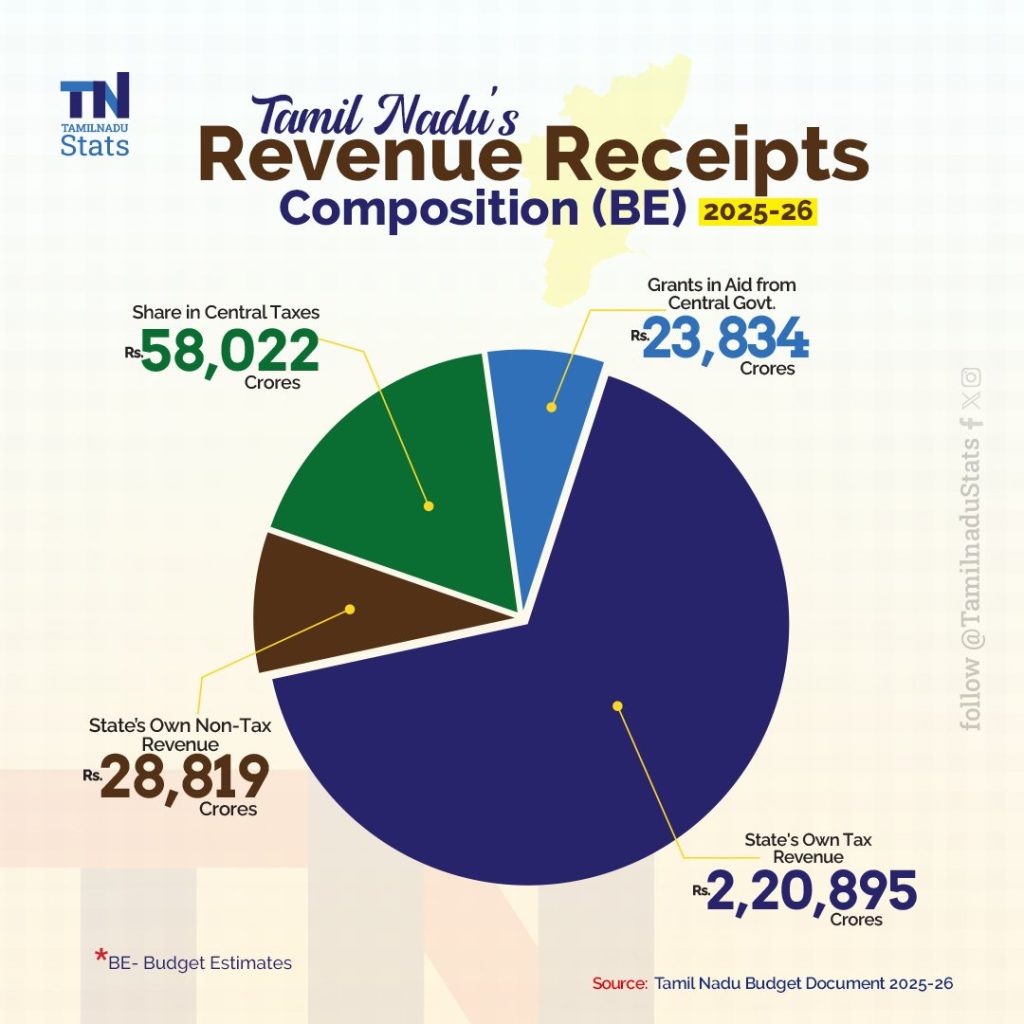
This year, Tamil Nadu’s budget notes a record ₹80,000 crore is being transferred from the Centre, more than even what was projected.

These figures are found in the Tamil Nadu budget documents themselves.

The DMK’s narrative that the BJP government is cheating Tamil Nadu is a baseless political story:

The reduction from 7% began long before the BJP came to power.

The BJP government has raised, not reduced, the overall allocation to states.

The share for all southern and some northern states, including BJP-ruled states, has decreased.

The often-quoted “1 rupee given, only 29 paise returned” is a misleading statistic. When Finance Minister Nirmala Sitharaman challenged the DMK to explain how that number was calculated, they had no answer. Karnataka, also ruled by the BJP, claims it only gets 15 paise – that’s the narrative politicians resort to.

If the DMK argues that Tamil Nadu is being cheated, they should release data on what Congress provided when DMK was an ally. Show, with evidence, the percentage under Congress and BJP. Show, with proof, that the BJP is giving Bihar or UP more than Congress did.

Stop deceiving the public with manipulated statistics and false narratives. Don’t peddle lies for divisive politics.

Conclusion

The history and data reveal that the reduction in Tamil Nadu’s tax share began decades ago and continued under Congress-DMK regimes. The Modi government increased overall state allocations, and Tamil Nadu itself is receiving record sums. The DMK’s relentless campaign blaming BJP and the North is a calculated political strategy that does not match the facts.

Ideaman Mahadevan is a writer and political commentator.

Subscribe to our channels on WhatsAppTelegram, Instagram and YouTube to get the best stories of the day delivered to you personally.