Home Blog Page 223

Tamil YouTuber Felix Gerald Gets Conditional Bail After Arrest by DMK Govt Over Videos Suggesting Sabotage In TVK Karur Stampede

Felix Gerald, a Tamil YouTuber who runs the RedPix channel, was arrested by the Cyber Crime Division for allegedly circulating false information related to the Karur stampede, which occurred during a political campaign by actor and Tamilaga Vettri Kazhagam (TVK) leader Vijay. The tragic incident led to the deaths of 41 people.

Police officials stated that Gerald uploaded misleading content concerning the stampede, prompting legal action.

According to The New Indian Express, When produced before the XI Metropolitan Magistrate Court for judicial remand, Gerald was instead granted conditional bail that same night. Advocates Pulianthope Mohan and D. Johnson, representing him, told TNIE that the court was unconvinced by the police’s justification for keeping him in custody.

The bail conditions included restrictions on publicly expressing opinions regarding the incident linked to his alleged offence.

Gerald was taken into custody from his Nungambakkam residence in the early hours. Later, his wife, Jane Felix, spoke to reporters, expressing distress over the arrest and insisting that her husband was simply “bringing out the truth.” She questioned whether freedom of expression still exists in the country and appealed for justice.

It is worth noting that Gerald had previously been arrested last year alongside YouTuber Savukku Shankar for comments made against women police officers, and he was subsequently granted bail.

Separately, Tamil Nadu police arrested three others on Monday for allegedly spreading rumours about the Karur stampede online. The Greater Chennai Police stated that cases have been filed against 26 social media accounts for circulating misinformation regarding the tragedy and the state government’s response.

Subscribe to our channels on TelegramWhatsApp, and Instagram and get the best stories of the day delivered to you personal.

DMK Govt Arrests RSS Swayamsevaks At Multiple Places In Tamil Nadu Who Marked Vijayadasami And Centenary Celebrations Allegedly ‘Without Permission’

rss swayamsevak arrest dmk

On 2 October 2025, Rashtriya Swayamsevak Sangh, Swayamsevaks  celebrating the centenary year and Vijayadasami across the state were arrested by Dravidian Model police.

Tamil Nadu police detained dozens of Rashtriya Swayamsevak Sangh (RSS) members across the state during Vijayadasami celebrations, which coincided with the organization’s 100th centenary year.

In Chennai, 47 RSS workers were taken into custody near Porur after they conducted a Guru Puja and special Shakha training session at the Ayyappanthangal Government Higher Secondary School allegedly without obtaining ‘prior permission’, police confirmed.

In Ambur, Tirupattur district, RSS members were detained while marking Vijayadasami, despite having sought permission to hold the event at an alternate location, which was reportedly refused by local authorities.

The police stated that all arrests were made on the grounds of conducting events without “prior official approval”. No reports of violence or disturbances were recorded in connection with these gatherings.

The events were part of the RSS centenary celebrations, and the arrests have drawn attention across the state for the enforcement of permissions in cultural and religious gatherings.

(With inputs from India Today)

Subscribe to our channels on Telegram, WhatsApp, and Instagram and get the best stories of the day delivered to you personally.

The New Murasoli: Pooja Prasanna Omits Instances Of Dravidian Model Crowd Mismanagement, Focuses On Hindu Gatherings

The News Minute’s latest video on the Karur stampede pretends to be accountability journalism but really seems designed to protect the ruling DMK while blaming their opponents.

In the “Let Me Explain” video, Pooja Prasanna catalogs crowd tragedies across India mainly focusing on Hindu events and pins the Karur deaths on TVK’s chaos and culture-wide neglect. Yet the episode surgically omits egregious, recent crowd disasters under the DMK government’s direct watch, most notably the Chennai IAF Air Show tragedy and the AR Rahman concert fiascos in Chennai and Coimbatore, thereby converting a public-safety debate into a political cudgel against BJP states and TVK, while laundering the DMK’s failures through silence.

Selective omission is editorial bias. When crowd disasters under non-DMK jurisdictions are named and shamed, but DMK-era stampedes are soft-pedaled, ignored, or reframed, the product ceases to be “explanation.” It becomes preaching.

What Pooja Didn’t “Explain”: DMK-Era Disasters With The Same Anatomy

Here’s what Pooja did not tell you. Let us explain.

Chennai IAF Air Show, October 2024: A mass-casualty event at Marina Beach, publicly described by opposition leaders as “state-sponsored murder,” exposed catastrophic crowd planning, near-zero heat-mitigation, and transport failures. Multiple deaths and hundreds hospitalised later, even DMK allies questioned the government’s planning and priorities. The core failures mirror Karur: swelling crowds, poor ingress-egress planning, absent shade/water, weak on-ground coordination, and post-facto blame-shifting. The outrage industry that now bashes TVK for “predictable, preventable” deaths curiously found no moral energies to interrogate the DMK’s role in a sprawling state-managed spectacle of failure.

AR Rahman Concert Fiasco, Chennai, September 2023: Overselling beyond capacity, stampede-like crushes, harassment claims, separated minors, traffic paralysis, this was crowd-risk 101 ignored. Police cases were filed against organisers; nearly two years on, fans still chase refunds. This was not a fringe mishap. It was a flagship city event that embarrassed the state machinery, exposed regulatory laxity, and showed how enforcement conveniently sleeps when influencers and power networks intersect entertainment and politics.

AR Rahman, Coimbatore, August 2023: Barricades breached, crowd surges, control breakdowns, another red flag that the “Dravidian Model” has neither codified nor enforced serious urban event-safety protocols when it doesn’t suit political optics.

If Prasanna truly wanted to “explain” crowd disasters, these three DMK-era case studies belong at the heart of her episode. They are recent, high-profile, and teach the very lessons her script recites: event permissions detached from reality, inflated headcounts, deficit of barricaded channels, inadequate medical staging, poor real-time monitoring, and political face-saving after fatalities. The anatomy is identical, only the political inconvenience differs.

Karur: Government Narrative First, Commission Later

On Karur, the Tamil Nadu government released handpicked videos, timelines, and talking points through senior IAS/IPS officers to assign culpability to TVK almost immediately after the tragedy, before the retired-judge commission could even meaningfully begin. The state held a media trial, then set up a commission to notarize it. Even mainstream outlets documented how the government’s “evidence” rollout pre-empted the inquiry while FIRs named TVK functionaries (conveniently not Vijay), a calibrated move to bruise the movement without alienating his fanbase.

The News Minute’s framing embraces the government’s early narrative while ignoring a basic question: if authorities can brief with “stills and videos” and effectively convict in press conferences, what is the purpose of a judge-led commission funded by taxpayers? On what basis was the location allotted by the local administration? Why were enough security personnel not deployed when we know that there will be uncontrollable crowd coming in not just from Karur but neighbouring districts as well? These are questions TNM should be asking, loudly.

The Pattern: Scrutinize All Except The DMK

Prasanna’s episode places BJP-governed events and Hindu pilgrim gatherings under a microscope – Hathras, Kumbh, temple stampedes, even RCB’s Bengaluru parade, while curiously bypassing the DMK’s own failures in Chennai and Coimbatore. This is not “South-first” journalism. It is “DMK-first” triage: a pattern that has been repeatedly flagged in TNM’s output and leadership commentary. When the ruling party in Tamil Nadu fumbles, TNM’s tone turns sociological and decontextualised. When BJP or non-favored actors err, it becomes prosecutorial and personalised.

That asymmetry is the point. It shapes public perception and recodes accountability: DMK’s failures are “systemic,” TVK’s failures are “criminal,” BJP’s failures are “ideological.” The end product resembles Murasoli, a little more polished than the original, equally, if not more partisan, and self-affirming more than a platform that confronts power without fear or favor.

If The Standard Is Safety, Apply It Universally

Prasanna rightly lists the operational must-haves: capped capacities, channelised entry/exit, trained stewards, loudspeaker comms, on-site medicals, camera-led monitoring. Good. Now enforce that standard on all governments and event ecosystems – film promotions, religious congregations, political rallies, government-sponsored spectacles. Chennai IAF Air Show and Rahman concerts were textbook violations. Why were they invisible in an “anatomy of a stampede” pitched as a comprehensive reality check?

If “predictable, preventable” is the ethical yardstick, then the DMK’s Marina mismanagement and Chennai/Coimbatore concert chaos deserve the same moral indictment. Otherwise, the “Let Me Explain” brand is just selective outrage in explainer clothing.

Pooja, Stop Womansplaining, Do Some Real Work

For once, will Pooja Prasanna and her team at TNM do some real journalism and stop buttressing the ruling party? For once will they hold the DMK accountable for whatever it has done? So, Pooja, stop the womansplaining and do some real work.

Subscribe to our channels on Telegram, WhatsApp, and Instagram and get the best stories of the day delivered to you personally.
RSS At 100: A Century Of Service, Struggle, And Social Transformation

RSS

From Hedgewar’s Sacred Oath to a National Renaissance Movement

The Rashtriya Swayamsevak Sangh (RSS) has now completed one hundred years of its historic journey. Few organizations in modern history can claim to have endured such relentless hostility, state-imposed bans, misrepresentation, and vilification, yet emerge stronger with every passing decade. What began in 1925 as the vision of Dr. Keshav Baliram Hedgewar in Nagpur, with a handful of young swayamsevaks, has grown into the world’s largest voluntary socio-cultural organization its work touching almost every sphere of Indian life. The centenary year is not merely a milestone; it is an opportunity to look back, recall sacrifices, acknowledge countless anonymous contributors, and reflect on what makes the RSS such a uniquely enduring institution. The answer lies in two words: seva (selfless service) and samarasya (social harmony).

Dr. Hedgewar was not a mere ideologue; he was a man of action who saw the disunity and self-doubt among Hindus as the root of India’s civilizational decline. His solution was not political maneuvering but cultural consolidation. The RSS shakha was envisioned as a sacred space where young men could train their bodies, discipline their minds, and awaken their national spirit. Hedgewar’s call was simple: “The Hindu society must organize, for only an organized Hindu society can rebuild Bharat.” Those who joined him were ordinary youths, yet their extraordinary commitment turned Sangh work into a lifelong mission. Whether they were full-time pracharaks like Bhaurao Deoras, Eknath Ranade, and Dattopant Thengadi, or family men like Appaji Joshi, their lives were testimonies of silent sacrifice. They lived with minimal personal possessions, moved from place to place, and spread the Sangh’s message like tireless warriors.

Unlike many ideologies that sought power through politics, the RSS always found its strength in society. From the beginning, swayamsevaks were hosted and supported by ordinary households. The Sangh was not sustained by wealth or state patronage but by the food cooked in countless homes, by the mothers who saw their sons dedicate themselves to the nation, and by the sisters who infused their work with strength and encouragement. The role of women, though less discussed, has been monumental. Mausiji Kelkar and Pramila Tai Medhe, through the Rashtra Sevika Samiti, created a parallel organization that nurtured women’s participation in national service. This motherly strength made the Sangh’s work whole, reminding us that Hindutva is incomplete without the feminine force of Shakti.

From the RSS emerged not just swayamsevaks but also visionaries who founded powerful organizations in diverse spheres. Deendayal Upadhyaya gave the doctrine of Integral Humanism, a uniquely Bharatiya model of development that rejected both exploitative capitalism and soulless communism. Dattopant Thengadi founded the Bharatiya Mazdoor Sangh and Bharatiya Kisan Sangh, giving workers and farmers an ideological alternative rooted in dharmic values. Yashwantrao Kelkar laid the foundations of Akhil Bharatiya Vidyarthi Parishad (ABVP), shaping generations of nationalist students. The ripple effect of Sangh-inspired leadership can be seen in hundreds of organizations Vishwa Hindu Parishad, Vanvasi Kalyan Ashram, Seva Bharati, Vidya Bharati, Samskrit Bharati, and more each addressing a different dimension of national life. Collectively, this ecosystem has transformed the RSS from an organization into a movement.

No honest account of the RSS can ignore the systematic opposition it has faced. Branded “communal” by the British, banned thrice in independent India, and demonized in intellectual circles, the Sangh has endured pressures that would have crushed any other organization. Yet every challenge only deepened its roots. After Gandhi’s assassination, when the Sangh was unjustly banned, it was ordinary citizens and respected leaders who stood by it. During the Emergency, thousands of swayamsevaks were imprisoned. Yet, their courage and society’s sympathy helped restore democracy. The Sangh’s resilience comes from the wisdom once articulated by Swami Vivekananda, who said that India’s masses may be unlettered in English, but they instinctively recognize truth and nobility. Just as ants do not need to learn English to find sugar, Hindus did not need elite endorsement to recognize the Sangh’s sincerity.

The RSS has consistently sought Hindu unity, social reform, and national strength. When conversions under misleading circumstances rocked Meenakshipuram in 1981, the Sangh galvanized a Hindu awakening. When untouchability was falsely claimed as a Hindu doctrine, the Sangh guided the Vishwa Hindu Parishad’s 1964 Udupi declaration affirming that caste discrimination is alien to Hindu spirituality. The slogans Na Hindu Patito Bhavet (No Hindu can fall from grace) and Hindavah Sodara Sarve (All Hindus are brothers) echoed the Sangh’s vision of equality. The Ram Janmabhoomi movement was another watershed, where swayamsevaks, saints, and society converged to assert civilizational pride. That a 500-year-old injustice could be corrected through a constitutional process, culminating in the 2024 consecration of the Ram Mandir, is testimony to the Sangh’s patience, perseverance, and faith in the people.

Perhaps the most underappreciated dimension of the RSS is its enormous service work. Whether during natural disasters, communal strife, or pandemics, swayamsevaks have been among the first to reach victims, often silently and without seeking publicity. Their relief work during floods, earthquakes, and COVID-19 won admiration even from critics. Seva Bharati’s schools, healthcare centers, and social projects across slums, tribal belts, and remote villages demonstrate how the Sangh reaches where the state often fails. It is this constant touch with society that has given the Sangh legitimacy unmatched by political parties.

As the Sangh enters its second century, its mission remains unfinished. Organizing Hindu society is not an end in itself; it is the foundation for building a self-confident Bharat that contributes to the world. The challenges are immense—religious conversions, cultural deracination, demographic imbalance, and the menace of divisive politics. But the opportunities are equally vast. With India rising as a global power, the RSS has a unique role in ensuring that modernization does not mean Westernization. By reviving pride in Sanskrit, promoting Indic knowledge systems, strengthening families, and instilling discipline in youth, the Sangh can anchor India’s journey towards holistic development. Most importantly, the RSS must continue to embody inclusivity. Its century-long work has already shown that it is not against any community, but for the cultural unity of Bharat. Its challenge is to expand this message to every household, across caste, class, and region.

The RSS at 100 is not just an organization marking a centenary; it is a civilizational force standing tall amidst the storms of history. Its karyakartas are not bound by contracts or salaries, but by vows and ideals. Its growth was not engineered by state power but by society’s blessings. Its success is not measured in wealth or buildings, but in lives transformed and communities uplifted. As swayamsevaks fan out in this centenary year to reach every household, they carry with them the conviction that Bharat’s best days are ahead. If the first hundred years were about survival, consolidation, and awakening, the next hundred must be about renaissance, strength, and leadership. In the words of Guruji Golwalkar, “This work is not mine, nor yours. It belongs to Bharat Mata. We are but humble instruments.” A century later, millions of swayamsevaks remain those instruments dedicated, disciplined, and determined. And with society’s continued blessings, the Sangh’s march towards national rejuvenation is unstoppable.

Dr. Prosenjit Nath is a techie, political analyst, and author.

Subscribe to our channels on TelegramWhatsApp, and Instagram and get the best stories of the day delivered to you personally.
Gems Of Judiciary: Absconding Manorama Khedkar, Mother Of Suspended IAS Probationer Puja Khedkar, Granted Interim Bail, Protection From Arrest In Kidnapping Case Despite Multiple FIRs And Police Obstruction

puja khedkar manorama khedkar

A Navi Mumbai court has granted interim bail to Manorama Khedkar, mother of former Indian Administrative Service probationer Puja Khedkar, in connection with a kidnapping case linked to a road rage incident. The protection from arrest will remain in force until the next hearing on October 13, when the court will hear the matter further along with the police’s response, NDTV reported.

Manorama Khedkar had been absconding after allegations surfaced that she and her family forcibly abducted a truck cleaner. On Thursday, her lawyers appeared before the additional district court in Belapur and sought anticipatory bail. The court granted interim relief, while directing that the police reply to her plea in the next hearing.

The case stems from a road rage incident in early September on Navi Mumbai’s Mulund–Airoli Road. According to the police, a cement mixer truck allegedly brushed against an SUV. The occupants of the SUV then stepped out and allegedly dragged the truck cleaner into the vehicle. He was later taken to a bungalow in Pune, a property police claim is linked to the Khedkar family.

Police said they managed to trace the kidnapped man to the Pune bungalow. However, when officers attempted to enter, Manorama Khedkar allegedly refused to open the gates and reportedly unleashed ferocious guard dogs on the compound to obstruct them. Following this, multiple FIRs were registered – one in Navi Mumbai for kidnapping, and another in Pune for obstructing public servants from discharging their duty.

In connection with the incident, the Khedkar family’s bodyguard, Praful Salunkhe, has already been arrested.

In her bail petition, Manorama Khedkar maintained that she had been falsely implicated in the case and assured the court that she would cooperate with the investigation. Considering her plea, the Belapur court extended interim protection from arrest.

Police sources told NDTV that their response to the court before 13 October 2025 will rely on forensic and technical evidence, including tracking the movement of the SUV and reconstructing the timeline of events. Officials also indicated that additional charges may be framed as the investigation progresses.

(With inputs from NDTV)

Subscribe to our channels on TelegramWhatsApp, and Instagram and get the best stories of the day delivered to you personally.
“Halamathi Habibu” Becomes “Bottle Ku ₹10”, TVK Cadres Cook Former DMK Liquor Minister Senthil Balaji With Memes

From dance floors to digital battlefields, actor Vijay’s supporters have turned the viral track ‘Halamathi Habibu’ into a weapon of satire. TVK cadres are flooding social media with memes, roasting former DMK Liquor Minister Senthil Balaji — rechristening the hit as ‘Bottle Ku ₹10’ to lampoon the liquor mafia and corruption allegations.

At the Tamilaga Vettri Kazhagam (TVK) rally in Karur on 27 September 2025 — a bastion of Senthil Balaji — actor Vijay took a musical swipe at the DMK Liquor Minister, over allegations that he was illegally pocketing ₹10 per bottle from consumers.

Eyewitness accounts had informed the BJP-led NDA panel that came down to visit Karur following the stampede that a few miscreants started throwing slippers at Vijay when he sang the song.

Eyewitnesses told the BJP-led NDA panel, which visited Karur after the stampede, that a few miscreants began hurling slippers at Vijay while he was performing the song following which the stampede happened.

With Opposition parties like BJP, AIADMK and TVK accusing Senthil Balaji of sabotage, TVK’s ‘virtual warriors’ have taken a step further entering into ‘Beast’ mode to target the former liquor minister.

They’ve replaced the lyrics of the famous Halamathi Habibu song with “Bottle ku ₹10” and Senthil Balaji dancing to it.

Subscribe to our channels on TelegramWhatsApp, and Instagram and get the best stories of the day delivered to you personally.
BJP TN Chief Nainar Nagenthiran Raises 12 Tough Questions To CM Stalin On Karur Stampede

BJP TN Chief Nainar Nagenthiran Raises 12 Questions To CM Stalin On Karur Stampede

The Karur stampede during the Tamilaga Vettri Kazhagam rally that claimed 41 lives including those of children has hit the people of Tamil Nadu very hard. The opposition parties are holding even the state machinery responsible for the deadly mishap.

Disturbing eyewitness accounts related to the Karur stampede incident have emerged, with claims that unidentified individuals infiltrated the rally and that some miscreants allegedly used knives to injure attendees. These shocking revelations were presented to an eight-member National Democratic Alliance (NDA) parliamentary committee, constituted by BJP National President JP Nadda and headed by BJP MP Hema Malini.

On 30 September 2025, BJP Tamil Nadu President Nainar Nagendran, accompanied by senior leaders including K. Annamalai, met with the NDA panel to present their findings and testimonies related to the tragic incident.

During the meeting, Annamalai introduced a female eyewitness who had been present at the rally and gave a harrowing account of the chaos that unfolded.

Following this, taking to social media platform X, Tamil Nadu Bharatiya Janata Party chief Nainar Nagenthiran posed 12 questions to the ruling DMK on the tragedy.

He wrote, 12 Questions to the Chief Minister Regarding the Karur Incident! Yesterday, we met and interacted with the victims affected by the crowd chaos in Karur, along with the fact-finding committee formed by our @BJP4India, comprising Members of Parliament. It is impossible to describe the impact that each victim’s voice left on our hearts. After thoroughly discussing and understanding this issue, I wish to pose the questions that arose in my mind to the Chief Minister, Mr.@mkstalin.”

The 12 questions posed by Nagenthiran are as follows:

1. When the Karur bus stand roundabout was allocated exclusively for events attended by the Chief Minister and Deputy Chief Minister, why was it not allocated to other political parties?

2. Videos show that a slipper was thrown at Mr. Vijay, and lathi charges were carried out on the gathered supporters. Some even claimed they were stabbed with a knife. Beyond these incidents, what was the reason for the crowd chaos?

3. Why does Chief Minister Mr. M.K. Stalin, who seems indifferent to incidents like the illicit liquor deaths in Kallakurichi, the Vengaivayal issue, the crowd-related deaths during the Marina air show, and 25 lock-up deaths, pay special attention only to the Karur incident?

4. I am one among the millions of people who have grown suspicious due to the emotional drama of the DMK. Why did the DMK government act with such extraordinary haste to suppress the truth after the crowd chaos?

5. Why is the DMK government so quick to stifle all questions and doubts raised among the public by filing cases against 25 people and arresting four, including journalist Mr. Felix?

6. The DMK government’s police, which accuses Mr. Vijay of misjudging that only 10,000 people would gather, why did they fail to accurately assess the crowd size?

7. If the government believed that Mr. Vijay’s late arrival could lead to untoward incidents, why was the event not canceled?

8. It is evident that the number of police personnel deployed to control the crowd was grossly inadequate. How many were actually deployed? Why was the district police superintendent absent from Karur during such a major political rally?

9. Even after it has been proven that there were so many shortcomings on the government’s part, why has no action been taken against any officials in that district? Is there a fear that some hidden truths might come to light?

10. Why is the head of the inquiry commission making statements that seem to cover up the DMK’s law and order failures even before submitting the report?

11. Who authorized the Revenue Secretary to issue public statements about the ongoing inquiry? Does this not compromise the impartiality of the investigation? Is it appropriate to use competent government officials as pawns of the DMK?

12. The DMK government transferred the Ajithkumar lock-up death case to the CBI, so why is it hesitant to hand over the Karur case?”

He concluded by saying, It is abundantly clear, beyond any doubt, that this tragedy is a disaster caused by the administrative failure of the DMK government. That is why we demand a CBI inquiry, having no faith in a single-member commission. I trust that you, Chief Minister Mr.@mkstalin, will this demand and provide answers to the questions I have raised on behalf of the people of Tamil Nadu!”

Subscribe to our channels on TelegramWhatsApp, and Instagram and get the best stories of the day delivered to you personally.
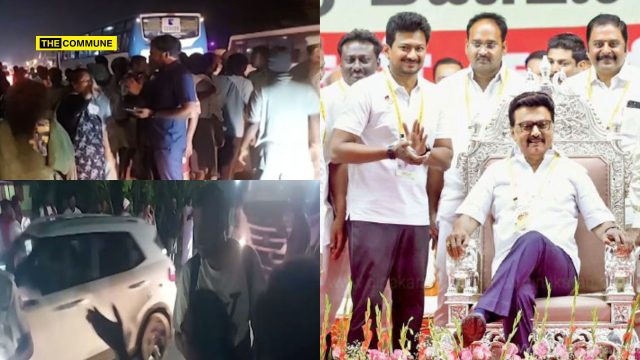
South First Editor Anusha Ravi Sood Jumps To Shield DMK From Criticism For Karur Stampede

dmk mouthpiece anusha ravi sood south first karur rally tvk stampede

Just as DMK’s unoffical mouthpiece The News Minute rushed to absolve the ruling DMK of its responsibility in the Karur TVK rally stampede, another wannabe “news” portal, The South First’s editor Anusha Ravi Sood, put out a post quoting TVK chief actor-turned-politician Vijay’s video after the tragedy.

In a five-minute video statement posted on social media platform X, the actor-politician expressed deep sorrow over the September 27 tragedy. “I have never faced such a painful situation in my life. My heart is filled with pain, only pain. I express my deepest condolences to the families who have lost their loved ones. I know that no word can ever compensate for the loss. Right now, I pray for the speedy recovery of those undergoing treatment at hospitals. I will meet everyone very soon,” Vijay said, addressing the public for the first time since the incident.

Vijay responded to criticism over his quick exit from the site after the stampede, clarifying that his decision was made to avoid triggering further panic.

Hinting at possible political angles behind the tragedy, he remarked, “We went to at least five districts for our campaign, and no such incident took place in any of those places. It only happened in Karur. How did this happen? The public knows the truth, they are seeing everything. Soon all the truth will come out.

In a direct dare to Tamil Nadu Chief Minister M.K. Stalin, Vijay stated, “If you want revenge, do whatever you want to me, don’t touch my cadre. I will either be at my home or the office, you can do anything to me.

He further raised concerns over the FIRs filed against three TVK leaders — district secretary Mathiyalagan, state general secretary ‘Bussy’ Anand, and deputy general secretary Nirmal Kumar — along with several social media commentators, stressing that his party had complied with every instruction given by the authorities.

Anusha Ravi Sood Rushes To Defend DMK

Reacting to Vijay’s video, Anusha Sood had to register her defence of the DMK government while trying to absolve it of any wrongdoing.

Vijay may not have said the word “sorry” or “apologies” but he did convey his pain and offered condolences to the families of the deceased expressing remorse over the untoward tragedy.

In her post, Sood wrote, In a dramtic video oozing cinematic dialogues, TVK chief Vijay fuels sabotage theories, says he did nothing wrong, dares CM @mkstalin to take action against him but not his fans & cadres. No taking accountability, no apology to the families who have lost their loved ones.”

Sood claims (just like Dhanya Rajendran) that Vijay was furthering “conspiracy theories”. However, eyewitness accounts actually point in the direction which Vijay took to in his video.

Rani, the wife of a TVK functionary who has been arrested, recounted the chaos at the Karur rally, saying things were fine until the bus arrived and people began throwing slippers, sparking a riot-like situation. She described how the crowd pushed and trampled attendees, even strangling a mother and her two children with a party flag. Rani alleged that some outsiders conspired, leaving rowdies in the crowd who sprayed a substance that made people faint. Panic ensued as people fell into a pit, were pushed over one another, and were stamped on in the stampede.

Another eyewitness revealed to the NDA delegation which visited the site about unidentified individuals infiltrating the rally and that some miscreants allegedly used knives to injure attendees. However, Dhanya and Anusha both brushed this factor aside and did not think it necessary to investigate this angle.

This is what Dhanya Rajendran wrote, “No apology – More conspiracy theories – Provoke/Taunt Sure, he can ask questions if the state machinery failed, but he just resorts to conspiracy mongering. Definitely grim signs from someone who aspires to be a politician. But is this surprising?”

Anusha Ravi Sood – The Wannabe DMK Mouthpiece

Much like The News Minute, Sood has been vying for DMK’s attention for quite some time. The South First under Anusha Ravi Sood has repeatedly displayed patterns of selective reporting, omission, and partisan amplification that align closely with the interests of the ruling DMK. Like TNM, Sood using her portal peddled North-South divide – something the Dravidianists salivate over. She even hailed mass murderer Tipu Sultan while derogating a true warrior Chhatrapati Shivaji Maharaj.

In a classic case of partisan journalism, South First and its executive editor Anusha Ravi Sood have once again exposed their blatant bias by not questioning the DMK government but putting the blame on only one of the involved parties.

Subscribe to our channels on TelegramWhatsApp, and Instagram and get the best stories of the day delivered to you personally.
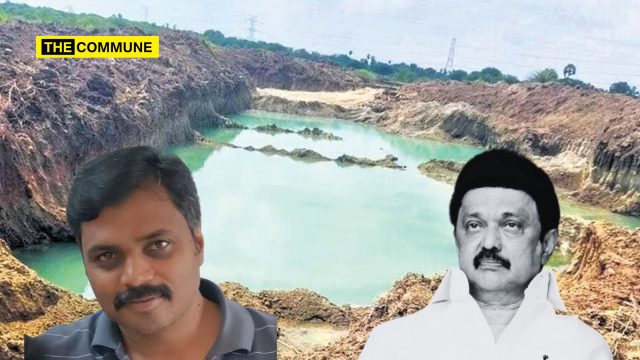
“Students Must Introspect Whom They’re Going To Follow” Says DMK Stooge Director Vetrimaaran Who Produced ‘Bad Girl’ Dubbed As ‘Child Pornography’ By Court, A Film That Glorifies Students Indulging In Drugs And Sex

Irony died a thousand deaths when DMK Stooge Leftist-Dravidianist Director Vetrimaaran while speaking at Loyola College, advised students to think, introspect and choose their role models carefully.

Vetrimaaran’s comment comes against the backdrop of a stampede that happened at actor Vijay’s Tamilaga Vettri Kazhagam rally in Karur, a tragedy that claimed 40 innocent lives.

“They say man is a political animal. Man is a socio-political animal. And politics, not just vote politics.. but about who we are, where we are, what situation we’re living in, what we must do, how to do it, being with that awareness is very important. As students, you all should have that thing about you. What are we keeping as our goals, where are we headed towards, what are we going to follow, whom are we going to follow, for what purpose are we going to follow them, is the person whom we are following, the right person? Why should we follow them? We should know all these things.”, the DMK stooge director said.

He said that the bare minimum one must know is what is good and what is bad, what should be done and what should not be done.

“For that you see what’s happening around you. You study, read. This society today is functioning as what, what is motivating it, what is pushing it. We should be aware of it. And inclusivity, secularism, equity – we shouldn’t compromise on the no matter what.”, Vetrimaaran said.

This lofty sermon comes from a man who produced the film ‘Bad Girl’ a film condemned by the Madras High Court as having a teaser that amounts to “child pornography.” The court had ruled that the content of the teaser, freely available, can “spoil the minds of children” and constitutes a “continuing offence”, ordering its removal from YouTube.

The film also sexualizes school students (minors) showing the protagonist indulging in drugs and sex at a young age. Words like “f**ing, asshole, bitch, bastard, chooth”* had to be muted from dialogue and removed from subtitles.

Very recently he had also participated at a pro-Palestine rally in Chennai.

Subscribe to our channels on TelegramWhatsApp, and Instagram and get the best stories of the day delivered to you personally.
Debt-Trap Nations: How China’s Belt And Road Loans Are Squeezing Developing Economies

About a week ago, reports indicated that the China-Pakistan Economic Corridor (CPEC), promoted by Pakistan as a transformative economic initiative, has failed to achieve its objectives and left the country with a $9.5 billion debt, widely perceived as part of China’s debt-trap strategy.

This is not a one-off event. In this report, we examine the growing debt pressures faced by eight developing nations due to extensive borrowing from China, primarily under the Belt and Road Initiative (BRI). We notice a recurring pattern where large-scale infrastructure and energy projects, financed by Chinese loans, have resulted in unsustainable debt burdens. Many of these projects have failed to generate anticipated economic returns, leaving borrower countries in a cycle of financial dependency. The situation has led to stalled projects, the need for further borrowing or International Monetary Fund (IMF) bailouts and has increased China’s economic and political leverage over these vulnerable nations.

#1 Pakistan’s CPEC Debt Burden

As of 22 September 2025, Pakistan is burdened with a $9.5 billion debt to China, largely accrued through the China-Pakistan Economic Corridor (CPEC). This sum includes $7.5 billion for power plants and nearly $2 billion in unpaid energy bills. Political disputes and corruption allegations slowed project progress, and a 2019 IMF bailout forced Pakistan to decelerate CPEC initiatives. To manage the crisis, Pakistan has been compelled to take new loans to service old ones, creating a vicious cycle of debt and deepening its economic dependence on China, with the promised benefits of CPEC failing to materialize.

#2 Nepal’s Infrastructure Financing Strain

By 9 September 2025, Nepal’s public debt stood at $20 billion, with external debt at $10.5 billion. China accounts for approximately $300 million of this, financing projects like the $216 million Pokhara International Airport and the Trishuli 3A Hydropower Project. These Chinese loans are often expensive and come with strict conditions. Crucially, funded projects like Pokhara Airport are not generating sufficient revenue, making repayment difficult. This situation increases Nepal’s financial vulnerability and amplifies Beijing’s political influence within the country, posing a long-term strategic challenge.

#3 Bangladesh’s Deepening Financial Reliance

On 12 July 2025, reports indicated Bangladesh’s growing dependence on Chinese financing, with $6.1 billion in existing loans and a recent $2.1 billion top-up in March 2025. An additional $5 billion soft loan was requested in 2024. These funds support major infrastructure like the Padma Bridge and Payra Port. With Bangladesh’s economy struggling, it relies heavily on external borrowing. China has extended repayment terms to 30 years, securing long-term economic leverage. This dependence on loans for critical infrastructure risks pushing Bangladesh into greater financial vulnerability and deeper Chinese influence.

#4 Kenya’s Costly Railway Investment

As of 24 April 2025, China became Kenya’s largest bilateral creditor, with debt exceeding $8 billion. A significant portion, $5 billion, was used to construct the Standard Gauge Railway (SGR) from Nairobi to Mombasa. This reliance on Chinese infrastructure loans has created a heavy sovereign debt burden. The government has found itself needing to seek additional loans, including a requested $1 billion and debt restructuring, simply to complete stalled projects. This cycle deepens Kenya’s financial dependence on China, limiting its fiscal options and granting Beijing substantial economic influence.

#5 Zambia’s Mining Sector Leverage

By 24 March 2025, Zambia owed China over $4 billion, a key component of a broader $6.3 billion debt restructured in 2023. These loans are tied to Chinese investment in the copper mining sector, which provides 70% of Zambia’s export earnings. This dominance creates profound economic dependence. The debt obligations restrict Zambia’s ability to regulate Chinese corporate practices strictly. Furthermore, the restructuring terms favor Chinese creditors, giving Beijing significant leverage over Zambia’s national policies and corporate governance, effectively trading economic sovereignty for financial relief.

#6 Cambodia’s Strategic Debt

On 17 March 2025, Cambodia’s outstanding debt to China was approximately $4 billion, representing over one-third of its total public debt and nearly a tenth of its GDP. These loans primarily finance infrastructure such as roads, airports, and a new $1.7 billion canal project. This heavy borrowing has created a deep economic dependence on China, making Cambodia’s economy highly vulnerable to shifts in Chinese policy or financing. The debt relationship extends beyond economics, influencing Cambodia’s geopolitical alignment and limiting its autonomy in regional and international affairs.

#7 Angola’s Oil-for-Credit Model

Reported on 3 September 2024, Angola has borrowed over $45 billion from China since 2002, with about $17 billion remaining unpaid. Chinese debt constitutes 40% of Angola’s total, with half its annual budget dedicated to repayments. The “Angola Model” involves repaying loans with oil exports. However, falling oil production and prices have crippled this model, leaving Angola struggling to earn revenue for debt servicing. To avoid default, Angola is using funds from a Chinese escrow account, which depletes reserves needed for other critical national needs, deepening the economic trap.

#8 Laos’s Unsustainable Projects

As of 23 July 2024, Laos’s public debt was $13.8 billion, over 100% of its GDP. China holds about half of its $10.5 billion foreign debt, financing major projects like hydroelectric dams on the Mekong River and the Boten–Vientiane high-speed railway. These projects have not yielded expected returns, suffering from energy overcapacity and underuse. Chinese loans carry high interest rates near 4%, exacerbating the burden. This has led to heavy political and economic dependence on Beijing, severely limiting Laos’s ability to manage or renegotiate its crippling debt obligations.

Subscribe to our channels on TelegramWhatsApp, and Instagram and get the best stories of the day delivered to you personally.