
Reuters correspondent and brown sepoy Shivangi Acharya has been caught peddling fake news, again. Both the Indian and American governments publicly rejected her latest report on India-US trade ties, calling it “completely false, baseless and misleading.” The incident is not an aberration but part of a documented pattern of negative and misleading reporting on India by the global news agency.
The Latest Controversy
Shivangi Acharya is a Reuters’ India business and trade correspondent based in New Delhi.
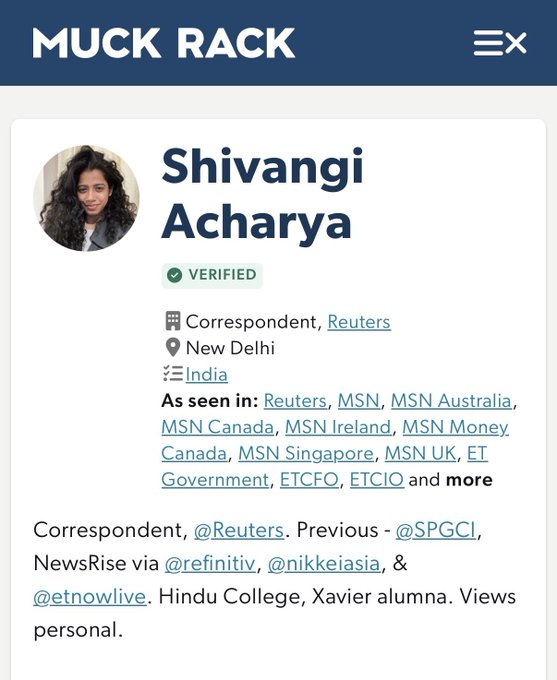
On 13 July 2026, she published a report claiming that India had rejected a trade agreement and was holding out for a better deal. The story relied entirely on unnamed sources, with neither government publicly backing the conclusion presented in the report.
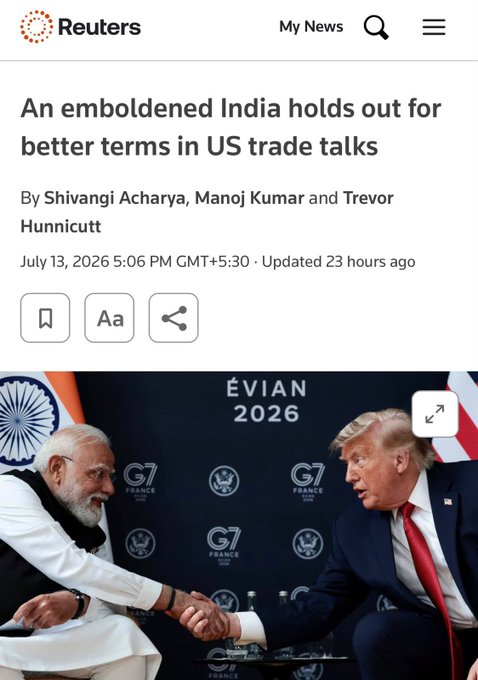
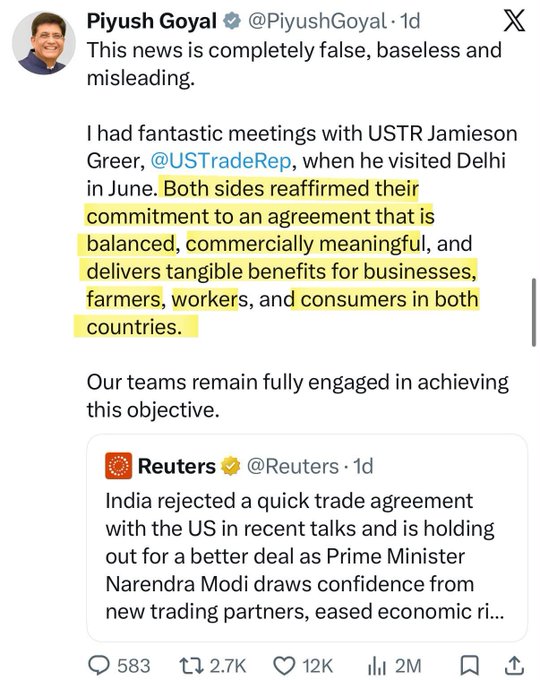
The response from both capitals was swift and unequivocal. Commerce Minister Piyush Goyal took to X to call the report “completely false, baseless and misleading.” He added that he had “fantastic meetings” with USTR Jamieson Greer in Delhi.
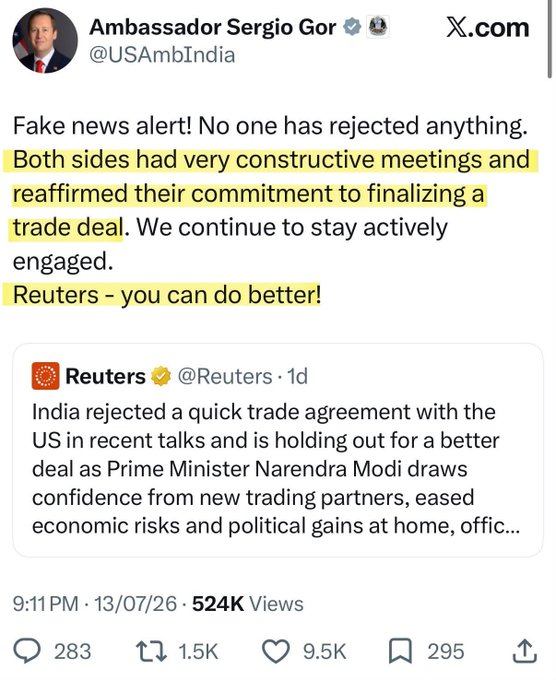
Hours later, US Ambassador to India Sergio Gor also posted on X, stating: “Fake news alert. No one has rejected anything.” He said both sides held constructive meetings and reaffirmed their commitment to finalising a trade deal, adding pointedly, “Reuters – you can do better.”
Despite both India and the United States categorically calling the report fake, the article remains live on Reuters’ platform, continuing to shape global perceptions of India-US affairs based on what officials have described as false information.
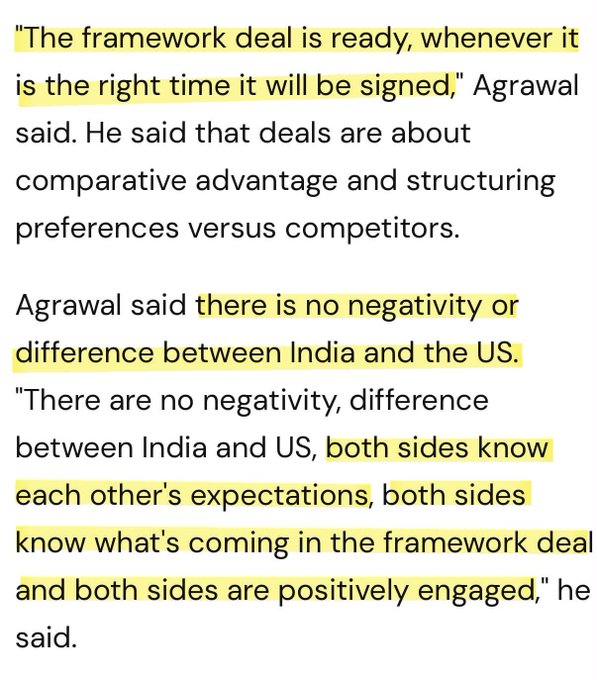
Indian officials separately told PTI: “There is no negativity or any sort of differences between India and the US.” They further clarified that the framework deal is ready and will be signed at the right time, directly contradicting Acharya’s story which claimed India had rejected a quick deal.
Not The First Time – A Consistent Pattern Of Anti-India Reporting
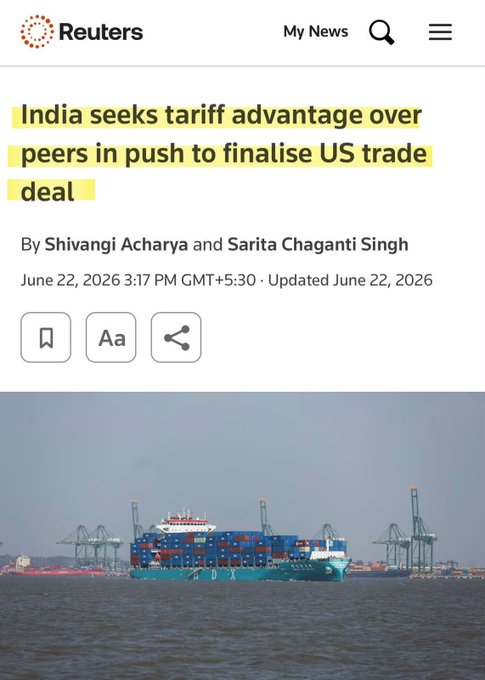
This is not Acharya’s first contentious report on India-US trade. In an earlier article, she framed India as seeking a tariff advantage and being a difficult negotiator, rather than portraying it as a country pursuing its national interest, something every nation does in trade talks.
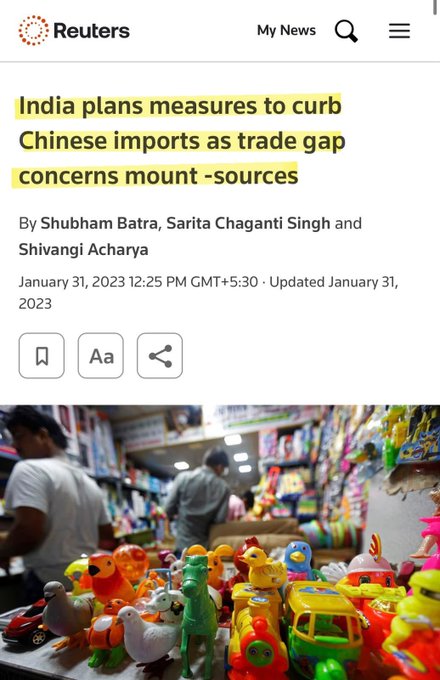
Another Acharya report framed India’s efforts to curb Chinese imports as a problem, rather than a legitimate policy choice. With a $100 billion trade deficit with China and concerns over subsidised Chinese goods flooding the Indian market, India is doing what many major economies have already done to protect domestic industry.
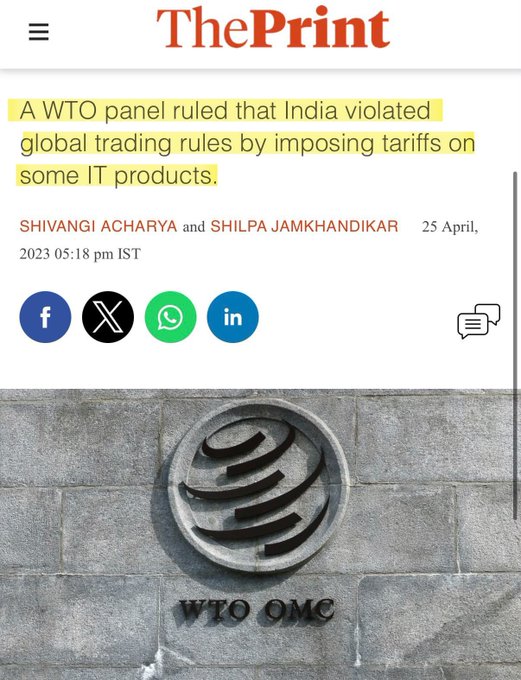
In yet another article, she wrote that India was defying global trade rules following a WTO panel’s ruling on IT tariffs. In reality, the government had stated that it was exploring its legal options – a standard response that any country can take after an adverse WTO ruling.
Another report by Acharya framed India as being on the defensive over Canada’s allegations regarding the killing of a Khalistani separatist. India had denied the claims, and even some Canadian media outlets had questioned the credibility of the intelligence behind those allegations.
When we look at it overall, Acharya’s reporting follows a consistent pattern: India rejecting deals, defying the WTO, curbing imports, or responding defensively to Canada. Each story portrays India as an obstructive actor, while context and countervailing facts are often missing or downplayed.
Reuters’ Broader Record on India
Acharya’s reporting is not an isolated failure but part of a documented pattern of problematic reporting by Reuters on India.
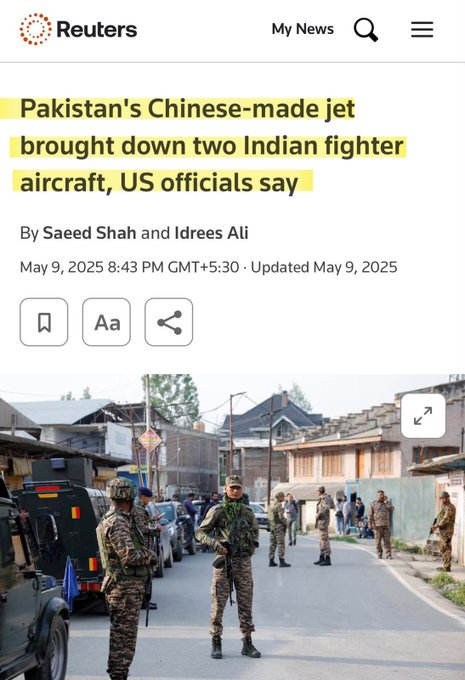
Operation Sindoor (May 2025): Reuters published an article with the headline: “Pakistan’s Chinese-made jet brought down two Indian fighter aircraft, US officials say.”
The report was based on two unnamed US officials. Neither the Indian Air Force nor the Indian government was quoted in the story. Chief of Defence Staff Gen Anil Chauhan publicly called the claims “absolutely incorrect.”
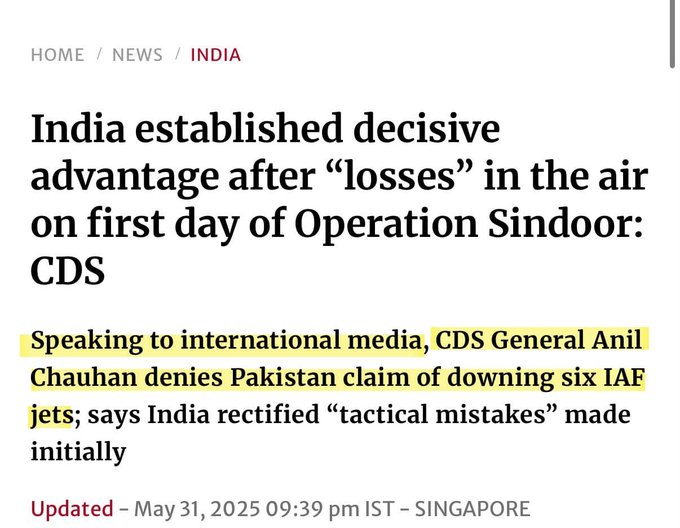
Additionally, Dassault’s CEO confirmed that no Rafale aircraft had been shot down in combat.
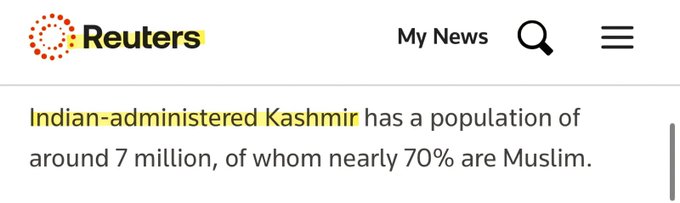
Kashmir Coverage: Reuters uses the term “Indian-administered Kashmir” in every single story about Jammu and Kashmir – Pakistan’s official diplomatic term for India’s Union Territory. euters’ style guide still uses Islamabad’s language, raising questions about the agency’s journalistic neutrality.
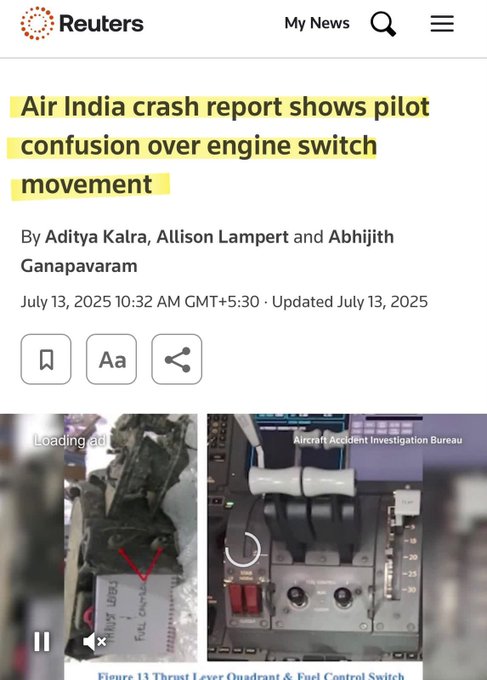
Air India Crash Coverage (June 2025): Reuters’ early reporting on an Air India crash leaned heavily toward a pilot-error narrative before the investigation was complete. India’s Supreme Court later called such reports “nasty,” with Justice Surya Kant observing, “Nobody can blame him for anything,” in reference to the pilot.
Reuters Amplified Pakistan’s ISPR ‘Created’ US-Iran Talks That Never Happened
In April 2026, Reuters actively participated in disseminating fake news. The agency’s correspondents in Pakistan received forwarded messages from ISPR WhatsApp groups and published them as verified news without any independent confirmation. This was not a mistake; it was a deliberate choice to bypass journalistic standards.
It turns out that Reuters in Pakistan, Al Jazeera, and a bunch of other so-called journalists are just copying forwards directly from Pakistani military WhatsApp groups and posting them as news.
Thats why all the leaks sound the same,its was all propaganda. https://t.co/TMCYE8VlCf pic.twitter.com/SdEDBKA6tl— Ali (@MerruX) April 25, 2026
Reuters knew the source was Pakistan’s military propaganda wing. It knew the claims were unverified. Yet it published them anyway, lending international credibility to false narratives. When Iran’s foreign ministry contradicted the story, Reuters had already done its damage, shaping global perceptions based on Pakistani military disinformation.
With its 3 Brown Sepoys, Reuters Made A Global Energy Shock An ‘India Failure’ Story
In March 2026, Reuters manufactured a narrative of Indian helplessness during a global energy crisis caused by the US-Israel-Iran war disrupting Strait of Hormuz shipping. Instead of reporting on India’s swift emergency response – emergency powers invoked on March 6, refiners maximizing output, domestic LPG production boosted by 25%, Reuters buried all context and led with “Kitchens Across India Ditch Hot Food.”
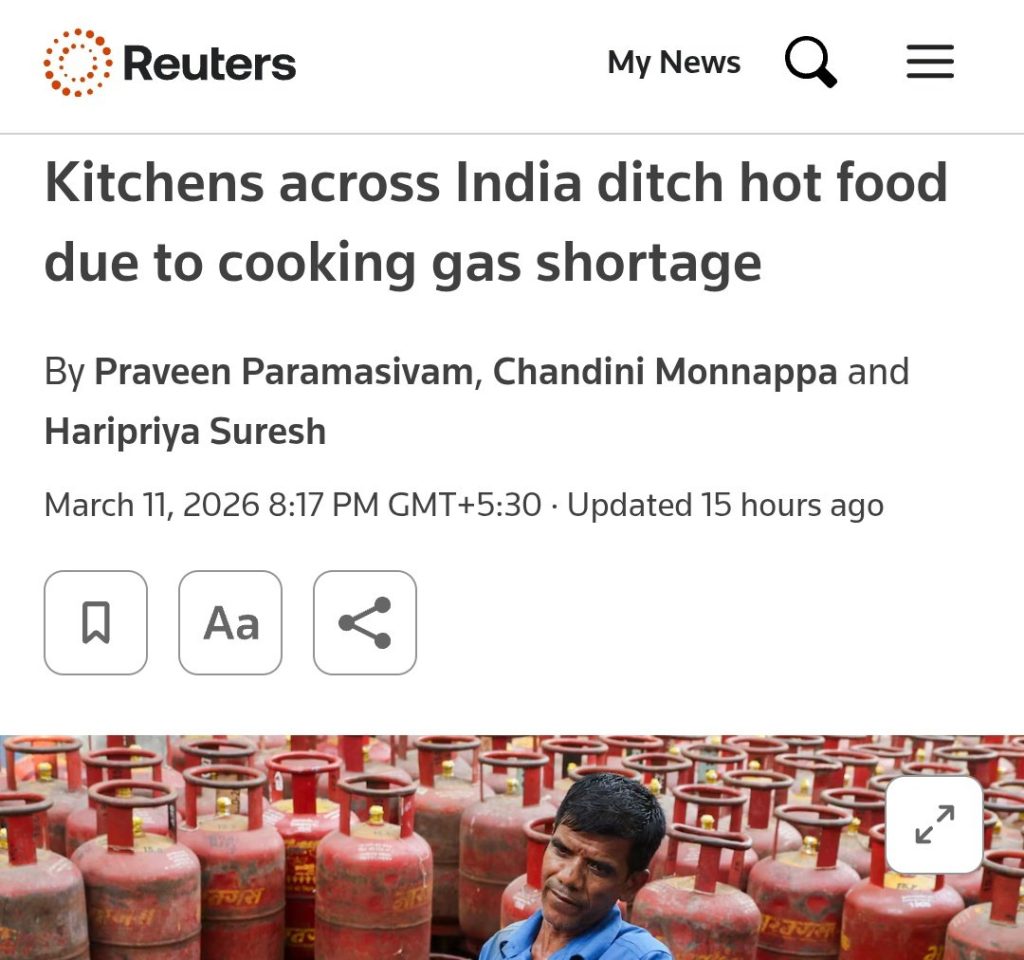
The agency deployed three Indian journalists, Praveen Paramasivam, Chandini Monnappa, and Haripriya Suresh to lend false credibility to a story designed to humiliate. These “brown sepoys” delivered exactly what Reuters editorial machinery rewards: an India-struggling narrative with Indian names attached.
Reuters Portrayed The Same Festival In India & Pakistan Differently To Suit Its Narratives
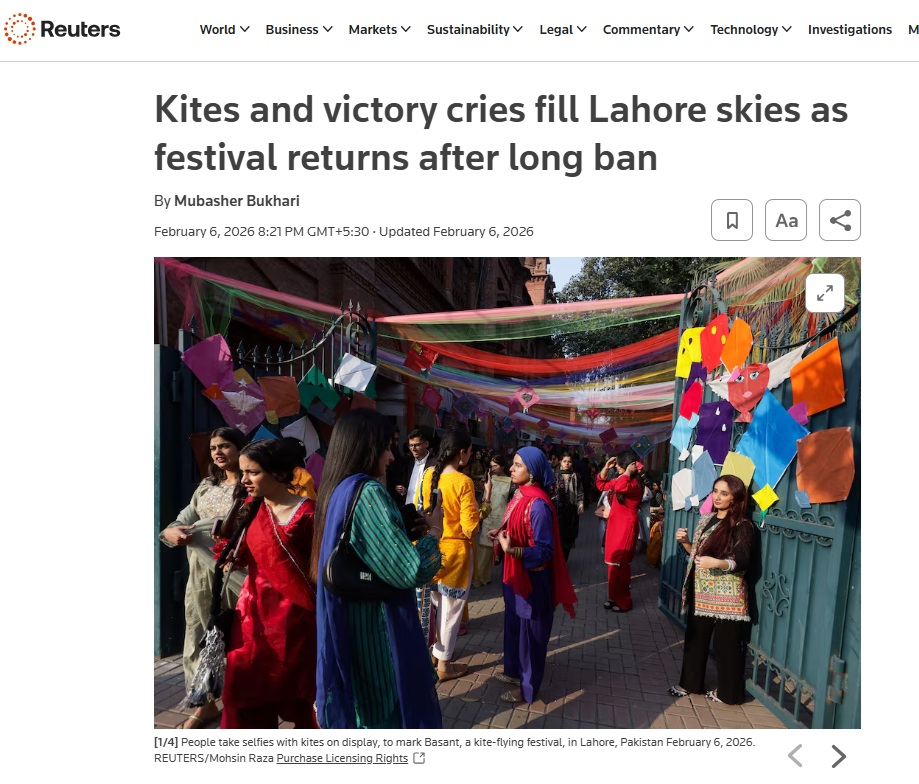
In March 2026, Reuters systematically applied opposing narrative frames to the same cultural activity, kite flying, depending on the country. When Pakistan celebrated the Basant festival in Lahore, Reuters painted a vibrant picture of colour, music, rooftops, families, economic boost, and cultural revival.
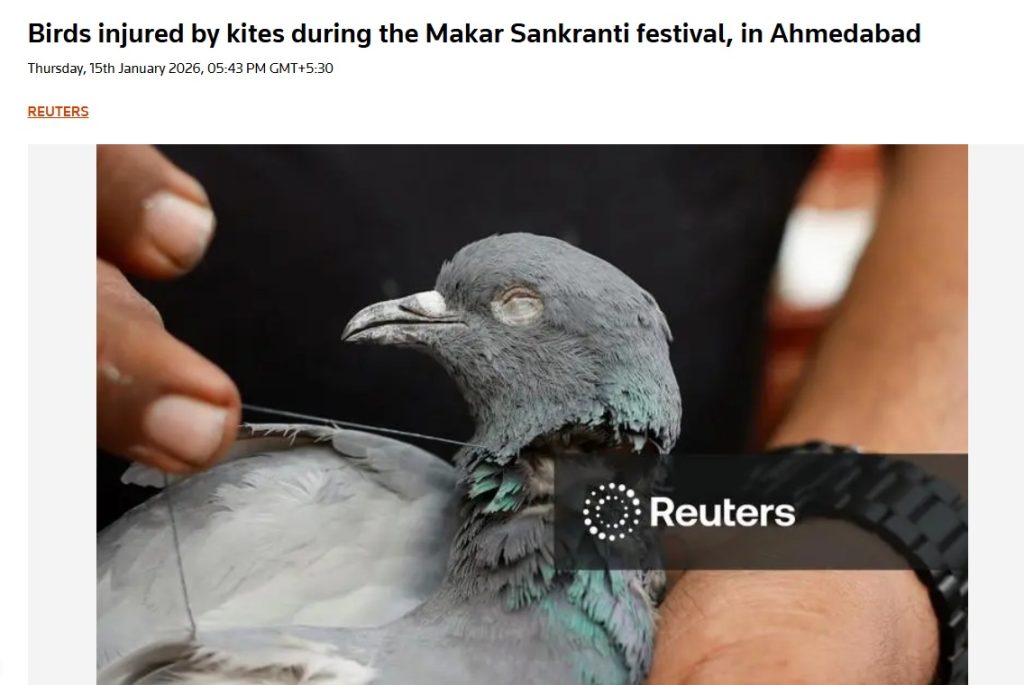
When India celebrated Makar Sankranti in Ahmedabad, Reuters’ headline shifted to “Birds injured by kites,” focusing entirely on environmental harm and wildlife injury.
Reuters Called Bill Gates’ AI Summit Absence ‘Pulling Out’, After Getting Fact-Checked, They Quietly Changed Headline
In February 2026, Reuters published a report headlined “Bill Gates a no-show at India AI Summit, event marred by organisational chaos,” framing Gates’ absence as an Indian failure – another blow to a “flagship event already marred by organizational lapses.”
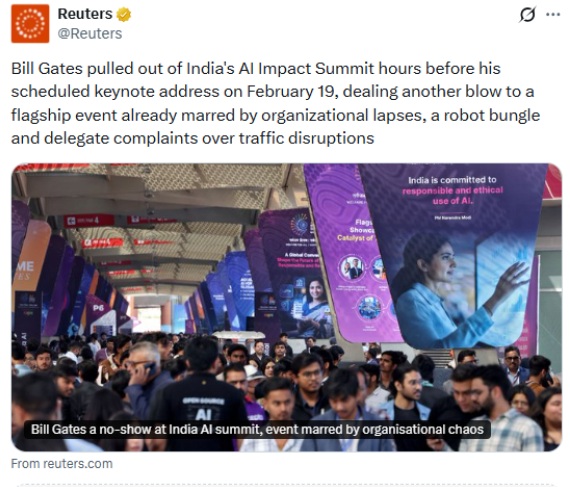
The agency deliberately buried the actual reason: Gates was asked to withdraw due to the Jeffrey Epstein controversy, with newly released US State Department documents showing his close association with Epstein.
Then the post got Community Notes fact-checked.
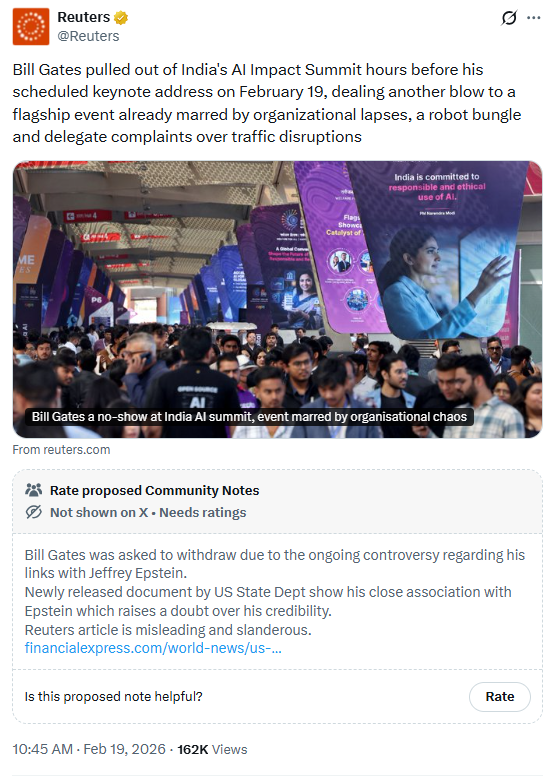
After being exposed for the misleading framing, the agency quietly changed its headline to “Bill Gates cancels appearance at India AI Summit amid Epstein scrutiny” without acknowledging its original misrepresentation.
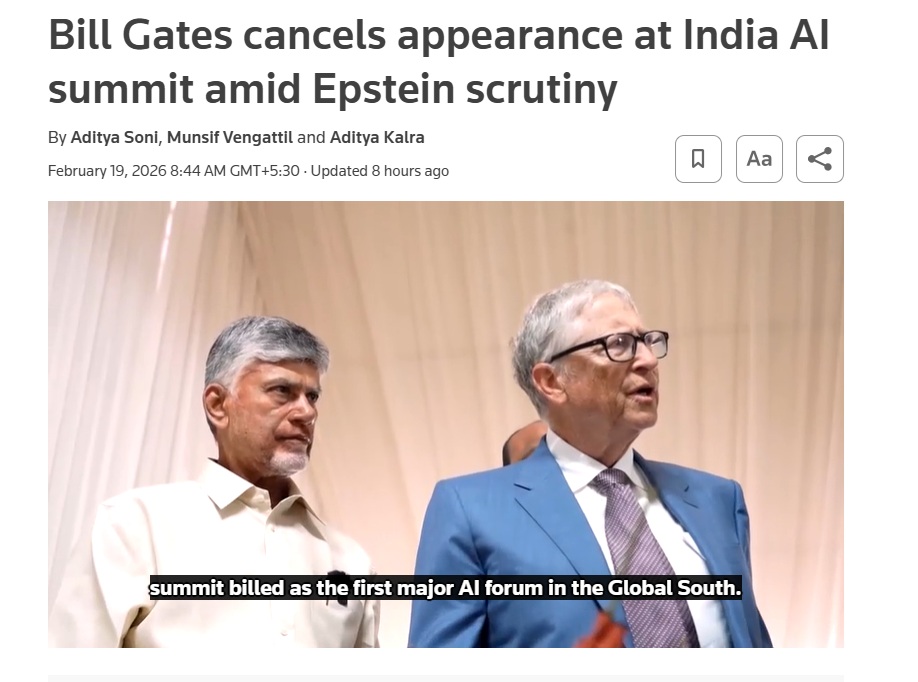
Three Indian journalists Aditya Soni, Munsif Vengattil, and Aditya Kalra lent credibility to the anti-India narrative. Reuters manufactured organizational chaos where none existed.
Reuters Journo Saad Sayeed Built ‘Exclusives’ To Peddle Dubious Narrative On Pakistan Arms Deals
Reuters journalist Saad Sayeed published a rapid series of “exclusive” defence reports, four in under a week, portraying Pakistan as an emerging global arms exporter negotiating multi-billion-dollar deals with Bangladesh, Saudi Arabia, Sudan, Indonesia, and Libya. All reports relied on anonymous “sources close to the military” and retired Pakistani air marshals, with no independent verification or dissenting assessments.
The reports formed an internal citation loop, cross-referencing each other to create false corroboration. Key claims including JF-17 “combat-proven” performance against India lacked publicly verifiable proof. Pakistan’s dire IMF-dependent economy was ignored in favour of optimistic framing. Reuters amplified Pakistani military propaganda while burying context about Sudan’s civil war and Pakistan’s own failed air defence during Operation Sindoor.
Reuters’ Intent Doesn’t Seem Positive About India
Reuters appears to have a very high aim of maligning the image of India by spreading false news at the global level. The agency seems to have implanted correspondents in India who are brown sepoys and share the same vision of spreading fake and misleading reports about the country.
As Reuters’ India business and trade correspondent based in New Delhi, Acharya’s reports on India’s trade talks, economic policy, and diplomatic ties reach investors, governments, and policymakers worldwide within minutes. Her coverage has significant influence on how global audiences perceive India’s economic and diplomatic stance. This reach is being used to propagate a consistently negative and often factually inaccurate narrative about the country.
This article is based on an X thread by Brown Sepoys
Subscribe to our channels on WhatsApp, Telegram, Instagram and YouTube to get the best stories of the day delivered to you personally.