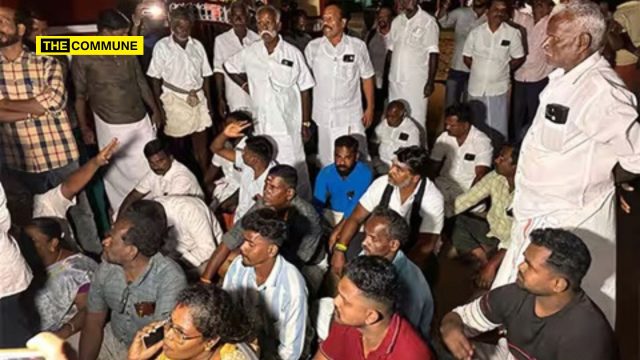
Home Blog Page 221

When Cops Rape In Dravidian Model Tamil Nadu, Woke Ultra-Feminist Chinmayi Blames Hinduism

When Cops Rape In Dravidian Model Tamil Nadu, Woke Ultra-Feminist Chinmayi Blames Hinduism

A few days ago, the news of TN police officers sexually assaulting a young woman sent shockwaves across the state. However, instead of questioning the Dravidian Model DMK government and its “fantastic” law and order, woke radical ultra-feminist Chinmayi Sripaada chose to blame, of all things, Hinduism, for the crime.

What Happened?

Two police officers were arrested on 30 September 2025 for the alleged sexual assault of a young woman from Andhra Pradesh in a shocking incident that has sent waves of outrage through the district.

The accused, identified as Sub-Inspector Suresh Raj and Constable Sundar attached to the Tiruvannamalai East Police Station, were taken into custody following a formal complaint by the victim.

According to preliminary reports, the incident occurred on the Enthal Bypass Road where the two officers were stationed for vehicle inspection duty. A small cargo vehicle carrying fruits from Andhra Pradesh, with two sisters as passengers, was stopped for routine inspection.

The police allegedly separated the two siblings during the inspection. In a deeply disturbing turn of events, the officers are accused of taking the women to a nearby grove in the Enthal area where one of them was sexually assaulted in the presence of her sister.

After the alleged assault, the officers reportedly threatened the women before leaving the scene. The victim was subsequently admitted to the Tiruvannamalai Government Medical College Hospital for medical treatment and examination, with additional police security deployed at the facility.

Local authorities have confirmed the arrest of both police personnel and stated that a serious investigation is underway. The police are actively interrogating the accused officers to establish the complete sequence of events and determine the extent of the crime.

Chinmayi’s Rant About Hinduism

Despite knowing that the Dravidian model law and order has deteriorated beyond repair, questioning the ruling DMK government is something the likes of Chinmayi would not do. Here is what she commented about the horrific rape: “The girls were taking harvested banana stalks in a minivan from Andhra Pradesh and got raped by constables in Tamilnadu. Quite telling of our Women-Are-Goddess culture during Navaratri.”

Unfortunately, the gruesome crime took place during the festival of Navaratri, Chinmayi’s focus was on the “patriarchial” nature of the festival and not once on the ruling establishment.

If it was the church that was in question, this was how she would respond – always pontificate about Hinduism and indulge in whataboutery.

Had the tables turned, had the state been Uttar Pradesh where this crime took place, Chinmayi would have gone bonkers. Here is an example of how she writes her comments if the rape occurs in UP.

Subscribe to our channels on TelegramWhatsApp, and Instagram and get the best stories of the day delivered to you personally.
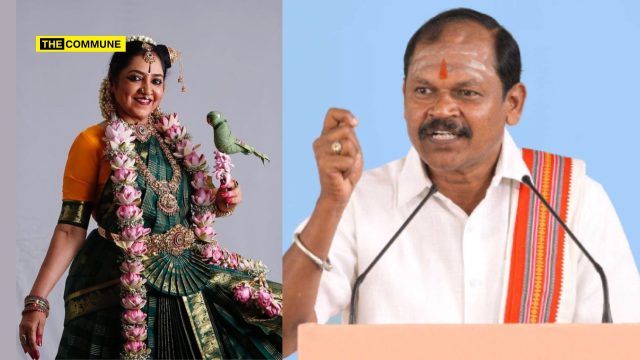
Communist-Ruled Kerala Has The Highest Crime Rate In India, Uttar Pradesh’s Crime Rate Lesser Than National Average

The National Crime Records Bureau’s (NCRB) “Crime in India 2023” report has revealed stark regional disparities in crime statistics, with Communist-ruled Kerala recording the highest crime rate in the nation while Uttar Pradesh maintained a crime rate significantly lower than the national average.

Kerala registered an alarming 1,631.2 crimes per lakh population, the highest among all states and nearly five times the national average of 335.3. This places the southern state at the top of India’s crime chart, followed closely by Delhi among union territories with 1,602 cases per lakh population.

In contrast, Uttar Pradesh, despite reporting the highest absolute number of crimes against women at 66,381 cases, demonstrated a significantly lower crime rate of 58.6 cases per one lakh female population compared to the national average of 66.2. When considering overall crime metrics, Uttar Pradesh’s crime rate stood at 335.3 per lakh population, well below the national average of 448.3.

The data shows Uttar Pradesh ranked 13th among 28 states when measured by crime rate against women and 17th when compared to all 36 states and union territories combined. Several states reported substantially higher crime rates than Uttar Pradesh, including Telangana (124.9), Rajasthan (114.8), and Haryana (110.3).

Uttar Pradesh’s Director General of Police Rajeev Krishna attributed the state’s relatively better performance to Chief Minister Yogi Adityanath’s zero-tolerance approach to crime. “The high case numbers reflect the size of the state, but the lower crime rate suggests that increased police visibility, targeted safety schemes, and dedicated helplines are mitigating the per-capita risk,” Krishna stated.

The state government credits initiatives like Mission Shakti, which focuses on women’s empowerment and safety through helplines, fast-track complaint redressal, and awareness drives, for the improved metrics. Authorities argue that the relatively lower crime rate also indicates growing confidence among women to report crimes that previously went unregistered.

The NCRB data breakdown shows that most crimes against women in Uttar Pradesh were committed by known individuals, with domestic violence comprising 34% of cases. Other significant categories included assault on women with intent to outrage modesty (20%), rape cases (8%), and cybercrimes against women (9%).

Beyond the Uttar Pradesh-Kerala comparison, the report highlighted concerning trends elsewhere. Delhi recorded a sharp decline in conviction rates, dropping from 87.8% in 2022 to 78.1% in 2023. Bengaluru reported the lowest chargesheeting rate for kidnapping cases among metropolitan cities at just 3.8%, with 1,139 of the 1,203 kidnapping victims being children.

Nationally, the report showed significant improvements in security parameters, with cases of extremist violence dropping sharply from 446 in 2022 to 163 in 2023. Jihadi terrorism cases fell by 87%, while Left-wing extremism declined by over 44% and North-East insurgency by 61%.

The contrasting pictures presented by Kerala’s high crime rate and Uttar Pradesh’s below-average statistics underscore how population scale and regional governance approaches influence crime patterns across India’s diverse states.

(With inputs from VSK Telangana)

Subscribe to our channels on TelegramWhatsApp, and Instagram and get the best stories of the day delivered to you personally.
Manchester Court Sentences Seven Men In Rochdale Grooming Gang Case, Ringleader Gets 35 Years

Manchester Court Sentences Seven Men In Rochdale Grooming Gang Case, Ringleader Gets 35 Years
Image Source: Al Jazeera

A court in Manchester, United Kingdom, has sentenced seven men to lengthy prison terms for the sexual grooming – systematic sexual abuse of two teenage girls in Rochdale between 2001 and 2006. The sentencing, delivered on 2 October 2025, marks a significant development in a series of historical child sexual exploitation cases that have plagued the area.

The ringleader, 65-year-old market trader Mohammed Zahid, received the longest sentence of 35 years after being convicted on multiple counts of rape and other sexual offences. The six other convicted men, aged between 39 and 67, were given minimum prison terms ranging from 12 years. The verdict followed a four-month trial that concluded in June.

The court heard that the two victims, who were both 13 years old when the abuse began and did not know each other, were targeted due to their troubled family backgrounds. The perpetrators used a grooming process, luring the girls with gifts, money, and offers of shelter. The abuse escalated as the girls were transported to various locations in Rochdale, plied with alcohol and drugs, and then sexually assaulted by multiple members of the group.

During the three-day sentencing hearing, both victims provided impact statements detailing the profound and lasting damage caused by the abuse. One woman described how the experience had affected every facet of her life, including her physical and mental health and her ability to form relationships. The other victim stated that the abuse had led her to believe, at the time, that all men would expect sex from her, and she courageously urged other survivors to come forward no matter how much time had passed.

This case is part of a wider pattern of historical child sexual exploitation in Rochdale that first came to significant public attention in the early 2010s. Authorities, including the Greater Manchester Police (GMP) and local council, have since acknowledged major failures in protecting the victims. In April 2022, GMP Chief Constable Stephen Watson issued a public apology, admitting the force had been borderline incompetent in its handling of the issue. A government-commissioned report that same year concluded that authorities had failed to act despite warnings and had downplayed the ethnic dimensions of the exploitation.

Estimates from a 2014 report suggested that at least 1,400 children may have been exploited in such cases in Rochdale, with perpetrators primarily identified as being of Pakistani heritage. This aspect has often been central to the toxic public discourse surrounding these crimes, with far-right elements using it to demonize British Asian and Muslim communities.

The issue regained prominence in the UK earlier in 2025 when US tech billionaire Elon Musk used his platform, X, to accuse Prime Minister Keir Starmer of complicity due to his former role as head of the Crown Prosecution Service. The government rejected these allegations. The case was also leveraged by far-right agitator Stephen Yaxley-Lennon, known as Tommy Robinson, who received backing from Musk for his campaigns blaming the UK’s Muslim community and alleging a government cover-up.

Calls for a new national inquiry into so-called “grooming gangs” grew, leading Prime Minister Starmer to reverse his initial position and support such an investigation, stating it would help restore public confidence in the authorities.

A preliminary report released in June 2025 by Baroness Louise Casey highlighted the poor quality of data on the issue, making it difficult to determine if any ethnic group was overrepresented. The report noted that while data on child exploitation suspects shows a disproportion of Asian heritage individuals, data for overall child abuse does not, with white men being the predominant offenders.

Following the report’s findings, the then-Home Secretary Yvette Cooper stated the government had accepted its recommendations, which included strengthening rape laws and enhancing child protection measures. She emphasized in the House of Commons that while more robust data is needed, the findings must not be ignored, as failing to expose these issues allows the crimes of a minority to be used to marginalize entire communities.

(With inputs from Al Jazeera)

Subscribe to our channels on TelegramWhatsApp, and Instagram and get the best stories of the day delivered to you personally.
When Newslaundry Called Dussehra A Festival “Normalizing Violence”

When Newslaundry Called Dussehra A Festival “Normalizing Violence”

In a controversial segment of its September 2023 podcast, leftist portal Newslaundry’s commentators suggested that the Hindu festival of Dussehra “normalizes violence” among children.

In the discussion, Abhinandan Sekhri compared Dussehra to Lohri, noting that while Lohri involves a simple bonfire, Dussehra involves burning humanoid effigies, which they claimed could “normalize” the idea of harming others in a child’s mind.

He said, “You know Dussehra, I think it’s wonderful that… good triumphed over evil or whatever your definition of good or evil is, but just a custom; see I like Lohri because it is just a bonfire. Here the figure is a humanoid, it is a human being and you’re going and setting him on fire and you’re seeing that normalized from a very young age. I think it is normalized in your head. I am not saying you go around burning people but I’m just saying that for a child, telling him that we’re going to celebrate this – what – you see that Uncle with a beard now we’ll go set him on fire. I think as a custom….”

The argument posits that the act of burning a human-like figure could desensitize young minds to violence, blurring the lines between symbolic ritual and real-world action.

While the other panelists called Sekhri’s comment as “overthinking”, it is clear that liberals would go to any extent to derogate and denounce Hindu festivals. If any non-liberal would contest these observations, they would be laughed off as “WhatsApp University” and shamed.

Subscribe to our channels on Telegram, WhatsApp, and Instagram and get the best stories of the day delivered to you personally.

DMK Leader Dindigul Leoni Known For Anti-Hindu And Sexist Speeches Faces Boycott From Hindus In Sri Lanka

DMK Leader Dindigul Leoni Known For Anti-Hindu And Sexist Speeches Faces Boycott From Hindus In Sri Lanka

DMK leader and orator Dindigul I. Leoni faced protests from Hindu groups in Sri Lanka following his public speeches, which were described by activists as anti-Hindu. The protests took place in late September 2025, coinciding with Leoni’s series of public appearances and cultural events across the country, including engagements confirmed via social media posts a few days ago.

According to reports, Hindu activists in Colombo alleged that Leoni repeatedly insulted Hinduism and its traditions, criticizing temples, sculptures, and worship practices. One protester, Raju Bhaskaran, who identified himself as a Hindu activist and devotee from Colombo, said that Leoni “comes and criticizes the entire culture of Hindus” and “sows anti-Hindu ideas” in his speeches.

Bhaskaran, speaking at the protest, explained that the activists’ intention was not to disrupt Leoni’s events, but to oppose his views. He stated that Hindus gathered in Sri Lanka to voice their opposition to the anti-Hindu content of Leoni’s speeches, calling for unity among Hindus globally. “All Hindus should fight together. That is why we came to Sri Lanka,” he said, adding that Hindu protests would be directed at Leoni wherever he spoke.

During the protest, Bhaskaran called on Hindus to rise against what he described as Leoni’s insults toward their faith, temples, and worship systems. “Come and whoever speaks against Hindus like this, we will come and fight. He even makes fun of our worship system, our art, our culture, which is more than ten thousand years old, even our temples, even our sculptures. He is making a satire. He is making fun of it,” he said.

The activist emphasized that the protest was focused solely on opposing Leoni’s statements rather than the individual himself. “We are not opposing him, but against his views. In fact, we consider him a good artist. Everyone is welcome. But we are here to raise our voices against his views,” Bhaskaran said, noting that the campaign against his speeches had been ongoing for three months and was visible on social media.

He urged that Leoni and other speakers avoid criticizing Hinduism in the future. “People from one religion criticize another religion, criticize the art, culture, and traditions of another religion, and this is why many problems arise in the country. That is why every religion has its own principles,” he said.

Bhaskaran also highlighted the role of organizations supporting Leoni’s events, such as Five Star Creation, accusing them of facilitating his speeches against Hindu beliefs. “It is time for everyone to think. We need to think about the respect and support given to Hindus by bringing such speakers like the disgraceful Leoni to Sri Lanka. This should be the last time. No one should come after this,” he said.

The protests in Colombo were marked by repeated chants urging Leoni to leave the country. “Let’s protect Hinduism. Leoni, get out. Hindus, we need unity. We all Hindus need unity,” activists reportedly shouted. Bhaskaran described the protests as a collective effort of Hindu youth and community members determined to resist what they termed anti-Hindu rhetoric.

The activists even taunted the people who went to attend the programme.

It is noteworthy that Leoni has made sexist and anti-Hindu speeches aplenty.

Subscribe to our channels on TelegramWhatsApp, and Instagram and get the best stories of the day delivered to you personally.
“How Many More Days Will Modi Live? He Is Already 75”, Says Telangana Congress MLA Bhupathi Reddy

How Many More Days Will Modi Live? He Is Already 75, Says Telangana Congress MLA Bhupathi Reddy

Bhupathi Reddy, a legislator from the ruling Congress party representing the Nizamabad Rural constituency, has sparked a row with remarks in which he allegedly wished “death” for Prime Minister Narendra Modi. The MLA reportedly commented on the Prime Minister’s lifespan during a program in his constituency about a week ago.

In a video clip shared by BJP leaders on social media on 2 October 2025, Bhupathi Reddy is heard saying in Telugu, “They always say Rama as if Rama were born only because of them. As if they go, Rama too would go. If Modi dies, will Rama cease to exist? How many more days will Modi live? He is already 75 years old.”

The BJP has strongly condemned the remarks, calling them “shocking” and “insensitive.” In a post, the party stated, “Bhagwan Shri Ram is the eternal embodiment of Bharat’s civilisational pride and cultural greatness. The vile and disgraceful remarks of Telangana Congress MLA Bhupati are not an individual outburst but a reflection of Congress’s deep-rooted contempt for Hindu sentiments. By repeatedly attacking Bhagwan Shri Ram and ridiculing the faith of crores of Indians, Congress exposes its anti-Hindu mindset and its politics of appeasement.”

The post added: “Let’s unite and fight against Congress’s divisive and destructive agenda in Telangana and across Bharat.”

Telangana BJP spokesperson Rachna Reddy commented that the MLA’s remarks reflect the frustration of the Congress party.

Bhupathi Reddy has previously courted controversy for using abusive language against actor Allu Arjun and warning that he would not tolerate criticism of the state government or Chief Minister Revanth Reddy.

(With inputs from Zee News)

Subscribe to our channels on TelegramWhatsApp, and Instagram and get the best stories of the day delivered to you personally.
When Pro-Hamas UK Home Secretary Shabana Mahmud Said “Islam Is The Absolute Driver Of Everything That I Do”

When Pro-Hamas UK Home Secretary Shabana Mahmud Said "Islam Is The Absolute Driver Of Everything That I Do"

On 2 October 2025, on the holiest day for Jews – Yom Kippur, a terror attack took place at a synagogue in Manchester, UK killing two and injuring several others.

Speaking after inspecting the scene of Thursday’s terror attack at the Heaton Park Hebrew Congregation synagogue in Crumpsall, Manchester, Home Secretary Shabana Mahmud expressed horror at the antisemitic assault that left two dead and three injured.

“I am horrified by the antisemitic terrorist attack at a synagogue on the holiest day in the Jewish calendar. My prayers are with the victims and the families of all of those who are murdered here today,” Mahmud said. “I want to thank the police and all of the emergency services for the speed of their response and also for their considerable bravery. The government has stepped up security at synagogues across the whole of the country and we will do whatever is required to keep our Jewish community safe. I know that there are many questions that are still to be answered and rest assured they will be answered as quickly as possible. It will just take a little time for us to establish exactly what has happened here. But we will share more information as soon as we are able. What I do want to say is to those who seek to divide us, they will fail. Thank you.”

Had Waxed Eloquent About “Islam Being Her Driver”

Mahmud’s response comes amid growing scrutiny over her record and recent appointment as the UK’s first Muslim Home Secretary. Earlier, she openly discussed the central role of her faith in her life.

In a viral video, she said, “Islam is my religion and like lot of practicing Muslims, my faith is the most important thing in my life. It is the absolute driver of everything that I do. I feel a very strong calling of my own conscience and my conscience calls me to God… “

In an interview back in 2024, she said, “My faith is the core of who I am. It is the part of me that remains when all else is gone. I would see it as the central truth of who I am as a person. It shapes my life and my views and how I think about the world and my role and my place in it. My faith calls me to public service. The fundamental values of my faith around decency and fairness, not wanting to live in a society where there’s conflict, those fundamental drivers I get from my faith. Others would get them from other places but for me, they’re shaped by the fact that I’m a Muslim.”

The interview revealed that her office in the Ministry of Justice, where she served as Justice Secretary and Lord Chancellor before being promoted to Home Secretary, was adorned with photos of the three holiest sites in Islam, a framed declaration of faith in Quranic Arabic, and a Union Jack. Mahmoud also wore a necklace reading “Allah” during the interview.

Mahmud’s critics have argued that her religious devotion and past political stances could influence her impartiality on issues of national security, immigration, and policing. Opponents cite her history of supporting pro-Palestinian positions, including backing the boycott, divestment, and sanctions movement against Israel, advocating for Kashmiri independence, opposing deportation of foreign criminals, and challenging the citizenship revocation of Shamima Begum.

From Justice Secretary To Home Secretary, Pro-Hamas/Anti-Israel Stand

Her tenure as Justice Secretary from July 2024 to September 2025 drew further criticism. During this period, she oversaw early release schemes for over a thousand prisoners to address overcrowding, a move marred by administrative errors and labeled by some as a setback to public safety. She also expanded legal aid for asylum seekers and immigrants contesting deportation by 10%, which opponents argue prioritised non-citizens at taxpayers’ expense. Softer sentencing guidelines for non-white British offenders and hesitation to prosecute social media offenses have also been cited as evidence of potential bias.

Mahmud was appointed Home Secretary in early September 2025, replacing a cabinet reshuffle following Angela Rayner’s resignation. Her promotion came amid escalating challenges including record small-boat migrant arrivals and growing concerns about Islamist extremism in the UK. Commentators had warned that her activist background, combined with a pro-Hamas stance and controversial positions on foreign policy, may compromise her ability to act decisively on immigration, counterterrorism, and law and order.

Subscribe to our channels on Telegram, WhatsApp, and Instagram and get the best stories of the day delivered to you personally.
Manchester Synagogue Terror Attack: Jihad Al-Shamie Rams Car, Stabs People On Yom Kippur Leaving 2 Dead; Terrorist Shot Dead By Police

Manchester Synagogue Terror Attack Leaves Two Dead, Three Injured On Yom Kippur; Suspect Shot Dead

Armed police officers stood guard inside a cordon near the Heaton Park Hebrew Congregation synagogue in Crumpsall, north Manchester, after a car-ramming and stabbing attack on Thursday that left two people dead, and three others injured. The attack, which took place on Yom Kippur, the holiest day in the Jewish calendar, is being treated as a terrorist incident by Greater Manchester Police.

United Kingdom Prime Minister Keir Starmer condemned the attack, stating, “While this is not a new hate, this is something Jews have always lived with… We must be clear, it is a hatred that is rising once again, and Britain must defeat it once again.”

Timeline of the attack

The assault began around 9.30 am, local time, when Greater Manchester Police received reports that a car had been driven into people outside the synagogue. Witnesses said the vehicle rammed into the gates before the driver emerged with a knife and began stabbing worshippers.

By 9.38 am, armed officers who had rushed to the scene shot the attacker dead after issuing repeated warnings. In those seven minutes, chaos unfolded as congregants, who had gathered in large numbers for Yom Kippur prayers, tried to seek safety.

Chava Lewin, a resident living next to the synagogue, told The Times, “I thought it might be a firework. My husband went outside and then ran back inside and said, ‘There’s been a terrorist attack’.” Another witness said, “She thought maybe he had a heart attack. The second he got out of the car, he started stabbing anyone near him. He went for the security guard and tried to break into the synagogue. He was in the courtyard. Someone barricaded the door.”

Chief Constable Sir Stephen Watson confirmed that worshippers and security staff managed to prevent the suspect from entering the synagogue building. A video circulated on social media showed armed police aiming their weapons at the suspect outside the gates, as bystanders shouted warnings that he appeared to have a bomb. Police later confirmed the vest he was wearing looked like an explosive device but was not viable.

One witness could be heard shouting, “He’s got a bomb on his f***ing jacket. He’s going to blow himself up. He’s trying to press the button.” Moments later, officers fired again, killing the man.

By 10.30 am, police declared the immediate danger over but continued to urge the public to stay away from the area.

Suspect identified

The attacker was later identified as 35-year-old Jihad Al-Shamie, a British citizen of Syrian descent who came to the UK as a young child and was granted citizenship in 2006 as a minor. Police said his name did not appear in Prevent, the UK government’s counter-terrorism programme, and his motive remains unclear.

Three other people, two men in their 30s and a woman in her 60s, were arrested on suspicion of committing acts of terrorism within hours of the attack.

Victims

Police confirmed that two Jewish men were killed in the attack. Three others were critically injured, including a security guard who was stabbed outside the synagogue. Authorities are yet to release the identities of the victims, and it remains unclear whether the guard was serving in a professional or voluntary capacity.

Reactions

Prime Minister Keir Starmer cut short his participation in a European summit in Copenhagen and returned to London to chair an emergency security meeting. He condemned the “vile individual” responsible for the attack and said Jews were attacked “because they are Jews.” Starmer pledged to guarantee the security of Britain’s Jewish population, “starting with a more visible police presence.”

King Charles III and Queen Camilla expressed their condolences, saying they were “deeply shocked and saddened to learn of the horrific attack in Manchester, especially on such a significant day for the Jewish community.”

Local residents expressed disbelief, with one man telling Sky News, “This is an extremely tolerant community, where people of many faiths, including Jews and Muslims, have lived side by side for years, and I am stunned by what has taken place.” Rabbi Jonathan Romain of Maidenhead synagogue told The Times, “The incident was every Jewish person’s worst nightmare. Not only is this a sacred day, the most sacred in the Jewish calendar, but it’s also a time of mass gathering, and the time when the Jewish community, however religious or irreligious, gathers together.”

Antisemitism concerns

The attack has sparked wider fears about the rise of antisemitism in the UK. Opposition Tory leader Kemi Badenoch called the incident “vile and disgusting” and condemned “the rise in antisemitism that we’re seeing in our country.”

According to the Community Security Trust (CST), a charity monitoring antisemitism in the UK, 3,528 antisemitic incidents were recorded in 2024, the second highest annual figure ever. Nineteen of those involved damage to synagogues. The highest number was in 2023, with 4,296 incidents recorded.

(With inputs from First Post)

Subscribe to our channels on TelegramWhatsApp, and Instagram and get the best stories of the day delivered to you personally.
“Are Govt Officials Politicians? What Is The Necessity?” EPS Questions Need For Bureaucrats To Speak Supporting DMK Govt Over Karur Stampede

AIADMK general secretary and Leader of the Opposition Edappadi K. Palaniswami (EPS) on 2 October 2025 placed the blame for the Karur stampede on the DMK government. Speaking at the ‘Makkalai Kaapom, Tamizhagathai Meetpom’ event in Dharmapuri, he said that “the stampede occurred because of the failure of the Tamil Nadu government to provide proper safety and protection to the crowd gathered at the rally”.

Calling the deaths an unparalleled tragedy, Palaniswami said, “The 41 lives lost in Karur is an unprecedented tragedy, which will never be forgotten,” and added that it was the duty of the chief minister to ensure that all party leaders and people participating in any political event remain safe and protected. “So, the government must take responsibility for the Karur incident,” he said.

He also pointed to the commission of inquiry set up by the state, saying, “The people are seeking answers from the government. Now, the state has formed a one-man commission of inquiry. We shall wait for its report. When we held a meeting in Karur, we were also not provided the (safe) venue near the Karur bus stand.” Commenting further on the probe, he said, “It’s for the commission to explain what had happened in Karur. But why are senior IAS officials and police officials trying to justify themselves. This is unacceptable.”

Palaniswami argued that the DMK would have ensured extensive security if it had organised such a meeting. “Had the DMK conducted a meeting, security would have been deployed everywhere, even at vacant places,” he remarked.

Earlier in the day, the AIADMK leader paid tributes to those who lost their lives in the Karur incident. Taking exception to the press conference held by revenue secretary P. Amudha and other senior officials, who denied allegations of mismanagement by the government side at TVK president Vijay’s rally in Karur on Saturday, he raised suspicion that the briefings were an attempt to sway the inquiryIn his post on X earlier, the opposition leader questioned the need for bureaucrats to take the lead in public communication. He wrote, “Following the tragic incident in Karur, the Stalin government is in a state of complete disarray. It appears that the government’s sole aim is to quickly cover up its failure to protect the people and shift the blame for this accident onto others. When there are elected representatives and ministers, what is the necessity for the Revenue Secretary to give interviews to the media? When a commission of inquiry, headed by retired High Court Judge Mrs. Aruna Jagadeesan, has already been appointed and has begun its work, what is the necessity for a secretary, even in the capacity of a government spokesperson, to speak on such matters? Should this not be considered an attempt to influence the opinions of that commission and an affront to justice? However, the Stalin government lacks any form of ethics or morality; their primary concern is to escape responsibility for this horrific incident in which 41 innocent people lost their lives. Furthermore, the fact that this government has staged such a drama to conceal the truth of the incident has created significant suspicion among the public.”

The AIADMK also questioned the state government for not releasing the Government Order on the formation of the Aruna Jegadeesan Commission of Inquiry, saying the terms of reference of the commission should be made public.

(With inputs from The New Indian Express)

Subscribe to our channels on Telegram, WhatsApp, and Instagram and get the best stories of the day delivered to you personally.
Kantara – Chapter 1 Review: Rishab Shetty’s Epic Visual Spectacle Is A Flawed Roar But The Perfect Antidote To The Divisive Dravidianist Poison

When Rishab Shetty released Kantara in 2022, it became more than a film—it was a cultural phenomenon, a spiritual storm that gripped the nation. Now, with Kantara: Chapter 1, Shetty dives deeper, crafting a prequel that transports audiences to the misty forests of Kadamba-era Karnataka, where myth, faith, and human frailty clash in a blaze of cinematic grandeur. The film isn’t just a story—it’s an invocation, a spectacle that thunders with both divinity and philosophy, while daring to counter the divisive narratives of Dravidianist cinema.

But does this ambitious saga live up to its predecessor? The answer lies somewhere between spiritual magnificence and cinematic imperfection.

A Spectacle Forged In Fire And Faith

From the opening frame, Kantara: Chapter 1 declares itself a visual and sonic odyssey. Cinematographer Arvind S. Kashyap paints the forests as both sanctuary and battlefield—mist curling around ancient trees, fire consuming ritual altars, and armies clashing in bursts of primal energy. The dense jungles themselves are a feast for the eyes, captured with a richness that makes the screen breathe with life. It’s the kind of world-building that feels mythic yet tangible, like stepping into a legend told around tribal fires centuries ago.

The VFX, a noticeable leap from the original, doesn’t scream technology but whispers devotion. Animals—majestic and godlike—emerge as symbols of power and reverence. The divine possession sequences, where Shetty’s Berme channels the deity Panjurli, transcend performance. They don’t feel staged; they feel summoned. Only a person with sincere devotion and guided by the divine could’ve pulled it off!

And then there’s B. Ajaneesh Loknath’s music. If the film is the body, the score is its heartbeat. Tribal drums pound like war cries, flutes soar like whispers of the divine, and crescendos crackle with energy. The nerve-shredding clash between the tribes and the kingdom—erupts with a force that leaves audiences breathless at the interval. The climax is just audacious, an equivalent to Lord Krishna revealing his Vishwaroopam avatar that leaves the viewers mesmerized in devotion.

Performances Anchored In Devotion

Rishab Shetty is the film’s soul. As Berme, the tribal leader, he embodies both primal fury and spiritual surrender. This isn’t mere acting—it feels like a man possessed, channelling something larger than himself. His sincerity seeps into every frame, convincing you that only someone guided by devotion could pull off such a role.

Rukmini Vasanth rules the screen as Princess Kanakavathi, balancing elegance with sharp intelligence as she navigates a patriarchal court. Jayaram lends gravitas as King Vijayendra, while Gulshan Devaiah’s Kulasekhara, though compelling, doesn’t get the narrative space he deserves. Still, the ensemble holds strong, with Shetty’s raw energy anchoring the storm.

Where The Film Stumbles

For all its grandeur, Kantara: Chapter 1 isn’t flawless. The screenplay takes its time—too much time—meandering through exposition-heavy setup before the story truly ignites. What should feel like mythic immersion occasionally drags like a heavy trek. The editing, too, could have been tighter; several stretches would have benefitted from sharper cuts to sustain rhythm and urgency.

Then there’s the humor. In a film steeped in mysticism and reverence, the clunky jokes and misplaced banter fall embarrassingly flat. Instead of offering relief, they rupture the atmosphere, leaving viewers shifting uncomfortably in their seats. The gags “hardly tickle your ribs” and feel like filler in an otherwise thunderous narrative.

The Philosophical Counterpoint

But the true power of Kantara: Chapter 1 lies not just in its cinematic craft but in its philosophy. At its heart, the story pits the Kantara tribe—guardians of the sacred forest—against a kingdom blinded by greed and arrogance. This echoes the eternal oppressed-versus-oppressor trope, yet Shetty flips the narrative lens.

Unlike Pa Ranjith or TJ Gnanavel, whose films (Kaala, Jai Bhim) reduce oppression to caste binaries—vilifying Brahmins, Vanniyars, or Thevars as monolithic villains—Shetty refuses to demonize entire communities. Instead, the oppressor here is not a caste but an exploitative system of hubris motivated by individual greed of those in power.

On one side stand Dravidianist propagandists like Pa. Ranjith, dismissing the Chola era as a ‘dark age’ simply because the dynasty openly upheld Vedic Hinduism. On the other side, we have filmmakers like Rishab Shetty, who rise above petty politics and instead seek to unite people through the realm of spirituality.

This is where the film becomes an antidote to the poison of hate. Berme’s resistance, rooted in his communion with Panjurli, is not a call to resentment but a spiritual rebellion against desecration. The climax doesn’t end with vengeance; it ends with restoration of dharma. Unlike Dravidianist cinema that thrives on anti-Hindu hate and confrontation, Shetty’s story finds resolution in transcendence and spirituality. Justice here is divine, not divisive.

It’s a radical narrative choice—and a powerful one. Instead of perpetuating blame, Kantara reasserts that unity lies in aligning with the divine, not in tearing communities apart. This is the film’s greatest victory: a reclamation of cultural pride that uplifts rather than divides.

Final Verdict: Flawed, But Towering

Yes, Kantara: Chapter 1 has its faults. The dragging first half tests patience, the humor misfires, and parts of the narrative feel uneven. The editing could have been leaner, sharpening the storytelling without compromising depth. Yet when weighed against its ambition, its sincerity, and its spiritual firepower, these shortcomings seem minor.

This is not just another prequel cashing in on a franchise—it is a statement, a cultural beacon. Cinematically, it demands the big screen. Philosophically, it dares to counter the rhetoric of hate with the resonance of faith. Spiritually, it revives an old truth: that dharma, not division, restores balance.

Rishab Shetty has not just made a film—he has offered an experience. Kantara: Chapter 1 is flawed, yes. But it is also magnificent, a towering achievement that roars with devotion and resonates with hope in a fractured world.

Subscribe to our channels on TelegramWhatsApp, and Instagram and get the best stories of the day delivered to you personally.