A family with longstanding ties to the Salesian congregation has submitted a detailed complaint to the General Council of the Salesians of Don Bosco in Rome, alleging forgery, deception and prolonged breach of trust by the Chennai Salesian Province in connection with a property donated in 2013 for an educational project in Tamil Nadu.
In an open letter sent from Perth, Australia, members of the family, including two priests, claimed that a valuable parcel of DTCP-approved land in Tiruvallur district was given to the Salesian Province of Chennai for the specific purpose of establishing an engineering college at Don Bosco, Pannur, to benefit poor rural youth. According to the family, the donation was conditional and never intended to be an unconditional transfer of ownership.
The family stated that a formal certification dated 24 July 2013, issued by the then Provincial, recorded this specific purpose, and that a foundation stone for the proposed college was laid on 13 August 2013, in the presence of family members from India and abroad.
However, the family alleged that on 20 August 2013, a separate registered document was clandestinely prepared by then Salesian official Fr. Bosco, along with a builder, and that signatures were obtained from the family’s eldest sister and brother-in-law without disclosing the contents. The family claimed they were neither shown the draft nor given a copy of the document, which they allege omitted the original purpose of the donation and treated the land as an unconditional transfer. They said they became aware of this document only in October 2024, more than eleven years later.
According to the complaint, the builder subsequently sold the land to a third party and later became insolvent, stalling the proposed educational project. The family claimed that during the tenure of the then Provincial, a resolution was passed by the Provincial Council acknowledging that the donor’s intent had not been fulfilled and that the property should therefore be returned. They further stated that Fr. Bosco was a member of the council at the time.
The family alleged that despite repeated representations between 2017 and 2022, including interventions by the Archbishop of Madras–Mylapore, the issue remained unresolved. They said that in October 2022, the Province, through the Archbishop, offered three options for restitution, of which the family chose compensation in the form of equivalent land near the original property. According to them, no response was received thereafter.
The dispute escalated in September 2024 when, according to the family, Fr. Bosco, by then the Provincial, asserted that the family had no legal claim over the property, citing the 2013 registered document. The family has described this as an act of blackmail based on what they allege to be a forged and deceitfully obtained document.
In the letter, the family accused the Provincial of breaching both civil and moral obligations and claimed that the actions had destroyed their long-held plan to support education for disadvantaged youth in the spirit of Don Bosco. They said their parents had passed away without seeing the intended project realised and that the surviving siblings were now elderly.
The family stated that they had submitted copies of all relevant documents to Don Bosco Mondo e.V. in Germany, which in turn forwarded the matter to the General Economer of the Salesian Congregation in Rome in October 2024. They said they were informed that the issue had been taken up with senior officials of the congregation.
In their appeal, the family urged the Salesian leadership in Rome, as well as bishops and priests in Tamil Nadu, to intervene and ensure that the 2022 agreement conveyed through the Archbishop was honoured. They said they were seeking either the return of the property or equivalent compensation and stressed that they did not wish to pursue the matter with the builder.
In a separate open letter addressed directly to Fr. Bosco, the family reiterated their allegations of betrayal and misuse of trust and appealed for a resolution that would allow their original charitable intention to be fulfilled.
There has been no public response so far from Fr. Bosco or the Salesian Province of Chennai to the allegations contained in the letters.
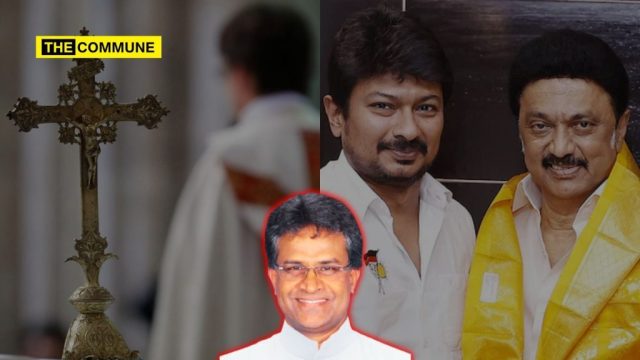
The controversy has also acquired a political dimension, as reported earlier by The Commune, which revealed that Rome has begun an internal probe after a Don Bosco alumnus accused the Chennai Provincial of political collusion with the ruling DMK. According to the report, the complaint submitted to the Salesian leadership in Rome alleged that the Provincial’s proximity to DMK functionaries and participation in politically aligned events amounted to improper political engagement by a senior cleric, raising concerns of institutional compromise. The article stated that these allegations were formally taken cognisance of in Rome, prompting the Salesian General Council to initiate a preliminary examination into the matter, thereby bringing the issue of church–political entanglement under official scrutiny.
Subscribe to our channels on WhatsApp, Telegram,Instagram and YouTube to get the best stories of the day delivered to you personally.
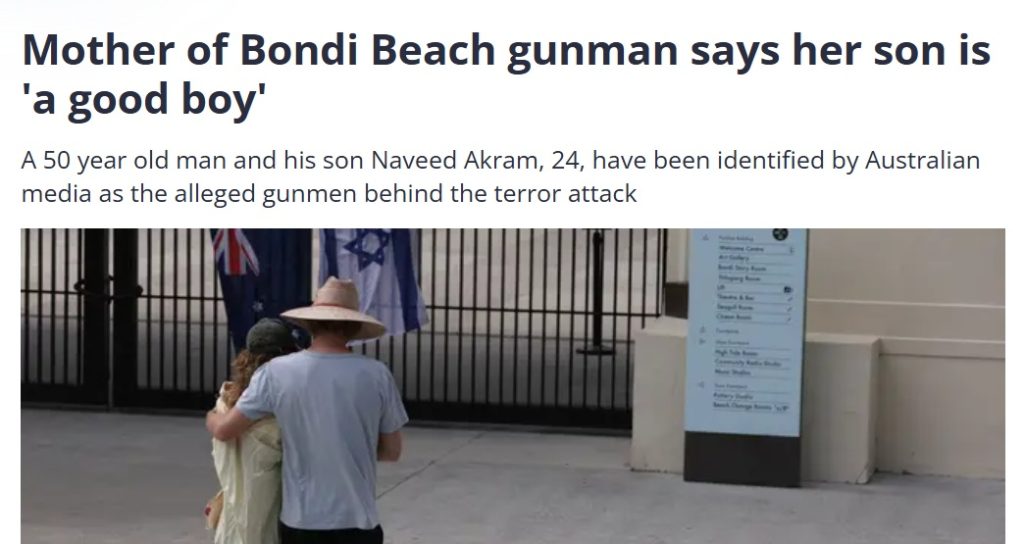
On 15 December 2025, NDTV published an article quoting the mother of a Sydney terror attack accused, prompting renewed scrutiny of media narratives that foreground the personal lives, family reactions, or emotional backgrounds of terrorists.
In this report, we look at 15 documented instances between 2015 and 2025, across India and abroad, in which journalists or media organisations framed terrorists or accused attackers through a humanised or sympathetic lens.
These instances span major terror attacks and militant encounters, where coverage shifted attention from the act of violence and its victims to family statements, upbringing, personal traits, or emotional framing of the perpetrators.
Part 1 Bondi Beach Terror Attack
#1 NDTV Quotes Sydney Shooter’s Mother After Bondi Beach Attack – 15 December 2025
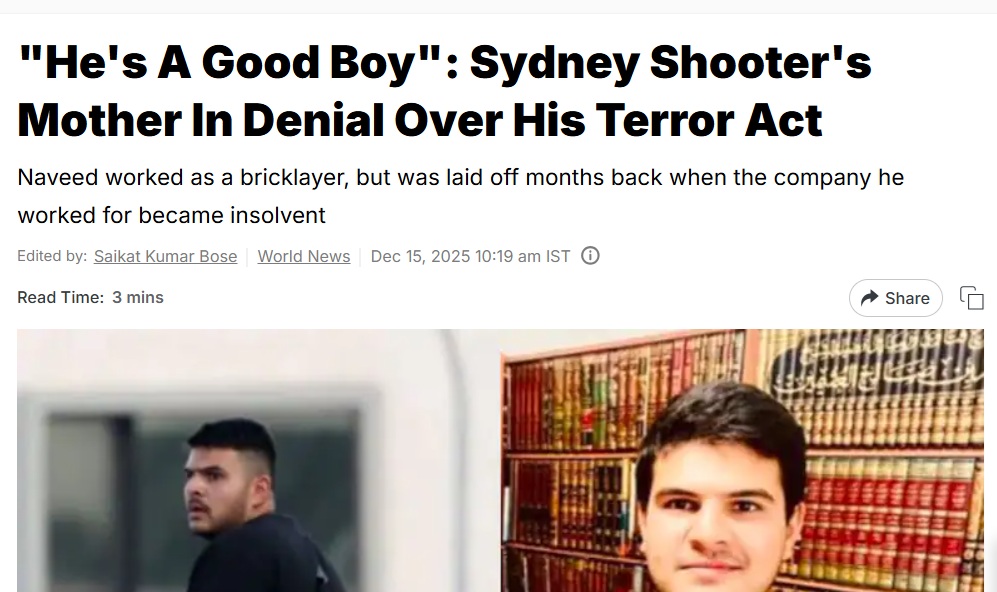
Following the 14 December 2025 terror attack at a Hanukkah event on Sydney’s Bondi Beach, NDTV published an article titled“‘He’s A Good Boy’: Sydney Shooter’s Mother In Denial Over His Terror Act.”
The attack, carried out by father-son duo Sajid Akram (50) and Naveed Akram (24), killed 15 people and injured 27 others. The NDTV report prominently quoted Naveed Akram’s mother saying, “Anyone would wish to have a son like my son… he’s a good boy.” The article focused on her denial of her son’s involvement, foregrounding parental emotion rather than the scale or victims of the terror attack.
#2 Moneycontrol Carries Mother’s Defence of Bondi Beach Shooter – 15 December 2025
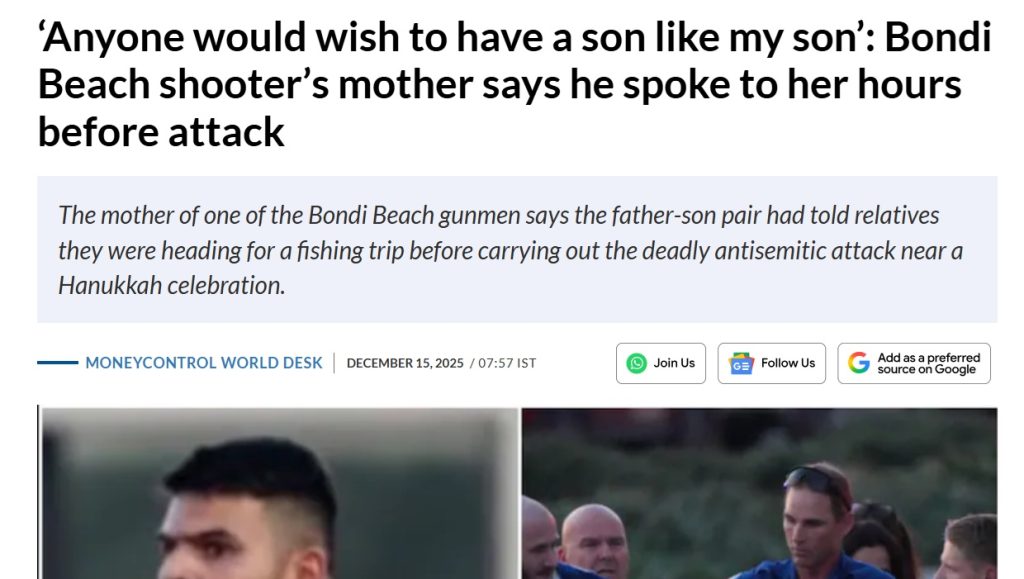
Moneycontrol published an article titled“‘Anyone would wish to have a son like my son’: Bondi Beach shooter’s mother says he spoke to her hours before attack.”
The report quoted Naveed Akram’s mother, Verena, stating that she did not believe her son was involved in extremism and claimed he did not possess a firearm. The article centred on her emotional statements and last conversation with her son, following the 14 December 2025 terror attack in Sydney that killed 15 people. The focus remained on family denial and personal background rather than investigative findings or victims.
#3 GBN News Highlights Shooter’s Mother Calling Him a ‘Good Boy’ – 15 December 2025
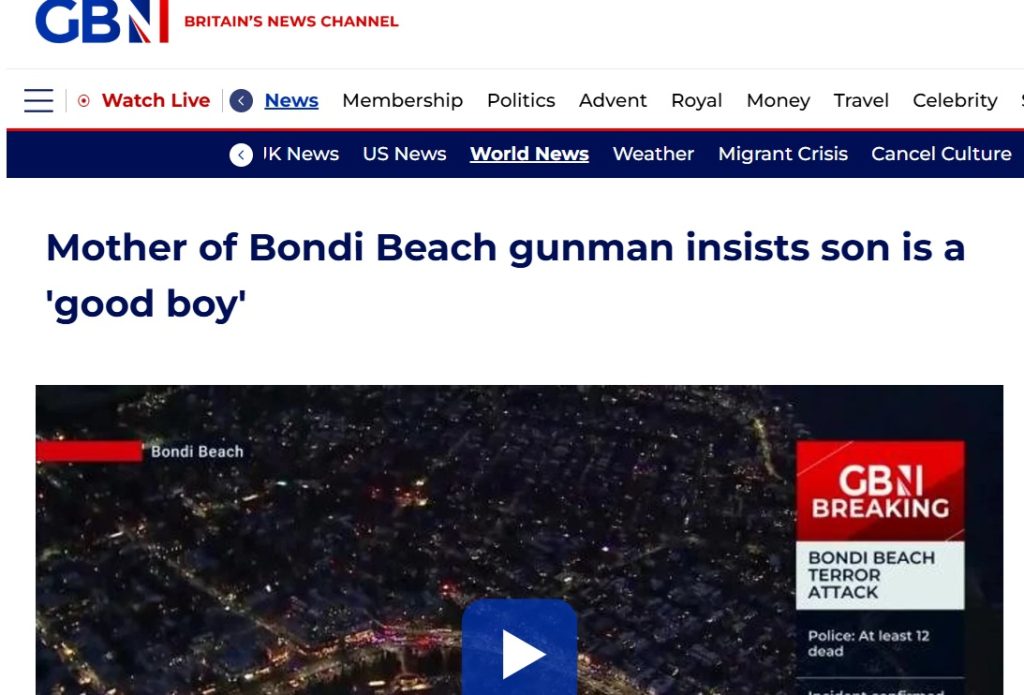
GBN News published an article titled “Mother of Bondi Beach gunman insists son is a ‘good boy’,” following the Sydney terror attack.
The report quoted Naveed Akram’s mother saying, “Anyone would wish to have a son like my son.” The article referenced the December 14, 2025 shooting at a Hanukkah event in which 15 people were killed. While acknowledging the attack, the article placed emphasis on the mother’s personal defence of her son, repeating her characterisation of him as non-violent and well-behaved.
#4 LBC News Reports Mother’s Detailed Defence of Sydney Shooter – 15 December 2025
LBC News published an article titled“Mother of Bondi Beach gunman says her son is ‘a good boy’.”
The report quoted extensive statements from Naveed Akram’s mother, claiming he did not own a gun, avoided socialising, and lived a disciplined life. The article referred to the December 14, 2025 attack in Sydney involving Sajid and Naveed Akram but largely focused on the mother’s account, including lifestyle details, rather than the terror act itself or its victims.
Part 2 – Other Terror Attacks
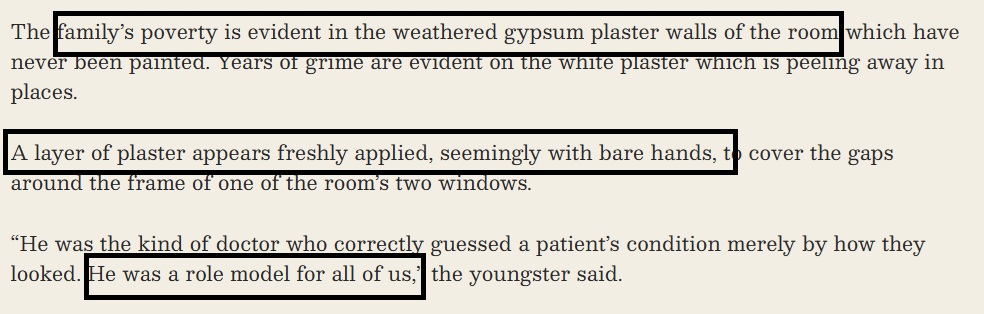
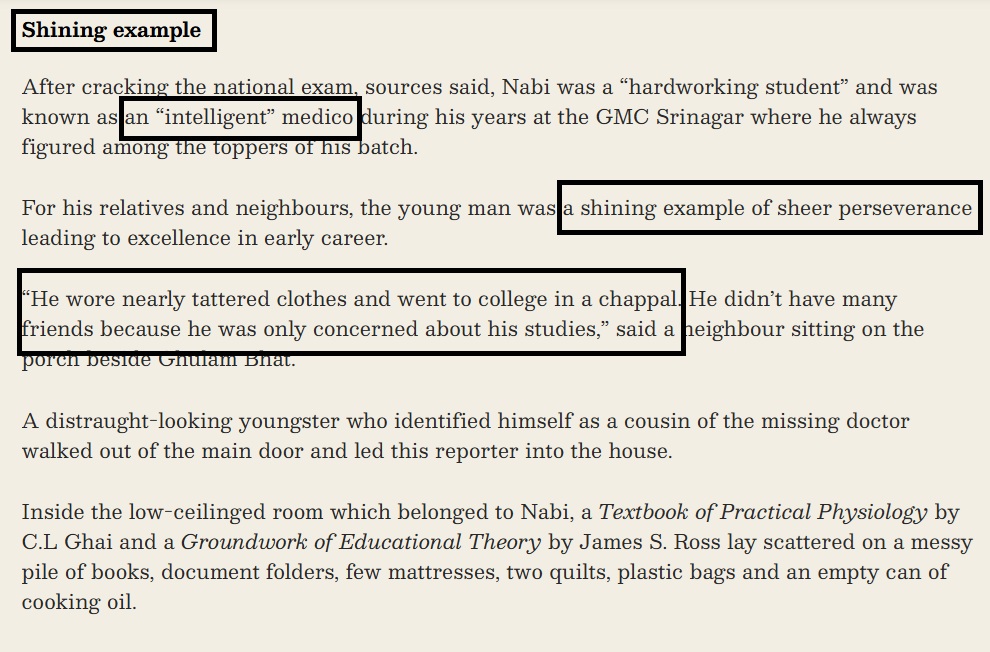
#5 The Wire Portrays Delhi Red Fort Metro Station Blast Accused as Compassionate Doctor – 12 November 2025
Following the Red Fort car blast in Delhi that killed more than a dozen people, The Wire published an article portraying prime accused Dr. Umar Un Nabi through a sympathetic lens. The report described his family’s poverty, his medical skills, and quoted people calling him a “role model.”
The narrative focused on his background and character traits, presenting him as soft-spoken and compassionate, while downplaying his alleged role in a deadly terror attack.
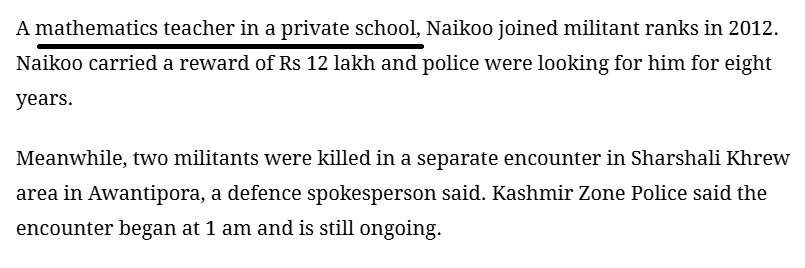
#6 Indian Express Notes Militant Riyaz Naikoo’s Past as Teacher – 6 May 2020
After Hizbul Mujahideen commander Riyaz Ahmad Naikoo was killed in an encounter in Jammu and Kashmir, The Indian Express published a report noting his former profession as a mathematics teacher. While reporting on the encounter, the article highlighted his background as an educator before joining militancy in 2012.
Naikoo was among the most wanted militants in Kashmir, yet the article foregrounded his civilian past alongside his militant identity.
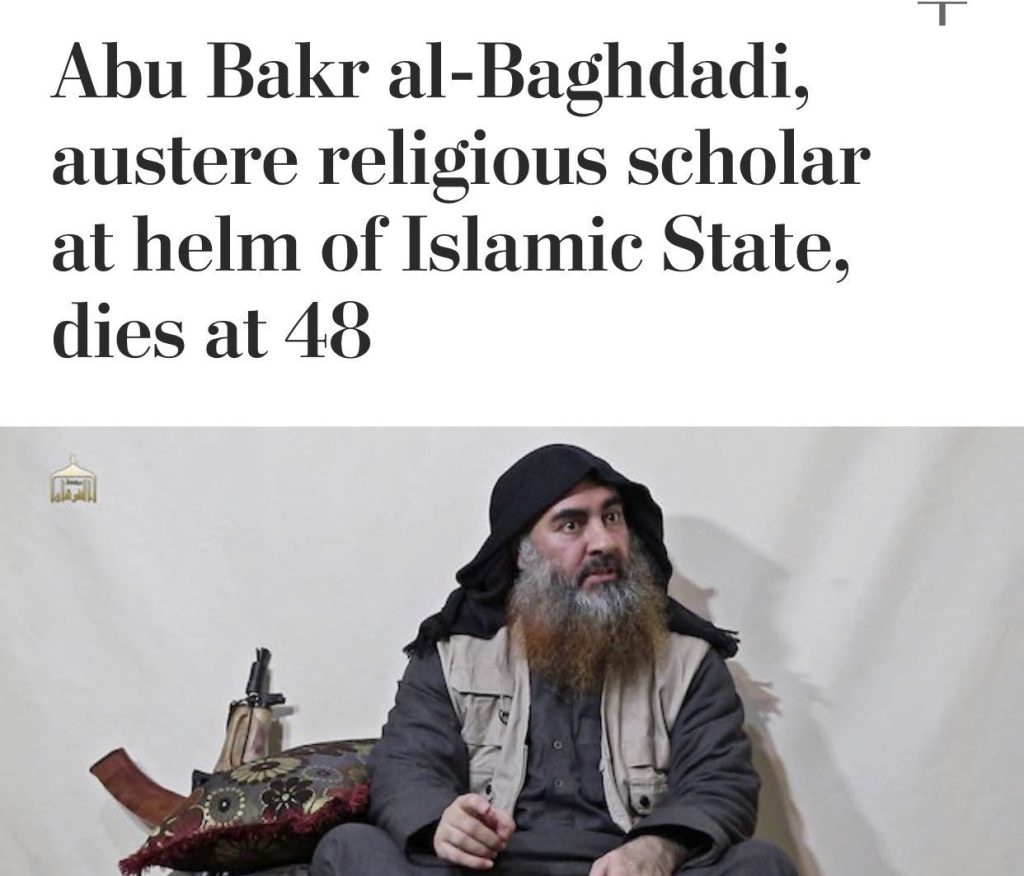
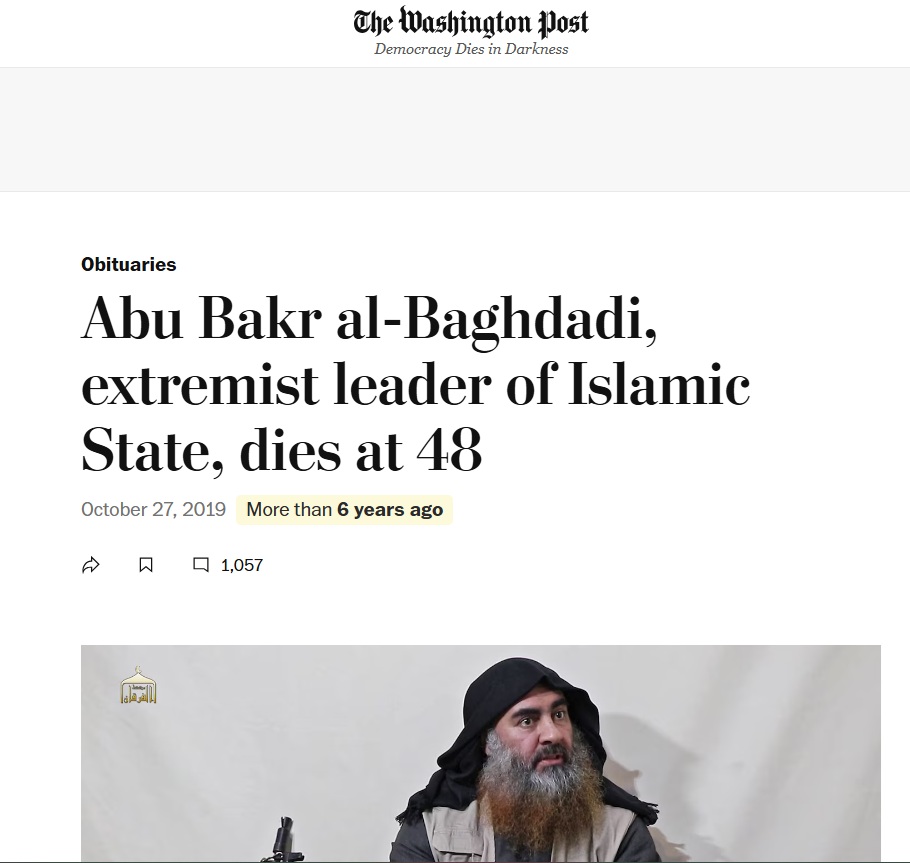
#7 Washington Post Calls ISIS Chief an ‘Austere Religious Scholar’ – 27 October 2019
Following the killing of ISIS chief Abu Bakr al-Baghdadi by US forces, The Washington Post published an obituary-style article referring to him as an “austere religious scholar.” The report described his appearance, scholarly background, and leadership journey, noting his wire-frame glasses and religious education. WaPo first carried a headline that looked more like an obituary which read, “Islamic State’s terrorist-in-Chief” to “austere religious scholar at helm of Islamic State.”
In fact, the article in WaPo carried a description of Baghdadi that practically made him seem like a saint. The journalist who wrote this article had written that Baghdadi was an “austere religious scholar with wire-frame glasses” who previously had “no known aptitude for fighting and killing”. Warrick wrote that Baghdadi’s acquaintances remembered him as a “shy, nearsighted youth who liked soccer but preferred to spend his free time at the local mosque”.
Before edit
Later WaPo changed the headline to “Abu Bakr al-Baghdadi, extremist leader of Islamic State, dies at 48” after receiving flak.
After edit
Just because Al-Baghdadi was a Muslim, the Wapo and NYT have consistently carried out a headline so as to no come across as ‘offensive’ to the liberal cabal and Islamo-fascists.
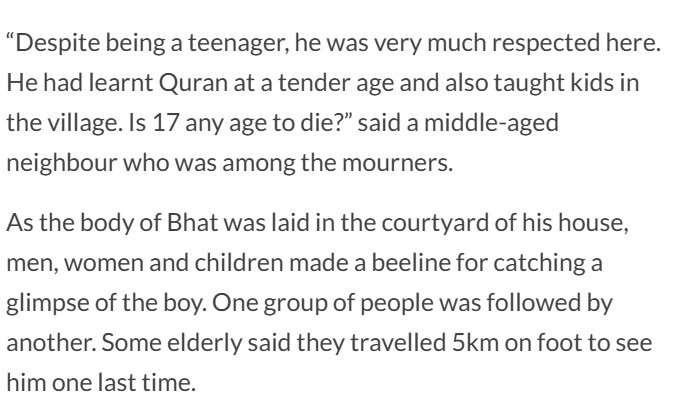
#8 Hindustan Times Humanises Pulwama Link Sajad Ahmad Bhat – 19 June 2019
Hindustan Times published a report on Pulwama-linked JeM militant Sajad Ahmad Bhat describing him as a Quran teacher, sports enthusiast, and respected village youth.
The article detailed funeral scenes and family claims while giving limited emphasis to his ownership of the explosive-laden vehicle used in the Pulwama attack that killed 40 CRPF personnel. The focus on his background and hardships drew criticism for humanising a key terror link.
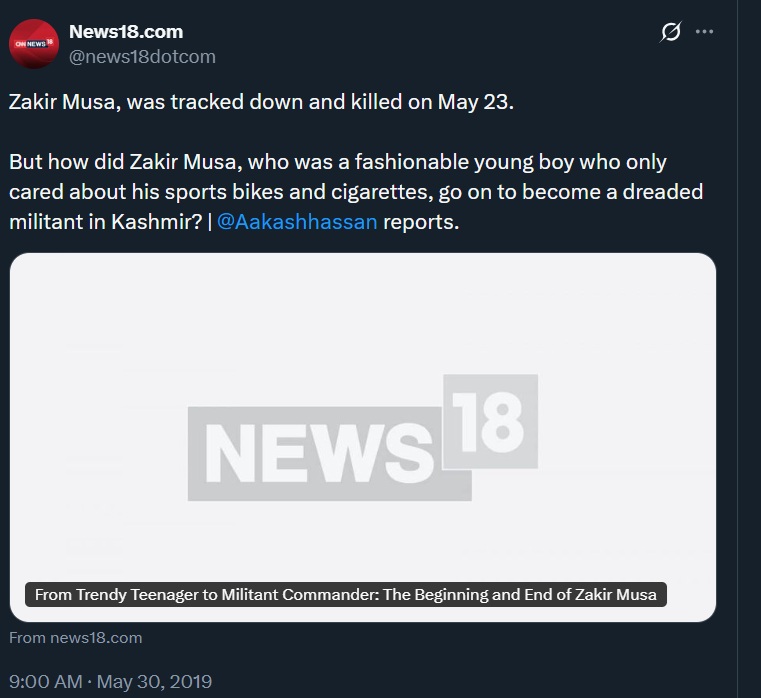
#9 CNN News18 Describes Zakir Musa as Award-Winning Youth – 30 May 2019
CNN News18 published a feature on Zakir Musa and Burhan Wani emphasising their teenage habits, sports skills, fashion choices, and family struggles. Musa, the head of Al-Qaeda-linked Ansar Ghazwat-ul-Hind, was described as an “award-winning” and “fun-loving” youth.
The article gave secondary attention to his leadership role in terrorism, focusing instead on personal narratives and emotional framing.
#10 India Today Frames Pulwama Bomber as ‘Misguided Teen’ – 16 February 2019
India Today reported on Pulwama suicide bomber Adil Ahmad Dar by highlighting his age, family grief, and alleged mistreatment by security forces.
Another article from 15 February 2019 quoted his parents claiming harassment led to radicalisation.
While the report acknowledged the bombing that killed 40 CRPF jawans, it framed Dar primarily as a misguided teenager rather than focusing on his role as a JeM terrorist.
#11 Hindustan Times Publishes Pulwama Bomber’s Family Statements – 16 February 2019
Hindustan Times published an article titled“‘Desperately wanted him to quit’: Pulwama suicide bomber Adil Dar’s mother.” The report featured statements from Dar’s parents describing humiliation and distress.
The article focused on family emotions following the 14 February 2019 attack, foregrounding parental grief while recounting the bomber’s background.
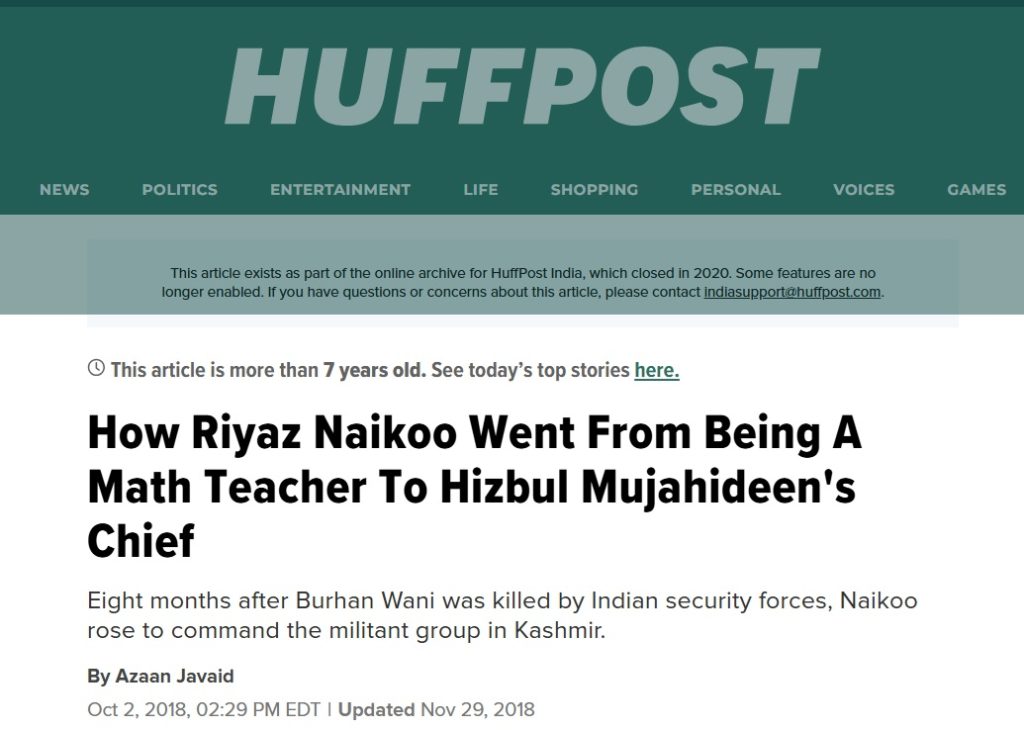
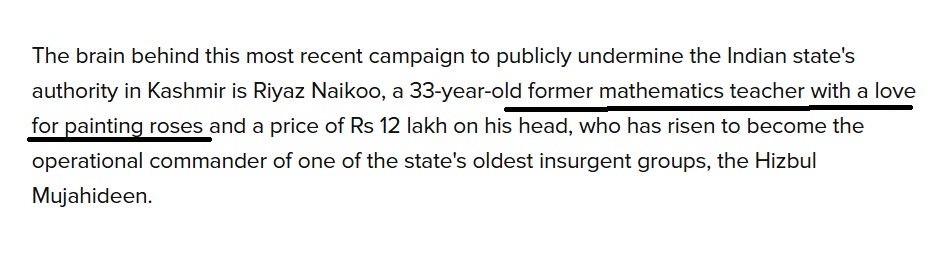
#12 HuffPost Describes Riyaz Naikoo as Artist and Math Teacher – 2 October 2018
HuffPost published a profile titled “How Riyaz Naikoo Went From Being A Math Teacher To Hizbul Mujahideen’s Chief.”
The article described Naikoo as a former mathematics teacher with an interest in painting roses, before detailing his rise within Hizbul Mujahideen.
The narrative balanced his militant role with personal interests and background, lending a humanised portrayal.
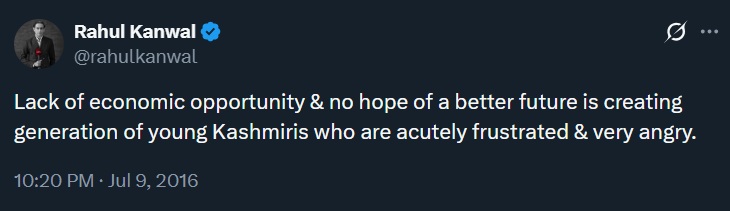
#13 Rahul Kanwal Links Burhan Wani’s Death to Youth Frustration – 8 July 2016
After Hizbul Mujahideen terrorist Burhan Wani was killed, journalist Rahul Kanwal tweeted that lack of economic opportunity was creating a generation of angry and frustrated Kashmiri youth.
The comment contextualised Wani’s militancy within socio-economic grievances, shifting focus from his terror activities to broader structural explanations.
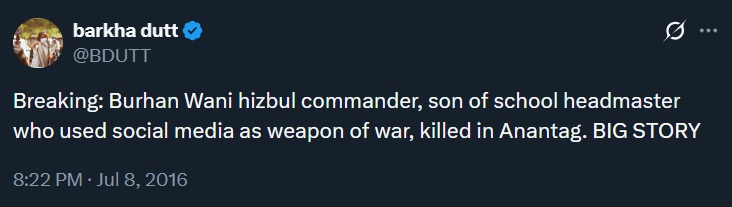
#14 Barkha Dutt Calls Burhan Wani ‘Son of School Headmaster’ – 8 July 2016
Journalist Barkha Dutt tweeted about Burhan Wani’s killing, describing him as the “son of a school headmaster” who used social media as a weapon of war.
The tweet highlighted his family background alongside his militant role, blending personal identifiers with reporting on his death.
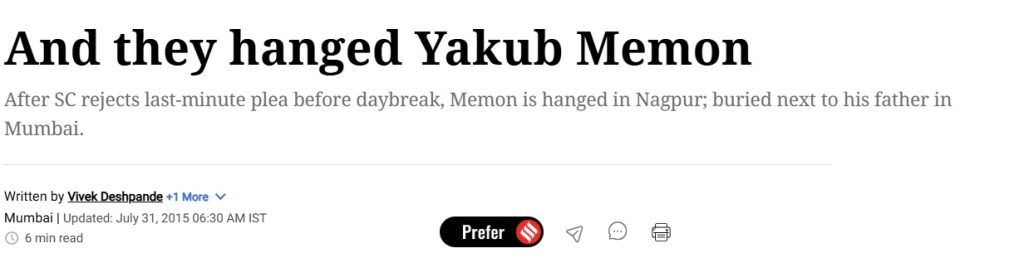
#15 Indian Express Focuses on Yakub Memon’s Final Hours – 30 July 2015
Following the execution of Yakub Memon, mastermind of the 1993 Mumbai serial blasts, The Indian Express published an article titled “And they hanged Yakub Memon.”
The report detailed his final hours, emotions, and hopes for clemency. While recounting the execution, the article focused extensively on his mental state and personal moments before death, rather than the victims of the blasts.
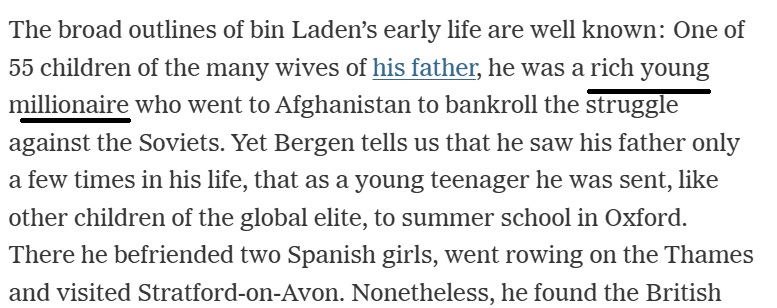
#16 NYT Calls Osama bin Laden a “Rich Young Millionaire” – August 2021
The New York Times described Osama Bin Laden as a “rich young millionaire” and focused on him being “a tall and handsome man“.
They even published an elaborate obituary humanizing a terrorist.
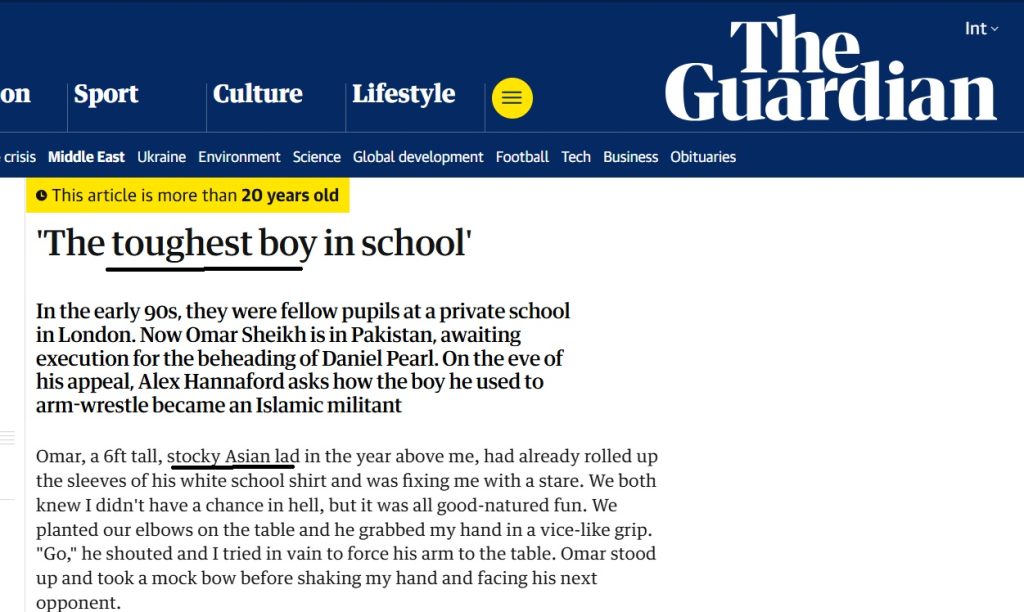
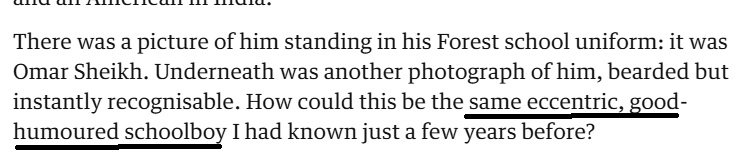
#17 The Guardian calls Omar Sheikh who Beheaded Daniel Pearl, “eccentric, good-humoured” – February 2005
The Guardian reported terrorist Omar Sheikh being an “eccentric, good-humoured schoolboy” of Forest School and a member of the British arm-wrestling squad.
#18 BBC Portrays 26/11 Terrorist Ajmal Kasab As ‘Village Boy’ – November 2018
BBC portrayed 26/11 Mumbai attack terrorist Ajmal Kasab as a village boy by publishing a video report after visiting his village.
During the trial of Ajmal Kasab, the lone surviving terrorist of the 2008 Mumbai attacks, some media outlets focused on his youth and background.
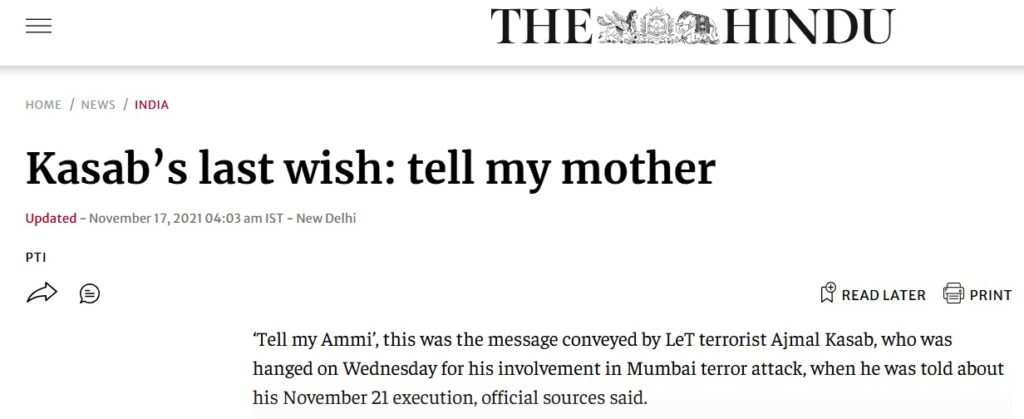
#19 The Hindu Humanizes Ajmal Kasab – November 2021
The Hindu published articles with headlines like “Kasab’s Last Wish” which humanized a mass murderer.
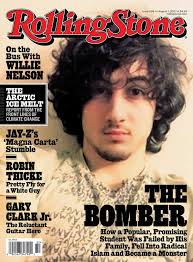
#20 Rolling Stone Describe Boston Bomber As “Handsome, Young, Promising” Student – July 2013
Multiple media outlets such as Rolling Stone described the Boston Marathon bomber (2013) as a “handsome young man” and “promising student“.
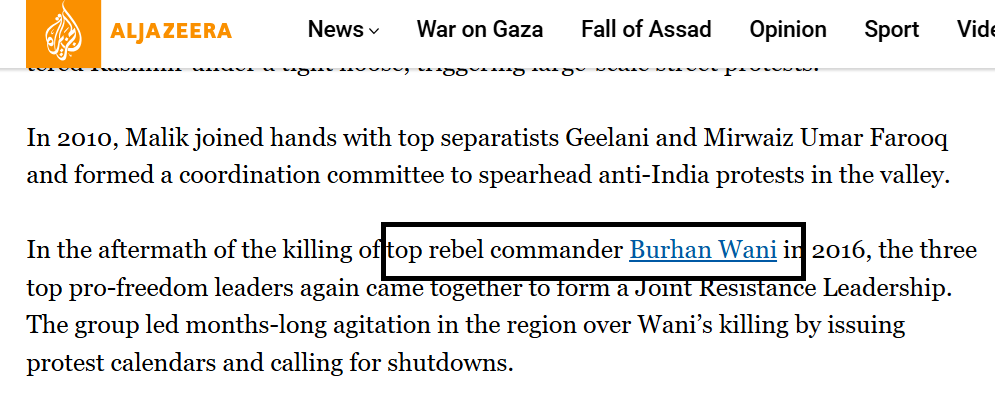
#21 Al Jazeera Called Burhan Wani “Top Rebel Commander” – May 2022
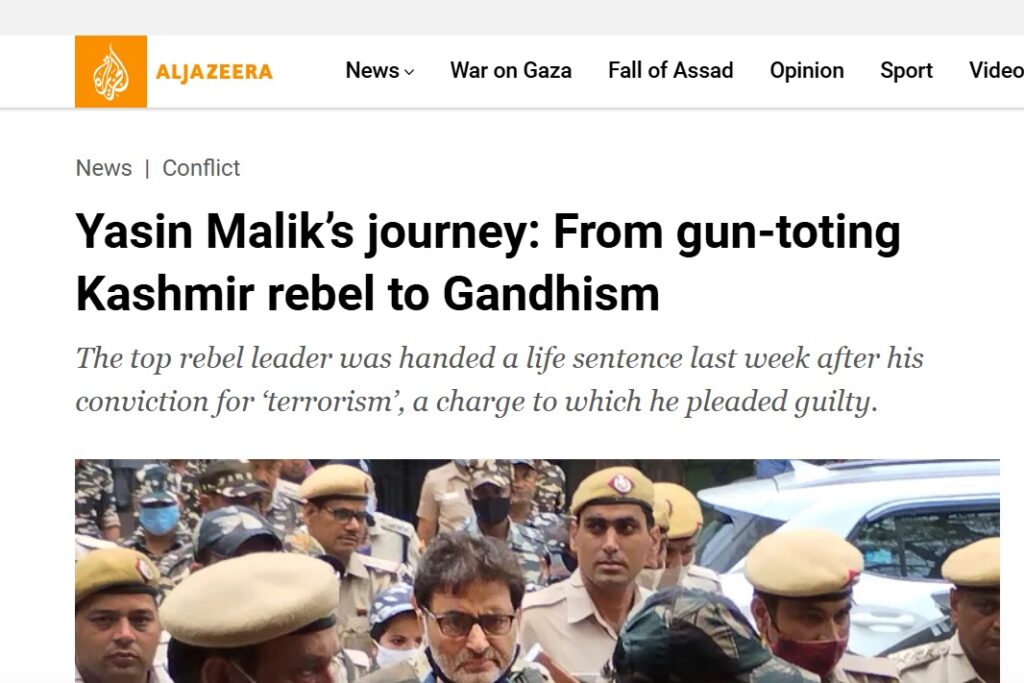
Al Jazeera published an article on Yasin Malik where they referred to terrorist Burhan Wani as “top rebel commander”.
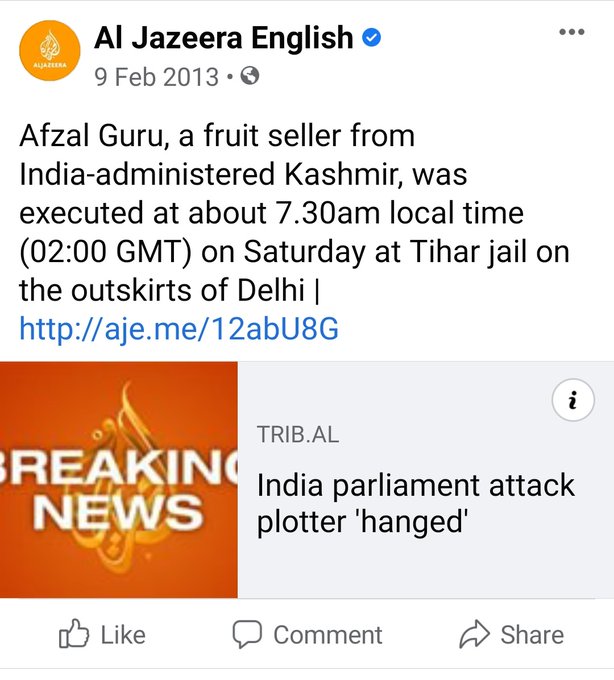
#22 Al Jazeera Called Afzal Guru A “Former Fruit Seller” – February 2013
Afzal Guru, convicted for his role in the 2001 Parliament attack, was referred to as a “former fruit seller“, sometimes as a “family man” or “victim of systemic injustice” by certain sections of the media, downplaying his involvement in the attack.
#23 Al Jazeera Calls Terrorist Yasin Malik A Gandhian – May 2022
Yasin Malik, a terrorist who murdered four Indian Air Force officers in broad daylight at point-blank range, has often been described as a “rebel leader” by certain media outlets, despite his involvement in violence and terrorism. Al Jazeera even wrote gloriously about how he “gave up arms and became a Gandhian“.
Part 3 – Other Extremists
#24 Indian Express Humanizes 2020 Delhi Riots Accused Umar Khalid When He Got Interim Bail – January 2025
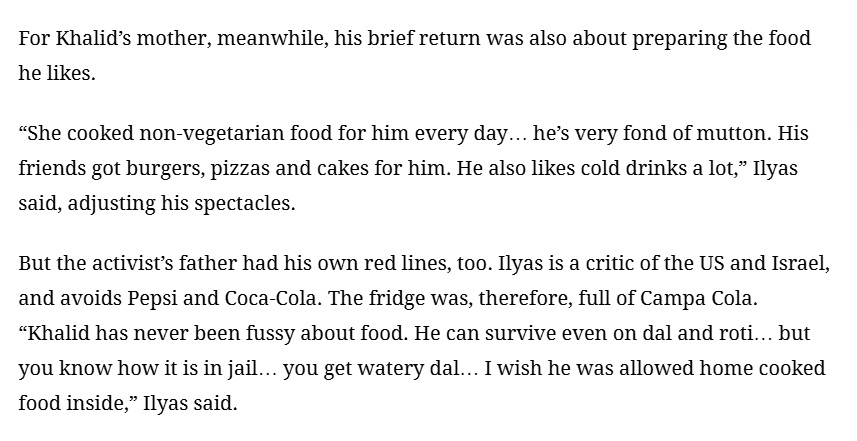
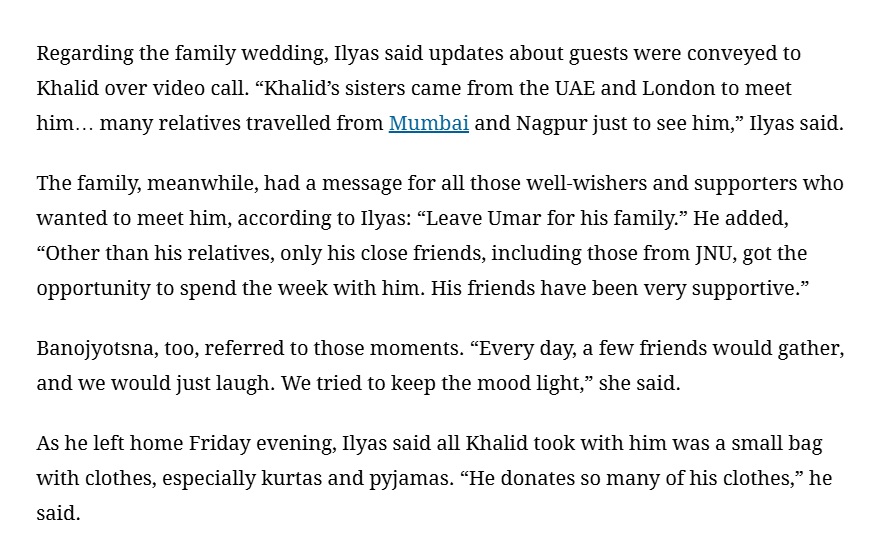
In January 2025, The Indian Express article published an article titled “When Umar Khalid came home” which humanised an accused individual by foregrounding personal and emotional details while downplaying the seriousness of the charges he faces. The piece dwelt on Khalid’s interim bail period through lyrical descriptions of confinement, freedom, food preferences, and family sentiments, using imagery such as “staying in a cage” and “savouring every ray of sunlight,” which cast him as a victim of circumstance rather than an undertrial accused in a case linked to the 2020 Delhi riots.
By highlighting everyday comforts, parental anguish, and perceived social stigma, the article shifts attention away from the allegations of conspiracy and violence, and instead constructs a sympathetic narrative that risks softening public perception of the gravity of the charges and the suffering of riot victims.
#25 Times of India, Deccan Herald Romanticise Maoist Leader Chalapathi – January 2025
Obituaries published by the Times of India and Deccan Herald on Maoist leader Chalapathi portrayed him in a sympathetic and romanticised manner. Both outlets described him as a “military strategist,” an intellectual, and an inspirational figure, while highlighting his reading habits, linguistic skills, and organisational abilities. The reports focused on his rise within Maoist ranks but largely omitted the violence attributed to him, including deadly attacks such as the 2008 Nayagarh police armoury raid and the 2018 Araku killings. The coverage downplayed the human cost of Maoist violence and failed to adequately condemn his role in prolonged insurgency.
Subscribe to our channels on WhatsApp, Telegram,Instagram and YouTube to get the best stories of the day delivered to you personally.
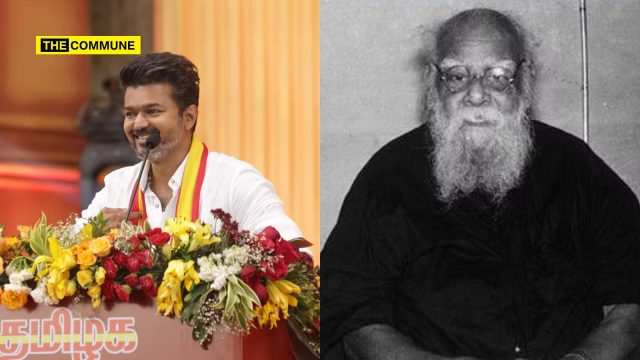
TVK chief Vijay’s speech at a public meeting in Erode on December 18, praising EV Ramasamy Naicker (hailed as Periyar by his followers) as a central force behind constitutional changes on reservation and as a foundational policy influence, has drawn sharp criticism from sections of Dalit activists, historians, and political commentators.
In his address, Vijay described EVR as a reformer who led agitations that resulted in amendments to constitutional provisions on reservation and said his movement sought class-based proportional representation. He said, “Let us talk about a hero from the 19/20th century. If there is a hero who is known for being an Iron Man – yes, it is our Erode crowbar (kadapparai) – A reform lever who has turned the entire state of Tamil Nadu upside down. Born in Erode district, he was the one who led the protest across India to amend the constitutional provisions related to reservation for the oppressed. Who is that? Our Thanthai Periyar. 100 years ago, he asked for class-based proportional representation. Whether it is then or now, he is one whom we look at with astonishment. Our policy leader. We took all the policies that we want from Periyar. We have also taken the policies followed by Anna and MGR who followed him.”
However, critics argue that Vijay’s remarks compress a long and complex history into a singular narrative and overlook a body of statements and positions attributed to EVR that they say were hostile to Dalit political and social aspirations.
Why Is Vijay Wrong?
Vijay’s claim that EVR singularly led the push for constitutional change compresses a complex history. The First Constitutional Amendment (1951), which introduced Article 15(4) to protect reservations after the Champakam Dorairajan verdict, was indeed influenced by EVR’s agitations. However, historians stress it was the result of pressure from multiple movements, regional governments, and leaders, not a one-man campaign.
The Omitted History: EVR Vs Dalit Leaders
The more significant omission in Vijay’s speech is the historical record of EVR’s frequent opposition to independent Dalit mobilization. Scholars and Dalit intellectuals highlight a pattern:
Ridicule Of Dalit Demands: EVR openly mocked early 20th-century Dalit leaders like MC Rajah and Ayothidasa Pandithar for focusing on education and government jobs, once stating that asking for jobs and education from the government was “a shame.”
The Keezhvenmani Silence: After 44 Dalit landless labourers were burnt alive by landlords in Keezhvenmani in 1968 for demanding higher wages, EVR famously refused to condemn the caste atrocity. Instead, he admonished labourers to accept the wages offered, dismissing the caste-violence angle.
Contempt For Dalit Progress: In writings for Kudiarasu, he complained that the rising price of clothing was due to Dalit women starting to wear blouses, a symbol of their social mobility.
Antagonism Towards Ambedkar: EVR viewed Dr BR Ambedkar, the architect of the Indian Constitution and Dalit emancipation, with suspicion, once labelling him an “agent of the North Indian Brahminical Congress Party.”
A Selective Hero For Political Legitimacy
Vijay’s speech, by presenting EVR as an unblemished hero of social justice, appears to be an attempt to claim the potent legacy of Dravidian social justice politics for his nascent party. However, it does so by offering a sanitized version of history.
Vijay seems to engage in a classic political maneuver: appropriating a symbolic figure while erasing the uncomfortable parts of his legacy. To claim Periyar’s mantle without addressing his documented conflicts with Dalit assertion creates a paradox. It appeals to a section of OBCs while hoping Dalits overlook both history and present alliances.
The speech, therefore, serves less as a history lesson and more as a strategic political pitch, one that seeks to anchor the TVK in Tamil Nadu’s dominant political narrative but may struggle to reconcile with the full, and often difficult, historical record of the figure it seeks to celebrate. By ignoring EVR’s fraught relationship with Dalits – the oppressed, the narrative risks perpetuating the very social fissures the Dravidian movement claims to have resolved.
Subscribe to our channels on WhatsApp, Telegram,Instagram and YouTube to get the best stories of the day delivered to you personally.
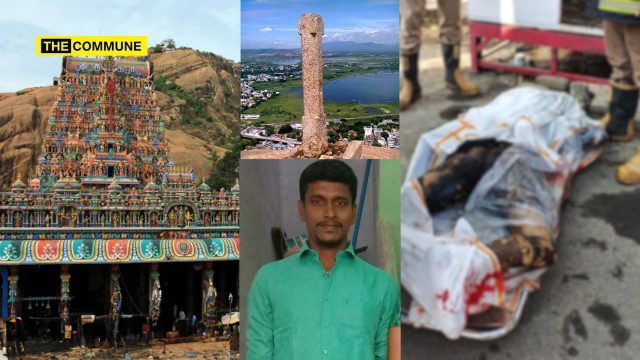
A young man named Poorna Chandran, committed suicide by setting himself on fire in Madurai today (18 December 2025), reportedly in protest against the DMK government’s decision to disallow devotees from lighting the sacred Karthigai Deepam at the Deepathoon on the Thiruparankundram Murugan Temple hill.
Speaking to reporters, Poorna Chandran’s brother Ramadurai broke down and said “My brother’s name is Poorna Chandran. We live in the Narimedu area of Madurai. He left home in the morning for work on his vehicle. In the evening, people from the station called. They told me that he set himself ablaze. He had sent a voice message to his friend who sent it to me and I got to know only after that. He apparently told that he is going to self-immolate for not letting Deepam to be lit at Thirupparankundram.”
When reporters asked whether he had listened to the audio, he replied that he had, and that it was only after hearing the voice message that he came to know that his brother had self-immolated.
He apparently told in his voice message that he is ending his life before the statue of Periyar, who said ‘There is no God’ and hoped that his sacrifice would pave way for the Deepam to be lit next year.
He also stated that Poorna Chandran had never expressed any such thoughts to him earlier.
Describing him as a devout Murugan devotee, Ramadurai said his brother frequently visited Sathuragiri.
Poorna Chandran is survived by his wife and two children—one studying in Class 4 and the other about to begin pre-KG.
BJP Tamil Nadu President Nainar Nagenthiran slammed the DMK government saying that its religious hatred has burnt a Tamil instead of the fire being lit at Deepathoon.
“I have no words of solace to offer the family of the one who became a victim of the DMK government’s futile obstinacy.“, Nainar Nagenthran said.
திமுக அரசின் மதவெறியால் தீபத்தூணிற்கு பதிலாகத் தீப்பிடித்து எரியும் தமிழர்கள்!
திருப்பரங்குன்ற தீபத்தூணில் கார்த்திகை தீபமேற்ற உயர்நீதிமன்றமே உத்தரவிட்ட பிறகும் கூட, தங்கள் அரசியல் காழ்ப்புணர்ச்சிக்காகத் திமுக அரசு அதை செயல்படுத்த மறுத்ததைக் கண்டித்து, மதுரை நரிமேடு பகுதியைச்… pic.twitter.com/LPgvRmdOuN
Reacting to this tragic incident, BJP leader Annamalai said “The news of the death of an ardent Muruga devotee, brother Mr. Poorna Chandran, from Narimedu area of Madurai city, by setting himself on fire is deeply shocking and saddening. The case is in the court. We all have complete faith in the courts. In this situation, the fact that Brother Thiru. Poornachandran has taken such a regrettable decision is extremely heartbreaking. Each and every one of us is important to their families. I humbly request everyone not to take such decisions for any reason, ever.“
“I express my deepest condolences to the family of Brother Thiru. Poornachandran. I request the Madurai BJP brothers to provide the necessary assistance to them. I pray that the soul of Brother Thiru. Poornachandran attains the divine feet of Lord Murugan.“, Annamalai said.
Tamil Nadu BJP Youth Wing President Dr. SG Suryah slammed the DMK government saying that its anti-Hindu politics has claimed one life.
Subscribe to our channels on WhatsApp, Telegram,Instagram and YouTube to get the best stories of the day delivered to you personally.
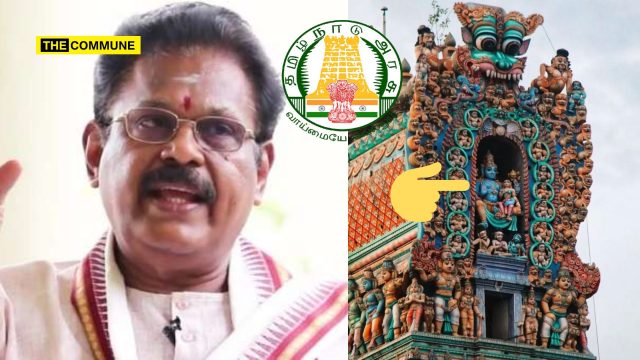
Statements made by Dravidianist-aligned orator Suki Sivam regarding the Tamil Nadu State Emblem and the Srivilliputhur temple gopuram have come under scrutiny after visual evidence showed the presence of Hindu deities on the gopuram, contrary to his claims.
Speaking at a public forum, DMK-supporting Suki Sivam stated that the Srivilliputhur temple gopuram was adopted as the Tamil Nadu government emblem during the tenure of Omandur Ramasamy Reddiar, who served as Chief Minister around 1947. He said the gopuram was chosen on the suggestion of Rasikamani TKC. and claimed that the selection had initially sparked controversy on the grounds that it represented a Hindu religious symbol.
According to Suki Sivam, the controversy was addressed by emphasising that the Srivilliputhur gopuram did not contain any deity figures. He said Omandur Ramasamy Reddiar, after consulting Rasikamani TKC, explained in the Assembly that the gopuram was unique because “there is not a single deity figure on it.”
“Sir, only if there is a statue will the question arise – whether it is a Vaishnava image, a Shiva image, a Vinayaka image or a Murugan image. But here, there is not even one deity figure,” Suki Sivam said, adding that the gopuram consisted purely of stonework and masonry.
He further claimed that the structure should not be viewed as a Hindu religious symbol but as a representation of Dravidian architectural tradition.
“This is not a symbol of the Hindu religion; it is a symbol of Dravidian architecture,” he said, arguing that such gopurams were found only in South India and not in the northern parts of the country.
திருவில்லிபுத்தூர் கோயில் கோபுரத்தை தமிழ்நாடு அரசின் இலச்சினையாக்கியவர் ஓமந்தூர் ராமசாமி அவர்கள், கோபுரம் இந்து மதத்தின் அடையாளம் என்ற விமர்சனம் எழுந்தபோது, அது ஒரு மதத்தின் அடையாளம் அல்ல அது திராவிடக் கட்டடக் கலையின் அடையாளம், ஏனெனில் அக்கோபுரத்தில் ஒரு சாமி பொம்மை கூட இல்லை. pic.twitter.com/xcDstuqJx0
However, images of the Srivilliputhur temple gopuram show that Hindu deities are, in fact, part of the structure. Notably, the Lakshmi–Narayana form is prominently depicted in the upper tier of the gopuram, contradicting the assertion that there is not even a single deity figure.
Observers pointed out that the presence of deity figures on one of Tamil Nadu’s most prominent temple towers calls into question the accuracy of the claim that the gopuram is devoid of Hindu iconography. The depiction of Lakshmi-Narayana on the gopuram undermines the argument that the emblem was selected solely as a non-religious or purely architectural symbol.
It is now clear that the person has no understanding of what is present on a prominent gopuram in Tamil Nadu. The claim that there is “oru saami bommai kooda illai” (not a single deity figure) and that there are “no Hindi deities” on the gopuram is factually incorrect. In… https://t.co/lGwHkkbX1Xpic.twitter.com/wc8LLQAN9n
Suki Sivam – Self-Proclaimed Orator Who Inserts Dravidianist Ideology In Spiritual Talks
Suki Sivam, the self-proclaimed scholar who occasionally uses his eye-opening research on Hindu gods to subtly interweave Dravidianist ideology into his spiritual talks, displays a level of arrogance that seems boundless. In Indian philosophy, Hindu teachings assert that choosing a spiritual path should transcend the inherent arrogance of human nature – a quality considered essential for the human experience, except in Charvaka philosophy. However, Suki Sivam stands as an exception to this notion. Despite presenting himself as a devoted Hindu follower and spiritualist, his arrogance persists, embodied in his unyielding sense of self.
In one YouTube interview, Suki Sivam claimed that religion in India had been “hijacked” by politicians and that matters of faith should not be dictated by elected leaders. He defended Dravidian and DMK-linked criticism of Hindu practices, saying such politicians should be defeated electorally if people disagreed with them. Sivam argued that Hindu scriptures evolved to correct internal flaws and claimed historical Hindu temple practices excluded the downtrodden. He defended EV Ramasamy Naicker (Periyar), saying his attack on God stemmed from social reform. Sivam further asserted that Palani should not be considered one of Murugan’s six abodes, suggesting the deity was originally linked to Siddhars, possibly Bogar, and that Agamas do not apply to the temple.
Once he also claimed that Palani Murugan temple did not have a flagstaff, when it clearly had one.
Subscribe to our channels on WhatsApp, Telegram,Instagram and YouTube to get the best stories of the day delivered to you personally.
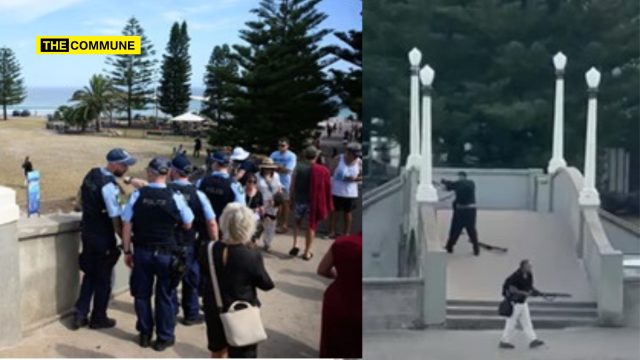
A woman who survived the terrorist attack during a Hanukkah celebration at Bondi Beach in Australia has accused police of failing to act decisively during the shooting and of preventing her from attempting to stop the attackers.
Speaking on Monday’s episode of The Erin Molan Show, survivor Vanessa Miller described moments of chaos and fear as a father and son opened fire on the gathering, killing at least 16 people and injuring around 40 others. One of the attackers was shot dead by police at the scene, while the other was wounded and taken into custody.
Miller said police officers appeared more focused on restraining her than confronting the attackers.
“This is where it’s just so real and so disappointing in our government. These police officers were hiding behind a car. I tried to grab one of their guns. One grabs me. He says, ‘No,’” she said.
Expressing anger at what she described as police inaction, Miller said, “These men, these police officers, they know who I am. And I hope they’re hearing this. You are weak. You could have saved so many more people’s lives. They were just standing there listening and watching this all happen, holding me back.”
She claimed only two officers were present at the scene initially.
“Two police officers. Where are the others? Not there. Nobody was there. Everyone, the public, helped. Nobody else.”
Miller also recounted being separated from her three-year-old daughter during the attack and said her child was saved by a bystander.
“My little three-year-old was saved by a pregnant woman who saw her crying and screaming, ‘Mommy, daddy,’ running around while everyone was on the floor. She’s lucky to be alive. And I know that today.”
Describing the emotional toll of the attack, Miller said the experience was deeply traumatic.
“It was so traumatic. We’re looking at celebrating Hanukkah, a festival of light. Last night we lit Hanukkah candles, and our message was encouraging people around the world to light candles for the victims that perished and for those in hospital.”
She said the attack reflected a broader failure to protect the Jewish community despite known threats.
“We’ve got to fight this antisemitism. How can we not be entitled to go to a Hanukkah event at Bondi Beach and be shot at like animals—like sitting ducks?”
Miller directly criticised the Australian government, alleging prior awareness of threats.
“The government has to do more. They know there’s a threat against the Jewish people. They’ve got blood on their hands, and they know it. They will deny, deny, deny—but they know it.”
The attackers were identified as Sajid Akram, 50, and his son Naveed Akram, 24, both described as being of Pakistani descent. According to the Australian Broadcasting Corporation, the two had reportedly travelled to the Philippines, where they received training prior to carrying out the attack. Police also reportedly found homemade ISIS flags inside Naveed Akram’s vehicle.
Australia introduced strict gun control laws following the 1996 Port Arthur massacre, mandating the surrender of semi-automatic and certain pump-action firearms. Despite these laws, one of the attackers was reported to have used a pump-action shotgun with an extended magazine during the Bondi Beach attack.
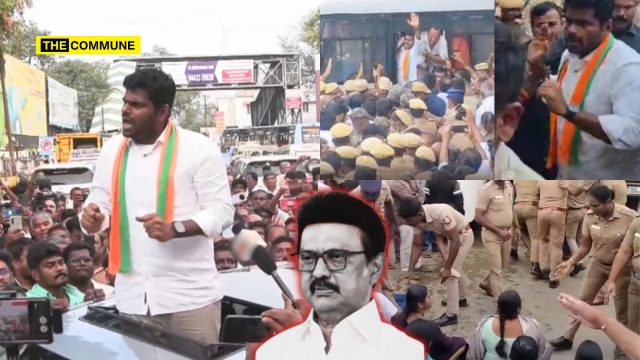
BJP leader and former Tamil Nadu BJP president K Annamalai was detained by police in Tiruppur today (18 December 2025) as a preventive measure ahead of a planned protest against the dumping of municipal waste.
According to police sources, Annamalai and other BJP workers were taken into custody while attempting to participate in a demonstration near the Kumaran statue in the Tiruppur Municipal Corporation area. The protest was intended to oppose the dumping of garbage collected from across Tiruppur city at the Chinnakalipalayam area in Palladam.
The protest had been planned despite the police denying permission, citing law and order concerns. As the demonstration did not receive official approval, those attempting to take part in it were detained as a precautionary measure, officials said.
Local residents have been staging protests for over 30 days against the Tiruppur Municipal Corporation’s decision to dump waste at Chinnakalipalayam. The issue has triggered sustained opposition from the public, who have raised concerns about environmental and health impacts.
Annamalai had announced his intention to join the protest about 15 days ago. However, permission for the demonstration was denied at that time as well. As the protest was again scheduled near the Kumaran statue, police once more refused permission and detained Annamalai and others when they attempted to proceed.
Police said the detentions were carried out to prevent an unauthorised protest and to maintain public order. Further details regarding the release of those detained were awaited.
Subscribe to our channels on WhatsApp, Telegram,Instagram and YouTube to get the best stories of the day delivered to you personally.
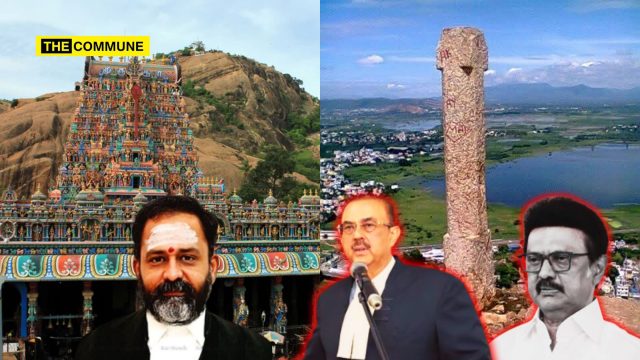
Madras High Court Justice GR Swaminathan on Wednesday, 17 December 2025, strongly questioned Senior Advocate Vikas Singh over remarks allegedly made by him suggesting that the judge had political ambitions, during the hearing of a contempt of court petition connected to the Thirupparankundram Karthigai Deepam dispute.
The contempt proceedings arise from an earlier order passed by Justice Swaminathan directing the lighting of the traditional Karthigai deepam on the Deepathoon situated atop the Thirupparankundram hill in Tamil Nadu. The contempt plea alleges that officials of the DMK government (state) failed to comply with the court’s directions.
When Vikas Singh, appearing for the State authorities, began his submissions through video conferencing, Justice Swaminathan interrupted him and sought clarification on certain statements attributed to Singh in media reports of the previous day’s hearing.
The Court referred to Singh’s earlier submissions questioning the basis of the judge’s order permitting the lighting of the lamp. According to reports published by Bar & Bench, Singh had allegedly remarked, “I don’t understand where has the judge gone, what all he is doing in this process. If he wants to contest elections”.
When Justice Swaminathan raised the issue, Singh responded that he did not understand what the judge was referring to. The judge then clarified that he had personally read the newspaper reports mentioning Singh’s alleged statement insinuating that he intended to contest elections.
Justice Swaminathan told Singh, “What appeared in the papers today. That I planned to contest the elections… repeat that again now. Repeat,”
In response, Singh stated that he did not wish to repeat any such statement. The judge, however, continued to press the issue and asked, “Would you mind repeating the words uttered yesterday before the division bench before me right now?”
Singh declined and replied, “No. I don’t want to.”
Chief Secretary Questioned Over Non-Compliance
During the same hearing, Justice Swaminathan also questioned the State Chief Secretary, N Muruganandam, seeking an explanation for the alleged failure of district-level officers to implement the court’s order regarding the lighting of the lamp at Thiruparankundram.
The Chief Secretary had been summoned after the Court observed what it described as a recurring pattern of non-compliance with judicial orders in matters related to the Thiruparankundram dispute. However, the Court clarified that Muruganandam was not being called upon to argue the correctness of the original order.
Justice Swaminathan stated, “Be clear in your mind that I have not called you regarding the primary order passed by me in the main repudiation. I have called you only to get your feedback on what happened subsequently,”
The judge said he viewed seriously the suggestion that district collectors may have deliberately attempted to bypass or nullify the writ order passed under constitutional authority. He asked the Chief Secretary to clarify whether the collectors acted independently or on instructions from higher authorities.
“I want you to make a statement as to whether these district collectors have ordered entirely on their own or on instructions.”
In response, Muruganandam told the Court that he would gather information from the concerned officers and submit a detailed written explanation. He assured the Court that the State government had no intention of disobeying judicial orders.
He explained that government officers sometimes face genuine challenges such as lack of funds, law-and-order concerns, or situations involving conflicting judicial orders. Muruganandam said, “In such cases, the officers know they have the right of appeal… In all the three instances mentioned by my lord, I think the officers have gone on writ appeal and the writ appeal is being heard.”
He added that maintaining public order was the government’s top priority and sought four weeks’ time to file a comprehensive written response.
Court Cites Earlier Case, Expresses Displeasure
Justice Swaminathan also referred to another case involving a litigant named Vincent, relating to a family property dispute between brothers. The Court recalled passing an interim order restraining the construction of a church on unpartitioned land without prior permission.
The judge noted that when the order was allegedly violated and the matter was brought back before the Court, the government had again taken the stand that enforcement was not possible due to law-and-order issues.
Expressing strong displeasure, Justice Swaminathan remarked, “What is this? When it comes to taking action against a church, lots of (issues) come up. When enforcing the Court’s order, your duty is to tackle the law-and-order issue and not throw the Court’s order aside,”
The Court directed the Chief Secretary to take a clear and responsible stand on the next date of hearing and to ensure that the written response comprehensively addresses all concerns raised by the Court.
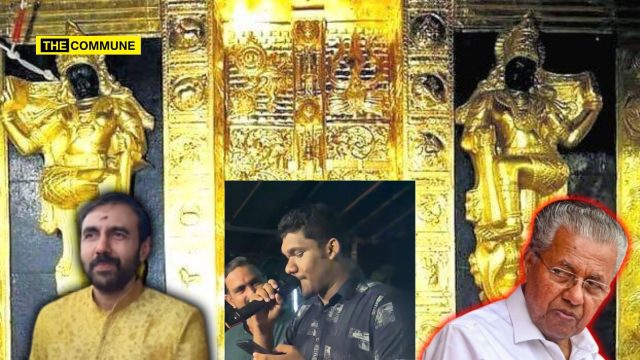
The Thiruvananthapuram Cyber Police on 17 December 2025 registered a case against four individuals in connection with the creation and circulation of a parody song titled ‘Pottiye Kettiye’, which refers to the alleged gold theft at the Sabarimala temple.
Set to the tune of the popular Ayyappa devotional song ‘Swamiye Ayyappo’, the parody gained widespread attention during the recently concluded local body elections after being used by the Congress (UDF) party in its campaign against the ruling Left Democratic Front (LDF). The song’s circulation sparked controversy, with allegations that it distorted a sacred devotional composition and hurt religious sentiments.
According to the First Information Report (FIR), the song was disseminated through online platforms, including YouTube, and was also circulated directly among members of the public and religious groups on or before 16 December 2025. The police stated that the act was carried out “with deliberate intent and prior knowledge” to insult religious sentiments, undermine faith, provoke religious emotions and incite disharmony.
The FIR named Kunjabdulla Chalappuram as the first accused, alleging that he created and released the parody beginning with the words ‘Pottiye Kettiye’ in a manner that insulted Ayyappa devotional songs and the sacred Sharana mantra. The police further stated that the content was intended to foster hatred among believers, disrupt communal harmony and disturb public peace.
The second accused, Danish Malappuram, rendered the song, while the third and fourth accused were responsible for filming and production. According to the police, all four jointly propagated the song through internet-based platforms.
Investigators said the track was produced by a Malappuram-based duo, Subair Pandalloor and Haneefa Mudikkode, as a promotional project for their studio. The lyrics were written by Kunjabdulla Chalappuram, also known as GP Chalappuram, and the song was sung by Danish Malappuram.
The complaint leading to the registration of the case was filed with State Police Chief Ravada Chandrasekhar by Prasanth Kuzhikala, general secretary of the Thiruvabharanapatha Samrakshana Samithi. In his complaint, Kuzhikala alleged that the parody mutilated a sacred Ayyappa devotional composition and misused religious content for political purposes. He contended that linking Lord Ayyappa with an election campaign song amounted to an affront to faith and caused emotional distress to devotees.
The song gained wide circulation across Kerala and among Malayali communities abroad during the election campaign. United Democratic Front (UDF) Members of Parliament also used the song during a protest outside Parliament, demanding a court-monitored Central Bureau of Investigation (CBI) probe into the alleged Sabarimala gold smuggling case.
According to the FIR, the lyrics of the song refer to the alleged gold theft at Sabarimala, claiming that Unnikrishnan Potti, who is currently in judicial custody, was brought to the shrine to convert gold into copper, and that gold and money belonging to the deity were stolen by “comrades.”
Senior advocate Valliyappan, appearing for the Hindu devotees in the Thirupparankundram hill dispute, on Wednesday accused the DMK government in Tamil Nadu of advancing multiple and contradictory claims about the deepathoon at the site without producing any evidence. He made the remarks while speaking to reporters after the court hearing.
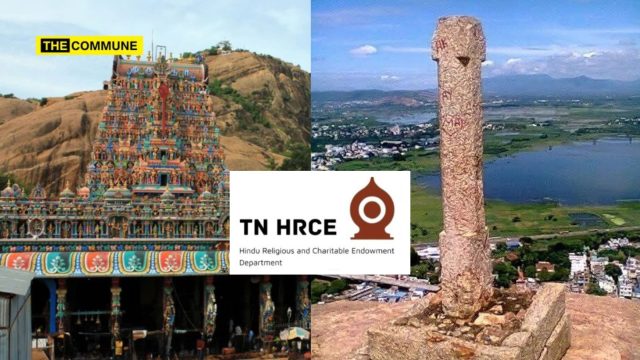
Addressing the media, Valliyappan said the State government, the Hindu Religious and Charitable Endowments (HR&CE) Department and the police had all taken a stand against the petitioners and, in effect, against the temple itself. He said their position so far had been that there was no such structure as a “deepathoon” (lamp pillar) at the site.
“Everyone is saying different things. Some say it is a survey stone, some say it belongs to the Jain period, and some say it is just a granite stone,” Valliyappan told reporters. He alleged that if the government’s claims were correct, it should have produced documentary or expert evidence before the court. “They have not submitted any evidence to show that it is a survey stone or a Jain structure. These arguments are being made only to divert the issue,” he said.
Valliyappan asserted that the pillar stood on land identified as temple property and not within the Dargah area. He said the devotees had submitted photographs of similar deepathoon (lamp pillars) from around twenty temples, including Murugan temples at Palani and Thiruthani and several Shiva temples in Tamil Nadu and Karnataka, to show that such structures were traditionally installed in a similar arrangement.
Explaining the ritual practice, the senior advocate said a copper vessel was placed atop the pillar with a cloth wick and ghee or oil and that the lamp was lit only once a year, on the day of Thirukarthigai. He said lighting the lamp for a single day would not cause harm or disturbance to followers of any faith and could be done under temple supervision and police protection.
Referring to historical practices, Valliyappan said that in earlier times, when there was no electricity, lighting a lamp on a hilltop served both practical and spiritual purposes, with the flame visible from a distance and symbolising the divine jyoti. He also referred to the traditional practice of lighting the ‘sokkappanai’ at the foothills before lighting the lamp at the summit.
Rejecting the claim that the pillar belonged to the Jain period, Valliyappan said Jains generally performed penance in caves and did not construct temple structures of this nature. He reiterated that the State had failed to substantiate its claims with evidence and was advancing shifting explanations to avoid recognising the structure as a temple deepathoon.
The case relating to the Thirupparankundram hill dispute is ongoing before the Madurai Bench of the Madras High Court.
“Tamil Nadu Govt did not submit evidence for calling it survey stone or Jain structure, they did so to divert issues.”