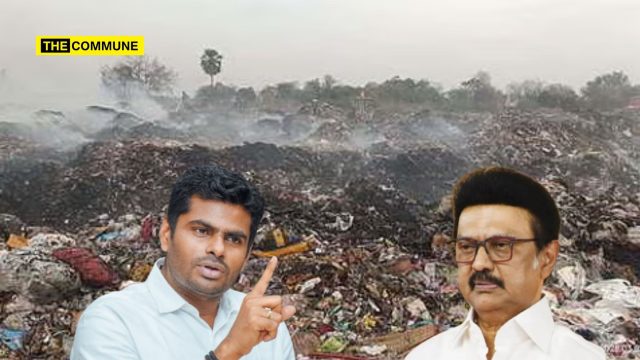
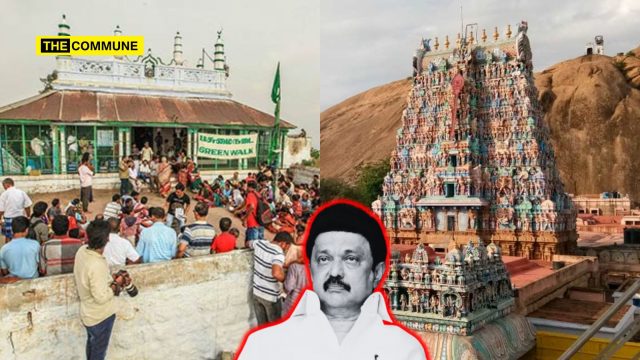
BJP leader and former Tamil Nadu BJP president K Annamalai announced that the party would stage a black flag protest when Chief Minister MK Stalin visits Tiruppur on 29 December 2025, accusing the DMK government of misgovernance and corruption in municipal waste management.
The announcement came after police detained Annamalai and over 500 BJP workers for violating prohibitory orders and staging a protest against garbage dumping by the Tiruppur Municipal Corporation. Those detained were taken into custody at around 4:20 PM and released by 8:30 PM, police said.
Addressing reporters after his release, Annamalai said the protest was held to condemn the registration of cases and arrests of residents who had opposed garbage dumping. He alleged that Tiruppur generated nearly 700 tonnes of waste per day and claimed that despite the Centre issuing solid waste management guidelines in 2016, the system had completely failed in the city.
He accused the Tiruppur Mayor of benefiting from the garbage dumping process and alleged that waste from across the city was being dumped in Chinnakalipalayam without proper segregation, exposing residents to the risk of infectious diseases. Annamalai said residents who protested against the dumping were booked in cases and arrested.
Referring to the denial of permission for protests, he said police attempted to place him under house arrest in Coimbatore. He announced that the BJP would escalate its protest by showing black flags to the Chief Minister during his Tiruppur visit. He said residents of Chinnakalipalayam and Iduvai would question DMK leaders who sought votes in areas affected by garbage dumping.
Annamalai alleged that while no cases had been registered against senior DMK leaders over corruption allegations, multiple sections of law were invoked against protesters. He said the BJP would continue its agitation until a permanent solution was reached and criticised the practice of dumping unsegregated waste in neighbouring villages instead of processing it within the corporation limits.
Police said the detentions were preventive in nature and were carried out to maintain law and order.
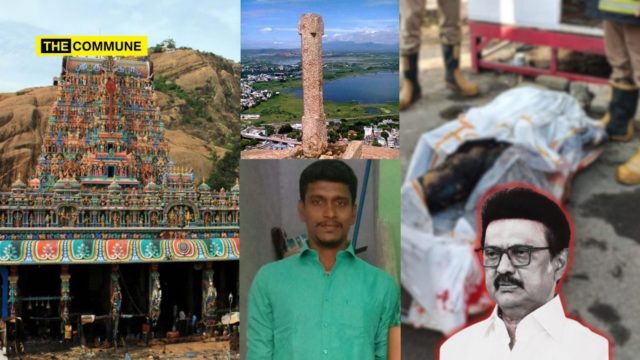
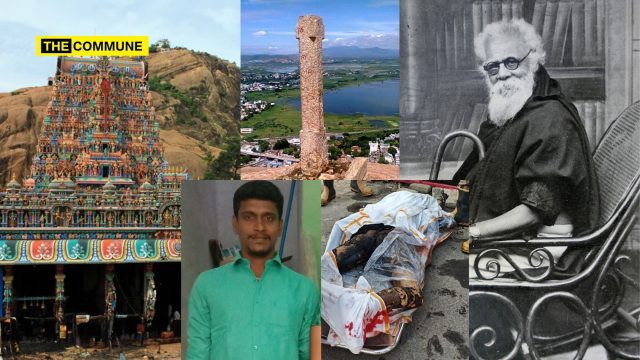
The news of Poornachandran, a young man setting himself ablaze for the cause of the Thirupparankundram Karthigai Deepam, has led to outrage among the people.
According to the account given by the deceased’s friend, Pooranachandran sent a voice message at around 3:26 PM shortly before his death. The friend said that after listening to the message, he immediately tried to contact him, but the call was answered by people at a police station, who asked him to come there without initially explaining what had happened.
Speaking at a memorial gathering in honour of Poornachandran, his friends and associates said, “In this very government’s tenure, we will definitely light the deepam. Above the High Court there is no one greater — no collector, no commissioner, no police officer,”, adding that the issue was one of faith and ancestral belief.
They also stated that for the original Tamil residents of Madurai, Lord Murugan was the ancestral deity and that denying the lighting of the lamp on Murugan’s hill had driven Pooranachandran to sacrifice his life.
The friend/associate asserted that the death would not be in vain and claimed that it would lead to large-scale mobilisation. “Not only in Tamil Nadu, but Hindus all over the world will unite for this. A huge struggle will take place at the level of Tamil Nadu. Within this very year, we will light the lamp on Thirupparankundram hill,” he said.
He further alleged that the incident would have political consequences for the ruling DMK. “For the DMK and for this evil-force government, this will certainly be their death knell. In 2026, the people of Tamil Nadu, the Hindus of Tamil Nadu, will definitely give a reply,” he said.
Another speaker echoed these claims and accused the State government of continuously acting in a manner that, according to him, hurt Hindu religious sentiments.
“For this sin, Pooranachandran’s sacrifice will definitely burn Fort St George,” the speaker said, alleging that the government had failed to understand the emotions of the people. He claimed that, in response to Pooranachandran’s death, Hindus across Tamil Nadu would unite and ensure that the Karthigai Deepam was lit in accordance with the High Court order.
“Pooranachandran has died, and his death has rung the death knell for the DMK, for those opposed to the Hindu religion, and for these rulers,” the speaker said.
The police are continuing their investigation into the full circumstances surrounding the death.
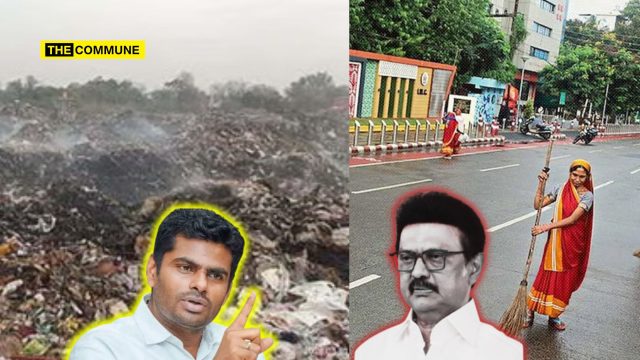
BJP leader and former Tamil Nadu BJP president K Annamalai was detained by police in Tiruppur on Thursday (18 December 2025) as a preventive measure ahead of a planned protest against the dumping of municipal waste in the district.
The detention followed sharp remarks made by Annamalai criticising the State government and local bodies over what he described as systematic mismanagement of solid waste and alleged corruption linked to garbage collection.
Addressing supporters earlier, Annamalai alleged that garbage was being deliberately allowed to accumulate for monetary gain. “The more garbage gets piled up, the more kilometres the truck has to run. So, garbage is allowed to pile up in excess here purely for commission,” he said.
He further alleged that waste was not being recycled as claimed. “Nowhere is garbage actually being recycled. They dump it in the villages, and from there people will get one disease after another, from cancer onwards,” he said, adding that the public needed to clearly understand the consequences.
Annamalai said protests alone were not sufficient. “Today we can hold demonstrations, we can agitate. We can tear off the government’s mask and place it in front of the people. But for the people who have lost, what is the permanent solution? From tomorrow we must start doing the work that we really have to do,” he said.
Citing Swachh Bharat rankings, Annamalai claimed that Tamil Nadu cities performed poorly compared to other parts of the country. “Across India they did a Swachh Bharat survey of major cities with populations over ten lakh. Among all Indian cities of more than ten lakh people, Madurai is at the very bottom,” he said.
He added, “Madurai is ranked the last, at 28th place is Coimbatore, at the 38th place is Chennai—that is, when you look at filth. Among cities of three lakh people they listed 95 cities. Erode is 94th, Tiruppur is 77th.”
Annamalai accused DMK leaders of focusing on regional rhetoric instead of governance. “But what do the DMK politicians here do? They just call North Indians as vadakkan,” he said, pointing to Indore’s performance in cleanliness rankings. “Indore has taken first rank. It has taken first place in cleaning garbage. The very people from North India whom we insult are the ones who keep their cities clean,” he said.
He further alleged that “the ones who claim, ‘we are developed’are the ones who have turned our cities into garbage forests, while the politicians here work only for commission.”
Following these remarks, Annamalai and other BJP workers were detained by police when they attempted to participate in a demonstration near the Kumaran statue in the Tiruppur Municipal Corporation area. According to police sources, the protest was planned to oppose the dumping of garbage collected from across Tiruppur city at the Chinnakalipalayam area in Palladam.
Police said permission for the protest had been denied, citing law and order concerns. As the demonstration was unauthorised, Annamalai and others were taken into custody as a precautionary measure to prevent any disruption.
Local residents have been protesting for over 30 days against the Tiruppur Municipal Corporation’s decision to dump waste at Chinnakalipalayam, raising concerns about environmental damage and public health risks.
Annamalai had announced his intention to join the protest around 15 days ago, but permission had been denied at that time as well. With the protest again scheduled near the Kumaran statue, police reiterated their refusal and detained those attempting to proceed.
Police officials said the detentions were carried out solely to maintain public order. Further details regarding the release of those detained were awaited.
“DMK mocks North Indian states, but the cities there are clean, while Tamil Nadu cities are dirty.”
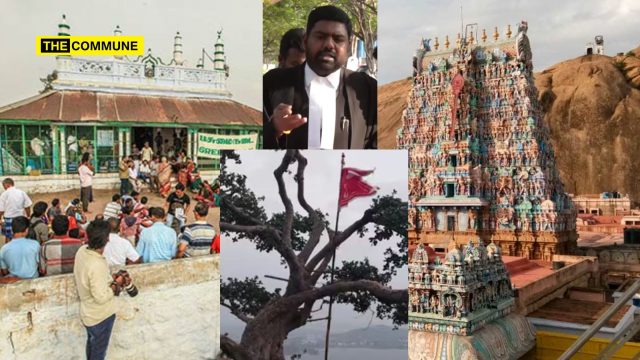
The petitioners in the Thirupparankundram case raised serious objections over the hoisting of flags on what he described as the Sthalavruksham (sacred tree) located atop the hill, alleging administrative failure to protect temple property despite clear legal obligations.
Speaking to the press after court proceedings, the counsel said that during the day’s hearing, arguments were advanced specifically on the status and sanctity of the Sthalavruksham. He questioned how, on the very same day, authorities were allowing or defending a peace committee decision permitting flag hoisting on a tree at the hilltop without even clearly identifying whether it was the sacred tree in question.
The lawyer said that during the arguments, Justice GR Swaminathan had reiterated that the Thirupparankundram temple property was formally declared as such as early as 1920. He stated that irrespective of whether officials considered it an inconvenience or a privilege, there was a mandatory legal duty to safeguard temple property.
He explained that the Hindu Religious and Charitable Endowments (HR&CE) Department and the HR&CE Act were created precisely to protect, preserve, and regulate temples, their properties, and their sanctity. On that basis, he said, the department had not just the power but the obligation to act to protect temple assets.
Referring to the final arguments placed in the appeal, the lawyer pointed out that the upcoming Sandhanakoodu festival had to be viewed in the context of how ground realities had changed after both the 1920 declaration and a subsequent 1996 judgment.
As an example, he said that the kodimaram (flagstaff) which was earlier located within the dargah premises had now been moved out. He further alleged that flags were now being tied at the very crown of what is being referred to as the Sthalavruksham, describing it as the sacred tree or shrine tree associated with the temple.
“We have shown this clearly,” he said, adding that despite this, neither the HR&CE Department, nor its officials, nor the Tamil Nadu government had stepped in to formally acknowledge that the tree in question was the Sthalavruksham or to object to the flag hoisting on it.
The lawyer stressed that the Sthalavruksham was not demonstrate or symbolic in nature, but a sacred entity explicitly mentioned in the sthala puranam, the traditional temple history of the Thirupparankundram Murugan temple.
He warned that allowing flags to be tied on the sacred tree would set a dangerous precedent. “If today it is said a flag can be tied here, where will this go tomorrow? What will be the next stage?” he asked.
Questioning administrative inaction, he said that if such actions were allowed to continue unchecked, it would become impossible to protect temple property. He asked who would safeguard such properties if the HR&CE Department itself failed to discharge its statutory responsibilities.
Citing Section 6(15) of the HR&CE Act, the lawyer explained that the law clearly defines a “person interested” as anyone who has devotion and an intention to worship at the temple. On that basis, he said, all devotees qualified as persons interested and were legally entitled to approach the court.
“It is only for this reason that all these petitioners have come forward and pursued this matter,” he said, adding that these arguments had been formally placed before the court.
Subscribe to our channels on WhatsApp, Telegram,Instagram and YouTube to get the best stories of the day delivered to you personally.
Even as the DMK government in Tamil Nadu continues to oppose the lighting of the Karthigai Deepam at the Deepathoon atop Thirupparankundram hill, the district administration has permitted the annual Sikandar Badusha Dargah Sandhanakoodu festival and related ceremonial procession on the same hill, subject to conditions.
According to official sources, the Sandhanakoodu festival of the Sikandar Badusha Dargah at Thirupparankundram hill is scheduled to be held on 6 January 2026. As part of the festival, a ceremonial procession for hoisting a wooden flag on the hill is planned on 21 December 2025.
Ahead of the event, a peace committee meeting was convened at the Thirumangalam Revenue Divisional Officer (RDO) office, chaired by RDO Sivajothi. Officials present at the meeting included Thirupparankundram temple Assistant Commissioner Sasi Priya, Tahsildar Kavitha, and representatives of the dargah administration.
During the meeting, it was decided that the same conditions imposed in previous years would continue to apply for both the Sandhanakoodu festival on 6 January 2026, and the flag-hoisting ceremony on 21 December 2025. The dargah administration was instructed to ensure that the festival and procession were conducted strictly through customary routes, without giving rise to any law-and-order issues.
The administration also decided that no new practices should be introduced during the festival and that firecrackers should not be burst in a manner that could inconvenience the general public. Dargah representatives were specifically told that they would be held fully responsible if any law-and-order problems arose during the procession or festival.
The administrative clearance for the dargah festival comes in the backdrop of an ongoing and contentious dispute over the lighting of the Karthigai Deepam at the Deepathoon, a traditional stone lamp pillar on the Thirupparankundram hill. Despite orders of the Madras High Court permitting the lighting of the lamp, the DMK-led State government and local authorities have consistently cited law and order concerns to prevent the ritual from being carried out.
Hindu groups and devotees have repeatedly questioned the State’s approach, pointing out that while religious processions and ceremonies associated with the Sikandar Badusha Dargah are being allowed on the hill with conditions, the traditional lighting of the Deepam by Hindu devotees continues to be blocked.
The contrasting administrative decisions have further intensified the debate over selective enforcement of law-and-order considerations at Thirupparankundram, a hill revered by Hindus as the abode of Lord Murugan and also home to the Sikandar Badusha Dargah.
A young man identified as Pooranachandran died by self-immolation on Thursday (18 December 2025) in Madurai, with his friend stating that the act was linked to the ongoing dispute over the lighting of the Karthigai Deepam at Thirupparankundram.
According to the account given by the deceased’s friend, Pooranachandran sent a voice message at around 3.26 PM shortly before his death. The friend said that after listening to the message, he immediately tried to contact him, but the call was answered by people at a police station, who asked him to come there without initially explaining what had happened.
The friend said that upon reaching the police station and making enquiries, he was informed about the manner of Pooranachandran’s death. He was later taken to the mortuary, where the body was shown to him.
He stated that police officials explained that Pooranachandran had set himself on fire in protest against the authorities’ refusal to allow the lighting of the Thirupparankundram deepam, despite orders of the Madras High Court. According to the friend, Pooranachandran allegedly carried out the act near a Periyar statue, stating that since it was claimed that “there is no deity here,” he would “light himself as the lamp.”
The friend said the audio message was sent at 3.26 PM to four or five people and that the incident occurred shortly thereafter, around 3.30 pm. He added that everyone who was present at the location had since given their statements to the police.
When asked about the sequence of events, the friend said police told him that Pooranachandran had gone inside a room, shut the door from within, poured petrol on himself and then set himself on fire.
He also said that Pooranachandran had never previously spoken to him about taking such a step. “Till now, he had never spoken about anything like this. He hadn’t told me any such information,” he said.
Clarifying his relationship with the deceased, the friend said Pooranachandran was a close friend and not a relative. He also said Pooranachandran was not associated with any political party or organisation.
“He was not in any party at all,” he said, adding that Pooranachandran was a deeply spiritual person and a devotee of Lord Shiva. He said that Pooranachandran regularly visited the Sadhuragiri Mahalingam temple on every Amavasya and was devoted to religious practices.
The friend further recalled that even on the day of the incident, while travelling with him by car, Pooranachandran had been continuously singing the ‘Kanda Sashti Kavasam’. “At that time, we did not understand anything unusual. Only after this incident did the meaning of what he sang become clear to us,” he said.
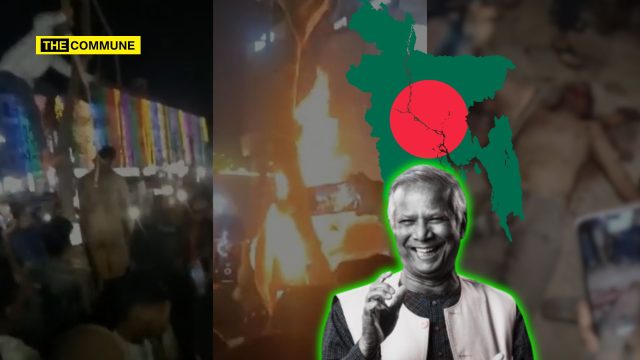
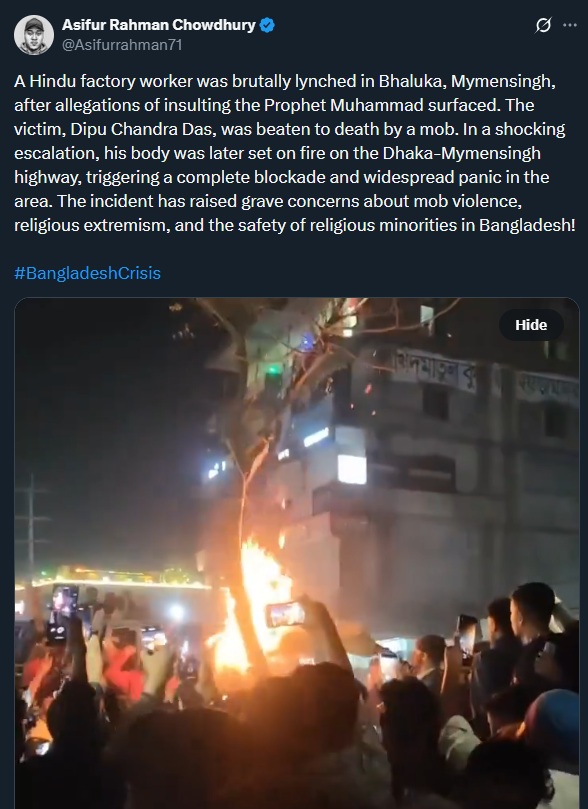
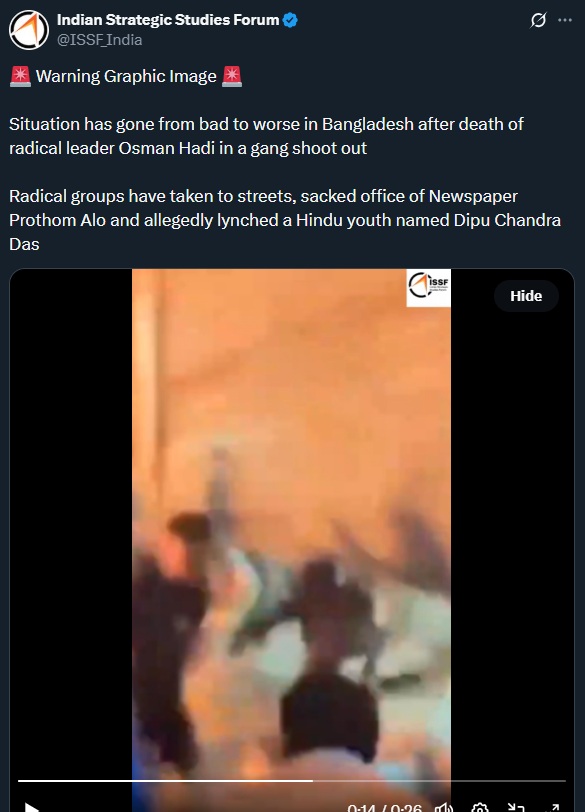
A man belonging to the Hindu community was beaten to death by a mob over allegations of blasphemy in Bangladesh’s Mymensingh district on the night of 18 December 2025, according to a report by BBC Bangla citing police officials.
The incident occurred in the Dubalia Para area of Square Master Bari in Bhaluka Upazila. Police said the victim was assaulted by a group of people who accused him of making derogatory remarks about Prophet Muhammad.
After the man was beaten to death, the attackers tied his body to a tree and set it on fire, Bhaluka Police Station duty officer Ripon Mia told BBC Bangla.
The deceased was identified as Dipu Chandra Das, a young man who worked at a local garment factory. Police said he had been living in the area as a tenant.
Ripon Mia said that an angry crowd caught Dipu around 9 pm on Thursday following the blasphemy allegation. He stated that the mob assaulted him fatally and later set his body ablaze.
In Mymensingh’s Bhaluka upazila, a young Hindu man named Dipu Chandra Das (30) was killed in a mob Lynching following the allegations that he made derogatory remarks about Islam and the Prophet Muhammad (PBUH). pic.twitter.com/rEjY96yGRy
In one video, the ‘Nara-e-takbir’ slogans are heard in the background.
Police officials said that upon receiving information about the incident, personnel rushed to the spot and brought the situation under control. The body was recovered from the scene and sent to the morgue of Mymensingh Medical College Hospital for post-mortem examination.
As of now, no case has been registered in connection with the incident. Ripon Mia said the police were trying to locate the victim’s relatives and that legal action would be taken in accordance with the law once a case was filed.
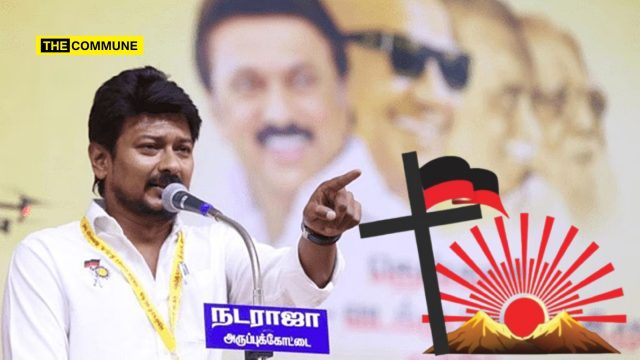
Deputy Chief Minister Udhayanidhi Stalin on 18 December 2025 attended and addressed a Christmas celebration organised by the DMK in Madurai, where he drew parallels between the teachings of Jesus Christ and the principles of the Dravidian movement, while sharply criticising the Union government.
Speaking at the event, Udhayanidhi said he was happy to participate “not just as the Deputy CM but also as the secretary of the DMK Youth Wing,” and asserted that there was little difference between Christian values and Dravidian ideology.
“There is no huge difference between Christian principles and the Dravidian movement principles. Both emphasize showing love, humanity, and equality to others at all times,” he said.
Referring to the global significance of Christmas, Udhayanidhi said, “If there is one birthday that is celebrated by all people and countries in the world, it is the birthday of Jesus Christ. More importantly, it is not enough to just celebrate his birthday, we should also follow his ideas.”
He said the central theme of Jesus’ life was simplicity. “Because the main thing in Jesus’ life was his simplicity. Jesus is the one who, by his birth, broke the idea that leaders for the people would always be in the palace,” he said.
Drawing a comparison with Dravidian leaders, Udhayanidhi said, “Our Dravidian movement believes that even if you come from a simple background, you can rise if you work hard. Like Jesus Christ. Arignar Anna, Thanthai Periyar, and Dr Kalaignar Karunanidhi are examples of that. All of them grew up with the people and as the people.”
He said compassion was a shared value between Christianity and the Dravidian movement. “Christianity says that compassion should be present in everyone. That is what our Dravidians are also emphasizing,” he said, while alleging that the Union government was driven by hatred rather than compassion.
“But those in the Union (centre), the ones ruling the country, have more hatred than compassion. Especially towards Tamil Nadu and the people of Tamil Nadu. They spread hatred on the basis of religion, language and caste,” he alleged, adding that “their divisive scheme in Tamil Nadu will never be fulfilled.”
Udhayanidhi further accused what he described as “fascists” of attempting to divide people for political gain. “The fascist’s intention to create division among the people, incite discord, instigate riots, and somehow benefit from that violence will surely be thwarted by the people of Tamil Nadu. The people will come together to bring them down,” he said.
Highlighting the policies of the DMK government, he said Chief Minister M.K. Stalin was governing based on another principle of Jesus – sharing. “Dravidian Model government Chief Minister MK Stalin is ruling on the basis of another principle of Jesus, namely, sharing, with everyone having everything,” he said.
He accused the Union government of not sharing resources equitably. “They are extracting higher tax from TN, but are they sharing it? If you ask so, the answer is definitely no. They are giving more for other states and less for TN,” he said, adding that despite this, the Chief Minister was “doing all that is needed for the people as a service,” which, according to him, was why Tamil Nadu was “the best performing state in the country.”
Udhayanidhi reiterated the DMK’s relationship with minority communities. “The relation between the minorities and DMK is not new. The relationship between us is based on principles. DMK has always been a bastion of security for all minorities, including Christians and Muslims,” he said, adding that “especially in the past 4.5 years, our CM has brought out schemes for them.”
Listing schemes for minorities, particularly Christians, he said, “A total of seven crore rupees in educational scholarships alone have been provided to one lakh minority students, including Christians, in the last four and a half years.”
He said the annual pension for employees working in Christian churches who are members of the welfare board had been increased. “The pension amount… which was 12,000 rupees annually, has been increased to 15,000 rupees by our Chief Minister,” he said.
He added that death assistance for families of board members had been enhanced. “The assistance provided to the families of board members who die of natural causes, which was 20,000 rupees, has been increased to 30,000 rupees by the Chief Minister, accepting your request.”
Udhayanidhi said students from families of board members were receiving an educational scholarship of ₹1,000 per month, and that permanent recognition had been granted to all minority educational institutions, including Christian institutions.
He also said the government was providing financial support for pilgrimages. “A subsidy of 37,000 rupees is provided to Christian people for undertaking a pilgrimage to Jerusalem. Similarly, 60,000 rupees is being provided to nuns,” he said.
According to him, 44 churches were being renovated at an estimated cost of around ₹3 crore. “Today, on this stage, and last year in Coimbatore, several requests were made, and our government is fulfilling them one by one,” he said.
Assuring the gathering that their demands would continue to be addressed, Udhayanidhi said, “Today, you have made several requests on this stage as well. I assure you that I will fulfill these requests and confidently meet you all again at this same Christmas celebration next year.”
He said the Dravidian model government would “always be a strong support for the minority communities,” and expressed confidence that minorities would continue to support the government.
Extending greetings across religious festivals, he said, “I have come here today to celebrate Christmas and share Christmas greetings with you all. Similarly, when Ramadan arrives, you and I will meet our Muslim brothers and exchange our greetings. With the feeling of being Tamils, we will all celebrate the Pongal festival together.”
Describing Tamil Nadu’s identity, he said, “This is Tamil Nadu, this is the unity of the people of Tamil Nadu. This brotherhood, equality, social justice, and secularism are the hallmarks of our Tamil Nadu.”
In his concluding remarks, Udhayanidhi called on Christians to reject divisive narratives. “Therefore, I request all the Christian people who have gathered here to reject hate campaigns, avoid false propaganda, and set aside divisive ideologies. All of us Tamil people must unite as one,” he said.
Referring to the 2026 Assembly elections, he added, “In the 2026 assembly elections, we must defeat the anti-minority fascists and their henchmen all at once. Let us all take this pledge at this time during this Christmas celebration.”
Every year during Christmas, Udhayanidhi Stalin makes such statements – in 2022, he said he was proud to be a Christian and had married one. In 2023, he again made the same claim that he was a proud Christian. He reiterated that statement once again in 2024.
Subscribe to our channels on WhatsApp, Telegram,Instagram and YouTube to get the best stories of the day delivered to you personally.
A family with longstanding ties to the Salesian congregation has submitted a detailed complaint to the General Council of the Salesians of Don Bosco in Rome, alleging forgery, deception and prolonged breach of trust by the Chennai Salesian Province in connection with a property donated in 2013 for an educational project in Tamil Nadu.
In an open letter sent from Perth, Australia, members of the family, including two priests, claimed that a valuable parcel of DTCP-approved land in Tiruvallur district was given to the Salesian Province of Chennai for the specific purpose of establishing an engineering college at Don Bosco, Pannur, to benefit poor rural youth. According to the family, the donation was conditional and never intended to be an unconditional transfer of ownership.
The family stated that a formal certification dated 24 July 2013, issued by the then Provincial, recorded this specific purpose, and that a foundation stone for the proposed college was laid on 13 August 2013, in the presence of family members from India and abroad.
However, the family alleged that on 20 August 2013, a separate registered document was clandestinely prepared by then Salesian official Fr. Bosco, along with a builder, and that signatures were obtained from the family’s eldest sister and brother-in-law without disclosing the contents. The family claimed they were neither shown the draft nor given a copy of the document, which they allege omitted the original purpose of the donation and treated the land as an unconditional transfer. They said they became aware of this document only in October 2024, more than eleven years later.
According to the complaint, the builder subsequently sold the land to a third party and later became insolvent, stalling the proposed educational project. The family claimed that during the tenure of the then Provincial, a resolution was passed by the Provincial Council acknowledging that the donor’s intent had not been fulfilled and that the property should therefore be returned. They further stated that Fr. Bosco was a member of the council at the time.
The family alleged that despite repeated representations between 2017 and 2022, including interventions by the Archbishop of Madras–Mylapore, the issue remained unresolved. They said that in October 2022, the Province, through the Archbishop, offered three options for restitution, of which the family chose compensation in the form of equivalent land near the original property. According to them, no response was received thereafter.
The dispute escalated in September 2024 when, according to the family, Fr. Bosco, by then the Provincial, asserted that the family had no legal claim over the property, citing the 2013 registered document. The family has described this as an act of blackmail based on what they allege to be a forged and deceitfully obtained document.
In the letter, the family accused the Provincial of breaching both civil and moral obligations and claimed that the actions had destroyed their long-held plan to support education for disadvantaged youth in the spirit of Don Bosco. They said their parents had passed away without seeing the intended project realised and that the surviving siblings were now elderly.
The family stated that they had submitted copies of all relevant documents to Don Bosco Mondo e.V. in Germany, which in turn forwarded the matter to the General Economer of the Salesian Congregation in Rome in October 2024. They said they were informed that the issue had been taken up with senior officials of the congregation.
In their appeal, the family urged the Salesian leadership in Rome, as well as bishops and priests in Tamil Nadu, to intervene and ensure that the 2022 agreement conveyed through the Archbishop was honoured. They said they were seeking either the return of the property or equivalent compensation and stressed that they did not wish to pursue the matter with the builder.
In a separate open letter addressed directly to Fr. Bosco, the family reiterated their allegations of betrayal and misuse of trust and appealed for a resolution that would allow their original charitable intention to be fulfilled.
There has been no public response so far from Fr. Bosco or the Salesian Province of Chennai to the allegations contained in the letters.
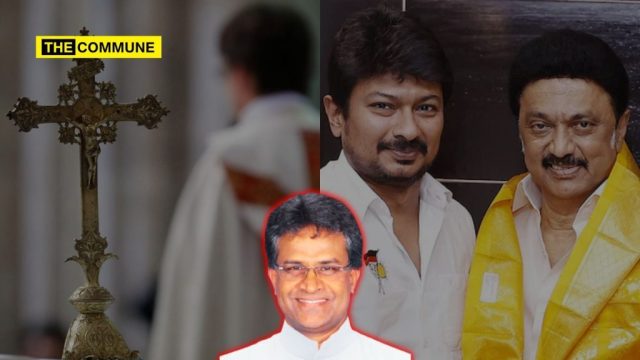
The controversy has also acquired a political dimension, as reported earlier by The Commune, which revealed that Rome has begun an internal probe after a Don Bosco alumnus accused the Chennai Provincial of political collusion with the ruling DMK. According to the report, the complaint submitted to the Salesian leadership in Rome alleged that the Provincial’s proximity to DMK functionaries and participation in politically aligned events amounted to improper political engagement by a senior cleric, raising concerns of institutional compromise. The article stated that these allegations were formally taken cognisance of in Rome, prompting the Salesian General Council to initiate a preliminary examination into the matter, thereby bringing the issue of church–political entanglement under official scrutiny.
Subscribe to our channels on WhatsApp, Telegram,Instagram and YouTube to get the best stories of the day delivered to you personally.
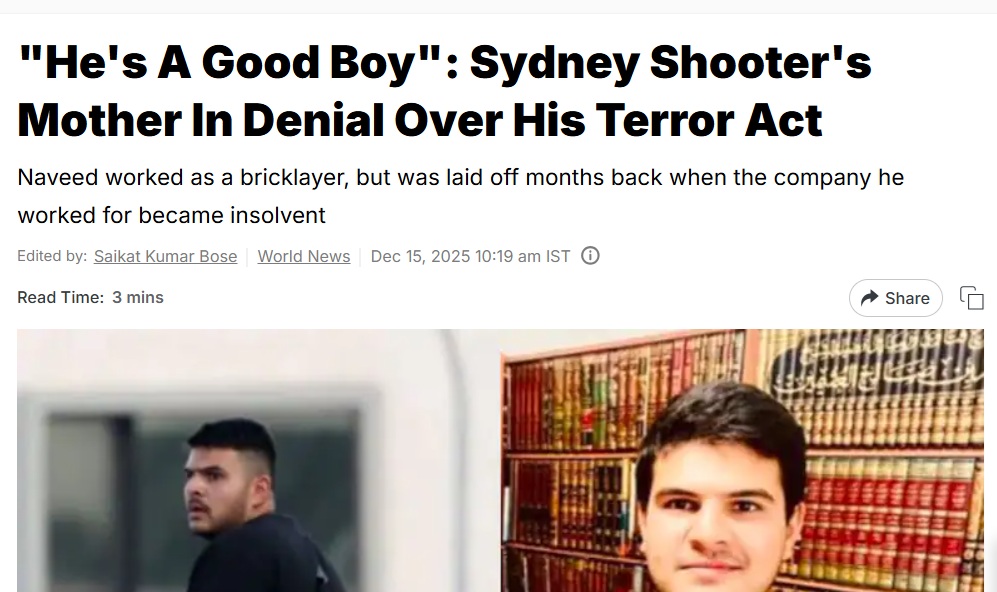
On 15 December 2025, NDTV published an article quoting the mother of a Sydney terror attack accused, prompting renewed scrutiny of media narratives that foreground the personal lives, family reactions, or emotional backgrounds of terrorists.
In this report, we look at 15 documented instances between 2015 and 2025, across India and abroad, in which journalists or media organisations framed terrorists or accused attackers through a humanised or sympathetic lens.
These instances span major terror attacks and militant encounters, where coverage shifted attention from the act of violence and its victims to family statements, upbringing, personal traits, or emotional framing of the perpetrators.
Part 1 Bondi Beach Terror Attack
#1 NDTV Quotes Sydney Shooter’s Mother After Bondi Beach Attack – 15 December 2025
Following the 14 December 2025 terror attack at a Hanukkah event on Sydney’s Bondi Beach, NDTV published an article titled“‘He’s A Good Boy’: Sydney Shooter’s Mother In Denial Over His Terror Act.”
The attack, carried out by father-son duo Sajid Akram (50) and Naveed Akram (24), killed 15 people and injured 27 others. The NDTV report prominently quoted Naveed Akram’s mother saying, “Anyone would wish to have a son like my son… he’s a good boy.” The article focused on her denial of her son’s involvement, foregrounding parental emotion rather than the scale or victims of the terror attack.
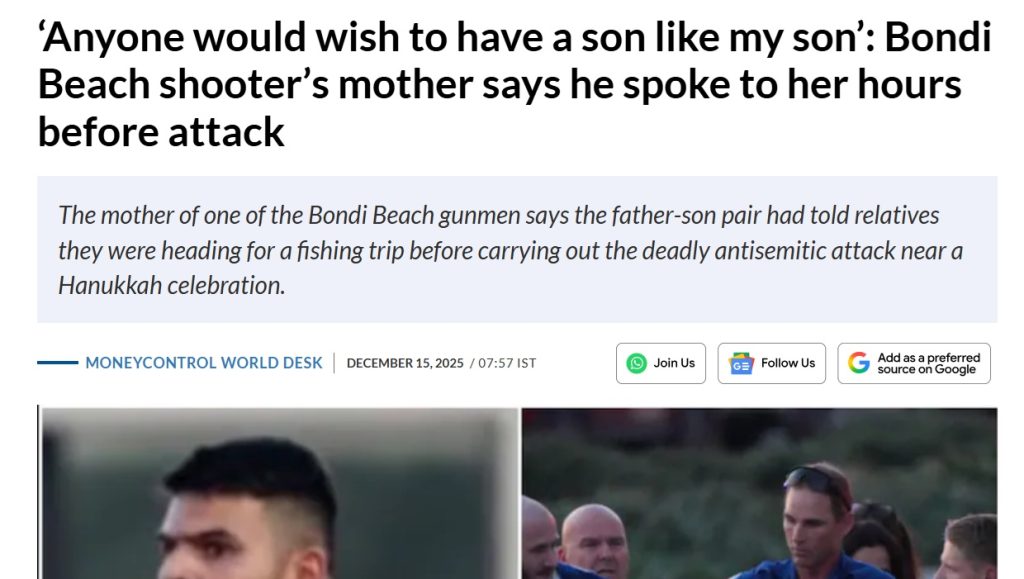
#2 Moneycontrol Carries Mother’s Defence of Bondi Beach Shooter – 15 December 2025
Moneycontrol published an article titled“‘Anyone would wish to have a son like my son’: Bondi Beach shooter’s mother says he spoke to her hours before attack.”
The report quoted Naveed Akram’s mother, Verena, stating that she did not believe her son was involved in extremism and claimed he did not possess a firearm. The article centred on her emotional statements and last conversation with her son, following the 14 December 2025 terror attack in Sydney that killed 15 people. The focus remained on family denial and personal background rather than investigative findings or victims.
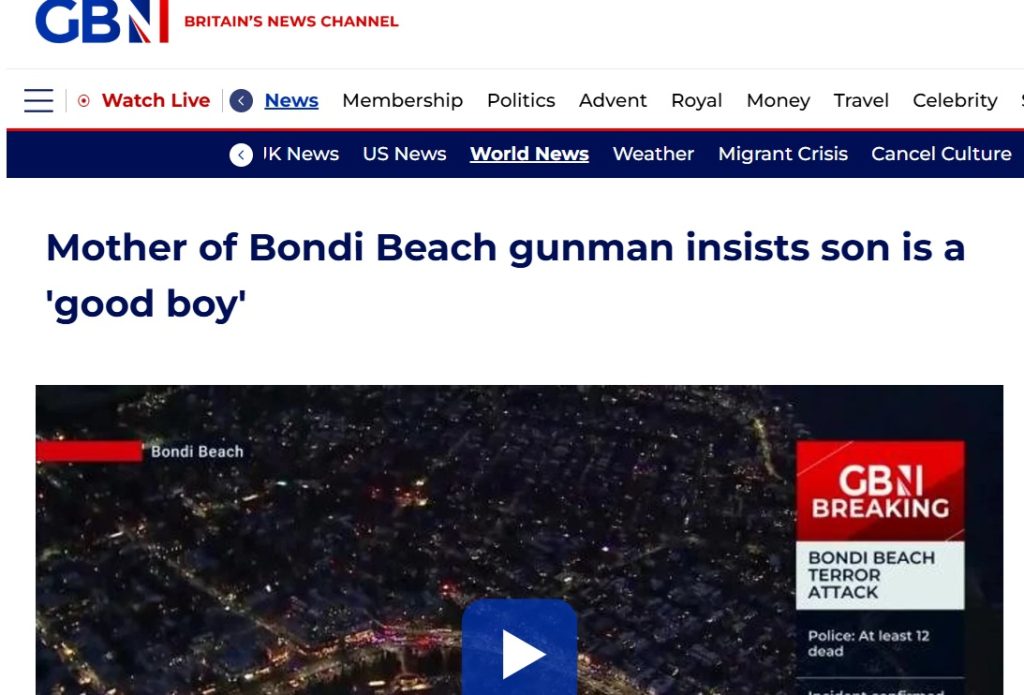
#3 GBN News Highlights Shooter’s Mother Calling Him a ‘Good Boy’ – 15 December 2025
GBN News published an article titled “Mother of Bondi Beach gunman insists son is a ‘good boy’,” following the Sydney terror attack.
The report quoted Naveed Akram’s mother saying, “Anyone would wish to have a son like my son.” The article referenced the December 14, 2025 shooting at a Hanukkah event in which 15 people were killed. While acknowledging the attack, the article placed emphasis on the mother’s personal defence of her son, repeating her characterisation of him as non-violent and well-behaved.
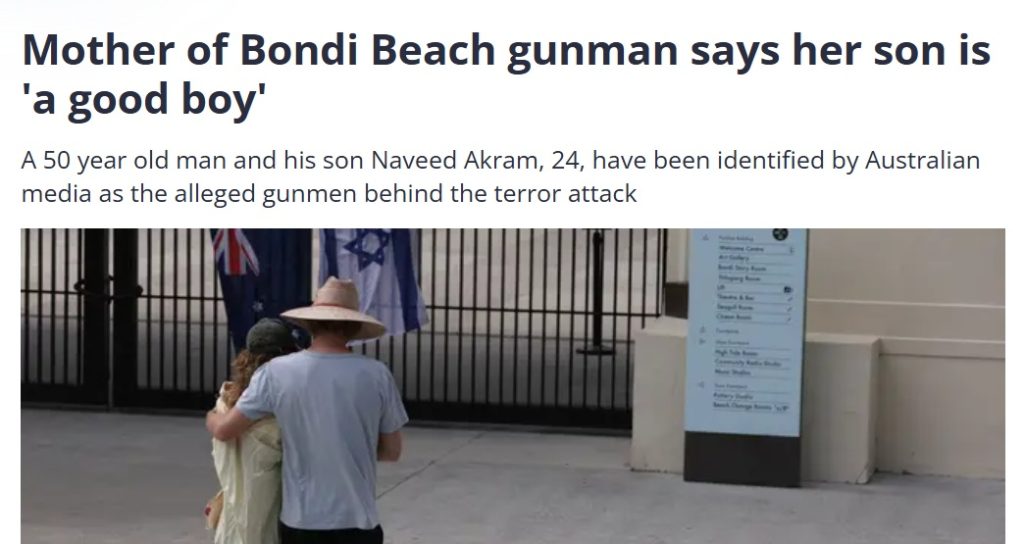
#4 LBC News Reports Mother’s Detailed Defence of Sydney Shooter – 15 December 2025
LBC News published an article titled“Mother of Bondi Beach gunman says her son is ‘a good boy’.”
The report quoted extensive statements from Naveed Akram’s mother, claiming he did not own a gun, avoided socialising, and lived a disciplined life. The article referred to the December 14, 2025 attack in Sydney involving Sajid and Naveed Akram but largely focused on the mother’s account, including lifestyle details, rather than the terror act itself or its victims.
Part 2 – Other Terror Attacks
#5 The Wire Portrays Delhi Red Fort Metro Station Blast Accused as Compassionate Doctor – 12 November 2025
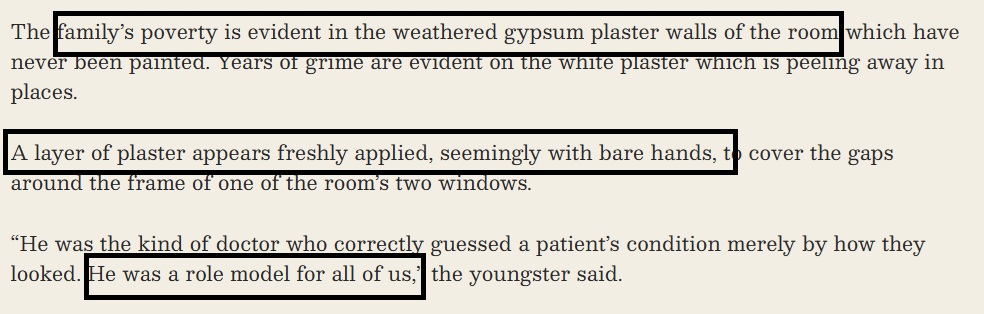
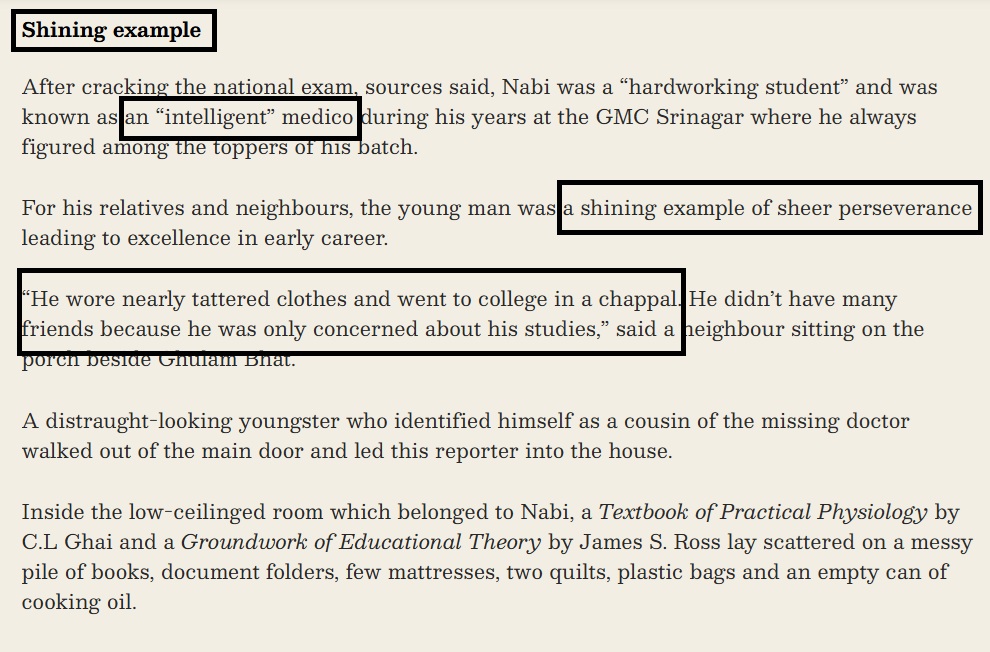
Following the Red Fort car blast in Delhi that killed more than a dozen people, The Wire published an article portraying prime accused Dr. Umar Un Nabi through a sympathetic lens. The report described his family’s poverty, his medical skills, and quoted people calling him a “role model.”
The narrative focused on his background and character traits, presenting him as soft-spoken and compassionate, while downplaying his alleged role in a deadly terror attack.
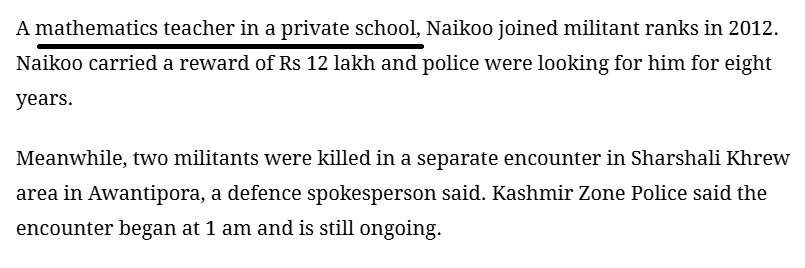
#6 Indian Express Notes Militant Riyaz Naikoo’s Past as Teacher – 6 May 2020
After Hizbul Mujahideen commander Riyaz Ahmad Naikoo was killed in an encounter in Jammu and Kashmir, The Indian Express published a report noting his former profession as a mathematics teacher. While reporting on the encounter, the article highlighted his background as an educator before joining militancy in 2012.
Naikoo was among the most wanted militants in Kashmir, yet the article foregrounded his civilian past alongside his militant identity.
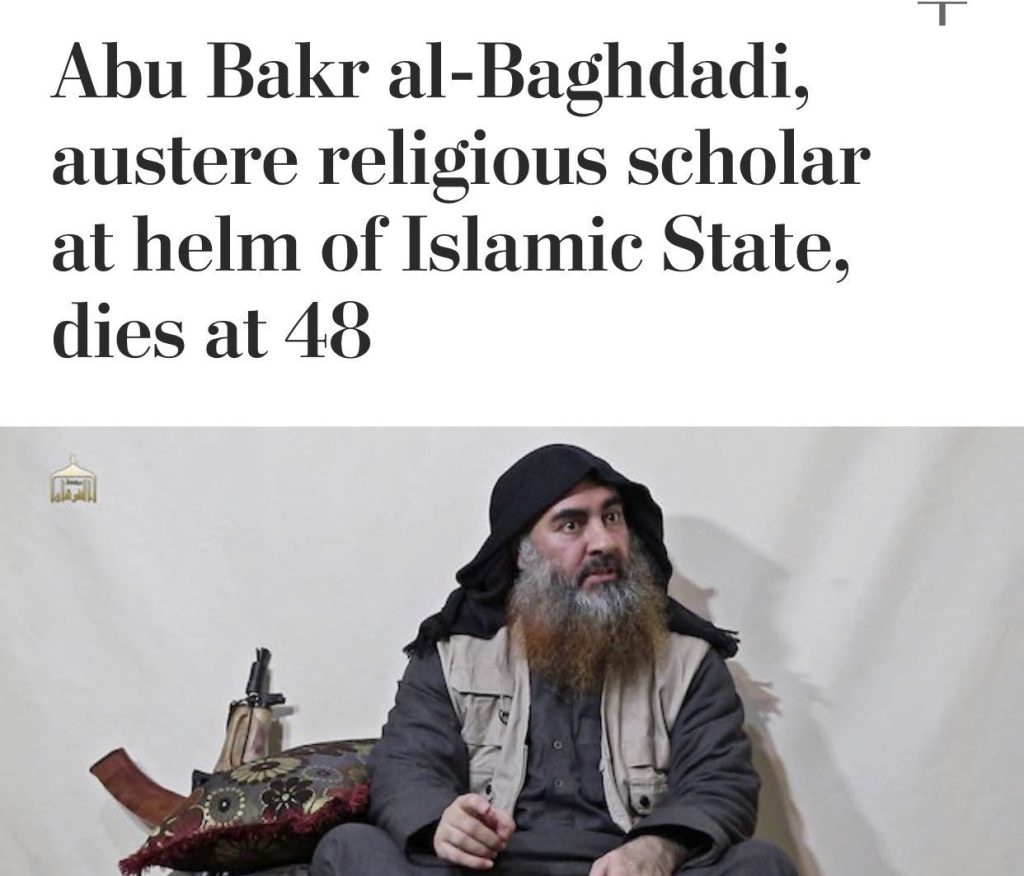
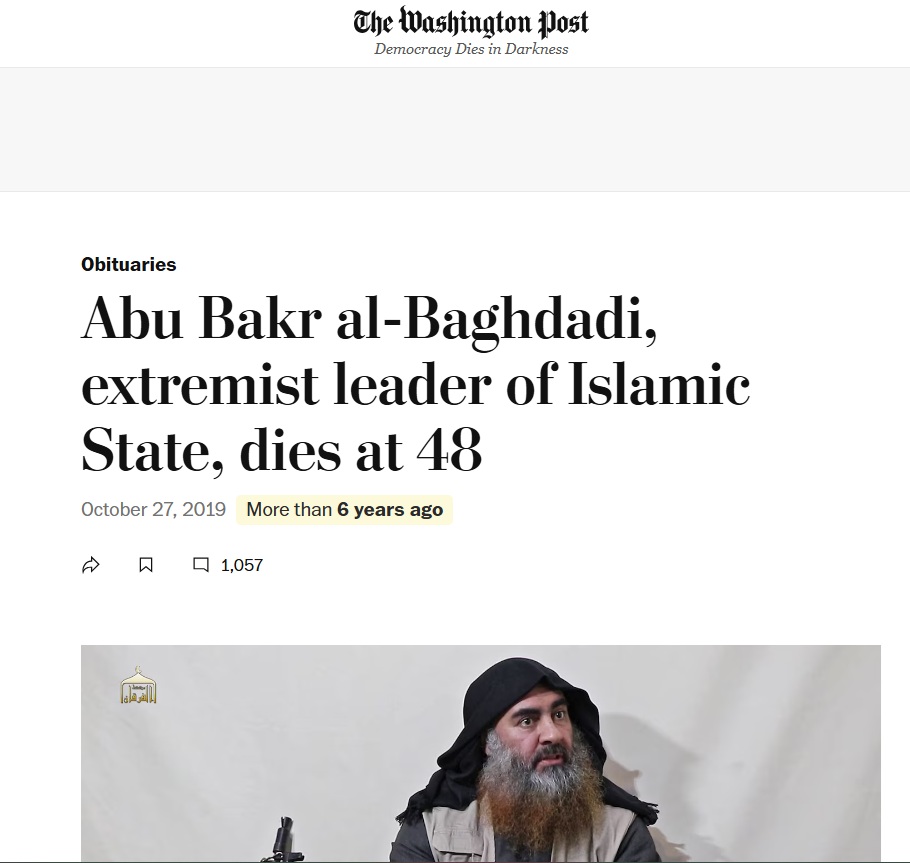
#7 Washington Post Calls ISIS Chief an ‘Austere Religious Scholar’ – 27 October 2019
Following the killing of ISIS chief Abu Bakr al-Baghdadi by US forces, The Washington Post published an obituary-style article referring to him as an “austere religious scholar.” The report described his appearance, scholarly background, and leadership journey, noting his wire-frame glasses and religious education. WaPo first carried a headline that looked more like an obituary which read, “Islamic State’s terrorist-in-Chief” to “austere religious scholar at helm of Islamic State.”
In fact, the article in WaPo carried a description of Baghdadi that practically made him seem like a saint. The journalist who wrote this article had written that Baghdadi was an “austere religious scholar with wire-frame glasses” who previously had “no known aptitude for fighting and killing”. Warrick wrote that Baghdadi’s acquaintances remembered him as a “shy, nearsighted youth who liked soccer but preferred to spend his free time at the local mosque”.
Before edit
Later WaPo changed the headline to “Abu Bakr al-Baghdadi, extremist leader of Islamic State, dies at 48” after receiving flak.
After edit
Just because Al-Baghdadi was a Muslim, the Wapo and NYT have consistently carried out a headline so as to no come across as ‘offensive’ to the liberal cabal and Islamo-fascists.
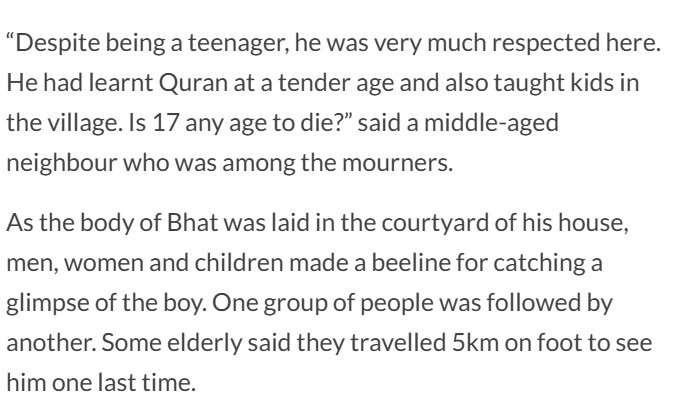
#8 Hindustan Times Humanises Pulwama Link Sajad Ahmad Bhat – 19 June 2019
Hindustan Times published a report on Pulwama-linked JeM militant Sajad Ahmad Bhat describing him as a Quran teacher, sports enthusiast, and respected village youth.
The article detailed funeral scenes and family claims while giving limited emphasis to his ownership of the explosive-laden vehicle used in the Pulwama attack that killed 40 CRPF personnel. The focus on his background and hardships drew criticism for humanising a key terror link.
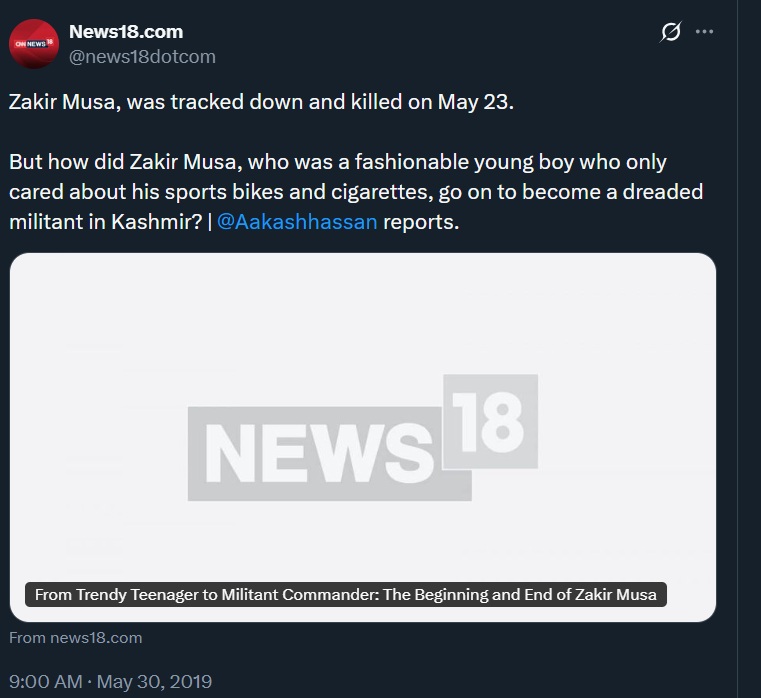
#9 CNN News18 Describes Zakir Musa as Award-Winning Youth – 30 May 2019
CNN News18 published a feature on Zakir Musa and Burhan Wani emphasising their teenage habits, sports skills, fashion choices, and family struggles. Musa, the head of Al-Qaeda-linked Ansar Ghazwat-ul-Hind, was described as an “award-winning” and “fun-loving” youth.
The article gave secondary attention to his leadership role in terrorism, focusing instead on personal narratives and emotional framing.
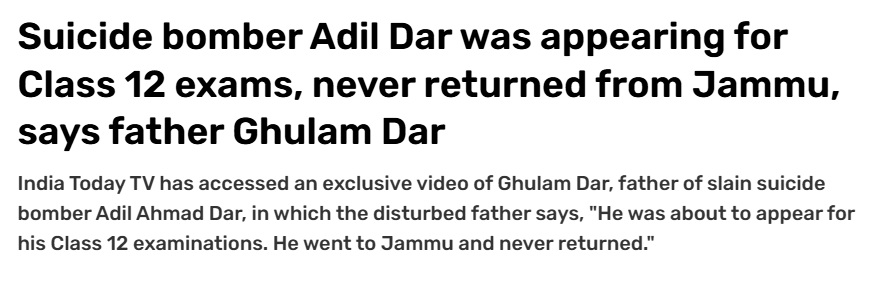
#10 India Today Frames Pulwama Bomber as ‘Misguided Teen’ – 16 February 2019
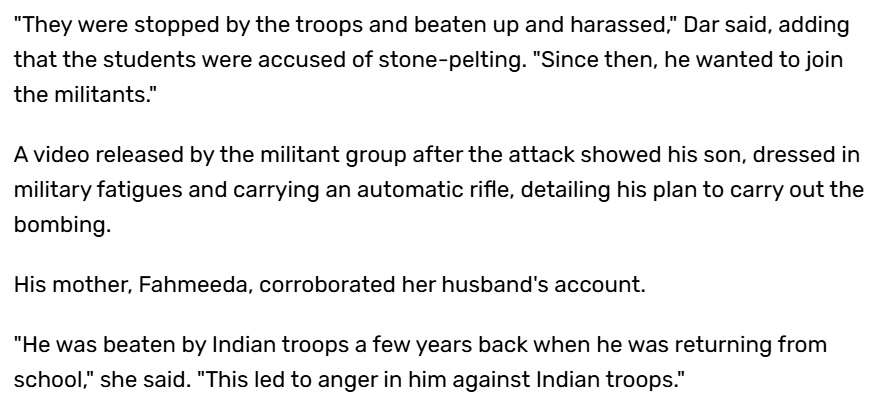
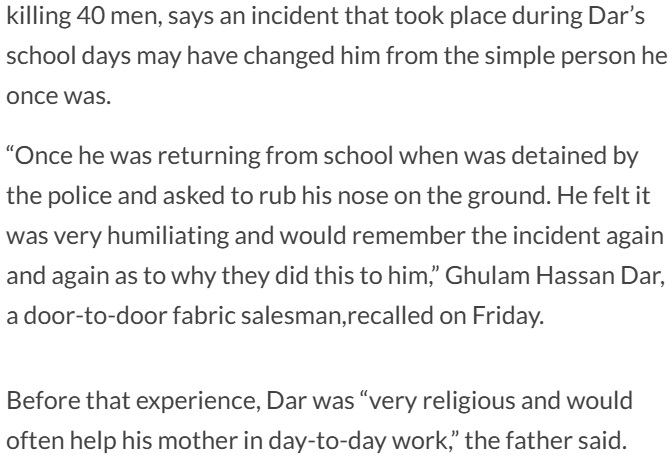
India Today reported on Pulwama suicide bomber Adil Ahmad Dar by highlighting his age, family grief, and alleged mistreatment by security forces.
Another article from 15 February 2019 quoted his parents claiming harassment led to radicalisation.
While the report acknowledged the bombing that killed 40 CRPF jawans, it framed Dar primarily as a misguided teenager rather than focusing on his role as a JeM terrorist.
#11 Hindustan Times Publishes Pulwama Bomber’s Family Statements – 16 February 2019
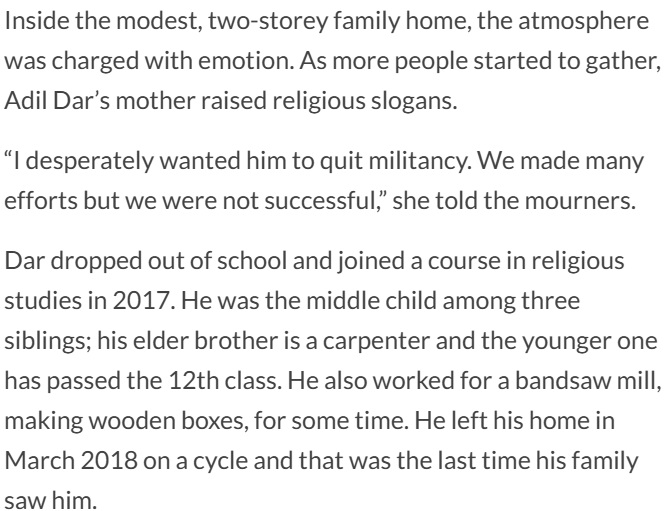
Hindustan Times published an article titled“‘Desperately wanted him to quit’: Pulwama suicide bomber Adil Dar’s mother.” The report featured statements from Dar’s parents describing humiliation and distress.
The article focused on family emotions following the 14 February 2019 attack, foregrounding parental grief while recounting the bomber’s background.
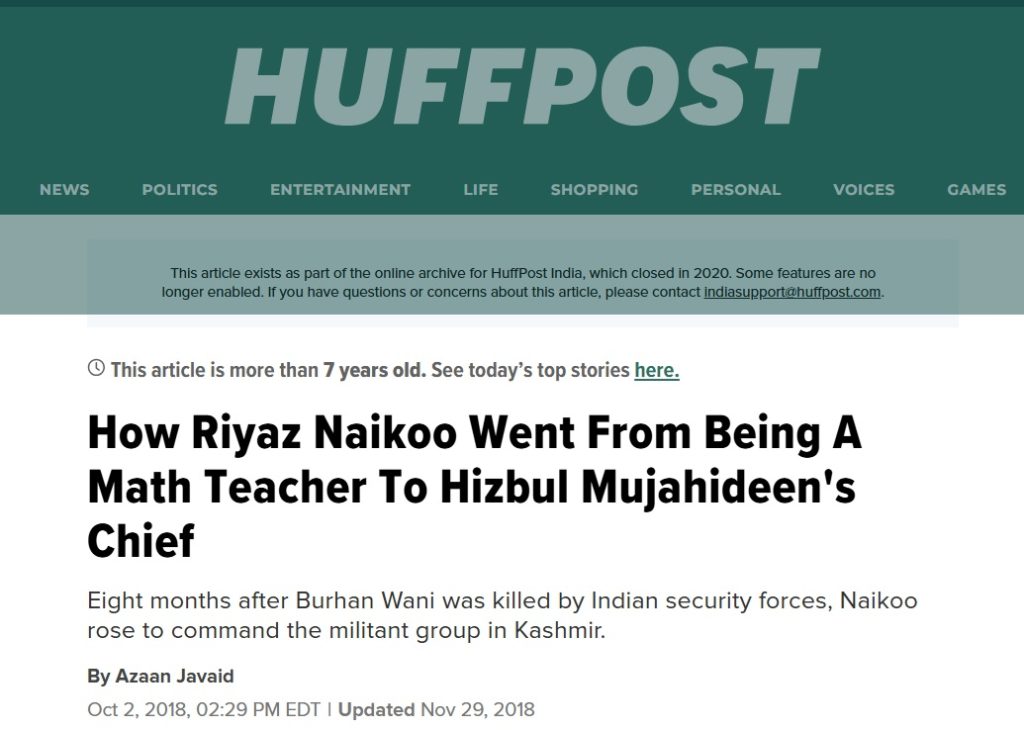
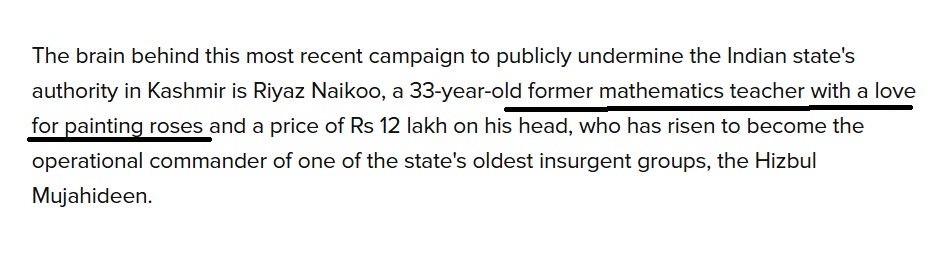
#12 HuffPost Describes Riyaz Naikoo as Artist and Math Teacher – 2 October 2018
HuffPost published a profile titled “How Riyaz Naikoo Went From Being A Math Teacher To Hizbul Mujahideen’s Chief.”
The article described Naikoo as a former mathematics teacher with an interest in painting roses, before detailing his rise within Hizbul Mujahideen.
The narrative balanced his militant role with personal interests and background, lending a humanised portrayal.
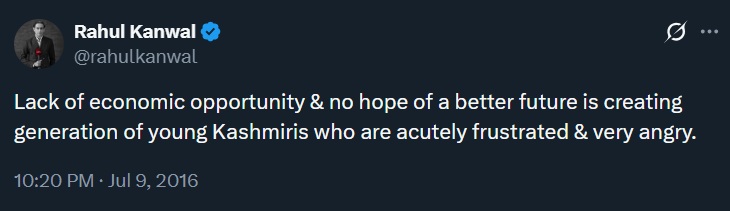
#13 Rahul Kanwal Links Burhan Wani’s Death to Youth Frustration – 8 July 2016
After Hizbul Mujahideen terrorist Burhan Wani was killed, journalist Rahul Kanwal tweeted that lack of economic opportunity was creating a generation of angry and frustrated Kashmiri youth.
The comment contextualised Wani’s militancy within socio-economic grievances, shifting focus from his terror activities to broader structural explanations.
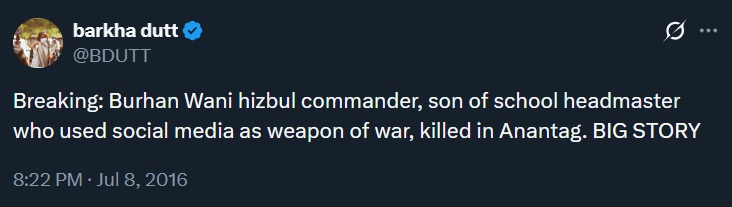
#14 Barkha Dutt Calls Burhan Wani ‘Son of School Headmaster’ – 8 July 2016
Journalist Barkha Dutt tweeted about Burhan Wani’s killing, describing him as the “son of a school headmaster” who used social media as a weapon of war.
The tweet highlighted his family background alongside his militant role, blending personal identifiers with reporting on his death.
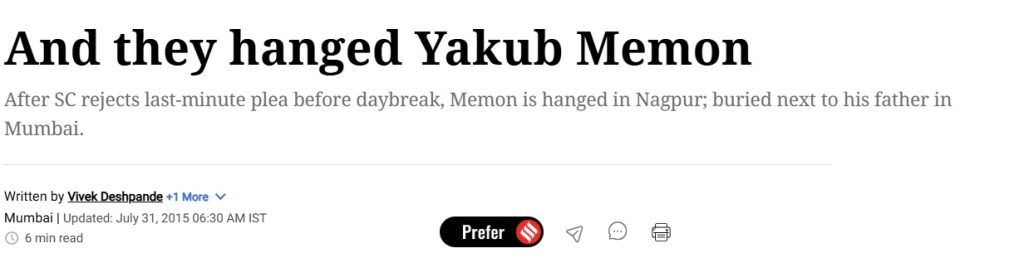
#15 Indian Express Focuses on Yakub Memon’s Final Hours – 30 July 2015
Following the execution of Yakub Memon, mastermind of the 1993 Mumbai serial blasts, The Indian Express published an article titled “And they hanged Yakub Memon.”
The report detailed his final hours, emotions, and hopes for clemency. While recounting the execution, the article focused extensively on his mental state and personal moments before death, rather than the victims of the blasts.
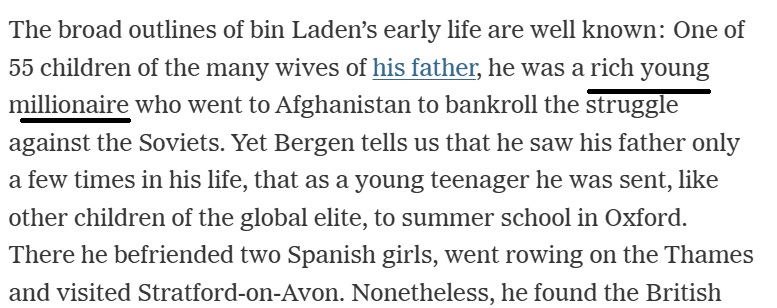
#16 NYT Calls Osama bin Laden a “Rich Young Millionaire” – August 2021
The New York Times described Osama Bin Laden as a “rich young millionaire” and focused on him being “a tall and handsome man“.
They even published an elaborate obituary humanizing a terrorist.
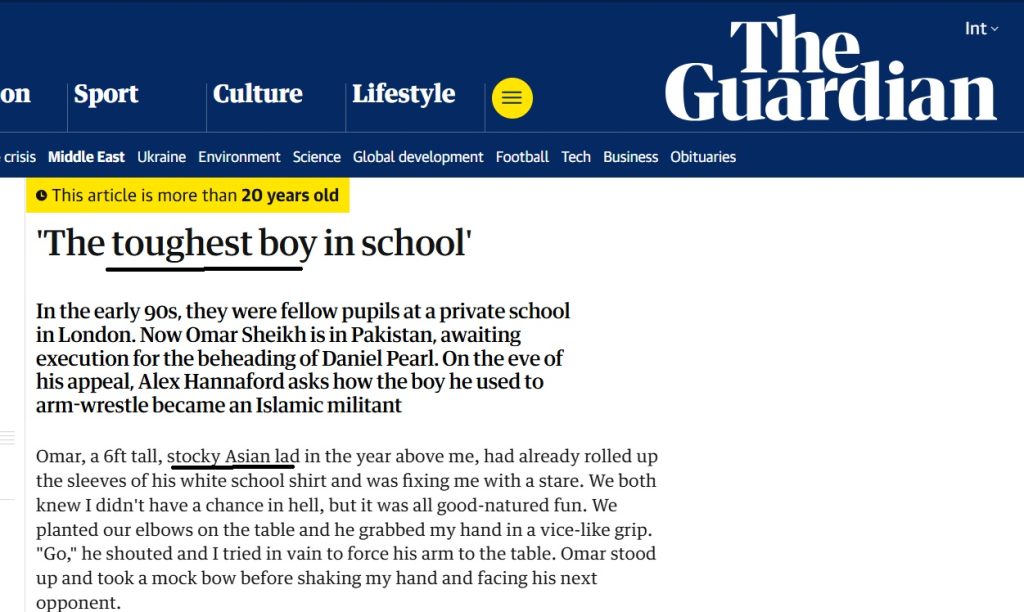
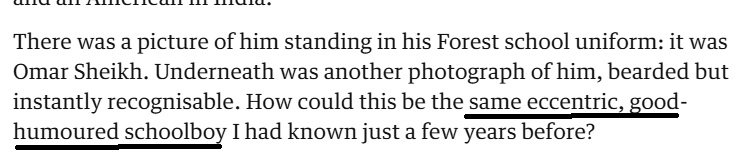
#17 The Guardian calls Omar Sheikh who Beheaded Daniel Pearl, “eccentric, good-humoured” – February 2005
The Guardian reported terrorist Omar Sheikh being an “eccentric, good-humoured schoolboy” of Forest School and a member of the British arm-wrestling squad.
#18 BBC Portrays 26/11 Terrorist Ajmal Kasab As ‘Village Boy’ – November 2018
BBC portrayed 26/11 Mumbai attack terrorist Ajmal Kasab as a village boy by publishing a video report after visiting his village.
During the trial of Ajmal Kasab, the lone surviving terrorist of the 2008 Mumbai attacks, some media outlets focused on his youth and background.
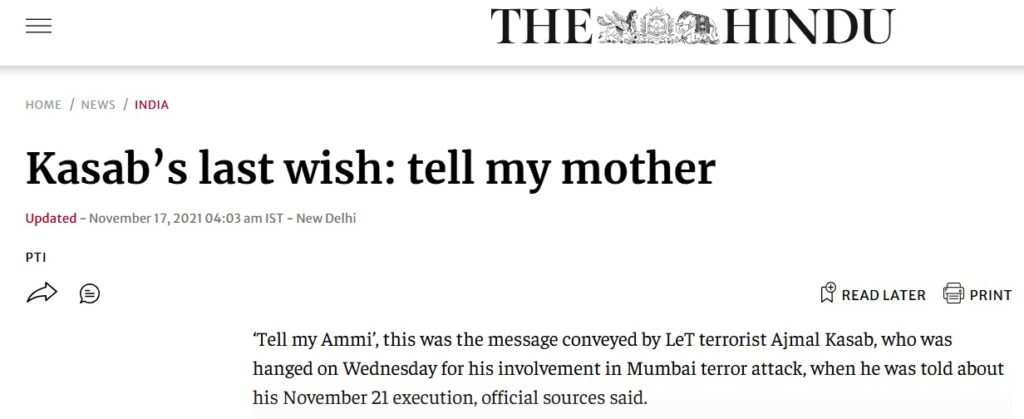
#19 The Hindu Humanizes Ajmal Kasab – November 2021
The Hindu published articles with headlines like “Kasab’s Last Wish” which humanized a mass murderer.
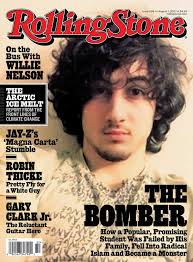
#20 Rolling Stone Describe Boston Bomber As “Handsome, Young, Promising” Student – July 2013
Multiple media outlets such as Rolling Stone described the Boston Marathon bomber (2013) as a “handsome young man” and “promising student“.
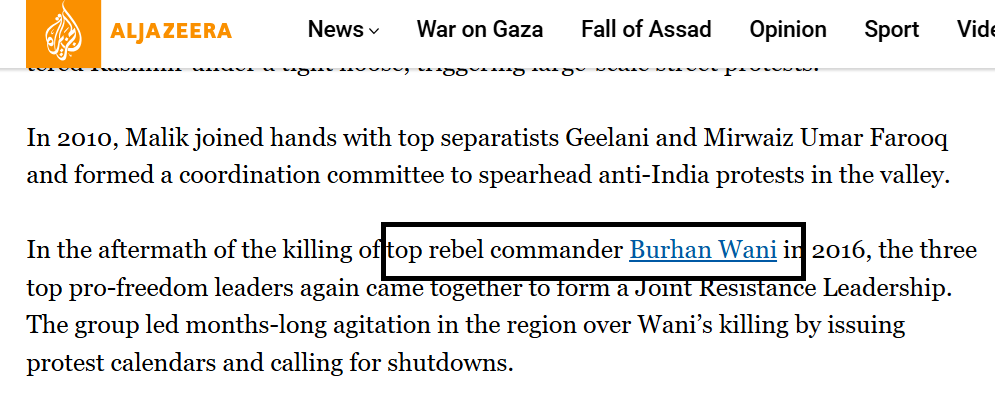
#21 Al Jazeera Called Burhan Wani “Top Rebel Commander” – May 2022
Al Jazeera published an article on Yasin Malik where they referred to terrorist Burhan Wani as “top rebel commander”.
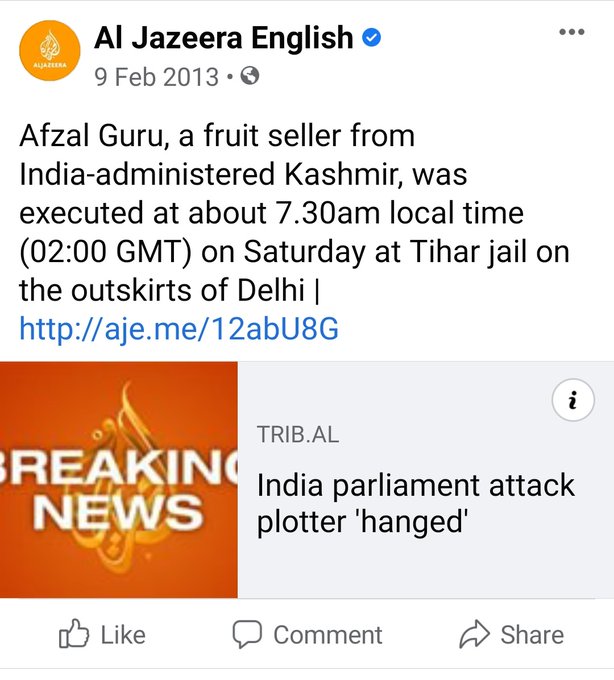
#22 Al Jazeera Called Afzal Guru A “Former Fruit Seller” – February 2013
Afzal Guru, convicted for his role in the 2001 Parliament attack, was referred to as a “former fruit seller“, sometimes as a “family man” or “victim of systemic injustice” by certain sections of the media, downplaying his involvement in the attack.
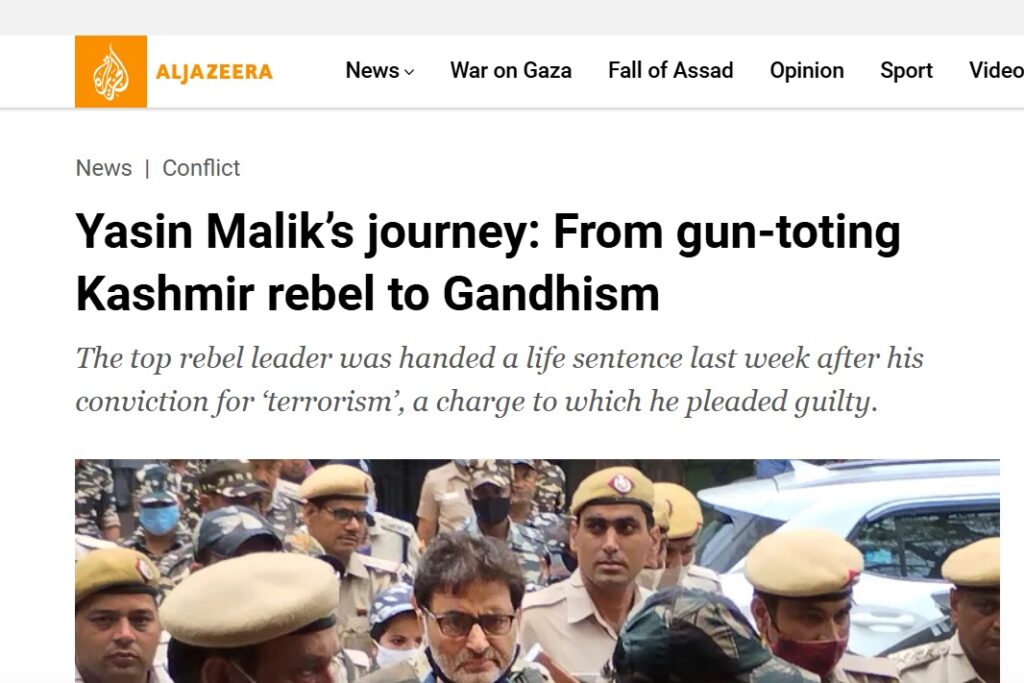
#23 Al Jazeera Calls Terrorist Yasin Malik A Gandhian – May 2022
Yasin Malik, a terrorist who murdered four Indian Air Force officers in broad daylight at point-blank range, has often been described as a “rebel leader” by certain media outlets, despite his involvement in violence and terrorism. Al Jazeera even wrote gloriously about how he “gave up arms and became a Gandhian“.
Part 3 – Other Extremists
#24 Indian Express Humanizes 2020 Delhi Riots Accused Umar Khalid When He Got Interim Bail – January 2025
In January 2025, The Indian Express article published an article titled “When Umar Khalid came home” which humanised an accused individual by foregrounding personal and emotional details while downplaying the seriousness of the charges he faces. The piece dwelt on Khalid’s interim bail period through lyrical descriptions of confinement, freedom, food preferences, and family sentiments, using imagery such as “staying in a cage” and “savouring every ray of sunlight,” which cast him as a victim of circumstance rather than an undertrial accused in a case linked to the 2020 Delhi riots.
By highlighting everyday comforts, parental anguish, and perceived social stigma, the article shifts attention away from the allegations of conspiracy and violence, and instead constructs a sympathetic narrative that risks softening public perception of the gravity of the charges and the suffering of riot victims.
#25 Times of India, Deccan Herald Romanticise Maoist Leader Chalapathi – January 2025
Obituaries published by the Times of India and Deccan Herald on Maoist leader Chalapathi portrayed him in a sympathetic and romanticised manner. Both outlets described him as a “military strategist,” an intellectual, and an inspirational figure, while highlighting his reading habits, linguistic skills, and organisational abilities. The reports focused on his rise within Maoist ranks but largely omitted the violence attributed to him, including deadly attacks such as the 2008 Nayagarh police armoury raid and the 2018 Araku killings. The coverage downplayed the human cost of Maoist violence and failed to adequately condemn his role in prolonged insurgency.
Subscribe to our channels on WhatsApp, Telegram,Instagram and YouTube to get the best stories of the day delivered to you personally.