Home Blog Page 218

PTR’s Purported Audio On Stalin Family Was Leaked By This Congress Politician, Savukku Shankar Reveals

In April 2023, an audio clip alleged to be that of Tamil Nadu Finance Minister PTR Palanivel Thiagarajan has surfaced on social media in which he accuses members of MK Stalin’s family of making more money in one year than they’ve made during their lifetime.

“Both Udhay and Sabari have realised, they have made more money in one year than they [unclear] entire lives and now it’s getting to be a problem, how to handle it, how to not get caught, how to get payments here… [unclear] Its all being made gradually? 10 to 20 crores… assuming we will say 5000 crores… [unclear]. How can you [unclear] 5000 crores without paying any [unclear]”, the audio clip supposedly of PTR says.

The audio clip surfaced amidst Tamil Nadu BJP accusing DMK leaders of gaining disproportionate assets over the years.

In a massive development a few days later, another audio clip of Tamil Nadu Finance Minister PTR Palanivel Thiagarajan was released by BJP Tamil Nadu President K. Annamalai on his social media.

In the alleged audio clip of PTR, he says “I have been a longtime proponent of one man one post from the day I entered politics. It is what I like about the BJP. Who looks after the party, who looks after the people, separate those… right?”

He further went on to abuse his own partymen saying “Here every (beep) district secretary wants be an MLA and Minister. Who looks after the party? Inaudible… Ohh. it’s easier to do money management… it is not a system.. They are taking the bulk of the spoils..”

“The party, which is the CM’s son and son-in-law, ask them to make the financing… right? So, I decide after watching this for 8 months… This is not a sustainable model. The great luxury for me if I put my papers in… In the short term I get out before the shit starts blowing up in their face. I have the like… kind of… what do you say… cleanliness of my conscience that I did not have to like it wasn’t I gave up the fight too early… I don’t have to say it… I’m no longer in the post… it’s not my job… somebody did it.”, he says.

However, PTR Palanivel Thiagarajan responded to the audio clip controversy which had stunned the ruling DMK because of the scandalous content. He alleged that there is conspiracy to drive a wedge between him and the DMK’s first family.

Savukku Shankar Reveals Who Leaked The Audio

In a video on his channel, YouTuber Savukku Shankar has alleged that an audio clip purportedly featuring Tamil Nadu Finance Minister Palanivel Thiaga Rajan (PTR) was recorded and leaked by Congress leader Praveen Chakravarty.

Shankar said he received two separate audio files from Praveen Chakravarty.

According to Shankar’s narration, Praveen Chakravaty called him to inform that a Delhi journalist has an important audio of Tamil Nadu Finance Minister (PTR) and whether he would be interested in publishing it. The first audio which he received apparently had a lot of noise and he was not sure of publishing. He said he fell asleep after listening and Praveen Chakravarty called back later the same day at 7 PM and asked him whether he would publish or not saying that if he doesn’t he would give the audio to some other channel to publish.

Not wanting to lose the exclusive content, he reduced the noise in the audio with the help of his YouTube friends and published it which went viral. He said that he gave the second audio clip to BJP leader Annamalai who released it with subtitles. After Annamalai released the second clip, multiple channels amplified it and the episode contributed to intense public scrutiny of PTR.

Shankar told that for a long time he thought it must’ve been recorded by Intelligence Bureau and it was only later that he came to know who was the real person behind the audio leak.

“I got the chance to meet PTR once at his home. At that time, he was very heartbroken when he was talking to me. He felt bad that he was fired for saying the truth – son-in-law and son took 30,000 crores each. When he was talking to me, I mentioned the tape, and he said Praveen recorded it. I asked him how he knew that. He even mentioned the date. 27 January, he (Praveen Chakravarty) was having dinner at the same table as with me (PTR) and while talking to me, he recorded the conversation. I couldn’t believe how a man can do this”, alleged Shankar.

Shankar apparently probed PTR Palanivel Thiagarajan about how he was so sure that it was the Congress leader to which PTR replied back that he maintains a record of the people he meets.

He said that PTR is a systematic and organized person who keeps detailed records of appointments.

“I’ve a record of all my appointments. It is the same table Shankar. I even remember the context in which that was spoken.”, PTR allegedly told Shankar.

Shankar further went on to add that he got a call from Rahul Gandhi’s office with the Congress scion himself listening to what he was saying. Shankar said that having known the truth from PTR, he explained the tape’s provenance and revealed to the Congress leadership that he got the audio from Praveen Chakravarty.

Subscribe to our channels on TelegramWhatsApp, and Instagram and get the best stories of the day delivered to you personally.

Lawyer Attempts To Hurl Shoe At CJI Gavai Allegedly Over Remarks Insulting Lord Vishnu In Idol Restoration Case

cji gavai chief justice gavai hindu beheaded vishnu idol

Chief Justice of India (CJI) Bhushan R. Gavai on 6 October 2025 faced an attempted shoe-hurling incident in court but decided not to take any action against the lawyer involved, instead directing officials to “just ignore” the episode.

Reportedly, after security personnel intervened and escorted the lawyer out of the courtroom, officials sought the CJI’s instructions on the future course of action. “Just ignore,” the CJI told them, asking that the lawyer be warned and let go. The lawyer was later identified as Rakesh Kishore.

The dramatic scene unfolded during the mentioning of cases before the CJI’s Bench, when Kishore suddenly approached the dais and tried to take off his shoe. As he was being taken away, he was heard shouting: “Sanatan ka apman nahi sahenge (We will not tolerate any insult to Sanatan).”

Unfazed by the commotion, the CJI urged the lawyers present to carry on with the day’s proceedings. “Don’t get distracted by all this. We are not distracted. These things do not affect me,” he said.

The incident comes in the wake of a recent controversy over the CJI’s reported remarks during a hearing last month, when a Bench of CJI Gavai and Justice K. Vinod Chandran declined to entertain a plea filed by one Rakesh Dalal. Dalal had sought directions to restore a seven-foot beheaded idol of Lord Vishnu at the Javari temple, part of the Khajuraho group of monuments in Madhya Pradesh.

The petitioner had argued that the idol was mutilated during Mughal invasions and that authorities had failed to restore it despite repeated representations. The court held that the issue fell within the jurisdiction of the Archaeological Survey of India (ASI) and not the judiciary. During the hearing, the CJI reportedly told the petitioner’s lawyer: “Go ask the deity itself to do something now. You say you are a staunch devotee of Lord Vishnu. So go and pray now. It’s an archaeological site and ASI needs to give permission etc. Sorry.”

Reacting to the incident, the CJI once again asked the court to proceed with its business, reiterating, “These things do not affect me.”

(With inputs from Hindustan Times)

Subscribe to our channels on TelegramWhatsApp, and Instagram and get the best stories of the day delivered to you personally.
Maharashtra: US National Among Three Arrested In Bhiwandi For Alleged Conversion Racket

Maharashtra: US National Among Three Arrested in Bhiwandi for Alleged Conversion Racket

A major religious conversion racket has been busted in Bhiwandi, Thane district, Maharashtra, leading to the arrest of three individuals, including an American national identified as James Watson – allegedly an army veteran. The arrests were made on Friday, 3 October 2025, following a police complaint and subsequent raids by the local administration.

The accused have been identified as James Watson (58), a U.S. citizen residing in Thane’s Hiranandani Estate; Sainath Ganpati Sarpe (42), a resident of Vasai; and Manoj Govind Kolha (35), from Bhulshet, Chimbipada. Watson, who had reportedly entered India on a business visa, is alleged to have organised religious gatherings without obtaining the required official permissions.

The incident came to light after Ravindra Bhurkut (27) lodged a complaint at the Bhiwandi Taluka Police Station. In his statement, Bhurkut said that around 11:30 AM on Friday, he witnessed a group preaching Christianity to about 30–35 villagers outside Kolha’s residence. The group allegedly made derogatory remarks about Hinduism, describing it as a religion based on “blind faith,” and urged people to convert to Christianity, claiming that doing so would bring “happiness and success.”

According to the complaint, the accused also told attendees that prayers to Jesus Christ could cure illnesses, and inquired if any underage girls were unwell. They reportedly wrote down the names of four girls and placed their hands on the girls’ foreheads, claiming to have “healed” them through divine powers before leaving the location.

Following investigation, police confirmed that Watson’s visa was being misused for religious activities instead of business purposes. He was allegedly coordinating with certain villages near Padgha.

It is noteworthy that Padgha is an area previously linked to a major jihadi module busted a few years ago. That module, according to earlier police investigations, had been planning attacks in Mumbai modeled on the October 7 Hamas-style operations before being intercepted by Maharashtra Police and central agencies.

Police Inspector Harshwardhan Barve of Bhiwandi Taluka Police Station said that the accused have been booked under Sections 299 and 302 of the Bharatiya Nyaya Sanhita, as well as under the Foreigners Act for violating visa norms, and the Maharashtra Prevention and Eradication of Human Sacrifice and Other Inhuman, Evil and Aghori Practices and Black Magic Act, 2013.

Authorities are investigating the extent of the group’s activities in rural Thane and surrounding regions, including possible links to other networks engaged in unauthorised religious propagation.

Police have stated that further action will follow based on evidence recovered from digital devices and local witness statements.

(With inputs from OpIndia)

Subscribe to our channels on TelegramWhatsApp, and Instagram and get the best stories of the day delivered to you personally.
Dravidoids Hate Arattai Because It Is Run By “Sanghi” Tambram Sridhar Vembu, But DMK Govt Relies On Zoho For Its Own Schemes

Zoho’s messaging platform, Arattai, founded by entrepreneur Sridhar Vembu, has become the focus of a coordinated online smear and hate campaign. Critics have cited ideological reasons for opposing the Indian-developed app, targeting Vembu for his Tamil Brahmin heritage and labeling him as a “Sanghi,” used as a “slur” to denote anyone leaning to the “right” or supports the central government, in online discourse.

The opposition has raised privacy concerns despite Arattai hosting all data in India, providing call encryption, and planning chat encryption upgrades. Critics continue to rely on foreign messaging platforms like WhatsApp and X, which have experienced repeated privacy breaches, while disparaging Arattai as unsafe.

Several users have publicly declared they would refuse to use Zoho products, claiming the app is “a government trap to spy on everyone.” A post on X by user Ravi called the opposition a passing trend and suggested alternative platforms such as Signal, Session, or Telegram, warning against surrendering personal data to what he described as the “Sanghi ecosystem in the name of promoting Indian apps.”

However, observers point to extensive government and institutional usage of Zoho software in Tamil Nadu under the DMK government.

CM Helpline initiatives, including programs like “Ungaludan Stalin” and “Ungal Thogudhiyil Stalin” (Stalin in your constituency), reportedly use Zoho Desk to prepare reports on citizen complaints directly for the Chief Minister.

StartupTN, a government initiative promoting startups and incubators, uses Zoho Backstage for event registration and management. The platform allowed fast, efficient attendee check-ins by generating unique QR codes and enabling a single staff member to scan attendees in under a second using the Zoho mobile app.

Naan Mudhalvan, the Tamil Nadu Government’s skill development program, uses Zoho Backstage for training program management and deployment.

Training programs are also being offered for aspirants to build careers with Zoho:

ZOHO Junior Functional Analyst training under Naan Mudhalvan & TNSkill provides hands-on experience with CRM and Help Desk systems, business software deployment, and customization.

Starting salary for participants is reported to be ₹20,000+ per month, and candidates with any degree are eligible.

Despite online criticism, Arattai’s rising downloads suggest growing public acceptance of indigenous technology solutions based on merit rather than ideology. The controversy highlights ongoing tensions in India’s tech ecosystem between foreign platform dependency, domestic innovation, and ideological polarization.

Subscribe to our channels on TelegramWhatsApp, and Instagram and get the best stories of the day delivered to you personally.
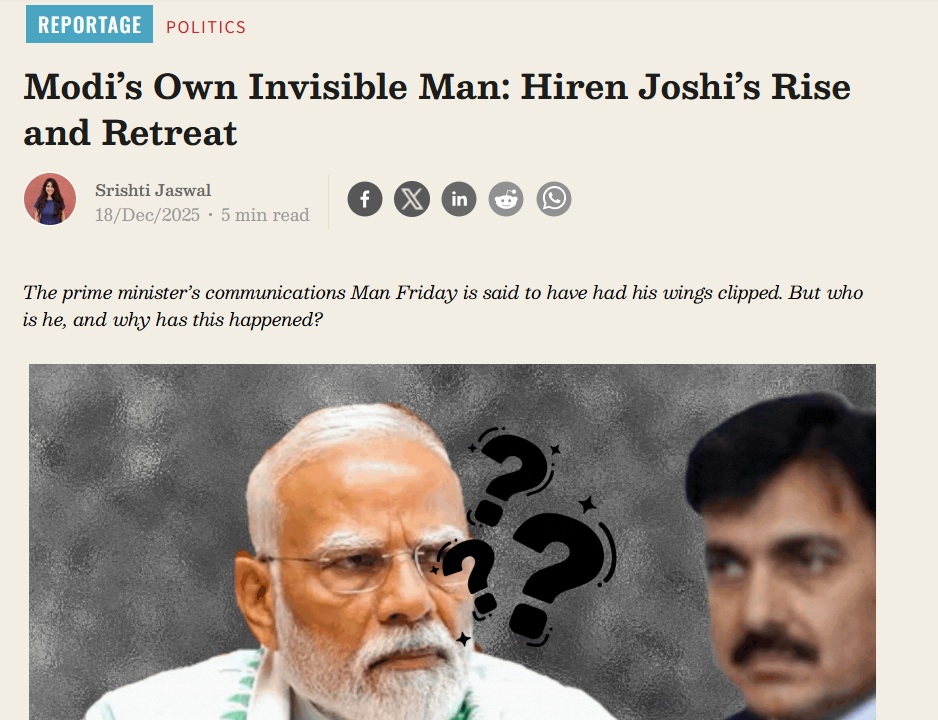
Radical Islamist And Alleged ‘Fact-Checker’ Mohammed Zubair Hurls Casteist Slur At His Critics

Faced with proofs that indicated that a founding editor of Alt News Science, Dr Sumaiya Shaikh, received foreign funding, radical Islamist and alleged fact-checker Mohammed Zubair of Islamo-Leftist propaganda outlet Alt News, hurled casteist abuses at his critics.

Replying to a handle that shared tax filing screenshots of the foundation that gave grants to Shaikh, Zubair wrote, “Abey Saste Desi Bhand, thoda aur research karle. They were contributor not Alt News employees.” meaning “Hey, cheap local Bhand, do some more research. They were contributors, not Alt News employees”

Now, Bhand refers to a community that is known also as “Bahand” and actually refers to a traditional folk entertainment community. In this context, Zubair has used the word Bhand as a slur and it is against the Scheduled Caste group of street performers, who are officially listed as SCs in Rajasthan.

Most often in “common” parlance, phrases like “bandh hokar naachna” are casually used to describe dancing while drunk. But it is in reality a slur.

The word “Bhand” has multiple meanings in South Asia, referring to traditional folk entertainers, particularly a community of hereditary performers like singers, dancers, and jesters, or an individual who is a jester or buffoon. The term also exists as a community name for various endogamous groups across India, Pakistan, Bangladesh, and Nepal, though many have left their traditional occupations due to social marginalization and a decline in folk arts. As an occupational, lower-caste group, the decline of traditional folk arts has pushed many Bhands to other trades or into poverty, with some becoming rickshaw pullers or beggars.

And this warrants an SC/ST Atrocity case on Zubair for using such slurs.

The same Zubair did not find it wrong to use a casteist slur on a netizen. Here is a look at a few of his casteist posts.

He even called BJP leader Shehzad Poonawalla by his caste name.

He deleted an old inflammatory post which resurfaced earlier in June 2025 and gained traction on X. In response to the controversy, he claimed it was being misinterpreted and deleted it. The tweet in question, originally posted in May 2018, featured a cartoon showing BJP leader Amit Shah portrayed as Chanakya, with his traditional Brahmin shikha (choti) being cut by a hand labeled ‘DKS’ holding scissors. Many online perceived the image as derogatory towards the Brahmin community. The post reignited criticism of Zubair, who has frequently targeted what he sees as communal sensitivities in Hindu beliefs while often downplaying similar concerns related to Islamic figures like Prophet Muhammad or historical figures such as Aurangzeb.

Subscribe to our channels on Telegram, WhatsApp, and Instagram and get the best stories of the day delivered to you personally.
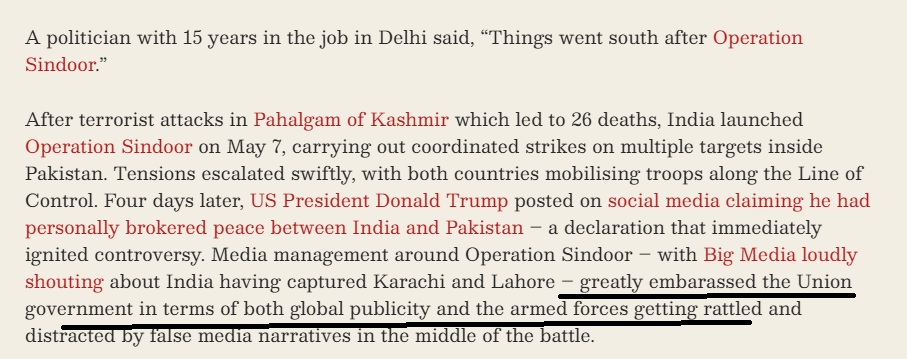
Radical Leftist Propaganda Outlet Alt News Accused Of FCRA Violations, Zubair Labels Editor Sumaiya Shaikh A ‘Contributor’ After ₹50 Lakh Foreign Grant Gets Exposed

A series of serious allegations concerning foreign funding, editorial roles, and potential legal violations have emerged against alleged fact-checking website Alt News and individuals associated with it, centering on grants from a US-based foundation.

The controversy involves Mohammed Zubair, alleged fact-checker and co-founder of Alt News, who was reportedly sent to 14 days judicial custody by the Patiala House Court in New Delhi in July 2022 after his bail was rejected. Zubair faced (and continues to face) accusations of hurting religious sentiments, while the Delhi Police had also been investigating potential violations of the Foreign Contribution (Regulation) Act – FCRA – regarding alleged receipt of funding from Pakistan, Syria, and other countries.

Cut to 2025, Zubair publicly challenged individuals to prove his involvement in foreign funding. In response, critics have presented evidence targeting two journalists linked to Alt News.

The Funding Allegations

Investigations reveal that Dr. Sumaiya Shaikh, a neuroscientist and author, and Sharfaroz Satani, from Boston, received a grant totaling ₹50 Lakh from the Thakur Family Foundations Inc, a USA-based organization. The foundation’s stated mission is working in public health and civil liberties.

The Thakur Family Foundation Inc. is a United States 501(c)(3) organization founded by Dinesh Thakur and is based in St. Petersburg, Florida. According to its profile on leftist institution Ashoka University, the Foundation “invests in capacity building for an empowered society through participative, socially-just governance.”

A look at the tax filings over the past few years indicate the grants received by Dr Sumaiya Shaikh and Sharfaroz Satani.

Image Source: Propublica

When netizens indicated this, Zubair claimed that the grant recipients were merely “contributors” and not Alt News employees, but evidence from 2019 shows Dr. Shaikh repeatedly identifying herself as the “editor of a fact-checking science portal.” Furthermore, screenshots from the Alt News website itself list her as an editor, specifically the “founding editor for Alt News Science” from 2017 to 2021.

Zubair has subsequently made conflicting statements, asserting that Dr. Shaikh is not an Indian citizen, was a contributor to Alt News rather than an employee, and that the grant from the Thakur Foundation was for her personal research, not for writing for Alt News.

Well, it is unclear how a founding editor became a “contributor” all of a sudden. A look at the Alt News profile of Sumaiya Shaikh shows us that she stopped “contributing” in 2021.

Another Alt News ‘Contributor’ Gets Foreign Funds To Write Articles

Another Alt News ‘contributor’ Sharfaroz Satani, reportedly received USD 5,907 (approximately ₹4.43 lakh) between 2020 and 2021 from the Thakur Family Foundation. When combined with the grant to Dr. Sumaiya Shaikh, the total amount comes to around ₹50 lakh. Since Alt News does not possess an FCRA licence, it is not permitted to accept foreign contributions directly — yet the funds appear to have reached the platform indirectly through its employees.

In essence, the Pravda Foundation (under which Alt News functions) — despite not having an FCRA licence — seems unaware that its so-called “contributors” were penning pieces for Alt News while being bankrolled by a foreign NGO.

The Grant’s Purpose And Propaganda

Documentation from the Thakur Family Foundation’s website explicitly states the purpose of the award: “WE MADE AN AWARD TO NEUROSCIENTIST AND AUTHOR, DR. SUMAIYA SHAIKH, TO SUPPORT HER FACT-CHECKING CLAIMS RELATED TO EVIDENCE-BASED MEDICINE.”


There are also links to the specific articles produced under this grant on Alt News website. These articles, which were published on platforms associated with the individuals, are alleged ‘fact-checking’ pieces that apparently debunked various claims related to COVID-19. The articles include:

Debunking claims that Vitamin C and lemon-infused hot water can protect against coronavirus or cancer.

Addressing exaggerated effects of the “Janta curfew” as a 14-hour period to kill the coronavirus on surfaces.

Countering claims of genetic superiority of Indians in dealing with COVID-19.

Investigating the scientific basis of Patanjali’s Coronil as a cure for COVID-19.

Scrutinizing home remedies promoted by an Ayurvedic practitioner and the AYUSH ministry’s promotion of “immunity boosters” like Arsenicum Album 30 and Ayush Kwath.

These articles extensively embedded links and referenced content from the Alt News website. Dr. Shaikh was also the founder of the Alt News Science website, further intertwining her work with the Alt News brand. Despite her claimed role as an editor and her use of a company email address, Zubair has maintained she was only a ‘contributor’.

It is noteworthy that Thakur Foundation is alleged to be a pharma lobbyist and all the articles written by Shaikh counter the natural medicine systems that provided medicines such as Ayurveda, Homeopathy during COVID-19 period.

Legal And Regulatory Questions

The situation raises significant legal and ethical questions. Questions are being raised whether Alt News is a news aggregator or a news publisher, and if foreign entities are legally permitted to control or influence the editorial policies of a news publishing platform in India.

The scale of the funding has also drawn attention. With a grant of ₹50 Lakh for a body of work that critics claim resulted in approximately 10 articles, it translates to an unprecedented ₹5 Lakh per article. Many on social media have questioned how many journalists or commentators, receive such high remuneration, suggesting possible FCRA violations and a conflict of interest.

These allegations compound the existing legal challenges for Alt News. It was previously reported that Zubair attempted to destroy his phone at the time of his arrest, adding another layer of scrutiny to the organization’s operations

Subscribe to our channels on TelegramWhatsApp, and Instagram and get the best stories of the day delivered to you personally.
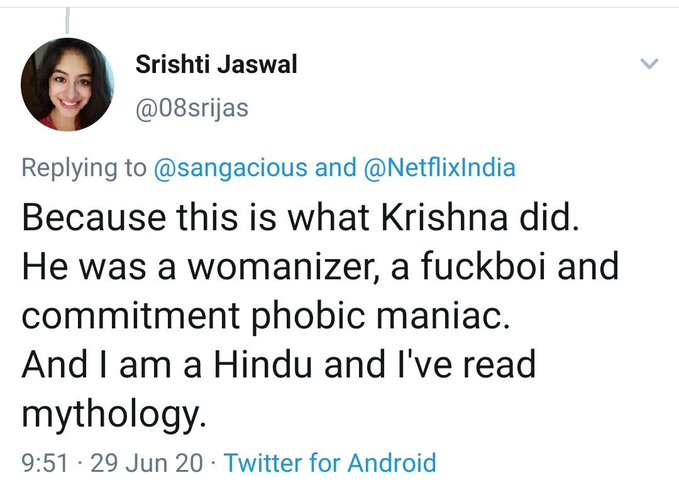
The Deification Of A Missionary, James Kimpton, In Rural Tamil Nadu

The Deification Of A Missionary, James Kimpton, In Rural Tamil Nadu

In the villages of G. Kallupatti and Genguvarpatti near Vathalagundu, a curious annual spectacle unfolds every October. Thousands gather to honor a British missionary, Brother James Kimpton with processions, floral tributes, and annadhanams. The late missionary, fondly called “Thatha” (grandfather), is now celebrated like a local deity, his image paraded in chariots through temple-lined streets.

But behind the façade of reverence lies a troubling story of cultural subversion and the long shadow of missionary influence in rural Tamil Nadu.

A Missionary’s Second Home in Tamil Nadu

Born in Wales in 1925, Kimpton joined the Catholic De La Salle Brothers, a missionary order blending education with evangelization. After being expelled from Sri Lanka in 1964 due to that country’s decision to curb foreign religious interference, he found fertile ground in Tamil Nadu. In 1974, he founded Reaching The Unreached (RTU) in G. Kallupatti, a charitable society that quickly expanded into a sprawling welfare empire across Theni and Dindigul districts.

RTU’s projects included orphanages, schools, women’s self-help groups, HIV support programs, and housing schemes, all funded by Western religious and secular organizations. While the visible outcome appeared philanthropic, the institutional control and ideological structure remained firmly under the Catholic order’s grip.

Charity as a Tool of Religious Influence

Kimpton’s public persona was that of a saintly foreigner devoted to the poor, but his alleged model of “service without conversion” followed a well-known postcolonial missionary formula using welfare as a moral gateway rather than a pulpit. The constant presence of Christian symbols, the use of Western names like “Boys’ Town,” and the subtle introduction of biblical moral narratives in daily life quietly normalized Christian authority among Hindu villagers.

This approach did not need overt conversion drives. Instead, it replaced traditional community structures with missionary-administered ones, orphanages instead of gurukulams, foreign-funded schools instead of local schools, imported models of charity instead of dharmic seva. Over time, it fostered a deep dependence on foreign-controlled institutions, ensuring that gratitude and faith flowed upward toward the Church.

Dependency and Displacement of Local Dharma Institutions

The massive scale of RTU’s activities effectively displaced native systems of social support. Rather than empowering local self-governance or temple-based welfare traditions, the organization centralized authority in missionary hands. Even after Kimpton’s death in 2017, the institution remained within Catholic administration under the Capuchin Friars, a clear signal that the project was never meant to become community-owned.

The dependence created through these welfare structures has had enduring consequences. Generations of rural families have come to equate education, healthcare, and charity with Christian institutions, slowly eroding the role of local mutts, temples, and dharma sabhas in social life.

The Deification of a Missionary

Perhaps the most revealing symptom of this long-term influence is the near-deification of Kimpton himself. Villagers now perform rituals for him with molapari, processions, and offerings, practices traditionally reserved for local deities. This phenomenon, while framed as affection, reflects a deeper cultural confusion: the absorption of a foreign missionary into Hindu ritual frameworks, turning spiritual reverence into cultural submission.

Such syncretic devotion blurs the lines between respect and religious influence. It demonstrates how sustained missionary presence, cloaked in welfare, can reshape local belief systems until even villagers begin to sanctify their colonizer.

A Continuing Pattern in Rural Tamil Nadu

Kimpton’s legacy is not isolated. It represents a broader pattern of how Christian missions operate in India’s interior: building goodwill through service, embedding foreign values under the language of “compassion,” and gradually replacing traditional Hindu frameworks of social responsibility.

The result is a slow but steady erosion of indigenous cultural confidence. While Tamil Nadu’s temples and mutts once sustained entire villages through annadhanam and vidya daanam, today the same functions are often outsourced to missionary NGOs with international funding and long-term ideological goals.

A Lesson in Cultural Vigilance

Brother James Kimpton’s story is often presented as one of selfless service, but viewed through the lens of Dharma, it also serves as a cautionary tale. It shows how foreign religious networks can embed themselves deep within rural India, transforming the very meaning of service, charity, and worship.

For a civilization that once viewed seva as sacred duty rooted in Dharma, the veneration of a missionary as a village god is not a mark of harmony, it is a warning of how cultural memory can be reshaped through dependence. As Tamil Nadu continues to navigate questions of faith, identity, and influence, the cult of “Thatha” Kimpton stands as a reminder that every act of foreign charity in a vulnerable land carry more than food and medicine, it carries a message, and a mission.

Subscribe to our channels on TelegramWhatsApp, and Instagram and get the best stories of the day delivered to you personally.
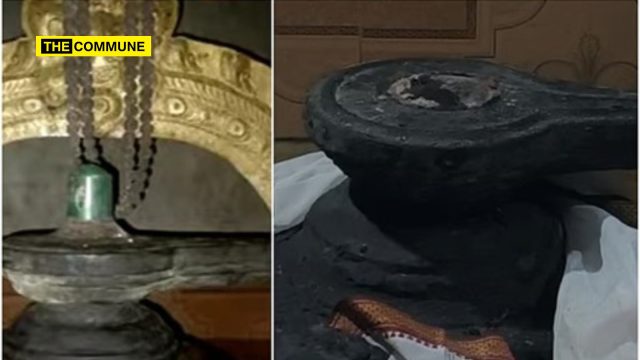
Puthiya Thalaimurai Reportedly Taken Off Arasu Cable, Not A Whisper In Its Social Media Handle Unlike During ADMK Period; Tamil Janam Still Denied Access

Tamil Nadu’s leading news channel Puthiya Thalaimurai was allegedly taken off air by the Tamil Nadu Arasu Cable TV Corporation Limited (TACTV) on Saturday, October 4, 2025, leading to strong reactions from journalists and viewers. The move, reportedly made without prior notice, has revived debates over political control of state-run media distribution and freedom of expression.

According to sources, Puthiya Thalaimurai was removed from the TACTV network, which carries over 150 channels to subscribers across Tamil Nadu. The reason for the removal has not been officially disclosed. Following discussions between the channel’s management and TACTV officials, the channel was reportedly restored in some districts, though it remains unavailable in others.

The Chennai Press Club issued a statement condemning the development, saying that suspending or blocking a news channel’s telecast without prior notice amounted to suppression of press freedom. The organisation urged TACTV to restore the channel immediately, noting that such actions undermine the principles of free and fair journalism.

TACTV officials, including chairman Brajendra Navnit, were unavailable for comment.

This is not the first time Puthiya Thalaimurai has faced such a disruption. In 2017, the channel was temporarily removed from the Arasu Cable network after airing a survey related to the RK Nagar by-election, which was reportedly viewed as unfavourable to politician V.K. Sasikala.

The latest incident has also drawn attention from within Tamil media circles. Commentators have pointed out that when Puthiya Thalaimurai was taken off air during the previous AIADMK government, the channel had publicly raised the issue through its own broadcasts and social media handles. However, this time, despite reports of its removal circulating widely, the channel itself has not made any official statement or post about the issue on its platforms.

Observers note that the incident has also reignited debate over the government’s management of Arasu Cable, which was originally launched to ensure equal access and prevent private monopolies in cable television distribution. Critics allege that the selective inclusion or exclusion of channels based on political convenience contradicts the very principles of equality and justice that the government claims to uphold.

Meanwhile, Tamil Janam TV, another Tamil news channel, has alleged that it has been consistently denied inclusion on Arasu Cable for the past two years despite being available on major private platforms such as Tata Sky, Airtel, Jio, TCCL, and GTPL. Tamil Janam’s editor Anand T. Prasad said the government’s refusal to carry their channel raises questions about political bias and lack of transparency.

புதிய தலைமுறைக்கு வந்தால் ரத்தம்!?

Media analysts have pointed out that Arasu Cable was originally launched to ensure equal access and to prevent monopolies by private operators. However, the selective inclusion and exclusion of news channels based on political considerations has raised serious questions about transparency and accountability in the government’s media policy.

(With inputs from The New Indian Express)

Subscribe to our channels on Telegram, WhatsApp, and Instagram and get the best stories of the day delivered to you personally.
Dravidian Model Chennai: T.Nagar’s ₹165-Crore Steel Flyover Fails To Ease Traffic Congestion, Residents Call It A Cosmetic Fix

T.Nagar’s ₹165-Crore Steel Flyover Fails To Ease Traffic Congestion, Residents Call It A Cosmetic Fix

The newly inaugurated ₹164.9 crore steel flyover connecting South Usman Road with CIT Nagar has failed to deliver the relief from traffic congestion that it was expected to bring. The 1.2-kilometre-long structure, which was opened by Chief Minister M.K. Stalin last week, links with the existing 800-metre North Usman Road flyover, forming a two-kilometre elevated stretch through one of Chennai’s busiest commercial zones.

In the days following its inauguration, commuters travelling from CIT Nagar to North Usman Road reported that while the drive over the new flyover took only a few minutes, they were still forced to wait at the four-way Vivek’s Junction immediately after the flyover’s exit. Traffic police currently regulate movement manually, as there is no revised signal plan to manage the increased volume of vehicles being channelled directly from Anna Salai.

Before the flyover was constructed, vehicles from Anna Salai entered T.Nagar through Venkatnarayana Road, passing via the Link Road and South West Boag Road before reaching Panagal Park, resulting in slower movement through congested internal stretches. The new structure now brings a higher volume of vehicles directly to the junction in a shorter time, where they merge with traffic arriving from Venkatnarayana Road, Thyagaraya Road, and the Duraiswamy subway.

Traffic department officials stated that signal timers would be realigned once the new traffic density was assessed. They attributed the current congestion partly to the seasonal rush during the festive period and said that the situation was expected to persist until Diwali. Officials also indicated that discussions were ongoing with the Metropolitan Transport Corporation to consider bus route diversions from Valluvar Kottam.

Residents and commuters said the persistent congestion reflected deeper structural problems in T.Nagar rather than a lack of infrastructure. They pointed to encroachments, roadside parking, and poor enforcement as the main causes of traffic chaos. Several residents said that even with a longer flyover, bottlenecks would continue unless illegal parking and encroachments outside major business establishments were removed. They alleged that parking violations outside textile and jewellery stores were often ignored due to lax policing and corruption.

Greater Chennai Corporation (GCC) Commissioner J. Kumaragurubaran stated that the immediate focus was on reducing signal timings at Vivek’s Junction to allow faster vehicle movement. He said the Corporation’s long-term plan was to construct an additional 800-metre stretch connecting the North Usman Road flyover with the Mahalingapuram flyover, creating a continuous elevated corridor that would bypass the problematic junction. According to him, this extension would serve as a permanent solution, though the project could not be undertaken in the current financial year due to funding constraints.

Once completed, the proposed corridor from CIT Nagar to Mahalingapuram would become Chennai’s longest flyover, spanning four kilometres. The project, originally conceived in 2008, had seen only partial implementation at that time, with two separate flyovers built at Mahalingapuram and Usman Road.

For now, however, the ₹165-crore addition has done little to ease congestion in T.Nagar. Traffic continues to crawl through the same intersections, and the new flyover has merely shifted bottlenecks to adjacent roads, leaving residents questioning the effectiveness of yet another high-cost urban project.

(With inputs from Times of India)

Subscribe to our channels on Telegram, WhatsApp, and Instagram and get the best stories of the day delivered to you personally.
Mohammed Shahid Khan Shares With His Coreligionists Video Of College Girls Celebrating Navratri, Saying “All Hindu Girls Should Be Raped”; Media Sanitises Culprit And Gaslights

A chilling case has emerged from Viva College in Virar, near Mumbai — one that should have sparked national outrage. Instead, much of India’s mainstream media has chosen to downplay, deflect, or distort the gravity of what really happened.

Mohammed Shahid Khan, a first-year student at the college, and several of his associates were reportedly caught sharing videos of Hindu girls dancing during Navratri celebrations in a private chat group. The videos were accompanied by obscene and hate-filled messages calling for the girls to be “targeted, raped, and assaulted,” and referring to them as “prostitutes.” One of the messages used the term “musalled” — a slang expression referring to trapping non-Muslim girls through deceit or coercion.

As per the First Information Report (FIR), New Viva College has been organising Garba celebrations for over twenty years, attracting not only students but also alumni and local residents. This year’s festivities took place between September 22 and 26. During one of these events, a student allegedly filmed girls participating in the dandiya and uploaded the clips on Discord, where another individual later added obscene remarks.

The issue came to light on September 26, when someone informed the college management during the evening event that a student had shared the videos online. Upon investigation, the administration traced the uploads to a mobile phone and WhatsApp number belonging to one of the students. They also found that a separate account, operated under another student’s name, had been used to post indecent comments on the videos.

The college authorities promptly filed a complaint with the Virar Police, leading to an FIR against the accused. The report noted that the students’ actions had “hurt the sentiments of society and caused distress to the girls concerned.” Police officials said an inquiry is ongoing to identify all those involved and to determine how widely the videos were circulated.

This is not just a case of “vulgar videos.” It is a hate crime soaked in religious bigotry, directed explicitly at Hindu women. Yet, the national media seems unable — or unwilling — to state the facts as they are.

Hindustan Times chose to title its report, “Dandiya event in Virar college takes controversial turn” — a bland, misleading framing that makes it sound like a minor disagreement at a festival.

Worse, the report went on to suggest that the communal angle was introduced not by the offenders, but by a BJP leader who “gave the incident a communal tone.”

News18 ran with “Navaratri celebrations at Maharashtra college marred by vulgar videos of girls dancing, probe on.” Once again, the focus was on the videos being “vulgar” — not on the fact that they were shared with violent threats against Hindu women.

Both reports erase the most important truth: this was not some moral-policing incident or mere college mischief. It was an organised attempt to demean and target Hindu women on religious grounds — a pattern that India’s “secular” media ecosystem refuses to acknowledge whenever the perpetrators don’t fit their preferred narrative.

If the roles were reversed, the same outlets would have declared it a national crisis, with primetime panels on rising communal hatred. But when Hindu girls are dehumanised and threatened, the headlines turn euphemistic, and the perpetrators are hidden behind vague terms like “students” or “youths.”

This selective blindness is not journalism — it’s narrative management. And it has dangerous consequences. When hate crimes are reported as “controversies,” when ideological filters decide whose suffering matters, the public loses trust, and justice gets buried under spin.