Home Blog Page 219

MIB Orders Nationwide Ban On 24 OTT Apps And Websites Including ALTT, ULLU, And Others Over Obscene Content

nationwide ban ott mib

In a firm effort to curb the circulation of illegal and obscene material on the internet, the Ministry of Information and Broadcasting (MIB) has issued a directive instructing all Internet Service Providers (ISPs) across India to block access to 24 specific websites and mobile applications. These platforms were found to be hosting content deemed to violate several Indian laws as well as established standards of digital conduct.

The MIB’s order, which aims to crack down on vulgar and sexually explicit material online, targets platforms that allegedly distribute obscene, adult, and soft pornographic content. The list of banned sites includes popular names like ALTT, ULLU, Big Shots App, Desiflix, Boomex, Navarasa Lite, and Gulab App, among others.

The government cited violations under multiple legal frameworks, including Sections 67 and 67A of the Information Technology Act, 2000, which criminalize the electronic transmission of obscene or sexually explicit material. Additionally, Section 294 of the Bharatiya Nyaya Sanhita, 2023 India’s updated criminal code replacing the Indian Penal Code was invoked for obscene acts in public.

The platforms were also found to be in breach of Section 4 of the Indecent Representation of Women (Prohibition) Act, 1986, which prohibits the portrayal of women in an indecent manner across various forms of media and advertising.

To ensure effective enforcement of the ban, the MIB has coordinated with the Department of Telecommunications (DoT). A formal request was sent to the Director (DS-II) of the DoT to facilitate cooperation with ISPs so that access to these websites and applications is thoroughly restricted within Indian territory.

This move reflects the government’s growing emphasis on digital responsibility and its commitment to protect users from harmful and inappropriate content online.

(With inputs from Free Press Journal)

Subscribe to our channels on TelegramWhatsApp, and Instagram and get the best stories of the day delivered to you personally.

Bloomberg Justifies Prada Stealing Kolhapuri Chappals

prada kolhapuri chappals bloomberg karishma vaswani

In its latest attempt to repackage corporate malpractice as cultural “missteps”, Bloomberg has published a piece that dances around the plain truth: Prada plagiarized India’s indigenous Kolhapuri chappals and got called out for it.

To facilitate this, they make use of yet another brown sepoy – Karishma Vaswani.

Prada shamelessly copied India’s iconic Kolhapuri chappals, retailing for a mere ₹500 ($10), and rebranded them as “luxury leather footwear” at Milan Fashion Week, the outrage was instant and justified. Yet, instead of condemning this blatant plagiarism, Bloomberg’s article by Vaswani reads like a PR spin for Prada, downplaying theft while shifting blame to India’s so-called “digital ferocity.”

She wrote, “The country’s online community is renowned for its digital ferocity — it accused the brand of cultural appropriation, and the furor forced the fashion house into damage control mode. “

A Textbook Case of Plagiarism, But Bloomberg Won’t Call It That

Vaswani carefully avoids labeling Prada’s act as what it is – intellectual property theft. Instead, she writes, “The sandals, described as ‘leather footwear,’ displayed an open-toe braided pattern that was strikingly similar to Kolhapuri sandals.”

“Strikingly similar”? No. It’s a direct rip-off. Kolhapuri chappals have Geographical Indication (GI) status, meaning they are legally recognized as a unique Indian craft. Prada didn’t just “draw inspiration” – they stole a centuries-old design without credit or compensation.

The fact that the writer is Indian (not sure of her passport, at least she has Indian roots) herself makes the soft-pedaling all the more egregious. There is not a single use of the word “plagiarism” in the entire piece. No demand for Prada to pay royalties. No call to protect India’s heritage from high-fashion theft.

Deflecting Blame to “Indian Trolls” Instead of Holding Prada Accountable

Instead of holding Prada responsible, there’s a finger-wag at Indian netizens for being too aggressive. She writes, “The saga underscores how much power the South Asian giant’s digital tribe holds, where online outrage regularly influences public debate – especially when citizens perceive their heritage is under attack.”

This line reeks of condescension. Calling cultural anger “online outrage” and reducing those defending indigenous heritage to a “digital tribe” is how global media trivializes legitimate grievance.

Rather than focusing on Prada’s ethical failure, the article frames the backlash as an overreaction by India’s “nationalistic” online community. She writes, “The nationalistic sentiment whipped up by this controversy boosted sales of the traditional sandals.”

As if Indians are wrong for defending their heritage. The real issue? Prada thought they could get away with it. Only after massive backlash did they issue a half-hearted statement acknowledging “inspiration.” Too little, too late.

Vaswani refers to the outrage as “nationalistic sentiment,” as if calling out cultural appropriation is some kind of overreaction driven by jingoism rather than a demand for fairness and respect. In reality, what happened was simple: an international luxury brand ripped off a traditional Indian design with GI protection, failed to credit its origin, and got caught.

Let’s flip the script. What if an Indian brand launched a line of handbags eerily similar to the Hermès Birkin, priced them at $50, and marketed them in Europe without a word of credit? Would Bloomberg call it a cultural misunderstanding? Would the backlash be termed “digital French nationalism”? Or would it rightly be called out as design theft and IP violation?

Tokenism Over Justice: “Working With Artisans” Isn’t Enough

The author mentions Prada’s damage control move – “In a conciliatory move, it’s now working with traditional artisans to understand the history behind the famed Kolhapuris.”But where is the demand for royalties, fair compensation, or credit for the artisans? This isn’t a “collaboration, it’s exploitation dressed up as goodwill. If Prada truly respected the craft, they would pay the artisans for their designs, officially credit Kolhapuri makers (without Indians having to outrage) as well as invest in sustaining the craft.Instead, Vaswani paints this as a “lesson in cultural sensitivity” rather than corporate theft.

Distracting With Irrelevant Economic Data

In a bizarre pivot, the article suddenly shifts to India’s luxury market growth and middle-class spending cuts. She writes, “While the 100 million wealthiest people are splurging, 400 million of their middle-class counterparts have cut back.”

How does middle-class consumer restraint justify cultural theft? What does this have to do with Prada’s plagiarism?

It’s an intentional deflection, an attempt to frame Indians as either “too poor to matter” or “too aggressive online.”

The Hypocrisy of “Cultural Fluency”

The piece ends with a patronizing warning – “Cultural fluency is no longer a ‘nice to have’—it’s central to business survival.”

But this isn’t about “fluency” – it’s about basic ethics. Prada didn’t “misunderstand” Indian culture; they wantonly ignored it until forced to respond. They took India for granted and Indians are not going to take any more plagiarism lying down.

To read more on how the West plagiarised and appropriated Indian culture, check this.

The real story here isn’t India’s rising “troll army.” It’s how a global luxury brand got caught stealing a traditional design, and instead of serious media introspection, we’re being served PR damage control disguised as analysis.

Shame on Prada for the theft. But more importantly, shame on Bloomberg for justifying it.

Subscribe to our channels on Telegram, WhatsApp, and Instagram and get the best stories of the day delivered to you personally.

Madras High Court Applauds TN Govt For Adding ‘Economic Offenders’ Under TN Goondas Act

madras high court goondas act

The Madras High Court has commended the Tamil Nadu government for its decision to include “economic offenders” as a distinct category under the Tamil Nadu Goondas Act. The court observed that this significant policy change enhances the state’s capacity to address economic crimes more effectively.

In its remarks, the court stated, “This Court records its appreciation for the issuance of G.O.Ms.No.68, Home Department, dated 08.07.2025, by which the category of ‘economic offender’ has been added under the Tamil Nadu Act 14 of 1982 (Goondas Act). This amendment grants the authorities the power to detain repeat offenders involved in fraudulent financial schemes under preventive detention laws. This is a notable policy development that boosts the government’s ability to tackle crimes impacting public order and investor confidence, and it deserves particular recognition.”

Justice B. Pugalendhi also acknowledged the state’s efforts in introducing a Standard Operating Procedure (SOP) to ensure that cases under the Tamil Nadu Protection of Interests of Depositors (in Financial Establishments) Act, 1997 (TNPID Act) are handled within defined timelines. The SOP brings together multiple departments to coordinate effectively.

The court further appreciated the government’s constructive response to earlier judicial criticism. It noted that the administration had taken meaningful steps toward better enforcement of the TNPID Act and to protect the interests of depositors. The court remarked that such a proactive stance helps reinforce the rule of law and strengthens public trust in the legal and administrative system.

“The State has treated judicial observations not as an affront, but as a prompt for institutional reform,” the court said. “By issuing a detailed SOP, initiating digital tools, launching awareness campaigns, appointing zonal-level Competent Authorities, creating Valuation Committees, and designating a dedicated head for implementation, the government has clearly taken the court’s directives seriously. These efforts not only promote legal accountability but also help restore public confidence in the system’s integrity.”

The observations were made while the court was hearing a contempt petition filed by T. Prabhakar. The petition stemmed from an earlier court order directing a monitoring committee to facilitate the refund of depositors’ money, and had flagged several shortcomings in the implementation of the TNPID Act. The court had also issued multiple guidelines to improve the existing processes.

In its hearing, the court acknowledged that the state had responded positively to its earlier criticisms and had made tangible progress. It noted that the new SOP set clear timelines and outlined coordination mechanisms across departments such as the Economic Offences Wing, the Home Department, Revenue, and Registration Departments, among others. According to the court, this marks a shift from a previously disjointed approach to a more time-bound and accountable system.

The court also recognized the integration of digital communication and e-governance tools in the new framework. It noted that instructions could now be issued via email, and vital records from the Revenue and Registration Departments could be accessed online. The court observed that in the digital era, such steps would minimize delays while enhancing transparency, traceability, and overall accountability.

Additionally, the court noted the establishment of Valuation Committees, chaired by District Revenue Officers and comprising officials from the Registration Department, Public Works Department, and Regional Transport Offices. These committees are tasked with determining the value of seized assets before auction, in line with sale orders issued by the TNPID courts. The court expressed that this would help streamline the asset valuation process, reduce disputes, and expedite auctions.

However, the court also pointed out that the SOP did not define a clear outer timeline and instead used the term “expeditiously.” To address this, the court fixed a maximum limit of 12 days for issuing the necessary government orders, clarifying that this timeline does not override government discretion and that final determinations would still rest with the Special Court handling the matter.

(With inputs from Live Law)

Subscribe to our channels on TelegramWhatsApp, and Instagram and get the best stories of the day delivered to you personally.

Arunachal Pradesh BJP Govt Steps Up Efforts To Preserve Indigenous Faiths Like Donyi Polo, Rangfraism: 6 Gurukuls, 3,000+ Priests Supported

pema khandu arunachal pradesh indigenous tribes faiths practices bjp

Arunachal Pradesh Chief Minister Pema Khandu has reaffirmed his government’s firm commitment to preserving and promoting the indigenous faiths and traditions of the state’s tribal communities, calling them the “spiritual and cultural soul” of the people.

In a message shared on his official X account, Khandu underscored the distinct nature of indigenous belief systems, stating, “They don’t come from books, but from land, memory, and lived tradition. They are not exported, they are rooted. They hold the soul of our people, our forests, mountains, rivers, and ancestors.”

Khandu emphasized that protecting these traditions is not just a cultural task but essential to maintaining the identity of the people of Arunachal. “This isn’t just about culture. It’s about who we are. And it’s about making sure we don’t forget,” he wrote.

As part of this ongoing effort, the state government has launched several initiatives across Arunachal Pradesh:

Six indigenous gurukuls have been established for the Adi, Galo, Nyishi, and Tangsa tribes to promote traditional knowledge systems through community-led institutions.

Over 3,000 registered indigenous priests are now receiving honorariums from the state for their vital role in performing rituals, preserving oral traditions, and guiding spiritual practices.

Fifty dedicated indigenous prayer centres have been set up across the state to provide spiritual spaces for community members.

Tribal cultural centres are being developed in every district to serve as hubs for cultural training, documentation, and awareness generation.

“These efforts reflect the government’s resolve to strengthen the ancestral wisdom of Arunachal’s many tribes and to ensure their traditions remain vibrant for future generations,” Khandu added in his social media post.

He also stated, “That’s why we are investing in preserving and promoting the traditional values and ethos of our indigenous communities.”

The Bharatiya Janata Party (BJP)-led government in Arunachal has been actively supporting indigenous faiths such as Donyi Polo and Rangfraism. The state is among the few in India where priests from local traditions are paid regular honorariums, and prayer centres are being institutionalized as part of state policy.

(With inputs from The Sentinel)

Subscribe to our channels on Telegram, WhatsApp, and Instagram and get the best stories of the day delivered to you personally.

Minority Safeguard Or Legal Jihad? Inside India’s Controversial Muslim Legal Aid Network

muslim legal aid legal jihad

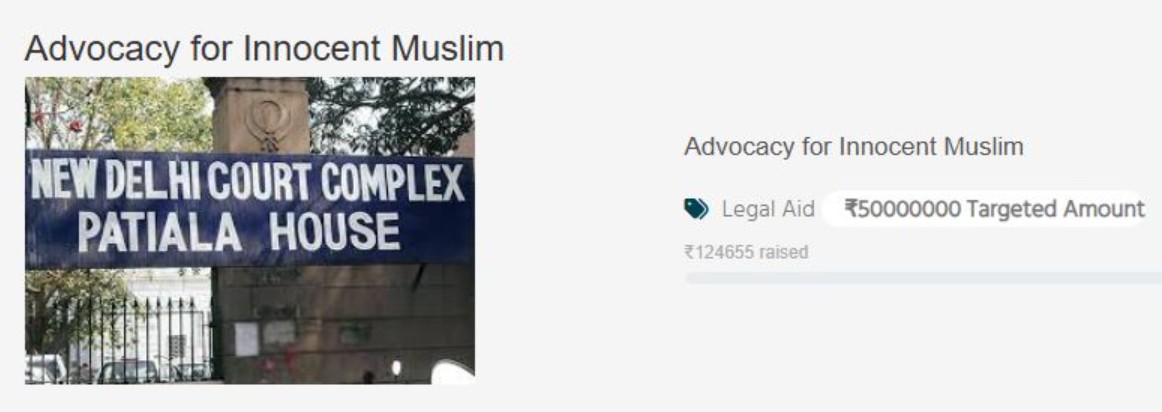
In India, it is striking to see how the Muslim community, considered a “minority”, has access to what may be one of the most well-structured and far-reaching legal aid ecosystems in the world. Whether it’s a person accused in a high-profile bomb blast case or someone entangled in a minor legal issue, legal assistance is readily available completely free of cost through a deeply rooted and organized support system.

Let us take a look at a few examples.

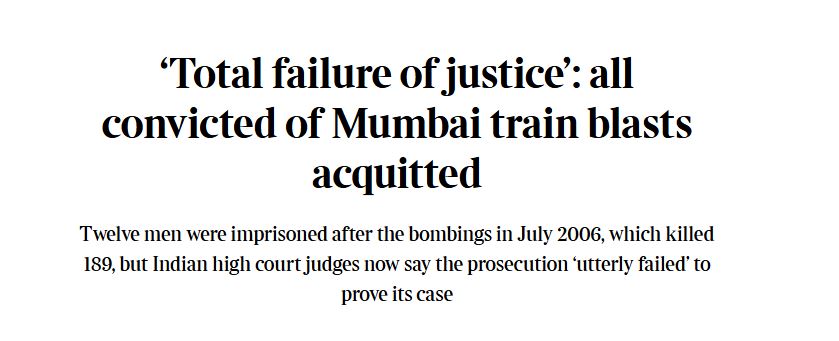
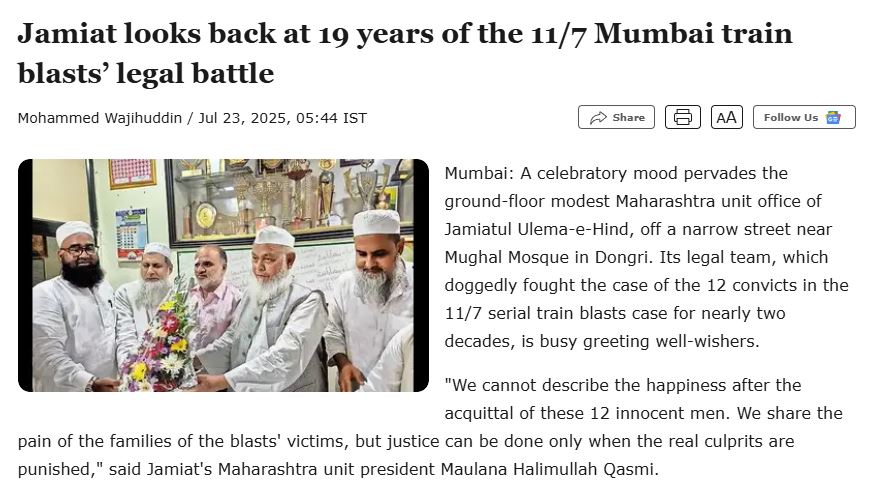
21 July 2025: The Bombay High Court acquitted all 12 individuals convicted in the 2006 Mumbai train bombings after they spent nearly 20 years behind bars. The court sharply criticized the reliance on questionable witnesses and allegedly fabricated evidence.

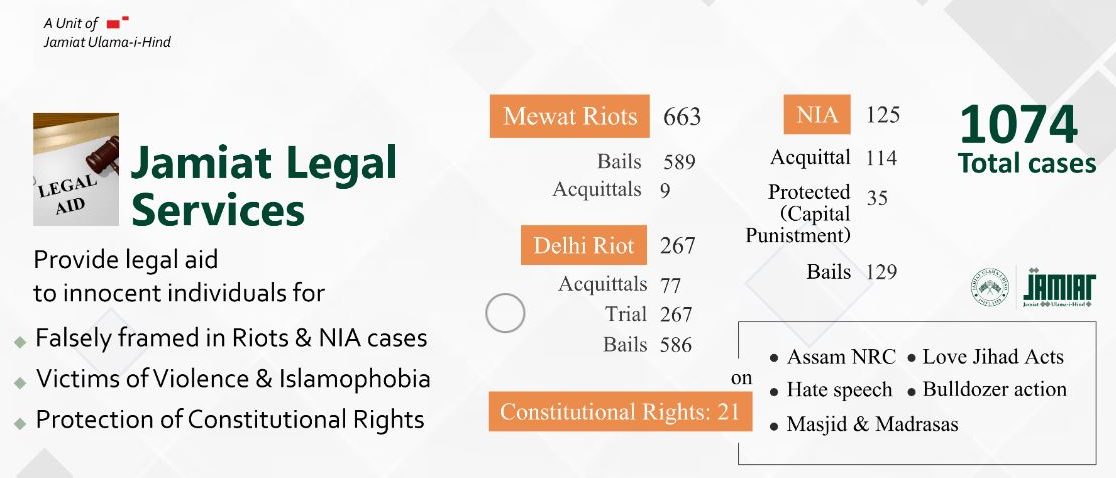
In both landmark cases, Jamiat Ulama-e-Hind (JUH) played a key legal role. Following the Jaipur acquittals, JUH publicly praised the judgment, while its Maharashtra unit reflected on a decades-long legal struggle in the Mumbai case. The organization reported that since the 2000s, it has helped secure over 306 acquittals and 227 bail orders for Muslim accused.

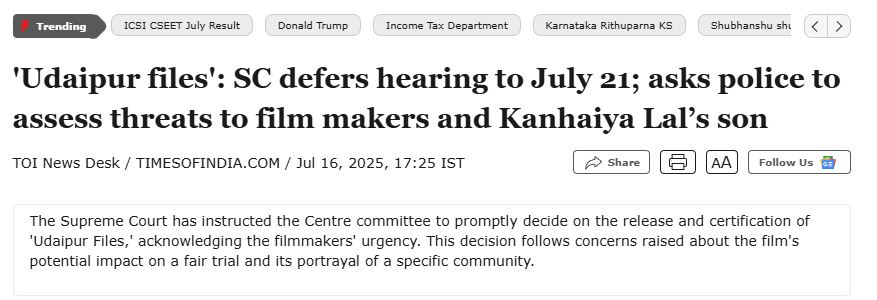
10 July 2025: The Delhi High Court, in a case influenced by JUH president Maulana Arshad Madani, placed an interim stay on the release of the film Udaipur Files: Kanhaiya Lal Tailor Murder, citing concerns that it could disturb communal harmony. The move came just one day before the film’s release.

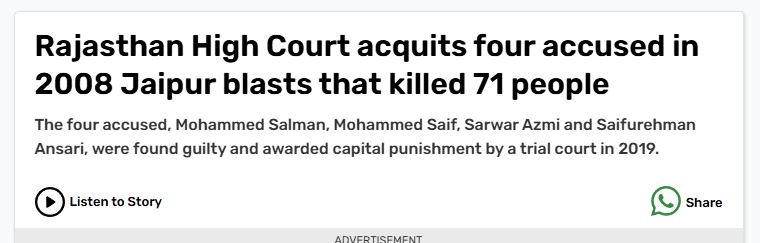
March 2023: Similarly, the Rajasthan High Court overturned the convictions of four individuals who had been on death row for the 2008 Jaipur serial bombings a tragedy that claimed 71 lives and injured 180. The court’s decision sparked widespread debate over flawed investigations and the broader implications of justice delayed.

Inside the Muslim Legal Aid Network: Key Organizations

1. Jamiat Ulama-e-Hind (JUH)

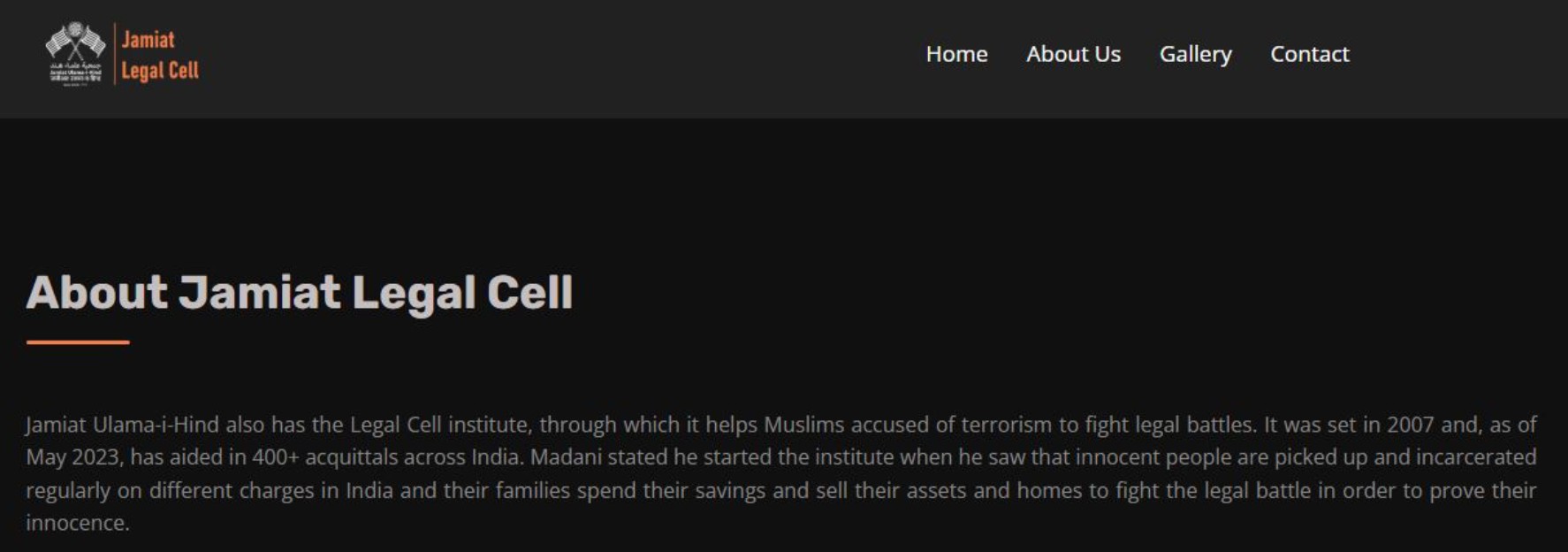
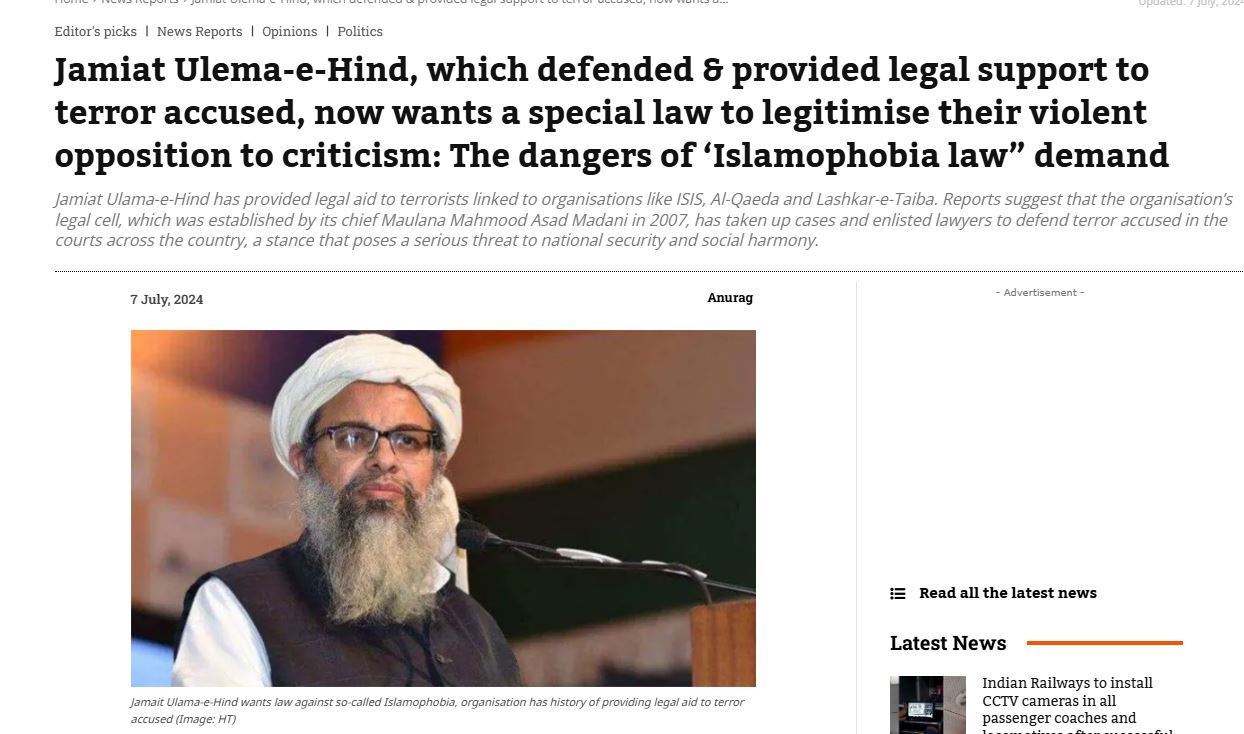
Founded in 1919 and split into factions in 2008, the main wing is currently led by Arshad Madani. JUH’s legal wing, launched in 2007, is dedicated to defending Muslims in terrorism-related cases. By 2019, it had helped achieve 192 acquittals nationwide.

Notable Figures:

  • Gulzar Azmi: Played a pivotal role in organizing legal teams across Indian states and guided over 500 accused, including 75 who were facing the death penalty.
  • Shahid Azmi: A prominent defense lawyer known for securing high-profile acquittals in cases like the 2002 Ghatkopar blasts, the 7/11 Mumbai train blasts, and the Malegaon case. He worked closely with JUH until his assassination in 2010.

Strengths:

  • Nationwide network of legal teams
  • Active legal cells in nearly every Indian state
  • Annual scholarships for 25–30 law students
  • Training programs for aspiring Muslim lawyers to serve the community post-graduation

Funding Sources:

  • Halal certification fees: A major revenue stream, as JUH issues certification to manufacturers and uses the proceeds to fund legal aid

  • Zakat (charity): Community-donated religious funds are also a core support channel

2. Jamaat-e-Islami Hind (JIH)

While JUH tackles large and complex terror cases, JIH manages grassroots legal issues ranging from FIRs to public interest litigations. It’s often described as having a presence in almost every municipal ward in India.

For any Muslim individual facing legal trouble, local JIH offices offer immediate, cost-free legal support upon submission of a simple form.

Funding:

  • Member contributions
  • Zakat donations
  • Other localized community-driven sources

3. Al Abbas Charitable Foundation

Headed by advocate Abid Abbas Sayyed, this organization focuses on legal aid in areas like communal violence, interfaith marriage cases, and public rights. In addition to legal assistance, it also works in education and healthcare. Funding comes from a mix of donations, zakat, and charitable grants.

Delhi Riots Context:

In the aftermath of the 2020 Delhi riots, most of the Muslim accused managed to secure bail, whereas many Hindu accused remain incarcerated. Though courts faced backlash, these outcomes were largely shaped by strong legal advocacy and well-prepared defense a testament to the efficacy of the Muslim legal aid structure.

While critics argue that this system tilts the legal balance and manipulates high-profile cases, supporters view it as an essential tool to protect innocent Muslims from wrongful prosecution. What remains clear is that India’s Muslim legal aid ecosystem has become an increasingly powerful and influential force both in courtrooms and within the broader community. Its reach, resources, and legal victories continue to expand.

(This article is based on an X Thread By The Chronology

Subscribe to our channels on TelegramWhatsApp, and Instagram and get the best stories of the day delivered to you personally.

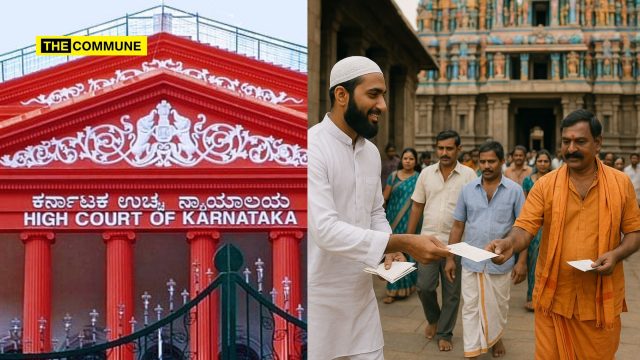
Pamphlet Distribution Not Proof Of Conversion: Karnataka High Court Quashes FIR Against 3 Muslim Men Booked Under Anti-Conversion Law

karnataka high court pamphlet distribution muslim

The Karnataka High Court has quashed criminal proceedings against three Muslim men who were accused of distributing Islamic pamphlets and making derogatory remarks near a Hindu temple, ruling that preaching religious beliefs does not in itself constitute an offence under the anti-conversion law unless accompanied by an actual or attempted conversion.

The FIR, filed in May 2025 at Jamkhandi Rural Police Station, named Mustafa Murtujasab Momin, Alisab Shabbir Alagundi, and Suleman Riyaz Galagali. The complainant, Ramesh Mallappa Navi, a local barber, alleged that the three men were distributing pamphlets promoting Islam near the Ramatheerth Temple in Jamkhandi. He further claimed they made statements such as, “If you continue to stay as Hindu, you will not be able to find God. There is no God except Allah, and all other gods are Kafir.”

According to the FIR, the men also declared their mission was to “make the whole world turn towards Islam” and threatened that “we will not spare your lives” if anyone obstructed them. It was also alleged they offered material inducements, including vehicles and jobs in Dubai, to encourage conversion.

The men were booked under sections of the Bharatiya Nyaya Sanhita (BNS) for inciting enmity and criminal intimidation, as well as Section 5 of the Karnataka Protection of Right to Freedom of Religion Act, 2022, which penalizes unlawful religious conversions through force, fraud, or allurement.

However, Justice Venkatesh Naik T, delivering the order on 17 July 2025, ruled that the complaint was legally untenable because it was filed by a third party who lacked legal standing under the statute. Under Section 4 of the Act, only the converted person, their immediate family, or close relatives are authorized to file such a complaint.

“The complaint was lodged by a third party, who does not fall within the category of persons enumerated under Section 4 of the Act. Therefore, registration of FIR by [such a] respondent, who lacks locus-standi, is legally invalid,” the Court observed.

The judge also held that even assuming the allegations were true, the legal threshold for criminal prosecution was not met. He stated, “Even if the allegations in the FIR are accepted at its face value, it fails to satisfy the essential elements of an offence under Section 3 of the Act. There is no allegation that the petitioners converted or attempted to convert any person to another religion.”

The Court emphasized that while the anti-conversion law prohibits conversion through force, fraud, or allurement, it does not criminalize the mere expression or dissemination of religious beliefs, absent a credible attempt to convert someone.

“The absence of these essential elements renders the allegations insufficient to constitute an offence under the Act. Consequently, the registration of the FIR, culminating in the filing of the charge sheet, is vitiated,” the order concluded.

The petitioners were represented by Advocates Iftekhar Shahpuri and Anwarali D. Nadaf, while the State was represented by Advocate Abhishek Malipatil.

This ruling reinforces the legal distinction between proselytization and forced conversion and underscores the requirement of legal standing and substantive evidence before invoking anti-conversion laws.

(With inputs from Law Chakra)

Subscribe to our channels on Telegram, WhatsApp, and Instagram and get the best stories of the day delivered to you personally.

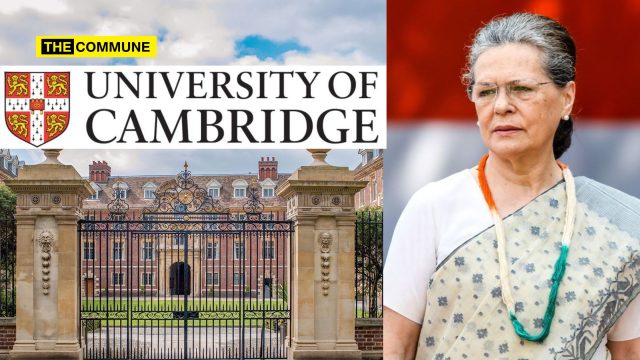
Longest Typing Mistake Repeated: Rajya Sabha Who’s Who Shows Congress Supremo Sonia Gandhi Claiming To Have Studied In Cambridge University, Subramanian Swamy Calls Her A Liar

sonia gandhi cambridge

Veteran BJP leader Subramanian Swamy has once again launched a scathing attack on Congress’s Supremo and MP Sonia Gandhi, accusing her of falsely claiming to have studied at Cambridge University. He has urged the BJP to initiate a motion seeking the cancellation of her Rajya Sabha membership.

In a post,dated 23 July 2025, Swamy wrote, “Ms. Sonia Gandhi has again in the Rajya Sabha Who’s Who claimed she studied in Cambridge University. Liar. BJP should move a motion to cancel her Rajya Sabha seat.”

This controversy marks another chapter in the long-standing conflict between Swamy and Sonia Gandhi. The issue initially came to the forefront in August 2020, when Swamy filed a formal complaint with Lok Sabha Speaker Om Birla, accusing the Congress leader of reintroducing a previously debunked claim of having attended Cambridge University in her profile for the 17th Lok Sabha.

In his letter, Swamy stated, “I am enclosing with this letter a copy of Smt. Sonia Gandhi’s Bio profile for the 17th Lok Sabha “Who’s Who” publication of the Lok Sabha Secretariat. Therein once again, Ms. Sonia Gandhi has falsely stated that in 1965 she had obtained a certificate in English Language from the University of Cambridge” Swamy reminded that he had originally raised this matter in 2000, when Sonia Gandhi was first found to have listed the alleged Cambridge credential. At that time, Congress leaders dismissed the error as a typographical oversight and requested leniency.

Swamy recalled that he had taken the issue to the Supreme Court, where the bench led by then Chief Justice Balakrishnan advised him to show restraint since Sonia Gandhi had agreed not to repeat the false claim. “On that assurance, I agreed to withdraw the case without seeking punitive action,” Swamy noted.

However, Swamy pointed out that Sonia’s profiles for the 15th and 16th Lok Sabha did not include the Cambridge reference, suggesting that the recent inclusion was a deliberate reintroduction of the misleading claim. He emphasized his willingness to present evidence before Parliament’s Ethics Committee.

On 2 August 2020, Swamy tweeted, “Some habits die hard !TDK again bluffs on her educational qualification in the Lok Sabha Who’s Who !!! I have written to the Lok Sabha Speaker to refer the matter to the Ethics Committee !

The core of Swamy’s argument is that Sonia Gandhi never attended Cambridge University but completed a short English language course at a local institution in Cambridge known as the Lennox Cook School, which ceased operations in 1967. Swamy asserts that this course was mistakenly or deliberately misrepresented as a Cambridge University qualification.

Previously, Swamy’s petitions were dismissed by the Allahabad High Court on technical grounds, citing that he was not a constituent from Sonia Gandhi’s electoral region. However, the Supreme Court later ruled that he had the standing to pursue the case, although it encouraged a resolution in light of her supposed correction. At the time, Congress leader Pranab Mukherjee defended the claim as a simple typographical error which Swamy sarcastically dubbed “the world’s largest typing error.”

(With inputs from Pgurus)

Subscribe to our channels on TelegramWhatsApp, and Instagram and get the best stories of the day delivered to you personally.

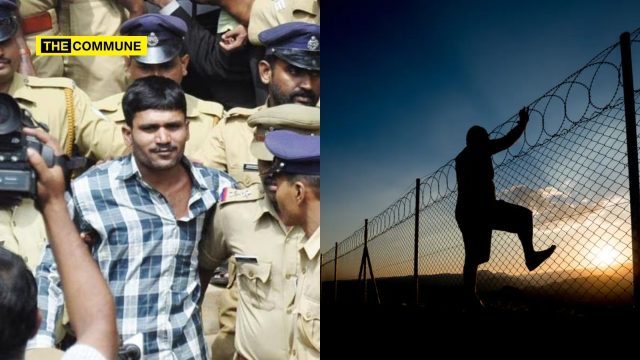
Rape-Murder Convict Govindachamy Escapes From Kerala’s Kannur Central Jail

In a major security lapse, one of Kerala’s most dreaded criminals, Govindachamy, escaped from the high-security Kannur prison around 1.15 a.m. on Friday. This major lapse came to the notice of the jail authorities around 5 a.m. and was reported to the local Kannur police after two hours. Reports have said that at the time of the jailbreak, the power was switched off. Govindachamy was sentenced to life imprisonment for the rape and murder of a 23-year-old woman.

As per reports, when dawn surfaced, a long rope made of cloth was seen hanging from the jail compound wall, which is more than 25 feet tall, and people were baffled about how a one-handed person could scale the wall, which has an electric fence too. In Kannur jail, there is a special high-security prison comprising 68 cells, and it was from one of these cells that the criminal managed to escape. All high-ranking police officials in Kannur are shocked by the incident, and State Police Chief Revada Chandrasekhar is also overseeing the present operation to ensure that the criminal is caught again at the earliest.

Kerala High Court in December 2013 had upheld a fast-track court’s decision that Govindachamy had robbed and pushed 23-year-old Soumya, a native of Shoranur, off the Ernakulam-Shoranur passenger train on February 1, 2011. She was raped and brutally thrashed. Soumya was found by the Railway police near a track. She succumbed to her injuries at the Government Medical College in Thrissur on February 6, 2011.

At that time, Govindachamy had already been convicted in eight cases in his native state, Tamil Nadu. The fast-track court in 2012 awarded a death sentence to the accused, considering him a habitual offender and holding that the brutal rape was one of the reasons for the victim’s death and that the nature of the crime was so savage that it shocked society.

The HC had upheld the death sentence two years later, against which he moved the Supreme Court. The Supreme Court in 2016 commuted the death sentence of Govindachamy to a seven-year jail term after dropping the murder charge against him, but the life sentence was upheld. Soumya’s mother expressed huge disappointment at the jail escape. “How could this happen at a high-security jail with all CCTV protocols. This means he has got help from some quarters, and this is depressing,” she said.

Ashraf, the police man who captured the dreaded criminal in 2011, said he always feared that this habitual offender would jump out of jail. Former state BJP president K. Surendran launched a scathing attack on the government and the police. He said he criminal did not jump out of jail, “but the escape was facilitated”. “There is a big conspiracy, as the one-handed Govindachamy has been allowed to escape. The Kannur jail is governed by a jail committee, including top CPI(M) leaders like P.Jayarajan,” said Surendran.

–IANS

Subscribe to our channels on TelegramWhatsApp, and Instagram and get the best stories of the day delivered to you personally

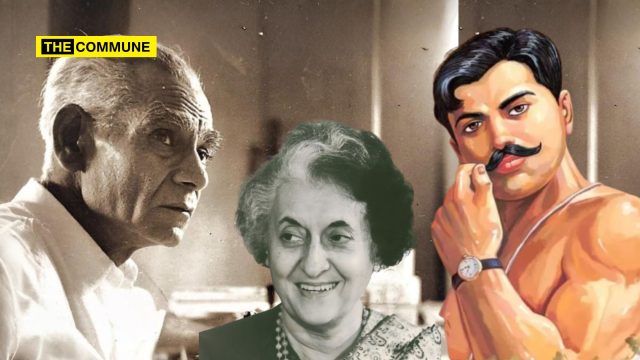
Indira Gandhi Honored Man Allegedly Involved In Freedom Fighter Chandra Shekhar Azad’s Murder

chandra shekhar azad indira gandhi

Whenever credit is given to figures with a controversial or anti-national past, it is often the Congress party that leads the applause. This was once again evident during the remembrance of revolutionary icon Chandra Shekhar Azad on his birth anniversary on 23 July, where another name surfaced Yashpal Singh, a former revolutionary who later turned into a prominent writer and political commentator. He was honored with the Padma Bhushan and Sahitya Akademi Award during Indira Gandhi’s tenure, despite serious allegations surrounding his role in Azad’s demise.

The Last Stand Of Chandra Shekhar Azad

On 27 February 1931, Azad, commander-in-chief of the Hindustan Socialist Republican Association (HSRA), died in a fierce gunfight with British officers at Alfred Park in Allahabad (now Prayagraj’s Azad Park). True to his vow, Azad chose death over capture.

Azad’s inner circle noted in their writings that he was intensely secretive and cautious, revealing his whereabouts only to the most trusted. After Bhagat Singh’s arrest, he continued to evade detection, following a rigid rulebook. This often put him at odds with close aides like Vishwanath Vaishampayan, who once challenged Azad over his suspicions but was reminded that emotional thinking could cost lives in a struggle like theirs.

Suspicions Of Betrayal

What exactly led to Azad’s final encounter with the British? Was it merely coincidence, or was there betrayal from within?

Three key figures Vaishampayan, Sukhdev Raj, and Yashpal left behind conflicting accounts of the day. All three agreed that Veerbhadra Tiwari, a fellow HSRA member, was likely the informant who led police to Azad. However, Vaishampayan and Sukhdev Raj went a step further, casting suspicion on Yashpal due to his close association with Veerbhadra.

They recalled how both Yashpal and Veerbhadra had been disciplined by Azad for misusing revolutionary funds and violating party norms. Meanwhile, Veerbhadra, unlike other revolutionaries, roamed freely without fear of arrest raising strong suspicions of him being a police mole.

The Events Of 27 February 1931

On that fateful day, Sukhdev Raj met Azad at the park shortly after Yashpal and Surendra Pandey had left. Azad asked Sukhdev whether he had ever been to Burma (Myanmar) hinting at an escape route to Soviet Russia. However, Azad remained committed to continuing the fight from within India.

During their conversation, Azad spotted Veerbhadra Tiwari and grew suspicious. Moments later, two British officers, including Superintendent John Nott-Bower, approached. A shootout ensued. Nott-Bower wounded Azad in the thigh, while Azad returned fire, injuring the officer’s wrist. Azad urged Sukhdev Raj to flee and continued fighting until his ammunition ran out.

Conflicting Testimonies

Yashpal admitted he and Pandey accompanied Azad to the park but said they were sent away to the market supposedly to buy sweaters for a trip abroad. When gunshots rang out, Yashpal claimed he wanted to return, but Pandey held him back.

Vaishampayan and Sukhdev Raj outright rejected Yashpal’s version, accusing him of complicity in Azad’s betrayal. In retaliation, Yashpal alleged that Sukhdev Raj later surrendered under pressure in Lahore, leading to another comrade’s death.

Was It Just A Coincidence?

According to statements by British officers like Nott-Bower, CID DSP Vishveshwar Singh, and IG S.T. Hollins, the encounter occurred because Singh thought he had spotted Azad in the park. They reportedly confirmed the sighting and moved in, leading to the gunfight.

While official British sources denied any prior intelligence, skepticism remains. Given Azad’s legendary caution, it’s hard to believe he would have been at Alfred Park without reason or without vetting the location.

A report in Leader newspaper added to the mystery. The post-mortem showed two bullet wounds in Azad’s leg, one in the lung, and a fatal one in the head. British accounts claimed Azad shot himself with his final bullet. However, some medical professionals disputed that, questioning whether the headshot was truly self-inflicted.

Alleged British Intelligence Letter Identifies Yashpal As A Spy Within Revolutionary Circles

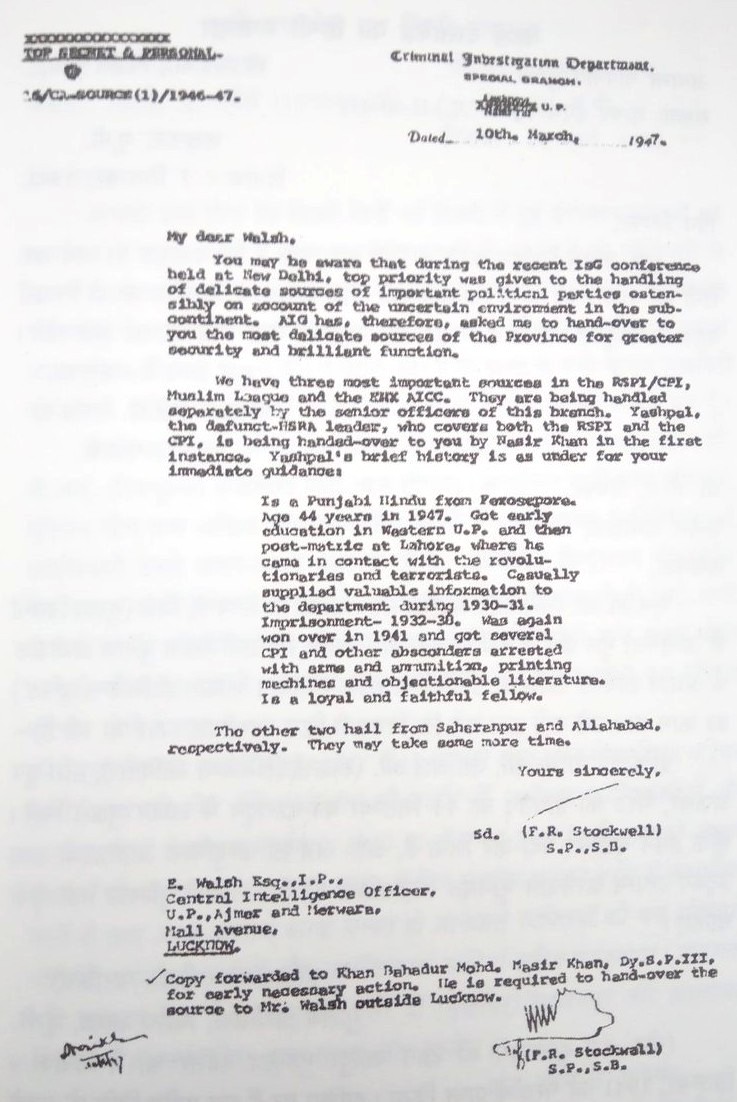
Amid the lingering questions surrounding the betrayal of revolutionary leader Chandra Shekhar Azad, a controversial letter allegedly from British Intelligence adds another layer of suspicion. The letter, claimed to be both “Top Secret and Personal,” was reportedly written by F.R. Stockwell, Superintendent of Police, Special Branch, U.P., and addressed to E. Walsh, Central Intelligence Officer of the U.P. CID and Berwar States.

Dated 10 March 1947, the letter refers to a key informer who had infiltrated both the RSPI (Revolutionary Socialist Party of India) and CPI (Communist Party of India). It suggests that this informant identified as “Yashpal” was an ex-HSRA (Hindustan Socialist Republican Association) member and is widely believed to be Yashpal. Stockwell describes him as a “loyal and faithful fellow” who had previously helped British authorities during the revolutionary movements of the 1930s and 1940s.

Here is a excerpt of the letter’s content, “You may be aware that during the recent ISG conference held at New Delhi, top priority was given to the handling of delicate sources of different political parties, ostensibly on account of the uncertain environment in the sub-continent. AIG has, therefore, asked me to hand-over to you the most delicate source of the Province for greater security and brilliant function. We have three most important sources in the RSPI/CPI, Muslim League and the RNX KICC. They are being handled separately by the senior officers of the Branch. Yashpal, the defunct-HSRA leader, who covers both the RSPI and the CPI, is being handed-over to you by Nazir Khan in the first instance. Yashpal’s brief history is as under for your immediate guidance:- Is a Punjabi Hindu from Ferozepore. Age 44 years in 1947. Got early education in Western U.P. and then post-matric at Lahore, where he came in contact with the revolutionaries and terroristic. Usually supplied valuable information to the department during 1930-31. Imprisonment 1932-33. Was again in year in 1941 and got several CPI and other absconders arrested with arms and ammunition, printing machines and objectionable literature. Is a loyal and faithful fellow. The other two hail from Saharanpur and Allahabad, respectively. They may take some more time.”
The Nehru Theory: An Unfounded Claim

A fringe theory that occasionally circulates on social media suggests Jawaharlal Nehru betrayed Azad to the British. This narrative claims that Azad met Nehru to discuss Bhagat Singh’s rescue and inadvertently revealed his location.

This claim lacks any credibility:

  1. No revolutionary account confirms a meeting with Nehru on 27 February.
  2. Nehru was in Delhi, engaged in discussions over the Gandhi-Irwin Pact, and heading to Lahore.
  3. Azad was known for his secrecy even his closest aides didn’t know his movements in full. To suggest he would share plans with a non-member of HSRA is implausible.

While Nehru did mention a prior meeting with Azad in his autobiography during which he reportedly dismissed the revolutionaries as “fascists” he later changed his tone. According to Yashpal, Nehru was convinced and even contributed Rs 1,500 through Shivmurti Singh to help the group escape abroad. However, this claim is disputed by Manmath Nath Gupt, though Sukhdev Raj confirmed the financial support, clarifying that the money was indeed given to Azad.

Azad’s Funeral And Legacy

Fearing public unrest, the British authorities secretly cremated Azad’s body at Rasulabad Ghat (now Chandrashekhar Azad Ghat). But the news spread quickly. Thousands including Kamala Nehru and Purushottam Das Tandon came to collect his ashes.

A large procession carried his remains through the streets as people observed a general strike. During the event, Pratibha Sanyal, wife of HSRA founder Sachindra Nath Sanyal, declared she would carry some of Azad’s ashes with her as many had done with Khudiram Bose. Inspired, the crowd scrambled to do the same, leaving little for immersion in the Ganga at Varanasi.

In the aftermath, people began to venerate the tree under which Azad fought his final battle. Alarmed, the British had it chopped down overnight. After Independence, Baba Raghav Das, a Congress leader, planted a new tree in its place ensuring that Azad’s memory lived on.

(With inputs from Rediff)

Subscribe to our channels on TelegramWhatsApp, and Instagram and get the best stories of the day delivered to you personally.

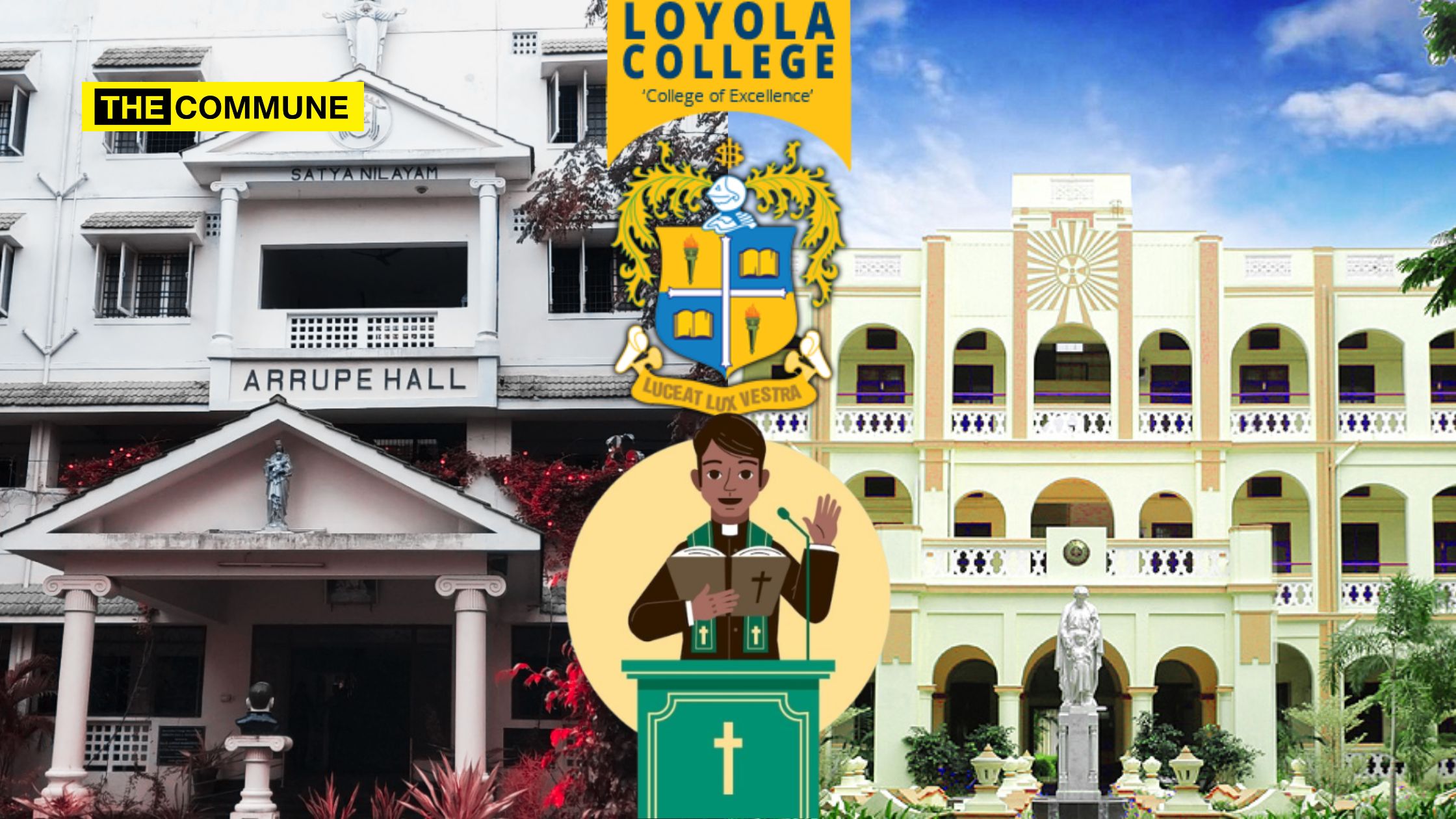
NHRC Issues Conditional Summons To Madras University Registrar And UGC Chairman Over Loyola College’s Religious Discrimination In MA Course And Running Illegal Priest Training Institute

In a significant move, the National Human Rights Commission (NHRC) has issued conditional summons to the Registrar of the University of Madras and the Chairman of the University Grants Commission (UGC), directing them to appear before the Commission on August 19, 2025, at 11:00 AM. This action comes in response to serious allegations of religious discrimination and academic irregularities linked to the M.A. Philosophy programme offered by Loyola College (Autonomous), Chennai, at its off-campus Jesuit institution, Satya Nilayam.

The case stems from a complaint filed by Legal Rights Protection Forum (LRPF). The complaint alleges that the M.A. Philosophy course is being illegally conducted at an unauthorised off-campus centre and discriminates against non-Christian students, thereby violating Articles 15(1) and 29(2) of the Indian Constitution. Furthermore, it claims that Loyola College has been issuing degrees under the false pretense of affiliation with the University of Madras, using its name and emblem to lend credibility to the programme.

Earlier this year, the University of Madras submitted an action-taken report stating that it had appointed an Inspection Commission to investigate the allegations. However, in proceedings dated June 6, 2025, the NHRC expressed dissatisfaction with the report, calling it vague and lacking in substance. The Commission questioned why a second inquiry committee was set up when an inspection had already been conducted and noted that critical findings from the first inspection were not disclosed.

Despite repeated reminders, both the University of Madras and the UGC have failed to provide comprehensive and satisfactory responses. This prompted the NHRC to invoke its powers under Section 13 of the Protection of Human Rights Act, 1993, leading to the issuance of conditional summons. The Commission has made it clear that failure to appear without lawful justification could result in legal action under the Civil Procedure Code, 1908, including the issuance of warrants. However, it has allowed that personal appearance may be avoided if detailed and satisfactory reports are submitted at least a week before the hearing date.

The allegations at the core of this case are serious: running an academic programme without proper affiliation, restricting admissions based on religion, and misusing the University of Madras’ name and logo. The complaint underscores concerns about religious exclusion, institutional fraud, and regulatory oversight in higher education. Documents submitted to the NHRC include copies of previous proceedings dated April 7, May 22, and June 6, as well as follow-up reminders from the complainant dated July 7 and July 21.

With the hearing scheduled for August 19, 2025, all eyes are now on how the UGC and the University of Madras respond. The outcome of this case could have far-reaching implications, not only for Loyola College but also for the governance and accountability of autonomous institutions operating under university affiliations. The Legal Rights Protection Forum has urged the NHRC to take stringent action to protect students’ rights and uphold academic integrity in the country.

Subscribe to our channels on TelegramWhatsApp, and Instagram and get the best stories of the day delivered to you personally.