Home Blog Page 218

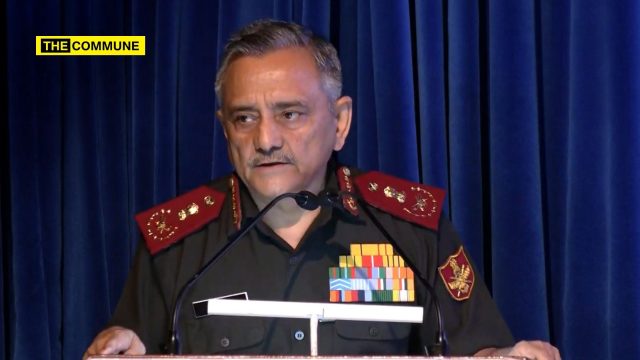
No Single Napoleon Or Manekshaw Will Suffice, We Need 100s Of Them: CDS Anil Chauhan On Evolving Warfare

Chief of Defence Staff (CDS) General Anil Chauhan on Friday emphasised that the nature of modern warfare is rapidly transforming, asserting that India’s military preparedness must remain at peak levels “24/7, 365 days,” especially against the backdrop of the continuing ‘Operation Sindoor’.

In his address at a strategic affairs conclave in the national capital, General Chauhan underlined the evolving contours of conflict, stating that the world is on the verge of a “third military revolution”.

“This new form of warfare merges kinetic and non-kinetic means, blending the characteristics of first- and second-generation warfare with emerging third-generation techniques,” he noted.

“It is a convergence of tactical, operational and strategic domains.” Referring to India’s counter-terror operations under ‘Operation Sindoor’, the CDS said that while traditional combat strength remains critical, future battlefields will require a different breed of soldiers — “information warriors, technology warriors, and scholar warriors”.

“In the wars of the future, you won’t just need one Napoleon or one Field Marshal Manekshaw. You’ll need hundreds of them — across disciplines,” General Chauhan said, calling for a democratisation of military genius and innovation.

“That genius should reside in all of us,” he added, encouraging the younger generation to embrace multidimensional warfare. The CDS’s remarks come at a time when India continues to battle a proxy war aided and abetted by Pakistan.

Operation Sindoor, a massive counter-offensive launched in response to the barbaric Pahalgam attack in which Pakistan-sponsored terrorists gunned down 26 innocent people, mostly tourists, “remains active”, the CDS noted. General Chauhan’s vision signals a decisive shift in India’s defence doctrine — one that looks beyond boots on the ground to minds on mission.

As India modernises its armed forces, the focus is now clearly on synergy between battlefield grit and digital intellect — a necessity in the age of hybrid warfare. The call for “hundreds of Napoleons and Manekshaws” is not just metaphorical — it reflects the scale and complexity of threats India faces and the kind of leadership and innovation required to counter them.

–IANS

Subscribe to our channels on TelegramWhatsApp, and Instagram and get the best stories of the day delivered to you personally.

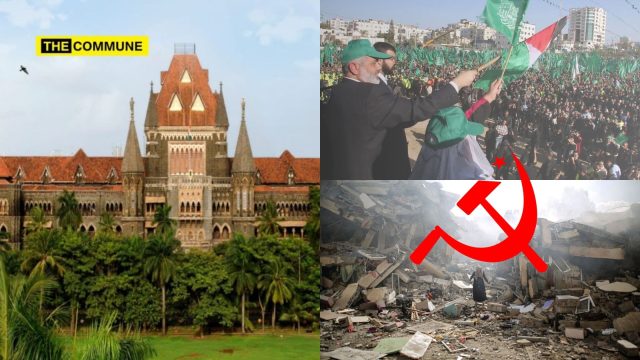
“Be Patriots. Look At Your Own Country, You Are Short-Sighted”: Bombay High Court Tells CPI-M To Protest Garbage, Not Gaza; Denies Permission For Protest

The Bombay High Court on 25 July 2025 dismissed a petition filed by the Communist Party of India (Marxist) (CPIM) challenging the Mumbai Police’s refusal to permit a protest at Azad Maidan against the ongoing conflict in Gaza, urging the party to turn its attention to domestic issues instead.

A division bench of Justices Ravindra Ghuge and Gautam Ankhad rejected the petition, remarking that instead of protesting about events “thousands of miles away,” the party should address problems closer to home.

“Our country has enough issues. We don’t want anything like this. I am sorry to say, you are all short-sighted. You are looking at issues in Gaza and Palestine. Look at your own country. Be patriots. This is not patriotism. People say they are patriots,” the Bench observed during the hearing.

The judges further suggested that the party focus on civic concerns such as waste management, pollution, sewerage, and flooding in Mumbai, noting that such issues directly impact the daily lives of citizens.

“You are an organisation registered in India. If you could take up issues like garbage dumping, pollution, sewerage, flooding. We are just giving examples. You are not protesting on those but on something happening thousands of miles outside the country,” the Bench stated.

The petition stemmed from a June 17 decision by Mumbai Police denying permission to the All India Solidarity Organisation to hold a protest against the alleged genocide in Gaza. The application was rejected on grounds that the demonstration could disrupt public order and run counter to India’s foreign policy stance.

Senior Advocate Mihir Desai, appearing for CPI(M), argued that the right to protest is constitutionally protected, even if the demonstration opposes the government’s foreign policy. He also cited previous Supreme Court rulings affirming citizens’ right to assemble peacefully at designated public venues.

However, the State, represented by the Additional Public Prosecutor, contended that the police had received objections and were concerned about potential law and order issues arising from the event.

In its ruling, the Court held that the CPI(M) lacked the locus standi to file the petition since it was not the original applicant before the Mumbai Police.

The Bench also issued a caution about the diplomatic repercussions of such demonstrations, particularly when they pertain to international conflicts.

“You don’t know the dust it could kick up… getting on to the Palestine side or the Israel side. Why do you want to do this? It’s obvious, going by the party you represent, that you don’t understand what this could do to the foreign affairs of the country,” the Court said.

The petition was accordingly dismissed.

(With inputs from Bar and Bench)

Subscribe to our channels on Telegram, WhatsApp, and Instagram and get the best stories of the day delivered to you personally.

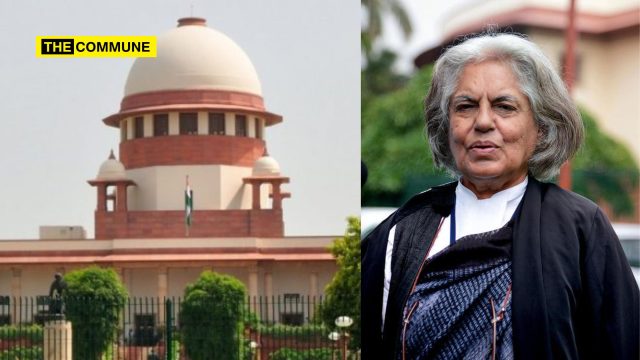
‘Sexual Autonomy Is Human Dignity’: Senior Advocate Indira Jaising Urges Supreme Court To Lower Age Of Consent To 16

indira jaising supreme court

Senior advocate and amicus curiae Indira Jaising has urged the Supreme Court to reconsider the statutory age of consent in India, advocating for it to be lowered from 18 to 16 years. Her recommendation came in the form of written submissions in the ongoing matter of Nipun Saxena v. Union of India, where she is assisting the court.

Jaising argued that the current legal provisions particularly the Protection of Children from Sexual Offences Act (POCSO), 2012, and Section 375 of the Indian Penal Code unfairly criminalize consensual sexual activity between teenagers aged 16 to 18. According to her, this blanket criminalization infringes on the constitutional rights of adolescents and fails to distinguish between consensual and coercive acts.

She emphasized that equating consensual adolescent relationships with abuse undermines the evolving autonomy and maturity of young people. Highlighting that the age of consent was fixed at 16 for over seven decades before being raised to 18 by the 2013 Criminal Law (Amendment) Act, Jaising pointed out that this change occurred without substantive debate and went against the recommendations of the Justice Verma Committee, which had advised retaining the age at 16.

Her submission also cited biological and social studies showing that adolescents today experience puberty earlier and are capable of forming informed romantic and sexual relationships. Referencing data from the National Family Health Survey, she noted that sexual activity among teens is not rare.

Jaising raised concern over a sharp rise 180% between 2017 and 2021 in POCSO cases involving teenagers between 16 and 18. She observed that a significant number of these complaints were filed by parents disapproving of their children’s inter-caste or interfaith relationships, often against the wishes of the girls themselves. Such legal actions, she warned, push adolescents into hiding, forced marriages, or unnecessary legal entanglements instead of promoting healthy, informed conversations.

To remedy this, Jaising proposed a “close-in-age” exception, which would prevent criminal charges under POCSO and IPC when both parties involved are between 16 and 18 and the relationship is consensual. She described the existing framework as arbitrary and detrimental to the best interests of children, urging the court to recognize that consensual sexual activity between adolescents in this age group should not be treated as abuse.

Drawing from international and Indian legal precedents, including the Gillick competence principle in the UK and India’s landmark Puttaswamy ruling on privacy, Jaising underscored that the right to personal autonomy includes the ability to make informed decisions about one’s own body an entitlement that should also apply to adolescents.

She also pointed to observations made by various High Courts, including Bombay, Madras, and Meghalaya, where judges have criticized the automatic prosecution of teenage boys under POCSO. These courts, she said, have called for distinguishing genuine abuse from mutually consensual acts.

In her conclusion, Jaising requested that the Supreme Court declare that consensual relationships between adolescents aged 16 to 18 should not fall under the scope of sexual abuse laws. She also advocated for reviewing Section 19 of POCSO, which mandates reporting such acts arguing that it deters young people from accessing medical assistance or counseling.

“Sexual autonomy is an essential part of human dignity,” she asserted, adding that denying adolescents the freedom to make informed choices about their bodies violates fundamental rights under Articles 14, 15, 19, and 21 of the Constitution.

(With inputs from The Hindu)

Subscribe to our channels on TelegramWhatsApp, and Instagram and get the best stories of the day delivered to you personally.

TN BJP Seeks Probe Into Mysterious Death Of Canadian Priest At Loyola College, Chennai

loyola college father chennai death bjp tn

Tamil Nadu BJP State Media Spokesperson A.N.S. Prasad has called for a thorough and transparent investigation into the mysterious death of a Canadian priest at Loyola College in Chennai.

In a press statement released on 24 July 2025, Prasad expressed shock over the passing of 55-year-old Father Omala, a Canadian national who had been serving at the church located within the Loyola College campus in Nungambakkam. “Reports indicate that the priest died under mysterious circumstances a few days ago,” Prasad stated, urging authorities to conduct a fair and detailed probe.

The priest’s family members, who traveled from Canada after receiving news of his death, have reportedly raised concerns and suspicions about the circumstances surrounding the incident. Following their arrival, a post-mortem examination was conducted at the Government Kilpauk Medical College and Hospital.

No official statement has yet been issued by Loyola College or the Chennai police. However, BJP leaders have demanded that the findings of the post-mortem and any subsequent investigation be made public to ensure accountability and transparency in the case.

(With inputs from DTNext)

Subscribe to our channels on Telegram, WhatsApp, and Instagram and get the best stories of the day delivered to you personally.
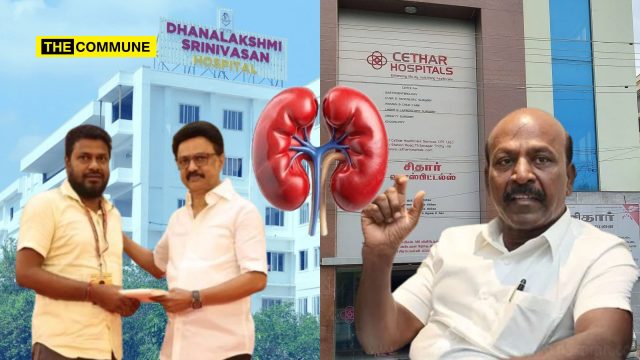
“Not Theft, It Is Malpractice, Problem Existed In 2019”, Says DMK Health Min Ma Subramanian On TN Kidney Trafficking Scandal; Blames AIADMK, Ignores Own Party’s Role

kidney trafficking ma subramanian dmk

DMK Health Minister Ma Subramanian has denied that the ongoing kidney trafficking controversy involves actual theft, instead referring to the issue as “irregularities.” In a recent press briefing, he shifted the blame onto the previous AIADMK government, claiming the alleged organ racket has been active since 2019 and was already noted in an earlier CSR. He assured that the Health Department is actively investigating the matter.

Speaking to media, Health Minister Ma Subramanian said, “He said they’re stealing human organs. To go deeper into this, we first need to understand the difference between theft and malpractice. Theft is when someone unknowingly takes a person, puts them to sleep, and removes their kidney or liver without their knowledge. This is malpractice, and it’s not new. It happened in Namakkal in 2019. In 2019, Edappadi Palaniswami himself was the Chief Minister. At that time, a police officer took action and even filed a CSR in 2019. The police officer in 2019 had instructed action to be taken, but they failed to do so. Following that, based on reports we received from newspapers and media, our departmental officials and joint directors investigated and found that wrongdoing had occurred. We gave them two weeks, led by the Project Director, to investigate and submit a report. Within the first week, a preliminary report confirmed that something wrong had happened, so we immediately suspended two hospitals. Once the full report comes in after these two weeks, we will take all necessary departmental and police actions against everyone involved.”

Responding to DMK Health Minister Ma Subramanian’s remarks, former Tamil Nadu BJP president K. Annamalai criticized him sharply through his official X handle, stating, “What happened to the power loom workers in Namakkal was ‘not kidney theft, but malpractice,’ says Tamil Nadu’s Health Minister, Mr. Ma Subramanian. Do you call it ‘malpractice’ to take advantage of someone’s poverty and steal their body parts? Aren’t you ashamed to say this? All right, then why hasn’t Dravida Anandan, the DMK functionary who acted as a middleman in this so-called malpractice, been arrested to this day? Is it enough to take some eyewash action against the hospital run by the DMK’s Manachanallur MLA, who is connected to this kidney theft? Is this the hallmark of your governance?”

His remarks come amid mounting outrage over a burgeoning kidney trafficking network allegedly linked to Dhanalakshmi Srinivasan Hospital a well-known private healthcare provider in Tamil Nadu. The hospital is under scrutiny for reportedly conducting illegal kidney transplants using organs trafficked from economically vulnerable women. The scandal has further intensified due to the hospital’s political affiliations, particularly with DMK MLA Kathiravan, the son of the hospital group’s founder, leading to accusations of political shielding and interference in regulatory oversight.

In response to these serious allegations, the Tamil Nadu Health Department has suspended kidney transplant permissions for both Dhanalakshmi Srinivasan Medical College and Hospital in Perambalur and Cethar Hospital in Trichy. The suspension was ordered by the Directorate of Medical and Rural Health Services (DMS) under Section 16(2) of the Transplantation of Human Organs Act, 1994, citing urgent public interest following a preliminary probe.

The probe was led by Dr. S. Vineeth, Project Director of the Tamil Nadu Health Systems Project, along with senior medical officers and police officials. The investigation was initiated after reports emerged about the illegal sale of kidneys from women in Pallipalayam and Kumarapalayam in Namakkal district. Field inspections and interviews were conducted in both the implicated hospitals and surrounding areas, culminating in a preliminary report that triggered the suspension orders.

The scandal, which has captured national attention, centers on the exploitation of more than 90 impoverished women, many of whom are daily wage workers. Investigators allege that these women were promised between ₹5 to ₹10 lakh in exchange for their kidneys. The traffickers allegedly used counterfeit Aadhaar cards and fabricated medical documents to facilitate the transplants. In some instances, the women were coerced under financial distress and social pressure into undergoing surgery.

The illicit operations were reportedly carried out at Dhanalakshmi Srinivasan Hospital in Perambalur and Cethar Hospital in Trichy. At the heart of the racket is M. Anandan, a 52-year-old DMK functionary from Anampalayam Perur, known locally as “Dravida Anandan.” He is accused of serving as a middleman, arranging deals, transporting donors, and forging official documents, seals, and even wearing fake government uniforms to aid the operation. Anandan is currently absconding. Authorities recovered forged documents, fake IDs, and official attire during a raid on his home.

Dr. Veeramani, the medical officer at the Pallipalayam Government Hospital, has lodged a formal complaint against Anandan, helping to expose the network.

This scandal has reignited concerns over political interference and selective enforcement. MLA Kathiravan, who represents Mannachanallur, is the son of the founder of the Dhanalakshmi Srinivasan Group, which owns the Perambalur hospital implicated in the case. The group has previously been accused of avoiding accountability in cases of medical negligence, particularly during the COVID-19 crisis. There are also claims that political influence was used to stall the long-promised government medical college in Perambalur, which would have competed with the private hospital chain. Furthermore, so-called free health camps held in Kathiravan’s constituency are now under suspicion, with some fearing they may have served as a front for identifying vulnerable kidney donors.

Despite facing multiple complaints over inadequate care, unsupervised medical interns, and even preventable deaths, the hospital has largely operated without serious regulatory consequences. This has led to widespread allegations of systemic impunity and a failure of oversight mechanisms.

Subscribe to our channels on TelegramWhatsApp, and Instagram and get the best stories of the day delivered to you personally.

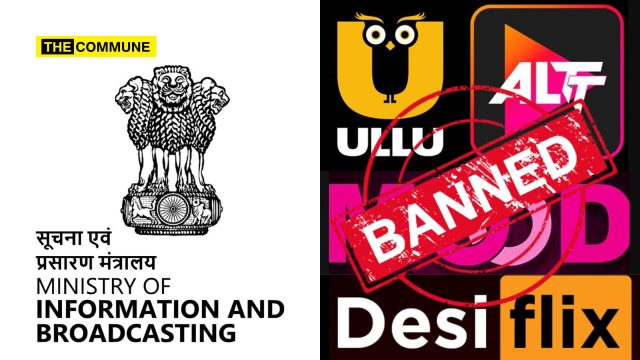
MIB Orders Nationwide Ban On 24 OTT Apps And Websites Including ALTT, ULLU, And Others Over Obscene Content

nationwide ban ott mib

In a firm effort to curb the circulation of illegal and obscene material on the internet, the Ministry of Information and Broadcasting (MIB) has issued a directive instructing all Internet Service Providers (ISPs) across India to block access to 24 specific websites and mobile applications. These platforms were found to be hosting content deemed to violate several Indian laws as well as established standards of digital conduct.

The MIB’s order, which aims to crack down on vulgar and sexually explicit material online, targets platforms that allegedly distribute obscene, adult, and soft pornographic content. The list of banned sites includes popular names like ALTT, ULLU, Big Shots App, Desiflix, Boomex, Navarasa Lite, and Gulab App, among others.

The government cited violations under multiple legal frameworks, including Sections 67 and 67A of the Information Technology Act, 2000, which criminalize the electronic transmission of obscene or sexually explicit material. Additionally, Section 294 of the Bharatiya Nyaya Sanhita, 2023 India’s updated criminal code replacing the Indian Penal Code was invoked for obscene acts in public.

The platforms were also found to be in breach of Section 4 of the Indecent Representation of Women (Prohibition) Act, 1986, which prohibits the portrayal of women in an indecent manner across various forms of media and advertising.

To ensure effective enforcement of the ban, the MIB has coordinated with the Department of Telecommunications (DoT). A formal request was sent to the Director (DS-II) of the DoT to facilitate cooperation with ISPs so that access to these websites and applications is thoroughly restricted within Indian territory.

This move reflects the government’s growing emphasis on digital responsibility and its commitment to protect users from harmful and inappropriate content online.

(With inputs from Free Press Journal)

Subscribe to our channels on TelegramWhatsApp, and Instagram and get the best stories of the day delivered to you personally.

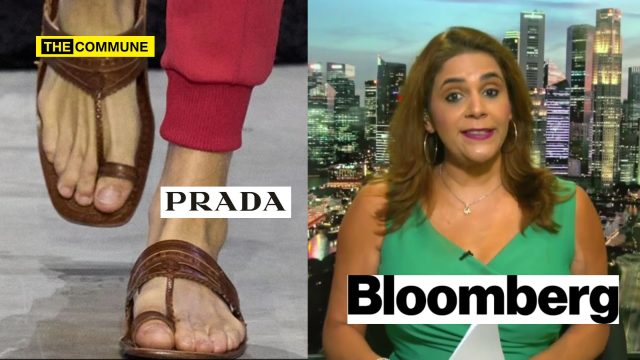
Bloomberg Justifies Prada Stealing Kolhapuri Chappals

prada kolhapuri chappals bloomberg karishma vaswani

In its latest attempt to repackage corporate malpractice as cultural “missteps”, Bloomberg has published a piece that dances around the plain truth: Prada plagiarized India’s indigenous Kolhapuri chappals and got called out for it.

To facilitate this, they make use of yet another brown sepoy – Karishma Vaswani.

Prada shamelessly copied India’s iconic Kolhapuri chappals, retailing for a mere ₹500 ($10), and rebranded them as “luxury leather footwear” at Milan Fashion Week, the outrage was instant and justified. Yet, instead of condemning this blatant plagiarism, Bloomberg’s article by Vaswani reads like a PR spin for Prada, downplaying theft while shifting blame to India’s so-called “digital ferocity.”

She wrote, “The country’s online community is renowned for its digital ferocity — it accused the brand of cultural appropriation, and the furor forced the fashion house into damage control mode. “

A Textbook Case of Plagiarism, But Bloomberg Won’t Call It That

Vaswani carefully avoids labeling Prada’s act as what it is – intellectual property theft. Instead, she writes, “The sandals, described as ‘leather footwear,’ displayed an open-toe braided pattern that was strikingly similar to Kolhapuri sandals.”

“Strikingly similar”? No. It’s a direct rip-off. Kolhapuri chappals have Geographical Indication (GI) status, meaning they are legally recognized as a unique Indian craft. Prada didn’t just “draw inspiration” – they stole a centuries-old design without credit or compensation.

The fact that the writer is Indian (not sure of her passport, at least she has Indian roots) herself makes the soft-pedaling all the more egregious. There is not a single use of the word “plagiarism” in the entire piece. No demand for Prada to pay royalties. No call to protect India’s heritage from high-fashion theft.

Deflecting Blame to “Indian Trolls” Instead of Holding Prada Accountable

Instead of holding Prada responsible, there’s a finger-wag at Indian netizens for being too aggressive. She writes, “The saga underscores how much power the South Asian giant’s digital tribe holds, where online outrage regularly influences public debate – especially when citizens perceive their heritage is under attack.”

This line reeks of condescension. Calling cultural anger “online outrage” and reducing those defending indigenous heritage to a “digital tribe” is how global media trivializes legitimate grievance.

Rather than focusing on Prada’s ethical failure, the article frames the backlash as an overreaction by India’s “nationalistic” online community. She writes, “The nationalistic sentiment whipped up by this controversy boosted sales of the traditional sandals.”

As if Indians are wrong for defending their heritage. The real issue? Prada thought they could get away with it. Only after massive backlash did they issue a half-hearted statement acknowledging “inspiration.” Too little, too late.

Vaswani refers to the outrage as “nationalistic sentiment,” as if calling out cultural appropriation is some kind of overreaction driven by jingoism rather than a demand for fairness and respect. In reality, what happened was simple: an international luxury brand ripped off a traditional Indian design with GI protection, failed to credit its origin, and got caught.

Let’s flip the script. What if an Indian brand launched a line of handbags eerily similar to the Hermès Birkin, priced them at $50, and marketed them in Europe without a word of credit? Would Bloomberg call it a cultural misunderstanding? Would the backlash be termed “digital French nationalism”? Or would it rightly be called out as design theft and IP violation?

Tokenism Over Justice: “Working With Artisans” Isn’t Enough

The author mentions Prada’s damage control move – “In a conciliatory move, it’s now working with traditional artisans to understand the history behind the famed Kolhapuris.”But where is the demand for royalties, fair compensation, or credit for the artisans? This isn’t a “collaboration, it’s exploitation dressed up as goodwill. If Prada truly respected the craft, they would pay the artisans for their designs, officially credit Kolhapuri makers (without Indians having to outrage) as well as invest in sustaining the craft.Instead, Vaswani paints this as a “lesson in cultural sensitivity” rather than corporate theft.

Distracting With Irrelevant Economic Data

In a bizarre pivot, the article suddenly shifts to India’s luxury market growth and middle-class spending cuts. She writes, “While the 100 million wealthiest people are splurging, 400 million of their middle-class counterparts have cut back.”

How does middle-class consumer restraint justify cultural theft? What does this have to do with Prada’s plagiarism?

It’s an intentional deflection, an attempt to frame Indians as either “too poor to matter” or “too aggressive online.”

The Hypocrisy of “Cultural Fluency”

The piece ends with a patronizing warning – “Cultural fluency is no longer a ‘nice to have’—it’s central to business survival.”

But this isn’t about “fluency” – it’s about basic ethics. Prada didn’t “misunderstand” Indian culture; they wantonly ignored it until forced to respond. They took India for granted and Indians are not going to take any more plagiarism lying down.

To read more on how the West plagiarised and appropriated Indian culture, check this.

The real story here isn’t India’s rising “troll army.” It’s how a global luxury brand got caught stealing a traditional design, and instead of serious media introspection, we’re being served PR damage control disguised as analysis.

Shame on Prada for the theft. But more importantly, shame on Bloomberg for justifying it.

Subscribe to our channels on Telegram, WhatsApp, and Instagram and get the best stories of the day delivered to you personally.
Madras High Court Applauds TN Govt For Adding ‘Economic Offenders’ Under TN Goondas Act

madras high court goondas act

The Madras High Court has commended the Tamil Nadu government for its decision to include “economic offenders” as a distinct category under the Tamil Nadu Goondas Act. The court observed that this significant policy change enhances the state’s capacity to address economic crimes more effectively.

In its remarks, the court stated, “This Court records its appreciation for the issuance of G.O.Ms.No.68, Home Department, dated 08.07.2025, by which the category of ‘economic offender’ has been added under the Tamil Nadu Act 14 of 1982 (Goondas Act). This amendment grants the authorities the power to detain repeat offenders involved in fraudulent financial schemes under preventive detention laws. This is a notable policy development that boosts the government’s ability to tackle crimes impacting public order and investor confidence, and it deserves particular recognition.”

Justice B. Pugalendhi also acknowledged the state’s efforts in introducing a Standard Operating Procedure (SOP) to ensure that cases under the Tamil Nadu Protection of Interests of Depositors (in Financial Establishments) Act, 1997 (TNPID Act) are handled within defined timelines. The SOP brings together multiple departments to coordinate effectively.

The court further appreciated the government’s constructive response to earlier judicial criticism. It noted that the administration had taken meaningful steps toward better enforcement of the TNPID Act and to protect the interests of depositors. The court remarked that such a proactive stance helps reinforce the rule of law and strengthens public trust in the legal and administrative system.

“The State has treated judicial observations not as an affront, but as a prompt for institutional reform,” the court said. “By issuing a detailed SOP, initiating digital tools, launching awareness campaigns, appointing zonal-level Competent Authorities, creating Valuation Committees, and designating a dedicated head for implementation, the government has clearly taken the court’s directives seriously. These efforts not only promote legal accountability but also help restore public confidence in the system’s integrity.”

The observations were made while the court was hearing a contempt petition filed by T. Prabhakar. The petition stemmed from an earlier court order directing a monitoring committee to facilitate the refund of depositors’ money, and had flagged several shortcomings in the implementation of the TNPID Act. The court had also issued multiple guidelines to improve the existing processes.

In its hearing, the court acknowledged that the state had responded positively to its earlier criticisms and had made tangible progress. It noted that the new SOP set clear timelines and outlined coordination mechanisms across departments such as the Economic Offences Wing, the Home Department, Revenue, and Registration Departments, among others. According to the court, this marks a shift from a previously disjointed approach to a more time-bound and accountable system.

The court also recognized the integration of digital communication and e-governance tools in the new framework. It noted that instructions could now be issued via email, and vital records from the Revenue and Registration Departments could be accessed online. The court observed that in the digital era, such steps would minimize delays while enhancing transparency, traceability, and overall accountability.

Additionally, the court noted the establishment of Valuation Committees, chaired by District Revenue Officers and comprising officials from the Registration Department, Public Works Department, and Regional Transport Offices. These committees are tasked with determining the value of seized assets before auction, in line with sale orders issued by the TNPID courts. The court expressed that this would help streamline the asset valuation process, reduce disputes, and expedite auctions.

However, the court also pointed out that the SOP did not define a clear outer timeline and instead used the term “expeditiously.” To address this, the court fixed a maximum limit of 12 days for issuing the necessary government orders, clarifying that this timeline does not override government discretion and that final determinations would still rest with the Special Court handling the matter.

(With inputs from Live Law)

Subscribe to our channels on TelegramWhatsApp, and Instagram and get the best stories of the day delivered to you personally.

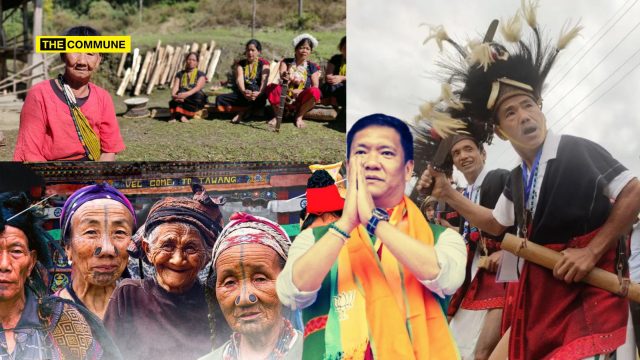
Arunachal Pradesh BJP Govt Steps Up Efforts To Preserve Indigenous Faiths Like Donyi Polo, Rangfraism: 6 Gurukuls, 3,000+ Priests Supported

pema khandu arunachal pradesh indigenous tribes faiths practices bjp

Arunachal Pradesh Chief Minister Pema Khandu has reaffirmed his government’s firm commitment to preserving and promoting the indigenous faiths and traditions of the state’s tribal communities, calling them the “spiritual and cultural soul” of the people.

In a message shared on his official X account, Khandu underscored the distinct nature of indigenous belief systems, stating, “They don’t come from books, but from land, memory, and lived tradition. They are not exported, they are rooted. They hold the soul of our people, our forests, mountains, rivers, and ancestors.”

Khandu emphasized that protecting these traditions is not just a cultural task but essential to maintaining the identity of the people of Arunachal. “This isn’t just about culture. It’s about who we are. And it’s about making sure we don’t forget,” he wrote.

As part of this ongoing effort, the state government has launched several initiatives across Arunachal Pradesh:

Six indigenous gurukuls have been established for the Adi, Galo, Nyishi, and Tangsa tribes to promote traditional knowledge systems through community-led institutions.

Over 3,000 registered indigenous priests are now receiving honorariums from the state for their vital role in performing rituals, preserving oral traditions, and guiding spiritual practices.

Fifty dedicated indigenous prayer centres have been set up across the state to provide spiritual spaces for community members.

Tribal cultural centres are being developed in every district to serve as hubs for cultural training, documentation, and awareness generation.

“These efforts reflect the government’s resolve to strengthen the ancestral wisdom of Arunachal’s many tribes and to ensure their traditions remain vibrant for future generations,” Khandu added in his social media post.

He also stated, “That’s why we are investing in preserving and promoting the traditional values and ethos of our indigenous communities.”

The Bharatiya Janata Party (BJP)-led government in Arunachal has been actively supporting indigenous faiths such as Donyi Polo and Rangfraism. The state is among the few in India where priests from local traditions are paid regular honorariums, and prayer centres are being institutionalized as part of state policy.

(With inputs from The Sentinel)

Subscribe to our channels on Telegram, WhatsApp, and Instagram and get the best stories of the day delivered to you personally.

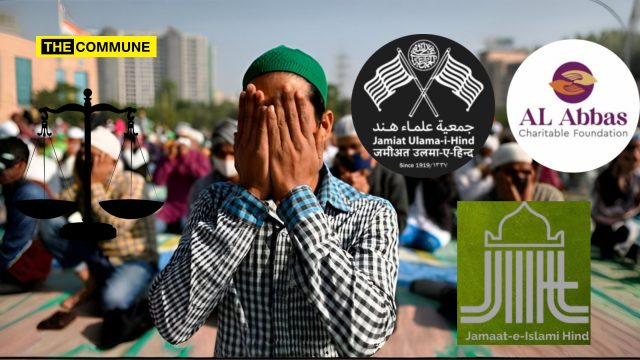
Minority Safeguard Or Legal Jihad? Inside India’s Controversial Muslim Legal Aid Network

muslim legal aid legal jihad

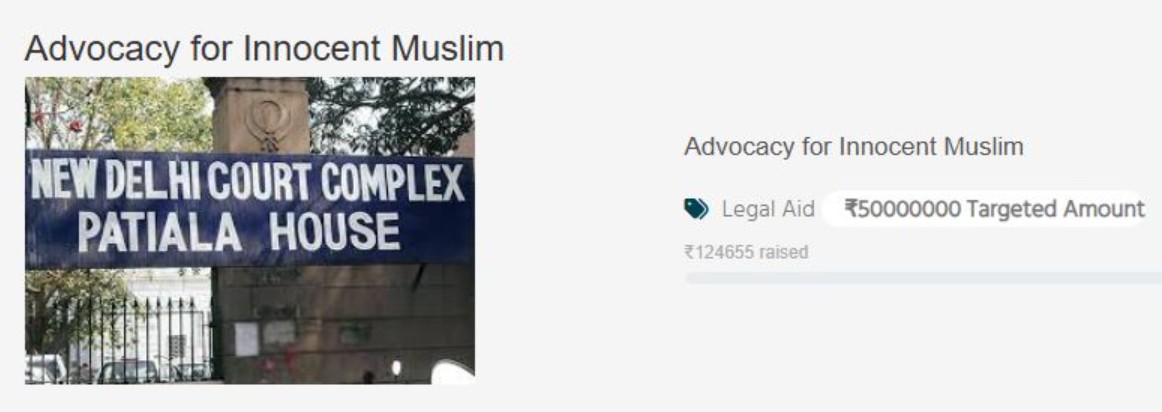
In India, it is striking to see how the Muslim community, considered a “minority”, has access to what may be one of the most well-structured and far-reaching legal aid ecosystems in the world. Whether it’s a person accused in a high-profile bomb blast case or someone entangled in a minor legal issue, legal assistance is readily available completely free of cost through a deeply rooted and organized support system.

Let us take a look at a few examples.

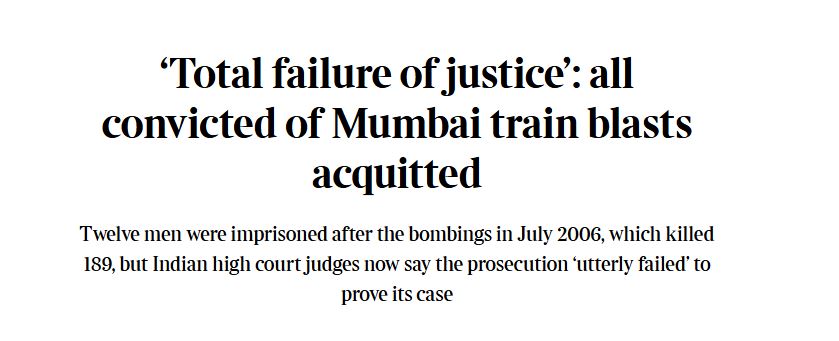
21 July 2025: The Bombay High Court acquitted all 12 individuals convicted in the 2006 Mumbai train bombings after they spent nearly 20 years behind bars. The court sharply criticized the reliance on questionable witnesses and allegedly fabricated evidence.

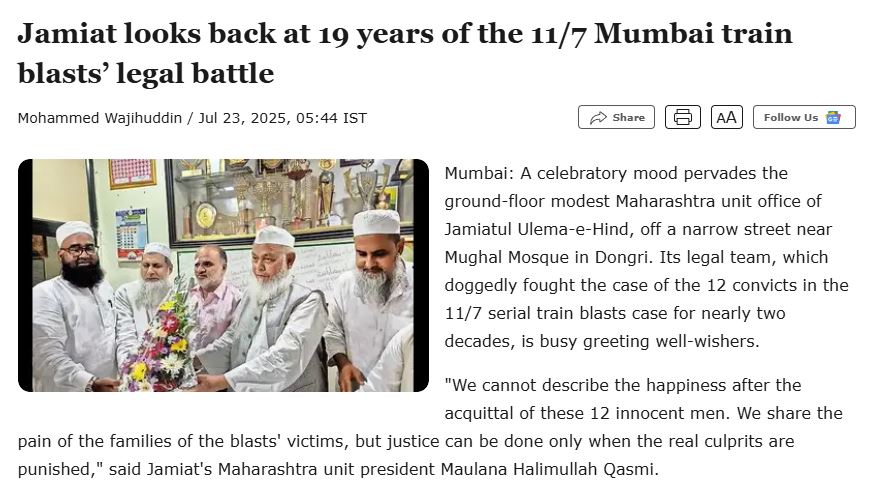
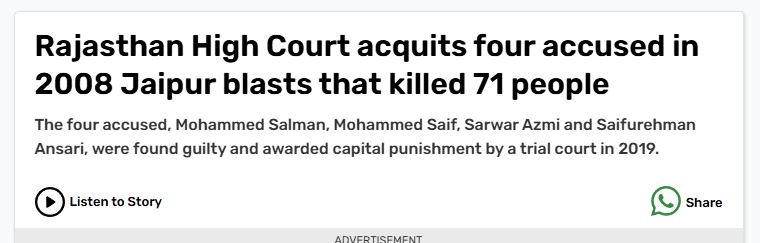
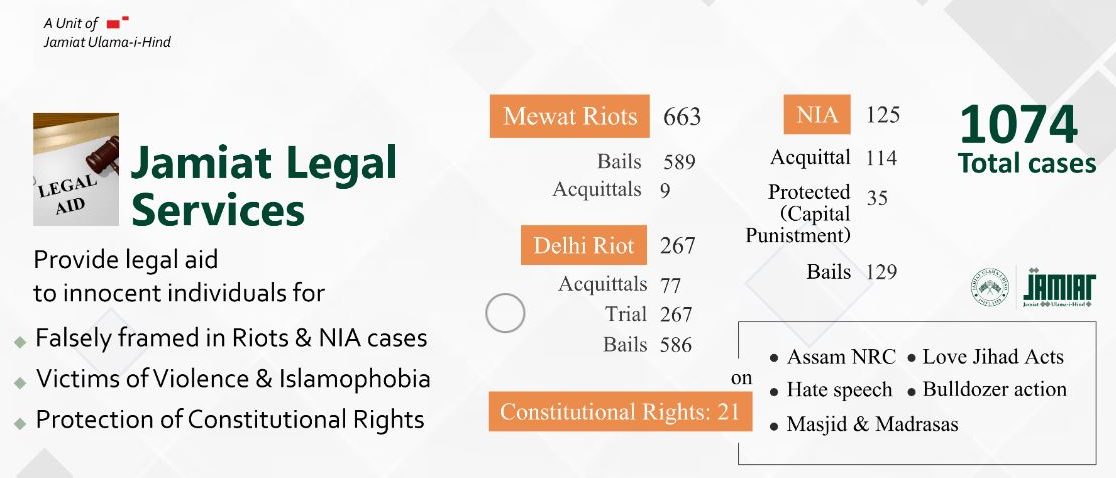
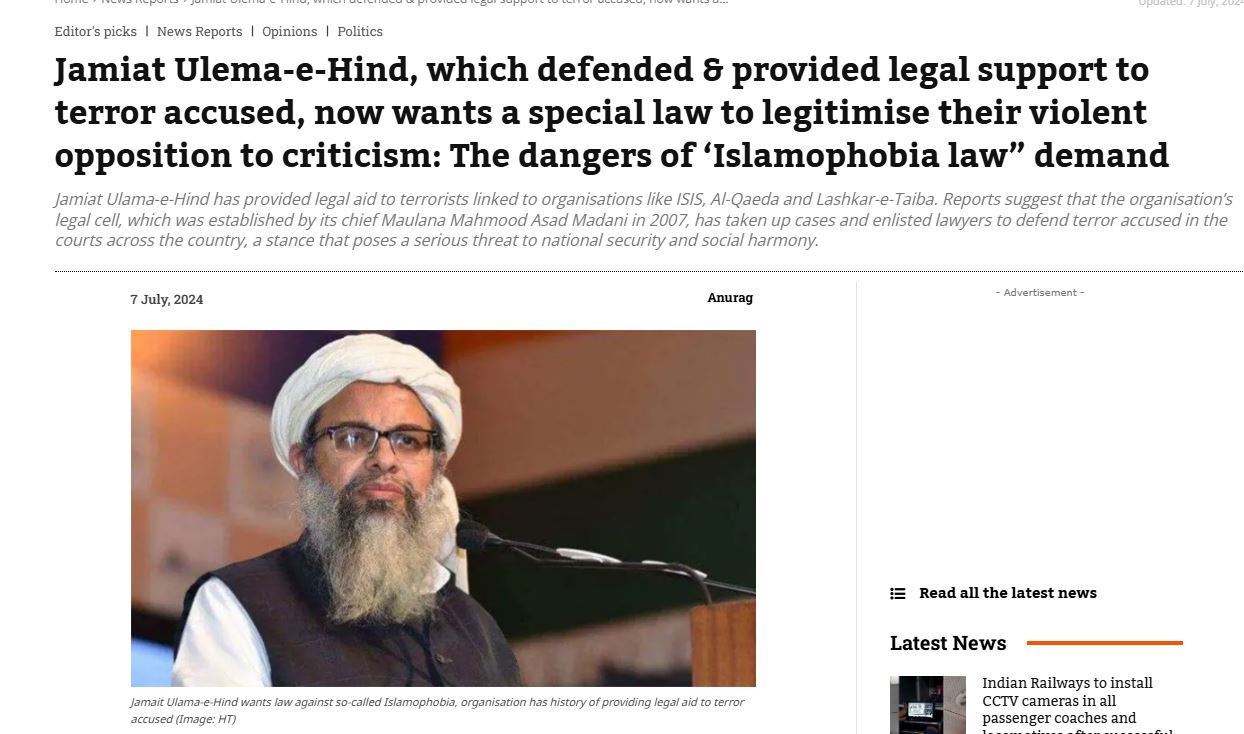
In both landmark cases, Jamiat Ulama-e-Hind (JUH) played a key legal role. Following the Jaipur acquittals, JUH publicly praised the judgment, while its Maharashtra unit reflected on a decades-long legal struggle in the Mumbai case. The organization reported that since the 2000s, it has helped secure over 306 acquittals and 227 bail orders for Muslim accused.

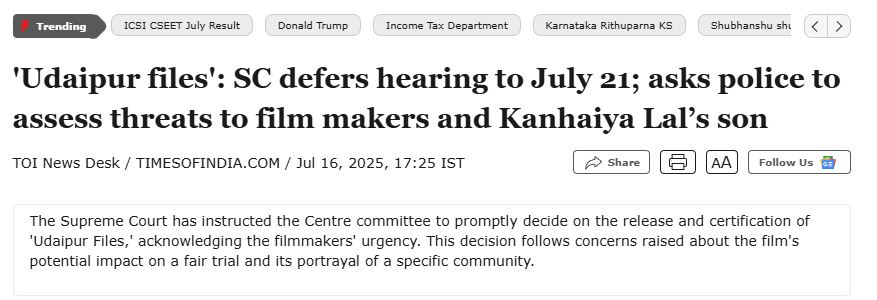
10 July 2025: The Delhi High Court, in a case influenced by JUH president Maulana Arshad Madani, placed an interim stay on the release of the film Udaipur Files: Kanhaiya Lal Tailor Murder, citing concerns that it could disturb communal harmony. The move came just one day before the film’s release.

March 2023: Similarly, the Rajasthan High Court overturned the convictions of four individuals who had been on death row for the 2008 Jaipur serial bombings a tragedy that claimed 71 lives and injured 180. The court’s decision sparked widespread debate over flawed investigations and the broader implications of justice delayed.

Inside the Muslim Legal Aid Network: Key Organizations

1. Jamiat Ulama-e-Hind (JUH)

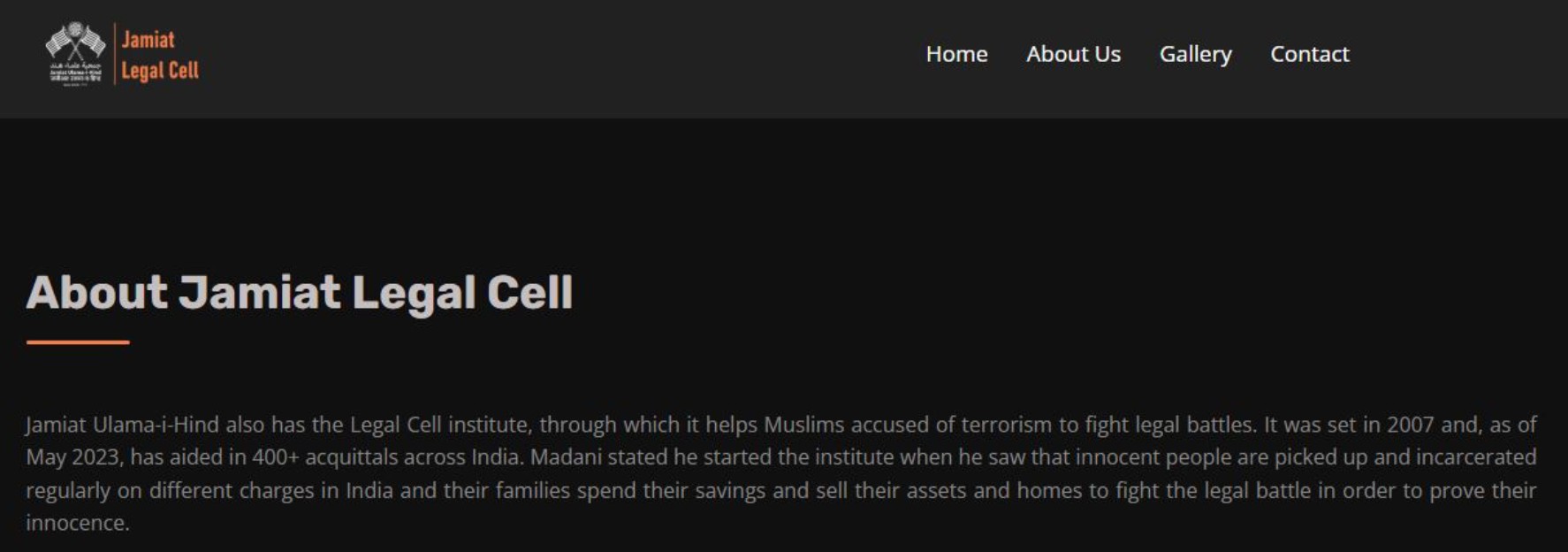
Founded in 1919 and split into factions in 2008, the main wing is currently led by Arshad Madani. JUH’s legal wing, launched in 2007, is dedicated to defending Muslims in terrorism-related cases. By 2019, it had helped achieve 192 acquittals nationwide.

Notable Figures:

  • Gulzar Azmi: Played a pivotal role in organizing legal teams across Indian states and guided over 500 accused, including 75 who were facing the death penalty.
  • Shahid Azmi: A prominent defense lawyer known for securing high-profile acquittals in cases like the 2002 Ghatkopar blasts, the 7/11 Mumbai train blasts, and the Malegaon case. He worked closely with JUH until his assassination in 2010.

Strengths:

  • Nationwide network of legal teams
  • Active legal cells in nearly every Indian state
  • Annual scholarships for 25–30 law students
  • Training programs for aspiring Muslim lawyers to serve the community post-graduation

Funding Sources:

  • Halal certification fees: A major revenue stream, as JUH issues certification to manufacturers and uses the proceeds to fund legal aid

  • Zakat (charity): Community-donated religious funds are also a core support channel

2. Jamaat-e-Islami Hind (JIH)

While JUH tackles large and complex terror cases, JIH manages grassroots legal issues ranging from FIRs to public interest litigations. It’s often described as having a presence in almost every municipal ward in India.

For any Muslim individual facing legal trouble, local JIH offices offer immediate, cost-free legal support upon submission of a simple form.

Funding:

  • Member contributions
  • Zakat donations
  • Other localized community-driven sources

3. Al Abbas Charitable Foundation

Headed by advocate Abid Abbas Sayyed, this organization focuses on legal aid in areas like communal violence, interfaith marriage cases, and public rights. In addition to legal assistance, it also works in education and healthcare. Funding comes from a mix of donations, zakat, and charitable grants.

Delhi Riots Context:

In the aftermath of the 2020 Delhi riots, most of the Muslim accused managed to secure bail, whereas many Hindu accused remain incarcerated. Though courts faced backlash, these outcomes were largely shaped by strong legal advocacy and well-prepared defense a testament to the efficacy of the Muslim legal aid structure.

While critics argue that this system tilts the legal balance and manipulates high-profile cases, supporters view it as an essential tool to protect innocent Muslims from wrongful prosecution. What remains clear is that India’s Muslim legal aid ecosystem has become an increasingly powerful and influential force both in courtrooms and within the broader community. Its reach, resources, and legal victories continue to expand.

(This article is based on an X Thread By The Chronology

Subscribe to our channels on TelegramWhatsApp, and Instagram and get the best stories of the day delivered to you personally.