Home Blog Page 213

Rohin Bhatt, Indira Jaising’s ‘Superstar’ Junior, Accused Of Sexual Assault By Transgender Colleague, No Response From Jaising

Rohin Bhatt, Indira Jaising’s ‘Superstar’ Junior, Accused Of Sexual Assault By Transgender Colleague, No Response From Jaising

Supreme Court lawyer and noted human rights advocate Indira Jaising has so far remained silent on serious sexual harassment allegations made against her junior colleague, lawyer-activist Rohin Bhatt, by transgender woman lawyer Raghavi. The absence of a response from Jaising, who is otherwise known for her vocal stance on gender justice and women’s rights, has drawn attention within legal circles and among activists.

The allegations were made public by Raghavi on social media, where she accused Bhatt of sexually assaulting her two years ago when she was a law student undergoing hormone therapy. In a series of posts, she described the incident, stating that it took place at a friend’s house in Lajpat Nagar, Delhi, where Bhatt was temporarily staying at the time.

According to Raghavi, she had been invited by mutual friends to visit the house, and the group was having a casual conversation about her experience with hormone therapy and bodily changes, including breast growth. She said that when everyone was lying on the bed, Bhatt suddenly got up and began touching her breasts and other parts of her body inappropriately.

Raghavi stated that she was shocked and unable to react immediately. Her two friends, who were present, were also taken aback. She recalled that after a brief pause, they comforted her and told Bhatt not to repeat such behaviour with any woman again. Bhatt allegedly tried to dismiss the matter by saying he had been “joking.”

The complainant said she did not know at the time how to proceed legally and discussed the incident only with a few close friends. She later shared her experience with others who also knew Bhatt and asked them to caution him. However, she claimed that he never took the matter seriously or offered an apology.

Raghavi said that the encounter left her anxious and fearful for a long time. She said that she had chosen to stay away from Bhatt in professional and social settings afterward. The matter resurfaced, she added, when she recently saw an interview in which Bhatt spoke about rape and harassment. That, she said, brought back painful memories and prompted her to finally speak out publicly.

According to her, she and Bhatt met again recently, which reopened old emotional wounds. She said that the experience made her reflect on how individuals with class or social privilege often fail to understand the pain of others, and alleged that Bhatt had shown no empathy toward women or transgender persons.

Rohin Bhatt is known as a lawyer-activist who has been active in advocating for LGBTQIA+ rights and same-sex marriage recognition in India. He has worked closely with senior lawyers Indira Jaising and Anand Grover and has been part of their legal team since July 2022.

Bhatt has assisted in major Supreme Court cases, including petitions filed by Samir Samudra and Nitin Karani seeking recognition for same-sex marriages. He also made submissions on behalf of petitioners during those hearings.

It is noteworthy that Jaising called Bhatt as “superstar”

Bhatt, originally from Bhavnagar, Gujarat, completed his schooling at St. Xavier’s School in Gandhinagar and Udgam School in Ahmedabad. His father is a civil servant and his mother a college lecturer. He later studied bioethics at Harvard Law School, graduating in 2021. After returning to India, he joined Indira Jaising’s legal team in New Delhi.

Bhatt has spoken in past interviews about being bullied in school for his sexuality and said that studying abroad helped him overcome fear and gain confidence.

As of now, there has been no official response from either Bhatt or senior advocates Indira Jaising and Anand Grover regarding the allegations. The issue has sparked conversations within the legal fraternity over accountability and the silence of senior figures in the face of serious misconduct allegations.

(With inputs from OpIndia)

Subscribe to our channels on TelegramWhatsApp, and Instagram and get the best stories of the day delivered to you personally. 
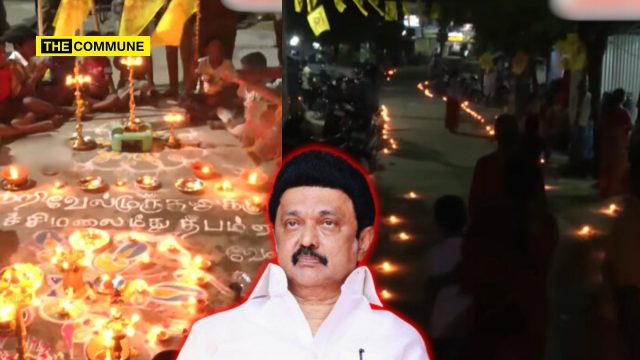
Congress MP Karti Chidambaram Calls DMK Minister’s Remarks About Congress As Rubbish

Congress MP Karti Chidambaram Calls DMK Minister's Remarks About Congress As Rubbish

A remark made by DMK Minister I. Periyasamy praising the DMK and taking a veiled dig at the Congress has drawn sharp criticism from Congress MP Karti Chidambaram, who dismissed the comments as “rubbish.”

Speaking at a wedding ceremony at Veerachamy’s house in Vedasanthur South Union, which was attended by Deputy Chief Minister Udhayanidhi Stalin and Minister A. Chakrapani, Periyasamy lauded the DMK as a movement that respects and uplifts ordinary people.

During his speech, the minister contrasted the DMK with the Congress, saying that “big leaders in Congress only attend functions in rich people’s houses,” while the DMK, according to him, “values the common man.”

Periyasamy said, “I would like to point out that it is an honour to be present at this wedding event, even though I have done all the work in rotation and spinning. If Karunanidhi goes to ask for a date, he will ask for the wedding date instead of giving the first date. I have to ask him again. Anyone should ask for it a 2nd time. Not only in Tamil Nadu but in India, we will not be able to see a simple Chief Minister and a Deputy Chief Minister who mingles with the people. That’s the DMK. The DMK is the only organisation that respects the common man and gives him positions and titles in the political arena, but also with his family. No one can deny that. Here is a Congress MP. Jothimani is there. In the Congress, big leaders come only for the house functions of the rich. I don’t underestimate them. As far as the DMK is concerned, it is a movement that upholds and respects the common man. We have risen because of the DMK and we are ministers. No movement can match the DMK.”

The comments quickly sparked a response from Karti Chidambaram, who took to social media to label the minister’s remarks as “rubbish.”

The statement has since drawn attention to the delicate alliance dynamics between the DMK and Congress in Tamil Nadu, with both parties currently part of the I.N.D.I bloc at the national level.

(With inputs from Hindu Tamil)

Subscribe to our channels on TelegramWhatsApp, and Instagram and get the best stories of the day delivered to you personally. 
Indian Flag Replaced With Startup TN Flag at TN Govt Conference

Indian Flag Replaced With Startup TN Flag at TN Govt Conference
Image Source: Chanakyaa TV

A controversy has erupted after the national flag was reportedly taken down from the flagpole at the CODISSIA campus in Coimbatore, where the Tamil Nadu government’s Startup TN conference was being held and replaced with the Startup TN flag.

The incident occurred during the inauguration of the two-day World Startup Conference, organised by the Tamil Nadu Startup and Innovation Mission (Startup TN) under the Department of Micro, Small and Medium Enterprises. The event was inaugurated by Chief Minister M.K. Stalin on Thursday, 9 October 2025.


View this post on Instagram


A post shared by Chanakyaa (@chanakyaa_tv)

Eyewitnesses and reports from the venue indicated that the national flag, which had been flying earlier, was lowered to make way for the Startup TN flag before the conference proceedings began. This action has sparked criticism on social media, with several users questioning whether the replacement of the national flag with an institutional flag on a government campus was appropriate.

When contacted, officials associated with the event said the issue would be looked into. However, no official clarification had been released at the time of reporting.

The World Startup Conference also saw the Chief Minister announce a ₹100-crore co-creation fund and release reports on the state’s innovation ecosystem. But the flag controversy has since overshadowed the proceedings, drawing sharp attention to protocol violations and the symbolic implications of replacing the Tricolour at a government-backed event.

Subscribe to our channels on TelegramWhatsApp, and Instagram and get the best stories of the day delivered to you personal.

How DMK Has Been Catering To Its Muslim Votebank

With the 2026 Tamil Nadu Assembly elections drawing near, the DMK appears to be reviving its well-worn strategy of minority appeasement. Chief Minister M.K. Stalin recently declared that the DMK has always stood by the Muslim community and will continue to protect their political rights. “If Muslims face trouble, the first political outfit that comes to your support is the Dravida Munnetra Kazhagam,” he stated clearly positioning himself and his party as the political guardian of Tamil Nadu’s Muslim population.

The DMK’s efforts to consolidate minority votes are not new. The party has often been accused of going to great lengths, including rebranding or downplaying serious charges against individuals from Muslim communities, to maintain electoral support. As election season heats up, a fresh series of government decisions has once again brought these allegations to the forefront.

Special Privileges For Muslims And Islamic Education

1. Overseas Education Scholarship Exclusively For Muslim Students

On 4 September 2025, the DMK government issued a Government Order allocating ₹3.60 crore for a scholarship program targeting only Muslim students pursuing higher studies abroad.

Each beneficiary will receive up to ₹36 lakh, with a cap of 10 students per year. While this was introduced as a welfare measure, critics view the timing and exclusivity as an attempt to secure votes under the guise of educational support.

2. Urdu Promotion And Exemption from Learning Tamil

The DMK, which has long resisted the imposition of Hindi, seems to apply a different standard when it comes to Urdu. In 2015, during the Namakku Naame campaign, M.K. Stalin promised that if the DMK came to power, they would make Urdu compulsory in schools. Then, in 2019, Urdu linguistic minority students requested the state government to grant them an exemption from learning Tamil as a compulsory language. Members of the Urdu Protection Committee Tamil Nadu Trust, from Vaniyambadi, met with Chief Minister Edappadi K. Palaniswami and submitted a memorandum, asking for the reinstatement of a rule that was in place until 2006. This rule allowed Urdu-speaking students to be exempt from learning Tamil and instead study their mother tongue, Urdu, from Class I to X.

In 2023, the state’s Education Minister Anbil Mahesh, proposed exempting Urdu-speaking students from learning Tamil, sparking widespread backlash. The DMK had earlier supported similar demands in 2019.

While the Supreme Court later ruled that students from linguistic minorities can learn their mother tongue as an optional subject, critics saw the DMK’s stand as another case of selective accommodation.

3. Tamil Nadu State Urdu Academy

the same DMK government that has long opposed Hindi and other languages, established the Tamil Nadu State Urdu Academy (TNUA) in 2000 under the leadership of Chief Minister M. Karunanidhi. The objective of the Academy is to promote Urdu language and literature in Tamil Nadu, as well as to encourage Urdu scholars, poets, and students.

Since its inception, the Tamil Nadu State Urdu Academy has organized events in collaboration with the University of Madras (Department of Urdu, Arabic, and Persian) to support Urdu students, scholars, and poets. The Academy has awarded certificates, prizes, and accolades to Urdu language enthusiasts and has hosted numerous seminars and functions. In addition, the Academy has organized several Urdu Mushaires (Urdu debates and poetry sessions) in celebration of national holidays like Republic Day and Independence Day. During these events, prominent Urdu poets and scholars have been invited to perform and receive recognition for their contributions. Furthermore, the Tamil Nadu State Urdu Academy has successfully facilitated the translation of 11th and 12th-grade textbooks from English into Urdu.

4. Targeting Hindu Practices In School Textbooks

Immediately coming to power, the DMK pushed a nasty anti-Hindu bias and vicious state indoctrination of children of textbooks prepared and published by the Tamil Nadu government with 5th-grade Social Science book described traditional Hindu customs such as idol immersion, bursting crackers, and breaking pumpkins as environmentally or socially harmful practices.

In the chapter named Good Citizen, there is a box item on page 162 which says ‘breaking of white pumpkin’, ‘burning old objects’, ‘submerging idols in waterbodies’, and ‘bursting crackers’ are against the rules and values.

In Tamil Nadu, a pumpkin filled with turmeric, vermillion and few coins is broken on special occasions especially on Ayudha Pooja day during Navratri. It is also done when Hindus buy a new vehicle.

Old objects are burnt on Bhogi, a day before Pongal, the harvest festival of Tamil Nadu. Vinayagar idols are submerged in waterbodies during Vinayaka Chathurthi and crackers are burst during Deebavali.

By calling these as against ‘rules’ and ‘values’, the Tamil Nadu government seems to be insinuating hatred among children towards the Hindu faith and culture.

On the other hand, there is a pictorial representation in the same page which shows a burqa clad woman tending to a boy child and doing household chores. The boy child can also be seen wearing a skull cap. The text against the image shown is about what good hygiene and behaviour is.

Many on social media have questioned this blatant Hindumisia and minority appeasement. Some pointed out that even if one were to consider it from the perspective of environmental protection, it is outrageous to selectively target one particular religious community leaving out acts like public slaughter of animals, loud speakers that blares every day, cutting of trees, etc.

5. Including Prophet Muhammad’s Teachings, But Protest Against Including Hindu Texts

At a public event commemorating Prophet Muhammad’s 1500th birth anniversary in 21 September 2025, Stalin praised the Prophet as a universal thinker who preached love, peace, and equality. He stated that his teachings were already included in the school syllabus a claim made in response to a demand by SDPI leader Nellai Mubarak.

Back in 2019, when decision was taken to include philosophy and Bhagavad Gita in its syllabus for Anna University engineering students, the MK Stalin had opposed the move and the DMK even conducted protests. “We will continue to protest until the university removes Bhagavad Gita from the syllabus. It is not a need for an engineering student,” Ezhilarasan who is now DMK MLA said.

Providing Special Privileges

6. Special Work Timing During Ramadan For Muslim Staff

In a controversial move, the Greater Chennai Corporation allowed Muslim employees to leave one hour early during the month of Ramadan from 2 March to 31 March 2025. The circular justified this by citing the need to facilitate religious observances.

On 26 February 2025, the Greater Chennai Corporation issued a circular stating, “To enable Muslim officials working in the Greater Chennai Corporation who observe fasting during Ramadan to perform the fasting related rituals, they are allowed to leave the office one hour earlier than regular office hours in the evening, instead of taking the lunch break, for a period of 30 days from 2 March 2025, to 31 March 2025.”

However, this has drawn sharp criticism from many quarters, who argue that similar religious accommodations are not made for Hindus during festivals such as Navaratri or Diwali, exposing a clear double standard in secular governance.

7. Construction Of A Second Haj House In Chennai

On 4 March 2025, the DMK government has allocated ₹65 crore to build a new Haj House in Nanganallur, despite an existing one already operating in Nungambakkam. This has raised questions about redundancy and the political motives behind the project.

Residents of the predominantly Hindu area have also expressed concerns about law and order, particularly given the area’s proximity to the airport, with some speculating about potential misuse related to smuggling activities. Critics have pointed out the stark contrast between this lavish spending and the neglected condition of many temples across the state.

8. Longstanding Policy Support For Muslims

Stalin has repeatedly emphasized the DMK’s role in granting internal reservations for Muslims, establishing the Urdu Academy, forming the Minority Welfare Board, and creating public holidays like Milad-un-Nabi. He also criticized political rivals for not standing by the Muslim community during controversies surrounding the CAA and triple talaq.

9. Proposal To Extend Quotas To Converts

In February 2024, CM Stalin announced in the Assembly that the government was open to extending reservations benefits to BCs and MBCs who had converted to Islam. This followed a similar DMK-backed 2023 resolution seeking constitutional amendments to allow quota benefits for Scheduled Castes who convert to Christianity. Critics cite a 2022 Madras High Court ruling which clearly stated that such benefits cannot be retained after religious conversion.

Opposing Laws

10. Opposition To Waqf Act Amendments

DMK leaders, including Kanimozhi and Dayanidhi Maran, voiced strong opposition to the proposed amendments to the Waqf Act, which they claimed would dilute Muslim autonomy. Kanimozhi’s remarks in Parliament included accusations about an alleged conspiracy to target mosques by declaring them historical sites a claim that drew a sharp rebuke for spreading misinformation.

Thoothukkudi DMK MP Kanimozhi disapproved of the bill, stating, “(The bill) is against the constitution, against federalism, against religious minority, and against human beings. It shuns justice in every possible way, this bill violates article 25 and 26 of the constitution which says, ‘we have right to follow a religion and have rights to manage religious affairs’. The bill allows non-Muslims to be a part of Waqf Board.” She then questioned, “Will it be possible for a Muslim or a Christian to be a part of a board which manages a Hindu temple, would you allow that?”

Kanimozhi also argued that the bill infringes upon Article 30 of the constitution, said, “It is a direct violation of Article 30 which deals with minorities to administer their institutions. This bill targets a particular religious group.

Feeling emboldened by the lack of criticism following her speech, Kanimozhi began spreading falsehoods and was met with a stern rebuke in Parliament. Kanimozhi claimed, “We know already that many old mosques are in danger today. Suddenly, there is a PIL (filed). The people and archaeologists are sent there, and they discover that there was a temple before this. Then there is hate and division, followed by these issues (arise) among the people of the country.”

Her conspiracy theory in opposition of the Waqf Bill was swiftly rejected by members of the house, who were keen to prevent her from spreading further misinformation under the guise of appeasing Muslims.

Similarly, DMK MP from Central Chennai, Dayanidhi Maran, said, “I don’t understand why they are continuously trying to irritate the Muslim community, trying to dominate them, trying to show that they are superior. This exercise looks like a land-grabbing exercise. Basically, this Government has not done anything good for the people but is trying to take revenge on the minorities.”

11. Opposing CAA-NRC

has been one of the most vocal opponents of the Citizenship (Amendment) Act, calling it unconstitutional and discriminatory towards Muslims. Under his leadership, the DMK organized statewide protests and even passed a resolution in the Tamil Nadu Assembly demanding the repeal of the CAA and NRC.

Sympathizing With Terrorists

12. Downplaying Of Terror Incidents & Release Of 1998 Coimbatore Blast Convicts

Following the Coimbatore car bomb blast incident, DMK leaders initially described it as a gas cylinder explosion. While even the Jamaat acknowledged it as an act of terror, DMK figures, including Mylapore MLA Velu and IT Wing member Isai, attempted to trivialize or politicize the incident, hinting it was orchestrated by the BJP for political mileage.

Mylai DMK MLA Velu downplayed the explosion in his post responding to Annamalai, said, ”Why these needless words. Those who incited the crime should be punished first, rather than the perpetrators. Entire Tamil Nadu knows who is the reason for this (alleged “cylinder blast”). Go to the butcher shop and put your head in there. Tamil Nadu will be peaceful.”

Similar to him, Isai, the State Deputy Secretary of DMK IT Wing, had shared a clip from Tamil movie Kadhalan in which the antagonist discusses with another man about creating a law and order situation through bomb blasts in order to topple the government.

This clip was shared by the DMK IT Wing leader suggesting that the Coimbatore blasts was a handiwork of the BJP. The tweet by Isai was retweeted by Mannargudi DMK MLA and the party’s IT Wing head TRB Rajaa.

Similar to the incident, the DMK government released three convicts involved in the 1998 Coimbatore blasts, shortly before the attack’s anniversary. The decision was perceived as another gesture aimed at appeasement rather than justice.

13. Permitting A Lavish Funeral For Al Umma Terrorist SA Basha

Thousands of Muslims, including Islamist Mobs, gathered in Coimbatore, Tamil Nadu for the funeral of the 84-year-old Syed Abdul Basha, the mastermind of the Coimbatore bomb blasts of 1998, at his funeral after he died on 16 December 2024. 

Subscribe to our channels on TelegramWhatsApp, and Instagram and get the best stories of the day delivered to you personally.
Islamist Terror Outfit Jaish-e-Mohammed Launches Women’s Brigade ‘Jamaat Al-Mu’minaat’ Targeting J&K, UP And South States For Psychological Propaganda And Jihadi Recruitment

Jaish-e-Mohammed Launches Women’s Brigade ‘Jamaat al-Mu’minaat’ for Grassroots Recruitment in India

Top intelligence sources have revealed that Jaish-e-Mohammed (JeM) has established a women’s wing named Jamaat al-Mu’minaat (Community of Believing Women) as part of its evolving strategy for psychological warfare, grassroots recruitment, and funding operations. The initiative is reportedly targeting women in Jammu & Kashmir, Uttar Pradesh, and southern Indian states.

The outreach strategy reportedly uses a combination of devotional imagery and religious rhetoric. Circulatory materials feature photographs of Mecca and Medina, alongside Quranic verses, to lend divine legitimacy to JeM’s narrative. The propaganda, delivered in a spiritual and morally instructive tone, is designed to attract educated, urban Muslim women and gradually expose them to the organization’s political and jihadist ideology.

Intelligence sources indicated that the women recruited under this initiative are expected to function as recruiters, message couriers, and fundraisers, mirroring the operational setup of JeM’s male cadres. This strategy is intended to keep male operatives away from direct exposure, while women manage critical logistical and information tasks.

The programme reportedly includes markaz-level meetings to secure funding, using religious ceremonies as cover for hawala or donation-based collections routed through NGOs and madrasa networks under the banner of Islah-e-Ummah (reform of the community). The circulars circulated by JeM specifically invoke spiritual obligation and collective religious duty to motivate participation, echoing narratives used by previous global female jihad initiatives.

Sources confirmed that the layout, content style, and theological tone of the recruitment material strongly resemble publications from Pakistan-based Al-Muhajirat, JeM’s earlier female cadre initiative, and materials from the Markaz Usman-o-Ali in Bahawalpur, indicating a sophisticated cross-border design of the indoctrination program. The program is reportedly designed for both online dawa (preaching) and misinformation campaigns, while simultaneously facilitating critical funding support.

The establishment of Jamaat al-Mu’minaat reflects JeM’s post-2024 strategic shift towards female-led grassroots operations, particularly through social media networks and madrasa circuits in Pakistan’s Punjab province and parts of Kashmir. Analysts suggest that these women’s units are being groomed to play a central role in sustaining and expanding JeM’s influence across India, while maintaining operational security by minimizing male exposure.

(With inputs from News18)

Subscribe to our channels on TelegramWhatsApp, and Instagram and get the best stories of the day delivered to you personally.
Bastar Sees Shift: 16 Naxals Surrender In Narayanpur, Cite ‘Inhuman’ Maoist Ideology

maoist surrender chhattisgarh naxals

Sixteen Naxals surrendered to authorities in Chhattisgarh’s Narayanpur district on Wednesday, nine of whom carried a combined reward of Rs 48 lakh. The cadres reportedly handed themselves over to senior police officials, expressing disappointment with what they called the “hollow” and “inhuman” Maoist ideology, atrocities against innocent tribals, and mounting pressure from security forces, Narayanpur Superintendent of Police Robinson Guria told news agency PTI.

During interrogation, the surrendered Maoists said that top Maoist leaders were misleading tribals and exploiting them instead of protecting land, water, forests, and promoting equality, according to the SP.

Inspector General of Police for the Bastar Range, Sundarraj P, said the surrender reflected “winds of change” across Bastar. He added that disillusioned by violence and fear, the youth had chosen peace, education, and development, marking a new beginning for themselves and their families and a step towards lasting peace in the region.

Sundarraj also noted that security efforts, public support, and rehabilitation policies had played a key role in the surrenders and added that this development would encourage many more Maoists to return to the mainstream. Over the past 20 months, a total of 1,837 Naxals have surrendered in the Bastar Range, which covers seven districts, including Narayanpur.

Among those who surrendered on Wednesday, Podiya Markam alias Ratan, a deputy commander of Military Platoon No. 1, along with Manoj Dugga, Sumitra alias Sunny Kursam, and Vanila Farsa, all members of the military company and Gawade alias Diwakar, a divisional committee member, carried a bounty of Rs 8 lakh each. Others, including Budhu alias Kamlesh Usendi, an area committee member, carried Rs 5 lakh, while Madda Kunjam, Ravi alias Gopal Vadde, and Kare Korram carried Rs 1 lakh each.

Earlier, the Union Home Minister, speaking in Bastar, had urged Naxal commanders to shun violence and surrender by March 2026, warning that they would otherwise face intensified operations. He reportedly said, “It’s high time Maoists should give up violence and their decision to surrender will be welcomed by the government with a red carpet.”

(With inputs from Times of India)

Subscribe to our channels on TelegramWhatsApp, and Instagram and get the best stories of the day delivered to you personally.
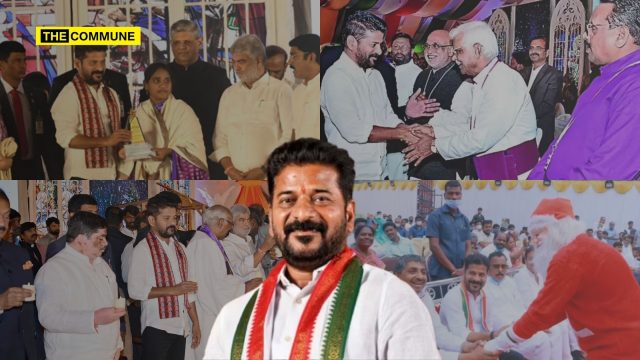
Karnataka Congress Govt Allows Dalits Who Convert To Buddhism To Retain Scheduled Caste Certificates

Karnataka Congress Govt Allows Dalits Who Convert To Buddhism To Retain Scheduled Caste Certificates

The Karnataka Congress government has ordered that Dalits who convert to Buddhism will continue to be eligible for Scheduled Caste (SC) certificates for purposes of employment and education. The social welfare department said the order applies to individuals from any of the 101 Scheduled Castes who choose to adopt Buddhism.

According to the department, SC individuals converting to Buddhism should be permitted to indicate their religion as “Buddhism” when applying for caste certificates. Similarly, those who become Buddhists may list their religion as “Buddhism” in school and college academic records.

The department noted that the Union government had allowed Dalits converting to Buddhism to obtain SC certificates as far back as 1990. Based on this directive, the Karnataka government had issued a circular in 2013. In 2016, the Union government had instructed chief secretaries of all states to ensure that Dalits adopting Buddhism are granted SC certificates.

The social welfare department said that despite these circulars, several organisations had petitioned the government seeking clarity and an appropriate order on the matter. The latest directive addresses these concerns.

The order comes at a time when Karnataka Congress government is conducting a Social & Educational Survey, also known as a caste census. The state had recently carried out a separate survey covering Scheduled Castes for the purpose of sub-classification or internal reservation.

Buddhists are recognised as a religious minority in Karnataka, alongside Muslims, Christians, Sikhs, Zoroastrians (Parsis), and Jains. According to the 2011 Census, the state had around 95,000 Buddhists.

The Congress government clarified that in Karnataka, Buddhists fall under OBC Category-2A with a 15 per cent reservation. Christians and Jains are classified under Category-3B with a 5 per cent reservation, while Muslims are included in Category-2B with a 4 per cent reservation.

The department’s order therefore formalises the rights of SC Dalits converting to Buddhism, ensuring their continued access to the benefits associated with Scheduled Caste status.

(With inputs from Deccan Herald)

Subscribe to our channels on Telegram, WhatsApp, and Instagram and get the best stories of the day delivered to you personally.
Madhya Pradesh Minister Blames TN Govt For Deaths Of 20 Children Due To Contaminated Cough Syrup

Madhya Pradesh Minister Blames Tamil Nadu Government for Deaths Of 20 Children Due To Contaminated Cough Syrup

Madhya Pradesh Minister of State for Public Health and Family Welfare Narendra Shivaji Patel on 8 October 2025 held the Tamil Nadu government responsible for the deaths of 20 children in his state due to kidney infections caused by consumption of an allegedly contaminated cough syrup.

Addressing PTI Videos, Patel said the southern state showed “grave negligence” as it was responsible for inspecting medicines manufactured and dispatched from Tamil Nadu. He added that while the MP government randomly inspects medicines entering the state, it was “by chance” that this particular stock of cough syrup went untested.

The Tamil Nadu government banned the sale of the cough syrup ‘Coldrif’ from 1 October 2025 and ordered removal of stocks from the market. The syrup, linked to the deaths, was manufactured by a company based in Kancheepuram, Tamil Nadu. On 4 October 2025, the Tamil Nadu Food Safety and Drug Administration department declared that samples collected from the manufacturing facility in Sunguvarchatram, Kancheepuram, were “adulterated,” and instructed the company to halt production immediately.

Patel emphasised the responsibility of Tamil Nadu authorities in issuing licences and inspecting medicines. “A Certificate of Analysis (COA) certificate is required to be issued for every batch of medicine produced. Where did the Tamil Nadu government go wrong? Whether a COA certificate was issued or not? Which official made the mistake is a matter of investigation. The Tamil Nadu government has shown grave negligence in how such medicines came out of their state,” he said.

“We randomly inspect medicines that come into our state. By chance, these medicines were not tested. We seriously inspect medicines manufactured here,” Patel added.

He further stated that the Tamil Nadu government’s negligence directly contributed to the deaths of children in Madhya Pradesh. “We are writing to the central government and the state (Tamil Nadu) government to take strict action against the culprits,” he said. Patel also confirmed that the MP government had taken action against the pharmaceutical factory owner and that the state police had visited Tamil Nadu as part of the investigation.

Speaking about preventive measures, Patel said the state is increasing the number of testing laboratories and will also conduct tests in private labs to speed up the process. Commenting on another substandard medicine originating from a factory in Gujarat, he said, “We are also writing letters to the governments in the states from where the substandard medicines came.”

On Congress leader Rahul Gandhi’s likely visit to Chhindwara to meet the families of deceased children, Patel alleged, “The government in Tamil Nadu is running with the support of the Congress. Rahul Gandhi should question his party’s alliance partner as to why this (tragedy) happened. I smell a conspiracy in this if the Congress is politicising this issue.”

Meanwhile, Madhya Pradesh Deputy Chief Minister Rajendra Shukla, who oversees the health portfolio, said 20 children have died following consumption of the cough syrup, while five others remain in critical condition.

Reacting to Patel’s statement, Congress leader Digvijaya Singh blamed the food and drug department for “poor administration,” claiming it led to the children’s deaths. “Firstly, drug controllers and inspectors are responsible for conducting sample surveys every month, but this was not done. Diethylene glycol should not exceed 0.1 per cent in the drug, but it was 48.6 per cent in the syrup. What were the drug inspectors and controllers doing here?” he asked.

Singh also criticised Deputy CM Shukla for allegedly giving the Tamil Nadu-based pharmaceutical company a “clean chit” even before the investigation concluded. “Besides, when information about the incident came to light, how did the Deputy Chief Minister (Rajendra Shukla) give a clean chit on the first day? On what basis did he give the clean chit? This is the biggest mistake. Had the drug inspectors and controllers performed their duties properly and conducted investigations, this incident would not have occurred,” Singh said.

On the MP minister blaming Tamil Nadu, Singh said, “I am not aware of the Tamil Nadu government. I have been told that permission has to be obtained from the Central government.”

When asked about CM Mohan Yadav’s statement that the Opposition should not politicise the issue and instead provide constructive suggestions, Singh responded, “We are not playing any politics. Take action against the culprits. How did the deputy CM give a clean chit? Accept his resignation. If the mistake was committed, what action did you take?”

(With inputs from The Week)

Subscribe to our channels on TelegramWhatsApp, and Instagram and get the best stories of the day delivered to you personally.

Dravidian Model: Life-Saving Medicines Allegedly Delivered In Garbage Truck In Chennai

Dravidian Model: Life-Saving Medicines Allegedly Delivered In Garbage Truck In Chennai

A shocking lapse in the delivery of essential medicines has drawn sharp criticism of the Tamil Nadu government. Life-saving medicines meant for pregnant women and children were reportedly transported in a garbage truck to an urban primary health centre in Kodungaiyur, Chennai, raising serious concerns about public health governance.

The incident was highlighted on social media by BJP leader Annamalai, who described it as “a disgraceful act” and criticized the patchwork model of administration under the DMK government, accusing officials of showing “utter disregard for the well-being of the people of Tamil Nadu.”

“The disgraceful act of carrying life-saving medicines meant for pregnant women & children in a garbage truck to an urban primary health centre in Chennai’s Kodungaiyur speaks volumes about the patchwork model DMK govt’s utter disregard for the well-being of the people of TN. Such glaring incompetence has turned governance into a mockery. Even after the tragic loss of 21 infants to toxic cough syrup manufactured in TN, which was a direct result of years of neglect and apathy in Tamil Nadu’s drug control system, the State Health Department continues to fail in upholding the most basic standards,” Annamalai posted on his social media.

The medicines were intended to serve vulnerable populations, including pregnant women and children, highlighting the potential risks posed by mishandling essential drugs. Public health experts warned that improper transport and storage could compromise the efficacy of the medicines, posing further risks to patients.

Officials from the Tamil Nadu Health Department have yet to comment on the incident, though social media posts have prompted widespread outrage and calls for accountability.

This latest incident adds to ongoing scrutiny of the State’s health and drug regulatory systems, which came under national attention after multiple infants died from consumption of toxic cough syrup manufactured in Tamil Nadu. Critics argue that repeated lapses reflect systemic failures that endanger public safety and erode trust in government institutions.

Subscribe to our channels on TelegramWhatsApp, and Instagram and get the best stories of the day delivered to you personally.
“We Don’t Need The Central Govt’s Charity”, Says Kerala High Court On Wayanad Landslide Loan Waivers

No Criminal Charges For Pre-2013 Waqf Property Occupation: Kerala High court wayanad

The Kerala High Court on Wednesday delivered a sharp rebuke to the Union government for its refusal to grant loan waivers to victims of the 2024 Wayanad landslides, stating that the Centre has “virtually failed” the people of Kerala.

A Division Bench comprising Justices A.K. Jayasankaran Nambiar and Jobin Sebastian said the Union government’s stance reflects an “unwillingness” to act despite having the constitutional authority.

“Please tell the Union Government it has failed the people of Kerala. We had made it very clear that it is not a situation where the Union is powerless to act. By this affidavit, you’ve clearly shown again, that you are hiding behind this power argument, you’re saying you are powerless to act. Why is that being done?” the Bench observed.

The court termed the Centre’s refusal as “bureaucratic babble” and questioned its willingness to act: “Enough is enough. We don’t need the central government’s charity. This is just bureaucratic babble. It’s not about whether the central government can act, but whether they are willing to act. If you are unwilling to act, we (the Bench) dare to say it. Who are you trying to fool?”

The remarks came during a hearing in which the central government submitted that there is no provision for granting loan waivers in cases of natural disasters, and that the Ministry of Home Affairs’ involvement is limited due to Reserve Bank of India (RBI) guidelines governing banks’ commercial transactions.

“The Union of India has limitations because of an RBI circular? In relation to the Union of India, what is the Reserve Bank? Affidavits filed by bureaucrats often fail to grasp the legal significance of what transpires within Constitutional institutions,” the Bench said. “We have made it very clear—this is not a case where the Union is powerless to act; it is a matter of whether the Union is willing to act. Through this affidavit, you have again demonstrated that by hiding behind the argument of powerlessness, you are essentially saying that you choose not to act. Why is that being done?”

The court also highlighted disparities in central relief funding for other states. Citing newspaper reports, it noted that Rs 707.97 crore had been approved for Assam and Gujarat, which experienced floods and landslides in 2024, while Rs 903.67 crore was allocated to Haryana, Madhya Pradesh, and Rajasthan for fire service expansion and modernisation. The Bench observed that neither of these disasters were classified as severe, and yet substantial funds were released.

“One could understand if the Union Executive did not have the funds. Let us hope we don’t reach that stage — where the Union of India is helpless and in penury, unable to assist any particular State,” the court said.

The Bench stressed that the federal principle does not allow differential treatment of citizens based on state or party politics and highlighted the constitutional guarantee of the fundamental right to life, “Party politics cannot negate the constitutional guarantee of protection of the fundamental rights of the people in a democratic republic. In the instant case, what is at stake is the fundamental right of the landslide victims of Wayanad to a life with dignity.”

The Bench expressed dismay over the recovery actions of banks against landslide victims, calling them “Shylockian methods.” It suo motu impleaded 12 banks, including SBI, Canara Bank, Central Bank of India, Punjab National Bank, and Bank of Baroda, and directed that any recovery action against the victims be kept in abeyance until the final disposal of the writ petition.

The court further directed the banks to file affidavits stating whether they were willing to waive, wholly or partially, the loans availed by the landslide victims. If not, the banks must provide justification with reference to the terms of loan agreements, including interest, for seeking repayment during the pendency of the case.

The Bench noted that while it is constrained by the principle of separation of powers and cannot direct the Centre on economic policy, it cannot remain a “mute spectator” when banks pursue loan recovery against victims struggling to rebuild their lives.

“Our sense of Constitutional morality requires us to respect the principle of separation of powers, and therefore, we will not issue directions to the Union Government. That is not due to any lack of authority, but because of our magnanimity—as a Constitutional body and integral part of the State that respects the Constitution. Enough is enough. We do not need the Union’s charity,” the court remarked.

The Wayanad landslide struck the Mundakkai and Chooralmala regions on 30 July 2024, causing over 200 deaths, hundreds of injuries, and leaving 32 persons missing. The destruction of property, including agricultural land offered as loan collateral, left victims unable to repay loans, further exacerbating their plight.

The Bench concluded that the refusal to exercise powers that exist and allow relief is “nothing short of an affront to their dignity,” adding that the Centre has virtually failed the victims of Wayanad. The matter has been listed for further hearing on October 29, 2025.

(With inputs from The New Indian Express)

Subscribe to our channels on Telegram, WhatsApp, and Instagram and get the best stories of the day delivered to you personally.