Home Blog Page 214

Christian Army Officer’s Refusal To Enter Temple Sanctum Could Create Dangerous Opening For Selective Obedience In Military

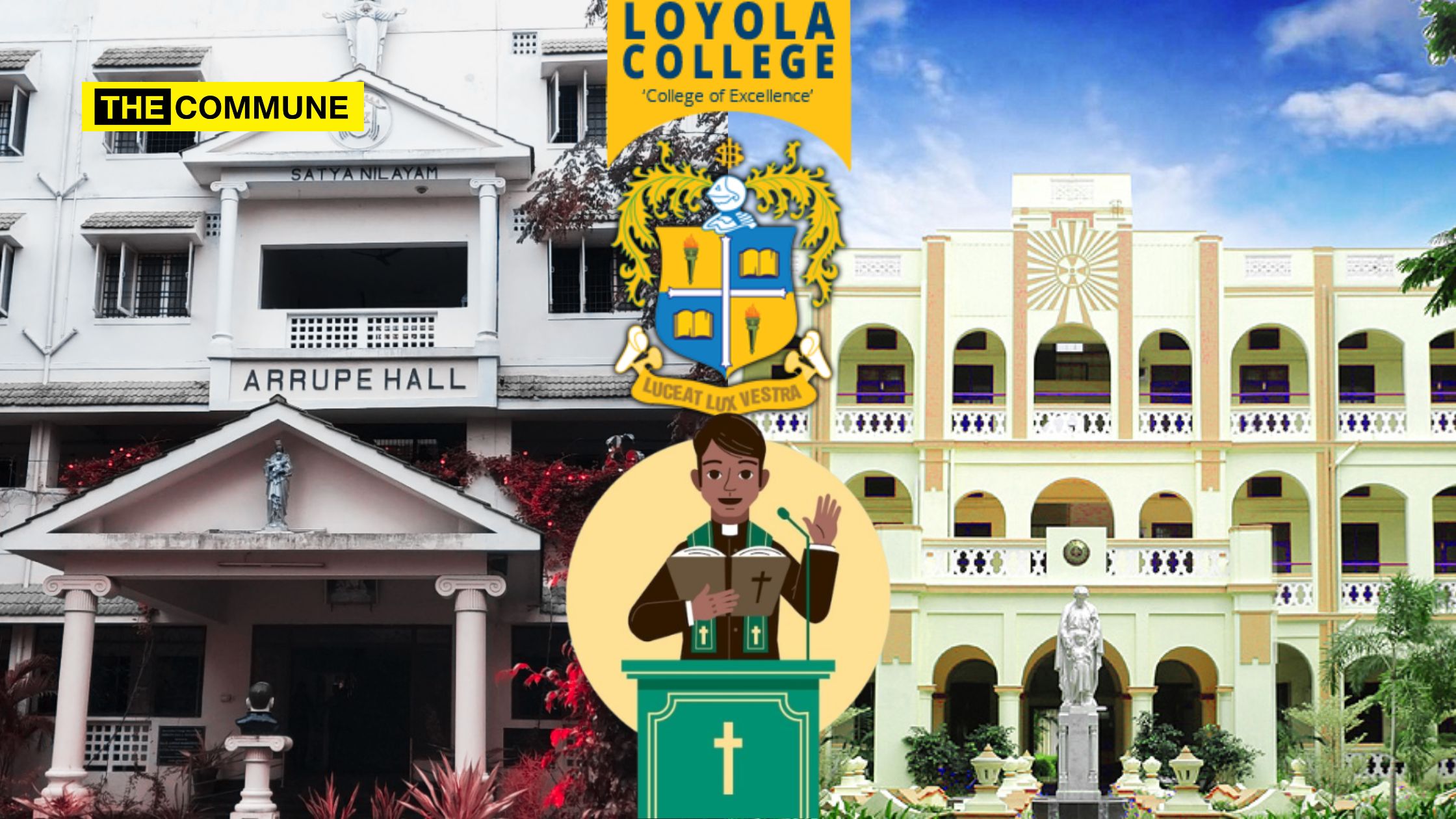
"You Have Hurt The Feelings Of The Soldiers" - Supreme Court Upholds Dismissal Of Christian Army Officer Who Refused to Enter Regiment’s Temple, Gurdwara

The Supreme Court is examining whether a Christian Army officer’s refusal to perform a temple ritual constitutes legitimate religious expression or an unforgivable breach of military protocol that warrants termination.

The case concerns Lieutenant Samuel Kamalesan, who was dismissed from service after he declined to enter the inner sanctum of his regiment’s temple to perform aarti during a ceremonial duty. The officer, attached to the 3rd Cavalry Regiment, argued that participating in the ritual would violate his monotheistic Christian faith.

The Troubling Precedent of Personal Belief Over Military Order

What makes this case particularly consequential is the challenge it poses to the fundamental principle of military hierarchy. The Delhi High Court, while upholding Kamalesan’s termination, delivered a stark warning: “Keeping one’s religion above a lawful command from a superior officer is an act of indiscipline.”

The military’s position is unambiguous – the Army cannot function as a democracy where soldiers pick and choose which orders to follow based on personal belief. Regimental rituals, whether religious or ceremonial, serve the crucial purpose of building unit cohesion and morale. When an officer distances himself from these practices, he risks alienating himself from the troops he must lead into battle.

Why This Case Should Concern Every Indian

This legal battle raises troubling questions about the future of military discipline in an increasingly individualistic society. The Armed Forces have historically operated on the principle that personal beliefs must yield to institutional requirements when national security is at stake.

The case reveals several alarming implications:

The Erosion of Command Authority: If soldiers can refuse orders based on religious grounds, it sets a dangerous precedent that could compromise operational effectiveness. As the High Court noted, hesitation in peace could become fatal hesitation in war.

Selective Obedience: The military functions on absolute obedience, not negotiated compliance. Today it’s a temple ritual; tomorrow it could be a soldier refusing to fire because his religion prohibits killing, or another refusing to handle certain equipment due to dietary restrictions.

Undermining Regimental Culture: Army regiments often draw strength from shared traditions and rituals. The 3rd Cavalry maintains both a temple and gurdwara, reflecting its composition of Sikh, Jat, and Rajput troops. Allowing individual exceptions could fragment this carefully maintained unity.

The Constitutional Dilemma

The Supreme Court, led by Justice Surya Kant, must balance Article 25’s guarantee of religious freedom against Article 33, which specifically allows Parliament to restrict fundamental rights of Armed Forces personnel to ensure proper discharge of duties and maintenance of discipline.

This isn’t merely about religious rights; it’s about whether any personal belief can override the military’s operational requirements. The Army’s argument is compelling: in uniform, the only deity is duty, and the only religion is service to the nation.

A Warning from Recent History

The timing of this case is particularly significant given the Indian military’s recent operational successes, including the spectacular triumph during Operation Sindoor. These victories were achieved precisely because of the unquestioning discipline and unity that characterizes our Armed Forces.

If the Supreme Court rules in favor of individual religious exceptions, it could fundamentally alter the character of the world’s second-largest standing army. The military’s strength has always lain in its ability to transcend individual differences in service of a common national purpose.

(With inputs from OpIndia)

Subscribe to our channels on TelegramWhatsApp, and Instagram and get the best stories of the day delivered to you personally.
Alt News’ IFCN Certification Expired In 2020, Yet Islamo-Leftist Mohammed Zubair Masquerades As A Fact-Checker

Alleged Fact-Checker Zubair’s Alt News’ IFCN Certification Expired In 2020, Yet They Continue Claiming Fact-Checker Authority

Alt News, widely cited among left-leaning circles as a “fact-checking” portal, has not renewed its International Fact-Checking Network (IFCN) certification, which expired on 26 April 2020. Despite this, the website continues to present itself as a credible authority on misinformation, publishing content under the banner of “fact verification” while selectively targeting certain issues.

The IFCN certification, which Alt News held for just one year from 26 April 2019 to 26 April 2020, is intended to signal compliance with strict principles of nonpartisanship, transparency, and methodological rigor. Organizations must demonstrate fair sourcing, openness about funding, transparency in methodology, and a commitment to correcting errors. With its certification expired for over five years, Alt News can no longer claim independent validation of these standards.

Even though the IFCN comes under the Poynter Institute, an organization linked to Pierre Omidyar’s Omidyar Network and George Soros’s Open Society Foundation, AltNews has failed to renew their “badge”.

Yet the portal continues to operate as if nothing has changed. Its fact-checks often appear to cherrypick topics and narratives, disproportionately scrutinizing political opponents or particular social groups, while leaving other claims unexamined. Critics argue that this selective coverage allows Alt News to wield the authority of “fact-checking” as a shield, lending weight to its editorial choices while potentially spreading misleading narratives under the guise of verification.

A particularly concerning pattern has emerged: Alt News has consistently pushed narratives aligned with the leftist ecosystem, often branding Hindus collectively as wrongdoers or oppressors. Through subtle framing and repeated emphasis, the portal appears to dogwhistle and demonize Hindus, amplifying ideological biases while hiding behind the credibility of its “fact-checking” brand.

The expired certification also carries practical implications. Many social media platforms and aggregators prioritize content from IFCN-certified fact-checkers to label or suppress misinformation. By continuing operations without a valid badge, Alt News is effectively leveraging past credibility while bypassing ongoing external scrutiny.

Observers note that in the absence of active auditing, the line between genuine fact-checking and editorial advocacy becomes increasingly blurred. Alt News’ claim to “fact-checking authority” is now flawed, yet it continues to influence public discourse, selectively amplifying narratives that serve a particular ideological agenda rather than maintaining impartiality.

Subscribe to our channels on TelegramWhatsApp, and Instagram and get the best stories of the day delivered to you personally.

After Stalin, Udhayanidhi Failed In Acting, Fourth-Gen Karunanidhi Heir Inban Udhayanidhi To Debut As Actor In Film Directed By This Director, Currently Undergoing Training At Acting School

The political and cinematic legacy of the Karunanidhi family is preparing for its next chapter, this time with Inban Udhayanidhi, the 21-year-old son of Tamil Nadu Deputy Chief Minister Udhayanidhi Stalin and grandson of Chief Minister M.K. Stalin. Reports suggest that Inban is set to make his acting debut in a film directed by Mari Selvaraj, the same filmmaker who helmed Maamannan (2023), Udhayanidhi Stalin’s last film before he went full-time into politics. Videos of Inban undergoing ‘acting’ training have already gone viral.

This marks the fourth generation of the Karunanidhi family to engage directly with Tamil cinema. Former Chief Minister and dialogue writer M. Karunanidhi used films like Parasakthi to spread social and political ideas.

His son, M.K. Stalin, also appeared in films such as Ore Raththam (1987) and Makkal Aanaiyittal (1988) but failed to make an impact as an actor.

Udhayanidhi Stalin followed, starting as a producer with Red Giant Movies, then making his acting debut in 2012 with Oru Kal Oru Kannadi, and later transitioning fully into politics after the film Maamannan. He too failed as an actor with more than 10 flop in his filmography.

Inban’s rise mirrors his father’s path but appears to be accelerated. In June 2025, coinciding with DMK patriarch Karunanidhi’s birthday, Inban formally took up responsibilities at Kalaignar TV, working closely with executives like CFO Karthikeyan. Reports indicated that he managed daily financial operations reflecting an early immersion into media management much similar to his father Udhayanidhi Stalin. Shortly afterward in September, Inban was seen to have taken over Red Giant Movies, securing distribution rights for Dhanush’s Idli Kadai, further cementing his position in the film industry before even formally debuting as an actor.

It is impossible to ignore the role of nepotism and political grooming. Inban’s rumoured entry into acting, combined with his immediate control over major media and production enterprises, suggests a carefully orchestrated strategy: first managing finances and operations, then producing and distributing films, and finally stepping into acting – all before establishing an independent reputation. Comparatively, Udhayanidhi Stalin took nearly a decade to solidify his cinematic career before moving into politics; Inban’s timeline is much more compressed.

Critics argue that Inban is being prepped not just for a career in Kollywood, but also for future leadership within the DMK, following the same blueprint his father did – from media to cinema to political office.

(With inputs from Times of India)

Subscribe to our channels on TelegramWhatsApp, and Instagram and get the best stories of the day delivered to you personally.

Congress-DMK Ally VCK MP Thirumavalavan Hails Terror Organization Hamas As “Bulwark Of Protection For Palestinians”

Viduthalai Chiruthaigal Katchi (VCK) chief Thol. Thirumavalavan on 8 October 2025 defended Hamas during an all-party protest in Chennai organised by the Communist Party of India (Marxist) to condemn what the organisers described as the “genocide” in Gaza.

The CPI(M) had earlier urged the Indian government to suspend all trade agreements with Israel in response to the ongoing military actions in Gaza.

Speaking at the gathering, Thirumavalavan said, “Israel is repeatedly engaging in war and attacking Palestine by giving the excuse of Hamas. Why was Hamas formed? They are a bulwark of protection for the Palestinians. They are not just war fanatics. They are Not those who place their trust only in weapons, they are not those who say that terrorism is the solution, they prioritise protection for Palestinians. They demand recognition of Palestine. They have taken up arms to protect themselves. But Israel is calling Hamas a terrorist organization and is committing genocide against the Palestinians today in the name of destroying and eradicating them with the help of America and other countries.”

It is noteworthy that CM Stalin also participated in the event. Stalin further noted that a resolution condemning the Israeli attacks and calling for an immediate ceasefire will be introduced in the upcoming Tamil Nadu Assembly session, reflecting the sentiments of the state’s people.

Subscribe to our channels on TelegramWhatsApp, and Instagram and get the best stories of the day delivered to you personally.
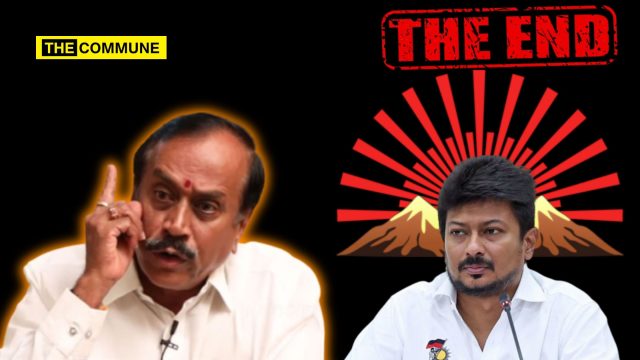
DMK Crown Prince Udhayanidhi Stalin Indirectly Refers To Vijay As Slave, Attacks Governor, Calls Centre Fascist While His Father Jails Critics For Social Media Posts

Tamil Nadu Deputy Chief Minister and DMK Youth Wing Secretary Udhayanidhi Stalin on 8 October 2025 indirectly referred to actor Vijay’s political outfit, the Tamilaga Vettri Kazhagam (TVK), as the BJP’s “new slave” in Tamil Nadu, while also launching a fierce attack on Governor RN Ravi and the Union government, labelling them as “fascist forces.”

Speaking at a DMK functionaries’ meeting for the Srirangam constituency at Kalaignar Arivalayam, Trichy, Udhayanidhi said, “The BJP-led Union Government is conspiring with AIADMK and new slaves to capture Tamil Nadu.”

He claimed that the state had been “fighting” against Governor R.N. Ravi for the past four years and would continue until “victory is achieved.” He asserted, “No matter how many such conspiracies arise, DMK cadres will ensure the state remains untouched by fascist forces.”

Criticising Governor R.N. Ravi, he added, “Two days ago, the Governor started his election campaign. He asks who Tamil Nadu is fighting against. For four years, Tamil Nadu has been fighting against him. We will continue to fight and win. As long as the last DMK cadre stands, the state will resist fascism.”

Taking aim at the opposition, he remarked, “While AIADMK leaders claim they are the main opposition, the real competition within AIADMK is for second place, with Modi and Amit Shah holding the top spots.”

Udhayanidhi also highlighted the DMK government’s welfare programmes, stating that free laptops for students would soon be distributed, and urged booth committee members to strengthen public engagement ahead of the next Assembly elections.

Calling the next five months “crucial,” he appealed to DMK cadres to intensify election work to ensure the party secures over 200 seats.

On the party’s strength, he declared, “Trichy is not just central on the map but also politically central to Tamil Nadu — his fort. The DMK’s strength lies in its grassroots cadre, who have kept the party vibrant for 75 years despite slander and propaganda. The Dravidian Model government has implemented several welfare schemes, including many not listed in the election manifesto, making Tamil Nadu a role model for other states.”

Continuing his attack on the BJP, Udhayanidhi said, “BJP is trying to impose Sanskrit and caste-based education through the New Education Policy, but Tamil Nadu will firmly resist it. AIADMK leader Edappadi Palaniswami is inconsistent in his stance, having ‘fallen at the feet’ of multiple leaders and now fully surrendered to Prime Minister Modi.”

He added, “The BJP has come to capture Tamil Nadu at any cost with the support of its old slave, the AIADMK. Now, they are searching for new slaves as well. You all very well know whom I am referring to,” indirectly targeting TVK Chief and actor Vijay.

Udhayanidhi’s remarks come amid mounting criticism of the DMK government’s tightening control over online dissent, with police arrests of social media users and political critics, even as he accuses the Union government of “fascism” and “slavery.”

(With inputs from ANI)

Subscribe to our channels on TelegramWhatsApp, and Instagram and get the best stories of the day delivered to you personally.
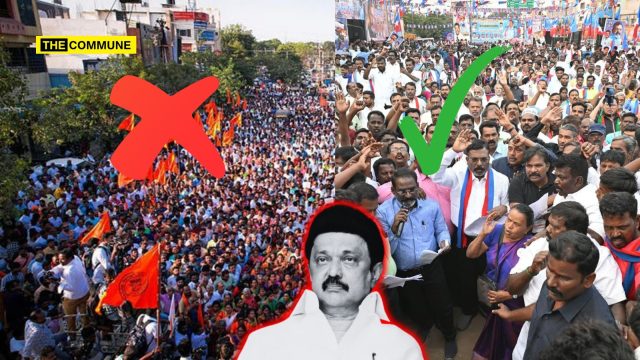
DMK Govt Omits Names Of Great Tamil Kings, Tall Dalit Leaders In Statewide Drive To Rename Streets, Includes Karunandhi’s And Anti-Hindu EVR Name

In a sweeping directive, the Tamil Nadu government has mandated the removal of all caste-based names from streets, localities, and waterbodies across the state by 19 November 2025. The order, however, has ignited immediate controversy for allegedly sidelining prominent Dalit icons, with opposition parties accusing the ruling DMK of a selective and politically motivated approach to social justice.

The directive was issued on 6 October 2025 by Chief Secretary N. Muruganandam. District collectors have been instructed to replace existing caste-derived names with those of Tamil literary figures, leaders, or flowers.

According to the government order, roads bearing caste references are to be renamed after a list of 16 figures, which includes Tamil literary giants like Tiruvalluvar and Avvaiyar, as well as leaders such as Periyar E.V. Ramasamy, and former chief ministers C.N. Annadurai and M. Karunanidhi. For waterbodies, the government has proposed 15 flower names, including Roja, Malli, and Sembarathi.

This initiative follows an announcement made by Chief Minister M.K. Stalin on 29 April 2025 to eliminate the term “colony” from government records and public discourse. Consequently, names such as Adi Dravidar Colony, Harijan Colony, Paraiyar Theru, and Sakkiliyar Salai are set to be replaced with what the government describes as “neutral, casteless names.”

The state administration has set a tight deadline for the process. District administrations are required to identify all such places by 14 October 2025, hold public consultations and receive petitions by 17 October 2025, and notify the changes by 24 October 2025. The final list must be submitted to the government by 14 November 2025, with all renaming to be officially completed by 19 November 2025. Following this, district collectors have been directed to facilitate the updating of all relevant records, including Aadhaar, community certificates, family cards, and land documents for affected residents.

The move, while ambitious, has drawn sharp criticism for its perceived exclusions. The provided list of new names has been notably criticised for omitting key Dalit leaders from the Dravidian and Tamil social justice movements such as Rettaimalai Srinivasan and Ayothidasa Pandithar.

The names of Tamil Nadu’s greatest rulers — Rajaraja Chola, Rajendra Chola — or even the illustrious dynasties of the Cheras, Cholas, Pandyas, and Pallavas have been conspicuously excluded.

BJP state president K. Annamalai strongly criticized the move. He stated, “If the government is naming after former chief ministers, where is M G Ramachandran?” He demanded that the order be revoked and reissued to include leaders such as Dr. B.R. Ambedkar, Rettamalai Srinivasan, Rani Velu Nachiyar, and V.O. Chidambaranar.

Echoing similar sentiments, former AIADMK MP J. Jayavardhan pointed out that the names of former chief ministers MGR and J. Jayalalithaa were also missing. He alleged, “DMK is in power, so they have included their leader,” implying political bias in the selection.

When questioned about the exclusions, DMK MLA N. Ezhilan defended the government’s approach. He stated that the inclusion of names like Periyar, Anna (C.N. Annadurai), and Kalaignar (M. Karunanidhi) should not be viewed politically. “The government is taking systemic steps to eliminate caste. Teaching scientific temper and rational thinking is key to ending caste discrimination,” Ezhilan said.

Despite this defence, the absence of foundational Dalit figures like Rettamalai Srinivasan and Ayothidasa Pandithar from the list has led to questions about the DMK’s “Dravidian Model” involving abbreviating Tamil history in a manner that overlooks crucial anti-caste crusaders from the Dalit community.

(With inputs for Times of India)

Subscribe to our channels on Telegram, WhatsApp, and Instagram and get the best stories of the day delivered to you personally.
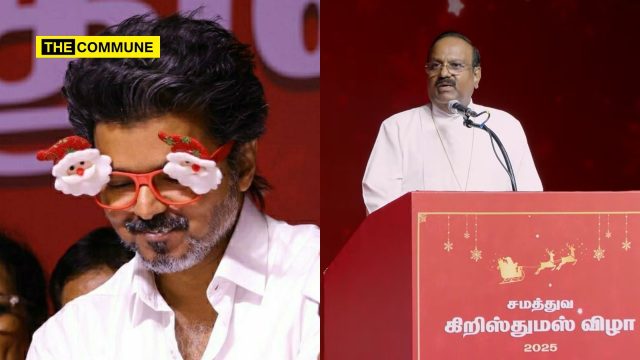
DMK Govt Says No Caste Name For Streets, But Stalin Says Coimbatore Flyover Will Be Named After GD ‘Naidu’

The DMK government in Tamil Nadu has ordered the removal of all caste-based names from streets, localities, and water bodies by 19 November 2025. These must be replaced with neutral names such as Tamil literary figures, eminent leaders, or flowers. The directive, issued on October 6 by Chief Secretary N. Muruganandam, includes 16 suggested names such as Tiruvalluvar, Avvaiyar, Kabilar, Bharathiyar, ‘Periyar’, and former Chief Ministers C.N. Annadurai and M. Karunanidhi.

For water bodies, the state suggests adopting one of 15 flower names like Roja, Malli, Sembarathi, or Suryagandhi. This move builds on Chief Minister M.K. Stalin’s earlier announcement (on April 29) to eliminate the term “colony” from official records and public usage.

Names such as Adi Dravidar Colony, Harijan Colony, Vannankulam, Paraiyar Theru, and Sakkiliyar Salai are to be rescinded and replaced by caste-neutral alternatives.

Former Chief Minister MG Ramachandran and J. Jayalalithaa have been omitted which is seen as political vengeance.

Meanwhile, Chief Minister M.K. Stalin on Tuesday announced that the state’s longest flyover, the Avinashi Road Elevated Corridor in Coimbatore, will be named after inventor and industrialist G.D. Naidu, a decision that has drawn mixed reactions, particularly in light of the DMK’s repeated claims of working to eliminate caste identities from public life.

Stalin, in a post on X, said his government had completed 95% of the project’s work after assuming office, noting that only 5% had been finished when the DMK came to power. He said the 10.10 km-long flyover, built at a cost of ₹1,791 crore, reflects the government’s commitment to infrastructure and progress under the “Dravidian model.”

The Chief Minister added that the structure was being named after G.D. Naidu, hailed as the “Edison of India”, describing him as a close ideological associate of Periyar (original name – EV Ramasamy Naicker) and a symbol of innovation and scientific spirit.

The Avinashi Road Elevated Corridor, executed by the Special Projects Wing of the State Highways Department, stretches from Uppilipalayam to Goldwins and is expected to ease traffic congestion along one of Coimbatore’s busiest routes. The inauguration is set to take place on 9 October 2025.

While many industrialists and civic groups welcomed the naming, the inclusion of “Naidu” in the official title has prompted questions about the DMK’s consistency on caste-related issues. Critics noted that the ruling party has frequently advocated removing caste-based titles and surnames from public and official usage.

Local industry representatives, however, praised the gesture. J. Sathish, director of the Kongu Global Forum, said G.D. Naidu’s contributions to entrepreneurship, technical education, and social upliftment were “woven into the fabric of Coimbatore.” Rajesh B. Lund, president of the Indian Chamber of Commerce and Industry, Coimbatore, said the naming was a “fitting tribute” to a visionary who embodied the city’s industrious spirit.

The irony couldn’t be starker — while the DMK government orders the removal of caste names from streets and villages, it proudly names a major flyover after G.D. Naidu. In Tamil Nadu, it seems caste names are objectionable only when politically inconvenient.

(With inputs from The New Indian Express)

Subscribe to our channels on TelegramWhatsApp, and Instagram and get the best stories of the day delivered to you personally.
BJP, PMK Slam DMK Govt Over Child Rapist And Murderer Dashwanth’s Release

BJP, PMK Slam DMK Govt Over Child Rapist And Murderer Dashwanth's Release

The Supreme Court’s acquittal of S. Dashwanth in the 2017 rape and murder of a six-year-old girl has ignited a political firestorm in Tamil Nadu, with opposition parties training their guns on the ruling DMK government for a “catastrophic failure” of law and order that led to the convict walking free.

Leaders from the Bharatiya Janata Party (BJP) and the Pattali Makkal Katchi (PMK) have condemned the release, labeling it a “black day” for child safety and placing the blame squarely on the state’s “Dravidian Model” government for its incompetent police investigation and prosecution.

PMK Chief Anbumani Ramadoss: “A Painful Example of Powerlessness”

PMK President Dr. Anbumani Ramadoss led the charge, posting a detailed condemnation on social media platform X. He stated that the acquittal of Dashwanth, who was previously sentenced to death and 46 years in prison, is a “painful example of how powerless we are in getting justice for children who are victims of human animals.”

“This case was not conducted properly from the beginning,” Anbumani wrote, highlighting the procedural lapses. “Dashwant got bail as the chargesheet was not filed within 3 months. Since then, the case has started to change course.”

He expressed deep anguish over the Supreme Court’s reasoning, which pointed to insufficient video evidence and mismatched DNA results. “If Dashwant did not do anything wrong in this case, then who killed Hasini? The question arises,” he questioned, demanding accountability from the police and government.

“The government and the police should bow their heads for this,” he asserted, concluding his post with a call for a review petition and systemic reforms to ensure punishment for culprits in heinous cases.

BJP’s Tamilisai Soundararajan: “Women’s Safety Hanging by a Thread”

Adding to the chorus of condemnation, BJP leader and former Telangana Governor Dr. Tamilisai Soundararajan expressed her shock and pain over the release. In a strongly worded post on X, she wrote, “Hasini.. The beast accused of brutally assaulting and burning this child to death has been released today.. The reason given by the court.. Proper evidence was not submitted.”

She framed the acquittal as a direct result of the deteriorating law and order in the state under the DMK regime. “That beast has been released.. In Tamil Nadu, women’s safety is hanging by a thread…. Pain.!,” she stated.

Echoing Anbumani’s demand, Tamilisai called for immediate action. “A re-investigation is needed… The cruel one must be hanged,” she demanded, underscoring the public outrage and the demand for justice for the victim, Hasini.

 A Collapse of Justice Becomes a Political Flashpoint

The coordinated criticism from the BJP and PMK turns a tragic judicial outcome into a major political issue. The opposition is leveraging the acquittal to paint the DMK government as weak on law and order, incapable of protecting its most vulnerable citizens, and presiding over police force whose incompetence allows heinous criminals to escape punishment.

The central thrust of their attack is that the Supreme Court’s acquittal was not a finding of innocence, but a direct indictment of the state’s investigation. The failure to file a chargesheet on time, the alleged mishandling of forensic evidence, and the inability to present a foolproof case in court are being cited as symptomatic of a larger administrative failure.

Subscribe to our channels on TelegramWhatsApp, and Instagram and get the best stories of the day delivered to you personally.
Dravidianist Media/Journos Maintain Pin Drop Silence on Child Rapist And Killer Dashwanth Walking Free

Dravidianist Media/Journos Maintain Pin Drop Silence on Child Rapist And Killer Dashwanth Walking Free

In a verdict that should have sent shockwaves through Tamil Nadu’s public consciousness, the Supreme Court acquitted S. Dashwanth in the 2017 rape and murder of a seven-year-old girl. The judgment was not a declaration of innocence, but a damning indictment of a police investigation so shoddy, so fraudulent, and so procedurally vile that it forced the highest court to let a man, once sentenced to death for a heinous crime, walk free.

Yet, across Tamil Nadu, the response from the dominant Dravidianist media machinery has been a pin-drop silence. Not the silence of shock, but the silence of complicity.

While the news wires carried the bare bones of the acquittal, major media houses like Thanthi TV, News18 Tamil Nadu, and Sun News treated it as a passing item – a short news byte or a static news card to be scrolled past. Worse, DMK mouthpiece Kalaignar News didn’t even think it was newsworthy and completely blacked out the news.

There were no prime-time debates, no hard-hitting panels, no relentless questioning of the Home Department, and no demand for accountability from a police force whose “Dravidian Model” has been exposed as a model of catastrophic failure.

Where Are the Crusaders?

Where is the fiery outrage from ‘journalists’ like Karthigaiselvan or Niranjan Kumar or Nelson Xavier who would jump up and down had the same been done to a case in UP or a BJP-ruled state? They would conduct debate after debate and flog a dead horse even if the issue was irrelevant. These journalists, often vocal on politically convenient issues, have suddenly lost their voice when it matters most. Their silence is a betrayal of the fourth estate’s fundamental duty: to speak truth to power and to be a voice for the voiceless.

A little girl was brutally raped and murdered. Her family has been denied justice not because of a lack of evidence, but because of a police force that allegedly fabricated evidence, manipulated witnesses, and violated every tenet of a fair investigation and trial. This is not just a legal failure; it is a monumental governance failure. It reveals a law-and-order machinery so incompetent or so corrupt that it cannot secure a conviction even in a case with a charred body of a child. And yet, the media, which styles itself as the guardian of the people, looks the other way.

Selective Outrage and Political Servility

This deafening silence is not accidental. It is symptomatic of a media ecosystem that thrives on selective outrage. The same channels that will run week-long debates on minor political slights or orchestrated controversies cannot muster the courage to question their political masters over a collapse of the criminal justice system.

To question the police is to question the government that controls it. And for the Dravidianist media, that is a red line they dare not cross. The pursuit of truth has been sacrificed at the altar of political servility.

The acquittal of Dashwanth is not an isolated incident. He was also acquitted in the murder of his own mother, with sources indicating the evidence was too weak to pursue. This points to a pattern of ineptitude that should be the biggest story in the state. Instead, it is being swept under the rug.

The message this silence sends is that, if you are a victim of a gruesome crime in Tamil Nadu, not only might the police fail you, but the media will too. They will not fight for you. They will not hold the powerful accountable. They will simply look away.

The Supreme Court did its job by upholding the law, even when it meant setting a potentially dangerous man free due to the state’s incompetence. It is now the media’s job to do its duty – to scream from the rooftops about this failure, to demand answers, and to ensure that such a travesty of justice never happens again. But if their current silence is anything to go by, the people of Tamil Nadu should not hold their breath. The Dravidianist media has spoken, not with words, but with a cowardice that echoes louder than any headline.

Subscribe to our channels on TelegramWhatsApp, and Instagram and get the best stories of the day delivered to you personally.
Supreme Court Acquits Child Rapist And Murderer Dashwanth Due To Glaring Lapses By DMK Govt’s Dravidian Model Police

Child Rapist Dashwanth Walks Free As DMK Govt's Dravidian Model Police Fail To Provide Evidence

In a verdict that delivers a staggering blow to the pursuit of justice, the Supreme Court on Wednesday acquitted S. Dashwanth in the 2017 rape and murder of a seven-year-old girl, unleashing a torrent of anguish and raising terrifying questions about the competence of the Tamil Nadu police.

While the legal outcome is an acquittal, the story told by the apex court is not one of Dashwanth’s innocence, but of a catastrophic systemic failure so profound that it rendered a conviction legally impossible. The court did not find a saint; it found a case so badly botched by the Dravidian Model police that a man once sentenced to death for a heinous crime had to be set free.

“We are of the view that the prosecution has miserably failed to prove the vital circumstances, that is, last seen together, suspicious […] of the appellant captured in the video footage of the CCTV camera, the confessional disclosure statement, the FSL report […] which constituted the entire edifice of the prosecution case on which the conviction of the appellant was based. The impugned judgment is set aside. The appeal is allowed. The conviction and sentence awarded to the appellant are hereby set aside. Appellant is acquitted. He shall be released from custody forthwith, if not wanted in any other case”, the Court ordered.

A Heinous Crime, A Hollowed-Out Case

The case stemmed from a parent’s worst nightmare. On 5 February 2017, the seven-year-old daughter of CSD. Babu and Sridevi went missing from their apartment complex. Her charred body was discovered days later. The prosecution alleged that Dashwanth, a neighbour, lured the child, sexually assaulted her, murdered her, and then burned her body to destroy evidence.

However, the Supreme Court systematically dismantled the state’s case, not by vindicating Dashwanth, but by exposing how the police and prosecution violated the law to secure a conviction, ultimately ensuring its collapse.

“Grave Doubt” and “Planting” of Evidence

The judgment paints a picture of an investigation riddled with concoction and coercion:

A “Concocted” Last-Seen Story: The court found the sole “last seen” witness, Murugan, wholly unreliable. His claim of seeing Dashwanth with the child was disclosed only after a two-month delay, even though he was part of the initial search party. The court concluded this was a later fabrication to “lend credence to the otherwise weak case.”

A “Fictional” Confession: In a damning finding, the court revealed that a Village Administrative Officer was informed by police before Dashwanth’s official arrest that he would confess to the rape and murder. This, the court held, proved the confession was a pre-written script, extracted under coercion during illegal detention. The subsequent “recoveries” of the victim’s ornaments were labeled “planted” to fit this script.

Forensic Evidence with a “Broken Chain”: The DNA evidence, a potential cornerstone of the case, was rendered “redundant”. The prosecution failed to maintain a proper chain of custody for samples, with an unexplained four-month delay in collecting Dashwanth’s blood. The court noted a “strong possibility” this delay “may have been utilized to manipulate the samples,” making the forensic reports unreliable.

A “Sham” Trial That Sealed the Failure

Beyond the investigation, the Supreme Court highlighted a “total failure of justice” in the trial process, violating Dashwanth’s fundamental right to a fair trial under Article 21 of the Constitution.

Charges were framed against Dashwanth on 24 October 2017, without a defence lawyer being present or appointed for him. The mandatory copies of prosecution documents were not provided to him until 13 December 2017. A legal aid lawyer was appointed on December 13, and the trial commenced just four days later, with 30 witnesses examined and the case concluded in a mere month and a half. The court held that the lawyer had “no reasonable and effective opportunity to prepare.”

The trial court delivered its conviction and death sentence on the very same day, without calling for any reports on mitigating circumstances or a psychological evaluation, reducing the sentencing exercise to a “mere formality.”

The court stated that for a trial to be fair, “an effective opportunity to defend must be provided.” This was denied, making the entire process a “mere formality.”

A Chilling Precedent and a Family’s Agony

This acquittal follows another for Dashwanth, in the murder of his own mother, Sarala in December 2017, for which he had been acquitted earlier this year. Sources indicated the state did not appeal that acquittal as the evidence had “no merit,” further questioning the police’s investigative rigor in cases involving the same individual.

The Supreme Court was forced to make a painful but legally necessary decision. As the bench observed, “The legal framework does not permit the Courts to punish an accused person based merely on moral convictions or conjectures.”

The outcome is a travesty. A little girl was brutally raped and murdered. Yet, due to the very authorities tasked with delivering justice, no one will be held accountable. The verdict is not an exoneration of Dashwanth, but a devastating indictment of a system that failed at every turn, leaving a family without justice and a society questioning whether anyone is safe when those who enforce the law break it.

(With inputs from The New Indian Express)

Subscribe to our channels on Telegram, WhatsApp, and Instagram and get the best stories of the day delivered to you personally.