Home Blog Page 206

NPCI Issues New UPI Rules Effective 1st August: NPCI Sets Caps On Balance Enquiries, Reversals And Reversals Request To Curb Spam, Boost Safety

The National Payments Corporation of India (NPCI) has issued fresh guidelines for all members of the UPI ecosystem, including banks and payment apps, which must be implemented by 31 July. Starting 1 August, using UPI will come with a set of new rules aimed at improving transaction speed, reducing system load, and making payments safer.

One of the major changes is a cap on how many times users can check their account balance through a UPI app. From next month, each app will allow a maximum of 50 balance enquiries per customer per day, within a rolling 24-hour period. This limit is per app, meaning a user can still check their balance separately on different UPI apps.

Importantly, these requests must be initiated by the user, not automatically by the app, as per the circular. Banks will also be required to display the available account balance after every successful UPI payment. For auto-pay transactions, NPCI has fixed specific time slots to avoid network congestion. Scheduled payments will only be processed before 10 a.m., between 1 p.m. and 5 p.m., or after 9:30 p.m. Peak hours when UPI usage is highest are defined as 10 a.m. to 1 p.m. and 5 p.m. to 9:30 p.m., during which auto-pay executions will not take place.

The number of times users can view the list of bank accounts linked to their UPI profile will also be limited to 25 times per day. For pending transactions, users can check the payment status only three times, with at least a 90-second gap between each attempt.

Payment reversal requests will also be capped at 10 per month, with a maximum of five per sender. In a step to prevent fraud and payment mistakes, UPI apps will now display the recipient’s registered bank name before a transaction is completed. This will help users verify they are sending money to the right person or business. NPCI has warned that failure to implement these rules could lead to strict action, including penalties, suspension of new customer onboarding, or even restrictions on API access for UPI services.

-IANS

Subscribe to our channels on TelegramWhatsApp, and Instagram and get the best stories of the day delivered to you personally.

Bengaluru Bomb Scare: Police Nab Three In Kalasipalya Explosives Probe

The Karnataka Police have cracked the case involving the planting of explosive materials outside a public toilet at Bengaluru’s overcrowded Kalasipalya bus stop and have arrested three persons.

Confirming the arrests on 29 July, DCP (West) S. Girish stated that as the investigation was ongoing, the names and photos of the accused would be released in due course. Girish said, “The incident took place on 23 July. Taking the matter seriously, the police department formed five teams. These teams conducted investigations, gathered information from sources, and, through technical evidence, apprehended three suspects.”

He further added, “The police have recovered 22 live REX 90 gelatin gel capsules and 30 live electric detonators. We have also obtained information about other individuals involved in the case, and the investigation is still in progress.”

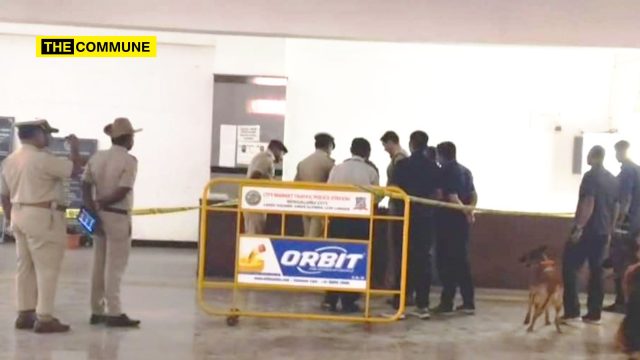
Earlier, panic had gripped Bengaluru’s Kalasipalya bus stop after an unattended bag was found outside a public toilet on 23 July. Acting on information about a suspicious bag, Bengaluru Police rushed to the spot and recovered gelatin sticks and detonators outside a public toilet at the Kalasipalya bus stop. Six (REX 90) gelatin gel capsules and 12 electric detonators, both separately packed, were found in a carry bag outside the toilet located on the premises of the Kalasipalya Bengaluru Metropolitan Transport Corporation (BMTC) bus stand.

The explosive materials were discovered around 2 p.m. They were kept in separate bags near the toilet. The case was filed under Sections 4 and 5 of the Explosive Substances Act, under Sections 6 (A), 9 (B) of the Explosives Act and also under Sections 61 (1)(a), 61 (1)(b) of the Bharatiya Nyay Sanhita. Assistant Traffic Superintendent (ATS) Mallappa R. Katiimani had filed a complaint in this regard. An unknown person and an adult male were named as the accused persons initially in the FIR.

The FIR had stated, “The complainant works as the ATS at the Kalasipalya bus stop and has come to duty at 8 a.m. and inspected the Kalasipalya BMTC bus stop and found nothing at that time. Later, at 1.15 pm, security personnel Prabhvathi and Raju produced a bag saying that an unknown person had left it near the bus stand public toilet. He suspected the presence of the explosive substance and called the police. The police, who arrived at the spot, confirmed it.”

The complainant has stated that the Kalasipalya bus stop is an overcrowded place and urged the police to track down the persons who had left the explosive substances to cause harm to lives and property, and initiate legal action, the FIR stated. Kalasipalya is a communally sensitive and densely populated area in Bengaluru, and the discovery had raised serious concerns among residents and security agencies. Recently, over 40 private schools in Bengaluru received bomb threat messages via email.

-IANS

Subscribe to our channels on TelegramWhatsApp, and Instagram and get the best stories of the day delivered to you personally.

Advocate Or Urban Naxal? From Kudankulam To Sterlite Protest, Who Is This Vanchinathan, That The DMK Ecosystem Is Backing Heavily To Target Justice GR Swaminathan

advocate vanchinathan dmk

The judiciary is often regarded as the last bastion of hope for the common citizen; a pillar designed to stand above political pressures and ideological influence. India’s Constitution-makers, recognizing this vital role, ensured the judicial system was built to function independently. However, in Tamil Nadu, this very principle is under coordinated attack by factions aligned with the Left, Communists, and Dravidianist movements, who appear determined to subvert judicial independence in favor of their political agenda. When verdicts don’t align with their ideology, their strategy shifts from dissent to outright intimidation of judges through propagating malice and defamation.

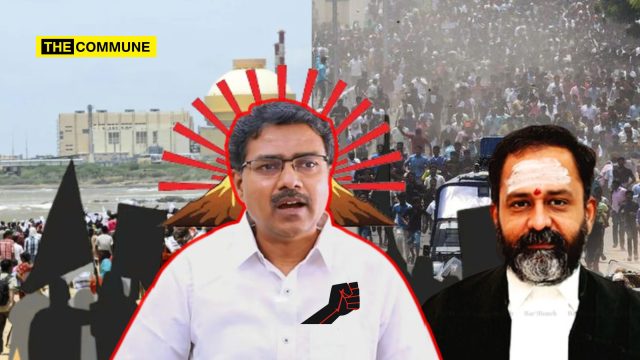
A glaring instance of this trend is the recent targeting of Justice GR Swaminathan of the Madras High Court, who came under personal and professional attack from advocate Vanchinathan, a Communist, a figure now being aggressively defended by the Dravidianist, Periyarist, and left-wing ecosystem.

Who Is Advocate Vanchinathan? And Why Is He Being Shielded By DMK Ecosystem?

Contrary to the image being painted by his sympathizers, Advocate Vanchinathan is not a dispassionate human rights defender. He has long been associated with the People’s Right Protection Centre, a pressure group with a history of aligning with disruptive causes. He has served as its state organizer and has played a prominent role in campaigns that often appear more politically motivated than rooted in public interest.

Vanchinathan was a vocal opponent of the Sterlite Copper plant in Thoothukudi, a protest that turned violent and controversial. He has consistently aligned himself against key infrastructure and policy initiatives, from the eight-lane highway project to the Citizenship Amendment Act (CAA) and the National Register of Citizens (NRC). His activism often resembles that of an ideological foot soldier for the DMK and affiliated leftist coalitions, rather than an impartial legal advocate.

The Kudankulam Anti-Nuclear Protests (2012): A Blockade Against Development

In 2012, a group of nearly 20 lawyers led by Advocate S. Vanchinathan practicing at the Madras High Court’s Madurai Bench staged a protest within the court premises. Their demonstration condemned the police action taken against agitators opposing the Kudankulam Nuclear Power Plant in Tirunelveli and urged the central government to halt fuel loading into the reactor.

This protest wasn’t an isolated event. It was part of a broader, well-organized campaign that became one of the most significant attempts to derail a strategic energy project in southern India. The Union Home Ministry eventually revoked the licenses of three NGOs operating in Tamil Nadu, alleging they misused foreign funds to support and intensify the anti-nuclear protests.

This crackdown followed a public statement by then-Prime Minister Manmohan Singh, who suggested that foreign-funded NGOs, particularly from the U.S., were behind the agitation that delayed a major infrastructure project. The first of two 1000-MW Russian-assisted reactors was scheduled for commissioning in late 2011 but was stalled due to the ongoing unrest.

Minister of State V. Narayanasamy later confirmed punitive action against the involved NGOs. Though he did not initially disclose names, he had earlier pointed fingers at organizations linked to Bishop Yvon Ambroise of Tuticorin, who had allegedly received ₹54 crore in foreign funds and was instrumental in mobilizing opposition.

Among those named were the Tuticorin Diocese Association (TDA) and Tuticorin Multipurpose Social Service Society (TMSSS), both Christian organizations under scrutiny for funding and promoting the protests. Other groups like People’s Education for Action and Liberation (PEAL) and Good Vision were also flagged. TMSSS alone had received ₹42 crore over five years, ostensibly for rural development. However, their funds and activities were later found to be intertwined with anti-development protests.

Sterlite Protests: Escalating Dissent Into Violence

In June 2018, Vanchinathan was arrested at Chennai Airport upon arrival from Delhi. He was accused of inciting the violent anti-Sterlite protests in Thoothukudi, where police firing tragically resulted in 13 civilian deaths. Along with fellow lawyer Hari Raghavan, Vanchinathan was booked under various IPC sections including rioting, criminal force against public servants, and for damages under the Tamil Nadu Property Prevention Act.

Following the arrest, a police team conducted searches at his residence in KK Nagar, Madurai, seizing documents and protest material. His role in the protests is viewed by authorities not as advocacy, but as direct involvement in orchestrating unrest.

Ironically, it was Justice GR Swaminathan who granted bail to Vanchinathan during this case.

CAA-NRC Protests And Provocative Speeches (2020): Ideological Rhetoric Disguised As Activism

In early 2020, Vanchinathan again made headlines for his involvement in protests against the Citizenship Amendment Act (CAA) and National Register of Citizens (NRC). He was scheduled to speak at a large rally in Trichy organized by the People’s Right Protection Centre (PRPC), where he serves as a state coordinator. The event was denied permission by local authorities, citing public order concerns. But later was granted permission by the High Court.

Later, in a separate event under the guise of criticizing CAA-NRC his speeches were filled with incendiary political rhetoric. In a seminar at Tiruvannamalai, he accused the Modi government and the RSS of orchestrating violence against JNU students and suppressing intellectual dissent. His statements went beyond critique of legislation; they bordered on personal attacks and conspiratorial narratives, including claims of RSS infiltration in academic institutions and state complicity in campus violence.

His speech, titled “NRC: Are We Becoming Second-Class Citizens in a Hindu Rashtra?” was a tirade against what he described as “Brahminical politics” and “corporate looting” by Adani and Ambani. He claimed that policies like NEET and the New Education Policy were part of a larger agenda to deny education to the underprivileged and to stifle critical thinking.

He also defended controversial statements made by Tamil scholar Nellai Kannan who made contentious remarks against Prime Minister Modi and Home Minister Amit Shah questioning the grounds of his arrest and mocking the intelligence of the Prime Minister in highly derogatory terms.

Targeting Hindu Organizations: Selective Outrage and Legal Intimidation

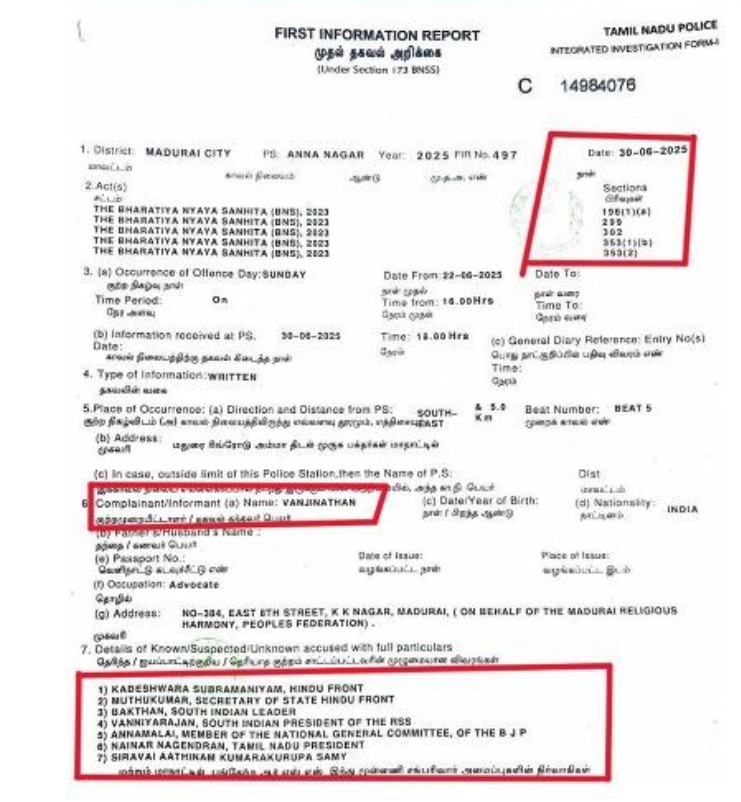
In an equally revealing move, Vanchinathan filed FIRs against several leaders associated with Hindu organizations, including the Hindu Munnani and members of the RSS and BJP, accusing them of inciting religious discord during the Murugan Manadu event. The list included political figures like Annamalai (BJP), Nainar Nagendran, and senior leaders from the Hindu Munnani.

During the peak of the Thiruparankundram controversy, when certain Muslim fundamentalist groups referred to the hills as “Sikkandar Hills” and asserted the right to perform sacrifices at the hilltop dargah Advocate Vanchinathan actively supported the fundamentalist side and propagated claims that sacrificial rituals had historically taken place on the temple hills. However, the Hindu Religious and Charitable Endowments (HRCE) Department denied these claims, and the individuals from the Muslim community who made them were reportedly unable to provide any documentary evidence supporting the occurrence of such sacrifices at Thiruparankundram Hills. Furthermore, in his speeches, Vanchinathan alleged that Lord Murugan had been appropriated and renamed ‘Subramanian’ under a Vedic identity.

The consistent pattern emerging from Vanchinathan’s actions reveals more than isolated incidents of activism. His legal and public interventions almost exclusively target pro-Hindu, nationalist, or development-centric policies and organizations while routinely defending or being backed by the Dravidianist, Periyarist, and leftist political ecosystems.

Not Just A Lawyer, But A Dravidianist Political Actor

Advocate Vanchinathan’s track record does not reflect that of a neutral human rights defender, but rather of a deeply ideological figure whose activism routinely aligns with a specific political narrative. From Kudankulam to Sterlite, from anti-CAA rallies to aggressive targeting of Hindu groups, his actions suggest a broader agenda designed to challenge the state and national leadership, often using legal tools and public discourse to propagate a one-sided ideological viewpoint.

The repeated defense and support he receives from leftist and Dravidianist groups only underscores that Vanchinathan is not acting in isolation. He is a key player in a larger ideological campaign one that poses serious questions about the politicization of activism, the misuse of legal mechanisms, and the erosion of institutional neutrality in the name of dissent.

Subscribe to our channels on TelegramWhatsApp, and Instagram and get the best stories of the day delivered to you personally.

AIADMK’s EPS Begins Southern Leg Of Campaign, Reaffirms NDA Ties

eps aiadmk bjp

AIADMK General Secretary Edappadi K. Palaniswami on 29 July 2025 launched the next leg of his statewide campaign, “Let’s Save the People, Let’s Rescue Tamil Nadu”, with a visit to Sivaganga district. Arriving at Tiruchi airport from Chennai, Palaniswami told reporters that the ‘Ezhuchi Perani’ campaign has so far covered 49 Assembly constituencies and was receiving enthusiastic support from the public.

“Today, I am beginning my campaign in Sivaganga. From here, I will continue to cover constituencies in Ramanathapuram, Thoothukudi, Tenkasi, and Virudhunagar districts. The people have been giving us a tremendous welcome everywhere,” he said.

Addressing the recent controversy over a Tamil Nadu government circular directing agricultural cooperative banks to check farmers’ CIBIL scores before approving loans, Palaniswami criticised the move, saying it would have badly impacted the farming community. “I submitted a petition to Prime Minister Narendra Modi explaining how this would hurt farmers. The state government has now withdrawn the circular and restored the old procedure. We will continue to raise our voice for the people, whether we are in power or not,” he said.

When asked about the possibility of expelled AIADMK leader V.K. Sasikala joining any alliance involving the party, Palaniswami responded, “It is not for me to speculate. Other parties’ alliance decisions are for their leaders to announce.” Commenting on the potential formation of a third front involving the Congress and Tamilaga Vettri Kazhagam, he said, “There are still eight months left for the elections. Anything can happen. Each party will take its call on alliances based on its political strategy.”

On former Chief Minister O. Panneerselvam’s criticism of the Centre for not allocating education funds to Tamil Nadu, Palaniswami said the issue of education being under the Concurrent List dates back to the Emergency era. He said, “Education was moved to the Concurrent List in 1976. The DMK, despite being part of several central governments, never took any steps to restore it to the State List. They must take responsibility.”

Speaking on the NDA alliance, Palaniswami reiterated AIADMK’s current position. “We are part of the NDA, and several parties are aligned with the BJP. There is still time before the elections. Once the schedule is announced, we will declare our alliance partners.”

-IANS

Subscribe to our channels on TelegramWhatsApp, and Instagram and get the best stories of the day delivered to you personally.

Dirty Dravidian Model: ₹1,100 Crore Spent To Clean Toilets, But They Still Stink; Some Vanish

stinky toilet dravidian model dmk stink dirty

The Greater Chennai Corporation’s grand “Singara Chennai 2.0” promise has disintegrated into a public health disgrace, with over ₹1,100 crore flushed into toilet construction, privatisation, and maintenance schemes over the past decade — all for facilities that remain stinky, unusable, and in some cases, physically crumbling.

Marketed as a symbol of the Dravidian Model’s commitment to urban upliftment, Chennai’s public toilet infrastructure today stands as its most pungent failure.

Toilets Missing, Sealed Or Cracked But Contracts Flow

Between 2019 and 2024, the Corporation spent ₹620 crore under the Swachh Bharat Mission (SBM) to build and maintain 10,000 public toilet seats across 1,260 locations. Another ₹430 crore went into a nine-year toilet privatisation deal, one of India’s first, for just two zones: Royapuram and Thiru Vi Ka Nagar, plus parts of Marina. ₹50 crore more was spent on mobile toilets, e-toilets and so-called “Oppanai Arai” facilities under Singara Chennai. Yet the on-ground reality reeks of corruption, neglect, and absence of oversight.

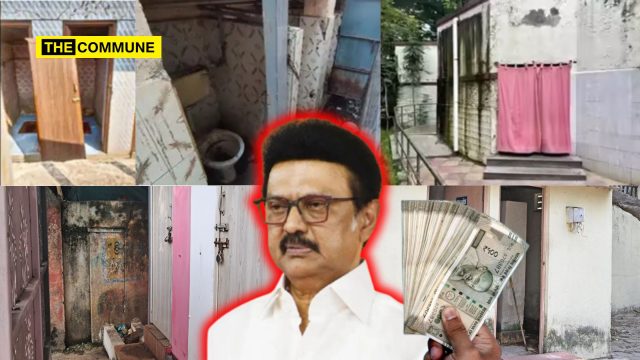
In Anna Nagar, an entire 10-storey SBM toilet that still shows on Google Maps is now completely missing. In Tower Park, the women’s side of a toilet had no door, just a pink curtain. At the SBM toilet near Rajarathinam Stadium in Egmore, there was no staff, no cleanliness, and no CCTV, despite tender requirements mandating all three.

In Adyar, ₹1.6 crore was spent in just six months to maintain toilets. Yet at one location, the commode was found sealed with cement and the toilet shut down. At Indira Nagar, the e-toilet marked on Google Maps was removed five months ago without explanation.

Apparao Gardens: Toilets From A Horror Movie

At Apparao Gardens in Aminjikarai, a 20-year-old toilet looks like it belongs in a warzone. The floor is lined with water-filled holes. One cracked wall looks ready to collapse, and a stray dog was spotted resting on the commode. Local resident Padmini summed it up: “Using a restroom shouldn’t be something that threatens your safety.”

From ₹3.18 To ₹364 Per Seat: A 100x Inflation Of Maintenance Cost

GCC’s own figures reveal staggering cost inflation: maintenance cost per toilet seat jumped from ₹3.18 to ₹364, more than 100 times what leading private agencies charge. Despite zero enforcement of key performance indicators (KPIs), such as cleanliness, staff presence, CCTV, or functioning sewage lines, not a single contractor has been blacklisted. Not even RSB Infra, which holds contracts for Royapuram and Thiru Vi Ka Nagar.

In council meetings, even ruling DMK councillors flagged the Corporation’s total failure to implement sanitation standards. Accounts Committee chairman K Dhanasekaran admitted on record that the GCC lacks both technical expertise and funds to manage basic public toilets.

Mobile Toilets Vanished; Privatisation Push Escalates

Mobile toilet buses launched with great fanfare last year by Mayor R Priya have disappeared without a trace. Still, officials remain committed to the same privatisation model that’s already failed, now expanding it with a proposed ₹1,243 crore project across the remaining 13 zones.

Work has been completed only in zones 5, 6, and the Marina stretch. The remaining packages are split among private firms like Sumeet Facilities, JCV Marketing, Fergra Enterprises, and TD Engineering. But the rest of the city has waited nearly two years as the corporation cites “tedious approval processes” for delays, even as toilet conditions worsen.

Oppanai Arai: An Exception, Not the Rule

Only a few Oppanai Arai toilets, launched under Singara Chennai 2.0, show signs of success. At some locations like Rajarathinam Stadium and Moore Market, daily maintenance is tracked via WhatsApp, CCTVs are operational, and toilets are accessible to persons with disabilities. But these are isolated examples in a system drowning in dysfunction.

The Dirty Dravidian Model, Exposed

While the DMK government touts its urban schemes as symbols of inclusive governance, the toilet scandal in Chennai paints a far darker picture, one of inflated contracts, hollow infrastructure, absent accountability, and sheer contempt for the urban poor.

The ₹1,100 crore toilet fiasco is no longer just a story of public sanitation; it is a litmus test of the Dravidian Model’s credibility in delivering basic dignity to its citizens.

How much was siphoned?

  • ₹620 crore under Swachh Bharat Mission
  • ₹430 crore on Royapuram + Thiru Vi Ka Nagar privatisation
  • ₹50 crore for mobile, e-toilets and Oppanai Araai
  • ₹1,243 crore project for remaining 13 zones pending approval
  • ₹4.5 crore ‘She’ Mobile Toilet Buses missing from city streets

So much money spent and yet, dogs on seats, curtains for doors, and toilets that don’t exist.

(With inputs from Times Of India)

Subscribe to our channels on Telegram, WhatsApp, and Instagram and get the best stories of the day delivered to you personally.

“An Appeal In Disguise”, TN Govt Opposes Presidential Reference On Governor Bill Assent Deadlines

supreme court tn govt stalin dmk presidential reference appeal bill assent

The State of Tamil Nadu has filed a formal application before the Supreme Court opposing the maintainability of the Presidential reference on timelines for Governors to assent to bills passed by State legislatures. The State has termed the move as a legally impermissible attempt to reopen issues already settled by the Court’s April 2025 judgment in State of Tamil Nadu vs. The Governor of Tamil Nadu.

The application, submitted in response to the reference made under Article 143 of the Constitution, asserts that the reference is effectively “an appeal in disguise.”

“The Presidential Reference dated 13.05.2025 raises questions of law… which have been directly answered by this Hon’ble Court recently in The State of Tamil Nadu vs. The Governor of Tamil Nadu in an exhaustive manner,” the state government stated.

The State has urged the Supreme Court to decline answering the reference altogether.

“It is prima-facie evident that the present Presidential Reference is nothing but an appeal in disguise… Therefore, the Presidential Reference dated 13.05.2025 deserves to be unanswered as a whole and liable to be returned,” the application further states.

April Judgment Already Settled the Law, State Says

The Supreme Court, in its April 2025 verdict, had issued firm timelines for both Governors and the President to act on pending bills. A Bench of Justices JB Pardiwala and R Mahadevan held that the Governor’s inaction under Article 200 of the Constitution is not immune from judicial review and must be resolved within a “reasonable time.” The Bench emphasized that constitutional silence cannot be used to paralyze the democratic process.

With regard to Article 201, the Court clarified that the President must take a decision on referred bills within three months, and any delay beyond that must be justified with reasons communicated to the State concerned.

“The President is required to take a decision on the Bills within a period of three months from the date on which such reference is received and in case of any delay beyond this period, appropriate reasons would have to be recorded and conveyed to the concerned State,” the Court had held.

President’s Reference Seeks Clarification

Despite this ruling, President Droupadi Murmu referred 14 constitutional questions to the Supreme Court on 13 May 2025, questioning the legitimacy of the deadlines prescribed by the judiciary. The reference contends that neither Article 200 nor 201 contains explicit provisions authorizing courts to fix timelines or imply “deemed assent.”

Tamil Nadu’s application asserts that the timing and substance of the reference clearly indicate an intent to overturn the Supreme Court’s judgment.

“A cursory view of the whereas clauses… would reflect that the above Reference has been issued to overrule the decision and directions… and make it clear that the above Presidential Reference is nothing but an Appeal in disguise, which is impermissible in law,” the State submitted.

Court Cannot Be Given Appellate Jurisdiction by Reference, State Says

Tamil Nadu further emphasized that the Supreme Court itself cannot re-open its own final decisions under the guise of an Article 143 reference. It added that the Governor, who was the respondent in the original case, has not filed any review or curative petition against the April 8 judgment.

“The Supreme Court cannot sit in appeal over its decision and the President cannot confer an appellate jurisdiction on the Court under Article 143 of the Constitution,” the application reads.

The State of Kerala has also filed a similar application seeking the dismissal of the Presidential reference as not maintainable.

The matter is currently being heard by a Constitution Bench comprising Chief Justice of India BR Gavai and Justices Surya Kant, Vikram Nath, PS Narasimha, and Atul S Chandurkar.

(With inputs from Bar and Bench)

Subscribe to our channels on Telegram, WhatsApp, and Instagram and get the best stories of the day delivered to you personally.

“This Is Mass Exclusion, Should Be Mass Inclusion”: Supreme Court Tells ECI In Bihar Electoral Roll Case

aadhaar card supreme court eci election commission bihar SIR electoral case

The Supreme Court on Monday urged the Election Commission of India (ECI) to include Aadhaar and Electoral Photo Identity Cards (EPIC) in the list of acceptable documents for the ongoing Special Intensive Revision (SIR) of electoral rolls in Bihar.

A Bench comprising Justice Surya Kant and Justice Joymalya Bagchi questioned the rationale behind excluding these widely used documents. “Include these two documents. Tomorrow you may see not only Aadhaar but out of 11 they can also be forged. That’s a separate issue. But we are [on] mass exclusion. It should be mass inclusion. Please include Aadhaar,” the Court remarked.

The remarks came during the hearing of a batch of petitions challenging the ECI’s June 24 directive to carry out a Special Intensive Revision ahead of the Bihar Assembly elections. Petitioners, including the Association for Democratic Reforms (ADR), argued that the directive violates constitutional protections under Articles 14, 19, 21, 325, and 326 and is inconsistent with the procedures outlined in the Representation of the People Act, 1950, and the Registration of Electors Rules, 1960.

The ECI defended its position, asserting that the revision was justified under Article 324 of the Constitution and Section 21(3) of the 1950 Act. It cited concerns over urban migration, demographic shifts, and outdated rolls that had not seen intensive revision for nearly two decades. The Commission also raised concerns about the reliability of certain documents, saying, “Aadhaar and ration cards can be obtained through fraudulent or falsified documentation.”

Senior Advocate Rakesh Dwivedi, representing the ECI, said, “There are large scale issues with ration cards,” and argued that EPICs “also cannot be conclusive.”

However, the Bench was not convinced. Justice Bagchi asked, “You say none of the documents are conclusive… As per SIR notification… suppose someone uploads the form with Aadhaar, why will you not include it in draft?” Justice Kant added, “Why only EPIC etc? Any documents can be forged. Let us proceed with Aadhaar and EPIC card.”

Dwivedi clarified that Aadhaar was being accepted, but only with a supporting document.

Senior Advocate Gopal Sankaranarayanan, appearing for ADR, requested a stay on the finalization of the electoral roll. Justice Kant declined, saying the Court had already made its position clear: “The process cannot be stayed.”

Dwivedi noted that objections can still be filed once the draft roll is published. The Court responded that it retains the power to intervene at any stage. “It does not take away our power. Trust us… as soon as we know anything is wrong… we will quash everything. You be ready,” Justice Kant warned.

The hearing was adjourned as the Bench had to attend a meeting with the Chief Justice of India. “Just give us the schedule. We will fix the time. Today’s meeting may take some time,” Justice Kant told the counsels.

(With inputs from Bar and Bench)

Subscribe to our channels on Telegram, WhatsApp, and Instagram and get the best stories of the day delivered to you personally.

UGC Crackdown After NHRC Notice: Loyola College Chennai Under Fire Over Illegal Foreign Diploma With Don Bosco Paris

ugc loyola college don bosco paris

The University Grants Commission (UGC) has issued a stern warning to students, higher education institutions, and EdTech companies against forming or promoting academic collaborations with unapproved foreign entities. The Commission cautioned that degrees and diplomas awarded through such unauthorized arrangements will not be recognized and may result in strict punitive action.

This strong advisory follows growing concerns and complaints regarding Loyola College, Chennai’s contentious partnership with Don Bosco International Media Academy (DBIMA), Paris. Legal Rights Protection Forum (LRPF), a legal advocacy group, lodged formal complaints with the UGC, Ministry of Education, and the University of Madras, alleging that Loyola was conducting an unauthorized diploma program in filmmaking in association with DBIMA. The program, according to the complaint, violates key higher education regulations and could jeopardize the visa and academic standing of Indian students abroad.

On 22 July 2025, the UGC reiterated its position through an official statement referencing its earlier notification dated 12 December 2023. The statement reminded stakeholders about the regulatory framework governing academic collaborations, specifically the UGC’s 2022 and 2023 regulations concerning joint and dual degrees, twinning arrangements, and foreign campus operations.

It has been observed that many HEls/colleges have entered into collaborative agreements/arrangements with foreign-based educational institutions/providers not recognized by the Commission and have been facilitating the issuance of degrees to the students enrolled in those institutions/college from such foreign-based educational institutions/educational providers. Similarly, some EdTech companies are also giving advertisements in newspapers/social media/television ete. offering degree and diploma programmes in Online modes in association with some foreign universities/institutions. Therefore, it is reiterated that any such kind of collaboration/ arrangement is not recognized by the University Grants Commission and accordingly, the degrees issued subsequent to such collaboration/ arrangement are also not recognized by the Commission. Action will be taken against all the defaulting HEls and EdTech companies under applicable laws/rules/regulations. Students/general public are once again advised to exercise due caution and are made aware that such courses/programmes/degrees do not have UGC recognition and that they would be doing at their own risk and consequences.” the UGC said.

Allegations of Fraud and Misconduct Rock Loyola College and Don Bosco Academy

In a blistering email addressed to the CEO of Don Bosco International Media Academy (DBIMA), Paris, Joseph Kennedy a distinguished alumnus of both Loyola College, Chennai, and Don Bosco institutions has leveled serious accusations of academic malpractice, ethical misconduct, and deliberate concealment surrounding an unauthorized “Diploma in Filmmaking (AI), France.”

Kennedy, widely recognized for his 2022 campaign that led the University Grants Commission (UGC) to reject Loyola College’s bid for university status, has once again publicly challenged his former institution. His latest allegation targets a joint diploma program between Loyola and DBIMA Paris, which he claims violates educational norms and misleads students under the guise of a “dual certification” allowing project completion in France.

Despite the program being heavily promoted, including by DBIMA’s CEO Fr. John Paul Swaminathan, an RTI response from the University of Madras Loyola’s affiliating university confirms that the filmmaking diploma has not received formal approval, rendering it illegitimate under Indian regulations.

“Loyola College has a history of entering into unauthorized international collaborations without proper regulatory clearance,” Kennedy stated, citing his detailed 41-page submission to the UGC, titled “Loyola College, Chennai is at a Dangerous Inflection Point.”

The controversy takes a darker turn with the involvement of actor John Vijay, featured in promotional materials for the program alongside Fr. Swaminathan. Vijay has faced multiple accusations of sexual harassment, including during the 2018 and 2024 waves of India’s #MeToo movement. Despite these public allegations widely reported in outlets like Hindustan Times and India Today the institution continued to associate with him, a move Kennedy calls “deeply unethical and morally indefensible.”

“When a faith-based college promotes someone with a record of sexual misconduct, it sends a dangerous signal,” Kennedy emphasized.

In his email, Kennedy clarified that he is not inviting dialogue but publicly distancing himself from what he described as a “morally bankrupt” operation.

If DBIMA continues its collaboration with Loyola, it does so fully aware that it is endorsing an academically unapproved and ethically compromised program.”

This development emerges amid increasing scrutiny of Catholic educational institutions in India, especially those run by Jesuit orders, many of which face criticism for administrative opacity, abuse cover-ups, and commercializing education under the guise of religious values.

Silence from DBIMA and Loyola, Escalating Regulatory Heat

As of now, neither DBIMA Paris nor Loyola College has issued any public statement addressing the allegations. However, sources within the University of Madras suggest further regulatory measures may be initiated if the program continues despite lacking approval.

Meanwhile, the University of Madras with over 130 affiliated colleges has come under fire for sidestepping its responsibilities. Instead of providing clear answers to an RTI filed by Kennedy, now an activist with Ending Clergy Abuse (ECA) India, the university redirected the request to Loyola itself raising concerns about its oversight mechanisms.

Kennedy’s RTI sought clarification on the academic legitimacy of the filmmaking diploma, the nature of correspondence between Loyola and the university, and possible violations of affiliation norms. Yet, the university effectively washed its hands of the matter.
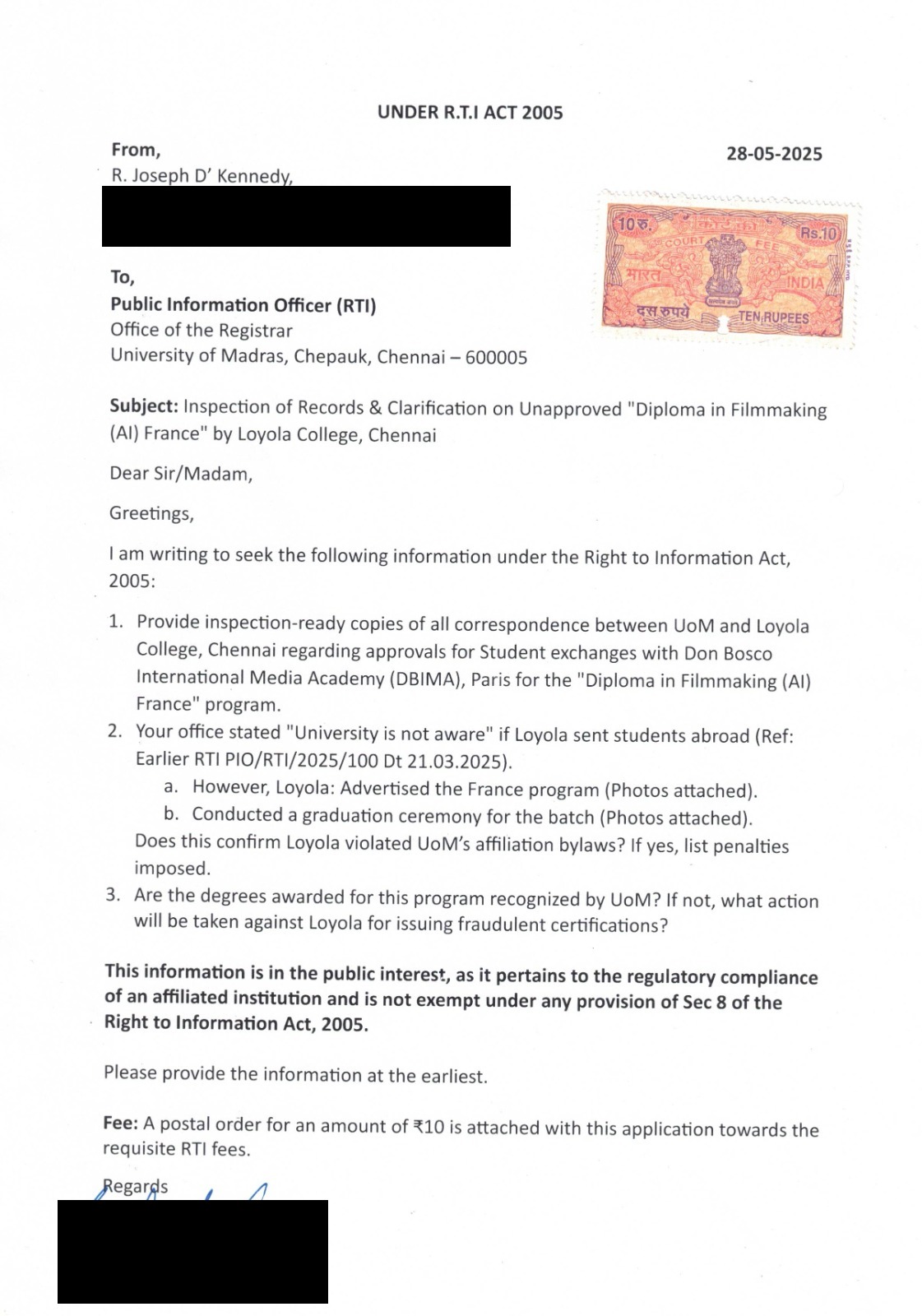
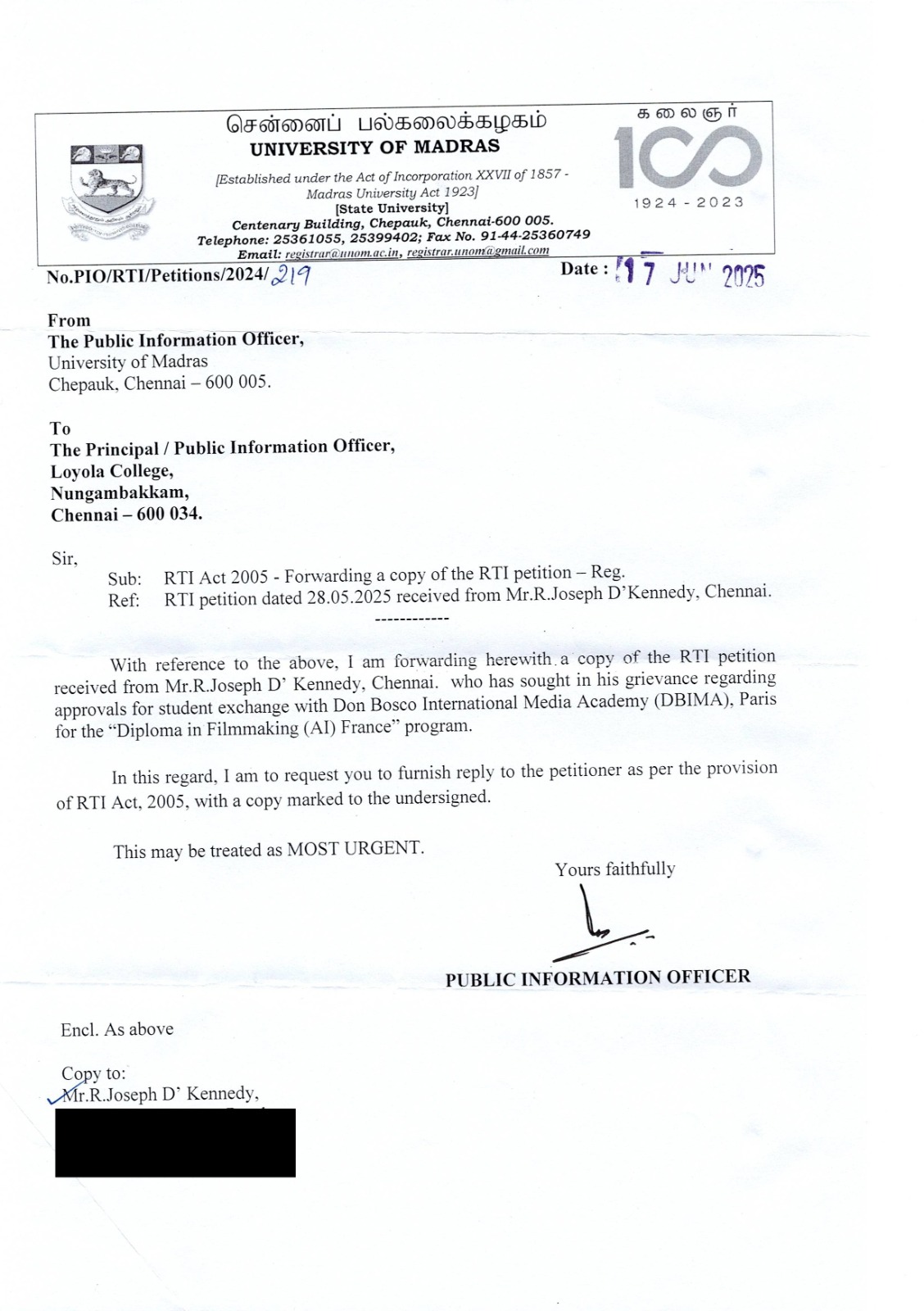
“Asking Loyola to investigate itself is a complete abdication of responsibility,” Kennedy said. “It’s an institutional failure that threatens both student welfare and public trust in higher education.”

A Glamorous Facade, Misleading Promotions

Despite lacking regulatory clearance, Loyola conducted a graduation ceremony for students of the disputed diploma course. The event featured prominent figures from the Tamil film industry, including cinematographer P.C. Sreeram, actor Arya, veteran actor Nassar, and editor Lenin lending undue credibility to a program that may not meet legal or academic standards.

Kennedy expressed outrage over this deceptive promotion, “This goes beyond administrative negligence it’s willful deception. Students are spending lakhs for a qualification that may have no standing.”

He further criticized DBIMA’s apparent lack of due diligence before partnering with Loyola, asserting that the Salesian institution must not repeat the mistakes made during the DBPPA Egmore abuse scandal a case Kennedy claims was buried under a culture of silence and image management.

“If DBIMA finds this alliance has been built on false pretenses, it must immediately revoke certifications and publicly admit its role in misleading students.”

Human Rights Implications and Public Accountability

Adding weight to the controversy, the National Human Rights Commission (NHRC) has acknowledged a complaint from the Legal Rights Protection Forum (LRPF), citing potential violations of students’ rights. The complaint points out that unsuspecting students paid substantial fees for a program lacking both recognition and legal legitimacy potentially compromising their futures, especially if they sought international opportunities.

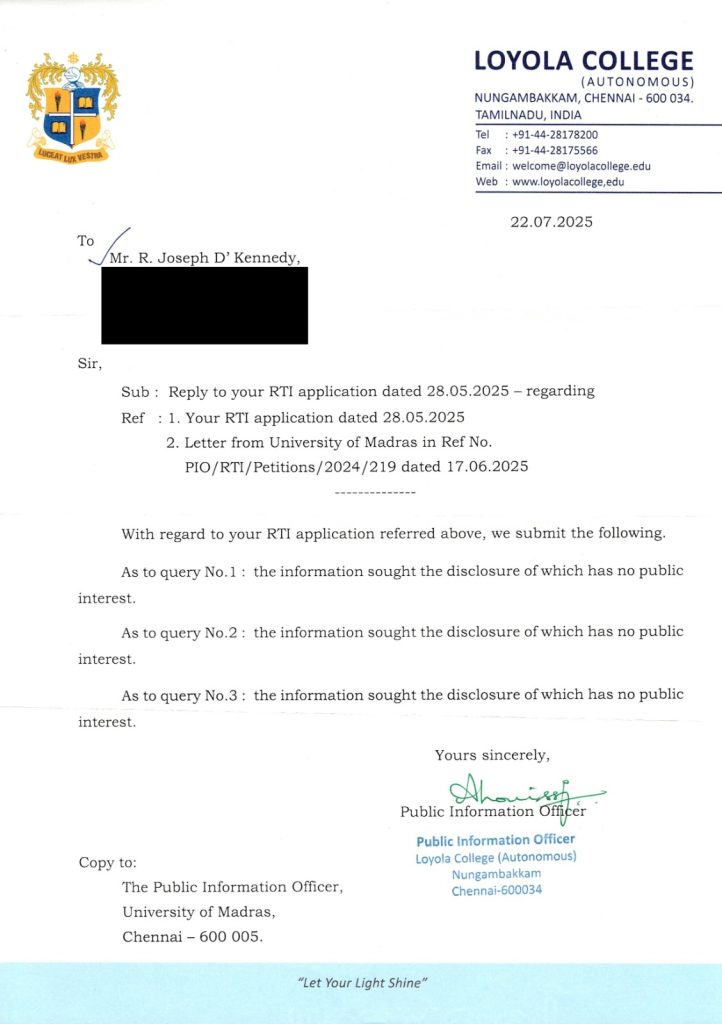
In parallel, Loyola’s evasive handling of RTI inquiries has amplified public criticism. The college failed to respond within the 30-day timeframe mandated by the RTI Act and, when it eventually replied, declined to share meaningful information dismissing the request as not being in the “public interest.

Kennedy was incredulous, “Loyola acts like it’s above scrutiny. They held high-profile MoU events, issued press releases, but now claim there’s no public interest in disclosing program details? That’s absurd.”

A Second Batch Amid the Scandal

Despite legal scrutiny and media coverage, Loyola appears to be pushing forward with a second batch of the same filmmaking diploma, further alarming watchdogs and regulatory authorities. Kennedy warns that this brazen move points to institutional impunity enabled by systemic regulatory failure.

“This isn’t just about Jesuit overreach anymore it’s about a crumbling framework of academic governance. Officials at the University of Madras appear to be complicit by remaining passive.”

The unfolding scandal has exposed serious cracks in India’s higher education oversight particularly the ease with which private and autonomous colleges can bypass approval processes while using foreign branding to attract students. There are growing calls for the UGC and the University of Madras to take immediate and decisive action against Loyola College, restore regulatory credibility, and ensure that similar breaches do not recur.

Subscribe to our channels on TelegramWhatsApp, and Instagram and get the best stories of the day delivered to you personally.

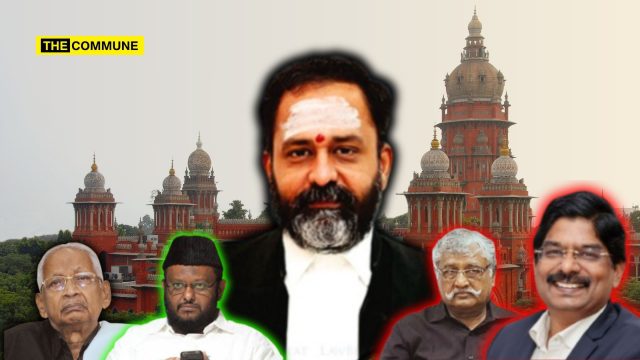
“We Will Not Be Intimidated”: Justice GR Swaminathan Slams ‘Ecosystem’ Backing Advocate Vanchinathan

justice gr swaminathan ecosystem dmk

A Division Bench of the Madras High Court on 28 July 2025 referred proceedings to the Chief Justice for initiating criminal contempt action against Advocate S. Vanchinathan, who is accused of repeatedly making allegations of caste bias against sitting judge Justice GR Swaminathan.

The matter was heard by Justices GR Swaminathan and K Rajasekar. During the hearing, Justice Swaminathan issued a sharp rebuke to some retired judges who had written to the Division Bench requesting it not to initiate contempt action against Vanchinathan. The Court took exception to the insinuation that the contempt proceedings were a form of retaliation against Vanchinathan for a prior complaint he had submitted against Justice Swaminathan to the Chief Justice of India.

Justice Swaminathan, addressing Vanchinathan directly in court, said, “We are also conscious of the Rule and Procedure. We are not fools. Tell this to the retired Judges who are standing with you. The whole ecosystem has ganged up behind you. We are aware of that. We will not be intimidated. We will not be cowed down. Judicial independence is supreme.”

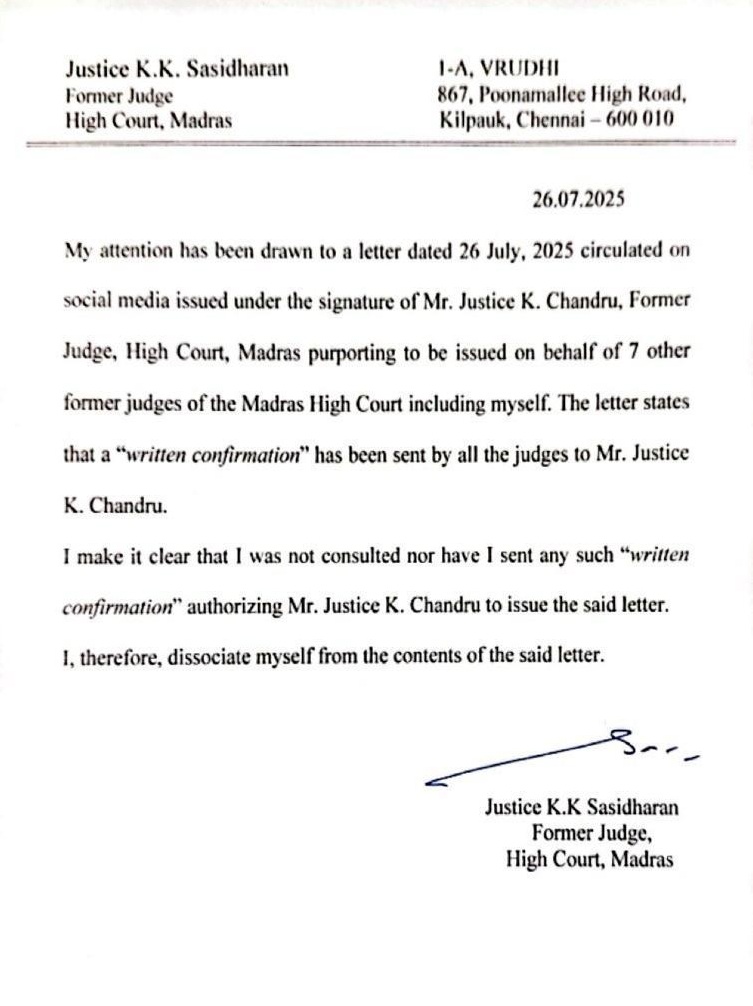
The letter in question was issued on Saturday by retired Justice K. Chandru, who claimed to have secured written confirmation from seven other retired judges of the High Court. However, retired Justice KK Sasidharan publicly dissociated himself from the letter, stating, “I make it clear that I was not consulted nor have I sent any such ‘written confirmation’ authorizing Mr. Justice K. Chandru to issue the said letter.”

Calling the retired judges’ intervention “unfortunate,” the Bench noted in its order, “It is most unfortunate that gratuitous advice was given by certain retired Judges of this Court.”
Justice Swaminathan further remarked in court that their actions “amount to contempt, since the Court is seized of the matter.”

The Court also played in open court an interview allegedly given by Vanchinathan, in which he made remarks insinuating caste bias on the part of Justice Swaminathan. “Let the whole Bar watch,” Justice Swaminathan said while screening the clip.

Vanchinathan, appearing in person, refused to respond to the Court’s questions regarding the contents of the video unless he received a written notice. “I will only respond to what is given to me in writing,” he said.

Justice Swaminathan replied, “Mr. Vanchinathan, I, hundred per cent, respect your right to brutally criticise my judgments, you are entitled to it. I will be the first person to stand with you. But when you are alleging caste bias, things take a different turn. That, I will not tolerate.” He added, “Last 3, 4 years, you have been slandering me. I have not taken any action against you.”

He also pointed to previous instances, stating that Vanchinathan had claimed in an interview that he was biased against Senior Advocate P. Wilson “because he was not a Brahmin.”

Despite repeated questioning, Vanchinathan refused to confirm or deny his prior remarks, maintaining that he would only respond to a formal charge in writing.

The Court reiterated that the current proceedings were unrelated to Vanchinathan’s earlier complaint to the Chief Justice of India. The Bench stated in its order:

“We fail to understand as to the basis on which such atrocious allegation has been made against the Court… We clarify once again that the proceedings on hand has nothing to do with the alleged complaint said to have been given by Vanchinathan.”

It added, “We did not want to straightaway refer the matter to the Hon’ble Chief Justice of the Madras High Court to consider taking action. We wanted to comply with the principles of natural justice. That is why one of the videos was played in the presence of the members of the Bar. But Vanchinathan was not willing to own up the contents of the video.”

Noting Vanchinathan’s continued refusal to clarify his position, the Court concluded, “We place on record that Vanchinathan is not giving an affirmative answer to the specific question posed by this Court… These are only tentative observations made by this Court. As requested by Vanchinathan himself, we direct the Registry to place the papers before the Hon’ble Chief Justice to consider taking appropriate action, if so deemed fit.”

The controversy dates back to 24 July 2025, when the Court asked Vanchinathan to appear and clarify whether he stood by his alleged imputation of caste bias against Justice Swaminathan. On Monday, the Bench held that the advocate’s conduct prima facie constituted criminal contempt of court.

(With inputs from Verdictum)

Subscribe to our channels on Telegram, WhatsApp, and Instagram and get the best stories of the day delivered to you personally.


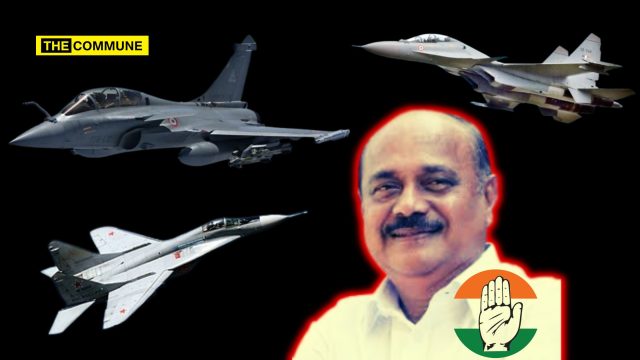
“We Lost 3 Rafales, 1 Sukhoi, 1 MiG, All Shot Down In Our Territory”, Congress MP Francis George Peddles Pakistani Propaganda

francis george congress mp rafale sukhoi 30 mig 29 operation sindoor

A major controversy erupted in Parliament after Kerala Congress MP K Francis George made a startling and unverified claim on the floor of the Lok Sabha on 28 July 2025, alleging that the Indian Air Force (IAF) suffered major losses that were never officially acknowledged.

Speaking during a discussion on national defense and transparency, Francis George said, “We lost three Rafales, one Sukhoi 30 MKI and one Mig 29. All were shot down in our own territory.”

The statement made without citing any credible source or evidence immediately drew sharp criticism from defense analysts, social media users, and government supporters who accused the MP of spreading disinformation and undermining the Indian military.

In his speech, George implied that the government had been misleading the public about wartime losses, “But truth has a way of surfacing. While the official narrative denied aircraft losses, satellite imagery, international intelligence leaks, and even our own defence attachés’ seminar notes revealed the truth.”

He further argued that such alleged obfuscation damages India’s credibility on the global stage, “When government denials are contradicted by foreign media and allied nations, we do not appear strong. We appear dishonest. This erodes credibility and gives space to hostile disinformation both abroad and within.”

George concluded by proposing a “Defence Transparency Charter”, which would mandate official briefings within 48 hours of battlefield incidents.

Defence Min Rajnath Singh Statement

Rafale fighter jets, acquired from France, are the crown jewel of the Indian Air Force’s strike capability. Any suggestion of their loss, particularly due to enemy action on Indian soil would carry enormous strategic, operational, and political implications.

Defence Minister Rajnath Singh informed the Lok Sabha on 28 July 2025 that no critical Indian defence assets were damaged during Operation Sindoor, the recent counter-terror strike in Jammu and Kashmir. Calling it a “decisive and effective” operation, Singh said the armed forces acted with precision, targeting nine terrorist infrastructure sites and neutralising over 100 terrorists, handlers, and trainers following the Pahalgam attack.

He asserted that India’s air defence, counter-drone systems, and electronic surveillance completely thwarted Pakistani attempts, preventing any hits on Indian targets. Singh also confirmed that an in-depth study preceded the operation, ensuring zero civilian harm. He revealed that when the Indian Air Force struck multiple airfields in Pakistan on May 10, Islamabad admitted defeat and requested a ceasefire, which India accepted conditionally. Singh warned that any further provocation would lead to immediate resumption of the operation.

Subscribe to our channels on Telegram, WhatsApp, and Instagram and get the best stories of the day delivered to you personally.