Home Blog Page 203

Monsoon Arrives In Chennai, City’s Infrastructure Ill-Prepared For Heavy Rains

The northeast monsoon has officially arrived in Tamil Nadu, bringing heavy rainfall and relief from the sweltering heat after weeks of anticipation. The Regional Meteorological Centre (RMC) in Chennai confirmed the onset on Thursday, with widespread showers reported across Chennai and neighboring districts, signalling the start of the state’s critical rain-bearing season.

While the rains are welcome, Chennai’s infrastructure remains inadequately prepared to handle the sudden deluge. Reports indicate that several low-lying areas still suffer from poor drainage, inefficient stormwater systems, and recurring waterlogging issues apart from the pathetic condition of the roads. Last year’s monsoon exposed vulnerabilities in city planning, and despite warnings from meteorological authorities, authorities have yet to implement comprehensive flood mitigation measures. Residents fear that without urgent action, the heavy showers may lead to localized flooding, traffic disruptions, and strain on emergency services.

Social media images and videos from across the city show waterlogged roads, clogged drains, and significant traffic snarls. Key areas such as OMR, Radial Road, and parts of South Chennai, including Perumbakkam and Pallikaranai, have already begun experiencing flooding after brief showers. Citizens have highlighted that incomplete drainage systems and poorly maintained roads are exacerbating the impact of rainfall, creating hazards for commuters and disrupting everyday life.

Here is a look at the condition of various parts of the city as rains hit the region:

(Source: Times Now)

Subscribe to our channels on Telegram, WhatsApp, and Instagram and get the best stories of the day delivered to you personally.

Congress ‘Gen Z Rap’ Campaign Against Modi Govt Was Paid Congress Campaign, OpIndia Investigation Reveals

A rap song promoted by the Congress IT Cell as an expression of “Gen Z anger” against the Modi government has been revealed to be part of a Congress-sponsored paid campaign, according to an investigation by OpIndia. The viral rap song, performed by a struggling artist, portrays anti-government rhetoric and has been circulated widely on social media as the voice of India’s youth.

The video, shared by X user Ankit Mayank, who identifies himself as Rahul Gandhi’s “Babbar Sher,” described the song as: “So, Gen Z in India is now using music to expose and speak out against the fascist regime. Fiery rap song, must share. Interesting times are ahead.”

OpIndia’s investigation uncovered that the Congress party has been actively hiring rap songwriters, cartoonists, and influencers, including those in the food and travel niche, for the past three months to produce content critical of the government. The recruitment posts were published on LinkedIn by Tekendra Sharma, who confirmed to OpIndia that he was shortlisting candidates for Congress but is not a member of the party himself. Sharma admitted, “My job is to shortlist CVs and send them to the Congress party,” indicating the positions were directly created to generate anti-government content.

Tekendra Sharma LinkedIn

OpIndia attempted to contact Congress media chief Jairam Ramesh and spokesperson Pawan Khera for clarification regarding the recruitment and the nature of the campaign. More than 24 hours later, no response had been received. The rapper who produced the song remains unreachable.

Following the recruitment of rap songwriters, Congress’s YouTube channel has increasingly uploaded rap songs targeting a variety of issues, including PM Modi’s relationship with former US President Donald Trump.

One such song has gone viral for mocking the Prime Minister and highlighting alleged government failures. Another song, titled “वोट चोर, गद्दी छोड़” (Vote Thief, Leave the Throne), portrays Rahul Gandhi as a leader with a spotless image, reiterates claims of vote theft, and questions the Election Commission’s findings.

According to OpIndia, these examples suggest that Congress hired artists and content creators to produce and distribute anti-government messaging under the guise of authentic Gen Z expression. The outlet noted this is part of a broader pattern of Congress-sponsored social media campaigns, citing a previous “vote theft” campaign in which influencers were paid between ₹20,000 and ₹30,000 to create content amplifying Rahul Gandhi’s claims. Many participants later apologized after the orchestrated nature of the campaign was revealed.

OpIndia concluded that the so-called Gen Z anger showcased in these rap songs is largely manufactured and part of a paid effort by Congress to influence social media narratives, rather than an organic expression of youth sentiment.

(Source: OpIndia)

Subscribe to our channels on Telegram, WhatsApp, and Instagram and get the best stories of the day delivered to you personally.
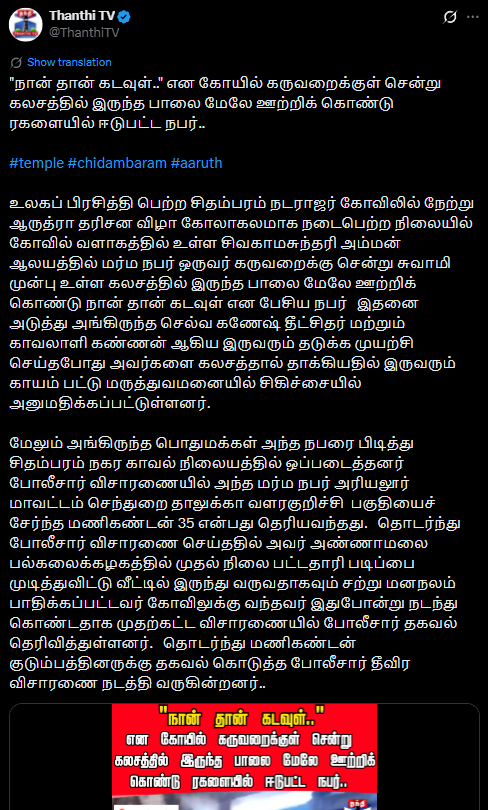
Karnataka Congress ‘UNESCO Mandram Award’ Moment? The Reality Of CM Siddaramaiah’s London Book Of World Records Claim

Karnataka Congress' 'UNESCO Mandram Award' Moment - CM Siddaramaiah Claims State Won 'Historic World Records'

A social media post by Karnataka Chief Minister Siddaramaiah celebrating two world records for the state has sparked controversy, with critics questioning the authenticity of the recognition. The Chief Minister had announced that Karnataka had entered the global stage with two historic achievements certified by the London Book of World Records — one for the Shakti Scheme marking 564.10 crore free bus rides availed by women, and another for the KSRTC as the most award-winning road transport corporation with 464 honours since 1997.

In his post, Siddaramaiah said these recognitions symbolised social justice, women’s empowerment, and inclusive governance. However, critics have claimed the awards are not internationally recognised and that the London Book of World Records is not a legitimate global institution. He wrote, “Karnataka enters the global stage with two historic world records – certified by the London Book of World Records. Shakti Scheme: Largest number of free bus rides availed by women – 564.10 crore journeys, empowering everyday mobility. KSRTC: Most award-winning road transport corporation in the world – 464 national & international honours since 1997. Our governance vision is rooted in social justice, women’s empowerment, and world-class public service. These recognitions are a reflection of what inclusive and compassionate policymaking can achieve.”

Was It A Real Award?

What is interesting in the organisation’s website is that it lists several purchasable “award packages,” ranging from ₹4,000 to ₹10,000, with certificates, medals, trophies, and optional news video releases. The listings also specify that payments are accepted only through online banking, further raising questions about the legitimacy of the awards.

Critics also noted that the certificate wording reads “in Karnataka” rather than “in the world,” suggesting that the award’s claim to world-record status is misleading.

Fact-checkers and political opponents alleged that the company behind the awards was dissolved in the United Kingdom and now operates from India.

Reminds One Of The ‘UNESCO Award’ Claim for EVR

Observers have compared the Karnataka government’s “London Book of World Records” episode with an earlier controversy from Tamil Nadu surrounding the so-called “UNESCO Award” given to social reformer E.V. Ramasamy (Periyar). For decades, it was widely propagated in Tamil Nadu that Periyar was conferred the title “Socrates of South-East Asia” by UNESCO, a claim repeated in school textbooks and public service exam materials.

However, an official email clarification from UNESCO’s Delhi office confirmed that no such award or title was ever given to E.V. Ramasamy. The award was, in fact, presented by late DMK leader M. Karunanidhi in the presence of Dravidar Kazhagam president K. Veeramani, and not by UNESCO.

Critics pointed out that even the fabricated award title contained geographical inaccuracies, as India falls under South Asia and not the South-East Asia region referenced in the award.

Both allies – the DMK and the Congress have been building narratives around unverifiable or misleading accolades to bolster ideological or governance claims – the London Book of World Records recognition claimed by the Karnataka government and the UNESCO award myth associated with Periyar are perfect examples.

Subscribe to our channels on TelegramWhatsApp, and Instagram and get the best stories of the day delivered to you personally.

BJP MP Nishikant Dubey Alleges Rajiv Gandhi Acted As Swedish Defence Firm’s Agent In 1970s

BJP MP Nishikant Dubey Alleges Rajiv Gandhi Acted As Swedish Defence Firm’s Agent In 1970s

Bharatiya Janata Party (BJP) MP Nishikant Dubey on Friday, 17 October 2025, levelled a series of allegations against former Prime Ministers Rajiv Gandhi and Indira Gandhi, claiming that Rajiv Gandhi acted as a “middleman” for a Swedish defence company in the 1970s. Citing old diplomatic communications and reports published by WikiLeaks in 2013, Dubey alleged that Rajiv Gandhi was involved in brokerage for the Saab-Scania company, which was seeking to sell Viggen fighter jets to India during that period.

In a post shared on social media platform X on 17 October 2025, Dubey wrote, “Rahul Gandhi ji’s father, former Prime Minister Rajiv Gandhi ji, was an agent of a Swedish military company, meaning he was involved in brokerage in the 70s?”

He had raised this back in July 2025 as well. Dubey alleged that then-Prime Minister Indira Gandhi was guilty of “excessive interference” in defence procurements. He said WikiLeaks cables and related reports had made such claims public in 2013, during the Congress-led UPA government, but no action was taken. He claimed the revelation originated from a 1975 communication between a Swedish diplomat and the American government. According to Dubey, the diplomat had informed the US that Saab-Scania was trying to secure the deal with India through Rajiv Gandhi, who at the time was a pilot and not yet active in politics.

In his post on 4 July 2025, he wrote, “In 2013, WikiLeaks made shocking revelations about former Prime Minister Rajiv Gandhi Ji and Indira Gandhi Ji.

1. On October 21, 1975, a Swedish diplomat informed the US government that the Saab-Scania company wanted to sell Viggen fighter aircraft in India, and then-Prime Minister Indira Ji’s pilot son Rajiv Gandhi Ji was acting as a middleman in this?

2. Then-Prime Minister Indira Ji was interfering excessively in defense deals?

3. This came to light when the Congress government was in power at the center, Manmohan Singh Ji was the country’s Prime Minister—why didn’t the then-Indian government take action against the US government or the Swedish governments?

I wish?”

Continuing his attack then on the Congress leadership, Dubey cited declassified records from the CIA and the Mitrokhin Archive, alleging that during the Cold War era, the Gandhi family had allowed the Soviet Union to exert significant influence in Indian politics. He claimed that under the leadership of the late Congress minister H. K. L. Bhagat, more than 150 Congress MPs were “funded by the Soviet Union,” while Congress candidate Subhadra Joshi allegedly received ₹5 lakh from the German government between 1977 and 1980.

According to Dubey, the US Ambassador Daniel Patrick Moynihan had mentioned in his writings that money had been given to Indira Gandhi twice. He also referred to a 1979 discussion in the Rajya Sabha, which he said concerned the same issue. Dubey alleged that a phone conversation between President Richard Nixon and Secretary of State Henry Kissinger also discussed how funding could be used to “manage” the Indian government.

“The diaries of CIA and Mitrokhin mention that under the leadership of H. K. L. Bhagat, more than 150 Congress MPs were funded by the Soviet Union. It also mentions that a total of 16,000 news articles were published by Russia according to their wish. If you look at it, it seems that our country was sold to Soviet Russia under the leadership of the Gandhi family,” Dubey told ANI.

The BJP MP added that he intends to continue raising the issue publicly, arguing that these historical records demonstrate how the Gandhi family allegedly “compromised national interests” for political and financial gain.

(Source: Economic Times)

Subscribe to our channels on TelegramWhatsApp, and Instagram and get the best stories of the day delivered to you personally.

Supreme Court Declines To Act On Contempt Plea In CJI Shoe Incident, Says ‘Let It Die A Natural Death’

contempt plea supreme court shoe cji

The Supreme Court on Thursday (16 October 2025) declined to act immediately on a request to initiate criminal contempt proceedings against advocate Rakesh Kishore, who allegedly threw a shoe at Chief Justice of India (CJI) B. R. Gavai earlier this month. Despite the Attorney General’s consent for contempt action, a bench of Justices Surya Kant and Joymalya Bagchi said the court preferred to “let the incident die a natural death” rather than fuel further public outrage and social media debate.

The matter came up when Supreme Court Bar Association (SCBA) President and Senior Advocate Vikas Singh informed the bench that Attorney General R. Venkataramani had granted approval to initiate contempt proceedings. “I have taken the consent of the Attorney General and I am seeking a listing tomorrow,” Singh said.

Supporting the move, Solicitor General Tushar Mehta told the court, “Learned Attorney General has given consent. I would also join my learned friend and request your Lordships to take up the contempt. It is constitutional integrity which is under question.”

CJI Gavai’s Calm Response

The incident took place on 6 October 2025 in Court Hall 1 of the Supreme Court, when Kishore allegedly hurled a shoe at the CJI while proceedings were underway. CJI Gavai remained calm, asked the lawyers present to continue with the day’s cases, and refrained from reacting to the disruption. Kishore was reportedly upset over remarks made by the CJI during a hearing on a plea seeking restoration of a Vishnu idol in Khajuraho.

Following the incident, the SCBA removed Kishore from its rolls, while the Bar Council of India suspended his licence to practice pending further action.

Bench Cites CJI’s Magnanimity

On Thursday, Vikas Singh said that discussions about the incident were still circulating on social media, adding that Kishore had claimed to feel remorse. The Solicitor General said that “some people are glorifying the incident,” and urged the court to intervene to protect the institution’s dignity.

However, Justice Surya Kant observed, “Hon’ble CJI has been extremely magnanimous… That shows the institution is not affected by these kinds of incidents.”

Mehta agreed that the CJI’s conduct reflected “a gesture of majesty” but reiterated his concern that “people using social media to justify the act was concerning. It is a matter of institutional integrity.”

Vikas Singh also suggested the court consider issuing a John Doe order, an injunction against unidentified individuals, to curb the glorification of the act online.

Justice Joymalya Bagchi, however, cautioned that such a step could worsen the situation. “A John Doe order will be the next cavalcade of events. It is because of our behaviour in court that we survive and we get the confidence from the people. The Hon’ble Chief Justice exhibited that spirit when he just washed it aside as an act of an irresponsible citizen. Should we now rake up an issue which, for our sake, is complete and finished?” he said.

‘A Waste of Judicial Time’

Justice Bagchi added that there were several important matters before the court and questioned whether reviving the issue would be a waste of judicial time. Singh clarified that he only sought a restraint on the glorification of the act.

Justice Kant remarked, “What my brother is pointing out — and you will also appreciate — is that the moment you (raise it), the media story will continue.”

Justice Bagchi added humorously, “Unfortunately, we have become money-spinning ventures…”

Agreeing, Solicitor General Mehta said, “Social media platforms work on algorithms. People are addicted to them. And these platforms monetise that addiction. We feel we are using social media, but in fact, we are the products.”

Justice Kant responded, “We are the product and the consumer both.”

Justice Bagchi elaborated on the influence of algorithms, saying, “The algorithms are so programmed that things which pertain to the baser instincts of individuals like hate, lust, anger etc… what happens is when this sort of a comment is made and repeated, you will find the number of hits are more. And the algorithm in the social media platform is to promote it so that as soon as you access that platform it will be up on your screen. In these situations, we assure you that your mentioning today is going to be monetised… Please don’t operate to their monetisation. Allow it to have a natural death.”

‘The Bar Has Always Stood for the Institution’

Singh replied, “I understand. We waited for so long. It is only because of the angst of the Bar. It involves the majesty of the institution. If the institution does not have the respect…”

Justice Kant reassured him, saying, “The Bar has always stood for the institution because you are the bridge between the consumer of justice and the court. We understand your predicament, your sentiments.”

Singh requested the matter be listed on Friday, saying, “By then we will also introspect, and Your Lordships will also take a thought about it and may modulate the order accordingly.”

Justice Kant asked whether the issue should be listed the next day or after the Supreme Court’s Deepawali recess next week. Singh replied, “Let it be tomorrow. This is continuing. If something has to be done, it has to be done immediately.”

However, the bench decided to defer consideration until after the recess. “Let us see what will happen in a week. Are they still left with some saleable item!” Justice Kant remarked in a lighter tone.

Justice Bagchi added, “Maybe something new will come for the algorithm.”

To which Solicitor General Mehta concluded, “Yes, it has a shelf life of 24–48 hours, and then something else takes over.”

(Source: Indian Express)

Subscribe to our channels on Telegram, WhatsApp, and Instagram and get the best stories of the day delivered to you personally.

Prime Accused Unnikrishnan Potti Arrested In Sabarimala Gold Theft Case

Prime Accused Unnikrishnan Potti Arrested In Sabarimala Gold Theft Case

The Special Investigation Team (SIT) constituted by the Kerala High Court to probe the Sabarimala gold theft case arrested prime accused Unnikrishnan Potti early Friday (17 October 2025) morning after an 11-hour interrogation. The arrest marks the first major breakthrough in the case concerning the theft of gold used in the plating of sacred idols and fixtures at the Sabarimala temple.

The SIT team, led by Superintendent of Police (Crime Branch, CU-4) Bijoy P, questioned Potti extensively at Thiruvananthapuram. Around 1 AM, S. Sasidharan, Assistant Director (Administration), Kerala Police Academy, who is investigating the case under ADGP, Crime Branch, arrived from Sabarimala and recorded the formal arrest. Following the procedure, Potti was taken to the Thiruvananthapuram General Hospital for a medical examination.

Officials confirmed that all remand formalities have been completed, and Potti will be produced before the Judicial First Class Magistrate Court, Ranni, where the SIT will seek his custody for further interrogation. The team has been directed by the High Court not to disclose any investigation details to the public or media without the Court’s permission until the probe concludes.

Allegations and FIR Details

Potti has been booked in two separate cases, both linked to the theft and misappropriation of gold from the dwarapalaka (guardian deity) idols and the kattilappadi (threshold) of the Sreekovil (sanctum sanctorum) at Sabarimala. He is accused of colluding with officials of the Travancore Devaswom Board (TDB) to siphon off gold that had been used for temple plating works.

According to SIT records, Potti allegedly detached gold-plated panels from the temple’s door frames, misrepresenting them as copper plates and securing official approval for their removal. The two FIRs registered in the case name ten accused, including all members of the Travancore Devaswom Board (TDB) of 2019 as the eighth accused collectively. Other officials booked include the then Devaswom Commissioner N. Vasu, Thiruvabharanam Commissioner, Executive Officer, Administrative Officer, and Assistant Engineer.

Findings from the Devaswom Vigilance Probe

The SIT’s findings are consistent with a report earlier submitted by the Devaswom Vigilance Department. The report stated that in August 2019, 14 pieces of gold-clad copper plates from the dwarapalaka idols were handed over to Smart Creations, a private firm, by Potti. He instructed the firm to use previously extracted gold and any leftover material from earlier works.

In September 2019, Smart Creations reportedly returned 14 gold-plated copper plates to Potti, along with a gold certificate for 394.9 grams. However, a recovery specialist later extracted 409 grams of gold from the side frame initially handed over and 577 grams from the dwarapalakas and other related items, totalling 989 grams. This amount included three grams supplied personally by Potti.

Of the total, 393.9 grams were deducted for plating the dwarapalakas and 9.9 grams for other Sabarimala temple items, accounting for 404.8 grams used in total. The remaining 474.9 grams of gold were handed over to Kalpesh, a middleman authorized by Potti. Investigation records do not show that this gold was ever returned to the TDB.

Wider Conspiracy and Missing Records

The SIT has not ruled out the involvement of Smart Creations in the larger conspiracy. Some crucial records of the firm’s gold plating work are reportedly missing. A Hyderabad-based individual has also been indicated as having played a role in the chain of misappropriation.

During interrogation, Potti is said to have admitted that the gold robbery was planned and claimed that certain Devaswom Board officials were aware of the scheme. He allegedly stated that the stolen gold was distributed among members of the Board. The SIT is currently tracing Kalpesh and another suspect, Nagesh, both of whom are absconding.

Ongoing Investigation and Court Oversight

The SIT conducted another inspection at Sannidhanam on Thursday to collect further evidence and re-measure the walls of the sanctum sanctorum. Meanwhile, the Travancore Devaswom Board has suspended two officials, identified as Murari Babu and Sunilkumar, in connection with the case.

Potti’s family alleged that they were not informed of his whereabouts after he was taken into custody, prompting his lawyer to accuse the SIT of violating custody procedures. Following media attention later in the evening, Crime Branch officials formally communicated the details of the arrest to his family.

Earlier, the Kerala High Court had directed the SIT to register a case and conduct a comprehensive probe into the theft of 475 grams of gold from the Sabarimala Ayyappa temple. The Division Bench of Justice Raja Vijayaraghavan V and Justice K.V. Jayakumar ordered an impartial investigation and instructed the SIT to submit its report within six weeks. The progress report is expected to be presented to the High Court in a sealed cover next week.

(Source: OnManorama)

Subscribe to our channels on TelegramWhatsApp, and Instagram and get the best stories of the day delivered to you personally.

Dravidian Model: Four Masked Men Rob 80-Year-Old In Chennai’s Avadi Suburb, Flee With Gold Jewellery

Dravidian Model: Four Masked Men Rob 80-Year-Old In Chennai’s Avadi Suburb, Flee With Gold Jewellery

A gang of masked burglars broke into the residence of an 80-year-old woman in Thirumullaivoyal, Avadi, on Wednesday (15 October 2025) night and escaped with four sovereigns of gold jewellery.

According to the police, the victim, identified as Vatsala, lives on the ground floor of her house at Valal Nagar, while her son and his family reside on the first floor. Around midnight, four masked men armed with weapons broke open the back gate and entered the premises. The gang allegedly stole a gold chain and a pair of earrings, together weighing about four sovereigns, while the woman was asleep.

When Vatsala woke up and raised an alarm, the burglars fled the scene. Police said the gang had entered with deadly weapons and threatened the elderly woman before fleeing.

Thirumullaivoyal police have registered a case and begun an investigation. Officers are examining CCTV footage from the neighbourhood to trace the culprits. Footage showing the masked robbers entering the bungalow with weapons has also been released, causing concern among residents in the area.

(Source: Times of India)

Subscribe to our channels on Telegram, WhatsApp, and Instagram and get the best stories of the day delivered to you personally.

45 Major Corruption Cases That Expose Political And Public Sector Fraud In The US And UK (2019–2025)

Between 2019 and 2025, more than 45 major corruption cases have been reported across the United States and the United Kingdom, implicating government officials, elected representatives, and public administrators in offences such as bribery, fraud, embezzlement, money laundering, misappropriation of public funds, and abuse of authority.

Despite the recurring nature and scale of these scandals, no significant public unrest or political upheaval has followed in either country.

This report takes a look at the 45 key corruption cases that have emerged in the U.S. and U.K. over the past six years, offering an overview of patterns, legal outcomes, and the broader public response.

#1 Former Missouri Speaker’s Fraud (2025)

John Diehl, the former Missouri House Speaker, pleaded guilty to wire fraud on 11 September 2025. He was convicted for defrauding federal pandemic relief funds, diverting $379,000 for his personal use. This case highlighted the vulnerability of emergency funds allocated during the COVID-19 crisis to exploitation by trusted public officials. His guilty plea marked a significant fall from grace for a high-ranking state politician, underscoring how individuals in powerful positions manipulated programs designed to aid the public during a national emergency for their own enrichment.

#2 Bribery in Orange County (2025)

Andrew Hoang Do, a former Orange County Board of Supervisors member, was sentenced to five years in federal prison on 9 June 2025. He pleaded guilty to accepting over $550,000 in bribes in exchange for directing more than $10 million in COVID-19 relief funds to specific entities. The court also ordered full restitution and the forfeiture of assets, including a property. This case exposed a pay-to-play scheme at the heart of local government, where critical relief money was allegedly traded for personal financial gain during a time of public crisis.

#3 Congressman’s Multitude of Crimes (2025)

Former U.S. Representative George Santos was sentenced to 87 months (over 7 years) in prison on 25 April 2025. He was convicted on charges of wire fraud, money laundering, and theft of public funds. The court ordered him to pay $373,749.97 in restitution and to forfeit $205,002.97. Santos’s case became a national spectacle, detailing a pattern of deception and financial crimes committed both during and before his brief tenure in Congress, revealing significant flaws in candidate vetting and campaign finance oversight.

#4 Illinois Powerbroker Convicted (2025)

Michael Madigan, the former long-serving Illinois House Speaker, was found guilty on 12 February 2025, on multiple federal charges including bribery, wire fraud, and Travel Act violations. The charges stemmed from a years-long scheme involving the utility company ComEd, where Madigan used his powerful position to orchestrate bribes and favors. His conviction was seen as a landmark moment in Illinois’ long history of political corruption, demonstrating the pervasive nature of pay-to-play politics at the highest levels of state government.

#5 Senator’s Gold Bar Bribes (2025)

U.S. Senator Robert “Bob” Menendez was sentenced to 11 years in prison on 29 January 2025, after being convicted of bribery and honest-services fraud. The sensational trial revealed the senator had accepted hundreds of thousands of dollars in cash, along with gold bars, in exchange for wielding his political influence. The sentence, which also included fines and forfeitures, represented one of the most severe penalties for a federal official in recent memory, highlighting a brazen abuse of power for personal enrichment.

#6 Chicago Alderman’s Racketeering (2024)

Edward “Ed” M. Burke, a former powerful Chicago Alderman, was sentenced to two years in prison and fined $2 million on 24 June 2024. He was convicted on charges of racketeering, bribery, and solicitation of business, using his official position to extort benefits from businesses seeking city approvals. The case was a classic example of Chicago’s entrenched corruption culture, where an alderman treated his office as a criminal enterprise, leveraging city hall influence for personal financial gain over many years.

#7 Houston City Liaison’s Bribe (2024)

William-Paul Thomas, a former Mayor’s Liaison to the Houston City Council, was sentenced on 5 February 2024, to one year and one day in federal prison for bribery. Thomas had accepted a $1,000 bribe, a case that, while smaller in scale, exposed corruption at the heart of city governance. He also received three years of supervised release and a $5,000 fine. The incident demonstrated that even lower-level officials with access to decision-makers could be targets for corruption, undermining public trust in municipal administration.

#8 Georgia Official’s Fraud Scheme (2024)

John Oxendine, the former Georgia Insurance Commissioner, was sentenced to 3.5 years in federal prison on 12 July 2024, for his role in a health care fraud and kickback scheme. The total fraud amount was $760,000, from which Oxendine personally gained $40,000. He was ordered to pay a fine and share restitution with a co-conspirator. This case showed a state regulator, tasked with overseeing industry integrity, becoming a participant in a criminal conspiracy, thereby betraying the public’s trust in his office.

#9 Illinois Lawmaker’s Tax Fraud (2024)

Former Illinois State Representative and Senator Annazette Collins was convicted on four federal tax counts on 21 June 2024. She was found guilty of willfully filing false tax returns and failing to file returns, causing a federal tax loss of approximately $86,000. The conviction continued a pattern of legal troubles for Illinois politicians, demonstrating a disregard for the very laws they were elected to create and uphold. She faced a potential prison sentence of up to three years for each felony count.

#10 Ex-Indiana Lawmaker’s Corruption Plea (2023)

In November 2023, former Indiana Representative Sean Eberhart agreed to plead guilty to a federal conspiracy charge. Court documents stated that Eberhart accepted the promise of a future, high-paying job from a gaming company, Spectacle Entertainment, in exchange for his official actions. While serving on the key House committee overseeing gaming, he allegedly advocated for and voted on legislation that provided massive financial benefits to the company. This included slashing a required transfer fee from $100 million to $20 million.

#11 Fred Plump Jr.’s League Fraud (2023)

Former Alabama State Representative Fred Plump Jr. was sentenced on 23 October 2023, for a wire fraud scheme that misappropriated $200,000 from the Jefferson County Community Service Fund. The funds, intended for the Piper Davis Youth Baseball League, were instead funneled as kickbacks to an assistant who was also his girlfriend. The fraud represented a profound betrayal of public trust, diverting resources meant for youth development. Plump received a severe sentence of 20 years in prison and a fine of $250,000 per charge, highlighting the judiciary’s stern stance on corrupt misuse of public resources intended for community welfare.

#12 Harish “Harry” Singh Sidhu’s Obstruction (2023)

The former Mayor of Anaheim, California, Harish “Harry” Singh Sidhu, agreed to plead guilty on 16 August 2023, to charges of obstruction of justice, wire fraud, and making false statements. Sidhu was implicated in a public corruption investigation where he attempted to secure a $1 million campaign contribution and evaded sales tax. Facing a potential 50-year prison sentence, his case exposed a pay-to-play culture in local government and demonstrated the application of federal laws to combat sophisticated attempts to obstruct justice and defraud the public.

#13 Joseph Harding’s COVID-19 Fraud (2023)

Former Florida State Representative Joseph Harding was sentenced on 25 July 2023, for fraudulently obtaining $150,000 in COVID-19 relief funds. His crimes included wire fraud, money laundering, and making false statements on federal applications. Harding resigned from the Florida House a day after his indictment, and his guilty plea underscored a national pattern of exploiting pandemic aid programs.

#14 Antonio Brown’s Bank Fraud (2023)

Former Atlanta City Councilman and mayoral candidate Antonio Brown was sentenced on 13 April 2023, for bank fraud after lying about his income to secure a $75,000 loan. In an outcome that drew scrutiny for its leniency, Brown received 18 months of probation, with the first eight months under house arrest, and no prison time as part of a plea deal.

#15 Robert Dennis “Denny” Altes’ Probation (2023)

Former Arkansas State Senator Robert Dennis “Denny” Altes was sentenced on 23 January 2023, after pleading guilty to an abuse of public trust. While the specific financial details were not disclosed, the conviction of a former legislator and candidate for county judge on such a charge pointed to a serious ethical breach. His sentence of one-year probation and a $250 fine was perceived by many as a notably light penalty for a public corruption case.

#16 José Huizar’s Pay-to-Play Scheme (2023)

Former Los Angeles City Councilmember José Huizar pleaded guilty on 20 January 2023, for operating a extensive pay-to-play scheme where he accepted over $1 million in bribes from real estate developers. The bribes included a $600,000 payoff to settle a lawsuit and $125,000 in cash seized from his home. Huizar agreed to forfeit $129,000 and faces a sentence of 9 to 13 years in federal prison, plus over $1 million in restitution.

#17 Lewis Reed’s Bribery Plea (2022)

Lewis Reed, the former President of the Board of Aldermen in St. Louis, pleaded guilty on 26 August 2022, to federal bribery charges and misuse of public office. Reed was found to have accepted approximately $18,000 in cash and contributions in exchange for official favors. His guilty plea marked a significant fall from grace for a high-ranking city official and demonstrated the ongoing efforts by federal authorities to root out corruption at the municipal level, even for sums that are relatively small compared to other political scandals.

#18 Keith Bee’s Tax Fraud (2022)

On 16 March 2022, former Arizona Justice of the Peace and state legislator Keith Bee was sentenced for filing false income tax returns. The case resulted in a court order for $343,133.05 in restitution, covering lost tax revenue and interest. Bee was sentenced to six months in federal prison and one year of supervised probation. The conviction of a former judge for tax fraud underscored the principle that those who oversee the legal system are not above the law themselves, though the prison term was less severe than those given for other types of fraud.

#19 Hawaii Bribery Scandal (2022)

Two former Hawaii lawmakers, Ty Cullen and J. Kalani English, pleaded guilty on 15 February 2022, to honest services wire fraud for accepting bribes to influence legislation benefiting a cesspool conversion company. English, a former Senate Majority Leader, agreed to forfeit $15,000 and Cullen $23,000, representing the cash they received. Prosecutors said they accepted money, Las Vegas hotel stays, and casino chips in exchange for shaping and later killing wastewater-related bills. Both Democrats resigned earlier this year and face up to 20 years in prison. Hawaii’s legislative leaders condemned their actions, vowing reforms to restore transparency and integrity in governance.

#20 Luis Arroyo’s Wire Fraud (2022)

Former Illinois State Representative Luis Arroyo was sentenced on 25 May 2022 to 57 months in federal prison for his role in a bribery scheme involving a sweepstakes gaming company, Collage LLC. Arroyo, 67, pleaded guilty to wire fraud for accepting thousands of dollars in bribes through his lobbying firm, Spartacus 3 LLC, in exchange for promoting sweepstakes-related legislation and influencing other lawmakers. In 2019, he offered a $2,500 bribe to a state senator, promising monthly payments for legislative support. U.S. District Judge Steven Seeger handed down the sentence, with prosecutors from the FBI and IRS highlighting Arroyo’s abuse of public office for personal gain.

#21 Brent Waltz’s Illegal Contributions (2022)

Former Indiana State Senator Brent Waltz pleaded guilty on 12 April 2022F to accepting about $40,000 in illegal contributions from Spectacle Entertainment for his unsuccessful 2016 congressional campaign and to making false statements to the FBI. His plea came a week before the trial of John Keeler; a former Spectacle executive accused of directing corporate contributions through straw donors. Waltz faces up to five years in prison per charge, while prosecutors dismissed three other counts and recommended a low-end sentence. The case arose from a long FBI investigation into Spectacle and its predecessor, Centaur Gaming, involving illegal campaign funding and financial misconduct.

#22 Isabel FitzGerald’s IT Bribery (2022)

Isabel FitzGerald, a former Maryland state IT secretary and Cabinet-level official, pleaded guilty on 7 June 2022, to bribery and extortion related to state IT contracts. FitzGerald, who served as CIO, deputy secretary, and state IT secretary from 2007–2015, admitted accepting bribes between 2011–2013 to direct contracts to certain vendors. Coffland used his relationship with FitzGerald to secure a high-paying IT role, with FitzGerald leveraging contract renewals to influence the company. FitzGerald also conspired to redirect subcontracting work for personal gain, collecting $35,000. FitzGerald faces up to 10 years and $40,000 restitution; Coffland faces up to 20 years. Sentencing is set for October 22.

#23 Jim Beck’s Multi-Million Dollar Embezzlement (2021)

Jim Beck, the former Georgia Insurance Commissioner, was sentenced on 12 October 2021, to 87 months in federal prison for 37 counts of wire fraud, mail fraud, money laundering, and tax fraud. Beck diverted over $2.5 million from the Georgia Underwriting Association to his personal accounts through multiple companies. Investigations began shortly after his 2018 election, and an eight-day trial ended with a swift guilty verdict. Beck claimed the funds paid contractors for data services, but prosecutors argued most went directly to him. He was removed from office automatically upon conviction, while Gov. Brian Kemp appointed John King as interim commissioner.

#24 Dean Alford’s Racketeering Sentence (2021)

Former Georgia State Lawmaker and University Regent Dean Alford was sentenced on 7 October 2021 to 15 years, with eight years in prison and the remainder on probation, for racketeering, fraud, and forgery. Alford faked contracts claiming his company, Allied Energy Services, was owed $2.2 million from universities, banks, and a solar firm. Arrested in 2019, he resigned from the University of Georgia Board of Regents after officials declared the invoices fake. The scheme involved selling rights to future income to lenders. The SEC also filed civil charges in 2020, alleging Alford fraudulently raised $23 million from investors, resulting in a $10.8 million restitution order.

#25 Edward Diana’s Fraud Plea (2021)

Former three-term Orange County Executive Edward Diana pleaded guilty on 21 June 2021, to charges in a corruption scheme involving the Orange County Industrial Development Agency (IDA). Diana admitted to filing a false document and hiding his employment with Cozzolino’s company, Galileo Technologies Group, while serving on the IDA board and voting on contracts benefiting the firm. Cozzolino and Villasuso acknowledged conspiring to defraud the IDA through payments to Galileo, with Villasuso employed by both entities while signing contracts. All three agreed to pay $1.2 million in restitution. The IDA board was subsequently overhauled amid investigations.

#26 Martin Sandoval’s Red-Light Bribery (2020)

Former Illinois State Senator Martin Sandoval pleaded guilty on 28 January 2020, to federal bribery and tax evasion charges tied to his support of the red-light camera industry. Sandoval admitted accepting over $250,000 in bribes from SafeSpeed and others, promising to use his office to benefit their business interests and oppose unfavorable legislation. He also filed a false 2017 tax return underreporting income. The plea guarantees his cooperation in a broader federal investigation involving Springfield lobbyists and special interests, including ComEd and video gambling operators. Sandoval faces 10–13 years in prison, was released on $10,000 bond, and is barred from leaving Illinois.

#27 Cheryl Diane Glenn’s Bribery (2020)

Former Maryland state delegate Cheryl Diane Glenn pleaded guilty on 22 July 2020, to accepting over $33,000 in bribes for legislative favors, including expanding medical marijuana grower licenses. Defense attorney William Brennan urged probation, home detention, and community service, citing Glenn’s age, health, and personal hardships, including financial struggles after her husband’s death. Glenn accepted five bribe payments in 2018–2019 for supporting bills benefiting out-of-state medical marijuana companies, creating liquor licenses, and lowering medical director experience requirements. Prosecutors argued her actions prioritized personal gain over public trust and required incarceration to deter political corruption.

#28 Catherine Pugh’s Fraud Conspiracy (2020)

Former Baltimore Mayor Catherine Pugh was sentenced in February 2020 to three years in federal prison and three years of supervised release for conspiracy to commit wire fraud, conspiracy to defraud the U.S., and tax evasion. She was ordered to pay $411,948 in restitution and forfeit $669,688, including property and campaign funds. Pugh ran her book company, Healthy Holly, to double-sell and misappropriate books, funneling proceeds into straw donations for her mayoral campaign and personal expenses. She also filed false tax returns. Her aide, Gary Brown Jr., aided the scheme and previously pleaded guilty. The investigation involved the FBI, IRS-CI, and other agencies.

#29 Christopher Collins’ Insider Trading (2020)

Former U.S. Representative Christopher Collins of New York was sentenced in January 2020 to 26 months in federal prison, one year of supervised release, and a $200,000 fine for insider trading and lying to the FBI. Collins learned in June 2017 that Innate Immunotherapeutics’ MS drug trial had failed and tipped his son, Cameron, who traded the stock and shared the information with others, helping them collectively avoid over $768,000 in losses. Collins also made false statements during FBI interviews. The conviction led to his resignation from Congress. The case was prosecuted by the SDNY Securities and Commodities Fraud Task Force.

#30 Duncan D. Hunter’s Campaign Fund Theft (2019)

Republican U.S. Representative Duncan D. Hunter of California pleaded guilty on 3 December 2019, to stealing over $150,000 in campaign funds, which he and his wife, Margaret, used for personal expenses between 2010 and 2016. Misappropriated funds covered family vacations, luxury hotels, groceries, fast food, entertainment, and even airline tickets for their pet rabbits. Hunter repeatedly misrepresented personal expenses as campaign-related and provided his wife with a campaign credit card despite warnings. The couple also faced chronic financial mismanagement, with frequent overdrafts and high credit card debt. Hunter’s sentencing is set for March 17, 2020, as prosecutors emphasized the deliberate, years-long abuse of donor funds.

Cases From The UK

#31 Jason Zadrozny’s Multi-Faceted Crimes (2023)

Jason Zadrozny, the Leader of Ashfield District Council in the UK, was convicted on 18 August 2023, on a multitude of charges including fraud by false representation, money laundering, income tax evasion, and possession of cocaine. Arrested in November 2022 with five Ashfield Independents colleagues, Zadrozny has denied 22 offences. Alleged fraud involves over £10,000 in misused council funds between February 2018 and February 2021, while income tax evasion spans 2007–2022, and the drug charge relates to September 2021.

#32 Nathan Gill’s Bribery Guilty Plea (2025)

Nathan Gill, a Former MEP and Reform UK Wales Leader, pleaded guilty on 26 September 2025, to eight counts of bribery for accepting payments in 2018–2019 to make specific statements in the European Parliament and UK media outlets, including 112 Ukraine. The statements allegedly promoted narratives favorable to Russia regarding events in Ukraine. Gill admitted that he was instructed to act by Ukrainian politician Oleg Voloshyn of the pro-Russian Opposition Platform for Life party. Gill served as an MEP from 2014 to 2020, initially for UKIP and later the Brexit Party, and led UKIP Wales (2014–2016) and Reform UK Wales briefly in 2021 before resigning.

#33 Joe Anderson’s Liverpool Charges (2025)

Former Mayor of Liverpool Joe Anderson was charged on 7 March 2025, with bribery, misconduct over council contract awards from 2010–2020 under Operation Aloft. Anderson faces bribery, misconduct in public office, and conspiracy charges. Co-defendants include former deputy leader Derek Hatton, ex-council directors Nicholas Kavanagh and Andrew Barr, Anderson’s son David, and business figures Julian and Paul Flanagan. Other charges involve council-related misconduct. Anderson denied all allegations, criticizing the investigation’s length. The CPS confirmed charges after reviewing evidence, emphasizing defendants’ right to a fair trial.

#34 Derek Hatton’s Misconduct Charge (2025)

Derek Hatton, the former Deputy Leader of Liverpool Council, was charged on 7 March 2025, with bribery and one count of counselling or procuring misconduct in a public office as part of Operation Aloft, which investigates contract-related corruption between 2010 and 2020. Hatton, who gained national prominence in the 1980s for defying Margaret Thatcher’s budget cuts, later pursued a career in property development. He is among 12 defendants, including former mayor Joe Anderson, facing allegations of bribery and misconduct. Hatton’s wife, Sonjia Hatton, is also charged with misconduct in a public office. All defendants are scheduled to appear at Preston Magistrates’ Court on 28 March.

#35 Paul Flowers’ Bank Fraud (2025)

Paul Flowers, a former Labour Councillor and Chairman of the Co-op Bank, was sentenced on 27 February 2025, to three years in prison for fraud by abuse of position after misappropriating around £100,000 from a long-time friend’s estate. Appointed as sole executor of her will, which intended her funds for charity, Flowers instead spent the money on holidays, home improvements, events, and alcohol, including over £40,000 via cheques to himself. Most offences occurred in 2016–2017. The fraud was uncovered in 2019 by bank officials and investigated by GMP’s Economic Crime Unit. Detective Constable Kate Riley condemned Flowers’ exploitation of trust for personal gain.

#36 Michael Paterson’s £1m Embezzlement (2024)

Michael Paterson, a Tax Team Leader at Aberdeen City Council, was convicted on 5 July 2024, and sentenced to four years for embezzling over £1 million from 2006 to 2023. As council tax and recovery team leader, he exploited his unrestricted access to the refund system, issuing 622 fraudulent refunds totaling £1,087,444 into his own account. The scheme was uncovered in September 2023 when a colleague noticed an improper £2,899 refund. Paterson was suspended, later dismissed, and will face confiscation proceedings under Proceeds of Crime legislation to recover the stolen funds.

#37 Jagdeep Nagra’s IT Fund Misuse (2023)

Jagdeep Nagra, an Assistant Director and IT Chief at Newham Council, was charged on 30 October 2023, with seven counts of fraud by abuse of position for misappropriating £250,000 of council funds for personal IT purchases. Nagra pleaded not guilty, with a trial provisionally set for March 2025. Between May and July 2022, Nagra allegedly bought 135 mobile phones, 130 laptops, and 40 tablets, including Samsung handsets (£134,115), iPhones (£10,000+), Samsung tablets (£6,186), and Apple MacBook Airs (£106,408). He pleaded not guilty to seven counts of fraud by abuse of position at his first hearing in September 2023.

#38 Gemma King’s Charity Voucher Fraud (2023)

Gemma King, a Family Support Worker at Derbyshire County Council, was sentenced on 28 April 2023, for fraud, money laundering, and abuse of position after illegally claiming £90,000 in vouchers from the BBC Children in Need Emergency Essentials Programme between November 2018 and August 2019. She used the funds to buy household goods, sold some vouchers online, and transferred money to her ex-husband’s account. Her two-year prison sentence was suspended, and she was ordered to complete 150 hours of unpaid work with a three-month curfew. Her ex-husband, Jamie King, received an 18-month suspended sentence and 200 hours of unpaid work for concealing criminal property.

#39 Mohammed Ikram’s COVID-19 Fraud (2023)

Former Councillor Mohammed Ikram of Keighley Town Council was jailed for 2.5 years on 31 March 2023, for defrauding over £430,000 through the UK government’s Eat Out to Help Out scheme in August–September 2020. He made 19 fraudulent claims for eight food outlets, six of which were entirely fictitious or unconnected to him, while the others were only loosely linked. HMRC paid just over £189,000 into accounts held by his wife, with most of the funds later recovered. Ikram admitted cheating the public revenue, fraud by false representation, and money laundering. The judge noted that his actions were largely motivated by greed.

#40 Jared O’Mara’s Expense Misuse (2023)

Former Member of Parliament Jared O’Mara was convicted on 8 February 2023, on six counts of fraud for submitting nearly £20,000 in false expense claims to fund his cocaine habit while serving in Parliament from 2017 to 2019. The trial at Leeds Crown Court revealed that O’Mara was heavily indebted to a drug dealer at the time. He was found guilty on six counts of fraud for submitting fake invoices to the Independent Parliamentary Standards Authority, which oversees MPs’ business costs and pay. O’Mara had also been suspended from the Labour Party in 2017 over alleged inappropriate comments. Sentencing is scheduled for Thursday.

#41 Tyler Evans’ Council Fraud (2023)

Tyler Evans, a former Birmingham City Council worker, was sentenced on 12 January 2023, after pleading guilty to fraud by abuse of position and money laundering, having stolen nearly £1 million. Employed from 2010 to 2014 in the highway permit team, Evans controlled refunds of payment bonds from contractors but diverted the funds into his own accounts and those of associates. The fraud was discovered after an audit in 2014, and Evans, who had moved to the U.S., was extradited back to the UK. Authorities have launched confiscation proceedings to recover the misappropriated funds.

#42 Natalie McGarry’s Embezzlement (2022)

Former Scottish National Party MP Natalie McGarry was convicted on 30 June 2022 and jailed for two years for embezzling £24,635 from two pro-independence groups. She misappropriated £19,974 as treasurer of Women for Independence between 2013 and 2015 and £4,661 from the Glasgow Regional Association of the SNP between 2014 and 2015. The court heard that Crowdfunder donations intended for WFI were transferred to her personal account. McGarry faced financial difficulties and borrowed money from friends, including Humza Yousaf. Sheriff Tom Hughes ruled her custodial sentence was inevitable due to her betrayal of public trust and misuse of donations.

#43 Owen Patterson’s Lobbying Scandal (2021)

Conservative MP Owen Patterson resigned on 4 November 2021, after it emerged that he received £500,000 to lobby ministers, breaching rules on paid advocacy and parliamentary interests. The government’s initial attempt to shield him—through a Commons vote and a proposed select committee dominated by Conservatives—sparked public outrage and accusations of undermining accountability.

#44 Muhammad Harun’s Housing Fraud (2019)

Former Tower Hamlets Councillor Muhammad Harun was jailed for 16 months on 14 November 2019, for a housing scam that defrauded the council of £125,000. Harun, 49, bid for hundreds of social rent properties while already owning a home in Barking purchased in 2007, and later acquired his parents’ house in Wapping using a Right to Buy discount. Social housing rules prohibit homeowners from applying, but Harun maintained low-rent accommodation for a decade, costing the council around £12,000 annually. The fraud was discovered seven months after his election in May 2018. He pleaded guilty to two counts of fraud and was ordered to repay costs and the stolen funds.

#45 William Rossetti’s Hardship Fund Abuse (2019)

Surrey County Council officer William Rossetti was jailed for two years on 8 July 2019, after pleading guilty for stealing nearly £94,000 from the Surrey Crisis Fund, intended to aid residents in need of essentials like food and heating. Between June 2014 and April 2017, he diverted money 316 times, loading pre-paid cards with up to £2,000 each, using the funds to buy gifts for his wife and repay personal debts. Rossetti implicated colleagues by using their usernames and fled to the US before returning. He pleaded guilty to fraud by abuse of position, computer fraud, and possessing articles for use in fraud, expressing remorse for his actions.

Subscribe to our channels on Telegram, WhatsApp, and Instagram and get the best stories of the day delivered to you personally.
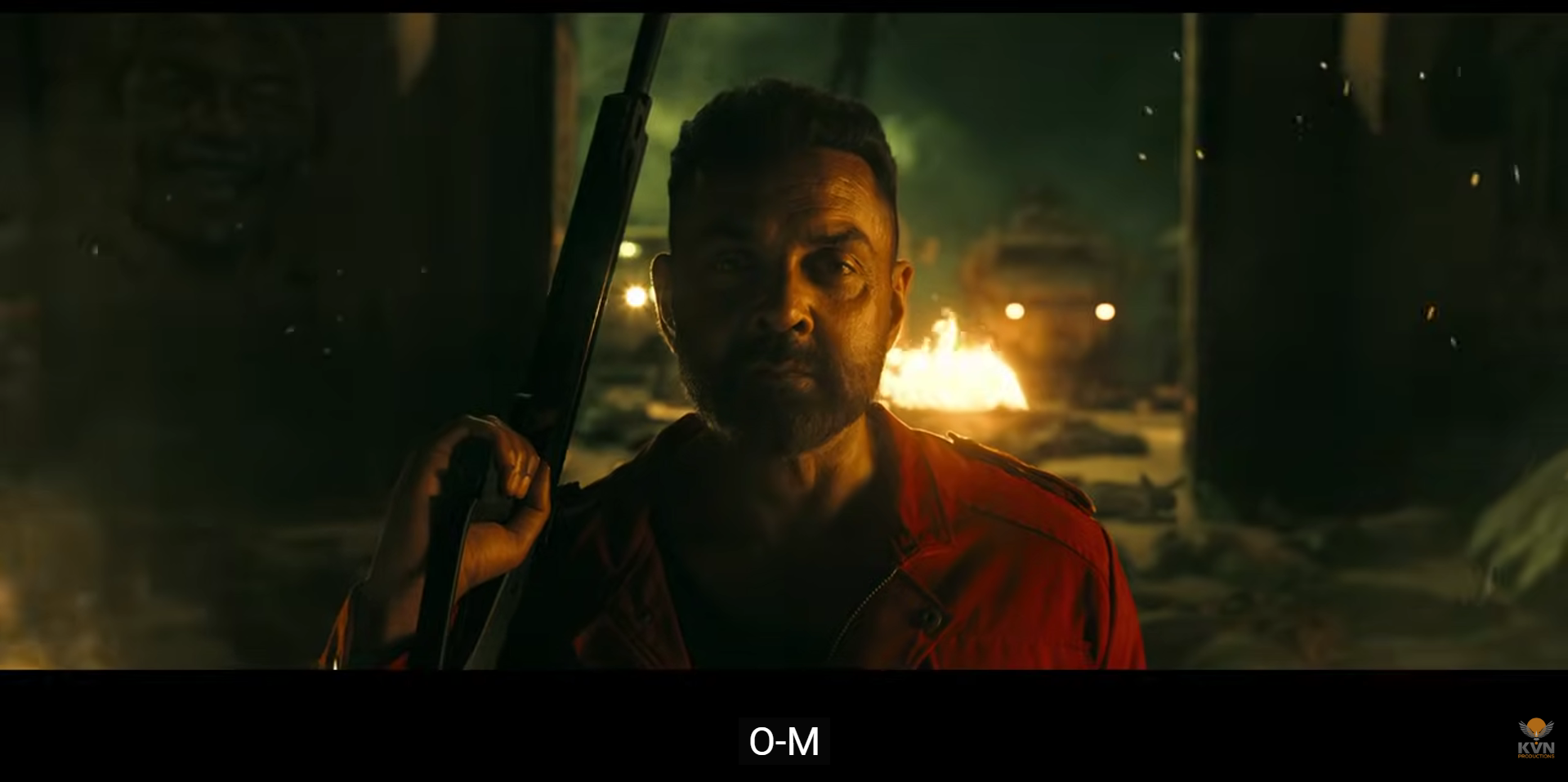
Hindu Munnani Files Complaint Against Alleged Illegal Church Construction On Adi Dravidar Land In Coimbatore

Hindu Munnani Files Complaint Against Alleged Illegal Church Construction On Adi Dravidar Land In Coimbatore

The Hindu Munnani has petitioned the Coimbatore District Collector, alleging that a CSI Christ Church in Keeranatham Village has been illegally constructed on government land designated for Adi Dravidars using a fraudulent land title document (patta).

In a formal complaint dated 13 October 2025, R.V. Jeevanandam, the District Secretary of the Hindu Munnani, has called for the immediate cancellation of Patta No. 673 for Survey Field No. 197 in Annur Keeranatham, claiming it is “illegally obtained” and fake.

The complaint alleges that the church building was erected without obtaining necessary building permits or permission from the District Collector for worship. A significant point of contention is the alleged encroachment onto a public road for the construction of a compound wall, a matter for which a police complaint has already been filed, temporarily halting work.

The Hindu Munnani asserts that despite continuous complaints and ongoing investigations by the Revenue Department since 2020, the illegal construction has persisted. The complaint details that work has often proceeded at night and on weekends, leading to a specific police complaint (CSR No. 148/2023) at the Kovilpalayam Police Station.

Crucially, information obtained through the Right to Information (RTI) Act from the Taluk Office is cited as evidence. According to the the complaint as per official records, SF No. 197 is classified as “Adidravidar Natham”.

The complainant has submitted numerous documents to the Collector, including copies of the disputed patta, RTI replies, the road scale map, and various complaint acknowledgements from police and revenue officials over the past several years.

The Hindu Munnani has urgently requested the District Collector to investigate the matter, cancel the fraudulent patta, and ensure the land is restored for the use of Adi Dravidars to prevent further complications.

Subscribe to our channels on TelegramWhatsApp, and Instagram and get the best stories of the day delivered to you personally.

DMK’s Dravidian Model: Oppose CBI Enquiry When In Power, Call For CBI Enquiry When In Opposition

Investigation into the Karur stampede which killed 41 people on 27 September 2025 during a TVK rally has been handed over to the CBI as per the recent Supreme Court order.

Despite demands for an impartial probe from grieving families and political parties, the ruling DMK initially resisted a CBI investigation, insisting on state-appointed mechanisms, criticized as fear of independent scrutiny. With the apex court now placing the case under CBI supervision monitored by a retired Supreme Court judge, it is worth examining instances where the DMK’s demand for CBI probes has shifted depending on whether it was in power or in opposition.

When In Opposition, Demand CBI Enquiry

During the AIADMK regime (2011-2021), the DMK, as the principal opposition party, consistently demanded CBI investigations into numerous cases involving alleged corruption, administrative failures, and custodial violence. MK Stalin, as Opposition Leader, repeatedly called for central agency probes, positioning himself as an advocate for transparent investigations. Here is a comprehensive list of cases where DMK demanded CBI enquiry:

Gutka Scam (2017-2018)

The Madras High Court ordered a CBI probe on 25 April 2018, into the multi-crore gutka scam following a petition by DMK MLA J. Anbazhagan. MK Stalin, as Opposition Leader, strongly welcomed the court order and demanded the resignation of Health Minister C. Vijaya Baskar and DGP T.K. Rajendran for a fair probe. Stalin stated, “If the case has to be probed fairly, health minister C Vijaya Baskar and director general of police T K Rajendran must resign. In fact, we demand the resignation of the Palaniswami government”. He further said the public was aware about the gutka case and the high court had transferred it to CBI as it felt that probe by the DVAC would not be fair. After CBI raids in September 2018, Stalin demanded that the Governor sack the Health Minister and DGP if they did not quit on their own. He questioned why these officials had not been arrested while the bribe-giver and intermediaries were arrested by CBI.

Thoothukudi (Sterlite) Police Firing (2018)

On 29 May 2018, following the police firing that killed 13 protesters at the anti-Sterlite agitation, Stalin demanded action against senior police officials. DMK wrote to the Chief Secretary on 29 May 2018, demanding a CBI probe into the police firing.
Stalin stated that “the South Zone Inspector General, Deputy Inspector General of Nellai (Tirunelveli) range and all other officers who are involved should be booked for murder. They should be immediately suspended, and action should be taken against them”. When the Madras High Court ordered a CBI investigation on 12 August 2018, DMK “hailed” the court order.

Moulivakkam Building Collapse (2014-2016)

After the 28 June 2014 building collapse at Moulivakkam that killed 61 people, the then-DMK Treasurer MK Stalin filed a PIL in the Madras High Court seeking a CBI probe into the incident. Stalin insisted on a CBI probe, citing several statutory relaxations made by officials permitting the multi-storeyed building. He alleged that the builder had clout and nexus with some state ministers and that due to the “blessing” of the ministers, there was no inspection at all since 2011 by any planning or enforcement authorities.

On 28 June 2016, Stalin reiterated his demand for CBI investigation, arguing that the final report filed without completion of investigation required proper probe. He also led a well-attended rally of DMK workers and met the Governor on 12 July 2014, submitting a petition demanding a CBI inquiry.

Highway Tender Scam (2018)

The Madras High Court ordered a CBI probe on 11 October 2018, into corruption charges against Chief Minister Edappadi Palaniswami (EPS) made by DMK leader R.S. Bharathi. The DMK alleged that EPS, while heading the highways department, had allotted contracts worth Rs 4,800 crore allegedly based on favoritism to firms owned by his relatives.

The court transferred the case to CBI stating it was in the interest of transparency in the investigation. DMK organizing secretary R.S. Bharathi had approached the Directorate of Vigilance and Anti-Corruption (DVAC) alleging discrepancies in the allotment of contracts for five highway projects.

Jayalalithaa’s Death (2017)

MK Stalin on 24 September 2017, urged the Centre to order a CBI probe into the death of former Chief Minister J. Jayalalithaa. He stated, “Given the fact that the Centre had helped in providing treatment, it has the responsibility to undo the mysterious knots in connection with her death. So, it must order a CBI probe immediately”.

Stalin characterized the one-member judicial commission appointed by the Tamil Nadu government as “just eyewash” and insisted that “if the Palaniswami regime was truly interested in going into the ‘mysteries’, it should prefer a CBI investigation”. He demanded that British expert Richard Beale and AIIMS doctors be brought under the ambit of the investigation.

Stalin also demanded the resignation of Chief Minister K. Palaniswami and his cabinet to facilitate a fair probe by CBI. He maintained this demand consistently, calling for CBI inquiry multiple times in 2017.

Tuticorin Custodial Deaths – Jayaraj and Bennix (2020)

Following the alleged custodial deaths of father and son P. Jayaraj (59) and J. Bennix (31) on June 22-23, 2020, in Sathankulam, Thoothukudi district, Stalin stated on 26 June 2020, that DMK would seek a CBI probe if the state government failed to carry out a proper investigation.

Stalin questioned, “Chief minister Edappadi K Palaniswami, who takes care of the home department, must answer how the duo died under police custody”. He said the AIADMK government was trying to “cover up” the truth. The case was eventually transferred to CBI, which arrested police officers involved.

Pollachi Sexual Assault Case (2019)

After the Pollachi sexual assault scandal broke in February 2019, where a gang sexually assaulted and blackmailed numerous women, there was widespread demand for CBI investigation. The AIADMK government transferred the case to CBI on March 12, 2019. Thoothukudi MP Kanimozhi alleged that one of the accused in the Pollachi sexual assault case had close ties to a minister from the ruling AIADMK, claiming the party sought to protect the accused. Speaking at Grama Sabha meetings in Kovilpatti, Kayathar, and Kazhugumalai, she credited DMK pressure for shifting the case to the CBI and called for an expedited investigation to ensure justice for the victims.

Cognizant Bribery Case (2019)

On 18 February 2019, after US courts fined Cognizant Technology Solutions $25 million for bribing Tamil Nadu officials to secure building permits for its Chennai development center, Stalin demanded a CBI probe.

Stalin said, “The company has told the US court that it had to pay Rs 26 crore as a bribe during construction of KITS Campus in Chennai to get electricity connection and environment clearance”. He demanded the DVAC should take help of CBI and Interpol to collect relevant documents and bring those involved to books.

Smart City Project Chennai (2018-2020)

Stalin called for a CBI probe into project tenders issued for implementing the Smart City mission, alleging nepotism by Municipal Administration Minister SP Velumani. He questioned how a tender worth Rs 149 crores was given to an inexperienced company.

Stalin demanded action against Minister SP Velumani and other bureaucrats by setting up a CBI ‘special inquiry committee’. He also raised questions in 2020 about the transfer of an official monitoring projects worth Rs 12,000 crore, including Smart City projects, asking whether the Chief Minister was ready to face a CBI probe.

NEET Impersonation Scam (2019)

On 3 October 2019, Stalin demanded a CBI probe into the National Eligibility cum Entrance Test (NEET) impersonation scam to bring out the truth. He alleged that the government was a “mute spectator” and announced a CB-CID probe for an “eye wash”. Stalin said as per reports, over 50 candidates might have secured admission through foul means like impersonation, and the scam allegedly involved officials and middlemen from not only Tamil Nadu but other states as well.

Cash for MLA Sting Operation (2017)

After a sting operation in June 2017 purportedly showed AIADMK MLAs admitting that bribes were offered in gold and money to support the Sasikala faction during the trust vote, Stalin demanded a CBI probe. On 13 June 2017, after the Speaker refused to allow discussion on the issue, DMK staged a walkout from the Tamil Nadu Assembly. Stalin told reporters, “I raised matter in assembly and sought explanation from the 2 MLAs in the sting. Also demanded a CBI probe, but we were evicted”.

DMK also met the Governor on 17 June 2017, seeking the Palaniswami government’s dismissal and a CBI probe based on the sting operation. However, the Madras High Court on 29 June 2017, dismissed Stalin’s petition demanding CBI and DRI probe in the “Cash for vote” MLA sting.

Other Demands for CBI Probe

Stalin also demanded CBI probes in several other cases during his time in opposition, including:

  • Delhi medical student death (2017): Stalin demanded CBI enquiry into the death of a Tamil Nadu medical student found dead in Delhi.
  • Sekhar Reddy’s case (2019): Stalin demanded CBI probe into alleged payments by mining baron Shekhar Reddy to Tamil Nadu ministers and officials.
  • Central projects worth Rs 17,000 crore (2020): Stalin challenged CM Palaniswami to order a CBI probe into projects funded by the Centre.
When In Power, Oppose CBI Enquiry

As the DMK came to power, they have opposed CBI inquiry for most of the cases that by its own nature, demand one.

Karur Stampede Case (2025)

The most recent and prominent case involves the tragic Karur stampede during TVK leader Vijay’s rally on 27 September 025, which claimed 41 lives. Initially, the Madras High Court refused a CBI probe and ordered an SIT investigation. When the Supreme Court subsequently ordered a CBI investigation on October 13, 2025, the DMK strongly opposed it.

DMK MP and advocate P. Wilson stated that the Supreme Court’s order was only interim, and they would file counter affidavits. The DMK characterized the CBI probe as politically motivated, alleging that “TVK has surrendered to the BJP” and claiming that “BJP waited for this opportunity”. DMK supporters portrayed this as Vijay “falling into the control of the BJP”.

Kallakurichi Hooch Tragedy (2024)

When 67 people died after consuming illicit liquor in Kallakurichi in June 2024, and the Madras High Court ordered a CBI probe in November 2024, the DMK government moved the Supreme Court to challenge this order. Law Minister S. Regupathy stated that the government opposed the CBI probe to ensure “victims get justice quickly,” arguing that transferring the case to CBI would delay proceedings. The DMK argued that 24 people had been arrested and the Goondas Act was slapped on 17, claiming the CB-CID investigation was progressing correctly.
DMK organizing secretary R.S. Bharathi defended the party’s position by stating, “The DMK never sought a CBI probe” and reminded critics that when they had sought an inquiry in the highway tender scam, it was the court that ordered CBI investigation, not their request.

Armstrong Murder Case (2024-2025)

When the Madras High Court ordered a CBI probe into the murder of BSP Tamil Nadu president K. Armstrong on 24 September 2025, the DMK government appealed to the Supreme Court against this decision.  The Tamil Nadu government, represented by Senior Advocate Siddharth Luthra, argued that the Madras High Court had quashed a “comprehensive chargesheet running into 7,411 pages and arraying 30 accused persons” in a “casual manner”. The government contended that the high court was “swayed by extraneous considerations, including media narratives and prevailing political circumstances”. While the Supreme Court partially stayed the order quashing the chargesheet, it allowed the CBI investigation to continue.

Lavanya Suicide Case (2022)

In one of the most controversial cases, when the Madurai Bench of the Madras High Court on 31 January 2022, ordered a CBI probe into the suicide of 17-year-old student Lavanya, the DMK government filed a Special Leave Petition in the Supreme Court challenging this order.

The petition was filed by the Tamil Nadu government through the DGP, arguing against transferring the case from state police to CBI. However, the Supreme Court on 13 February 2022, refused to interfere with the High Court’s order, dealing a “huge setback” to the DMK government. The High Court had criticized both the local police and the Education Minister for their statements ruling out the conversion angle before proper investigation, stating the SP “probably forgot the virtues of silence”.

Idol Theft Cases (2018)

When the AIADMK government in 2018 transferred all idol theft cases from the court-appointed investigator IGP Pon Manickavel’s idol wing to the CBI, DMK working president M.K. Stalin strongly opposed this move.

Stalin stated, “When we demanded CBI probe into various other scams, the government refused. Why in this case the government wants to transfer the cases hurriedly to the CBI?”. He characterized the transfer as “politically motivated” and accused the government of running a “non-cooperation movement” against Manickavel. Stalin urged the government to drop the move and allow Manickavel to continue the court-monitored probe.

Kodanad Heist-cum-Murder Case (2019-2023)

Though DMK held protests and called for investigation into the 2017 Kodanad estate case, they notably did not transfer it to CBI after coming to power in 2021. When opposition leader Edappadi Palaniswami demanded the case be handed over to CBI, the DMK government maintained the investigation with CB-CID instead.
The case involved the murder of a security guard at former Chief Minister Jayalalithaa’s Kodanad estate bungalow. Despite completing “90% of the probe,” the DMK shifted it from state police to CB-CID in September 2022 rather than transferring to CBI. In 2024, Chief Minister Stalin stated the case would be probed “with support of Interpol,” but resisted CBI involvement.

Withdrawal of General Consent to CBI (2023)

The most significant institutional step taken by the DMK government against CBI jurisdiction came on 14 June 2023, when Tamil Nadu withdrew its general consent for CBI investigations in the state. This decision came hours after Enforcement Directorate arrested DMK minister V. Senthil Balaji in a money laundering case. The move meant that CBI would henceforth need prior permission from the Tamil Nadu government before conducting any investigation in the state.

Chief Minister Stalin criticized the BJP government at the Centre for adopting “backdoor tactics” against political opponents and condemned the ED searches in the state secretariat. The DMK characterized this as protecting federalism and preventing misuse of central agencies. Tamil Nadu became the tenth (later eleventh) Indian state to withdraw general consent to CBI, joining West Bengal, Rajasthan, Kerala, Punjab, Telangana, Jharkhand, Chhattisgarh, Mizoram, and Meghalaya.

Subscribe to our channels on TelegramWhatsApp, and Instagram and get the best stories of the day delivered to you personally.