Home Blog Page 202

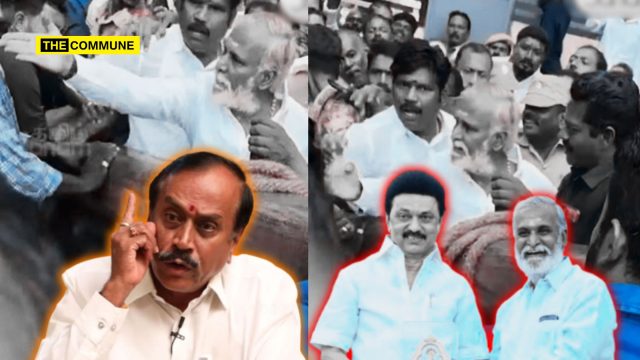
VCK Car Dash Incident: FIR Filed Against Lawyer Who Was Attacked And VCK Goons, Court Slams Thirumavalavan For Provoking The Problem

"They Beat Him Since He Stared Angrily": VCK MP Thirumavalavan Justifies His Goons Thrashing Motorist In Two-Wheeler Dashing Case

In a move that has drawn sharp condemnation from the Madras High Court, the Tamil Nadu police under the Dravidian model government have registered a criminal case against a lawyer who was brutally assaulted by VCK leader Thol. Thirumavalavan’s supporters, while treating his attackers with surprising leniency.

The incident, which occurred on October 7 outside the Madras High Court, began when Thirumavalavan’s car collided with lawyer Rajiv Gandhi’s two-wheeler on NSC Bose Road. When Gandhi confronted the occupants about the collision, he was violently attacked by men accompanying the VCK leader, with the entire assault captured on video and later going viral.

Victim-Turned-Accused: The Lopsided FIR

In a controversial response, the Esplanade police registered two FIRs that show stark disparity in treatment. Against lawyer Rajiv Gandhi – the assault victim – police invoked three serious sections of the Bharatiya Nyaya Sanhita (BNS): wrongful restraint, criminal intimidation, and intimidation with intent to breach peace.

Meanwhile, against the men who were seen on video brutally attacking Gandhi, police registered a case under only two comparatively minor sections: causing hurt and using obscene language. Notably, Thirumavalavan’s name was completely omitted from the FIR despite the victim’s complaint specifically mentioning that the VCK leader “incited” the attack.

High Court’s Stinging Rebuke

The police action prompted a stinging rebuke from the Madras High Court, with Justice Satish Kumar delivering scathing observations during a hearing on Friday.

“On what basis is the case filed against both parties?” the judge questioned, expressing astonishment that the assault victim had been made an accused. He further asked, “when only one party had joined in attacking a lawyer?”

Justice Kumar was unequivocal in his assessment, calling the police action “hostile that the police is pursuing this case against both the victim and the attacker,” and pointedly demanding, “To satisfy whom has the police taken this action?”

The judge also condemned Thirumavalavan’s role, observing that “the leader who was present there, instead of controlling the situation, seems to have acted in a manner that provoked the problem.”

Political Fallout and Controversial Justification

The incident has sparked political repercussions, with CPM state secretary P Shanmugam expressing concern over caste-based divisions among lawyers in Tamil Nadu. He emphasized that “developments undermining the unity of the legal fraternity must be avoided at all costs.”

Meanwhile, Thirumavalavan’s response to the incident has drawn widespread condemnation. The VCK leader not only denied his party men assaulted the lawyer but allegedly justified the beating by saying the motorist “glared at him.” In a remark that sparked particular outrage, Thirumavalavan reportedly added, “And even that, was the hitting done properly.”

The High Court has now directed police to seize all CCTV footage of the incident and conduct a thorough investigation, adjourning the matter for two weeks. The case has put both the police investigation and the conduct of the political leader under intense judicial scrutiny, raising serious questions about the impartiality of law enforcement in the state.

(Source: DTNext)

Subscribe to our channels on TelegramWhatsApp, and Instagram and get the best stories of the day delivered to you personally.
Reports Say TVK Cadres Angry With Bussy Anand, Demand His Removal For Mishandling Karur Stampede Tragedy

tvk vijay bussy anand

Tamilaga Vettri Kazhagam (TVK), led by actor-turned-politician Vijay, is allegedly facing an internal revolt as cadres and supporters mount pressure on the leadership to remove General Secretary Bussy Anand. Once considered the organisational pillar of TVK, Anand has become the target of widespread criticism following the Karur tragedy and the party’s mishandling of the crisis.

16 days after going underground, Bussy Anand made his first public appearance on 13 October 2025 after the Supreme Court ordered a CBI investigation, but his return was met with anger rather than support. Many party supporters accused him of going into hiding during the Karur crowd crush incident as if he had nothing to do with the party, which left cadres in disarray. During his bail hearing, he had shifted the entire blame on TVK functionaries. Several cadres took to social media demanding a restructuring of the organisation and greater accountability from the leadership.

The dissent gained momentum soon after the Supreme Court granted interim relief to TVK by transferring the Karur investigation to the CBI. On the same day, photos of Bussy Anand posing with district secretaries surfaced online, triggering a backlash from cadres who felt abandoned during the party’s most difficult phase.

TVK’s ‘virtual warriors’ have expressed frustration over the leadership’s inaccessibility. Many accused Anand of surrounding himself with loyalists and sidelining competent members. Supporters alleged that Anand focused on self-promotion, citing instances of elaborate convoys and extensive publicity around his visits, while neglecting grassroots engagement and party-building.

Multiple petitions addressed to TVK Chief Vijay have since emerged online, demanding immediate changes in the organisational structure. One open letter titled “From the heart of your fans, virtual warriors, and cadres” stated that the Karur tragedy had exposed deep flaws in TVK’s internal framework. It urged Vijay to strengthen the party’s second-line leadership, train district-level leaders, and decentralise power to make the movement resilient even in the absence of its top leader.

Another letter, titled “TVK Party to Retrospect and Strengthen”, specifically called for changes to the General Secretary’s role, citing Bussy Anand’s ineffectiveness. It suggested that even if a replacement was not imminent, his responsibilities should be redistributed among capable members to ensure smoother functioning.

The discontent intensified further when photos went viral showing Karur East District Secretary Mathiazhagan and party functionary Paunraj, both arrested in connection with the Karur tragedy and later released on bail, touching Bussy Anand’s feet at the party headquarters. The images sparked outrage among cadres, prompting the hashtag campaign #KickOutBussyAnand to trend across social media platforms.

As petitions and online campaigns multiply, TVK’s leadership has remained silent, further fuelling speculation of internal division. Party insiders say the growing chorus against Anand reflects a wider crisis of confidence within the organisation, with cadres seeking greater transparency, accountability, and accessibility from the top leadership.

(Source: The News Minute)

Systemic Fund Diversion: Tangedco Repeatedly Fails To Deposit Thousands Of Crores In Electricity Tax, Says CAG

In a serious indictment of Tamil Nadu’s power utility, the Comptroller and Auditor General (CAG) has raised an alarm over the suspected temporary misappropriation of public funds by Tangedco. According to the CAG’s report on state finances for 2023-24, the electricity distributor collected ₹1,985 crore as electricity tax from consumers but remitted only ₹1,457 crore to the government, retaining ₹507.43 crore.

The national auditor termed this a breach of the Tamil Nadu Tax on Consumption or Sale of Electricity Act, 2003, which mandates Tangedco to collect the tax along with energy charges and remit it to the Consolidated Fund of the State – the government’s main account for all revenues.

“The amount of tax collected but not remitted into the consolidated fund as of March 31, 2024, was ₹507.43 crore,” the report stated, adding that Tangedco had also retained ₹19.85 crore as collection charges. It explicitly warned that “such non-remittance to the government account and retaining the collected tax for such a long period is fraught with the risk of suspected temporary misappropriation.”

This practice allows the corporation to use taxpayer money as its working capital, effectively diverting funds meant for public expenditure.

The report also revealed that this is not an isolated incident but a recurring pattern. A similar shortfall identified in earlier audits, amounting to ₹4,264.61 crore for the period from 2019-23, was remitted to the Consolidated Fund only in the last financial year, after adjusting for collection charges of ₹142.16 crore.

The CAG’s findings point to systemic financial mismanagement, highlighting how a state-owned utility has repeatedly failed to comply with statutory requirements, thereby keeping thousands of crores of public money outside the government treasury for extended periods.

(Source: DTNext)

Subscribe to our channels on TelegramWhatsApp, and Instagram and get the best stories of the day delivered to you personally.
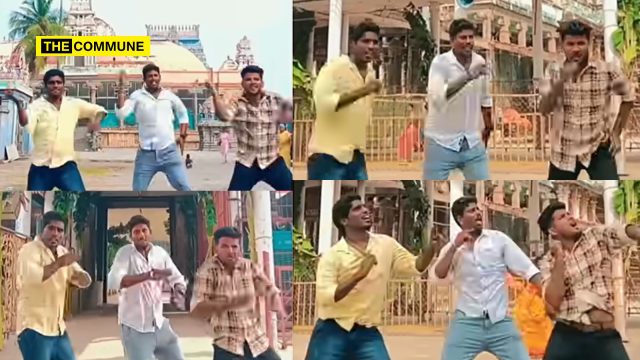
Dravidian Model Chennai: Monsoon Just Arrives But Sewage Already Overflows In Chintadripet

Sewage Overflow In Chintadripet Adds To Chennai’s Civic Woes

Residents of K.M. Garden in Chintadripet have been facing severe hardship as sewage has been overflowing on 15th Street for the past four days, affecting more than five thousand residents. The stagnant wastewater has led to foul odour, mosquito infestation, and heightened fears of infectious diseases spreading in the densely populated neighbourhood.

Local residents said repeated complaints to civic authorities have gone unanswered. The situation reflects a broader pattern of civic neglect in North Chennai, where overburdened sewage networks and inadequate maintenance often lead to contamination of streets and drinking water sources.

Earlier this week, similar reports emerged from Old Washermenpet, where residents said hand pumps were yielding sewage water instead of clean water.

Subscribe to our channels on TelegramWhatsApp, and Instagram and get the best stories of the day delivered to you personally.
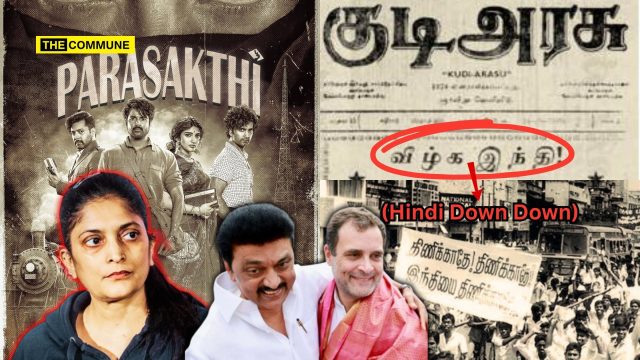
DMK Health Min Absolves TN Govt Of Responsibility, Shifts Blame On Madhya Pradesh Officials Over Coldrif Cough Syrup Deaths

DMK Health Min Absolves Responsibility, Shifts Blame On MP Officials Over Cough Syrup Deaths

Tamil Nadu Health Minister Ma. Subramanian on Friday (17 October 2025) seemed to absolve his government of responsibility in the deaths of 25 children in Madhya Pradesh linked to Coldrif cough syrup manufactured in Tamil Nadu by Sresan Pharmaceuticals, claiming that the incident was caused by “negligence on the part of Madhya Pradesh drug quality control authorities.”

Responding to a special motion raised by Opposition Leader Edappadi K. Palaniswami in the Tamil Nadu Assembly, Subramanian said that the state acted “within hours” of receiving information from Madhya Pradesh about the contaminated “Coldrif” syrup. He maintained that Tamil Nadu’s role was limited to regulation and that the company involved, Sresan Pharmaceuticals, had already been sealed and its operations halted.

Minister’s Explanation in the Assembly

The minister stated that the Tamil Nadu Drugs Control Department received an official communication from its Madhya Pradesh counterpart at 3 PM on 1 October 2025, reporting the death of a child in Chhindhwara district after consuming Coldrif syrup. The letter also contained details of the chemical substances suspected to have caused the fatality.

According to Subramanian, the Deputy Director of Drug Control immediately directed a senior inspector to conduct a spot inspection of the manufacturer. “By 4 PM the same day, inspections were initiated,” he said, asserting that the state government “was not a buyer of medicines” from the company. He also claimed that within 30 minutes of receiving the information, the sale of the cough syrup was banned across Tamil Nadu, and orders were issued preventing private retailers from stocking or distributing it.

Violations Found; 126 Drugs Suspended

Ma Subramanian stated that inspections carried out on October 1 and 2 reportedly revealed multiple violations in the company’s operations. Laboratory analysis of five medicines, including Coldrif, showed the presence of 48.6% diethylene glycol, a toxic chemical known to be life-threatening. Subramanian confirmed that the company’s entire range of 126 products was suspended, and a “stop production order” was issued on 3 October 2025.

He stated that Coldrif syrup had also been distributed in Puducherry and Odisha, and that Tamil Nadu authorities immediately alerted those states to prevent further tragedies. “The company was sealed, and a notice was issued to explain why its licence should not be revoked. Criminal action has been initiated against its owner, Ranganathan, who has been arrested,” he told the House.

Blames MP Officials, Says TN Acted Responsibly

While asserting that the Tamil Nadu government took “swift and comprehensive action,” Subramanian argued that the actual responsibility for the deaths lay with Madhya Pradesh’s regulatory mechanism. “The deaths occurred because of negligence by the drug quality control officials in that state,” he said, adding that Tamil Nadu had fulfilled its duty by taking immediate preventive steps.

Subramanian claimed that Chief Minister M.K. Stalin had instructed officials to pursue criminal proceedings against the company but also cautioned that political motives should not be allowed to affect India’s image in the global pharmaceutical market. “Our pharmaceutical industry exports drugs worth ₹12,000 to ₹15,000 crore annually. Inspections are being conducted continuously across all 397 manufacturing units,” he said.

Following the investigation, the Sresan Pharmaceuticals factory was permanently closed, and its licence suspended. “The plant is now completely shut down,” the minister confirmed, noting that the company had been barred from producing or distributing any medicine pending legal proceedings.

Subramanian concluded his statement by urging the public to avoid consuming any medicine without a doctor’s prescription and reiterated that Tamil Nadu’s regulatory system had acted responsibly once the alert came from Madhya Pradesh.

The opposition, however, accused the DMK government of deflecting blame and failing to proactively monitor pharmaceutical manufacturers operating within the state.

(Source: OneIndia Tamil)

Subscribe to our channels on TelegramWhatsApp, and Instagram and get the best stories of the day delivered to you personally.
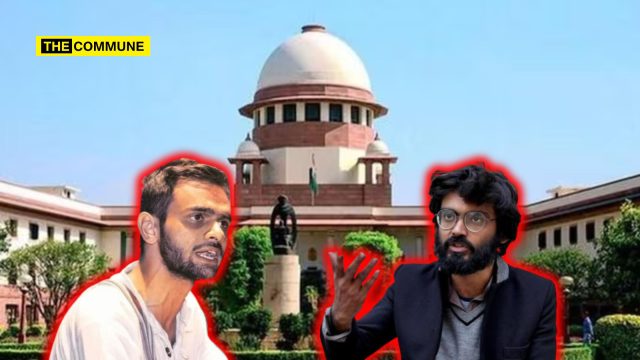
NIA Chargesheets Bihar Labourer Mohammed Akhlaque Working In Tamil Nadu For Lashkar-e-Taiba Links, Was Allegedly Planning Attacks In Tamil Nadu And J&K

The National Investigation Agency (NIA) has filed a chargesheet against a migrant labourer from Bihar for allegedly supporting the banned terror group Lashkar-e-Taiba (LeT) and conspiring to carry out attacks in Jammu & Kashmir and Tamil Nadu.

The accused, identified as Akhalatur alias Mohammed Akhlaque Mujahid, is a resident of Katihar district in Bihar. Officials said he had been working as a daily wage worker at a private construction site in Chengalpattu, Tamil Nadu, when he was apprehended.

According to the NIA, Akhalatur was in touch with LeT handlers based in Pakistan through online platforms. Investigators allege that he shared radical content, discussed plans to attack “Kafirs” (non-believers), and tried to spread extremist ideology among local residents in Tamil Nadu. The agency claims he was “actively conspiring to execute Jihadi-style terror attacks” aimed at destabilising peace in India.

The accused has been booked under Sections 196 and 197 of the Bharatiya Nyaya Sanhita (BNS) and Sections 13(1)(b) and 39 of the Unlawful Activities (Prevention) Act (UAPA).

The investigation further revealed that Akhalatur attempted to contact arms dealers in order to procure weapons for the planned strikes. According to the NIA’s statement, “The accused was in touch with Pakistan-based LeT handlers through cyberspace and conspired with them to target Kafirs in Tamil Nadu.”

Akhalatur was initially arrested by Kayar Police in April this year following intelligence inputs about his involvement in anti-national activities. Given the suspected terror links, the case was subsequently transferred to the NIA for detailed investigation.

Before he could act on his alleged plans, security forces intercepted his communications and foiled the conspiracy, leading to his arrest. The NIA has said that further investigation is underway to trace possible associates and funding channels connected to the network.

(Source: News18)

Subscribe to our channels on Telegram, WhatsApp, and Instagram and get the best stories of the day delivered to you personally.
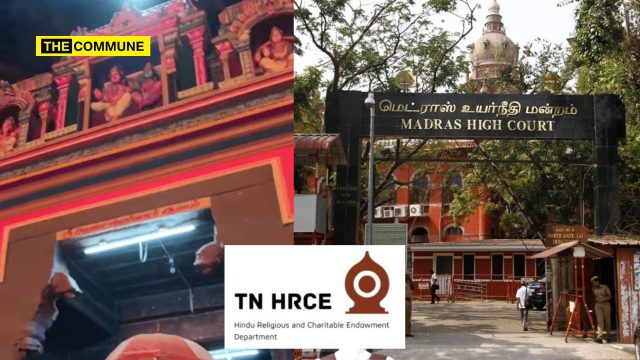
Karur Stampede Case: Burnt Documents, 32GB Pendrive Found Near SIT Office

Karur Stampede Case Burnt Documents, 32GB Pendrive Found Near SIT Office

The Karur stampede case, which claimed 41 lives during a Tamil Nadu Victory Party (TVK) public meeting led by actor Vijay in Velchamipuram on September 27, has resurfaced in political controversy following the discovery of burnt documents and a 32GB pendrive near the temporary office of the Special Investigation Team (SIT). The SIT, formed to investigate the incident, was dissolved after the Supreme Court verdict, and the documents were reportedly found outside the vacated office premises.

TVK leaders have accused the ruling party of orchestrating a deliberate conspiracy to block Vijay’s political entry, claiming the government failed to prevent the stampede despite prior knowledge and allegedly acted to facilitate the tragedy.

The Tamil Nadu government and police have rejected these allegations, stating that the stampede was caused by overcrowding and the late arrival of the leader. Government sources emphasized that it is routine for SIT offices to burn unnecessary documents when vacated and denied any malicious intent.

The discovery has also raised procedural questions. Opposition parties have highlighted the speed of the autopsies conducted at Karur government hospital, where only two tables were available, yet 39 bodies were reportedly examined in four hours, averaging roughly 12 minutes per postmortem.

The case has intensified political scrutiny in Tamil Nadu, with all parties closely monitoring the handover of documents to the CBI, which is now investigating the stampede. Analysts note that the focus will now shift to the contents of the 32GB pendrive and whether the burnt papers contained key evidence. The incident has reignited debates over political accountability, investigative transparency, and procedural irregularities, making the Karur case a flashpoint in the state’s political landscape.

Following the state government’s decision to transfer the case to the Central Bureau of Investigation (CBI), officials from the agency visited Karur earlier today to conduct further inquiries. Shortly after their arrival, the discovery of charred documents and the pen drive near the SIT office created a stir. Authorities are examining whether the materials are connected to the ongoing investigation.

(Source: Tamizhakam)

Subscribe to our channels on TelegramWhatsApp, and Instagram and get the best stories of the day delivered to you personally.
Supreme Court Defers TN Govt’s Plea Against Governor’s Decision To Reserve Bills For President

supreme court tn govt stalin dmk presidential reference appeal bill assent

The Supreme Court on Friday, 17 October 2025, deferred the hearing of the writ petition filed by the Government of Tamil Nadu challenging the Governor’s decision to reserve two state Bills — the Kalaignar University Bill, 2025, and the Sports University Bill — for the consideration of the President of India.

The bench comprising Chief Justice of India B. R. Gavai and Justice K. Vinod Chandran suggested that the State government wait for the outcome of the Presidential Reference currently pending before a Constitution Bench. The reference concerns the timelines for granting assent to Bills by the President and Governors under Articles 200 and 201 of the Constitution.

CJI Gavai observed, “You have to wait hardly for 4 weeks, the reference has to be decided before 21st (November),” while addressing Senior Advocate Dr. A. M. Singhvi, who was appearing for Tamil Nadu. The Chief Justice is scheduled to retire on 23 November 2025.

State Challenges Governor’s Action

The Tamil Nadu government filed the writ petition questioning the Governor’s decision to withhold assent to two state Bills and refer them to the President of India.

The first, the Kalaignar University Bill, 2025, seeks to establish a university that would designate Chief Minister MK Stalin as its first Vice-Chancellor. The second, the Sports University Bill, proposes to amend the Tamil Nadu Physical Education and Sports University Act, empowering the state government to appoint or remove vice-chancellors.

Senior Advocates Dr. A. M. Singhvi and Mukul Rohatgi appeared on behalf of Tamil Nadu, with AOR Misha Rohatgi assisting in filing the plea.

“Governor Cannot Act Like a Judge”

Arguing for the State, Dr. Singhvi contended that the Governor had no authority to assess the contents of a Bill as if adjudicating it judicially. He submitted, “He (the Governor) cannot refer to the President, the issue of repugnancy.”

Supporting this, Rohatgi remarked, “The question today is, can the Governor examine every clause like a judge and say — it’s repugnant?”

Centre Defends Governor’s Authority

Solicitor General Tushar Mehta, appearing for the Union Government, defended the Governor’s role, asserting that the act of examining Bills and referring them to the President formed part of the Governor’s constitutional duty.

He pointed out that between 2015 and 2025, Governors across India had made 381 references to the President of India. He cautioned that if every such reference were to be challenged, it would overwhelm the judiciary.

“If this is to be justiciable, my lords will have two separate benches permanently for deciding,” he submitted.

Responding to the State’s arguments, Mehta said, “The Governor (position) is doing it since independence; that is his job.”

Linked to Pending Constitutional Clarification

The present case is closely tied to the pending Presidential Reference before a five-judge Constitution Bench led by the Chief Justice of India. The reference seeks the Court’s opinion on the scope of Articles 200 and 201, following a two-judge bench’s judgment in the Tamil Nadu Governor case, which had set timelines for constitutional authorities to act on Bills.

That opinion was reserved on 11 September 2025, and the Supreme Court indicated that it expects a decision by 21 November 2025, before the Chief Justice’s retirement.

Until then, the Tamil Nadu government’s plea will remain pending, as the Court signaled that the outcome of the Presidential Reference will directly affect the present petition.

(Source: LiveLaw)

Subscribe to our channels on TelegramWhatsApp, and Instagram and get the best stories of the day delivered to you personally.

Kerala High Court Refuses To Halt DDE’s Directive Allowing Muslim Girl To Wear Hijab In Class

Kerala High Court Refuses To Halt DDE’s Directive Allowing Muslim Girl To Wear Headscarf In Class

The Kerala High Court on Friday refused to grant an interim stay on a directive issued by the Deputy Director of Education (DDE), Ernakulam, which instructed St. Rita’s Public School, a Christian minority institution affiliated with the Central Board of Secondary Education (CBSE), to permit a Muslim girl student to wear a headscarf in class.

Justice V. G. Arun directed the State Attorney to obtain instructions on the matter, observing that no coercive steps could be taken against the school since it functions under the CBSE. “You know nothing could be done. I am not passing an interim order for the sake of passing one. Let the State Attorney get instructions,” the judge remarked while declining to issue a stay at this stage.

The counsel appearing for the petitioner-school had strongly pressed for an interim order to stay the DDE’s directive, arguing that the instruction interfered with the school’s established dress code and internal regulations.

The school, in its petition, contended that the Government of Kerala has not enacted any legislation permitting the wearing of religious attire in educational institutions. It argued that compelling the school to allow deviations from its uniform policy would undermine the secular and inclusive character of the institution.

According to the petition, officers of the Kerala Education Department, including the DDE, acted beyond their jurisdiction in issuing the order, since St. Rita’s Public School is an unaided minority institution under the administrative purview of the CBSE. The management asserted that state education officers have no authority over CBSE-affiliated schools and that such directives interfere with the autonomy of private minority institutions.

The petitioner also relied on the 2018 Kerala High Court judgment in Fathima Thasneem & Another v. State of Kerala, which held that individual rights cannot override institutional discipline in matters relating to uniforms.

The school further noted that it had earlier approached the High Court seeking police protection for its management, staff, and students after receiving threats and facing mob intrusion over its uniform policy. The High Court had granted protection in that earlier plea.

In the present writ petition, the school has sought the quashing of the DDE’s order, a declaration that the state education authorities lack jurisdiction over CBSE-affiliated schools, and an interim injunction restraining any coercive action against the institution.

Justice Arun posted the matter for further hearing after the State Attorney furnishes instructions on behalf of the government.

(Source: LiveLaw)

Subscribe to our channels on TelegramWhatsApp, and Instagram and get the best stories of the day delivered to you personally.
Verification Of Burqa-Clad/Purdah Women For Voting: What TN Seshan Suggested As Chief Election Commissioner, Gyanesh Kumar Is Implementing

A directive from the Election Commission of India (ECI) concerning the identification of burqa-clad women at polling stations has become a flashpoint in Bihar’s political discourse, with the ruling alliance and opposition parties offering sharply contrasting interpretations of the measure.

The instructions to polling officials, which mandate proper verification of purdahnasheen (veiled) women voters to prevent impersonation, have been strongly criticized by the opposition RJD-Congress alliance. Leaders have labeled the move “undemocratic,” arguing it singles out a specific community.

A Long-Standing Provision, Not a New Rule

Contrary to claims that the directive is novel, historical records show the ECI has been concerned with this specific aspect of the electoral process for decades. The current debate echoes a 1994 directive issued by the Election Commission under then Chief Election Commissioner T. N. Seshan.

In Order No. 576/11/ESO24/94-J.S.II, dated 21 October 1994, the Commission recognised that in certain regions, particularly among purdahnasheen women, social and religious customs limited female voter turnout.

Citing Articles 325 and 326 of the Constitution, which guarantee equal voting rights regardless of religion, caste, or sex, the order called for special arrangements to ensure that purdah-observing women could exercise their franchise without hesitation.

It directed that:

Lady polling officers must be appointed in areas with significant numbers of purdah-observing women.

Private enclosures or curtained spaces be set up inside polling stations for discreet voter identification.

Separate queues and facilities be provided to maintain privacy and respect religious sensitivities.

Despite these detailed provisions, election observers acknowledge that implementation has remained patchy over the decades. Many polling stations still lack designated spaces or female staff for secure identification, forcing ad hoc arrangements that vary from state to state.

Officials argue that impersonation and fake voting can undermine democratic credibility, but critics contend that such measures “risk alienating sections of women voters” by creating discomfort or distrust in the process.

Integrity vs. Vote Bank Politics

The vehement opposition from the RJD and Congress is more about protecting a political strategy. The procedure itself is designed to be respectful and private, using female officials to facilitate voting, not prevent it. The core of the issue is not the burqa itself, but the fundamental principle that every voter must be verified to prevent a single person from voting multiple times while disguised.

The opposition’s meltdown suggests that their concern lies not with the dignity of voters, but with the integrity of the voter roll. By opposing a basic anti-fraud measure that has been on the books for 30 years, the RJD and Congress are signaling that their electoral calculations rely on a system where verification is not fully enforced. The controversy has little to do with culture and everything to do with a political ecosystem that has historically benefited from blurred lines in electoral accountability. The ECI’s move simply enforces a rule that should be beyond debate: that every legitimate vote must be protected, and every voter must be who they say they are.

Subscribe to our channels on TelegramWhatsApp, and Instagram and get the best stories of the day delivered to you personally.