Home Blog Page 202

Operation Mahadev: Congress Has Problems With Hindu Names For Military Operations, BJP Leader CR Kesavan Slams
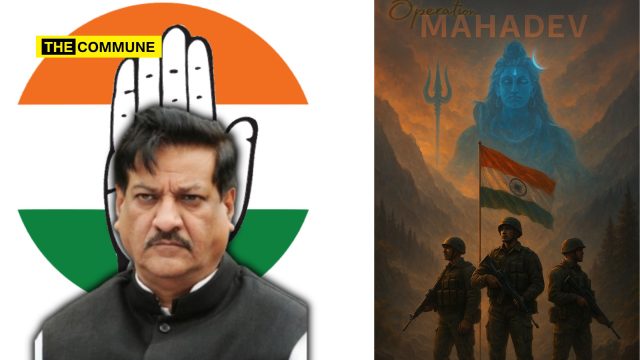
Senior Congress leader and former Maharashtra Chief Minister Prithviraj Chavan accused the Bharatiya Janata Party (BJP) of communal polarisation by naming military and security operations after Hindu symbols. His remarks, made while responding to a query on ‘Operation Mahadev‘, have drawn sharp criticism from BJP leaders.

Chavan alleged that the BJP was injecting religious fundamentalism into national security matters. “They know nothing except naming operations after religious symbols. They inject religious fundamentalism into everything they do. I have read about wars in different countries. Though I am not a historian, but whether it’s world wars or any other war, has anyone used Christian (name for operations)?” he said.

The Congress leader was referring to ‘Operation Mahadev’ – the codename given to the joint operation by the Indian Army, CRPF, and Jammu and Kashmir Police to eliminate terrorists involved in the Pahalgam massacre in April 2025.

“They (BJP) want to mix Hindutva in whatever they do. They are trying to polarise the situation into a Hindu versus Muslim conflict,” Chavan said in a statement to PTI Videos.

Chavan also questioned the significance of the codename ‘Operation Sindoor’, used for India’s military response in May against Pakistan following the Pahalgam attack. “Operation Sindoor — what does it mean? It’s only a Hindu concept, not a world concept. Name of operation doesn’t matter as wars are won when one nation’s planes are attacked and ones destroyed,” he said.

He expressed disappointment with Defence Minister Rajnath Singh’s speech during Monday’s Parliament debate on the operation. “A discussion on Operation Sindoor is happening after a long time. I heard a few speeches. I was disappointed with the speech of Defence Minister Rajnath Singh. We were expecting some facts to come to the fore. There were talks about our jets getting downed (during the conflict), they accepted it happened. When asked how many (jets) were downed, there was no answer,” he stated.

Chavan questioned the government’s claim that over 100 terrorists were killed in the operation and called for transparency regarding Indian losses. “They accepted losses (of fighter jets) happened. CDS Anil Chauhan had said that. (American) President Donald Trump had also said (about jet losses). Are they fearing that when we have spent a lot on Rafale jets, they were downed by Chinese jets (used by Pakistan)?” he said. “Who will challenge them. If I say thousands or two thousands (terrorists) were killed. It’s your figure… is there any evidence of such things?” he asked.

Responding to Chavan’s remarks, BJP national spokesperson CR Kesavan called them “most deplorable and shocking.”

In a post on X, Kesavan wrote, “Most deplorable and shocking remarks by Senior Congress leader Prithviraj Chavan, who says the names Operation Sindoor and Operation Mahadev denote religious fundamentalism. For the Communal Congress, sacred Sindoor and Lord Mahadev symbolise polarisation? What an appalling wretched mindset.”

He further cited national mottos and armed forces’ traditions with roots in Hindu scriptures. “सत्यमेव जयते [Satyameva Jayate] inscribed on our national symbol is from the Mundaka Upanishad. The motto of the Indian Navy ‘शं नो वरुणः’ (Sham No Varunah) is from the Rig Veda. So for the Communal Congress, are सत्यमेव जयते and शं नो वरुणः signs of religious fundamentalism?”

Kesavan demanded an apology from Chavan, stating, “Shame on the Congress party and Mr. Prithviraj Chavan ought to apologise to the armed forces and our nation immediately else it will go on to prove the entire Congress leadership agrees with his dangerous divisive mentality.”

(With inputs from The Week)

Subscribe to our channels on TelegramWhatsApp, and Instagram and get the best stories of the day delivered to you personally.

Hindu Munnani Foils Alleged Conversion Attempt By Muslims Under Guise Of Congress Meeting In Vellore Village

hindu munnani conversion vellore

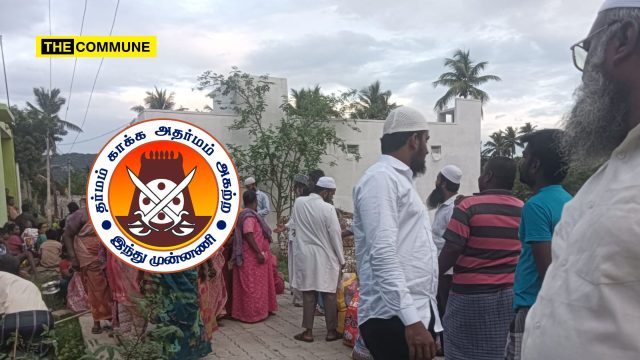
An alleged attempt at religious conversion in Machampattu village, located in the Peranambattu union of Vellore district, was reportedly halted following intervention by local residents and members of the Hindu Munnani.

According to sources, a gathering was organized in the village under the pretext of a Congress party branch committee meeting. During the event, some speakers allegedly made derogatory remarks about Hindu deities, questioned the existence of Hindu gods, and declared there was no god, which drew concern and outrage from the local Hindu community.

Following the meeting, it is claimed that a group went door-to-door distributing copies of the Quran and bags of rice, reportedly encouraging local Hindus to convert to Islam. Villagers informed the Hindu Munnani, which, along with local residents, intervened to stop the alleged conversion activities.

Subscribe to our channels on TelegramWhatsApp, and Instagram and get the best stories of the day delivered to you personally.

Delhi High Court Rejects Leftist Activist Medha Patkar’s Plea To Introduce New Witness In Defamation Case Against L-G Saxena

medha patkar delhi high court l-g saxena

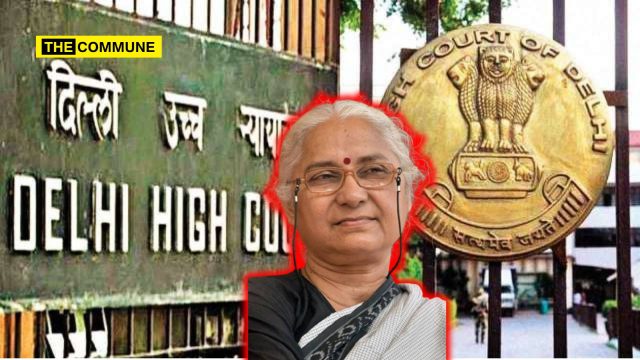
The Delhi High Court has dismissed a plea filed by social activist Medha Patkar challenging a trial court’s refusal to allow her to examine an additional witness in a decades-old defamation case against V.K. Saxena — the present Lieutenant Governor of Delhi. A single-judge Bench of Justice Shalinder Kaur upheld the March 18 order of the Judicial Magistrate First Class (JMFC), which found Patkar’s application to be “a deliberate attempt to delay the trial rather than a genuine necessity.”

The case dates back to December 2000, when Patkar filed a complaint alleging that a newspaper advertisement published on November 10, 2000, was defamatory. The complaint named three individuals as accused, including the publisher and editor of the newspaper, as well as V.K. Saxena. While the proceedings against two of the accused were quashed following a compromise and apology in 2008, the trial continued against Saxena.

After Saxena pleaded not guilty, Patkar’s side began leading evidence. Between 2018 and 2024, four prosecution witnesses were examined, including Patkar herself. The trial, however, faced prolonged delays due to several factors, including settlement efforts, the Covid-19 pandemic, and repeated adjournments. In February, Patkar moved an application under Section 254(1) of the Criminal Procedure Code (CrPC), seeking the trial court’s permission to examine a new witness who was not included in the original list.

Judicial Magistrate First Class Raghav Sharma of Saket Courts rejected Medha Patkar’s application to summon an additional witness, citing the prolonged pendency of the case and the timing of her request. The trial court said, “The present case has been pending for 24 years, and the complainant has already examined all witnesses listed at the time of filing the complaint.”

The magistrate court, in its order passed on March 18, pointed out that Patkar had earlier filed an application under Section 254(2) of the CrPC to summon additional witnesses, yet failed to mention the current witness at that time. “If this witness was truly material to her case, she would have either included them in the original list or at least named them in the earlier application,” the order said. It added that the emergence of the new witness only after the examination of all other prosecution witnesses “raises serious doubts about the genuineness of this request”.

In her petition filed before the Delhi High Court under Article 227 of the Constitution, Patkar argued that the trial court had erred by treating her Section 254(1) application as if it were under Section 254(2) of the CrPC. Patkar’s counsel further argued that denying the right to present a witness — who was willing to appear voluntarily — amounted to a miscarriage of justice.

Patkar had not delayed the trial deliberately, and earlier delays were mostly due to external factors, her counsel submitted. It was also emphasised that the CrPC does not prohibit a complainant from producing a voluntary witness at a later stage merely because the witness was not named in the original list, particularly when no summons from the court was requested.

In contrast, advocate Gajinder Kumar, representing Saxena, opposed Patkar’s plea on the grounds of delay and procedural abuse. Kumar argued that the additional witness had not been mentioned in the original list submitted 25 years ago, nor in any previous examination or cross-examination, and claimed the move was an afterthought designed to fill gaps in the complainant’s case.

Introducing new witnesses at such a late stage, Saxena’s counsel contended, would only prolong the already delayed trial. In a detailed 19-page judgment, the single-judge Bench of Justice Shalinder Kaur acknowledged the importance of a fair trial but emphasised that proceedings cannot continue indefinitely, especially when “the criminal justice system is already burdened with an overwhelming pendency of cases”.

“A perusal of the petitioner’s application under Section 254(1) of the CrPC, seeking to summon a fresh witness, reveals that no sufficient cause has been disclosed for the failure to produce the proposed witness, i.e., Ms. Nandita Narayan,” it said, adding that the application failed to explain both the delay in bringing the witness and her relevance at such a belated stage. The Justice Kaur-led Bench observed that while Section 254(1) gives the complainant the right to lead evidence, it does not mean unlimited liberty to produce new witnesses without justification.

Accepting Patkar’s argument, it said, would render Section 254(2) redundant and open the door for endless trial delays, concluding that the trial court had “correctly interpreted” the scope of Sections 254(1) and 254(2) of the CrPC. Dismissing Patkar’s petition, the Delhi HC opined, “The Impugned Order has carefully analysed the petitioner’s contentions, harmonised statutory interpretation, and considered the long pendency and past conduct to reach a legally sustainable conclusion.”

-IANS

Subscribe to our channels on TelegramWhatsApp, and Instagram and get the best stories of the day delivered to you personally.

Over 1,400 Fake URLs Blocked During Operation Sindoor, Says Centre

fake urls blocked terror centre operation sindoor

The government issued directions for blocking over 1,400 URLs on digital media during ‘Operation Sindoor’, as their content included false, misleading, anti-India news content, communally sensitive content — primarily from Pakistan-based social media accounts, and inciteful content against Indian Armed Forces, the Parliament was informed on Wednesday, 30 July 2025.

Union Railways and Electronics and IT Minister, Ashwini Vaishnaw, said in a written reply to a question in the Lok Sabha that it was observed that certain social media handles, many operating from outside India, were actively propagating false and potentially harmful information during the Pahalgam terror attack and ‘Operation Sindoor.’

“Under Section 69A of the Information Technology Act 2000, the government issued necessary orders to block websites, social media handles and posts in the interest of sovereignty and integrity of India, defence of India, security of the State, and public order,” he said.

On 26 April 2025, the Ministry of Information and Broadcasting had issued an advisory to all media channels to refrain from showing live coverage of defence operations and movement of security forces in the interest of national security. During ‘Operation Sindoor’, a centralised Control Room was established for interdisciplinary and inter-departmental coordination. This Control Room functioned 24×7 and facilitated real-time information dissemination to all media stakeholders.

The minister further informed that this Control Room comprised nodal representatives from the Indian Army, Navy, and Air Force, along with officers from various government media units, and officials from the Press Information Bureau (PIB). Social media handles and posts spreading fake news and misinformation were actively identified.

“Fact Check Unit under the PIB actively monitored social media platforms and online news sources in real time to detect fake images, edited videos, misleading narratives, and any manipulated content targeting the operation’s objectives, government agencies, or security forces,” said Vaishnaw. The Unit debunked Pakistani propaganda against India and the Indian armed forces and fact-checked many posts countering such content.

Additionally, the links related to disinformation or false news concerning ‘Operation Sindoor’, fact-checked by the FCU, were promptly shared with concerned intermediaries for appropriate action.

-IANS

Subscribe to our channels on TelegramWhatsApp, and Instagram and get the best stories of the day delivered to you personally.

EAM S Jaishankar Coins ‘Modi Normal’ As India’s Terror Doctrine In Rajya Sabha

Friendships Not Exclusive In Multipolar World, Says EAM S Jaishankar  pakistan

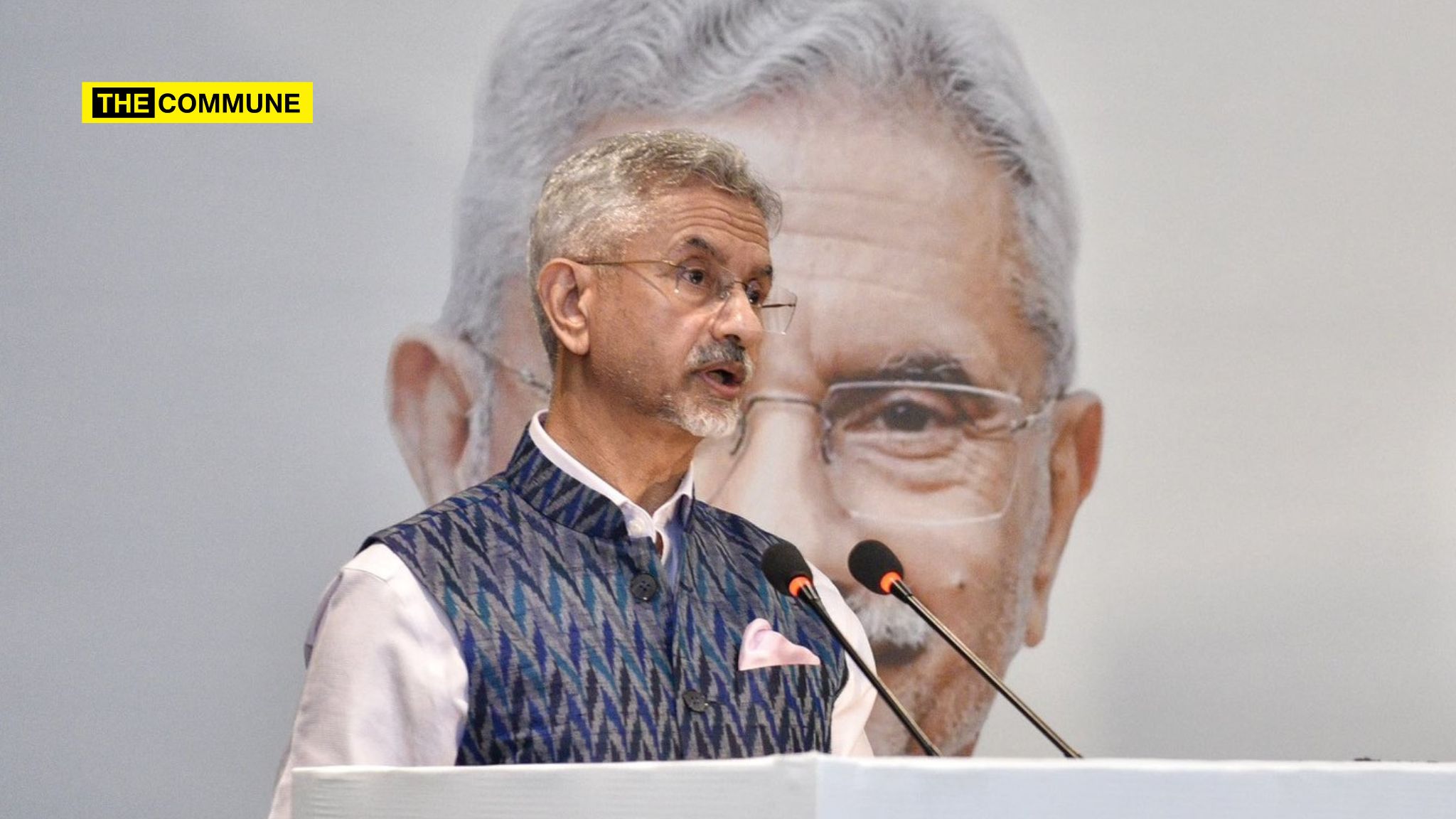
External Affairs Minister S Jaishankar on 30 July 2025 lashed out at the Opposition over feigning ignorance over the term ‘India’s new normal’ and coined a new name ‘Modi normal’ to elucidate the new defining strategy of the country in responding to acts of terror and crushing terrorists as well as their masterminds, irrespective of their location.

Joining the Operation Sindoor debate in Rajya Sabha, Jaishankar said that some members raised hue and cry over the term ‘new normal’ and hence he was explaining India’s new security doctrine via ‘Modi normal’ and ‘Congress normal’. He said that the ‘Modi normal’ has clearly laid out guidelines and principles on matters of national security that remain steadfast and non-negotiable.

“Terrorists will not be treated as proxies, cross-border terror will get an appropriate response, talks and terror won’t go together, we won’t give into nuclear blackmailing, and blood and water won’t flow together,” he told the House, outlining the redefined national strategy under the Modi government.

Notably, the ‘new normal’ policy came into being after the Modi government gave full operational freedom to the forces during Operation Sindoor and stated that any act of terror on Indian soil will now be seen as an attack on India’s sovereignty and therefore will be responded to by the armed forces in the strongest possible manner.

EAM Jaishankar further said that India’s Operation Sindoor did a global service by destroying hubs of global terror in Pakistan. “Bahalwapur and Muridke remain the biggest centres of nurturing terrorists and spreading terrorism in India and abroad. Our forces reduced it to dust; they did a global service and are being suitably applauded by all,” he said. Lambasting the ‘sceptical’ Opposition, he said that there are ample examples of Pakistani military establishments facing the fury of Indian forces, but there are some who continue to undermine our security forces for certain political motives.

The Minister said that Pakistan Prime Minister Shehbaz Sharif made a candid confession about Indian military strikes pulverising its military installations, but this fails to convince those who continue to remain sceptical of the Army’s accomplishments.

“Pakistan PM Shehbaz Sharif admitted that General Munir called him, saying that Indian ballistic missiles hit their Noor Khan air base and missiles like Brahmos targeted their provinces like Rawalpindi,” he said and lamented that the political parties back home are decrying the great achievements of the Indian Armed Forces for scoring political points.

-IANS

Subscribe to our channels on TelegramWhatsApp, and Instagram and get the best stories of the day delivered to you personally.

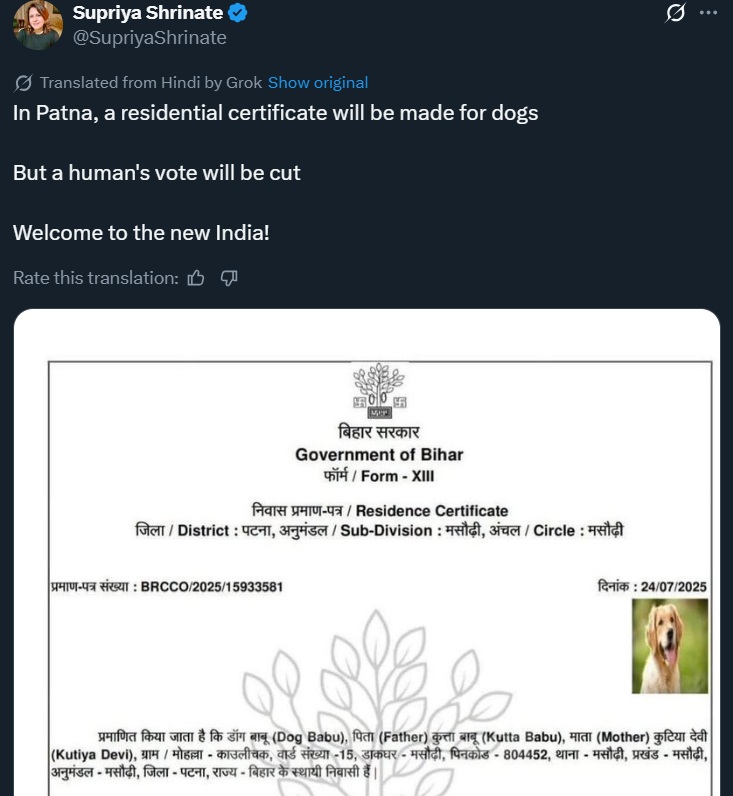
ECI Debunks Viral Dog Voter Claim Shared By Congress Leader Supriya Shrinate

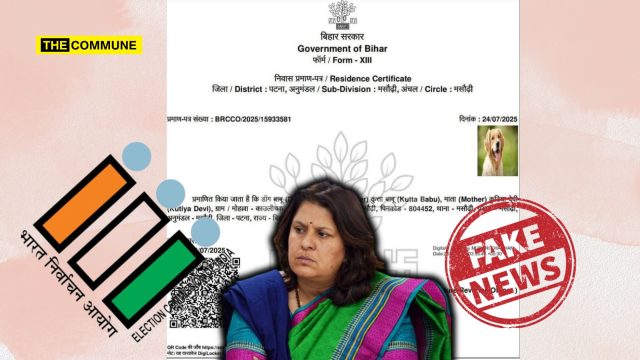
The Election Commission of India (ECI) on 30 July 2025 issued a strong rebuttal to viral social media posts claiming that a dog named “Dog Babu” was issued a residence certificate under Bihar’s Special Intensive Revision of Electoral Roll (SIR) drive, allegedly making it eligible to vote.

The claim, amplified by multiple political figures, including Shiv Sena (UBT)’s Priyanka Chaturvedi, Congress’ Supriya Shrinate, and activist Yogendra Yadav, shared what appeared to be an official residence certificate issued in the name of a dog, complete with a photo and parental details humorously listed as “Kutta Babu” and “Kuttiya Devi”.

The viral document triggered widespread outrage and mockery, raising questions about the integrity of the voter registration process. However, the ECI has now issued a clarification under its #ECIFactCheck banner, labelling the document as “INCORRECT”.

The Commission stated: “Vote of every citizen is important. No voter of Bihar has given such document to the Election Commission.” The rebuttal emphasised that no such residence certificate has been officially submitted or considered valid in any electoral process.

The document in circulation appears to be fabricated or misused to create political controversy during the SIR campaign, aimed at cleaning and verifying voter rolls in the state. Officials from Bihar’s Revenue Department, whose stamp appears on the fake certificate, also confirmed the image was doctored and had not been issued by any authorised government office. The certificate ID number and QR code seen in the image do not correspond to any legitimate entry in the state database.

The controversy erupted amid heightened political tensions, with opposition parties accusing the government of mismanaging the electoral roll update process. The Aam Aadmi Party (AAP) and several Congress leaders mocked the ECI, suggesting animals could now be enrolled as voters under the BJP-led administration.

-IANS

Subscribe to our channels on TelegramWhatsApp, and Instagram and get the best stories of the day delivered to you personally.

Dravidian Model Law & Order: Youth Attacked With Sword Inside Govt Bus In Broad Daylight In Ariyalur, Police Launch Investigation

dravidian model law and order ariyalur sword youth attacked

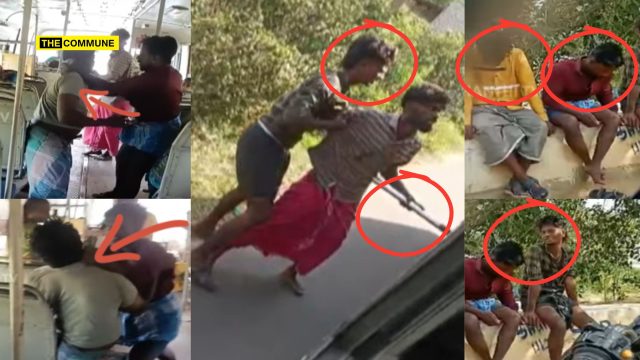
In what comes across as a shocking incident, a shining example of Dravidian model law & order, a violent attack inside a government bus in Ariyalur district has gone viral, raising serious concerns about passenger safety. A man armed with a sword entered a bus in Pattapagalle and launched a brutal assault on a young man named Sivakumar from Iravangudi village, Jayankondam.

According to reports, Sivakumar was on his way home on a two-wheeler when a group of nearly 300 men reportedly blocked his vehicle near a bus stand. A confrontation ensued, during which six youths verbally abused and threatened him. When Sivakumar attempted to record the altercation on video for his safety, the situation escalated.

The attackers reportedly followed Sivakumar onto a government bus, where they assaulted him with a sword in broad daylight, in full public view. The disturbing footage of the incident, captured by bystanders and now circulating widely on social media, has triggered public outrage.

Based on Sivakumar’s complaint, police have launched a manhunt for six individuals allegedly involved in the attack, including suspects identified as Karthik, Vinoth, and Kaliya Perumal. Investigations are underway.

Tamil Nadu BJP leader Annamalai shared a video of the incident on his X handle, and he wrote, “Swords swung in broad daylight in a government bus. This is the state of Law and order in Tamil Nadu under the DMK Government. Today, public safety is not a guarantee, but a distant dream. The DMK has successfully dragged TN back by three decades in just 4 years.”

Subscribe to our channels on Telegram, WhatsApp, and Instagram and get the best stories of the day delivered to you personally.
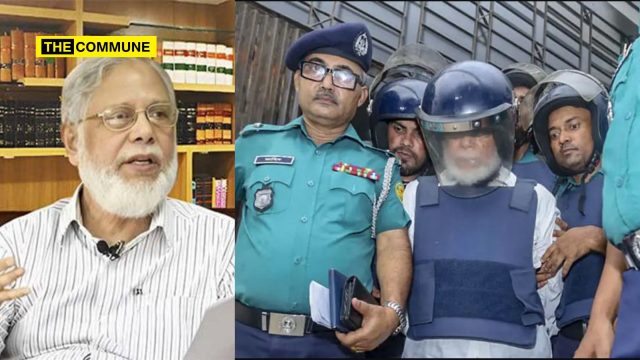
Former Bangladesh Chief Justice Khairul Haque Remanded For 7 Days In Judicial Forgery Case

Bangladesh’s former Chief Justice A.B.M. Khairul Haque was sent on a seven-day remand by a Dhaka court on 30 July in connection with a case filed over alleged charges of judicial forgery, local media reported.

Dhaka’s Chief Metropolitan Magistrate (CMM) court issued the order following a petition filed by Sub-inspector Khaled Miah of Shahbagh police station seeking a 10-day remand for interrogation. Meanwhile, no lawyer represented the former Chief Justice Khairul Haque during the hearing, reports the leading Bangladeshi daily Prothom Alo.

Last week, Khairul was arrested at his Dhaka residence, police confirmed without giving any specific reason. Reports suggest that at least two cases were filed against Khairul in different police stations after the interim regime assumed power in Bangladesh. One of the cases was filed in August of last year by the Bangladesh Nationalist Party leader and Narayanganj District Bar in connection with Khairul’s verdict, declaring the caretaker government system unconstitutional 13 years ago.

Subsequently, Dhaka Metropolitan Magistrate Dilruba Afroze Tithi passed an order dismissing the case, finding no valid grounds to take cognisance of the charges brought against the former Chief Justice Khairul, local media reported. Recently, Bangladesh’s Awami League party had condemned the “unjust” arrest of Khairul, the former Chief Justice, who delivered the historic verdict in the Bangabandhu assassination case, describing it as part of the “ongoing repression” under the Muhammad Yunus-led interim government.

Analysts reckon the developments as a major political vendetta being pursued by the Yunus regime, as several cases were filed against the former Prime Minister Sheikh Hasina, her supporters, and the working officials during her tenure on frivolous grounds immediately following her ouster in August 2024. The unceremonious exit of Hasina last August was globally seen as a major setback to the democratic set-up in the country. The interim government has also received massive criticism for providing shelter to radical and extremist Islamic outfits.

-IANS

Subscribe to our channels on TelegramWhatsApp, and Instagram and get the best stories of the day delivered to you personally

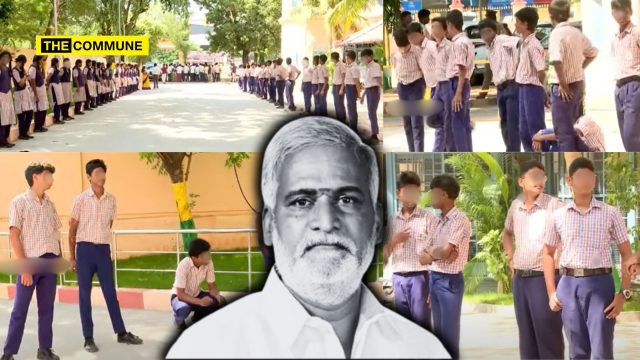
School Students Made To Wait In The Sun For Two Hours Ahead Of DMK Minister Sekar Babu’s Arrival For Event

sekar babu school students standing in sun kilpauk event bicycle

Over 120 students at the Arulmigu Kanchi Ekambaranathar Higher Secondary School in Kilpauk, Chennai, were reportedly made to wait in the sun for over two hours ahead of a scheduled visit by Tamil Nadu HR&CE Minister Sekar Babu on Tuesday, 29 July 2025.

The students had gathered for a government-sponsored event to distribute bicycles, which was originally announced for 8:45 AM Minister Sekar Babu, however, arrived nearly two hours late after attending multiple other engagements, including the “Annakaramangal Athunnu” program linked to the Chief Minister’s birthday and a temple inspection at the Kapaleeswarar Temple in Mylapore.

According to reports, the delay was further extended by the late arrival of the District Secretary, Chitrarasu, which pushed the event even further.

Eyewitnesses said students were made to stand on either side of the school campus awaiting the minister’s arrival. The lack of basic facilities such as seating or shade led to concerns over the students’ welfare amid the rising morning heat.

When questioned about the delay, Minister Sekar Babu told reporters that he had informed the organisers that he would be arriving only by 10:30 AM. He added that teachers had made the students wait ahead of time and that he had asked them to seat the students in the shade upon arrival. The minister also issued an apology, stating that he regretted any inconvenience caused to the students.

The school, which operates under the administration of the Hindu Religious and Charitable Endowments Department, hosted the event as part of a broader scheme to distribute bicycles to schoolchildren across the state.

Subscribe to our channels on Telegram, WhatsApp, and Instagram and get the best stories of the day delivered to you personally.

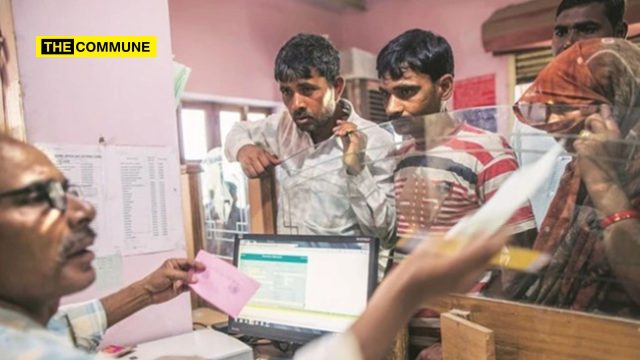
SLBC Report Exposes Grim Financial Inclusion In Rural Bengal: Just ₹279 Savings, ₹19 Loans Per Person

The latest report by a credible bankers’ body, on 30 July, identified the pathetic state of institutional financial inclusion among people residing in rural West Bengal. The poor show is in terms of both deposits mobilised and loans disbursed by the rural branches operating from the rural belts in the state.

The pathetic picture on this count was revealed in the latest report of the State Level Bankers’ Committee (SLBC) in West Bengal having representations from both the different banks operating in the state as well as from the West Bengal government. As per the report, while the average savings deposit rate per individual per month in rural West Bengal currently stands at just ₹279, the loan rate per person there is just ₹19.

Economists say that while the low average savings deposit rate per individual per month indicates the lack of adequate disposable income among the people in rural West Bengal to park in savings, the low rate of loans per person indicates their lack of financial credibility to avail of institutional borrowing.

At the same time, economists say, the two figures also indicate the pathetic credit to deposit (CD) ratio in the state, a factor where West Bengal had been traditionally much behind the national average. The CD ratio for any state is determined on the basis of the total deposit accumulation figure in the state being divided by the total loans disbursed figure during a particular financial year. Economists say that the low disposable income affecting regular and reasonable savings is an indication of the lack of adequate employment or income-generation avenues in rural West Bengal and is also an indication of the predominant and over-excessive dependence on farming, which is no longer profitable considering the extremely fragmented land-holding nature in the state.

At the same time, economists say, the self-help group (SHGs) model, which provides avenues for alternative incomes in rural India other than farming, also seems to be lacking successful implementation in rural West Bengal. SHGs not only provide adequate disposable income to people associated with them to park in savings, but also push up the CD ratio, considering that the SHG sector is a major component in institutional loans. Finally, economists say, the long stagnant rate of wages in the unorganised sector in rural West Bengal is yet another factor adversely affecting the institutional financial inclusion there.

IANS

Subscribe to our channels on TelegramWhatsApp, and Instagram and get the best stories of the day delivered to you personally