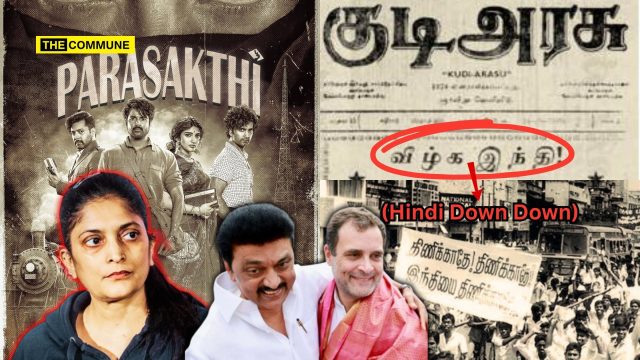
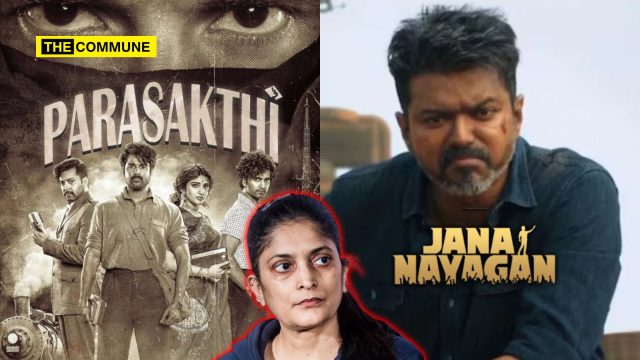
Questions are being raised over whether Parasakthi, the upcoming Tamil film directed by Sudha Kongara and starring Sivakarthikeyan, will see a theatrical release in Hindi-speaking North Indian states. The film, which draws heavily from Dravidian political narratives and their anti-Hindi imposition, has become the subject of speculation after claims surfaced that Hindi distributors are unwilling to acquire its dubbed rights.
Set in the 1960s, the film is based on true events surrounding the 1965 anti-Hindi agitations. These were massive student-led protests against the Congress government’s push to make Hindi the sole official language. With Assembly Elections set to happen in a few months, the film is meant to peddle pro-DMK propaganda by whipping up linguistic passions. It also sanitizes and whitewashes the role of EV Ramasamy Naicker (hailed as ‘Periyar’ by his followers) who had opposed the 1965 anti-Hindi agitation and made acerbic remarks against the protestors.
Release Hurdles
While the film’s makers have not officially commented on the issue, there has been no announcement so far regarding a Hindi release, even as the Pongal 2026 release window approaches. Industry observers note that big-ticket Tamil films with pan-India ambitions usually secure or at least announce North Indian distribution well in advance, something conspicuously absent in the case of Parasakthi.
The speculation gained traction amid claims that the film’s ideological positioning could make it commercially unviable in Hindi-speaking markets.
Parasakthi reportedly foregrounds themes drawn from Tamil anti-Hindi agitations and Dravidian political narratives – themes that historically have had limited resonance, and in some cases outright resistance, outside Tamil Nadu.
Social media chatter has also linked the uncertainty surrounding the Hindi market to unrelated project exits attributed to Sivakarthikeyan, though no official confirmation exists to support such claims. Nevertheless, the absence of clarity has only added to the perception that the film’s appeal may be regionally confined.
Compounding the issue are reports — yet to be officially denied — that Parasakthi faced objections during the certification process, particularly with respect to scenes referencing anti-Hindi movements. The makers are alleged to have approached the revising committee of the Central Board of Film Certification, suggesting that even within India, the film’s content may be considered politically sensitive. Reddit users speculate that the CBFC removed scenes and dialogues in Parasakthi related to the ‘Hindi imposition’ issue and reportedly led to the team sending the film to the revising committee.
Notably, while the film is backed by production and distribution entities closely aligned with the ruling political ecosystem in Tamil Nadu, there has been no indication of a coordinated push to take the film beyond the State. Critics argue that this silence itself is telling, especially for a project projected as a large-scale political drama.
At this stage, the makers have neither confirmed nor denied plans for a Hindi release. Until such clarity emerges, claims that Parasakthi will not find takers in the Hindi belt remain speculative but the lack of distributor announcements, coupled with the film’s ideological framing, continues to fuel questions about its pan-India prospects.
Subscribe to our channels on Telegram, WhatsApp, and Instagram and get the best stories of the day delivered to you personally.
As India marks 1,000 years since the 1026 attack on the Somnath Temple by Mahmud of Ghazni, recent remarks by the Prime Minister recalling the shrine’s survival have renewed attention on one of the most contested episodes of post-Independence cultural history: the reconstruction of the Somnath Temple and the resistance it faced from India’s first Prime Minister, Jawaharlal Nehru.
Somnath: The “Eternal Shrine”
The Somnath Temple, located at Prabhas Patan near Veraval on Gujarat’s Arabian Sea coast, is one of the 12 sacred Jyotirlingas of Lord Shiva. Ancient texts such as the Shiva Purana and multiple inscriptions attest to its antiquity. Over centuries, the temple was repeatedly destroyed and rebuilt—historical records indicate at least six cycles of destruction and reconstruction—making it a symbol of civilisational continuity.
After Independence, the modern reconstruction of Somnath was initiated between 1947 and 1951, spearheaded by Sardar Vallabhbhai Patel and later supported by K.M. Munshi. The temple was rebuilt in the Chaulukya (Solanki) architectural style by temple architect Prabhashankar Sompura and inaugurated on 11 May 1951 by President Rajendra Prasad. Today, the Somnath Trust is chaired by the Prime Minister of India.
Nehru’s 17 Letters on Somnath: A Complete Record (1950–1951)
Archival correspondence shows that Jawaharlal Nehru wrote at least 17 separate letters between July 1950 and August 1951 opposing, distancing, or attempting to dilute the reconstruction and inauguration of the Somnath Temple. Each letter reflects sustained and deliberate intervention at different levels of government and diplomacy.
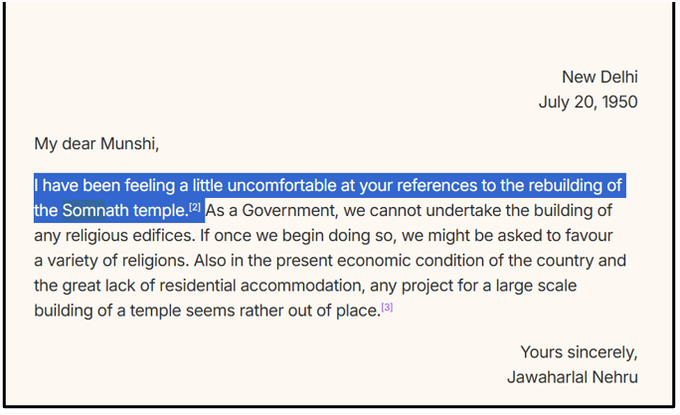
#1 20 July 1950 – To K.M. Munshi (Union Minister)
Nehru questioned the very necessity of rebuilding the Somnath Temple, arguing that India faced housing shortages and economic hardship. He framed the reconstruction as an avoidable expenditure rather than a civilisational restoration.
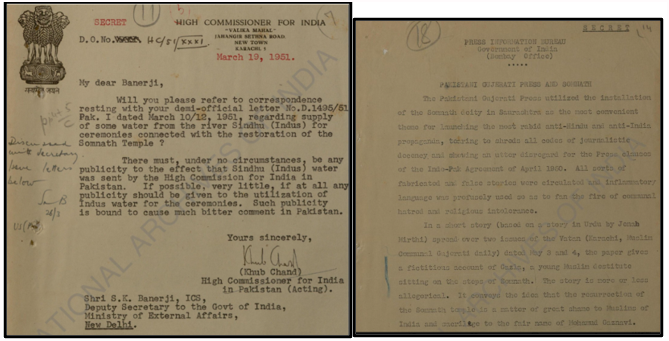
#2 19 March 1951 – To Khub Chand (High Commissioner to Pakistan)
Nehru formally disapproved the use of Indus water for the Somnath consecration and ordered that there be no publicity under any circumstances, citing fear of adverse reaction in Pakistan.
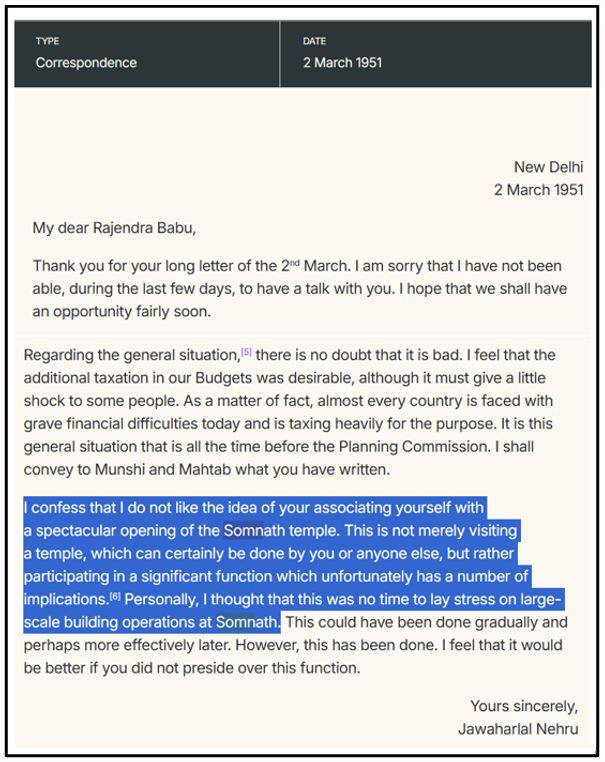
#3 2 March 1951 – To President Rajendra Prasad
Nehru bluntly stated that he did not like the President associating with the Somnath inauguration and suggested the event be postponed or scaled down.
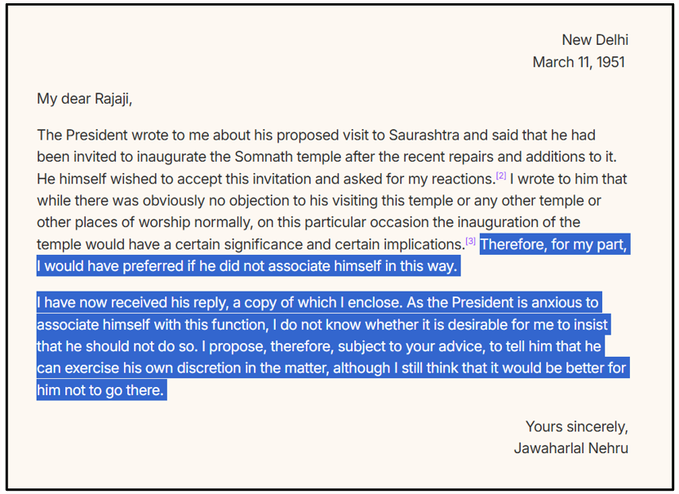
#4 11 March 1951 – To C Rajagopalachari (Union Home Minister)
Nehru reiterated that he would have preferred the President not to attend the inauguration, showing active opposition to constitutional endorsement.
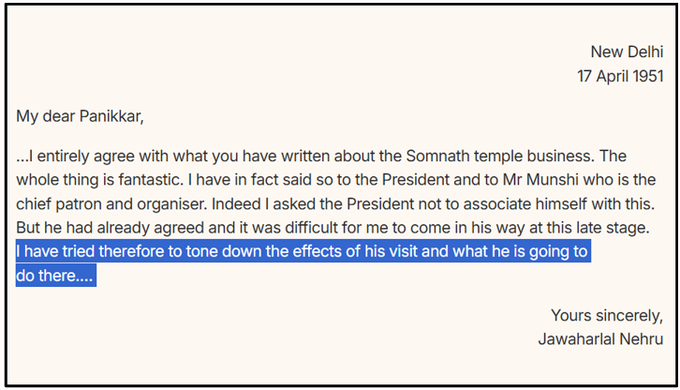
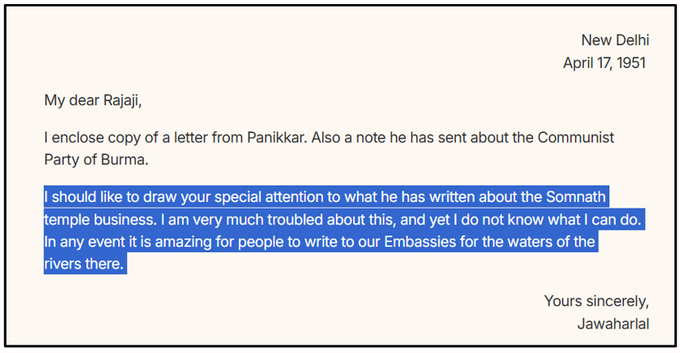
#5 17 April 1951 – To K.M. Panikkar (Indian Ambassador to China)
Nehru admitted that he had tried to “tone down the effects” of the President’s visit to Somnath, acknowledging active damage control after failing to stop it.
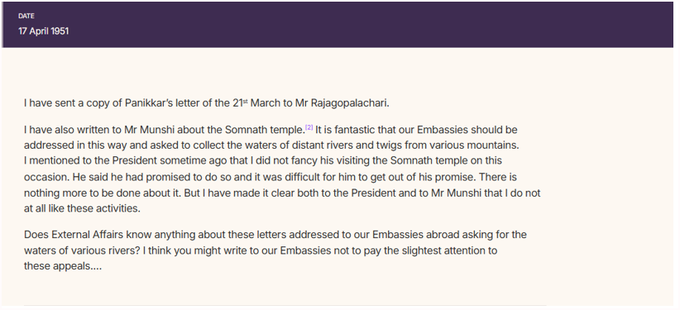
#6 17 April 1951 – To Secretary-General & Foreign Secretary, MEA
Nehru directed Indian embassies not to assist the Somnath Trust with requests for sacred river water or soil, signalling discomfort with even symbolic religious acts.
#7 17 April 1951 – To C. Rajagopalachari (Second Letter)
He stated that the Somnath issue was troubling him deeply, reinforcing that his opposition was ongoing and unresolved.
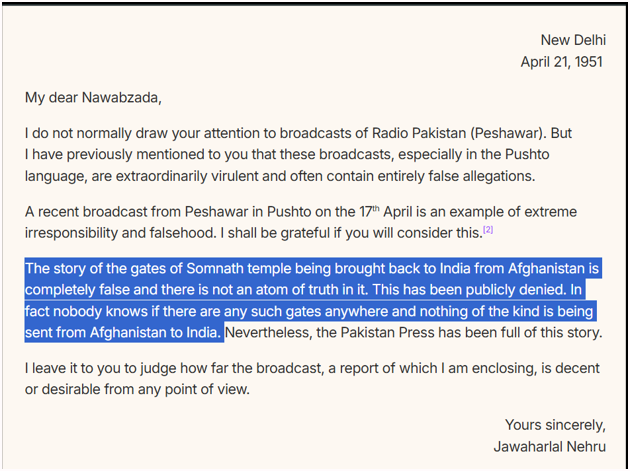
#8 21 April 1951 – To Liaquat Ali Khan (Prime Minister of Pakistan)
Nehru reassured Pakistan that claims surrounding Somnath symbolism were “completely false,” choosing to placate Pakistan rather than counter its propaganda.
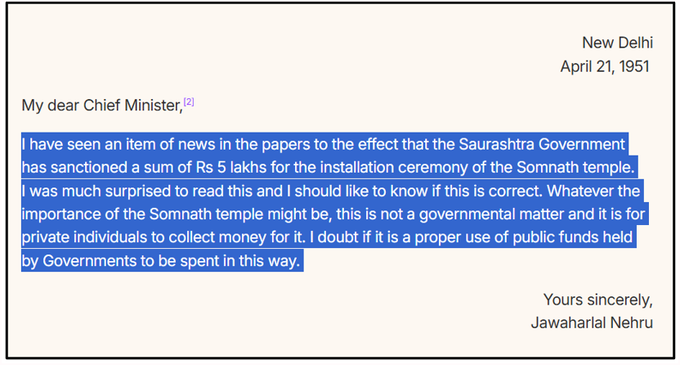
#9 21 April 1951 – To U.N. Dhebar (Chief Minister, Saurashtra)
He objected to the use of public funds for the Somnath ceremony, invoking secular propriety and insisting temples were not a government concern.
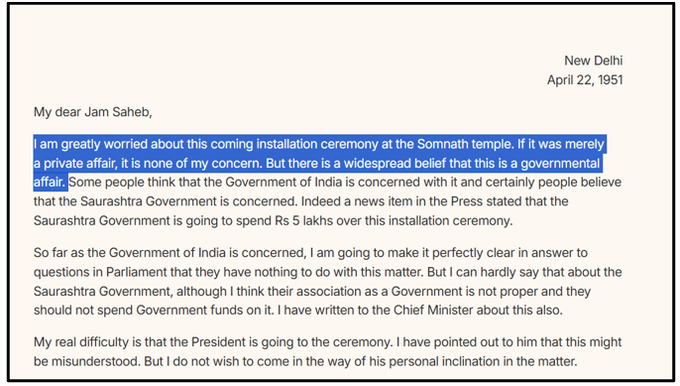
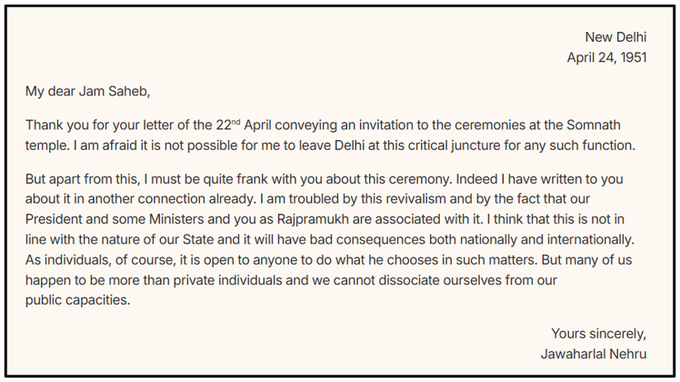
#10 22 April 1951 – To Digvijaysinghji (Jam Saheb of Nawanagar)
Nehru expressed anxiety over Somnath trustees contacting foreign missions for sacred river water and soil, fearing diplomatic misinterpretation.
#11 24 April 1951 – To Digvijaysinghji (Second Letter)
He described the inauguration as “revivalism” and warned of “bad consequences nationally and internationally” if constitutional authorities participated.
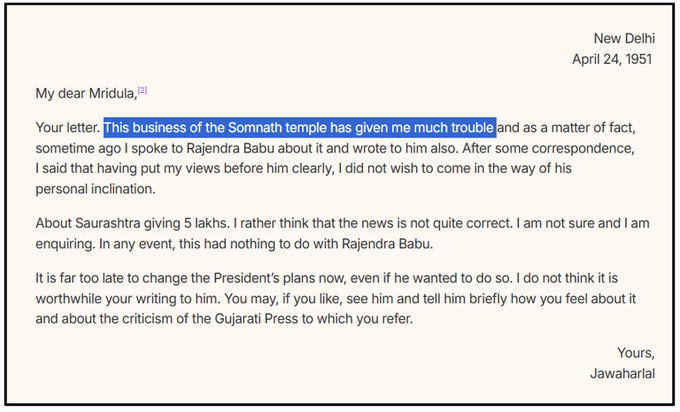
#12 24 April 1051 – To Mridula Sarabhai (Congress Leader)
In this letter, he says “this business of the Somnath temple” had given him “much trouble”. He says it is not worthwhile to change the President’s plans but pushes her to talk about another criticism.
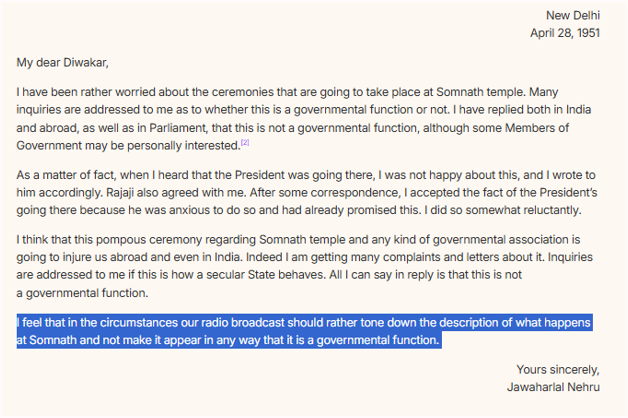
#13 28 April 1951 – To R.R. Diwaker (Minister of Information & Broadcasting)
Nehru instructed that media coverage and AIR broadcasts of the inauguration be toned down, calling the ceremony pompous and image-damaging.
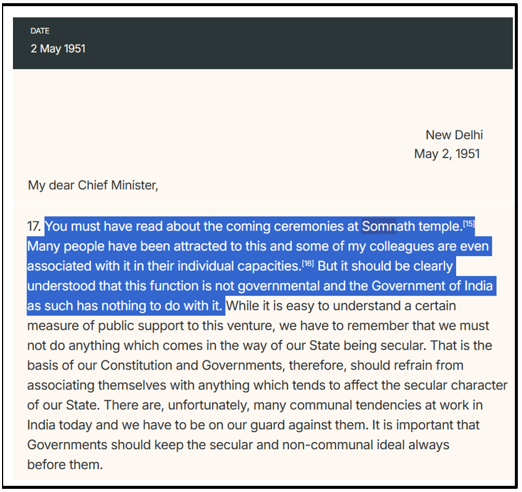
#14 2 May 1951 – To Chief Ministers (First Letter)
He emphasised that the Government of India must distance itself from Somnath and warned against any official participation despite popular support.
#15 1 August 1951 – To Chief Ministers (Second Letter)
In a follow-up, Nehru reiterated the same position, stressing secularism and non-association even as ministers and public figures supported the event.
#16 9 May 1951 – To S. Dutt (Secretary, MEA)
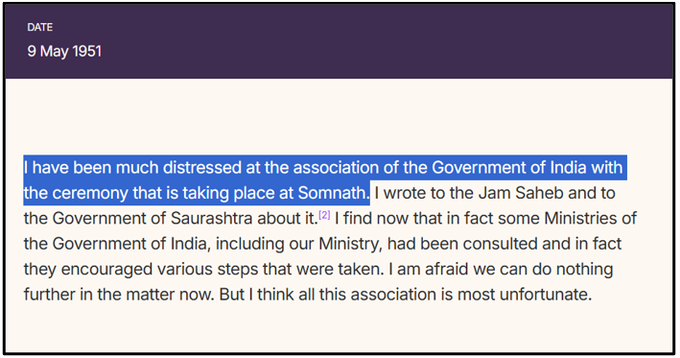
Just days before the inauguration, Nehru objected again to any government linkage with Somnath, calling such association “most unfortunate.”
#17 13 June 1951 – To Vice President Dr S. Radhakrishnan
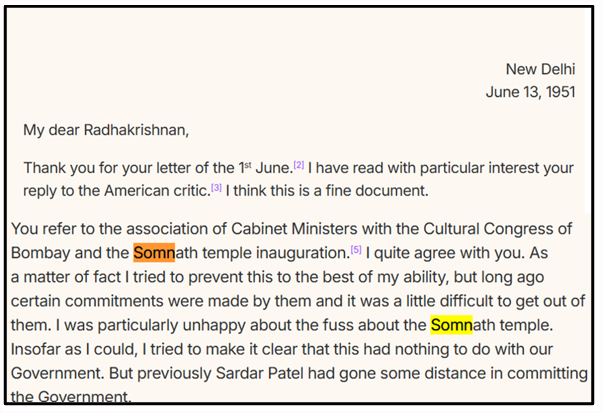
He dismissed the inauguration as unnecessary “fuss” and admitted he had tried to stop cabinet ministers from attending.
#18 1 August 1951 – To Chief Ministers
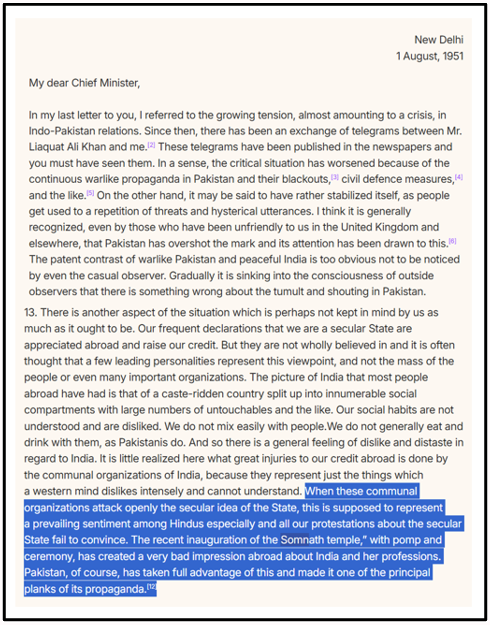
Even months after the inauguration, Nehru blamed the Somnath ceremony for creating a “very bad impression abroad” and weakening India’s secular image.
A Persistent Theme
Across all 17 letters, a consistent theme emerges: Nehru viewed the reconstruction and consecration of Somnath not merely as a religious act but as a political and diplomatic liability. He repeatedly prioritised secular optics, international perception, and Pakistan’s reactions over the civilisational symbolism attached to the temple.
Despite his sustained efforts, the Somnath Temple was inaugurated as planned, with President Rajendra Prasad asserting that the reconstruction represented India’s cultural continuity rather than state-sponsored religion.
Somnath’s Revival and Nehru’s Reluctance
As India marks a millennium since the 1026 destruction of Somnath, the temple’s resilience stands in contrast to the early Republic’s discomfort with Hindu civilisational revival.
Nehru’s letters remain a written record of how India’s first Prime Minister sought to suppress, sanitise, and politically distance the Republic from a revival he neither understood nor endorsed.
(This article is based on an X Thread By StarBoy Tarun)
Subscribe to our channels on Telegram, WhatsApp, and Instagram and get the best stories of the day delivered to you personally.
Fresh controversy has erupted around Loyola College, Chennai, after the AIADMK publicly levelled allegations of money laundering against the institution, prompting the Legal Rights Protection Forum (LRPF) to escalate the matter to the Governor of Tamil Nadu, seeking cancellation of the college’s Foreign Contribution (Regulation) Act (FCRA) licence.
In a detailed and strongly worded complaint submitted to the Governor in his capacity as Chancellor of the University of Madras, Mr. A. S. Santhosh, Working President of LRPF has accused Loyola College of indulging in grave academic fraud, regulatory violations, and diversion of foreign funds under the guise of higher education. The complaint relies heavily on findings from a joint inspection conducted by the University of Madras and the University Grants Commission (UGC), excerpts of which were officially submitted by the University to the National Human Rights Commission (NHRC) in August 2025.
UGC–University Of Madras Inspection Exposes Sham Programme
According to the inspection report cited in the complaint, Loyola College’s M.A. Philosophy programme exists largely on paper. Inspectors reportedly found no dedicated classrooms, no departmental library, no faculty rooms, no signage indicating a Philosophy department, and no students present during inspection. These findings directly contradict the institution’s claims of running a legitimate postgraduate programme affiliated to the University of Madras.
The report further establishes that the programme is allegedly operated from Satya Nilayam, a Jesuit missionary training centre located off-campus, rather than within Loyola College’s approved premises. LRPF argues that this constitutes a blatant violation of UGC regulations, university affiliation norms, and constitutional guarantees of equality and non-discrimination.
Foreign Nationals, Visa Misuse, And FCRA Concerns
One of the most serious allegations raised by LRPF pertains to the enrolment and accommodation of foreign nationals, including individuals from Bangladesh and other countries, under student visas purportedly issued for academic study. The complaint alleges that these visas were misused for missionary training, not bona fide education, raising concerns of visa fraud and internal security risks
Crucially, LRPF has linked these irregularities to Loyola College Society’s FCRA registration (No. 075820005), alleging that foreign contributions received for educational purposes were diverted towards unauthorised activities, including missionary training and illegal accommodation of foreign nationals. Such diversion, the complaint argues, violates Section 8(1) of the FCRA and attracts Section 12(4)(a)(vi), which bars activities prejudicial to the sovereignty and integrity of India.
Syndicate’s ‘Symbolic’ Action Under Fire
The controversy also throws light on the University of Madras Syndicate’s decision of 23 December 2025, which reportedly suspended the M.A. Philosophy programme for three years. LRPF has termed this action “symbolic and grossly inadequate”, noting that no financial penalties, administrative sanctions, or accountability measures were imposed on the college despite evidence of decades-long violations
The complaint raises serious apprehensions that institutional influence or political patronage may have shielded Loyola College from meaningful action.
Political Heat Adds Momentum
The LRPF’s representation comes in the backdrop of AIADMK’s public allegations of money laundering against Loyola College, which have added political momentum to what was earlier treated as a regulatory dispute. With a major opposition party now flagging financial impropriety, the matter has decisively moved beyond academic irregularities into the realm of financial crimes and national interest.
Demand For Decisive Action
LRPF has urged the Governor to order:
– A high-level independent inquiry into Loyola College and University of Madras officials.
– Cancellation of Loyola College’s FCRA licence.
– Revocation of autonomous status and suspension of central funding.
– Withdrawal of minority status, arguing that minority protections cannot be misused to shield fraud.
– Directions to the Ministry of Home Affairs and Ministry of External Affairs to investigate visa misuse and halt issuance of student visas to the institution
Subscribe to our channels on Telegram, WhatsApp, and Instagram and get the best stories of the day delivered to you personally.
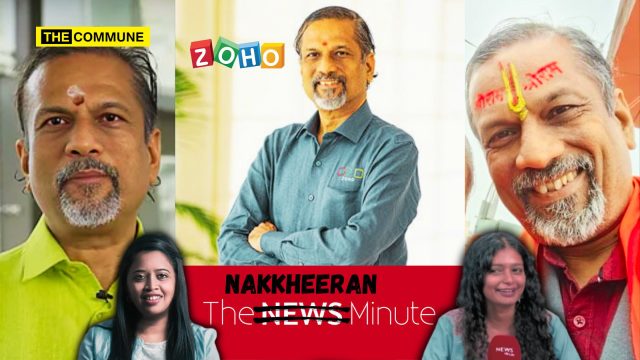
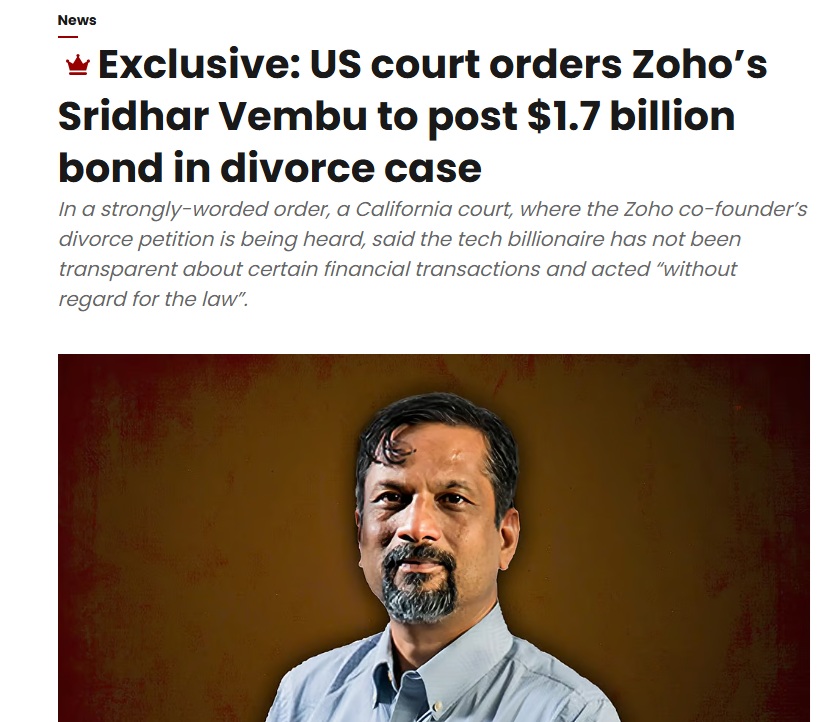
Cloaked as an “exclusive” and tucked safely behind a paywall, The News Minute has chosen to weaponise a private divorce proceeding to mount a calculated hit job on Zoho founder Sridhar Vembu—brazenly repackaging voyeurism as investigative journalism.
The article written by one Indulekha Aravind leans heavily on a January 2025 (yes, you read that right – a year old) California court order in an ongoing divorce case to build what TNM calls an “extensive profile” of the tech entrepreneur. But what readers are actually being asked to pay for is not investigative journalism or public-interest reporting – it is access to a carefully constructed takedown of a private individual’s personal life.
Let us be clear at the outset: this is not a report in public interest. This is not about corporate governance, national security, or wrongdoing affecting citizens. This is a personal marital dispute, still under adjudication in a foreign court, now repackaged as a moral exposé because the subject does not fit TNM’s ideological comfort zone.
From Explainer To Executioner
For a publication that routinely lectures others about ethics, restraint, and responsible journalism, TNM’s decision to turn a divorce case into a political and moral indictment is telling.
The article is structured not to inform, but to discredit:
Vembu’s public persona is dragged in only to be mocked.
His spiritual language is framed as hypocrisy.
His choice to live in rural Tamil Nadu is subtly sneered at.
His public statements on dharma and money are juxtaposed with selectively quoted court observations to invite character judgement.
This is character assassination by innuendo.
What TNM Won’t Tell You
Pre-Trial ≠ Final Guilt
One of the most serious distortions in TNM’s so-called “exclusive” is its treatment of interim judicial language as moral verdict.
The article repeatedly foregrounds phrases used by the judge, such as “acted without regard for the law” and “duplicitously”, to construct a damaging portrait of Sridhar Vembu. What it does not stress, even once, is that these observations arise from pre-trial, interim proceedings, based on a limited evidentiary record, where courts routinely err on the side of protecting the allegedly weaker spouse.
This is standard practice in high-value divorce litigation. It is not a finding of fraud, criminality, or final misconduct.
There is no sustained explanation that the case is still being litigated, discovery is ongoing, and interim orders are often revisited, modified, or overturned as fuller records emerge.
TNM mentions Vembu’s denials only in passing, while giving exhaustive space to the most damaging judicial language, thereby creating the impression of a settled case when no such settlement exists.
Confusing A “Bond” With Guilt Or Liquidity
The $1.7-billion figure is presented with maximal shock value, but with minimal explanation.
What the order requires is a bond to secure potential claims, not a confirmed payout, fine, or judgement. Failure or refusal to post such a bond does not, by itself, prove that Vembu has $1.7 billion in liquid US assets, that the entire amount is personally accessible to him, or that all questioned corporate structures are fraudulent.
The bond amount appears calibrated to the alleged global value of Zoho-linked assets, not to demonstrable liquid wealth under US jurisdiction. TNM does not engage with this distinction at all. Instead, it subtly implies that non-payment is evidence of bad faith – an inference that the court itself has not conclusively made.
Treating Contested Allegations As Settled Fact
Several of the article’s most explosive claims remain hotly contested:
whether Zoho IP was truly sold for $50 million,
whether ZCPL paid that amount,
whether Vembu’s economic interest is truly 5% or substantially higher,
and whether early-2010s restructurings were legitimate or deceptive.
The court has expressed scepticism. That scepticism is not a ruling.
Yet TNM repeatedly quotes judicial doubts (“defies belief”, “raises the inference…”) without clearly stating that valuation is still under dispute, discovery is incomplete, and corporate actions from over a decade ago are being reconstructed retrospectively – a process that naturally produces gaps and ambiguities.
By collapsing allegations, interim inferences, and final conclusions into one mass, TNM is trying to present its vomit as a Michelin star dish.
The Deliberate Moral Contrast
The article’s long opening, dwelling on “simple living”, “high thinking”, “dharma”, and rural India, is deliberate – to maximise the fall of Vembu’s image.
This is classic opinion-journalism framing: trying to prove that someone with a saintly public image, cannot have money or be wealthy. They want to show this image and then shatter it with the most damaging excerpts available.
A genuine explainer would clearly separate agreed facts, interim judicial observations, and unresolved allegations still being tested. They only got Vembu’s wife’s comments, so naturally the whole article collapses. Or is TNM trying to once again resurrect the feminist image by pushing this one-sided story?
TNM chooses to blur facts from interim observations and allegations because moral contrast makes for better outrage.
No Corporate-Governance Counter-View
Perhaps most revealing is what the article does not do.
It does not speak to independent corporate lawyers, family-law experts, or specialists in founder-led global firms.
Moving IP, equity, or control to relatives and long-time co-founders is not automatically illegitimate. Such structures are common in tax planning, succession, and control consolidation especially in privately held multinational firms.
Courts will examine whether any move violated specific duties or restraining orders. Until a final ruling, it is editorial overreach to imply that every such transaction is a sham.
By omitting expert voices that could separate routine founder-divorce dynamics from genuine misconduct, TNM amplifies the appearance of scandal beyond what the record conclusively supports.
A Grey Zone, Not A Verdict
What TNM presents as exposure is, in reality, a grey zone familiar to high-net-worth divorces – complex ownership structures, offshore and cross-border asset moves, family shareholders, and community-property rules colliding with global businesses.
In such cases, judges often presume the worst when disclosure is late or incomplete. That presumption is procedural caution not final judgement.
Ultimately, it is all about character assassination of someone trying to do something good for his motherland. This is not the first time TNM did a hitjob – hitjobs are their favourite – like what they did with Dharmasthala.
Sridhar Vembu’s Counsel Accuses TNM Of Misleading Reporting
Vembu’s counsel has strongly disputed The News Minute’s portrayal of the case, stating that the article relies on a nearly year-old interim order passed on an emergency application, when the defence had limited time to respond to what he described as false allegations. The lawyer said the California court was misled by the wife’s attorney, who is not licensed to practise in California and entered the case from New York despite there being no New York jurisdictional issues.
According to the defence, Vembu had offered his wife 50% of his shares in ZCPL—an offer she has refused to accept—and had already transferred his interest in the family home to her. Despite this, she continues to allege asset concealment. The much-publicised $1.7-billion bond order, the counsel said, has no legal basis, was acknowledged by a subsequent judge as excessive, and is currently under appeal, while the related receivership order has been stayed.
The lawyer added that Vembu attempted compliance to the extent possible by borrowing up to $150 million against his shares, but the amount was refused. He clarified that the proceedings do not involve any claim for alimony or spousal support and emphasised that Vembu remains in full compliance with all lawful court orders.
As Sridhar Vembu’s counsel, I can add some facts missing from the article. The order was made 1 year ago on an emergency application by his wife, meaning we had little time to response to the outrageously false allegations she made against Sridhar. The judge in California was…
Perhaps the most grotesque aspect of this episode is the commercialisation of personal distress. TNM has chosen to lock this piece behind a paywall not because it is complex journalism, but because voyeurism sells.
This is not about informing the public. It is about peeping into someone’s personal life, a person opposed to your ideology and politics and monetizing it.
And then sermonising about it.
And they claim they will keep churning out such ‘pieces’ about Vembu – so is this a targeted hitjob akin to what happened during the Dharmasthala fake burial controversy which The News Minute shamelessly peddled without an iota of proof.
What TNM does is not journalism, just propaganda. Time and again, The News Minute appears to pick its subjects first and build the narrative later, especially when the individual or institution does not fit its ideological comfort zone.
In this case, it has reduced itself to a more polished version of Nakkheeran, which sells sex and sleaze content under the guise of ‘investigative journalism’.
Subscribe to our channels on Telegram, WhatsApp, and Instagram and get the best stories of the day delivered to you personally.
Newly accessed United States government filings have revealed the scale of an intense lobbying campaign mounted by Pakistan in Washington as it sought to blunt India’s military response during Operation Sindoor in May 2025.
Documents now available show that Pakistani diplomats and defence officials pursued more than 60 engagements with senior US administration officials, lawmakers, Pentagon and State Department officials, and influential American journalists between late April 2025 and the implementation of a ceasefire that followed the military escalation.
This is bad news for Pakistan apologists.
Documents released under America’s Foreign Agents Registration Act (FARA) show that India’s Operation Sindoor in April last year shook Pakistan.
Pakistan lobbied aggressively through its diplomats in the US to prevent a war, contacting… pic.twitter.com/pM5mzMCVU6
The filings, submitted under the Foreign Agents Registration Act (FARA), indicate that Pakistan’s ambassador to the United States and its defence attaché repeatedly reached out through emails, phone calls and in-person meetings. The stated objective of this outreach was to press Washington to intervene and “somehow stop” India’s military campaign launched in response to the terror attack in Pahalgam, Jammu and Kashmir.
According to the disclosures, discussions during these interactions covered Kashmir, regional security, rare earth minerals, and broader Pakistan–US relations. Pakistani representatives also sought interviews and background briefings with major US media organisations. Several entries in the filings described the efforts as “ongoing representation of Pakistan,” reflecting the sustained and coordinated nature of the lobbying drive.
The campaign unfolded against the backdrop of mounting military pressure on Islamabad following India’s strikes. Diplomatic sources said the filings point to a state under acute strain, attempting to mobilise political, bureaucratic and media influence in Washington to counter New Delhi’s battlefield momentum.
The disclosures also align with a broader pattern of increased Pakistani lobbying in the United States. In November 2025, The New York Times reported that Pakistan had entered into contracts with six Washington-based lobbying firms at a combined cost of approximately $5 million annually. The aim, according to the report, was to secure faster access to the administration of then-US President Donald Trump and influence trade and diplomatic outcomes.
The New York Times investigation further noted that Pakistan significantly ramped up its lobbying expenditure during April and May 2025, spending at least three times more than India during the same period. The paper characterised the resulting shift in engagement as a sharp turnaround from previously strained US–Pakistan relations, marked by public praise for President Trump, the nomination of his name for the Nobel Peace Prize, and efforts to secure favourable business and trade concessions.
Weeks after Islamabad finalised a deal with Seiden Law LLP, working through Javelin Advisors, President Trump hosted Pakistan Army Chief Asim Munir at the White House. The meeting was widely interpreted by analysts as signalling Pakistan’s renewed access to the highest levels of US political power.
Multiple diplomatic sources said the 2025 FARA filings confirm that Pakistan expanded its lobbying footprint across Capitol Hill and the US media ecosystem, with individual contracts and outreach efforts running into hundreds of thousands of dollars. While there were indications that lobbying activity tapered later in the year, the filings collectively depict an aggressive and sustained campaign during the peak of the military crisis.
India had launched Operation Sindoor following the terror attack in Pahalgam, which killed 26 people. The operation targeted terror launch pads, training camps and logistics hubs linked to Pakistan-based groups, along with precision strikes on select airbases assessed by Indian authorities to be supporting or shielding such networks.
In the aftermath of the strikes, Pakistan sought to downplay the scale of damage, claiming Indian assessments were exaggerated. However, high-resolution satellite imagery released by independent analysts and commercial providers showed visible destruction at several identified locations. The images revealed damaged runways, hangars and support infrastructure at key airbases, as well as flattened structures at known militant facilities.
Comparisons with pre-strike imagery contradicted official Pakistani statements and reinforced India’s position that Operation Sindoor had achieved its stated objectives, highlighting a widening gap between Islamabad’s public narrative and the situation on the ground.
The seventh State conference of the Puthiya Tamilagam was held on Wednesday, 6 January 2026, at Amma Thidal, located on the Madurai-Pandi temple ring road, where the party adopted 36 resolutions calling for political change in Tamil Nadu ahead of the 2026 Assembly elections.
Among the resolutions passed were demands for the lighting of the Karthigai Deepam atop the Thirupparankundram Hill, the formation of a coalition government in 2026 in which Puthiya Tamilagam would have a stake, and the removal of the Dravida Munnetra Kazhagam (DMK) government from power.
Addressing the conference, party president K Krishnasamy called upon members of the Devendrakula Vellalar community to unite and emerge as a decisive political force in the 2026 Assembly elections. He said that merely asserting caste identity would not yield results and that political power could be achieved only by converting social identity into collective electoral strength.
Krishnasamy alleged that during the past five years, more than 25,000 higher-level government positions that should have been filled by members of the Devendrakula Vellalar and Paraiyar communities, classified under Adi Dravidars, were not allotted. He criticised other political parties for failing to raise this issue in the Assembly.
Taking aim at the DMK government, Krishnasamy accused it of committing repeated mistakes and claimed that as long as the present dispensation remained in power, government welfare schemes would not effectively reach the people. He said removing the DMK government was the only solution to address these issues.
He also criticised Chief Minister MK Stalin, describing him as arrogant and alleging that other political parties were complicit in enabling what he termed governance failures. He accused the DMK of reneging on its electoral promise to abolish the NEET examination after coming to power.
Referring to the Thirupparankundram issue, Krishnasamy questioned why prohibitory orders were imposed by the government even after a court had permitted the lighting of the Deepam on the hill.
Drawing a comparison with international developments, Krishnasamy claimed that the Tamil Nadu Chief Minister had committed graver mistakes than those attributed to the President of Venezuela. He further questioned what punishment should be meted out to a Chief Minister who had allowed the opening and functioning of liquor shops across the State.
On alliances, Krishnasamy stated that Puthiya Tamilagam would align only with a party willing to offer it a share in governance.
Among the resolutions adopted was a demand for the allocation of 2.5 acres of land each to families of Manjolai tea plantation workers, the abolition of vote-for-cash practices, the lighting of the Karthigai Deepam atop Thiruparankundram Hill, and the consolidation of the Devendrakula Vellalar community under the banner of Puthiya Tamilagam.
A centre titled “World Devendrakula Vellalar,” based in Madurai, was inaugurated as part of the conference. Party youth wing president Shyam Krishnasamy, along with State and district-level functionaries, participated in the event.
The postponement of Vijay’s Jana Nayagan has triggered widespread anger and disappointment among fans, with the delay increasingly being framed as a censorship battle rather than a routine production setback. The issue has also reignited debates around selective outrage, especially after filmmaker Sudha Kongara publicly praised the Central Board of Film Certification (CBFC) for its “democratic” approach to censoring her upcoming film Parasakthi.
Speaking about her experience with the CBFC’s revising committee, Sudha Kongara said the censor board had been fair, democratic, and respectful of the filmmaking process. She stated that the questions raised and reservations expressed by the board were reasonable and that the film was allowed to “live and breathe.” She also described the CBFC head who oversaw the revising committee as a filmmaker himself and said she thanked him for being democratic. Kongara added that she considered her entire life’s struggle to be centred around democracy and said she became agitated when democracy was throttled.
She said, “… mostly you can cut it off. But even with the censor board, when we went for the revising committee, there was this censor board head who was so democratic, who was so fair and… This is part of the process, like. But I mean, one tends to think the censor board is like terrible, they’re this, they’re that. They were not, really. The questions they had, the reservations they had were pretty… I would say fair. And the way they’ve allowed the film to live, breathe is very fair, because he’s a filmmaker himself. So he was great to me and I actually stood up at the end of it all and I said, ‘Thank you for being so democratic.’ I… I’m a big believer of democracy. When that is throttled, I just… I become very agitated. My entire fight, my entire life has been about that.”
Her remarks have gained attention in the context of Jana Nayagan, which is facing delays reportedly linked to certification-related issues. Vijay’s fans, including Dravidianists many of whom had begun planning large-scale celebrations under the assumption that the film would be marketed as his “last film,” expressed anger over the postponement, accusing the CBFC and unnamed external pressures of disrupting what they viewed as a festival-like release.
Social media platforms have been flooded with posts expressing a sense of betrayal and frustration, with fans blaming institutions rather than the actor or his team. Several fan accounts and commentary channels have portrayed Vijay as a victim of institutional overreach, arguing that the delay reflects a broader pattern of censorship and misuse of power against certain filmmakers and stars.
The delay in censor certificate has reportedly caused the film’s release to be postponed indefinitely.
The controversy surrounding actor Vijay’s film ‘Jana Nayagan’ has sparked concerns about the misuse of political power. While political disagreements are understandable, targeting an artist’s work is unacceptable.
Sudha Kongara’s praise of the CBFC seems to stand in stark contrast to the claims that the censor board functions uniformly as an oppressive or anti-democratic institution, reportedly as an extension of the central government, given the fact that Vijay has entered politics and labelled the BJP as his ideological adversary.
Congress MP Breaks Bangles Over ‘Censorship’
As mentioned, several Dravidianists were breaking bangles over the alleged vendetta behind the delayed release of censor certificate. Among them was Congress MP Manickam Tagore. In a post on his X handle, he wrote, “When RSS propaganda films get zero traction, zero credibility & zero public interest, the Modi–Shah regime responds with control, not confidence. Now the film industry is in the crosshairs. Article 19(1)(a) guarantees freedom of speech & expression. But under I&B Minister @AshwiniVaishnaw this right is being systematically weakened through fear, not law. ED, CBI, IT — turned into frontal organs to silence dissent. Now even the Censor Board is being weaponised to control cinema and ideas. Institutions meant to protect democracy are reduced to tools of intimidation, while BJP-RSS propaganda is passed off as “culture”. Cinema doesn’t need political clearance. It needs constitutional protection. Democracy cannot survive when art is forced to kneel before power.”
When RSS propaganda films get zero traction, zero credibility & zero public interest, the Modi–Shah regime responds with control, not confidence.
Now the film industry is in the crosshairs.
Article 19(1)(a) guarantees freedom of speech & expression.
But under I&B Minister…
— Manickam Tagore .B🇮🇳மாணிக்கம் தாகூர்.ப (@manickamtagore) January 8, 2026
When films from the so-called ‘right wing’ faced censor cuts and delays, such voices were never heard complaining about “political clearance” and what not.
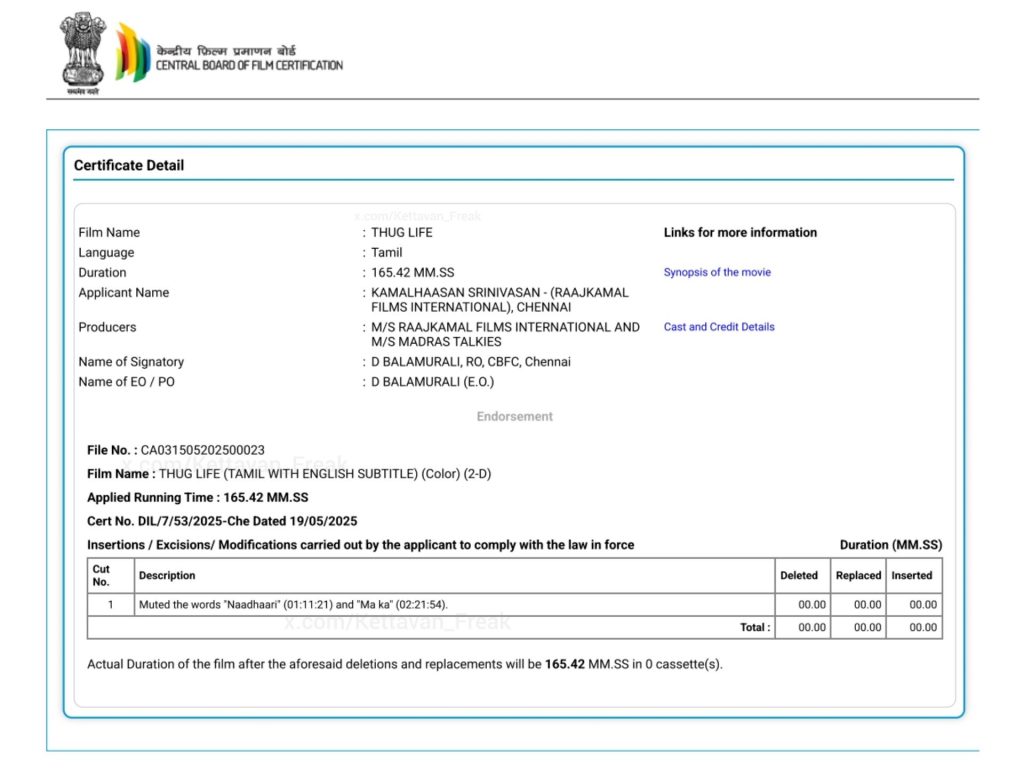
These Dravidianists and Vijay fans were missing when a film like Thug Life which had a distasteful, sleazy narrative arc was a U/A (16+) certificate with only two minor mutings of cuss words by the Central Board of Film Certification (CBFC) thereby allowing it easy access to theatrical releases, satellite deals, and OTT platforms.
In contrast, Paramasivan Fathima, directed and produced by a relatively lesser-known filmmaker, offers a strong cultural commentary on the impact of religious conversions in rural Tamil Nadu. Drawing inspiration from the Periyapuranam, the film critically examines how missionary activity—often disguised as charity—can erode familial and cultural structures in Tamil society. It also highlights the contradiction of Christian institutions receiving state aid while openly promoting religious indoctrination.
Despite addressing serious societal issues without any explicit vulgarity or gory violence, Paramasivan Fathima received an ‘A’ certificate, limiting its theatrical scope, blocking its access to major satellite and OTT deals, and severely affecting the producer’s financial prospects.
Given the way a filmmaker like Sudha Kongara, who makes Dravidianist-leaning films, speaks highly of the CBFC, the outrage over the delay in certifying what is being projected as Vijay’s final film and its framing as political vendetta is laughable.
Subscribe to our channels on Telegram, WhatsApp, and Instagram and get the best stories of the day delivered to you personally.
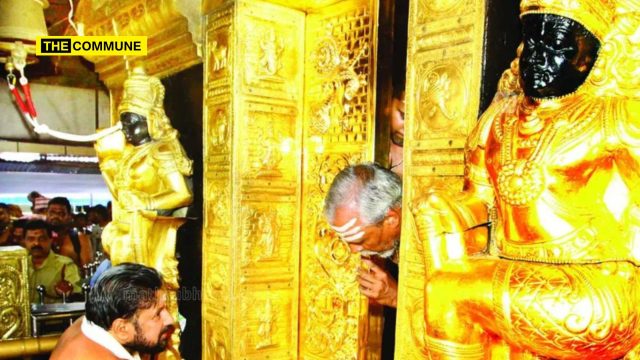
Pankaj Bhandari, owner of Smart Creations, Chennai, and the ninth accused in the Sabarimala gold theft case, has informed the Special Investigation Team (SIT) about the involvement of a specialist from Maharashtra in the unauthorised extraction of gold from temple fittings and idols at the Sabarimala temple.
According to a statement given by Bhandari to the SIT on 9 October 2025, a copy of which was annexed to documents submitted before the High Court by the probe team, he stated that in 2019, his firm had engaged a specialist from Maharashtra who was experienced in recovering gold from stripping solutions. Bhandari told investigators that he would provide the specialist’s details to the SIT.
Bhandari stated that Smart Creations specialised in temple-related works and that he had known Unnikrishnan Potty, the first accused in the case, since 2019. His statement indicated that Potty had repeatedly approached him for gold-plating works connected to Sabarimala. In 2019, Smart Creations undertook the gold-plating work for the sanctum sanctorum door, with the donor being Govardhan Roddom, a jeweller from Bellary, who had introduced Bhandari to Potty.
According to Bhandari, Potty later informed him that while the sanctum sanctorum door appeared brightly gold-plated, the side frames were less bright, and the top Lord Shiva plate appeared dull and dirty. Following this, seven components including Shiva plates and side frames were transported to Chennai for further work.
Bhandari stated that upon examination, his team noticed that the seven pieces were not newly fabricated copper but appeared to be old copper sheets with a gold coating. He informed Potty that fresh gold plating could not be carried out over sheets that were already gold-cladded. However, Potty allegedly insisted that he had full authorisation from the concerned officials and directed the firm to proceed immediately with the work.
As per Bhandari’s statement, Smart Creations was instructed to remove the existing gold from the seven plates and strip the gold from the sheets using a chemical stripping solution, which dissolves gold. Bhandari admitted that his firm did not have expertise in recovering gold from stripping solutions and that engaging a third-party specialist was necessary, as attempting such recovery in-house would result in quality issues and confusion.
The statement further noted that Govardhan, the tenth accused in the case, had provided 186.587 grams of gold for the gold-plating work. Bhandari’s team deposited 184 grams of gold and completed delivery of the seven plates in June 2019. He subsequently informed Potty that gold had been issued for the frames and Shiva plates and that any additional recoverable gold would be assessed after extraction from the stripping solution by the specialist.
Bhandari stated that his firm later received 14 idol components for cleaning. During cleaning using a soap solution, traces of gold were observed on the copper sheets. He informed Potty that these too were old gold-plated sheets and could not be directly replated. Despite this, Potty allegedly insisted that the repair and stripping work be carried out without delay.
Potty also instructed Bhandari not to procure additional gold, stating that sufficient gold was available from the old stripping solution and leftover gold recovered from the Dwarapalaka idols.
After the cleaning and processing work was completed, Bhandari informed Potty that the final gold balance would be calculated after the recovery process. All 14 items were delivered back to Sabarimala in September 2019.
According to the SIT, the gold recovery specialist from Maharashtra extracted 409 grams of gold from the side frames and 577 grams from the idols. As per Potty’s instructions, 393.9 grams were deducted for gold plating of the Dwarapalaka idols and 9.9 grams were allocated for other Sabarimala-related items. After using 404.8 grams of gold for gold plating, a balance of 584.2 grams was handed over to Unnikrishnan Potty.
In its submission to the court, the SIT stated that Govardhan Roddom, along with Pankaj Bhandari, Unnikrishnan Potty and other accused persons, had entered into a criminal conspiracy to misappropriate the gold cladding on copper plates depicting the Dasavatharas, zodiac symbols, the top portions of the door frames and the Prabhamandalam installed in and around the sanctum sanctorum of the Sabarimala temple.
The SIT has placed these details before the High Court as part of its continuing investigation into the alleged large-scale misappropriation of temple gold.
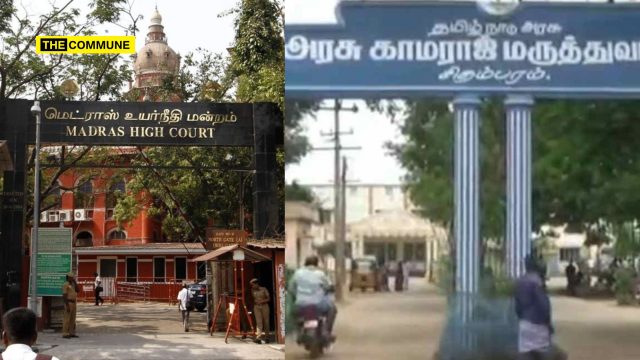
The Madras High Court has taken serious note of attempts by encroachers to suppress material facts and obtain parallel orders in matters relating to the removal of encroachments on government hospital land at Chidambaram.
The observations were made by the First Division Bench comprising Chief Justice Manindra Mohan Shrivastava and Justice G. Arul Murugan while hearing a public interest litigation (WP No. 14027 of 2024) seeking the removal of encroachments on land belonging to the Chidambaram Kamaraj Government Hospital, earmarked for the construction of additional ICU blocks, on 6 January 2026.
During the hearing, counsel for the petitioner, B Jagannath, submitted that an impleading petition filed on behalf of certain encroachers had been numbered without serving notice on the existing counsel and in violation of earlier directions of the court. He further informed the Bench that despite a specific direction to approach the First Division Bench, some encroachers had filed a separate writ petition before a coordinate Division Bench by deliberately suppressing the pendency of the present PIL. According to the submission, an order had been obtained in that writ petition directing removal of encroachments within 12 weeks, which was contrary to and in violation of the orders passed in the present proceedings.
Accepting these submissions, the First Division Bench orally observed that it shared the same concerns and expressed displeasure over what it described as an unfortunate and recurring practice of deliberate suppression of facts by certain counsels in encroachment-related matters. The Bench remarked that such conduct was unfair, unreasonable, and required to be dealt with firmly to prevent misuse of judicial processes.
The Bench also questioned counsel appearing for the impleading petitioners on whether any documentary evidence existed to establish ownership of the land. In response, counsel reportedly conceded that the land belonged to the Government Hospital, while contending that the encroachers were entitled to patta and alternative sites.
Additional Advocate General Suresh, appearing for the State, submitted that the land in question indisputably belonged to the Government Hospital and that de-occupation notices had already been issued. He informed the court that the encroachers had not vacated the premises citing orders passed by a coordinate Bench and that a status report had been filed in this regard. He further stated that the encroachments would be fully removed within two weeks.
After hearing all parties, the Bench recorded the State’s submission that proceedings were being initiated under Section 6 of the Tamil Nadu Land Encroachment Act, 1905, and that necessary action would be taken at the earliest. The court reiterated that any encroacher aggrieved by an order passed under Section 6 of the Act could approach the High Court but clarified that no other authority would have jurisdiction to entertain such challenges without the leave of the court.
The matter was posted to 21 January 2026, for reporting compliance with the directions issued by the court.
Subscribe to our channels on Telegram, WhatsApp, and Instagram and get the best stories of the day delivered to you personally.
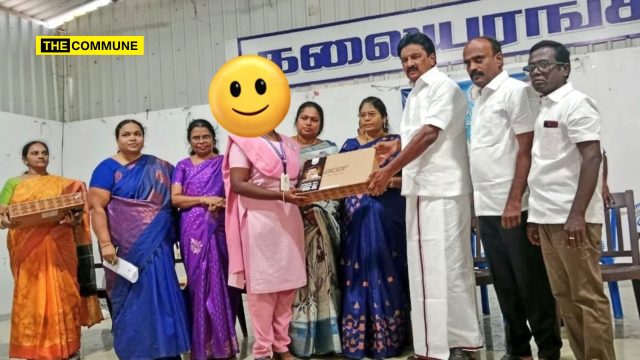
Less than 24 hours after being arrested and released on station bail for allegedly posting obscene and defamatory comments against a girl student online, J Sumitha, Principal (in-charge) and Faculty-in-Charge (FAC) of a Government Women’s College in Tirunelveli, on Wednesday, 7 January 2026, attended an official government function to distribute laptops to students, sharing the stage with the local MLA and senior officials.
Less than 24 hours after her arrest along with her husband for allegedly posting obscene and abusive comments against a girl student on YouTube, J Sumitha, Principal (in-charge) of a government women’s college in Tirunelveli, on Wednesday shared stage with the DMK MLA at an… https://t.co/AKHThJQhNdpic.twitter.com/LvGp8S4lvr
The event triggered protests by the Students’ Federation of India (SFI), whose members opposed Sumitha’s presence at the function. Police personnel removed the protesting students from the venue.
According to police sources, Sumitha and her husband, Ponudurai, a bank staff member, were arrested by the Tirunelveli City Cyber Crime Police on Tuesday (6 January 2026) evening following a complaint filed by a girl student. The student had earlier approached the district administration alleging harassment by the principal. After the matter received media attention, obscene and defamatory comments were allegedly posted against the student on YouTube from accounts linked to the accused.
Police said the complaint was received through an online portal and that a technical analysis traced the origin of the posts to the couple’s computer using its IP address. Based on this, a case was registered under provisions of the Information Technology Act and the Bharatiya Nyaya Sanhita (BNS) for posting obscene and defamatory content.
After their arrest, the couple were questioned for several hours and later released on station bail. Police officials stated that further investigation into the case was ongoing.
SFI district secretary Sylas Arul demanded that departmental action be initiated against Sumitha, including her suspension, citing the seriousness of the allegations and her continued participation in official programmes despite the arrest.
When contacted, P Victoria Thangam, Regional Joint Director of Collegiate Education, said she had not received any formal communication from the Commissioner of Police regarding Sumitha’s arrest. She claimed that the principal had been falsely implicated and stated that someone else may have accessed Sumitha’s social media account to post the objectionable content. She added that the matter had been brought to the notice of the Commissioner of Collegiate Education.
Commissioner of Police N Manivannan said that a written communication detailing the arrest and case registration was in the process of being sent to the Collegiate Education Department.