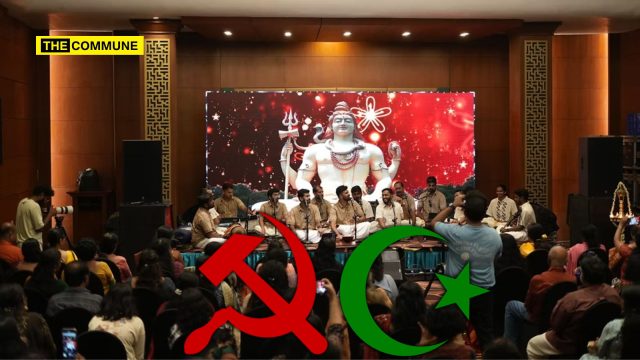
It is reported that the Kerala-based bhajan group Nandagovindam Bhajans, which has gained significant popularity among youth and devotees, has come under sustained criticism and coordinated backlash on social media platforms over the past week.
According to reports, the group known for performing devotional music at temples and cultural festivals across Kerala and outside the state, has witnessed a surge in online campaigns questioning its activities, intent, and growing public presence. The group is said to attract large crowds wherever it performs, including at temple festivals and cultural events, with recent programmes reportedly drawing overwhelming attendance.
It is alleged that the criticism intensified as the group’s popularity grew, particularly among young people, and as its performances began to feature prominently in temples and public spaces. Social media posts by Communists and Jihadis circulating against the group have reportedly claimed that such bhajan initiatives are part of a broader ideological or political mobilisation, a charge that supporters of the group have rejected.
It is further alleged that some online posts and commentaries by these Communists and jihadis have sought to portray bhajan groups as instruments of covert social or political engineering, despite the programmes being presented as devotional or cultural in nature. Supporters have countered these claims by stating that bhajans and similar devotional gatherings are long-standing cultural practices in Kerala, especially during temple festivals and religious seasons, and are not confined to any political agenda.
Reports also indicate that criticism has not been limited to online commentary, with apprehensions expressed that sections of the media may amplify the allegations. At the same time, it is claimed that supporters view the backlash as part of a broader resistance to the increasing participation of youth in temple-based cultural and devotional activities.
It is alleged that the debate has widened into a larger discussion on social media about religious expression, cultural practices, and the boundaries of secularism in public spaces. Posts supporting the bhajan group have described the current developments as reflective of a wider revival of interest in temple traditions and devotional music among younger generations.
Subscribe to our channels on Telegram, WhatsApp, and Instagram and get the best stories of the day delivered to you personally.
The Supreme Court of India on Tuesday, 6 January 2026, observed that it is impossible to predict an animal’s behaviour when it is in a “mood to bite,” while hearing a matter related to stray dogs. The court questioned why stray dogs should be present inside sensitive premises such as courts, schools, and hospitals, and asked what objection could exist to removing them from such institutional areas.
A three-judge bench comprising Justices Vikram Nath, Sandeep Mehta, and N V Anjaria clarified that its modified order was restricted to institutional areas and would not apply to public roads.
Emphasising the need for preventive measures, the bench noted the difficulty in identifying dangerous dogs based on behaviour alone, particularly in the context of managing stray dog populations on roads and streets.
“It’s just not just about biting; but also the threat caused by dogs. Of accidents. How can you identify? Which dog is in what mood in the morning, you don’t know,” Justice Vikram Nath observed.
Justice Sandeep Mehta drew a distinction between streets and institutional spaces, questioning the need for dogs inside court premises, schools, and hospitals. He remarked that institutions are not streets and must be kept safe.
The court also referred to its earlier order passed in November 2025, when it took note of an “alarming rise” in dog bite incidents within institutional areas such as educational institutions, hospitals, and railway stations. At that time, the apex court had directed authorities to relocate stray dogs to designated shelters after due sterilisation and vaccination.
The bench had further instructed authorities to release stray dogs back to the place from where they were picked up and had also directed the removal of cattle and other stray animals from state highways, national highways, and expressways.
However, the three-judge bench had earlier clarified that the relocation directive would not apply to dogs infected with rabies or suspected to be infected with rabies.
The Supreme Court on Tuesday heard the stray dog matter extensively, primarily examining the issue of stray dogs in institutional premises, with the Bench questioning whether spaces such as courts, schools and hospitals should have canine presence at all.
Read more:… pic.twitter.com/0jpXCZDyLh
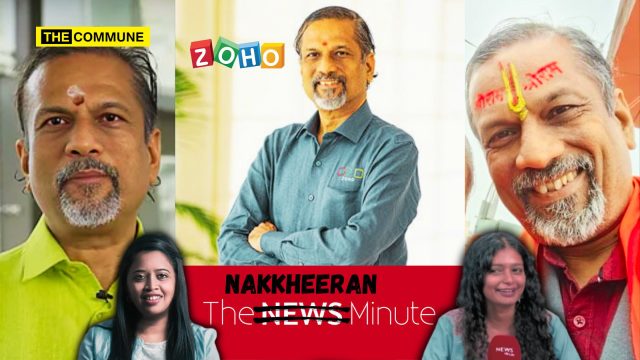
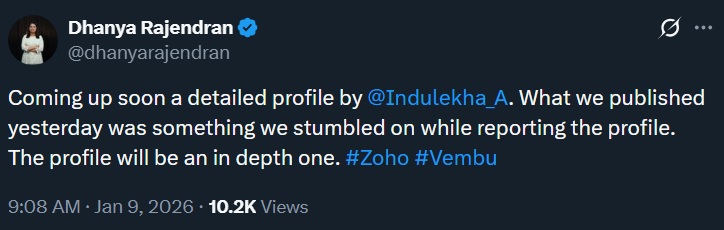
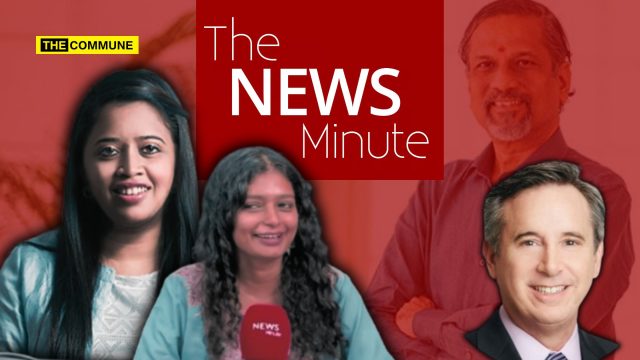
A day after publishing a paywalled article centred on the personal divorce proceedings of Zoho founder Sridhar Vembu, The News Minute editor Dhanya Rajendran indicated that a more detailed profile of the entrepreneur is forthcoming. On her X handle, she announced this writing, “Coming up soon a detailed profile by @Indulekha_A. What we published yesterday was something we stumbled on while reporting the profile. The profile will be an in depth one.”
The initial article, described by TNM as an “exclusive,” focused extensively on a January 2025 interim order passed by a California court in an ongoing divorce case involving Vembu. The report relied heavily on judicial observations made during emergency proceedings and was placed behind a paywall.
Critics have questioned the public-interest basis of the article, noting that it dealt primarily with a private marital dispute still under adjudication, rather than corporate governance, regulatory issues, or matters affecting stakeholders or the public at large. They have also pointed out that the order cited in the report is nearly a year old and remains subject to appeal.
Legal counsel representing Vembu has disputed the portrayal of the case, stating that the interim order was passed on an emergency application with limited opportunity for response, that subsequent judicial proceedings have stayed parts of the order, and that the matter is still being contested. The counsel has also said that the widely cited bond amount has no final legal determination and is under appeal.
Dhanya Rajendran’s announcement about the “in depth profile” seems more like a threat than an announcement.
After what they did with the Dharmasthala fake burial case, their credibility has reached rock-bottom. Now they come up with new targets, especially on the Hindu/nationalistic side. The upcoming hitjobs on Sridhar Vembu is going to be a targeted operation aimed at systematically dismantling the public image of Sridhar Vembu, a man whose traditionalist ethos and monumental success stand as a rebuke to their worldview.
In the upcoming “in-depth” sequel, Dhanya Rajendran is hinting that the character assassination is entering its next phase. More personal details will be weaponised, more contested allegations will be presented as fact, all packaged as a ‘profile’ to lend it a garb of legitimacy.
TNM and Dhanya Rajendran’s objective is not the truth, just smear. From The New Murasoli, TNM has morphed into The Nakkheeran Minute. The promised ‘profile’ is merely the next round of ammunition in a war they have declared on a man whose very existence challenges their narrative.
Subscribe to our channels on Telegram, WhatsApp, and Instagram and get the best stories of the day delivered to you personally.
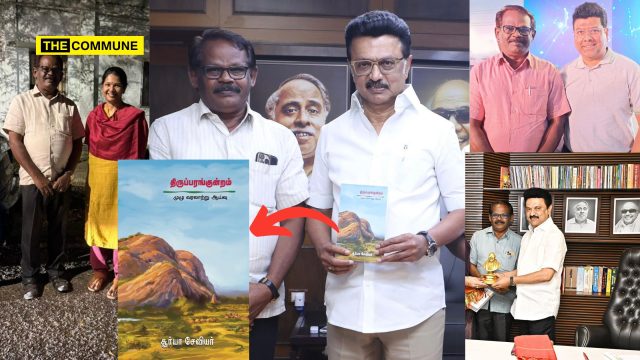
Surya Xavier, the recipient of the 2021 Tamil Nadu DMK Government’s “Sollin Selvar” literary award, announced that his ‘research’ on Thirupparankundram has been published recently.
The book titled “Thirupparankundram – A Comprehensive Historical Study”, Xavier claims offers an ‘extensive examination’ of the history, archaeology, religion, and politics associated with the Thirupparankundram hill near Madurai.
He stated that the book was researched and written over an intensive 25-day period, making one wonder about the quality of the research.
The 175-page book, Xavier stated, contains 13 core chapters. The chapters are said to deal with themes including the geological formation of the Thirupparankundram hill, early human habitation in the region, Madurai’s political history, worship traditions at Thirupparankundram, the evolution of dargahs, the history of Sikandar Dargah, Karthigai Deepam, regional and global historical timelines, the history of the Hindu Religious and Charitable Endowments Department, concepts of religious harmony, Sanatana traditions, and the intersections of religion, politics, and secularism.
The book has been published by Bharathi Puthakalayam. While the cover price is ₹300, the book is being sold at a subsidised price of ₹200 following the author’s request to make it more widely accessible.
The book, reportedly, will also be available at the Chennai Book Fair.
அன்பான வணக்கம்.
மிகக்குறுகிய கால அவகாசத்தில், 25 நாள், இரவு பகல் பாராமல் படித்து, ஆய்வு செய்து “திருப்பரங்குன்றம்- முழு வரலாற்று ஆய்வு ” எனும் நூலை, தமிழ்நாட்டு மக்கள் படித்திட வேண்டுமென முயற்சித்துள்ளேன்.
The publication of the book comes amid the ongoing controversy surrounding the Thirupparankundram Karthigai Deepam, in which the DMK government has declined to implement repeated court directions relating to the conduct of the festival.
Despite a two-judge bench of the Madras High Court reaffirming the earlier order, the state government has stated that it intends to challenge the ruling before the Supreme Court. The matter remains sub judice, with the High Court’s directions continuing to hold the field unless stayed or set aside by the apex court.
In this backdrop, several publications (such as the above) and public interventions claiming to present historical or research-based narratives on Thirupparankundram have emerged in a short span of time. These works place emphasis on secularism, religious harmony, and the reframing of long-established worship traditions, even as the religious character and customary practices associated with the site are under active judicial consideration.
The release and promotion of such books at prominent public platforms, including the Chennai Book Fair, seems to be a coordinated effort within the Dravidianist ecosystem to reinterpret and secularise the holy abode Thirupparankundram through cultural and literary narratives, parallel to the ongoing legal and administrative contestation surrounding the site.
Who Is Surya Xavier?
In January 2025, he made a social media post targeting the Brahmin community and Indian Institute of Technology Madras Director V Kamakoti. The post came in response to comments made by IIT Madras Director, Prof. V Kamakoti, who had stated that cow urine (gaumutra) has medicinal properties and mentioned that in his village, it was traditionally consumed and mixed with panchakavyam for various purposes.
In the post he said, “Iyer Iyenkar Technology (IIT) – We don’t even need a pipe, we will just suck it by mouth.” He accompanied this comment with an image of a cow with a pipe inserted into its back. This post quickly attracted attention and sparked further debate, with many criticizing Xavier’s offensive remarks and the imagery used to target IIT Madras and its director, Prof. V Kamakoti.
A few years ago, he had called Brahmins as dogs and went on to abuse the then AIADMK Minister Ma Foi Pandiarajan.
“They had conspired to make Tamil Nadu as a hunting ground for Brahmin dogs. Ma Foi Pandiarajan is a dog who survives by licking. He is a Tamil Nadu Minister.”, Xavier had said.
Xavier also referred to Tamil Nadu Governor RN Ravi, originally from Bihar, as “Aryan” Ravi. He claimed that Ravi’s ancestors migrated from Afghanistan via the Khyber Pass and are now attempting to assert control over this region.
Subscribe to our channels on Telegram, WhatsApp, and Instagram and get the best stories of the day delivered to you personally.
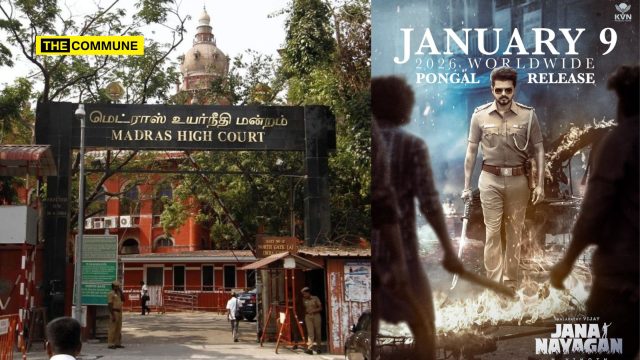
The Madras High Court on Friday (9 January 2026) directed the Central Board of Film Certification (CBFC) to forthwith grant a UA certificate to the upcoming Tamil film Jana Nayagan, starring Vijay. According to reports, the film’s release, which had earlier been scheduled for the same day, has been postponed.
Pronouncing the order, Justice PT Asha observed, “After examining materials, it is Crystal clear that the complainant’s grievance appears to be an after thought.” The court cautioned that entertaining such complaints would give rise to a “dangerous trend.”
The High Court further held that a letter uploaded by the CBFC Chairperson on 6 January 2026 was without jurisdiction. It noted that once the modifications recommended by the Examining Committee were carried out, the certificate for the film would automatically follow. The court stated: “Exercise of power by chairperson is without jurisdiction since the power of chairperson to send for review stood abdicated after he, on behalf of committee informed that UA certificate would be granted subject to incisions.”
The court added that since the order was without jurisdiction, it could modify the relief using its inherent powers.
The bench had reserved orders on Wednesday, 7 January 2026, after hearing Senior Advocate Satish Parasaran for the production house and Additional Solicitor General ARL Sundaresan for the CBFC.
The film’s producer, KVN Productions, represented by Venkata K Narayana, approached the High Court alleging that the film’s certification was being unreasonably withheld and delayed, which would cause massive financial loss to the producers.
It was submitted that on 22 December 2026, the CBFC’s regional office informed the producers that the Examining Committee had recommended granting a UA certificate, subject to certain excisions and modifications. The production house stated that these changes were carried out, and the film was resubmitted, following which, on 29 December 2026, the regional office informed that a UA certificate would be issued.
However, on 5 January 2026, the regional office allegedly sent an email stating that the competent authority had decided to refer the film to the Revising Committee under Rule 24 of the Cinematograph Certification Rules, based on a complaint alleging that the film hurt religious sentiments and its portrayal of the armed forces. The producers contended that this reopening was contrary to law.
Opposing the plea, the CBFC argued that the Chairperson was not bound by the Examining Committee’s decision and could order a review even after the committee had viewed the film. It was submitted that under Rule 23(14) of the Cinematograph Certification Rules, the Chairperson could differ from the committee’s opinion either suo motu or based on information received, including a complaint. The CBFC further argued that if even one committee member raised objections, the Chairperson could consider those objections and refer the film to the Revising Committee.
Countering this, the production house submitted that a committee member could not convert themselves into a complainant. It argued that the law draws a distinction between recommendations and complaints and that once a majority decision is taken by the Examining Committee, the dissenting opinion of one member could not invalidate it.
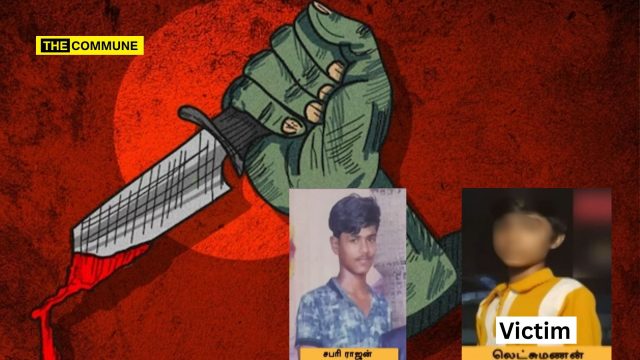
A Class 10 student who was brutally attacked with a machete on 5 January 2026 in Tirunelveli district has succumbed to his injuries, police said on 8 January 2026.
The incident occurred on 5 January 2026 in Panangudi, where the student, identified as Lakshmanan, was allegedly attacked by a youth who was under the influence of ganja. The victim was initially admitted to a nearby hospital and later shifted to the Asaripallam Government Medical College Hospital in Kanyakumari district for advanced treatment.
Despite undergoing treatment for several days, Lakshmanan died on the morning of 8 January 2026, officials said.
Police stated that the accused, identified as Sabarirajan, had been arrested on the day of the incident. Following the student’s death, the case has now been converted to a murder case, and further investigation is underway.
According to the police, the attack followed a verbal altercation between the victim and the accused at the latter’s residence. Lakshmanan, who was studying at the Panangudi Government Higher Secondary School, had reportedly gone to the accused’s house instead of attending school on the day of the incident.
During the course of the investigation, police also found that the accused was a habitual user of intoxicating substances. They further stated that he had allegedly attacked one of his relatives with a machete around three months ago, causing serious injuries. The relative survived after receiving medical treatment.
Police said further inquiries are ongoing.
Subscribe to our channels on Telegram, WhatsApp, and Instagram and get the best stories of the day delivered to you personally.
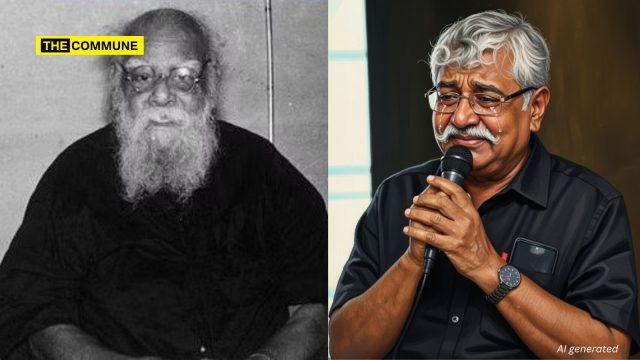
Suba Veerapandian, the head of Dravida Iyyakka Tamilar Peravai, a rabid Dravidian Stockist known for spewing venom against Brahmins, has expressed disappointment over the response to a social media post shared by him regarding remarks made by E V Ramasamy, popularly known as Periyar among his followers, on the Tamil language.
In an audio message circulated subsequently, Veerapandian stated that he had posted the content on his social media page around 6 am, after it was prepared by his organisation’s website team. He said that within 12 hours, the post had received 124 comments.
According to him, all but one of those comments were abusive in nature, targeting both Periyar and himself. He added that only one individual, identified as Mahesh Vasudevan, had posted a non-abusive response.
Veerapandian further stated that none of the members or supporters of his organisation had posted any counter-comments or messages in support of the post. He remarked that he understood his comrades were occupied with organisational responsibilities, while he alone continued to respond to critics online.
In the audio, he is heard saying, “Greetings. Today at 6 in the morning, I posted on my Twitter page Periyar Ayya’s remarks about Tamil, which our website team had prepared. In these 12 hours, 124 comments have come in. Except for just one friend named Mahesh Vasudevan, everyone else has been abusing Periyar and abusing me in their comments. But not even one of our comrades has posted a counter‑reply or a comment supporting it. I understand that all our comrades in the organisation are busy with serious work. It is only I, who have no work, who am continuously fighting with them. Thank you, comrades.”
Legal counsel representing Zoho founder Sridhar Vembu has sharply disputed the framing and claims made in a recent article published by The News Minute (TNM), accusing the outlet of omitting crucial facts and mischaracterising interim court proceedings in an ongoing divorce case in California.
According to Vembu’s counsel, the TNM article relies on a court order that was issued nearly a year ago on an emergency application filed by Vembu’s wife. The lawyer said the order was passed at a preliminary stage, when the defence had limited opportunity to respond to what he described as “outrageously false allegations.”
The counsel alleged that the California court was misled by the wife’s attorney, who, he claimed, is not licensed to practise law in California and entered the proceedings from New York despite there being no New York jurisdictional issues involved. This context, the lawyer said, was not disclosed or examined in TNM’s reporting.
Addressing allegations of asset concealment highlighted by TNM, Vembu’s counsel stated that the Zoho founder had offered his wife 50 per cent of his shares in ZCPL, an offer she has reportedly refused to accept. He further said that Vembu had already transferred his interest in the family home to his wife, facts which were either downplayed or ignored in the article.
“Despite these steps, she continues to claim that Sridhar is attempting to cheat her in the divorce,” the counsel said, adding that such allegations were illogical given that the wife could take possession of half the shares immediately if she chose to do so.
The much-publicised $1.7 billion bond order, which TNM foregrounded as a central element of its story, was described by the defence as legally unsustainable. Vembu’s counsel asserted that there is no legal authority for such an order and noted that a subsequent judge in the same case acknowledged that the amount appeared excessive.
According to the lawyer, Vembu attempted to comply to the extent possible by borrowing up to $150 million against his shares, representing the maximum liquidity available to him. The wife, however, allegedly refused to accept this amount. The counsel characterised the episode as a “waste of time” driven more by an attempt to disparage Vembu than to secure relief.
The defence also clarified that the divorce proceedings do not involve any claim for alimony or spousal support, contrary to impressions created by TNM’s narrative. “This has nothing to do with alimony,” the counsel said, noting that no such application has been filed.
Vembu’s lawyer further stated that his client remains in full compliance with all lawful orders issued by the California court. He said the $1.7 billion bond order is invalid, incapable of compliance, and currently under appeal, while the receivership order referenced in TNM’s article has been stayed by an appellate court.
Describing TNM’s article as “old news dressed up as an exclusive,” the counsel argued that the publication blurred the distinction between interim procedural orders and final judicial findings, creating a misleading impression of guilt and wrongdoing where none has been established.
“This case does not define Sridhar Vembu,” the lawyer said, adding that the proceedings reflect the actions of the wife and her New York-based attorney rather than any proven misconduct by the Zoho founder.
As Sridhar Vembu’s counsel, I can add some facts missing from the article. The order was made 1 year ago on an emergency application by his wife, meaning we had little time to response to the outrageously false allegations she made against Sridhar. The judge in California was…
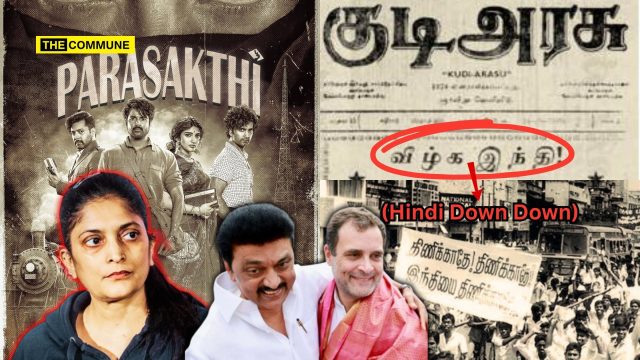
Questions are being raised over whether Parasakthi, the upcoming Tamil film directed by Sudha Kongara and starring Sivakarthikeyan, will see a theatrical release in Hindi-speaking North Indian states. The film, which draws heavily from Dravidian political narratives and their anti-Hindi imposition, has become the subject of speculation after claims surfaced that Hindi distributors are unwilling to acquire its dubbed rights.
Set in the 1960s, the film is based on true events surrounding the 1965 anti-Hindi agitations. These were massive student-led protests against the Congress government’s push to make Hindi the sole official language. With Assembly Elections set to happen in a few months, the film is meant to peddle pro-DMK propaganda by whipping up linguistic passions. It also sanitizes and whitewashes the role of EV Ramasamy Naicker (hailed as ‘Periyar’ by his followers) who had opposed the 1965 anti-Hindi agitation and made acerbic remarks against the protestors.
Release Hurdles
While the film’s makers have not officially commented on the issue, there has been no announcement so far regarding a Hindi release, even as the Pongal 2026 release window approaches. Industry observers note that big-ticket Tamil films with pan-India ambitions usually secure or at least announce North Indian distribution well in advance, something conspicuously absent in the case of Parasakthi.
The speculation gained traction amid claims that the film’s ideological positioning could make it commercially unviable in Hindi-speaking markets.
Parasakthi reportedly foregrounds themes drawn from Tamil anti-Hindi agitations and Dravidian political narratives – themes that historically have had limited resonance, and in some cases outright resistance, outside Tamil Nadu.
Social media chatter has also linked the uncertainty surrounding the Hindi market to unrelated project exits attributed to Sivakarthikeyan, though no official confirmation exists to support such claims. Nevertheless, the absence of clarity has only added to the perception that the film’s appeal may be regionally confined.
Compounding the issue are reports — yet to be officially denied — that Parasakthi faced objections during the certification process, particularly with respect to scenes referencing anti-Hindi movements. The makers are alleged to have approached the revising committee of the Central Board of Film Certification, suggesting that even within India, the film’s content may be considered politically sensitive. Reddit users speculate that the CBFC removed scenes and dialogues in Parasakthi related to the ‘Hindi imposition’ issue and reportedly led to the team sending the film to the revising committee.
Notably, while the film is backed by production and distribution entities closely aligned with the ruling political ecosystem in Tamil Nadu, there has been no indication of a coordinated push to take the film beyond the State. Critics argue that this silence itself is telling, especially for a project projected as a large-scale political drama.
At this stage, the makers have neither confirmed nor denied plans for a Hindi release. Until such clarity emerges, claims that Parasakthi will not find takers in the Hindi belt remain speculative but the lack of distributor announcements, coupled with the film’s ideological framing, continues to fuel questions about its pan-India prospects.
Subscribe to our channels on Telegram, WhatsApp, and Instagram and get the best stories of the day delivered to you personally.
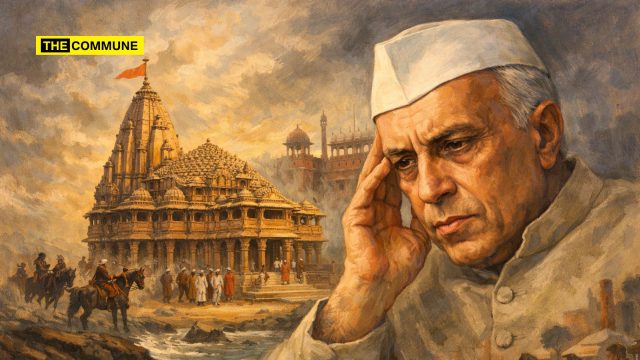
As India marks 1,000 years since the 1026 attack on the Somnath Temple by Mahmud of Ghazni, recent remarks by the Prime Minister recalling the shrine’s survival have renewed attention on one of the most contested episodes of post-Independence cultural history: the reconstruction of the Somnath Temple and the resistance it faced from India’s first Prime Minister, Jawaharlal Nehru.
Somnath: The “Eternal Shrine”
The Somnath Temple, located at Prabhas Patan near Veraval on Gujarat’s Arabian Sea coast, is one of the 12 sacred Jyotirlingas of Lord Shiva. Ancient texts such as the Shiva Purana and multiple inscriptions attest to its antiquity. Over centuries, the temple was repeatedly destroyed and rebuilt—historical records indicate at least six cycles of destruction and reconstruction—making it a symbol of civilisational continuity.
After Independence, the modern reconstruction of Somnath was initiated between 1947 and 1951, spearheaded by Sardar Vallabhbhai Patel and later supported by K.M. Munshi. The temple was rebuilt in the Chaulukya (Solanki) architectural style by temple architect Prabhashankar Sompura and inaugurated on 11 May 1951 by President Rajendra Prasad. Today, the Somnath Trust is chaired by the Prime Minister of India.
Nehru’s 17 Letters on Somnath: A Complete Record (1950–1951)
Archival correspondence shows that Jawaharlal Nehru wrote at least 17 separate letters between July 1950 and August 1951 opposing, distancing, or attempting to dilute the reconstruction and inauguration of the Somnath Temple. Each letter reflects sustained and deliberate intervention at different levels of government and diplomacy.
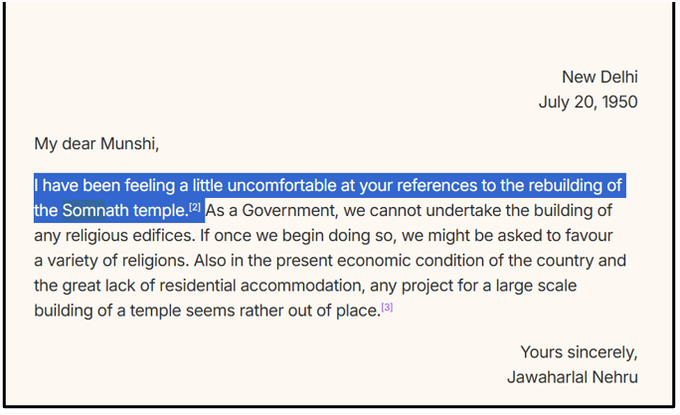
#1 20 July 1950 – To K.M. Munshi (Union Minister)
Nehru questioned the very necessity of rebuilding the Somnath Temple, arguing that India faced housing shortages and economic hardship. He framed the reconstruction as an avoidable expenditure rather than a civilisational restoration.
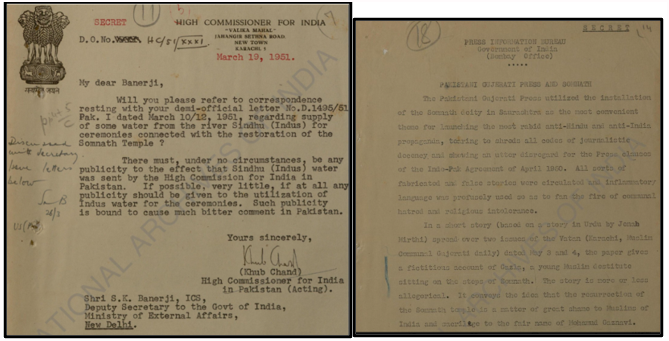
#2 19 March 1951 – To Khub Chand (High Commissioner to Pakistan)
Nehru formally disapproved the use of Indus water for the Somnath consecration and ordered that there be no publicity under any circumstances, citing fear of adverse reaction in Pakistan.
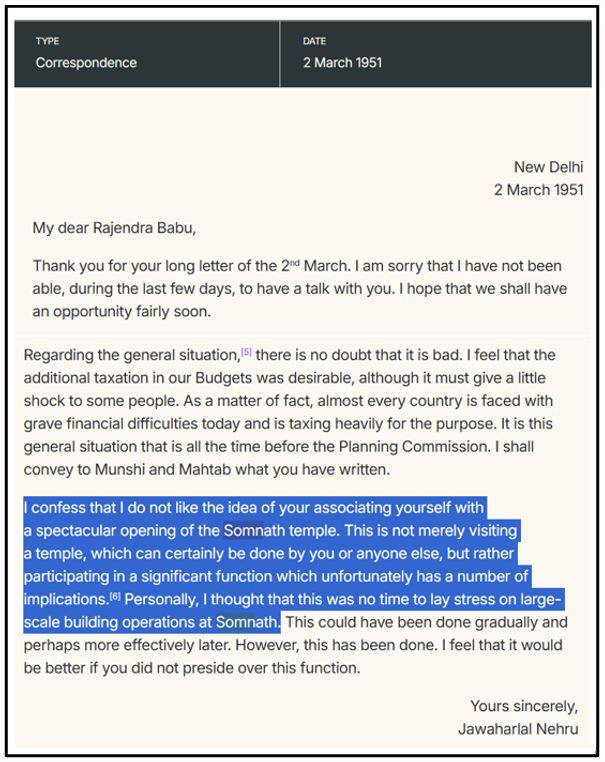
#3 2 March 1951 – To President Rajendra Prasad
Nehru bluntly stated that he did not like the President associating with the Somnath inauguration and suggested the event be postponed or scaled down.
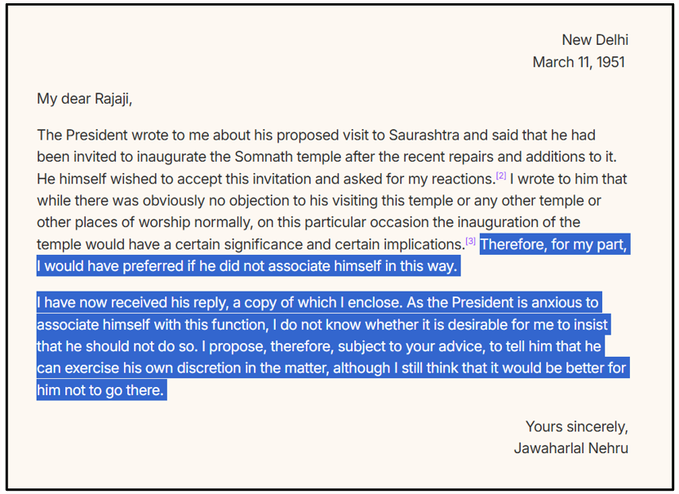
#4 11 March 1951 – To C Rajagopalachari (Union Home Minister)
Nehru reiterated that he would have preferred the President not to attend the inauguration, showing active opposition to constitutional endorsement.
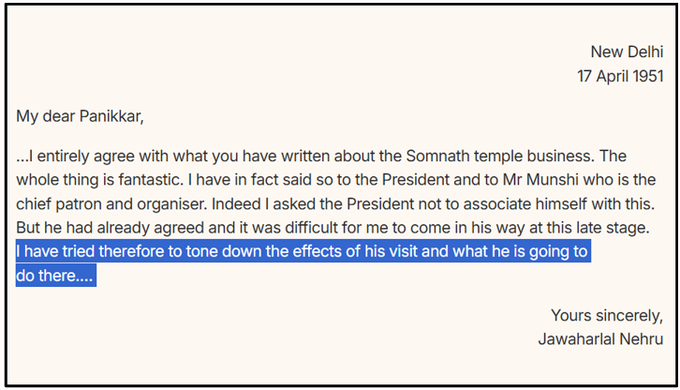
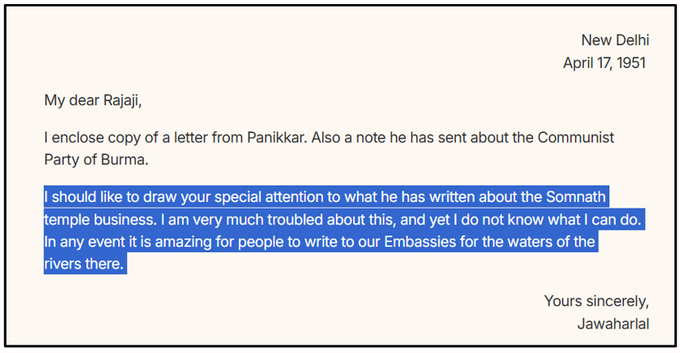
#5 17 April 1951 – To K.M. Panikkar (Indian Ambassador to China)
Nehru admitted that he had tried to “tone down the effects” of the President’s visit to Somnath, acknowledging active damage control after failing to stop it.
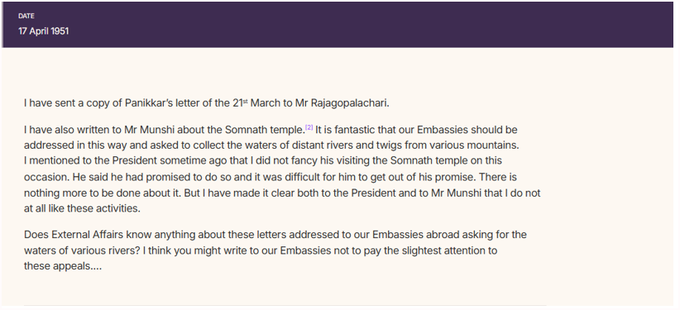
#6 17 April 1951 – To Secretary-General & Foreign Secretary, MEA
Nehru directed Indian embassies not to assist the Somnath Trust with requests for sacred river water or soil, signalling discomfort with even symbolic religious acts.
#7 17 April 1951 – To C. Rajagopalachari (Second Letter)
He stated that the Somnath issue was troubling him deeply, reinforcing that his opposition was ongoing and unresolved.
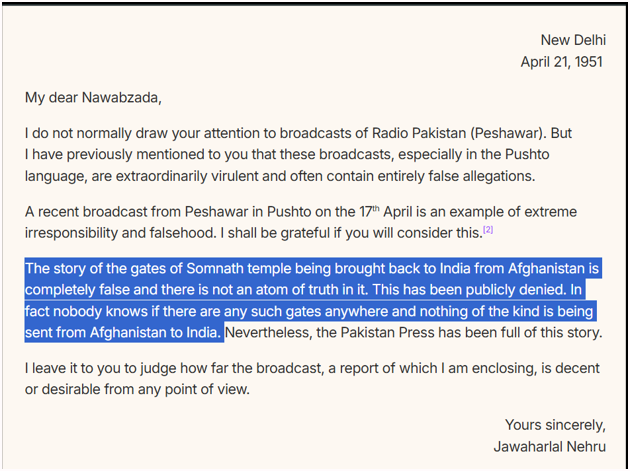
#8 21 April 1951 – To Liaquat Ali Khan (Prime Minister of Pakistan)
Nehru reassured Pakistan that claims surrounding Somnath symbolism were “completely false,” choosing to placate Pakistan rather than counter its propaganda.
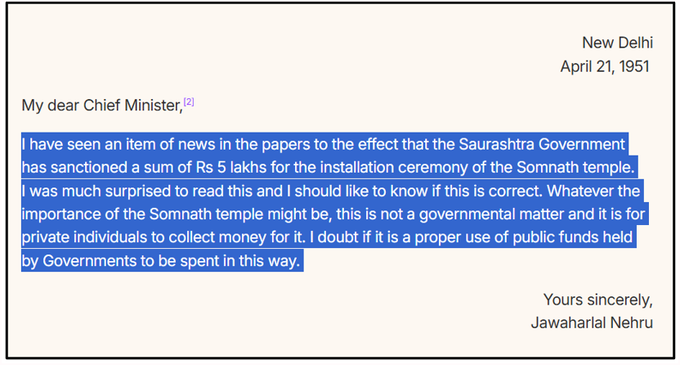
#9 21 April 1951 – To U.N. Dhebar (Chief Minister, Saurashtra)
He objected to the use of public funds for the Somnath ceremony, invoking secular propriety and insisting temples were not a government concern.
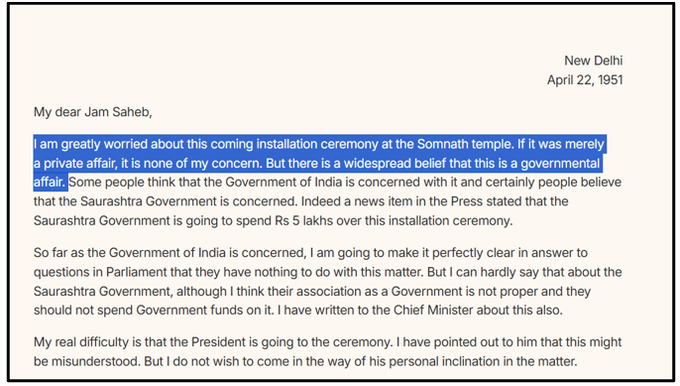
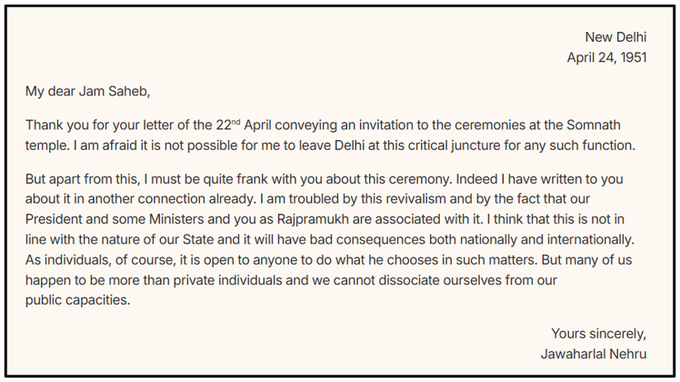
#10 22 April 1951 – To Digvijaysinghji (Jam Saheb of Nawanagar)
Nehru expressed anxiety over Somnath trustees contacting foreign missions for sacred river water and soil, fearing diplomatic misinterpretation.
#11 24 April 1951 – To Digvijaysinghji (Second Letter)
He described the inauguration as “revivalism” and warned of “bad consequences nationally and internationally” if constitutional authorities participated.
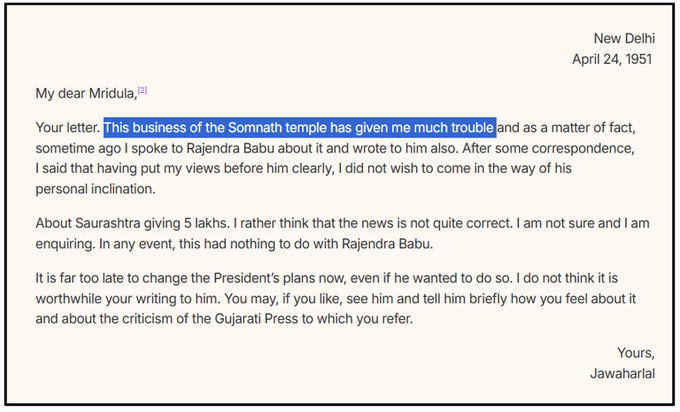
#12 24 April 1051 – To Mridula Sarabhai (Congress Leader)
In this letter, he says “this business of the Somnath temple” had given him “much trouble”. He says it is not worthwhile to change the President’s plans but pushes her to talk about another criticism.
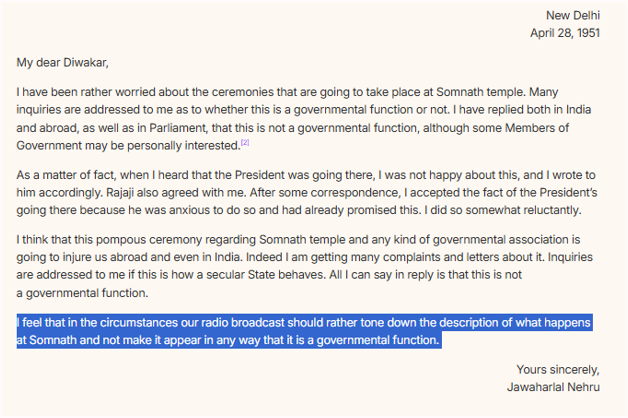
#13 28 April 1951 – To R.R. Diwaker (Minister of Information & Broadcasting)
Nehru instructed that media coverage and AIR broadcasts of the inauguration be toned down, calling the ceremony pompous and image-damaging.
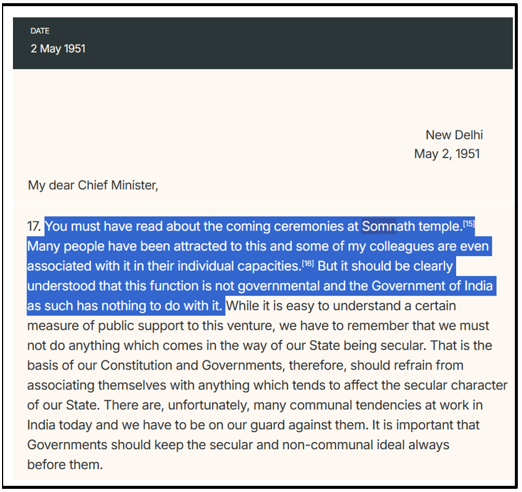
#14 2 May 1951 – To Chief Ministers (First Letter)
He emphasised that the Government of India must distance itself from Somnath and warned against any official participation despite popular support.
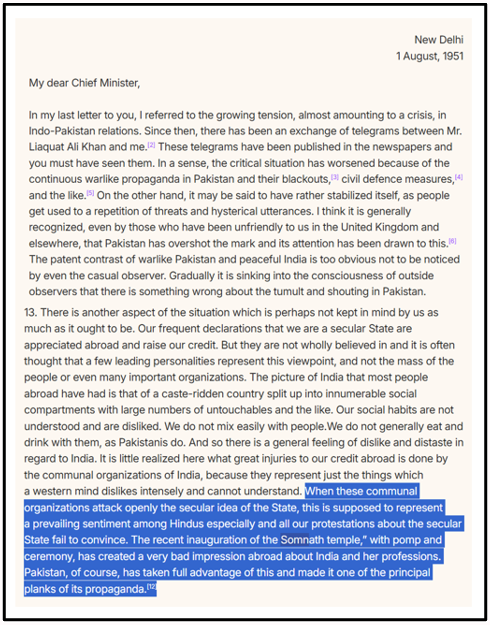
#15 1 August 1951 – To Chief Ministers (Second Letter)
In a follow-up, Nehru reiterated the same position, stressing secularism and non-association even as ministers and public figures supported the event.
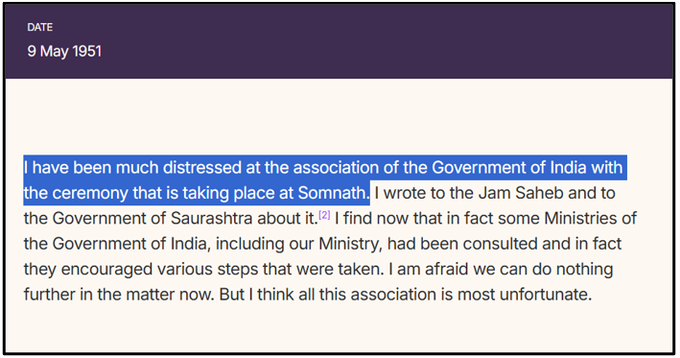
#16 9 May 1951 – To S. Dutt (Secretary, MEA)
Just days before the inauguration, Nehru objected again to any government linkage with Somnath, calling such association “most unfortunate.”
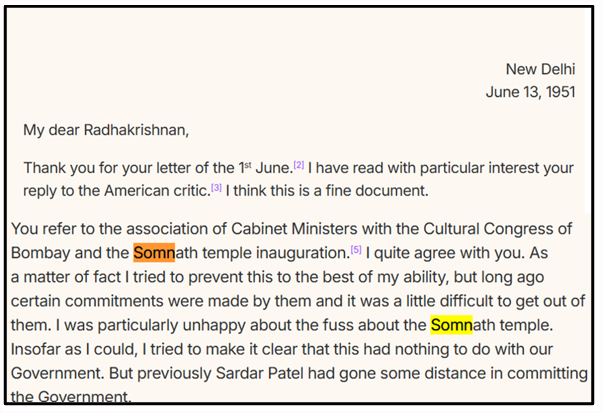
#17 13 June 1951 – To Vice President Dr S. Radhakrishnan
He dismissed the inauguration as unnecessary “fuss” and admitted he had tried to stop cabinet ministers from attending.
#18 1 August 1951 – To Chief Ministers
Even months after the inauguration, Nehru blamed the Somnath ceremony for creating a “very bad impression abroad” and weakening India’s secular image.
A Persistent Theme
Across all 17 letters, a consistent theme emerges: Nehru viewed the reconstruction and consecration of Somnath not merely as a religious act but as a political and diplomatic liability. He repeatedly prioritised secular optics, international perception, and Pakistan’s reactions over the civilisational symbolism attached to the temple.
Despite his sustained efforts, the Somnath Temple was inaugurated as planned, with President Rajendra Prasad asserting that the reconstruction represented India’s cultural continuity rather than state-sponsored religion.
Somnath’s Revival and Nehru’s Reluctance
As India marks a millennium since the 1026 destruction of Somnath, the temple’s resilience stands in contrast to the early Republic’s discomfort with Hindu civilisational revival.
Nehru’s letters remain a written record of how India’s first Prime Minister sought to suppress, sanitise, and politically distance the Republic from a revival he neither understood nor endorsed.
(This article is based on an X Thread By StarBoy Tarun)
Subscribe to our channels on Telegram, WhatsApp, and Instagram and get the best stories of the day delivered to you personally.