Home Blog Page 163

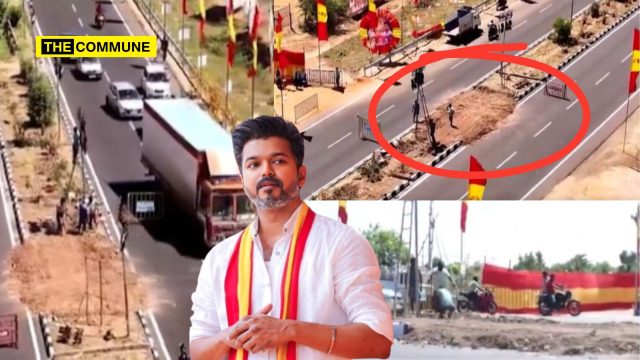
Divider Broken On National Highway For Vijay’s Car To Easily Enter TVK’s Rally Location In Madurai
tvk vijay car divider national highway

Controversy continues to trail actor-politician Vijay’s Tamilaga Vettri Kazhagam (TVK), with the party’s upcoming state conference in Madurai once again drawing criticism. From disputed flex boards to oversized flagpoles, TVK has repeatedly landed in the spotlight, and now fresh concerns have emerged over the removal of NH road dividers to create VIP entryways for the event.

The second state conference of TVK is scheduled for 21 August 2025 in Madurai. Ahead of the gathering, reports have surfaced that several roads, despite already having designated parking routes, have been damaged or altered to accommodate the arrangements.

To manage the anticipated traffic surge, the Madurai District Police has announced major diversions and alternate routes:

Parking – 1

  • Vehicles from Kanyakumari, Tirunelveli, and Tenkasi districts must pass through Kovilpatti, Aruppukottai, Kariyapatti, and Aviyur.
  • Those from Thoothukudi and Virudhunagar should take Aruppukottai–Kariyapatti–Aviyur.
  • Vehicles from Ramanathapuram should move via Parthibanur, Narikudi, Tiruchuzhi, Aruppukottai, Kariyapatti, and Aviyur.
  • Vehicles from Thanjavur, Nagapattinam, Thiruvarur, Mayiladuthurai, Pudukottai, and Sivaganga must take the Sivaganga–Thiruppuvanam–A. Mukkulam–Meenakshipuram–Aviyur stretch.

Parking – 1A

  • Vehicles from western districts such as Coimbatore, Tiruppur, Erode, Salem, Namakkal, Karur, Dharmapuri, and Krishnagiri should proceed via Dindigul, Pandiyarajapuram, Nagamalai Pudukkottai, Kappalur Overpass, Melakottai, and Koodakovil.
  • Vehicles from Theni should arrive through Andipatti Kanavai, Usilampatti, Sekkanoorani, Nagamalai Pudukkottai, Kappalur, and Koodakovil.

Parking – 2 & 3

  • Vehicles from Chennai, Villupuram, Vellore, Cuddalore, Kallakurichi, Kanchipuram, Tiruvallur, and Tiruvannamalai via Trichy should take the Viralimalai–Melur–Viraganur roundabout–Aruppukottai junction–Parapati route.

Routes for heavy vehicles
Heavy vehicles have been directed to bypass Madurai through a network of alternative highways. Those coming from Chennai and the northern districts heading to southern regions such as Virudhunagar, Thoothukudi, Nellai, Tenkasi, and Kumari must take the Trichy–Manapparai–Dindigul–Thirumangalam highway. Conversely, vehicles from southern districts bound for northern Tamil Nadu are required to reroute via Thirumangalam, Dindigul, and Trichy. Similarly, multiple alternate routes have been mapped out for heavy vehicles from Theni, Sivaganga, Ramanathapuram, and western districts to minimize congestion in and around Madurai.

Public transport routes
General public vehicles coming from other districts towards Madurai, or further on to Virudhunagar, Thoothukudi, Nellai, Tenkasi, and Kumari, must take either the four-lane Ramanathapuram highway via Viraganur–Thirubhuvanam–Narikudi–Tiruchuzhi–Aruppukottai, or proceed through the Kappalur flyover–Thirumangalam–Kallikudi–Kariyapatti–Aruppukottai.

Guidelines for party members
Police have also urged TVK cadres and affiliated political groups not to arrive on two-wheelers, citing safety concerns and the potential for traffic blockages. Additionally, vehicles have been advised to avoid the Aruppukottai junction–Parapati stretch on the national highway and instead make use of alternative roads.

Subscribe to our channels on TelegramWhatsApp, and Instagram and get the best stories of the day delivered to you personally
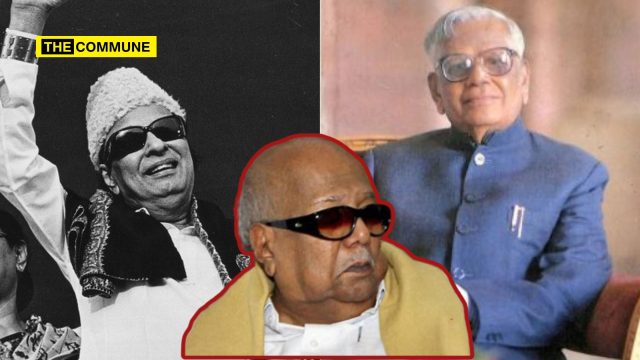
When MGR Backed Tamilian R Venkataraman For Vice President But Karunanidhi Asked What Has He Done For Tamil Nadu

r venkataraman mgr karunanidhi

The DMK has once again taken a U-turn, now insisting that ideology should take precedence over linguistic or regional identity, a position that directly contradicts its earlier stance where it frequently invoked Tamil pride as a decisive factor in politics.

This position was highlighted in a bid to support the NDA’s Vice-Presidential nominee, C.P. Radhakrishnan, despite his Tamil background. DMK spokesperson T.K.S. Elangovan reiterated that the party does not extend support merely because a candidate happens to be Tamil, stressing that political beliefs and policy positions matter far more than ethnicity.

This is not the first instance of DMK dismissing the “Tamilian” factor when it doesn’t suit their political agenda. History offers a parallel in 1987, during the Presidential election, when R. Venkataraman, a distinguished Tamil leader, was nominated. Back then, AIADMK founder and Chief Minister M.G. Ramachandran (MGR) pointedly remarked that “not supporting a Tamilian is their stand” in reference to DMK’s reluctance. DMK patriarch M. Karunanidhi responded by downplaying Tamil identity, stating that “it is important to see what he has done for Tamil people rather than whether he is Tamil.”

MGR, however, had his own reasons for backing Venkataraman, viewing him as not only a Tamil but also a statesman with significant contributions to both the state and the nation.

Who is R. Venkataraman?

Ramaswamy Venkataraman, born in Rajamadam village of Thanjavur district, began his career as a lawyer at the Madras High Court and later at the Supreme Court of India. He was an active participant in the independence struggle, including the Quit India Movement, and later served as a member of the Constituent Assembly and the provisional government. His political career spanned both state and national levels. In Tamil Nadu, he worked under Chief Ministers K. Kamaraj and M. Bhaktavatsalam, handling portfolios like Industries, Labour, and Transport. At the national level, he was elected to the Lok Sabha four times and held key positions such as Union Finance Minister, Defence Minister, Vice President, and eventually the President of India between 1987 and 1992.

Venkataraman is often remembered as the architect of Tamil Nadu’s industrial growth. As Industries Minister in the 1950s and 60s, he spearheaded the establishment of the state’s first industrial estates at Guindy and was instrumental in attracting major public sector undertakings such as the Integral Coach Factory, Neyveli Lignite Corporation, and the Heavy Vehicles Factory. He also encouraged private sector investment, paving the way for companies like Ashok Leyland, Hindustan Motors, TVS Group, and Enfield to set up operations in Tamil Nadu. These initiatives earned him recognition as the father of the state’s industrialization.

At the Centre, his contributions were equally significant. As Finance Minister in the early 1980s, he introduced reforms that promoted economic growth and savings while negotiating a major loan package with the International Monetary Fund. He also oversaw the creation of the National Bank for Agriculture and Rural Development (NABARD). Later, as Defence Minister, he prioritized modernization of India’s armed forces, encouraging diversification of equipment sources and laying the foundation for the Integrated Guided Missile Development Programme, which would eventually produce indigenous systems like Prithvi and Agni. His election as Vice President in 1984 and his role in ensuring stability after the assassination of Indira Gandhi demonstrated his ability to act as a steadying influence during uncertain times. As President of India from 1987 to 1992, he worked with four different prime ministers Rajiv Gandhi, V.P. Singh, Chandra Shekhar, and P.V. Narasimha Rao during the dawn of coalition politics, navigating a turbulent phase in Indian democracy.

Venkataraman’s career stands as a reminder that leadership cannot be reduced to questions of identity alone. While he was undeniably a proud Tamilian, his life’s work reflected a vision that placed nation-building and institutional development above narrow politics. For Karunanidhi, this reinforced the argument that ideology and public service mattered more than linguistic pride. For MGR, supporting Venkataraman was a recognition of his stature as a statesman. Both positions, though opposed politically, underlined the fact that Venkataraman’s contribution transcended the limits of Tamil identity and became part of India’s national legacy.

Subscribe to our channels on TelegramWhatsApp, and Instagram and get the best stories of the day delivered to you personally
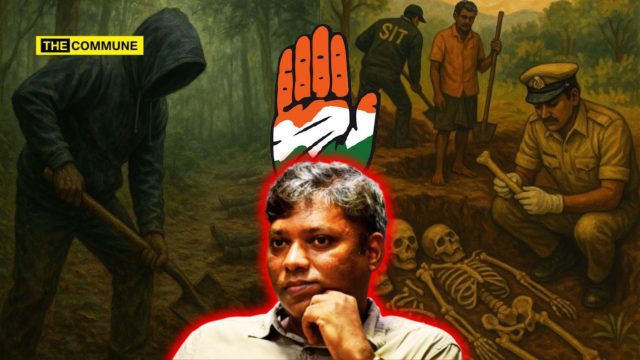
Dharmasthala ‘Mass Burial’ Case Collapses: Masked Complainant Says He Was Coached By A Gang In Chennai, Fingers Point Towards TN Congress MP Sasikanth Senthil Over Alleged Conspiracy To Defame Temple

The sensational allegations of “illegal mass burials” at Dharmasthala Temple have taken a dramatic turn with the main complainant retracting his claims before the Special Investigation Team (SIT), admitting that he was coerced by a gang into making false statements.

The Confession: A Scripted Lie

The former sanitation worker, whose July 3 testimony before a magistrate ignited a national firestorm, has now provided a detailed confession to the Special Investigation Team (SIT). He stated that a gang approached him in Chennai in December 2023.

“They asked me how many bodies I had buried when I worked in Dharmasthala. I told them the truth: that I had legally buried the bodies of pilgrims who came for salvation, through the police and gram panchayat,” the complainant stated. “But the gang insisted that I should say that the bodies were buried illegally. They pressured me… they changed my mind.”

The complainant revealed that the gang brought him to Karnataka, trained him on what to say in court, and even provided him with the skull and bone fragments he submitted as evidence which forensic reports later confirmed belonged to a man who died 30 years ago. He further confessed that he was instructed to coordinate his false testimony with another complainant, Sujatha Bhat, who had filed a missing person report for her daughter.

The SIT has since confirmed that the skull and bone fragments were of men who had died decades earlier, undermining the complainant’s earlier claims. Excavations at 17 sites identified by him yielded no evidence of mass graves. At one site, partial skeletal remains were found but were confirmed to be male, dating back 30 years.

Political Finger-Pointing

As the case crumbles, political attention has turned to identifying the “gang” behind the conspiracy. BJP MLA from Udupi, Yashpal Suvarna, and Independent MLA G. Janardhan Reddy have publicly named Congress MP Sasikanth Senthil as the key conspirator. They allege Senthil, who served as Dakshina Kannada Deputy Commissioner, orchestrated the plot using leftist and Islamist networks he cultivated during his administrative tenure.

The MLAs have pointed to Deputy CM D.K. Shivakumar’s own previous remark about a “larger conspiracy” and are now demanding the SIT have the courage to probe Senthil’s involvement, questioning if his status as a sitting Congress MP will grant him immunity.

Who Is Sasikanth Senthil?

Senthil, who resigned from the IAS in 2019 citing opposition to Article 370 abrogation and CAA, later joined the Congress and rose quickly within the party. He was elected from Tiruvallur (Tamil Nadu) in the 2024 Lok Sabha polls and is seen as a close aide of Rahul Gandhi.

However, his tenure as Dakshina Kannada Deputy Commissioner has been clouded by allegations of corruption and favoritism. He was accused of creating sand mining cartels, manipulating the government’s “Sand Bazar” app to benefit select groups, and granting tenders to blacklisted firms in exchange for kickbacks. Critics also accuse him of fostering ties with leftist and Islamist organisations like PFI and SDPI while serving in the district.

These past allegations have resurfaced amid claims that he used his political network to engineer the Dharmasthala controversy in order to discredit a Hindu religious institution with deep influence in Karnataka.

Subscribe to our channels on TelegramWhatsApp, and Instagram and get the best stories of the day delivered to you personally.

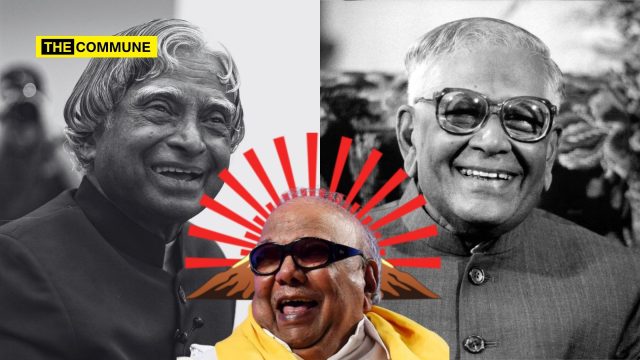
Be It Abdul Kalam Or R. Venkatraman, DMK Has A History Of Insulting And Voting Against Tamilians Becoming President/Vice President

The DMK, which talks big of “Tamil pride” and accuses the Union government of undermining the language through the promotion of Hindi, has once again taken a clean U-turn. When it came to supporting NDA’s Vice-Presidential candidate C.P. Radhakrishnan, a Tamil by birth, the party refused, claiming ideology must prevail over linguistic identity. DMK spokesperson T.K.S. Elangovan stated, “We will give preference only to ideology. We cannot support Radhakrishnan merely because he is Tamil. What matters are his ideologies.”

DMK’s History Of Voting Against Tamilians To Highest Offices

This is not the first instance of DMK dismissing the “Tamilian” factor when it doesn’t suit their political agenda. Let’s take a look at the inglorious history of the DMK which claims it stands for Tamils, while voting against Tamilians becoming President or Vice President.

When Karunanidhi Questioned R. Venkatraman’s Credentials

History offers a parallel in 1987, during the Presidential election, when R. Venkataraman, a distinguished Tamil leader, was nominated. Back then, AIADMK founder and Chief Minister M.G. Ramachandran (MGR) pointedly remarked that “not supporting a Tamilian is their stand” in reference to DMK’s reluctance. DMK patriarch M. Karunanidhi responded by downplaying Tamil identity, stating that “it is important to see what he has done for Tamil people rather than whether he is Tamil.”

Ironically, R. Venkataraman’s record showed remarkable contributions to Tamil Nadu. A freedom fighter who played a role in the Quit India Movement, he went on to spearhead the state’s industrialisation. As Industries Minister in 1957, he established industrial estates such as Guindy, brought in major national investments, and was instrumental in the founding of the Integral Coach Factory (ICF) and Neyveli Lignite Corporation (NLC). Under his leadership, automobile giants like Ashok Leyland and Hindustan Motors set up base in Tamil Nadu laying the foundation for the state’s emergence as India’s automobile hub. To question “what he has done for Tamil Nadu” is either historical ignorance or deliberate distortion.

When Karunanidhi Abused Abdul Kalam When He was Chosen in 2012

When the NDA proposed Dr A.P.J. Abdul Kalam as its candidate for the 2012 Presidential election, the DMK then an ally of the UPA dismissed the idea and reaffirmed its backing for the Congress nominee. Party chief M. Karunanidhi even mocked the suggestion, remarking, “Kalam in Tamil also means chaos (Kalagam). Anyhow, chaos has broken out in the Presidential election.”

Despite the buzz created by TMC leader Mamata Banerjee’s push for Kalam, Karunanidhi made it clear that the DMK would stand by its earlier commitment. “We are firm on what we had said. Defence Minister A K Antony who is said to be a honest man met me (last month) on behalf of Congress. I had extended my support to the message he had brought from (Congress chief) Sonia Gandhi,” he said, stressing that the party’s stance remained unchanged.

He explained that Defence Minister A.K. Antony, whom he described as an honest man, had visited him on behalf of the Congress a month earlier. During that meeting, Antony conveyed a message from Congress president Sonia Gandhi, and Karunanidhi confirmed that the DMK had pledged support to the Congress candidate at that time. Asked whether the Presidential election outcome would influence the next Lok Sabha polls, Karunanidhi declined to speculate.

Thus, the DMK’s approach is consistent: when it suits their narrative, “Tamil” is placed above everything else; but when it does not, the identity card is quietly shelved. It remains a textbook example of selective rhetoric.

Subscribe to our channels on TelegramWhatsApp, and Instagram and get the best stories of the day delivered to you personally
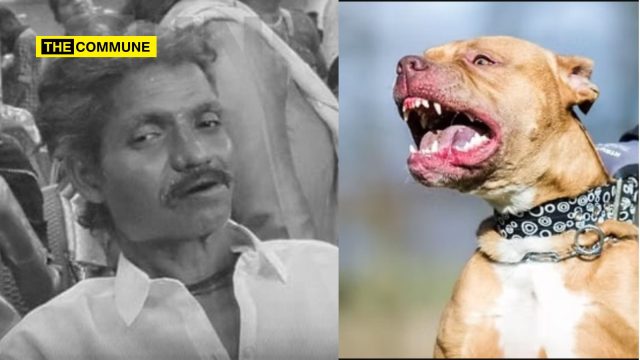
Chennai: 55-Year-Old Man Mauled To Death By Pitbull

chennai pitbull

In yet another tragic case of a fatal dog attack in Chennai, a 55-year-old resident, Karunakaran, died after being mauled by a pit bull near his neighbour’s house in Jafferkhanpet on 19 August 2025. Witnesses, including his family and neighbours, were left shocked as he collapsed and died instantly during the attack.

According to Karunakaran’s sister, Kannima, the residents had repeatedly warned the authorities about the danger posed by the animal. She recalled that a formal complaint had been lodged with the police several months earlier. “The owner, Poongodi, is directly responsible for my brother’s death. Despite owning a bigger house elsewhere, she moved into this small house alone and insisted the dog was needed for her safety, citing disputes with her sons. When R6 police officials came to inspect after our complaint, she refused to relocate the dog and managed to avoid action through political backing. If the authorities had acted then, this tragedy could have been prevented,” Kannima alleged.

His niece, K. Padmavathi, recounted how the incident unfolded. “The dog was always aggressive. Around 2:30 p.m., we heard Poongodi shouting for help as the animal turned on her. My uncle rushed forward to save her, but the dog attacked him viciously, biting him in the genital area and refusing to release him. He collapsed immediately, and none of us could overpower the dog,” she said.

Chennai Corporation’s veterinary team later arrived with nets and managed to capture the pit bull. Meanwhile, corporation workers disinfected the street after discovering bloodstains and tissue remains scattered near the site of the attack.

Poongodi, who also sustained injuries, has been admitted to a hospital. Since the animal could not be restrained by locals or police, GCC Ward 139 councillor P. Subramani called in the civic veterinary unit, which secured the dog around 4 p.m. and transported it to the Kannamapet shelter.

The incident has sparked demands from residents urging the civic body to enforce strict controls on breeding and keeping of dangerous dog breeds in residential areas. Police officials confirmed that a negligence case has been registered against Poongodi and that she will be arrested once discharged from the hospital.

Meanwhile, senior civic officials noted that discussions are already underway on whether regulations should be introduced to control the ownership and breeding of ferocious dog breeds within Chennai city.

(With inputs from The Hindu)

Subscribe to our channels on TelegramWhatsApp, and Instagram and get the best stories of the day delivered to you personally
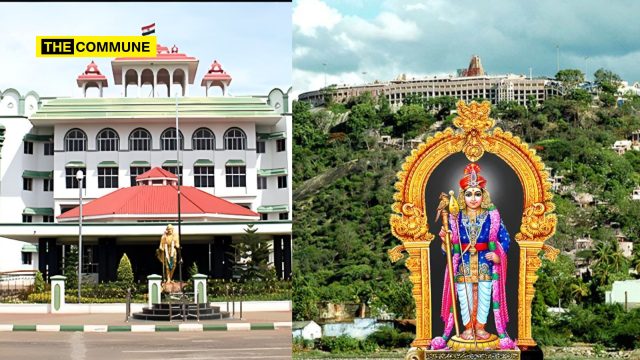
Madras High Court Strikes Down DMK Govt Move To Build Wedding Halls With Temple Funds

madras high court dmk govt temple funds

The Madurai Bench of the Madras High Court has quashed a DMK government order permitting the construction of a wedding hall using temple funds, citing misuse of religious resources.

The verdict came in response to a petition filed by Hindu Tamilar Katchi president Rama Ravikumar of Madurai. According to his petition, during the 2024 Tamil Nadu Assembly’s discussion on the Hindu Religious & Charitable Endowments (HR & CE) Department’s budget, the state government announced plans to build wedding halls in 27 temples, with an allocated budget of ₹85 crore. Subsequently, official orders were issued to implement the proposal.

One such project involved constructing a wedding hall costing ₹6 crore on a 2.94-acre plot owned by the Palani Thandayuthapani Swamy Temple, located in Pothanpuli village. The petitioner argued that temple funds must be used strictly for religious purposes, temple maintenance, and the benefit of devotees, as per existing regulations. Therefore, he requested that the court nullify the government’s order and halt the proposed construction using temple finances.

In addition to this case, Ram Ravikumar filed separate petitions against similar constructions in Kallimandhaiam, Andipatti, and Uttamapalayam, all allegedly planned using the same temple’s funds. BJP district functionaries Pandithurai and Senthilkumar also challenged the use of funds from the Dindigul Abhiramiamman Temple and the Thadikombu Soundararaja Perumal Temple for constructing wedding halls.

The bench comprising Justices S.M. Subramaniam and G. Arul Murugan presided over the matter. In their ruling, the judges emphasized that temples, being important cultural and religious institutions, must be safeguarded. They stated that temple funds should be used solely for religious activities, temple-related infrastructure, and the welfare of devotees. The court further noted that using these funds to build commercial venues, including wedding halls that could be rented out for use by people of other religions, is inconsistent with the objectives of a charitable trust.

Based on these considerations, the court cancelled the government order concerning the construction of a wedding hall using temple funds.

In a related matter involving the proposed use of temple funds for constructing commercial buildings, medical colleges, and educational institutions such as arts and science colleges and polytechnics, the court directed the government counsel to furnish a copy of the relevant government order to the petitioner. The hearing for this case was adjourned to 25 August.

(With inputs from Hindu Tamil)

Subscribe to our channels on TelegramWhatsApp, and Instagram and get the best stories of the day delivered to you personally
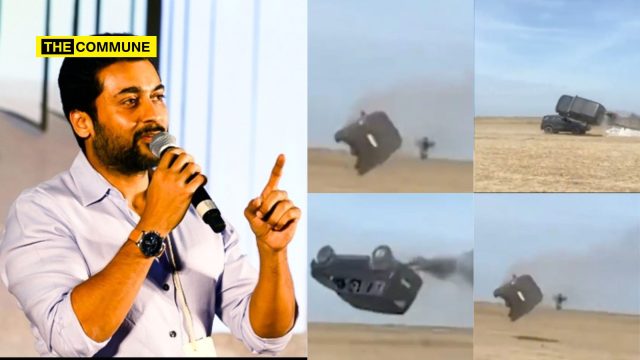
Does DMK Stooge Actor Suriya Contribute To Stuntmen Insurance? Here’s The Truth

suriya stuntmen insurance

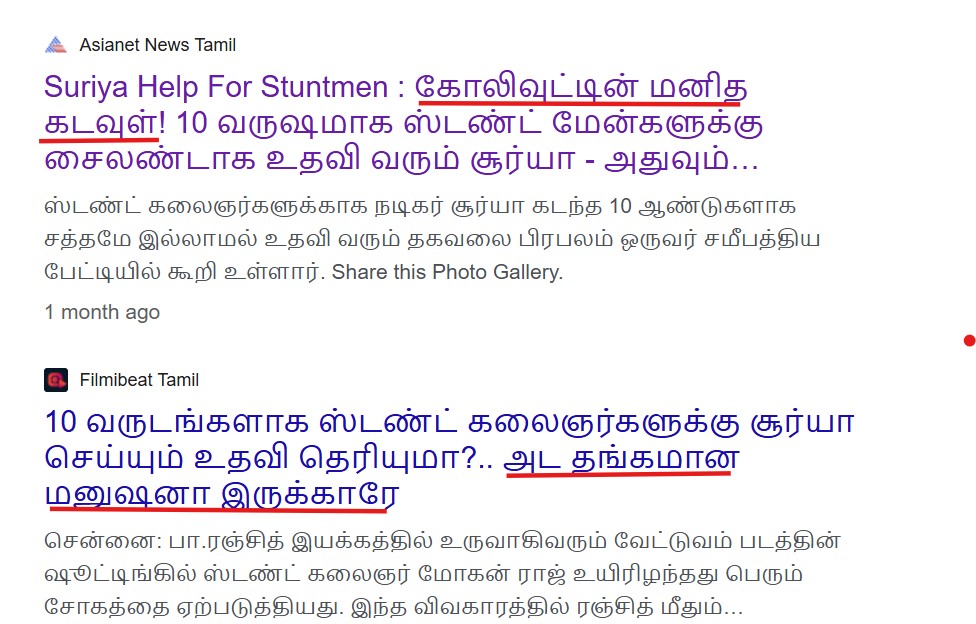
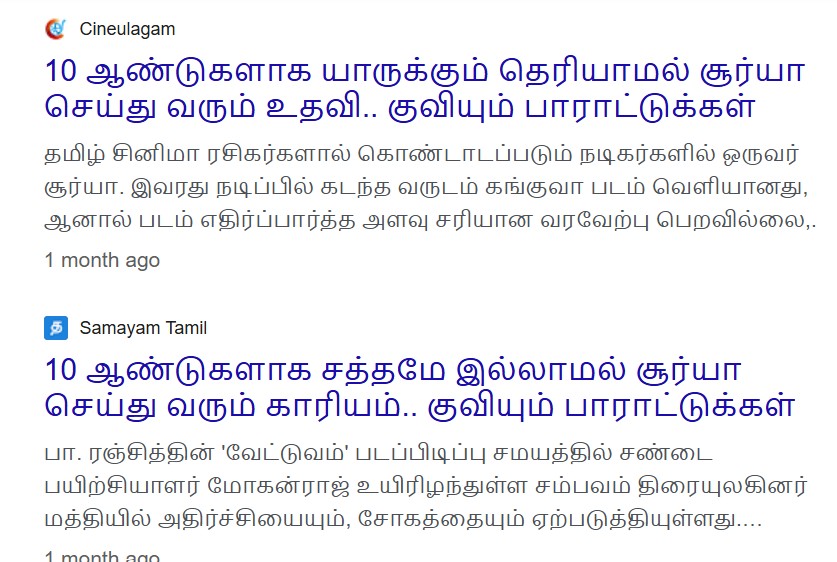
In the wake of stuntman Mohanraj’s tragic death during a fight scene, the conversation around mandatory insurance for stunt performers has resurfaced and with it, a sudden surge in praise for Tamil actor Suriya. Tamil media outlets and Dravidianist actor fans have been quick to portray him as a Kollywood savior of stuntmen, crediting him with silently funding insurance for years. But a closer look reveals the narrative might be more manufactured than sincere.


Veteran filmmaker and actor Chitra Lakshmanan recently addressed this very claim on his Q&A show on YouTube. When asked whether it was true that Suriya had been consistently paying insurance premiums for stunt artists, Lakshmanan bluntly refuted it, “The news that Suriya is continuously providing insurance for stunt artists is not true. He used to give the Stunt Artists’ Union 2 lakh rupees annually until a few years ago, but it is not known if he is still giving that 2 lakh rupees.”

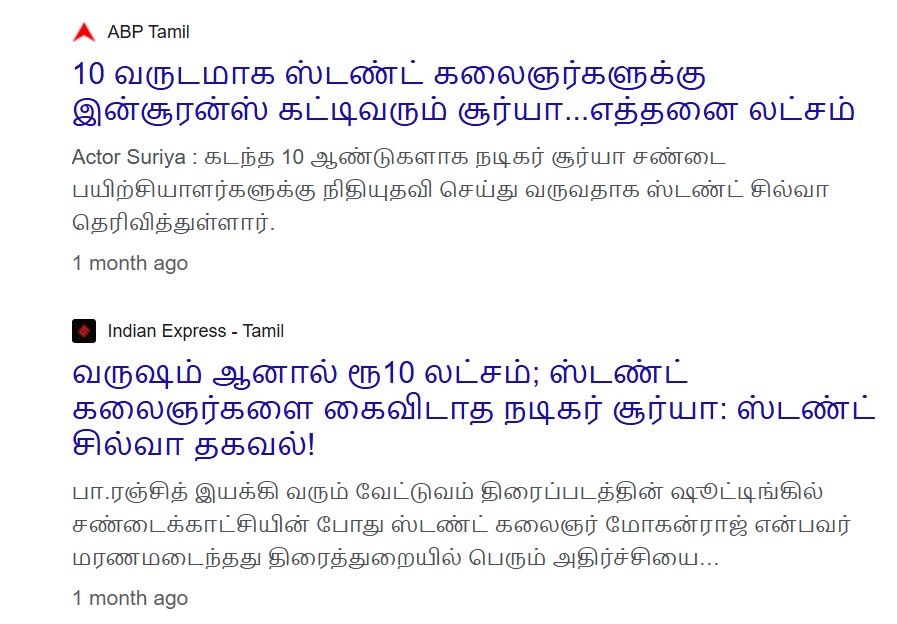
Adding to the confusion, popular stunt choreographer Stunt Silva gave a contrasting account in an interview with Behindwoods. He claimed that Suriya, through his Agaram Foundation, has been arranging insurance for stunt performers for over a decade, contributing ₹10 lakh per year and praised Suriya for not publicizing this act, portraying it as proof of his character.

The conflicting reports raise an obvious question: What is the truth?

More importantly, why this sudden media blitz around Suriya? The praise from Dravidianist circles, especially DMK first family-owned outlets like Sun News seems well-timed to ignore. There have already been whispers that the DMK is grooming Suriya or someone from his family for a future political role, potentially even in the upcoming elections.

Whether or not this is the case, one thing is clear: praise, especially in emotionally charged moments like a stuntman’s death, must be grounded in verifiable fact — not crafted narratives. If Suriya has contributed meaningfully to the welfare of stunt performers, let it be acknowledged. But hype without transparency only invites skepticism and rightly so.

Subscribe to our channels on TelegramWhatsApp, and Instagram and get the best stories of the day delivered to you personally.

India, China Agree On Five-Point Framework To Advance Boundary Resolution

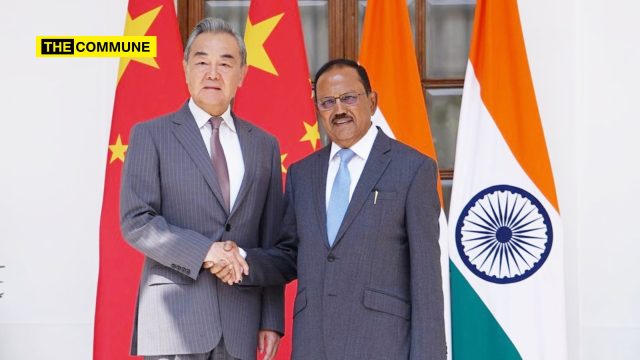
In a significant diplomatic engagement aimed at stabilising bilateral ties and advancing the long-pending boundary resolution, National Security Advisor Ajit Doval hosted Chinese Foreign Minister Wang Yi for the 24th round of the Special Representatives’ dialogue on the India-China Boundary Question.

The talks, held on 19 August, followed Wang Yi’s two-day official visit to India, during which he also met External Affairs Minister S. Jaishankar and Prime Minister Narendra Modi. The dialogue marked a renewed phase of engagement between the two Asian powers, building on the leader-level consensus reached during the Kazan summit in October 2024.

Both sides acknowledged that peace and tranquillity have largely prevailed along the Line of Actual Control (LAC) since the 23rd round of talks, and emphasised the need to sustain this momentum to foster broader bilateral cooperation. National Security Advisor Doval and Wang Yi agreed on a five-point framework to deepen coordination and manage the complex boundary issue. First, they reaffirmed the importance of viewing the boundary question through a political lens, aiming for a fair and mutually acceptable settlement in line with the 2005 Agreement on Political Parameters and Guiding Principles.

Second, an Expert Group will be established under the Working Mechanism for Consultation and Coordination (WMCC) to explore “Early Harvest” opportunities in boundary delimitation – targeting areas where consensus may be more readily achievable. Third, a dedicated Working Group will be formed under the WMCC to enhance border management protocols and ensure sustained peace along the frontier. Fourth, the two sides agreed to expand the General Level Mechanism (GLM) beyond the Western Sector to include the Eastern and Middle Sectors, with an early meeting planned for the Western Sector to review progress and operationalise new measures.

Finally, both nations committed to using existing diplomatic and military-level mechanisms to initiate discussions on de-escalation, beginning with the formulation of guiding principles and modalities. The talks were described as candid and constructive, reflecting a shared intent to move beyond past setbacks including the Galwan Valley clashes of 2020 and rebuild trust through structured dialogue. The next round of Special Representatives’ talks is expected to be held in China in 2026.

-IANS

Subscribe to our channels on TelegramWhatsApp, and Instagram and get the best stories of the day delivered to you personally.

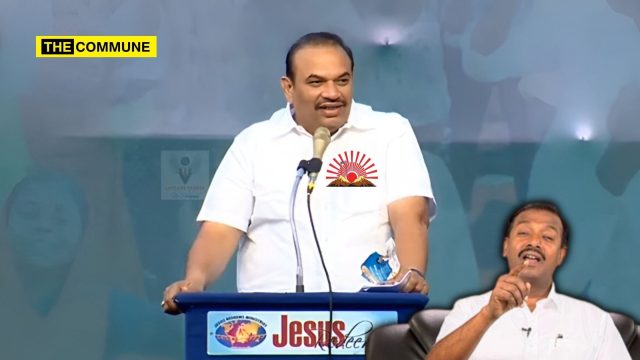
DMK MLA Inigo Irudayaraj Uses Fake Data To Peddle Victimhood And Instigate Christians At Evangelical Event Organized By Pastor Mohan C Lazarus Who Spewed Venom Against Hindus

In a calculated attempt to consolidate the Christian minority vote bank, DMK MLA from Trichy, Inigo S Irudayaraj, delivered a speech laced with misleading data, selective outrage, and outright falsehoods at a “Youth Uprising Camp” organized by controversial pastor Mohan C Lazarus well known for his anti-Hindu rhetoric and alleged mass conversion operations.

Addressing the gathering, Irudayaraj began by painting a bleak and exaggerated picture of Christian persecution in India, asserting that minorities “have no security” and are “under attack.” He cited census figures to downplay concerns over religious conversions, claiming that Christians made up 2.3% of the population in both 1951 and 2011. “How can 2.3% convert the 97% majority?” he scoffed, conveniently ignoring numerous documented cases of coerced or incentivized conversions, which are criminalized under Indian law.

He said, “In this country, especially in democratic India, we do not have security. The situation of our votes being divided persists. There is a belief among fascist forces that Christian people can be suppressed and oppressed, and today, these forces have attacked us. For example, in 1951, India’s population was only 36 crores, but according to the 2011 census, it was 146 crores. In 1951, Christians constituted only 2.3% of the population in this country. Even in 2011, with 146 crore people, Christians still remained at 2.3%: not even one percent increase. However, ‘Sanghis’ call us a ‘conversion group’. They don’t stop there. How can we, who are 2.3%, convert them, who are 97%? Religious conversion is not about asking people to join our religion. It is only when they change their minds and accept Jesus Christ, the Son of God, that they can come here. They cannot just come easily. But what do they say? They always make the same accusation. Furthermore, converting religion is an individual’s personal right, Who has given this to us? by the Indian Constitution. Article 25 B of the Constitution states that anyone can change their religion whenever they want. Yet, ‘Sanghis’ keep calling us a ‘conversion group’.”

More alarmingly, Irudayaraj falsely claimed that the Unlawful Activities (Prevention) Act (UAPA) a law designed to counter terrorism was being weaponized against Christians in BJP-ruled states. “Today, across India, how are we being suppressed and oppressed? the BJP rules in all states from Arunachal Pradesh to Uttar Pradesh. In all these states, severe laws like the anti-conversion law have been imposed. Moreover, they are imposing the UAPA (Unlawful Activities (Prevention) Act), which is meant for terrorists and those acting against the nation, on us. Please do not forget this. They consider us terrorists, alleging that we are converting people. Based on this, there have been numerous violent incidents orchestrated by other religious fundamentalist gangs. Recently, in Maharashtra, Schaefer Javin Jacob and Stephen Vijay Kadam from California, USA, were arrested under the same law on false charges of attempting religious conversion in Maharashtra state. As you all know, a while ago, two sisters were arrested in Chhattisgarh. For what? For allegedly converting people. The whole nation rose up, and everyone fought against it. As a result, they were released a week later. Many Christians like them have been arrested and imprisoned without a fair trial. Do not forget this. Christians are being discriminated against in education and employment opportunities. Christian churches, homes, and commercial complexes are being attacked.” 

What Is The Truth?

Contrary to Irudayaraj’s claims, the American nationals in Maharashtra were booked under the Foreigners Act and Bharatiya Nyaya Sanhita, and the nuns in Chhattisgarh were charged under the Freedom of Religion Act, 1968 a state-specific anti-conversion law. No UAPA was invoked. While religious freedom is equal to all, but forced or fraudulent conversions violate constitutional safeguards and are subject to state-level anti-conversion laws – laws that have been upheld in various courts.

Still, he pressed on with his fearmongering, stating that Christian churches and homes were under constant threat and that Christian individuals were being routinely imprisoned without fair trials again without any verifiable evidence.

In one of his most inflammatory claims, Irudayaraj declared, “On average, two Christians are attacked in this country every day. This is a situation where an average of two Christians is attacked daily. For such a situation, we should truly pray and leave it to the judgment of Jesus Christ, the Son of God. Today, in the BJP-ruled state of Gujarat, 6,500 Christian women have been victims of sexual assault incidents. If a complaint is filed about this, what should happen? They should be arrested, and action should be taken. But instead, the transport police in Gujarat have put up posters saying, ‘Stay home to avoid sexual assault’. What kind of situation is this? They’ve put up posters telling people not to come out and to stay indoors.” 

This figure appears to be a twisted version of a discredited AAP claim, which referred to all women, not Christian women specifically. According to the NCRB 2022 data, Gujarat reported 610 rape complaints, not 6,500 as Irudayaraj claimed.

To add to his list of falsehoods, the DMK MLA also criticized the central government for scrapping the Maulana Azad National Fellowship (MANF), calling it a direct attack on educational opportunities for minorities. However, the Union Government clarified that scholarships for SCs, OBCs, and minorities continue under broader UGC and CSIR fellowship schemes. The MANF was discontinued due to redundancy and overlap, not communal bias.

This pattern of half-truths and distortions seems aimed at deliberately manufacturing a sense of victimhood among Christians not to defend their rights, but to provoke distrust, deepen polarization, and serve the DMK’s electoral strategy.

Irudayaraj’s speech is not just another case of political rhetoric it represents a dangerous cocktail of misinformation, communal manipulation, and irresponsible politicking. At a time when India needs unity and facts, this kind of targeted propaganda only fans the flames of division.

Subscribe to our channels on TelegramWhatsApp, and Instagram and get the best stories of the day delivered to you personally.

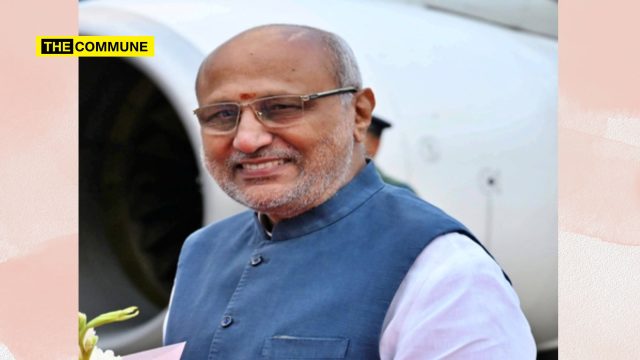
NDA Vice Presidential Candidate CP Radhakrishnan To File Nomination On 20 August

cp radhakrishnan tiruppur bjp rss

The National Democratic Alliance (NDA) candidate for the Vice Presidential election, CP Radhakrishnan, is set to file his nomination on 20 August 2025 at 11 a.m. Prime Minister Narendra Modi will be the lead proposer in the first set of nomination papers.

The nomination will be filed in four sets, each carrying the signatures of 20 proposers and 20 seconders. While the first set will have PM Modi’s signature as the chief proposer, the remaining sets will include signatures from Union ministers and senior NDA leaders, reflecting a broad consensus across the alliance. Around 160 members of the NDA, including ministers and MPs, are expected to be present during the filing of the nomination papers at Parliament House.

The decision to nominate CP Radhakrishnan was taken unanimously during a key meeting of NDA floor leaders held at the residence of Union Minister Pralhad Joshi. Senior NDA ally and Union Minister Jitan Ram Manjhi confirmed the unanimous support, stating that all leaders present pledged their full backing for Radhakrishnan’s candidature. Earlier on Sunday, Prime Minister Modi lauded CP Radhakrishnan’s contributions in public life, describing him as a leader with “humility, intellect, and grassroots connect.”

In a message posted on X, PM Modi said, “In his long years in public life, Thiru CP Radhakrishnan Ji has distinguished himself with his dedication, humility, and intellect. He has always focused on community service and empowering the marginalised. I am glad that the NDA family has decided to nominate him as the Vice-Presidential candidate of our alliance.” Radhakrishnan, a senior BJP leader and current Governor of Meghalaya, has had an extensive political and administrative career. He has served as a Member of Parliament from Tamil Nadu, and is known for his legislative acumen and commitment to social empowerment. The Vice Presidential election is scheduled to be held next month, and with the NDA’s numerical advantage in Parliament, Radhakrishnan is widely expected to win.

-IANS

Subscribe to our channels on TelegramWhatsApp, and Instagram and get the best stories of the day delivered to you personally.