Home Blog Page 1622

Teaching false history: Kerala textbook names Abu al-Qasim Al-Zahwari as ‘father of surgery’
Yet another instance of school textbooks teaching students false history has come to light.

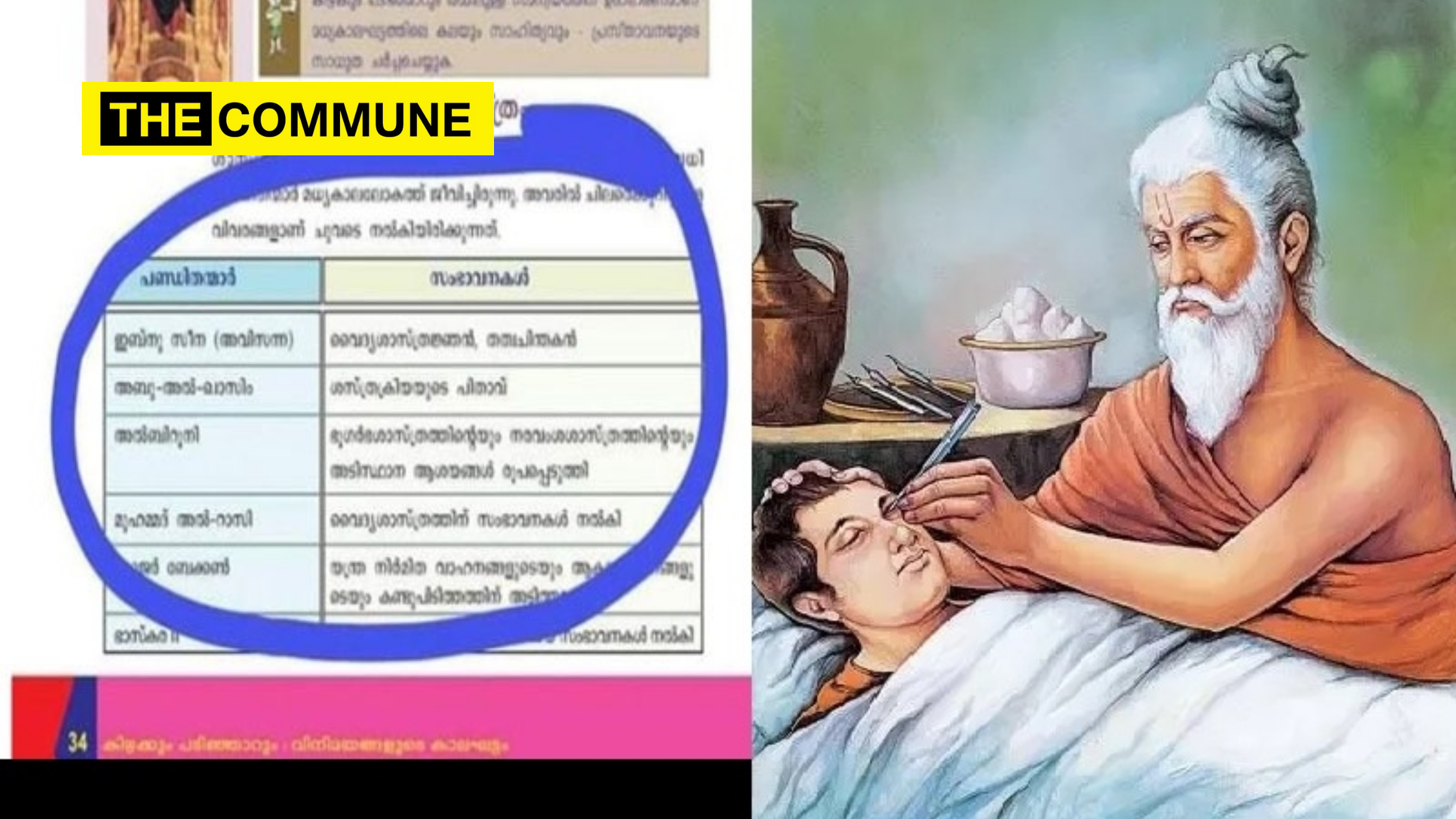
According to the Kerala state board class 9 social science textbook, Abu al-Qasim Al-Zahwari is the ‘father of surgery’. This goes against the widely-known fact that the Indian physician Sushruta (c. 8th century BCE) is known to have performed surgeries and detailed several surgical techniques in his text, the Sushruta-samhita. Al-Zahwari is said to have lived some time in the 10th century CE.

The controversial content is printed on page 34 of the textbook, under the title “Great people and their contributions”. This has generated an immense controversy in Kerala, where people are questioning the state board for blatantly ignoring the fact that Sushruta is widely regarded as the ‘father of surgery’. People allege that textbooks that teach such errors to students are a serious threat to the India’s civilisational fabric, as students who imbibe these errors are deprived of their peoples’ real history.

This news comes after reports of the NCERT admitted that it was unable to back up the highly questionable claims made in its class 12 history textbook. The Parliamentary Standing Committee on Education too had recently convened to  discuss a major overhaul of the NCERT syllabus.

The Sushruta Samhita, in its extant form, has 184 chapters contains descriptions of 1,120 illnesses, 700 medicinal plants, 64 preparations from mineral sources and 57 preparations based on animal sources. The text discusses surgical techniques of making incisions, probing, extraction of foreign bodies, alkali and thermal cauterization, tooth extraction, excisions, and trocars for draining abscess, draining hydrocele and ascitic fluid, removal of the prostate gland, urethral stricture dilatation, vesicolithotomy, hernia surgery, caesarian section, management of haemorrhoids, fistulae, laparotomy and management of intestinal obstruction, perforated intestines and accidental perforation of the abdomen with protrusion of omentum and the principles of fracture management, viz., traction, manipulation, apposition and stabilization including some measures of rehabilitation and fitting of prosthetic. It enumerates six types of dislocations, twelve varieties of fractures, and classification of the bones and their reaction to the injuries, and gives a classification of eye diseases including cataract surgery.


“Poor fact-checking skills”, Russian media mocks Nidhi Razdan for getting conned

News of Indian journalist Nidhi Razdan getting scammed into believing that there was a job offer from Harvard university has found its way into Russian media. The Twitter handle of state-controlled international TV network RT pointed out that getting tricked by a fake job offer amounts to “poor fact-checking skills”.

“Those are some poor fact-checking skills”, RT tweeted while sharing a report about the incident in the same tweet.

Joshua Benton, the former Director of the Nieman Journalism Lab at Harvard University, stated that the institution “has no school of journalism, no department of journalism, and no professors of journalism”.

Social media users have pointed out that the Nidhi Razdan had prematurely declared herself as a faculty at Harvard, before starting the non-existent job at the prestigious American  university.

https://twitter.com/indiantweeter/status/1350033024373587969

Modi Govt task force recommends increasing women’s marriage age to 21

The task force constituted by the Narendra Modi government in 2020 to look into the proposal of increasing women’s marriageable age from 18 to 21 has submitted its report recommending the same.

The task force, led by former Samata Party chief Jaya Jaitly and NITI Aayog Member (Health) V.K. Paul, submitted its report to the Prime Minister’s Office and the Ministry of Women and Child Development (WCD) last month. This means that the task force has recommended making changes to statutes like the Prohibition of Child Marriage Act, 2006 to increase the definition of a child to 21 in case of girl children.

The Child Marriage Restraint Act was passed in 1929 to that fixed the age of marriage to 14 for women and 16 for men. The law was later amended to raise the age of marriage for women to 18 and for men to 21.

Speaking on the occasion of Independence Day last year, Prime Minister Narendra Modi said that a committee has been set up to look into raising the age of marriage for young women to prevent them from suffering from malnutrition. A team of 10 experts, led by former Samata Party leader Jaya Jaitley and a member of the NITI Aaayog, VK Paul, examined the issue of raising the age of marriage for women.

If the legal amendment to raise the age of marriage for women comes into force, the number of deaths due to malnutrition and maternal pregnancy will decrease. More and more women are joining colleges and skill development training centers. It is hoped that this legal amendment will help women gain economic strength.

European countries can now relish worms in their meals as EU approves world’s first insect food

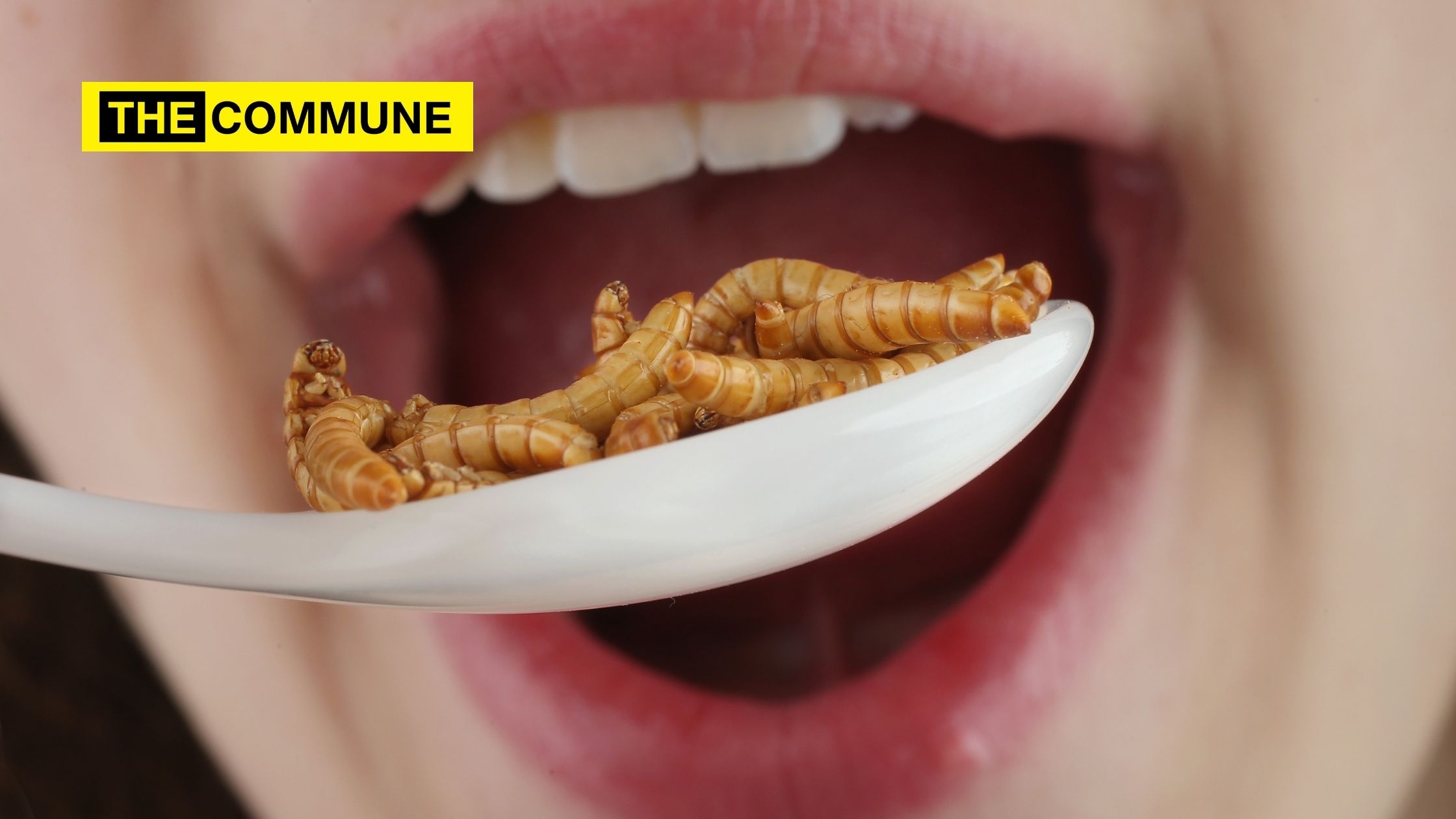
The European Union has approved mealworms as a legitimate form of food that could be consumed, making it the world’s first ever form of insects to be legally considered as food. Mealworms can now be consumed whole or as powder in pasta. Yellow mealworm finger foods, smoothies, biscuits, pasta and burgers could soon be mass produced across Europe. However, the EU Commission is yet to endorse the decision.

The idea of using mealworms as food is yet to catch up globally, since the ‘eww’ factor is still prevalent. But, this has the potential to catch on and give competition to the Medittereanean diet and the France’s ‘bon gout’. This might, however, cause an allergic reaction to those who have a shellfish allergy and such. They are likely to suffer a reaction to the Tenebrio molitor larvae, whether eaten in powder form as part of a recipe or as a crunchy snack, perhaps dipped in chocolate.

Fed even on bio-waste, the insects used significantly less water than livestock, and could be farmed more easily, said the FAO. “For example, pigs produce 10-100 times more greenhouse gases per kilogram (pound) than mealworms,” the UN agency said.

The insect’s main components are protein, fat and fibre, offering a potentially sustainable and low carbon-emission source of food for the future. When dried, the maggot-like insect is said to taste a lot like peanuts.

Underwater research project to determine the origins of Ram Setu approved by ASI

The Archaeological Survey of India has given the green signal to an underwater exploration project that is set to determine when and how the Ram Setu came about in the first place. If it proves to be successful, it might actually help in determination of how old the Ramayana period actually was. It could also help uncover a lot of historical questions that have been revolving around it for several decades.

This is in response to a proposal by the CSIR and the National Institute of Oceanography (NIO) to explore the Ram Setu for the purpose of research. The NIO’s exploratory vessels, Sindhu Sadhana or Sindhu Sankalp will be used in the process of collection of samples that will help in ascertaining the age of the setu (bridge).

The radiometric technique will be used to determine the age of the 48-km-long bridge. The project assumes both religious and political significance.

The Ram Setu is a chain of shoals between Pamban Island (also known as Rameswaram Island) in Tamil Nadu of India and Mannar Island in Sri Lanka. According to past geological evidence, the structure is a former land connection between India and Sri Lanka. According to Ramayana, a ‘vanar sena’ had originally built the bridge over the ocean to help lord Ram cross over to Sri Lanka to rescue his wife Sita.

The Congress-led UPA government had had approved the Sethusamudram Shipping Canal Project  that will cut through th Ram Setu. When opposition protested against the move and petitioned the Supreme Court, it filed an affidavit arguing that Ram Setu which is believed to have been built by Lord Ram, lacked scientific and historical veracity. The Modi government scrapped the project and decided to leave the Ram Setu untouched.

Scientists and geologists have argued that the Ram Setu is man-made and not natural. Carbon dating of beaches near Dhanushkodi and Mannar Island roughly matches the dates of Ramayana.

Tamil Maanila Congress Vice President Gnanadesikan passes away at 71

BS Gnanadesikan, a senior leader of the Tamil Maanila Congress Party and former MP, passed away in Chennai aged 71 due to ill health. He was elected twice as a State MP from Tamil Nadu from 2001 to 2013. He was the leader of the Tamil Nadu Congress Party from 2011 to 2014.

Gnanadesikan belonged to a family of lawyers and hailed from Vathalakundu. He went on to become a lawyer himself after graduating from Madras Law College. He worked as a junior to N.C. Raghavachari, the advocate of late Chief Minister M.G. Ramachandran.

He was a loyalist of late Congress leader GK Moopanar and later supported Moopanar’s son GK Vasan. Gnanadesikan was elected to Rajya Sabha from Tamil Nadu twice in 2001 and 2007. When GK Vasan started the Tamil Maanila Congress Party, he merged both the TNCC and the TMC and served as its President. He served as the President of TNCC for two terms between 2009 and 2014.

Gnanadesikan was elected to the Rajya Sabha from Tamil Nadu both in 2001 and 2007. He was a member of many parliamentary committees on various departments – defence, finance, labour, water resources, fertilizers and chemicals and home affairs.

BS Gnanadesikan, who was suffering from poor health, was admitted to the Apollo Hospital in Chennai on November 11. Gnanadesikan passed away yesterday after suffering a severe cardiac arrest. Condolences from across parties have been pouring in.

HDFC removes video hailing notorious pastor as ‘Neighbourhood Hero’

Following The Commune’s story based on the expose by Legal Rights Protection Forum (LRPF), HDFC Bank has removed the video in which it hailed the notorious Christian pastor Praveen Chakravarthy as a ‘Neighbourhood Hero’.

In a shocking revelation, Praveen Chakravarthy, the notorious Christian pastor who had boasted of kicking and defacing idols of Hindu Gods and creating ‘Christ Villages’ was declared as one of the ‘Neighbourhood Heroes’ by HDFC Bank.

Pastor Praveen Chakravarthy was arrested by the Andhra Pradesh Crime Investigation Department (CID) on Wednesday (13th January, 2021) for promoting enmity between different religious groups and committing offence in places of worship. He has been charged under various 153 A, 153 B (1) (c), 505 (2), 295 A, 124 A and 115 of the Indian Penal Code and has multiple FIRs registered against him.

HDFC Bank in August 2020 had posted a video in its YouTube channel in which it hailed Pastor Praveen as a ‘Neighbourhood Hero’.

According to HDFC Bank, ‘Our Neighbourhood Heroes’ is an ‘initiative that thanks and celebrates heroes from across the country, who’ve gone above and beyond to help those in need during these difficult times’.

“A moment of courage is all it takes, to make the normal, heroic and that is exactly what you’ve done!”, the video put out by HDFC Bank said introducing Pastor Praveen.

The video also said that when underprivileged residents were struggling with ‘Volunteering Service & Time’ and needed help, Pastor Praveen stepped up.

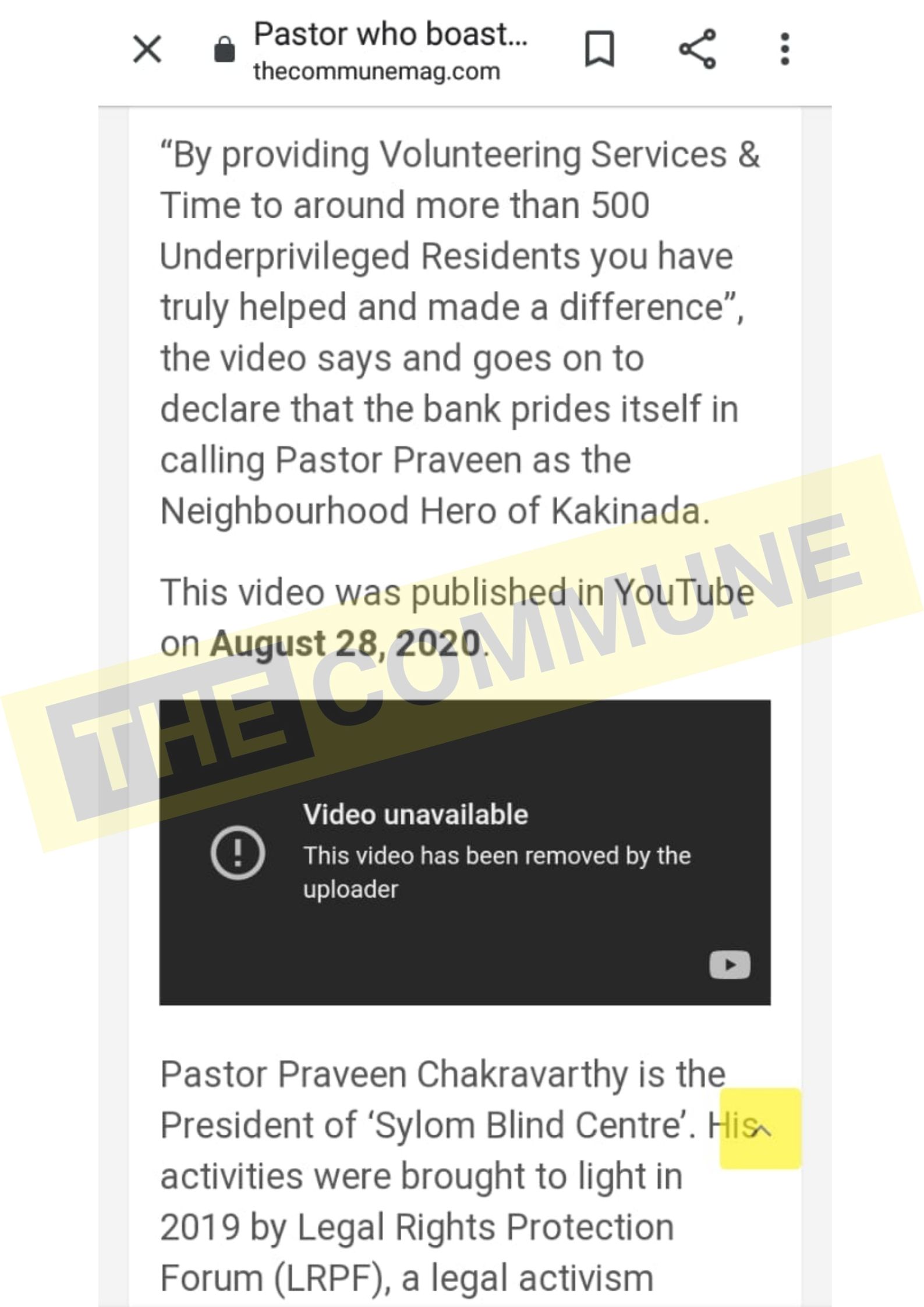
“By providing Volunteering Services & Time to around more than 500 Underprivileged Residents you have truly helped and made a difference”, the video said and went on to declare that the bank prides itself in calling Pastor Praveen as the Neighbourhood Hero of Kakinada.

This video which was published in YouTube on August 28, 2020, several months after information about pastor’s rabid religious hatred were put out in public, has now been removed.

Pastor Praveen Chakravarthy is the President of ‘Sylom Blind Centre’. His activities were brought to light in 2019 by Legal Rights Protection Forum (LRPF), a legal activism collective. LRPF had lodged a complaint with the Union Home Ministry in December 2019 against ‘Sylom Blind Center’and its President Praveen Chakravarthy for indulging in rampant rabid proselytization.

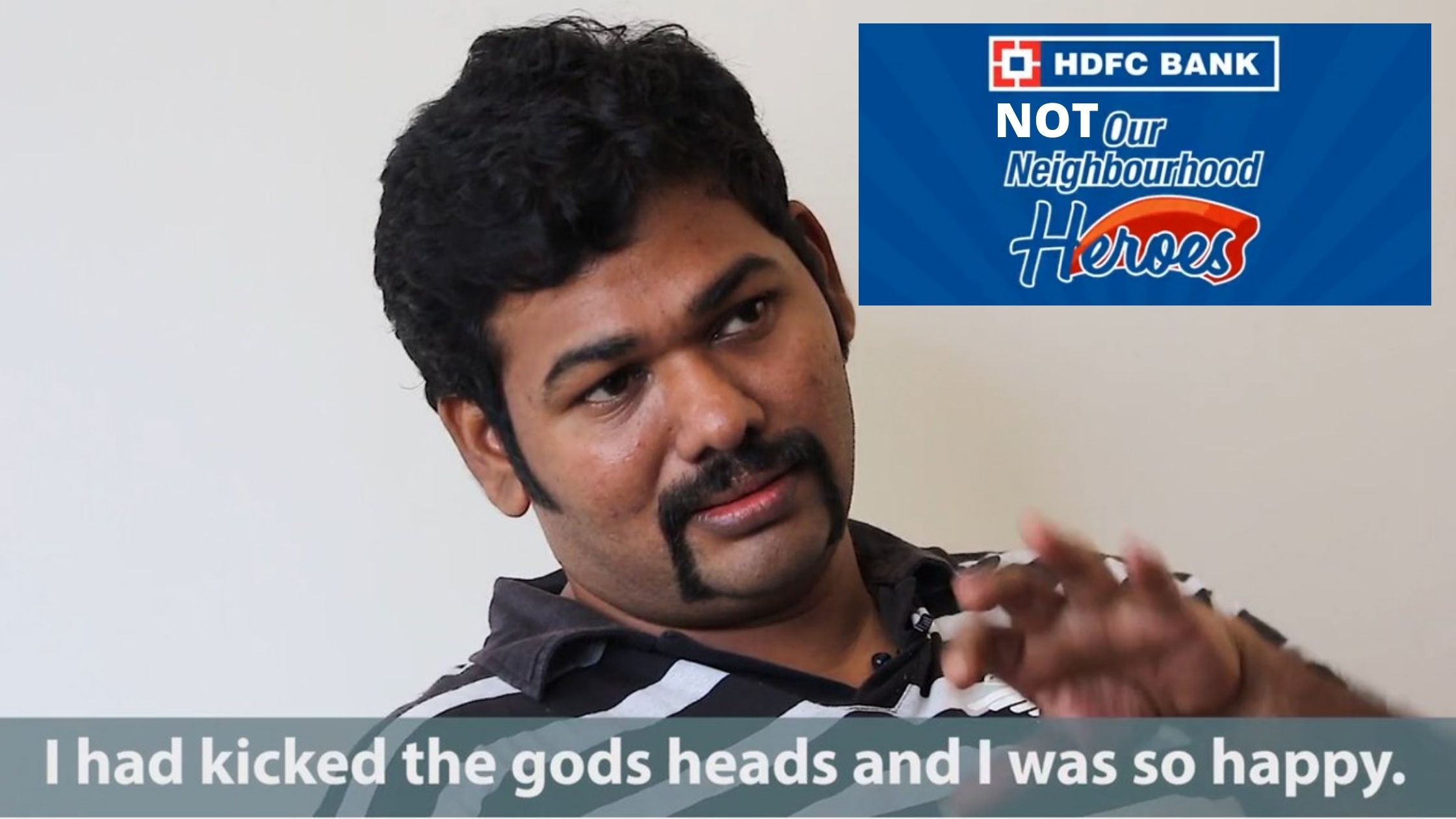
In a video tweeted by LRPF Pastor Praveen Chakravarthy can be heard saying with impunity in Telugu that he hit the ‘stone God’ and trees [sacred trees like Neem, Peepal, etc that are venerated by village people] with his leg. The video was first made available in a YouTube channel called ‘Bangalore go-sipps’. This video was published on December 11, 2019.

Chakravarty in the video can be seen describing how he converts a village to Christianity. He says that first a pastor would come and stay in the village to teach the Bible. He says that the village becomes a “Christ village” after everyone has accepted Christ as their saviour and adds that ‘stone gods’ and ‘trees’ are kicked as a finality.

“So there are many cases which (sic) I have kicked the God’s heads and I was so happy”, he says in that video.


Make Tamil Nadu COVID-free state, Sadhguru urges people at Mattu Pongal celebrations

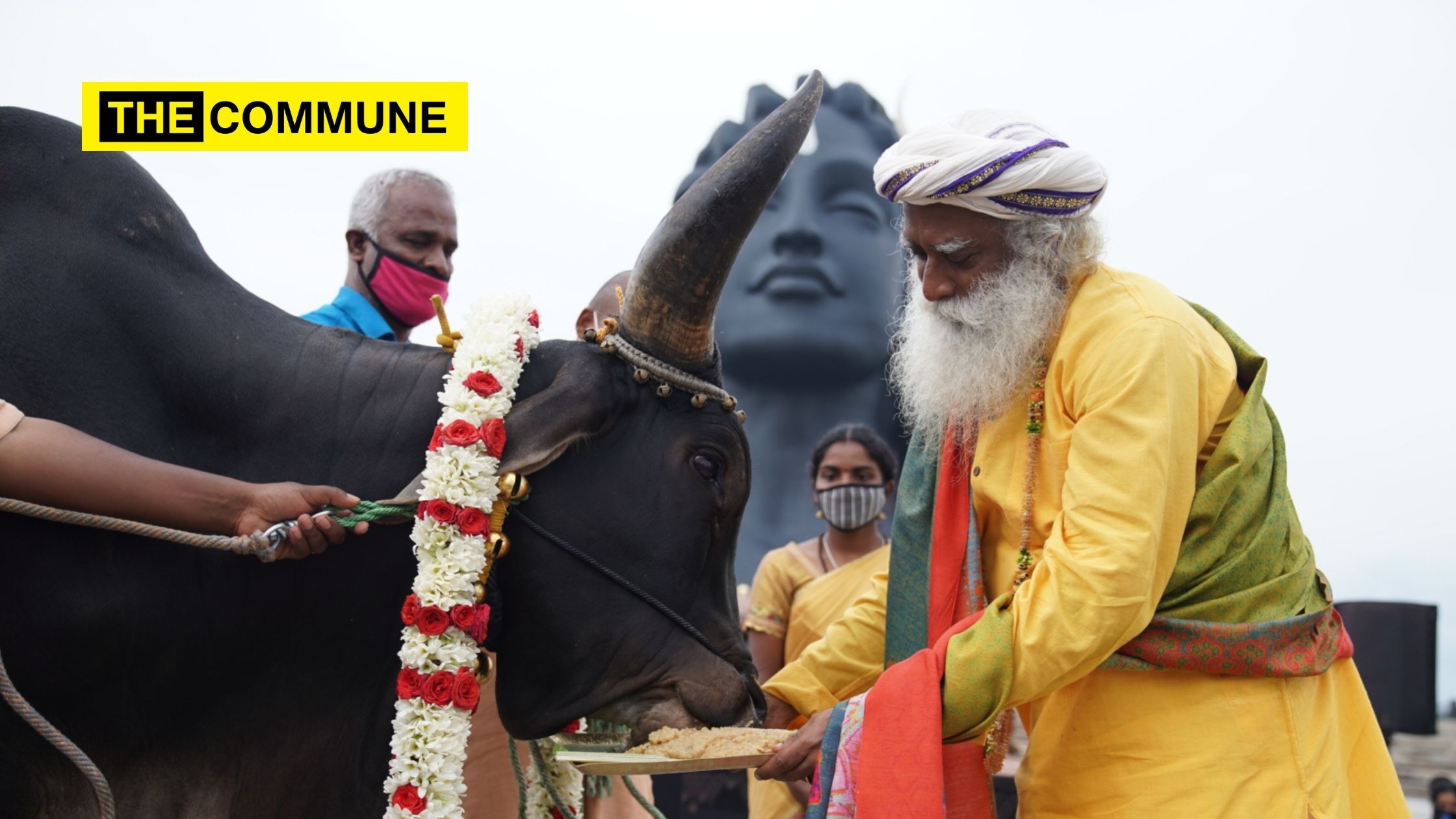
In his first public Satsang at Isha Yoga Center in more than a year, Sadhguru urged people to make Tamil Nadu’s Covid-free by continuing to follow social protocols and acting responsibly. Addressing the gathering in Tamil following cultural performances and traditional Pongal festivities at  Isha’s famed Adiyogi, Sadhguru spoke about the significance of the farmer’s festival and said it was time to bring back natural farming practices and traditional variety of crops.

“Rice was once considered Amritam but now doctors are saying it is equivalent to poison,” Sadhguru told the large number of people including farmers and people from surrounding villages who participated in the Mattu Pongal celebrations at the Yoga Center .

He said that earlier, we used to have 2000 varieties of rice, which has now reduced to just 4 or 5 varieties, which don’t contain much nutrients, because the soil doesn’t have the necessary nutrition. Sadhguru added that putting back organic content in the soil was critical to make farming sustainable and the produce nutritious. On his recent visit to Isha Natural Farm which grows one of the most rich and nutritious rice variety – black rice or kavuni – Sadhguru said he found the naturally grown rice stalks exceeded 6 feet in height. He urged farmers to adopt the natural farming model which yields superior quality and quantity.

Sadhguru also spoke about the role of Yoga in enhancing physical and mental wellbeing and called on the people to commit to learning and teaching it to others. He spoke specifically about Surya Shakti that leverages the energy of the Sun to enhance physical and mental health, strengthening the heart and building immunity.

“We have about 7000 teachers for offer this practice to our people. But we need many more. All of you can learn this practice, become physically fit and offer this to at least 100 more people,” he said. Sadhguru revealed that though 4200 people lived at the Isha Yoga Center, not one of them contracted the virus during the entire year.

Various cattle breeds including Kangayam, Ongole, Kongrij, Umbalacheri and Gir, bred in Isha were on display at the venue. The gracefully decorated cattle sported turmeric, sandalwood paste and saffron and seemed to enjoy the attention of visitors.

Indian sailors stuck in China for months; return delayed yet again

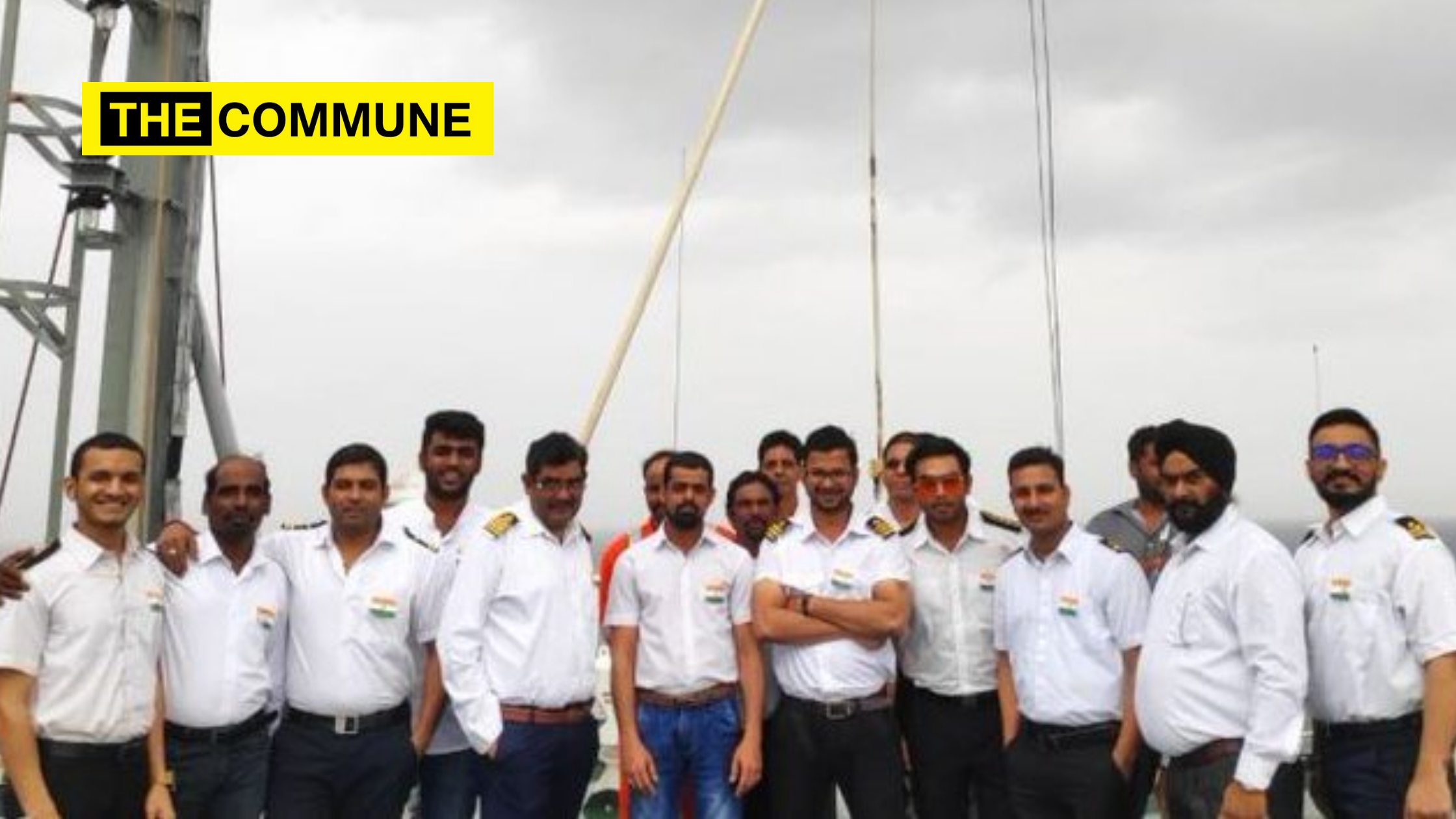
The return of the 23 Indian sailors who are stranded in China has been delayed yet again. The Indian crew members of the cargo ship MV Jag Anand were supposed to arrive in Japan on 14 January. However, this has been put off to 18 January.

Union Minister of State for Ports, Shipping & Waterways Mansukh Mandaviya had, on January 9, announced that the Indian mariners would return via Japan on January 14.


The sailors were expected to reach Japan on January 14 and they were to be flown back to India, subject to the COVID-19 protocols. The sailors have been stuck in China for seven months. In December, the Indian External Affairs Ministry had said that two cargo vessels with a total of 39 Indians on board have been on anchorage in Chinese waters as they were not allowed to unload their cargo.

On January 10, India had returned a Chinese soldier who had strayed into the Indian side of the Line of Actual Control. He was apprehended near the south bank of Pangong Tso, a mountain lake along the de facto frontier. Pangong Tso lake is the site of the clashes that took place between India and China in May 2020, where soldiers exchanged blows and hurled rocks at one another along the banks of the lake.

TN becomes 11th state to complete One Nation One Ration Card system reform

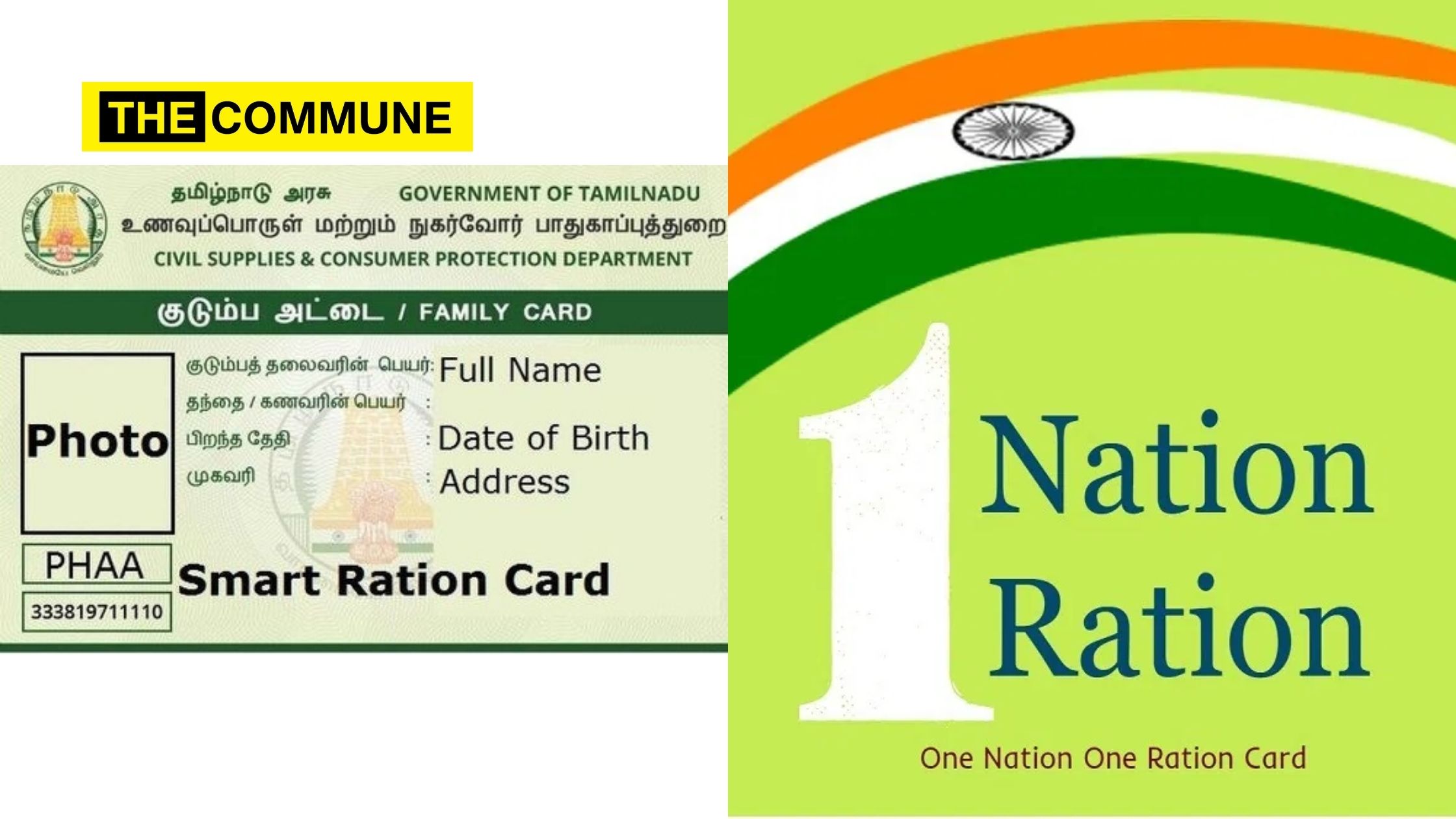
Tamil Nadu has become the 11th State in the country to successfully undertake “One Nation One Ration Card system” reform stipulated by the Department of Expenditure, Ministry of Finance. Thus, the State has become eligible to mobilise additional financial resources of ₹4,813 crore through Open Market Borrowings. Permission for the same was issued by the Department of Expenditure.

Tamil Nadu has now joined 10 other States namely, Andhra Pradesh, Goa, Gujarat, Haryana, Karnataka, Kerala, Madhya Pradesh, Telangana, Tripura and Uttar Pradesh, who have completed this reform. On completion of One Nation One Ration Card system reform, these 11 States have been granted additional borrowing permission of ₹30,709 crore by the Department of Expenditure. State wise amount of the additional borrowing permitted is as under:

Sl.No.StateAmount (₹ in crore)
1.Andhra Pradesh2,525
2.Goa223
3.Gujarat4,352
4.Haryana2,146
5.Karnataka4,509
6.Kerala2,261
7.Madhya Pradesh2,373
8.Tamil Nadu4,813
9.Telangana2,508
10.Tripura148
11.Uttar Pradesh4,851

One Nation One Ration Card System is an important citizen centric reform. Its implementation ensures availability of ration to beneficiaries under National Food Security Act (NFSA) and other welfare schemes, especially the migrant workers and their families, at any Fair Price Shop (FPS) across the country.

The reform especially empowers the mirgatory population mostly labourers, daily wagers, urban poor like rag picker, street dwellers, temporary workers in organised and unorganised sectors, domestic workers etc, who frequently change their place of dwelling to be self reliant in food security. This technology driven reform enables the migrant beneficiaries to get their entitled quota of food grains from any electronic point of sale (e-PoS) enabled fair Price Shops of their choice anywhere in the country.

The reform also enables the States in better targeting of beneficiaries, elimination of bogus/ duplicate/ineligible card holders resulting in enhanced welfare and reduced leakage. Further, to ensure seamless inter-state portability of a ration card, Aadhar seeding of all ration cards as well as biometric authentication of beneficiaries through automation of all Fair Price Shops (FPSs) with installation of electronic point of sale (e-PoS) devices are essential. Therefore, additional borrowing limit of 0.25 percent of the Gross State Domestic Product (GSDP) is allowed to the States only on completion of both of the following actions:

(i)    Aadhar Seeding of all the ration cards and beneficiaries in the State

(ii)   Automation of all the FPSs in the State.

In view of the resource requirement to meet multiple challenges posed by the COVID-19 pandemic, the Government of India had on 17th May, 2020 enhanced the borrowing limit of the States by 2 percent of their GSDP. Half of this special dispensation i.e. 1 percent of GSDP was linked to undertaking citizen centric reforms by the States. The four citizen centric areas for reforms identified by the Department of Expenditure were (a) Implementation of One Nation One Ration Card System, (b) Ease of doing business reform, (c) Urban Local body/ utility reforms and (d) Power Sector reforms.

So far 11 States have implemented the One Nation One Ration Card System, 8 States have done ease of doing business reforms, and 4 States have done local body reforms. Total additional borrowing permission issued so far to the States who have done the aforesaid refoms stands at ₹­­­61,339 crore.

(Published from PIB)