Home Blog Page 151

Hindu Munnani Slams DMK Govt Case Against Shree TV Director Bala Gowthaman, Demands Action Against Islamist Preacher Ustad Pir Muhammad Sadiq
hindu munnani shree tv dmk

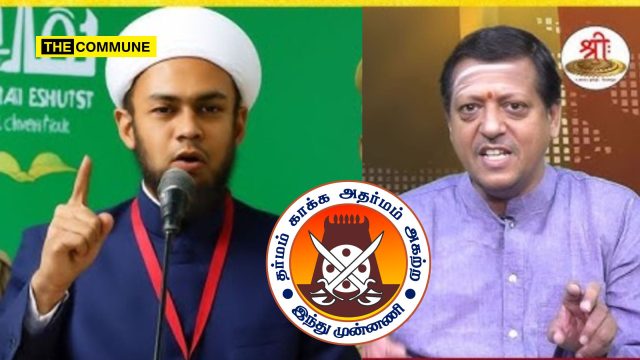
The Hindu Munnani has strongly denounced the filing of case against Shree TV director Bala Gowthaman, accusing the Tamil Nadu government of shielding extremist voices while targeting those who expose them. The controversy erupted after Gowthaman condemned a provocative speech delivered by Ustad Pir Muhammad Sadiq, a preacher from Theni, who allegedly called on Muslims to “invade India” and glorified terrorism.

In a statement, Hindu Munnani State President Kadeswara C. Subramaniam charged the DMK government with blatant vote-bank politics. He said, “While a Muslim is not charged for speaking of an invasion of India, a case is filed against the nationalist who condemned him – The DMK government’s approach. Terrorism that incites the destruction of India – Is the police a mute spectator?”

The organisation alleged that Sadiq’s inflammatory remarks, delivered during a Dawah Yatra organised by Muslim outfits including the Tamil Nadu Muslim Munnetra Kazhagam, directly incited communal hatred and disrupted public peace. Instead of initiating legal action against him, police booked Gowthaman on the basis of a complaint generated by a social media monitoring team.

Hindu Munnani criticised the move as one-sided and dangerous. “The police have ignored the Supreme Court’s directive to register suo motu cases against those who make hate-filled, anti-national statements. By protecting religious fanatics and targeting patriotic voices, the DMK is endangering national security,” the press release read.

The statement also recalled past terror-linked incidents in Tamil Nadu, including the Coimbatore blast carried out by a suicide bomber, warning that continued inaction against extremist speeches could pave the way for more terrorist activities. It accused the DMK of systematically filing cases against spiritual leaders, critical thinkers, and journalists, while deliberately ignoring radical elements for political gain.

Calling Bala Gowthaman a devout nationalist and a socially responsible speaker, Hindu Munnani condemned the charges against him as fabricated and politically motivated. The organisation also claimed intelligence inputs suggest terrorist training is ongoing in regions like Theni and Dindigul, yet the state government has chosen to clamp down on dissent instead of confronting such threats.

Hindu Munnani concluded its statement by demanding that the case against Gowthaman be withdrawn immediately and that legal proceedings be initiated against Ustad Pir Muhammad Sadiq for his hate-filled, anti-national rhetoric.

In his official press release, Kadeswara C. Subramaniam, State President of Hindu Munnani, remarked, “While a Muslim is not charged for speaking of an invasion of India, a case is filed against the nationalist who condemned him – The DMK government’s approach. Terrorism that incites the destruction of India – Is the police a mute spectator? – State President Kadeswara C. Subramaniam’s press statement. 

Ustad Pir Muhammad Sadiq from Theni district has spoken in support of terrorism, stating that Allah will not send Muslims who invade India to hell.

He has incited religious fanaticism in a way that disrupts public peace in Tamil Nadu. He participated in a Dawah Yatra organized by groups like the Tamil Nadu Muslim Munnetra Kazhagam, Sunnat Jamath Students Federation, and Sunnat Jamath Balakar Sangam. The Tamil Nadu government and police are being negligent by failing to conduct a thorough investigation into this person who speaks with such religious fanaticism and incites the nation’s destruction. We point out that such acts of violence and hate speech in the past have led to communal riots. The police lack the sense of responsibility to arrest this cruel-minded Ustad who, while living in our own country, spoke of invading it. The Tamil Nadu police have not respected the Supreme Court’s direction that the police should suo motu register cases and arrest those who engage in such violent, anti-national, and hate-inciting speech. Instead, the police have filed a case against Bala Gowthaman, a journalist, the head of the Veda Vignana Research Association, and a great patriot, who warned the Tamil people about the danger of the Ustad’s speech.

In a situation where no one came forward to file a complaint on their own, a complaint was lodged through a social media monitoring team’s sub-inspector, and a case was registered. This is one-sided. The fact that the police are acting favorably towards anti-nationals is a painful truth. Does the Ustad’s speech, which tells Muslims to wage war on India, not affect social peace? Is it not a threat to the nation?  But the police’s explanation that Bala Gowthaman’s statement—that the Ustad’s views are against our nation—affects social peace is a travesty.

In the four and a half years since the DMK came to power in Tamil Nadu, there has been a steady stream of terrorist-inciting speeches by Muslims. This brainwashes and prepares young Muslim men for terrorist acts. We should not forget the human bomb incident that happened in Coimbatore. The police must realize that failing to nip this danger in the bud will create opportunities for terrorist acts in the future. The public’s question is why the DMK government, which files false cases and imprisons those who even express opinions against the ruling party on social media, fails to take action against a terrorist-inciting speech. The Dravidian model’s policy seems to be to deliberately imprison spiritual speakers and good thinkers and journalists who do political criticism, while supporting those who express anti-national views.

Supporting those who speak of terrorism for minority vote-bank politics and remaining silent without taking legal action against those who destabilize the country’s security and sovereignty is an act of strangling the throat of democracy. The Tamil Nadu government is not prepared to take action against those who incite terrorism. If someone points this out and speaks about it, filing cases against them and harassing them is akin to a dictatorial rule. Speeches against God and our military personnel are steadily coming from the DMK and its allied party organizations. The ruling party is not prepared to take any action against them. Bala Gowthaman, the director of Shree TV, is a thinker who has been devoted to God and the nation since a young age. He is a great speaker who guides society on the right path. It is ridiculous that the police are seeking to arrest him by filing a false case.

News reports state that the intelligence department has received information that terrorists are training in areas like Theni and Dindigul. It is an act of uprooting the freedom of speech to choose to arrest Bala Gowthaman instead of monitoring and arresting these people. We once again remind the Tamil Nadu government and the police of the court order that the police should suo motu file cases against those who engage in hate speech. On behalf of the Hindu Munnani, we request that a case be filed against the Ustad who spoke with religious hatred and that the false case filed against Bala Gowthaman be withdrawn.” 

Subscribe to our channels on TelegramWhatsApp, and Instagram and get the best stories of the day delivered to you personally.

Maruti’s Gujarat Plant Showcases ‘Make In India, Make For The World’ Vision

make in india maruti

Calling it a true example of “Make in India, Make for the World,” Maruti Suzuki Chairman R.C. Bhargava on Tuesday said the company’s Gujarat plant is being developed into a global hub as Prime Minister Narendra Modi flagged off the first batch of the company’s electric SUV, ‘e-Vitara’, and inaugurated India’s first lithium-ion battery cell plant at Hansalpur here.

Speaking to reporters, Bhargava said the Prime Minister’s encouragement has infused fresh energy into the company. “Today is a truly proud and historic occasion for us as PM Modi has inaugurated two landmark steps for India’s future,” he said.

The Prime Minister flagged off the company’s first electric SUV, ‘e-Vitara’, and also inaugurated the lithium-ion battery plant at Hansalpur, Gujarat. The plant rolls out 7.5 lakh cars every year. He highlighted that the e-Vitara will not only serve Indian customers but will also be exported to more than 100 countries.

“The e-Vitara will not only serve Indian customers but also be exported worldwide. Gujarat will emerge as a global manufacturing hub under the Make in India, Make for the World vision,” Bhargava added. Maruti Suzuki’s Senior Executive Officer Rahul Bharti echoed the sentiment, calling the moment a major milestone in India’s journey toward self-reliance.

“We are building advanced battery electric vehicles for over 100 global markets. At the same time, our subsidiary TDSG Lithium-Ion Battery Gujarat Private Limited has achieved deep localisation — moving from battery packs to cells and now electrode manufacturing,” Bharti said. He added that watching young engineering students and skilled associates at the Hansalpur plant demonstrate their work before the Prime Minister was an emotional and proud moment for the company.

The company also confirmed that the e-Vitara will be manufactured exclusively in Gujarat as part of a single-location global production strategy. The SUV will be launched in several markets in the coming financial year, though pricing and exact launch timelines are yet to be disclosed.

-IANS

Subscribe to our channels on TelegramWhatsApp, and Instagram and get the best stories of the day delivered to you personally.

Xi’s Tibet Visit Signals Push For Upper Hand Against India: Report

xi jinping cina india tibet visit

Chinese President Xi Jinping‘s recent visit to Tibet confirms that Beijing is striving to cultivate advantages there that give it the upper hand in the balance of power and border negotiations with India, a report said.

China’s Premier Li Qiang’s announcement on July 21 that the Medong county dam will begin construction and now, Xi’s veiled instructure to accelerate its development, makes it almost clear that the dam will be a flashpoint in India-China security dynamics, Rahul Karan Reddy, a senior research associate at the Organisation for Research on China and Asia (ORCA) wrote in an opinion piece.

The report stated: “Perhaps China is cultivating a bargaining chip for negotiations with India, but with the sanction of the top leadership, riparian relations between India and China are now certain to become further securitised. Moreover, China’s position that the Medong county dam and development policies of Tibet are an internal matter is likely to harden as India raises objections to such projects. Tibet’s development trajectory and infrastructure projects are becoming increasingly relevant to India’s border security and entangled with security competition with China.”

Another aspect regarding the visit is the issue of the Dalai Lama’s succession. Xi’s visit to the Tibet Autonomous Region (TAR) and reiteration of security and stability clearly indicate that China is not ready to allow the Dalai Lama’s succession issue to affect its control in Tibet.

The ORCA report stated: “A high-profile visit to TAR just a month after the Dalai Lama’s announcement of a successor outside China and outside China’s influence, signals a hardening stance by Beijing; that China will persist with its integration strategy in Tibet and legitimise Party-appointed Tibetan institutions. Perhaps Xi’s visit is preparing the ground for China’s countermeasures in TAR, for when the Dalai Lama’s succession process is initiated. For India, this means China is also preparing for a decision by New Delhi to support or legitimise the Dalai Lama’s succession.”

The ties between India and China have moved closer towards normalisation since October last year, and Chinese Foreign Minister Wang Yi’s visit to New Delhi showcased that the two nations have been engaging in dialogue and negotiations to address the boundary question.

However, developments in Tibet are likely to have a significant influence on the security outlook of India and China. The report said: “Xi’s visit to TAR was a sharp reminder that developments in Tibet are closely tied to border security concerns for India; the Medong county dam is raising significant concerns about a ‘water bomb’ in some Indian states, and its construction could greatly accentuate security dilemmas in sensitive border regions. For China, the Dalai Lama’s recent remarks on the succession issue have possibly resulted in Beijing’s hardening stance and reiteration of control in Tibet. It also explains any Party moves towards preparing the ground for succession outcomes. Both the domestic governance priorities of the Party and China’s external signalling are indicating an increase in the complexity of security dynamics between India and China.”

–IANS

Subscribe to our channels on TelegramWhatsApp, and Instagram and get the best stories of the day delivered to you personally.

‘Where Is The Dawn?, DMK Failed To Fulfil 87% Of Poll Promises’ Says PMK’s Anbumani Ramadoss

PMK Pres Anbumani Ramadoss Slams DMK Govt Over Sathanur Dam Water Release And Poor Flood Response

The Pattali Makkal Katchi (PMK), led by Anbumani Ramadoss, on Tuesday released a report accusing the DMK government of betraying the public by “failing” to deliver on the majority of its election promises. The party claimed that after more than four years in office, the government had achieved little beyond rhetoric.

The PMK report, titled ‘Where is the Dawn?’, examined the 505 assurances made in the DMK’s 2021 Assembly election manifesto. It said that only 66 promises (12.94 per cent) had been fully implemented, while another 66 were partially acted upon. A massive 373 pledges remain unfulfilled, along with five additional assurances personally made by Chief Minister M.K. Stalin during the campaign.

According to the PMK, key commitments relating to Sri Lankan Tamils, fisheries development and major irrigation projects had seen no progress. In agriculture, only eight of 56 assurances were implemented. On the sensitive issues of employment and education, the party said the government failed to scrap the NEET exam, cancel educational loans or create the 3.5 lakh government jobs it had promised.

The report also criticised the DMK for backtracking on governance-related reforms. It pointed out that the government had not strengthened the Lokayukta, failed to enact a Right to Services Act, and had not established special courts to tackle corruption.

Employment-related pledges, such as legislating 75 per cent job reservation for Tamils in the private sector and setting up new industrial parks, remained on paper. In healthcare, the report said only three of 18 promises had been delivered, with no progress on super-speciality hospitals or expanded ambulance services.

The PMK further noted that CM Stalin’s seven long-term “vision commitments” in sectors such as the economy, agriculture, water resources, education, healthcare and social justice had seen “no tangible results”.

Concluding its assessment, the party charged that the government had “let down the people who voted for change”. “The DMK promised a new dawn, but what Tamil Nadu has witnessed is a prolonged night of unkept promises and delayed progress,” the report said.

– IANS

Subscribe to our channels on TelegramWhatsApp, and Instagram and get the best stories of the day delivered to you personally.

Kerala Congress Hits Out At CM Pinarayi Vijayan Over Global Ayyappa Summit, Calls It ‘Majority Appeasement’

kerala congress ayyappa summit pinarayi vijayan

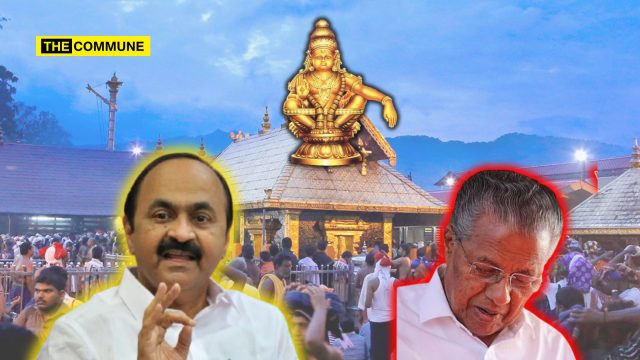
The upcoming Global Ayyappa Summit, planned as part of the platinum jubilee celebrations of the Travancore Devaswom Board (TDB), has triggered a political storm in Kerala. On Tuesday, Leader of the Opposition V.D. Satheesan accused the ruling CPI-M of organising the event to appease majority communal sentiments.

“The CPI-M is using Sabarimala’s name for majority appeasement. This newfound devotion began only after its parliamentary poll defeat. Now they are clinging to Lord Ayyappa, making communalism their political weapon, even moving in tandem with the Sangh Parivar,” Satheesan said. He warned that the CPI-M’s move was “like scratching one’s head with fire”, adding that what happened to the Left in Bengal awaited them in Kerala.

We know nothing about this so-called Ayyappa congregation,” he said. The Global Ayyappa Summit is scheduled for September 20 on the banks of the sacred Pampa River near Sabarimala. Kerala Chief Minister Pinarayi Vijayan will inaugurate the event, conceived as one of the largest spiritual congregations in South India.

Devaswom Minister V.N. Vasavan formally extended invitations to political leaders, including the Tamil Nadu Chief Minister M.K. Stalin, during a visit to Chennai. However, Chief Minister Stalin later conveyed his inability to attend due to prior commitments. Instead, Tamil Nadu Ministers P.K. Sekarbabu and Palanivel Thiaga Rajan will represent the state government at the event.

Meanwhile, the BJP also sharpened its attack. Kerala BJP President Rajeev Chandrasekhar accused both Vijayan and Stalin of repeatedly insulting Sabarimala traditions and Hindu devotees.

“Pinarayi Vijayan jailed and assaulted Ayyappa devotees, while Stalin and his son Udhayanidhi have called Hindu faith a virus. This Ayyappa event is nothing but an election drama,” Chandrasekhar wrote in a Facebook post. He added that the CPI-M leaders could attend only if they apologised to Hindus and Ayyappa bhakts.

– IANS

Subscribe to our channels on TelegramWhatsApp, and Instagram and get the best stories of the day delivered to you personally.

Left Party Councillors Stage Walkout In Chennai Corporation Over Waste Management Privatisation, Arrest Of Sanitation Workers

The Greater Chennai Corporation (GCC) council meeting on 26 August 2025, witnessed a dramatic walkout by councillors belonging to the Left parties, the Communist Party of India (CPI) and the Communist Party of India (Marxist), in protest against the privatisation of solid waste management in two city zones and the midnight arrest of contract conservancy workers.

CPI(M) councillor R. Jayaraman raised slogans inside the council hall, condemning the civic body’s decision to hand over waste management in Royapuram and Thiru Vi Ka Nagar zones to a private operator. He also strongly objected to the detention of workers under the National Urban Livelihoods Mission (NULM), who had been agitating against the move. CPI councillor M. Renuka supported his stand and joined in the walkout.

The Deputy Mayor, responding to the allegations, clarified that the arrests of the workers were carried out in compliance with a court order. However, the protesting councillors dismissed this explanation and asserted that the Corporation had a responsibility to safeguard the rights of long-serving conservancy workers rather than transferring them to private contractors.

The dispute stems from the Corporation’s decision earlier this month to outsource conservancy operations in the two zones to a private company. NULM contract workers, many of whom have been engaged in garbage collection and related duties for several years, opposed the move, demanding that they be permanently absorbed into the civic body with regularised pay and benefits. The workers staged a 13-day sit-in protest outside the Ripon Building, highlighting their grievances. They argued that while the Corporation had been paying them a monthly wage of ₹22,000 under its contract system, the private operator was offering only ₹16,000. This steep reduction in pay, along with uncertainty over job security, triggered widespread resentment among the workforce.

Councillors of the Left parties said the decision to privatise essential services like solid waste management would not only jeopardise workers’ livelihoods but also weaken the accountability of the civic body. They demanded that waste management remain under the direct control of the Corporation and urged the administration to withdraw cases against the arrested workers. The issue is expected to continue sparking debates within the civic body as the Corporation pursues its waste management restructuring plans in other zones of the city.

– IANS

Subscribe to our channels on TelegramWhatsApp, and Instagram and get the best stories of the day delivered to you personally.

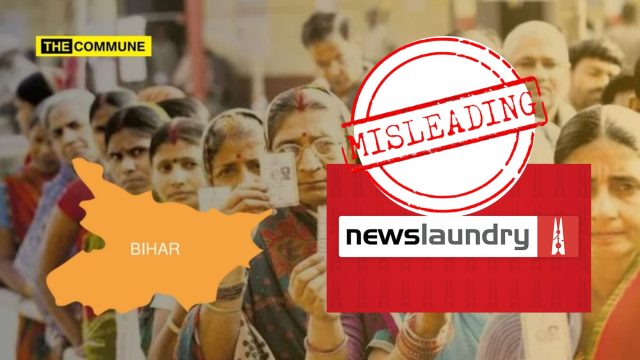
“Misleading”: Bihar Chief Electoral Officer Busts Claims Made In Newslaundry Report On Voter Roll “Irregularities”

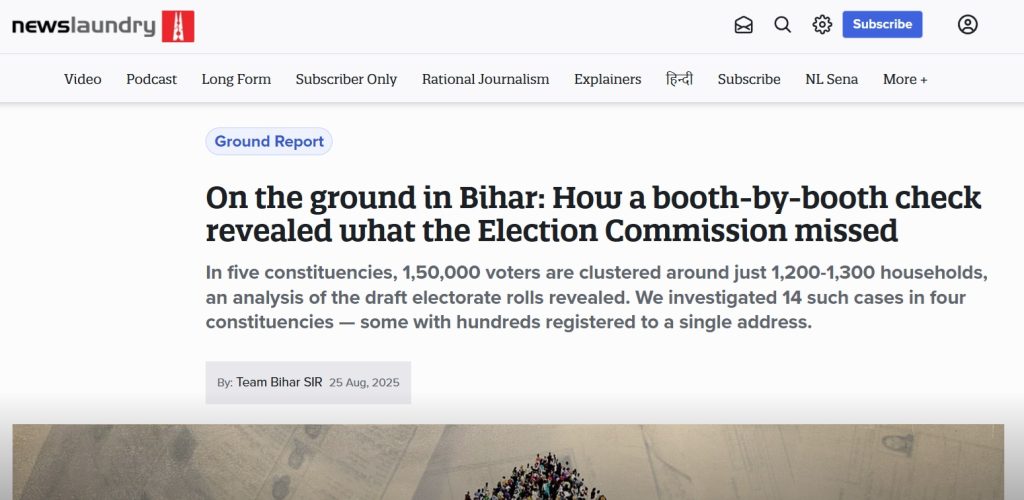
The Office of the Chief Electoral Officer (CEO), Bihar, has strongly refuted a report published by Newslaundry alleging large-scale irregularities in the state’s electoral rolls. Calling the report “misleading” and “selectively presented,” the CEO issued a point-by-point clarification, stressing that the Special Intensive Revision (SIR) exercise in the state was conducted transparently and on an unprecedented scale.

The Newslaundry report , published on 25 August 2025, claimed that in several constituencies, hundreds of voters were registered at single addresses and that the Election Commission had failed to verify them through door-to-door checks.

In a statement, the CEO’s office countered these claims:

#1 Verification Process Undertaken

The CEO clarified that during the SIR, door-to-door verification of 7.89 crore voters was carried out by Booth Level Officers (BLOs). Of the 7.24 crore electors listed in the Draft Roll published on August 1, documents of 99.11% of voters had already been collected. Verification work for the remaining electors is still ongoing. The claim that no verification was done was termed “baseless and fabricated.”

#2 Voter Clustering Explained

Responding to Newslaundry’s findings of large “clusters” of voters at single addresses, the CEO said this was a common socio-geographical feature in rural and semi-urban Bihar, where multiple families often live under one khata number, tola, or mohalla without formal house numbers. “Clustering at the same address is not an irregularity but a reflection of local realities,” the statement read.

#3 Incorrect Addresses and Unknown Names

The CEO pointed out that many students, migrant workers, and tenants may be registered under a particular household but are not currently residing there, which could explain why some residents claimed not to know the names on the rolls. Any discrepancies are being addressed through Form-7 (Deletion) and Form-8 (Address Correction) under the ongoing claims and objections process.

#4 Transparency of Electoral Process

The Commission emphasized that the system remains open and transparent. After the Draft Roll was published, all political parties and citizens were given the opportunity to file claims and objections, both online and offline, from 1 August 2025 to 1 September 2025.

#5 Sample Size of Investigation Questioned

The CEO criticized Newslaundry for drawing sweeping conclusions based on 14 cases across four constituencies, while the SIR exercise covers 7.89 crore voters across 243 assembly constituencies. “Questioning the credibility of the entire process on the basis of such a selectively chosen and statistically insignificant sample is neither rational nor objective,” the statement said.

The Election Commission has maintained that it welcomes genuine corrections and citizen participation in ensuring accurate rolls but warned against “mischaracterizing isolated issues as systemic failures.”

Subscribe to our channels on Telegram, WhatsApp, and Instagram and get the best stories of the day delivered to you personally.

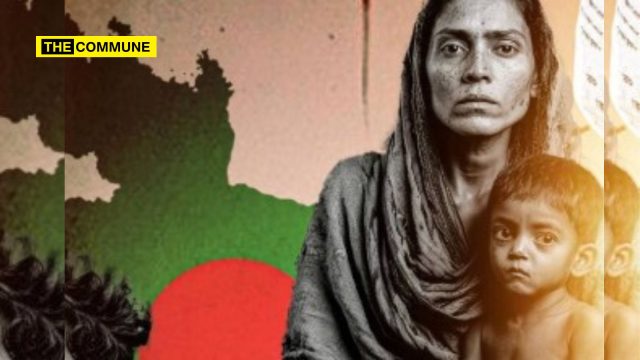
Bangladesh Faces Sharp Rise In Rape And Violence Against Women, Children: Awami League Cites Rights Groups’ Alarming Data

Bangladesh is witnessing a deeply troubling surge in violence against women and children, with cases rising at an alarming rate nationwide, the Awami League party said on 26 August, urging urgent attention and coordinated action to tackle the crisis.

Citing reports from human rights organisations, the party mentioned that between January and July 2025, incidents of rape increased by about 68.5 per cent compared to the same period in 2024. It also added that violence against children rose by 38 per cent during the same period in 2025.

Citing the concerning figures from the human rights body Manobadhikar Songskriti Foundation (MSF), the party asserted that, based on their data, between January and July 2025, 502 women and children were raped, including 133 victims of gang rape. Additionally, twenty-seven victims were killed after rape, and 209 attempted rapes were reported. On the other hand, highlighting the data from the Dhaka-based human rights organisation Ain o Salish Kendra (ASK), the Awami League stressed that in the first seven months of this year, 492 women and children were victims of rape, compared to 292 in the same period last year.

According to the party, incidents of violence against children rose to 640, up from 463 in 2024, while domestic violence also increased by nearly 16 per cent in 2025. “A report from Bangladesh Mahila Parishad paints a similar picture. Their figures indicate that 405 individuals were raped this year, 117 were victims of gang rape, and 15 were killed after rape. Last year, the numbers were 253, 105, and 18, respectively,” the Awami League posted on X.

The party emphasised that experts reckon the main reasons such crime continues in Bangladesh are the lack of punishment for offenders, delays in the justice system, negligence by law enforcement, and weak local governance. Referring to the experts, the party stated that “this trend is not just a matter of statistics but a serious threat to social security and human rights.” “The policing system has weakened. After the July movement, the negative narratives around women’s freedom and mobility have encouraged rapists,” Awami League quoted Syed Shaikh Imtiaz, professor at the Department of Women and Gender Studies at Dhaka University, as saying. Several human rights activists, the party noted, argue that misogynistic attitudes and impunity for perpetrators are the main causes behind the rise in violence against women and children. These activists, it said, contend that without effective law enforcement, speedy trials, and greater social awareness, the rising incidents of violence cannot be halted in Bangladesh.

– IANS

Subscribe to our channels on TelegramWhatsApp, and Instagram and get the best stories of the day delivered to you personally.
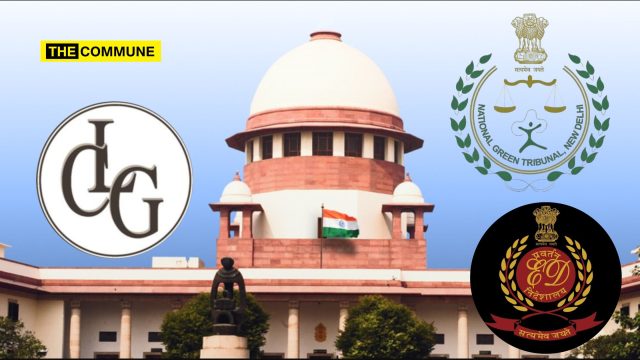
Supreme Court Rules NGT Cannot Direct ED On Money Laundering, Strikes Down ₹50 Crore Penalty

The Supreme Court has held that the National Green Tribunal (NGT) lacks the power to direct the Enforcement Directorate (ED) to initiate prosecution under the anti-money laundering law for alleged environmental violations.

A bench of Chief Justice of India (CJI) B.R. Gavai and Justice K. Vinod Chandran observed that the green tribunal has no power under the National Green Tribunal Act, 2010, to direct the prosecution of individuals under the Prevention of Money Laundering Act (PMLA).

“Though such power would be available to a PMLA court or to constitutional courts, it would not be available for exercise by the NGT, constituted to ensure effective and expeditious consideration of cases relating to environmental protection and conservation of forests,” the CJI Gavai-led Bench said as it set aside the green tribunal’s direction to the ED to examine the petitioner, C.L. Gupta Export Ltd, a handicraft manufacturing and exporting company.

We hence set aside the direction issued to the Enforcement Directorate; but say nothing on whether there is an offence made out or not, which at this stage is not within our ken,” it said. The apex court further noted that no FIR had been registered for any scheduled offence, nor was any complaint filed alleging such offences under the various environmental protection statutes scheduled under the PMLA.

In its judgment, the Supreme Court also set aside the ₹50 crore environmental compensation imposed by the NGT on the petitioner company for alleged violations, including illegal groundwater extraction and discharge of effluents into a Ganga tributary.

The bench observed that the NGT’s method of calculating the penalty based on the company’s revenue lacked a rational nexus with the alleged environmental damages and was inconsistent with legal principles laid down in earlier judgements of the apex court. “The methodology adopted by the NGT for imposition of penalty was held to be totally unknown to any principle of law. (R)ule of law does not permit the state or its agencies to extract a ‘pound of flesh’, even in environmental matters,” it added. However, the apex court upheld the NGT’s directions allowing continuous monitoring and audit of pollution control measures to ensure a “pollution-free compliance regime.” 

– IANS

Subscribe to our channels on TelegramWhatsApp, and Instagram and get the best stories of the day delivered to you personally.
India To Become Global Clean Energy Hub: PM Modi Inaugurates EV Battery Manufacturing, Export Drive

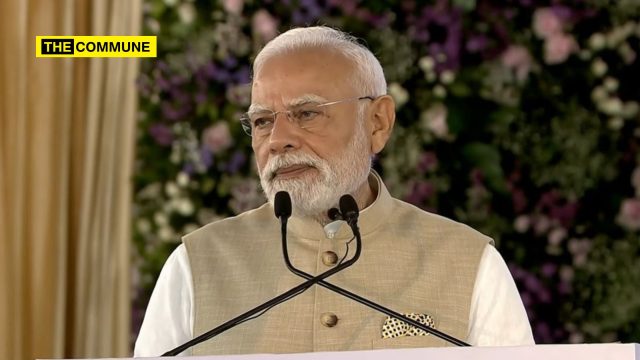
Prime Minister Narendra Modi on 26 August 2025, inaugurated localised production of hybrid battery electrodes and flagged off Battery Electric Vehicle (EV) exports to 100 countries from Hansalpur in Ahmedabad and stated that India will become a hub of clean energy.

Addressing the gathering, PM Modi emphasised India’s growing role in clean energy and electric mobility, while underlining the deepening partnership between India and Japan. Highlighting India’s workforce and manufacturing potential, the Prime Minister said, “India has a demographic advantage, we have a skilled workforce. This makes it a win-win situation for any investment. Suzuki, Japan is manufacturing here and later cars are exported to Japan. This is the strength of Japan and India relations. “This also shows the trust of global firms in India. Companies like Maruti Suzuki are brand ambassadors of India. It is our biggest car exporter. From today, we began to scale EVs at the same level. From now on, EVs that will roll in various countries will have ‘Made in India’ written on it.”

He pointed out that India had long been dependent on imports for EV batteries, but the situation was now changing. “The most critical part of an EV is the battery. Earlier batteries were totally imported by India, but it was important to manufacture the battery in India and therefore we sowed the seeds of battery manufacturing in India. Three Japanese companies came together to manufacture battery cells and electrodes in India. This will give our mission new energy. This will boost the hybrid vehicle market of our nation.”

The Prime Minister also stressed that EVs were not just an alternative but a solution to multiple challenges. “A few years ago, EVs were seen as an alternative but I think EVs are a solution to many problems. Last year during my Singapore visit, we decided to convert our old vehicles, old ambulances into EVs. Maruti Suzuki accepted that challenge and worked on it in six months. They built a hybrid ambulance. This will reduce pollution and also give an alternative to change old vehicles. Clean energy and clean mobility is our future. India will become a hub of clean energy.” Citing India’s economic reforms and policies over the last decade, he said their impact was visible today.

The policies that India made in the last decade are reaping benefits now. We started the ‘Make in India’ campaign, created a conducive environment for business, we are making industrial corridors, logistic parks… India is working in many sectors to give production linked benefit to manufacturers. “We have solved issues of investors to make investments easy for them. The results are in front of us. Electric manufacturing has increased 500 per cent in a decade,” he said.

Urging state governments to remain proactive, he said, “I have always told all states that we have to be proactive and have to give single window clearance. This is an age of competition. The state that keeps its policies neat and clean will raise the confidence of investors. “Today the whole world is looking at India and so, every state should be competitive. This will benefit the nation. I invite all states to be competitive when it comes to pro-development policies.”

The Prime Minister also announced future plans in high-tech manufacturing and critical minerals. “India is not going to stop here. We have to perform better in the sectors we have already done well in. We are focussing on ‘Mission Manufacturing’. We want to focus on semiconductors and six plants are going to be ready soon. We are aware about the shortage of Rare Earth magnets and therefore we have launched the ‘National Critical Mineral Mission’ in India. We will look for more critical minerals.”

The Prime Minister underlined the historical and cultural depth of India-Japan ties, calling the bilateral relationship one of trust and shared vision. “India-Japan relation is more than just business, it is of history and culture. The journey that began with Maruti Suzuki is now going at bullet train speed. The roots of Japan-India relations are very strong,” he said. Recalling his time as Gujarat Chief Minister, PM Modi said he paid attention to even small details to strengthen the partnership.

“The journey began from Gujarat, 20 years ago, from the Vibrant Gujarat summit. I even made my visiting card in Japanese. I even arranged Japanese food here for the guests, got golf courses made for them. Today, in many schools of India, there are teachers to teach Japanese language to students. People-to-people connect is huge between the countries.” Concluding his address, the Prime Minister affirmed, “Japan-India relation is made for each other.”

– IANS

Subscribe to our channels on TelegramWhatsApp, and Instagram and get the best stories of the day delivered to you personally.