Home Blog Page 150

CPI(M) MP John Brittas Wants Lower Age Of Consent While Admitting Children Don’t Recognise Abuse – Logic Collapses In Parliament

CPI(M) MP John Brittas Wants Lower Age Of Consent While Admitting Children Don’t Recognise Abuse - Logic Collapses In Parliament

During a debate on amendments to the POCSO Act, CPI(M) Rajya Sabha MP John Brittas argued that the age of consent should be revisited and possibly lowered from 18 to 16, citing court observations about consensual adolescent relationships. He simultaneously stressed the need for children to receive early awareness about sexual abuse.

Brittas said that courts, including the Supreme Court, had faced difficulties when dealing with cases involving teenage boys and girls, remarking: “The age of consent under POCSO which is at present 18 years poses difficult questions… The MP High Court said the age should be reduced to 16.”

He argued that children and parents should be given structured awareness through schools, saying, “Proper awareness should be imparted… Many children do not know whether it is abuse or not.”

Brittas’ Speech Contradicts Himself

However, his own speech revealed a contradiction that has long surrounded the age-of-consent debate – If the core problem is that “children don’t know what abuse is,” then lowering the age at which the law recognises them as able to “consent” does not solve that problem – it deepens it.

POCSO is built on the premise that minors cannot meaningfully consent because they often cannot distinguish affection, pressure, fear or manipulation from consent. Brittas himself described how 70–80% of children remain silent out of fear, how abuse is often not recognised until adulthood, and how many victims are unable to articulate what has happened to them.

These descriptions directly underline the legal rationale for keeping the age of consent at 18: children who do not recognise abuse cannot simultaneously be treated as capable of informed consent.

Brittas also repeatedly emphasised that children are unaware of abuse, do not understand boundaries, cannot articulate violations, remain silent due to fear, and realise the nature of abuse only much later in life.

These points highlight a gap in awareness and education – not a gap in the legal age of consent.

Legally and logically, awareness is provided through curriculum and schooling; consent is a legal safeguard. One does not require altering the other. The law presumes minors need protection precisely because of the vulnerabilities Brittas described in detail.

POCSO’s current structure, upheld across multiple judgments treats the age of consent as a protective threshold, not an educational tool. Lowering it does not create awareness; it simply narrows the ambit of protection.

Brittas ended by urging a “victim-centric” reform of the law. But his argument raised its own unresolved question: If children need more education to recognise abuse, how does reducing their legal protection help them recognise it earlier?

Subscribe to our channels on WhatsAppTelegram, Instagram and YouTube to get the best stories of the day delivered to you personally.

Andhra Govt Signs MoU With Google While DMK Govt Signs MoU With Junior Kuppanna

Andhra Govt Signs MoU With Google While DMK Govt Signs MoU With Junior Kuppanna

Andhra Pradesh and Tamil Nadu are both signing MoUs and talking about “investment” and “jobs” – but the scale, sector, and strategic vision could not be more different. One government is tying up with Google to build a multi‑billion‑dollar AI and data infrastructure hub; the other is proudly advertising an MoU with a biryani chain as if it were an economic game‑changer.

What Andhra Is Doing With Google

In October 2025, the Andhra Pradesh government signed a landmark MoU with Google in New Delhi for a 1 GW hyperscale AI‑driven data centre in Visakhapatnam. The investment figure being talked about is around ₹87,000–88,000 crore (roughly 10–15 billion USD) over five years, making it one of Google’s largest projects in Asia and its biggest in India.

This single MoU is not just another ribbon‑cutting:

It anchors an “AI City” vision in Vizag, backed by subsea cable connectivity linking India to multiple countries and strengthening digital resilience.​

It is projected to create tens of thousands to nearly 1.8 lakh direct and indirect jobs, while embedding AI skilling programmes for youth in the state.​

Whatever one’s politics, this is strategic: it bets on data, cloud, AI, digital infrastructure and high‑skill employment – sectors that drive long‑term competitiveness, tax revenue and ecosystem effects.

What Tamil Nadu Is Doing With Junior Kuppanna

Around the same time, Tamil Nadu’s official handles and allied promotional pages proudly highlighted an MoU with Junior Kuppanna Kitchens – a well‑known regional restaurant brand – for a ₹100 crore investment and about 300 jobs. On its own terms, this is a perfectly fine, mid‑sized F&B expansion: food processing, industrial kitchens, some export potential, and employment in the services sector.​

The issue is not that the state supports an F&B player; it is that the government’s propaganda machine projects this as a flagship “big push” comparable to serious industrial or technology investments. When you juxtapose a ₹100 crore MoU creating 300 jobs with a neighbour announcing a ₹87,000+ crore AI data hub creating thousands upon thousands of skilled jobs, the contrast in ambition is glaring.

Similar MoUs With “Homegrown” Businesses

We saw this at the “TN Rising” / Coimbatore F&B event, the state announced MoUs with Sri Krishna Sweets, Annapoorna, and Hatsun Agro Products, described as iconic Tamil Nadu brands.​

Indicative commitments reported:

  • Sri Krishna Sweets – about ₹100 crore for an export‑oriented sweets unit.
  • Annapoorna – about ₹300 crore for a centralised / industrial kitchen network.
  • Hatsun – about ₹860 crore to expand dairy processing and allied facilities.​

Aim: build export‑ready industrial kitchens, modern processing units, and R&D so these brands can be positioned like “Tamil Nadu’s answer to MTR/Haldiram’s”.​

The same cluster of announcements mentions E Star Foods and Podaran Foods signing MoUs for new or expanded manufacturing facilities in Tamil Nadu, again framed as taking regional packaged‑food brands to national and export markets.​

How the government frames this

Industries officials and social‑media campaigns frame these MoUs as a “big boost” to Tamil Nadu’s food & beverage sector, with industrial kitchens, export units and modernisation of traditional brands. and that it is helping local brands to be nurtured alongside large external investors, with Coimbatore and other cities positioned as hubs for scaling such companies.​

In substance, these MoUs are modest to mid‑sized (hundreds of crores, hundreds to low thousands of jobs) compared to mega industrial MoUs signed at GIM 2024 (EV, steel, electronics, green energy etc.). and are concentrated in F&B and FMCG rather than high‑tech, but do involve some upstream manufacturing, export orientation and brand‑building.

Scale, Vision And The Message To Investors

MoUs are not everything – many never fully materialise – but they reveal each government’s pitch to the world. Andhra Pradesh is positioning itself as a core node in India’s AI and cloud strategy:

Data centre + subsea cable + clean energy + global partners (Google, AdaniConneX, Airtel) signal confidence to other tech and infra investors.​

The presence of Union ministers and top Google leadership at the signing underlines that this is integrated into national‑level digital and AI missions.​​

Tamil Nadu, by contrast, already has a strong industrial base (automobiles, electronics, textiles, MSMEs), but the state’s recent publicised MoUs in this context are dominated by relatively modest F&B and retail plays like Junior Kuppanna or an Annapoorna & Sri Krishna Sweets. That sends a very different message: the government is more comfortable celebrating politically connected, culturally resonant brands than aggressively chasing frontier‑technology anchors.​

Opportunity Cost For Tamil Nadu’s Youth

For a state with lakhs of engineering graduates, IT workers and a significant diaspora in tech, this signalling matters. Andhra’s Google deal explicitly references AI skilling, startup ecosystems, digital transformation of governance, and allied investments from big industry. These are exactly the spaces where high‑end jobs, innovation and exports will grow over the next decade.​

Tamil Nadu’s MoU with Junior Kuppanna, even if genuine and useful within F&B, offers:

  • Mostly low‑wage, low‑skill roles in kitchens, outlets and logistics.
  • Limited technology transfer or ecosystem spill‑overs beyond food processing and branding.​

Again, the comparison is not to trash a restaurant chain; it is to ask why a government that once boasted of attracting global auto, IT and electronics majors, now chooses to highlight a biryani MoU while another state showcases a Google AI data city.

The Political Optics

There is also a deeper political contrast. In Andhra, the Google MoU is being used to project the state as reform‑oriented, investor‑friendly and future‑facing – whatever the internal debates on land, subsidies or transparency. In Tamil Nadu, the Junior Kuppanna MoU fits into a pattern where the ruling establishment is seen as increasingly focused on symbolism, friendly business groups, and social‑engineering narratives, while being relatively muted on big‑ticket tech or manufacturing anchors.​

Critics are therefore not wrong to pose the question in exactly this sharp way: when one government is signing an MoU with Google to build India’s largest AI data hub, and another is celebrating an MoU with a biryani franchise, what does that tell us about comparative priorities, seriousness, and the kind of future each state is building for its youth?

Subscribe to our channels on WhatsAppTelegram, Instagram and YouTube to get the best stories of the day delivered to you personally.
Madras High Court Flags Rising Use Of Children For Begging At Traffic Signals, Demands TN Govt’s Plan

The Madras High Court has issued notices to the Tamil Nadu government, directing it to formulate and explain appropriate steps to prevent the use of children for begging on roads and public spaces. The directive came on Friday during the hearing of a public interest litigation (PIL) seeking action against those who involve minors in begging.

A bench comprising Chief Justice Manindra Mohan Shrivastava and Justice G Arul Murugan admitted the plea and suggested the state develop a concrete plan to address the issue.

The petition was filed by R S Tamilvendan, a resident of Kodambakkam, who stated he regularly witnessed women begging at traffic signals and other public places with children in their hands. He raised serious concerns about the welfare and origins of these children.

“Those children are exposed to intense heat and rain. Begging is a crime in our country,” the petitioner said. He urged the court to order authorities to verify “whether women using children for begging are their biological mothers.”

Tamilvendan further highlighted the potential for exploitation, suggesting an investigation was needed to determine “whether the children were stolen from someone else, obtained from a child trafficking gang, or rented for a price.”

Emphasizing the state’s duty, he argued, “It is the duty of the government to at least investigate and take the children to a government shelter to protect their future.” He warned of long-term social consequences, adding, “If the child grows up in such an environment, there is a possibility that they will easily become anti-social in the future.”

The petitioner also requested the court to direct authorities to probe “whether the children are given sleeping pills or drugs to sleep.”

Noting that many of the women involved are not natives of Tamil Nadu, the plea calls for a thorough inquiry into the practice. The court has admitted the petition and awaits the state government’s detailed response on its strategy to curb this exploitation and rehabilitate affected children.

Source: Times of India

Subscribe to our channels on WhatsAppTelegram, Instagram and YouTube to get the best stories of the day delivered to you personally.
DMK And Its Unofficial Mouthpiece TNM Tries To De-Hinduize Thirupparankundram Deepathoon As Mere ‘Survey Stone’

DMK And Its Unofficial Mouthpiece TNM Tries To Establish Thirupparankundram Deepathoon As Survey Stone

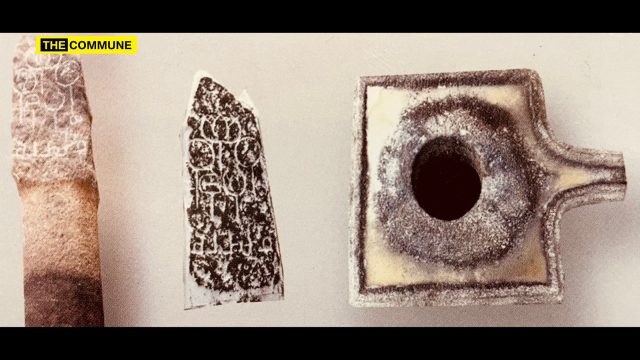
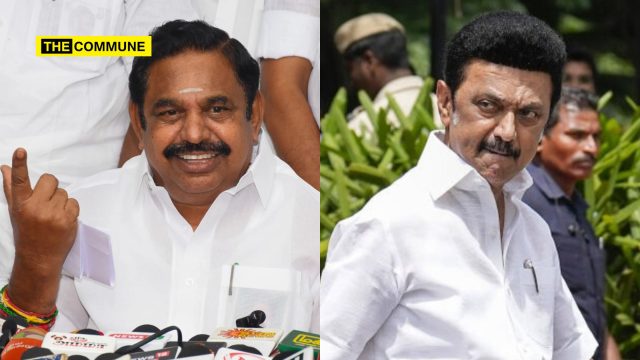
As the Thirupparankundram Karthigai Deepam issue intensifies, the DMK government and its lackeys in the academia and media are attempting a remarkable narrative pivot: to redefine the historically recorded Deepathoon as nothing more than a colonial-era survey stone. The clearest example of this push appears in The News Minute’s (TNM) latest “ground report,” which repeatedly amplifies claims that the Deepathoon is a mere theodolite marker, despite documentary proof published by the Tamil Nadu government itself in 1981 describing the Deepathoon as a sacred hilltop lamp-lighting site.


TNM Tries Hard To Buttress DMK Govt’s Claims

The TNM piece repeatedly stresses that the lamp was never lit there, that the Deepathoon is a theodolite stone, that courts previously ruled in favour of lighting only at Uchchipillaiyar Temple, that the judge’s order is ‘questionable’ and that ‘Hindu groups’ aim to provoke communal tension.

Each of these talking points tracks neatly with the DMK’s line in court, in press conferences, and in ministerial statements.

Yet conspicuously absent is:

  • The fact that HR&CE itself argued in earlier cases that Deepathoon existed and it is not a new structure
  • Local oral traditions across decades
  • References to Sangam-era literary mentions

The contradiction between the state’s earlier position and its stance now

By ignoring the practices of the people, TNM presents the “survey stone” claim as settled fact, when it is, at best, an unverified assertion contradicted by Tamil Nadu’s own documentation.

Selective Evidence: A Feature, Not A Bug

TNM’s framing relies almost entirely on residents who oppose lighting the hilltop Deepam, activists aligned with “secular organisations”, lawyers who have long been critical of Justice GR Swaminathan, and retired officials offering technical opinions about survey stones.

But when residents who support hilltop Deepam lighting are quoted, their statements are treated as anecdotal or politically influenced.

What is missing is the foundational principle of any balanced ground report – The state’s own historical record.

By excluding it, TNM constructs a narrative bubble in which the Deepathoon has no sacred past, no ritual continuity, and no cultural legitimacy.

Why The “Survey Stone” Narrative Matters To The DMK

If the Deepathoon is accepted as a sacred site that has historical continuity and also recognised by local residents, then the state’s refusal to implement High Court orders becomes far harder to justify.

By portraying the Deepathoon as a meaningless colonial marker, the state reframes the issue as one of “law and order,” not religious freedom, the government positions itself as protecting communal harmony, anyone demanding access appears extremist or politically motivated, and judicial orders enabling ritual access can be attacked as reckless.

In effect, the “survey stone” narrative is the foundation for the government’s entire defence.

TNM frames the Deepathoon movement as a “Sangh mobilisation ignoring historical evidence.”

But the only historical evidence ignored in this debate by TNM is the one produced by the Tamil Nadu government itself in 1981.

The attempt to recast Deepathoon as a trivial colonial marker rather than a sacred ritual site recognised by Tamil scholars and residents reveals a deeper political discomfort – the Deepathoon’s historical and cultural legitimacy undermines the DMK’s current narrative.

TNM’s reportage, which seems to be more out of editorial convenience, amplifies only one side of the historical argument, that which aligns with the ruling party’s immediate political needs.

To reduce Deepathoon to a mere “survey stone” is an attempt to erase Tamil Nadu’s own documented heritage in service of a contemporary political argument.

Subscribe to our channels on WhatsAppTelegram, Instagram and YouTube to get the best stories of the day delivered to you personally.

DMK Supporter & Self-Styled ‘Activist’ Piyush Manush Abuses Justice GR Swaminathan

DMK Supporter & Self-Styled 'Activist' Piyush Manush Abuses Justice GR Swaminathan

The DMK government has refused to permit Hindus to climb the Thirupparankundram Hill and light the Karthigai Deepam at the Deepathoon at the top of the hill – this, despite repeated court orders.

Amid all this, DMK supporters, the Dravidianists and Brahmin/Hindu haters have launched a tirade against Justice GR Swaminathan, given his background. One among them is self-styled ‘activist’ Piyush Manush.

He has been repeatedly targeting Justice GR Swaminathan by his caste, calling him by name and speaking disrespectfully in his videos and posts on social media.

In one video, he accuses the judge of prompting people to “set fire to Tamil Nadu”, he says, “Swaminatha, you are not telling them to light the Karthigai Deepam, you’re telling them to set fire to Tamil Nadu – what a dangerous fellow you are. ‘Sanatana books, aksu, taxu’… You are that judge who went on stage to say ‘Someone who belongs to Sanatana Dharma will never do wrong,’ That means you will not punish someone who believes in Sanatana Dharma. Won’t you, won’t you? Ayyo, this is not just about Thirupparankundram alone.”

He also references an unrelated temple dispute, accusing the judge of pressuring district authorities in a case involving a minor temple allegedly witnessing tension between Christian and Hindu communities. He mocks the judge repeatedly, saying “Swaminatha, Swaminatha,” and alleges that the judge is provoking law-and-order problems instead of preventing them.

“In another place also he’s doing the same kind of nonsense. The man calls the Collector; the Collector says, ‘21 cases have already come up, FIRs have been filed.’ In some small temple, in a temple that stands on just two cents of land, it seems there has been some clash between the Christian community and the Hindu community. To make sure no problem arises there, he (the Collector) is trying to maintain it. But this man insists, ‘No, the lamp must be lit there.’ Who is truly a good devotee, what is real devotion – we don’t know. But after seeing something, when they are trying to ensure it doesn’t turn into a law-and-order situation, you jump up against it, Swaminatha, Swaminatha. You saw, right, you saw? He, history will talk wrongly about you. In a Tamil Nadu that usually stays peaceful, you are trying to turn it into a riot park. You, Swaminatha.”

In another clip, Manush denies the historical and ritual significance of the Deepathoon site itself. He insists that the Deepathoon is “just a survey stone” allegedly placed by the British and ridicules devotees, claiming they are performing worship over “a stone used for survey work.” He further mocks Hindu traditions and labels devotees as “Sanghi fellows” who would worship “anything.”

He is seen saying, “Swaminatha, Swaminatha… that isn’t even a Deepathoon (lamp pillar), Swaminatha – only now this news has come out, and I’m honestly shocked. The name of that temple is Uchchi Pillaiyar Temple. Why is it called Uchi Pillaiyar Temple? Because for Murugan, they light the Deepam at the Pillaiyar temple that stands at the peak, that’s why it has that name. They lit the Deepam there. This man couldn’t tolerate that. For Swaminatha… actually the correct name to say is G.R. Swaminathan, he’s not just some High Court judge, ayyo, and who is he – he is “ava, ava” if you don’t show respect to ‘ava’, how can you… you, Swaminatha, ‘ava’…

That is just a survey stone, Swaminatha. They’re saying it’s some stone the British placed for their survey. Now, ayyo, for that one stone you’ve created such a big drama. Hey, Vivek’s comedy is exactly fits here – will you fellows worship anything you Sanghi fellows, why? You do some puja and go, fine. But why are you turning all of Tamil Nadu into a battleground over it?

Anyway, if you look at that stone – even I was wondering, ‘How on earth will a lamp burn on this?’ It’s just a rock. If you think about what it really is, this is all it turns out to be: a survey stone used for survey work. You’ve taken that survey stone and done all this drama around it, you Sanghi fellows.”

Piyush has a history of taunting and mocking Hindus, especially Brahmins and Hindu customs. He mocked people when the Tirupati laddoo adulteration issue broke out, he also made perverse comments about Chidambaram Dikshitars.

Subscribe to our channels on WhatsAppTelegram, Instagram and YouTube to get the best stories of the day delivered to you personally.
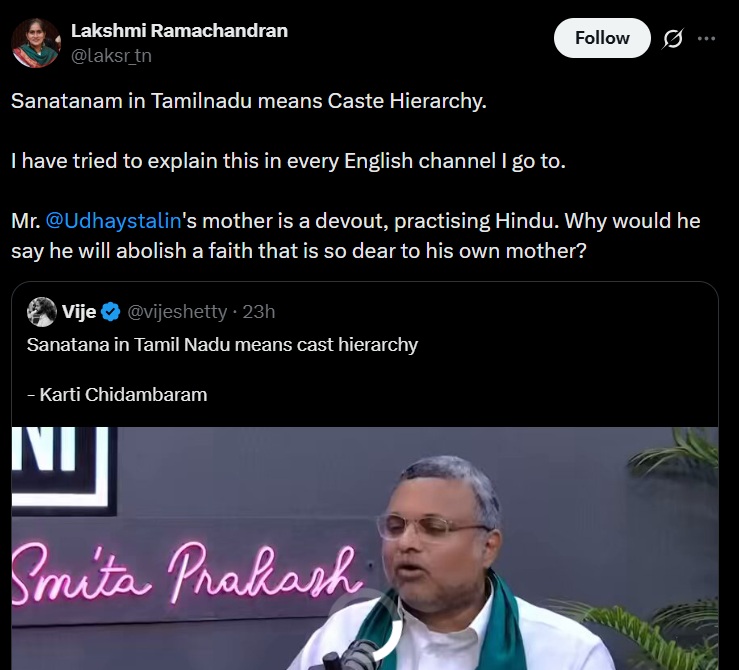
Tamil Nadu Makes Government Sanction Mandatory To Prosecute Any Police Officer

Tamil Nadu Makes Government Sanction Mandatory To Prosecute Any Police Officer

The Tamil Nadu government on 3 December 2025 issued a notification under the Bharatiya Nagarik Suraksha Sanhita (BNSS) making prior sanction from the state mandatory before prosecuting any police personnel of any rank for alleged offences committed while acting, or purporting to act, in the discharge of official duty.

Under the earlier Criminal Procedure Code (CrPC), this protection under Section 197 applied only to certain categories of public servants and did not extend to police personnel in the ranks of inspector and below, except inspectors in the ‘Q’ Branch who were covered through a special provision in the Tamil Nadu Police (Discipline & Appeal) Rules. With the central BNSS replacing the CrPC, Section 218 now becomes the corresponding provision governing prosecution sanctions.

The BNSS, as notified by the central government, provides this protection to members of the armed forces through Section 218(2), while other public servants fall under Section 218(1). The law also grants states the discretion to extend the same safeguard to their police forces through Section 218(3), which empowers state governments to apply sub-section (2) to their personnel via notification.

Exercising this enabling power, Tamil Nadu’s Home Department has now directed that the requirement of prior sanction under Section 218 shall apply to “all the classes and categories of police personnel of the Tamil Nadu Police charged with the maintenance of public order, wherever they may be serving.”

Officials said the move ensures continuity of protections previously available under the CrPC while expanding them to cover all ranks within the police force under the BNSS regime.

The notification comes against the backdrop of a July 2024 Madras High Court division bench ruling that Section 197 protections under the old CrPC could not be extended to inspectors or those below them, making the new state-level notification significant in restoring and broadening the shield for police personnel.

Source: The New Indian Express

Subscribe to our channels on WhatsAppTelegram, Instagram and YouTube to get the best stories of the day delivered to you personally.
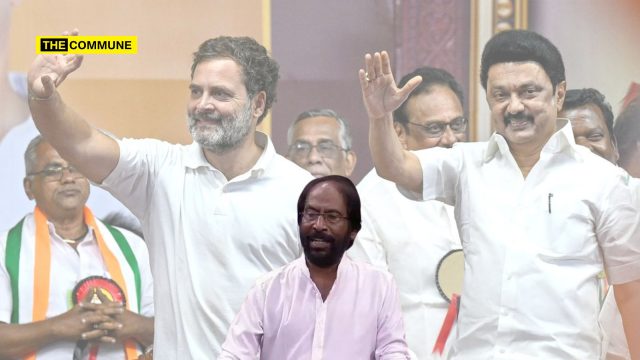
Hindu Munnani Protests In Front Of Tirunelveli DMK Office, Slogans Raised Against DMK Min Sekar Babu

Hindu Munnani Protests In Front Of Nellai DMK Office, Slogans Raised Against DMK Min Sekar Babu

Statewide protests led by the Hindu Munnani on 7 December 2025 displayed the intensified public anger over the Tamil Nadu government’s refusal to permit lighting the Deepam at the Thirupparankundram hilltop, with demonstrators in multiple districts targeting HR&CE Minister PK Sekar Babu for his remarks on the controversy.

Protests were held across Tamil Nadu after the organisation accused the government of defying consecutive High Court orders and denying Hindus their customary right to light the lamp at the Deepathoon. Crowds gathered in several districts, raising slogans against the DMK administration and alleging political interference in temple practices. Videos circulated widely on social media showed demonstrators throwing slippers at the minister’s poster, reflecting growing discontent among Hindu groups over the state’s handling of the issue.

This was especially seen in Tirunelveli district, in front of the DMK office there. Slogans were raised, his poster/photos were slippered.


View this post on Instagram


A post shared by Tamil Janam (@tamiljanam)

Subscribe to our channels on WhatsAppTelegram, Instagram and YouTube to get the best stories of the day delivered to you personally.
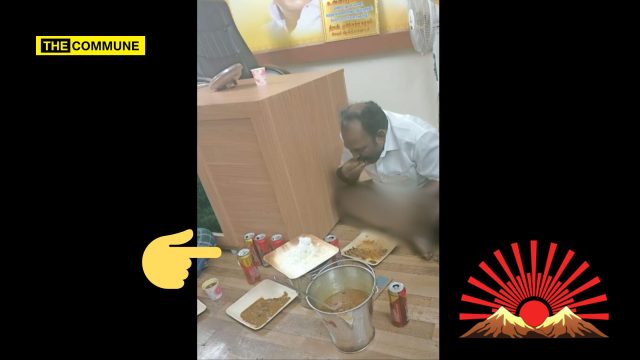
Case Filed Against BJP Leader H Raja After Police Stop Him From Going To Thirupparankundram Amid Karthigai Deepam Row

Case Filed Against BJP Leader H Raja After Police Stop Him From Going To Thirupparankundram Amid Karthigai Deepam Row

Senior BJP leader H Raja has been booked under three sections of law after he allegedly argued with police officers and made controversial remarks during an interception in Sivagangai district on 4 December 2025. The incident occurred while he was travelling to Thirupparankundram, where tensions have escalated over the temple Deepam issue.

According to police sources, officers led by Thiruppathur DSP Selvakumar stopped Raja’s vehicle near Kammangudi village as a precautionary measure. Raja reportedly told officers he was travelling for dubbing work related to the film Kandhan Malai and asked them not to obstruct him. A heated exchange followed, during which he is said to have made critical remarks about Tamil Nadu ministers, the Madurai District Collector and senior police officials.

Following the altercation, Nachiyapuram Police registered a case against Raja and his driver under provisions relating to obstruction of public duty, causing disruption to traffic, and making statements with the potential to incite communal tension.

The incident unfolded amid widespread debate over the Thirupparankundram temple lamp, after the Tamil Nadu government did not permit lighting the Deepam at the hilltop despite consecutive High Court orders. The state government argued that lighting the lamp near the dargah could lead to law-and-order issues and maintained that it would be lit only at the traditional location. The BJP, meanwhile, accused the DMK government of disregarding the court’s direction and curtailing the religious rights of Hindus.

Police said Raja’s remarks during the confrontation included derogatory comments about Chief Minister MK Stalin, certain ministers and police officers, prompting charges related to obstructing public servants from performing their duty, making statements with potential to incite communal sentiments and using defamatory language against public officials.

Reacting to the controversy, Raja criticised the state government for not implementing the High Court order, questioning its objection to lighting the lamp at the designated spot.

Source: Asianet Tamil

Subscribe to our channels on WhatsApp, Telegram, Instagram and YouTube to get the best stories of the day delivered to you personally.
How Demography Change Has Turned Haryana’s Nuh Into A Hotbed Of Radicalism And Lawlessness

Over the past six years, the Mewat district of Nuh in Haryana has rapidly transformed from a quiet region into a persistent hotspot for radical activities, organized violence, and brazen assaults on law and order.

This report chronicles 20 incidents that signal a clear and alarming trend: Nuh is becoming a rapidly growing epicenter for radicalism, organized violence, and attacks on the state’s authority. The patterns reveal networks engaged in anti-national activities, systematic violence against the Hindu community and law enforcement, and a socio-criminal ecosystem fostering fear and instability.

Category 1: Anti-National Activities (Espionage, Terrorism, Flag Desecration)

#1 Advocates Arrested for Pakistani Espionage (26 November 2025)

A joint team of Delhi-NIA and CIA, Tauru arrested advocate Rizwan (son of Zuber) from Kharkhari village in Nuh’s Tauru police station area on charges of spying for Pakistan’s ISI. His fellow advocate, Musharraf alias Parvez (father Dilawar, Bansi), was also detained. A laptop, documents, and degrees were seized from Rizwan’s house, and a case of sedition and espionage was registered. This marked the third such arrest in Nuh in 2025.

#2 Maulvi Held with 2500 Kg Explosives (23 November 2025)

Jammu and Kashmir Police arrested Maulvi Ishtiyaq from Nuh from his rented room near Al-Falah University in Faridabad, where he was allegedly storing 2500 kg of explosive material (Ammonium Nitrate, Potassium Chlorate, Sulfur). This module came to light after the car blast near Delhi’s Red Fort on 10 November 2025, which killed 15.

#3 Mohammad Tarif Arrested for Leaking Military Secrets (19 May 2025)

Haryana Police and central agencies arrested Mohammad Tarif from Kangarka village in Nuh for allegedly leaking sensitive information about Indian military activities to Pakistan. He had visited Pakistan in 2022-23 and 2023-24. Mobile forensics revealed chats, photos, and videos of military activities sent to two separate Pakistani contacts.

#4 Arman from Rajaka Arrested for Espionage (17 May 2025)

Arman, son of Jameel from Rajaka village, was arrested by Haryana Police and central agencies for sending defence-related information to Pakistan via WhatsApp, including photos from Defence Expo 2025. His mobile yielded chats, photos, and videos sent to +92 series numbers. Two phones and two SIM cards were seized.

#5 National Flag Disrespected, Palestinian Flags Waved (1 April 2025)

After Eid prayers in Ghaseda village, a protest against amendments to the Waqf Board Muslim Bill turned contentious. A youth named Sakir waved a tricolour without the Ashoka Chakra, considered an insult to the flag. Some in the crowd were also accused of holding Palestinian flags high while keeping the Indian flag low. Police registered a case based on viral videos.

Category 2: Attacks on Police Teams

#6 Mob Stones Police Team Recovering Stolen Car; 14 Arrested (27 September 2025)

A police team from Punhana and Tauru Crime Branch was attacked with stones by a Muslim mob, including women, in Indana village while trying to recover a car stolen from Punjab by ex-councillor Azad, Shahid, and Shahrukh. Police vehicles were damaged and personnel injured. Heavy force was deployed, and 14 people, including three women, were detained.

#7 Cyber Crime Police Station Attacked (1 August 2023)

During communal violence on 31 July that year, around 300 Muslim attackers pelted stones at the Cyber Crime Police Station in Nuh, broke walls using a bus, and set vehicles on fire. Police arrested ten accused, including two Rohingyas, and filed FIRs against over 15 individuals.

#8 Police Team Stoned While Arresting Cow Smuggler (23 February 2022)

In Ferozepur Jhirka, a police team arresting cow smuggler Taufeek was attacked with stones, leaving one Home Guard seriously injured. Taufeek was caught transporting meat from Sakras to Chittorgarh. Police arrested another individual, Hasin, and seized meat and a bike.

#9 Arrest of Shabbir for Murder of DSP Surendra Singh (20 July 2022)

Shabbir alias Mittar, the main accused in the murder of DSP Surendra Singh Bishnoi, who was investigating illegal mining and was crushed by a dumper on 19 July 2022, was arrested from Bharatpur, Rajasthan. His accomplice, Ikkar, was arrested after firing at police. The dumper was registered in the name of Shabbir’s elder brother, Jamshed.

Category 3: Attacks on Hindus

#10 Attack on Nalhad Mahadev Temple (31 July 2023)

During the Braj Mandal Jalabhishek Yatra, rioters pelted stones and opened fire from hillsides, trapping approximately 2,500 devotees inside Nalhad Mahadev Temple for hours. Two Home Guards (Neeraj Kumar and Gursevak), sweet-maker Shakti Saini, and Bajrang Dal member Abhishek Rajput were killed. Around 50 vehicles were torched or vandalized. Five deaths and over 70 injuries were reported.

#11 Parking Dispute Turns Communal, Properties Vandalized (12 August 2025)

In Ferozepur Jhirka, a minor parking dispute escalated when local radicals stoned Hindu youths and set their bikes and shops on fire. Several were injured by glass bottles and stones. The administration imposed curfew-like restrictions.

#12 Hindu Family Attacked, Looted, Pressured to Convert (16 April 2025)

In Ranayala Patakpur, radicals including Idris, Junaid, Zubair, Akhlaq, Zafar, Akram, Shameem, Javed, Ayub, and two women, Sahuni and Ravina, along with 25-30 others, attacked the Hindu family of Santram from the OBC community. They assaulted family members with sticks, looted ₹23,000, tore women’s clothes, smashed a mobile phone, and pressured the family to leave the village and convert to Islam.

Category 4: Crimes Against Hindu Women (Abduction, Rape, Murder)

#13 Dalit Hindu Nurse Abducted, Pressured for Conversion & Marriage (October 2020)

A Dalit Hindu nurse working at a Primary Health Centre in Singar village was abducted by Muhammad Iqbal, who had been stalking her for six months, pressuring her to convert and marry him, and threatening rape. An FIR under IPC sections 363, 366, 506, and the SC/ST Act was registered at Bichhor police station.

#14 Hindu Girl Abducted and Raped, Assailants Caught by Villagers (5 February 2025)

Two Muslim youths, Irfan and Fardeen, abducted a Hindu girl at knifepoint from her home in Nuh, raped her, and recorded a video. Villagers later caught the duo, shaved their heads, and handed them to police. A case under BNS and POCSO Act was registered.

#15 Minor Girl Abducted for Marriage by Shoaib Khan (13 December 2020)

Shoaib Khan (18) from Nuh created a fake Hindu profile “S K Sinha” on Facebook, befriended a 15-year-old girl, abducted her, and took her to Muzaffarpur and Azamgarh to pressure her into marriage. He later abandoned her at Badarpur border. He was arrested from his village after being found absconding.

#16 Rape and Murder of 7-Year-Old Girl by Mukim (26 December 2019)

In Ghasiniyavas, Ferozepur Jhirka, Mukim alias Mukki raped and murdered a 7-year-old girl who had gone to graze goats. After a three-year trial, he was convicted under POCSO Act Section 6 and sentenced to life imprisonment on 16 August 2023.

#17 Maulana Swindles ₹14 Crore in Marriage Fraud (4 April 2024)

Nuh police arrested Maulana Arshad (Bublahedi) and Rashid (Guraksar, Palwal) for a large-scale fraud promising “Kanyadaan” (donations for daughters’ weddings). They admitted to cheating around 1400 families of approximately ₹14 crore by offering fake packages including motorcycles, goods, and cash.

Category 5: Other Crimes (Trafficking, Cyber Crime, Suspicious Deaths)

#18 Rohingyas Sentenced for Trafficking and Rape (Verdict: 30 January 2024)

A Nuh court sentenced Rohingya accused Mohammad Ayyash, Mohammad Yunus, and Hafiz Ahmed to 10 years imprisonment and a ₹10,000 fine each for trafficking two girls from Bangladesh into India via Mizoram and Kolkata, selling them, and committing rape. The girls were to be sold in Kashmir for ₹70,000.

#19 Body of 11-Year-Old Boy Found in Madrasa (5 September 2023)

The body of Sameer (11), who had been studying Urdu-Arabic at a madrasa in Shah Chokha village, Punhana, was found on the premises two days after he went missing. His family alleged foul play. Police and FSL teams began an investigation.

#20 Cyber Fraudsters Busted, 7 Radicals Arrested (16 August 2025)

Nuh police arrested 16 cyber fraud accused in two days. Seven of those arrested—Bilal, Mohammad Ishtiyaq, Mohammad Salman Ansari, Asfaqullah Khan, Shahrukh, Naseem, and Gufran—were found with 10 mobile phones, 24 SIM cards, 11 ATM cards, 6 passbooks, and 1 cheque book.

Subscribe to our channels on WhatsAppTelegram, Instagram and YouTube to get the best stories of the day delivered to you personally.
Congress Leader Abhishek Manu Singhvi Represented DMK Govt In Court To Prevent Hindus From Lighting Karthigai Deepam Atop Thirupparankundram Murugan Temple Hill

Abhishek Manu Singhvi, a prominent Congress leader and Rajya Sabha MP, who appeared in the Court on behalf of the DMK-led Tamil Nadu government.

His role was to challenge a Madras High Court order allowing Hindu devotees to light the Deepam at the ancient “Deepathoon”—a stone lamp pillar atop the hill—effectively seeking to prevent the ritual from taking place.

The Karthigai Deepam festival, celebrated annually in the Tamil month of Karthigai (typically November-December), commemorates the triumph of light over darkness. At Thirupparankundram, the ritual involves lighting a massive lamp atop the hill’s Deepathoon, a towering stone pillar believed to date back centuries.

The turning point came on December 1, 2025, when Justice G.R. Swaminathan of the Madras High Court’s Madurai Bench issued a landmark order. In response to Ravikumar’s petition, the judge directed the Subramaniya Swamy Temple administration to light the Karthigai Deepam at the Deepathoon “from this year onwards,” alongside the usual sites.

But the DMK government, led by Chief Minister M.K. Stalin, refused to comply. Instead, it clamped fresh prohibitory orders across Thirupparankundram, detaining devotees—including BJP leaders like state president Nainar Nagendran and senior figure H. Raja—who attempted to ascend the hill under Central Industrial Security Force (CISF) protection.

Protests erupted, with Hindu outfits accusing the state of “anti-Hindu bias” to appease minority voters ahead of the 2026 Assembly elections.

On December 3, Ravikumar filed a contempt petition, alleging deliberate defiance. Justice Swaminathan, visibly frustrated, summoned district officials and permitted the petitioner and nine associates to light the lamp themselves under police escort. When even this was thwarted, the court escalated: on December 4, it dismissed the state’s appeal and reiterated the directive, lambasting the administration for “nullifying” judicial authority.

Enter Abhishek Manu Singhvi.

Abhishek Manu Singhvi appeared on behalf of the DMK government, requesting just a brief window to present initial arguments. However, the court firmly deferred any substantive discussions, emphasizing a comprehensive review of all appeals together.

Singhvi contended that the state’s petition ought to take precedence over the Letter Patent Appeal process, but the judges clarified they would evaluate the case on its substantive merits during the full hearing. The bench also ruled that only existing parties could participate, barring any new interventions or impleadments.

What Has Happened So Far

On 1 December 2025, Justice G.R. Swaminathan unambiguously ruled that the Karthigai Deepam must be lit at the ancient Deepathoon atop the hill, not at the Uchipillaiyar mandapam as insisted by the DMK-aligned administration. His order was based on a 1923 decree and subsequent Privy Council rulings affirming the temple’s ownership of the hill.

The state simply refused to comply. Instead it issued prohibitory orders, blocked devotees, moved hurried appeals, and invoked “law and order” to prevent execution of a judicial direction. Even after a contempt order permitting devotees to ascend with CISF protection, police physically stopped them. The Division Bench later observed that the state had “wilfully decided” not to obey the court.

Rather than respecting the judiciary, the DMK escalated its defiance—filing appeals, manipulating administrative orders, and even submitting misleading documents attributed to priests. The HR&CE Department, police and district administration functioned as an anti-Hindu enforcement arm, prioritising “minority sensitivities” over constitutional rights.

As of December 7, 2025, the lamp has not been lit at Deepathoon. The BJP and Hindu Munnani has annouced a state-wide protest against the DMK government for its attempt to curtail religious rights of Hindus.

By deploying senior leader Abhishek Manu Singhvi to argue the DMK’s case, Congress has effectively lent its national stature to the state’s efforts to suppress a millennia-old Hindu ritual

This move aligns with the INDI Alliance’s broader agenda of ‘eradicating Sanatana Dharma’.

Subscribe to our channels on WhatsAppTelegram, Instagram and YouTube to get the best stories of the day delivered to you personally.