Home Blog Page 148

Alleged Fact-Checker Mohammed Zubair Shares Clipped Video Claiming “Poor Vendor Assaulted For Selling Chicken Patties”, Extended Clip Shows Vendor Allegedly Lied About Selling Non-Veg Food

Alleged Fact-Checker Mohammed Zubair Shares Clipped Video Claiming "Poor Vendor Assaulted For Selling Chicken Patties", Extended Clip Shows Vendor Allegedly Lied About Selling Non-Veg Food

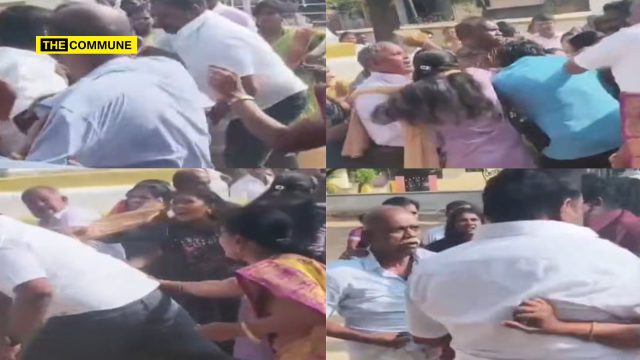
On 9 December 2025, alleged fact-checker and founder of “AltNews” Mohammed Zubair shared a 1.06-minute video showing a street vendor being “bullied” into apologising and “physically and mentally assaulted” near the Brigade Parade Ground. Now this video of his has gone viral, prompting sharp reactions online. Zubair described the incident as an unprovoked attack on a “poor street vendor selling chicken patties,” alleging that he was “slapped, abused, and had his food thrown away” by attendees of a religious event addressed by Bageshwar Dham’s Dhirendra Shastri in Kolkata.

However, netizens shared the longer version of the video which suggests additional context that was not mentioned in the initial post.

According to accounts shared by multiple eyewitnesses and local groups, the vendor identified as Sheikh Riyazul was reportedly questioned by a group of youths about whether the patties he was selling were vegetarian. Riyazul allegedly responded that the patties were “sabzi (vegetable)” patties. Those present claim that chicken pieces were later discovered inside the items, leading to a confrontation that escalated into violence.

The incident took place near the venue at a time when devotees were participating in a Gita Path recital in Kolkata, West Bengal, considered sacred by many attendees. Local sources said some participants felt deliberately misled and accused the vendor of selling non-vegetarian food while falsely labelling it as vegetarian.

The video clip posted by Zubair showed only the aftermath – the mob “assaulting” the vendor and throwing away his food but not the initial exchange regarding the patties.

The incident has reignited a larger debate about food labelling near religious gatherings, with some groups citing this as an example of why Kanwar Yatra organisers and other Hindu processions often demand that food stalls display the owner’s name and whether items sold are vegetarian or non-vegetarian.

Subscribe to our channels on WhatsAppTelegram, Instagram and YouTube to get the best stories of the day delivered to you personally.
Kerala Police Bust ₹100-Crore Fake Degree Racket; 11 Arrested Across India, Including 3 From Tamil Nadu

Kerala Police Bust ₹100-Crore Fake Degree Racket; 11 Arrested Across India, Including 3 From Sivakasi

Kerala Police have uncovered one of the country’s largest fake degree rackets, arresting 11 people from multiple states and exposing a sophisticated network that may have issued counterfeit university certificates to more than 10 lakh persons across India.

The kingpin, Dhaneesh alias Dany, who had earlier been arrested in 2013 for similar offences, is accused of rebuilding and vastly expanding the operation after completing his jail term. Police said he ran the racket from a rented house in Pollachi, Tamil Nadu, where he set up a clandestine printing press capable of producing high-quality fake academic documents.

A Multi-State Operation With Professional Printing Support

According to investigators, Dhaneesh employed skilled workers from Sivakasi, known for its printing industry, and coordinated with a wide network of agents operating across Kerala, Tamil Nadu, Karnataka, Andhra Pradesh, Maharashtra, Goa, Delhi and West Bengal.

The arrested individuals include Irshad, Rahul, Nissar, Jaseem, Shafeeq (40), Ratheesh (38), Afsal (31)

Each played specific roles, from printing and transporting fake certificates to distributing them through recruitment agencies targeting job seekers, especially those seeking overseas employment.

Certificates Routed Through Bengaluru for Secrecy

Police said certificates were printed with names of well-known universities and later customised with candidate details. To avoid detection, the documents were first sent to Bengaluru, then redistributed to agents in different states. Investigators seized hundreds of printers, computers, forged holograms, seals and stamps from Pollachi, Sivakasi, and other locations.

Nearly 1 lakh fake certificates linked to 22 universities outside Kerala were recovered.

Lavish Lifestyle Funded by the Racket

Police said Dhaneesh used the profits to finance a luxurious lifestyle, purchasing a luxury residence in Malappuram, two five-star bars, apartments in Pune, and investments in Middle East businesses.

Each certificate reportedly sold for ₹75,000 to ₹1.5 lakh, allowing the accused to earn crores.

Dhaneesh was arrested in Kozhikode while attempting to flee abroad with his family. Jaseem, the transporter of the certificates, was arrested in Bengaluru, while several printing workers were detained in Sivakasi and Pollachi.

Tamil Nadu Leg of the Operation: Arrests in Sivakasi

In a coordinated crackdown, Kerala Police arrested three suspects in Sivakasi, Virudhunagar district, who were printing fake degrees and supplying them to passport holders seeking overseas jobs.

The arrested were identified as Jainulabdeen (40), son of Fakrudeen, Venkatesh (24), son of Selvam Kuppusami, and Aravind Kumar (24), son of Kanagaraj.

A computer, forged seals and fake certificates were seized. The trio were produced before a local magistrate and later handed over to Kerala Police for further investigation.

Universities to Verify Seized Certificates; Job Fraud Also Under Scanner

Police are now investigating whether any officials from the universities named on the certificates leaked templates or sensitive formats to the racketeers. The seized certificates will be forwarded to respective universities for verification.

Authorities are also tracking individuals who used these fake certificates to secure jobs, both in India and abroad.

Source: Mathrubhumi

Subscribe to our channels on WhatsAppTelegram, Instagram and YouTube to get the best stories of the day delivered to you personally.
The New Indian Express Reports Retired Judge Sanjiv Khanna As Current CJI In News Story

As 107 INDIA bloc MPs marched to Lok Sabha Speaker Om Birla with an impeachment notice against Madras High Court judge Justice G.R. Swaminathan, The New Indian Express (TNIE) carried what should have been a serious, high-stakes report on a move by the I.N.D.I. alliance MPs.

Instead, the story quietly smuggled in a howler that completely undercuts its own gravitas: it named Justice Sanjiv Khanna as the current Chief Justice of India.

“Copies of the notice were also sent to President Droupadi Murmu and CJI Sanjiv Khanna,” – The New Indian Express online / epaper report, 10 December 2025.

There are two problems with that sentence. Both are basic. Both are embarrassing.

Sanjiv Khanna is not the Chief Justice of India

Justice Sanjiv Khanna served as the 51st Chief Justice of India from 11 November 2024 to 13 May 2025. He retired on 13 May 2025. He was followed by Justice BR Gavai, who became the 52nd CJI from 14 May 2025 to 23 November 2025. The current Chief Justice of India is Justice Surya Kant, sworn in as the 53rd CJI on 24 November 2025.

So, on 10 December 2025, any sentence that reads “CJI Sanjiv Khanna” is simply wrong on its face.

Yet TNIE’s national-level report, across multiple city epapers and the web, confidently tells readers that copies of the impeachment notice were sent to “CJI Sanjiv Khanna”. At the time of publishing this article, the line is still live, with no correction note, no update, and no clarification visible on the online text.

This is not a typo. It’s a comprehension failure.

This isn’t a stray spelling mistake or a missing comma. To write “CJI Sanjiv Khanna” in December 2025, you have to not know that Khanna retired seven months ago; not know that Gavai and now Surya Kant have already held that office; not have anyone on the desk pause and ask, “Wait, who is CJI right now?”

AI-generated lazy copy-paste work?

We cannot say definitively that TNIE used ChatGPT or any specific AI for this story. We don’t see their backend. We don’t know their workflow. But for someone to make such a mistake where the CJI name is not just outdated, it matches the sort of stale background fact you would get from an old explainer note, a pre-2025 backgrounder, or a carelessly prompted AI/boilerplate template using this context.

This is exactly how AI + inattentive editing tends to leak nonsense into otherwise straight copy: the structure is fine, the phrasing is fine, but the one factual tile silently rots and nobody checks.

If this line came from a human’s memory, that’s worrying. If it came from AI and nobody proof-read it, that’s worse.

The bigger question: if they missed this, what else are they missing?

Subscribe to our channels on WhatsAppTelegram, Instagram and YouTube to get the best stories of the day delivered to you personally.
“Sekarbabu Or Hallelujah Babu, Call Him Whatever”: BJP Leader H Raja Slams DMK HR&CE Minister

"Is He Sekarbabu Or Hallelujah Babu?": BJP Leader H Raja Asks

Bharatiya Janata Party (BJP) senior leader H Raja launched a scathing attack on the Tamil Nadu government’s Hindu Religious and Charitable Endowments (HR&CE) Department, accusing it of being “anti-Hindu” and looting temple funds. His remarks came during a media interaction in Karaikudi, Sivaganga district.

In a sharp and sarcastic critique aimed at HR&CE Minister PK Sekar Babu, Raja questioned the minister’s stance on temple administration. “Call him Sekarbabu or Hallelujah Babu, whatever you wish. But under his management, is the HR&CE Department filing affidavits opposing the lighting of lamps in temples?” Raja asked, highlighting what he termed as the department’s contradictory actions.

He escalated his criticism, labelling the HR&CE a “totally anti-Hindu, evil department” that should be abolished. Raja alleged systematic corruption, stating, “Lakhs and crores of rupees are being looted in the name of temple kumbabishekam (consecration ceremonies) as long as this department exists.”

The BJP leader accused the DMK government of siphoning temple offerings, mismanaging temple lands, and rendering the department redundant. “What is the need for such a department? If you ask what is important for a temple, it is the pooja (worship). But I have seen appointment orders for priests that state ‘you will not receive a salary’,” Raja claimed, citing an example from a temple in Maduranthakam. He contrasted this with what he alleged were high administrative overheads: “Joint Commissioners get salaries of two lakh rupees a month while temples survive on the offerings of devotees.”

“This is a government that thrives by siphoning the offerings made by Hindus to their temples. If a government acts against Hindu temples, isn’t it our duty to remove it?” he asserted..

Subscribe to our channels on WhatsAppTelegram, Instagram and YouTube to get the best stories of the day delivered to you personally.
AIADMK Slams DMK Govt For Not Implementing Court Order To Light Karthigai Deepam Atop Thirupparankundram Hill

AIADMK Slams DMK Govt For Not Implementing Court Order To Light Karthigai Deepam Atop Thirupparankundram Hill

The All India Anna Dravida Munnetra Kazhagam (AIADMK) adopted a strong resolution on Wednesday, 10 December 2025, sharply criticizing the ruling Dravida Munnetra Kazhagam (DMK) government for its handling of the Thirupparankundram Karthigai Deepam row and accusing it of undermining judicial authority. The resolution was passed during the party’s executive and general council meeting held in Chennai.

The meeting, attended by over 5,000 party functionaries including executive members, council members, former ministers, and district leaders, saw AIADMK General Secretary Edappadi K Palaniswami preside over the proceedings.

The central resolution focused squarely on the Thiruparankundram issue, where the state government has been involved in legal proceedings. The AIADMK accused the DMK regime of “challenging court directives” and deliberately defying judicial orders.

“The resolution specifically condemned the DMK regime for challenging court directives in the Thiruparankundram matter, questioning if the government was undermining judicial authority,” stated the party’s official communication. It demanded the upholding of the rule of law and stressed the imperative of protecting the independence of the judiciary from executive overreach.

In a pointed critique of governance, the resolution also highlighted concerns over the “misuse of public funds” through frequent appeals in court cases, implying that the state government is wasting taxpayer money to pursue legally questionable positions. It called for impartial and lawful administration.

While the meeting also covered political strategies for the 2026 assembly elections, including the formalization of an alliance with the BJP-led National Democratic Alliance (NDA) and declaring Edappadi K Palaniswami as the chief ministerial candidate, the condemnation of the DMK’s approach to the Thirupparankundram case remained a key highlight of the party’s political messaging.

Source: News18 Tamil

Subscribe to our channels on WhatsAppTelegram, Instagram and YouTube to get the best stories of the day delivered to you personally.
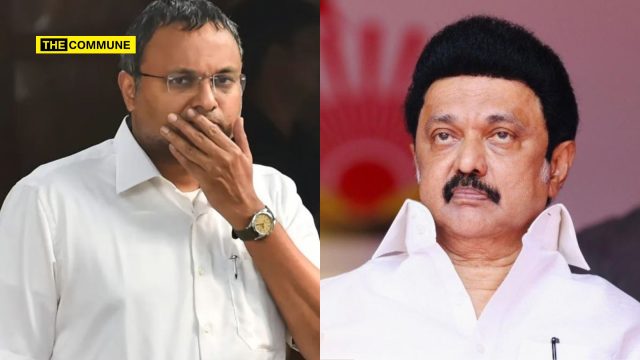
Dravidian Model Hypocrisy: DMK Bashes Modi Govt As ‘Ambani-Adani’ Govt But TN Govt Signs ₹4000 Cr Deal With JioHotstar To Make Movies And Web Series

In a move that has sparked sharp questions over political consistency, the Tamil Nadu government on Tuesday signed an MoU with JioHotstar, a Reliance-owned OTT platform, even as DMK leaders continue to attack the Union government as being “run for Ambani and Adani.”

The agreement, formalised in the presence of Chief Minister M.K. Stalin, commits JioHotstar to investing ₹4,000 crore in Tamil Nadu over the next five years as part of a larger ₹12,000-crore expansion across South India. The state government presented the partnership as a boost to the “creative economy,” but critics immediately noted the contrast between DMK’s rhetoric and its actions.

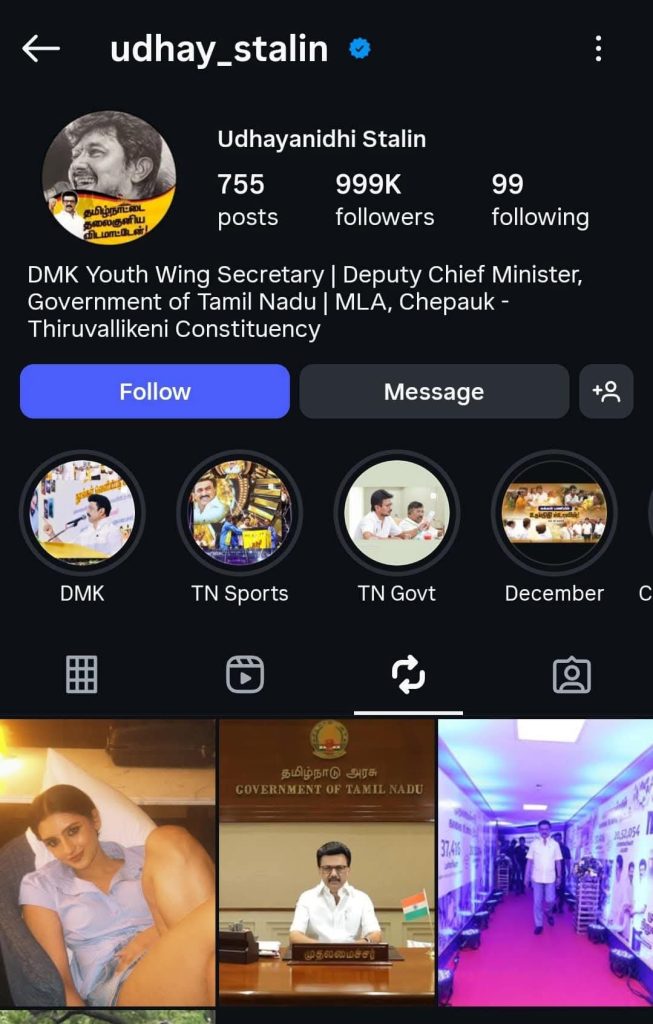
Deputy Chief Minister Udhayanidhi Stalin, who inaugurated the ‘JioHotstar South Unbound’ event, publicly celebrated the investment, stating that the initiative would create thousands of jobs and new opportunities for young creators. He also unveiled the platform’s slate of 25 new South-focused titles.

According to the MoU, JioHotstar will launch regional-first formats, introduce new-age storytellers, and establish writer labs, mentorship programmes and skill-building workshops across Tamil Nadu, effectively embedding Reliance’s creative ecosystem into the state.

The optics, however, are striking. The same party that routinely accuses the Centre of favouring big corporations especially Reliance and the Adani Group has now partnered with one of those very conglomerates for a high-profile, government-backed entertainment initiative.

Udhayanidhi emphasised that the collaboration would generate 1,000 direct and 15,000 indirect jobs and claimed it aligned with the Dravidian Model’s developmental goals. Yet the political contradiction remains front and centre.

DMK ministers routinely attack Prime Minister Narendra Modi for being “pro-Ambani and pro-Adani,” but the state government has now entered into a ₹4,000-crore agreement with a Reliance subsidiary to expand its influence in the Tamil film and OTT ecosystem.

Observers note that while the investment may indeed benefit local creators, the partnership raises legitimate questions about whether the Dravidian Model’s anti-corporate rhetoric is meant for public platforms while the government simultaneously welcomes the same conglomerates behind the scenes.

Information Minister M.P. Saminathan, Rajya Sabha MP Kamal Haasan, and several film industry figures attended the event.

Source: The New Indian Express

Subscribe to our channels on WhatsAppTelegram, Instagram and YouTube to get the best stories of the day delivered to you personally.
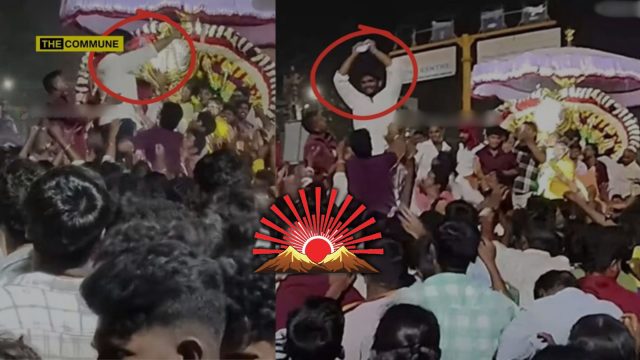
Dravidian Model: 10 Govt School Children In Pudukottai Hospitalised After Midday Meal

food poisoning stomach ache Pudukottai: 10 Govt School Children Hospitalised After Midday Meal

Ten students from the government elementary school in Kannakkanpatti were admitted to hospital on Tuesday after they complained of stomach pain shortly after eating their midday meal.

The school, which runs classes from Standards 1 to 5, had served sambar rice and boiled eggs for lunch. According to officials, the headmistress alerted authorities around 3.45 p.m. when several children began reporting abdominal discomfort.

As a precaution, all ten affected students were taken to the Pudukottai Government Medical College Hospital. Doctors said the children informed them that the stomach pain began soon after consuming the meal, prompting suspicion of possible food contamination or food poisoning.

Hospital officials confirmed that all ten children were under treatment and that their condition was stable. Authorities are expected to review the midday meal served at the school as part of routine follow-up procedures.

Source: Times of India

Subscribe to our channels on WhatsAppTelegram, Instagram and YouTube to get the best stories of the day delivered to you personally.
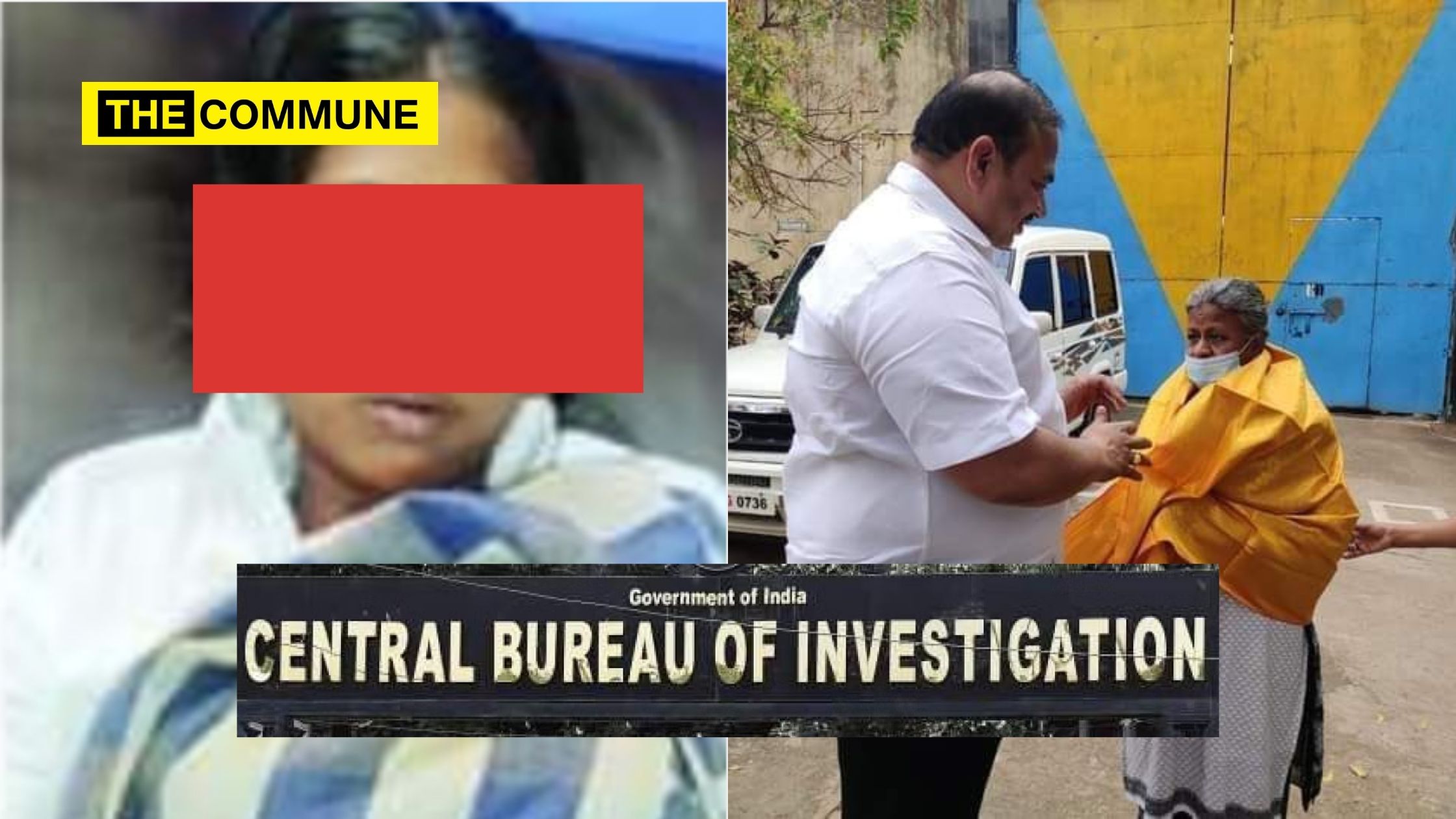
Congress Leader & Rahul Gandhi’s Advisor Praveen Chakravarty Caught Red-Handed; Media Houses Release Call Records, Audio After He Denies Reports Of Him Meeting TVK Vijay As Fake News

In a dramatic escalation of a public dispute, Congress data strategist Praveen Chakravarty publicly accused two media outlets, ThePrint and Kumudam Reporter, of publishing “100% fake” interviews attributed to him. Both organisations swiftly countered his claims, releasing call logs and, in Kumudam’s case, an audio clip to assert that the conversations did take place.

The controversy began when ThePrint published an article on 8 December detailing Chakravarty’s meeting with Tamilaga Vettri Kazhagam (TVK) leader Vijay.

Following the publication, Chakravarty took to X, denying he had spoken to the reporter and dismissing quotations attributed to him as fabricated.

ThePrint responded that the claim was “false and unfounded”, saying its reporter had spoken to Chakravarty for four minutes on 7 December at 1.10 PM, followed by a WhatsApp exchange. The organisation also released a screenshot of the call log, stating that accuracy and fairness were maintained in the report.

 Chakravarty countered the rebuttal, asserting that the only interaction at the stated time was a missed call from an unknown number and that no WhatsApp messages were exchanged. He added that he was prepared to furnish phone records in court if necessary.

Following this, Chakravarthy shared images of his interview with Kumudam Reporter, calling them ‘100% fake news’.

Subsequently Tamil weekly Kumudam Reporter responded to this allegation and defended its own article on Chakravarty. The publication said its reporter had contacted him on 5 December 2025 at 5.40 PM. and that Chakravarty had asked the journalist to “join a WhatsApp call”. The outlet also shared the audio recording of Chakravarty inviting the reporter to continue the conversation on WhatsApp.

According to Kumudam Reporter, Chakravarty never denied meeting Vijay and also had allegedly said that he did not need Rahul Gandhi’s permission to meet the TVK leader.

In its detailed rebuttal, the magazine questioned how Chakravarty could dismiss the report as “100% fake” despite audio evidence showing he had agreed to speak. The outlet also said that political pressures following his meeting with Vijay could explain his public denial, but argued that blaming the media was “unfair”.

They wrote, “…he said, ‘I do not need to meet a party leader without Rahul Gandhi’s permission. TVK leader Vijay spoke to Rahul Gandhi on my phone.’ Now since this was said to us on a WhatsApp call, it could not be recorded. He said, ‘Brother, let us do a WhatsApp call’ (we have the audio of it) – how can he deny that he did not speak to the Kumudam reporter? Generally, people in high positions of political parties say certain things only on WhatsApp calls. Then, when they say certain things off the record, they tell reporters whether they can publish it or not. The media does not publish them on the basis of source and trust. Or if requested, they will publish them on the basis of authenticity. However, during the above WhatsApp call conversation with Praveen Chakravarthy, our only intention was to ask, ‘Did you meet and speak to Vijay?’ The person who answered said, ‘Do not publish this’ and did not say anything. Based on that, we published this article. Moreover, the above article did not mention anything wrong about Praveen Chakravarthy. Despite all this, while he has never denied meeting Vijay, Praveen Chakravarthy says that ‘meeting Vijay is not a crime’. In such a situation, if he denies our article as 100% fake news, then we need to clarify whether he is calling what he said to us on the call was fake, or whether he is calling the fact that he met Vijay on the advice of Rahul Gandhi fake. Mr. Praveen Chakravarthy, I can understand the political pressures that have come upon you after meeting Vijay. You should face them honestly, but how is it fair to blame the media?”

Subscribe to our channels on WhatsAppTelegram, Instagram and YouTube to get the best stories of the day delivered to you personally.
A High Court Judge Gives Hindus Their Right, Defying The Dravidianist Establishment, And ‘Secular’ Parties Want Him Gone

If there was ever proof that the secular establishment sees Hindu rights as a threat, the impeachment campaign against Justice GR Swaminathan is it.

For decades, MPs who now parade as champions of “judicial integrity” have watched judges flirt with corruption, bend the law for political patrons, and sermonise against Hindu traditions. Not once did they reach for Article 124.

Yet the moment a judge insists that a Hindu ritual be allowed in accordance with tradition and court orders, 100+ INDIA bloc MPs erupt like an offended priesthood.

A Rare Judge Who Refused to Play by Their Script

Justice Swaminathan crossed the one red line India’s old ideological ecosystem will never tolerate – He refused to treat Hindu traditions as inferior or negotiable.

His Deepam order at Thirupparankundram did not create new rights. It simply restored what always existed. But to a political class used to vetoing Hindu practices through “law and order” excuses, that alone made him dangerous.

So dangerous that Parliament had to be weaponised.

So urgent that MPs who couldn’t be bothered to read half the judgments they criticise suddenly became constitutional purists.

A Judge Refuses to Bend to the DMK – and That Is His ‘Crime’?

Justice Swaminathan’s order did not disturb public order; it disturbed political order. He reminded the Tamil Nadu government that it cannot arbitrarily suppress Hindu customs, the rights of lay citizens living in the state, under the pretext of “law and order”.

In a state where the ruling party routinely inserts itself into temple administration, this was sacrilege.

The result? Over 100 MPs signed an impeachment notice. MPs who don’t know (probably) where Thirupparankundram is on the map, how it is pronounced, its significance, even.

They signed it not because the judge was corrupt.
Not because he violated procedure.
But because he refused to bow to a government, their ally’s government, that treats Hindu practices as threats.

The Caste Subtext: A Brahmin Judge Defying the Dravidian Establishment

To pretend caste has nothing to do with this would be intellectually dishonest.

The DMK ecosystem has, for years, mobilised its base by demonising Brahmins as symbols of imagined oppression. A Brahmin judge asserting judicial independence, especially in a case involving Hindu tradition, is a nightmare scenario for a party that relies on Brahmin-baiting as a political identity marker.

The attack on Justice Swaminathan fits cleanly into that long-standing ideological script. His caste makes him an easier target.
His rulings make him a necessary target.

And Tamil Nadu’s political class knows it.

And the abuses? Have you seen any other judge in Tamil Nadu being abused for their caste? When Justice Senthil Kumar was just mentioned and mildly criticised, the citizen was thrown in jail. And when abuses poured from the Dravidianist quarters against Justice GR Swaminathan, the ruling dispensation, encouraged it.

Where Was This Energy When Judges Actually Violated Public Trust?

Judges accused of bribery?
Silence.

Judges whose comments openly belittled Hindu beliefs?
Silence.

Judges whose orders gave comfort to extremist groups?
Silence.

But one judge who refuses to reduce Hindu citizens’ rights to a footnote – Impeach him immediately! Mobilise the entire alliance. Draft emotional press statements. Cry about “secularism under threat.”

It would be funny if it wasn’t so revealing.

The Real Target Is the Judiciary’s Space to Protect Hindu Rights

The impeachment attempt is meant to send a message to every judge in India:

Uphold minority claims → celebrated.

Uphold Hindu claims → impeached.

This is not about one ruling; it is about warning future benches. Judicial independence is tolerable only when it conforms to the ideological preferences of the political class.

A judge who upholds secularism is fine, he/she is the best, in fact.
A judge who upholds Hindu rights is dangerous. This is the perverse logic at play.

The I.N.D.I Bloc’s Reaction Reveals More About Them Than About Swaminathan

The great irony is that the only time these MPs invoked the Constitution’s most serious punitive mechanism was to punish a Hindu religious victory. Not for corruption. Not for misconduct. Not for ethical lapses.

For a lamp on a hill.

A Deepam that has exposed a deeper rot.

Subscribe to our channels on WhatsAppTelegram, Instagram and YouTube to get the best stories of the day delivered to you personally.
Sadhguru’s Isha Foundation Launches Free Cremation Service Across Tamil Nadu For Below Poverty Line Families

Sadhguru’s Isha Foundation has launched a free cremation service for Below Poverty Line (BPL) families at all crematoriums maintained by the Foundation across Tamil Nadu. The initiative was formally inaugurated by the Honorable Minister for Municipal Administration, Thiru K.N. Nehru in Chennai. Speaking at the inauguration, the Minister commended the Foundation’s longstanding service, noting that Isha-managed crematoriums have facilitated over one lakh cremations, ensuring dignity and adherence to proper procedures. 

The newly launched free cremation service aims to support economically disadvantaged families in performing the final rites of their loved ones without financial strain. Isha currently operates 17 gas crematoriums in collaboration with the Tamil Nadu government and is preparing to assume responsibility for three additional facilities.

For the past 15 years, under Sadhguru’s guidance, Isha Foundation has been managing crematoriums in several districts of Tamil Nadu in partnership with the state government. In these facilities, Isha has revived ancient traditions and death rituals with a powerful energy basis, conducting them in the spirit of service rather than as a commercial venture. The processes are performed with sensitivity and awareness to ease the hearts of the family of the deceased. 

The crematoriums managed by Isha are located in Chennai, Vellore, Thanjavur and Coimbatore district, including Nanjundapuram, Veerakeralam, Thudiyalur, Podanur, Vellalore, Alandurai, Thondamuthur, Karamadai, and Goundampalayam.

All facilities are maintained in full compliance with guidelines issued by the Pollution Control Board and the Government of Tamil Nadu for gas-electric crematoriums. Beyond operational management, Isha undertakes environmental and infrastructural improvements, such as developing park-like surroundings, planting dense tree cover, establishing proper pathways, and maintaining hygienic bathing and toilet facilities. These measures are implemented with government support to ensure a clean, environmentally safe facility.

To uphold the sanctity of the final rites, Isha provides specialized training to crematorium staff to ensure respectful handling of the deceased and appropriate conduct within the solemn setting. A designated mandapam is also made available on the premises for performing traditional rituals.

Guided by Sadhguru’s vision, Foundation plans to expand this initiative by adopting 1,000 to 3,000 crematoria across Bharat, working to restore their traditional sanctity and ensure dignified, compassionate service for all.

Subscribe to our channels on WhatsAppTelegram, Instagram and YouTube to get the best stories of the day delivered to you personally.