Home Blog Page 1465

‘#ஈவேராஎனும்ஈத்தரை’ (EVR, the scum) trends on Twitter

E.V. Ramaswamy Naicker, popularly hailed as ‘Periyar’ by his followers, once again finds himself facing the ire of netizens with the hashtag #ஈவேராஎனும்ஈத்தரை (transliteration – EeVeRa Enum Eetharai, roughly translating to EVR, a scum).

The hashtag has been trending since last night with many Twitteratis taking a jibe at the controversial marriage between EVR and his own daughter Maniammai. This hashtag trending came as a reaction to derogatory posts on Hindu Gods by ‘Periyarists’.

Many also lashed out at EVR’s hatred towards Dalits especially Dalit women.

https://twitter.com/vechusenjing/status/1380521006679216128

https://twitter.com/madrasmanaar/status/1380732827503845376


Here are some of the outstanding posts doing the rounds in social media.

The above is a scene from the famous Tamil movie ‘Thillu Mullu’. In this, the interviewer is asking ‘Who is EeVeRa Enum Eetharai’ to which the interviewee says ‘The guy who went to Yercaud for honeymoon at the age of 70’.

Click here to subscribe to The Commune on Telegram and get the best stories of the day delivered to you personally.


“We need permission for Ramzan night worship during the Corona period”: Thamimun Ansari

MLA Tamimun Ansari, who was elected on the ADMK ticket, demanded that Muslims be granted special consideration for night worship during Ramzan.

“The Tamil Nadu government has again put some restrictions on the spread of the second wave of the Corono epidemic. We applaud this because it is unavoidable that people would act to save their lives. We recommend that mosques be permitted to stay open until 10 p.m. for people to conduct night worship, as the holy month of Ramzan starts in the second week of this month,” he said in a press release.

Meanwhile, the state government has denied permission for Kallalagar festival in Madurai.

Click here to subscribe to The Commune on Telegram and get the best stories of the day delivered to you personally.
Stalin questions DMK office bearers about low turnout in key constituencies, to act on dissidents after results

DMK President Stalin in a meeting yesterday with candidates and district secretaries reportedly questioned some of the candidates concerned about the low turnout in their constituencies.

The DMK’s sitting MLAs’ constituencies had the lowest voter turnout in the 2021 assembly election, while the constituencies where incumbent Ministers contested had some of the highest turnout. In particular, the low turnout in Chennai has come as a shock to the DMK leadership.

The IPAC team predicted that the party will win a majority of seats and come to power. However, the low turnout has raised various doubts with the DMK leadership. In this context, Stalin addressed some DMK candidates from Chennai, Kanchipuram, Tiruvallur and Thiruvannamalai districts at the Chennai Arivalayam yesterday. He asked them the reasons for the low turnout.

Stalin also gathered information on rebels who operated against the party after being denied assembly election tickets. After the polls, Stalin intends to take action against the dissidents.

Click here to subscribe to The Commune on Telegram and get the best stories of the day delivered to you personally.
CBI books civil servant couple in disproportionate assets case

CBI money laundering fugitive

The Central Bureau of Investigation (CBI) on Friday carried out searches in Jaipur, Jodhpur and Udaipur after booking 1989-batch civil servant couple Alka Rajvanshi Jain and Amit Jain for allegedly amassing disproportionate assets to the tune of ₹5.5 crore, officials said.

Alka Jain, an Indian Revenue Service officer posted as Commissioner of Income Tax (Appeals) in Udaipur, and her husband Amit Jain, an India Railway Engineering Service officer posted as Group General Manager, Rail Vikas Nigam Ltd., have been named in the FIR. Vikas Rajvanshi, a Chartered Accountant, who allegedly helped them acquire the illegitimate assets has also been booked by the CBI.

The premier investigative agency carried out searches at Jaipur, Jodhpur and Udaipur at the premises of the accused on Friday, officials said.

Based on a tip off from a “reliable source”, the CBI has alleged that the couple acquired “huge movable and immovable assets” to the tune of ₹5.53 crore during the period from April, 2010 to June, 2018 in their own names. The worth of the amassed assets are disproportionate to their known legal sources of income, the CBI has alleged.

The investigating agency alleges that the couple had assets worth over ₹35.14 lakh in 2010, which swelled to a massive amount of ₹8.80 crore in June, 2018 which includes bank balances, vehicles and immovable assets in their own names.

According to the CBI, the civil servant husband and wife duo had earned ₹3.72 crore by way of salary, loan, GPF withdrawal et cetera during the period. In the same period, the couple incurred a total expenditure of ₹80.06 lakh, which includes repayment of the loans availed by them from bank, education, et cetera, thus making the worth of their disproportionate assets ₹5.53 crore, the CBI alleged.

Click here to subscribe to The Commune on Telegram and get the best stories of the day delivered to you personally.
Another Hindu girl in Sindh Pakistan abducted, converted to Islam and married off

Sindh

In yet another incident of abduction and forced conversion to Islam, a 22-year-old Hindu girl named Arti Bai was kidnapped on Saturday (3 April) in Larkana in the Sindh province of Pakistan and married off to a Muslim man.

Karachi based journalist Veengas posted a video on Twitter that showed the Hindu community of Sindh protesting and demanding justice in the case of the abduction of Arti Bai. It is also reported that the local court did not allow Arti’s parents to meet their daughter.

According to a report by ANIArti Bai’s father Dr. Namo Mal said that his daughter went missing after she left home for the beauty parlour where used to work.

Such instances of Hindu girls being kidnapped in Pakistan are routine, along with the attacks on Hindu temples. As per data available, only 30 Hindu temples in Pakistan are functional today, out of the 1,300 pre-Partition era temples that existed in the region.

In December 2020, Samuel Brownback, a top US diplomat highlighted the severity of the human rights violations and the lack of religious freedom in Pakistan. Brownback said that Pakistan is trafficking Hindu and Christian women to China as “concubines” and “forced brides”.

Click here to subscribe to The Commune on Telegram and get the best stories of the day delivered to you personally.

US navy conducts operation near Lakshadweep without India’s nod, MEA raises concerns through “diplomatic channels”

US Navy Lakshadweep
Featured Image: Representational photograph | Credits: AP

In a move that could potentially cause a diplomatic spat, the US Navy has announced that it asserted navigational rights and freedoms inside India’s exclusive economic zone (EEZ) near the Lakshadweep islands without seeking India’s prior approval.

Every coastal country’s EEZ extends to 200 nautical miles (370km) from its shores and the country in question has exclusive rights to all resources in the water, including oil, natural gas and fish. Any military activity in the EEZ requires the country’s permission.

In 2019 after a Chinese vessel that had intruded into Indian waters near the Andaman and Nicobar Islands was repelled, navy chief Admiral Singh said, “If you have to do anything in our EEZ, you have to notify us and take permission”.

US Navy claims to challenge India’s “excessive maritime claims”

A statement from the US Navy said that USS John Paul Jones, an Arleigh Burke-class guided missile destroyer, asserted navigational rights and freedoms around 130 nautical miles west of the Lakshadweep Islands.

“This freedom of navigation operation (FONOP) upheld the rights, freedoms, and lawful uses of the sea recognised in international law by challenging India’s excessive maritime claims,” the US 7th fleet said in a statement on April 7.

The development comes at a time when the navies of India and the US recently concluded multilateral drills in the eastern Indian Ocean Region (IOR). France, India, the US, Japan and Australia carried out complex maritime drills from April 5 to April 7 in the eastern IOR to enhance interoperability among their navies.

FONOPs are designed to challenge coastal state maritime claims that unlawfully restrict navigation, says US

The US Navy regularly carries out FONOPs in the disputed South China Sea. This time, the US Navy conducted a FONOP near the Lakshadweep islands.

“US Forces operate in the Indo-Pacific region on a daily basis. All operations are designed in accordance with international law and demonstrate that the United States will fly, sail and operate wherever international law allows,” the 7th Fleet statement continued.

“We conduct routine and regular FONOPs, as we have done in the past and will continue to in the future. FONOPs are not about one country, nor are they about making political statements,” it added.

The 7th Fleet is the largest of the US Navy’s forward deployed fleets. During the 1971 India-Pakistan war that resulted in the liberation of Bangladesh, it was the 7th Fleet that was sent by the US regime to the Bay of Bengal to put to pressure on India.

On April 7, the US Navy said in another statement that USS John Paul Jones asserted navigational rights and freedoms in the vicinity of the Maldives by conducting “innocent passage” within its EEZ without seeking prior permission. It said this was consistent with international law.

The US Department of Defense (DoD) released its annual Freedom of Navigation (FON) Report for 2020 on March 10, 2021. These reports identify the broad range of excessive maritime claims that are challenged by the US government. “This year… US forces challenged 28 different excessive maritime claims made by 19 different claimants throughout the world,” the State Department said in a statement on March 16.

DoD’s operational challenges, also known as FONOPs, are designed to challenge coastal state maritime claims that unlawfully restrict navigation and overflight rights and freedoms and other internationally lawful uses of the sea related to these freedoms guaranteed in international law as reflected in the 1982 Law of the Sea Convention, the statement added.

MEA says US ship was “continuously monitored”, adds that concerns conveyed “through diplomatic channels”

Reacting to this development, the Ministry of External Affairs (MEA) said that India’s concerns have been conveyed to the Government of the United States through the diplomatic route. The MEA also said that the USS John Paul Jones was “continuously monitored” when it carried out the operation in India’s EEZ.

The Indian government further differed with the US Navy, regarding its statement that India’s requirement of prior consent for military exercises in its exclusive economic zone was in contravention of the international law.

“The Government of India’s stated position on the United Nations Convention on the Law of the Sea is that the Convention does not authorise other States to carry out in the Exclusive Economic Zone and on the continental shelf, military exercises or manoeuvres, in particular those involving the use of weapons or explosives, without the consent of the coastal state”, the MEA said in a press release.

“The USS John Paul Jones was continuously monitored transiting from the Persian Gulf towards the Malacca Straits. We have conveyed our concerns regarding this passage through our EEZ to the Government of U.S.A through diplomatic channels”, the press release stated.

Click here to subscribe to The Commune on Telegram and get the best stories of the day delivered to you personally.

Prince Philip, husband of Queen Elizabeth II, dead at 99

Prince Philip

Prince Philip — Queen Elizabeth II’s husband — has died after more than 70 years by the monarch’s side. He was 99 years old. His death, which occurred two months before his centennial birthday, was confirmed by Buckingham Palace on Friday, April 9.

Philip, the Duke of Edinburgh, was the world’s longest reigning consort, with more than seven decades of public service.

The Duke was well-known for his public gaffes and off-the-cuff comments before retiring from royal duties, due to old age, in 2017.

Prince Philip and the then-princess Elizabeth married at London’s Westminster Abbey in 1947. With the wedding coming so soon after World War II, Elizabeth used ration coupons to buy material for her dress. The then-princess Elizabeth was coronated six years later on June 2, 1953, with her prince by her side.

Born Prince Philip of Greece and Denmark in the House of Glücksburg

The duke was born Prince Philip of Greece and Denmark, in the House of Glücksburg, to parents Prince Andrew of Greece and Princess Alice of Battenberg, on June 10, 1921.

Aged just 18 months, his family fled Greece fearing political instability which led to his uncle King Constantine I abdicating.

The family were taken to Britain on a Royal Navy ship with the baby prince in a cot made from an orange box.

On becoming a naturalised British citizen, he took on the surname Mountbatten from his uncle Louis Mountbatten, 1st Earl Mountbatten of Burma, which stays with the family to this day.

In 1939, Prince Philip joined the royal navy as a cadet before becoming a sub-lieutenant, then first lieutenant on destroyer HMS Wallace in 1942. He was then first lieutenant of the W-class destroyer, HMS Whelp, which was in Tokyo Bay when the Japanese signed the surrender in 1945.

The duke completed 22,219 solo engagements between 1952 and 2017, when he stepped down from royal duties.

He was patron, president or a member of more than 780 organisations and once described himself as “the world’s most experienced plaque-unveiler” during an event at Lord’s cricket ground, in London.

Prince Philip had a series of hospital visits including for bladder infections in 2012, 2015 and 2017, as well as a pre-existing condition in 2019. In February, 2021, he was admitted to hospital on advice of his doctor after feeling unwell.

Philip leaves behind four children with Elizabeth, heir to the throne Prince Charles, Princess Anne, Prince Andrew and Prince Edward.

He also has eight grandchildren, Prince William, Prince Harry, Princess Eugenie, Princess Beatrice, Zara Tindall, Peter Phillips, Lady Louise Windsor and James Viscount Severn.

Click here to subscribe to The Commune on Telegram and get the best stories of the day delivered to you personally.
Church, the main obstructer of development in India

There have been several reports of fishermen protesting against development projects especially in coastal villages of Thoothukudi and Kanyakumari where the Christian population is high.

This has been the case with several projects like Kudankulam nuclear power plant, Sagarmala project, construction of the Enayam and Colachel ports, etc. After a long hiatus, the Kudankulam nuclear power plant has been operating for some years now and has made Tamil Nadu a power surplus state. But the status of projects like Enayam and Colachel ports have been in doldrums, thanks to the protests instigated by the Church. 

In 2017, due to the constant hurdle posed by the people and the Christian clergy at Enayam for the container terminal project, a team of government officials went to Dakshinathu Dwarakapathy village near Kovalam to survey. Upon seeing the officials, more than 500 people led by Parish priests Prabu Doss and Gildus gheraoed and shouted slogans. Four officials who were on the survey boat in the sea were surrounded by 10 boats. Police had to be called in to contain the situation and the team left without surveying.

The team was placed under ‘house arrest’ at the house of Parish Priest in St. Ignatius Church. Their equipment were also brought ashore. Later some government officials and police arrived and after discussing with the Parish Priest, got them, their boat and equipment released.

These projects have been relocated several times due to the protests instigated by the Christian priests of the region. If one were to visit the districts of Thoothukudi, Ramanathapuram and Kaniyakumari, the domination of the Church would be clearly visible. 

There are many levels of Christian church administration – high diocese, diocese, parish, and ‘anbiyams’ (basic christian communities in Tamil). At the conclusion of the meeting of the Second Vatican Council in 1962-65, it was decided to establish the basic units called ‘Basic Christian Communities’ to improve communication with the community. The system is said to have been first implemented in Italy and South Africa. Since then they have formed these units wherever Christianity has spread.

Under one ‘anbiyam’, around 40 Chrisitian families are brought together. Thirty such ‘anbiyams’ are established in one parish. A fisherman from one of the coastal villages had once posted on social media exposing the nefarious designs of the ‘anbiyams’. He explains how the coastal villages were managed and resolved by local committees and panchayats until the year 2000, and how the situation has changed since the establishment of the ‘anbiyams’. He said that people of the village were bound to the ‘anbiyams’ and that no one could access the people without the contact of the ‘anbiyams’.

He also accused that the Church collected money worth thousands from every home as commissions and interfering in the administrative and political affairs. He said that people of the village are being controlled by these ‘anbiyams’ and that they never pay heed whenever the villagers face any trouble.

We all must have heard of fishermen complaining that they did not receive relief money when Ockhi and Gaja cyclone hit Tamil Nadu. It is because of these ‘anbiyams’ that relief money has been unable to reach to those who need. Even if the government wanted to reach these people, the priests at the ‘anbiyams’ act as the mediator.  Though Ministers and MLAs go to these villages to provide relief assistance, these people can only be reached through a parish priest at these ‘anbiyams’. Relief supplies, including money and food, should be given to these priests.

What is worrisome is that the people in these villages are held hostage by these ‘anbiyams’ as the Christian priests maintain the data of the people including birth/death certificates, ration cards, and other documents.

Now, understand why these coastal villages dominated by Church oppose these development projects. This is the strategy followed by the Catholic Church to keep the villagers under their control at all times. The reason is that if growth comes and people progress economically, their grip on the people would weaken. So creating a state of mind against the state and keeping any government aid under their control without letting them go directly enables the Church to influence not just the people but also the politics and development of the region. 

Majority of Christians in coastal villages are converts who had to change their religion due to poverty. If the people attain prosperity due to the economic development of the region, the Church’s efforts to convert the gullible would be impacted for which billions of dollars are raised abroad and sent into India through FCRA NGOs. This is one of the main reasons why any developmental work in the coastal regions faces resistance.

(With inputs from Kathir News)

Click here to subscribe to The Commune on Telegram and get the best stories of the day delivered to you personally.
Uttarakhand Govt frees 51 prominent Hindu temples from under state control

Uttarakhand Hindu temples

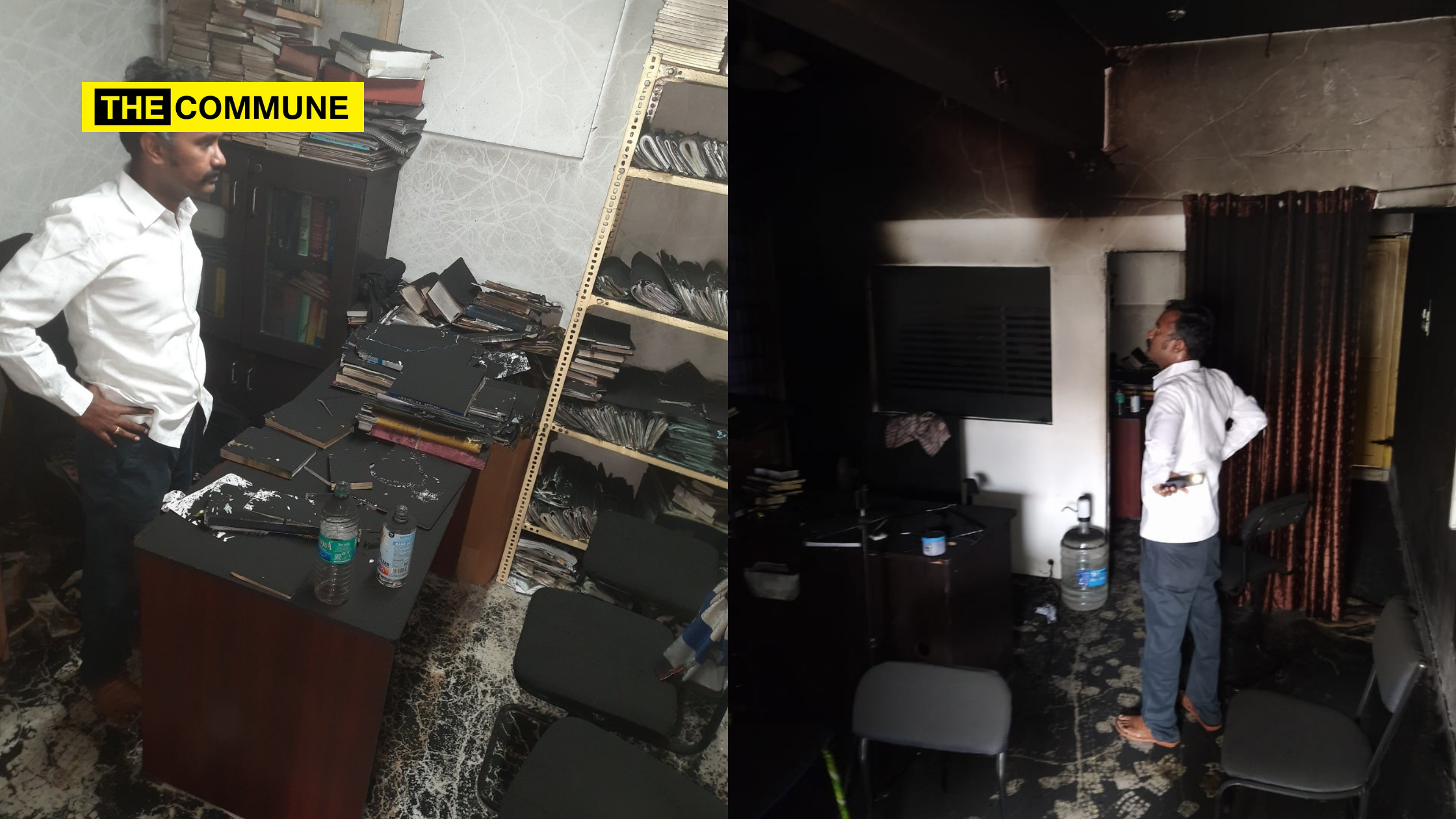
Newly-appointed chief minister of Uttarakhand Tirath Singh Rawat has announced to free 51 Hindu temples in the state from government control. This announcement overturns the decision of the former chief minister Trivendra Singh Rawat-led government.

Former chief minister Trivendra Singh Rawat had enacted the Char Dham Shrine Management Board Act 2019 to oversee the management of Hindu temples.

The decision to free the temples from government control came after priests and hermits associated with the temples protested the state-takeover.

As many as 51 shrines, including Badrinath, Kedarnath, Yamunotri and Gangotri, were under the direct control of the state government after Governor Baby Rani Maurya gave her assent to the Char Dham Shrine Management Bill that was passed during the winter session of the Assembly.

Then chief minister Trivendra Singh Rawat had said the new act will help in the “professional” management of the shrines that are visited by lakhs of people every year. In 2019, over three million people visited the four shrines in the hill state.

According to the act, the chief minister would be the board’s president, while a senior officer of the Indian Administrative Service (IAS) will become the chief executive officer.

There was widespread resentment ever since the government decided to introduce the bill. Several priests feared the new system would curtail their role and duties which they and their families have been engaged with for decades. The priests argue that these temples were set up by their ancestors and they have been managing their affairs for generations. The priests and local devotees also anticipated the subsequent interference in temple rituals and traditions by the state government. There were also aspersions on how the Uttarakhand government would spend the income generated from the Hindu temples.

Priests, hermits and godmen had been opposing the government’s move to take over the management of the temples for several months. Several of them even marched to the Vidhan Sabha to protest against the government, arguing that the move is an interference in the belief of Hindus.

The matter also reached the Uttarakhand High Court, but the court ruled that the law was constitutional.

State Congress president Pritam Singh had earlier said that if his party is voted to power in Uttarakhand, the Act would be revoked. Elections to the state legislative assembly are scheduled to be held in 2022.

Click here to subscribe to The Commune on Telegram and get the best stories of the day delivered to you personally.
Ankara Municipality cuts water supply to Chinese embassy after embassy threatened Turkish politicians

Chinese embassy Ankara Turkey
Featured Image: A demonstrator wears a mask painted with the colours of the flag of East Turkestan
during a protest by supporters of the Uyghur minority in Istanbul on April 1. Credits: AFP

A major diplomatic row has erupted between Turkey and China after two Turkish politicians criticised Beijing’s treatment of its Muslim Uyghur minority in the province of Xinjiang.  Immediately after the comments made by the two Turkish politicians became known, the Chinese Embassy suggested on Twitter that it could take action against two Turkish politicians who criticised Beijing’s treatment of its Muslim Uyghur community.

The mistreatment and the genocidal activities perpetrated against the Uyghurs is a very sensitive political and diplomatic issue for Beijing.

The Twitter spat led to Turkey’s Ankara Municipality on Wednesday (7 April) stopping the water supply to the Chinese embassy in the city, as the embassy’s tweet was widely interpreted as a threat and caused social media outrage in Turkey.

As per reports, the Chinese Embassy tagged Meral Aksener, the head of the opposition Good Party, and Ankara’s mayor, Mansur Yavas, in two Twitter posts in which it defended Beijing’s policies and made it very clear that China reserves its right to a rightful response, reports The New Indian Express.

“The Chinese side resolutely opposes and strongly condemns any challenge by any person or power to China’s sovereignty and territorial integrity,” the embassy said.

Uyghurs are of Turkic ethnicity and are a native to China’s Xinjiang region. Over the years, many sought refuge in Turkey because of their shared cultural ties. However, in the last few years, Turkey has become quite silent on the plight of Uyghur Muslims in China due to strong economic ties between the two countries.

Click here to subscribe to The Commune on Telegram and get the best stories of the day delivered to you personally.