Home Blog Page 1233

‘Dravidian Stockists’ abuse Maestro Ilaiyaraaja for praising PM Modi’s development initiatives

Musical maestro ‘Isagnani‘ Ilaiyaraaja finds himself at the receiving end of attacks by ‘Dravidian Stockists’ and ‘Ambedkarites’ for his comments praising Prime Minister Narendra Modi.

Maestro Ilaiyaraaja has written the foreword for the book ‘Ambedkar & Modi – Reformer’s Ideas, Performer’s Implementation’ brought out by Blue Graph Digital Foundation.

The book is said to be an academic attempt to bring to light Dr. Ambedkar’s vision and work across domains, and how New India under Prime Minister Modi is furthering Ambedkar’s ideals

In his foreword for the book, Ilaiyaraaja describes Dr. Ambedkar as a rare leader “who made history during his own times and is still being read and followed widely, decades after his time”.

Quoting Prime Miniter Narendra Modi’s speech that he gave in 2016, Ilaiyaraaja throws light on the incident when PM Modi called Dr. Ambedkar the architect of India’s water policy.

Ilaiyaraaja also lauds PM Modi’s development initiatives in the book saying that the the Prime Minister’s ‘Make in India’ project has paved way for world class infrastructure such as roads, railways, metro rail and expressways.

“When it comes to social justice, Narendra Modi has brought in many laws and provided legal protection to the backward people in the society through measures like setting up of National Commission for Backward Classes. He has made a difference in the lives of the poor by building houses and toilets. “, he noted.

Ilaiyaraaja has also appreciated PM Modi’s women-centric development initiatives like raising of marriage age for women, free LPG gas cylinders and schemes related to education of girl children.

He noted that Dr. Ambedkar would be proud to see the change brought about by the law against Triple Talaq and ‘Beti Bachao, Beti Padhao’ initiative.

“The book also points out where Dr. Ambedkar and Narendra Modi come together as personalities. Both experienced poverty and oppression and worked to eradicate it. Both were big dreamers about India who believe in action.”, Ilaiyaraaja notes.

Mr. Ilaiyaraaja has also appreciated the ‘Atmanirbhar Bharat’ initiative saying that the ‘self-reliant’ India that Prime Minister Modi is building will be a fitting tribute to India’s freedom fighters.

As a concluding note, Ilaiyaraaja recommends the book to youngsters to know about the two great sons of the soil and how a new India is being built according to the dreams of the freedom fighters.

However, this foreword written by Ilaiyaraaja for the book has irked the supporters of the ruling regime in Tamil Nadu and their allies.

Netizens who identify themselves as ‘Dravidian Stockists’, ‘Periyarists’ and ‘Ambedkarites’ have started trending a vile hashtag targetting the maestro.

A Twitter user named ‘Shafeeq’ says that equating PM Modi and Dr. Ambedkar amounts to ‘Sanghi’-ness.

Another handle which identified itself as ‘Dravidian Stock’ goes on to spew expletives against PM Modi and Ilaiyaraaja.

Another handle sympathetic to the ruling regime abuses Ilaiyaraaja for his comments praising PM Modi.

A Twitter user having Tamil Nadu Chief Minister MK Stalin’s picture abuses Ilaiyaraaja with the vile hashtag.

Click here to subscribe to The Commune on Telegram and get the best stories of the day delivered to you personally.

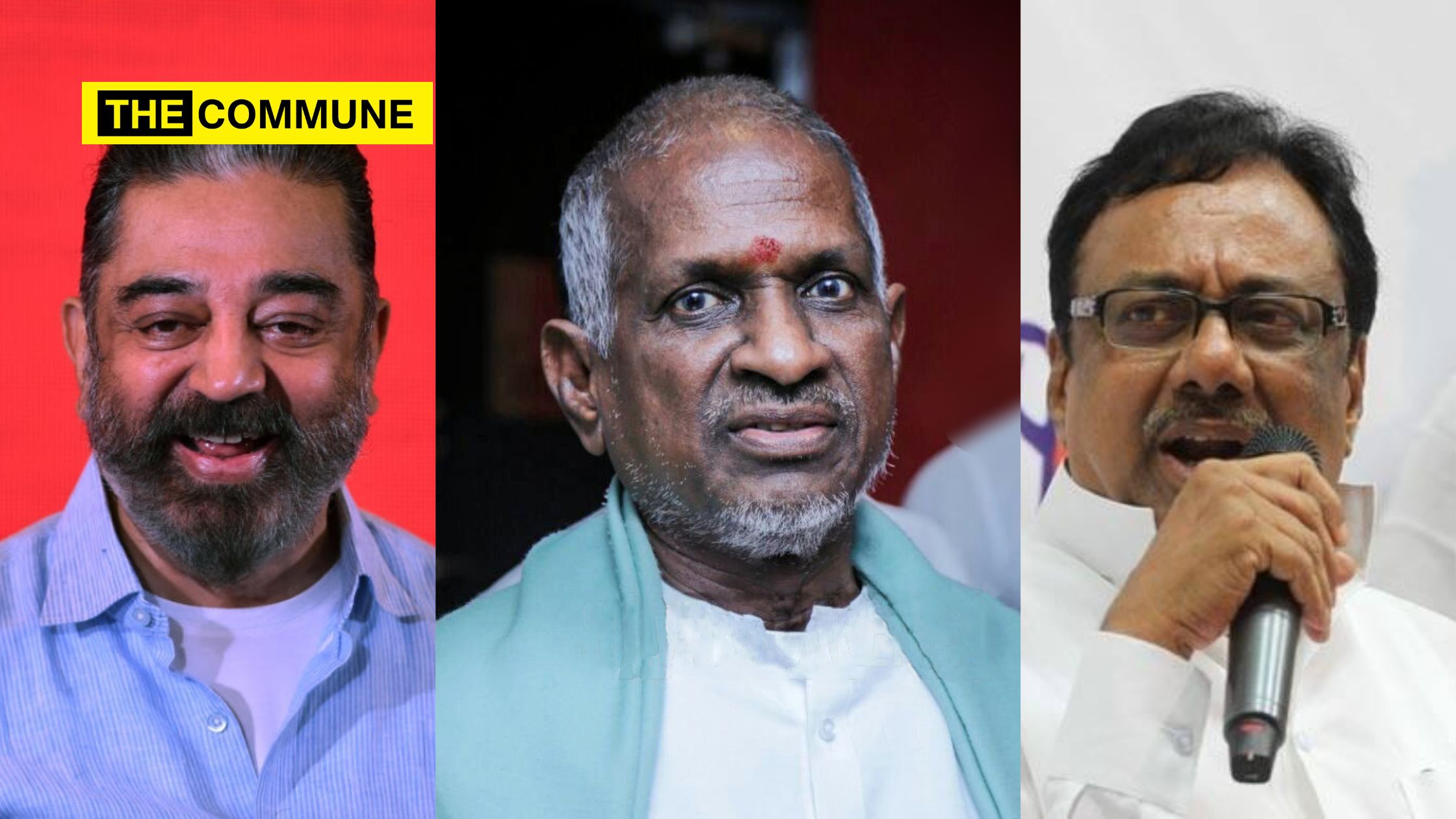
Tamil Puthandu is on Chithirai 1 and not Thai 1 as claimed by ‘Dravidian Stockists’

Puthaandu or the Tamil New Year marks the first day of the first month (Chithirai) of the Hindu Tamil calendar that is based on the solar cycle. It usually falls on the 14th of April of the English Gregorian calendar.

Not just by Tamil Hindus, the commencement of the new year is celebrated as Vishu in Kerala, Rongali Bihu in Assam, Pohela Boisakh in Bengal, Bishuva Sankranti in Odisha, Jud Sheetal in parts of Bihar, etc. Even countries like Malaysia, Indonesia, Bali, Cambodia, Laos, Sri Lanka, Thailand, etc also celebrate the traditional New Year around this time.

However, the DMK and other ‘Dravidian Stockists’ observe Pongal (which occurs around January 14) as Tamil New Year as they argue that celebrating Chithirai 1 as the beginning of a new year amounts to following a ‘Brahmin-dominated’ or Sanskritic tradition which goes against Dravidian ideologies.

But no matter how much the ‘Dravidian Stockists’ try to distort and deride our culture which is based on science, there is also enough evidence in ancient Tamil literature that the first day of the Chithirai month marks the beginning of a new year.

“திண்ணிலை மருப்பின் ஆடு தலையாக விண்ணூர்பு திரிதரும் வீங்கு செலல் மண்டிலம்”

Thinnilai Marruppin Aadu Thalaiyaaga Vinnurpu Thiritharum Veengu Sella Mandilam

The above quote by Nakkeerar, a famous Tamil poet of the Sangam age, notes that the world runs with the goat (Mesha Rasi/Aries) as the first sign.

Not only in this Sangam song, many ancient Tamil songs that are about the astronomical predictions and changes in position of planets and starts.

Kudalur Kizhar is another poet of the Sangam era whose poems are part of the Kurunthogai (166, 167, 214) and Purananuru (229). In the poem in Purananuru, where he predicts the death of Chera ruler Yanaikatchei Mantharanj Cheral Irumborai (62-42 BC), he mentions Chithirai month and Mesha rasi.

In essence, the first month of the year is the month of Chithirai during spring when the Sun enters Mesha (Aries) zodiac sign. The year ends with the month of Panguni when the sun comes up in Pisces. This is the solar calendar that is followed across the country while there are many communities in different states that follows the lunar calendar.

Image
Source: India In Pixels

There is a reason why the harvest festival is celebrated in Thai (January) and the New Year in Chithirai (April). Earlier, after harvesting the crops in the Thai month (January-February) farmers take short period of rest in the months of Masi and Panguni (February-April) and start their farming again from Chithirai (April) which marks the beginning of the spring season.

So, the festivals that we celebrate are part of ancient knowledge and tradition handed over to us by our ancestors. They also signify the rich cultural heritage of this land.

Hence, Puthandu is not a day that can be changed to the whims and fancies of a bunch of politicians and their stooges to peddle their nonsensical agenda. No matter how hard the inimical forces might try to delink Hinduism with Tamil culture, they will fail. Miserably.

Back in 2008, when the ruling government in Tamil Nadu was DMK, the then Chief Minister, M Karunanidhi passed the Tamil Nadu New Year (Declaration) Bill 2008, changing the Tamil New Year from Chithirai 1 (April 14th) to Thai 1 (January 14th or 15th).

This ridiculous change was in action for three years until it was rescinded by the AIADMK in August 2011. The DMK’s move to delink Tamil and Hindu culture did not find any resonance with the Tamil people as Tamil people continue to celebrate New Year on Chithirai 1 rejecting the DMK’s move to the dustbin.

And it will remain there!

(With inputs from Sundar Raja Cholan‘s Facebook Post in Tamil)

Click here to subscribe to The Commune on Telegram and get the best stories of the day delivered to you personally.
“Make a commitment in Tamil New Year to save Mother Soil”: Sadhguru

“All Tamil people must make a commitment in this Tamil New Year to save our mother soil,” said Sadhguru, Founder-Isha Foundation.

In his congratulatory message on the occasion of the Tamil New Year, Sadhguru said: “My hearty Tamil New Year greetings to all the Tamil people. Our nation is about to complete 75 years of independence. We have made a lot of achievements during this period. But it is unfortunate that we do not take adequate measures to protect the soil. More than 60 per cent of our total population is engaged in agriculture. The fertility of our soil has been greatly reduced in the last 40 years. Thus, the farmers face a lot of vulnerabilities. Our diet is deficient in essential nutrients. Thus, people get many different diseases.”

Sadhguru is currently on a 100 days, 30,000 km journey across 27 nations to raise awareness and build political consensus for urgent policy initiatives to prevent soil extinction. Speaking more about his journey, he said, “This problem is not only in Tamil Nadu but all over the world. Therefore, to protect the soil, we have started the Save Soil Movement. I have been traveling on a motorcycle from London to Tamil Nadu to create awareness among the people about this. I have met and talked to many people in each country, including various department heads and scientists. We are working to enact legislation to ensure that soils contain at least 3 to 6 per cent organic matter.”

He further added, “Microbes that can live in the soil may be invisible to our eyes. But we cannot survive without those microbes. About 60 per cent of microbes live in our bodies, not just in the soil. Scientists say that if we do not take appropriate action now, there will be a great famine in the next 30 to 40 years. Therefore, we must act now to protect soil fertility.”

The Movement aims to reach 3.5 billion people globally or 60% of the world’s electorate, who can vote to Save Soil. Understanding the criticality to get the whole world concerned and talk about this issue, he urged, “All Tamil people should be fully involved in this. Children should write letters to the Chief Minister of Tamil Nadu asking him to enact appropriate laws to protect soil fertility. Others need to write letters to your MLAs. In addition, everyone should talk more about soil conservation on social media.”

He signed off by saying, “In the Tamil New Year, everyone must commit to save the soil which is our mother. This is our basic duty and responsibility. Happy Tamil New Year once again to all the dear Tamil people.”

In an urgent bid to reverse and halt soil degradation, Sadhguru on 21st March 2022, embarked on a Save Soil movement journey and has passed through UK, Netherlands, Czech Republic, Austria, Slovenia, Italy, Switzerland, France and Belgium. He has been interacting with opinion makers, politicians, media persons, ecologists, influencers, general public during the journey garnering massive support for the movement.

(This is an official press release from Isha Foundation. The Commune was not involved in creating this content.)

Click here to subscribe to The Commune on Telegram and get the best stories of the day delivered to you personally.
TN govt school teacher in Kanyakumari abuses Hindus, forces students to convert to Christianity

A government school teacher in Tamil Nadu’s Kanyakumari district reportedly made objectionable remarks about Hindus and indulged in preaching Christianity to her students.

Beatrice Thangam works as a tailoring and sewing teacher at the Government Higher Secondary school located in Kannattuvilai of Kanyakumari district.

In a video, a student studying class 6 in the school can be heard accusing her teacher Beatrice Thangam of derogating Hindus as ‘sathaan‘ (devil) and glorifying Christianity.

“She asks us to read Bible. We told her that we are Hindus and we read only Bhagavad Gita. She told that Bhagavat Gita is bad and asked us to read Bible as it had good philosophy.”, the student narrates in the video.

The girl student also says in the video that the teacher told stories about a Christian and a ‘saathaan’, referring to Hindus as devils.

She also says that the teacher makes students to stitch the Christian Cross and forces them to kneel down and recite Christian prayers.

When asked if only she was subject to such forced conversion, the student says that the teacher does it with all Hindu students.

After the incident came to light, the initial inquiry was done by the District Education Officer (DEO) and the School Education Department has now suspended the teacher.

Click here to subscribe to The Commune on Telegram and get the best stories of the day delivered to you personally.
 

Idols found vandalized at temple near Kanchipuram

Idols of Hindus Gods at the Selva Vinayagaram Temple near Kanchipuram were reportedly vandalized by unknown miscreants on the night of April 10, 2022.

The Selva Vinayagar Temple is located in Ammayappanallur village near Uthiramerur in Kanchipuram district. The temple is managed by maintainend by the people of the village.

The temple has idols of Lord Ayyappan, Lord Sivan, Nandi, Goddess Parvati and the Navagrahams.

Regular poojas are conducted twice a day – morning and evening. As usual, poojas were held on the night of April 10 and the temple was closed at 8 PM.

The temple priest who opened the temple the next day morning found many of the idols vandalized. The head and right arm of the idol of Lord Ayyappan were found broken and lying on the ground.. The Navagraha idols were also broken.

The Hindu Munnani in Kanchipuram district has filed a police complaint seeking appropriate action against the culprits. Police are on the look out for the unidentified miscreants who broke the idols.

(With inputs from Dinamalar)

Click here to subscribe to The Commune on Telegram and get the best stories of the day delivered to you personally.
The Ayodhya Mandapam Controversy Explained

On Monday (April 11, 2022), the Hindu Religious & Charitable Endowments (HR&CE) Department of the Tamil Nadu Government, took over the decades old Ayodhya Mandapam in Chennai, despite strong protests from local residents and other Hindu orgnizations.

Officers of the HR&CE department led by Executive Officer Shakthi and Assistant Commissioner Kavithini, arrived on the spot and took possession of the Mandapam while those who protested were forcibly removed and detained by the police.

The Tamil Nadu government’s move to take over the Ayodhya Mandapam came just a day after the auspicious occassion of Ram Navami.

About Ayodhya Mandapam

The Ayodhya Aswamedha Maha Mandapam located on Arya Gowda Road in West Mambalam locality of Chennai, is a community hall where Hindu spiritual discourses and poojas are held periodically.

The Mandapam is run by Sri Ram Samaj, a registered society, managed by an elected body comprising of a President, Vice President, Secretary, Assistant Secretary and a Treasurer.

It was registered in the year 1958 and the name “Sri Ram Samaj” was given by Brahmasri Somadeva Sarma, the father of famous spiritual discourser, Srivatsa Jayarama Sarma.

The Ayodhya Mandapam is the brainchaild by one K. Subramania Iyer, fondly remembered as KS who along with Srinivasa Rao, a reporter of The Hindu, thought of celebrating Sri Rama Navami with great fervour and public participation.

Subramania Iyer along with Srinivasa Rao approached noted Congress leader Veppathur Venkatrama Iyer who gave a donation of ₹25 to celebrate Ram Navami that year. He also helped them collect funds from the neighbourhood and amount of ₹242 was collected with which the first Rama Navami celebrations were held under a thatched shed on a vacant land in Bhaktavatsalam Street, opposite to the present Ayodhya Mandapam.

Later a four ground plot was identified in Arya Gowda Road. Congress leader Venkatrama Iyer helped solve the encumbrance and other legalities the land held. The cost of the land was ₹5400 which was made available by K. Sundaresa Iyer the younger brother of K. Subramania as a loan which was repaid over three years.

The Ayodhya Mandapam is not a temple. It does not have a vigraham (deity idol) that has been as per the Agama traditions. A Thanjavur painting of Lord Ram purchased in 1957 is worshipped by devotees.

Other Properties Of Sri Ram Samaj

Years later, a vacant plot was purchased in Murthy Street and a community centre was built which today exists as the Mithilapuri Kalyana Mandapam.

It is primarily used by poor and middle class Brahmins to hold domestic functions like weddings, seemandham (baby shower), ayushyahomam (1st birthday), sashtiabdapoorthi (60th anniversary) and sadabhsishekam (80th anniversary).

Another plot was purchased to establish “Gnanavapi” in 1983, which is used for performing obsequies to departed souls.

The Sri Ram Samaj also establihed the Sri Sitaram Vidyalaya Matriculation Higher Secondary School in 1987.

How An Internal Dispute Let The State Enter Ayodhya Mandapam

In 2013, a person who was rejected a membership in Sri Ram Samaj, shot off a letter to the HR&CE department alleging mismanagement of funds by the Samaj.

Subsequently, the HR&CE department took over the Ayodhya Mandapam in January 2014 through an order dated December 31, 2013, citing Section 49 (1) of the HR&CE Act.

This move by the HR&CE Department came on the same day the Supreme Court ruled against the Tamil Nadu government’s control over the Chidambaram Natarajar Temple.

A ‘Fit Person’ was appointed by the HR&CE Department back then to probe the finances and manage the affairs of the Mandapam.

So, technically, the take over of Ayodhya Mandapam by HR&CE did not happen now but in 2014 itself when the AIADMK was in power.

Just like now, the government’s move to take over the Mandapam was resisted by locals. Sri Ram Samaj filed a petition in the Madras High Court against the take over.

The petitioner claimed that the Ayodhya Mandapam was not a temple as no idol was installed as per the Agama Shastra for public worship. Sri Ram Samaj contended that only portraits of Lord Ram, Goddess Sita and Lord Hanuman were present for which poojas were performed.

However on March 31, 2022, the Madras High Court dismissing the writ petition, passed orders that whether the Ayodhya Mandapam is a temple or not cannot be decided in writ proceedings.

Justice VM Velumani who passed the orders noted that it was open to the petitioner to challenge the proceedings of the HR&CE before an appropriate forum.

As the Court did not give an injunction, it became easy for the ruling DMK government to swing into action.

The matter in effect is sub-judice as the Court has neither allowed the HR&CE to proceed with the take over nor has stopped it.

This is how an internal dispute in the Samaj has led to the ‘secular’ state to brazenly enter a ‘religious’ place.

Why HR&CE’s Move Is Illegal

As mentioned earlier, the Ayodhya Mandapam is not a temple built according to Agama Shastras but a community hall used for religious purpose. There is no deity installed as per the Agama Shastra and poojas are performed to the portraits/figurines of Lord Ram, Lord Sita, and Lord Hanuman.

So, the HR&CE prima facie has no locus standi to interfere in the affairs of the Mandapam.

However, the HR&CE has contended that it found idols during the inspection adding that it is a public temple and that the Samaj had been receiving huge amount of money through hundial.

Also, the HR&CE Department had appointed the Executive Officer (EO) of the Baladandayudhapani Temple in Teynampet as the ‘fit person’ to manage the affairs of the Mandapam. T.R. Ramesh of the Temple Worshippers Society has said that the appointment of the EO is invalid as he had no appointment order in the first place.

He also said that a government servant could not be appointed as trustee in the place of sole trustee, and that only a practising Hindu can be.

The Supreme Court’s judgement in the Chidambaram Natarajar Temple Case implies that the government cannot take over a temple without substantial proven mismanagement.

However, HR&CE officials have only taken action based on ‘allegations’ that money was being misused by members for personal use.

Even if the take over has been effected, the government cannot be in control of a Hindu religious institution for eternity. The apex court in the Chidambaram Natarajar Temple case had observed, “Even if the management of a temple is taken over to remedy the evil, the management must be handed over to the person concerned immediately after the evil stands remedied. Continuation thereafter would tantamount to usurpation of their proprietary rights or violation of the fundamental rights guaranteed by the Constitution in favour of the persons deprived. Therefore, taking over of the management in such circumstances must be for a limited period… Supercession of rights of administration cannot be of a permanent enduring nature.”

The Double Standards

Many Hindu devotees and social media activists have questioned what was the urgency for the HR&CE department to take over the Ayodhya Mandapam.

Back in October 2021, the Madras High Court had directed the HR&CE Department to evict the Queensland amusement park from 21 acres of land in Poonamallee belonging to Kasi Viswanathaswami temple and Venugopalaswami temple.

The amusement park owner late ‘Oorvasi’ Selvaraj who also founded the King’s Engineering College, was a former Congress MLA and his wife Nalini Selvaraj is today a prominent Christian evangelist.

Despite the Court’s order, no action has been taken to evict the encroachers from the temple land.

The haste in which the HR&CE has acted to take over the Ayodhya Mandapam while turning a blind eye to the encroachment of Queensland has raised questions about the intention of the ruling DMK.

An Act Of Vengeance?

The West Mambalam area in Chennai is predominantly inhabited by members of the Brahmin community. The DMK’s visceral hatred and targetting of the community is well known.

In the recently concluded urban local body elections, voters of West Mambalam had elected BJP leader Uma Anandan as the ward councillor.

She is the lone BJP councillor in the 200-member Greater Chennai Corporation where a majority of the councillors are from the DMK.

That a Brahmin woman BJP leader has managed to win a seat in Chennai, which is considered to be a stronghold of the DMK is a political angle that is gaining traction.


On April 1, 2022, Tamil Nadu Governor R.N. Ravi visited the Ayodhya Mandapam to inaugurate the Ram Navami celebrations.

It is apparent that the ruling DMK does not share a cordial relationship with Governor Ravi as they have been at loggerheads ever since he assumed office.

The fact that the Tamil Nadu government’s move came just days after his visit lends much credit to the allegations of political vendetta behind the move.

Click here to subscribe to The Commune on Telegram and get the best stories of the day delivered to you personally.
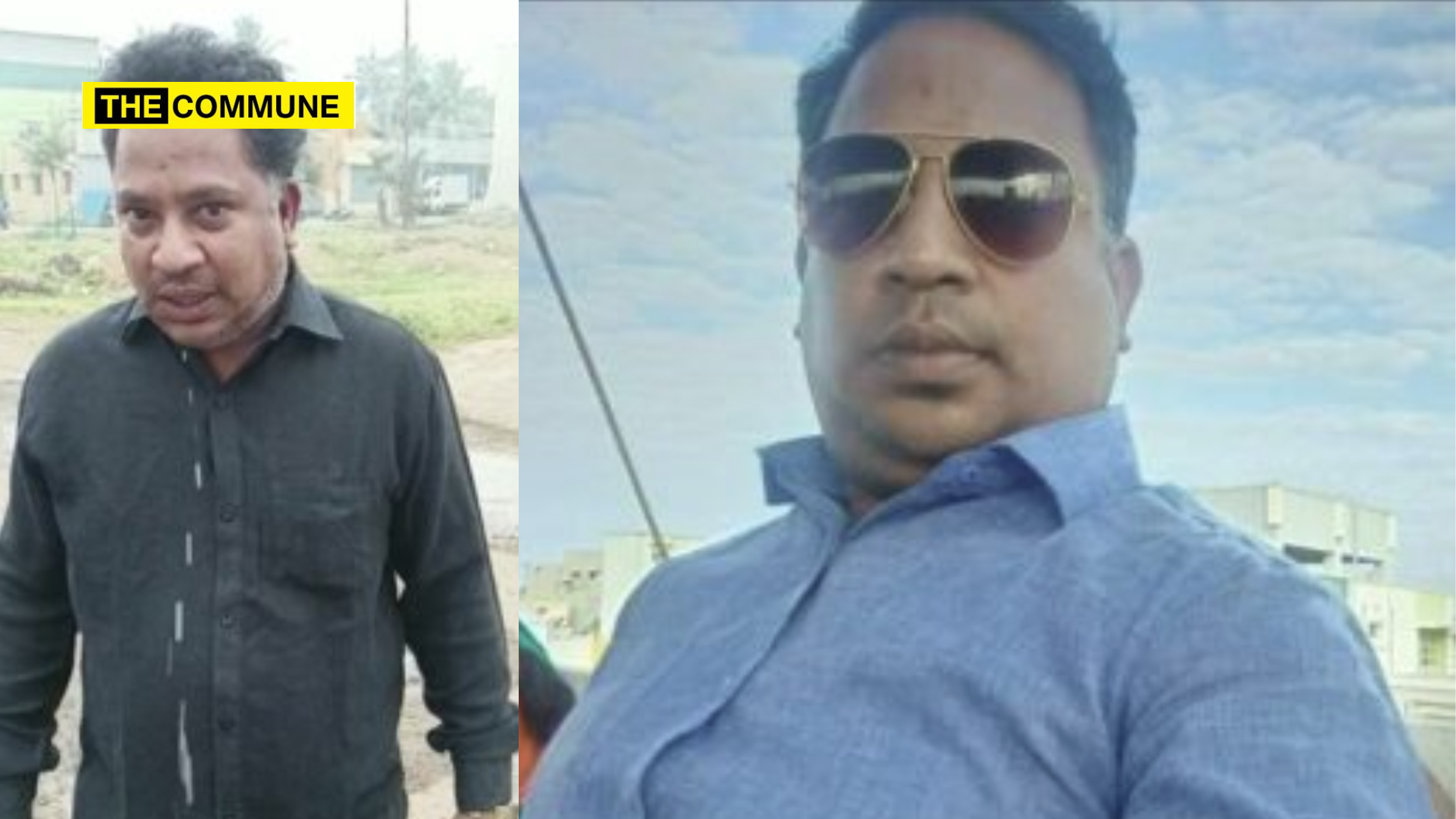
MEA Jaishankar royally shuts up American journalist over question about India’s purchase of Russian oil

In a hard-hitting and suave response to a question posed by an American journalist, Indian Minister of External Affairs said that India’s total purchase of oil from Russia in a month is probably less than what Europe does in an afternoon.

India’s Minister of External Affairs S. Jaishankar and Defence Minister Rajnath Singh are currently in the USA to participate in the fourth India-USA 2+2 Ministerial Dialogue.

US President Joe Biden also held a virtual meeting with Indian Prime Minister Narendra Modi where the two discussed the Russia-Ukraine situation.

External Affairs Minister Jaishankar and Defence Minister Rajnath Singh addressed a press after the 2+2 meeting with US Secretary of State Antony Blinken and US Secretary of Defence Lloyd Austin.

An American journalist posed a question to the US Secretary of State Antony Blinken saying that there reports of Delhi and Moscow engaging in a currency exchange mechanism for future oil purchases.

“Did you tell Secretary [Minister] Jaishankar that these could risk violation of not just current sanctions but also risks violating CAATSA?”, the lady journalist asked.

After Blinken’s response, Minister Jaishankar said that India has made a number of statements on the Russia-Ukraine war in the United Nations, the Indian Parliament, and in other forums.

“And briefly, what those positions state is that we are against the conflict. We are for dialogue and diplomacy. We are for urgent cessation of violence, and we are prepared to contribute in whatever way to these objectives,” he said.

“If you’re looking at (India’s) energy purchases from Russia, I’d suggest your attention should be on Europe. We buy some energy necessary for our energy security. But I suspect, looking at figures, our purchases for the month would be less than what Europe does in an afternoon,” Jaishankar said.

The White House too came in India’s defence on the issue of oil purchase noting that its total purchase is less than one and two per cent as against 10 per cent from the United States.

Click here to subscribe to The Commune on Telegram and get the best stories of the day delivered to you personally.
When The Muslim Identity Takes Over The Musician: What Many Do Not Know About AR Rahman

Allah Rakha Rahman (AR Rahman) is a musical genius who put India on the world map with his music. He is a man who ushered a musical revolution in India making the old and young tap their feet to his tunes.

Even today, the anticipation and expectations for a movie soars high if it bears the name of Rahman.

But AR Rahman isn’t just another musician who has scored music for hundreds of films and has many awards to his name. AR Rahman is an icon of modern India. Right from his first film Roja, his music traversed regional boundaries and has united Indians of all languages and culture.

His rendition of ‘Vande Mataram’ will make even the staunchest ‘Dravidian Stockist’ to beam with pride about being an Indian. In that sense, AR Rahman has been elemental in uniting India as a country from the Himalayas to the Indian Ocean. It wouldn’t be far-fetched to suggest his name for Bharat Ratna as he truly is one!

AR Rahman is also respected for his humility. Despite going on to achieve the highest accolades in his field, he has remained rooted to his roots. Who can forget his speech after he won the Oscars, when he said “Ella Pugazhum Iraivanuke! (Alll praise be to God!)” taking Tamil to the world stage and making Tamil people proud.

But there is something that not many people know about AR Rahman.

Is he a man blinded by his faith?

Does he allow his faith to interfere in his work?

Anecdotal references say so.

While there is nothing wrong in being religious per se, it does become a matter of concern if a person undermines or derogates other’s faith.

As they say, your right to swing your fist ends where where my nose begins.

Incident 1

Piraisoodan is a famous award-winning Tamil poet who has penned lyrics for many Tamil songs. He had worked with Rahman during his initial days when the latter was scoring ad jingles. Piraisoodan has also penned lyrics for some of the songs of Rahman.

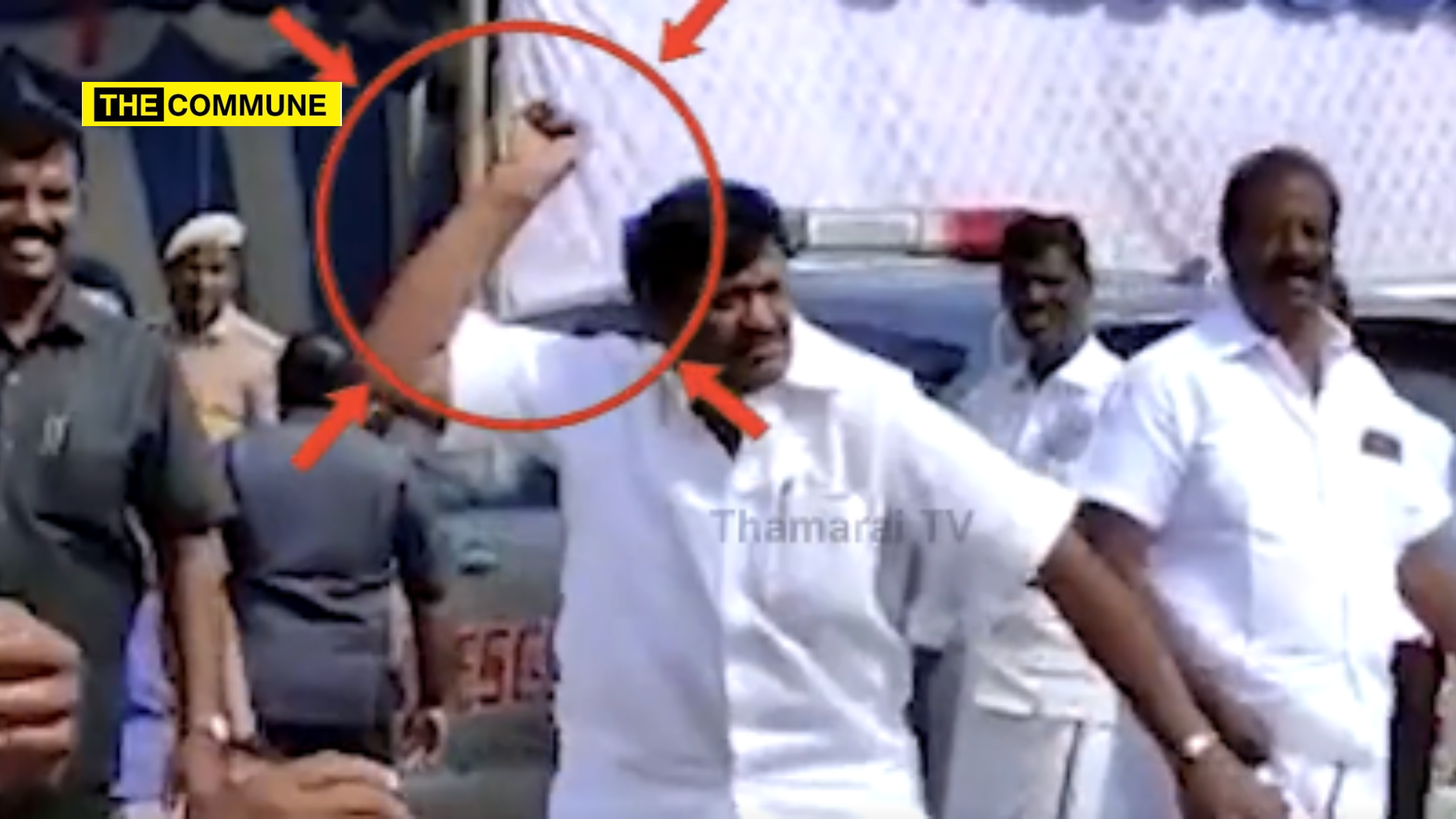
Left: AR Rahman, Right: Lyricist Piraisoodan

In an interview to a Tamil YouTube channel,  Piraisoodan said that once when he had gone to Rahman’s home, he was asked to remove the Vibhuti (sacred ash) and Kumkum (vermilion) by Rahman’s mother. Rahman along with family had already converted to Islam by then.

However, Piraisoodan, did not oblige and refused to remove the Hindu religious marks on his forehead saying that he has been having them since childhood.

Incident 2

It is hard for a Rahman fan to not have listened to the song ‘Kalayil Dhinamum‘ from the film New.

The song is an ode to mothers penned by the late lyricist Vaali who is known for being candid.

In an incident recorded by Vaali, he said that the inital lyrics of the song which adulated mother to the status of God had to be changed because of Rahman.

The initial lines that was penned by Vaali was:

Kalai Dhinamum Kan Vizhithaal (Every morning when I wake up)

Naan Kai Thodum Deivam Amma (The God I fold my hands to pray, is mother)

The shooting for the song had already been completed.

However, Rahman objected to these lines saying that Islam does not allow him to equate mother with his God and asked lyricist Vaali to change the lyric.

“Vaali sir, in my religion we’re not supposed to equate mother with God. Please replace the word with some other word.”, Rahman apparently told Vaali over phone.

An irritated Vaali later changed the word ‘Deivam‘ which means God in Tamil to ‘Devathai‘, the Tamil word for angel, on Rahman’s insistance.

A screenshot from Vaali’s interview to Tamil magazine Vikatan where he records this incident. Source: www.pagadhu.blogspot.com

Incident 3

Sources in the Tamil music industry also note that AR Rahman did not compose the Ayyappa Song that comes in the film Boys (2003).

Even the casette/CD cover of the music album does not mention the Ayyappa Song.

Boys Tamil Film Audio Cassette by A R Rahman - A.R. Rahman, Audio Cassettes, Tamil - Mossymart

It is said that the Ayyappa song from the movie was composed by his music programmer Pravin Mani.

Tweet by Pravin Mani

While it is speculated that Rahman chose to not compose the Ayyappa song as it would be in contradiction to his Islamic beliefs, what is worth mentioning is that the same Rahman had composed the enchanting ‘Anbendra Mazhayile‘ a song venerating Jesus from the film Minsara Kanavu (1997).

Why this selective boycott of one particular religion is a question that every Rahman fan needs to ponder.

Is Rahman Joining The Bandwagon?

These three incidents are testimonies to how Rahman played his identity as a Muslim and showed streaks fundamentalism by undermining the faith of his own colleagues.

It is this Rahman who is now trying to stoke regional sentiments by playing the ‘Tamil identity’ politics.

On 8 April 2022, AR Rahman shared a bizarre illustration of Tamil Goddess on his social media pages, which had ‘Thamizhinangu’ written, a word from Tamil Thai Vaazhthu (invocation to Goddess Tamil).

It also had a tag line that said “Beloved Tamil is the root of our existence.”,  a line written by modern Tamil poet of the 20th century poet Bharathidasan.

This picture shared by Rahman now has netizens divided over social media with many calling it as a cryptic response to Home Minister Amit Shah’s remarks about usage of Hindi as a link language for all Indians to communicate.

Jus two days after this post, Rahman while participating at ‘Dakshin’, a South India Media and Entertainment Summit organized by the Confederation of Indian Industries (CII), courted controversy by saying that Tamil is the link language for India while responding to a question about Home Minister Amit Shah’s remarks.

This isn’t the first time Rahman has resorted to playing politics over language. In June 2019, when there was a debate about the three-language policy present in the Draft National Education Policy, Rahman had tweeted: “AUTONOMOUS | meaning in the Cambridge English Dictionary,” with web link of the word’s meaning in the dictionary.

Later when the Centre droppped Hindi and added ‘any other Indian language’ to the draft, Rahman wrote “Good decision. Hindi is not compulsory in Tamil Nadu. The draft has been corrected.”

The timing and politics behind Rahman’s latest post on ‘Goddess Tamil’ and his subsequent ‘Tamil is the link language for India’ comment is something that cannot be overlooked as it comes just a fortnight after CM Stalin and his family visited the former’s studio in Dubai.


After Suriya Sivakumar who has been peddling a narrative close to the DMK for a long time, has Rahman too allowed himself to be part of DMK’s toolkit?

As one of his ardent fans, it pains to see Rahman, whose music united Indians and remains a symbol of national integration, is now dancing to the tunes of the Dravidian demagogues!

Is AR Rahman losing the harmony that once united India? Only his conscience can answer.

Click here to subscribe to The Commune on Telegram and get the best stories of the day delivered to you personally.
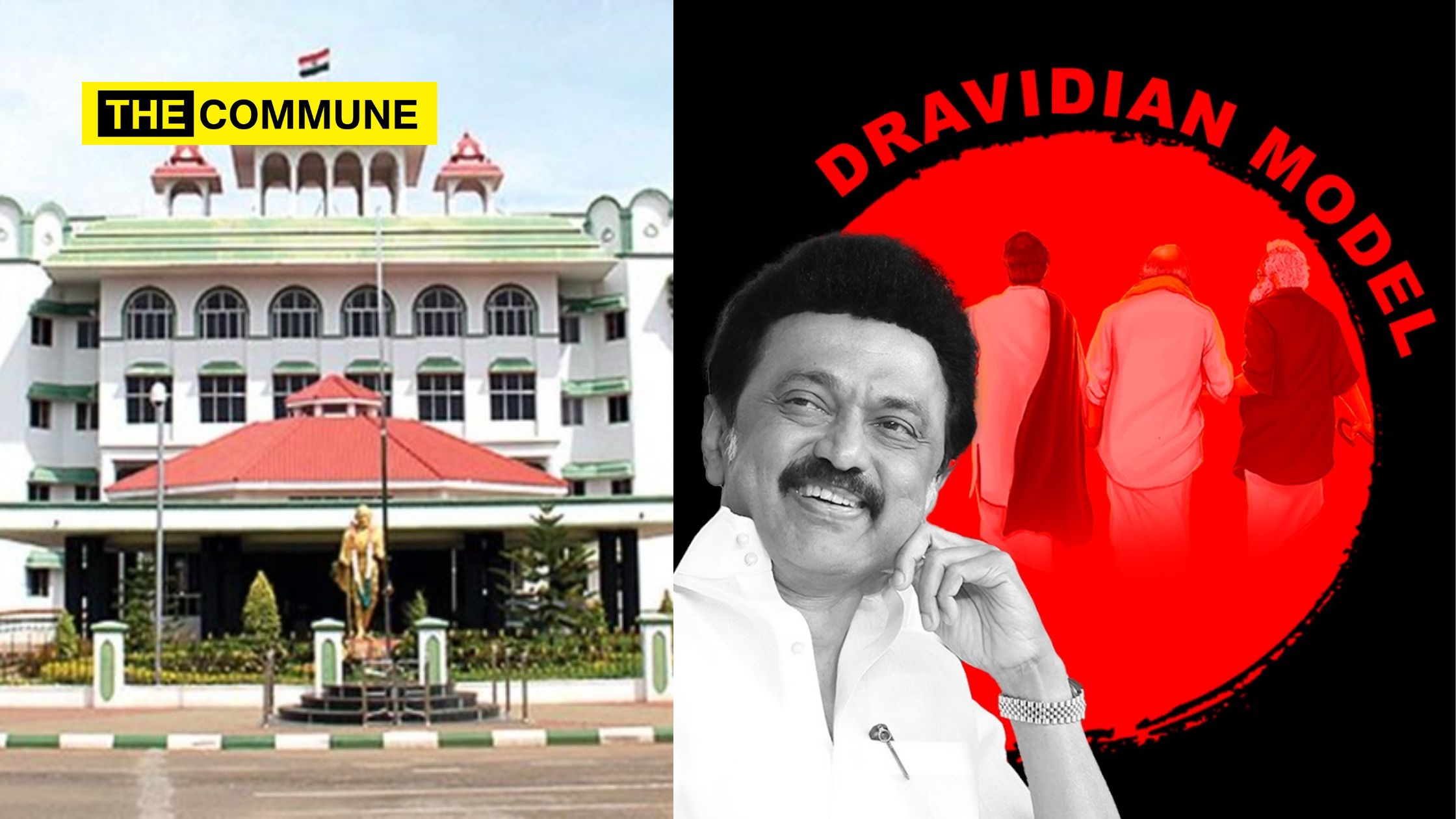
What the Sri Lankan Economic Crisis tells us about the ‘Kerala Model’

Once upon a time, there lived a king called Kubera, who ruled over modern day Sri Lanka.

In the Hindu pantheon, Kubera is the god of wealth and prosperity. He is considered as the owner of all material treasures in the world – money, precious metals, and all other forms of wealth. Scriptures describe Kubera’s kingdom as an abode of abundance.

Kubera and his kingdom had so much wealth that he had even extended a loan to Lord Venkateshwara so that the latter could meet his marriage expenses, the interest for which is being repayed by devotees who visit Tirupati.

In Buddhism too, Kubera is associated with wealth and abundance.

Fast forward to present day, this abode of abundance is today reeling under a severe economic crisis, and is on the verge of becoming a ‘defaulting’ country, surviving primarily on the lines of credit extended by India and China.

The Crisis

Over the past few weeks, prices of essential food items in Sri Lanka have been skyrocketing with their supplies getting depleted in the market. Inflation is in double digits hitting over 18% in March 2022. A 400 gram packet of milk powder costs around ₹200 Indian rupees. A kilogram of rice costs 500 Sri Lankan rupees.

The country has run out of fuel as it has not been able meet its import bills. People can be seen standing in serpentine queues to refill their gases, get kerosene or put fuel for their vehicles. The army has been deployed at fuel stations and shops to avoid deterioriation of law and order as there were several incidents of sporadic violence resulting in deaths being reported.

Long hours of power cuts lasting more than 13 hours have plunged the country into darkness as power stations remain closed due to fuel shortage. Even street lights are being turned off to save electricity.

School exams have been cancelled as the country has run out of printing paper putting futures of millions of children in limbo.

Some Sri Lankans are even trying to flee the country, with refugees entering India through Tamil Nadu.

So, how did Sri Lanka end up in this pathetic situation?

Afterall, Sri Lanka fares remarkably good in many indicators literacy, life expectancy, infant mortality rate, etc.

The Sri Lanka Model

Sri Lanka is a country that lacks a manufacturing or skilled service base. The country’s economy is mainly dependent on two Ts – Tourism and Tea.

Due to the COVID-19 pandemic and the resultant travel ban, tourism had taken a toll because of which the country saw a significant drop in foreign exchange.

Also, the Sri Lankan Government’s policy of banning chemical fertilizers and complete shift to organic agriculture had drastic effects on production of crops especially tea.

With the yield of tea decreasing, the Sri Lankan government saw less money coming in through tea trade.

Another significant source of revenue for Sri Lanka is the remittance money sent by Sri Lankans working abroad. This had dropped to a 10-year low of $5.49 billion in 2021.

The cumulative effect of tourism, tea and remittances has put Sri Lanka’s economy in peril with its forex reserve down to $2 billion.

Tourism, tea, and remittances – Does this ring a bell?

The Kerala Model

Kerala’s similarities with Sri Lanka goes beyond the beaches, tea garderns, and the tropical climate. Just like Sri Lanka, Kerala’s economy too is dependent on tourism, tea and remittances.

Decades of Communist rule has rendered the state devoid of any industrial development. The incessant strikes by trade unions and labour unions has made businesses wary of investing in the state.

The extortionary practice of ‘gawking wages’, which the Communist government tacitly supports even today, haunts businesses – small and large.

Even the Indian Space Research Organization (ISRO) was not spared from this menace when in September 2021, a large number of people blocked a truck carrying heavy equipments to the space agency, demanding that they be paid ‘gawking wages’ of ₹2000 per tonne for the 184 tonne load.

This business-hostile environment has made many companies based in Kerala to down their shutters.

In 2020, Pepsi Co shut its manufacturing unit in Palakkad due to frequent labour strikes. Kerala’s biggest private sector employer Kitex Group cancelled its ₹3500 crore investment deal in 2021, alleging a witch-hunt by the Communist government.

This harassment meted out to businesses has ultimately resulted in Kerala having no industrial or manufacturing base that can support a young workforce. As a result, the people of Kerala have moved on to other states or Gulf countries in search of opportunities.

Today, Kerala’s economy is heavily dependent on the remittance money sent by those Keralites living in the Gulf.

According to the World Bank, remittances sent by Malayalees working abroad account for around 30% of the Kerala’s total income.

This remittance money and the revenue generated through tourism is what the state survives on.

Tourism is the state’s top revenue generator. Almost 10% of Kerala’s GDP comes from the tourism sector contributing to 24% of the total employment in the state.

When the pandemic struck, the tourism sector received a severe blow due to frequent lockdowns and travel ban. Revenue from tourism dropped from over ₹45,000 crore (12% of GSDP in 2019) to ₹11,000 crore in 2020.

And if Sri Lanka sits on a huge pile of debt that it owes to China, Kerala is sitting on a debt of its own making.

The state has one of the highest Debt-to-GSDP ratio of 38.3% standing fourth in the country after Punjab (53.3%), Rajasthan (39.8%), and West Bengal (38.8%).

Kerala also has one of the highest household debt in India. With 47.8% of urban households indebted, Kerala has the highest incidence of indebtedness among urban households.

The dire condition of Kerala’s economy is visible from its contribution to the GST revenue which remains far below its potential.

Kerala collected just ₹2,074 crores just for the month of February 2022, lagging behind all the southern states. Its neighbouring states of Karanataka and Tamil Nadu collected ₹9,176 crore and ₹7,393 crores respectively. Even the 8 year old Telangana has collected ₹4,113 crores, nearly double the amount that Kerala has collected.

Hollow HDIs

Just like Sri Lanka, Kerala fares well in most of the human development indicators like literacy, life expectancy, infant and maternal mortality rates, etc.

While Kerala has the highest HDI score of 0.79 in India, Sri Lanka stands at 72 with a score of 0.78.

But of what use is literacy when there are not enough colleges in the state for students to pursue higher studies?

Of what use is life expectancy if the state does not have a strong, vibrant, working population?

Sri Lanka basically has no food, no fuel, no paper, no electricity, no medicines with people on the streets demanding the resignation of their President. Yet it is ranked Higher than India in Global Hunger Index (Sri Lanka – 65; India – 101), Global Happiness Index (Sri Lanka – 129; India – 136), and Human Development Index (Sri Lanka – 72; India – 131).

This goes on to show the absurdity of the indices produced by these global institutions, which are a byproduct of Eurocentric thinking that accompanied the rise of the West, so that they could maintain their hegemony over the world.

Hence, if we go by the example of Sri Lanka, HDI indices mean nothing if the state does not have an enterprising economy that can generate revenue and provide employment to its people.

Had the state not been a part of Indian Union, it would’ve ended up just like Sri Lanka. The state has been able to keep its neck above water thanks to the revenue generated by other states like Maharashtra, Gujarat, Tamil Nadu and Karnataka.

Sri Lanka is a case in point that shows that you and your dreams would be at peril if you do not have the right government framing the right policies.

Click here to subscribe to The Commune on Telegram and get the best stories of the day delivered to you personally.
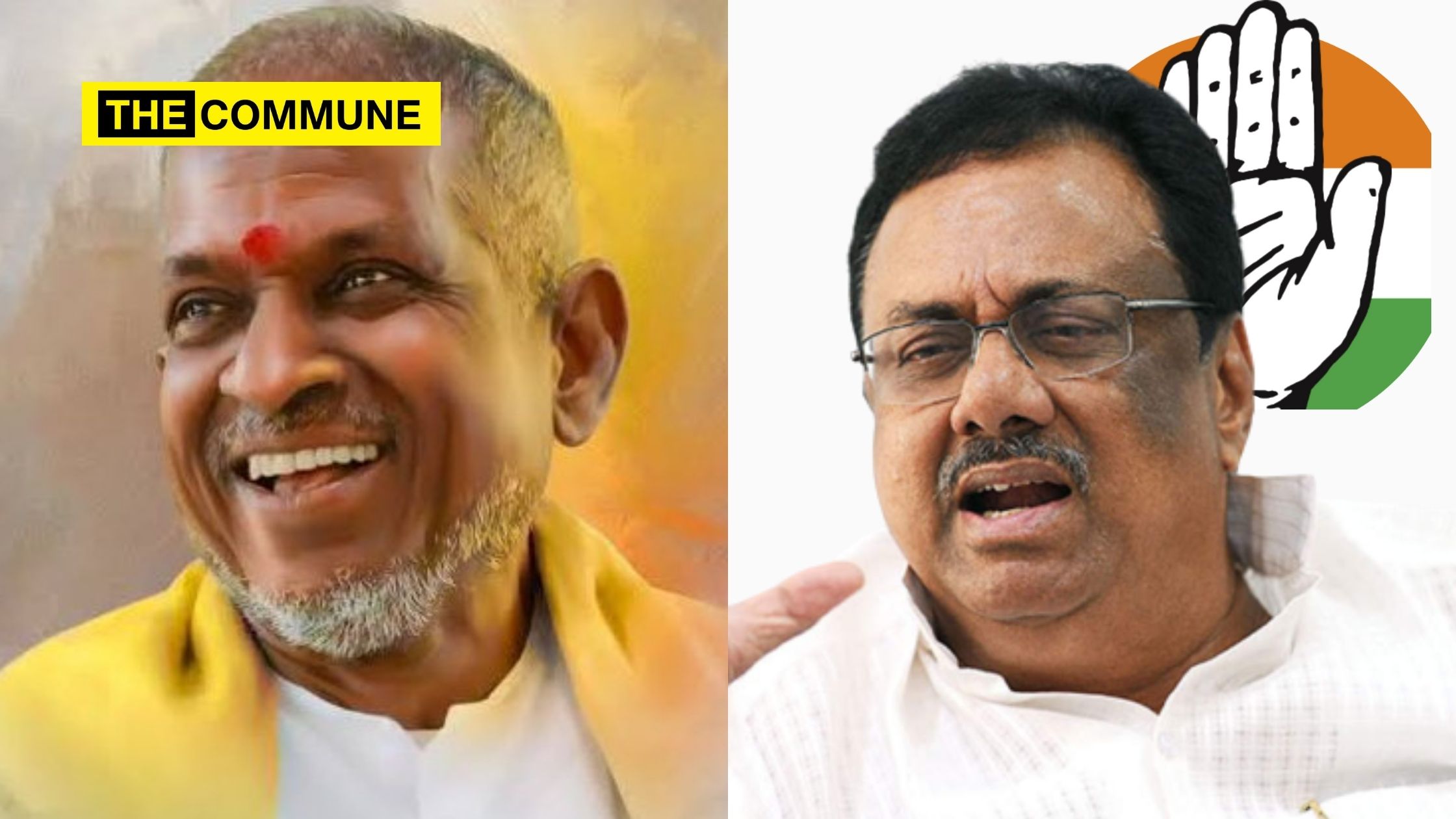
“We Are Consuming Food Of The Unborn Child”: Sadhguru Addresses UN On Save Soil

Sadhguru addressed a panel of leaders from global organizations about the Save Soil movement at the United Nations in Geneva on Tuesday in an urgent appeal for a global response to the issue of soil extinction. Panel members Nadia Isler representing the Director General of the UN Office, Dr. Naoko Yamamoto from the World Health Organization, and Stewart Maginnis, Deputy Director General for Programmes at the International Union for Conservation of Nature, expressed unanimous support and praise for the timeliness of the movement and a consensual need for collective action to restore and protect soil by instituting soil-friendly practices. The leaders expressed resonant concern for food security, climate change, and geographical vulnerability. 

In his address to a rapt audience, Save Soil movement leader Sadhguru stressed the importance of people’s vote and voice in a democracy where “a government is elected to fulfil the people’s mandate.” Unless the people explicitly state that they want their leaders to invest in long-term wellbeing of the nation, elected governments cannot act, he explained.

Sadhguru cited the UN’s warning that rapid soil degradation could lead to a severe global food crisis which could threaten to plunge the world into brutal civil strife over the next few decades. 

Speaking of the “crime against humanity,” Sadhguru remarked that the food we are eating today belongs to the unborn child. “We need to absolve ourselves of this,” he stated in closing.

In an opening address, Ambassador of Permanent Mission of India to Geneva, Indra Mani Pandey, expressed his delight at seeing the campaign receive global support and a keenness to learn more about what can be done individually and collectively to reverse global soil degradation. 

Nadia Isler on behalf of Director General of the UN Office explained: “We now live more than ever in interconnected and fast changing environments. The challenges we face are deeply intertwined and require mobilization on many different levels.” Stressing on the importance of collective action, she expressed, “Community engagement is key to putting ecological challenges squarely into policies and actions at all levels.”

Dr. Naoko Yamamoto, Assistant Director-General, Universal Health Coverage / Healthier Populations, spoke of the critical need of healthy soil for food security, nutrition and the prevention of non-communicable diseases. She echoed the need as a global community “to work together as one.”

Stewart Maginnis, Deputy Director General for Programmes at the International Union for Conservation of Nature fervently spoke about the remarkable number of species that exist in a handful of soil, reiterating that it is this aliveness in soil that sustains our own lives. He described the Save Soil movement as a message of urgency, hope and ultimately one of love.

(This is an official press release from Isha Foundation. The Commune was not involved in creating this content.)

Click here to subscribe to The Commune on Telegram and get the best stories of the day delivered to you personally.