Home Blog Page 1232

Murasoli And Decency: A Troubled Relationship

It is common knowledge that DMK and ‘decency’ are poles apart. The Dravida Munnetra Kazhagam has a history, and that history is tainted with numerous instances of the party crossing the limits of decency.

It has once again lived up to that reputation.

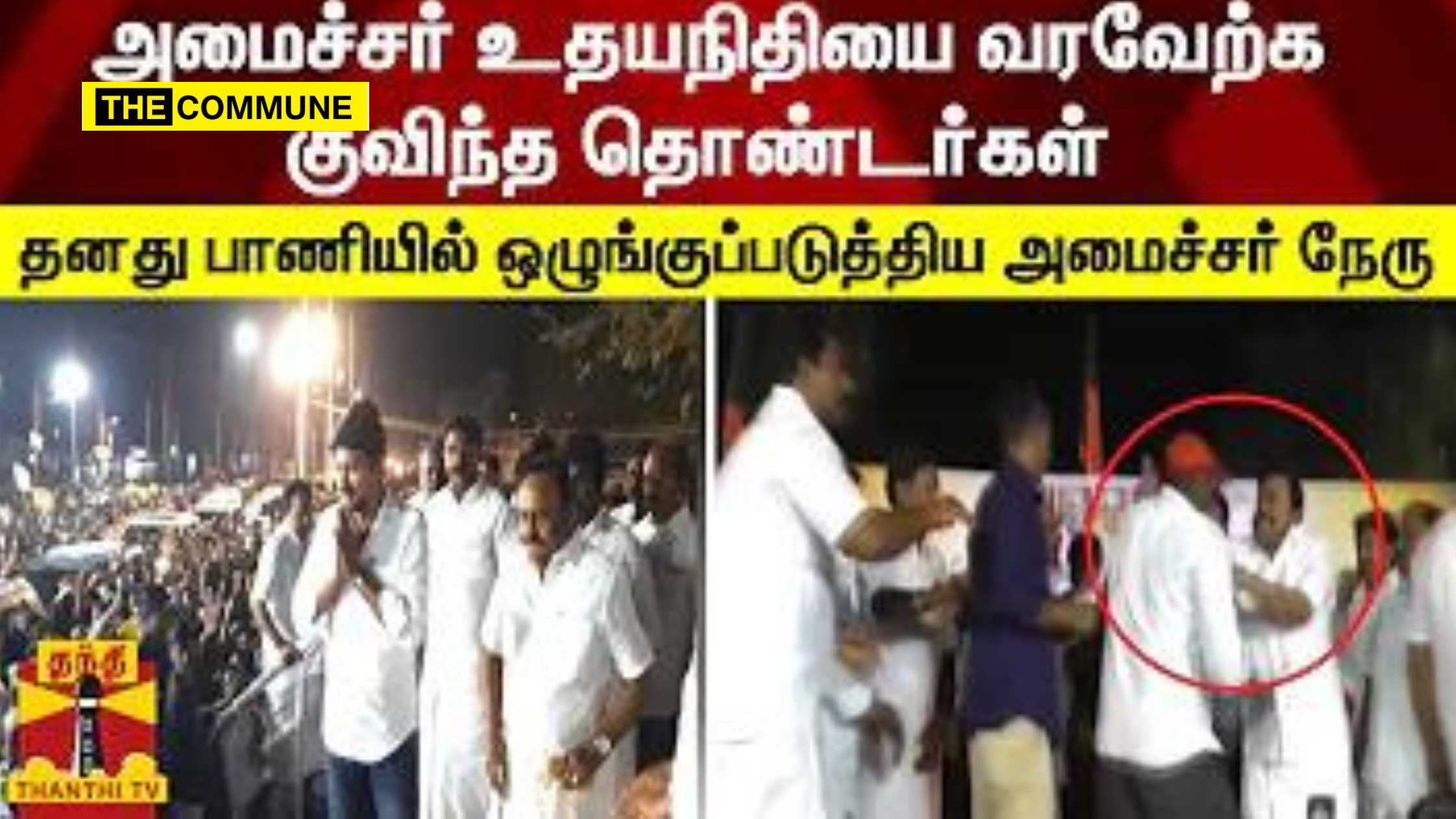
Recently, a war of words ensued between BJP Tamil Nadu President K. Annamalai and DMK’s mouthpiece ‘Murasoli’.

Murasoli, in its ‘Q&A’ section, had called Mr. Annamalai names and addressed him in singular.

“Did BJP Tamil Nadu President Annamalai study to be IPS?”, read the question.

This is what the answer given in Murasoli loosely translates to: “Do you know who dismissed Namboodripad’s government in Kerala in 1959? Madam Indira Gandhi did.”, says this ‘guy’ in a interview. It is a mystery how he passed IPS. ‘Dolts’ who don’t even know who the Prime Minister was in 1959 claiming to be IPS and IAS, and giving an interview as a head of a party is miserable“.

Responding to this vile attack, Annamalai called DMK’s mouth piece ‘a third rate, toilet paper worthy newspaper’.

In the tweet, Annamalai also clarified that the Namboodripad government was in fact dismissed by then Prime Minister Jawaharlal Nehru at the insistance of his daughter Indira Gandhi, who was then Congress President.

However, the bile that Murasoli spewed against Annamalai the very next day stands testimony to the gutter level politics of DMK. The party’s organ resorted to personal attacks equating Annamalai with an animal that goes to ‘lick excreta’.

“After exposing his ignorance, Annamalai should not try to escape by burying his face in the toilet.”, it said in another line.

It also justified the crass language stating that ‘some people will understand only if they are given the same way’.

But this is not the first time that Murasoli has made such crass remarks against a leader. The DMK’s mouth piece had made unsavoury remarks against political adversaries even during Karunanidhi’s time.

1. When Murasoli Insulted Kamaraj And Kakkan

In 1970, a cartoon was published in Murasoli which caricatured Congress leaders K. Kamaraj and P. Kakkan in a derogatory manner.

The cartoon showed Kamaraj scantily clad as Goddess Parvati decorating Kakkan portrayed as Lord Ganesha.

This cartoon is not just symbolic violence on the Hindu faith but also amounts to caste violence as both the Congress leaders hail from disadvantaged communities. Kamaraj belonged to the Nadar community and Kakkan was from the Dalit community.

2.  When MGR Was Attacked

Murasoli frequently caricatured MGR as an old man and a buffoon demeaning the AIADMK as an “actor party”. In 1978, Karunanidhi had called MGR a Malayali in a bid to portray him as non-Tamil.

However, Karunanidhi went under radio silence after his ancestral roots were traced to Ongole in Prakasam district of Andhra Pradesh.

Murasoli attacked MGR even years after his death. In October 2021, Murasoli criticized MGR saying that the AIADMK was floated by him in 1972 due to threats from the then Central Government. The DMK’s mouthpiece stated that MGR bowed down to the Central Government’s threats of I-T raids and action by Enforcement Directorate over his foreign trips . Murasoli said that MGR was put under pressure to split the DMK and topple the Karunanidhi government.

3. When EPS, OPS And CVB Were Dehumanized

In October 2017, Murasoli had dehumanized AIADMK leaders Edappadi K. Palaniswami, O. Panneerselvam and C. Vijayabhaskar describing them as ‘traitors’ who have drunk more blood of the people than mosquitoes.

The former Tamil Nadu Health Minister C. Vijayabhaskar was called as ‘Dengue Bhaskar’.

4. When Murasoli Attacked Jayalalithaa’s Brahmin Lineage

Responding to a Vikatan article that criticized DMK, the party’s mouthpiece took to lashing out Jayalalithaa invoking her Brahmin lineage.

The late AIADMK supremo was called ‘Paapathi‘ (a derogatory way of calling a Brahmin woman) more than 5 times in the article.


Ofcourse, the Brahmin community has always been the go-to punching bag for the DMK.

When Mahatma Gandhi was assasinated by Nathuram Godse, the DMK mouthpiece carried a frontpage headline that read “Utthamar Gaandhiyin Uyirai Kudithavan Oru Oodhaari Paarpaan” which translates to  “The person who consumed Mahatma Gandhi’s life was a wastrel/scoundrel Brahmin”.

Source: The News Minute

Given the trackrecord of this publication, BJP President K. Annamalai is not wrong in calling Murasoli what it is – a toilet paper.

Click here to subscribe to The Commune on Telegram and get the best stories of the day delivered to you personally.
Cop in Bangladesh attacks Hindu woman allegedly for wearing bindi

On the 2nd April, 2022, Lata Samaddar, a Hindu woman and a lecturer in the Department of Theater and Media Studies at Tejgaon College in Dhaka, Bangladesh, was verbally harassed and almost ran over by a Police vehicle by police officer Nazmul Tarek for wearing a bindi (the red dotted ornament on the forehead). The incident took place between 8:20 am and 8:30 am while the victim was crossing the junction at Farmgate towards Tejgaon College.

Lata told how she was walking towards the college when suddenly a middle aged looking man with a beard questioned her why she was wearing bindi. Additionally, that man hurled such profanities, that Lata even felt ashamed to retell her husband what exact words this man had directed at her. Lata turned to see and noticed that the man was sitting on a Police motorbike and wearing the Police uniform. According to Lata’s testimony, the kind of tone this officer had used when he questioned Lata about her bindi was vulgar. After the officer had thrown profanities, he looked greedily at Lata and tried to ride over her, managing to ride his bike over her feet.

Lata told Prothomalo how people nearby were observing this incident but nobody came to help her, perhaps in the fear of repercussions from the law and order. There was a traffic police nearby to whom Lata went to and that officer told Lata to lodge a complaint to the Police. After the incident, Lata limped her way to her department and broke into tears. “If this is the situation after 50 years of independence, it is unacceptable. We have to wonder where we are. I am a Hindu, wearing a bindi is normal. Previously, few people had made bad comments about my shakha-pola (conch-shell bangles worn by married Hindu women in Bengal), but that did not matter much. But this time was different, because those profanities were thrown by a police officer in his uniform.”

After the incident later went ‘viral’ in Bangladesh due to feminists and free thinkers trending the topic on social media and wearing the bindi in solidarity, the issue went all the way to the Bangladeshi Parliament. Member of Parliament Subarna Mustafa from the ruling party said, “It is a very hateful incident against women, regardless of party affiliation. We have heard of ‘eve-teasing’, in which even talented boys indulge in when they tease girls at schools. That situation is now very much under control. However, when I see someone in the country’s law enforcement eve-teasing, it’s a huge shame.” Mustafa continued, “which law says that a woman cannot wear a bindi? This is not a Hindu, Muslim, Christian or Buddhist matter […]”

The police officer was suspended, the parliament spoke, the people supported the victim. Case closed. This is how hate crimes against Hindus and the aftermath to them are always presented, whether they are true or not. Whether that is in the Bangladeshi media, the Indian media or the Western media. While most people are focused on the social media stints of free thinkers sporting a bindi on their foreheads, or perhaps watching how the politicians are blaming each other, much like after the gangrape of the 12-year-old Hindu girl Purnima Rani Shil back in 2001, there is an aspect that is always ‘forgotten’. The statement of MP Mustafa in the Parliament of Bangladesh follows the typical pattern of how hate crimes against Hindus in Bangladesh are perpetually whitewashed. Attacks on Hindus are always, without exception, labeled as a political issue, law and order problem, or general misogyny. The statement by MP Mustafa, although probably well intended, was problematic in many ways. Firstly, the statement did not acknowledge the fact that the bindi has deep roots in the sacred scriptures of Hindus. Second, the statement did not take into account the history of sexualised violence against Hindu women solely because of their religious identity.

Lata Samaddar mentioned how she has previously gotten harassed for wearing her shakhas, her marital symbols, which are specific to Hindus. This time Lata got harassed for wearing a bindi. The common denominator here is that Lata got attacked for her outward appearance, that is, wearing her religious and cultural attire that made her visibly recognisable as a Hindu woman. This recent attack against Lata is one of the countless attacks on hindu women who get recognised by their appearance, and it is also a part of the long history of fetishisation of Hindu women, and verbal and physical attacks on Hindu women for wearing shakha-polasindoor (vermilion) and the bindi.

In order to substantiate this assertion, let us examine some cases from recent history to this day. One of the witness statements of the Noakhali Genocide of 1946, a state sanctioned genocide of the Hindu minority of the Noakhali district in British India (currently in Bangladesh), tell how Hindu women were attacked especially for the outwardly visible markers that are exclusive to Hindus.

“The local Muslim population either actively or tacitly participated in these acts. Muslim women in the affected areas, at times, displayed their covert support. When Hindu women sometimes rushed into neighboring Muslim homes in a state of panic, it was the women of the [Muslim] households who removed the vermilion mark and broke the conch-shell bangles. This was, however, not out of any altruistic motive of hiding their [Hindu women’s] identity from their [Hindus] attackers. N.K Bose narrated the experience of a girl who had told Gandhiji [Mohandas K. Gandhi] about how the ladies in a Muslim household asked her to become like one of them.”

After the partition of the Indian subcontinent, the Muslim majority East Bengal went to Pakistan. A sizable Hindu minority population was now at the mercy of Pakistan. Several successions of anti-Hindu pogroms took place in the 1950s and the 1960s, and there are many examples from that time period alone. For instance, an account from Keshab Mandal, a native of Chila, Khulna, and a survivor of the 1964 East Pakistan anti-Hindu genocide, told how his house was attacked by a Muslim mob on January 5, 1964. He had taken shelter in the paddy fields, while many Hindu families tried to seek refuge in their Muslim neighbours’ houses. Mandal told how Hindus were given shelter, only to be told by the Muslim families that the Hindu women were to go to separate rooms. Then the Hindu women were ordered to break their shakhas and wipe off their sindoor, which they did in fear of their lives. The statement on a sad note: “then all of them were ravished brutally”.

A lot happened politically after the state sponsored genocide of Hindus in East Pakistan in 1964. The 1965 Indo-Pakistani War happened, the economic exploitation by West Pakistan continued in East Pakistan which prompted Sheikh Mujibur ‘Mujib’ Rahman, who became the head of the Awami Muslim League after the death of Huseyn Shaheed Suhrawardy in 1963, into further prominence. Mujib dropped the word ‘Muslim’ from Awami Muslim League and went to Lahore to present his 6-point plan, which suggested autonomy from West Pakistan. At that time, Mujib obtained great support from Bengali speaking Muslims and the Hindu minority population as well. In this same time period, many educated, free thinker East Pakistani Muslim women began to wear bindi as a political expression to differentiate themselves from West Pakistan. For this, Hindus were made to pay a heavy price as the Pakistani establishment systematically targeted Hindus for extermination, as West Pakistan believed that Hindus had “corrupted” East Pakistan’s Muslims to break Pakistan.

The Pakistani campaign of hatred led to the genocidal rape against women in East Pakistan. A very sad example of this campaign of hatred is the case of Ferdousi Priyabhashini, a Bengali Muslim lady from Khulna, who was repeatedly gangraped by Pakistani soldiers in their cantonment. Priyabhashini told how the Pakistani soldiers had accused her of being a Hindu and an Indian spy just because she had worn a bindi and saree.^7 The fact that 1971 was not just a Liberation War of Bangladesh, but also a genocide of Hindus is not even acknowledged to this day.

After the brutal war, Bangladesh gained its independence. However, even after gaining independence, the Hindu minority population, many of whom were sent back to independent Bangladesh from refugee camps in India by Indira Gandhi’s orders, found themselves yet again in a state of insecurity. Several nation-wide anti-Hindu pogroms have taken place in the 50 years of independence. There are countless accounts, documented and undocumented, from Hindu women, who have told that they have been harassed and attacked by the majority community of Bangladesh, just for wearing shakha-pola, sindoor and bindi. During the 2021 Durga Puja country-wide violences and pogrom against Hindus, which started from a rumour that Hindus had disrespected the Islamic Holy Book Quran by placing it near the Murti (the embodiment) of God Hanuman, there were survivor accounts from women who had told that they are scared for their lives for ever wearing the shakha-pola, sindoor and anything else, that would make them visibly recognisable as Hindus, in public.

The attacks against Hindu women based on their outwardly recognisable religious and cultural attire (shakha-pola, sindoor and bindi) has not been restricted to only Bangladesh, but also it has happened in Bangladesh’s neighbouring country Myanmar, more particularly in the state of Rakhine, where Rohingya Muslim ‘militants’ had, according to Amnesty’s reports, massacred up to 99 Hindu men, women and children in 2017. The Hindu survivors had told how they were forced to remove their shakha-pola and sindoor before being forced to convert to Islam. There is a history of genocidal violence against Hindu women for wearing their religious & cultural attire. There’s also a history of denying that Hindu women were attacked due to their religious identity. In Bangladesh, attacks on Hindus are often claimed as ‘political attacks’ (much like in the 2001 Purnima Rani Shil case), and no further discussion is allowed in the mainstream. One of the definitions of Hinduphobia or Hindumisia is using or enacting symbols and actions that evoke historical attacks on Hindu society (for example iconoclasm, cow slaughter, etc.) in contemporary discourse to intimidate Hindus. Hindu women have historically been attacked for their appearance, for example wearing the bindi, sindoor, and other visible markers that makes Hindu women outwardly recognisable. Therefore what happened in Dhaka to Lata Samaddar and the reactions to it are both part of genocidal hatred and erasure against Hindus.

(This article was originally published in The Nationalist View and has been republished here with permission.)

Click here to subscribe to The Commune on Telegram and get the best stories of the day delivered to you personally.
UP Govt provides land to 63 displaced Bangladeshi Hindu families

Honouring his promise of coming to the aid of Hindu refugee families who fled persecution in neighbouring Islamic countries, Uttar Pradesh Chief Minister Yogi Adityanath today distributed residential and agricultural land papers to 63 Hindu refugee families from Bangladesh. The chief minister took the measure under the Mukhayamantri Awaas Yojana.

Notably, the Citizenship Amendment Act of the that was passed in 2019 has not been implemented yet. The measure that the Yogi Adityanath government has taken is not for recent refugees from Pakistan and Bangladesh but for those displaced during the war for the creation of Bangladesh, where Hindus were the largest section of victims of atrocities perpetrated by the Pakistan Army.

Chief Minister Yogi had promised to accommodate Hindus displaced from Pakistan and Bangladesh by giving them residential and agricultural land in Uttar Pradesh.

The chief minister had said that such families would be allotted the state government land freed from encroachers.

Chief Minister Yogi had said that his government would bring all the land freed from “encroachers” under a ‘land bank’ and these pieces of land will be used for setting up schools, industries and other businesses and for the rehabilitation of Hindu refugees from Bangladesh and Pakistan.

At the function held at Lok Bhawan today, Chief Minister Yogi targeted the previous governments for their apathy towards such families that had been moving government departments for the past 38 years since they fled Bangladesh. Welcoming all the 63 Hindu families in the program, the chief minister said that their wait for 38 years was over.

The Uttar Pradesh government has sanctioned two acres of agricultural land, 200 sq m housing lease to each family in Rasulabad of Kanpur Dehat Janpad and one housing, toilet sanctioned in Mukhya Mantri Awas Yojana.

The chief minister said that in 1970, all the families had migrated from East Pakistan (now Bangladesh) to India. They were given jobs in a yarn mill in Hastinapur, these were about 407 families. The yarn mill closed in 1984, after which some families were resettled in different parts of the country. But there were 65 families who have been waiting for their rehabilitation since 1984.

(This article has been sourced from Sirf News and has been republished here with permission.)

Click here to subscribe to The Commune on Telegram and get the best stories of the day delivered to you personally.
“I don’t know Ram, we don’t see any Ram Temples In TN”: Congress MP Jothimani

jothimani congress

Congress MP from Tamil Nadu Jothimani, has courted controversy saying that she does not know Lord Ram and that there are no temples for Lord Ram in Tamil Nadu.

The Lok Sabha MP from Karur said “I’m from Tamil Nadu. I don’t know Ram. Because we are indigenous people. We follow ‘ancestral worship’. You ask anybody in Tamil Nadu. We don’t see any Ram Temple.”

“Every week I go to my temple. Because my clan used to go that temple. Basically, it is an ‘ancestor worship’. There are many south Indian states, even north-east tribals, SCs, Dalits, OBCs, we pray indigenous worship, basically an ancestral worship. So, that’s what we’re trying to say.”, she further added.

Jothimani also hinted that she never knew about Ram before coming to national politics but contradicted the same statement saying “I read Ramayana, I read Mahabharatha, that’s how I know”.

“When it comes to worship, we strictly worship our ancestors”, she said.

Netizens are now lashing out at the Congress MP with many pointing out the ubiquitousness of ‘Ram’ existing as Ram Temples, in names and so on.

Click here to subscribe to The Commune on Telegram and get the best stories of the day delivered to you personally.
Hooligans attack TN Guv Ravi’s convoy, Annamalai writes to Amit Shah over DMK Govt’s failure to provide security

In what can be termed as a security breach, Tamil Nadu Governor R.N. Ravi’s convoy was attacked by hooligans belonging to DMK’s allies when he was on his way to Mayiladuthirai.

Governor Ravi was heading to Mayiladuthurai to flag off the ‘Gnana Ratha Yatra’ organized by 27th Gurmaha Sannithanam Sri Masilamani Desiga Gnansambandha Swamigal, the pontiff of the Dharmpuram Adheenam.

He was also to participate participate in the foundation stone laying for the platinum jubilee memorial auditorium of the ancient Saivite mutt.

When the Governor’s convoy was passing near Mannampanthal, goons belonging to Dravidar Kazhagam, DVK, VCK, CPI, CPM, MMK, SDPI and movements like Thamizhar Thanurimai Iyakkam, and Makkal Athikaram waived black flags and attacked the convoy with stones, bottles and flag poles.

In light of this, BJP Tamil Nadu President K. Annamalai has written to Union Home Minister Amit Shah describing the incident as an “unprecedent breakdown of the state’s law and order situation”.

He stated in his letter that the CM Stalin for the past three days has been continuosly making contemptuous remarks against the Governor.

He also said that the protests look planned and organized similar to the untoward incident that happened in September 2019 when Prime Minister Narendra Modi visited Chennai.

He also pointed out that slogans like “Governor is a murder” were raised in the commotion and said that the state police “merely stood along”.

“If the DMK government in Tamil Nadu cannot guarantee safe passage to a Governor, the plight of the people is unimaginable”, Annamalai wrote in his letter to Home Minister Amit Shah.

The BJP President has asked the Home Minister Amit Shah to look into the situation on priority and suitable action be taken against those who spearheaded the protest.

Click here to subscribe to The Commune on Telegram and get the best stories of the day delivered to you personally.
R Madhavan, Harbhajan Singh, Tamannah, Other Celebs Support Save Soil Movement

The Save Soil movement, launched by Sadhguru, Founder-Isha Foundation, last month, has become a major force in shifting global attention to soil extinction and continues to get voice of support from Bollywood celebrities, singers and sportspersons.

From ace actors Ajay Devgn, R Madhavan, Prem Chopra, Mouni Roy, Juhi Chawla, Shilpa Shetty, Manisha Koirala, AB de Villers, to loved singers Sonu Nigam, Shreya Ghoshal, Diljit Dosanjh, Maluma to cricketers like Harbhajan Singh, Matthew Hayden, Vivian Richards – many celebs have come forward to show their concern towards soil degradation and have voiced their support towards the Save Soil Movement.

Sharing a video message on Twitter, Bollywood actor R Madhavan said, “According to World Economic Forum, 60% of the world’s population has some kind of nutritional deficiency. Scientists are even finding people from well-to-do families suffer from malnutrition-it’s called hidden hunger. Your stomach is full so you don’t realise it but your body is suffering from this impact of malnourishment. The food we eat is deficient in essential elements because our soil itself is dying. There is not enough organic content in it. If we don’t keep our soil healthy, there is no way we and the generations to follow can remain healthy. It is time to save the soil. Join me in my efforts to save the soil and create a healthy and sustainable planet.”

Prem Chopra, the iconic Bollywood villain, came out in support of the movement. Actor Sharman Joshi, his son-in-law, shared his video, where the veteran actor reminded the people that soil is not an inert object but a living thing that nurtures us. Stressing on the urgent need for policy actions towards saving the soil, he urged the people to amplify the message on their social media. He wondered, “If Sadhguru ji at the age of 65 can go on a journey of 30,000 km to Save Soil, why can’t we tweet every day to raise awareness among the people?”

Thanking the veteran actor for the support, Sadhguru responded, “Soil is a Mother like no other. No Life can escape her embrace. If our humanity is alive in our hearts, we must respond to her cry of distress & turn it into a song. Let’s make it happen. -Sg”

Actress Tamanna through her twitter msg conveyed her support fo Save soil movement, she said, “Namaskaram @SadhguruJV ji. I truly believe in the movement and it’s our responsibility to #SaveSoil for the future generations. Our conversation was extremely insightful and I know together we can #SaveSoil”.

Harbhajan Singh also took to Twitter to share his interaction with Sadhguru on Save Soil. Urging everyone to become the part of this movement, he said, “An insightful conversation with @SadhguruJV as he rides through different countries to campaign for the #SaveSoil movement. Kudos to him for undertaking this gigantic project. Come, let’s all be a part of this great cause.”

Singer Shreya Goshal and Sadhguru also had a similar Twitter exchange around Save Soil. Commending to the Isha Home School students, who danced to her song “Apni Maati”, she wrote, “This is beautiful!! #ApniMaati found the most profound interpretation through the performance by these talented kids for the #SaveSoil cause. Really touched.”

Responding to her comments, Sadhguru highlighted, “Namaskaram Shreya- soil is the platform on which the Dance of Life happens. Without a stable platform, Life cannot dance with abandon. Let’s ensure our children & all future generations continue to celebrate Life. #SaveSoil. Let’s make it happen. Blessings. -Sg”

Inspired by Sadhguru’s solo 30,000 km motorcycle journey across 25 nations, she replied, “I am following your awe inspiring 100 daymotorcycle solo journey! We all have a big responsibility towards our soil, our planet, our people and our future. Thank you for showing us the path and inspiring us to act.”

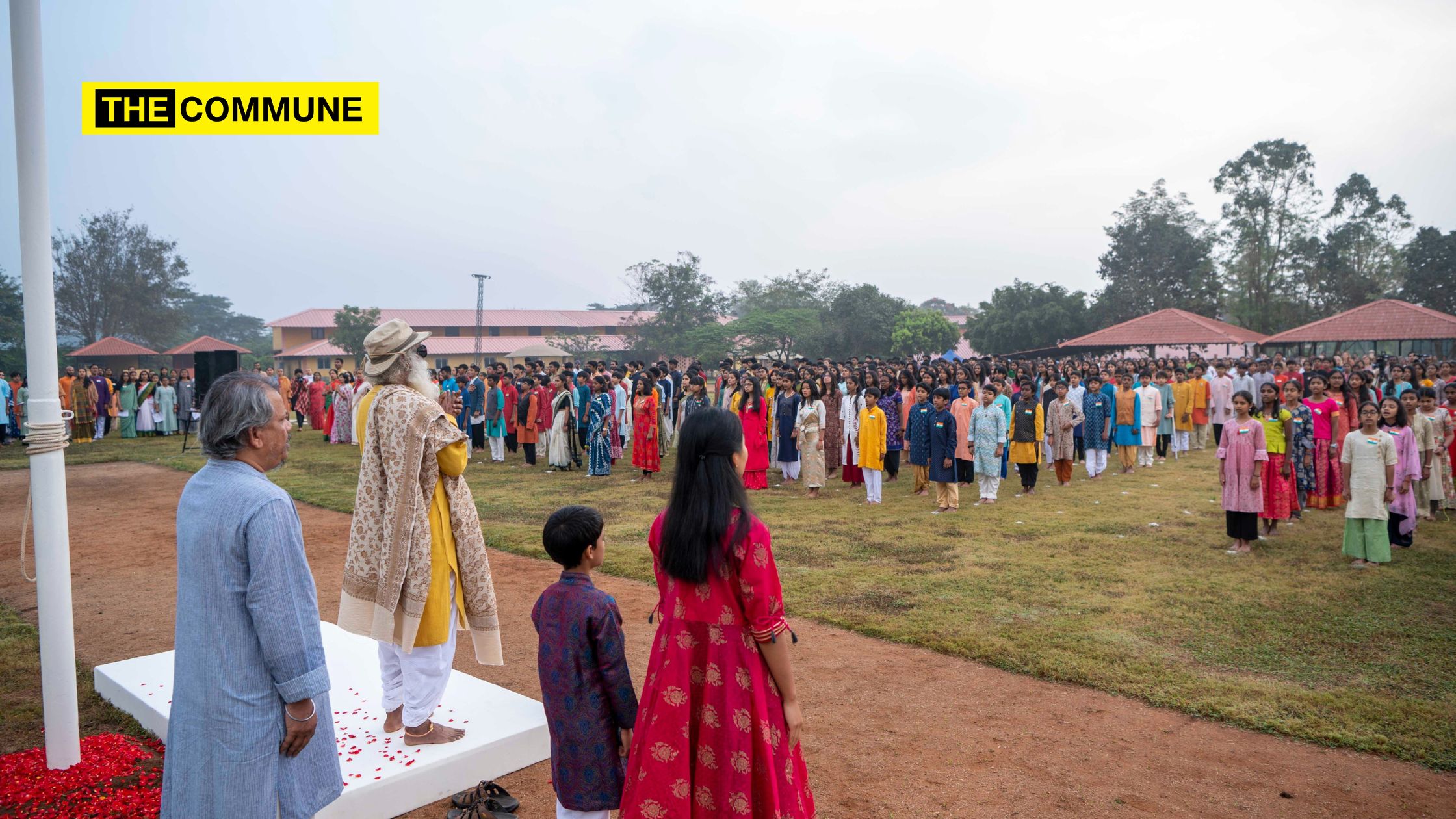
Sadhguru, one of India’s most influential spiritual leaders, on 21st March 2022, has kicked off the global #SaveSoil movement from London. The 65-year-old Yogi is undertaking the journey to raise awareness and enact policy changes on soil extinction. Riding through 25 countries, Sadhguru will cross three continents to draw attention to the direst ecological concern of our generation – rapid soil extinction.

Earlier popular Bollywood actor Ajay Devgn joined the latest list of celebrities to support the Save Soil Movement. The actor took to Twitter and shared a video of the conversation between Sadhguru and Czech mathematician Karel Janeček on the Save Soil movement and said, “Happy to support this cause because healthy soil is the cornerstone of life. Wishing you the best on your #JourneyForSoil @SadhguruJV.”

Thanking the Bollywood star, Sadhguru replied “Namaskaram Ajay. Thank you for your warm wishes & support. It is a privilege of the times that we have the resources, technology & competence to turn this situation around. Your Voice will help in unifying people for this Mission Critical effort to #SaveSoil. Blessings. -Sg”

The movement has also garnered support from various other celebrities like Rakul Preet Singh, Divyanka Tripathi Dahiya, Tamannah, Rituparna Sengupta, Shakti Mohan, Shilpa Reddy, Kaushiki Chakraborty, among others.

https://www.instagram.com/p/CbWnKBjvDyy/?utm_medium=copy_link

https://twitter.com/Roymouni/status/1505902734288908289

(This is an official press release from Isha Foundation. The Commune was not involved in creating this content.)

Click here to subscribe to The Commune on Telegram and get the best stories of the day delivered to you personally.
BJP President Nadda comes out in support of Ilaiyaraaja following attacks by Dravidian Stockists

BJP National President J.P. Nadda has voiced out support for Ilaiyaraaja who has been facing a volley of attacks from ‘Dravidian Stockists’ ever since the latter appreciated Prime Minister Narendra Modi for his development initiatives.

Maestro Ilaiyaraaja has written the foreword for the book titled ‘Ambedkar & Modi – Reformer’s Ideas, Performer’s Implementation’ brought out by Blue Graph Digital Foundation.

In his foreword for the book, Ilaiyaraaja has lauded PM Modi’s women-centric development initiatives like raising of marriage age for women, free LPG gas cylinders and schemes related to education of girl children.

He noted that Dr. Ambedkar would be proud to see the change brought about by the law against Triple Talaq and ‘Beti Bachao, Beti Padhao’ initiative.

“The book also points out where Dr. Ambedkar and Narendra Modi come together as personalities. Both experienced poverty and oppression and worked to eradicate it. Both were big dreamers about India who believe in action.”, Ilaiyaraaja notes.

However, his views on the Prime Minister has irked the supporters of the ruling regime in Tamil Nadu and their allies.

Ilaiyaraaja has been facing vituperative attacks by Dravidian Stockists for expressing his opinion about the Prime Minister.

Netizens who identify themselves as ‘Dravidian Stockists’, ‘Periyarists’ and ‘Ambedkarites’ started trending a vile hashtag targetting the maestro.

In light of this, BJP National President J.P. Nadda in a statement said “In Tamil Nadu, elements aligned to the ruling party have left no stone unturned in verbally lynching, smearing and humiliating one of India’s tallest musical maestros just because he has views not palatable to one political party and their allies. Is this democractic?”

“One can have different views and yet coexist happily but why take to insults?”, Nadda asked in his elaborate letter where he provided a rejoinder to the joint statement issued by Opposition parties.

Click here to subscribe to The Commune on Telegram and get the best stories of the day delivered to you personally.

Beast Review: Meaner, Leaner, Weaker, Can You Make It Any Worser?

Nelson Dilipkumar’s Vijay-starrer BEAST starts off in a literal Beast mode where we see Veeraraghavan (Vijay), a well-informed and well-resourced Indian RAW agent, cleaning up the terrorists holed up in a mansion like a pack of cards.

We see some exceptional action choreography and stunt sequences during this stretch where we see Veeraraghavan slaying the terrorists, literally.

There were numerous instances where we sit in awe of the brilliant stunt choreography, and what better than our own Thalapathy to be at the helm of it, jumping and swaying from one end of the building to the other, handling the guns and knifes like a pair of bamboo sticks.

I quite liked how the movie did not have a “special” introduction scene to the star, which registered the fact that this wasn’t a usual Vijay movie that we are going to witness. This introduction setup was like a Bond character introduction where we see a one-man show kind of a sequence. Incidentally, Veera gets called the Indian James Bond. The movie then moves to a mall in Chennai being taken control by the terrorists, and we see a reluctant (PTSD suffering) Veera agreeing to help the Indian Government on one condition.

I loved the premise that shows the root cause for Veera’s PTSD where a small girl is considered to be just collateral damage by the agency for an ongoing operation but how it turns out to be a huge loss for the girl’s family. This is a great plotline for a movie of such tonality, an angle from which we do not see terrorism much and how it actually affects even the people involved in it. That’s how the movie started off, in fact, but once the mall hijack was set up, this potentially better plot was let loose.

The movie starts showing signs of feebleness during the mall hijack as it takes longer to set things up, but during this setup, we at least see the Nelson-esque comedy with VTV Ganesh in top form.

VTV Ganesh’s one-liners are rollicking, it reminded me of his performance in Vinnaithandi Varuvaaya. Selvaraghavan‘s Altaf was indeed a different one, his voice and his mannerism perfectly suited the sarcasm. The restricted comedy from Yogi Babu and Redin Kingsley was terrific but needed a lot more from all of them together. There was a brilliant opportunity to do a comedy of errors kind of a thing here, something along the lines of what we saw in that exceptionally staged Metro train fight sequence in Doctor. The brilliance of Kolamaavu Kokila was that it involved utilizing the maximum comic potential of Anbudasan and Yogi Babu, and similarly, in Doctor, we get stellar comic timing by Redin Kingsley, Yogi Babu, Shiva Aravind and Sunil Reddy (Killi-Maahali combo). I was pretty excited to see the Killi-Maahali combo here in Beast as well, it meant that it was in the same Nelson universe, but those two were criminally underutilized.

Beast tries too hard to seamlessly juggle between being a funny-spoof movie and a serious action thriller, but the transition isn’t as seamless as it was intended. What worked brilliantly in Doctor did not work here for the sole reason that a big star has come into the world of Nelson. When a big star like Vijay comes in, everything gets bigger and scaled up to massive levels. It is required to have elevation sequences just for the sake of having it, which dilutes the narrative if it isn’t a strong one like Beast. At one end, we see an indestructible Veera counter-attacking every terrorist plan with so much “conviction”, but suddenly he dodges 100 bullets and hit 7 men with just 7 bullets of a shotgun. On the other hand, we see the Selvaraghavan character joking with the terrorists during his negotiation, and at one point we even see the main head of the hijacker group give up his ongoing hijack. The worst of all, we see the head of the terrorist group shown as a dwarf. I am sure all this was done to be light-hearted, funny and spoof-kind, but the plot is lost while focusing more on the transition from serious to funny mode than focusing on the movie’s highs and lows.

The audience starts thinking about the logic and the loopholes only when they do not connect with the characters. There needs to be an emotional core for the audience to connect to, which eventually would drive the movie. I would have wanted more of Veera’s PTSD suffering to take centerstage and eventually act as leverage for the character to overcome, which would have been that “low” for Veera and then come out with the much needed “high”. When the emotions are at the right amounts, people do not have time to think about the logic, as they are already invested in your characters and have started rooting for them to win. This issue was addressed extraordinarily in Payanam movie (a flight hijack movie led by Nagarjuna, directed by Radha Mohan). We get invested so much in the emotions of the flight passengers that we forget the logical loopholes even if there were any. Eventually, we know that the Nagarjuna character will succeed with the mission, but the suspense was maintained brilliantly through the emotions of the characters.

Beast could have been something extraordinary had Nelson taken a little more care in setting up that emotional core, instead of conveniently tweaking his story to cater to the star power. I am sure he will come back stronger to his forte of dark comedy, he just needs to back his strong suit and not budge to the star power and other external factors, and write something that would fit any star into this universe of his.

Click here to subscribe to The Commune on Telegram and get the best stories of the day delivered to you personally.

Save Soil Movement: Cycle Awareness Rally on Soil Conservation arrives in Coimbatore

Twenty-seven cyclists arrived in Coimbatore today on a bicycle rally that commenced from Bengaluru to raise awareness about soil conservation. The cyclists said they undertook the rally in support of the global Movement to Save Soil, launched last month by Sadhguru, Founder-Isha Foundation.

“Soil fertility is declining rapidly worldwide. Scientists and UN researchers say that if we do not take action now to restore the declining soil fertility, we will not be able to farm after the next 40-50 years,” they said explaining why they embarked on the cycle rally. “Isha founder Sadhguru has started a movement to protect the soil, urging the nations of the world to enact appropriate laws in this regard. To this end, at the age of 65, he is traveling 30,000 km on a motorcycle from London through 27 countries to raise awareness among the people,” they added stating that this inspired them to contribute to awareness generation in their own capacity.

The team, Pedal Pushers, includes veterans, IT employees, and members of the medical profession. “We started this cycle rally yesterday. We cycled about 420 km from Bangalore to Isha Yoga Center in Coimbatore to create awareness among the public,” they said.

The rally was organized in Bengaluru by music composer Shri. Chandan Shetty and actor Niveda Gowda who flagged off the rally from Bengaluru. 

Departing from there, they reached Coimbatore via Hosur, Krishnagiri, Salem and Erode and completed their journey at Isha Yoga Center.

(This is an official press release from Isha Foundation. The Commune was not involved in creating this content.)

Click here to subscribe to The Commune on Telegram and get the best stories of the day delivered to you personally.
An honest opinion about ‘honest CM’ Kejriwal

arvind kejriwal covid

Aam Aadmi Party National Convenor became Delhi Chief Minister championing to end the politics of “power through money and money through power”.

But that has now undergone a complete change.

Today, the AAP’s politics can be defined as – ‘power through freebies and freebies through power’.

Votebank and freebie politics is what defines Kejriwal and his AAP which poses a massive threat to our country.

Kejriwal is one of the foremost insincere individuals in Indian politics. His thirst for power has no bounds.

Ever since he tasted electoral success in the Delhi Legislative Assembly elections in 2013, he appears to be the most serpentine man for India’s democratic institution. The man also seems to have aspirations to become the Prime Minister of India.

The man who has been quite vocal about the fact that he has come to change Indian politics has changed Indian politics for the vile.

Kejriwal and his party aren’t the saints they claim to be and are sinister who should be called for the sake of public good.

Whenever he feels that he’s losing his credibility, Kejriwal can sit on a dharna to hoodwink people. From irresponsible announcment of freebies to the pathetic state of Mohalla Clinics, his oxygen cylinder scam during COVID crisis to his false claims of building schools, colleges and hospital, Kejriwals failure is a never-ending list.

On the other, a person like Kejriwal has the audacity on commenting on national security affairs is astounding! Who is Kejriwal to say that India should stop purchasing arms from Israel? Does he even understand foreign policy?

Kejriwal belongs to those class of politicians who asked for proofs when the surgical strikes happened. By saying so he amplified Pakistan’s propaganda within India undermining the valour of our armed forces. He remains primarily responsible for letting Shaheenbagh protests turn into the Delhi Riots as it was Tahir Hussain an MLA from his party who ‘wanted to teach a lesson to the Hindus’. The farmers protests wouldn’t have stretched for over a year had it not been tacitly supported by Kejriwal’s AAP.

Arvind Kejriwal is as shrewd as he can get and he very well knows how to play the victim card through his melodrama and theatricals. During the peak of the second wave of the COVID pandemic, Kejriwal government in Delhi resorted to blaming the Centre for unavailability of oxygen in Delhi. In fact, he had had demanded four times the medical oxygen that was required for Delhi.

But his narrative of cynicism just doesn’t hold water in front of a leader with an idealistic approach and a nationalist vision.

One thing is certain: the Kejriwal has altered Indian politics in unprecedented ways.

Given that AAP has now made its entry into Punjab, it is time that people realize the hazard he is.

(Views expressed here are the author’s own)

Click here to subscribe to The Commune on Telegram and get the best stories of the day delivered to you personally.