Home Blog Page 1203

TRS MLA Manhandles Govt Official

Video footage in wide circulation, highlighting the high handedness of hot-headed politicians, has brought negative publicity for Telangana state’s ruling TRS party and its MLA involved in the incident, Bandla Krishna Mohan Reddy of Jogulamba-Gadwal district.

In the video, Reddy is seen grabbing the collar of a government education official and abusing him in Telugu, even as a large crowd of people looked on in disbelief.

The incident seems to have its roots in the rivalry between two factions within the TRS party. The MLA looks visibly upset and irate on his arrival, when it becomes apparent that the usual party and bureaucratic protocol of waiting for him was not followed but instead, a fellow party member, a ZPTC (Zilla Parishad Territorial Constituency) Chairman and junior in party, was allowed to inaugurate the new facilities for the BC communities in his absence.

The MLA’s supporters complain that the timings communicated to them were botched up and that the political/hierarchical faux pas was intentional.

There is rife speculation that this incident is the latest in a series of spats between the MLA, Bandla Krishna Mohan Reddy and the ZPTC chair person, Sarita Thirupathaiah both of whom are TRS elected representatives from Jogulamba-Gadwal district.

For more than two years now, this Telangana district has witnessed an open tussle for dominance and power between factions within the TRS party. Officials are complaining about being targeted due to the sectarian differences between the leaders of the ruling party.

The video shows MLA, Bandla Reddy angrily questioning ZP chairperson, Saritha, over misquoted event timings and Saritha is heard apologizing to him. Soon after, the MLA is seen walking towards the government official, grabbing his collar and questioning him in a threatening manner.

Nobody has yet officially filed a complaint and the party has not yet taken a stand either way, as of today.

The current internal feud between Gadwal MLA Bandla Krishna Mohan Reddy and Zilla Parishad Chairperson, Sarita Thirupathaiah started during the 2019 ZP elections and reached its peak over the transfer of ZP CEOs. Rumor has it that the ZP chairperson is being backed by Minister Niranjan Reddy and Alampur MLA Abraham, against the choices and actions of the MLA.

Click here to subscribe to The Commune on Telegram and get the best stories of the day delivered to you personally.

Tamil Nadu: Tirupattur BJP Functionary Hacked To Death

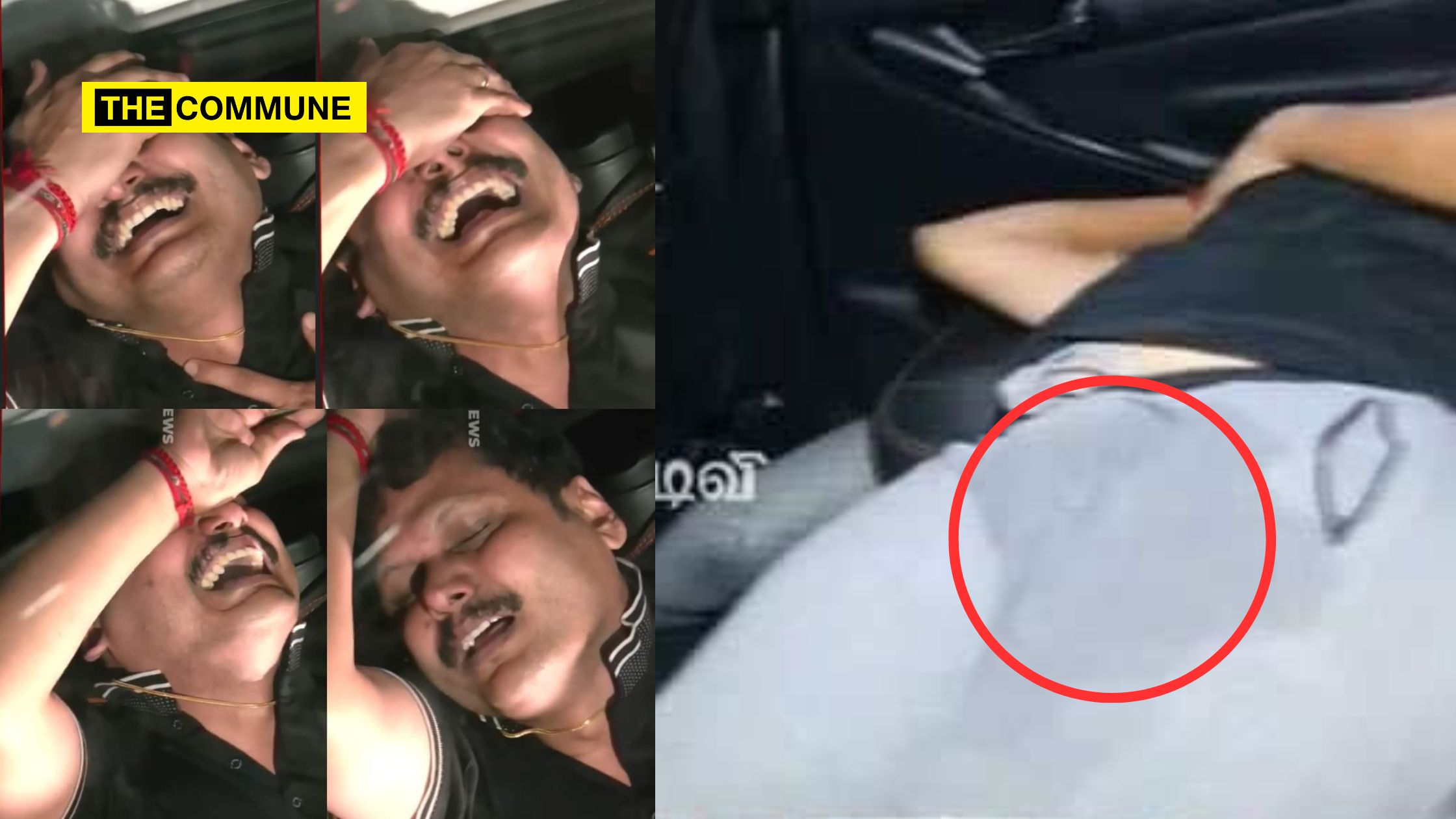
In a horrific incident in the DMK-ruled state of Tamil Nadu, a gang of mercenaries abducted a BJP functionary in a car and brutally hacked him to death near Uthangarai.

Kalikannan, the Vice President of the BJP in Tirupattur ran a watercan business in Chetti street. At around 10 PM on Wednesday (23 November 2022), a few men who had come in a Scorpio car reportedly abducted him from his shop at knife point.

He did not return home the entire night and was found dead near a crusher company in Uthangarai.

On getting information, Uthangarai police rushed to recover Kalikannan’s body and sent it to the government hospital for post-mortem.

According to preliminary investigation by the police, Kalikannan has been getting death threats for the past one month. Because of the threat, he had avoided venturing alone. It was reported that the gang was aware of this and had gone directly to his shop to abduct him.

It is suspected that the killers might have fled to Salem or Bengaluru after killing Kalikannan.

Further investigations are on and the motive of the murder is yet to be ascertained.

BJP Tamil Nadu President K. Annamalai expressed shock at the incident and has urged the police to immediately arrest all those responsible.

Hindu Munnani Chennai City President too has condemned the horrific murder.

Click here to subscribe to The Commune on Telegram and get the best stories of the day delivered to you personally.
 

Cauvery Calling To Conduct Seminar On Earning Profits From Rain-fed Lands In Virudhunagar

On November 27, Cauvery Calling, will conduct a seminar on the cultivation of tree crops in rain-fed lands to earn good profits in Virudhunagar. More than a thousand farmers from all over Tamil Nadu are going to participate in the seminar.

A press conference in this regard was held today at the Madurai Reporters Guild. The State Field Coordinator of the Cauvery Calling Movement, Thiru Tamilmaran explained, “More than 40 percent of the land in Tamil Nadu is rain-fed land. Farmers of the region who depend only on rain for agriculture can earn a good income if they cultivate trees suitable for the soil in their lands. Particularly, valuable timber trees such as Sandalwood, Rosewood, Kodukkapuli, Mahua, Neem, Nattuvagai, Naval, Jackfruit etc. are suitable as they are drought tolerant. 6-8 percent rainfall in dry areas is enough to grow these trees. Also, it survives and thrives with some early maintenance. These trees can be interplanted with regular crops or can be planted en masse to form a grove in rain-fed land. Farmers who want to participate in this seminar can contact 90025 90079 and make reservations”, said Thiru Tamilmaran

While the movement has been conducting training on tree-based agriculture,  this seminar has been organised exclusively for rain-fed farmers.

Various pioneer farmers and scientists will participate in this seminar held at Ramasamy Naidu Memorial College, Sattur. In particular, the Associate Director of Agriculture, Mr Ramamurthy is going to share ways to derive profit from neem trees.

Agricultural Engineer in the Special Project Implementation Department of the Tamil Nadu Government Mr Britoraj will speak about ‘ Kodukappuli’ tree cultivation. Mr Sundararajan, a scientist at the Institute of Wood Science and Technology, Bengaluru, will delve into Sandalwood cultivation. Mr Guruswamy, head of Chettinad Rainfed Agriculture Research Institute is going to talk about Ilupai tree cultivation. Apart from this, pioneer farmers are also going to share about navel, rosewood, vagai and jackfruit cultivation.

Sivagangai district farmer Mr. Sampath and Madurai Peraiyur farmer Mr. Vasimalai also participated in this press conference.

The seminar comes against the backdrop of the Central Government selecting 117 districts in India as Aspirational Districts. It also includes the drought districts of Ramanathapuram and Virudhunagar districts of Tamil Nadu. Under this, the farmers of respective districts can get assistance from the central government and cultivate tree crops in their lands.

It is noteworthy that all types of timber saplings are being distributed at Rs.3 for the benefit of farmers in Isha Nursery across Tamil Nadu.

(This is an official press release from Isha Foundation. The Commune was not involved in creating this content.)

Click here to subscribe to The Commune on Telegram and get the best stories of the day delivered to you personally.
Telangana: TSRTC Staff Invoke Christian Prayer For New Bus Service From Asifabad To Shirdi

A video shared on Twitter, of a TRSTC (Telangana state road transportation corporation) bus from Asifabad, Telangana to Shirdi, Maharashtra with a Telangana state government bus driver, invoking a Christian prayer/blessing, has sparked some online debate. The woman, a Telangana state government employee, is seen indulging in a Christian prayer in Telugu, requesting a safe bus journey for the passengers and their families, the drivers and their families, while she and several people around her, stand with eyes closed and faces turned downward in a typical prayer pose. The manner in which the prayer is said, is typical of those conducted in churches.

The TSRTC had recently launched a new, direct bus service from Asifibad town in Kumaram Bheem Asifabad district, Telangana to the pilgrim town of Shirdi, Maharashtra said to take around nineteen to twenty hours by road. The government employee is heard asking “prabhu” for blessings for the newly inaugurated bus service (“prabhu” is a popular mononymous reference to Jesus, in several Indian languages).

“We pray you to keep this newly launched Asifabad-Shirdi RTC bus in your control, and bless all the passengers a safe journey. Make sure that no obstacles be faced by them during their journey. Keeb the bus drivers, their families, their children in your notice.”, the lady can be heard praying.

Asifabad is the district headquarters for Kumaram Bheem Asifabad district in Telangana state, named in honour of the Telugu “Gond” tribal leader and freedom fighter, Komaram Bheem, who valiantly resisted and fought the rule of the Hyderabad Nizam as well as that of the British from 1928-1940. The Gonds were classified as a scheduled tribe (ST), post Indian Independence.

Komaram Bheem Asifabad district is the second most backward district in India, according to the 2018 NITI Aayog ranking and has a high percentage of Scheduled Castes and Scheduled Tribes, who make up 15.82% and 25.91% of the district’s population respectively. It is in this context that a Telangana state government employee’s Christian prayer, becomes a worrisome subject of discussion, considering the much debated topic of conversions and missionary activities amongst gullible, economically weaker sections of society. Netizens have questioned the state government employee’s open and brazen preference for Christian prayers on a bus route to a Hindu pilgrimage centre.

Click here to subscribe to The Commune on Telegram and get the best stories of the day delivered to you personally.
Tamil Nadu: Youth Booked For Video Alleging Irregularities In Tap Water Connection Work

The Tamil Nadu police have registered a case against a youth in Tiruvannamalai district who released a video on social media about irregularities in the laying of drinking water tap connections.

Tap water connections under the Jal Jeevan Mission were laid and inaugurated a few days ago in Indravanam village of Sethupattu block in Tiruvannamalai district.

On 21 November 2022, a youngster named Murali Krishnan had released a video in which he exposed the irregularities in the laying of the pipes.

In the video, the outlet pipe can be seen just fixed to the ground without any pipeline underneath. He had alleged that authorities have given completion certificate and accounted ₹3.69 lakh for this incomplete work done.

According to a report by Puthiya Thalaimurai, the work for giving tap water connections to all the houses in the village commenced a fortnight ago. The report said they (Puthiya Thalaimurai) had received information that drinking water pipes were installed at 104 places but however it was found that outlet pipes were installed for namesake in more than 50 places.

It is alleged that a department officials were bribed to give the completion certificate for the incomplete work done.

Meanwhile, the incident gained traction with the video being shared by AIADMK leader Kovai Sathyan and even broadcasted in Jaya Plus news channel.

The state Revenue Department officials were directed by the district administration to inspect the village. A parallel investigation by Puthiya Thalaimurai revealed that completion certificate was given even without the work being completed. However, the Revene Department officials refused to divulge details and said that they would initiate departmental action against anyone involved in the irregularities.

Later, work began on replacing the namesake pipes with actual pipe connections.

However, a case has now been registered against the youth who had exposed the irregularities based on a complaint given by Sethupatti Block Development Officer Renugopal. The complaint said that the youth Murali Krishnan had released the video with ‘malafide intention’.

Case registered against youth for releasing the video

Click here to subscribe to The Commune on Telegram and get the best stories of the day delivered to you personally.
VCK Women Functionary Laments About Discrimination And Abuse In Party In Front Of Thiruma, Mic Turned Off

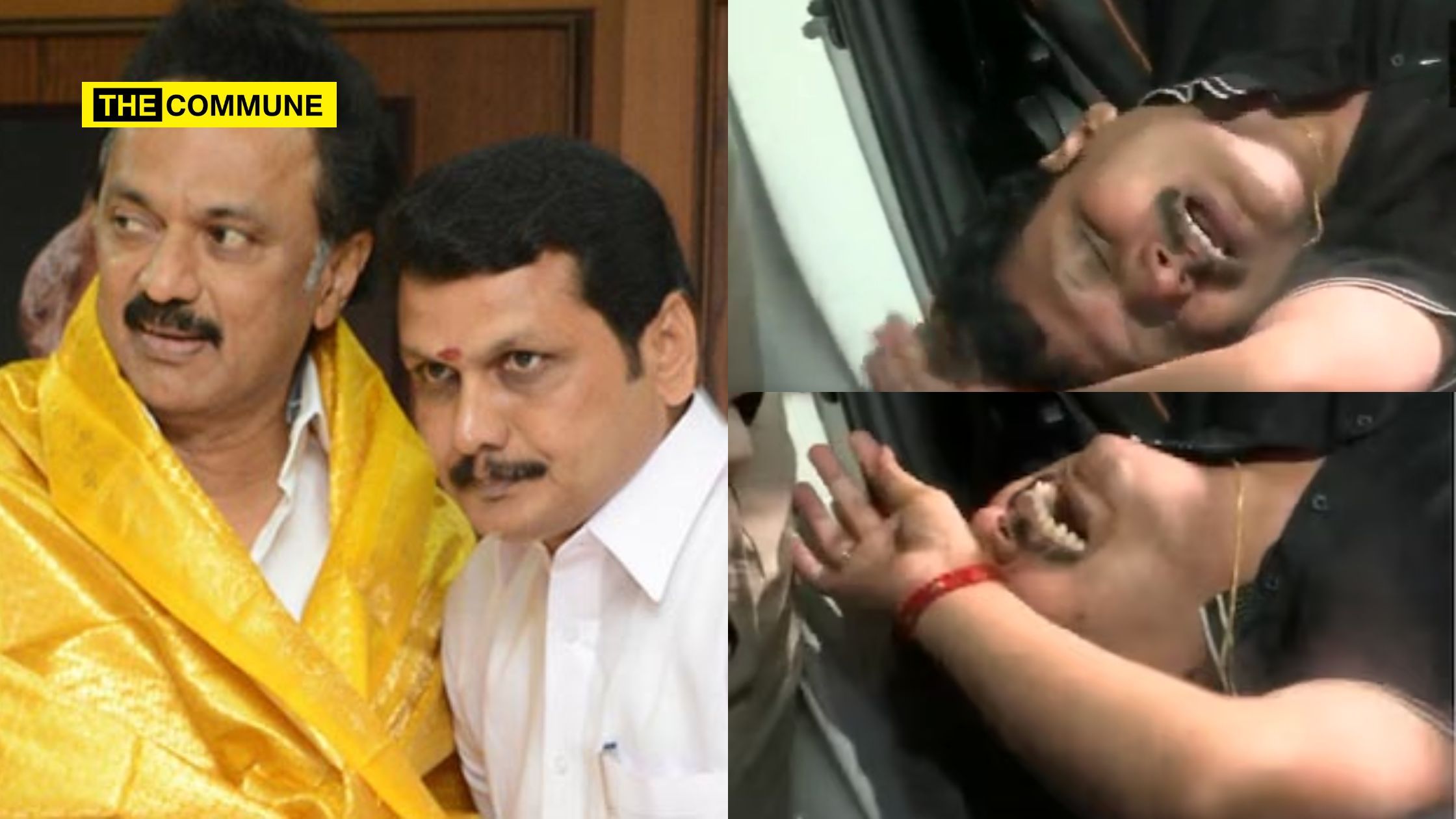
A Viduthalai Chiruthaigal Katchi woman functionary has accused the party of discrimination, verbal assault on women, and male chauvinism (all referred to as Sanathana Dharma in their words), in the presence of Thirumavalavan. Her accusations come in the light of the party’s leader Thirumavalavan speaking about Sanathana Dharma in whichever stage he climbs.

A meeting for the coordination of the Women Liberation Movement of the VCK party was organized by the party’s chief, Thol. Thirumavalavan, at Sir PT Thiyagaraya Hall in Thiyagaraya Nagar, Chennai.

Speaking on the occasion, Narsonai, State Secretary of the VCK Women’s Liberation Movement, claimed that donations are being collected in all districts by mentioning Thirumavalavan’s name, and she criticized district functionaries for insulting women badly, accusing VCK of following Sanatanam (in their own definition) within the party from the top to the bottom level.

She said,”They (VCK male cadres) abuse women using the most derogatory terms. I have all those recordings. I can show all those recordings. Male society has not changed yet and it needs to change. Sanathana is present throughout the party, from top to bottom.”

Even as the woman functionary was speaking, a male VCK cadre who came to the stage turned off the mic. There was a commotion as many women who were sitting in the hall stood up and raised their voices in support of the VCK women.

Thirumavalavan, who spoke later, tried to downplay the discrimination and abuse of women within the party, saying that Narsonai spoke about her bitter experience while doing fieldwork for the party.

(with inputs from News18 Tamil)

Click here to subscribe to The Commune on Telegram and get the best stories of the day delivered to you personally.
 

This TN Congress MLA Had Hailed Controversial Islamist Preacher Zakir Naik As A ‘Wise Man’

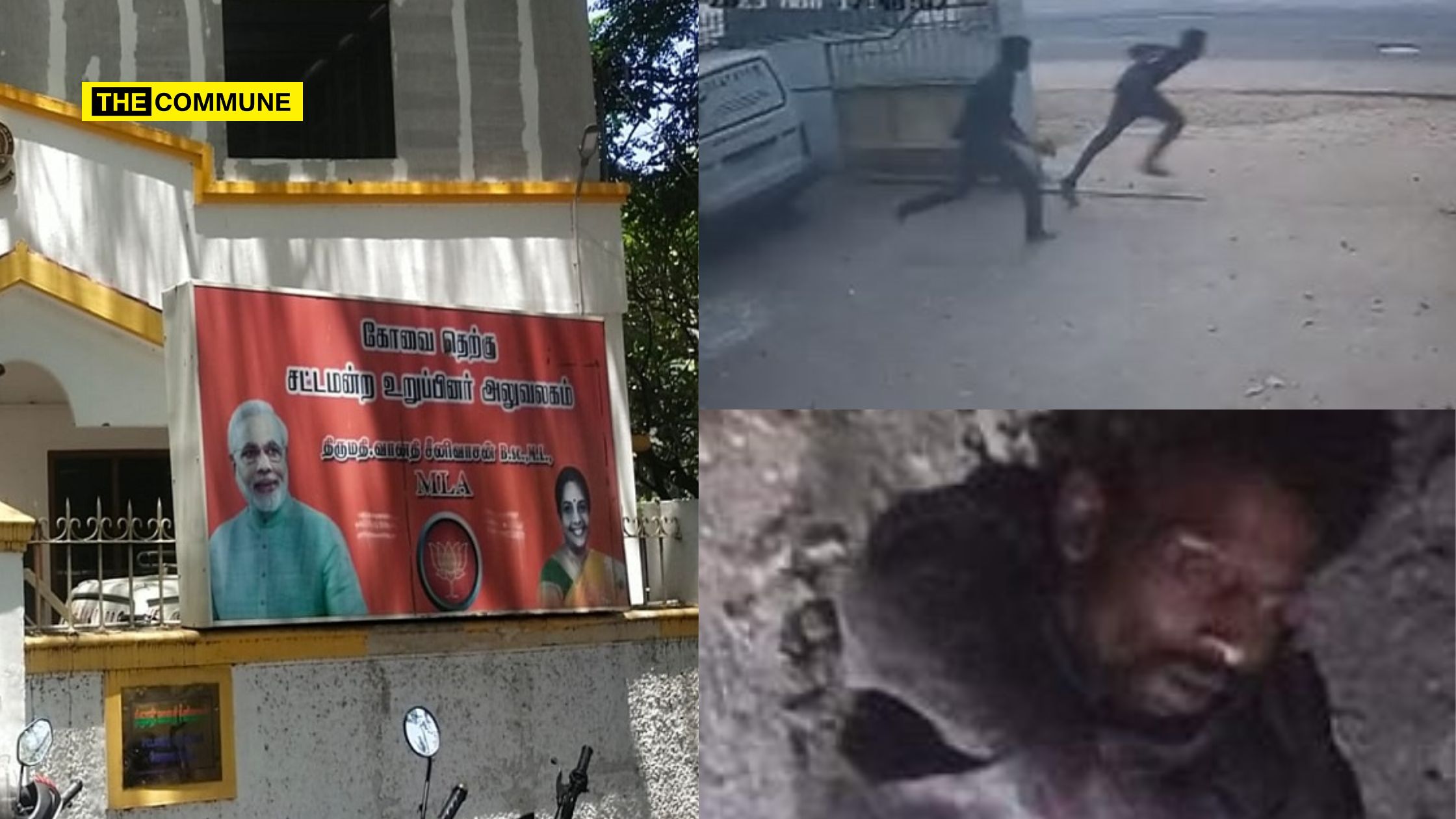
Video footage from Tamil Nadu showing a 2016 speech of TN Congress MLA, S Vijayadharani of Vilavancode constituency in Kanyakumari district, speaking on the “wisdom” of the fugitive Islamic missionary preacher, Zakir Naik, is inviting several comments with netizens expressing shock, disbelief and disgust.

Vijayadharani is a three time Congress MLA and a practising lawyer. She has held high profile posts in the Congress Party. She was the Tamil Nadu Assembly Congress Legislative Party chief whip, is a former President of the Tamil Nadu Magalir Congress (TN Congress Women’s wing). In 2016, she was promoted to the position of General Secretary of the All India Mahila Congress.

In the controversial 2016 video, the Congress MLA from Kanyakumari district of Tamil Nadu, is heard praising the “wisdom” of the fundamentalist Islamist preacher and Muslim evangelist Zakir Naik, a fugitive wanted in India by the CBI, NIA and the ED in connection with several cases ranging from hate mongering, inciting terrorist activities, forced conversions to money laundering.

In the short clip making the rounds on Twitter, Vijayadharani mentions that Zakir Naik reminds her of herself, that the man has done a comparative study of the faiths of Hinduism, Islam and Christianity and talked about their merits and that he is indeed a wise man, who is being unfortunately/unfairly investigated by the Indian government (referring to the BJP). She goes on to unabashedly state that such governments (headed by parties like the BJP) are not needed and should not be elected by the people!

The reckless, unresearched, non-factual comments on a known Islamic fundamentalist and a wanted man by Indian law enforcement agencies, made by an elected leader belonging to the “secular” Congress party, could not be further from the truth about Zakir Naik, whose admirers include many banned Islamist organizations. Vijayadharani’s irresponsible comments are not befitting of a national political party but the Congress party, predictably did not post any significant reaction to the embarrassing incident.

In reality, Zakir Naik’s preaching proclaims his irrational, prejudiced view of Islam being a superior religion over all others and Islam being the only “true” religion. Zakir Naik is a radical “Salafi” Islamist and muslim evangelist, often criticised for preaching Islamic supremacy. He is the founder president of the Islamic Research Foundation (IRF) based in Mumbai and the founder of ‘Peace TV’ channel. His preaching is banned in several nations including  India, Bangladesh, Canada, the UK and Srilanka. Several terrorists including the 2006 Mumbai train & Dhaka cafe attackers, have claimed to be motivated by his extremist speeches. His talks were also said to have inspired the deadly Srilankan “Easter Sunday” church blasts in 2019.

In November 2016, the Indian government had declared Naik’s IRF, an unlawful association under the anti-terror Unlawful Activities Prevention Act (UAPA). Soon after, the National Investigation Agency (NIA) registered a case against Zakir Naik, accusing him of having incited many people to take up terror activities and promoting enmity between different religious groups in India, through his public speeches and lectures. Four of his properties in Mumbai have been attached by the NIA.

The Congress MLA, Vijayadharani had made the unverified comments at an 2016 Eid celebration event, organized by the Social Democratic Party of India (SDPI), the political front of the terror-linked Islamist organization PFI (Popular Front of India) which was banned earlier this year. PFI has its roots in the banned SIMI and its cadre have been charge-sheeted or convicted, in at least four different terror cases apart from being accused in the murders of several Hindu activists. An NIA probe concluded  that “PFI had consistently been indulging in actions detrimental to national security”.

Zakir Naik is currently a fugitive living in Malaysia, a muslim country that granted him permanent residency, after being denied similar opportunities in countries like the U.K and Canada that refused to take him in. The Indian government has revoked his passport. Interestingly, Malaysia has recently banned Zakir Naik from public speaking after reports of divisive, incendiary speeches against Malaysian Hindus of Indian origin and Malaysians of Chinese origin.

The circulation of the TN Congress leader’s 2016 video clip, praising the radical Islamist with an unsavory reputation in India and abroad, comes at a time when the internet is abuzz with news that the 2022 FIFA host nation, Qatar had invited Zakir Naik to the World Cup inauguration in Doha, on Sunday. Qatar has informed India through diplomatic channels that no official invitation was extended to Indian fugitive and Islamist Zakir Naik to attend the November 20, 2022 opening of the FIFA World Cup In Doha. Qatar claims that deliberate “disinformation” was being spread by third countries to spoil India-Qatar bilateral relations.

Click here to subscribe to The Commune on Telegram and get the best stories of the day delivered to you personally.
Ex-Army Man Thrashed By Pantry Staff For Opposing Namaz Performance Blocking Passageway

Feature Image Credits: OpIndia

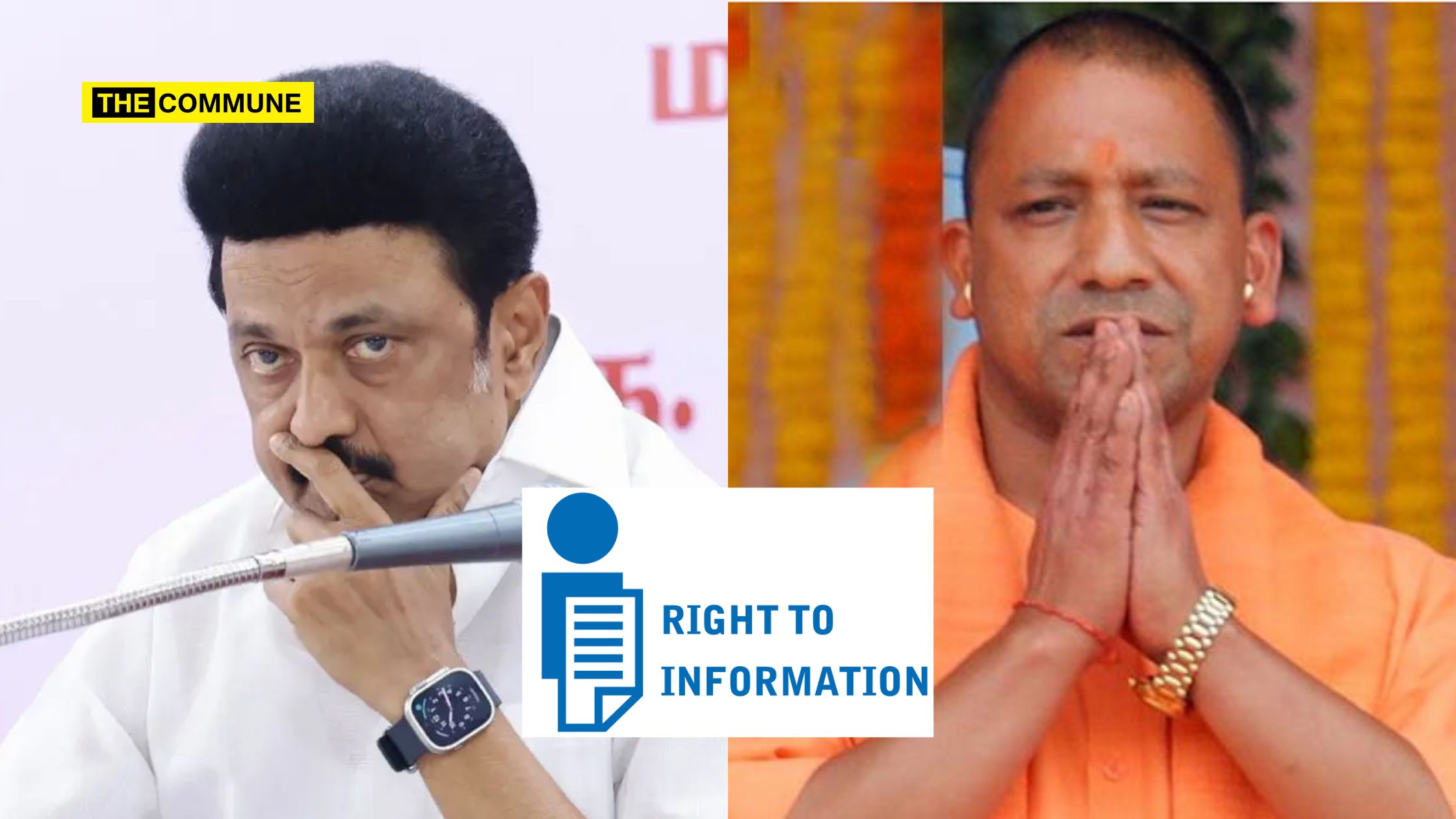
An ex-serviceman onboard the Swarna Jayanti Express was thrashed on Sunday. He was reportedly attacked after he started reciting Mantras to oppose the Namaz performed by a few passengers aboard the train. The train’s pantry car manager and other staff members are accused of the assault. A case has been filed in this respect at Madhya Pradesh’s GRP police station and the injured ex-serviceman was admitted to the hospital after the incident.

https://twitter.com/iamdesinari/status/1594886852347322368

On the day of the incident, the ex-serviceman Vilas Naik was travelling from Delhi’s Hazrat Nizamuddin to Visakhapatnam. A few Muslim passengers were also on board train number 12804 in the same coach. Naik reportedly asked for the passageway to not be obstructed as he had to go to the toilet. However, the persons offering Namaz asked him to wait till the Namaz was over.

A video has now gone viral on social media in which Naik is seen narrating that the Muslim co-passengers had obstructed the passageway to toilets on both sides for Namaz and the Namaz on the common passageway was done 3 times before he decided to object. He added that he had to go to the toilet earlier too, but had to wait because the Muslim co-passengers were unwilling to let anyone pass during Namaz.

A report by Dainik Bhaskar stated that ex-serviceman Vilas Naik was assaulted on the train by the pantry car staff as he was chanting Mantras in protest of the Namaz being performed onboard the train which was impeding passenger movement.

“On Sunday, a group of individuals sat in the train aisle to offer Namaz. This was repeated three times. When I requested a way to use the toilet, I was turned back” Naik was quoted saying in the Dainik Bhaskar.

In response, he began reciting Mantras in protest. Meanwhile, the pantry staff arrived and asked Naik to move and not obstruct the passage. They began arguing with Naik when he questioned why chanting could not be done while Namaz could be read. Harvesh Singh, the pantry manager, then summoned his employees and assaulted Naik, as per Naik’s complaint.

The pantry manager has reportedly said that Naik injured himself. Muzakir Ahmed, who was travelling aboard the train, on the other hand, admitted to performing Namaz. He stated that Naik insisted on using the restroom when Namaz was being offered.

They were all dropped off at the GRP outpost of Betul station in Madhya Pradesh. According to the outpost in-charge NS Thakur, an FIR has been registered against the manager of the pantry car and his coworkers under sections 294, 322, and 34 of the IPC.

The Railway Protection Force’s Senior Divisional Security Commissioner, Nagpur Division, acknowledged the incident in a press release. The train was delayed for around 18 minutes at Betul railway station. A case has been filed against the pantry car manager and his two vendors based on Naik’s accusation and the matter is being further investigated, according to the press release.

(With inputs from OpIndia)
Click here to subscribe to The Commune on Telegram and get the best stories of the day delivered to you personally.

Role Of Animals In The Defeat Of Native Indian Kings in Medieval Era

Since time immemorial, to be precise, for the last 3000 years, the two animals have been used immensely in battles: elephants and horses. Usually, three major characteristics define the usability of animals in battles: size, weaponry, and controllability. Elephant’s size is intimidating, while its tusks, feet, trunk and forehead are formidable weapons. Elephants, despite being intelligent, are relatively tough to train, especially for battlefield purposes. Horses, though, do not have a dreadful size, but they allow humans to sit comfortably on their backs. They are easily controllable and trainable, but their main asset is their speed, capability of travelling long distances and manoeuvrability due to their inner strength. They could even travel 100 miles per day. Had these Central Asian horses not been so capable, India may still have been basking in its ancient glory.

In contrast, Indian horses were found to be relatively weak, mainly due to heat and humidity in India. On the other hand, Indian elephants were found to be of excellent quality, even better than their African counterparts. Elephants have a special place in Hindu Puranic tales. Hindu god Ganesh has the head of an elephant and the epics Ramayana and Mahabharata extensively portray elephant warfare. In ancient India, the army consisted of four significant parts: infantry, cavalry, elephants and chariots, collectively called chaturanga. Thus, the game of chaturanga came into being that later evolved into the game of chess, wherein the Elephant (rook) is considered a powerful piece.

Historically, kings and commanders used elephants for myriad works like cargo vehicles to carry heavy loads over long distances due to their sheer size. Kautilya stated that breaking fortress walls, gates and towers was among the elephants’ essential functions and further declared that the victory of kings in battles depended mainly upon elephants. Other Indian writers also expressed the utility of elephants in no uncertain terms: Where there are elephants, there is victory; the kingdoms depend on elephants. One rightly said that ‘one elephant, duly equipped and trained in the methods of war, is capable of slaying six thousand well-caparisoned horses’; or ‘an army without elephants is as despicable as a forest without a lion, a kingdom without a king or as valour unaided by weapons.

In Europe, they were only used as draught animals to carry weights. Babur once stated that his elephants could carry even 500 kgs of load. Two or three sturdy elephants could bear arms and ammunition, usually requiring 500 men. Elephants can walk up to 16 Kms/hr and can move in any terrain, whether on a steep slope or plains. They can even cross rivers with relative ease, which makes them ideal for war. Further, most carnivore animals like lions and tigers are fearful of elephants providing the riders a safety net. In Asia in general and in India in particular, they were used extensively as war tanks to be used to ramrod enemy flanks. On the flip side, they are also known to be voracious eaters.

To tame elephants, extensive training was required for years, during which they were trained to trample down the enemy and kill them mercilessly. They were also taught to endure large sounds to acclimatize them to war noises, or else they would panic in battle. Animals were deliberately slaughtered in front of them to make them accustomed to the sight of blood. An elephant is finally considered tame and trained when it allows a man to ride on its back.

Elephants were integral to Hindu armies and used primarily for shock and awe. Hasan Nizami characterized the series of elephants as ‘mountains of steel’. These animals acted as command centres or a platform to throw javelins. Initially, Turk armies suffered heavy losses due to elephants. After a few initial reversals against Hindus, the Turks figured out myriad ways to neutralize elephants. They usually employed axes and arrows to hit the beast’s legs to hurt him, as its feet were susceptible. They also used to put caltrops or rods with spikes on the ground. They frequently used to cut its trunk with their sword, forcing it to run away from the battle. Turkish invaders used to throw burning naphtha (combustible oil) balls at the rushing elephants, thus harming them immensely. Mahmud used this technique to defeat Hindu Shahi king Anandpal when the Turks were on the verge of defeat. Afterwards, it became a standard operating procedure, to be used against marauding elephants. It significantly reduced the importance of elephants in wars. However, Hindus kept using them in the battles, even though they were more of a liability, given their slow mobility.

These animals were most useful with the enemies that had not fought against them earlier as happened with Ghori in the first battle of Tarain in 1191. Realising his mistake, Ghori reportedly practiced with dummy wooden elephants before attacking again in 1192. After the advent of gunpowder in the 16th century, the practical utility of this large but unpredictable pachyderm was reduced largely. Probably they were given up in favour of artificial and predictable weapons.

On the contrary, the Turks’ biggest strength was their large Turkoman horses. These horses required large arid tracts of grasslands that were not present in the cultivated plains of India with its humid climate. Even if the battles were lost, they could retreat safely at a fast speed due to their sturdy horses to prepare for the next conquest. With their weak Indian horses, Hindu armies could not chase them down. Even when Hindu kings wanted to finish the invader’s army, they could not. The Turkoman horse is the noblest in the whole of Central Asia and surpasses all other breeds in speed, endurance, intelligence, faithfulness and has a marvelous sense of locality. On their predatory expeditions, the Turkomans often covered 650 miles in the waterless desert in five days. They owed their power to the training of thousands of years in the endless steppes and deserts and to the continual plundering raids, which demanded the utmost endurance and privation of which horse and rider were capable. This swift mobility enabled the commanders to send soldiers on advanced reconnaissance and spying missions. The transmission of messages between Bin Qasim and the Caliph of Basra during the attack on Sindh was quick due to this characteristic. Ghazni could launch 17 attacks on India in just 25 years also points to this extraordinary mobility.

Due to their rigorous training, they developed into outstanding horse archers. They could aim and accurately shoot six arrows per minute. The effective range of the composite bow used to be 300 yards and a maximum of 500 yards. This ability could destroy sword-wielding Armenians from a distance from the Turk archers. Further, the latter’s bows were composite ones made of wood, horn and sinew. The strings were of animal hides that made them stronger. The main advantage of these bows was their higher power and smaller size. They also used nawaks (crossbows), arrows that easily pierced the enemy’s armour. Bows were accorded sacred status along with the horses. Turks also used metallic stirrups to deploy heavy cavalry on the battlefields, while Hindus used rudimentary stirrups made of wood.

Until the 12th century, Rajputs used to import 10,000 horses from Central Asia. However, Turks and Mongols later stopped exporting horses, fearing that the animals would be used against them only. After coming to India, most horses used to fall sick due to heat, improper feeding, and lack of horseshoes. Later on, crossbreeding was tried between Arabian and Indian horses so that the hybrid could survive in India’s humid weather. Famous Marwari horses were the output of this process only; still, they were no match for the Turkish horses. Its hilly and forested terrain was not suited for horses at all. Conversely, this terrain was perfect for the elephants and hence Indian rulers came to rely upon the elephants.

The combined factors of the continued use of elephants and the absence of sturdy horses contributed heavily in keeping Hindus under Islamic rule for 500 years.

(This article was originally published in Bharat Voice and has been republished here with permission.)

Click here to subscribe to The Commune on Telegram and get the best stories of the day delivered to you personally.

DMK Govt Buys Mid-Day Meal Eggs From Subsidiaries Of Company That Provided Low Quality Pongal Kits, RTI Reveals

According to an RTI filing regarding the Tamil Nadu government’s procurement of eggs for the midday meal scheme, the DMK Stalin government has given contracts to the same companies that Stalin accused of corruption when he was in opposition.

Tamil Nadu Chief Minister MK Stalin, while he was the opposition leader of Tamil Nadu, accused the then-ruling Edappadi government of ₹500 crore corruption in procuring eggs for the midday meal scheme, claiming that the ADMK government paid more than the market price for the eggs, and vowed to conduct an investigation when they came to power.

Despite the fact that the DMK has been in power for a year and a half, no investigation into the AIADMK regime’s alleged egg procurement scandal has taken place. Furthermore, the RTI revealed that the procurement of eggs for the fiscal year 2021-2022 was handled by the same companies that MK Stalin had accused of corruption while he was the opposition leader. According to an RTI, the DMK government also awarded the egg tender to subsidiaries of a company that was fined for providing substandard items in the Tamil Nadu government’s “Pongal package” last year.

Yuvaraj Ramalingam, an RTI activist, filed a petition seeking the details of the list of companies that were awarded government tenders for the procurement of eggs and their prices of procurement from 2014 to May 2021 and May 2021 to the present.

The RTI reply reveals that the average price of an egg purchased for the midday meal scheme in the fiscal year 2021-2022 is ₹5.25, which is significantly higher than the market wholesale price of eggs.

The RTI also revealed that the tenders were awarded to companies such as Suvarnabhoomi Enterprises Private Limited, a company that is linked to Christy Foods Private Limited which had provided low-quality Pongal gifts.

TS Kumarasamy who is one of the directors of Suvarnabhoomi Enterprises Private Limited is also the director of Christy Foods Private Limited.

Click here to subscribe to The Commune on Telegram and get the best stories of the day delivered to you personally.