Home Blog Page 117

Palakkad Horror: Mother Finds Charred Body Of Missing 17-Year-Old Daughter

teen girl stabbed to death ranipet palakkad

A 17-year-old Plus-Two student was found dead with severe burns in a secluded area near her home in Palakkad, the police said on Thursday. The deceased has been identified as Gopika, a student of Kollangode BSS Higher Secondary School. She had left home in the morning to attend school, but did not return.

Her mother, Sheeba, went searching for her after she failed to return from school and discovered Gopika’s charred body around 6 p.m. on Wednesday on a hillock at about half a km from their home. Alarmed by Sheeba’s screams upon discovering her daughter’s body, locals alerted Panchayat member B. Manikandan, who then informed the police.

Preliminary investigation suggested that Gopika died by suicide, according to a local media report quoting the police. She often spent time at the hillock on her return from school. The police recovered her school bag, mobile phone, and a diary from the site. Reports indicate the diary contains notes detailing the reasons for taking the extreme step.

Similar inscriptions were also found on the rock near where her body was found. The police have not yet disclosed the contents of her diary that might explain the reasons behind her suicide. The Kollangode police initiated a detailed investigation into the incident. Her body was shifted to the district hospital mortuary for a post-mortem examination. The tragic death has brought to light concerns about academic pressures and mental health support for students in the region.

There have been several tragic incidents involving student deaths in Kerala recently, often attributed to factors like academic pressure, bullying, and mental harassment. A 14-year-old girl in Palakkad died by suicide in June this year after her family alleged she was mentally harassed by her school. Following protests from students and parents, the school dismissed five staff members, including the principal.

In another case, a 17-year-old Plus Two student in Thiruvananthapuram, Darshan R, was found dead at his home in March this year. The police suspected that exam-related stress might have led to his death.

-IANS

Subscribe to our channels on TelegramWhatsApp, and Instagram and get the best stories of the day delivered to you personally.

“Criminals Fearless, Police Demoralised”: TN BJP President Nainar Nagenthiran Attacks Stalin Govt

nainar nagenthiran dmk stalin

Tamil Nadu BJP president Nainar Nagenthiran has strongly criticised the DMK government, alleging that law and order in the state has collapsed and police officers are being attacked. In a statement issued on Thursday, Nagenthiran pointed to the shocking incident in Pulianthope, Chennai, where police officers, who tried to arrest an inebriated gang engaged in robbery, were assaulted in broad daylight.

The BJP leader said this brazen attack reflects the DMK government’s administrative failure and has created fear among the public while demoralising government officials. He further alleged that even inside the police station, in the presence of an inspector, the accused used abusive language, issued death threats, and vandalised property without fear of consequences.

“This proves that under DMK rule, the public has lost trust in the police while criminals have lost all fear of the law,” Nagenthiran charged. According to him, such incidents are not isolated. Over the last four years, attacks on police personnel across Tamil Nadu have risen steadily. Nagenthiran questioned whether the reason lay in the police being reduced to a “kangaroo court” that merely carried out DMK’s political orders, thereby emboldening criminals. He also raised concerns that integrity and strength within the force may have weakened under the direct control of Chief Minister M.K. Stalin.

Calling the situation “extremely dangerous”, Nagenthiran said the Chief Minister’s repeated claims of “crushing crime with an iron hand” have turned out to be empty words. The TN BJP chief urged Chief Minister M.K. Stalin to act immediately to end the “violence directed at police officers”, ensure their safety, and empower them to carry out their duties without compromise.

Nagenthiran concluded that only by guaranteeing the safety and independence of the police can the state restore public confidence in its law and order machinery.

-IANS

Subscribe to our channels on TelegramWhatsApp, and Instagram and get the best stories of the day delivered to you personally.

Nepal President Assures Gen-Z Crisis Will Be Resolved Within Constitutional Boundaries

nepal gen-z

Nepal’s President Ram Chandra Poudel said on Thursday that efforts are being made to find a solution within the set framework as concerns are being raised about potential deviation from the constitutional course to settle the tense political situation in the country post Gen-Z revolution.

“In the current difficult situation of the country, I am engaged in discussions, and every possible effort is being made to find a solution within the constitutional framework so that we can provide a way forward for the nation, safeguard democracy, and maintain peace and order,” President Poudel said in a statement. He also urged all sides to have faith in the efforts being made to address the demands of the Gen-Z protesters while asking to cooperate calmly in maintaining peace and order in the country.

The President’s remarks have come at a time when the political parties, leaders and civil society activists are expressing fear about the fate of democracy if the solution deviates from the constitutional course. Currently, the Gen-Z leaders who launched protests against Prime Minister K P Sharma Oli’s government leading to his ouster from the post, are discussing with the top brass of the Nepal Army which has taken the responsibility of maintaining law and order situation and ordered curfew till Friday morning in the Kathmandu Valley.

With the Nepal Army taking the lead in negotiations with Gen-Z leaders, a certain group of people is out on the streets, demanding that democracy be preserved and any army rule be prevented. President Poudel has indicated he is in charge of the negotiation even though the Nepal Army and protesting Gen-Z leaders are discussing the future political course. The President is the ceremonial Commander-in-Chief of Nepal Army, as per the constitution.

Former Chief Justice Sushila Karki still appears to be the frontrunner to lead the next interim government. Kathmandu City Mayor Balen Shah has also thrown his weight behind Karki. However, some Gen-Z leaders have also floated alternative names, including former Managing Director of Nepal Electricity Authority Kulman Ghising, stating that as per the constitutional provision, a person who has become the Chief Justice is ineligible to be appointed to any government position.

Ghising is credited for ending the chronic loadshedding in the country. Nepal’s major political parties have also insisted on the need to follow the constitutional course. By issuing a press statement, the Communist Party of Nepal (United Marxist-Leninist) or CPN (UML) stated that, following the resignation of Prime Minister Oli, the way forward must be sought constitutionally and democratically.

The party, whose chairperson is also the deposed Prime Minister, urged President Poudel to initiate meaningful dialogue in line with the spirit of the Constitution. The Communist Party of Nepal (Maoist Centre) led by Puspa Kamal Dahal has also stressed finding the way out of the current transitional phase through constitutional means.

“Any political solution sought outside the Constitution and the Legislature-Parliament would ultimately benefit regression,” the party said on Thursday. Nepali Congress General Secretaries Gagan Thapa and Bishow Prakash Sharma on Wednesday stressed that any decisions made under the “doctrine of necessity” can and must move forward through constitutional and legal pathways.

“Lawlessness will only invite further chaos. Therefore, during the course of dialogue, we appeal to the President and the Gen-Z side to ensure adoption of every possible legal measure to prevent a prolonged constitutional vacuum and void in the nation,” they urged. All three parties have condemned the destruction of public and private parties during the mayhem on Monday. Madhes-based parties have also come up with the solution that the constitutional course should be followed.

“Federalism, republicanism, and inclusivity must not be reversed, as these achievements were attained through the sacrifices of many Nepali people,” stated Rastriya Mukti Party Nepal, a Madhes-based party. A civil Society Group — Brihat Nagarik Andolan (Extended Citizen Movement) has expressed concern over the role of Nepal army, accusing the institution of holding talks with the elements who infiltrated the Gen-Z movement and, from the second day onward, acted in an organized manner as per their longstanding preparations – targetting physical, economic, and psychological destruction of all state institutions accountable to citizens, as well as the private sector.

As concerns are being raised over the fate of democracy in the country, the movement called for finding solutions on the foundation of the Constitution and without deviating from the constitutional path.

-IANS

Subscribe to our channels on Telegram, WhatsApp, and Instagram and get the best stories of the day delivered to you personally.

From Venkataraman To Abdul Kalam And Moopanar: How DMK Opposed Tamils In Power

dmk tamil

C.P. Radhakrishnan, the Governor of Maharashtra and a senior BJP leader, has been elected as the 15th Vice-President of India. Representing the NDA, he defeated I.N.D.I bloc candidate and retired Supreme Court judge B. Sudershan Reddy by a margin of 152 votes.

While this marks a historic and proud achievement for Tamil Nadu with a native Tamil ascending to one of the highest constitutional offices in the country the ruling DMK chose not to support him. The party, which frequently accuses the central government of undermining Tamil identity, claimed that ideological commitment mattered more than linguistic or regional pride in this instance.

DMK spokesperson T.K.S. Elangovan made it clear, “We will give preference only to ideology. We cannot support Radhakrishnan merely because he is Tamil. What matters are his ideologies.”

DMK’s History Of Voting Against Tamilians To Highest Offices

This is not the first instance of DMK dismissing the “Tamilian” factor when it doesn’t suit their political agenda. Let’s take a look at the inglorious history of the DMK which claims it stands for Tamils, while voting against Tamilians becoming President, Vice President or Prime Minister.

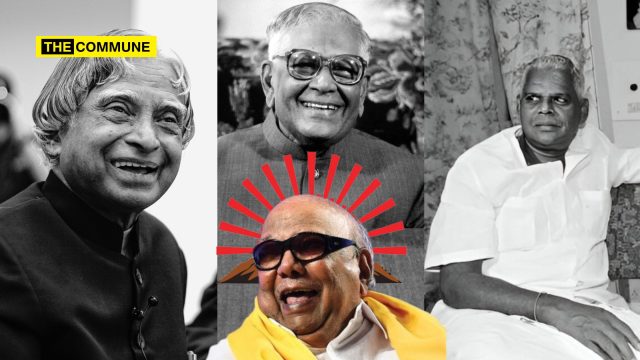
When Karunanidhi Questioned R. Venkatraman’s Credentials

History offers a parallel in 1987, during the Presidential election, when R. Venkataraman, a distinguished Tamil leader, was nominated. Back then, AIADMK founder and Chief Minister M.G. Ramachandran (MGR) pointedly remarked that “not supporting a Tamilian is their stand” in reference to DMK’s reluctance. DMK patriarch M. Karunanidhi responded by downplaying Tamil identity, stating that “it is important to see what he has done for Tamil people rather than whether he is Tamil.”

Ironically, R. Venkataraman’s record showed remarkable contributions to Tamil Nadu. A freedom fighter who played a role in the Quit India Movement, he went on to spearhead the state’s industrialisation. As Industries Minister in 1957, he established industrial estates such as Guindy, brought in major national investments, and was instrumental in the founding of the Integral Coach Factory (ICF) and Neyveli Lignite Corporation (NLC). Under his leadership, automobile giants like Ashok Leyland and Hindustan Motors set up base in Tamil Nadu laying the foundation for the state’s emergence as India’s automobile hub. To question “what he has done for Tamil Nadu” is either historical ignorance or deliberate distortion.

When Karunanidhi Abused Abdul Kalam When He was Chosen in 2012

When the NDA proposed Dr A.P.J. Abdul Kalam as its candidate for the 2012 Presidential election, the DMK then an ally of the UPA dismissed the idea and reaffirmed its backing for the Congress nominee. Party chief M. Karunanidhi even mocked the suggestion, remarking, “Kalam in Tamil also means chaos (Kalagam). Anyhow, chaos has broken out in the Presidential election.”

Despite the buzz created by TMC leader Mamata Banerjee’s push for Kalam, Karunanidhi made it clear that the DMK would stand by its earlier commitment. “We are firm on what we had said. Defence Minister A K Antony who is said to be a honest man met me (last month) on behalf of Congress. I had extended my support to the message he had brought from (Congress chief) Sonia Gandhi,” he said, stressing that the party’s stance remained unchanged.

He explained that Defence Minister A.K. Antony, whom he described as an honest man, had visited him on behalf of the Congress a month earlier. During that meeting, Antony conveyed a message from Congress president Sonia Gandhi, and Karunanidhi confirmed that the DMK had pledged support to the Congress candidate at that time. Asked whether the Presidential election outcome would influence the next Lok Sabha polls, Karunanidhi declined to speculate.

Tale Of Betrayal Shunning GK Moopanar’s Chance to become PM

Perhaps the most revealing episode was in 1996–1997, when G.K. Moopanar a respected Tamil leader and founder of the Tamil Maanila Congress was a potential Prime Ministerial candidate after the fall of Atal Bihari Vajpayee’s short-lived government.

During key meetings of the United Front in Delhi, Karunanidhi expressed lukewarm support for Moopanar, even as other leaders debated options. Though Karunanidhi later claimed he had canvassed for Moopanar, many insiders suggest his efforts were half-hearted. TMC leaders at the time felt that Karunanidhi was unwilling to allow another Tamil, especially a political peer, to surpass him at the national level. Eventually, the United Front chose H.D. Deve Gowda, a relatively unknown leader from Karnataka, followed by I.K. Gujral neither of whom had deep ties to Tamil Nadu. Moopanar’s name faded from contention, and speculation remains that Karunanidhi’s ambivalence played a key role.

The 1996 general elections delivered a hung verdict. The BJP emerged as the single largest party and formed a short-lived government under Atal Bihari Vajpayee, which collapsed within 13 days. The anti-BJP parties, including the Janata Dal, Left Front, DMK, TMC, and others, rallied under the banner of the United Front, with the Congress offering outside support.

This created a window of opportunity for a non-Congress, non-BJP Prime Minister. Within this coalition, several names were floated— Mamata Banerjee briefly suggested Jyoti Basu, but the CPI(M)’s politburo vetoed it. Ultimately, H.D. Deve Gowda, then Karnataka Chief Minister, was chosen a relatively obscure leader at the national level.

Overlooking Moopanar’s Candidacy For PM

Despite his acceptability across parties, Moopanar’s candidacy never fully materialized. Though there were murmurs of support, including from CPI’s Indrajit Gupta and leaders in the Congress, the push lacked momentum. Multiple political analysts and insiders have pointed to DMK chief M. Karunanidhi’s ambivalence as a key factor.

Karunanidhi, while publicly claiming he would be “the happiest man” if Moopanar became PM, never used his political capital to aggressively advocate for Moopanar in the way he could have. Instead, he stayed passive in crucial meetings, allowing Deve Gowda’s candidacy to take shape.

Later, in 1997, when Deve Gowda’s government collapsed and the search for a new PM resumed, Moopanar’s name again came up. Yet once again, Karunanidhi’s support appeared half-hearted. He claimed to have lobbied other leaders like Lalu Prasad Yadav and Harkishan Singh Surjeet, but by then, the momentum had shifted to I.K. Gujral. TMC insiders and observers later remarked that Karunanidhi possibly feared being overshadowed by another Tamil leader on the national stage.

Several reasons have been attributed to the lack of serious backing for Moopanar and one among that was Karunanidhi’s political insecurities. Many in the TMC felt Karunanidhi was unwilling to be in a position where he would have to politically defer to a fellow Tamil, especially someone who could eclipse him on the national stage.

There was also speculation that Karunanidhi preferred a weak, consensus candidate like Gujral, who would allow the DMK greater influence in decision-making at the centre. By contrast, a strong Tamil leader like Moopanar could have changed the DMK-TMC power balance in Tamil Nadu and at the national level. TMC leaders like P. Chidambaram later implied that if Karunanidhi and Chandrababu Naidu had come together to endorse Moopanar, he could have been PM. But the opportunity was lost twice and the DMK’s lack of enthusiasm was seen as a contributing factor.

G.K. Moopanar’s story remains one of Indian politics’ great “what ifs.” He was a Tamil leader with a clean image, wide acceptability, and genuine statesmanlike qualities. Yet, when the moment arrived, he was either too reluctant or was let down by those who could have championed his cause, particularly Karunanidhi.

This episode is yet another example where DMK’s commitment to “Tamil pride” failed to translate into political support for capable Tamil leaders at the national level, especially when party interests or alliances were at stake.

Subscribe to our channels on TelegramWhatsApp, and Instagram and get the best stories of the day delivered to you personally.

Woke Rabid Liberals And Leftists Celebrate And Rejoice Charlie Kirk’s Assassination

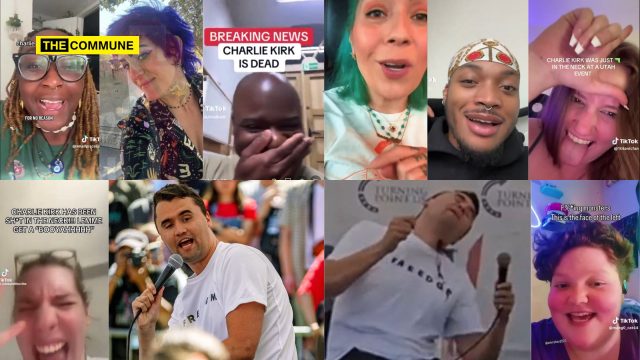
In the aftermath of conservative activist Charlie Kirk’s assassination on 10 September 2025, at a rally held at Utah Valley University, a disturbing wave of reactions has emerged on social media. While political leaders from across the spectrum have roundly denounced the attack, a number of accounts associated with left-leaning ideologies have shared posts that appear to mock or even celebrate his death provoking widespread backlash and raising concerns about the normalization of political violence online.

What Happened To Charlie Kirk?

Charlie Kirk, aged 31, was the founder of Turning Point USA and a key conservative voice aligned with former President Donald Trump. He was shot and killed while addressing supporters at an event in Orem, Utah a killing widely described as a politically motivated assassination.

Kirk was known for his outspoken conservative beliefs and efforts to engage young voters. He leaves behind his wife, Erika, and their two children. In the wake of his death, prominent political figures including Trump, President Joe Biden, and former President Barack Obama issued strong statements condemning the act and calling for unity in the face of rising political extremism.

Despite this bipartisan condemnation, reactions on social media platform have been deeply polarized. A portion of left-leaning users on various platforms have circulated posts that mock or justify Kirk’s killing. These responses have drawn sharp criticism for their tone and perceived insensitivity.

Reactions On Social Media

One post by an X user, who responded to a resurfaced 2023 tweet by Kirk about casualties in Gaza, wrote, “btw, according to Charlie Kirk’s logic, his death is his own fault, not the shooter’s.”

This was accompanied by a screenshot of Kirk’s original post, in which he attributed the deaths of civilians in Gaza to Hamas rather than Israel drawing a comparison to Japan’s role in WWII. He stated, “The deaths of women and children in Gaza are the fault of Hamas, not Israel, just like the deaths in Japan during World War 2 were the fault of Japan, not America. When a government engages in unprovoked, murderous aggression, they are to blame for everything that results.”

Another user stated, “Hitler could get shot dead in this generation and mfs would still be like he had a family.” This was in response to a post who condemned the assassination, which said, “Charlie Kirk is a father and a husband. He is a human. I don’t care if you politically disagree with him nothing justifies this sick act.”

Another user posted a video featuring a guest on mainstream media outlet MSNBC who speculated, “We don’t know if this was a supporter firing their gun in celebration or…?” The user sharply criticized the media, labeling it an “absolute joke” for such a remark.

A circulating video montage on TikTok compiles reactions from several left-leaning users who appear to celebrate the news of Charlie Kirk’s assassination. The video starts with a user expressing shock and concern, asking, “First Nepal and now Charlie Kirk shot in Utah! Is something happening?” while smiling and making peace symbols with his hands. Another user expresses happiness about the assassination, stating, “Charlie Kirk got shot.” A third user, lying in bed, humorously remarks, “When you’ve been manifesting for ‘it’ to happen but it ends up happening to Charlie Kirk,” suggesting a twist of fate. The final segment features a user celebrating, saying, “Charlie Kirk was just shot in the neck at a Utah event,” while making a success gesture and a peace sign.

Another user said, “I think he should be forced to carry that bullet in his body. That bullet has a right to be there because it’s a gift from god.”

Another user believed to be teacher at Goose Creek School District in Texas suggests Charlie Kirk deserved to get shot and it was “karma”

Kirk’s death and the subsequent reactions have deepened concerns over the state of political discourse in the U.S. While the inflammatory posts represent only a fraction of voices on the left, they have drawn widespread attention and condemnation, especially from Kirk’s supporters and conservative commentators.

Experts such as Robert Pape of the Chicago Project on Security and Threats have warned of a growing acceptance of political violence across ideologies. These reactions seem to support that view, with some users treating the assassination not as a tragedy, but as political score-settling.

Here are some more reactions:

Subscribe to our channels on TelegramWhatsApp, and Instagram and get the best stories of the day delivered to you personally.

43 Members Of Hindu Munnani & BJP Arrested In Periyakulam For Protesting Against Non-Veg Kandhuri Feast At Dargah Near Venkatachalapathy Temple

hindu munnani kandhuri feast

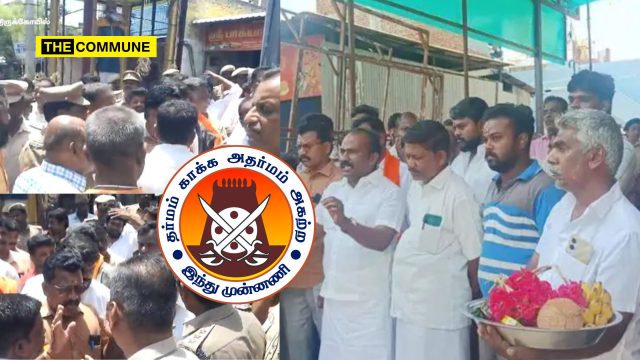
A protest erupted in Periyakulam over a non-vegetarian Kandhuri feast being organized at a dargah located near the historic Perumal (Venkatachalapathy) temple in Thamaraikulam. Members of the Hindu Munnani and the BJP objected to the event, leading to a confrontation with the police and the arrest of 43 individuals.

The Venkatachalapathy temple, situated on a hill in Thamaraikulam, has been under the management of the Hindu Religious and Charitable Endowments (HR&CE) Department for many years. Recently, local Muslims planned to conduct the traditional Kandhuri celebration which includes a non-vegetarian feast at a nearby dargah. This decision drew opposition from Hindu Munnani District President Murugan, BJP District President Rajapandian, District Secretaries Umairajan and Vishnu Priyan, and Union Organizer Dharmarajan.

As a form of protest, the demonstrators assembled near the VOC statue in Thamaraikulam, wearing black blindfolds, and requested police permission to conduct a demonstration. However, permission was denied. The group then moved toward the temple to seek darshan, where only a few were allowed entry by the limited police presence. This led to heated exchanges between the protestors and the police.

The situation escalated, and tensions briefly flared before the police detained 43 individuals, including key district leaders from the Hindu Munnani and BJP. Following the incident, the organizers at the dargah reportedly modified their plans and served a vegetarian meal instead of the traditional non-vegetarian offering.

(With inputs from Dinamalar)

Subscribe to our channels on TelegramWhatsApp, and Instagram and get the best stories of the day delivered to you personally.

Kerala High Court Orders Return Of Gold-Plated Sheets To Sabarimala Temple

sabarimala kerala high court gold plated sheets
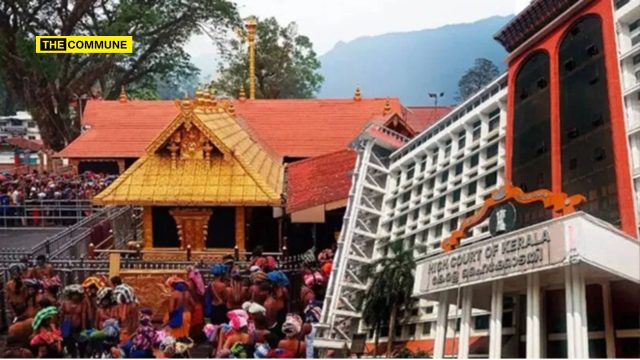
Image Source: Kerala Kaumudi

The Kerala High Court on Wednesday directed the Travancore Devaswom Board (TDB) to bring back the gold-plated copper sheets of the Dwarapalaka idols from Chennai, where they had been sent for repairs, to Sabarimala temple emphasizing that such work cannot be undertaken without prior court approval.

The order followed a report submitted by Sabarimala Special Commissioner R. Jayakrishnan, who informed the court that the sheets, fitted on the guardian idols at the temple entrance, had been removed and transported to Chennai without obtaining prior permission from the High Court. The court observed that “it was inappropriate to remove them without prior approval” and reiterated that any major maintenance work at Sabarimala or Malikappuram shrines requires clearance from both the Special Commissioner’s office and the High Court.

The TDB, however, maintained that the sheets were transported securely with the consent of the temple Tantri (chief priest) and the board members. According to TDB president P.S. Prashanth, the gold-plated sheets were detached from the Dwarapalaka idols after the Onam pujas, following Tantric directives for restoration of the sculptures, Sopanam steps, and temple doors. The restoration work, conducted at the sponsor’s expense, was supervised by the Thiruvabharanam Commissioner, Sabarimala Administrative Officer, Assistant Executive Officer, temple smith, and vigilance officials.

Prashanth further clarified that the sheets would be reinstalled after purification rituals on the third day of the Kanni month. He alleged that the controversy surrounding the removal of the sheets was being amplified to undermine the upcoming Global Ayyappa Sangamam, which the TDB is organizing.

The dispute highlights ongoing tensions over temple administration and adherence to court and Tantric procedures. The High Court’s directive reinforces the requirement that all major restoration work at Sabarimala and associated shrines must receive explicit prior approval.

(With inputs from Hindustan Times)

Subscribe to our channels on Telegram, WhatsApp, and Instagram and get the best stories of the day delivered to you personally.
Advocates Lead Fresh Protest Demanding Reopening Of Sterlite Copper Plant In Thoothukudi

sterlite protest

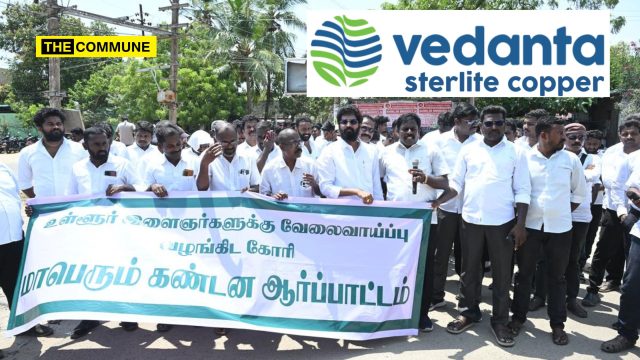
Demands for the reopening of the Sterlite Copper plant in Thoothukudi are growing louder, as diverse sections of society including trade unions, transport associations, and local residents continue to petition and protest against its prolonged closure. Most recently, legal professionals have joined the movement, staging demonstrations to press for the plant’s revival.

On 10 September 2025, a group of advocates led by Advocate Muneeswaran staged a demonstration urging the Tamil Nadu government to allow the plant to resume operations. Protesters highlighted that the closure of Sterlite Copper had led to widespread unemployment in the region, especially among youth, contributing to rising substance abuse and vulnerability to exploitation by caste-based groups. They emphasized that the company had previously generated significant employment both directly and indirectly and had implemented social development initiatives in nearby villages.

Growing Movement Demands Reopening of Sterlite Copper Plant in Thoothukudi

Public support for Sterlite’s reopening is growing across various sectors. On 4 September hundreds of auto rickshaw drivers from Thoothukudi, under the leadership of Karuppasamy, Secretary of the Muthunagar Auto Drivers Welfare Association, submitted a formal petition to DMK MP Kanimozhi. The petition called for the introduction of a special resolution in the Tamil Nadu Legislative Assembly to restart the Sterlite plant under a “green copper” model.

The petition noted that over a thousand families in the region depend on auto rickshaw driving and ancillary small businesses, many of which thrived when Sterlite was operational. According to their claims, the plant once supported nearly two lakh livelihoods. The closure allegedly without due legal process has not only destabilized local economies but also impacted India’s copper supply chain, causing a rise in imports and inflationary pressures.

The petition also referenced expert recommendations from eminent environmental scientists such as Padma Bhushan awardee Dr. Ganapathy D. Yadav and retired professor Dr. R. Nagendran, both of whom have proposed environmentally sound frameworks to resume operations safely.

Protest Momentum on the Rise

The movement to reopen Sterlite is gaining ground. In July 2025, hundreds of residents including women’s self-help groups, villagers from Pandaram Patti South, Veerapandiapuram, and fisherfolk from Threspuram staged a protest outside the District Collector’s office in Thoothukudi. While a large contingent gathered, only a few were allowed to present their petition due to heavy police deployment.

Earlier, on 16 June, villagers from South Veerapandiapuram, Saminatham, and nearby areas organized a similar protest. Many of the participants were former Sterlite employees who now struggle with menial jobs and mounting debts. Reports suggest that over 300 youth from these communities were directly employed at the plant prior to its closure.

Support from DMK Ally Sparks Political Tension

Significantly, support for reopening Sterlite is also emerging from within the DMK’s own political alliance. Indian National Trade Union Congress (INTUC), a key ally of the ruling party in Tamil Nadu, has voiced dissatisfaction with the prolonged shutdown. INTUC National Secretary Kathirvelu questioned why copper smelters are permitted to operate in other states, while Sterlite remains closed, despite environmental standards being cited as the reason.

According to INTUC, the closure has resulted in thousands of job losses and the collapse of hundreds of associated businesses that relied on Sterlite’s supply chain.

Industry-Wide Economic Fallout

The economic ripple effect of the plant’s shutdown has extended far beyond its direct employees. On 6 January 2024, the Namakkal Lorry Owners’ and Trailer Owners’ Associations organized protests, stating that over 6,500 trucks were impacted and more than 600 vehicle owners had to find alternative sources of income. Estimated daily losses in the logistics sector reached up to ₹10 crore. Protesters urged the government to consider reopening the plant under stringent environmental safeguards.

In February 2025, the Thoothukudi Contractors’ Association raised similar concerns. They reported that over 20,000 workers had lost employment, and 400 small enterprises saw their revenues plummet by 40%. The association called for a formal Government Order to restart the plant and restore economic balance in the district.

Pushback Against Environmental Narratives

On 13 May 2025, the Thoothukudi People Livelihood Protection Association met with MP Kanimozhi, reiterating the demand for reopening the facility. Their statement pointed out that Sterlite had supported 20,000+ families across 50 villages for over two decades. Around 64 contractors had invested in trucks and equipment solely to service Sterlite’s operations many now face crippling debt, having mortgaged their homes and assets.

Association President S. Thiyagarajan criticized the perception that labeled Thoothukudi as a “cancer capital” due to Sterlite’s presence, citing independent environmental studies that found no conclusive evidence to support such claims. He alleged that this misinformation fueled the protests that led to the closure, with long-term socio-economic consequences.

Political and Economic Repercussions

The shutdown of Sterlite Copper in 2018 propelled by campaigns from fringe outfits and missionary-backed groups was politically capitalized on by the DMK, which then pushed for the plant’s closure. However, in a stark reversal, many locals who once opposed the facility are now advocating for its return.

Meanwhile, Gujarat has seized the opportunity to fill the production vacuum left by Sterlite’s closure, drawing further criticism from stakeholders in Tamil Nadu who argue that the state has lost out on vital industrial opportunities due to political short-sightedness.

Subscribe to our channels on TelegramWhatsApp, and Instagram and get the best stories of the day delivered to you personally.

DMK IT Wing Dy Secy & Dravidianist Actor Sathyaraj’s Daughter Divya Flaunts Caste Pride, Hides Posts After Being Exposed

sathyaraj caste pride

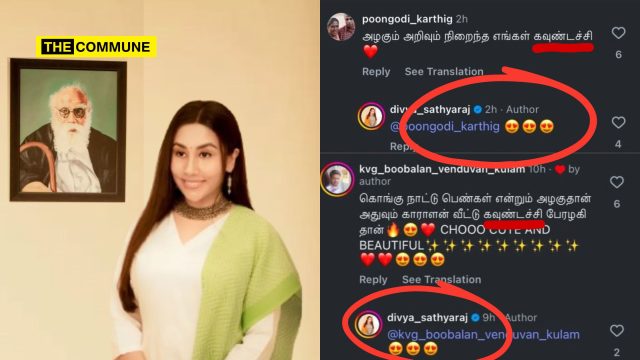
DMK IT Wing’s State Deputy Secretary and daughter of Kollywood actor Sathyaraj, Divya, has found herself embroiled in a fresh controversy by openly expressing her caste pride, despite publicly identifying as a follower of the alleged anti-caste icon E.V. Ramasamy Naicker.

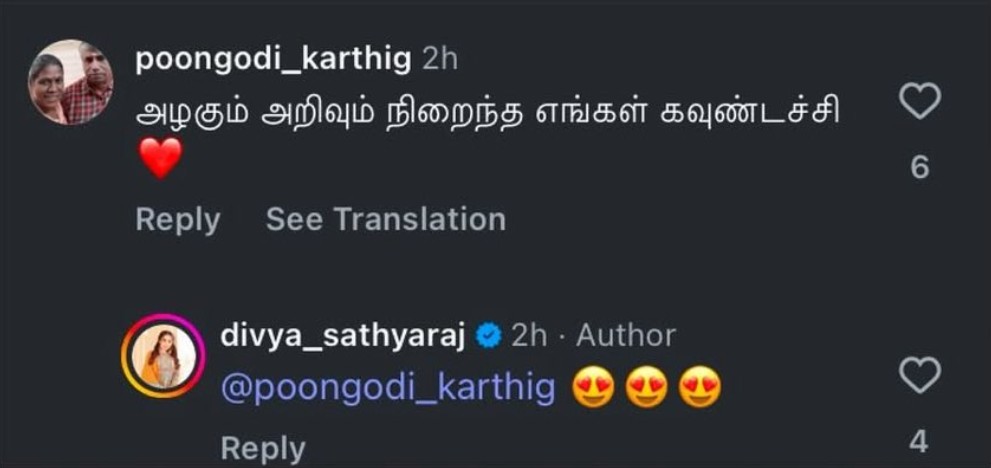
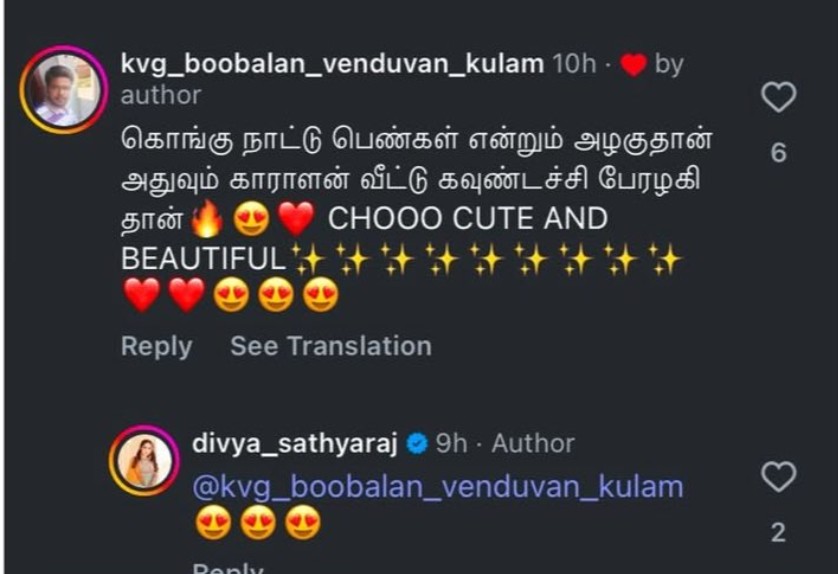
The controversy erupted when Divya reacted to a social media post shared by a friend, which described her as “Our Goundachi, full of beauty and knowledge,” a clear reference to her caste identity. In another post, another follower said, “Kongu women are always beautiful, and the Karalan family’s Goundachi is the most beautiful. Choo Cute and Beautifull.” Rather than distancing herself from the comment, Divya endorsed both posts with a heart-eyes emoji, proudly embracing the caste reference.

This blatant display of caste pride has raised eyebrows, especially given the ideological stance she and her father Sathyaraj frequently espouse. Both have claimed to be staunch followers of EVR’s anti-caste philosophy, which aimed allegedly to dismantle caste hierarchies and social inequalities.

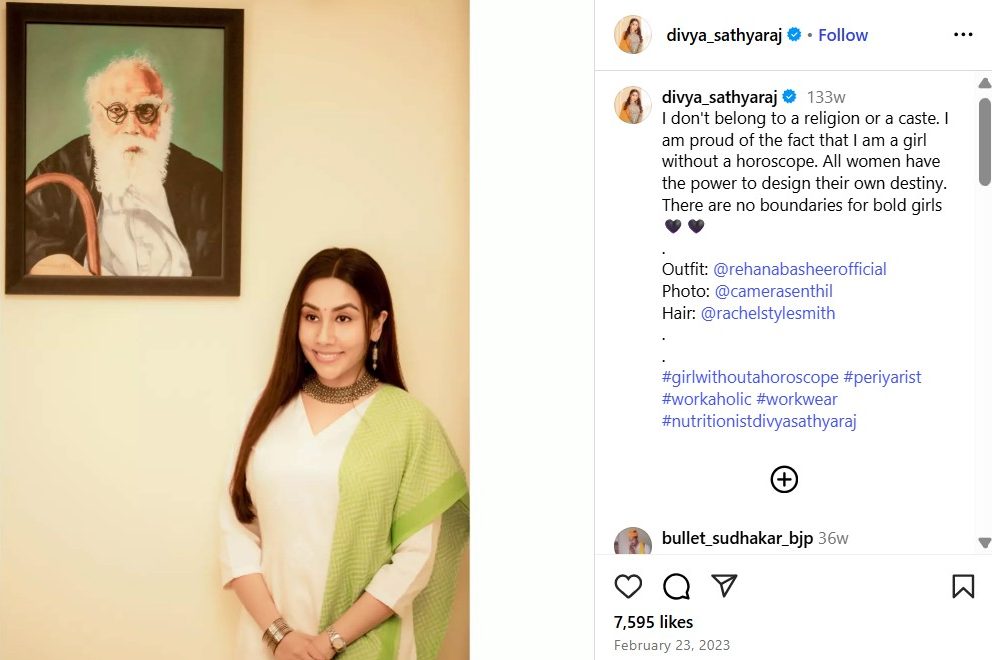
For example in 2023, Divya shared a post in her social media account stating, “I don’t belong to a religion or a caste. I am proud of the fact that I am a girl without a horoscope. All women have the power to design their own destiny. There are no boundaries for bold girls.” Yet, when it comes to their personal lives, a stark contradiction emerges.

Divya’s public reaction is not an isolated instance. Her father, Sathyaraj, is well known for his fiery speeches against Hindu traditions, Brahminism, and the caste system at large often leveraging public platforms to portray himself as a rationalist and anti-caste crusader. However, critics point out the glaring hypocrisy, when it came to his son’s marriage, Sathyaraj ensured it remained strictly within their caste and adhered to traditional Hindu rituals the very customs he regularly denounces.

With Divya’s comment now spotlighted, the internet responded swiftly and sharply. The post has gone viral, triggering a wave of memes, ridicule, and criticism across social media platforms. In what appears to be an attempt to contain the fallout, Divya has since restricted the reply section on the controversial post.

This episode has only added fuel to the ongoing discourse on the selective activism and performative rationalism of certain public figures where caste and tradition are conveniently denounced in public but comfortably embraced in private.

Subscribe to our channels on TelegramWhatsApp, and Instagram and get the best stories of the day delivered to you personally.
Digital Trail Of Rahul Gandhi’s ‘Vote Chori Evidence’ Points To Myanmar

rahul gandhi vote chori

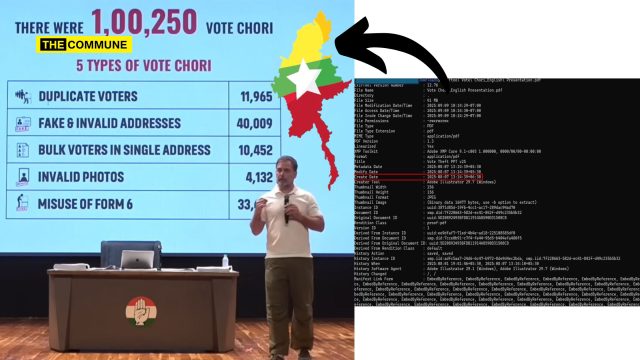
A digital forensic investigation into the documents presented by Congress leader Rahul Gandhi at a high-profile press conference on alleged “vote chori” or “vote theft” has uncovered a shocking international connection, raising serious questions about the origins of the evidence and foreign influence in India’s political discourse.

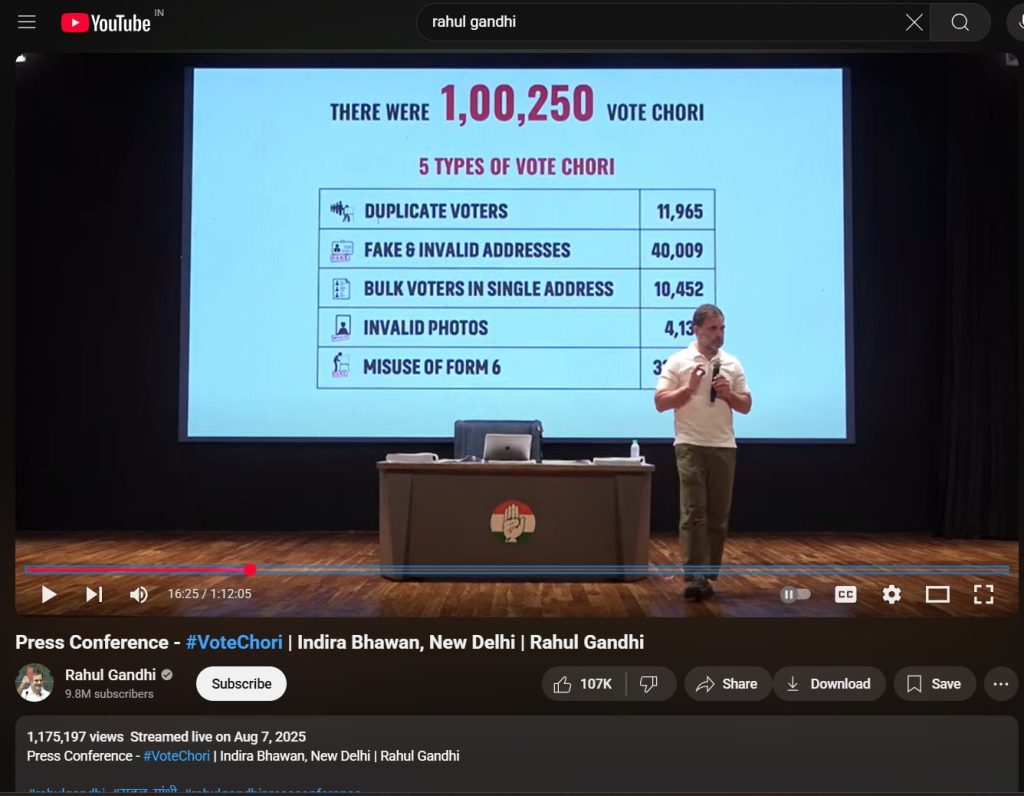
On 7 August 2025, Rahul Gandhi addressed the nation and major social media influencers, levelling grave allegations of electoral malfeasance. The release quickly dominated national debate, with several opposition influencers amplifying the claims across social media.

Image Source: X

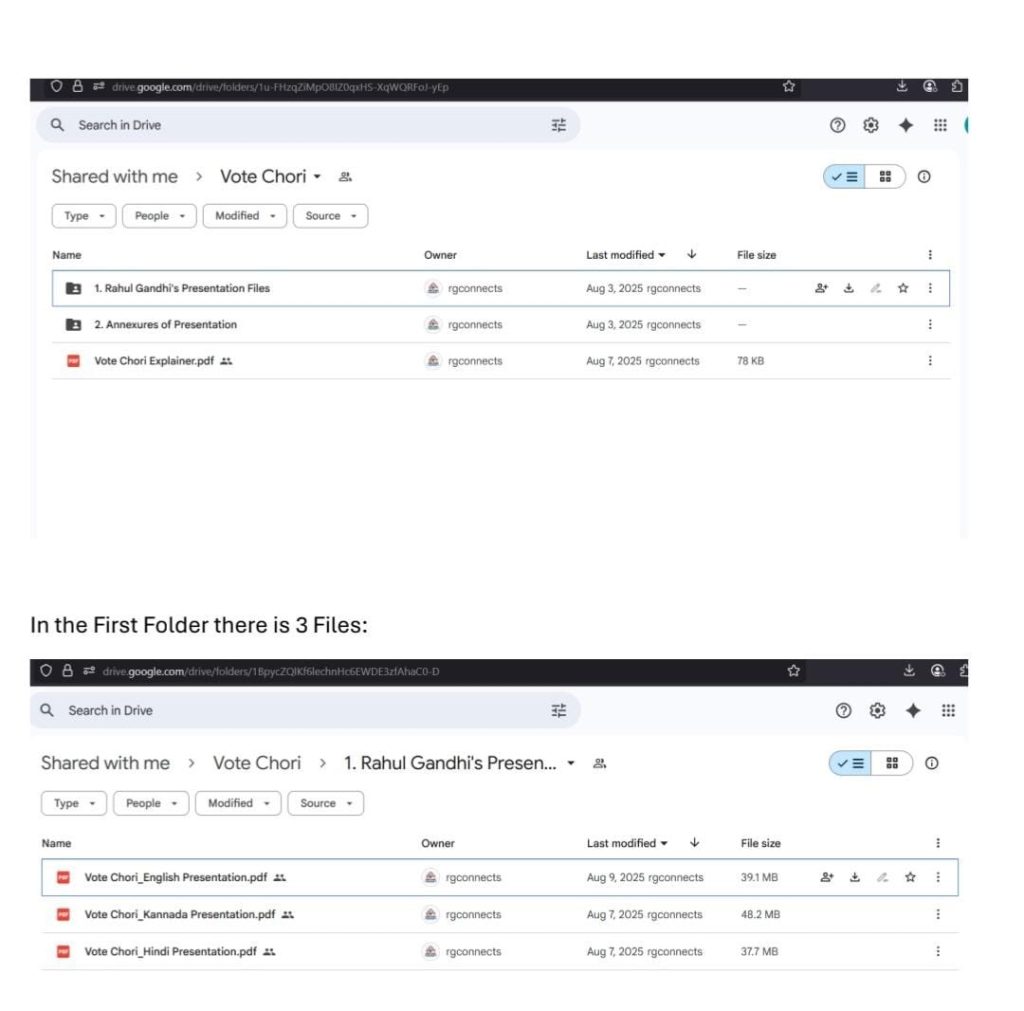
The cornerstone of his presentation was a set of evidence documents: PDF files in English, Hindi, and Kannada, uploaded to his official website, RahulGandhi.in.

Image Source: X

However, an independent probe into the digital footprint of these documents has now unearthed troubling details – the technical examination of these files has revealed metadata that points not to New Delhi, but to Myanmar.

The Smoking Gun in the Metadata

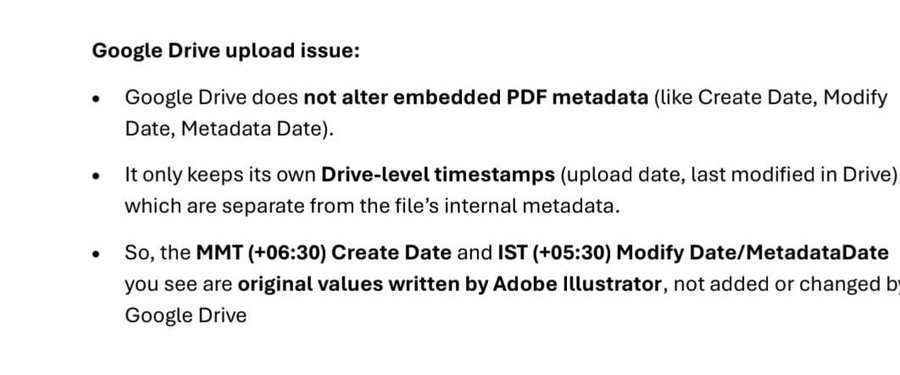
Digital forensics specialists and open-source intelligence (OSINT) analysts, after downloading the files from the official Google Drive link provided by the Congress party, conducted a thorough metadata review. The findings are consistent across multiple verification platforms:

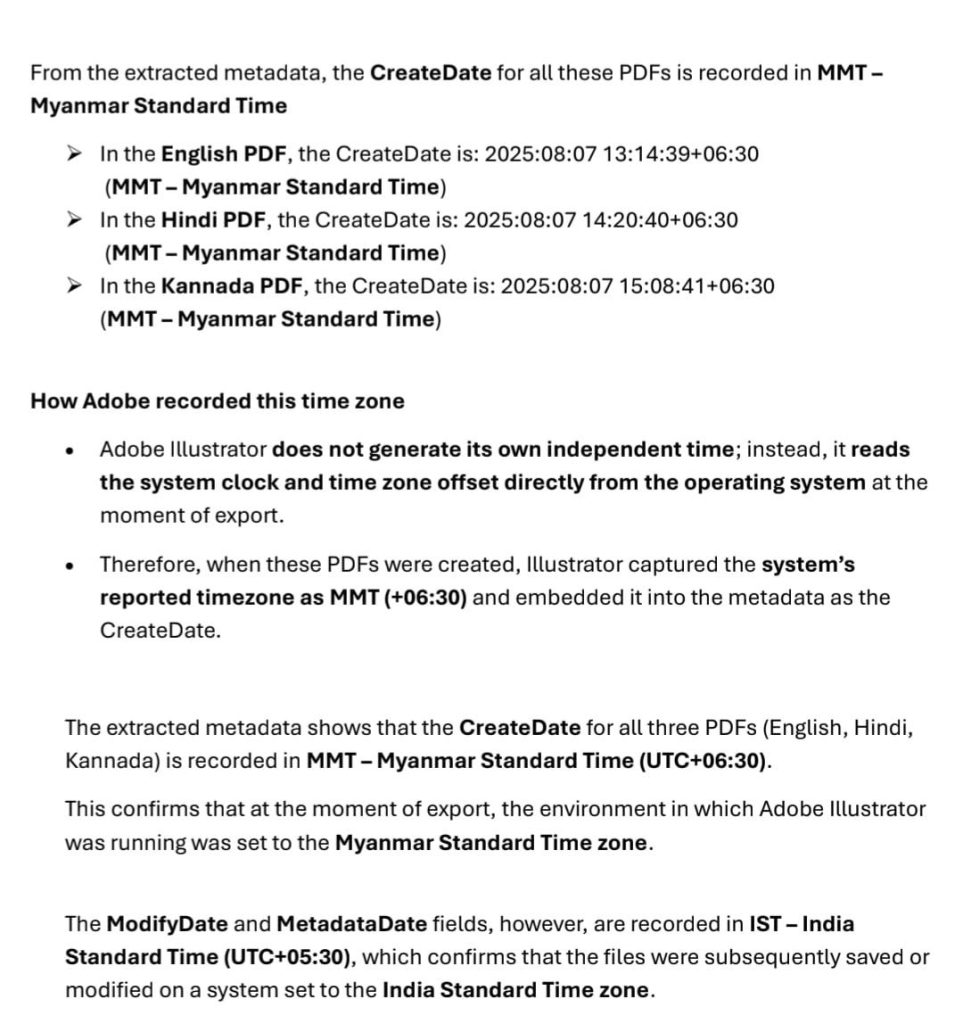
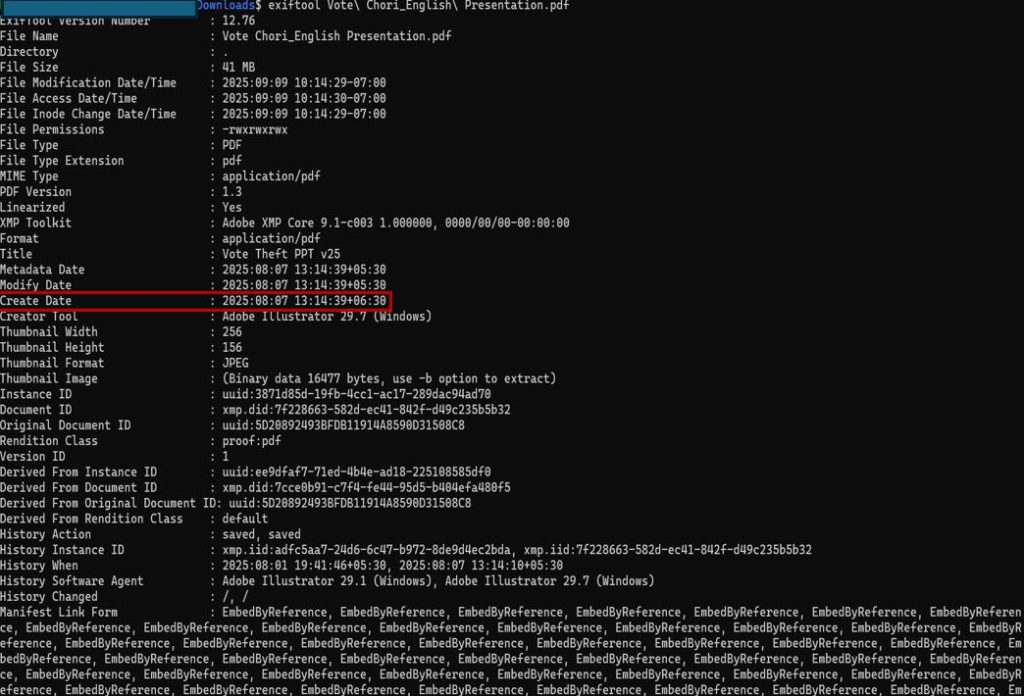
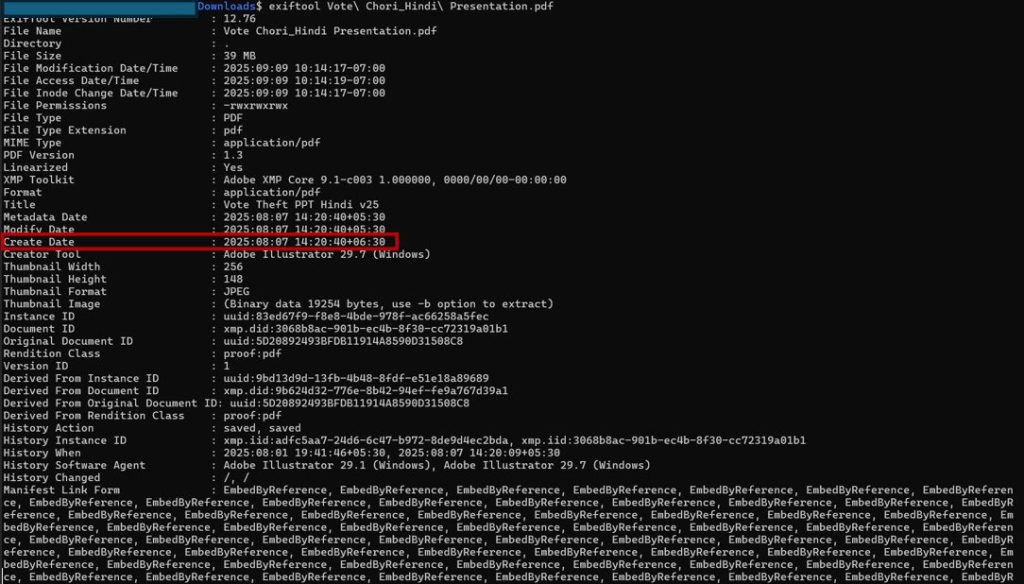
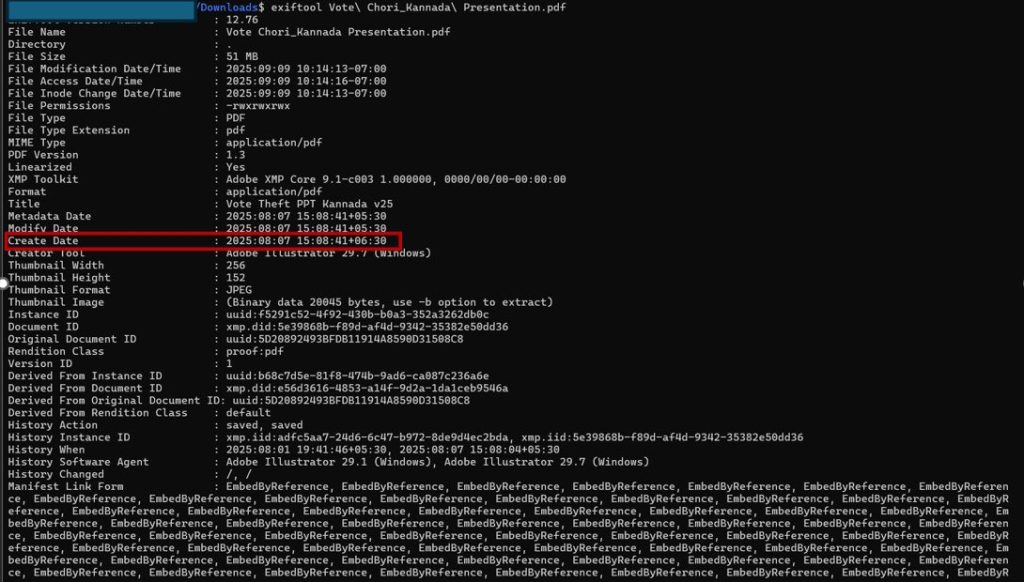
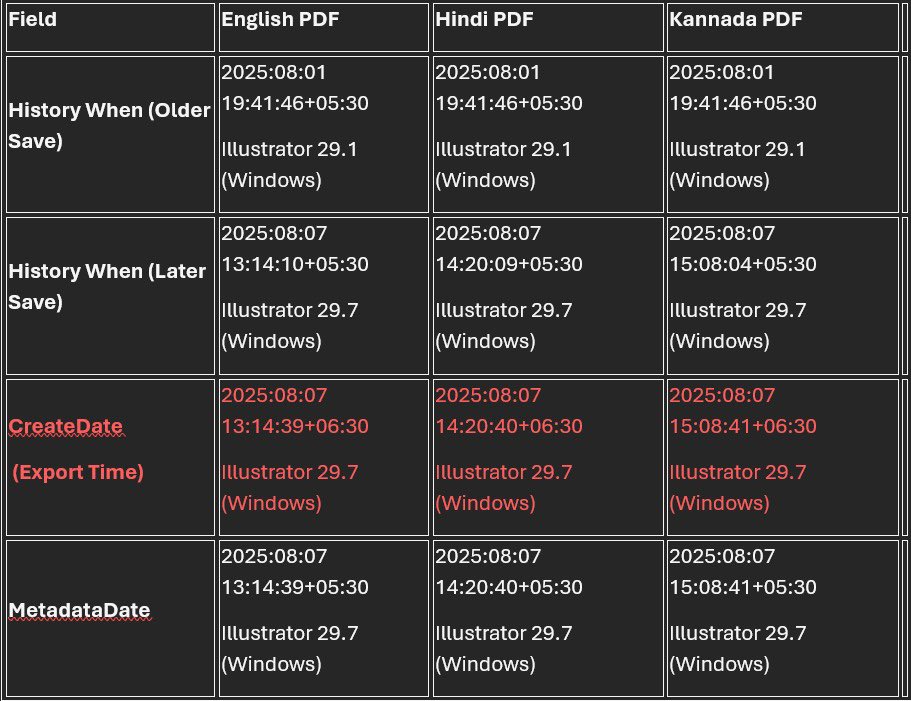
Myanmar Timezone (MMT): The creation metadata for all three PDFs is stamped with the Myanmar Standard Time timezone (UTC +6:30).

Image Source: X

Software Fingerprint: The documents were exported using Adobe Illustrator, a professional-grade design software. Crucially, this software pulls time and date information directly from the system clock of the computer on which it is being used. A standard VPN, which can mask an IP address, cannot alter this system-level timezone setting.

Creation Timeline: The files were created in quick succession, with precise gaps between them: the English PDF was created first, followed by the Hindi version 29 seconds later, and the Kannada PDF 37 seconds after that. This pattern suggests a single operator or a coordinated team working on the same system to produce the documents.

English PPT – Image Source: X
Hindi PPT – Image Source: X
Kannada PPT – Image Source: X

Summary Table

Image Source: X
Why Metadata Matters

PDFs hosted on Google Drive, as these were, preserve original metadata. Analysts stress that while metadata can be edited manually, the likelihood of a political party manually switching its system time to Myanmar is implausible.

Image Source: X
Multiple Authors, Outdated Systems

Further examination revealed the presence of names like Vikram Srinivas and Saifulla Khan in the author field of some documents, suggesting that multiple individuals or perhaps agencies were involved.

The files also showed signs of being created on older operating systems, including Windows 7 Business Edition SP1 raising speculation that the documents were produced in a professional office setup rather than on a personal device.

https://twitter.com/kingofknowwhere/status/1965778168364839288

Pattern Across the Region

Observers have pointed to a disturbing pattern in recent years across South Asia from upheavals in Sri Lanka and Bangladesh to political turmoil in Nepal where coordinated narratives amplified online have played a role in destabilization. The revelation that Rahul Gandhi’s materials may have originated outside India adds weight to fears of external scripting in India’s domestic politics.

The revelations have triggered outrage among critics of the Congress party, who argue that the Opposition is outsourcing its political agenda to “foreign hands.” Analysts warn that if confirmed, this development could seriously undermine Congress’s credibility and raise questions of national security.

While Congress has yet to issue a detailed response, the evidence has sparked a fierce debate about the role of foreign influence in shaping Opposition campaigns and whether India’s electoral discourse is being manipulated from beyond its borders.

This article is based on an X thread by Khurpenchh.

Subscribe to our channels on Telegram, WhatsApp, and Instagram and get the best stories of the day delivered to you personally.