Feature Image Courtesy: Kamadenu
While the Tamil Nadu police is busy going after critics of the DMK and its allies, there has been rising instances of lawlessness across the state.
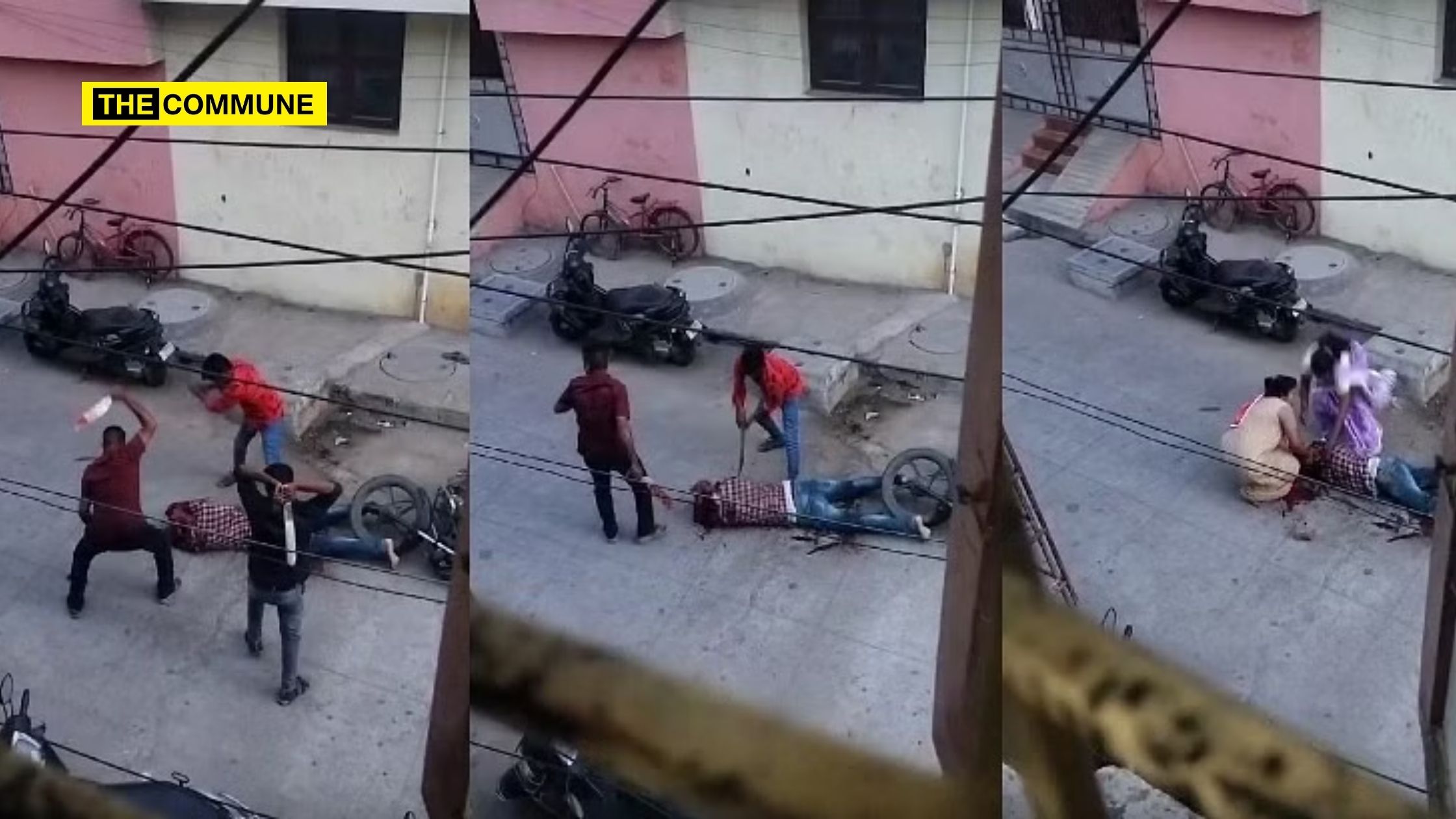
Recently, in Chennai, the regional secretary of Thanthai Periyar Dravidar Kazhagam (TPDK) was brutally hacked with sharp weapons by associates of the Chennai district secretary of the same Periyarist organization. A disturbing video of the incident has gone viral on social media.
The victim, Kummu, also known as Kumaresan, aged 33 and hailing from Royapettah, Chennai, is the younger brother of Ganesh, the regional secretary of TPDK in Royapettah. ‘Tinker’ Kumaran, alias Kumaran, aged 45, resides in the same area, and his father holds the position of Chennai District Secretary in the TPDK. Notably, ‘Tinker’ Kumaran has a history of involvement in various criminal cases.
The violence stemmed from ongoing disputes between Kumaresan and Tinker Kumar over the past year, primarily involving financial matters and issues like littering in front of their houses. Both parties had previously filed complaints against each other at the Icehouse Police Station. It had typically resulted in both sides agreeing to settle the matter amicably.
However, a few days back when Kumaresan was walking near his residence, ‘Tinker’ Kumaran and his associates ambushed him, attacking him with knives before fleeing the scene. Kumaresan suffered severe injuries and was found lying in a pool of blood. The terrified locals then promptly alerted the Icehouse police station.Police officers arrived at the scene, rescued Kumaresan, and rushed him to Royapettah Government Hospital. Later, he was transferred to a private hospital in Thousand Lights area for further treatment. The police have registered a case in connection with the incident and are actively searching for Tinker Kumar and his accomplices, who had fled the scene.
This is not an isolated case in Tamil Nadu. Over the years and more so in the Dravida Munnetra Kazagam rule from 2021, the number of law and order-related incidents has increased. Some are listed below:
In May 2021, a chilling incident unfolded in a densely populated area as a gang of four brutally hacked a lawyer named Gopi Kannan in Trichy. The 35-year-old, who was teaching his daughter to ride a bicycle, was ambushed by unknown assailants on two-wheelers, leaving him fatally wounded.
In September 2021, a shocking incident occurred in Tamil Nadu’s Thoothukudi district, where an auto driver named Sivaperumal, aged 45, was brutally hacked to death in broad daylight by two brothers, Arumugam, 31, and Sornaraj, 28. The trio, who were acquainted and would regularly meet for drinks, engaged in a dispute during their gathering, leading to Arumugam using a concealed knife to attack Sivaperumal. Sornaraj intervened to prevent Sivaperumal from escaping, while the incident was captured on a bystander’s mobile phone.
A 36-year-old earthmover operator was hacked to death by a gang in Mayiladuthirai in November 2021.
In May 2022, S Arumugam, a 36-year-old finance company owner in Chennai, was brutally hacked to death by a four-member gang in broad daylight in Aminjikarai. The CCTV footage of the incident, where Arumugam was chased and repeatedly attacked with sharp weapons, went viral, raising concerns about the state’s law and order situation.
In another incident in May 2022, Balachandar, the head of BJP’s SC/ST wing for Central Chennai, was brutally hacked to death in the heart of the city. While conversing with friends at Saminayakan Street in Chintadripet, he was surrounded by four men, prompting him to flee for his life. However, the assailants pursued him on motorcycles and carried out the murder in public view on a busy road, raising concerns about the city’s law and order situation, with 18 murders reported in the same month that year.
In October 2022, painter Raghu was stabbed and slit his throat in a hospital after joining a rival gang. The gang leader learned of Raghu’s involvement and assaulted him at home. After escaping, Raghu sought treatment at Mettur Government Hospital. Three men followed him, stabbed him, and slit his throat. The incident had gone viral on social media and raised questions about the state of law and order in Tamil Nadu.
In November 2022, Kalikannan, the Vice President of the BJP in Tirupattur, was abducted by a gang of mercenaries who later brutally hacked him to death near Uthangarai. The incident unfolded when the men forcibly took him from his shop at knifepoint in a Scorpio car. Kalikannan had been receiving death threats for about a month, prompting him to avoid being alone, and the assailants seemed aware of this before abducting him.
In January 2023, a Hindu temple employee, Krishnan, was killed by inebriated thugs who had asked him not to drink alcohol on the premises. Krishnan, who was working at the ancient Navaneethakrishna Swamy temple, had returned home to celebrate the Pongal festival. When he returned, thugs from the same area, including the main accused Kombaiya, were drinking alcohol inside the temple premises. A heated quarrel led to a fistfight, and Kombaiya and other inebriated thugs slashed Krishna near a barrage before fleeing. Krishna later succumbed to his injuries.
In February 2023, Indian Army soldier Prabhu was beaten to death by 10 men, including DMK Municipal Councillor Chinnasamy, near Pochampalli in Tamil Nadu. The incident occurred after a heated exchange between Prabhu and Chinnasamy over washing clothes. The attackers, including Chinnasamy, attacked Prabhakaran and Prabhu, resulting in severe injuries.
In another incident in February 2023, a person was brutally hacked to death by a gang outside the Coimbatore court premises. This incident occurred within a month of another crime taking place inside the court complex, raising concerns about the audacity of criminals in the state.
In March 2023 in Coimbatore, a man carried out a horrific acid attack on his wife inside the Coimbatore court complex while they were there to resolve a dispute. This cruel act resulted in severe injuries to the wife’s face and also affected five individuals in her vicinity.
In March 2023, a newly-married youth Jegan was brutally murdered in Krishnagiri district, Tamil Nadu. Jegan, who had recently wed Saranya against her family’s wishes, was hacked to death in broad daylight by his father-in-law Sankar and two others along a busy National Highway in Kittampatti.
In April 2023, a Village Administrative Officer (VAO) named Lourth Francis was brutally hacked to death inside his office in Murapanadu, Thoothukudi district, Tamil Nadu. He had reportedly been targeted by the sand mafia due to his opposition to illegal sand transportation in the area. Two unidentified assailants entered his office around noon, carried out the attack, and fled the scene.
In another incident in April 2023, a BJP functionary in Tamil Nadu, Shankar, was brutally hacked to death while he was travelling in his car to his home on the night of 27 April 2023. Shankar, who served as the President of Varapuram Panchayat Council and the State Treasurer of BJP Tamil Nadu Scheduled Caste wing, was attacked by a gang who threw a country bomb at his car, forcing him to flee on foot. Tragically, he was chased down and murdered on the Chennai – Bengaluru highway, and the assailants fled the scene.
In June 2023 in Tamil Nadu’s Karaikudi district, five assailants hacked a man named Arivazhagan, known as Vinith, to death in broad daylight. The attackers were caught on nearby CCTV cameras arriving in an SUV and brutally assaulting Vinith with iron rods and wooden sticks on a busy street, while onlookers witnessed the horrifying scene. After the attack, the assailants fled the scene, leaving Vinith lifeless on the road, while a bystander in a blue shirt attempted to intervene and prevent their escape.
In September 2023, a deeply distressing incident occurred in Palladam, Tirupur district, as four members of a single family were brutally hacked to death with sickles. The attack was prompted by an objection to alcohol consumption in the backyard, leading to a confrontation between Senthilkumar and Venkatesan and his associates. The tragic result was the loss of four lives, including two women, leaving the community in profound shock and sorrow.
In October 2023, in Ambattur, a 53-year-old autorickshaw driver named Maxwell was brutally hacked to death by a gang after he returned home from a Tasmac outlet. The assailants entered his house, used knives to commit the murder, and fled the scene in his autorickshaw. Meanwhile, in another incident in Sholavaram on the same day, a 25-year-old daily wage worker named Sarath Babu was hacked to death by four men on a motorcycle as he was walking home from work near Karanodai Market.
In today’s news (17 October 2023), an army jawan was found lying in a pool of blood in his home in Vempur village in Thoothukudi. The soldier had come home on a vacation after serving in Jammu and Kashmir.