Home Blog Page 114

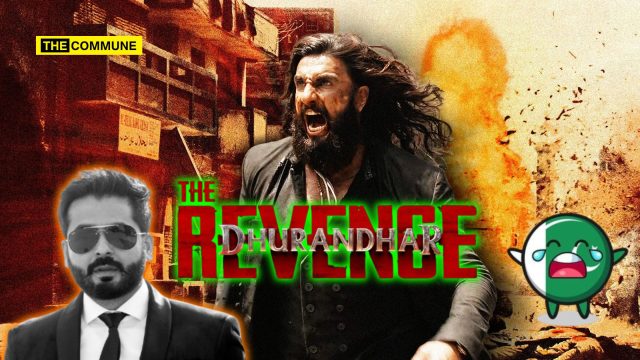
Dhurandhar 2 Review: Double The Dhamaka, Double The Meltdown; Aditya Dhar Goes Into Beast Mode Unleashing Hell Upon Pakistan And Its Simps
“Your duty is to uphold Dharma. Never to claim the reward. Let not the promise of victory guide you. The battlefield summons, be relentless in action.” — Bhagavad Gita (2.47)

Let me just say this right at the beginning – Dhurandhar 2 operates on such a high-octane, testosterone-charged frequency that the energy in the theatre is unreal. It’s the kind of film where the intensity is so palpable that it doesn’t matter who you are – you feel it. The tone, the aggression, the conviction… everything is dialled up to a level where the film doesn’t just play out on screen, it spills into the audience.

And that opening line from the Gita? It doesn’t just set the tone – it defines the entire journey that follows.

A Film That Knows Exactly What It’s Doing

From the very first act, it becomes evident that Aditya Dhar is in complete control of his narrative. This isn’t a film trying to navigate safe ground or appease different sections of the audience. It’s deliberate, pointed, and fully aware of the reactions it’s going to trigger.

There’s a certain sharpness in how the story unfolds this time. Dhar isn’t interested in ambiguity—he’s interested in clarity, impact, and follow-through. And that’s what gives Dhurandhar 2 its edge over the first part. It feels more assured, more aggressive, and far more gripping in the way it commits to its themes.

You realise that Aditya Dhar isn’t interested in playing safe anymore.

In fact, the film plays out like a direct, ruthless response to a certain section of critics and commentators—people like Anupama Chopra and Sucharita Tyagi, and the broader “Aman Ki Asha” ecosystem—especially in that moment when the protagonist’s full force is unleashed in a brutal, no-holds-barred sequence, with Aari Aari blaring in the background and that line hitting you square in the face: “Ladies and Gentlemen, you’re still not ready for this!”

He goes all in—taking Pakistan to the cleaners and tearing into its ecosystem with zero restraint, presenting its characters in a raw, unvarnished light while boldly highlighting the deep-seated hostility that Islamist forces direct at Hindus and Sikhs, with Arjun Rampal delivering dialogues that make your blood boil, your fists clench, and leave you simmering with anger as the scene unfolds.

This film is going to be a difficult watch for them. It’s going to trigger meltdown so bad that they might start having seizures in the theatre. They’ll need to talk to therapists for the rest of their lives to cope. Or they might just end up like Bade Sahab in the film.

Detailing That Feels Almost Too Real

One of the biggest strengths of the film is its insane attention to detail. Dhar doesn’t treat real-world references as mere add-ons; he builds them into the very fabric of the narrative.

These aren’t surface-level insertions. They carry weight, and more importantly, they make you think. By the time the film progresses, you’re not just following a story—you’re connecting it to real events and decisions in a way that feels unsettlingly immersive.

The casting department genuinely deserves applause here.

The actors portraying figures resembling a gangster-politician who was gunned down in full public display and a Pakistani politician are so convincingly chosen that you momentarily forget you’re watching actors. There’s a certain eeriness to how real they feel on screen, and that adds tremendously to the film’s authenticity.

For the sake of not giving away spoiler, I just want to say that there are going to be epic euphoric moments in the theatre.

Performance-wise, the film is tighter than Part 1. There’s a sense that every actor understands the weight of the narrative and plays into it with full conviction.

And then come the dialogues.

Some of them don’t just land—they linger long after the scene is over.

“Jab se ye chaaiwala Hindustan mein aaya hai, hamare logon ke andhar aur kauf bad gaya hai”

(Ever since this chaiwala (tea seller) came to power in India, fear has increased even more among our people)

Moments like these create a visible shift in the theatre. You can feel people reacting—not loudly, but collectively.

Echo Shots And Easter Eggs

For those who’ve followed Part 1, there’s a lot to appreciate here. Dhar has packed the film with subtle callbacks and narrative echoes that don’t immediately stand out but pay off beautifully later.

It’s the kind of writing that rewards attention without demanding it.

In the beginning, Hamza in Pakistan burns away his Jaskirat life. Later, Jaskirat in India burns away his Hamza life. Recall the “Hindu Bada Darpok Qaum Hai?” dialogue from the first part uttered by one of the terrorists to Ajit Doval look-alike Madhavan? In Part 2, the Madhavan character is in the middle of a Hindu ritual and gets a call and then the revenge is taken.

There are many such echo shots that reverbs throughout the film.

At nearly four hours, the film could have easily lost momentum. Surprisingly, it doesn’t.

It adopts a slow-burn structure, allowing the narrative to build gradually. There are minor inconsistencies in timeline transitions, but they don’t significantly disrupt the flow. For the most part, the film keeps you engaged, pulling you deeper into its world.

How Did 4 Hours Go?

The film could have easily lost momentum. Surprisingly, it doesn’t.

It adopts a slow-burn structure, allowing the narrative to build gradually. The film keeps you engaged, pulling you deeper into its world. And the interval block comes at an unexpected moment.

Tracks like “Aari Aari” and “Destiny (Mann Atkeya)” are not just good—they elevate entire sequences. There are stretches where the music takes over and does the heavy lifting emotionally, and it works beautifully.

It’s constructed with precision, building tension steadily and then delivering a payoff that leaves the theatre buzzing.

Just when you think the second half might ease off, it does the exact opposite—gathering momentum and getting better with every passing stretch, all the way to the end.

Balidan Paramo Dharma

At its core, Dhurandhar 2 echoes the spirit of “Balidan Paramo Dharma” – the ultimate duty is sacrifice. Beyond the spectacle and scale, the film stands as a quiet yet powerful ode to the countless unnamed operatives who live and operate deep within hostile territories, far from recognition or glory. These are the men who exist in the shadows, cut off from identity, family, and even history, so that the nation can breathe in safety.

Dhar doesn’t romanticise them excessively – he humanises their cost, their isolation, and their unwavering resolve, making you realise that the price of security is often paid by those whose stories are never told.

Towards the end, Jaskirat visits his home in Punjab to see his family. He doesn’t have any bags with him. But his journey so far is the baggage. He keeps look at his home and the road. Should he enter his home with this “heavy dirty baggage” of the past or should he continue with his journey? He breaks the fourth wall and looks deep into the viewer. A powerful scene indeed.

Dhurandhar 2 doesn’t try to be universally acceptable, and that is precisely what makes it stand out.

It is bold, it is intense, and it is unapologetic in its storytelling. More importantly, it is confident—confident enough to take a position and build an entire cinematic experience around it.

If Part 1 established the foundation, Part 2 feels like a statement. The deliberately provokes those who provoked us thus far.

Forget Anno Domini. In Indian cinema, it’s now AD and BD—After Dhurandhar and Before Dhurandhar.

S. Kaushik is a political writer.

Subscribe to our channels on WhatsAppTelegram, Instagram and YouTube to get the best stories of the day delivered to you personally.
DMK Functionary Accused Of Sexually Harassing Class 6 Irular Girl In Chengalpattu; Police Yet To Register FIR

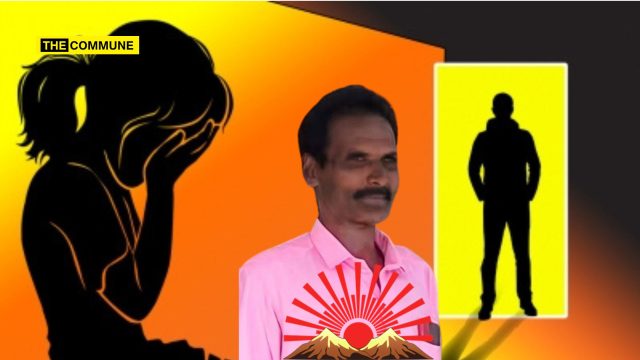
DMK Functionary Accused Of Sexually Harassing Class 6 Irular Girl In Chengalpattu; Police Yet To Register FIR

A sixth-standard girl from the Irular tribal community near Cheyyur in Chengalpattu district was allegedly sexually harassed by a local DMK unit functionary identified as Siva, according to a complaint filed at the All-Women Police Station in Melmaruvathur. The accused remains at large, with police yet to register a First Information Report (FIR) despite the complaint being received.

The incident is reported to have occurred on Wednesday when the girl, a minor, was on her way to school. Siva, who holds a position in the DMK’s local unit, allegedly intercepted her and sexually assaulted her. The girl subsequently disclosed the ordeal to her school headmaster, who promptly notified her family.

The case gained wider attention after a local social activist named Velu recorded a video statement from the girl and circulated it on social media. Rather than expediting action against the accused, police have launched an intensive search for Velu, who has since gone into hiding. Community members have condemned this prioritisation as an attempt to suppress the victim’s account. Members of the Irular Tribal Welfare Association in Kanchipuram have stepped in, taking the girl and her family to Kanchipuram for their safety.

As of the time of this report, no FIR has been registered under the Protection of Children from Sexual Offences (POCSO) Act against the accused DMK functionary, despite mandatory FIR provisions under POCSO requiring immediate registration upon any such complaint involving a minor.

Subscribe to our channels on WhatsAppTelegram, Instagram and YouTube to get the best stories of the day delivered to you personally.
“Only Muslim Brothers Come Inside”: Joseph Vijay’s TVK Iftar Party Entry Check Sparks Controversy

“What Is Your Name?”: TVK Iftar Entry Check Sparks Religious Bias Allegations

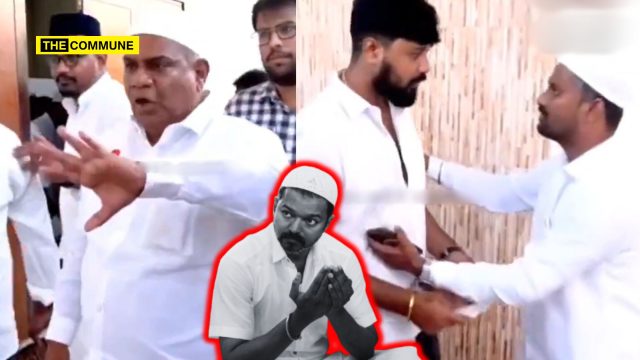
A video from Tamilaga Vettri Kazhagam’s (TVK) Iftar dinner held on 18 March 2026, at the 4 Points Sheraton Hotel in Mamallapuram is going viral on social media, showing party functionaries explicitly blocking non-Muslims from entering the event and asking them to step aside raising serious questions about the party’s much-touted “secular” credentials.

The contradiction could not be more glaring or more damning.

Vijay Himself Went In. Why Couldn’t His Hindu Followers?

Here is the central question being raised is that Vijay – a Christian-born non-Muslim was the star of the evening, seated on the floor, breaking the fast, giving speeches, and being photographed for political mileage. He was allowed in. Cameras were allowed in.  In parts of the clip, individuals are also asked their names before being allowed entry, prompting claims online that names were being used as a proxy for identifying religion.

The volunteer’s words make this unambiguous. He did not say “only invited guests.” He did not say “your pass is not valid.” He said: “Only Muslim brothers come inside.” He then asked a person at the gate: “What is your name?” – a name-check that served as a religious filter. Muslim women were directed away to another gate.

Bussy Anand is seen welcoming the Muslims with “Assalamu Alaikum,” as if he were a Muslim himself.

What TVK organised was a Muslims-only event with a non-Muslim celebrity headlining it for a photo opportunity.

Not the First Time

This is not TVK’s first Iftar controversy. In March 2025, Tamil Nadu Sunnath Jamaath filed a police complaint against Vijay, alleging that his first Iftar event at Chennai’s YMCA grounds was attended by gamblers and drinkers, which was deemed offensive to Muslim sentiments. That controversy led to All India Muslim Jamaat issuing a fatwa against Vijay.

Subscribe to our channels on WhatsAppTelegram, Instagram and YouTube to get the best stories of the day delivered to you personally.
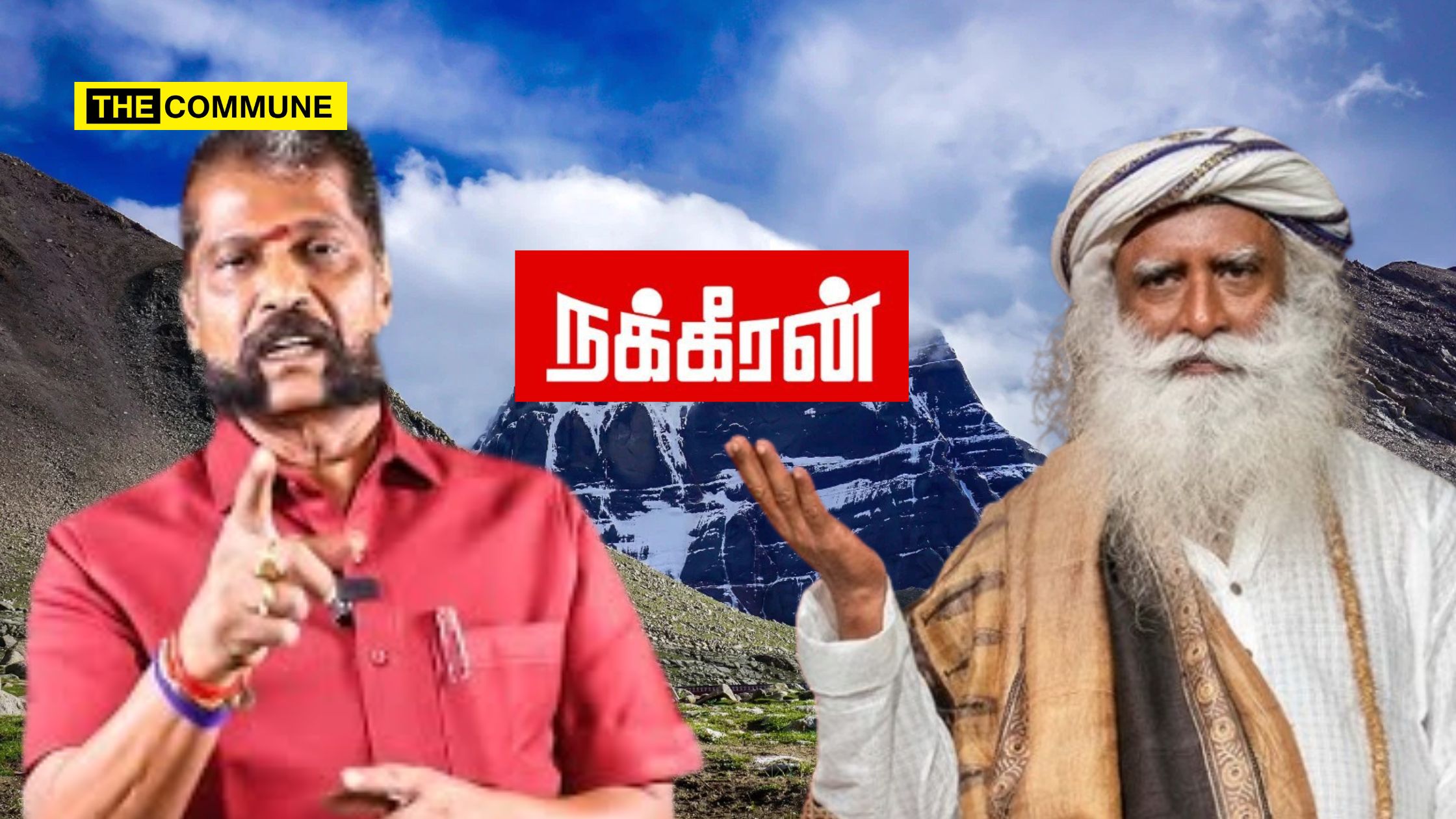
Isha Foundation Wins Interim Relief As Delhi High Court Orders Removal Of Defamatory Nakkheeran ‘Reports’

How Nakkheeran Gopal Is Peddling Fake News Against Isha Foundation

The Delhi High Court on Thursday, 19 March 2026, directed the removal of allegedly defamatory content published by Tamil magazine Nakkheeran against the Isha Foundation, granting interim relief to the organisation founded by Jaggi Vasudev.

As reported in Bar and Bench, Justice Subramonium Prasad passed the interim order in favour of the Isha Foundation and also dismissed an application filed by Nakkheeran under Order VII Rule 11 of the Code of Civil Procedure (CPC), which had sought rejection of the Foundation’s suit.

The Isha Foundation has approached the High Court seeking damages of ₹3 crore from Nakkheeran and its editor Gopal, alleging that the publication had carried defamatory material. Google LLC has also been impleaded as a party to the case, as the disputed content was accessible through Google search results and hosted on its platform YouTube.

In its plea, the Foundation contended that Nakkheeran had published a series of reports containing serious allegations, including claims of exploitation, brainwashing and illegal activities within the organisation. It argued that these reports suggested that individuals associated with the Foundation were being held against their will or coerced.

According to the Foundation, these articles were published despite a prior order of the Supreme Court closing proceedings in a habeas corpus petition filed by a father who had alleged that his two daughters had been “brainwashed” by the organisation.

The controversy traces back to proceedings before the Madras High Court, which had directed the Tamil Nadu government to furnish details of criminal cases registered against the Isha Foundation, following a petition by a man claiming that his daughters, aged 42 and 39, had been influenced to reside at the Isha Yoga Centre.

Subsequently, on 18 October 2024, a Supreme Court Bench comprising then Chief Justice of India DY Chandrachud and Justices JB Pardiwala and Manoj Misra interacted with the two women and recorded their statements.

“We had spoken to both the ladies and recorded. Both of them said that they are living there on free will and we need to close the habeas corpus plea,” CJI Chandrachud said.

The Supreme Court accordingly closed the habeas corpus proceedings against the Isha Foundation, while clarifying that its order would not bar the police from pursuing any other investigation, if warranted.

Following these developments, the Isha Foundation moved the Delhi High Court alleging that Nakkheeran’s publications were defamatory and seeking legal remedies.

Senior Advocate Rajshekhar Rao, along with advocates Rohan Jaitley, Mehrunissa Anand Jaitley, Areeb, Dev Pratap Shahi, Varun Pratap Singh, Yogya Bhatia, Pushpaveni, and Simarjeet, appeared for the Isha Foundation.

Nakkheeran was represented by advocates VT Perumal, Dr Ram Sankar, K Vaijayanthi, Shaarumathi, Ashwin Sam and Nagender, while advocates Aditya Gupta, Rohith Venkatesan and Vani Kaushik appeared for Google.

Subscribe to our channels on WhatsAppTelegram, Instagram and YouTube to get the best stories of the day delivered to you personally.
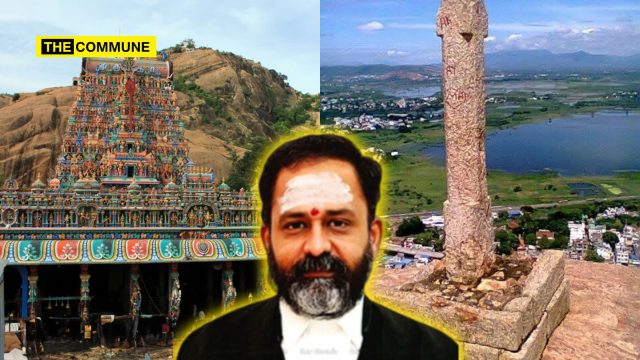
“I Believe In Respecting Court Orders, Unlike You People”: Justice GR Swaminathan Slams Madurai Authorities In Thirupparankundram Karthigai Deepam Contempt Case

justice gr swaminathan deepathoon thirupparankundram karthigai deepam

The Madras High Court on Wednesday, 18 March 2026, witnessed sharp exchanges during the hearing of contempt petitions related to the failure to light the Karthigai Deepam atop the Thirupparankundram hill in Madurai, despite earlier court directions.

As reported in Bar and Bench, Justice GR Swaminathan remarked that he believes in respecting court orders, unlike local authorities in Madurai, who had failed to implement judicial directives in the matter.

The observation came after counsel representing the State submitted that a Division Bench of the Court had, on Tuesday, stayed all contempt proceedings pending before Justice Swaminathan. However, counsel appearing for the temple devotees argued that the stay order was limited only to the 4 December 2025 order passed by the single judge.

Justice Swaminathan stated that he would rely strictly on the text of the interim stay order placed before him and questioned the State’s interpretation of its scope. “How do I know what prayer you have made there?” the judge asked, when the State referred to a Civil Miscellaneous Petition (CMP) challenging all contempt proceedings.

The State maintained that the interim stay extended to the contempt proceedings mentioned in the CMP, which was recorded in the Division Bench’s order. It further suggested that a clarification could be obtained from the Registry to avoid ambiguity.

Rejecting the suggestion, Justice Swaminathan said, “It is not my job. I will go by the interim order you have produced before me. Why should I (ask Registry for more clarifications)? Is it my job? It’s not my job. It is my duty to obey whatever the Division Bench has passed. I believe in showing respect to court orders, unlike you people.”

The matter arises from a December 2025 ruling in which the Court held that a stone pillar on the Thirupparankundram hill is a Deepathoon belonging to the Arulmigu Subramania Swamy Temple. The Court had directed that the traditional Karthigai Deepam be restored at the site, clarifying that such observance would not affect the rights of the nearby Sikkandar Badhusha Dargah.

Despite the order, the Deepam was not lit during the festival, prompting devotees to initiate contempt proceedings against the authorities.

During the hearing, Justice Swaminathan also questioned the absence of senior police officials who had been directed to appear in person. “Where are the police officials? Answer that first… Does Inigo (Deputy Commissioner AG Inigo Divya) and Loganathan (Commissioner of Madurai City Police, J Loganathan) think too much of themselves? I gave exemption only to trustees and the Collector; I didn’t give it to the police. Why they are not present before me?” he asked.

Addressing Additional Advocate General J. Ravindran, the judge further said, “Don’t we have to decide this (AAG) Mr. Ravindran? Don’t be so defiant. Don’t show your defiance against me.”

The AAG responded, “It is not so milord. I don’t know why Lordship is taking it like that.”

When the State again sought time to approach the Registry for clarification on the scope of the stay, the judge reiterated his position, stating, “I know how to respect the Division Bench order… I don’t want to see their (police officers) faces hereafter. I will deal with them in the manner known to law.”

The Court subsequently adjourned all three contempt petitions.

In its interim observations, the Court noted that it had earlier granted an adjournment based on a request from senior counsel representing the temple management, who had sought time to consider a suggestion for symbolic compliance with the Court’s directive.

“Since a request for adjournment came from a highly respected senior counsel and ground was only to consider a suggestion from the court, I had no reason to reject the request, even though the petitioners’ counsel opposed the same vehemently,” the Court recorded.

However, Justice Swaminathan observed that appeals had been filed during this adjournment period. The Court acknowledged that the respondents had the right to pursue legal remedies but pointed out that an earlier Division Bench had already dismissed an appeal filed by the District Collector and the Commissioner of Police, while leaving it to the single judge to determine whether there was wilful disobedience.

“Taking advantage of two-week window, appeals were filed. Respondents have right to avail judicial remedies. However, the fact remains that challenging the earlier, direction, the District Collector and Commissioner of Police had filed appeal. Said appeal was dismissed by Division Bench (earlier), and Division Bench had specifically observed that it is for single judge to test if disobedience of December 4 order was wilful or not,” the order stated.

The matter has been posted for further hearing on 9 April 2026, a day after the Division Bench is scheduled to hear the appeals challenging Justice Swaminathan’s orders.

Subscribe to our channels on WhatsAppTelegram, Instagram and YouTube to get the best stories of the day delivered to you personally.
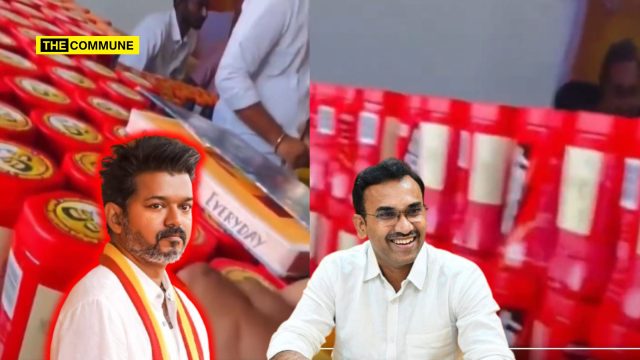
After Steel Vessel ‘Gifts’, Video Of ‘Boost’ Bottles With TVK’s Arunraj’s Photo Meant For Voters Surface, While Vijay Calls Other Parties Corrupt

A few days ago, Tamilaga Vettri Kazhagam (TVK) came under scrutiny after a pre-election Flying Squad raid and viral videos raised concerns over alleged voter inducement, even as party chief Vijay has been critical of rivals on corruption.

During a raid in Varakoorampatti near Thiruchengode, officials seized around 250 steel vessels bearing stickers of Vijay and party functionary Arunraj. Acting on further inputs, searches were extended to multiple houses suspected of storing similar materials.

Authorities said the operation followed a complaint and an investigation is underway to determine if the items were meant for voter distribution in violation of election norms.

Adding to the controversy, video clips circulating on social media on Wednesday purportedly show bottles of the health drink Boost carrying stickers with Arunraj’s image. While the location of the video has not been independently verified, the visuals have intensified scrutiny over alleged distribution of goods linked to the party.


View this post on Instagram


A post shared by Chanakyaa (@chanakyaa_tv)

The developments come against the backdrop of Vijay’s recent political messaging, in which he described the DMK as “theeyasakthi” (evil force), the AIADMK as “oozhalsakthi” (corrupt force), and positioned TVK as “thooyasakthi” (pure force).

Subscribe to our channels on WhatsAppTelegram, Instagram and YouTube to get the best stories of the day delivered to you personally.
“Man Worships Invisible God, Destroys Visible Nature, Authorities Tried To Give Away God Himself”: Madras High Court Pulls Up DMK Govt, Cancels Sand Dune Allotment To School

dmk madras high court ungaludan stalin

The Madras High Court quashed a DMK government order allotting ecologically sensitive sand dune land to a private school as alternate land after its original property was resumed for temple purposes, holding that the decision was illegal, unconscionable and contrary to the State’s environmental obligations.

Justice D. Bharatha Chakravarthy, allowing a writ petition filed by St. Joseph’s Matriculation Higher Secondary School in Cuddalore district, sharply criticised the government for attempting to assign sand dunes for development and invoked both environmental jurisprudence and spiritual imagery in doing so.

“When this land of the petitioner is taken back for the Temple purposes and instead Sand Dunes is given as alternate land, it is apt to quote Hubert Reeves who said – ‘Man is the most insane species. He worships an invisible God and destroys a visible Nature. Unaware that this Nature he’s destroying is this God he’s worshiping’,” the court said.

As reported in Verdictum, the judge added, “This case is a clear example. Without realising that these Sand Dunes are also the incarnation of Lord Sri Devanatha Swami, who protects its land and people, the authorities deemed it fit to allocate to the petitioner, for development. In their endeavour to protect the sentiments of the devotees of the Temple, they had attempted to give away God himself. Without considering the ecological importance of the sand dunes, the Government acted recklessly, in violation of the public trust doctrine imposed upon it.”

The case arose out of a long-running dispute involving land in Koothapakkam village, Cuddalore, purchased by the school in 1979 from the government through G.O. Ms. No. 404 of the Education Department. The school had been operating on 5.77 acres, but objections were later raised over 3.40 acres on the ground that the land had historically been used for the purposes of Arulmigu Devanatha Swami Temple and had been wrongly auctioned after being taken over by the government.

In earlier litigation challenging the resumption of the land, the school agreed, in the interest of communal harmony, to exchange the disputed property if suitable alternate land was allotted for the institution. Recording that position, the High Court had in 2019 directed the State to allot not less than 4½ acres either in Bhuvanagiri village or any other land in Cuddalore district situated near the town or village with easy access to the main road or abutting the road.

However, instead of allotting comparable land, the State issued G.O. Ms. No. 414 dated July 1, 2025, offering the school 4.5 acres in Survey No. 74/1 of Periyapattu village, Bhuvanagiri Taluk. The land was classified as government poramboke sand dune land, was about 34 km away from Cuddalore town, lacked proper road access and was valued at only ₹2.17 crore, whereas the resumed school land had been valued by the government at ₹8.14 crore. The school challenged the order as violative of the earlier court direction and unsuitable for educational purposes.

The court agreed with the school and held that even on the face of it, the government order was against larger public interest. It observed that sand dunes are natural buffers protecting land from storms, act as sand reservoirs, serve as habitats for flora and fauna, and form an eco-sensitive system of utmost importance.

Referring to the Supreme Court’s decisions in Intellectuals Forum, Tirupathi v. State of Andhra Pradesh and State of Telangana v. Mohammed Qasim, the court reiterated that such environmentally sensitive lands are held by the State in public trust and that ecosystems are not merely objects of protection but subjects with a right to survive and exist. It held that those principles had been completely disregarded in this case.

The court also found the State’s conduct inconsistent with the spirit of the earlier undertaking. It noted that when land worth about ₹8 crore in Cuddalore town was taken back from the school, the alternate land offered was worth only about ₹2 crore, located 34 km away and inaccessible, directly contradicting the purport of the earlier order requiring suitable land for running an educational institution.

During the proceedings, the government indicated that it was examining other possible parcels, including land in Thiruvanthipuram village and Arisi Periyankuppam village. The court noted that one of those alternatives was too small and of lower value, while another appeared agreeable to the school subject to verification of its classification and legal feasibility under revenue records.

Quashing G.O. Ms. No. 414, the court directed the petitioner school to approach the Cuddalore District Collector with a copy of the order. It ordered the Collector, in consultation with other authorities, to make sincere efforts to examine the feasibility of land in Survey No. 146/7 of Thiruvanthipuram village and, if feasible, allot an appropriate extent reflecting equal value to the school. If that land is not feasible, the authorities must identify any other suitable land in and around Cuddalore Corporation.

The court said the alternate land should preferably be inside or adjoining the town, not more than 10 to 12 kilometres away, and must have access suitable for establishing an educational institution. It further directed that identification of such land be completed within four weeks, followed by finalisation and a government decision within six weeks. If no suitable land can be identified within the time prescribed, the State must refund the value of the resumed land to the petitioner school.

Senior counsel Father Xavier Arulraj appeared for the petitioner school, while Additional Advocate General J. Ravindran appeared for the State.

Subscribe to our channels on WhatsAppTelegram, Instagram and YouTube to get the best stories of the day delivered to you personally.
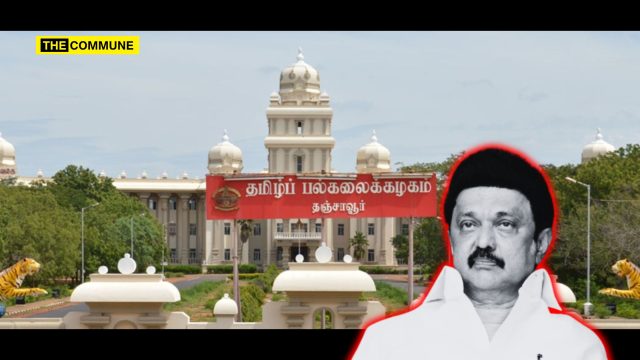
DMK Claims To Protect Tamil, But Thanjavur Tamil University Now On Brink Of Closure

DMK Claims To Protect Tamil, But Thanjavur Tamil University Now On Brink Of Closure

The DMK have time and again branded themselves as custodians of the Tamil language and have often denounced Hindi as a language that would ‘kill’ Tamil. But here is what is happening in Dravidian Model Tamil Nadu.

The Tamil University Protection Movement has raised concerns that Tamil University in Thanjavur is facing a serious risk of closure due to ongoing administrative and financial difficulties.

Addressing reporters, the movement’s coordinator Maniarasan stated that the university, established by former Chief Minister M.G. Ramachandran across 972 acres, was envisioned as a multidisciplinary research institution focusing on language, ethnicity, and anthropology. However, he reported that the institution is currently grappling with a prolonged administrative vacuum, with key positions such as Vice-Chancellor and Registrar remaining unfilled for several years.

As reported in Dinamalar, he further stated that several academic departments are being managed by individuals lacking the required qualifications, resulting in a slowdown of research activities. Units such as the Drama Department and the university’s publishing division, which previously functioned effectively, have witnessed a significant decline. The publishing wing has been shut down, and research output has reduced considerably.

According to the movement, the university’s library and publishing divisions, which earlier had designated staff including a director, deputy director, and assistant librarians, are now functioning without personnel. It also reported that the institution has not been procuring new books or journals.

The movement alleged that a substantial portion of the university’s original 972-acre land has been allocated for other government purposes, including offices for the Forest Department, Collector, and Superintendent of Police. It further noted that 55 acres have been earmarked for the establishment of a Chola Museum, leaving the university with significantly reduced land holdings.

The coordinator also stated that the university, which should fall under the Higher Education Department, is currently under the Tamil Development Department, leading to complications in funding allocation. He warned that these issues have pushed the institution toward a potential shutdown.

The movement has demanded the immediate appointment of a qualified Vice-Chancellor and Registrar, restoration of the university under the Higher Education Department, and the revival of academic recognitions such as the Rajarajan Award.

It also announced plans to submit formal demands to the government starting June and to organise continuous protests to press for corrective measures.

Subscribe to our channels on WhatsAppTelegram, Instagram and YouTube to get the best stories of the day delivered to you personally.
Puducherry: DMK-Congress File Nominations In All 30 Seats Without Deal, Alliance Talks Still Stuck

DMK Stalin Congress Rahul Gandhi

With the nomination process underway for the upcoming Assembly elections, political activity has intensified across Puducherry even as key alliance negotiations remain unresolved.

The Election Commission has announced that polling in Puducherry will be held on 9 April 2026 as part of the first phase, along with Kerala and Assam. The filing of nominations began earlier this week and will continue until 3 PM on 23 March 2026. Candidates can submit their papers at 17 designated government offices across the Union Territory.

Despite the start of the nomination process, no candidate filed papers on the first day, with only a few individuals collecting application forms.

However, in a significant development on Wednesday, 18 March 2026, candidates from the DMK and Congress have begun filing nominations across all 30 constituencies in Puducherry, even though seat-sharing talks between the alliance partners are yet to be finalised, as reported in Daily Thanthi.

Sources indicated that the decision to file nominations today was influenced by Amavasya, which is considered an auspicious day. Both parties are understood to have adopted a tactical approach, whereby candidates will initially file nominations in all constituencies and later withdraw from seats once a final seat-sharing agreement is reached.

On 17 March 2026, DMK leader Jagathrakshakan said seat-sharing talks with Congress for the upcoming Assembly elections were progressing “smoothly,” dismissing reports that Congress sought 20 or 21 seats. He said both parties had only expressed expectations, with DMK maintaining its stance of contesting 30 seats. He added that talks would conclude in a day or two, and candidate nominations could be withdrawn later if needed. The final decision, he said, would be announced by the party leadership.

With only seven days remaining for nomination filing, of which two are government holidays, parties are left with a narrow window of five working days to complete both procedural and political formalities.

Meanwhile, seat-sharing discussions within the I.N.D.I. alliance in Puducherry remain inconclusive, with no clarity yet on the allocation of constituencies among partners. The delay has reportedly created uncertainty among prospective candidates, many of whom are awaiting confirmation of their constituencies before intensifying campaign efforts.

Subscribe to our channels on WhatsAppTelegram, Instagram and YouTube to get the best stories of the day delivered to you personally.
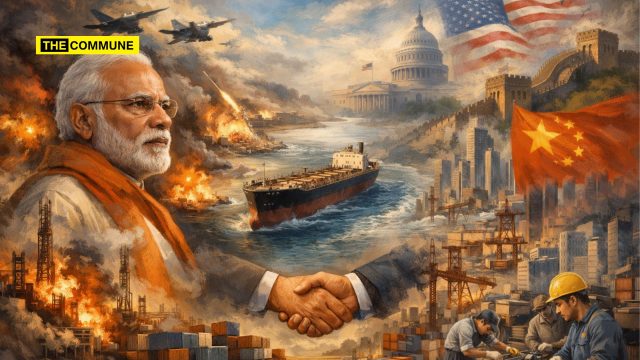
Iran War Forces India’s Pivot: Why Modi Govt Reopened Door To Chinese Investment

Iran War Forces India’s Pivot: Why Modi Govt Reopened Door To Chinese Investment

As the Iran conflict threatens global energy supplies, New Delhi’s recalibration reveals the difficult strategic balancing act confronting the Modi government.

The geopolitical landscape of 2026 has grown increasingly volatile. The war in Iran triggered by the joint military campaign of the United States and Israel has rapidly evolved into a crisis with global consequences. With energy markets rattled, shipping routes under threat, and diplomatic alliances under strain, governments around the world are scrambling to protect their economic interests. Amid this turmoil, India has taken a quietly consequential decision: easing restrictions on investments from neighbouring countries, effectively reopening the door to capital from China.

At first glance, the policy shift may appear technical or bureaucratic. Yet its timing and strategic implications tell a deeper story. It signals that the government led by Narendra Modi finds itself navigating a far more complicated geopolitical environment than anticipated when the Iran conflict erupted on February 28. Facing an impending energy crisis and economic pressures at home, New Delhi has chosen pragmatism over rigid posturing.

A War That Reshaped the Global Energy Equation

The conflict involving Iran has already triggered tremors across global energy markets. Iran sits at the heart of the Persian Gulf energy ecosystem, and any instability in the region threatens the flow of oil and gas through critical maritime corridors such as the Strait of Hormuz. For a country like India one of the world’s largest energy importers this scenario is deeply alarming.

Nearly 85% of India’s crude oil requirements are met through imports, with a significant share originating from West Asia. As the conflict escalated, shipping insurance costs soared, tanker routes were disrupted, and fears of supply shortages intensified. Even the mere perception of instability in the region was enough to send global crude prices upward.

In such a scenario, economic policy cannot remain detached from geopolitical realities. India’s leadership understands that sustained high energy prices could slow economic growth, worsen inflation, and strain public finances. The government therefore appears to have concluded that it must mobilize every available economic lever to maintain stability including revisiting its policy toward Chinese investments.

Revisiting the Legacy of Press Note 3

The restrictions that India has now eased originated during the early months of the COVID-19 pandemic. In April 2020, New Delhi introduced the controversial Press Note 3 (PN3) amendments to its foreign investment policy. The measure required investments from countries sharing land borders with India to undergo additional government scrutiny instead of being processed through the automatic approval route.

Although the policy was framed as a safeguard against opportunistic takeovers of struggling Indian firms during the pandemic, it was widely understood to be directed primarily at China. The move came at a time when geopolitical mistrust between the two Asian giants was rising.

That mistrust soon escalated dramatically following the violent confrontation between Indian and Chinese soldiers in the Galwan Valley in June 2020 – the first deadly border clash between the two countries in 45 years. The incident hardened public opinion in India and reinforced the government’s decision to tighten economic and technological restrictions on Chinese companies.

The impact of PN3 on investment flows was immediate. Between 2016 and 2020, Chinese foreign direct investment into India had reached roughly $886 million. But after the restrictions were introduced, inflows collapsed dramatically, falling to around $68 million between 2021 and early 2025. What had once been a rapidly expanding investment corridor virtually dried up.

Over time, however, concerns began to emerge within India’s policy circles about the unintended economic consequences of the policy. A report published in August 2025 by the Indian Council for Research on International Economic Relations (ICRIER) argued that while security safeguards were necessary, the blanket restrictions had created an excessively hostile investment environment.

The study recommended a calibrated reassessment of PN3, suggesting that India could unlock economic opportunities by permitting Chinese investments in non-sensitive sectors while maintaining strict scrutiny in strategic industries.

The March 10 Decision

Against this backdrop, the Union Cabinet chaired by Prime Minister Modi moved on March 10 to ease the PN3 restrictions. Officially, the policy adjustment was framed as a broader relaxation for investments from “neighbouring countries.” In reality, the decision was widely interpreted as a signal that India is prepared to cautiously reopen its economy to Chinese capital.

The timing is particularly striking. The announcement came as the Iran war entered its second week and global markets were bracing for prolonged instability. At a moment when energy prices threaten to disrupt economic growth, attracting foreign investment becomes an urgent priority.

By allowing Chinese investment flows to resume, New Delhi hopes to stimulate manufacturing, technology development, and infrastructure expansion sectors critical for sustaining economic momentum during a global downturn.

Yet this move is not simply about economics. It also reflects the evolving dynamics of India’s foreign policy.

The West Asia Puzzle

India’s diplomatic posture during the Iran crisis has raised eyebrows in several quarters. New Delhi has signalled tacit support for the American and Israeli position while refraining from backing Iran in international forums.

This stance became especially evident when the United Nations Security Council adopted Resolution 2817 in March 2026 condemning Iranian attacks on Gulf Cooperation Council states. India joined more than 130 countries in supporting the measure.

Simultaneously, New Delhi declined to strongly condemn the assassination of Ali Khamenei, Iran’s long-time Supreme Leader a decision that placed India somewhat at odds with several members of the BRICS grouping.

Such diplomatic choices carry consequences. Relations between India and Iran have already been strained since India halted Iranian oil imports during the sanctions regime imposed by the United States under the administration of Donald Trump.

Further friction arose over the long-delayed development of the Farzad-B gas field, from which India’s state-owned ONGC Videsh Ltd was eventually excluded in 2021. The project was instead awarded to the Iranian firm Petropars Group.

In recent years, Iran has increasingly tilted toward China for economic and strategic partnerships. In this context, maintaining workable relations with Beijing may indirectly help New Delhi rebuild channels of communication with Tehran.

Trade Frictions with Washington

Complicating matters further are the evolving economic tensions between India and the United States. Although Washington remains one of India’s most important strategic partners, trade disputes have intensified under the renewed presidency of Donald Trump.

Tariff hikes and investigations under Section 301 of the US Trade Act have placed pressure on several Indian export sectors, particularly textiles, gems and jewellery, marine products, and chemicals. Even after a February 2026 trade agreement reduced certain tariffs, many small exporters continue to struggle.

For India’s vast network of micro, small, and medium enterprises, these developments represent a serious challenge. With thousands of exporters searching for alternative markets, the government has been forced to provide interest subsidies, credit guarantees, and policy support.

Against this backdrop, the reopening of Chinese investment channels offers another economic lifeline. Capital from Chinese firms could help expand manufacturing capacity, create jobs, and support India’s ambition to become a global production hub.

Strategic Pragmatism in an Uncertain World

India’s decision to ease restrictions on Chinese investments is therefore less a dramatic geopolitical pivot than an act of strategic pragmatism. Faced with a convergence of crises war in West Asia, volatile energy markets, trade tensions with Washington, and strained ties with Tehran New Delhi is attempting to maintain economic stability without abandoning its broader strategic goals.

The Modi government has built much of its diplomatic identity on the principle of “multi-alignment” maintaining constructive relationships with competing global powers while preserving strategic autonomy. The present moment may be the most severe test of that doctrine.

By quietly reopening the door to Chinese capital while simultaneously cooperating with the United States and Israel on the Iran issue, India is attempting to walk a narrow geopolitical tightrope.

Whether this balancing act succeeds remains uncertain. But one thing is clear: the emerging global order is forcing even the most confident governments to rethink their assumptions. In an era defined by wars, sanctions, and supply chain disruptions, economic survival increasingly demands flexibility.

India’s latest policy shift is a reminder that in geopolitics, ideology often yields to necessity.

Dr. Prosenjit Nath is a techie, political analyst, and author.

Subscribe to our channels on WhatsAppTelegram, Instagram and YouTube to get the best stories of the day delivered to you personally.