Home Blog Page 113

Parasakthi Disaster: Sudha Kongara’s Anti-Hindi DMK Propaganda Film Collapsed In Just Three Days At The Box Office

Parasakthi Disaster: A Complete Washout For Anti-Hindi DMK Propaganda Film On Day 3 Itself Despite Paid Reviews And PR

The box office story of Parasakthi has unravelled with stunning speed. What was aggressively projected as a prestige Pongal release has now turned into one of the fastest collapses ever witnessed for a big-ticket Tamil film during the festive week.

After a fan-driven opening weekend on 10 January 2026, the film suffered a brutal reality check on its very first Monday, exposing the complete absence of audience “hold” and confirming that neutral viewers had decisively rejected the film.

From Double Digits To Disaster In 72 Hours

On Monday, 12 January 2026, Parasakthi managed to earn only ₹3 crore, a catastrophic 70–80% crash from Sunday’s ₹10.1 crore collections. The film’s highest single-day earnings remain its opening day figure of ₹12.5 crore on Saturday; a peak it never came close to again.

According to Sacnilk, the film’s total India net after three days stands at approximately ₹25–26 crore, with multiple trade estimates placing Monday’s actual net below ₹2 crore.

In box-office terms, this is not just a drop – it is a collapse.

Major Pongal releases typically face a 50-60% weekday decline. Parasakthi plunged by nearly 80%, failing the most basic industry benchmark: the first weekday test.

Empty Theatres, No Family Audience

Monday occupancy in Tamil Nadu reportedly stood at a dismal 18.05%, confirming what exhibitors feared, the film exhausted its entire audience within the opening weekend itself. Once the fan-driven rush evaporated, theatres were left empty.

This sharp fall makes it clear that Parasakthi failed to attract family audiences, repeat viewers, and neutral moviegoers.

In short, anyone beyond a narrow ideological and fan base.

“Prestige Project” Turns Liability

Starring Sivakarthikeyan and directed by Sudha Kongara, the film was touted as a politically charged period epic on the 1960s anti-Hindi agitation. Instead, audiences responded with indifference or outright rejection, citing dull and preachy screenplay, sluggish pacing, heavy-handed political messaging.

Trade circles are already calling it one of Sivakarthikeyan’s weakest Pongal performances in recent years, despite the festival advantage.

Budget Reality Begins To Bite

With a rumoured budget of ₹142-150 crore, Parasakthi now faces an uphill, arguably impossible road to breakeven. Weekday trends suggest further erosion rather than recovery, with advance bookings on Monday reportedly hovering around ₹2 crore in Tamil Nadu.

Even optimistic projections capped Monday at ₹5 crore, a figure the film failed to reach. Best estimates now suggest that the film’s daily collections may struggle to even stabilise.

Fastest Pongal Week Collapse?

Despite a strong overseas opening and a ₹28 crore worldwide day-one figure, the domestic collapse has overshadowed everything else. While the film may cross ₹50 crore worldwide, the idea of touching ₹100 crore now looks increasingly unrealistic.

Tamil Nadu, the film’s core market, has already delivered its verdict.

In just three days, Parasakthi has gone from a hyped Pongal release to a case study in how fan openings, propaganda cinema, and media hype cannot substitute for audience acceptance.

If anything, Parasakthi may now be remembered not for its politics or messaging but for setting an unenviable record:
the fastest collapse of a major Tamil film during Pongal week.

Subscribe to our channels on TelegramWhatsApp, and Instagram and get the best stories of the day delivered to you personally.
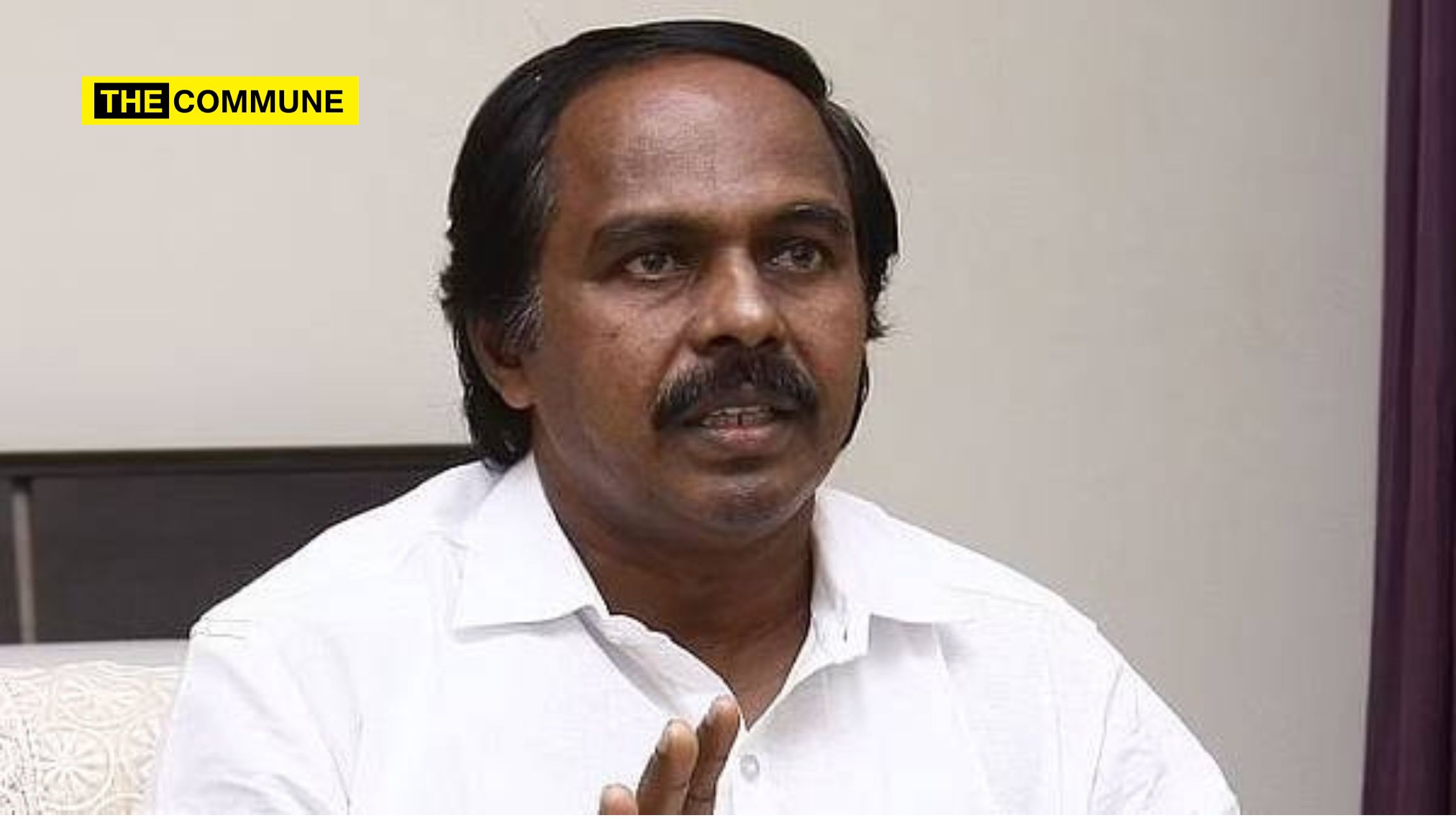
DMK Stooge Sudha Kongara Blames Vijay Fans For The Utter Flop Of Her Anti-Hindi DMK Propaganda Film

Director Sudha Kongara, whose latest film Parasakthi has failed to impress audiences or sustain box-office momentum, has now chosen a familiar escape route – blaming “anonymous social media handles” and, more pointedly, fans of actor Vijay for the film’s poor reception.

Instead of introspection on why a heavily marketed, politically loaded period drama failed to resonate beyond a narrow ideological base, Kongara has alleged a “targeted attack” and “slander” campaign, positioning herself as a victim rather than addressing the film’s creative and ideological bankruptcy.

From Flop Film To Manufactured Victimhood

In an interview to The Hollywood Reporter India, Kongara lamented that “just allowing your film to speak doesn’t seem to be enough” anymore and expressed hope that the film would somehow “take off during the Pongal weekend” despite clear audience rejection from day one.

She went on to claim that her film was being deliberately misrepresented online, saying there was “slandering, defamation of the worst kind, hiding behind unknown IDs.” While refusing to explicitly name those responsible, Kongara made it abundantly clear where she wanted the blame to land – Vijay’s fanbase.

To bolster this narrative, she cited a post from an X handle that mocked the film’s CBFC troubles and sarcastically suggested apologising to Vijay’s fans to save the film. This single troll post was elevated by Kongara into supposed evidence of an organised conspiracy, conveniently ignoring the far more uncomfortable reality: Parasakthi failed because audiences rejected its preachy politics and distorted historical narrative.

Source: India Today
A DMK-EVR Propaganda Exercise Disguised As Cinema

Marketed as a “revisionist alternative history” of the 1965 Anti-Hindi agitation, Parasakthi is less a historical drama and more an ideological pamphlet rooted in EV Ramasamy’s toxic Dravidian rhetoric. The film portrays the agitation through a crude binary of virtuous Tamil revolutionaries and cartoonishly evil state representatives, flattening a complex historical moment into DMK propaganda cinema.

Kongara herself admitted that the film deliberately rewrites history, claiming that “genocide” occurred because the state failed to communicate Tamil opposition to Hindi – a claim not supported by historical scholarship but regularly pushed by Dravidianist polemicists.

The result is a film that speaks not to history, but to DMK’s long-standing victim card politics, alienating neutral audiences who expect nuance rather than ideological sermons.

CBFC Excuses And Manufactured Outrage

Adding to the post-release melodrama, Kongara also attempted to shift blame onto the Central Board of Film Certification, portraying routine certification cuts as censorship excesses. In a pre-release interview, she claimed the CBFC was democratic. However, when asked about it, she said, “When I did that interview I had not gotten my cut list. I had just been told that I would be certified but only audio cuts would be asked. Two days away from release, I got the cut list at 11 AM, and tomorrow is all I have before I cut and give the film, because the day after is the release. Where is the time to fight this cut list? “

She claimed exhaustion from last-minute modifications and complained about reductions in violent scenes and muted dialogues referencing political figures.

Yet even she conceded that none of the cuts affected the film’s core narrative. The CBFC merely demanded disclaimers for “constructed” scenes and moderation of explicit violence, standard practice.

The sudden outrage appears more about constructing yet another external villain to deflect from the film’s failure.

Box Office Reality Vs Ideological Echo Chambers

Despite negative reviews and weak audience turnout, the film’s producers have made the predictable claim that Parasakthi is “profitable for all exhibitors.” This assertion stands in stark contrast to ground-level reports of empty theatres and poor word-of-mouth, even within Tamil Nadu’s DMK-dominated media bubble.

Starring Sivakarthikeyan, Ravi Mohan, Atharvaa and Sreeleela, the film had every commercial advantage. What it lacked was honesty, both in storytelling and in post-release accountability.

Blaming Vijay Fans Won’t Save Bad Cinema

By framing audience rejection as a politically motivated smear campaign, Sudha Kongara has revealed precisely why Parasakthi failed. It was never meant to engage audiences – it was meant to lecture them. When audiences walked away, she chose to blame “Vijay fans” instead of confronting the reality that ideological cinema without craft, balance, or respect for viewers will not survive outside party loyalist circles.

In the end, Parasakthi stands exposed not as a brave historical drama, but as yet another EVR-inspired DMK propaganda film which places the DMK patriarch Karunanidhi in the limelight anf forgetting the actual martyrs and warriors. Parasakthi is a film that collapsed under the weight of its own arrogance and then went searching for scapegoats.

Subscribe to our channels on TelegramWhatsApp, and Instagram and get the best stories of the day delivered to you personally.

TNM Which Got ‘Undisclosed Amount’ From Money Laundering Accused, Has The Audacity To Target Indian Business Owners

The News Minute published a hit job article of Zoho founder Sridhar Vembu. based on US court proceedings that came out a year ago in January 2025.

A few months ago, in October 2025, TNM went after Nikhil Kamath – co-founder of Zerodha.

With the hitjob on Vembu, one can safely say that The News Minute is going after entrepreneurs, people who are generating employment and wealth and taking the country forward.

The News Minute writes these pieces as if it is an ‘independent’ media doing truthful ‘journalism’.

But did you know that The News Minute received an ‘undisclosed’ amount as funding from its investor Quintillion Media whose founders Raghav Bahl and Ritu Kapoor have been accused of corruption and money laundering?

Who Is Raghav Bahl?

Bahl co-founded Quintillion Media Pvt Ltd and currently promotes Quint Digital Media Limited, controlling thequint.com.

In October 2018, the Income Tax Department of India raided The Quint’s offices and Raghav Bahl’s residence as part of an investigation into an alleged case of tax evasion. The raid was officially referred to as a survey by the Income Tax officers.

Not just that. According to PMC Fincorp MD Raj Kumar Modi’s statement to tax officials, Raghav Bahl and Ritu Kapur allegedly invested about ₹3.03 crore in PMC Fincorp at around ₹5.50 a share, saw the price shoot up to roughly ₹848 despite no real business activity, and then sold the shares to seven Kolkata-based shell companies, booking over ₹100 crore in bogus long-term capital gains and turning unaccounted cash into “white” money; Modi further claims Bahl’s chartered accountant handed him ₹100 crore in cash for this purpose and that he took about a 1.5% commission on the amount converted.

In 2019, media owner Raghav Bahl faced money laundering accusations by the Enforcement Directorate for allegedly understating a London property’s investment value by GBP 2.73 lakh (around ₹2.45 crore) and failing to explain the source of funds. Bahl’s properties were raided previously, prompting him to release details. His assets, including a London flat, were declared in income tax filings under the Liberalised Remittance Scheme.

In August 2023, the Delhi High Court temporarily lifted a lookout circular (LOC) against Raghav Bahl and his wife Ritu Kapur, allowing them to travel abroad for business meetings amidst the Enforcement Directorate’s (ED) money laundering probe. The High Court had earlier dismissed Bahl’s plea to quash the ED’s complaint, deeming it premature, and rejected his request to annul the LOC, granting only conditional travel permissions. Kapur’s plea against the ED probe is pending, asserting her non-involvement under the Black Money Act. The Income Tax Department initiated proceedings against Bahl under the Black Money Act, followed by the ED’s complaint under the Prevention of Money Laundering Act.

Yes, it is true that some start-ups do not disclose the amount raised as capital. However, since The News Minute portrays itself to be a transparency champion and claims itself to be doing journalism for public good asking readers to pay for ‘good journalism’, shouldn’t the ‘undisclosed amount’ of funding it received be disclosed? 

Are they being funded by laundered money?, is a question to be asked to The News Minute that lectures on accountability, justice and what not!

Now let us take a quick look at both the ‘exclusive’ pieces – both paywalled to fleece money.

Sridhar Vembu – Character Assassination, Ambiguity & Half-Truths

In Sridhar Vembu’s case, TNM builds its entire narrative on a pre-trial California order issued nearly a year ago, in January 2025, on an emergency application in an acrimonious divorce, treating it like a final judgment on character. Vembu’s counsel has since stated that the order was passed under severe time constraints, based on outrageously false allegations, and that subsequent proceedings, including appellate review, have already stayed the receivership and questioned the absurdity of the USD 1.7-billion bond figure, as mentioned by his counsel.

According to Vembu’s counsel, the bond order, now under appeal has no legal basis, is impossible to comply with, and was acknowledged by a subsequent judge as appearing excessive, with the receivership itself stayed pending appellate review.

TNM’s piece quotes every damaging adjective in that order – “without regard for the law”, “duplicitously”, “moving assets out of the US” while downplaying three basic facts that the case is ongoing, discovery and valuation are still being contested, and such aggressive interim measures are common in high‑net‑worth divorces involving offshore structures. ​

It never asks what any decent lawyer would: how often do US courts use huge bonds and receiverships as leverage in complex divorces, and how frequently are those orders modified or narrowed later. The ambiguity is inconvenient, so it is erased.

The piece uses the USD 1.7‑billion figure as the headline hook. TNM presents it as proof of extraordinary guilt while refusing to explain what a bond is. Bonds secure potential claims: they are not fines, settlements, or alimony awards. Non‑payment does not automatically prove hidden billions or fraudulent intent – it can simply mean the court has pegged security to notional global enterprise value rather than liquid assets actually within reach.

This distinction is central to the story. TNM avoids it because nuance blunts outrage.

In the same piece on Vembu, several crucial points are still disputed. It is not clear whether Zoho’s IP was really sold for USD 50 million, whether that amount was actually paid, whether Vembu’s true economic interest is 5% or higher and whether early‑2010s restructurings were legitimate corporate housekeeping or deceptive. ​

The court has doubts. Doubt is not adjudication. Yet the piece stitches together allegations, judicial scepticism and interim language into a single, seamless narrative of wrongdoing. The reader is never clearly told which parts are proven, which are inferred, and which are simply what one angry spouse alleges. TNM’s piece uses ambuiguity as its fuel.

Moreover, it is someone’s personal life – would they be fine if media goes after their founders’ personal lives and wealth?

Nikhil Kamath – Use Random Minor Incidents To Accuse

The Nikhil Kamath profile published (incidentally by the same author – Indulekha Aravind, follows the same playbook, with a different surface. Here the target isn’t a divorce order (sadly for them) but a curated “simple billionaire” persona. The article creates a persona about his middle-class upbringing, his brother, his podcast soundbites, his references to Carl Jung, Rene Girard, “mimetic theory”, reading habits and then tries to puncture them with a handful of quotes about poverty and caste, some sloppy analogies, and the 2021 chess‑cheating scandal. ​

The cheating against Viswanathan Anand on Chess.com was real and indefensible. Kamath admitted to using computer assistance and was banned. That should be a tight, contained story about personal ethics. TNM treats it as proof that everything about him is suspect.

What’s missing is revealing:

No evidence that Kamath or Zerodha fabricated titles or falsified formal achievements; even the article concedes that there is a FIDE record and that a grandmaster recalls playing “Nikhil Kamat” in an Asian Junior event. ​

No serious attempt to show that his supposed superficiality on social questions has translated into regulatory violations, client harm, or SEBI action.

No concrete case where Kamath lied to regulators, investors, or customers in the way he lied on a charity chessboard.

Instead, like with Vembu, TNM works backwards from conclusion to evidence: the man is suspect, therefore his success must be recast as performance.

Data When Convenient, Silence When Inconvenient

With Vembu, TNM scrutinizes every sentence of a family‑court order but never interrogates how asset‑holding structures are standard in founder‑led global firms. It never confirms facts with independent corporate lawyers to ask whether routing IP through relatives or long‑time co‑founders is inherently unlawful or simply common tax and control planning that can become contested during divorce. ​

With Kamath, it spends paragraphs on vibe – podcast tone, book references, “carefully crafted persona” but never digs into Zerodha’s actual market conduct, risk disclosures, or complaint record. If TNM is claiming that Indian founders are gaming the system, the first place to examine is the system itself. TNM keeps the spotlight on optics instead.

The Same Pattern: Pick The Man, Then Build The Case

The pattern for every such hitjob is the same – hard to miss.

Start with a business owner whose politics, public piety or rural‑India rhetoric do not fit into TNM’s narrative. If they have been seen with PM Modi, they rank higher on the list. If they have praised PM Modi, yeah, they get to be at the top of the list.

Then they go digging through court orders, online platforms, and old interviews, pulling out whatever sounds most damaging on its own be it a judge’s passing remark, a cheating ban on a chess site, or an offhand comment about slums or caste.

These bits are then stitched together into a long story that leans heavily in one direction. Every unclear point is read against the person being written about, and facts that don’t fit the narrative are quietly ignored. The final product is placed behind a paywall and sold as an “investigation” or an “extensive profile”.

This does not mean that Sridhar Vembu is necessarily right in his divorce case, or that Nikhil Kamath’s cheating incident was insignificant – Vembu’s marital dispute is a private matter still under adjudication, and Kamath was banned and penalised for his actions. That is where those stories should reasonably end.

What TNM does is turn personal disputes and individual lapses into sweeping judgments about legitimacy and character. They are narratives built to suggest that a flaw in one sphere disqualifies a person in all others.

When so-called ‘investigative journalists’, have to rely on private matters (gossip) and minor errors into material for larger political or ideological fights, it stops doing its job. It is obvious they are taking sides. The real issue here is not that Indian founders have flaws, that is hardly surprising, everyone is flawed. But the real issue is that a platform claiming moral authority has built a habit of turning those flaws into sellable outrage, while staying safely within the limits of what the evidence can actually prove.

Subscribe to our channels on TelegramWhatsApp, and Instagram and get the best stories of the day delivered to you personally.
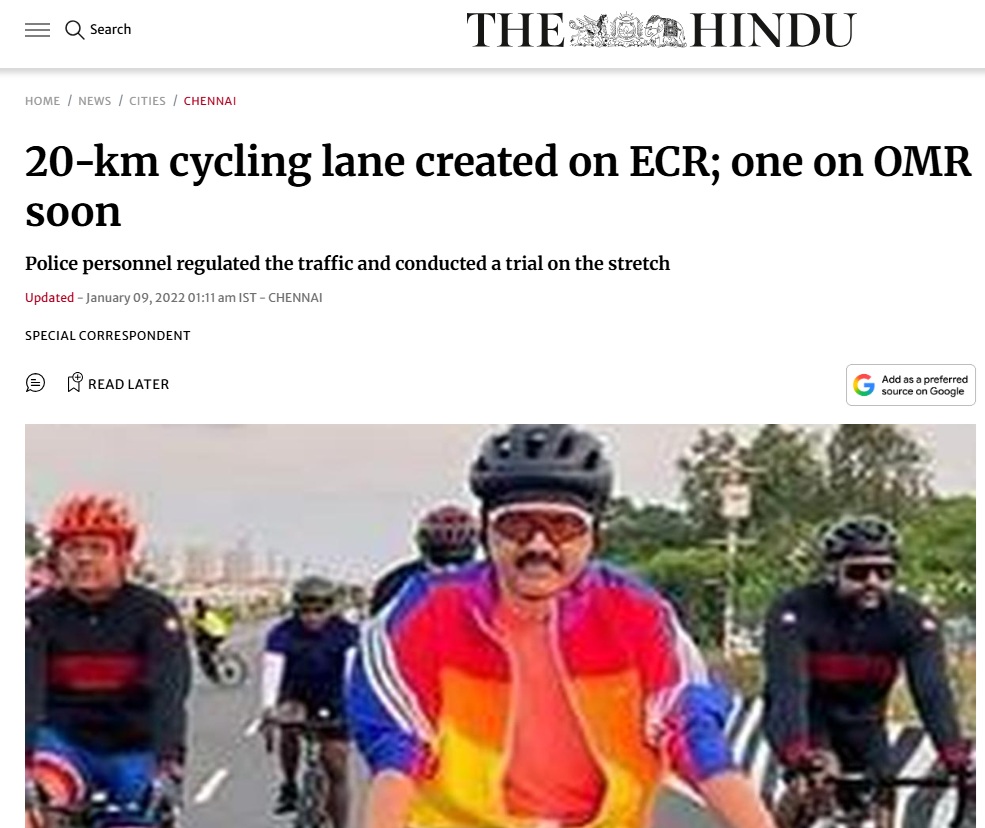
‘A Completely Fake FIR’: BJP Leader SG Suryah Says DMK Goons Attacked BJP Workers At The Behest Of DMK Stooge Senthilvel, Police Framed Victims With Fabricated Case

BJP Tamil Nadu Youth Wing president SG Suryah on Tuesday, 13 January 2026, accused the ruling DMK and the Tamil Nadu Police of fabricating a criminal case against him and several BJP workers following an altercation outside a television debate venue in Chennai, stating that those who were attacked had been falsely turned into accused.

Addressing the media, Suryah read out portions of an FIR filed by a woman, which forms the basis of the fake case registered against BJP members. The complaint alleged that she was attacked at the Daily Thanthi office complex on Poonamallee High Road when she arrived around 8.15 PM on 9 January 2026 for a television debate (the debate was going to get over at 8.30PM).

Reading from the FIR, Suryah said the complainant had alleged that BJP workers, including a person referred to as “Rowdy Surya”, abused and assaulted her, slapped her, kicked her in the stomach, threw stones at her, threatened to kill her and attempted to outrage her modesty.

The FIR further claimed that BJP workers told her, “We are the ones who make the rules in Chennai,” and warned her, “If you come here again, we will stone you to death.”

Suryah rejected these allegations, calling the FIR “completely false” and “politically motivated.” He said the incident took place in a media complex with CCTV cameras and multiple mobile recordings, and that the available footage clearly showed DMK members attacking BJP workers, not the other way around.

“If such an incident had really happened the way this woman claims, would the DMK have remained silent?” he asked. “They would have put her in front of the cameras and broadcast it 24/7. This itself shows how motivated this FIR is.”

Suryah said BJP workers had been attacked by DMK cadres, and that the police had rescued him and taken him inside the premises to safety. He alleged that after this, DMK workers attacked police officers and television channel security guards, injuring several of them.

“We saw blood on a police officer’s hand. We saw Thanthi TV security guards beaten, with one person’s head broken and another’s hand fractured and bleeding. All those who did this were DMK members,” he said.

However, Suryah alleged that instead of booking the attackers, the police registered a case only against BJP workers. He said three injured BJP workers had filed complaints from the hospital, but those complaints were ignored, and the names of the victims were instead added as accused in the FIR.

He further claimed that 10 to 15 BJP Youth Wing members were identified using CCTV footage and included as accused, while no DMK attackers were named.

Suryah said the BJP had secured interim protection from the High Court, and that the FIR itself showed how “manufactured” the case was.

He also alleged that a Dravidianist YouTuber and commentator named Senthilvel played a key role in triggering the incident. According to Suryah, Senthilvel had earlier created disturbances during a similar debate on January 8 and had then returned with DMK supporters the next day.

“This raises serious questions about whether he is acting as a mouthpiece for the DMK,” Suryah said, alleging that Senthilvel was being financially supported and “used to attack anyone who criticises the DMK.”

Suryah claimed that even channel editors had privately told him they were being pressured by the ruling party to include Senthilvel in debate panels.

He alleged that the violence was deliberately engineered because opposition parties – the BJP, AIADMK, Tamilaga Vetri Kazhagam and Naam Tamilar Katchi, were dominating public debates and exposing issues related to law and order, governance failures and corruption.

“Since they couldn’t counter us in debates, they sent goons to create riots so that such programs cannot be held without police permission,” he said, calling the episode a “deliberate political conspiracy.”

Suryah also claimed that BJP workers had called the police emergency number at 7.45 PM on the day of the incident, warning that DMK cadres were gathering to attack them, but additional forces were not deployed in time.

“The police could have reached the venue in five minutes. They did not. We believe this was due to pressure from DMK leaders,” he alleged.

He said one BJP worker who had protected him during the violence had since been jailed, while cases had been filed against those who defended him.

“If this is how a youth leader of a party in power at the Centre can be treated, what security does an ordinary citizen have in Tamil Nadu?” Suryah asked.

He said the BJP would pursue all legal and constitutional remedies, including demanding that police register cases based on their complaints and produce all video and CCTV evidence.

“The truth is on video. DMK members attacking us is on record. But they have turned the victims into accused. This is a complete abuse of power,” he said.

Subscribe to our channels on TelegramWhatsApp, and Instagram and get the best stories of the day delivered to you personally.
“We Will Fix Liability And Accountability On Those Who Saying We Are Feeding Dogs”: Supreme Court Signals Action Against Stray Dog Feeders

Stray Dog Menace: Madurai Bench Of Madras High Court Considers Enforcing Supreme Court’s Delhi Directive

The Supreme Court on Tuesday, 13 January 2026, indicated that it may impose liability on both state authorities and dog feeders for injuries and deaths caused by stray dog attacks, remarking that those who wish to care for dogs should take them into their homes rather than allowing them to roam freely in public spaces.

The observations were made by a Bench comprising Justice Vikram Nath, Justice Sandeep Mehta and Justice NV Anjaria while hearing a suo motu case on the stray dog menace.

Justice Nath said that the Court was inclined to hold both the State and dog feeders accountable for attacks. “For every dog bite, death or injury caused to children or elderly, we are likely going to fix heavy compensation by the state, for not doing anything. Also, liability and accountability on those who are saying we are feeding dogs. Do it, take them to your house. Why should dogs be loitering around, biting, scaring people?” he said.

Justice Mehta raised similar concerns, asking, “Who should be held accountable when dogs attack a 9-year-old? The organization that is feeding them? You want us to shut our eyes to the problem.”

The Bench further observed that animals roaming freely in public spaces could not be treated as ownerless when incidents occurred. “Who will owe responsibility when stray dog attacks someone? Stray dog can’t be in possession of anyone. If you want [a pet], take license,” Justice Mehta said.

Earlier Court Directions

The Bench was monitoring compliance with its November 2025 order, which had directed local authorities to remove stray dogs from bus stands, railway stations, hospitals, schools, campuses and other public institutions. The Court had also ordered that the dogs be vaccinated and sterilised under the Animal Birth Control (ABC) Rules and not released back to the same spot from where they were picked up.

Following this order, several animal rights groups filed applications seeking its modification, particularly objecting to the embargo on re-releasing dogs in the same areas. The Court heard arguments on the issue for three days last week.

Arguments Supporting the Court’s Order

On Tuesday, Senior Advocate Arvind Datar, appearing for an organisation, strongly defended the November 7 order. He argued that the order was legally sound and based on statutory rules, and that there was no need for any new expert committee since multiple reports were already on record.

Justice Mehta remarked that Datar was “the first who has come to the rescue of the order.”

Datar submitted that stray dogs have no legal right to occupy institutional premises or public spaces where people have access. He argued that if humans could not reside in such spaces, animals could not either, and said that returning dogs to such places would amount to “animal trespass.”

He relied on provisions of the ABC Rules and on Madras High Court judgments upholding the public’s right to free passage in streets.

Datar also referred to a separate writ petition on feral dogs in wildlife areas, especially Ladakh, where he said around 55,000 free-ranging dogs were posing a severe threat to critically endangered species. He told the Court that scientific models showed dog populations and bite incidents could be drastically reduced within a few years if appropriate measures were taken.

Justice Mehta noted that the problem had now extended even to court premises, referring to a recent dog bite incident at the Gujarat High Court. He also said municipal workers attempting to catch dogs had been attacked by “so-called dog lovers” (lawyers).

Animal Welfare Side Urges Balance

Appearing for an animal welfare trust, Senior Advocate Vikas Singh urged the Court to look at the issue from the standpoint of ecological balance, not just as a human-versus-animal conflict. He cited data on snake-bite deaths and said dogs played a role in controlling rodents and maintaining ecosystem stability.

Senior Advocate Pinky Anand emphasised that the law required animals to be treated with compassion and warned against approaches that amounted to culling. She said the shortage of ABC centres and inadequate infrastructure was a major cause of the problem and cautioned that removing dogs without replacement could lead to more aggressive animals occupying those spaces.

Senior Advocate Menaka Guruswamy described the issue as an emotional one, prompting Justice Mehta to remark that emotions so far appeared to be “only for dogs.” When Guruswamy cited parliamentary debates, Justice Mehta said Members of Parliament were “an elite class.”

Justice Nath urged all sides to let the Court “take the authorities to task” and start a concrete process, noting that the situation had worsened due to prolonged inaction. Justice Mehta added that the proceedings were beginning to resemble a “public platform rather than a court proceeding.”

Call for Census and Data

Senior Advocate Percival Billimoria submitted that the core problem was the failure to implement the ABC programme and the lack of any proper census of stray dogs. He suggested a committee chaired by the Attorney General to conduct a census and review implementation.

The Bench responded that most of these submissions had already been made earlier. Justice Mehta questioned how population figures could be claimed without any census, calling such estimates “totally unrealistic.”

Billimoria also cautioned against reliance on media reports as evidence, saying they sometimes created an “echo chamber.” Justice Nath asked whether he was suggesting that the petitions should not have been registered at all, to which Billimoria clarified that his concern was only about over-reliance on news reports.

Dog Bite Victim’s Testimony

The Court also heard Kamna Pandey, a dog-bite survivor, who said she had been mauled two decades ago and later discovered that the dog which attacked her had been subjected to prolonged cruelty such as stoning and kicking. She said fear-induced defensive aggression was a major factor in dog attacks.

Pandey told the Court that she had eventually adopted the dog that bit her and that it never bit anyone again. She called for a more holistic, non-confining approach, including dog homes in institutional settings.

Another counsel urged that the November 7 order should also apply to rural areas.

The matter will be heard next on 20 January 2026 at 2 PM.

Source: LiveLaw

Subscribe to our channels on TelegramWhatsApp, and Instagram and get the best stories of the day delivered to you personally.
₹16 Crore Worth Of Expired Liquor Allegedly Sent To Be Sold At Coimbatore TASMAC Outlets Ahead Of Pongal

₹16 Crore Worth Of Expired Liquor Allegedly Sent To Be Sold At Coimbatore TASMAC Outlets Ahead Of Pongal

Reports have emerged from Coimbatore suggesting that expired and ageing liquor stock has been redistributed to TASMAC retail outlets in the region as demand rises ahead of the Pongal festival, triggering alarm among employees’ unions and raising questions over consumer safety.

According to TASMAC trade union sources, the state-run liquor retailer has begun moving nearly 20,000 cases of old liquor that had been lying in warehouses for several years. The total value of the stock being dispatched since 6 January 2026 was estimated at ₹16 crore.

Union representatives said around 15,000 cases were being supplied to 159 outlets in Coimbatore North district, while another 50,000 cases were being routed to 48 outlets in Coimbatore South district. Some of the liquor reportedly dated back to 2018, raising concerns that expired or deteriorated products were being pushed onto shelves during the peak festival season.

Employees’ unions, including the Labour Progressive Federation (LPF), which is affiliated to the DMK, were said to have raised objections with the TASMAC administration and demanded that the old stock be destroyed instead of being sold. Union sources said the liquor being distributed carried a single barcode per case, rather than individual bottle-level barcodes, which they said deviated from standard practice and made tracking difficult.

Union representatives said that after workers threatened to approach the District Collector, General Manager (Retail Vending) T Ramadurai Murugan travelled to Coimbatore on Saturday, 10 January 2026, and held an urgent meeting with union leaders. Despite the objections, staff were reportedly instructed to ensure the stock was sold before Pongal.

An LPF representative told TNIE the administration should avoid sending ageing liquor to outlets, warning that any adverse impact on consumers during an election year could have serious consequences.

Another union official explained that the problem appeared to stem from the rollout of TASMAC’s ‘end-to-end’ computerisation system, which was implemented across Tamil Nadu in April 2025 to track liquor from production to sale. He said that during the system’s implementation in Coimbatore, non-aggregated stock from other districts that could not be scanned was transferred to the Coimbatore North and South warehouses through Inter-Depot Transfer (IDT).

He said that similar liquor brands from Coimbatore retail outlets were later returned to warehouses through Customer Return Notes (CRN), resulting in liquor worth around ₹16 crore accumulating in godowns. He added that the colour of many of the bottles had changed and appeared pale due to long-term storage, raising fears about their quality and safety if sold.

However, Prohibition and Excise Minister S Muthusamy told The New Indian Express that he was not aware of any redistribution of old stock. He said old liquor should not be sent to retail outlets and added that he would look into the matter.

Source: The New Indian Express

Subscribe to our channels on TelegramWhatsApp, and Instagram and get the best stories of the day delivered to you personally.
After Udhayanidhi Stalin’s Mixer Grinders, DMK Min KN Nehru Distributes ₹2,500 Pongal Kits Across Trichy West As Poll Season Nears

After Udhayanidhi Stalin's Mixer Grinders, DMK Min KN Nehru Distributes ₹2,500 Pongal Kits Across Trichy West As Poll Season Nears

Pongal 2026 seems to be a bumper season for citizens of Tamil Nadu. With the Assembly elections just a few months away, DMK politicians are reportedly showering them with more gifts under the guise of Pongal.

We just saw how mixer grinders were distributed in Tamil Nadu under the name of Udhayanidhi Stalin – the appliances carried his stickers.

These freebies or rather ‘gifts’ are being distributed apart from the ₹3,000 Pongal Parisu which is given along with 1 kg rice, 1 kg sugar, one sugarcane for ration card holders across the state.

In this series, it has been reported that several DMK ministers are also doing the same.

In Trichy West, the constituency of DMK minister KN Nehru, thousands of premium Pongal gift hampers have been distributed across more than 23 wards over the past few days. Party functionaries said each ward was tasked with distributing between 2,500 and 3,000 boxes, taking the total well beyond 60,000 hampers in the constituency.

Local DMK organisers said the kits contained four stainless-steel plates, four tumblers, two cooking pans, a shirt, a pant and a saree, packed in boxes displaying images of Chief Minister MK Stalin, Deputy Chief Minister Udhayanidhi Stalin, KN Nehru and MP Arun Nehru. Residents who received the hampers said the combined market value exceeded ₹2,500 per household.

A DMK ward secretary in Trichy West said the instruction from the party leadership was not to refuse anyone willing to accept the gift, including voters belonging to other parties. He said cadres had been asked to distribute the kits widely and that additional stocks were being supplied whenever ward units ran out.

DMK functionaries said that unlike previous years, when Pongal gifts were restricted to basic items such as sugarcane or cooking pots, the 2026 cycle was being marked by a significantly more expensive and branded package.

Responding to criticism that the distribution was election-oriented, DMK Trichy city district secretary M Anbazhagan said the gifts were meant to acknowledge grassroots workers and their families. He said the government had already announced a ₹3,000 Pongal cash assistance and that party leaders were separately doing their part for supporters.

In Karur, DMK sources said former minister V Senthil Balaji was preparing to roll out a similar Pongal gift campaign in the coming days, reinforcing the sense that the festival had become an early vehicle for voter mobilisation.

In Chennai, DMK IT wing deputy secretary Karthik Mohan posted photographs on social media showing Pongal gift boxes being distributed in Anna Nagar wards 105, 107 and 108. His post said residents had been receiving gift kits since 8 January 2026. Party sources said each box contained a 10-piece cooking set with pots, plates, tumblers and ladles, with all sides of the box listing the DMK government’s achievements.

Source: The New Indian Express

Subscribe to our channels on TelegramWhatsApp, and Instagram and get the best stories of the day delivered to you personally.

Police File Case Against Women Protestors Demanding Release Of BJP Leader H Raja At Thirupparankundram

Police File Case Against Women Protestors Demanding Release Of BJP Leader H Raja At Thirupparankundram

Police in Madurai have registered cases against several women protesters who had gathered at Thirupparankundram demanding the release of senior BJP leader H. Raja following his detention during the Kallathi tree protest. The women, who blocked a police vehicle and staged a sit-in outside the temple area, were booked under multiple sections even as tensions continued over the disputed flag on the sacred sthala vruksham of the Kasi Viswanathar temple.

This came after the police registered cases against senior BJP leader H Raja, Madurai West district BJP president Sivalingam, and several party workers in connection with a protest at Thirupparankundram hill over the flag hoisted on the Kallathi tree, the sacred sthala vruksham of the Thirupparankundram temple.

What Happened

According to reports, H Raja, Sivalingam and more than 15 BJP functionaries went to the Kasi Viswanathar temple on Thirupparankundram hill on Monday to offer prayers. While proceeding from the Nellithoppu area towards the dargah side of the hill, they objected to the flag that had been hoisted on the Kallathi tree during the Sandhanakoodu festival, despite a court order directing that it be removed.

BJP leaders attempted to move towards the Kallathi tree to inspect it and demand the immediate removal of the flag. This led to a protest that continued for more than three hours, resulting in a tense standoff between BJP workers and the police.

Following this, Madurai City South Deputy Commissioner of Police Inigo Diviyan took H Raja and Sivalingam up the hill to view the Kallathi tree. After they were brought back down, police detained them.

Women Stage Protest

Women residents from the Palaniandavar Temple Street area of Thirupparankundram staged a protest demanding the release of H Raja and the BJP leaders. They also blocked a police vehicle as part of their protest.

Police later registered cases against H Raja, Sivalingam, and 12 BJP workers under three sections for climbing the hill, staging a protest, and attempting to enter the Kallathi tree area without permission.

In addition, cases have been registered against five women protesters by name and several others for blocking the police vehicle and demanding the release of the detained BJP leaders. Police said investigations are underway.

Subscribe to our channels on TelegramWhatsApp, and Instagram and get the best stories of the day delivered to you personally.
Congress Cries Foul Over Jana Nayagan Not Getting Censor Certificate, Here’s A List Of Books And Films Banned By Nehru-Gandhi Family

Congress MP Manickam Tagore cries foul over the delay in Vijay’s final film Jana Nayagan getting a censor certificate.

In a post on his X handle, he wrote, “When RSS propaganda films get zero traction, zero credibility & zero public interest, the Modi–Shah regime responds with control, not confidence.
Now the film industry is in the crosshairs. Article 19(1)(a) guarantees freedom of speech & expression. But under I&B Minister @AshwiniVaishnaw this right is being systematically weakened through fear, not law. ED, CBI, IT — turned into frontal organs to silence dissent. Now even the Censor Board is being weaponised to control cinema and ideas. Institutions meant to protect democracy are reduced to tools of intimidation, while BJP-RSS propaganda is passed off as “culture”. Cinema doesn’t need political clearance. It needs constitutional protection. Democracy cannot survive when art is forced to kneel before power.”

On 13 January 2026, Congress scion Rahul Gandhi also came out in support of Jana Nayagan stating, “The I&B Ministry’s attempt to block ‘Jana Nayagan’ is an attack on Tamil culture. Mr Modi, you will never succeed in suppressing the voice of the Tamil people.”

Now there may be inherent problems with the film that could have caused its delay, it is not very clear at the moment. But has the Congress party forgotten the number of films and books banned by the Congress under Jawaharlal Nehru and Indira Gandhi?

He may have forgotten, in this article, we will take a look at the full list.

 List of Films & Books Banned By Jawaharlal Nehru
  • Nine hours to Rama by Stanley Wolpert (1962)
  • Chandra Mohini by Ansar Nasiri
  • Rama Retold by Aubrey Menen
  • The Heart of India by Alexander Campbell
  • The Lotus and The Robot by Arthur Koestler
  • Captive Kashmir by Aziz Baig (1958)
  • Ayesha by Kurt Frischler (1963)
  • Unarmed Victory by Bertrand Russell (1962)
  • Marca-e-Somnath by Ghulam Siddhanvi
  • The Dark Urge by Robert W Taylor (1955)
  • Selling the book Lady Chatterley’s Lover by D.H. Lawrence (1960)
  • What Has Religion Done for Mankind (1954)
  • Tony Hagen’s book Nepal (full title: Nepal: The Kingdom in the Himalayas) (1963)
  • Nathuram Godse’s courtroom testimony, often referred to as “Godse’s Testimony”, was prohibited from public distribution and publication immediately after his trial in 1948–1949. The government ordered police to seize reporters’ notes and banned state-level printing, with the restriction lifted around 20–30 years later via court rulings.
  • Katherine Mayo’s 1936 book “The Face of India”
  • Nehru: A Political Biography by Michael Edwards (1975) Nationwide ban because the government considered grievous factual errors in this book
  • V.S. Naipaul’s An Area of Darkness (1964)
Books/Magazines Banned By Indira Gandhi
  • India Independent by Charles Bettelheim (1976)
  • Michael Edwardes’s book “Nehru: A Political Biography” (1971) was formally banned by the Government of India during the Congress rule in the Emergency era.
  • M.O. Mathai’s Reminiscences of the Nehru Age, published in 1978, was banned by the Indian government shortly after release due to its controversial content on Jawaharlal Nehru’s personal life and political era.
  • Thuglak, the magazine, edited by Cho Ramaswamy, halted publication for the first two weeks after the Emergency declaration. It resumed with a black front cover and faced pre-censorship on all content.
Films Banned By Nehru, Indira

This was how the censor board functioned under Jawaharlal Nehru.

Source: Anand Ranganathan X handle
  • Mrinal Sen’s film Neel Akasher Neechey was banned in 1959, and the ban lasted for roughly two to three months
  • Nine Hours to Rama by Mark Robson adapted from Stanley Wolpert’s novel (1963)
  • Balraj Sahni’s play Jadoo ki Kursi was banned in India during Jawaharlal Nehru’s era.
  • Aandhi was released in February 1975 and was banned a few months later during the Emergency, in July 1975.
  • Kissa Kursi Ka was effectively banned in 1975 during the Emergency, before it could be released, and all its prints were destroyed; a new version came out only in 1978.
  • Protima Dasgupta’s 1948 Bengali film Jharna was banned by Bombay Presidency Chief Minister Morarji Desai.
  • During the Emergency (1975–77) under Indira Gandhi’s Congress government, Kishore Kumar’s songs were banned from All India Radio and Doordarshan after he refused to perform for a government propaganda programme.
Other Congress-era Bans
  • Javier Moro’s The Red Sari was not formally banned but effectively blocked in India for years through legal threats from Congress lawyers; only released here in 2015.
  • The play “Christhuvinte Aaram Thirumurivu / Kristuvinte Aram Thirumurivu” (The Sixth Sacred Wound of Christ) by playwright P.M. Antony was officially banned by the Kerala state government in 1986, which at that time was headed by Congress CM K. Karunakaran.
  • Rajiv Gandhi ordered a ban on the import of The Satanic Verses, making India one of the first countries to take that step.
  • The True Furqan, written under pseudonyms Al Saffee and Al Mahdee (published 1999–2005), was banned nationwide in India in 2005.
  • Ram Swarup’s Understanding Islam Through Hadis, first published in the US in 1982 and reprinted in India by Sita Ram Goel in 1983, was officially banned due to its critical analysis of Sahih Muslim Hadiths.
  • A 1988 film which was an adaptation of Nikos Kazantzakis’s 1955 book The Last Temptation of Christ by Martin Scorsese was banned in India following protests from Christian groups, with Prime Minister Rajiv Gandhi assuring it would not be screened.
  • The Da Vinci Code (2006), directed by Ron Howard and based on Dan Brown’s novel, was banned in several Indian states due to protests from Christian and Muslim groups over its portrayal of Jesus.
  • Salman Rushdie’s The Moor’s Last Sigh, published in 1995, encountered an unofficial nationwide ban on imports due to objections over a character named Jawaharlal, a pet dog owned by a figure resembling Bal Thackeray of Shiv Sena, seen as defamatory. The government halted shipments after about 4,000 copies entered, citing potential communal discord.

Subscribe to our channels on TelegramWhatsApp, and Instagram and get the best stories of the day delivered to you personally.
“Our Murugan Flags Were Removed Secretly But That Flag Still Flies, Remove It Now”, Thirupparankundram Residents Demand Removal Of Flag Hoisted On Kallathi Tree

"Our Murugan Flags Were Removed Secretly But That Flag Still Flies, Remove It Now", Thirupparankundram Residents Demand Removal Of Flag Hoisted On Kallathi Tree

Tension prevailed in Thirupparankundram after residents gathered asking for the removal of the flag hoisted by Dargah authorities on the Kallathi tree, the sacred sthala vruksham of the Thirupparankundram Subramania Swamy temple.

A video of the protest, which has since circulated widely on social media, shows visibly distressed women questioning why the flag remained in place even after the religious festival (Sandhanakoodu) connected to it had concluded.

A protesting resident said, “Festival ended days ago. Why hasn’t that flag been removed? It must be taken down. Court ruled in our favor. Why allow it to fly over there now? We hoisted Murugan flags in our street but without anyone’s permission – no one informed us, they removed those flags secretly at night. We don’t know where they have kept them. That’s insulting us, insulting Murugan himself. We won’t tolerate that flag flying on Kallathi tree. It must come down now. The flag must be removed. The flag must be removed, sir. We have not been given the right to light Deepam at Deepathoon, yet they’ve had permission for days to fly it on Kallathi tree – who gave that? Tell us.”

Talking about a structure that was built for the village/town residents to celebrate Hindu deities and festivals, the distressed resident said, “We, the people, united fully, bought this place several years ago through struggle and sacrifice by martyrs. We have the patta (land title) also for this. A police officer asked, ‘Do you have patta for this?’ If I waved it and slapped it on his face, would they all leave our street? We didn’t build this for police. It’s for public festivals, Tamil-style celebrations, worshiping our Hindu gods. We want the key. Get out, all of you. We didn’t build for police. Evict them. We built it to worship Swami (God). We consider it sacred. We won’t wear slippers or anything. We haven’t even entered inside. Except that specific period, no one from us goes in. We’ve protected it so piously. Today, you’re all going in with shoes on. How low will you push us? How much will you disrespect us? Get out, everyone. All must leave. Stay in your police building. If no permission to touch and worship a temple-owned tree, what kind of government is this?”


View this post on Instagram


A post shared by Tamil Janam (@tamiljanam)

Subscribe to our channels on TelegramWhatsApp, and Instagram and get the best stories of the day delivered to you personally.