Home Blog Page 1072

World Record Set On PM Modi’s Birthday By TN BJP Karyakarta

To commemorate the 73rd birthday of Prime Minister Narendra Modi, a unique world record was set as 73 welfare schemes introduced by the NDA government were presented to the public at a single location in a single day. The event was led by T Ayyappan, the Tamil Nadu Bharatiya Janata Party Economics President of Kanyakumari District and Ward Councillor for Nagercoil Municipal Corporation. The notable achievement took place at the premises of the Arulmigu Muthuraman Thirukoil in Mugilanvilai, Nagerkoil.

Under the guidance of Jawan Ayyappan, President of Kumari district’s economic wing of the BJP and a member of the 50th ward of Nagercoil Corporation, meticulous planning ensured that all 73 projects were made available in one location.

The highlight of the day was a world record showcase, witnessed by Christopher from America, who was present to document this historic achievement in the World Record Union. Christopher presented the certificate of world record achievement to Jawan Ayyappan, acknowledging his contribution to this event.

A total of 73 stalls were set up to represent the central government’s welfare schemes, providing an opportunity for the public to learn about these initiatives. Expert advice was also provided to the general public regarding these schemes, creating awareness and promoting their benefits.

Several BJP karyakartas also participated in the event. The event also saw the presence of District Industrial Division President Dr. Mohanraj, BJP Former Information Technology Division District Secretary Rubin, Agastheeswaram North Zone Head Swayambu, Mukhilanvilai Misa Rethinajothi, BJP State Economic Division Secretary Parvathy Vijayakumar, and Agri Siva. Additionally, beneficiaries, members of the general public, and volunteers actively participated in this historic occasion.

The world record recognition was presented on 17 September 2023, marking a significant milestone in promoting awareness of the government’s welfare initiatives.

(With inputs from Maalai Malar)

Click here to subscribe to The Commune on Telegram and get the best stories of the day delivered to you personally.
The Dark History Of Hyderabad Nizam Rule & Razakars That TRS And TNM Don’t Want You To Know

After the trailer of the movie Razakar, was released there is a sense of chaos and anger in the fragile Islamo-leftist ecosystem. The movie Razakar is based on the genocide of Hindus in the erstwhile Islamic kingdom of Hyderabad and it shows how Hindus were targeted in the events preceding the accession of the state into India.

Such is the impact of this film that the ruling party in Telangana, the Telangana Rashtra Samithi (sorry Bharat Rashtra Samithis) leader K Chadrasekhar Rao’s son, K. T. Rama Rao said he will raise the movie with the censor board and the Telangana Police alleging that the BJP is trying to polarize the state. 

On X (formally known as Twitter) Rama Rao said, “Some intellectually bankrupt jokers of the BJP are doing their best to instigate communal violence and polarisation for their political propaganda in Telangana. We will take up the matter with the censor board and also the Telangana police to ensure that the law & order situation in Telangana is not affected.” 

 Dhanya Rajendran who is the Editor-in-Chief of Leftist portal The News Minute said, “After Kashmir Files and Kerala Story, this is a movie that the BJP is banking on. This time, the producer is a BJP MLA. What is the BJP’s plan? What is the real history?” deriding the movie as propaganda of the BJP trivializing the massacre that was unleashed by Razakars at the behest of the Nizam. 

She then asked people to read a long-winded article written by her colleague Yunus Lasania that lacked substance and some truths that were conveniently omitted. 

The News Minute in its articles have attempted to downplay the religious persecution of Hindus by bringing in the classic leftist trope of “peasant struggle”, just like how leftists have been peddling the same for Moplah Massacre in Kerala in which Moplah Muslims went on a killing spree of Hindus.

The Systemic Oppression And Persecution Of Hindus Under Nizam Rule

Hyderabad was a region with a Hindu-majority population but was under the rule of a Muslim Nizam named Mir Osman Ali Khan. A poem written by the Nizam goes like this: “I am the protector of Islam and a butcher of Kaffirs“. Kaffir is an insulting term used to refer to the people who don’t subscribe to Islam.

The Nizam had around several women as his concubines and most of these women of other religions abducted in raids. He even reportedly purchased 10-12 year old girls from Nuristan (Afghanistan) as sex slaves

The rule of the Nizam was characterized by intrigue, inequity, injustice and widespread oppression of the majority Hindu populace.

In the Hyderabad of Nizam’s era, Muslims constituted just 13% of the population, yet they held a disproportionate 77% of gazetted government positions. Among government officers, 88% at higher levels and 82% at lower levels were Muslims. Conversely, Hindus faced marginalization not only within the government but throughout Hyderabad as a whole.

In 1891, Hindus made up 90.53% of the population. By 1911, when Osman Ali Khan assumed power, the Hindu population had reduced to 86.15%. By the end of his reign, Hindus had dwindled to just under 80%. To reduce the Hindu population, the Nizam imported around 800,000 Arabs and Afghans, granting them significant state privileges. Many of these foreigners formed a substantial portion of the Nizam’s armed forces. A significant number of Yemeni Arabs, found in Barkas, Hyderabad today, are descendants of the Nizam’s armies. Even his Commander in Chief, Sayyid El Edroos, hailed from an Arab background.

Additionally, the Nizam actively encouraged forced religious conversions. One individual in his service, Siddique, played a key role in founding the Deendar movement, which remained active even after India’s independence and was eventually banned in 2007 due to its involvement in bombings in South India. Siddique, under the Nizam’s directive, conducted forced conversions, some of which took place within government offices. Criminals in prisons were given the option to convert in exchange for their release, and many of these converted individuals later joined the ranks of the Razakars.

KM Munshi, the Agent General of India, in his autobiography “Hyderabad Memoirs: The End of An Era“, Hindus faced official pressure, private harassment, and threats of violence. He writes “Under official pressure, private harassment and threats of violence, Hindus were… prevented from building or repairing a temple in any locality where Muslims resided. Hindu temples were often desecrated but the culprits were rarely traced, never punished. Hindu religious teachers were prohibited from delivering discourses, while the Muslim divines, the members of Ittehad and the Deendars carried on a vigorous campaign of proselytising the Hindus.

Under the Nizam’s rule, the educational policy aimed to supplant Telugu with Urdu. State-supported education was exclusively delivered in either Urdu or English. In 1915, even the option of English was replaced by Urdu in the state’s schools. At Osmania University, established by the Nizam, Hindu students were required to dress according to Muslim standards and were prohibited from wearing dhotis and kurtas. They were also not allowed to observe Hindu festivals such as Janmashtami. Singing Vande Mataram was forbidden for students, and those who did so were compelled to issue apologies or faced expulsion. This policy was enforced in schools as well, resulting in the expulsion of approximately 1,200 students from colleges and schools. In contrast, festivals like Eid and Milad-un-Nabi were celebrated with great enthusiasm.

How The Nizam Unleashed The Razakars To Massacre Hindus

The Nizam faced a challenging decision, torn between the options of joining India or remaining an independent entity. The Nizam ultimately chose to resist merging with India and, with the backing of Muhammad Ali Jinnah, opposed becoming part of the Indian Union.

Qasim Rizvi, who led the Majlis-e-Itihadul Muslimeen (MIM, a precursor to today’s AIMIM), staunchly advocated for the Nizam’s alignment with Pakistan. However, the majority of Hyderabad’s residents expressed a desire to unite with India. Civil movements, spearheaded by Arya Samaj, Hindu Mahasabha, and Hyderabad State Congress, emerged to champion the rights of Hindus in Hyderabad and advocate for the state’s integration into the Indian Union.

In anticipation of potential unrest, the Nizam authorized the establishment of the Razakars, led by Kasim Razvi, which functioned as a paramilitary wing of the MIM.

 The Nizam had become a puppet in the hands of Rizvi who mobilized a fanatic Razakar militia. The Razakars, at the behest of the Nizam, went on a rampage going village after village plundering, kidnapping and murdering people. The Nizam virtually presided over a large scale massacres of Hindus.

During the Vijayadashami celebration in 1947, as women observed the Bathukamma festival and boarded a train at Wadi station, they were forcibly removed at Gandalpur and loaded onto trucks to be taken to a nearby police station. At the police station, these women were subjected to cruel treatment, including disrobing, repeated beatings, and being forced to dance.

On the fateful days of May 9-10, 1948, approximately 2000 Razakaars descended upon the Hindu village of Gorta. They desecrated temples, forcibly removed residents from their homes, and began a ruthless slaughter that spared no one, not even children or pregnant women.

The Bhairanpally Massacre

While many are familiar with the Jallianwala Bagh massacre where General Dyer fired upon a peaceful crowd, resulting in hundreds of casualties, including children, fewer are aware of the wall in Bhairanpally, Telangana, which bears witness to the tyranny of the Razakars. The Razakars had been attempting to enter Bhairanpally since June 1948 but were repelled by villagers using traditional weapons.

However, in August 1948, during the Telugu folk festival of Bathukamma, the barbaric Razakars managed to infiltrate the village with the assistance of the Hyderabad State police. Villagers sought refuge in the village fortress and managed to eliminate some Razakars. Nevertheless, the overwhelming number of Razakars overpowered them. They proceeded to massacre unarmed villagers, shooting all guards at point-blank range and committing heinous acts.

On the dreadful day of August 27, 1948, armed Razakars set homes ablaze, murdered men, assaulted women, killed children and the elderly in a cowardly manner. The reason for this brutality? The villagers’ refusal to pay the jizyah tax imposed by the Nizam. Men were executed, women were subjected to rape, homes were looted, and the entire village was set on fire. To conserve ammunition, 2-3 men were lined up and shot simultaneously. Women were stripped, violated, and forced to dance in front of the lifeless bodies of their loved ones. Many residents died by leaping into open wells in agricultural fields. According to historians and village elders, approximately 118 people lost their lives.

Despite putting up a staunch resistance against the Razakars, the villagers of Bhairanpally were mercilessly slaughtered.

These accounts offer only a glimpse of the atrocities endured by Hindus in the state of Hyderabad under the Nizam’s rule.

The tyranny of the Razakars persisted until the Indian army routed them during Operation Polo in 1948. This operation led to the liberation of Hyderabad from Nizam’s control and its accession to the Indian Union.

Whitewashing Of The Dark History

In 2018, the ruling TRS (sorry BRS) unveiled a portrait of the Nizam adorning the pillars of the Hyderabad metro. The last time the Nizam was praised in public was when he died in 1967. Since then, he was not even mentioned let alone be celebrated by the state government. Such has been the dreaded history of the bigot. Such a character who was relegated to the annals of history being given a new leash of life by the KCR government tells much about the direction in which the party is heading – minority appeasement and galvanizing Muslim votes. Yet KCR’s son KTR and the leftist media ecosystem have the galls to accuse the BJP of indulging in polarization through the Razakar movie. 

The Nizam rule in Hyderabad remains one of the darkest chapter in history of Deccan with targeted killings and persecution of Hindu subjects. It is this dark chapter that is being hidden by the likes of TRS aided by TNM.

(Kaushik is a political writer) 

Click here to subscribe to The Commune on Telegram and get the best stories of the day delivered to you personally. 
Chandra Babu Naidu Arrest: Jagan Reddy’s Political Masterstroke Or A Desperate Game Of Chance?

The biggest but very much underplayed political event in the country that happened recently came from the Southern Indian state of Andhra Pradesh. While the rest of the nation watched the central government led by the Bharatiya Janata Party (BJP) and PM Modi conduct an impressive, world-class G20 summit, Andhra was embroiled in yet another political arrest fiasco.

Clearly, next year’s state elections are impacting decisions, both favourable and unfavourable, of the two principal regional parties, the incumbent YSRCP and the opposition TDP, closely watched by the new and eager entrant, the JSP. The TDP has been relentless in its efforts to reach the people directly through customised rallies and padayatras (foot marches) with Jagan and his YSRCP on their toes trying to prevent the successful completion of such rallies and meetings. The YSRCP has not spared any of the opposition parties including the JSP and the state’s BJP unit although it is on agreeable, mutually beneficial terms with the BJP at the Centre.

Jagan Reddy’s Misuse Of Power

Jagan Reddy, the present chief minister of Andhra Pradesh and leader of the YSRCP is using a potent combination of misusing legislative and executive powers and pulling out every loophole in the playbook of Indian politics to intimidate his personal and political opponents. Andhra Pradesh is witnessing a classic case of political vendetta being unleashed ahead of elections in a desperate bid to stay in power. Since defeating and taking over from the TDP after the 2019 state elections, Jagan Reddy has targeted everything from the political rallies of opposition parties and various projects approved by the previous TDP government to stalling the completion of the previously planned and approved capital city of Amaravathi and filing cases on trivial matters with the A.P high court as well as openly defying court judgements/orders and even targeting judges including Justice N.V Ramana who went on to become the 48th Chief Justice of India (CJI, April 2021 – August 2022).

On 9 September 2023, three-time chief minister of Andhra Pradesh, senior political leader, A.P opposition leader, and TDP party supremo, the seventy-three-year-old N Chandrababu Naidu was arrested by the state’s CID (Crime Investigation Department). Naidu was arrested in the early hours of 9 September 2023 and produced in an ACB (Anti Corruption Bureau) court in Vijayawada at around 6 AM on Sunday, 10 September 2023 in connection with an alleged corruption scam in which he is being accused of misusing funds earmarked for the Andhra Pradesh State Skill Development Corporation, which was established when his party the TDP, was in power, with the intent of training unemployed youth.

Political pundits cite several factors for this gross misuse of state machinery and executive power by Jagan Reddy and the ruling YSRCP party, ahead of the state’s elections scheduled for the first half of next year. The most notable ones are:

  1. The incumbent chief minister and YSRCP leader, Jagan Mohan Reddy is a leader out on bail with more than thirty cases still being pursued by both the CBI and the ED ranging from massive money laundering to cases of a criminal nature including his much talked-about involvement in the murder of his paternal uncle.
  2. Having failed to unearth any irregularities of a significant nature against Naidu since wresting power from Naidu’s TDP government in the 2019 state elections and being unable to involve central investigative agencies like the CBI & the ED, it appears that Jagan Reddy has utilised the state’s CID to pin frivolous, unsubstantiated charges on Naidu and have them arrest the senior leader in a dramatic, publicity-seeking move.
  3. Analysts believe that Jagan Reddy wants to divert the people’s attention from his numerous cases as well as neutralise the playing field by finding something to blame Naidu for so that he can claim that both himself & Naidu are tainted with corruption charges and are on an equal footing. Will Jagan’s gamble pay off? Will the people equate Jagan’s track record to that of a senior leader with no proven charges against him?
  4. Some analysts have argued that apart from pulling a fast one to make Naidu look guilty for alleged financial fraud, Reddy is also trying to provoke the BJP into taking up his side or the opposition’s, sooner rather than later, for his own political preparedness. All three parties, Naidu’s TDP, Jagan’s YSRCP, and the relatively new JSP headed by the Tollywood actor Pawan Kalyan, have extended a hand of friendship and gestures of collaboration towards the BJP.
  5. The BJP has thus far, not given a clear indication of its preference, although it has enjoyed outside support from Jagan’s YSRCP since 2019. Before 2019, the BJP was in an electoral alliance with Naidu’s TDP but the partnership suffered because of differences between the leaders, over the granting of additional funds for Andhra Pradesh after its bifurcation from the larger state which included regions of both Andhra and Telangana. Will Jagan’s arrest of a senior political leader during the busy G20 summit time frame, force the BJP to formally declare its support for one of the Andhra parties or at least trigger serious negotiations between the leaders?
  6. The people of Andhra are speculating that Jagan deliberately sprung spurious charges on Chandrababu Naidu, not likely to prove him guilty in the long run but create an impression of his guilt in the short run and… in the process of doing so, Jagan and his leaders would be able to gauge the amount and extent of support and sympathy for Naidu and the TDP, ahead of the state elections in the first half of next year. Will the people’s strong reaction to the arrest of a leader known for progressive ideas and a development agenda, indicate the presence of significant support for the TDP among the masses?
  7. Another conspiracy theory seems to involve Jagan Reddy and his senior leaders wanting to analyse the possibility of a likely partnership between the opposition TDP and JSP, to devise their own election strategy. Both the TDP and the JSP have indicated their interest in partnering and collaborating against Jagan but have not yet finalized a formal agreement. In the aftermath of the TDP leader’s sudden and unexpected arrest, the JSP’s Pawan Kalyan has openly declared his support for the TDP and is looking to the BJP for moral support. Will this result in an advantage for the TDP-JSP team in next year’s elections? Will the BJP now seriously consider the TDP-JSP combine, touted to have certain district and caste-based advantages?

The next few weeks will be an interesting observation of politics at play. What will the people’s reaction be? Many have called the arrest an extra-judicial one, tantamount to political vendetta. Will it backfire on Jagan and his YSRCP, resulting in sympathy and support for A.P.’s opposition instead? What will the BJP do and which side will it finally choose after having waited long enough?

In certain circles, people are also wondering if the BJP’s central leadership may be upset that Jagan pulled a fast one when the Central government was busy with an important international event like the G20 event. The people of Andhra were distracted by the surprise arrest of a high-profile leader and missed watching the BJP’s and PM Modi’s success story of the G20 agenda – how did Jagan’s brash, ill-timed act go down with the BJP’s state and central leadership? Will they bide their time and wait till after the state election results are declared or will they take a decision favoring a pre-election tie-up with Andhra’s opposition or will the BJP decide to instead continue its informal “partnership of convenience” with the YSRCP, in an attempt to reduce the presence of powerful regional parties and eventually grow its own share of the Andhra vote?

What is the Congress party’s stand on the latest political happenings in A.P? Although the fragile, stitched-together opposition alliance of the I.N.D.I.A Bloc, posted a few weak statements in support of Naidu, the Congress party on its own, has chosen to largely remain a mute spectator. After all, Jagan Reddy is an ex-Congressman with his late father and former A.P chief minister, Y S Rajasekhar Reddy having been a lifelong Congressman.

(Shivani is a freelance writer based in Vijayawada)

Click here to subscribe to The Commune on Telegram and get the best stories of the day delivered to you personally.
Lok Sabha Passes Women’s Reservation Bill With 454 Votes, AIMIM’s Owaisi And Imtiyaz Jaleel Syed Vote Against Bill

On 19 September 2023, India created history with the Lok Sabha successfully passing the Women’s Reservation Bill, known as the Nari Shakti Vandan Adhiniyam.

In the lower house, the 128th Constitution Amendment bill garnered an impressive 454 votes, with only two lawmakers opposing it. The two MPs who voted against the bill are All India Majlis-E-Ittehadul Muslimeen (AIMIM) MPs Asaduddin Owaisi and Imtiyaz Jaleel Syed.

This resounding majority easily surpasses the two-thirds vote required for a constitutional amendment.

Once this bill becomes law, it will enforce a one-third reservation for women in the lower house of Parliament and state assemblies, including Delhi. The government introduced this bill in the Lok Sabha on September 19, just a day after receiving approval from the Union Cabinet.

Notably, this bill marks the inaugural legislation to be passed in the Lok Sabha’s new chamber within the new parliament building. Prime Minister Modi, in his first address in the new Lok Sabha chamber following the bill’s presentation, expressed that the “Nari Shakti Vandan Adhiniyam” would lead to increased female representation in Parliament and assemblies.

While the Lok Sabha has passed the bill, women will not have reservations in the 2014 Lok Sabha elections. According to the bill, it will only come into effect after the completion of the delimitation process, which will rely on the latest census data. Since delimitation has been postponed until 2026, this implies that the bill can only take effect after 2017. It is probable that the 2029 Lok Sabha elections will witness 33% of seats reserved for women.

Once the bill becomes an Act, it will remain in effect for 15 years, though its term can be extended. Law Minister Arjun Ram Meghwal anticipates that the number of women in the lower house will increase from the current 82 to 181 after the law is implemented.

It is noteworthy that numerous past governments attempted to pass this bill but failed due to a lack of consensus among political parties. While the Rajya Sabha approved the bill in 2010, it lapsed as it was not taken up by the Lok Sabha.

The bill’s passage in the Lok Sabha witnessed an uncommon consensus, as nearly all political parties, including the Congress party, lent their support. Both Sonia Gandhi and Rahul Gandhi voiced their support for the bill. However, they also called for reservations for SCs, STs, and OBCs within the bill and urged its immediate implementation.

Home Minister Amit Shah proposed that it would be preferable for a Delimitation Commission to determine the seats reserved for women, as having the government prepare the list might be perceived as politically motivated, potentially leading to accusations of using the bill for political gain, particularly in seats like Wayanad and Hyderabad involving politicians like Rahul Gandhi and Asaduddin Owaisi.

Click here to subscribe to The Commune on Telegram and get the best stories of the day delivered to you personally.
Kerala YouTuber Yaseen Travels To Afghanistan And Vlogs, Calls Taliban As Peaceful

A YouTuber from Kerala named Muhammed Yaseen whose channel name is “Yaseen Vlogs” has shared a video called “Welcome to Taliban.” In the video Yaseen who is from Kerala is speaking in Malayalam and English and claims that the Taliban are very nice people and one can travel safely across Afghanistan. Many on social media are calling it a public relations video shot by this Youtuber for the Taliban.

Yaseen Mohammad Yaseen, a native of Wayanad, has over 8 lakh followers on his YouTube channel. According to the videos, he entered Afghanistan through the Tajikistan border. He mentions that during his stay in Tajikistan, he stayed with 2 Pakistanis and 1 man from Afghanistan. 

Yaseen has documented his travels in Afghanistan as videos on his YouTube channel. He has apparently visited many places in Afghanistan like Kunduz, and Mazar-i-Sharif to name a few. 

In one of his YouTube videos, Yaseen is seen praising the roads in Afghanistan, however, he conveniently or deliberately forgot that most of the infrastructures like roads, highway, power grids, and dams was built by the Indian taxpayers.

He has also shared videos of him having lunch and dinner with the Taliban and is very happy when told that there is no violence in Afghanistan after the Taliban took control. 

In another video, Yaseen is asking his fellow Muslims to join him in Afghanistan where they can have the latest assault rifles, machine guns, and American-made guns that the US had left behind. Yaseen is seen traveling with a Taliban leader in a car and later holds guns. Yaseen also shows a letter that was supposedly issued to him by the Taliban to travel all across Afghanistan.

The video already has over 1.5 lakh views and was shot at Mazar-i-Sharif and he can be heard praising the Islamist regime while admiring their guns. As the video became public on various social media platforms such as X (formally Twitter), many have called for immediate intervention from the central government.

In all the vlogs that he made in Afghanistan, not even one woman is seen in public, and throughout his recordings, he seems to be very happy with his Sharia-compliant surroundings.

Taliban came to power in dramatic fashion in August 2021. After taking power, this puritanical Islamic regime carried out many extrajudicial executions, arbitrary arrests, torture, and unlawful detention. Pre-pubescent girls were again forced to marry older men but all such injustices seemed not to deter Yaseen from enjoying himself in Afghanistan.   

Kerala has a long history when it comes to its native Muslims joining terror organizations and such videos will only entice other Muslims to join the Taliban which has imposed strict Sharia laws in Afghanistan and has put many restrictions on women. Under the Taliban rule, women can no longer pursue education and employment, and Yaseen praising the Taliban rule and instigating people to join him is a matter of national security.

As the video became public on various social media platforms such as X (formally Twitter), many have called for immediate intervention from the central government.

Click here to subscribe to The Commune on Telegram and get the best stories of the day delivered to you personally.
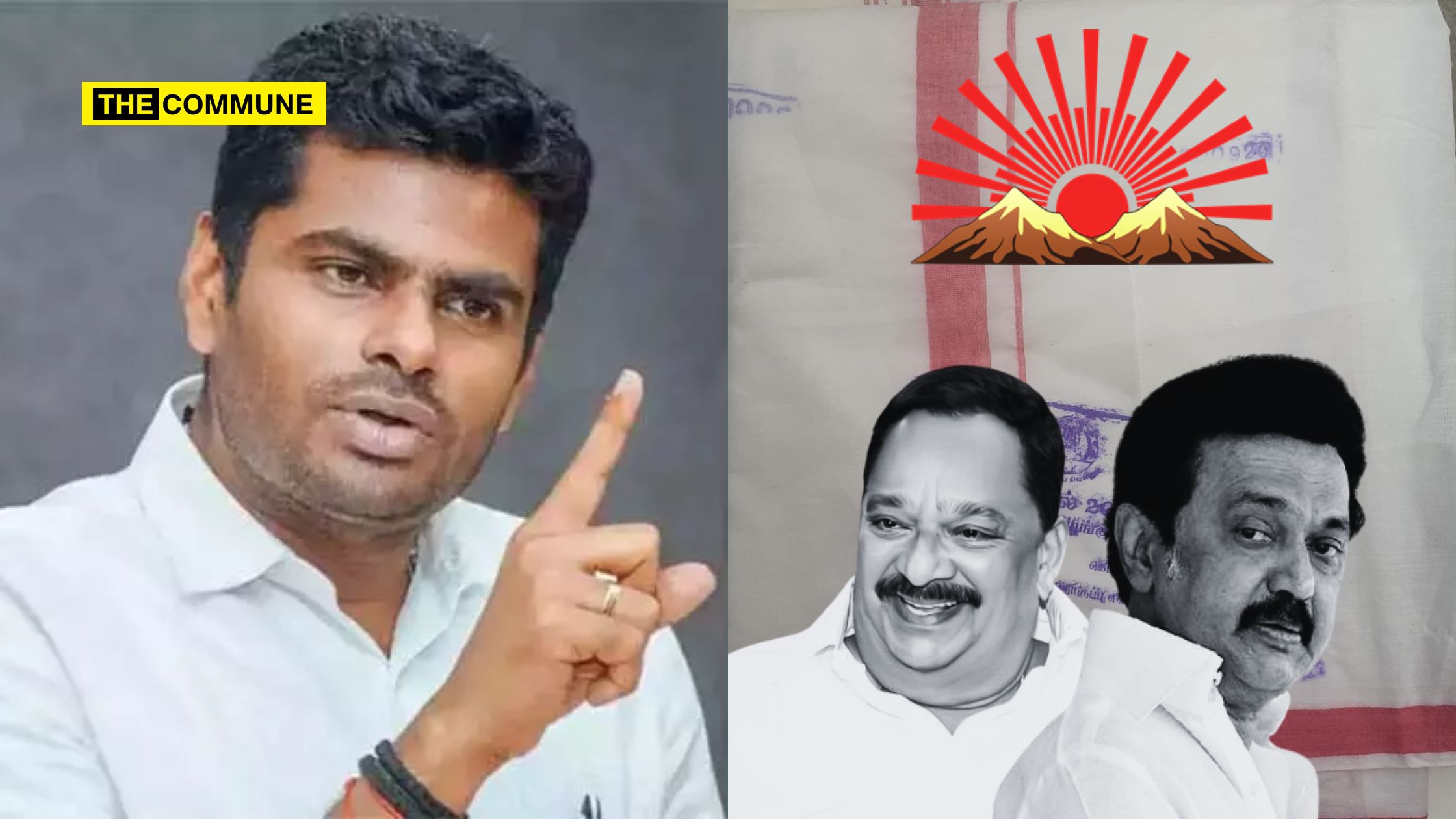
DMK’s “Eradicate Sanatana Dharma” In Action? Police Crackdown On Vinayagar Chathurthi Celebrations In TN Village Sparks Outrage, Concerns Raised About Religious Freedom Of Hindus In The State

A disturbing incident unfolded in a village nestled in Perambalur district, Tamil Nadu, revolving around the celebration of Vinayakar Chathurthi.

V Kalathur, located in Tamil Nadu’s Perambalur district, is predominantly inhabited by Muslims, with Hindus forming a minority. Perambalur is the native of DMK MP and Deputy General Secretary A. Raja.

The majority community in this area has a history of opposing Hindu processions originating from temples. Since 2012, some local Muslims have been raising objections to the Hindu processions, branding these religious festivals as ‘sins’.

This year the issue began when the residents of V Kalathur expressed their desire to celebrate Vinayakar Chathurthi by installing an idol in the village.

To ensure the event proceeded smoothly, the villagers diligently sought permission from the Village Administrative Officer (VAO). However, their efforts were met with an unexpected refusal, as the VAO allegedly declined to grant the necessary authorization. Undeterred, the villagers escalated their request to the Collector’s office, seeking permission to install the Vinayakar idol for the festival. Much to their astonishment, their plea was denied once again, with authorities reportedly stating that V Kalathur would not be allowed to set up the idol for the celebration. But the residents went on with the installation which was done in front of the police.

The residents argue that for the past 10 years they have been celebrating the festival by installing the idol, taking it on a procession and then immersing it after the rituals. They have raised question as to why permission had to be sought for something that has been practiced for years. The officials claim there was no record of the village having done this in the past.

The villagers say that the police officials who came said that no new installations can be done in Tamil Nadu as directed by the High Court. The villagers were angered by the behaviour of the police and the state government. In a video they can be heard lamenting that it was unjust for the majority Hindus in India have to live in fear while practicing their religious rituals.

The situation took a disconcerting turn when, late at night, the police arrived at the village. They forcibly removed the Vinayakar idol and instructed the village youth to board a police van to go to the police station. Even though the youth agreed to cooperate, the police resorted to physical attacks and assaults on the innocent villagers. Shockingly, male police officers even assaulted women, pulled their sarees, tore people’s clothes and forcibly pushed them to the ground. This disturbing turn of events left the villagers in a state of disbelief and distress. Some male members of the village were dragged into the van in their undergarments.

Children who witnessed the dismantling of the Vinayakar idol attempted to protect it by hugging the deity, preventing the police from proceeding. However, the police, using their physical strength, separated the children from the idol and forcibly broke it. The children were not spared, as they too faced police action during the incident. Shockingly, the children were also chased by the police when they questioned the authorities about their actions near the deity.

Those who voiced their concerns against the police’s actions were arrested. Additionally, they damaged the mobile phone of a girl who was recording the incident and chased her, subsequently causing her to get injured.

The villagers recounted their harrowing experiences highlighting instances of police brutality, harassment, and humiliation. They expressed their bewilderment over being subjected to such treatment when all they sought was to celebrate their faith and traditions.

The villagers demand justice, they ask, “We did not commit a crime, we did not sell ganja, we did not commit a robbery, we only want to worship our deity. Why are we being harassed? We are being harmed all over the body – on the head, shoulder, legs, are the police being instructed to harm Hindus like this, in the dead of the night? How can we trust the police to help us when we need them?”

Upon reaching the police station, the authorities simply recorded the names of the villagers and allowed them to return home, assuring them that transportation would be arranged. It is essential to note that, by law, women should not be arrested after 6 PM. However, according to local witness reports, this was not adhered to, as women were taken to the police station well past midnight.

The reason cited by the authorities for denying permission to install the Vinayakar idol was perplexing, as they claimed that V Kalathur was a harmonious and secular village, making idol installation unwarranted. This justification left the Hindu community bewildered, as their intention was merely to install the idol in a pandal, perform the traditional pujas, and immerse the deity the following day, as per tradition.

Residents of V Kalathur allege that their affiliation with the Hindu Munnani may have made them targets for this ordeal.

It is to be noted that in 2021, a petition was brought before the Madras High Court regarding the practice of conducting temple processions through a Muslim-majority neighborhood in V Kalathur, Perambalur district, Tamil Nadu. The petitioner sought police protection for the continuation of these rituals and processions. The law enforcement authorities did grant permission but with certain restrictions.

During the hearing before the Madras High Court, a two-judge bench consisting of N Kirubakaran and P Velmurugan emphasized that religious intolerance poses a threat to the country’s secular fabric. The court noted that if such ‘resistance’ to religious festivals were reciprocated by another religious group, it could potentially lead to riots and chaos.

While reviewing the affidavit presented by the Deputy Superintendent of Police, the Madras High Court pointed out that objections to temple processions had arisen since 2012, whereas no such issues existed before that time. The court also highlighted that despite the court granting permission to Hindus to conduct temple processions (in accordance with Section 180A of the District Municipalities Act 1920), objections persisted within the Muslim community.

In its ruling, the court stated, “Merely because one religious group dominates a particular locality, it cannot be a reason to prohibit the celebration of religious festivals or the organization of processions by other religious groups through those areas. Allowing religious intolerance is detrimental to a secular country. Any form of intolerance by any religious group must be restrained and prohibited.

The court further asserted, “In this case, the intolerance of a specific religious group is evident through objections to festivals that have been celebrated for many decades, and the prohibition of processions through the village’s streets and roads is justified by claiming Muslim dominance in the area.

The judges reiterated that, in this case, due to the dominance of one religious group in the area, other religious groups and their processions cannot be excluded. The court argued that if such instances were allowed, minority communities across the country would be unable to celebrate their festivals in most areas. The Madras High Court cautioned that such protests could escalate into religious conflicts and riots, resulting in loss of life and property damage.

Just a few days before the festival, Pollution Control Board sealed an idol maker’s facility in Karur and harassed an idol maker in Tenkasi too. The The Greater Chennai Police had issued 11 commandments to be followed during the festival.

Notably, this incident has garnered absolutely no attention in mainstream media, despite the grave concerns it raises about religious freedom and police conduct. It unfolds against a backdrop of political leaders in Tamil Nadu discussing that they want to “eradicate Santhana Dharma” which has prompted anxiety among the Hindus. It is worth noting that such incidents have become more prevalent since the Dravida Munnetra Kazhagam (DMK) assumed power in 2021, raising concerns about the preservation of religious rights and cultural traditions.

(This report has been prepared based on inputs from Narathar Media which did the field investigation. The Commune tried reaching out to the police for comments but to no avail.)

Click here to subscribe to The Commune on Telegram and get the best stories of the day delivered to you personally.
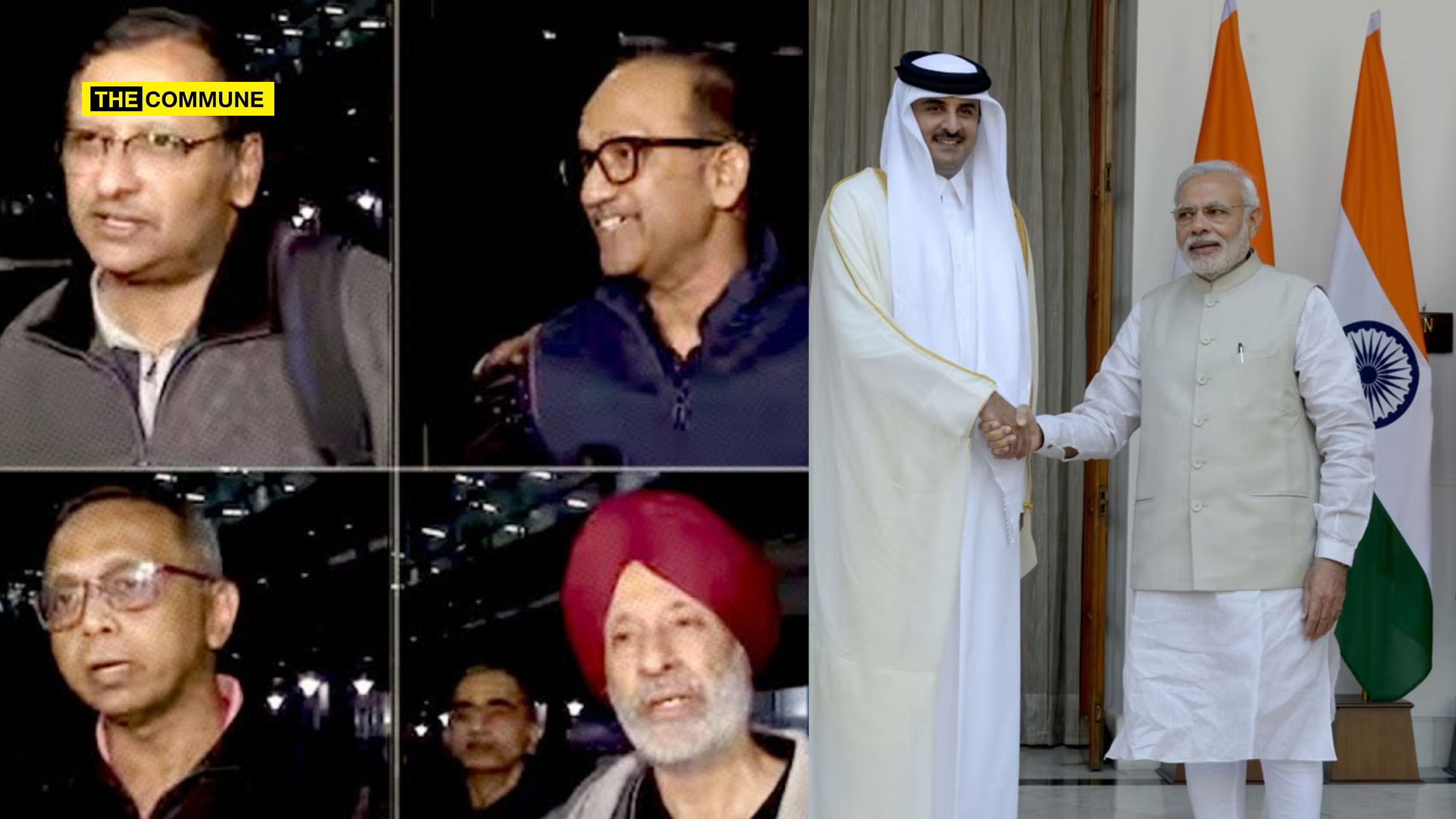
Did Pasumpon Muthuramalinga Thevar Condemn Annadurai As Claimed By TN BJP Head Annamalai?

A war of words ensued when Tamil Nadu Bharatiya Janata Party President K Annamalai spoke about an incident involving freedom fighter Pasumpon Muthuramalinga Thevar and former Tamil Nadu Chief Minister Annadurai. He said that at the Golden Jubilee celebrations of the Tamizh Sangam at Meenakshi Amman Temple in Madurai, Thevar opposed the comments made by Annadurai. AIADMK members Sellur Raju and Jayakumar claim such an incident never occurred. 

The BJP leader asserted that during a conference held in June 1956 at Madurai’s Meenakshi temple, a child sang a song from the Sangam era for Annadurai. Annamalai said that Annadurai, in response, commended the child’s singing but added that if her talent had been showcased centuries ago, people might have attributed it to her consumption of holy milk from Goddess Umaiyaval.

Annadurai also expressed the view that it was a positive development that people no longer believed in such stories due to their common sense, as per the allegations made by the Tamil Nadu BJP chief.

According to Annamalai, Pasumpon Muthuramalinga Thevar, a revered leader of the Thevar community and a freedom fighter, opposed Annadurai’s remarks. He said that Muthuramalinga spoke the following day, daring who would speak ill of Goddess Umaiyava in a temple where Sivapuranam was composed.

Thevar allegedly went on to state that if anyone who didn’t believe in God criticized those who did, it could lead to dire consequences, metaphorically referring to “blood abhishekam” for Meenakshi Amman instead of the traditional “milk abhishekam.” Annamalai alleged that Annadurai was kept in hiding in Madurai and only managed to escape after issuing an apology.

So Did The Said Incident Occur Or Not?

In the 8 June 1956 edition of Thamizhmurasu, it states that on the 4th day of the Golden Jubilee celebrations of the Madurai Tamizh Sangam happened on 2 June at the Aadi Veedhi of Meenakshi Amman temple as usual. Thevar requested the organisers for permission to speak but he was refused. But when the audience voiced out that Thevar be allowed to speak, he was given the opportunity. Thevar in his speech condemned that those who spoke against religion should not be given a platform such as the Golden Jubilee celebrations to speak. In addition, it is mentioned in the news article that DMK leader CN Annadurai made blasphemous statements. 

English newspaper The Hindu edition dated 3 June 1956 also carried an article on the same event. It says, “Earlier, just when the fourth day celebration was about to commence, Mr. U Muthuramalinga Thevar, leader of the Tamil Nad Forward Bloc, got up and urged the organisers to allow him to address the audience first. As his request was refused, there was some confusion and a section of the audience became noisy. Some persons shouted that Mr. Thevar be allowed to speak whereupon the organisers consented. Mr. Muthuramalinga Thevar, addressing the gathering condemned in strong terms the organisers for providing a platform for leaders of communal organisations to give vent to their feelings at the meeting held in the precincts of a temple. He was referring to the “atheistic statements” made by Mr CN Annadurai, leader of the DMK when he addressed the gathering yesterday inside the Sri Meenakshi Amman Temple here. Mr. Thevar also spoke of the “impropriety” of the speakers who during the last 3 days of the Golden Jubilee celebrations, criticised the statements made by Mr. C Rajagopalachari about “Aryans and Dravidas” in his inaugural address on May 30 last. Mr Muthuramalinga Thevar then left the dias and the meeting went on without any incident.”

The book titled “Pasumpon Muthuramalinga ThevarOr Aaivu Kannottam,” details about the incident mentioned by Annamalai. This book was published by the Pasumpon Muthuramalinga Thevar Research Centre, situated at Madurai Kamaraj University. Notably, PTR Palanivel Rajan, the head of the Tamil Nadu Legislative Assembly, penned an introduction/foreword for the book.

The individual who provided C.N. Annadurai with the platform to speak in Madurai was none other than PTR Palanivel Rajan’s father, PT Rajan. It is worth mentioning that PTR Palanivel Rajan is also the father of DMK Minister PTR Palanivel Thiagarajan.

A research paper authored by A. Kalavathi, based on Thevar’s book, reveals intriguing details about the Madurai Golden Jubilee celebrations. At this event, a collector from Salem district allowed his ten-year-old daughter to speak. Subsequently, C.N. Annadurai addressed the audience, although it was originally PT Rajan’s turn to speak.

During his speech, Annadurai praised the child’s oratory skills but made a controversial remark. He stated that, in ancient times, a story would have been concocted, likening the child to Thirugnanasambandar, a revered divine poet, after receiving divine blessings. This comment not only incensed the audience but also irked Thevar.

The following day, Thevar attended the event and approached PT Rajan. He expressed his displeasure, asserting that Annadurai’s words within the temple precincts were blasphemous. Thevar also urged Rajan to refrain from hosting such events on temple premises, proposing open grounds as alternative venues to avoid such incidents.

Another individual, VS Navamani, whose father had close ties to Thevar and was a member of the All India Forward Bloc, confirmed Thevar’s condemnation of Annadurai’s speech at the Golden Jubilee celebrations. Navamani asserted that Annadurai was not an invited speaker but had spoken in place of PT Rajan. In addition to the blasphemous comments, he said that Annadurai also spoke unfavourably about Rajaji. In light of this, Thevar requested that such events not be held in temples. He even went so far as to suggest that if they did take place in temples, he would not hesitate to conduct an abhishekam with human blood.

Former AIADMK MLA Thiruchy Soundararajan, who had close ties with Annadurai, also attested to Thevar’s strong condemnation of Annadurai’s speech at the Madurai event.

Annamalai’s comments about Thevar and Annadurai, while condemning Udhayanidhi Stalin’s remarks about “eradicating Sanathana Dharma,” are rooted in the documented evidence surrounding this historical incident. However, it’s important to note that there is no newspaper report corroborating Thevar’s statement about conducting an abhishekam with human blood.

(With inputs form ABP Nadu)

Click here to subscribe to The Commune on Telegram and get the best stories of the day delivered to you personally.
Pondy Lit Fest 2023: Media, Journalism, And Changing Landscapes – Insights From Prominent Panelists

In the recently concluded Pondy Lit Fest 2023, day 3 featured a discussion on the topic of breaking news. Given the context of banning certain journalists and discussions about curbing press freedom, this topic garnered significant attention. In a specific debate titled “Breaking News Into Pieces: What Ails the Media,” moderated by Deep Halder, a journalist and writer, the panel featured prominent individuals with journalistic backgrounds. Shiv Aroor, renowned for his incisive reporting; Rahul Shivshankar, an accomplished journalist and anchor; Monika Halan, an expert in business journalism; and Abhijit Majumder, a journalist and commentator, all brought their diverse viewpoints to the discussion. Together, they engaged in an informative and insightful dialogue, offering valuable perspectives on the topic.

A Tectonic Shift In The Media House Landscape

The discussion began with moderator Deep Halder mentioning a poll conducted by Abhijit Majumder. The poll results revealed journalists to be the least trusted group, closely followed by the judiciary and political parties. Halder posed a pertinent question: why do audiences often perceive journalists as partisan, preempting their commentary on various topics? Monika Halan, though primarily a business journalist, provided valuable insights into the dynamics within newsrooms. She pointed out that until 2014, there existed a dominant party, a prominent family, and a specific journalistic narrative. Journalists adhered to this narrative or risked being marginalised. However, the year 2014 marked a turning point, bringing with it a growing national divide, compounded by the rise of social media. These powerful forces transcended traditional media, isolating journalists with alternative viewpoints. Pre-2014, suggesting that the new prime minister deserved time to prove himself was met with swift branding as a divisive figure, often accompanied by allegations of fascism, Muslim hatred, or communalism. This division, originating within newsrooms, intensified with subsequent events, such as those in 2019. Monika Halan concluded by stating that the journalistic profession is still adapting to these shifts in the political landscape.

The Media Dilemma

Deep Halder further delved into the deteriorating revenue model within the media industry, noting the growing necessity for alignment with state governments or national parties, leading to what is commonly referred to as “Godi Media.” Monika Halan shed light on this pressing issue, highlighting the fundamental economic concept known as the agency problem in media economics. The central question revolves around whose interests are prioritised—the readers/viewers or the advertisers. Bennett and Coleman, pioneers in this regard, long recognised themselves as agents of advertisers. While advertisers were initially corporate entities, the increasing corporatisation of political parties has led to their growing influence. Therefore, the media’s revenue source must be clearly defined, as failing to do so may result in advertisers taking precedence over the audience—a critical concern in the Indian media landscape.

Shifting the focus to the challenges posed by flawed revenue models, Rahul Shiv Shankar emphasised that the pressure to deliver attention-grabbing content had always existed. However, the current hurdle faced by both television and print media is the reluctance of people to pay for news, prompting media professionals to question if they inadvertently contribute to this problem. Additionally, Rahul pointed out a disparity in revenue models between India and other countries. Media success abroad is not solely determined by reaching the audience but also by capturing their time and attention, necessitating the engagement and captivation of viewers at all costs—an imposing challenge for media outlets.

Boycotting/Banning Journalists 

Next, the attention turned to Shiv Aroor’s stance on supporting journalists who faced bans or imprisonment, even when differences in ideologies or journalistic approaches existed. Shiv Aroor shared his personal experiences, shedding light on the complexities of such situations.

Aroor explained that, particularly for journalists without political party allegiances in a landscape dominated by partisan media, sticking one’s neck out could be a risky endeavour. He emphasised that this act of taking a stand often made journalists targets, as political parties preferred clear alignments and disapproved of ambiguity.

Regarding the recent ban incident, Aroor expressed his bewilderment. Prominent figures from the I.N.D.I Alliance, which included Aroor, had distanced themselves from the ban, asserting their lack of involvement in the decision. The incident serves as a stark reminder of the challenges journalists face in navigating a landscape where allegiances and tensions are ever-present.

The Intersection Of Personal Opinions & Journalism

Turning to Abhijit Majumder, Halder questioned whether his outspoken views and statements on Twitter had influenced his journalism and public perception. Majumder offered his insights, characterising the current era as one filled with the potential for individuals to be tagged or labelled.

Majumder elaborated on the evolving landscape, where a long-standing 70-year-old establishment is facing transformation due to the resurgence of ideologies. This transformation is not limited to politics but extends into the realm of media. Despite this, Majumder firmly asserted that a journalist’s work, whether his or someone else’s, should ultimately speak for itself, even a decade or two down the line.

He emphasised the importance of recognising that a journalist’s contributions extend beyond their on-screen presence. Behind-the-scenes efforts within a channel can lead to significant transformations, influencing not just a few aspects but potentially a broader spectrum. This perspective sheds light on the multifaceted nature of journalism in the current dynamic landscape.

Media & Political Endorsements

Moving on to Rahul Shivshankar, Halder brought up the question of fairness of a channel inaugurating an election bus in the presence of a chief minister or a prominent member of a political party. Rahul Shivshankar offered his perspective, expressing reservations about the effectiveness of such approaches.

In Rahul’s view, the practice of channels hiring buses, embarking on journeys to interact with select individuals, and attempting to gauge public sentiment for election predictions often fall short of accurately representing the ground reality. He considered this approach shallow and questioned its validity.

Rahul believed that endorsing a particular candidate or stating support for specific principles or ideologies was perfectly acceptable. However, he stressed the importance of holding politicians accountable when they deviate from their professed positions. He acknowledged the challenge faced by television, which demands quick, binary positions to retain the audience. Despite this, he advocated for a balanced approach, where both sides are presented, complexities are acknowledged, and the channel’s leanings are shared. Such an approach, he argued, fosters open and informed debates, allowing for contributions and challenges from others in the discussion.

Prime-Time Debates: A Double-Edged Sword For Media

The discussion turned to the role of prime-time debates in the media, with Halder questioning whether anchors sometimes intentionally invited individuals who could generate high TRP by engaging in fiery arguments or using abusive language, fully aware that such content would boost viewership.

Rahul Shivshankar responded, acknowledging the limitation in their choice of participants. He pointed out that the political landscape often included candidates with criminal records, leading to confrontations with spokespersons who used foul language. He emphasised the importance of examining a party’s principles and the behaviour of its leaders in understanding why such figures have a platform.

Shiv Aroor echoed Rahul’s sentiments about the limited choices in selecting debate participants. He shed light on how the prevailing metrics favoured prime-time debates characterised by vigorous and, at times, loud discussions.

Abhijit Majumder provided a different perspective, noting that the general audience did not mind heated debates marked by shouting, dramatic expressions, and exaggerated phrases. He recounted an interaction with a former Jammu and Kashmir Peoples Democratic Party (PDP) Minister, who expressed concerns about the impact of even minor incidents of violence when aired in prime time. While Majumder suggested toning down such debates to some extent, he did not anticipate a decline in their popularity.

Evolving Media Landscape: Embracing New Platforms And Debating Labels

In a unanimous agreement, the panel acknowledged the thriving success of podcasts and emerging platforms like YouTube channels, recognising their undeniable influence in the media landscape. They emphasised the continued evolution of these platforms and the paramount importance of credibility in their growing prominence.

Shiv Aroor offered his perspective on the term “Godi Media,” attributing its emergence to deep-seated frustration within certain groups amid ongoing changes in the media landscape. On the other hand, Abhijit expressed a contrasting view, asserting that such labels held little significance. What truly mattered, he believed, was whether one’s stance stemmed from conviction or opportunism. These insights shed light on the ongoing transformation of the media and the evolving dynamics within it.

Click here to subscribe to The Commune on Telegram and get the best stories of the day delivered to you personally.
Understanding Hinduism And Its Critics

Sanatana Dharma epitomizes the spiritual ethos of Bharath, charting an unwavering course for those ensnared in the ceaseless cycle of life and death towards the ultimate realization of the omnipotent Brahman. It is essential to clarify that the nomenclature ‘Hindu’ conveys not a religious demarcation but a geographical one. Any religious creed originating within the precincts south of the Sindhu river finds itself encapsulated within the expansive umbrella of ‘Hinduism.’ It is indeed paradoxical that this comprehensive epithet finds its etymology not in the southern reaches of the Sindhu but rather in the context of Abrahamic faiths, including Judaism, Christianity, and Islam.

The Double Standards

Despite being the oldest faith system in India and followed by the majority, Hinduism finds itself ensnared in a perplexing double standard perpetuated by self-proclaimed ‘liberal’ ideologues. This incongruity warrants elucidation.

When terrorist organizations such as Al-Qaeda or ISIS perpetrate mass atrocities in the name of their religion and its ostensibly associated teachings, these ideologues swiftly assert that one should refrain from attributing the actions of such extremists to their faith. In other words, even if these extremists commit heinous crimes against humanity in the name of Islam, the prevailing narrative suggests that they should not be regarded as devout Muslims but rather as malevolent individuals who have egregiously misinterpreted the Quran.

The Priesthood Debate

The central case study often spotlighted by liberal ideologues pertains to the exclusivity of certain communities as temple priests. They question, “Why are only specific groups granted this role?” The response to this query, however, rests upon a fundamental premise.

Liberal ideologues adopt a purportedly ‘humanitarian’ approach when addressing such ‘social issues’ within our society, asserting their adherence to a ‘secular’ form of justice. Yet, there is a crucial rejoinder to be made here: temples, by their very nature, defy the concept of secularism. They are inherently religious institutions, not secular ones.

Moreover, many of these ideologues attempt to cast the practice of priesthood as a form of discrimination, contending that by restricting it to specific communities, it defies the principles of equality. But let us pause and consider this. Is anything within the realm of the Hindu faith inherently logical? Does the saga of Rama combating a formidable demon king and his army with a legion of monkeys strike one as logical? Is it logical for Krishna, as a child, to effortlessly raise an entire mountain with his pinky finger? Does Shiva’s annihilation of three parallel

kingdoms with a single arrow align with logic? When the entire tapestry of faith appears, by their account, bereft of logic, why insist that the selection of priests must conform to rationality? Is there any logical consistency within this context?

Imagine questioning why Harry Potter assumes the role of the protagonist in the eponymous series. Responses would invariably fall into two categories:

  • It’s J.K. Rowling’s creation, and she envisioned it this way, or
  • If you take issue with it, create your own series with the protagonist of your Notably, Harry Potter is unequivocally a work of fiction.

Similarly, when viewing the entirety of the Hindu faith as a work of fiction, the liberal ideologues must either

  • Accept it as a tradition passed down by sages and scriptures for millennia and adhere to its tenets, or
  • If you find fault, establish your own temple and appoint whomever you please as the priest. The very essence of religions lies in the realm of ‘faith,’ transcending human logic and To superimpose one’s human logic of purported equality and secularism upon it appears to be a misguided political agenda designed to sow division among its practitioners.

Moreover, one must consider that the general public is not prohibited from purchasing and venerating images of the deities from such temples. If this were genuinely based on ‘discrimination,’ temples where only a specific community’s lineage serves as priests would logically forbid the general public from acquiring and keeping images of the deity. However, this is not the case. The faith asserts that the custodians of the divine power residing in the temple’s idol must possess a particular bloodline, and this principle is upheld. And there is no rule whatsoever that if there ever is to be a Hindu temple, then only a particular caste must be the priest in it. The selective application of logic, therefore, amounts to sheer folly and reflects the mindset of a non-believer.

Note:

1. Temples founded on specific Aagama principles must strictly adhere to those Aagama traditions, including the appointment of priests.

2. Insisting that all temples must have Brahmin priests is Diversity in priesthood reflects the diversity within the Hindu faith.

3. Priests engaging in caste discrimination under the guise of ‘priesthood’ should be morally Their appointment is based on Aagama traditions, not discrimination.

4. This discussion neither justifies nor denies the prevalence of caste-based atrocities in the It is unrelated to such issues.

5. In my opinion, for non-Aagama and new temples, decisions regarding the presence and characteristics of priests should be solely determined by the temple’s governing body. Ancient temples following specific Aagamas must adhere to them, but others must be given the freedom to decide based on their vision.

Nirmalasriskandhan is an engineering student who gives his 2 paise on socio-political issues.

Click here to subscribe to The Commune on Telegram and get the best stories of the day delivered to you personally.
BJP TN State Sec Files Complaint With TN Govt-Aided College To Take Action Against Professor Who Spread False Info About Rajaji And His Family

BJP Tamil Nadu State Secretary Dr. SG Suryah said that he has registered formal complaint with the Principal of Kongunadu Arts & Science College, Coimbatore against Assistant Professor Sumathi for her unsubstantiated claim that Rajaji’s daughter was married off as a child and was isolated by her family after she got widowed at a young age.


Dr. Surya said that the actions of this lady who is a professor at a state-government funded college is in direct contravention of The Tamil Nadu Government Servants’ Conduct Rules 1973 as well as Chapter IV of The Tamil Nadu Private Colleges Regulation Act, 1976. 

He said that her conduct on social media targeting Prime Minister Narendra Modi and the Central Government is not only against the principles of professionalism and academic integrity but also violates established regulations.

Further, the BJP leader pointed out the controversial tweet put out by the Dravidianist professor in which she made false claims about Indian Independence activist Rajaji. 

“Her tweet is not only factually incorrect but also highly inappropriate. The tweet in question is still accessible on her social media handle, despite the existence of concrete evidence that contradicts her claims.”, Dr. SG Suryah said adding that members of Rajaji’s family have expressed their concerns regarding this matter.

He further said “Since Kongunadu Arts and Science College is a government-aided institution, it is expected that professors of this college maintain a level of decorum and refrain from engaging in public behaviour that reflects negatively on the college.” urging the college authorities to take appropriate action against the professor. 

Suryah in his tweet further took a shot at the Congress party for failing to come to the defense of the family members of its great leaders like Rajaji & MK Gandhi from falsehoods. He further said that the Congress party has become a slave of the DMK in Tamil Nadu.

Click here to subscribe to The Commune on Telegram and get the best stories of the day delivered to you personally.