Home Blog Page 1038

How Thanthi TV Bent Over Backwards To Peddle Dravidianist Canards And Demonize Deebavali

On the morning of Deebavali, Thanthi TV shared a video link on their X handle titled, “Is Deebavali A Tamil Festival?“.

The 2-minute video talks about how the festival is celebrated across the country. The reporter says, “Let us see the differences between North India and South India in the celebration of Deebavali. Deebavali means the festival of lights, arranging lights in an array. Deebavali, which originated in North India, later spread to many South Indian states. There is no mention of Deebavali in Sangam-era literature. Deebavali, which is celebrated for five days in North India, is celebrated only for a day in Tamil Nadu. Deebavali in North India is associated with Ramayana. Rama, who killed Ravana and rescued Sita, returned to Ayodhya with Lakshmana, Sita, and Hanuman after 14 years of exile – this day is celebrated as Deebavali in North India. Ramayana mentions that many types of lamps were lit in all the houses to celebrate the return of Rama to Ayodhya.” The video goes on to describe how the festival is celebrated across the country. 

The agenda appears to be transparent: an attempt to depict Diwali solely as a North Indian festival, distancing it from the cultural heritage of South India especially the Tamil region. The assertion that “Diwali is not referenced in Sangam Literature” is conveniently inserted, dismissing the rich tapestry of references in Sangam Literature, which includes narratives from Ram to Krishna to Shiva’s Tripurantakaya story and references to the Vedas. It raises the question of selective scrutiny, as other festivals like Pongal also lack direct mentions in Sangam Literature. Does this omission diminish their status as Tamil festivals? Would Thanthi TV be kind enough to research the instances of mention of Ramzan in Puranaanoru and Christmas in Kurunthogai, asks a netizen. Would they be inclined to delve into the historical evolution of these festivals in the Tamil-speaking region, providing a comprehensive understanding of how and why they are celebrated in the local culture?

While the caption and the thumbnail of each news item sound controversial, the content is absolutely damp squib. Here are some other examples of Thanthi TV’s social media sensationalizing of trivial issues. 

Aggrandizing Style Reporting By Thanthi TV

In this post on AQI post-Deebavali cracker bursting, the caption terrifies the reader. It says, “Crackers – Increased air pollution in Chennai, Air pollution in various places in Tamil Nadu due to crackers burst on Diwali. Air quality index is above 170 in most parts of Chennai”

One would wonder if such a level of reporting was done during New Year firecrackers bursting or during Christmas.

“Scientific Cleaning” By Corporation

The day after Deebavali is bound to be a messy one since loads of crackers were burst the previous day. The caption for this report reads, “Fireworks waste piled up in Chennai – Corporation takes science into its hands”

Now one wonders what scientific method was employed by the sanitary workers. Drum roll – none! Well, the reporter updates the news desk only about the number of workers involved, the amount of garbage piled up, and details about the previous year in Chennai. Again sensationalizing a non-existent news.

However, in this report, a few extra details about the number of vehicles deployed to clear garbage are mentioned. The only extra point on “science” is that they are segregating the waste separately. Science wins!

“Timely” Action?

The caption for this post reads, “Timely action on Diwali – case after case #diwali2023” to indicate that cases were filed against Hindus celebrating the festival by bursting crackers “outside” of the prescribed hours. Thanthi TV fails yet again to prove that it is an unbiased news agency when it comes to reporting about the state government’s overreaching use of powers. 

In this report on the “sudden/immediate (adhiradi) action taken by the police, the reporter mentions the “Special Force” that has been constituted for monitoring the city if they defy Supreme Court rules. The caption reads, “People burst crackers in violation of the rules. Immediate action taken by the police..!”

As usual, the caption just sensationalizes a trivial news update.

They failed to report how the police harassed Chennai residents while monitoring whether citizens followed Supreme Court rules. Instead, they are all praise for the police department.

As per a latest report, over 2000 cases have been filed across Tamil Nadu for bursting crackers outside of the stipulated time, for bursting high decibel crackers and unauthorized selling.

On Smog

Thanthi TV cannot hide its concern for the environment which seems to appear only during Deebavali. Here’s another sensational news caption. “Chennai has turned into a smog… an important alert has been released”, it said.

One wonders what alert that would be – on 10 November 2023, AQI was 83, on 11 November 2023, it was 115, and owing to the bursting of crackers it went up to about 170. While we wait for the alert and watch the entire video, there’s none! 

Police Action On Cracker Bursting 

Once again while reporting on police action on Hindus bursting crackers defying SC order, the caption for this news report reads, “Searched and Hunted by the Police – The “Noise” That Entangled The Perpetrators Who Were Showing Off”

In this report, while indirectly praising the police, Thanthi TV tries to belittle the Hindus who defied the time limit ban. The report talks about the number of cases filed by the police based on the time limit defiance, selling crackers, and high-decibel crackers. Once again the caption and the report have nothing in common. 

Chennai “Upside Down” In A Single Day

One might get agitated after reading such a headline, right? Well, this was the caption for this news report. “The state of Chennai turned upside down in a single day… – Eagle view footage #Chennai”

The report talks about the AQI levels from the morning of 13 November 2023. The reporter attributes the smog to the cracker bursting from Saturday 11 November 2023. The reporter went on a hyperbole to claim that pedestrians had to walk carefully owing to the smog. Visibility was poor but this type of reporting is taking it to a very high level of exaggeration. And there was no eagle view footage if you were looking for it, just a reporter mentioning a few things.

Liquor Aficionados Instead Of Drunkards

This report talks about alcohol lovers who lined up in front of TASMAC outlets on Deebavali day. While they demonised the smog due to crackers, they seemed to be happy to report the extra sales for TASMAC. The caption read, “Liquor aficionados ready, 

“Sir, when will you open the shop?”

Liquor lovers are interested in Diwali…”

This caption makes one think liquor is actually a good thing during Deebavali.

Showing Their Love For Non-Veg Food On Hindu Festival Days

Deebavali is a time when people indulge in food a lot. Sweets, savouries, and a good meal. On Deebavali eve, vegetarians cook ‘Vengaaya Sambaar’ (Onion Sambar) and potato onion roast while non-vegetarians cook meat (chicken or mutton curry). However, the following day if it is a full moon day, Tamil Hindus do not eat meat and consume satvik food. Most often, Deebavali falls on Amavasya day (no moon day) and satvik food is consumed as it is a day to pay respects to ancestors. However, Dravidianists love to complain about this as Brahminical imposition and rebel to set up a new normal. Toeing this line is Thanthi TV which seems to have entirely morphed into a Dravidianist mouthpiece.

In this report, the caption reads, “Non-Veg fanatics standing in queues at meat shops..! Is hot hot idli and mutton curry ready?”

Eating non-veg on Deebavali is done only when the Amavasya falls on the day following Deebavali. Hindus in Tamil Nadu religiously avoid meat consumption during the month of Purattasi or Mahalaya Paksha when the ancestors are venerated. However, Dravidianists who do not like to follow any culture or tradition pertaining to Hinduism want to change all that and thus the narrative for it is set this way.

Here’s a collection of the over-exaggerated captions put out by Thanthi TV:

Smog Capital Chennai?

Well, in this news report, the reporter talks about how the smog level is lower when compared to last year. But the caption paints a different picture. It says, “Chennai surrounded by smog – Information Shared By Pollution Control Board”. In fact, the reporter mentions that the AQI levels are 40% lower than last year. However, the channel has to make this an issue and that’s how they do it. 

In this post, they mention that owing to bursting crackers until dawn, the pollution levels shot up. However, as mentioned above, the pollution levels are far less when compared to last year. Chennai being a coastal city need not fear that the smog stays. When a breeze sets in, the smog will clear automatically, and being a rainy season, this is a matter of little concern that even a child would rubbish such a news report. But but Thanthi TV has to exaggerate it. 

Keep The People In Fear – Thanthi TV’s Formula For The Season

In this post put out by Thanthi TV’s X handle it reads, “When Diwali night dawned, Chennai got a shock… From children to adults, there was danger”. One might think what kind of danger befell children and adults, well, nothing. The air quality was bad, that’s all. However, Thanthi TV does not worry about the side effects of the drink fest on Deebavali. 

It becomes a matter of curiosity why Thanthi TV is resorting to such yellow journalism tricks to attract views and engagement on its social media channels. Is the channel lacking on these fronts that it has to resort to such lame tricks to get trolled and abused by irate social media users?

Subscribe to our channels on Telegram and WhatsApp and get the best stories of the day delivered to you personally.
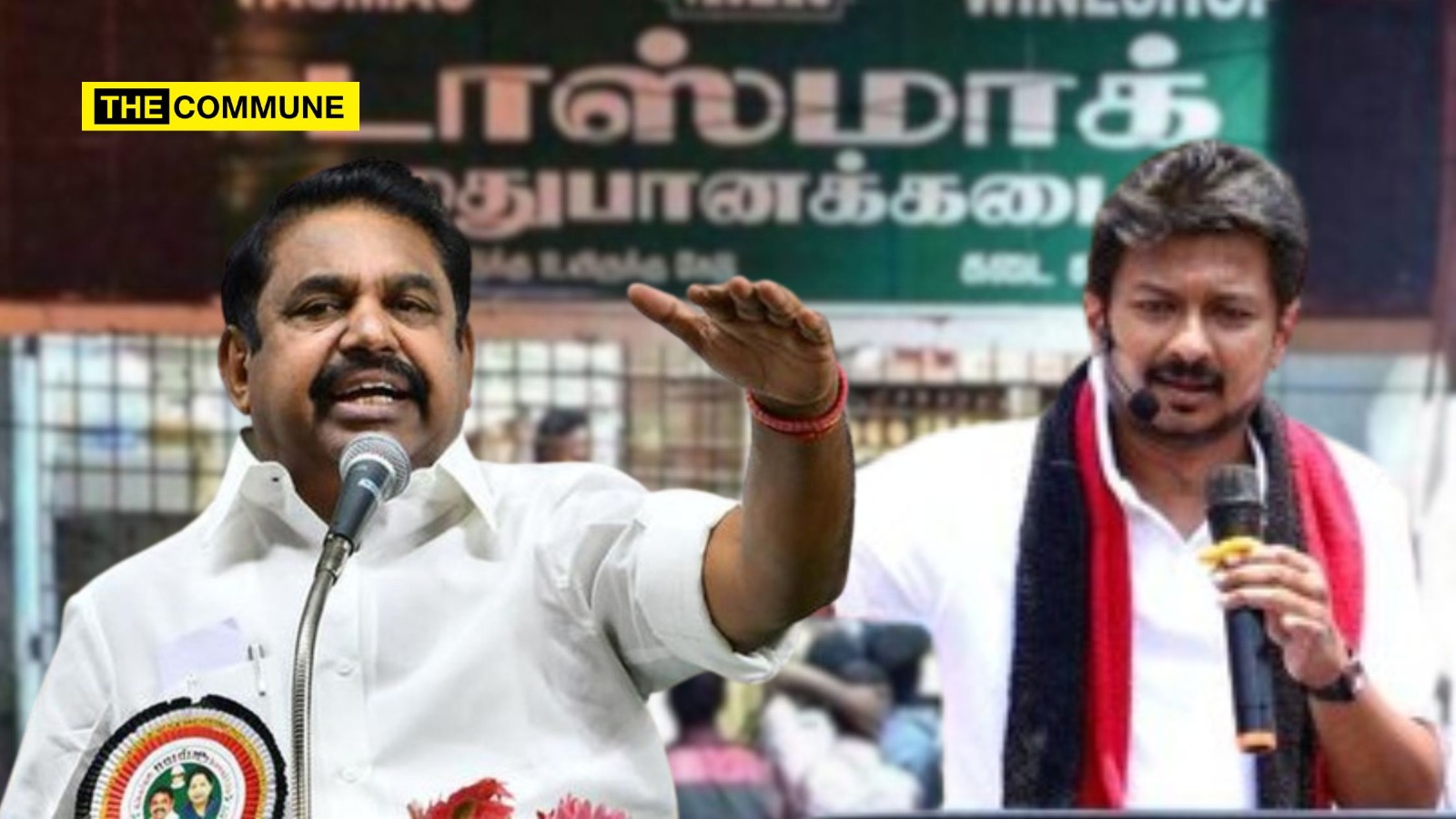
Chennai Residents Harassed By Police On Deebavali Day For Bursting Crackers Beyond Time Limit

The Greater Chennai Police reported a total of 581 cases in a press release dated 13 November 2023, with the majority (554) related to the “violation” of Supreme Court-mandated time restrictions on bursting firecrackers during Diwali. The Supreme Court had stipulated a 2-hour window for fireworks, allowing them only from 6 AM to 7 AM and 7 PM to 8 PM.

On 11 November 2023, media outlets highlighted the establishment of a “special force” within the Greater Chennai Police to enforce the timing restrictions. This force, present in 102 police stations across Chennai, comprises 2 constables led by sub-inspectors. The focus of this special force was on apprehending individuals violating both the specified time frames and those using firecrackers exceeding 125 decibels.

The police engaged in “intensive surveillance” from 11 November 2023 to 13 November 2023, resulting in 554 cases related to bursting firecrackers beyond the designated hours. Additionally, 8 cases were registered for running firecracker shops in violation of Tamil Nadu Government rules, and 19 cases were booked for bursting firecrackers with excessive noise. In total, 581 cases were documented by the Greater Chennai Police during this period.

Harassment Of People Celebrating Deebavali

On the one side, Union Home Minister Amit Shah was seen asking a crowd, “Tomorrow is Deepavali, will you burst crackers, say loudly?” and on the other, a citizen of Tamil Nadu is heckled by the police for bursting firecrackers outside the stipulated time limits.

Taking to social media platform X, a gentleman named Narayanan shared a video of the police harassing people in Chennai. Here we can see them say, “We have informed you of the rules and regulations, it is our duty,” The Hindus who were heckled by the police are seen saying, “You can do whatever you want, we will burst crackers only when we can, we cannot follow your time limits to celebrate our festival. We also have our rules and regulations with regard to the festival we follow.”

It was later made known that the police let them off with a warning and noted down their personal details such as phone numbers.

Upon coming across this video, several netizens shared their views on the behaviour of the police in harassing people.


Police in the city of Chennai were seen going on a patrolling spree on Deebavali morning and asking people to not burst crackers. 

Over the weekend, Chennai witnessed an unprecedented surge in firecracker-bursting activity, particularly on the day of Deebavali. Despite the prescribed time limits on cracker bursting, the people in the city celebrated their festival with enthusiasm, undeterred by the limitations imposed. 

Subscribe to our channels on Telegram and WhatsApp and get the best stories of the day delivered to you personally.
Deebavali Gift Dravidian Model Style: No Wishes From CM MK Stalin But TASMAC Rolls Out New Beer Varieties Ahead Of Festival

Ahead of the Deebavali festival, companies nationwide give their employees sweets and festive crackers. However, the DMK government of Tamil Nadu has unveiled an unconventional Deebavali gift for its “kudimagans” (citizens) – new types of beer.

Towards the fag end of October 2023, media reports noted that TASMAC has decided to introduce premium beer brands namely – Bira, Godfather, Geist, Thunderbolt.

A few days back, ahead of Deebavali, the brand “Thunderbolt Strong” was introduced across TASMAC outlets at a price of ₹160. More varieties of new beer bottles are slated to be introduced by December 2023.

Hitherto, TASMAC only sold beers produced from those breweries located inside Tamil Nadu. However, it will now buy beer (including beer bottles, pints and cans) from other states and sell it here.

So far, TASMAC had sold beers produced by Accord Distilleries (owned by DMK MP Jagathrakshakan), United Breweries, SNJ Distilleries (S. N. Jayamurugan, is the Chairman and Managing Director who was the producer films penned by DMK patriarch Karunanidhi) and Kals Distelleries.

Madhya Pradesh-based SOM group has established a distillery near Gummidipoondi and will be producing new beer varieties Hunter, Woodpecker and Powercool.

TASMAC is also in the process of introducing “fresh beer” with less alcoholic content.

The move to roll out new varieties of beer has invited criticism as the Tamil Nadu CM MK Stalin who did not extend Deebavali wishes owing to his “rationalism” principle, is running a government that leverages Hindu festivals to bolster the revenue of the state-run TASMAC.

Coimbatore South MLA, Vanathi Srinivasan, took to Twitter to express her disapproval of the Tamil Nadu government’s unusual Diwali gift of two new types of beer. In a series of tweets, Vanathi Srinivasan questioned the timing and intent behind this unexpected offering.

Diwali is a festival of tradition, culture, and joy. Surprising to see the government’s decision to introduce new beer varieties during this auspicious time. Is this the right way to celebrate our festivals?” she tweeted.

Vanathi Srinivasan further raised concerns about the potential implications of this move, particularly in light of rumors about additional beer varieties slated for release in December. “Are we witnessing a subtle shift towards prohibition, or is this merely a revenue-boosting tactic? The people of Tamil Nadu deserve clarity on the government’s long-term plans,” she added.

The Coimbatore South MLA also criticized the absence of Diwali wishes from the Chief of the ruling DMK party, emphasizing the need for inclusive celebrations.

Subscribe to our channels on Telegram and WhatsApp and get the best stories of the day delivered to you personally.
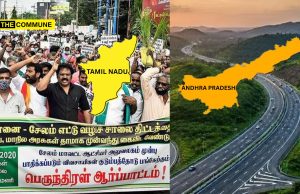
Why A BJP Government Is The Best Thing That Can Happen To Tamil Nadu?

I have insisted several times that Tamil Nadu was and still is one of the most spiritually inclined states in India. But this innate spirituality has been derailed consistently through concerted efforts right from the days of the EVR-led Dravidian movement and the subsequent DMK governments.

The Dravidian movement also created the North-South divide through the bogus Aryan-Dravidian theory what has been debunked umpteen times.

When the very base of the state has been shaken for decades, we need a permanent solution to address this issue.

Earlier, people saw ADMK as an alternative especially till Ms. Jayalalithaa was alive. That situation has changed drastically. Is this the best time for BJP to grow and rise to power in Tamil Nadu in 2026? Yes I believe so.

Why BJP And Why Not other parties?

I have always yearned for an alternate brand of politics in Tamil Nadu. Unfortunately after AIADMK was formed in 1972, power has shuffled between DMK and AIADMK all the time. The only three occasions where there was a possibility of having a non-Dravidian party capturing power was in 1989 (Congress unwilling to align with Ms. Janaki’s faction), 1996 (Mr. Rao unwilling to go alone despite support from Mr. Rajinikanth) and 2021 (Rajinikanth backing out of politics).

2026 presents a tremendous opportunity to break the jinx. I don’t see anything other party capable to providing an alternative to the Dravidian parties other than BJP, especially from a spirituality standpoint, which is very close to my heart.

Today’s BJP is not the same BJP we saw few years back. Ever since Mr. Annamalai took over as the State President, there is no doubt that the part has revigorated under his leadership. The resounding reception his yatra is receiving and the natural and organic support he has garnered on the ground are testaments to the remarkable growth of the party in Tamil Nadu.

We should not forget the contributions of Dr. Tamilisai Soundararajan who laid the foundation for this growth (Do read this on Dr. Tamilisai Soundararajan that I wrote).

Benefits Of Having a BJP Government In Tamil Nadu

PM Modi’s victory in 2024 is a foregone conclusion. With BJP continuing at the Centre, it would only be pragmatic to have a BJP government in the state as well. This will lead to more projects, more infrastructure developments, more jobs, more GDP and overall development of the state. Eventually, when BJP forms a government in Karnataka it will be very easy to have discussions and consultations on issues such as Cauvery. I strongly believe, a BJP government will provide the alternate brand of politics which I have been longing for, for an inordinate time. Corruption will also be contained significantly when a brand-new party and a brand-new leader takes over.

Who Should Be The Face Of BJP And The CM Candidate?

Natural choice is Annamalai for the following reasons. He brings in a fresh face when the electorate is fatigued with the existing options. He is very young, bold and daring, traits which I saw in JJ, a person I had immense admiration for. He can read, write and speak fluently in both Tamil and English. His articulation skills have been commendable so far even on sensitive issues.

Just like PM Modi, Annamalai is from a lesser privileged caste so you can expect him to be intolerant to caste atrocities against the downtrodden as opposed to caste-based domination by DMK leaders. This way BJP can really be a social justice party. He has unalloyed support and backing of PM Modi and hence coordination between the PM and the CM will be very smooth. He is a Tamil and you can expect genuine concern for Tamils and Tamil Nadu from him. Even though not significant as a voting bloc, Annamalai has the backing of majority of the Brahmins in Tamil Nadu.

What Should BJP Do To Come To Power?

For BJP to rise to power and Annamalai to become the CM of Tamil Nadu, supporters and cadres of BJP should understand and do the following after 2024 elections are over!

Setting Up Infrastructure

BJP must understand yatras are as good as conferences. They don’t fetch you 30% votes. You need minimum 30% votes to come to power. In a four-corner fight, BJP can capture power with 30% votes like how MGR did in 1977. Get PM Modi to travel to Tamil Nadu as frequently as possible and campaign in the run up to the 2026 elections. If you recall, Mr. Rajiv Gandhi campaigned extensively making multiple campaign visits to Tamil Nadu in 1989. Build the party infrastructure with aggression. You can learn from Mr. Rajinikanth and how he did it in 2-3 years where 80% was completed. Right now BJP doesn’t have an infrastructure in place except for certain pockets like Coimbatore and Kanya Kumari. Get the booth committees appointed and keep them engaged in some or the other activity at the local level. There are 65000+ election booths in Tamil Nadu. Take the achievements of PM Modi to every nook and corner of Tamil Nadu and what kind of alternate politics BJP will provide!

Go It Alone From Now On

Now that the AIADMK has exited from the BJP-led NDA, don’t look back. Contest alone, don’t ever compromise. If possible lead a front (without corrupt and casteist parties) as an alternative to DMK and AIADMK. Never go as a junior partner in any alliance. Have one party worker every street talking to people about day-today issues. Take up solid issues and keep raking them everywhere.

Don’t Antagonize Minorities

Even though the PM Modi-led BJP government has not spoken ill or discriminated against the minority community, an image has been formed that the BJP is a saffron party. We can defeat about the preconceived notions of people by only reaching out to them. Minorities are very vigilant and they create powerful narratives. Most importantly, they have a decentralized system and delegate powers. They are currently voting en-masse to DMK-Congress. That needs to broken.

What Will Be The Role Of NTK In The State?

While I don’t see eye to eyes with NTK and Mr. Seeman on issues the border on Tamil extremism such as his support for the notorious Veerappan, LTTE taking center stage in his campaigns, I must admit I have a soft corner for that party. I feel if Seeman can tone down his Tamil rhetoric he can position himself to challenge Annamalai. His party’s election manifestos have been one of the best that the country has ever seen. He has experimented some unique ideas like giving 50% seats to women. The truth is that BJP and NTK are the only two parties that have strong ideologies in Tamil Nadu today.

In the long run when the two Dravidian parties wither off, I would like to see a BJP Vs NTK battle in the state. Seeman can become the opposition leader with Annamalai being the CM. They both have mutual admiration for each other and we can expect decent politics.

Conclusion

2026 is definitely going to witness a watershed election and presents a great and rare opportunity for BJP to form a government in Tamil Nadu. With Annamalai’s growth through his Yatra and solid backing from PM Modi, there is hope for a change in Tamil Nadu in the coming years. Even bitter critics like ‘Savukku’ Shankar have admitted that Annamalai is a leader material and youth would like him more in comparison to someone like Udhayanidhi. Right now, the focus should be on making Tamil Nadu contribute in PM Modi’s victory.

Vaazhga Tamil Nadu! Valarga Bharatham! Jai Hind!

Dr. Praveen Kumar is a clinician-turned-scientist who is passionate about writing on current affairs.

Subscribe to our channels on Telegram and WhatsApp and get the best stories of the day delivered to you personally.
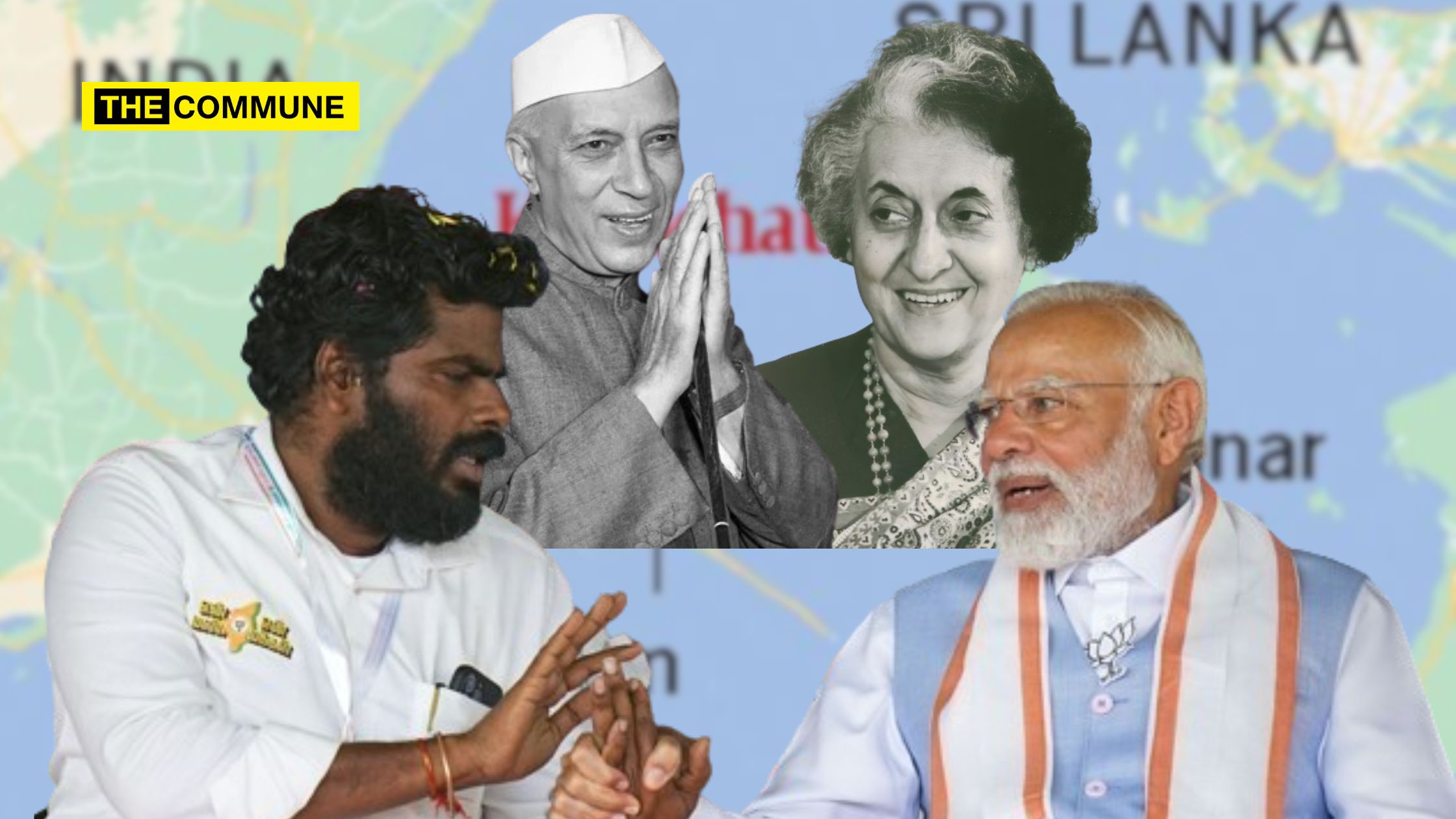
Dravidian Model: Chennai Police Registers 554 Cases For Bursting Firecrackers Beyond Time On Deebavali

The Greater Chennai Police in a press release dated 13 November 2023 stated that a total of 581 cases were registered in the city of which 554 were cases related to bursting of firecrackers beyond the stipulated time by the Supreme Court.

According to the Chennai Police, the cases were booked in accordance with the Supreme Court order that had mandated a 2 hour window for bursting firecrackers on Deebavali. Earlier, the Chennai Police had stated that crackers are allowed to be burst only from 6 AM to 7 AM and 7 PM to 8 PM.

On 11 November 2023, media reported noted the formation of a “special force” of the Greater Chennai Police to crackdown on those not adhering to the timing restrictions for bursting crackers on Deebavali.

Reports stated that the “special force” consisting of 2 constables headed by sub-inspectors were formed in 102 police stations across Chennai. According to reports, the “special force” will arrest those who burst firecrackers with a sound of more than 125 decibels and those who violate the time restrictions.

On 13 November 2023, the Greater Chennai Police stated that their teams were engaged in “intensive surveillance” from 11 November 2023 to the morning of 13 November 2023 resulting in 554 cases being booked for “bursting firecrackers beyond the stipulated time by the Supreme Court”.

8 cases were registered related to running firecracker shops in violation of Tamil Nadu Government’s rules and 19 cases were booked for “bursting firecrackers with excessive noise” taking the total number of cases to 581.

Subscribe to our channels on Telegram and WhatsApp and get the best stories of the day delivered to you personally.
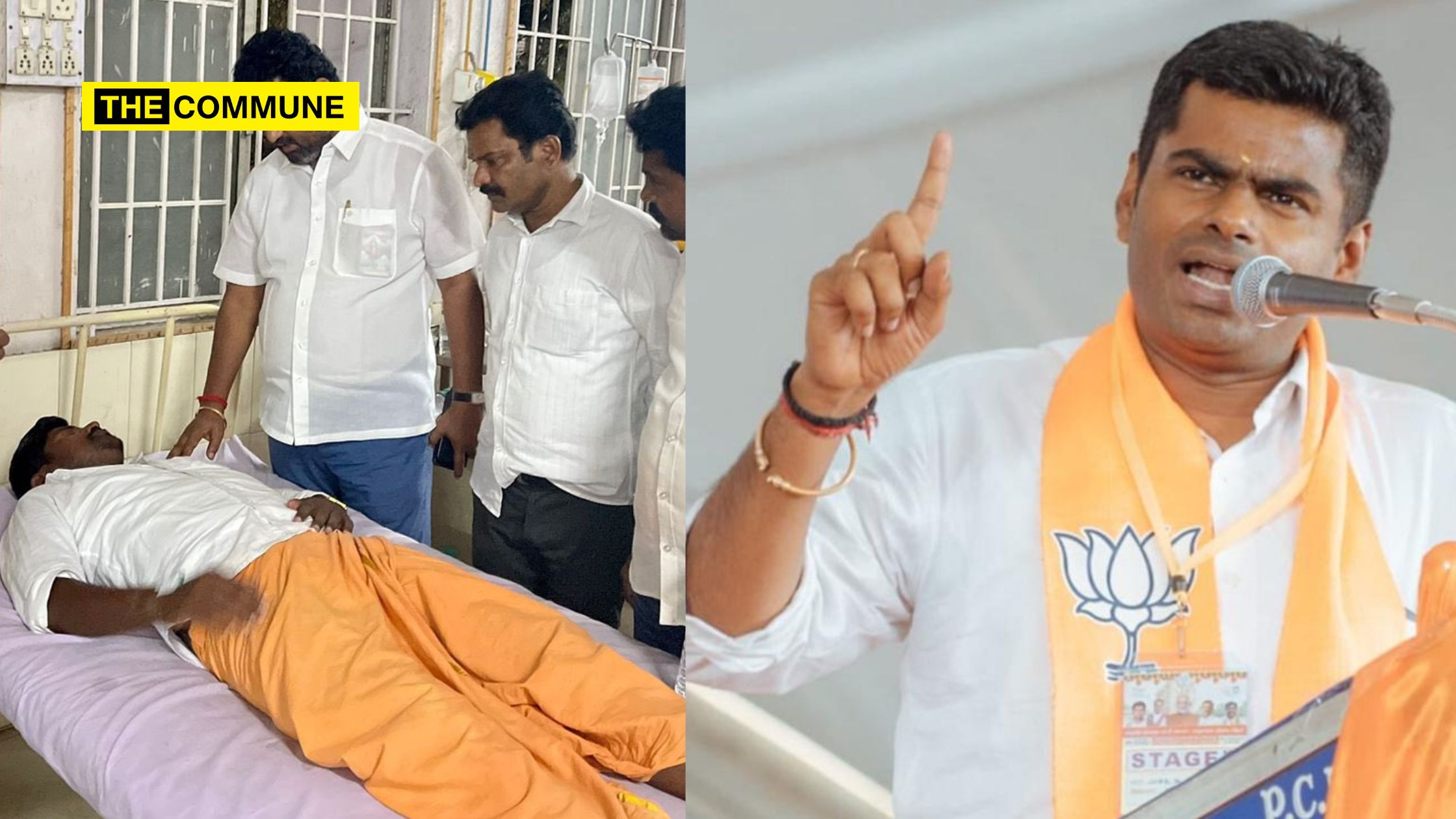
 

Netizens Troll DMK Govt For Forming “Special Force” To Crackdown On Those Bursting Crackers In Chennai Before/After Stipulated Time

The DMK government in Tamil Nadu headed by Chief Minister MK Stalin, has apparently formed a “special force” of the Greater Chennai Police to crackdown on those not adhering to the timing restrictions for bursting crackers on Deebavali.

Deebavali is synonymous with crackers. However, of late a section of people claiming themselves to be environmental activists and other NGO groups have targeted the festival calling for a blanket ban on fire crackers.

In recent years, manufacturers in Sivakasi, renowned as the fireworks hub of India, have transitioned to green crackers, following the Supreme Court-approved formula and avoiding barium chloride.

In accordance with the Supreme Court order, the Greater Chennai Police has imposed timing restrictions on bursting of crackers in the state on Deepavali. People have been allowed to burst crackers only for two hours between 6 AM and 7 AM and between 7 PM and 8 PM on 12 November 2023. The GCP has issued an advisory wherein they have noted only green crackers made of permitted chemicals that are environmentally friendly alone would be permitted to be sold and used.

In order to enforce this, a “special force” has been set up to monitor the bursting of firecrackers and arrest those who violate the rules.

The “special force” consisting of 2 constables headed by sub-inspectors has been formed in 102 police stations across Chennai. According to reports, the “special force” will arrest those who burst firecrackers with a sound of more than 125 decibels and those who violate the time restrictions.

In light of this, many on social media took to targeting the DMK government with many calling it a ludicrous move.

Sanghi Prince, a BJP Tamil Nadu social media functionary wrote “A special force have been formed to catch all ‘them’. Terrorists? Drug peddlers? Illicit liquor salesmen? No, those who burst crackers after stipulated time.

https://twitter.com/SaffronSurge3/status/1723279730227724617

Another netizen wrote “Petrol bombings, car bomb blast (referring to Coimbatore Jamesa Mubin terror attack), murders, crime, casteist atrocities. Instead of forming a special force to crackdown on the above, the DMK government is forming a special force to arrest those who burst crackers. Shameful

Many others too lambasted the DMK government for the move.

Subscribe to our channels on Telegram and WhatsApp and get the best stories of the day delivered to you personally.
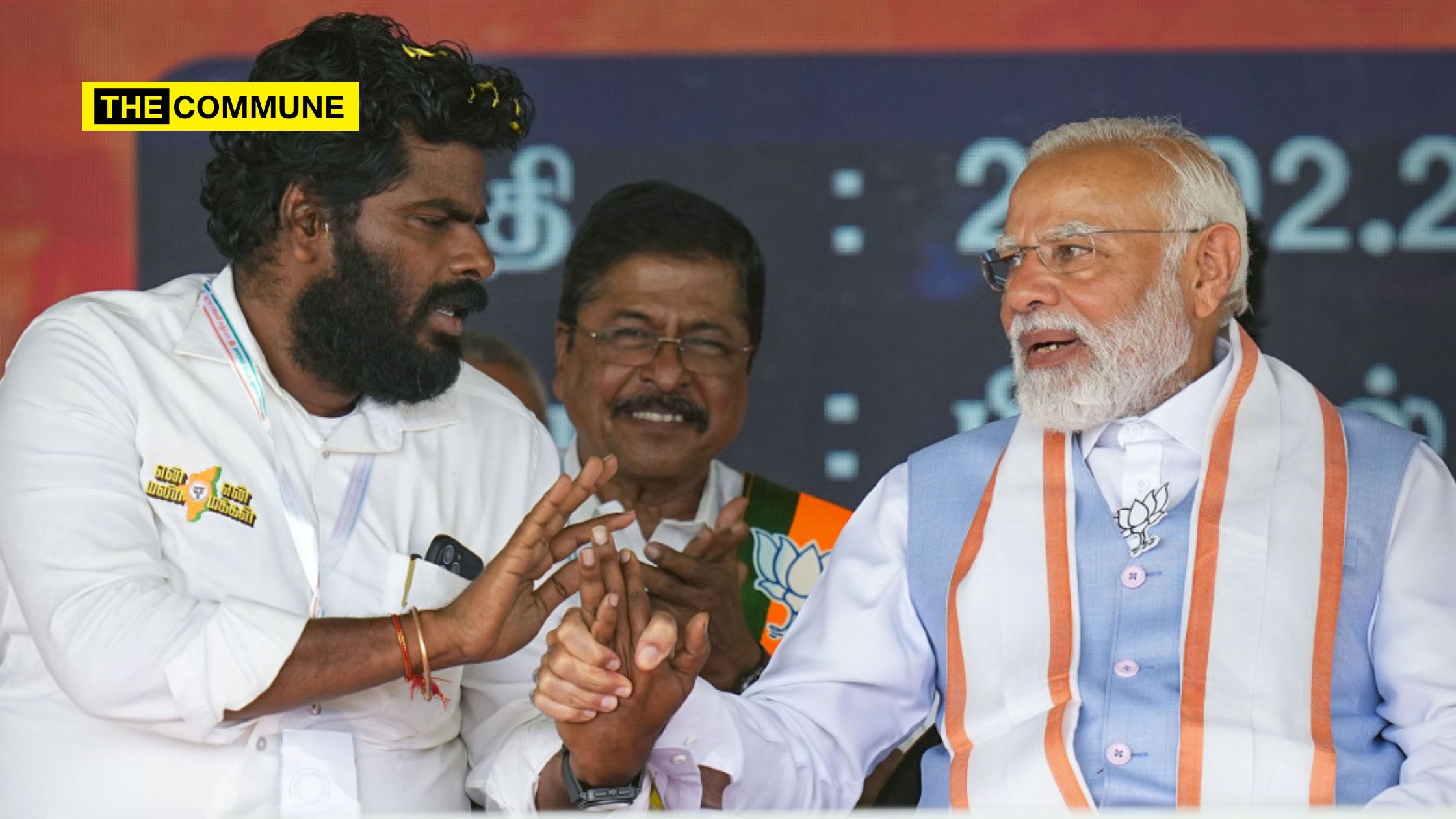
“Duty Of CM To Treat All Citizens Equally”: BJP MLA Vanathi Srinivasan Calls Out CM Stalin For Not Extending Deebavali Wishes To Hindus

The BJP MLA of Coimbatore South, Vanathi Srinivasan, lambasted Tamil Nadu Chief Minister M.K. Stalin in a letter for not wishing for Deebavali which she alleges as a deliberate snub to the Hindu community during the festive season.

In a strongly-worded statement released today, Vanathi questioned the Chief Minister’s conspicuous silence on extending Diwali greetings to Hindus when leaders of different parties like AIADMK, AMMK, etc have extended their wishes.

Tomorrow , 12 November 2023, not only in India but all over the world, Hindus are getting ready to celebrate Deebavali. The festival is celebrated with new clothes, sweets, a variety of dishes, and crackers. Children get excited a week before Diwali,” she stated in her statement.

Vanathi emphasized the significance of Deebavali in the cultural fabric of the nation, stating, “In Bharat, Deebvali has its own place in the most exciting celebrations. Lakhs of crores of rupees in the economy get generated due to Deebavali. The basic philosophy of Deepavali is that no matter how much adharma and injustices arise, in the end dharma will prevail.

Expressing disappointment at the Chief Minister’s apparent oversight, she continued, “Deebavali is celebrated with much fervor in Tamil Nadu than in other states of India. Fireworks, textiles, and other trades centered around Deebavali have made Tamil Nadu a developed state. But the Chief Minister of Tamil Nadu, Shri. M.K. Stalin does not say a word of greetings on Deepavali.

Vanathi didn’t shy away from pointing fingers, alleging bias against the Hindu community from the Chief Minister and the DMK party. “Everyone knows that  CM MK Stalin and the DMK, which he is the leader of, are only opposed to Hinduism. The Chief Minister’s son, Udhayaindhi Stalin proudly says that my wife is a Christian, and speaks of eradicating Sanatana Dharma i.e. Hinduism like dengue, malaria, and mosquitoes.

While not expecting Deebavali greetings from Stalin as the DMK president, Vanathi Srinivasan underscored the duty of the Chief Minister to treat all citizens equally. “It is the duty of the Chief Minister to treat all citizens equally. But whenever the DMK comes to power, their chief ministers don’t just greet on Hindu festivals. I don’t know what hatred they have for Hindus.

Challenging the Chief Minister directly, Vanathi Srinivasan concluded her statement with a pointed question, “What sin did the Hindus commit? Therefore, the Hon’ble Chief Minister MK Stalin, will you extend wishes this Deepavali? Or are you going to continue, as usual, with your selective secularism, i.e., anti-Hinduism?

Subscribe to our channels on Telegram and WhatsApp and get the best stories of the day delivered to you personally.
 

Why The BJP’s Growth Down South Is An Uphill Task: A Deep Dive Into Challenges And Solutions

With Telangana’s Assembly Election date nearing, a national party like the BJP, hoping to make inroads into the Southern states, has much to think about. A stark fact that the BJP must ponder over, is its predicament of not being in power, in a single South Indian state, at this moment in time.

Earlier this year in May, it lost the one southern state it had once managed to hold sway over – Karnataka. Many analysts have opined that the glaring reason for the BJP’s loss in Karnataka’s most recent election, was a weak state leadership coupled with warring factions within the party.

It had made a notable entry into Andhra and Telangana state politics back in 2014, after the division of the larger Andhra Pradesh into two smaller Telugu states. It presented itself on its own merit to the people of both states, quickly gained a small fan base and picked up pace for steady growth in both states, resulting in an increased vote share in the post 2014 bifurcation period.

However, it lost most of its gains in Andhra after its previous ally, the TDP lost the 2019 elections, partly blaming its electoral loss on the BJP’s alleged non-cooperation on important state-specific issues, such as the denial of additional central funds for developing a new state capital. That aside, many of the seasoned politicians in the state agreed that a negative, contributing factor to the party’s decline in Andhra, was the lack of strong state-level leadership, leading to miscommunication and misunderstanding between the BJP and the state’s senior politicians from regional parties. Although the central BJP receives external support from the current YSRCP government in Andhra Pradesh, its state leadership and structure, continues to be a weak one, unable to hold its own weight with any party in the state and grow its base.

The BJP’s momentum has lasted somewhat longer in neighboring Telangana. The party continued to gain in both vote share and positive publicity, all the way up to early 2023. However, it began to experience a rather rapid loss of energy and motivation, soon after its popular state-leader, Mr Bandi Sanjay Kumar was transferred from his state-leadership post to a national one. Reasons for the transfer of the popular state leader and the BJP’s rationale in moving Bandi Sanjay out of his critical role, just before Telangana state elections, are still unclear. Many suspect, reasons such as his leadership style or the current caste equations in the state’s unit along with in-fighting.

In Kerala, the BJP continues its existential struggle in a state obsessed with its own version of communism and marxism. In Tamil Nadu, it has finally managed to strike gold with its state leader, the talented ex IPS Officer, Mr K Annamalai, who has almost single handedly managed to generate sufficient interest and curiosity among the people of the linguistically and culturally proud state of Tamil Nadu, which fiercely guards its ancient and unique social systems within the larger national context.

However, the next Tamil Nadu state election is more than two years away, before the BJP and Annamalai are able to prove their mettle in a state, dominated by the distinctly Dravidian-ideology driven parties of DMK and AIADMK.

The BJP’s supporters in the southern states wish it success in the South. Perhaps this is a good time for the BJP to do some serious soul-searching? The party has lost Karnataka. Its chances are slim in the upcoming Telangana and Andhra elections. It has a long way to go, in a complex state like Kerala, in spite of the encouraging progress made over the last five years. It’s best bet for the near future, appears to be Tamil Nadu, with a cautiously optimistic chance of appealing to the Tamil people, on the planks of both national and state pride as well as showcasing its ability to synchronize its ambitious national goals with relatable, relevant regional goals.

Overall, the South presents a bleak picture right now for the BJP. A strong theory for its below-par performance in the Southern states is, arguably a combination of three factors:

– Clarity about its ambitions in the south
– Judgment with the selection of ideologically strong, local leaders
– Centralized decision-making

A national party that hopes to win in the South, must get the above factors right, in order to gain a foot hold in any of the southern states and expand its base in a steady, consistent manner with reduced instances of major upheavals or disruptions. A deeper look at the above mentioned factors:

1) The party must be highly sensitive to the linguistic and cultural regional differences between the North, West, South, East of the country and the differences in caste equations within each state, coupled with factors of religion and economics, that differ from state to state and often times, even within the districts of the same state.

Political parties and leaders that aim at long-term survival, relevance and consistent success must understand this reality. It is important, even critical, to pay attention to local factors. Go hyper local! What works in Delhi will not work in Kolkata, what works in Mumbai will not work in Chennai and what works in UP will not work in Andhra or Telangana. Specifically in Andhra and Telangana, the financially savvy, politically dominant, upper caste factor versus numerically larger backward caste equations are vastly different than that of the other states that the BJP’s central leadership is used to dealing with.

2) Pick strong local leaders, train them, place your trust in them and give them time-bound goals that are measurable. Give them a reasonable period of time to prove themselves before caving in to opposing voices and interfering in an already invested process that requires ample time to be given to the selected candidate.

The BJP should caution itself against repeating the mistakes of the Congress which didn’t sufficiently appreciate true-blue local talent, instead, choosing to take the easier but riskier path of listening to hotshot “central” leaders who were not always in touch with the ground realities in certain states and districts.

Allowing and even encouraging strong, confident local leaders to grow and prove themselves in their own right, combined with a policy for central-leadership to interfere ONLY when absolutely necessary will keep a healthy “federal” structure of the party intact, ensuring a steady stream of presently impactful local leaders as well as a steady, seamless development of the next-in-line future leaders for the party.

Strong, regional leaders are not to be wary of or suspicious of! They are the back bone of a confident, successful party. They are a huge asset to the party that can be called upon and utilized in times of uncertainty and trouble-shooting. Strong leaders are by nature, confident in their abilities and prove themselves with very little guidance or training. In return, strong leaders expect to be heard and respected.

They are an undeniable, reliable, all-weather asset to any party with one important caveat – they must thoroughly believe in the party’s core ideology and its principles and pledge an allegiance to it. If the BJP’s central leadership is assured of a regional, up-and-coming leader’s belief in and allegiance to the BJP’s ideology, core values, national and regional goals… the party should not shy away from offering its support to the leader’s natural talent. Being suspicious of strong individuals or not throwing its weight behind popular local leaders, will quickly result in the party drastically losing its winnability in a state. If the party chooses to stifle the voice and political abilities of talented, regional leaders, it risks losing the support of the local “masses” who are likely to be more influenced by their local leaders rather than central leaders.

Let’s pause and think for a moment – where would the party be today, if the BJP’s central leadership in the 90s had successfully managed to obliterate strong, state-level leaders like Gujarat’s Narendra Modi and Amit Shah, UP’s Yogi Adityanath, Goa’s Manohar Parrikar and MP’s Shivraj Singh Chauhan?

3) Too much centralized decision-making can lead a party to over-dependence on a handful of powerful, who may not be around forever in the ever-changing, highly volatile world of politics where “change is the only constant”.

The policy-making, by its very nature, may lend itself to a centralized process, but the decision-making at the state level for the implementation of the party’s policies, should be de-centralized and handed over to regional leaders who understand the local circumstances better.

Too much centralization & dependence on just a handful of current heroes or trouble-shooters, also leads to choking and disabling a healthy federalist structure, where the powers for decision-making and policy implementation are ideally meant to be a shared responsibility and task in varying degrees, between the head quarters and its nodal centres.

A lack of adequate and appropriate de-centralization in areas of 1) Generating new ideas 2) Input into policy-making 3) Suggestions for policy-implementation, is likely to result in a denial of equal opportunities to all other, second-tier, highly capable regional leaders and potential future talent, eventually leading to a trust and opportunity deficit within the party, an unfavourable reputation outside the party and an erosion of the common values and principles of the party that attracted new members to it, in the first place.

There is hope yet. Eager supporters of the BJP are relieved to note that the party appears to have got all of the above-stated factors right, in Tamil Nadu, under the leadership of a young, fearless, K Annamalai, who takes his inspiration from senior, central leaders like Mr. Modi and Amit Shah:

– The party studied, understood and acknowledged regional differences and cultural sensitivities. It has made an effort to understand matters of local significance (what matters for the Tamil people vs. people of another state).

– The party is resisting the urge to undertake centralized decision-making in matters of local importance and pride. It is leaving state-matters to its trusted regional lieutenant and his team, allowing the party’s state leaders and cadre to grow from experience and identify the next level of players / future leaders.

– It picked the right kind of leader for this state. It is also giving him ample time and necessary support to prove himself rather than allowing itself the temptation to intervene too quickly which would otherwise lead to an erosion of confidence, trust and credibility for Annamalai.

The key being let the selected candidate prove his/her unwavering allegiance to the party’s ideology, allow them to grow, win and contribute to the party, with the assumption that all other “matters” can be settled through dialogue and debate eventually.

If strong, vocal, oratorically gifted, politically savvy leaders are not allowed to express themselves and grow based on preemptive assumptions or suspicions of arrogance, rebelliousness, perception of disrespect to authority etc, a political party loses its most precious requirement and asset – talented future leaders.

This seems to be the very thing that happened in the Telugu states – regional caste equations, playing it safe in the selection of financially strong but politically ineffective “mass” leaders as well as excessive centralized decision making, in circumstances where local leaders should have been put in charge of making important, local decisions.

The key to cracking south is a strong local face. BJP can learn from itself by understanding what it got right in Karnataka with Yediyurappa and what it is doing right in Tamil Nadu with a young blood like Annamalai – invest in a strong local leader and groom him/her to become big. Tamil Nadu can emerge as BJP’s growth model for the entire south.

Shivani is a freelance writer based out of Vijayawada. 

“BJP Will Form Govt In 2026 For Sure”: Amar Prasad Reddy After Release From Jail

The Madras High Court on 10 November 2023 granted bail to BJP functionary Amar Prasad Reddy, and five other party members.

They were accused of damaging a JCB machine, which was brought to remove a flag pole outside the residence of state president K Annamalai in Panaiyur, Chennai.

Amar’s earlier bail plea in this case had been rejected by a Chengalpattu court. As part of the bail conditions, the judge ordered a compensation of ₹12,000 to be paid to the JCB owner and mandated an undertaking from the accused not to erect the flag pole on municipal land in the future.

Prior to this, Amar had obtained bail in cases related to altercations with the police during the padayatra and affixing a picture of Prime Minister Narendra Modi over a photo of Chief Minister MK Stalin, displayed for the Chess Olympiad in Chennai, from courts in Ambasamudram and Egmore.

Addressing the press at Kamalalayam, Amar Prasad Reddy stated that he has learnt more about politics in the 22 days he spent in prison than what he learnt in the past 22 years.

“I am telling you today. The BJP will form the government in 2026 for sure.”, Amar Prasad Reddy said.

Subscribe to our channels on Telegram and WhatsApp and get the best stories of the day delivered to you personally.
Madras High Court Slaps ₹1 Crore Fine On Kerala Woman For Defaming Former Health Minister Vijayabaskar

The Madras High Court imposed a substantial fine of ₹1 crore 13 lakh on a woman named Sharmila from Kerala, holding her accountable for defaming AIADMK leader and former Health Minister Vijayabaskar who currently serves as MLA of the Viralimalai Assembly Constituency.

Sharmila has been accused of maliciously spreading false accusations against the former minister prompting him to pursue legal action for damages. The recent court proceedings witnessed Vijayabaskar personally appearing before the judiciary the day before yesterday with his lawyers Nithayesh, Vaibhav and Anirudh appearing for him.

Following today’s hearing, Justice Sathish Kumar delivered the verdict. The judgment, says that Vijayabaskar, being a former Health Minister, commanding widespread respect in society for his commendable efforts during the COVID-19 period, earning him various accolades should not be subjected to defamation.

Sharmila was directed to pay the cost towards the legal expenses incurred by ex minister during the course of legal battle.

Furthermore, the court issued a directive prohibiting the publication of news related to this case in newspapers and other media outlets. It explicitly mandated the immediate deletion of all messages and posts pertaining to the matter on social media platforms such as YouTube and Facebook.

In a final ruling, Justice Satish Kumar ordered a fine of ₹1 crore 13 lakh on Sharmila for disseminating defamatory news. Additionally, Sharmila was instructed to reimburse the legal expenses incurred by ex-minister Vijayabaskar during the course of this legal battle.

Subscribe to our channels on Telegram and WhatsApp and get the best stories of the day delivered to you personally.