Home Blog Page 1023

VinFast’s Troubles: Broken Promises And Economic Struggles; Did The DMK Govt Hoodwink The Public?
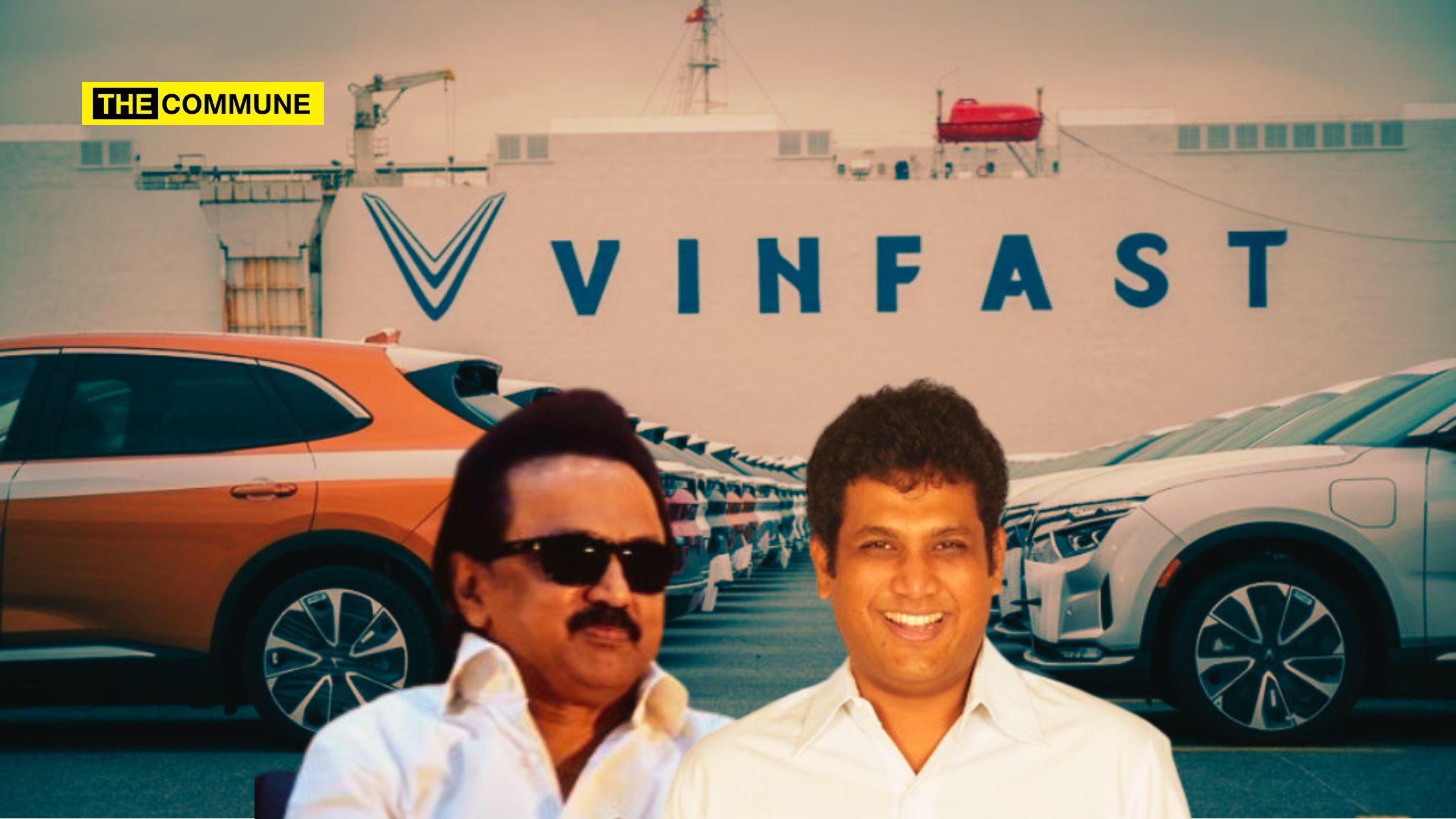
VinFast, Vietnam’s leading electric vehicle (EV) manufacturer, signed a deal during the Tamil Nadu Global Investors Meet 2024 with TN Chief Minister MK Stalin. Just 50 days after the MoU signing, Stalin laid the foundation stone for VinFast Auto Ltd’s EV manufacturing facility at Thoothukudi with an investment of ₹16,000 crore. This deal, along with otherscontributed to the record investments of ₹6.64 lakh crore attracted during the Global Investors Meet.

The hopes were high for VinFast as it celebrated the groundbreaking of a new factory in North Carolina, USA coupled with the plans for a massive investment in Tamil Nadu. However, recent developments have cast doubts on the company’s ability to deliver on its promises and overcome the myriad challenges it faces in its quest for global dominance in the EV market.

North Carolina Factory: Delays And Minimal Progress

VinFast’s much-publicized groundbreaking ceremony in North Carolina promised a $4 billion investment and 7,500 jobs, supported by $1.2 billion in government incentives. Yet, progress at the site has been sluggish, with only partial foundation work completed and no workers on-site during recent visits. The company now aims to complete the factory by the end of 2025, a significant delay from the original timeline. In contrast, Hyundai’s nearby EV plant in Georgia is progressing rapidly, highlighting VinFast’s struggles in execution.

Sales And Production Woes

VinFast’s electric vehicles are grappling with low demand both domestically and internationally. Despite boasting an annual capacity of 300,000 cars at its main factory in Hai Phong, Vietnam, the company delivered less than 35,000 vehicles last year, falling short of targets. Moreover, the North Carolina plant’s delayed construction adds to VinFast’s production challenges, with Hyundai’s EV plant showcasing a more efficient pace.

Overambitious Expansions And Financial Setbacks

VinFast’s ambitious plans for overseas investments, including a $2 billion plant in India and a $2.1 billion expansion in Indonesia, raise concerns amid its struggles to meet targets and generate sales. Financially, the company faces setbacks, with its stock price plummeting after an initial high-profile NASDAQ listing via SPAC. VinFast’s overreliance on sales to companies owned by its CEO or parent company further underscores its financial fragility.

Regulatory And Market Challenges

VinFast’s reported sales are heavily dependent on transactions with companies owned by its CEO or parent company, raising questions about the sustainability of its business model. In addition to internal woes, VinFast contends with regulatory hurdles and fierce competition in the global EV market. Sluggish demand in the US and aggressive exports from China pose significant obstacles, while established brands like Tesla dominate mindshare. VinFast’s lack of brand recognition outside Vietnam exacerbates these challenges, making it difficult to attract customers internationally.

Public Relations Issues And Trust Deficit

VinFast’s reputation takes a hit from critical reviews of its vehicles and allegations of suppressing negative media coverage. Disastrous reviews from the international automotive press and allegations of offering incentives to journalists tarnish the company’s image. Moreover, concerns about transparency arise amid reports of negative posts disappearing from Vietnamese media platforms and arrests of critics.

Capital And Government Challenges

While VinFast’s parent company, Vingroup, boasts significant financial resources, its ability to raise capital faces scrutiny amid tightening government regulations and a broader crackdown on corporate financial activities in Vietnam. The government’s reluctance to bail out private companies adds to VinFast’s financial uncertainties, potentially hindering its expansion plans.

Despite grandiose announcements and ambitious plans, VinFast finds itself at a crossroads, grappling with myriad challenges ranging from production woes and financial setbacks to regulatory hurdles and public relations issues. As it navigates these obstacles, the company’s ability to pivot and adapt will determine its fate in the fiercely competitive global EV market.

Did The DMK Hoodwink The Public?

Vinfast was poised to start its operations in Thoothukudi, where in 2018 a major copper manufacturer – Sterlite Industries, was closed after a troubled history. The DMK, Dravidianists, and NGOs with ties to the Church were elemental in instigating and sustaining the protests which resulted in violence. Since Sterlite’s closure, the people and small industries of the region that were dependent on Sterlite have been experiencing economic strain. To compensate for the economic downfall of the region, the DMK government seems to be bringing in some random company to revive the economic fortunes of the region. The DMK government claimed that Vinfast has invested ₹16,000 crore, but in reality, the company has earmarked only ₹4,000 crore for the initial five years of investment.

(with inputs from HunterBrook)

Subscribe to our channels on TelegramWhatsApp, and Instagram and get the best stories of the day delivered to you personally.
Intel Suggests BJP’s Promising Prospects In Eight Crucial Constituencies In TN – Test Your Predictions!

tamil nadu assembly elections dmk aiadmk bjp

According to senior officials within the BJP, it has been conveyed that the party along with its allies, stands a favorable chance of securing victory in eight constituencies across Tamil Nadu. This information was shared during discussions with Dinamalar.

During the recent Lok Sabha elections in Tamil Nadu, the BJP forged a distinct presence alongside the DMK and ADMK, forming a significant third front. The coalition comprised various parties, including the PMK, AMMK, ADMK Volunteer Rights Rescue Movement, New Justice Party (IJK), and IMKMK, among others. Additionally, support was garnered from around 125 smaller parties and social organizations.

In the electoral fray, the BJP and its allies contested in 19 constituencies, with four candidates representing alliance parties under the lotus symbol, while others chose to contest under their respective party symbols or independently.

Post-election, as the voting concluded, the intelligence department gathered data on voting percentages and the prospects of victory for the BJP in each constituency. This information was then presented to the party leadership, revealing that the BJP and its allies have promising chances of winning in eight specific constituencies such as Kanyakumari, Tirunelveli, Coimbatore, Theni, Dharmapuri, Ramanathapuram, Vellore, and Pollachi, aligning closely with Dinamalar’s Prepoll surveys.

  • In Theni, the pre-poll survey pointed to TTV Dhinakaran of AMMK, a BJP ally, leading significantly with 54.50%, leveraging support from Prime Minister Modi’s initiatives and local campaigns. Despite DMK’s presence, its candidate faced challenges maintaining previous support levels, indicating diminished AIADMK competitiveness.
  • Ramanathapuram witnessed a close contest, with IUML’s K Navaskani defending his seat against challengers like P Jayaperumal and independent candidate O Panneerselvam, allied with BJP. BJP’s projected lead of 32.60% showcased Modi’s influence, particularly in areas like Paramakudi and Muthukulathur, where infrastructure initiatives garnered support, while undecided votes held significance.
  • Coimbatore emerged as a fiercely contested battleground, with DMK’s Ganapathi P Rajkumar replacing CPI-M’s PR Natarajan. BJP’s significant lead of 39.70% indicated shifting perceptions favoring candidate K Annamalai, despite initial doubts. Local dynamics, including ADMK’s previous stronghold and DMK’s efforts, contributed to the intense competition.
  • Vellore showcased a neck-and-neck race between DMK’s D M Kathir Anand and BJP ally NJK’s A C Shanmugam. Though DMK held a slight advantage, internal discord and religious divisions posed challenges, with BJP capitalizing on Modi’s appeal and local industry support.
  • In Tirunelveli, BJP candidate Nainar Nagendran led with 43.90%, leveraging Modi’s influence and discontent towards DMK. Despite DMK’s efforts to retain support, BJP’s growing influence, especially among certain demographics, posed a challenge.
  • Dharmapuri’s three-way battle saw DMK’s A Mani against AIADMK’s Asokan and PMK’s Sowmiya Anbumani. Despite DMK’s projected lead, the Vanniyar caste’s traditional support for PMK and AIADMK’s previous alliance presented uncertainties.
  • Kanyakumari, volatile due to religious affiliations, showed DMK’s lead, but shifting alliances and religious sentiments among voters posed challenges for candidates Vijay Vasanth, Pasliyan Nazareth, and Pon Radhakrishnan.
  • Pollachi exhibited a close race, with DMK’s K Eswarasamy leading, despite AIADMK’s efforts. BJP’s Vasantha Rajan’s growing traction indicated a potential shift in dynamics, challenging AIADMK’s stronghold and Velumani’s strategies.

(with inputs from Dinamalar)

Subscribe to our channels on TelegramWhatsApp, and Instagram and get the best stories of the day delivered to you personally.
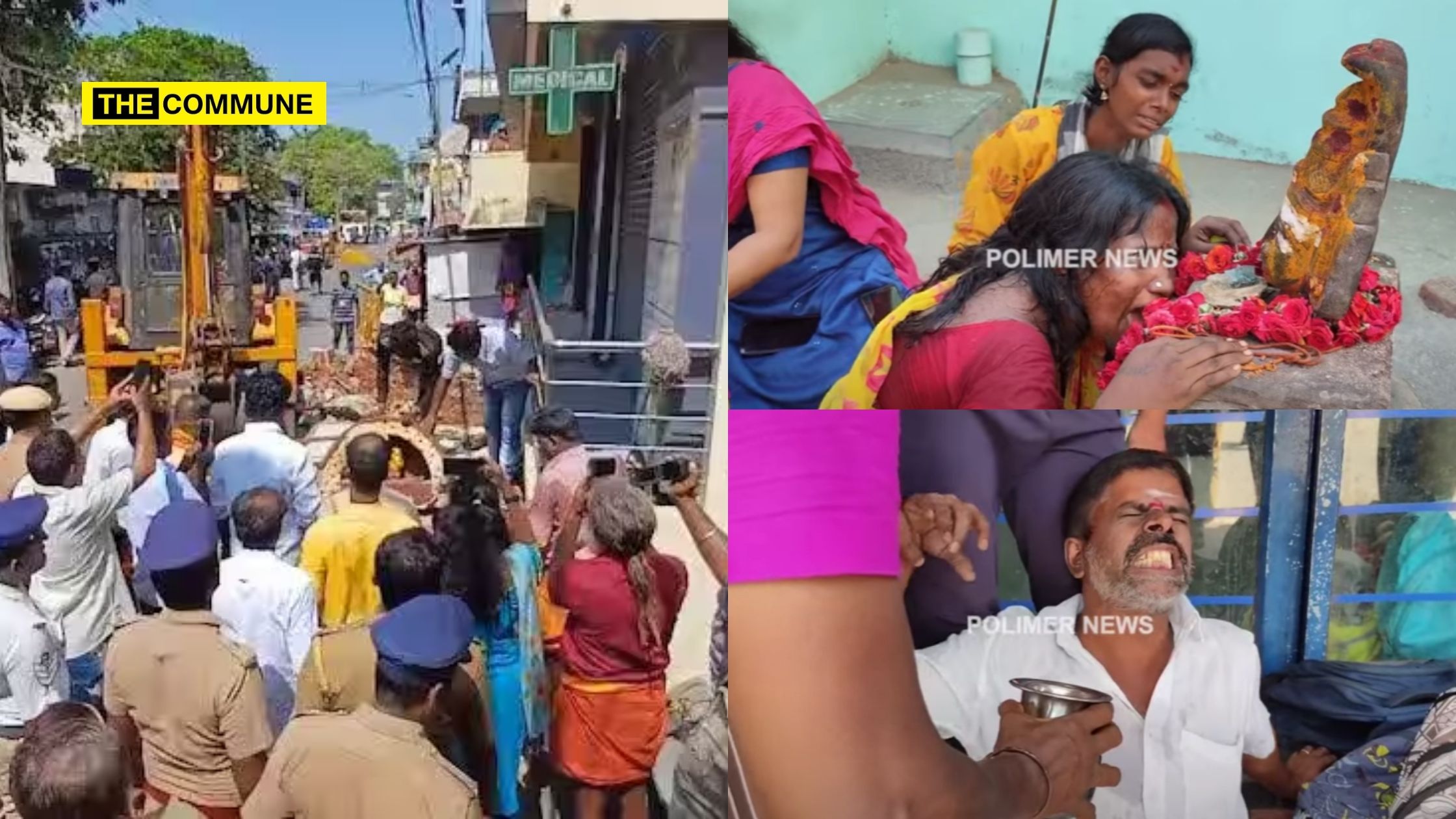
Half Century Old Nagathamman Temple In Maduravoyal Demolished Citing Encroachment Of Private Property, Devotees In Tears

Distressing scenes emerged in the Maduravoyal locality of Chennai when the authorities carried out the demolition of the Nagathamman temple following a directive from the High Court. This sparked a disturbance as several female devotees clung to the deity shedding tears.

In Maduravoyal, the temple, which was said to be encroaching upon the roadside, was dismantled and cleared with the assistance of a ‘Poclain’ machine, under the safeguard of law enforcement.

Located on Market Sannathi Street in Maduravoyal, the small Nagathamman temple, standing for half a century, faced legal scrutiny when Santhi Munirathnam filed a petition in the Madras High Court in 2019, citing disturbance caused by worshipers to her household’s vicinity. Consequently, the High Court mandated the temple’s removal. On 26 March 2024, officials from the revenue department and Chennai Corporation arrived at the site to execute the directive. However, encountering opposition from locals, they abandoned their efforts, given the ongoing election period. Later, a thorough survey, escorted by police, revealed that a portion of Santhi Munirathnam’s property had also been encroached upon by four feet.

In response to the resistance of the public and Hindu organisations during the initial survey, officials retreated. Subsequently, a formal notice was issued. Then, on 22 April 2024, with the protection of over 100 police officers, the encroached temple and the portion encroaching upon the plaintiff’s property were demolished using a ‘Bogline’ machine.

(with inputs from Dinamalar)

Subscribe to our channels on TelegramWhatsApp, and Instagram and get the best stories of the day delivered to you personally.
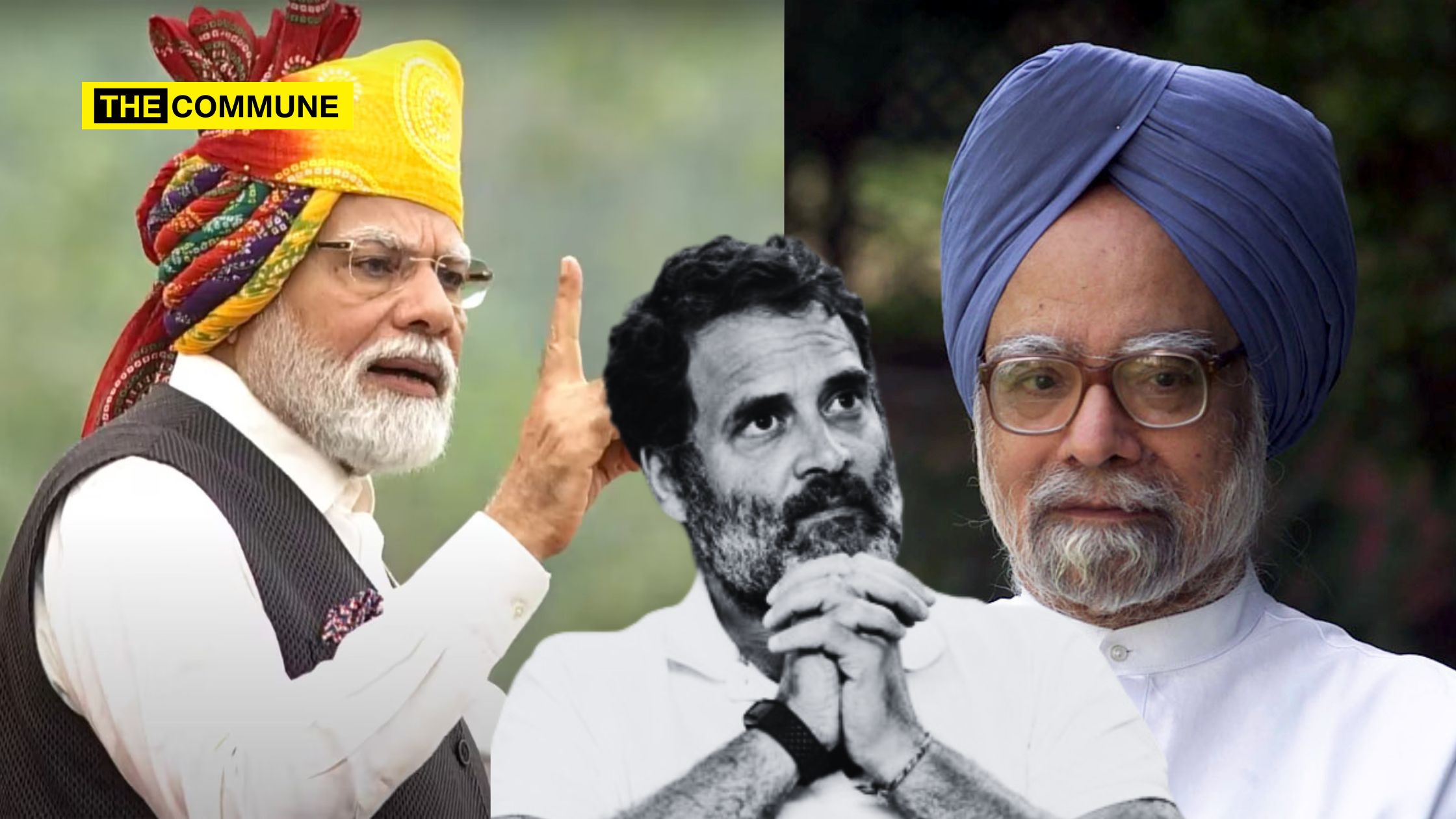
Congress’s Endeavor To Reshape The Narrative Of Narendra Modi’s Critique On Manmohan Singh Statement Ends In Failure, Here’s Why

The Congress and its allies made another failed attempt to reframe the narrative around Narendra Modi’s recent criticism of minority appeasement. As the campaign fervor for the subsequent phases of Lok Sabha 2024 polling is intensifying. During an election rally in Banswara, Rajasthan on 21 April 2024, Prime Minister Narendra Modi launched a scathing attack on the Congress party. He specifically criticized the inclusion of Rahul Gandhi’s leftist agenda of ‘wealth redistribution’ as outlined in the Congress’s Nyay Patra (election manifesto).

PM Modi equated this promise to the ideology of Maoists, underscoring Rahul Gandhi’s commitment to survey and redistribute the nation’s wealth in his speech. He referenced a previous statement by former Prime Minister Manmohan Singh advocating priority access to the nation’s resources for Muslims. PM Modi cautioned that if the Congress were to regain power, they would redistribute the country’s wealth among Muslims, infiltrators, and families with multiple children.

Modi also said,  “Congress is trapped in the clutches of the Leftists and urban naxals. What Congress has said in its manifesto is serious and worrying. They have said that if they form a government then a survey of property belonging to every person will be done. It will be checked how much gold our sisters own, how much money government employees have…They also said that gold owned by our sisters would be equally distributed. Does govt have the right to take your property? For my mothers and sisters, their gold is not just for ornamentation. It is attached to their honour… And when they were in the government earlier they had said that Muslims have the first right over country’s resources. This means they will seize your property and distribute to those who have more kids, to infiltrators. Your hard earned money will be given to infiltrators. Do you accept this? This is what Congress Manifesto is saying. That they will account the gold of our mothers and sisters and distribute it to the ones whom Manmohan Singh’s government had said had first right over country’s resources.”

The BJP supporters hailed this speech as the return of the “classic Modi,” while it sparked reactions of frustration among Congress, leftist supporters, and other critics. However, these frantic efforts to salvage the party’s reputation are not a recent development; they were prevalent even 18 years ago.

On 9 December 2006, former Prime Minister Manmohan Singh explicitly asserted that Muslims should be given priority access to India’s resources. This statement was made during a session of the National Development Council (NDC), despite the fact that the Minority Act of 1992 recognizes five religious minorities, namely Muslims, Christians, Sikhs, Buddhists, and Zoroastrians (Parsis). However, the Congress and Prime Minister Manmohan Singh opted to support and specifically highlight Muslims for political appeasement and vote backing as they are a sizable population than others.

Manmohan Singh explicitly mentioned that “We will have to devise innovative plans to ensure that minorities, particularly the Muslim minority, are empowered to share equitably in the fruits of development. They must have the first claim on resources,” and this raised controversy even at that time.

https://twitter.com/SaffronSurge3/status/1782287209372303805

A subsequent statement issued by the Prime Minister’s Office (PMO) on December 10, 2006, addressed the misinterpretation of the Prime Minister’s remarks in certain sections of the electronic media. The PMO clarified that the Prime Minister’s comments had been taken out of context, leading to an unfounded controversy. The statement emphasized that the Prime Minister’s remarks were intended for all marginalized sections of society, rather than exclusively targeting the Muslim community. The PMO pointed out specific parts of the speech where the Prime Minister had referenced Scheduled Castes (SC), Scheduled Tribes (ST), other backward classes, minorities, women, and children. Despite the PMO’s clarification, critics interpret the speech as attempting to appeal specifically to minorities, notably Muslims, given their population representation according to the 2001 census, which stood at 13.4%, as the other minority groups were not mentioned.

Other Instances Of Manmohan Singh Appeasing Minorities

Throughout his decade-long tenure as Prime Minister, Manmohan Singh has openly advocated for advancing his party’s goal of strengthening support from the Muslim electorate. Although he is widely recognized for his 2006 address, the seasoned Congress politician has reiterated similar sentiments on at least four separate occasions between 2004 and 2014, spanning the entirety of the UPA administration.

On 3 July 2004, addressing minority welfare stated“I am distressed by the low representation of minorities, particularly the Muslim minority, in many walks of life, both in the public and the private sector. I do not need to underline to this audience the gravity of the problem that this creates for our collective effort to create a truly inclusive and tolerant society, where the benefits of economic development are shared by all citizens.

On 2 November 2006, Manmohan Singh emphasized the Congress party’s distinct favoritism towards the Muslim community over other religious minority groups and stated, “As I see it the main factor responsible for socio-economic backwardness of the minority communities, particularly the Muslim community is the lack of access to the common school system. This is particularly true in the case of the Muslim girls. During the current plan period and the next plan period, we must ensure that concrete schemes for setting up of secondary and higher secondary schools in the Blocks and Districts having predominantly Muslim population are indeed implemented with sharper focus on the Muslim girls. Widening of access of the Muslim girls in professional education, particularly medical and engineering courses should be a priority area of educational programmes.

Later on, in the same month, he saidSome minorities in India have done better than others. For example, in India, minority communities like the Jains and the Sikhs have fared relatively well from the process of social and economic development. However, other minorities, especially the Muslim community in certain parts of our country, have not had an equal share of the fruits of development. This has most recently been established by data provided in the Report of the High Level Committee on the Social, Economic and Educational Status of the Muslim Community of India, popularly known as Sachar Committee. It is incumbent upon any democratically elected government to redress such imbalances and eradicate such inequities. I assure you, our Government is indeed committed to doing this.

Just prior to the 2014 election, Manmohan Singh expressed regret over the lack of economic benefits reaching the Muslim community. Specifically, on 13 January 2014, the former Prime Minister made this statement “All minority communities do not form a homogenous group. Some have done reasonably well, benefitting from the processes of social and economic development. However, other minorities, especially the Muslim community in certain parts of our country, have not had an equal share of the fruits of development. This has most recently been established by the data provided in the report of the Sachar Committee which our Government had set up.“

(with inputs from OpIndia)

Subscribe to our channels on TelegramWhatsApp, and Instagram and get the best stories of the day delivered to you personally.
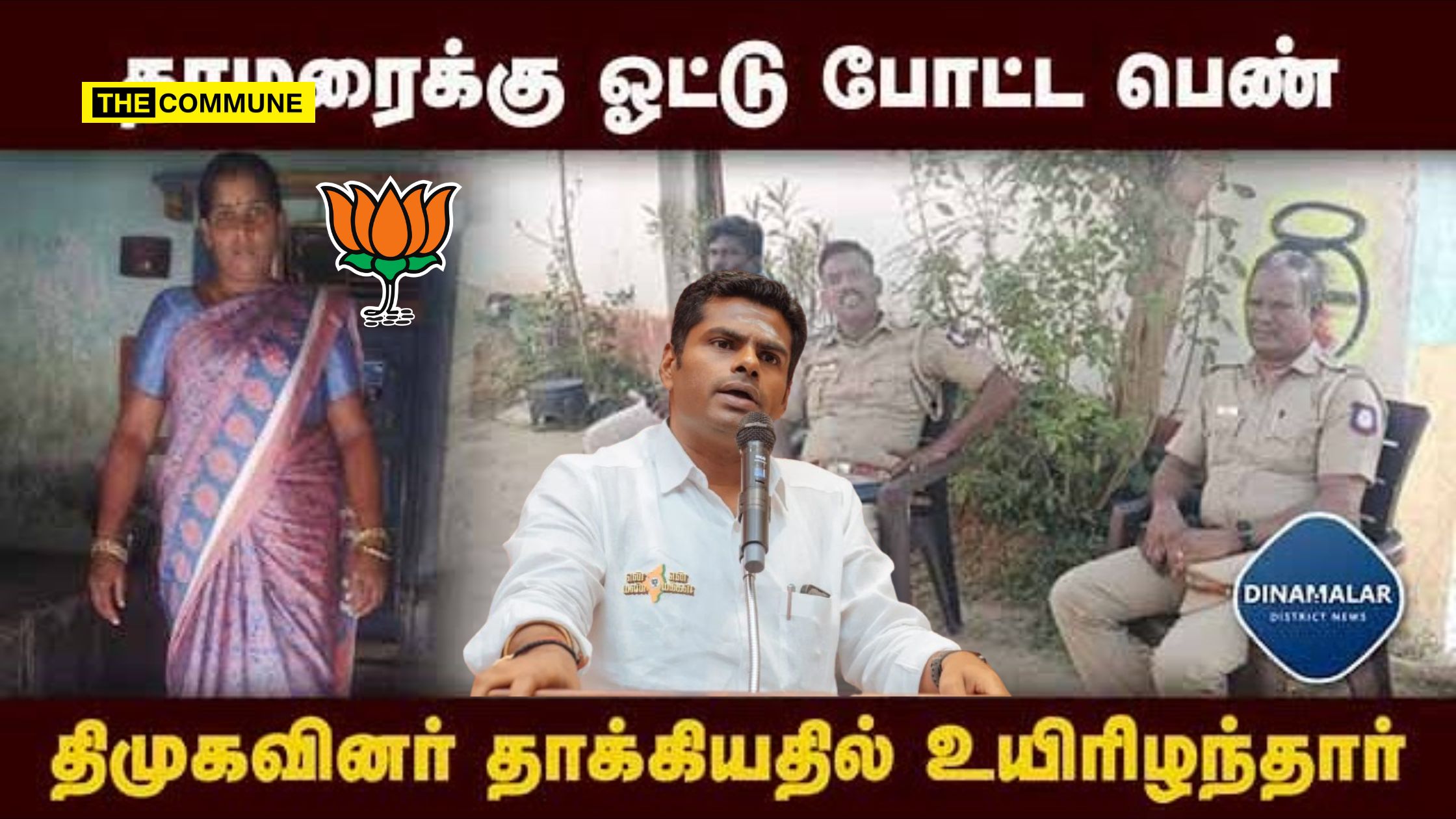
“We Were Attacked For Voting Lotus”: Family Members Of Gomathi Who Was Allegedly Beaten To Death By DMK Goons Fact-Check TN Police

19 April 2024 – the day when Tamil Nadu went to polls saw a woman named Gomathi being allegedly attacked by DMK goons over voting for the BJP. The lady later succumbed to her injuries caused by the goons. 

This incident was reported by several news portals such as Dinamalar and Nakkheeran. Nakkheeran however later deleted the story from their website. 

Tamil Nadu BJP chief K Annamalai had also posted about it on his social media, condemning the incident. Several netizens reshared the videos on social media. The Tamil Nadu police later refuted the notion of a political motive behind the incident, asserting instead that the woman’s death stemmed from a dispute between two families. According to a statement issued by the Cuddalore District Police in response to the incident’s reports, the woman tragically passed away after falling while intervening to halt a confrontation between the two families. 

Tamil Nadu Police warned netizens who had shared the news of legal action, especially against one such netizen who went by the handle name Mr Sinha on social media platform X.

Srimushnam police filed a case against Tamil Nadu BJP president K. Annamalai for allegedly posting misleading content on social media platform X about the post-poll death of a woman in Cuddalore. Annamalai was charged under IPC sections 153, 504, and 505. Three others also face charges for spreading false information.

Later on 22 April 2024, Annamalai shared a video of the family members of Gomathi, where they are seen confirming the fact that Gomathi was assaulted by DMK/VCK goons for not voting for the pot symbol and instead because she voted for the BJP. Annamalai wrote, I understand that the Fascist DMK Govt has filed an FIR on my name for exposing the truth about Smt Gomathi’s murder by DMK Goons. Listen to Smt. Gomathi’s husband & her relatives confirming that it wasn’t some previous enmity, and the real reason is that she voted for the BJP, which led to her being beaten up by DMK Goons. Fascist DMK cannot silence our voices by filing frivolous cases such as these, as many cases, including the ones filed by TN CM Thiru @mkstalin, have been filed against us for being the voice of the people & for exposing the truth. Thiru @mkstalin, the day of your ouster is not far. File as many cases as you want; we won’t compromise & budge!”

Here is a transcript of the video. 

“Police say the murder took place (on the day of the election) because there was previous enmity. That quarrel took place in 2021. The fight that erupted on election day was because of the previous enmity and not because she voted for Lotus symbol. The police changed the reason for the murder. Yes, that is the reason why the fight erupted in the first place. The opposition knew that we would vote for the Lotus symbol. And they mocked and bullied her. But the police are changing the story that there was some previous enmity and that fight was because of that enmity and not because of voting for Lotus symbol. Had there been enmity, the fight would have occurred 4 days before or after the election day. The main reason for being beaten to death was that she voted for Lotus. That is the truth.”

Subscribe to our channels on TelegramWhatsApp, and Instagram and get the best stories of the day delivered to you personally.
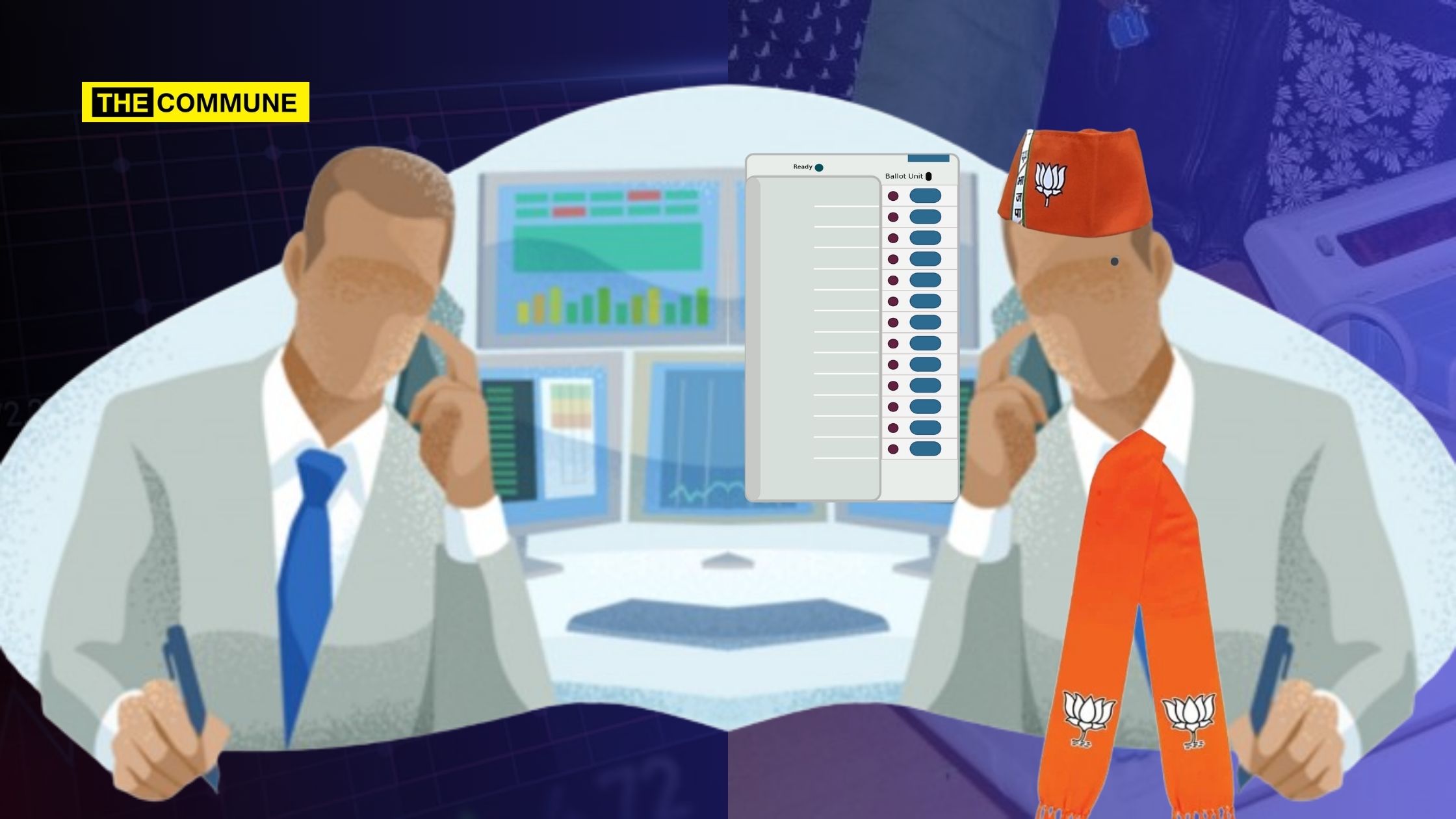
A Hedge Fund Manager Becomes A BJP Booth Agent In Chennai For A Day, Here’s What He Finds

It all started on April 17 (T-2), when Dr Tamilisai’s husband Dr. Soundararajan visited our apartment and one of her team members remarked that they need to find a “booth agent” for our booth at Saligramam that had voters from my apartment and few other apartments. One of the fellow residents (he was formerly a District level functionary of BJP at Namakkal) asked me, if I am game and I accepted with no idea of what it entails. He also said that the team will train me and I can go to the booth by around 9 am and be there till around 6:30-7:00 PM. Sounded like a regular day job (be there before NSE opens and be out after EOD processes and reconciliations by 6:00 PM).

The next day I was given the details of a functionary and was asked to reach out. As I do usually, I sent a WhatsApp message asking when should I call. No response from him. The post markets on Thursday called him to check and he shared the office location. When I went there, him and his team was sweating it out getting kits ready for the entire Assembly Segment. Handed over my photo etc., for them to prepare my credentials and went back at 11 pm to collect the kit, that was supposed to contain a part seal to affix on laquer, a writing pad, a notepad, writing instruments, a numbering sheet and the voter list.

In hindsight I should have checked the kit for its contents. Every booth were assigned two volunteers to relieve each other and alternate during the polls. My fellow volunteer at the booth had taken with him the voter list. The folks at the office were quite pressed for time and briefly explained my role and repeated a few times to collect the summary form (17Cin original. They were racing against time to find volunteers to some booths. Being the first timer it was overwhelming and I went in as I went into my Heat and Mass Transfer exam in 1997 (I aced it with 95%). Assumed everything would be there and came back and slept well. My biggest fear was that I will over sleep!

Now to the D day!

The alarm rang at 500. Snoozed the alarm and woke up at 530. Reached my assigned booth at 550. There were 5 booths in the polling station. The officers had already set up the EVM. Battery driven. Handed over my credentials and took up a seat. There were 6 other polling agents. 1 each for ADMK and DMK and 4 representing Independent candidates. My presence did surprise some of them. I was quite surprised that there were agents representing Independent and was asking myself how they managed to get 1600+ poll agents (answer to this later).

There was a mock poll to check EVM and it was tested, cleared and made ready for real polls. Just in time at 7:00 AM. The next 11 hours was exciting.

Voters were already queued up. The officers and agents were ready. There was delay of 20-30 secs to open. A senior gentlemen who was second in the queue, probably a retired person from Mumbai that was used to traveling by the Churchgate – Andheri 6:59 fast local became restless at 7:00.

Polling was brisk and fast. Our booth had the longest queue in the station. Looking at the nos and the pace, think the peak capacity is around 90-100 votes / hour / EVM, while Time & motion study may suggest a bit higher. It takes around 25-30 secs for recording a vote, from the Polling officer clearing you to vote to him clearing the next person. Cannot stuff 1000 ballots in 1 hour as in the past! Now you know the reason for the clamour of physical ballots.

At 8:30 AM, the fellow polling agents asked around for breakfast and one of the agents went out and got the food for everyone. Usually my first meal is at around 1 pm (intermittent fasting), hence did not have breakfast. And around 930 or so, the BJP candidate visited the booth to check if everything was in order. By 12 noon, the crowds started thinning down. Asked one of the fellow agents on how much they expect. His answer was – it was around 40-45% in 2021.

Post noon, the activity levels dropped further and the agents asked around on who wants what for lunch. One of the senior citizen volunteer from Tamil Nadu BJP came in to check and got me curd rice for lunch! Curd rice never felt this yummy! It was 2 pm and it became silent! By now, everyone was relaxed and were checking for trends in the other booths within the station. Ours was the highest – both in numbers and percentage (more on this later). One of the agents went out to vote at her polling station and came back to say the turnout at her booth was abysmal and people were just lazing around!

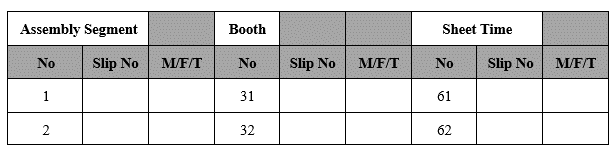
During the day, there was tea, nannari sarbath, butter milk (twice) and then a coffee at 4 pm – for everyone. The initial tension gave way to a friendly banter and they were pulling each other’s legs (Akka – Anna – Thambi etc). All of us started talking. Then I realized that all the agents live almost in the same street and they knew each other very well. Each of them were doing different tasks and they seem to work in groups tacitly (more on this later). One was marking Male / Female, one of them just ticking off names in booklet. They had different formats with carbon copies and it was brilliant. The formats were tearable booklets (Serial Number; Slip number, Male/ Female). They were quite fine sharing the formats.

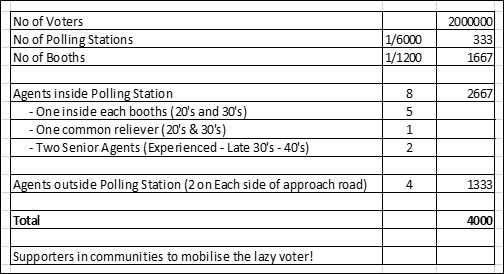
Every hour or so, a Lead agent (more about him later) comes around to collect the tearble sheets and check the voting trend. While the main copy goes to the central data centre of the party, the carbon copy goes to the team waiting outside the station, where a second team checks the list to see, if there is some one that is “expected” to vote has not turned up. Apparently, he passes that info to someone in the locality to mobilise voters that have not turned up yet. This is in essence the election day machinery that works like a precision m/c. Looking at the numbers – 2 agents per booth makes it 10 agents per station (assuming 5 booths) + tacit coop with independents + party workers outside polling station on either side of road. So say around 25-30 per station per party. If you have 400 polling stations, it means around 10000-12000 or even more workers on polling day alone for a single major party in a single parliamentary constituency to cover 20 lakh voters.

This is the machinery that needs to be replicated! In a state that has 50% swing voters, you need this to push the voters to the booth! Back to the “Lead Agent” – He is a seasoned pro and had seen elections for 25-30 years and had stories from a 1990 elections when the booth had a repoll!. He is the most important person for a party inside the polling station – someone the rookie agent looks upto when there is an issue inside the booth. On the agent of independent candidates, maybe they may not be really independent candidates. If you are new party in the race, you have limited personnel, here is a #jugaad model. A constituency with ~20l voters in 6 assembly segments has approximately around 300-350 polling stations, with each station having around 5-6 booths for a total of around ~1600+/- booths. [I have no idea on the actuals]

You do not need 10000, you can do it with 4000 and mobile phones to find a voter’s booth & serial number. But they need to work a couple days longer. Sheer presence outside a polling station will comfort your supporter. While it will be nice to have the agents know the voters, it may not be required as I learnt a trick or two from the experienced pros. When the Polling Officer calls out a serial number and name, the “pro agent” calls out the name from the list at a random moment. If the voter does not respond to the name – it’s a red flag. Street smart!

A booth agent has the right to question the identity of the voter. One of the other party agents asked me “Enna sir ungala kandukkavae maatendraanga” [No one is taking care of you]. Now that’s a psy-war that can put one down! With me being an unknown person to the party folks and a last minute #upma agent, no one except folks from my apartment spoke to me (and I could not identify the party folks given that I parachuted in T-2, a morning huddle with fellow booth agents could have helped). So if you are a rookie agent, ensure you meet up the other volunteers before the polling starts in the morning.

While BJPs marketing, leadership of Shri Narendra Modi and charisma and aggression of Shri Annamalai has created the product and branding, election day management will be the equivalent of Sales & Distribution, the last mile connect to the voter to get them to vote. The difference between BJP outside Tamil Nadu and in Tamil Nadu is the last mile connect to voter. I hope Phase II for Annamalai is creating this connect! Build or Acquire the last mile connect. The grassroot volunteers were available post Jayalalithaa’s period looking for a leader and EPS has consolidated his hold over the party human resources between 2017 – 2021.

Now an electoral loss to EPS in 2024 will make that available in pockets and BJP should not hesitate to induct last mile functionaries (the Distributor/ Departmental store equivalent of FMCG). 2026 is going to be tougher as its not a vote for Modi, but will be a call for double-engine government in Tamil Nadu! When the polling ended – the head agent’s body language was not too great or he is a good poker player!

The way I see the turnout – while there is no big change in the numbers over 2019, the booth level data may tell you a different story. Candidates have that data and their body language will tell you!

Some notes for polling agents in future:

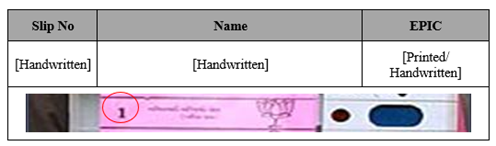
1. While its good to use tech and printers, nothing beats the muscle memory of writing it down. Write the name and s. no by hand in a booth slip. When the voter walks in – you may remember faster and better.

2. Ensure the booth slip has the image of the EVM unit with the name and Serial Number of the candidate. A few seniors struggled to locate! 3. Meet the fellow polling agents in the AM before the process starts

A sample format (with carbon copy)

End of the day, the officials displayed the total votes, sealed with laquer and affixed the official seal, handed over the summary form. I submitted the form at the party office – took a few pens as souvenir and walked back home with a unique experience. When I reached home, my wife had a long list of things to do that I have been putting off citing lack of time due to work – If you can take out 15 hours on a Friday (NSE was open), you should have time to do this list too!

(This article is based on Vijayanand’s X post on the same)

Vijayanand Venkataraman is a Chartered Financial Analyst.

Subscribe to our channels on TelegramWhatsApp, and Instagram and get the best stories of the day delivered to you personally.
The News Minute’s Selective Reporting And Blatant Hypocrisy When Perpetrators Of Crime Belong To “The Community That Can’t Be Named”

The ruthless murder of a Karnataka Congress corporator’s daughter by her “jilted” lover in broad daylight sent shockwaves across the society. While many news outlets called out the perpetrator by his name, the leftist propaganda outlet, The News Minute, maintained its “secular standards” by avoiding calling the accused by his name or mentioning his religion. They stuck to “stalker”. 

Here is how The News Minute reported two news stories – omit the perpetrator’s name/religion if it is a minority but mention it if the alleged attacker is Hindu. 


The above examples villify the Hindu and show the “minority” community as the perpetual victim. 

Upon being called out, editor-in-chief of the “news” portal, Dhanya Rajendran shared screenshots of incidents of stalking and claimed they reported it in the same manner, irrespective of who the perpetrator or his background was.  

But netizens repeatedly pointed out to her the follies and the hypocrisy that The News Minute indulged in, in the name of “journalism ethics” and secularism.

Here is another example. A few days ago, at a Catholic school in Telangana, the principal did not permit a few students to enter the school as they were wearing saffron clothes owing to Hanuman Deeksha penance. The News Minute hid the real story, peddled half-truths, and villified the Hindus by calling them a “mob” and that they forced the principal to chant Jai Shri Ram, etc. 

In another instance, a few ago in Bengaluru, three men were assaulted by Muslims for chanting Jai Shri Ram. The News Minute did not even report this news on their portal. Had it been the other way around, the headlines would have demonised Hindus severely. 

These are just a few examples of the hypocrisy of the Congressi mouthpiece which peddles the Leftist agenda all the time. Do read this list of 9 instances where TNM whitewashed incidents when the perpetrators belonged to a specific community.

Subscribe to our channels on TelegramWhatsApp, and Instagram and get the best stories of the day delivered to you personally.

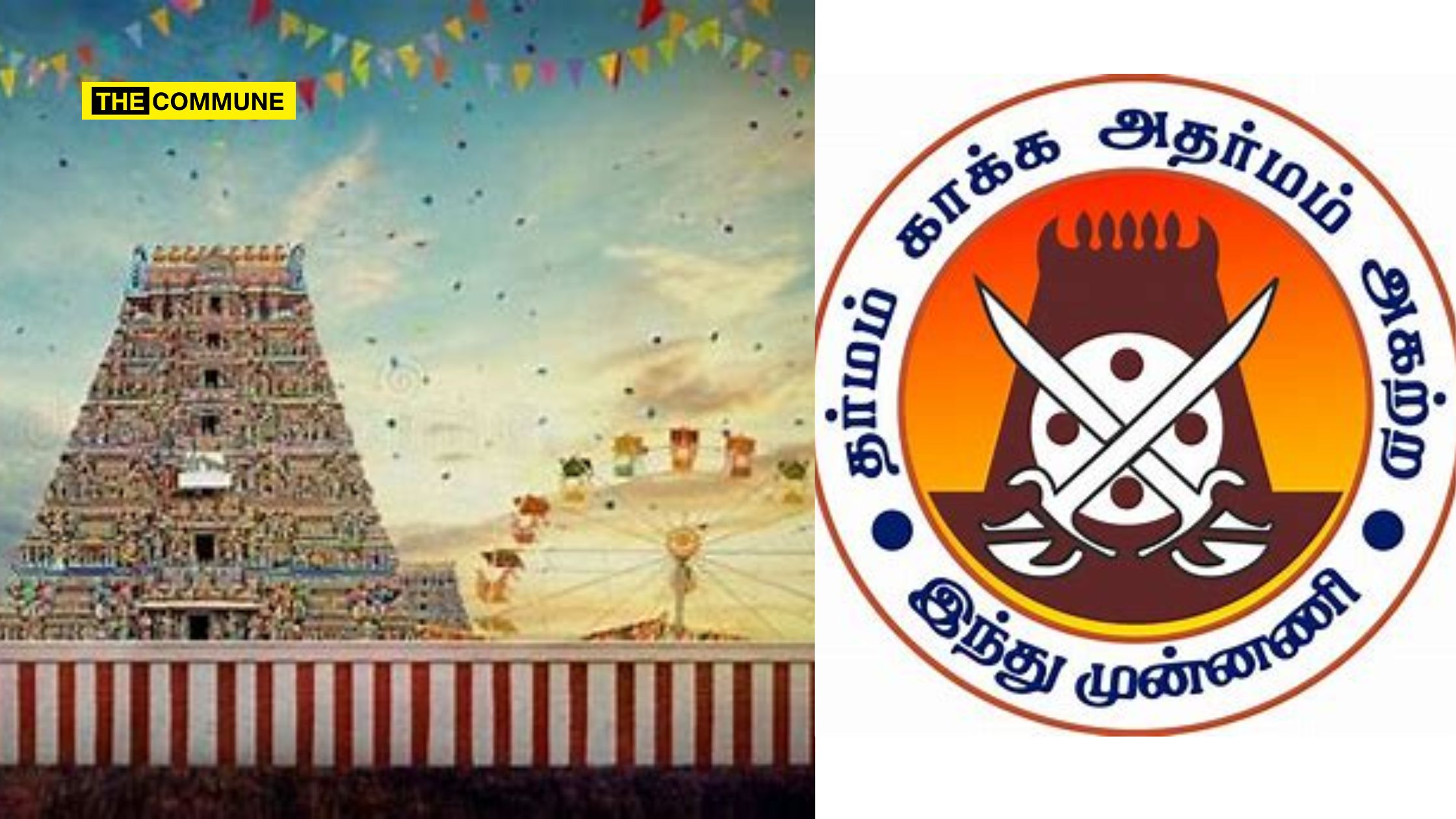
Court Orders Removal Of Festival Stalls & Merry-Go-Round At Paramakudi Sundararaja Perumal Temple; Hindu Munnani Appeals For Reconsideration

The Paramakudi Sundararaja Perumal Temple is in danger of losing its colorful little joys of festival mood as the court ordered the removal of festival stalls and merry-go-round on the banks of the Vaigai river, just a day before the festival. This decision was made in an urgent public interest litigation without hearing the organizers and temple administrators.

The presence of merry-go-round and entertainment shops along the banks of the Vaigai river during festivals has been a tradition for many years.

Hindu Munnani stated,” The presence of merry-go-round and shops during festivals is an integral part of the celebration. Many believe that without these, the festivals lose their essence and cultural significance.”

Expressing their dissatisfaction with the court’s decision, Hindu Munnani, has urged the courts to reconsider their stance. They argued that ordering the removal of merry-go-round and shops in the name of the environment goes against the sentiments of the people who find joy and excitement in these festival traditions.

“The presence of merry-go-round and entertainment shops during festivals is an integral part of our traditions. Without these, festivals cannot be art,” said Hindu Munnani.

Subscribe to our channels on TelegramWhatsApp, and Instagram and get the best stories of the day delivered to you personally.

Jothika Who Lectured People To Prioritise Hospitals Over Temples Vacays In Nepal Instead Of Voting

Why did Jyothika, despite being eligible to vote in Chennai, choose to skip voting this time? Netizens slammed actor Suriya’s wife Jyothika for sharing a video of her enjoying a trip in Nepal on the day of the parliamentary election.

The parliamentary elections in Tamil Nadu commenced at 7 am on 19 April 2024 and concluded just after 6 pm. Since dawn, the public, celebrities, politicians – everyone participated eagerly, casting their votes. These elections are set to occur in seven phases across India, encompassing over 500 constituencies. Yesterday marked the completion of the first phase in Tamil Nadu and Puducherry. Many leading actors and actresses even postponed their shoots to fulfill their civic duty. Notably, actor Vijay flew back from the ‘G.O.A.T’ shoot in Russia just to cast his vote. Similarly, actor Ajith arrived at the polling booth in the morning as soon as voting began.

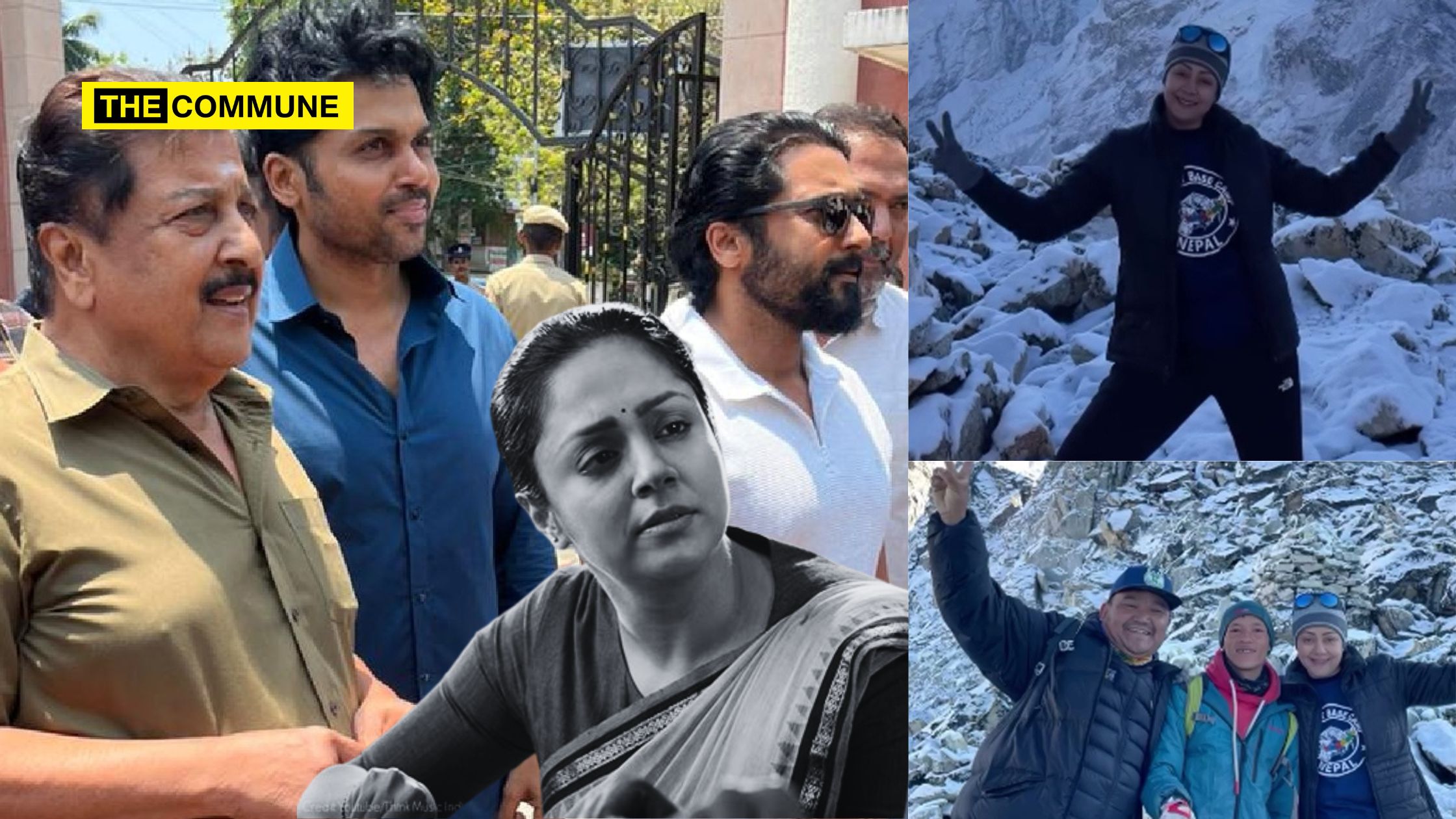
Actor Suriya, accompanied by his father and younger brother Karthi, also cast their votes. Additionally, superstar Rajinikanth, accompanied by his wife Lata, daughters Aishwarya and Soundarya, director Vetrimaran, Gautham Karthik, Aishwarya Rajesh, and numerous other celebrities, displayed keen interest in participating.

However, actor Suriya’s wife Jyothika, eligible to vote in Chennai, was conspicuously absent, citing a shooting commitment as the reason. However, Jyothika later posted a video on Instagram revealing that she had actually gone on a trip to Nepal, causing many netizens to question whether tourism had taken precedence over fulfilling one’s duty as an Indian citizen to vote. Similarly, the family of Suriya, who advocate for the importance of voting and civic responsibility, are being scrutinized for their actions.

https://www.instagram.com/reel/C57sHy3sVDS

Netizens expressed frustration as actor couple Suriya and Jyothika, who were previously vocal about various societal issues connecting everything to Hindu faith and practices faced criticism. Jyothika’s earlier call to divert funds from temple renovation to support education and healthcare for the less privileged had sparked debate. Similarly, Suriya, recognized for his selective activism, particularly during the AIADMK government, faced scrutiny when questioned about Jyothika’s absence during voting but chose to stay silent. This fueled speculation and disillusionment among onlookers, especially after videos of her trekking in Nepal went viral.

A netizen commented, “Jyothika went on a pleasure trip to Nepal to celebrate the election as a holiday. But the sermon is only for the town”

Another netizen mocked the idea that the Suriya and Jyothika pair would speak with sweet eloquence, suggesting instead that they are hypocritical.

Another netizen inquired “Instead of spending crores and buying a Benz car, they could have built a school hospital..!! What’s this @Jyothika_offl won’t you tell all this to your father-in-law ..??

Another netizen wondered, “I remember last time, 2019, 21 when Jothika voted with her family.. Did they change their vote to Mumbai this time, or not to vote… is she busy in shooting? Is this family’s sermons only for the town? else..”

Subscribe to our channels on TelegramWhatsApp, and Instagram and get the best stories of the day delivered to you personally.

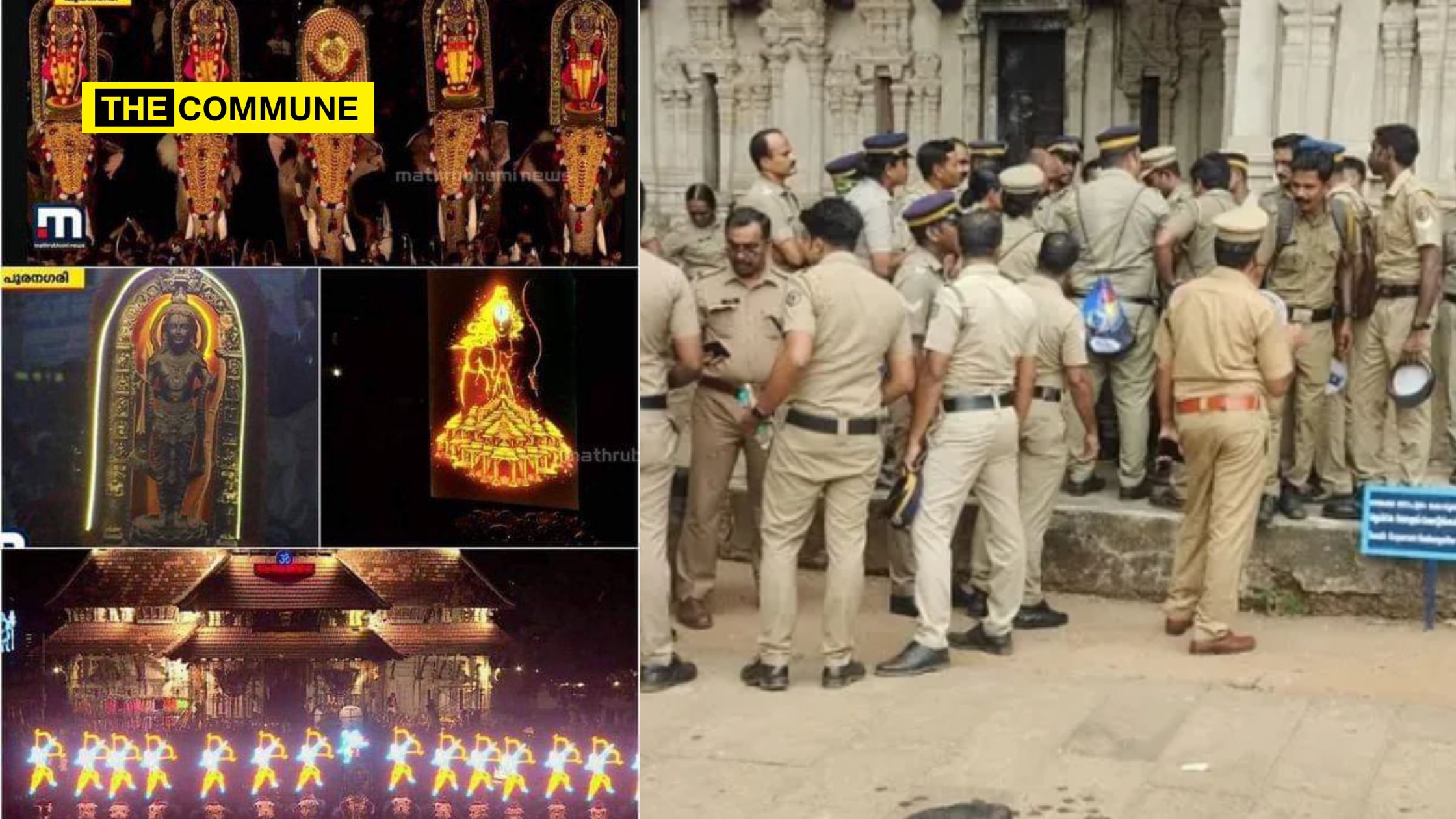
Allegations Of Political Excesses & Political Backlash Mars This Year’s Thrissur Pooram Festival Which Featured Ram Lalla Canopies

The cultural hub of Kerala, Thrissur, recently found itself embroiled in a political maelstrom after the revered temple festival, Thrissur Pooram, was marred by allegations of police excesses and unwanted restrictions. The ensuing chaos triggered sharp reactions from opposition parties, particularly the Bharatiya Janata Party (BJP) and the United Democratic Front (UDF), who lambasted the ruling Left Democratic Front (LDF) government for “allegedly” dampening the festivities.

The festival, which commenced on 20 April 2024, traditionally draws crowds of devotees and onlookers to partake in its vibrant celebrations featuring music, processions, fairs, and the renowned fireworks display. However, reports emerged of police interference and stringent restrictions during the early morning rituals on Saturday, casting a shadow over the festivities.

This year, the Thiruvambadi and Paramekkavu Devaswams presented a vibrant spectacle at Thekinkad Maidan where the Thrissur Pooram festivities were held. Thirty majestic elephants, adorned with decorative horns, captivated the audience as they descended to Puranagari. Both Devaswams showcased their unique silk umbrellas and watched the friendly competition unfold. As dusk fell, the brahmastras, concealed in quivers, illuminated the sky simultaneously at Thiruvambadi and Paramekkavu, eliciting cheers from the crowd. The towering figure of Ram Lalla of Ayodhya emerged amidst the adorned elephants, symbolizing harmony between the two sections. Vadakkumnathan, Thiruvambadi Kannan, Paramekkav Bhagavathy, Sri Parameswaran, and Parasakthi graced Thekinkad Maidan in the form of ornate umbrellas. Additionally, the Thiruvambadi Devaswom introduced a new element to the festivities by paying homage to India’s Chandrayaan-2 mission and ISRO, offering a unique experience to the audience.


Allegations surfaced of police obstructing devotees’ entry, hampering ritualistic practices such as the display of LED-lit canopies honoring Lord Ram, and engaging in physical altercations with festival attendees. Scenes of confrontation between police officials and temple authorities further escalated tensions, prompting the Thiruvambadi Devaswom to suspend ceremonies in protest against what they perceived as unwarranted police restrictions, a first in the festival’s storied history.

In the aftermath of the debacle, political parties seized upon the controversy, with the BJP accusing the state government of orchestrating a conspiracy to undermine the Pooram. BJP state vice-president B Gopalakrishnan asserted that the incident was part of a deliberate attempt to sabotage the festival, highlighting a pattern of recurring issues surrounding the event in recent years.

Amid mounting criticism, Kerala Chief Minister Pinarayi Vijayan pledged a thorough investigation into the complaints lodged by temple management and the public. While acknowledging governmental constraints during the ongoing election period, Vijayan assured that the Director General of Police would conduct a comprehensive inquiry into the incidents and submit a report.

The saga took a new turn with visuals emerging of district police chief Ankit Asokan engaged in heated exchanges with festival participants, adding fuel to the fire of public outrage, as reported by Manorama. Questions were raised regarding the appropriateness of police conduct within the sacred confines of the temple premises, particularly in contravention of a High Court directive barring footwear inside during the Pooram festivities.

Swami Jithathmananda from the Chinmaya Mission in Kerala raised the possibility that the inclusion of an image of Ram Lalla in the festival’s adornments might have incited the disturbances, deeming it a source of embarrassment for the Hindu community. Likewise, Hindu Aikya Vedi leader R.V. Babu voiced apprehension that such depictions could “offend” certain groups.

As the controversy reverberated across Kerala, the spectacle of Thrissur Pooram, renowned for its religious fervor and cultural significance, was overshadowed by discord and disarray. Despite efforts made to salvage the celebrations, including intervention by local leaders and officials, the bitterness of the police action, behaviour of the Communist state government lingers on. 

Subscribe to our channels on TelegramWhatsApp, and Instagram and get the best stories of the day delivered to you personally.