Home Blog Page 100

No Relief For Jana Nayagan: Madras High Court Says CBFC Was Not Heard, Orders Fresh Look At Jana Nayagan Clearance

Madras High Court Clears Jana Nayagan For Release With UA Certificate

The Madras High Court on Tuesday, 27 January 2026, set aside an order passed by a single judge directing the Central Board of Film Certification (CBFC) to grant a U/A certificate to actor Vijay’s film Jana Nayagan.

A Division Bench comprising Chief Justice Manindra Mohan Shrivastava and Justice G Arul Murugan remanded the matter back to the single judge for fresh consideration, holding that the principles of natural justice had not been followed. The Bench directed the single judge to decide the matter afresh after granting an opportunity to the CBFC to file its response. The court also granted liberty to the film’s producer, KVN Productions, to amend the writ petition.

The court observed that the allegations raised in the complaint against the film were of a serious nature, which had prompted the CBFC Chairperson to send the film for review. In view of the seriousness of the allegations, the Division Bench held that the single judge ought to have provided the CBFC with an opportunity to defend its decision. The court further noted that the single judge should not have examined the merits of the case in the absence of any specific prayer challenging the Chairperson’s order.

Accordingly, the Division Bench directed the producers to amend their prayer before the writ court and specifically challenge the Chairperson’s decision to refer the film to the Revising Committee. The Bench reiterated that the single judge “ought not to have gone into the merits of the decision without granting sufficient opportunity to the CBFC.”

The court had reserved orders on 20 January 2026 after hearing submissions from both the CBFC and the film’s producer at length.

Jana Nayagan, which is slated to be Vijay’s final film before his formal entry into politics, became embroiled in litigation following a delay by the CBFC in issuing its certification. KVN Productions had approached the High Court challenging the delay.

Before the single judge, the production house argued that although it had been informed by the CBFC that the film would be granted a “UA” certificate subject to certain incisions or modifications, the certificate had not been issued even after such changes were carried out. The producers also questioned the CBFC Chairperson’s decision to send the film to the Revising Committee after initially indicating that the film would be certified.

The CBFC, however, informed the single judge that the decision to refer the film to the Revising Committee was taken after receiving a complaint from one of the members of the Examining Committee, alleging that his objections had not been considered. It was submitted that the complaint disclosed that certain scenes in the film could hurt religious sentiments and also portrayed the armed forces incorrectly.

On 9 January 2026, the single judge ruled in favour of the production house and directed the CBFC to certify the film forthwith. The court held that the Chairperson’s decision to send the film for review after informing the producers that it would be certified was without jurisdiction. The single judge also criticised the entertainment of complaints from members of the Examining Committee after they had already given their recommendations.

Following the single judge’s order, an urgent mention was made before the Chief Justice’s Bench on the same day. The Division Bench stayed the single judge’s order and made strong remarks against the producers for “creating an urgency” and exerting pressure on the judicial system.

On January 20, the Division Bench continued hearing the appeal. The CBFC, represented by Additional Solicitor General ARL Sundaresan, advanced two principal arguments. First, that the Board had not been granted sufficient time to file a counter affidavit, and second, that the communication dated January 6 referring the film for review by the Revising Committee had not been challenged by the producers.

Appearing for the production house, Senior Advocate Satish Parasaran and Senior Advocate Pradeep Rai contended that the Examining Committee had unanimously decided to certify the film and could not have subsequently revisited that decision. It was also argued that the Chairperson’s order referring the film for review was never shared with the producers, and that only an intimation regarding the same had been received.

Senior Advocate Satish Parasaran further submitted that the complaint placed before the Chairperson sought deletion of scenes that had already been removed pursuant to the suggestions of the Examining Committee. He argued that the CBFC was now seeking to reintroduce deleted scenes only to remove them again, describing the exercise as an empty formality.

Senior Advocates Satish Parasaran and Pradeep Rai, along with Advocate Vijayan Subramaniam, appeared for the production house, while the CBFC was represented by ASG ARL Sundaresan.

Source: LiveLaw

Subscribe to our channels on TelegramWhatsApp, and Instagram and get the best stories of the day delivered to you personally.

DMK Functionary Abuses PM Modi While Calling Gujarat As ‘Ganja Hub’

DMK Functionary Abuses PM Modi While Calling Gujarat As 'Ganja Hub'

A DMK functionary abused PM Modi during a speech given at a meeting in Erode.

It is alleged that he said the abuse by slip of tongue and requested all media people to cut out the said word. He also apologised, while laughing, for using the word. However, it is not clear what he said since the videos available on the internet have muted the abuse.

In the clipping, he is seen saying, “Modi is a very clever fellow. That man has now said some new thing about ganja. He is saying ****, ganja, and so on are coming from Tamil Nadu… sorry, by mistake, forgive me. For that wretched sinner, the capital of drugs is entirely Gujarat only. Cut it out, – all the drugs are being imported only from Gujarat. From there it is distributed everywhere, and you say it is Tamil Nadu?”

This is not the first time a DMK member has abused PM Modi.

In April 2023, DMK MP A Raja called PM Modi a ‘fraud‘.

In March 2024, DMK minister Anita Radhakrishnan called PM Modi a “m***** f*****” with DMK MP Kanimozhi on stage.

In June 2024, DMK functionary, who is known to abuse every person living or dead, left, right and centre, Sivaji Krishnamurthy abused PM Modi saying “ada g*mala dei”.

Subscribe to our channels on TelegramWhatsApp, and Instagram and get the best stories of the day delivered to you personally.
DMK-Congress Rift Widens: DMK MLA Says Congress Has No Cadres In Tamil Nadu, Congress MPs Hit Back

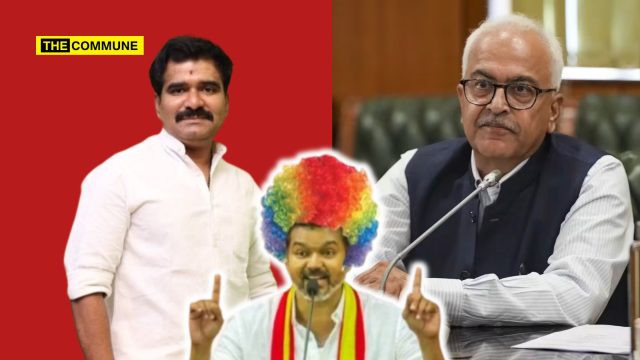
The clash between the Congress and the DMK in Tamil Nadu is hitting newer highs by the day as we head closer to the 2026 Assembly elections in the state.

We have seen several instances where Congress leaders of TN have spoken up against the DMK.

In the latest context, controversy was stirred when Madurai City DMK District Secretary and Madurai North MLA G Thalapathi, speaking at a public meeting held in Madurai said, “Among our Congress friends, there are a few people. I will even name them myself: there is Manickam Tagore, there is Jothimani. They have become an MP, so now they are not bothered whether any new people can become MP. So, they say, ‘I want a share in this, I want a share in that.’ All this, the leadership has understood.
Hereafter, they should not be given a seat; we should not allow them to be given a seat. If not, our people will take care of the work needed for that. Why am I saying this? With our feelings, if we (DMK) are not there, there is no INDIA alliance at all.
If the leader is standing tall in Delhi today, there is only one reason for that: the honourable elder brother Stalin. Second, Mamata Banerjee, and Akhilesh Yadav. Only the three of us have been the main pillars protecting this INDIA alliance. But if things go well for Congress and they go and talk like that there, it will go wrong. They have only 3,000 or 4,000 votes. They have no cadre.
They are a party that does not have people even to form a ward or booth committee. If such a party is talking to this extent today, it makes my heart feel very pained.”

Reacting to this, Congress MP Manickam Tagore wrote on his official X handle saying, “This time, I will place a demand before our beloved leader Kharge that a Congress candidate should contest from the Madurai North constituency. To protect self-respect, some people need to be taught a lesson. The days when ally parties would remain silent in the face of arrogance of power are over.”

Karur Congress MP Jothimani also reacted to the statements made and wrote on her official X handle saying, “DMK MLA Mr. G Thalapathi should not unnecessarily drag me into a confrontation. You are in Madurai; I am in Karur. What necessity do you have to speak about me? Who should contest on behalf of the Congress party will be decided by our leader Rahul Gandhi. No one has sought your advice on that matter. Likewise, we will not remain silent spectators while the Congress party is continuously insulted in public in this manner. Despite facing severe constraints in ground-level functioning, we are accommodating this situation in the interest of alliance ethics and out of respect for our elder brother, the Chief Minister. That is why we are maintaining restraint and silence. Out of regard for the dignity of the alliance, even the problems I personally face have been raised only in appropriate forums so far. You are senior to me in both age and experience. It would be good if you also uphold the same dignity. Conduct your politics without putting the Chief Minister, who is responsibly acting as the leader of the INDIA alliance in Tamil Nadu, in an embarrassing position. That would be beneficial for everyone.”

Subscribe to our channels on TelegramWhatsApp, and Instagram and get the best stories of the day delivered to you personally.

Nurture Future With Nature: This School Near Bengaluru Is Redefining Childhood Through Education Rooted In Indian Values

A few hours outside Bengaluru, on a once-barren patch of land in Doddaballapur, an unusual school day begins with birdsong and the smell of wet red earth. What was dry and barren land just a few years ago is now a terrain of young forests, vegetable gardens, and mud-brick classrooms where children run barefoot, their plates filled with warm, nourishing food grown a few meters away.

This place is Freedom Land, the soul campus of The Healing Circle Trust and Creative School, a homegrown answer to years of the Macaulayite model of education, quietly raising a generation rooted in Indic civilizational values and Indian soil, not in borrowed disdain for their own culture.​

Beyond Macaulay: Education That Does Not Alienate Children From Their Roots

For nearly two centuries, the dominant template of Indian schooling has been what Macaulay wanted: to create brown sepoys who think and feel like pale imitations of their colonial masters. The cost of this has been visible everywhere; children who grow up fluent in English but estranged from the land beneath their feet, ashamed of their traditions, and trapped in a marks-and-job race that leaves their inner life stunted.

The Healing Circle Trust, founded in 2010 by Jayashree Ashok and B Ashok after leaving corporate careers in Seattle, offers a very different visualisation of what a school can be. Inspired by the integral education philosophy of Sri Aurobindo and The Mother, Creative School in North Bangalore and Freedom Land in Doddaballapur treats each child as a whole being – physical, emotional, intellectual, social, and spiritual, whose education must deepen, not erase, their connection to self, community, and dharma.

Here, meditation, yoga, seva, and silence are as natural a part of school life as mathematics and science; the aim is not to mass-produce clerks, but to nurture conscious human beings who can serve Bharat and the world from a place of inner clarity.​

Freedom Land: Bhoomi As Living Classroom

When the team first stepped onto the 34-acre Freedom Land campus, much of the soil was eroded, water-scarce, and almost bare of trees, in a drought-prone area that had lost its green cover and seen water sources dry up. Instead of responding with more concrete and air-conditioning, they chose to allow the land to heal and let it become their first teacher.​

Through the “1000 Together” initiative, thousands of students, parents, villagers, and volunteers have, over five years, planted more than 14,000-16,000 native, sacred, medicinal, and fruit-bearing trees on this once-barren soil. They have dug swales, bunds, soak pits, recharge wells and ponds that hold the monsoon and send it back gently into the aquifers, slowly restoring the local water table.​

Today, only about 10% of the campus is built up; the rest is consciously left to forests, orchards and fields, making the land itself a living textbook in ecology, interdependence, and reverence for nature. Around 40% of the school’s vegetables and nearly all its leafy greens now come from its own organic farms, tended by farmers, teachers, children and local community working together, so that food is experienced as prasad from the earth, not as a packaged commodity.​

Equal Desks, Equal Plates: Nearly 160 Children Learn Free

One of the quiet revolutions at Creative School and The Healing Circle is what happens at the dining room. Children across the programs, Creative School’s mainstream classes called Palash, the Parijatha Learning Centre for first generation learners, Chiguru bridge school for migrant children, and Moggu crèche, receive fresh, nutritious, home-cooked meals every day. The kitchen draws extensively from the campus’ organic farms: seasonal vegetables, leafy greens, and fruits which are turned into simple, wholesome and tasty dishes that balance taste with long-term health and give children steady energy to learn, play, and heal.​

For many children from migrant and economically challenged families, this is the first time in their lives that a warm, balanced meal is a certainty and not a question. Teachers describe slow, noticeable changes in children’s energy, attention, and physical health over time, as their basic nutritional, hygienic, and emotional needs are consistently met. In that shared dining space there is no separate queue, no “cheaper” menu for those who cannot pay – Everyone eats the same food, at the same space, without labels or categories.

Within Creative School’s roughly 375 students, around 160 children from economically challenged families study entirely free of cost through the Support A Child and Parijatha Learning Centre programs. Everything that would normally shut them out of a “good” school, fees, books, clothing, boarding where needed, transport, medical care, counseling, and daily hot meals, is taken care of by the trust and its well-wishers.​

Crucially, they are not placed in a cheaper, parallel track. The same teachers, the same Sacred Classroom pedagogy, the same emphasis on emotional intelligence and spiritual growth, and the same access to arts, sports, science labs, nature learning, and meditation are extended to Parijatha children as to Palash children (whose parents can afford fees). In classrooms and staff rooms, these children are not spoken of as charity beneficiaries but as equal members of the community, with the same right to sit for Cambridge or NIOS or State Board, to dream of university, and to shape their own futures.​

Till grade 10, Parijatha runs some separate class groupings only to honour different learning levels and backgrounds and parent requests. However, the curriculum, expectations, and quality of care are kept on par with the rest of the school. From grade 11 onward, students from all backgrounds learn together, breaking the invisible wall between “sponsored” and “self-paying” and teaching everyone that intelligence and leadership are not decided by a fee receipt.​

Among the many stories that caught our attention is that of a former driver’s son, fully supported through the free program, who went on to score straight As, topping his Cambridge exams and looking forward to stepping into a future in computer science engineering. For the team here, he is not held up as a token miracle but as proof of a simple conviction: when a child is surrounded by love, rigorous learning, and dignified support, “background” ceases to be destiny.​

“Our Children, Always”: A School That Cares

For Jayashree and Ashok, the relationship with their students does not end with a board exam or a farewell ceremony; it is closer to how parents watch over their own children stepping into the world. Former students who have graduated and moved on to college or work are still welcomed warmly on a working day, when the children are at school. They are welcomed with tasty food, and the younger ones can see what is possible and the older ones remember where their roots lie.

Interactions are filled with the kind of care usually reserved for family: “Wear your helmet,” “Drive carefully”. In a system where most schools forget their alumni once the fee cycle ends, this quiet, continuous concern says something profound, that Creative School was never meant to be a service provider, but a second home where children, even as adults, are still held in a net of love and respect.

Parijatha, Chiguru And Moggu: Holding The Most Vulnerable

Within the campuses of Creative School, the Parijatha Learning Centre holds one of the trust’s most tender responsibilities: educating and empowering children from socio-economically challenged and rural families who are often first-generation learners.

Located in both North Bangalore and Freedom Land in Doddaballapur, Parijatha supports children through the Support A Child program with a vision to reach at least 250 children over the coming years.​ Here, children receive not just academic instruction but a full ecosystem of care: high-quality teaching, sports, arts, counselling and healthcare, nutritious meals, boarding where required, transportation, and immersive field trips that expand their sense of what is possible. Each child is treated as a whole being whose physical, mental, emotional, social, and spiritual needs must be met if real learning is to take root.​

Chiguru, started on Diwali 2021 after a migrant construction worker asked for a school for their children, is a bridge programme for 3 to 13-year-olds who have spent their lives on construction sites and have never seen a classroom. They enter a space of songs, games, stories and gentle routines that slowly build foundation skills while affirming their joy and dignity. Moggu, begun soon after, is a crèche for the under-threes, tiny “buds” whose days are spent in safety, play, and loving care while their parents work nearby.​

Chiguru began with three children; by the third day there were twenty-five, and the numbers have continued to grow as word spread among migrant families that there was finally a place where their children would be safe, fed, and cherished. Many teachers volunteer extra hours in Chiguru, surrounding these first-time learners with affection, structure, and songs, helping them feel that this, not the dust of the construction site, is their rightful childhood.​ From Chiguru, families who are ready have moved their children to the full Parijatha program. Committed parents of these children dream of seeing their children pass 10th grade. The school has even higher aspirations and hopes to enable education that will truly benefit the children and their families.

Meditation Temple, Seva And Inner Work: A Dharmic Ethos In Action

At the heart of Freedom Land stands the Oneness Meditation Temple, completed in 2023 and consecrated after a yatra to Mount Kailash. Inside, a large spatika lingam carved from crystal found in the Parvati River radiates a palpable stillness; where children and adults sit in meditation, work with breath, and encounter silence.

Around the main chamber are seven chakra chambers for deep healing.

The philosophical backbone here is the Upanishadic insight of Oneness, expressed through Sri Aurobindo’s commentaries on the Isha Upanishad that all beings arise from one source energy, that each soul has a unique journey, and that outer multiplicity must ultimately reconnect with inner unity. Adults and Children learn to honour their roles and differences while returning, through meditation and reflection, to the understanding that they and their classmates are expressions of one consciousness, not just competitors in an exam race.​

Seva is embedded in the timetable. Older students take responsibility for mentoring younger ones, assisting in classrooms, helping in the kitchen or on the farm; service is not a one-day “social work” photo-op but a daily rhythm. Prayer, silence, asana, pranayama, bhajans and reflective circles create a cultural atmosphere where being spiritual is not an ideology to be argued, but a way of living with gratitude, discipline, and care.​

Healing Body, Mind And Earth Together – From One Campus To Many Classrooms

The Healing Circle’s work does not stop at the school gate. Through initiatives like Arogya Jyothi, the trust offers free holistic healthcare: homeopathic consultations, medicines, meditation-based practices, and energy healing, to people from lower-income communities. Many who arrive with chronic pain and unspoken emotional burdens find, over time, not just symptom relief but the experience of being listened to with patience and respect.​

On the ecological front, the “1000 Together” tree-planting movement and the Surya Kiran solar energy project work together to reduce the campus’s carbon footprint and demonstrate sustainable architecture and renewable energy in action. Solar panels already support significant parts of the campus’s daily load, and future phases are planned to power hostels, science labs, and kitchens, gradually moving the community toward greater energy independence.​

Most significantly for the larger system, the methodologies born in this small campus are now shaping classrooms far beyond Doddaballapur. Through Prajña Vidya and The Sacred Classroom programs, Creative School’s team has trained hundreds of government, private and public school teachers across Karnataka and Odisha in teacher well-being, emotional literacy, and child-centred, activity-based learning. In Odisha, the School and Mass Education Department, with UNICEF’s support, invited them to deliver Sacred Classroom trainings for government teachers; in Karnataka, Samagra Shikshana Kendra and district programs have engaged them to work with teachers from over 180-200 government-run schools, including early childhood and KPS teachers. Many of these teachers reported that it was the first time their own inner life and dignity as educators had been honoured in a training space, not just their paperwork and targets.

Rainwater harvesting, organic farming, tree planting, waste reduction, and mud-brick, well-ventilated buildings are not presented as special projects to the children; they are simply the way life is lived here. As students study, play, serve, and eat on this land, they absorb a deeper lesson: that healing oneself and healing the earth are part of the same sacred responsibility.​

A Model For The Future

The Healing Circle Trust and Creative School rarely describe themselves in grand ideological terms, yet the model they are building is quietly radical: rigorous academics (Cambridge, State Board, NIOS), deep spiritual practice, ecological responsibility, and genuine social inclusion held together in one community. Over 2,000 teachers trained through Prajña Wisdom Centre and associated programs are already carrying elements of this approach, Sacred Classroom, Life & Living, The Joy of Teaching Series, into government schools, NGOs and independent private institutions.​

In a country long shaped by someone else’s imagination of what education should be, this small campus in Doddaballapur is offering a different answer. Every native tree that takes root in Freedom Land, every plate of organic food served to a migrant worker’s child, every first-generation learner who walks into a Cambridge exam from a background of scarcity, and every moment of silence in the Oneness Temple is a quiet affirmation that India does not need to outsource its idea of schooling. It can grow its own, from its scriptures, its soil, and its living communities, and, in doing so, raise a generation that knows both who they are and whom they are here to serve.

For more information, visit https://www.thehealingcircle.in/ and https://www.thecreativeschool.in

Subscribe to our channels on TelegramWhatsApp, and Instagram and get the best stories of the day delivered to you personally.
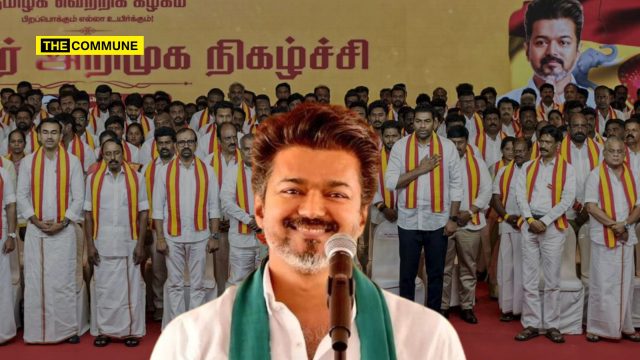
“Madaku_Oodhi”: Joseph Vijay’s TVK Party Symbol Becomes Butt Of Memes

The Election Commission of India on Thursday, 22 January 2026, allotted the ‘whistle’ symbol to actor-politician Vijay’s party, Tamilaga Vettri Kazhagam, for the upcoming Tamil Nadu Assembly elections.

Following this, complaints alleged that TVK cadres were aggressively blowing whistles in crowded areas, obstructing buses and disrupting commuters, with elderly people and women particularly affected.

The Tamil word for the device whistle is called Madaku Oodhi (மடக்கு ஊதி) which rhymes with a Tamil vulgar slur Mada K**dhi, meaning “Foolish c*nt”.

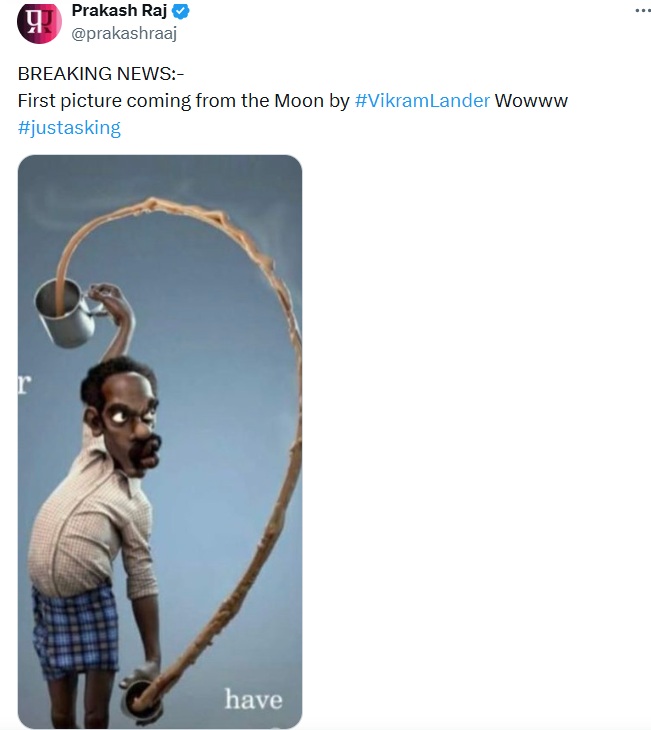
Netizens are now roasting Joseph Vijay using the hashtag “Madaku_Oodhi” (#மடக்கு_ஊதி), “Madaku_Oodhiyar” (#மடக்கு_ஊதியார்), “Madaku_Oodhigal” (#மடக்கு_ஊதிகள்).

The AIADMK has launched a blistering attack on Joseph Vijay showing how he and his father SA Chandrasekhar fell at the feet of Jayalalithaa for the smooth release of his film.

Here are a few such memes going viral on the internet.


Subscribe to our channels on TelegramWhatsApp, and Instagram and get the best stories of the day delivered to you personally.
Years Of Promises, No Opening Date: DMK Govt’s Villivakkam Lake Eco-Park Project Drags On

Years Of Promises, No Opening Date: DMK Govt's Villivakkam Lake Eco-Park Project Drags On

One of the projects taken up by the DMK government under the Smart City Mission through the Greater Chennai Corporation in 2021, the Villivakkam Lake eco-park, featuring a glass suspension bridge built nearly five years ago, continues to remain closed to the public due to incomplete works, unresolved encroachments, and delays by the contractor.

According to officials of the Greater Chennai Corporation (GCC), the eco-park has missed several deadlines since 2021. While restoration work was taken up about a year ago, more than 100 encroachments around the lake have not yet been cleared, particularly along the northern stretch bordering CTH Road. These pending clearances have prevented the planned expansion of the lake from 27.5 acres to 36 acres. The civic body has also not completed essential infrastructure such as perimeter walls, fencing, and public toilets.

The amusement park component of the project, assigned to Kalyan Constructions, has seen little progress, with play equipment yet to be installed. GCC officials stated that although some basic works like footpaths have been completed, the absence of amusement facilities has contributed to the prolonged closure of the eco-park.

The Anna Nagar zonal officer said that the project initially faced delays due to cases before the National Green Tribunal. After those issues were resolved, residents living in encroached areas reportedly approached the High Court last year and obtained a stay against demolition, leading to further delays of several months. He added that senior ministers had recently inspected the lake and asked the contractor to expedite restoration work before April.

Officials indicated that, despite the unresolved encroachment issue, the corporation is considering opening the restored 27.5-acre portion of the lake to the public in the interim. The glass suspension bridge, they said, has been structurally vetted by the civil engineering department of IIT Madras and found to be stable. The GCC is planning to regulate access to the bridge by allowing 20 to 25 people at a time, with an entry fee yet to be finalised.

Villivakkam Lake, which once spanned about 214 acres, has shrunk drastically to around 39 acres over the past three decades due to widespread encroachments. The civic body has stated that efforts are under way to reclaim more area, expand the lake further, and establish a tertiary pond along with a water treatment plant as part of the broader restoration plan.

Source: Times of India

Subscribe to our channels on TelegramWhatsApp, and Instagram and get the best stories of the day delivered to you personally.
Illegal Quarrying Bonanza In Tirunelveli: Activists Accuse Officials Of Collusion

Illegal Quarrying Bonanza In Tirunelveli: Activists Accuse Officials Of Collusion

Serious allegations of large-scale illegal quarrying have surfaced from Tirunelveli district, where more than 20 stone quarries are reportedly operating in a single location near Radhapuram, in the Irukkanthurai area. Aerial visuals from the site show extensive excavation, raising questions about regulatory oversight and environmental damage.

According to activists and local residents, over 20 quarries are functioning side by side in the same area, far exceeding what is typically permitted under quarrying regulations. While quarry operations are governed by strict rules relating to distance from agricultural land, residential areas, and groundwater sources, the current situation is alleged to be in blatant violation of these norms.

Activists claim that although government permissions allow quarrying up to a maximum depth of 25 metres, stone and gravel extraction at the site has gone as deep as 100 metres. They further allege that quarrying continues even after lease periods have expired, making the operations entirely illegal. The deep excavation is said to pose a severe threat to groundwater levels, nearby farmlands, and residential structures.

Environmental groups have accused officials from the Revenue Department and the Department of Geology and Mining of collusion, alleging that enforcement has been deliberately lax. According to estimates cited by activists, illegal quarrying in the area has caused a revenue loss of nearly ₹500 crore to the state government.

Subramanian, leader of the Green and Environment Protection Organisation, has filed formal complaints with the Director of Geology and Mining and the District Collector, questioning how permissions were granted for more than 20 quarries to operate in one location. He has also demanded that authorities conduct a detailed measurement of excess extraction, recover financial losses from quarry operators, and initiate criminal proceedings against those responsible.

Further allegations include serious safety violations. As per rules, abandoned quarry sites must be secured with protective barriers to prevent accidents, but activists claim no such safeguards have been put in place. There are also accusations that transport norms are being flouted, with lorries permitted to carry 13 metric tonnes allegedly transporting up to 30 tonnes, and single transport permits being reused multiple times.

Residents have also complained that illegally extracted stones and gravel are being smuggled into neighbouring Kerala, damaging local roads and increasing traffic hazards. Heavy quarry vehicles are said to be speeding through villages, creating fear among pedestrians and schoolchildren.

Activists and local groups are demanding immediate intervention by the district administration and police, calling for strict enforcement of mining regulations, environmental protection measures, and accountability from officials responsible for monitoring quarry operations.

Subscribe to our channels on TelegramWhatsApp, and Instagram and get the best stories of the day delivered to you personally.
Congress Party Attacks IIT Madras Director V Kamakoti With Anti-Hindu Gau Mutra Jibes Used By Terrorists

While the nation is rejoicing this year’s Padma awardees, the Congress party seems to be as disgruntled as ever.

Indian Institute of Technology Madras director V Kamakoti has been conferred with the Padma Shri, one of India’s highest civilian honours. Responding to the award, Kamakoti addressed the public with a message underscoring collective effort and national development. And Congress’ Kerala unit makes jibes at Professor Kamakoti that remind us of terrorists and their language when referring to Indians, especially Hindus.

In a video, Prof Kamakoti said, “Namaste, Vande Mataram. The Padma Shri award means only one thing to me: that I will put all the best efforts towards Viksit Bharat at 2047. This award is not possible just as an individual. It’s a collective effort. I dedicate this award to all who have contributed, who have blessed my growth, and whatever I have achieved is all because of that collective effort to whom I dedicate this award. Thank you very much.”

Kamakoti joined IIT Madras as a faculty member in the Department of Computer Science and Engineering and assumed charge as director in 2022. His areas of specialisation include Computer Architecture, Information Security, and VLSI Design. He is widely known for leading the development of Shakti, India’s first indigenous microprocessor, and is also a member of the National Security Advisory Board. Earlier, he received the Abdul Kalam Technology Innovation National Fellowship in 2020 and the IESA Techno Visionary Award in 2018.

Quoting his video message, the Kerala Congress handle wrote: “Congratulations to V Kamakoti on receiving the honour. The nation recognises your bleeding edge research on Cow Urine at IIT Madras, taking Gomutra to world stage.”

The Congress’ ‘gaumutra’ jibe is reminiscent of language that has previously been used by terrorists to dehumanise Hindus.

Such slurs have featured repeatedly in terrorist propaganda. In the February 2019 Pulwama terror attack, Jaish-e-Mohammad suicide bomber Adil Ahmed Dar referred to Indian soldiers as “gaai ka peshab peene wale” (cow urine drinkers) in his pre-attack video, framing the insult as ideological justification for violence.

Similar “gaumutra” slurs were also raised during Canada-based Khalistani protests in 2024, where demonstrators desecrated the Indian flag and used derogatory chants against Hindus during anti-India demonstrations.

The Congress Kerala handle is well-known for making such jibes and abusive remarks at people close to the central government.

Subscribe to our channels on TelegramWhatsApp, and Instagram and get the best stories of the day delivered to you personally.

“Narcissistic Behaviour, Responsible For 41 Deaths, Hid For 72 Days, Stood With Hands Folded For Film Release”: AIADMK Rips Apart TVK Vijay, Calls Him Garbage Of Panaiyur

A political war of words broke out on Sunday, January 25, 2026, after the AIADMK’s IT Wing launched a scathing counterattack against actor-turned-politician Vijay, who heads Tamilaga Vetri Kazhagam (TVK), following his sharp criticism of the party at a cadre meeting in Mamallapuram.

Taking to X, the AIADMK IT Wing accused Vijay of corruption and double standards, branding him “the massively corrupt person” and alleging that he amassed several crores of rupees through the illegal black-market sale of movie tickets.

In a strongly worded post, the IT Wing stated: “Panaiyur landlord, Corruption is the act of earning money illegally. By that definition, you—actor Vijay (@actorvijay), who allegedly earned several crores by continuously selling tickets on the black market in violation of the law—are the massively corrupt person of all. “Being a slave to the Central government” is not something that exists anywhere in the history of the AIADMK. Whenever there has been a challenge to the welfare and rights of the state, our great movement—the AIADMK—has fought for Tamil Nadu’s rights, secured them, and argued for and obtained benefits for the people. That is the historical record. Shall we name the film for whose release you stood with folded hands for five hours outside the then Chief Minister’s house? Or can you name the Chief Minister who helped you without expecting anything in return? Corruption is not just about making money through politics. Bowing before power centres to increase one’s income through undue influence also falls under the same category, Panaiyur man. You call the AIADMK government corrupt, yet you seat Sengottaiyan, who was the Education Minister in that very government, right beside you as your coordinator. Is that your explanation of “purity” and “clean power”? Whether you do it or not, but aren’t you also one of the reasons for the death of 41 people in Karur? Without making any atonement for that, didn’t you hide in Panaiyur for over 72 days out of fear of what case might come, and even keep the party office closed for 15 days? That itself is the answer to how “brave” you are. In world history, for the first time, instead of going to the homes of the deceased to offer condolences, you made them come to Panaiyur to console you. That’s next-level landlord arrogance! For this, you could even be awarded a Doctorate! Without going to Karur to wipe away tears, you staged a token condolence event with glycerine tears and photographs, and even there, without the slightest sense of guilt, indulged in self-promotion. Such narcissistic behaviour is a very dangerous sign in politics. In politics, one may be good, one may be capable, but one should never be someone who understands nothing, deceives even his own fans, and continues to be just a director-actor, like the TVK leader. Every single argument you reel off about our party, as if memorised and recited, is nothing but top-class garbage. Along with the garbage of Anna Arivalayam, let us also throw out the garbage of Panaiyur. DOT.”

The post was issued as a direct response to Vijay’s first major political attack on the AIADMK, where he accused the party of being subservient to the Central government—marking a sharp escalation in the political confrontation between the two sides.

Subscribe to our channels on TelegramWhatsApp, and Instagram and get the best stories of the day delivered to you personally.
“Why Did Sonia Gandhi Meet Him?”, Kerala BJP Chief Rajeev Chandrasekhar Questions Her Meetings With Sabarimala Gold Theft Case Accused

The Bharatiya Janata Party (BJP) on Sunday, 25 January 2026, demanded that Sonia Gandhi clarify the purpose of her alleged meetings with Unnikrishnan Potti, the prime accused in the Sabarimala gold theft case, claiming the matter pointed to political patronage enjoyed by the accused under both Indian National Congress and Communist Party of India (Marxist) (CPI(M)) governments in Kerala.

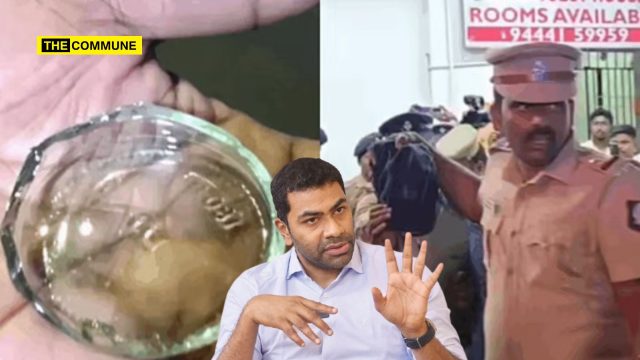
Addressing a press conference in Thiruvananthapuram, Kerala BJP president Rajeev Chandrasekhar displayed a photograph purportedly showing Sonia Gandhi with Potti and questioned why the meeting took place when Gandhi was Congress president and Oommen Chandy was the Chief Minister of Kerala.

“Sonia Gandhi and the Congress should explain the agenda behind these meetings,” Chandrasekhar said, alleging that Potti could not have operated without the backing of powerful political forces. He also claimed that Chief Minister Pinarayi Vijayan had held a similar meeting with the accused, for which no clear explanation had been offered so far.

Referring to the alleged loss of 4.5 kg of gold from the Sabarimala Temple, Chandrasekhar said the issue had outraged not only Ayyappa devotees but people across Kerala. “Why would Sonia Gandhi, who is not a Sabarimala devotee, give an audience to a broker accused of looting gold from the temple?” he asked, alleging that Potti enjoyed political patronage first under the Congress-led government and later under the CPI(M)-led dispensation.

In a post on X, Chandrasekhar claimed that Sonia Gandhi had met Potti not just once but repeatedly during the period when the Congress was in power in Kerala, and said the party must explain the nature and purpose of those interactions. “If they have nothing to hide, Congress must answer,” he said, adding that the BJP and NDA would intensify protests until clarity was provided.

Source: India Today

Subscribe to our channels on TelegramWhatsApp, and Instagram and get the best stories of the day delivered to you personally.