Home Blog Page 101

FIR Filed Against X (Twitter) Handle Who Exposed Congress Leader Pawan Khera’s Wife Neelima’s Connections To Foreign-Funded Media Network

Congress Leader Pawan Khera’s Wife Neelima Threatens X (Twitter) Handle For Exposing Her Connections To Foreign-Funded Media Network

An online controversy that erupted in December 2025 over allegations of a foreign-funded media influence network linked to the Indian National Congress has escalated further, with an independent OSINT researcher now stating that the Telangana Police has moved to file an FIR against him.

The controversy began on 20 December 2025, when an OSINT researcher operating the X handle The Hawk Eye published a detailed thread alleging the existence of a coordinated media narrative ecosystem with foreign funding links, naming Kota Neelima, wife of Congress spokesperson Pawan Khera, as a central figure. The thread stated that Neelima was associated with PROTO, which the researcher alleged played a role in determining which Indian journalists received foreign funding.

Within hours, Neelima publicly threatened legal action, accusing the researcher of publishing defamatory and malicious content. In a post on X, she said she was “shocked” by what she described as a defamatory rant masquerading as investigation and announced that civil and criminal proceedings would be initiated against the author, publisher, and those amplifying the content.

The OSINT thread alleged that PROTO was founded in 2018 by the International Center for Journalists (ICFJ) and functioned as a conduit for foreign funds to journalists. It further stated that ICFJ receives funding from entities such as the Open Society Foundations, USAID, and that the funding chain also involved the Global Forum for Media Development (GFMD). According to the researcher, these organisations in turn received funds from groups such as the National Endowment for Democracy (NED), which he noted has been expelled by several countries for alleged regime-change activities.

The thread further alleged that Neelima had played a key role since 2017 in building a media ecosystem through initiatives such as the Institute of Perception Studies, Rate The Debate, Hakku Initiative, and StudioAdda, which allegedly hosted several journalists between 2020 and 2025 who were critical of the BJP. It also stated that these platforms influenced the pre-screening and selection of journalists for foreign funding.

More explosive allegations in the thread involved reported Islamist links, asserting that PROTO founder Nasr ul Hadi oversaw journalist selection for South Asia, while his brother Saif ul Hadi was associated with Jamaat-e-Islami Hind and its Vision 2040 initiative. The researcher alleged a “division of roles” in which foreign funding supported media narratives while Islamist mobilisation occurred on the ground, with political amplification by the Congress party.

As of December 2025, neither the Congress party nor the organisations named in the thread, including PROTO, ICFJ, or GFMD, issued detailed public responses addressing the specific allegations. Neelima’s legal threat remained the only formal response.

The controversy took a new turn on 26 January 2026, when The Hawk Eye stated to have received an email from X Support informing him that the Telangana Police had filed, or were in the process of filing, an FIR against him and another handle, @IamTheStory__, in connection with the December thread. The researcher stated that the posts in question were based entirely on open-source information.

Adding to the controversy, the OSINT handle pointed out that following the publication of the thread, the PROTO website had quietly removed Neelima Kota’s image from its homepage. The researcher cited archived snapshots of the website showing that her image was present before 20 December 2025, and removed shortly thereafter, questioning why the image was deleted if the allegations were entirely false.

Image Source: The Hawk Eye

Reacting to the FIR development, the OSINT researcher accused the use of state machinery to intimidate citizens for asking uncomfortable questions, calling it a direct assault on free speech. Addressing Neelima and Pawan Khera publicly, he said that questioning politicians and those connected to power was a constitutional right, not a crime, and asserted that if silencing dissent through FIRs was the chosen path, the matter should be decided by Indian courts.

Subscribe to our channels on TelegramWhatsApp, and Instagram and get the best stories of the day delivered to you personally.
₹50 Lakh Promised, ₹10 Lakh Paid: How A Tamil Nadu Woman Was Allegedly Trafficked To Singapore For Kidney Removal

₹50 Lakh Promised, ₹10 Lakh Paid: How A Pallipalayam Woman Was Allegedly Trafficked to singapore For Kidney Removal

In a disturbing development in the Namakkal kidney trafficking case that earlier sent shockwaves across Tamil Nadu, investigators have uncovered allegations that a woman was taken abroad to Singapore in 2016, where her kidney was removed after she was allegedly deceived with promises of financial relief. The case is now being probed by a Special Investigation Team (SIT), following fresh revelations during the ongoing inquiry.

According to the complaint, the woman, a resident of the Pallipalayam area in Namakkal district, was targeted while her family was struggling under severe debt and harassment from moneylenders. Her husband was employed at a well-known textile shop in Salem, and it is alleged that the shop owner required a kidney transplant and approached the family. Though the family initially refused, mounting financial pressure reportedly left them with little choice.

The woman has alleged that she was promised ₹50 lakh in exchange for the kidney, along with assurances that her debts would be cleared and her children’s education and future livelihood would be taken care of. She claims that the shop owner’s family arranged her passport and travel, and that she was taken by flight to Singapore, where the kidney was removed at a hospital. Upon returning to India, she was allegedly paid only ₹10 lakh, with the remaining ₹40 lakh withheld.

The complainant has stated that her passport and documents were later taken back by those involved, and that when she demanded the remaining amount, she was threatened and told the balance could not be paid. Fearing retaliation and concerned for the safety of her two daughters, the woman remained silent for several years before finally approaching the SIT.

Investigators say the complaint has opened up a wider line of inquiry, as illegal kidney trafficking in Pallipalayam and nearby Kumarapalayam areas had earlier been exposed, prompting the formation of the SIT. Officials are now examining whether the case is part of a larger organised racket exploiting vulnerable families through debt traps and false promises.

The woman has reportedly suffered recurring health complications following the surgery and has been unable to afford adequate medical treatment, pushing the family further into financial distress. Though the alleged organ removal took place nearly a decade ago, it has only now come to light through the ongoing investigation.

Authorities are also probing claims that victims from Tamil Nadu have been taken not only to Singapore but also to countries such as Malaysia and Cambodia for illegal organ removal, raising serious concerns about possible links to international organ trafficking networks. Questions have been raised about how such cross-border operations were facilitated and who all were involved behind the scenes.

With poverty and usurious lending practices allegedly being used to coerce victims, there are growing demands for a comprehensive investigation to identify the key perpetrators, expose the full extent of the trafficking network, and ensure that all those responsible are brought before the law.

Subscribe to our channels on TelegramWhatsApp, and Instagram and get the best stories of the day delivered to you personally.
IIT Delhi’s Humanities Dept Under Fire For Woke Caste Conference By Divya Dwivedi Who Had Said Hinduism Was “Invented”

IIT Delhi's Humanities Dept Under Fire For Woke Caste Conference, Fact-Finding Probe Ordered divya dwivedi hinduism anti hindu

The prestigious Indian Institute of Technology, Delhi (IIT-D) finds itself embroiled in a significant controversy following the conclusion of a three-day international conference organised by its Department of Humanities and Social Sciences (HSS). The event, titled “Critical Philosophy of Caste and Race (CPCR3),” has drawn fierce criticism from sections of the academic community and the public for its allegedly one-sided, woke agenda, prompting the institute’s administration to initiate a formal fact-finding investigation.

The conference, held from January 16 to 18, 2026, in the Senate Room of IIT Delhi’s Main Building, has been accused of promoting radical activism, disseminating imported Western critical theories, and fostering political propaganda against national ethos, all under the banner of academic discourse. The institute, in a rare public statement, confirmed that “serious concerns have been raised over the choice of speakers and content” and that a committee with independent members has been constituted to investigate.

A Conference Agenda Under Fire

The detailed programme schedule reveals presentations and speakers that have become the core of the dispute. Notable sessions included:

  • “What’s common between Dalits and Palestinians?” by Aarushi Punia, an Independent Researcher.
  • “25 Years of Racial and Caste Equity Impact of Durban on Dalit Americans” by Thenmozhi Soundararajan of the US-based advocacy group, Equality Labs.
  • Keynote addresses and papers drawing direct parallels between caste and racial discrimination, framed within the legacy of the 2001 UN World Conference Against Racism in Durban.
  • A book launch for “Tamil Buddhism and Brahmanism in Modern India: Deep Resistance against Caste,” and a film screening of “Gail and Bharat,” alongside sessions on “Necropolitics” and “Decoding Caste and Gender.”

The conference presented a monolithic, activist perspective on caste, deliberately comparing India’s social structure to global racial conflicts while sidestepping alternative scholarly viewpoints. The conceptual note of the conference, which speaks of “the long durée of graded inequality” and “inferiorizing subjectivation,” is seen by detractors as employing jargon-laden, foreign critical theory frameworks to analyse Indian society.

The Architect and a Pattern of Activism?

At the centre of the storm is Dr. Divya Dwivedi, a faculty member in the HSS department and a primary organiser of CPCR3. Dwivedi’s active online presence is noteworthy – this includes a dedicated YouTube channel and a special journal promoting “critical philosophy of caste and race,” as evidence of a sustained campaign beyond pure academia. Dwivedi also advocates for an “India’s future without Hinduism”.

This was what happened – During the G20 Summit in New Delhi in September 2023, Divya Dwivedi courted controversy with remarks made to French broadcaster France 24, sharply criticising Hinduism, Prime Minister Narendra Modi, and India’s social structure. Dwivedi said she envisioned an “India of the future without Hinduism,” arguing that caste-based oppression continued to dominate the country. She dismissed positive accounts of development, including a rickshaw puller’s experience with Digital India, as “mediatised anecdotes.” Claiming that a small upper-caste minority still controlled most positions of power, she also described the RSS as a “fascist” organisation representing upper-caste supremacy, drawing strong reactions for portraying India negatively on a global platform.

Additionally, in a 2019 NDTV debate, Dwivedi claimed Hinduism was “invented” in the early 20th century to mask caste realities and called the Hindu majority a “false majority.” She alleged that Gandhi helped construct a new Hindu identity that marginalised minorities and lower castes. Dwivedi further argued that upper-caste leaders created Hinduism as a political umbrella and that this legacy should be “discarded.”

Significantly, this was the third iteration of the CPCR conference, indicating an established annual programme since 2024. This has led to pointed questions being raised: Why did the IIT Delhi administration only act after the 2026 conference concluded and public objections mounted? Why were similar events in 2024 and 2025 not vetted for compliance with institutional and national guidelines?

Institute’s Response and Unanswered Questions

Following the backlash, IIT Delhi issued a statement acknowledging that concerns had been raised over the conference.

IIT Delhi’s official statement reiterated its commitment to “national goals, academic integrity, and established institutional guidelines.” It confirmed that explanations have been sought from the concerned faculty and that appropriate action will follow the fact-finding committee’s report.

However, the institute’s statement has failed to quell the growing number of questions being raised. Critics are asking why the conference was allowed to proceed without interruption if its content was potentially in violation of institutional protocols, arguing that a post-facto investigation appears inadequate.

Concerns have also been raised about faculty oversight, including how many explanations, if any, were previously sought from Dwivedi regarding the ideological content of her courses, public platforms such as her YouTube channel, and earlier editions of the conference, and whether any formal mechanism exists to assess the political dimensions of academic output.

Another major contention relates to the use of taxpayer funds to host what critics describe as imported “Critical Caste and Race” theories from the United States, with questions over whether publicly funded institutions like the IITs should prioritise techno-national objectives over ideologically charged social theory.

Finally, there is unease over whether the Humanities and Social Sciences department is undergoing a broader ideological shift towards wokeism, and what safeguards exist to ensure that academic discourse remains aligned with the institute’s stated commitment to national goals.

Broader Implications

This incident can only be seen as a clear case of an elite public institution providing a platform for anti-national and anti-Hindu propaganda under the guise of academia. The IIT Delhi administration’s next steps are being closely watched, as its handling of this probe could set a precedent for how other central educational institutions navigate the increasingly fraught intersection of scholarship, activism, and national policy. The findings of the fact-finding committee are awaited amidst a charged atmosphere that pits calls for academic liberty against demands for institutional accountability.

Subscribe to our channels on TelegramWhatsApp, and Instagram and get the best stories of the day delivered to you personally.
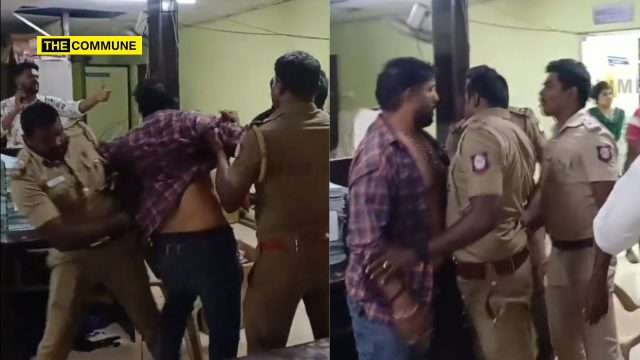
After 3-Year Legal Battle, 150-ft National Flag Re-Hoisted At Kanyakumari Zero Point

After 3-Year Legal Battle, 150-ft National Flag Re-Hoisted At Kanyakumari Zero Point

After a three-year legal battle, the 150-foot national flag at Mahadanapuram in Kanyakumari was re-hoisted on Monday, 26 January 2026, following an order of the Madras High Court.

The tricolour was hoisted by Nainar Nagendran, the Tamil Nadu BJP president, on Republic Day after the High Court permitted former Member of Parliament Vijayakumar to personally take charge of the maintenance of the flag.

The flagpole, located at Mahadanapuram, had remained without the national flag amid prolonged litigation over its upkeep and management. With the court clearing the way for Vijayakumar to maintain the structure, the long-pending issue was resolved, paving the way for the re-hoisting of the flag.

Subscribe to our channels on TelegramWhatsApp, and Instagram and get the best stories of the day delivered to you personally.
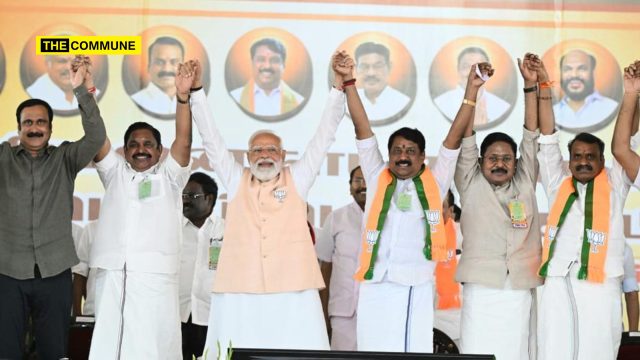
“The Party That Killed Tamils Should Come To Power?” Seeman’s Scathing Attack On Congress

“The Party That Killed My People Should Come To Power? BJP Shouldn’t Come, But Congress Can?” Seeman’s Scathing Attack On Congress

Speaking to reporters in Tambaram in Chengalpattu district, Seeman, chief coordinator of Naam Tamilar Katchi (NTK), launched a sharp attack on national parties, particularly the Indian National Congress, rejecting arguments that Congress could be supported to prevent the Bharatiya Janata Party (BJP) from coming to power.

Questioning the logic of opposing the BJP while accommodating Congress, Seeman said, “Why are you bringing in BJP? BJP shouldn’t come, but Congress can? Who is responsible for all the suffering of Tamil people in this country? Congress!”

Referring to the Cauvery water dispute, he alleged, “500 TMC, 450 TMC of water was coming through Cauvery. Who stopped giving that water that had arrived? Who filed the case? Karunanidhi! Indira Gandhi threatened, ‘Withdraw that case,’ and forced him to withdraw it – who? That mother Indira Gandhi!”

Seeman also accused Congress of ceding Indian territory, stating, “Who arbitrarily took Katchatheevu, which is India’s land, and handed it over to the Sinhalese on a platter? My grandfather Sethupathi handed it over – who? You!” He further alleged that Tamil people were rendered stateless overnight, saying, “In one night, who signed with Sirimavo Bandaranaike and Shastri, throwing my people into statelessness overnight? You!”

Blaming Congress for approving major industrial and infrastructure projects, Seeman said, “Who signed off on all the poisonous projects in this land – nuclear plants, Sterlite, methane, ethane, everything? You!” He also criticised the shift of education from the State List to the Concurrent List, adding, “Then you come pretending, ‘We’re going to do good for everyone.’ First thing, you imposed Hindi in that country, trying to destroy my mother tongue in this country.”

Accusing Congress of destroying Tamil political aspirations, Seeman said, “The party that destroyed a nation’s liberation dream – Congress! The party that killed and piled up my race right in front of my eyes – should it come to power?” Referring to Sri Lanka, he alleged that Congress enabled atrocities against Tamils by providing financial and military support, saying, “You gave him both hands, poured 80,000 crores as interest-free loan, gave weapons, training, warships, and made him destroy and eliminate my people – that’s Congress! DMK stood along with them. Should Congress, which killed the race, come? How can you allow that? Say both shouldn’t come – that’s when you’re a real man.”

He also targeted the Dravida Munnetra Kazhagam (DMK), alleging complicity, and questioned the ideological differences between Congress and the BJP. “Fine, tell me one difference in DMK’s stance vs Congress on Cauvery, Mullai-Periyar or Katchatheevu retrieval. Tell me one!” he said.

Rejecting alliance politics, Seeman said, “If you can massacre my people before my eyes and still get votes from the same people and come to power, then we have become a shameless crowd. Kill Kannadigas or Telugus in Andhra, Malayalis – can you get even one vote in that state? Can you? Tell me! Keep allying with it and repeatedly say BJP will come, but Congress can?.”

He added, “Because it killed my race, crushed my liberation dream, so it can come. Sent IPKF to destroy my people, so it can come. Made us give up Cauvery rights – so it can come. Took Katchatheevu and says, ‘what is done is done’, so it can come. What is this? What is this? How long will you keep talking like this, brother? How long?” He accused mainstream parties of lacking moral courage and alleged that Tamil votes were repeatedly exploited despite historical injustices.

On Hindutva politics, Seeman questioned claims of ideological moderation, saying, “Show me one Congress leader who can say that they are different from the BJP in this aspect. That’s a religious party; are you moderate? They say we are all Hindus loudly, you say we are all Hindus slowly – what’s the difference?They are sound Hindutva, you are soft Hindutva.” He added, “What else should I say – BJP 100% Hindus; DMK 90% Hindus—I am not saying this, their leader himself says: ‘we have 90% Hindus in my party.’ Are we BJP’s B-team or is it them? Tell me.”

He concluded by criticising governance and fiscal dependence on the Centre, alleging that fear of central agencies prevented States from asserting financial autonomy. Referring to enforcement actions, he said, “How long will you keep doing fraud, this maggot work, driving the cart? Stand like a brave son, say don’t worry, they won’t come; I’m here. Say that! They (BJP) will come; they will come. After coming, what do they do? Can’t pay teachers’ salaries, complain that the centre is pocketing all the money, and won’t give. For complaining like this, you need power, 40 Parliament seats, one government. Hey, if you don’t give my money, why should I pay taxes, say like that no? I won’t give you GST, can’t you say I can’t give? If you say it, what happens? ED. Then we’ll (DMK) goes running: ‘Very sorry, Modi!’ This is it—this is despicable, and for this we have parties and governments!”

Seeman reiterated that only a decisive political break from both national parties could protect Tamil interests, asserting that continued reliance on either Congress or the BJP amounted to a loss of political dignity.

Subscribe to our channels on TelegramWhatsApp, and Instagram and get the best stories of the day delivered to you personally.
Madras High Court Stays DMK Govt Order Exempting Religious Buildings From Collector’s NOC

NOC-Requirement-For-Religious-Structures dmk madras high court

The Madras High Court, Madurai Bench, on Friday stayed the operation of a Government Order (G.O.) issued by the Tamil Nadu Housing and Urban Development Department on 8 January 2026, which exempted certain religious buildings from obtaining a No Objection Certificate (NOC) from the district collector for planning approval.

The interim stay was granted by a Bench comprising Justices G Jayachandran and N Senthilkumar, while hearing a Public Interest Litigation (PIL) filed by Kalanithi, a real estate businessman from Madurai. The Bench observed that the G.O. appeared to grant retrospective relief, which could not be done through an executive order.

The G.O., issued by the Housing and Urban Development Department and signed by its Secretary Kakarla Usha, stated that religious buildings which began functioning between 2019 and 2024 need not obtain a collector’s NOC for planning permission, provided they complied with the Tamil Nadu Combined Development and Building Rules, 2019.

Under the order, buildings that had originally received approval for non-religious purposes such as residential use or auditoriums but were later used for religious activities during the period from 4 February 2019 to 6 March 2024, could be retrospectively regularised without insisting on a collector’s NOC. The exemption was also extended to applications for religious buildings that had been kept pending for want of an NOC during the same period. Further, even applications submitted after 7 March 2024, were permitted to receive planning approval without seeking an NOC from the district collector.

The background to the G.O. includes growing complaints from several parts of Tamil Nadu about religious buildings being constructed or operated in densely populated residential areas in violation of approved building norms. In many cases, structures sanctioned as residential buildings were allegedly being used as prayer halls or places of worship. Although courts had ordered the demolition of such unauthorised constructions in some cases, officials were accused of hesitating to take action despite confirmed violations.

The policy shift was first announced by Chief Minister MK Stalin during a public event in Chennai in December 2025, where he stated that planning permission for religious buildings would be granted without insisting on a collector’s NOC.

In his petition, Kalanithi contended that under the Tamil Nadu Combined Development and Building Rules, 2019, no planning permission could be granted for the construction of any religious building without a No Objection Certificate from the district collector. He argued that the NOC was a statutory safeguard meant to assess communal sensitivity, law and order concerns, suitability of the proposed location, and other public interest considerations.

He further alleged that the January 8 G.O. effectively sought to retrospectively validate religious buildings that had come into existence in violation of the law. Such regularisation, he claimed, would endanger public order, peace, and communal harmony. The petitioner urged the court to quash the G.O. and direct district collectors to examine issues of public order and morality before granting permissions for religious buildings.

According to the State government, although the relevant building rules came into force in 2019, standard operating procedures (SOPs) for the speedy disposal of applications seeking collector’s NOC were framed only in 2024. Citing this delay, the Chennai Metropolitan Development Authority (CMDA) and certain religious institutions had represented to the Chief Minister, seeking exemption from the NOC requirement for religious buildings that had been functioning between 2019 and 2024.

The court adjourned the matter to 20 February 2026, for further hearing.

Source: The New Indian Express

Subscribe to our channels on TelegramWhatsApp, and Instagram and get the best stories of the day delivered to you personally.
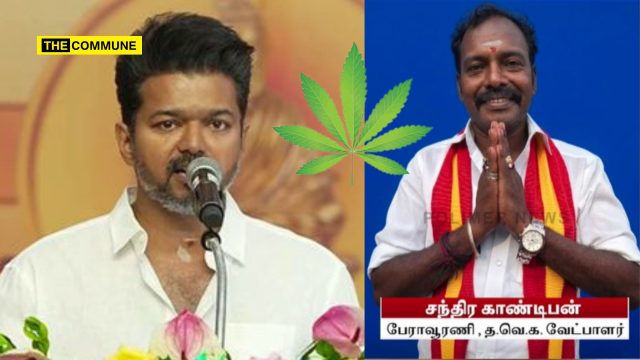
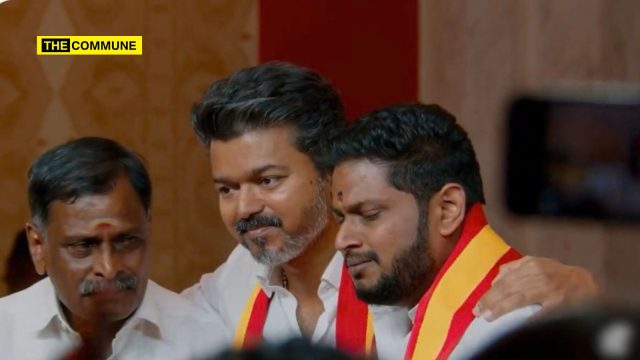
“Panaiyur Pannaiyar, You Earned Crores Selling Tickets In Black Market”: AIADMK Brutally Slams Part-Time Politician Actor Vijay Over Corruption Charge

Panaiyur-Pannaiyar-You-Earned-Selling-Black-Tickets-AIADMK-Brutally-Slams-Part-Time-Politician-Actor-Vijay-Over-Corruption-Charge

The AIADMK IT Wing on Sunday, 25 January 2026, launched a sharp attack on actor and TVK leader Vijay, accusing him of corruption and hypocrisy, following his recent criticism of the AIADMK at a party cadre meeting in Mamallapuram.

In a post shared on X, the IT Wing described Vijay as “the massively corrupt person”, alleging that he had earned several crores of rupees through the illegal sale of movie tickets on the black market.

The post stated, “Panaiyur landlord, Corruption is the act of earning money illegally. By that definition, you—actor Vijay (@actorvijay), who allegedly earned several crores by continuously selling tickets on the black market in violation of the law—are the massively corrupt person of all. “Being a slave to the Central government” is not something that exists anywhere in the history of the AIADMK. Whenever there has been a challenge to the welfare and rights of the state, our great movement—the AIADMK—has fought for Tamil Nadu’s rights, secured them, and argued for and obtained benefits for the people. That is the historical record. Shall we name the film for whose release you stood with folded hands for five hours outside the then Chief Minister’s house? Or can you name the Chief Minister who helped you without expecting anything in return? Corruption is not just about making money through politics. Bowing before power centres to increase one’s income through undue influence also falls under the same category, Panaiyur man. You call the AIADMK government corrupt, yet you seat Sengottaiyan, who was the Education Minister in that very government, right beside you as your coordinator. Is that your explanation of “purity” and “clean power”? Whether you do it or not, but aren’t you also one of the reasons for the death of 41 people in Karur? Without making any atonement for that, didn’t you hide in Panaiyur for over 72 days out of fear of what case might come, and even keep the party office closed for 15 days? That itself is the answer to how “brave” you are. In world history, for the first time, instead of going to the homes of the deceased to offer condolences, you made them come to Panaiyur to console you. That’s next-level landlord arrogance! For this, you could even be awarded a Doctorate! Without going to Karur to wipe away tears, you staged a token condolence event with glycerine tears and photographs, and even there, without the slightest sense of guilt, indulged in self-promotion. Such narcissistic behaviour is a very dangerous sign in politics. In politics, one may be good, one may be capable, but one should never be someone who understands nothing, deceives even his own fans, and continues to be just a director-actor, like the TVK leader. Every single argument you reel off about our party, as if memorised and recited, is nothing but top-class garbage. Along with the garbage of Anna Arivalayam, let us also throw out the garbage of Panaiyur. DOT.”

The remarks came in response to Vijay’s first-ever direct and aggressive attack on the All India Anna Dravida Munnetra Kazhagam (AIADMK), where he accused the party of being subservient to the Central government.

Subscribe to our channels on TelegramWhatsApp, and Instagram and get the best stories of the day delivered to you personally.
Padma Awards 2026: Ranjani-Gayatri, Dr. Kamakoti, HV Hande, Othuvaar Thiruthani Swaminathan, And 9 Others From Tamil Nadu Honoured

The Government of India has announced the Padma Awards 2026 on the eve of Republic Day, recognizing exceptional contributions across art, medicine, public service, and other fields. Among the distinguished recipients are several eminent personalities from Tamil Nadu, including the renowned Carnatic vocalists duo Ranjani-Gayatri, former IIT Madras Director Dr. V. Kamakoti, veteran medical professional Dr. H.V. Hande, traditional arts exponent Rajastapathi Kaliappa Goundar, and nine others from the state, highlighting Tamil Nadu’s strong representation in this year’s honours.

The Padma Awards, one of India’s highest civilian recognitions, include the Padma Vibhushan, Padma Bhushan, and Padma Shri. This year, a total of 131 awards were approved, comprising 5 Padma Vibhushan, 13 Padma Bhushan, and 113 Padma Shri (with some counted jointly, such as duos). Tamil Nadu features prominently, with 13 recipients from the state overall.

Ranjani-Gayatri (the duo of sisters Ranjani and Gayatri Balasubramanian) have been honoured with the Padma Shri for their outstanding contributions to Carnatic music. Widely acclaimed for their soulful renditions, innovative presentations, and efforts in preserving and popularizing classical Carnatic traditions, the sisters have inspired generations of musicians and audiences worldwide through performances, teaching, and recordings.

Dr. V. Kamakoti, a distinguished academic and former Director of IIT Madras, has been recognized for his pioneering work in technology, education, and innovation. His leadership in advancing technical education, research in areas like cybersecurity and indigenous computing, and contributions to national policy have earned him widespread respect.

Dr. H.V. Hande, a respected figure in medicine, receives the Padma Shri for his lifelong dedication to healthcare, particularly in public health initiatives and service in Tamil Nadu.

Rajastapathi Kaliappa Goundar has been conferred the Padma Shri in the field of Art for his mastery and promotion of traditional Tamil performing arts and cultural heritage, helping keep ancient practices alive in contemporary times.

Shri Kallipatti Ramasamy Palaniswamy: Eminent gastroenterologist honoured with the Padma Bhushan for his pioneering contributions to medicine and healthcare advancements.

Shri S K M Maeilanandhan: Veteran social worker recognized with the Padma Bhushan for his lifelong dedication to education, community development, and social welfare initiatives.

Shri K Ramasamy: Distinguished agricultural scientist and former Vice-Chancellor of Tamil Nadu Agricultural University, awarded the Padma Shri for advancements in science, engineering, and agricultural research.

Shri K Vijay Kumar: Former CRPF Director General and 1975-batch IPS officer (Tamil Nadu cadre) famed for leading the operation against forest brigand Veerappan, conferred the Padma Shri for distinguished service in civil service and law enforcement.

Shri Othuvaar Thiruthani Swaminathan: Devoted exponent of Tamil Saiva musical traditions (Othuvar), honoured with the Padma Shri for over six decades of preserving and promoting classical devotional music and Tamil Saiva heritage.

Dr. Punniamurthy Natesan: Respected medical professional recognized with the Padma Shri for his contributions to medicine and healthcare services.

Shri R Krishnan (Posthumous): Noted figure in the arts, awarded the Padma Shri posthumously for his distinguished contributions to the field.

Ms. Sivasankari: Veteran Tamil writer and litterateur honoured with the Padma Shri for her influential work in literature, Tamil literary discourse, and cultural enrichment.

Shri Thiruvaarur Bakthavathsalam: Renowned exponent of traditional Tamil percussion (mridangam) and Carnatic music, conferred the Padma Shri for his mastery and efforts in preserving classical performing arts.

“This Isn’t Survey Stone Right?”: Justice GR Swaminathan Lights Thiruparankundram Deepathoon Replica

The DMK government and anti-Hindu Dravidian Stockists are once again going to suffer a serios meltdown as Madras High Court Judge Justice GR Swaminathan lit a lamp resembling the Deepathoon of Thirupparankundram Hil at an event organized in Chennai by Dhara Foundation.

Giving more heartburns to the Dravidian Model government, Justice GR Swaminathan said “I’ve only one doubt. That is not a survey stone right?

Taking a sly jibe against those who moved impeachment motion against him, Justice GR Swaminathan made it clear that he intends to carry out his judicial duties independently and faithfully for the remainder of his tenure, which extends roughly another four and a half years.

I think that I still have 4.5 years of service. I don’t think they will remove me before that. In these 4.5 years that I am going to stay, I want to show excellence, keep Sanatana Dharma in heart. This event has given me the energy for that.“, he said.

The Thirupparankundram Deepam Case

Thirupparankundram is a historic hill in Madurai that hosts the Arulmigu Subramaniya Swamy Temple and, higher up, the Sikandar Badusha Dargah. Traditionally, the Karthigai Deepam ritual — a festival flame lit during the Tamil month of Karthigai — has been observed at a lower shrine (Uchipillaiyar), not atop the hill. Over time this became an accepted practice tied to local custom and concerns over communal sensitivity.

In December 2025, a petitioner sought judicial directions to permit the Deepam lamp to be lit at an ancient stone pillar (Deepathoon) on the hilltop — terrain the petitioner argued belonged to the temple and historically linked to the ritual. Justice Swaminathan, on a single-bench ruling, ordered that proper arrangements be made for the lamp to be lit at that hilltop shrine and emphasised that the land is temple property and ritual rights must be respected.

When the Tamil Nadu government and temple authorities did not immediately comply, instead following the conventional practice at the lower shrine, Swaminathan initiated contempt proceedings, quashed prohibitory police orders, and directed that security be provided to ensure the ritual could be carried out at the hilltop location.

Subscribe to our channels on TelegramWhatsApp, and Instagram and get the best stories of the day delivered to you personally.
Muslim Political Party In Rome Promotes Arabic In School Curriculum, Catholic Leadership Silent

A newly formed political group seeking to influence Rome’s 2027 municipal elections has triggered widespread controversy after endorsing the inclusion of Arabic in the curriculum of a public high school in the Italian capital, drawing allegations of ideological Islamisation and raising questions over the silence of Catholic leadership.

The group, Muslims for Rome 2027 (MuRo2027), was founded in November by Francesco Tieri, a left-wing activist who later converted to Islam. The organisation has publicly stated that it aims to mobilise Muslim voters in Rome and shape local politics in line with what it describes as its religious identity.

In its founding statement, MuRo2027 said it was inspired by the electoral success of Zohran Mamdani in the United States and claimed that his victory demonstrated the growing political relevance of Muslim communities. Tieri stated that Muslims should no longer be treated as “political objects” but as active political subjects, and that the group intended to advance proposals aligned with its religious affiliation ahead of the Rome local elections.

The group attracted immediate attention after posting an image on Instagram depicting Rome’s Colosseum topped with an Islamic crescent, imagery that critics described as a symbolic assertion of Islamic dominance over Italian civilisation. Jewish and conservative publications warned that the visual messaging appeared to go beyond civic participation and veered into ideological provocation.

Arabic in Roman Schools Sparks Political Row

The controversy intensified on 14 January 2026 when MuRo2027 promoted the decision of the Eugenio Montale Linguistic High School in Rome to introduce Arabic as a third language option, alongside Chinese, French and German. The group publicly defended the move, stating that Arabic was spoken by tens of thousands of residents in Rome and that offering the language reflected inclusive public education.

In its statement, MuRo2027 criticised those opposing the move, arguing that even private Catholic schools offered Arabic and framing opposition as driven by hostility toward foreign-origin communities. The school itself stated that its language offerings were intended to promote engagement with other cultures.

The endorsement drew a strong response from Rossano Sasso, a Member of Parliament from the Lega party, who said he would raise the issue in Parliament. Sasso stated that if an Islamic political group was influencing curriculum choices in public schools, it could represent what he described as creeping Islamisation of Italian society.

Experts Warn of Ideological Drift

Security and counter-terrorism analyst Giovanni Giacalone said Islamist groups appeared to be organising politically to support the left in upcoming elections. He stated that the political left was seeking the Muslim vote and that Islamist networks were becoming increasingly aggressive in political mobilisation and street activism.

Analysts and commentators also cited past warnings by Daniel Pipes, who has argued that Arabic language programmes in public education, particularly when influenced by external organisations, have in other countries served as vehicles for ideological indoctrination rather than neutral language instruction.

Catholic Silence Draws Attention

Amid the growing controversy, the Catholic Church’s leadership in Italy has remained notably silent. No statement has been issued by senior Catholic authorities in Rome or the Vatican addressing the political messaging, symbolism, or the broader implications of a religiously driven political movement asserting itself in the capital of Catholicism.

Italian Jewish publication Bet Magazine Mosaico observed that the slogan “Let’s take Rome” no longer appeared merely rhetorical, warning that the imagery and rhetoric used by MuRo2027 conveyed a clear ideological message. Journalists and analysts noted that the group declined to participate in national television debates while dismissing public scrutiny as excessive.

Calabrian journalist Vincenzo Campanella stated that the Colosseum image represented a symbolic appropriation of one of Italy’s most iconic monuments and conveyed the assertion of Islamic symbols over national heritage.

Political and Security Concerns

Author and publisher Francesco Giubilei said Islamist political movements in Italy appeared to be seeking to replicate models seen in Northern Europe and France, driven by demographic changes. He warned that such movements sought to marginalise Christian symbols, normalise Sharia-influenced politics, and erode Western cultural foundations.

Former Monfalcone mayor and current MEP Anna Maria Cisint stated that MuRo2027 promoted an ideological vision that aspired to replace constitutional principles with Islamic law, posing a direct threat to freedoms, particularly those of women. Fratelli d’Italia MP Federico Mollicone said the group appeared inspired by Islamic law and argued that Quranic injunctions were incompatible with Italian legal principles.

Further scrutiny followed after MuRo2027 issued a statement criticising the arrest of Hamas operative Mohammad Hannoun by Italian police. Italian media reported that Tieri had links to Rome’s Al-Huda Mosque, which has been associated with pro-Hamas clerics.

MuRo2027 Responds

Responding to criticism, Tieri stated that public expressions of religious identity were consistent with Italian secularism and argued that Italy had historically been governed by parties inspired by Catholic values. He claimed that MuRo2027 was not a Muslim lobby but a civic movement seeking to contribute to local politics and the common good and said Muslims’ rights were not fully protected in Italy.

Despite these assurances, critics argue that the group’s rhetoric, symbolism, and political positioning point to a deeper ideological project. As MuRo2027 continues to gain visibility ahead of the Rome elections, observers note that while political and security experts have raised alarms, Catholic leadership has yet to publicly respond.

Source: MeForum

Subscribe to our channels on TelegramWhatsApp, and Instagram and get the best stories of the day delivered to you personally.