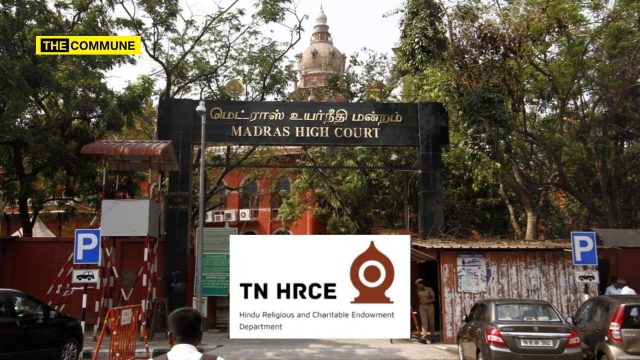
The Madras High Court has ruled that Executive Officers (EOs) appointed by the Hindu Religious and Charitable Endowments (HR&CE) department to temples across Tamil Nadu cannot interfere with the religious, customary or traditional practices of those temples, as reported in The Hindu.
A Division Bench of Justices GR Swaminathan and V. Lakshminarayanan held that EOs must restrict themselves to the administration and maintenance of the movable and immovable properties of the respective temples, including temple revenues.
The Bench also clarified that an Executive Officer could function as a Fit Person in the absence of a board of trustees only under exceptional circumstances and for a brief period. A Fit Person, the court said, could be appointed only as an interim or ad hoc arrangement and could not continue in that capacity for years together.
The judgment was delivered while disposing of a public interest litigation petition filed by temple activist T.R. Ramesh through his counsel Niranjan Rajagopalan. The petition sought to restrain the HR&CE department from appointing its Executive Officers as Fit Persons to manage temples, including the Parthasarathy Swamy Temple at Triplicane in Chennai.
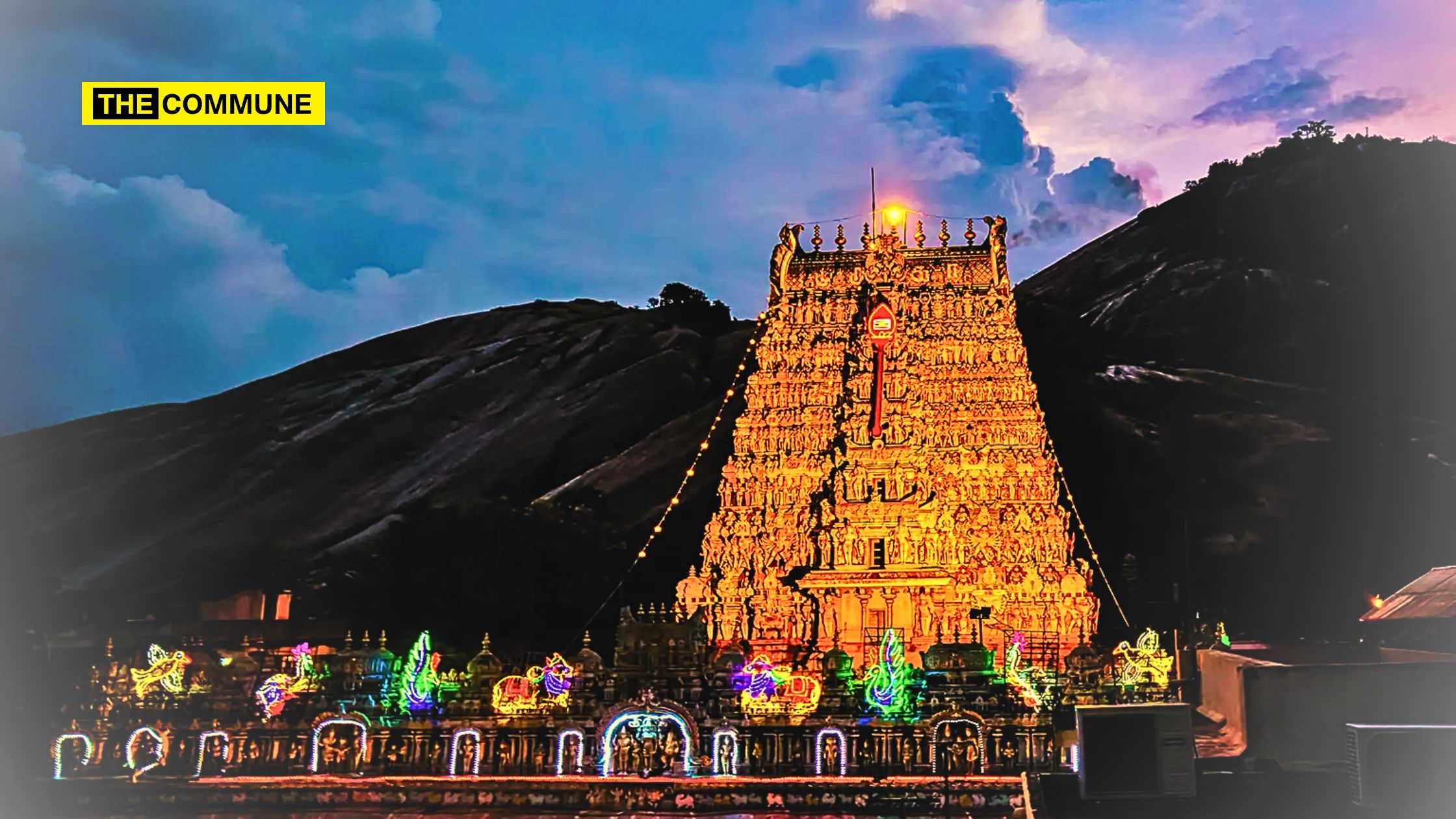
The Bench noted that the Parthasarathy Swamy Temple is an ancient Vaishnavite temple whose administration is governed by a scheme framed in a civil suit instituted in 1924.
Under the scheme, the temple was to have three trustees. One was required to be a Brahmin, another an Arya Vaishya (Komati), while the third was required to be neither a Brahmin nor an Arya Vaishya. The trustees were entitled to hold office for five years, with the scheme also specifying the composition of the electoral college.
The court also traced the subsequent litigation concerning the administration of the temple.
In 1976, another civil suit was filed before the Madras High Court following a dispute over the temple administration. In 1982, the court passed an interim order restraining the HR&CE department from appointing trustees and directed the Executive Officer to function as the Fit Person.
However, the Division Bench pointed out that the 1982 interim order ceased to operate in 1991 when the main case was disposed of. Therefore, the court held, the temple administration could not continue to be run by the Executive Officer while simultaneously functioning as a Fit Person.
The Bench recorded the submission of Additional Advocate General P.V. Balasubramaniam that a board of trustees would be appointed soon.
The judges also referred to Rule 4(a) of the Conditions for Appointment of Executive Officers Rules, 2015, which requires Executive Officers to function along with trustees. According to the Bench, this clearly indicates that the same individual should not discharge both functions.
“If both the functions are combined in a single person, the system of checks and balances would vanish… Lord Acton presciently remarked that power tends to corrupt and absolute power corrupts absolutely,” the judges observed.
The Bench further pointed out that several temples in Tamil Nadu have annual budgets running into several crores of rupees and said that having both a multi-member trust board and a government-appointed Executive Officer would provide a system of checks and balances.
“There are quite a few temples whose annual budgets run into several crores of rupees. If there is a multi member trust board and also a government official acting as EO, that would ensure that power is exercised properly. If there is no Trust Board and the EO is also asked to act as a Fit Person, such state of affairs would not be conducive to a proper administration,” the court said.
The Bench then addressed the larger question of the limits of an Executive Officer’s authority, particularly in matters involving religious practices.
When counsel Niranjan Rajagopalan sought a specific caution against EOs interfering in religious affairs, the judges referred to Section 45 of the HR&CE Act, 1959.
The provision, the court noted, limits the powers and duties assigned to Executive Officers to those concerning the administration of the properties of the religious institution.
The Bench emphasised the significance of the word “only” in the proviso to Section 45(2), holding that it prevents Executive Officers from entering the religious domain.
“An area even slightly tinged with religious elements is a no-go zone for the Executive Officer. What is religious activity requires no delineation. Suppose, Kumbabhisekam has to be conducted, the date, timings, and the manner of performing the consecration ceremony are purely religious aspects. Anything that has to do directly with worship falls within the realm of religion. We make it clear that the Executive Officer of the temple cannot interfere with the religious activities, customary practices and traditions of the temple. That has to be necessarily carried out only by persons who are well versed with the customs and traditions of the temple concerned,” the Bench concluded.
Subscribe to our channels on WhatsApp, Telegram, Instagram and YouTube to get the best stories of the day delivered to you personally.