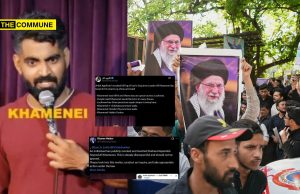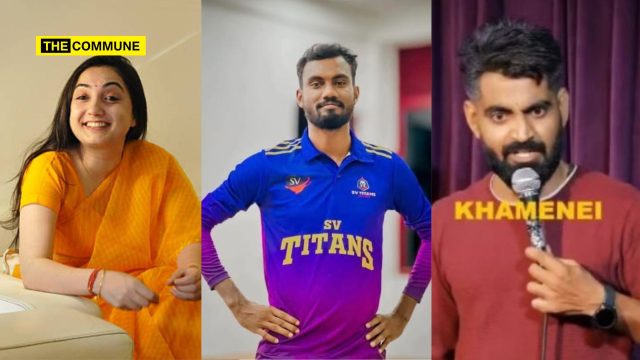
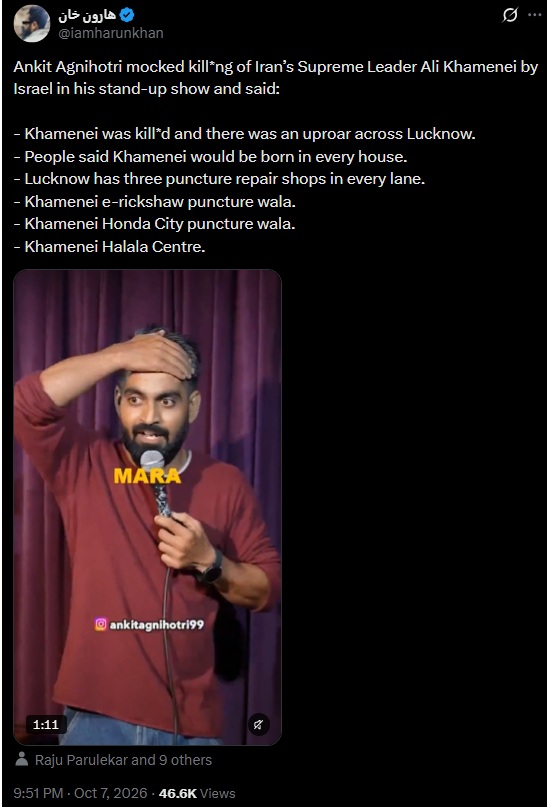
Stand-up comedian Ankit Agnihotri became the target of Islamist social media accounts after joking about Indian Muslims raising slogans such as “Har ghar se Khamenei niklega” following the death of Iran’s Supreme Leader Ayatollah Ali Khamenei.
Agnihotri’s routine mocked declarations that another Khamenei would emerge from every household. In response, accounts including Muslim IT Cell shared his video, branded him a “Hindutva bigot” and tagged the Iranian Embassy in India.
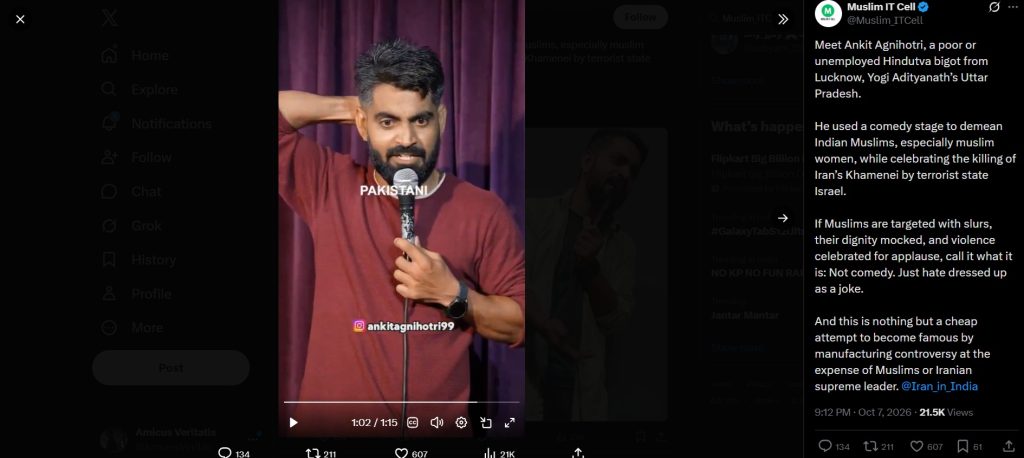
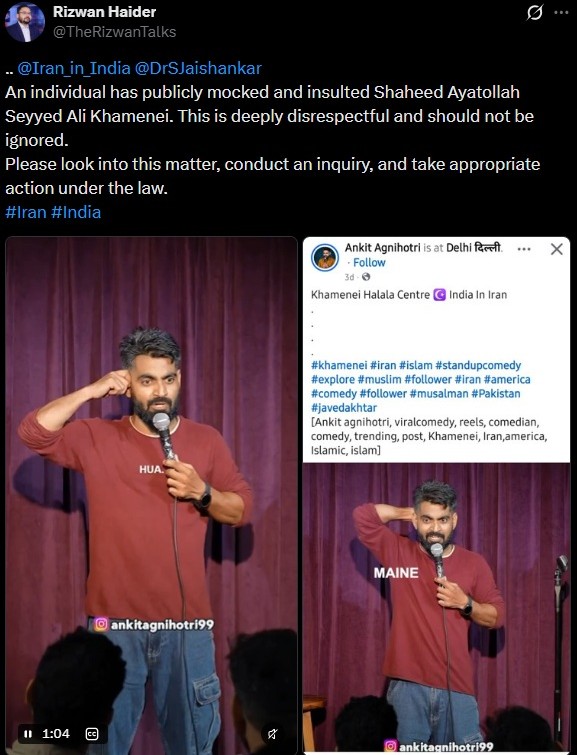
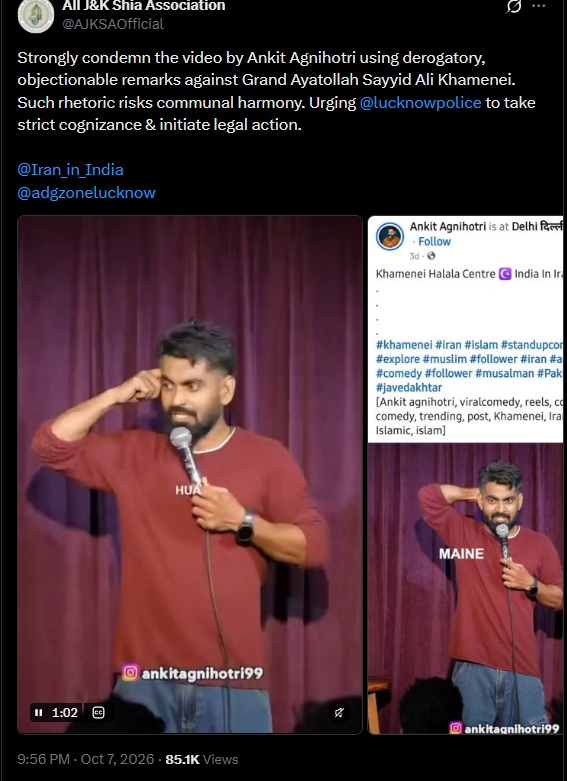
The All-India Jammu and Kashmir Shia Association condemned his remarks and urged the Lucknow Police to take legal action, while another account, “The Muslim”, also targeted the comedian.
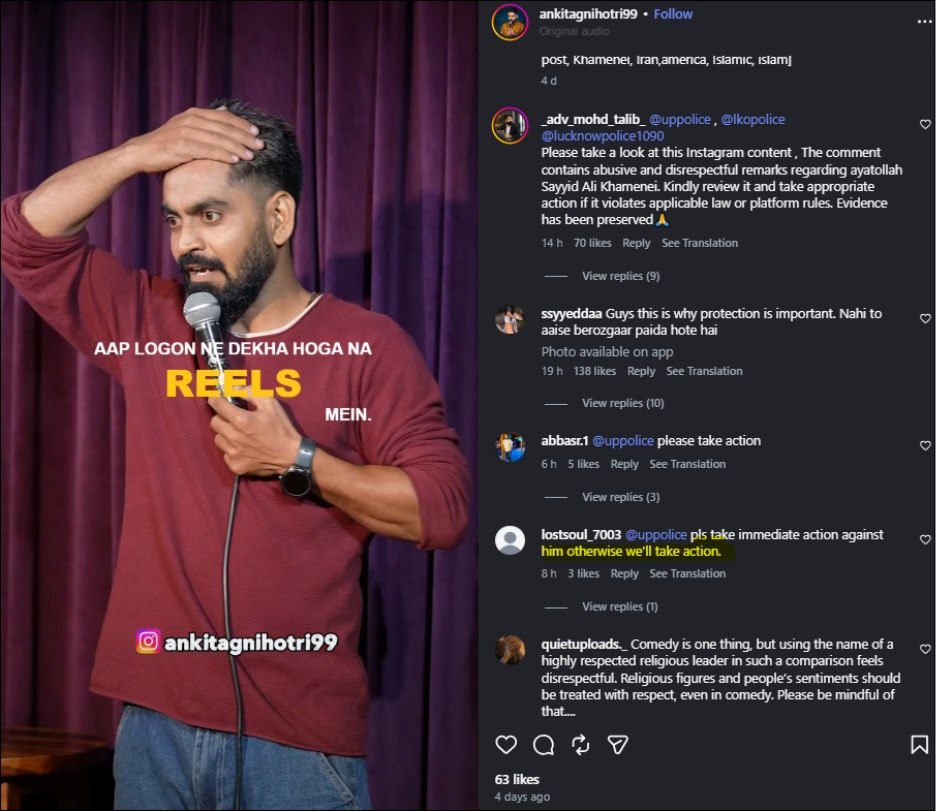
His Instagram page has been flooded with abusive comments, threats and demands for Iranian authorities to intervene.
But this dogwhistling and painting a target on a Hindu’s back is not new.
Pattern Of Dogwhistling Is Not New
This Ankit Agnihotri dogwhistling episode is not a stray incident. We have seen several in the past few years.
The Nupur Sharma Episode: How Online Outrage Escalated Into Threats
During a television debate, Sharma made remarks about the Islamic prophet Muhammad while referring to religious texts. Mohammed Zubair of Alt News and other critics circulated clips of her remarks, with the controversy spreading rapidly on social media and prompting outrage in India and abroad.
The episode was followed by protests, threats and calls for Sharma to be punished. Slogans including “Sar tan se juda” were raised by some individuals, while the controversy also spilled over into diplomatic tensions with Gulf countries.
The consequences extended beyond Sharma herself. Hindu men Kanhaiya Lal in Udaipur and Umesh Kolhe in Amravati were brutally murdered in separate cases after expressing support for Sharma or sharing material linked to the controversy. The killings exposed the lethal potential of religiously charged mobilisation and threats against people accused of blasphemy.
Sharma has since lived under security protection. Meanwhile, Muslim politician Taslim Rehmani, who made derogatory remarks about Hindu deities, has continued to participate in public debates.
Sharmishta Panoli Faced Threats Despite Deleting Her Video and Apologising
A similar controversy emerged in 2025 involving Sharmishta Panoli, a law student at Symbiosis Law School in Pune.
Panoli was targeted by Islamist social media accounts over an Instagram video directed against Pakistan. Some of her remarks about the Islamic prophet Muhammad offended Indian Muslims, leading to a wave of online outrage and demands for action against her.
The campaign included threats invoking the slogan “Gustakhe Nabi ki ek saza, Sar tan se juda”. The threats continued even after Panoli deleted the video and tendered an unconditional apology.
Deleting the offending content and apologising did not necessarily bring an end to the online campaign or demands for punishment.
The targeting of Hindus in such cases was creating an atmosphere in which alleged religious offence is treated not merely as a matter for public criticism but as grounds for intimidation, professional consequences or legal action.
Atul Kochhar, Indian Workers in the Gulf Also Faced Backlash
The pattern of social media outrage over perceived religious insults has not been limited to politicians, students or comedians. Indian professionals working abroad have also faced serious consequences over online statements.
In 2018, Indian-born British celebrity chef Atul Kochhar criticised Priyanka Chopra and her American television series Quantico over an episode featuring an anti-Hindu storyline.
The episode depicted Indian nationalists wearing Rudraksha beads plotting to detonate a nuclear bomb in Manhattan and frame Pakistan for the attack.
Kochhar objected to the portrayal and argued that Hindus had themselves faced centuries of violence and persecution at the hands of Islamist forces. His comments triggered a wave of criticism, following which he deleted the tweet and issued an apology.
In 2023, the Kuwaiti government deported two nurses from Kerala over social media posts expressing support for Israel after Hamas attacked the country.
In 2020, several Indians also faced job losses, legal action and other consequences over content deemed blasphemous or offensive to Islam.
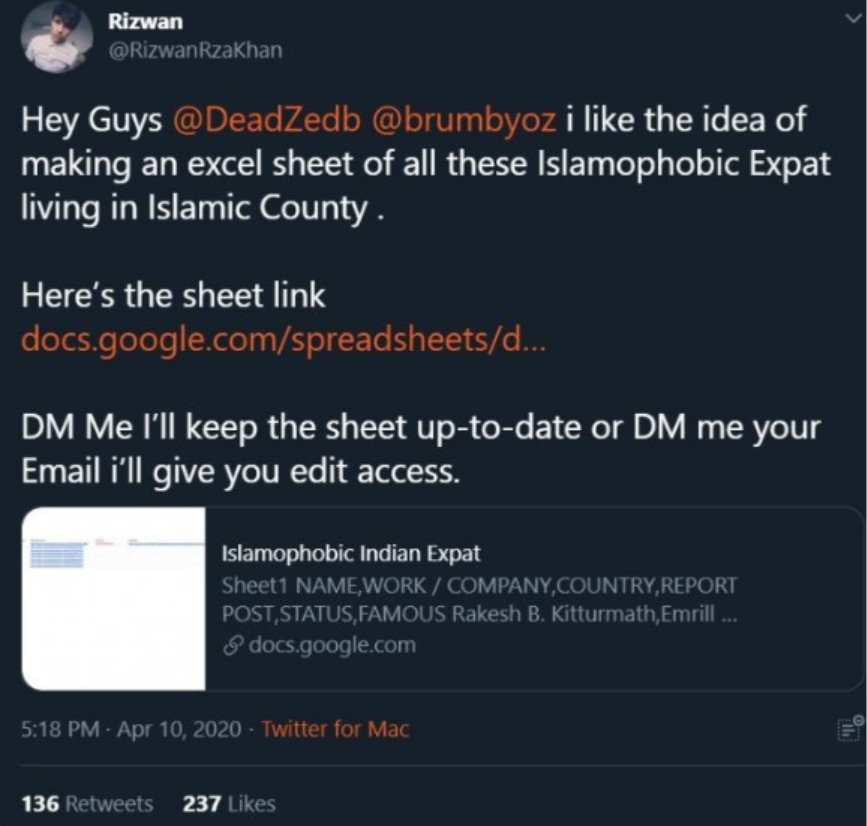
One such case involved Rakesh B. Kitturmath, a Hindu man from Ranebennur in Karnataka who worked as a team leader at Emrill Services, an integrated facilities management company headquartered in Dubai.
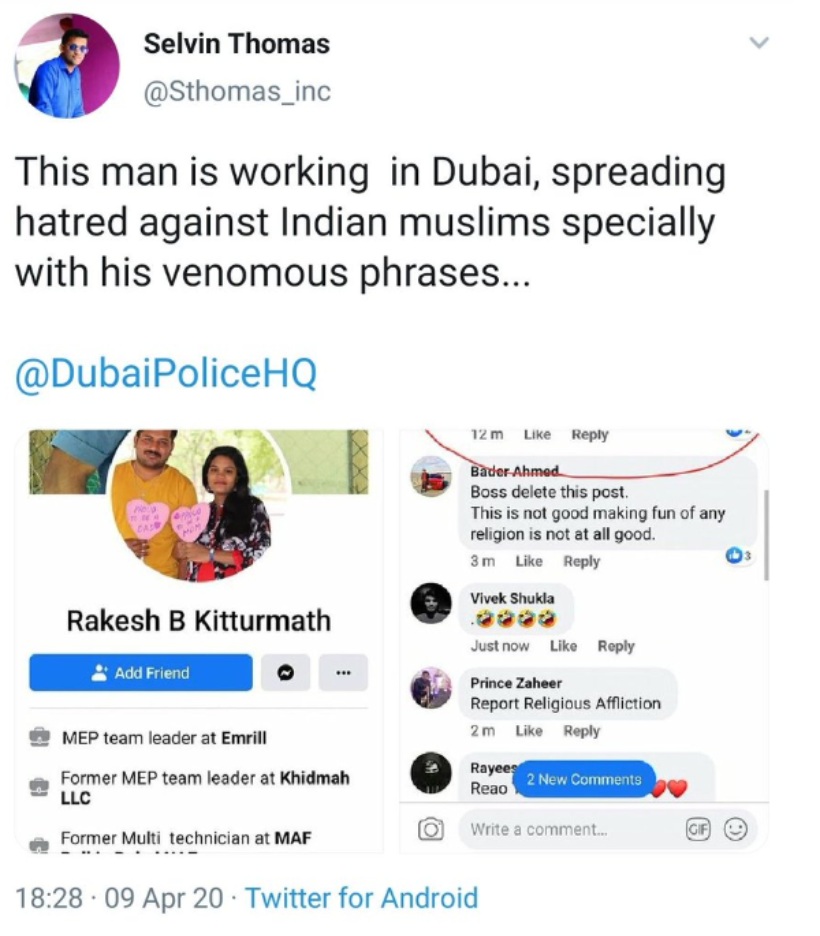
Kitturmath was targeted over TikTok comments criticising Muslims who claimed that offering namaz five times a day was sufficient to protect people from coronavirus. He was terminated from his job and faced the prospect of imprisonment.
Some Indian Islamist accounts also compiled a list of people they described as “Hindutva terrorists” and demanded similar action against them on the basis of allegations that were false. These efforts resulted in consequences for some of those targeted.
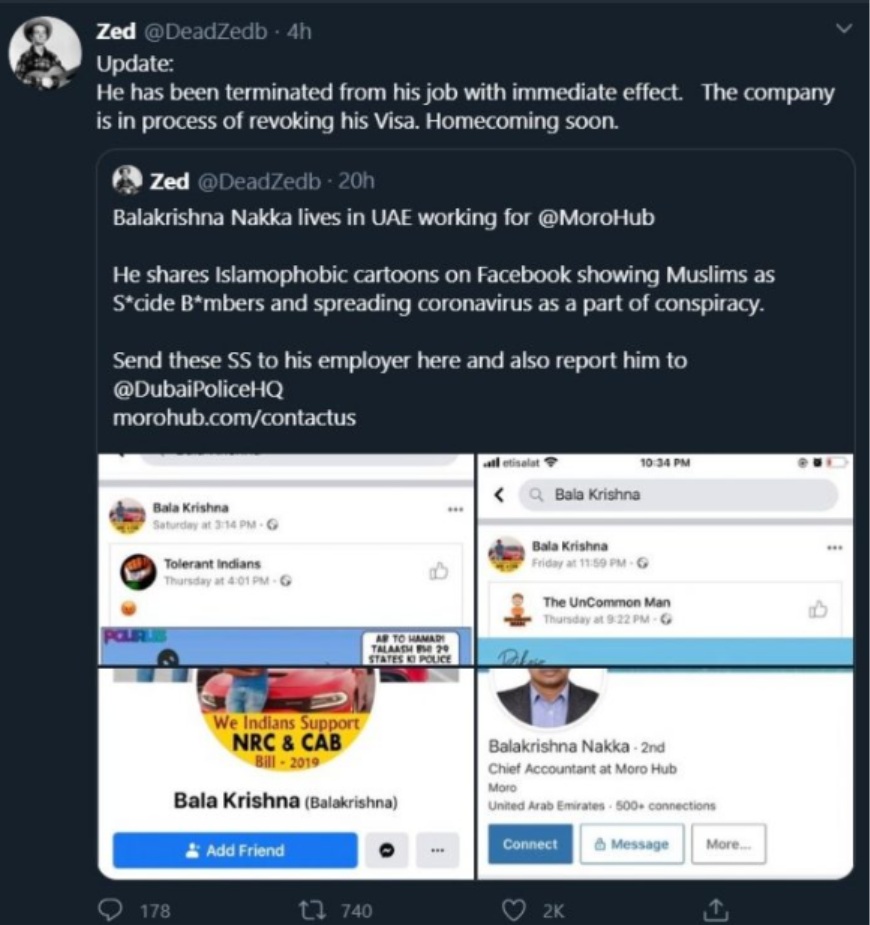
In another case, a Hindu man named Balakrishna Nakka lost his job in Dubai after sharing Facebook memes mocking the Taliban and the Tablighi Jamaat. Islamists argued that the cartoons, which depicted Muslims as suicide bombers and coronavirus carriers, were “Islamophobic” and part of a conspiracy against Muslims.
In a separate incident, Islamists demanded police action against an Indian in Oman over a social media post concerning Jamia Millia Islamia University.
These cases illustrate how online campaigns by Islamists over alleged religious offence can cross national borders and affect Indians living and working abroad, potentially exposing them to professional, legal and personal consequences.
Similar Allegations of Religious Dogwhistling Beyond India
The phenomenon is not confined to Indian social media users. Similar allegations have emerged in other countries where people have faced complaints or professional consequences over statements considered insulting to Islam.
Following the 2019 Easter bombings in Sri Lanka, three Sri Lankan security personnel working at a high-end hotel in Palm Jumeirah were accused by Pakistani Muslim employees of insulting Islam.
In 2015, an Indian man was booked in Dubai over a Facebook post regarding the escalating violence in Iraq as the Islamic State of Iraq and Syria (ISIS) swept through the country. The post was treated as an insult to Islam.
More recently, the case of Anojan Sivarasa, a Sri Lankan Tamil Hindu migrant worker, has drawn attention to the potentially severe consequences of online religious disputes in the Gulf.
Anojan Sivarasa
Anojan is facing the death penalty in Saudi Arabia over a Facebook comment directed at Prophet Muhammad. The case began with a social media dispute following an incident during the annual Pada Yatra pilgrimage to Kataragama in Sri Lanka, when a video circulated showing a Muslim man kicking a stray dog that had accompanied Hindu pilgrims.
During the subsequent online exchanges, a Facebook user identified as Nafeesa M Mafas posted a derogatory comment about Lord Shiva and the Shivalingam. Anojan responded with a comment threatening to behead Prophet Muhammad if he had him in his hands.
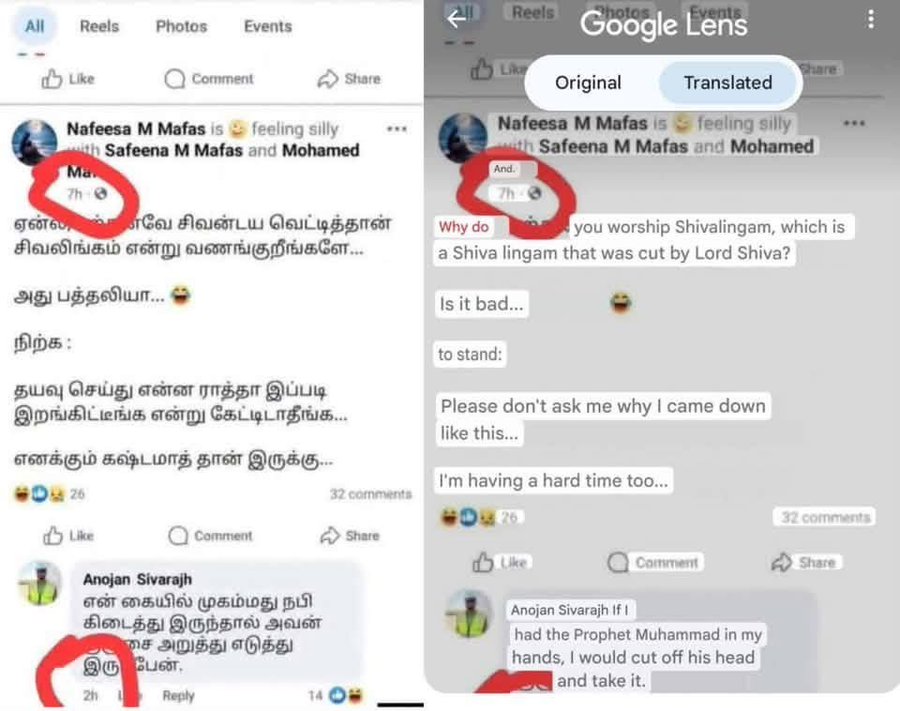
He subsequently deleted the comment and reportedly posted an apology video. However, screenshots of the exchange were circulated and sent to the company where he worked in Saudi Arabia, prompting his employer to alert Saudi authorities.
The Al-Ahsa Criminal Court initially sentenced Anojan to five years in prison and imposed a fine of three million Saudi riyals. On 17 September 2026, the appellate court increased his punishment to death after prosecutors sought to have him prosecuted under Sharia law rather than the country’s cybercrime legislation.
His case has since prompted appeals for clemency from political leaders, religious figures and civil society groups in Sri Lanka.
The situation has become more concerning following reports that Anojan was assaulted by another inmate in prison. Sri Lankan Foreign Minister Vijitha Herath told Parliament that prison authorities had informed Sri Lankan Embassy officials that Anojan sustained scratches and fingernail injuries to his face during a physical altercation. Embassy officials were not permitted to meet him personally during their visit, leaving them reliant on information provided by Saudi authorities.
The Sri Lankan government is preparing an appeal before Saudi Arabia’s Supreme Court, with the deadline to file it set for October 17. Diplomatic efforts seeking clemency or a reduction of the sentence are expected to follow the judicial process.
The case underscores how an online dispute that begins in one country can have life-altering consequences for a migrant worker employed in another, particularly when religious offence is involved.
When Religious Offence Becomes a Tool for Intimidation
The campaign against Ankit Agnihotri, like the earlier controversies involving Nupur Sharma, Sharmishta Panoli and Indian workers abroad, raises questions about the use of online mobilisation to seek punishment for perceived religious insults.
There is a distinction between criticising a comedian’s jokes and attempting to expose him to threats, professional consequences or pressure from foreign authorities. The same distinction applies to campaigns against individuals who have deleted their remarks or apologised but continue to face intimidation.
The allegations surrounding Agnihotri should be assessed on the basis of the actual posts, demands and threats made by identifiable accounts. Criticism of those actions does not justify treating an entire religious community as collectively responsible.
At the same time, the repeated appearance of demands for legal action, calls for intervention by foreign authorities and threats against people accused of insulting Islam deserves scrutiny. Such campaigns can escalate beyond online argument and create risks for individual safety, public order and communal harmony.
Freedom of expression does not mean that every joke is immune from criticism. But neither should criticism become a pretext for intimidation or for demanding punitive action from foreign governments against Indian citizens.
Subscribe to our channels on WhatsApp, Telegram, Instagram and YouTube to get the best stories of the day delivered to you personally.