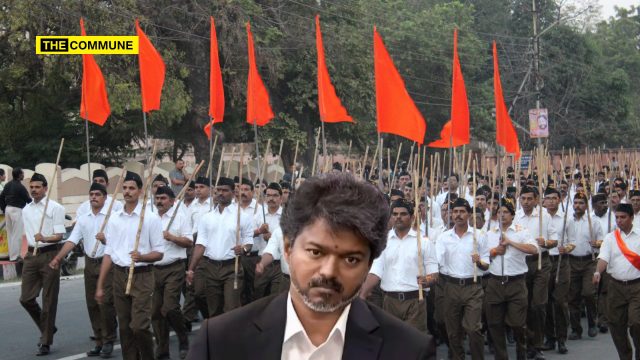
The Madras High Court on Wednesday (October 14) questioned why the Rashtriya Swayamsevak Sangh (RSS) was repeatedly being denied permission to conduct route marches in Tamil Nadu, even as the organisation was able to hold marches in “terrorist infested” Jammu and Kashmir, as reported in LiveLaw.
“If they (RSS) is able to have a march in a terrorist infested place like Jammu and Kashmir, why is the Tamil Nadu police denying permission to them every year?” the court orally asked.
Justice V Lakshminarayanan observed that the state government had been denying permission for processions organised by different groups, including the Dravidar Kazhagam and the RSS, forcing them to approach the court and engage in what he described as unnecessary litigation.
“This government is against any procession. They’re denying permission for Dravidar Kazhagam and for RSS,” the court orally remarked.
The court further observed that the state government appeared to be treating citizens as enemies by refusing permission for protests and processions. It also pointed out that the RSS had continued to face such restrictions irrespective of which government was in power.
“The government is seeing citizens as enemies. Whichever government is coming up, they’re rejecting,” the court orally remarked.
The observations were made during the hearing of a petition filed by RSS member VG Jagadeesan, who sought directions to the police to consider his representation and grant permission for route marches on October 18, October 25, November 1, or any other suitable date. The proposed march was to be conducted by RSS members in uniform, accompanied by a musical band, and followed by a public meeting.
Appearing for the petitioner, Senior Advocate NL Rajah submitted that the organisation was being denied permission every year and was consequently forced to approach the court. He said the RSS wanted to celebrate its founding day, which coincides with the Vijayadashami celebrations, by organising a route march.
According to the petitioner’s counsel, the police had been rejecting requests for permission on the grounds that the proposed events could lead to law and order problems.
Rajah also highlighted the difficulties faced by smaller political organisations that might not have the resources to pursue litigation to secure permission for public events.
“An organisation like the RSS is able to come to court and seek permission. But what about the smaller parties which do not have the wherewithal to come to court?” Rajah asked.
Advocate General Vijaya Narayan, appearing for the state, submitted that permission had been denied because the organisation had sought to conduct a route march and public meeting at a location that had not been notified as a venue for public meetings.
The court directed the petitioner’s counsel to meet State Public Prosecutor John Sathyan and attempt to resolve the issue. It asked five representatives from the petitioner’s side to meet the prosecutor and work out a solution that would enable the event to be conducted peacefully.
The court adjourned the matter to Thursday and directed the state to submit a report on permitting a peaceful procession.
This is not the first time the RSS has had to approach the Madras High Court over permission for its route marches. The court had previously issued detailed guidelines governing such marches. However, the state denied permission again in 2024, compelling the organisation to return to court.
While permitting the march in the earlier proceedings, the court had observed that the police were responsible for protecting both the public and the organisers. It had also said that authorities could not refuse permission for route marches merely by citing law and order concerns.
The court had expressed the expectation that the police would comply with its orders in the future rather than burdening the judiciary with what it described as new and fanciful reasons for rejecting applications.
Subscribe to our channels on WhatsApp, Telegram, Instagram and YouTube to get the best stories of the day delivered to you personally.