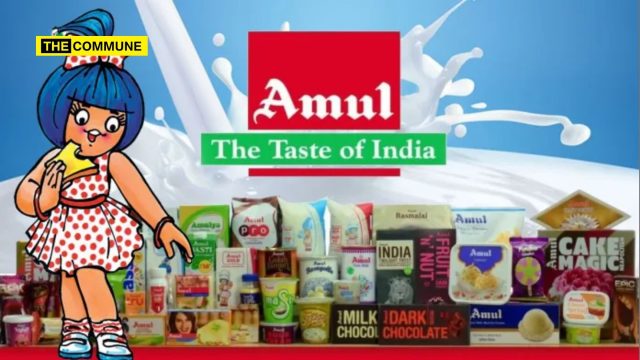
Two of India’s farmer-owned cooperatives have achieved global recognition, with Gujarat Cooperative Milk Marketing Federation Ltd (Amul) emerging as the number one cooperative in the world, and the Indian Farmers Fertiliser Cooperative Limited (IFFCO) ranked second.
The rankings were announced by the International Cooperative Alliance (ICA) in its World Cooperative Monitor 2025 report, unveiled at the ICA CM50 conference in Doha, Qatar. The ICA, headquartered in Brussels, represents cooperatives worldwide and promotes sustainable, member-driven business models.
Union Home and Cooperation Minister Amit Shah described the achievement as “a proud moment for Bharat.” He said it honoured the tireless dedication of millions of women associated with Amul and farmers contributing to IFFCO, calling the recognition “a testament to the boundless potential of India’s cooperative model being transformed into a global force of empowerment and self-reliance under Prime Minister Narendra Modi.”
Developed in partnership with the European Research Institute on Cooperative and Social Enterprises (EURICSE), the World Cooperative Monitor assesses the economic and social performance of leading cooperatives globally.
Amul, owned by over 3.6 million dairy farmers, said the recognition reflected its “consistent growth, innovation, and people-first approach in a competitive global market.” Managing Director Jayen Mehta noted that Amul’s model extends far beyond economics, supporting several UN Sustainable Development Goals — including poverty reduction, gender equality, and sustainable communities.
“Amul’s currency isn’t milk — it’s trust, the trust of millions of producers and billions of consumers,” Mehta said at the Doha event. “This recognition reaffirms the enduring strength of India’s cooperative movement and the vision of our founders to create prosperity through collective enterprise.”
How DMK Has Unfairly Treated Amul
The DMK government has politicized Amul’s entry into TN, using regional sentiment to protect its own cooperative Aavin, even as Aavin’s inefficiency, corruption, and poor pricing hurt Tamil Nadu’s dairy farmers. Meanwhile, the ruling family benefits from Amul’s corporate partnerships, exposing a clear double standard.
In May 2023, Chief Minister Stalin wrote to Union Home Minister Amit Shah urging him to stop Amul from procuring milk from Tamil Nadu’s dairy farmers, alleging that it would create “unhealthy competition” for the state-run Aavin cooperative. However, this opposition stood in stark contrast to the position of the Tamil Nadu Milk Dealers Welfare Association, which publicly declared that it would “welcome Amul,” having lost faith in Aavin’s ability to protect the interests of milk producers and dealers. The association pointed out that state officials and ministers have long exploited the milk industry without solving the issues faced by local farmers and traders, leaving them disillusioned with the DMK’s promises.
Critics have accused the DMK of using the Amul–Aavin debate as a diversionary tactic to conceal Aavin’s inefficiency and declining performance under their administration. Data showed that Aavin’s milk procurement had dropped since the DMK came to power, with Aavin buying just 32 to 35 lakh litres per day out of the state’s total milk production of 244 lakh litres per day – barely 14 percent of Tamil Nadu’s total output. Also, while Aavin paid farmers only ₹32–₹34 per litre, Amul offered a better rate of ₹34–₹38, which would directly benefit rural producers.
Yet the DMK government continues to resist Amul’s presence, presenting it as a threat to regional interests while ignoring the fact that Amul has long operated successfully in neighboring states without causing harm to local cooperatives.
What makes the DMK’s position even more contradictory is its own family’s commercial association with Amul. Amul Organic was an official sponsor of the SunRisers Hyderabad IPL team, owned by Kalanithi Maran—the brother of DMK MP Dayanidhi Maran and a key member of the extended Stalin family. This partnership demonstrates that Amul’s participation is acceptable when it benefits DMK-linked business ventures but unacceptable when it empowers Tamil Nadu’s dairy farmers.
The DMK’s conduct also exposes the government’s neglect of Aavin’s internal problems; former minister ‘Avadi’ Nasser allegedly bypassed Aavin in awarding a Diwali sweets contract to a private firm, while Health Minister Ma Subramanian excluded Aavin milk powder from government nutrition kits for lactating mothers despite Aavin’s willingness to supply it.
Instead of reforming Aavin or increasing its procurement from farmers, the DMK chose to manufacture an Amul-versus-Aavin conflict reminiscent of the Congress Party’s regional chauvinism in Karnataka, where it pitted Nandini against Amul for electoral gain. In reality, Amul’s procurement rates, operational transparency, and cooperative model are far more beneficial to farmers than the DMK’s politically manipulated system, which turned Aavin into a vehicle for patronage and propaganda.
(Source: Times of India)
Subscribe to our channels on WhatsApp, Telegram, Instagram and YouTube to get the best stories of the day delivered to you personally.