Dravidianist Tamil Nadu’s political discourse has spent decades warning about “Hindi imposition.” From anti-Hindi agitations to opposition against the three-language formula and NEP, Dravidian parties have consistently portrayed Hindi as a threat to Tamil identity and regional autonomy.
But the demographic reality tells a far more uncomfortable story.
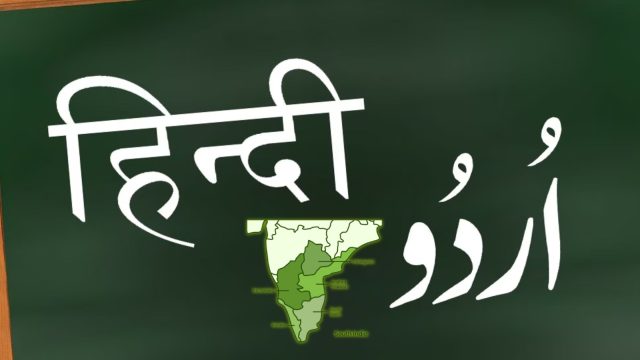
A linguistic map based on 2011 Census data and Lok Sabha constituency-level language patterns shows that across 92 constituencies in Tamil Nadu, Karnataka and Andhra Pradesh, not a single seat has Hindi as its second-largest linguistic community. Instead, Urdu dominates large parts of the South, including several regions in Tamil Nadu itself.
That raises a difficult question for Tamil Nadu’s language politics: if the state can comfortably accommodate Urdu and other non-Tamil languages, why is Hindi alone treated as unacceptable?
Among southern states, some people often allege Hindi imposition. But what does the data say?
Of the 92 LS constituencies in TN, KA & AP: 44 have Urdu as the second dominant language. And Hindi: none (!)
Kerala is unique: where neither Urdu nor Hindi is a dominant second… pic.twitter.com/ScvDPL1ypB— Prof. Shamika Ravi (@ShamikaRavi) May 14, 2026
In Karnataka, Urdu is the second-largest linguistic community in 18 out of 28 Lok Sabha constituencies. In Andhra Pradesh, that number rises to 21 out of 25. Tamil Nadu reflects a similar pattern: Urdu and Telugu dominate as the major secondary linguistic communities across much of the state, while Hindi does not emerge as the second-largest language group in even a single constituency.
Kerala stands apart, where neither Hindi nor Urdu reportedly dominates as the largest secondary linguistic bloc in any Lok Sabha seat.
The Tamil Nadu numbers are politically significant because Dravidian parties have spent decades portraying Hindi as an existential threat to Tamil identity. Yet the actual demographic footprint of Hindi speakers in the state remains relatively limited compared to other non-Tamil linguistic groups such as Urdu and Telugu speakers.
That is where the contradiction becomes difficult to ignore.
Tamil Nadu has historically accommodated multiple linguistic communities with little political hostility. Urdu-medium schools, Urdu-speaking Muslim communities, Telugu-speaking populations and other non-Tamil linguistic groups have functioned comfortably within the state’s social fabric for decades.
Yet Hindi alone continues to trigger political agitation, protests and accusations of “imposition.”
The contradiction becomes difficult to ignore when one looks at the broader linguistic reality of Tamil Nadu. Political parties routinely warn about “Hindi imposition,” organise protests, and frame Hindi as a threat to Tamil identity. But at the same time, several other non-Tamil languages have existed, expanded and functioned comfortably within the state for decades without triggering comparable outrage.
Urdu is perhaps the clearest example. Across many constituencies in South India, including parts of Tamil Nadu, Urdu emerges as a major second-language community presence. Urdu-medium institutions, Urdu signage, Urdu cultural spaces and Urdu-speaking populations are accommodated with relatively little political hostility. Telugu-speaking populations too have long enjoyed social acceptance and cultural integration in Tamil Nadu.
Yet Hindi alone is treated as uniquely dangerous.
That raises an uncomfortable but legitimate question: if Tamil Nadu can coexist with other non-Tamil linguistic communities, including languages that did not originate in Tamil soil, why is Hindi consistently singled out as unacceptable?
Hindi is not a foreign language to India. It is one of the country’s most widely spoken Indian languages and functions as a practical link language across many states. Millions of Indians use it for work, travel, business and communication. Tamil Nadu has the highest enrollment rate at Hindi Prachar Sabha compared to the other states. Demand for private Hindi tuition classes also continues to exist despite the political rhetoric surrounding the language.
And yet, politically, Hindi continues to be portrayed as though it is an invading force.
This selective outrage seems to be less about protecting Tamil and more about preserving a decades-old Dravidianist political narrative. The Dravidian movement historically built much of its mobilisation around anti-Hindi sentiment, and that emotional framework still remains electorally useful. Hindi is not merely treated as another language; it is treated as a political symbol around which identity-based resistance can be organised.
But the demographic reality increasingly complicates that narrative.
If the concern were genuinely about resisting all “outside linguistic influence,” then similar political resistance would logically extend to every major non-Tamil language presence. That clearly does not happen. The accommodation shown toward Urdu and other linguistic minorities demonstrates that Tamil society is fully capable of multilingual coexistence when politics does not actively weaponise the issue.
A state that comfortably accommodates multiple linguistic communities often treats only one Indian language differently from all others – not because of fear of Tamil disappearing, but because Hindi remains politically valuable as a symbol of resistance.
Subscribe to our channels on WhatsApp, Telegram, Instagram and YouTube to get the best stories of the day delivered to you personally.