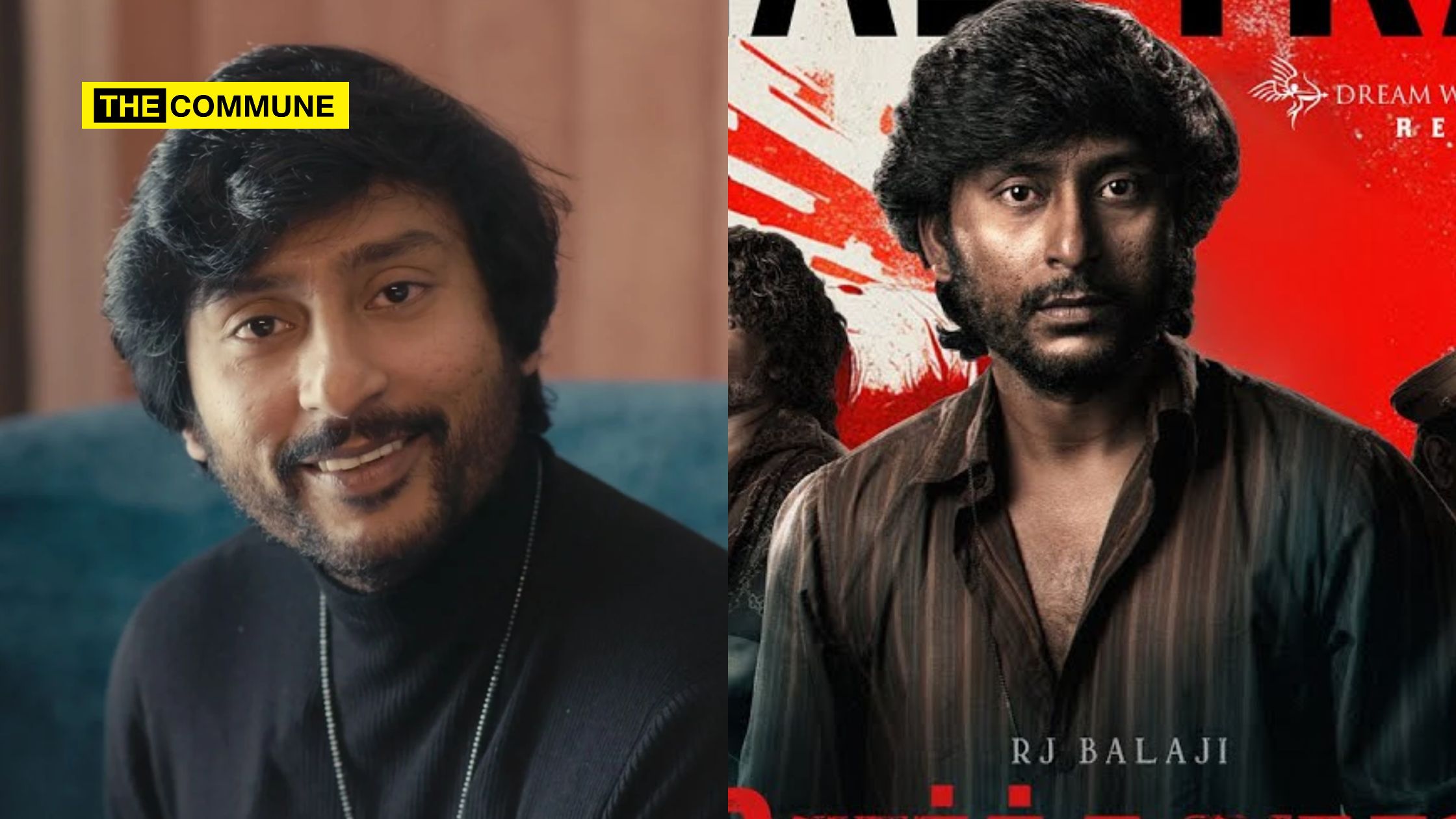
For years, RJ Balaji built his career by mocking, ridiculing and intellectually posturing over commercial cinema. He positioned himself as the “smart observer” above the masses, sneering at films, fan culture and larger-than-life entertainers while cultivating an audience that enjoyed looking down upon mainstream cinema. But today, with his own directorial film Karuppu hitting theatres (albeit delayed), the same RJ Balaji suddenly wants audiences to “stop being judgmental” and treat films as “mere entertainment.” The hypocrisy is impossible to ignore.
The Man Who Built a Brand on Mockery
Five years ago, RJ Balaji used a major public platform to mock Telugu cinema and caricature its style, humour and mass appeal in order to score laughs and applause. The message was clear: Telugu commercial films were supposedly loud, exaggerated and intellectually inferior. That brand of smug elitism became part of his identity. Yet today, the same man is aggressively promoting his films in Telugu markets and seeking acceptance from the very audience culture he once looked down upon.
5 years ago an absolute clown called #RJBalaji used a platform like this to mock and ridicule Telugu films to prove a point and today his next film as a director is shamelessly releasing in Telugu again. Have some shame maybe @RJ_Balaji ?? Care to apologise?? pic.twitter.com/0m6kxP5Hbb
— Meher Kilaru (@Kilaruness) May 11, 2026
The irony writes itself, but let’s write it anyway.
Two Speeches, One Weekend, Zero Self-Awareness
On 11 May 2026, at the Telugu trailer launch of Veera Bhadrudu, Balaji stood in Hyderabad and stated that the film was “not made for people on social media.” He dismissed critics preemptively, framing the film as a pure theatrical mass entertainer bringing back the vintage Suriya of Ayan and Singam days. In other words: don’t think, just feel.
Days later as his own directorial Karuppu is waiting to be released, what was his message to audiences? Please “stop being judgmental.” Treat movies as “mere entertainment.” Karuppu, he said, is made for people who genuinely celebrate cinema inside theatres and experience films emotionally.
The man held up the exact shield he spent years smashing within days.
This isn’t the first time he said this. He seems to be repeating this plea every time his film releases.
Where Was This Wisdom During Animal?
When Sandeep Reddy Vanga’s Animal released, Balaji was among the loudest voices framing it as culturally dangerous, morally regressive, and unworthy of celebration. Not a whisper then about “letting audiences enjoy what they enjoy.” Not a single sentence about the arrogance of social media gatekeeping.
Animal was a mass entertainer made for theatrical experience, loved by millions inside cinema halls, and enjoyed by its audience. By every standard Balaji is now asking the audience to apply to Karuppu and Veera Bhadrudu, Animal deserved exactly the same charity. He gave it none.
The pattern is unmistakable: judgment is a tool when it serves his brand, and wisdom is a costume when it serves his box office.
A Telugu Release Without a Telugu Apology
Perhaps the most brazen detail in this entire saga is geography. The man who ridiculed Telugu cinema’s sensibilities is releasing films in Telugu, launching trailers in Hyderabad, and courting the very audience he once treated as a punchline. No acknowledgment. No reckoning. Not even the performative two-line tweet that passes for accountability in this industry.
He doesn’t owe Telugu audiences a masterclass in humility. He owes them something far simpler – an apology.
#RJBalaji who insulted many films and instigated a significant portion of the modern audience now wants his film to be seen as mere entertainment and not be judgemental about it!
where was this wisdom when dissing #Animal?!https://t.co/cahhXDMIAC
— AndhraBoxOffice.Com (@AndhraBoxOffice) May 12, 2026
The Selective Empathy of RJ Balaji
On the morning of Karuppu’s release (14 May 2026), the shows collapsed in real time. A major financial settlement issue between the production side and financiers forced last-minute cancellations of morning and noon shows, throwing fans across cities into confusion and anger. Bookings were scrapped, screens went dark, and social media was flooded with frustrated posts from people who had travelled, taken leave, or rearranged their day to catch the first shows.
In response, RJ Balaji released an emotional Instagram video.
Tearful and visibly shaken, he apologised to fans, admitted “it shouldn’t have happened”, and said audiences shouldn’t have to experience “stress” just to watch a film meant to help them forget life’s problems. He promised the issues would be resolved by evening and expressed hope that the film would finally make it to theatres for later shows worldwide.
View this post on Instagram
The empathy for the audience in that video is real. He acknowledges travel, effort, expectation, and the emotional reality of being a fan who just wants to sit in a theatre and enjoy a movie. But that is precisely what makes his earlier posture so jarring: at the Hyderabad pre-release event, he declared that Karuppu “is not made for people on social media, it is made for those who celebrate cinema and not for those who dissect films,” implicitly dismissing the same online audience that now became his lifeline and pressure point when the release imploded.
When it was Animal, he could stand at a distance and say he “felt bad” that people enjoyed such films, condemning the audience’s taste without even watching the movie himself. When it is his film, he suddenly discovers nuance: he asks people not to come with preconceived notions, to watch with an open mind, to enjoy first and then critique later. When others make mass films, audience enjoyment is a sickness to be diagnosed; when he makes one, audience enjoyment is a sacred emotional bond that must be protected at all costs.
The crisis morning of Karuppu shows something important: RJ Balaji understands perfectly well what cinema means to people, how deeply they feel about shows, screens, and heroes. That makes his years of moral grandstanding and social-media sneering feel less like conviction and more like convenience.
The Real Damage
This isn’t just about one director’s inconsistency. Balaji was influential. His commentary shaped how a generation of young Tamil viewers related to pan-Indian cinema, dismissively, superiorly, with a readymade vocabulary of condescension. That cultural damage doesn’t disappear because he’s now personally invested in box office collections.
You don’t get to spend years telling audiences how to watch films, mock the ones that don’t meet your shifting standards, and then turn around and beg those same audiences to switch off their brains for your movie.
Convenience is not wisdom. Silence is not accountability.
Subscribe to our channels on WhatsApp, Telegram, Instagram and YouTube to get the best stories of the day delivered to you personally.