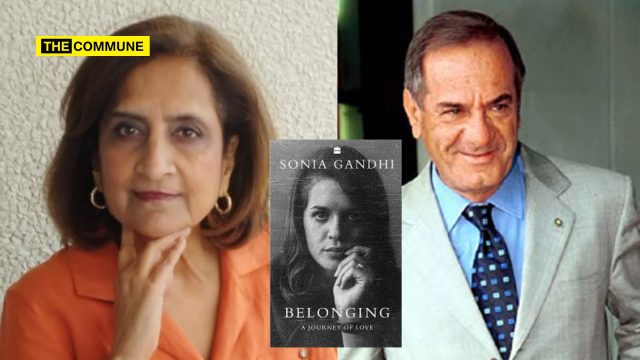
Senior journalist Chitra Subramaniam, who played a key role in exposing the Bofors scandal, has questioned Sonia Gandhi’s account of the controversy in her memoir Belonging, accusing her of remaining silent on the alleged role of Ottavio Quattrocchi, a close associate of the Gandhi family.
Speaking to News18 Tamil Nadu, Subramaniam said Sonia Gandhi’s memoir could not be treated as a definitive account of the Bofors scandal or as a clean chit to the Congress leadership. She urged readers to examine the documentary evidence and her own investigation into the deal rather than accept claims that the controversy had been settled.
Subramaniam identified Quattrocchi as a key figure whose alleged involvement in the Bofors deal remains inadequately addressed. She said Quattrocchi, who was associated with the petrochemical and fertiliser sectors, had suddenly entered the arms deal despite having no apparent background in the defence industry.
Recounting her personal familiarity with Quattrocchi, she said her father, who also worked in the fertiliser sector, had attended dinner parties at his residence in Delhi. Photographs of the Quattrocchi and Gandhi families were prominently displayed at the house, she recalled.
Subramaniam alleged that Quattrocchi’s company approached Bofors in January 1986, shortly before the gun deal was concluded in March that year. She claimed he offered to secure the Indian contract for the Swedish arms manufacturer and alleged that he received kickbacks connected to the deal.
Questioning Sonia Gandhi’s silence on Quattrocchi in her memoir, Subramaniam said the political account of the scandal needed to be scrutinised independently of the personal narrative presented in the book.
She also rejected attempts to conflate the findings of the Joint Parliamentary Committee (JPC) with the Swedish investigation. According to her, the two were separate processes and the JPC’s conclusions should not be treated as the final word on the allegations.
Subramaniam referred to former Swedish police chief Sten Lindström, whom she described as one of her principal sources. She said Swedish officials had sought to share information with then Prime Minister Rajiv Gandhi and that the investigation had generated documents and testimony that deserved closer examination.
Asked whether the alleged kickbacks had been conclusively established in Sweden and whether those responsible had been punished, Subramaniam pointed to investigative documents and interviews, arguing that substantial information remained available outside India.
She also questioned the handling of the Indian investigation, suggesting that political pressure had obstructed efforts to pursue the case. Referring to the CBI investigation, which was closed after the allegations could not be established, she alleged that investigators faced pressure, transfers and attempts to divert attention from key aspects of the scandal.
Subramaniam further claimed that the emergence of other names, including actor Amitabh Bachchan, served as a distraction from the central questions surrounding the deal. These allegations were presented as her assessment of how the investigation unfolded.
The journalist maintained that the Bofors controversy was far from over. She predicted that more information would emerge as documents were declassified and individuals involved in the episode became more willing to speak.
She also suggested that individuals who were part of Rajiv Gandhi’s inner circle, but whose names were not widely known, could come under scrutiny as further material became available.
In her response to News18 Tamil Nadu’s social media post about the interview, Subramaniam reiterated that Quattrocchi had allegedly received bribes in connection with the Bofors deal and criticised Sonia Gandhi’s memoir for not addressing him. She also recalled Lindström’s reaction when she discussed the book with him.
Subramaniam argued that the tendency to issue clean chits in India would not erase the documentary trail or prevent further scrutiny internationally.
Sonia Gandhi’s friend Ottavio Quattrocchi got the bribes for the Bofors gun deal.She’s silent about him in her book Belonging.
What did you expect, Sten Lindström the Swedish chief of police said when I spoke to him about the book. He was also my principal source.
Quattrocchi worked in the petro chemical sector. My father who was also in the same sector has attended dinner parties in his home in Delhi. There were pictures of the #Quattrocchis and the #Gandhis in prominent display. The Italian was a power broker known to bureaucrats.
Quattrocchi told Bofors he will get them the India deal. Now we, the people of India are being told to believe no bribes were paid.
Astonishing too that mainstream media in #Delhi accepts that the #Gandhi dynasty must be respected. Journalists are bending over backwards to gag themselves. There’s a competition to be like the proverbial three monkeys who see, say and hear nothing. Shameful.
I speak to @News18TamilNadu about the bribes and what to expect. ‘Belonging’ is also about betrayal and how national security is jeopardized and Indians and India 🇮🇳 get cheated.
As documents get declassified and people feel free to speak, more information will become available. The Indian habit of giving clean chits will not wash in the international arena.
🎩 tip to @News18TamilNadu for keeping the faith in good #journalism. Nandri 💫
— Chitra Subramaniam (@chitraSD) November 16, 2026
The Bofors deal, signed in 1986 for the supply of 155 mm howitzers to the Indian Army, became one of the country’s biggest political corruption controversies. While the allegations triggered years of investigations and political upheaval, the case did not result in convictions establishing the alleged kickback payments.
Subscribe to our channels on WhatsApp, Telegram, Instagram and YouTube to get the best stories of the day delivered to you personally.