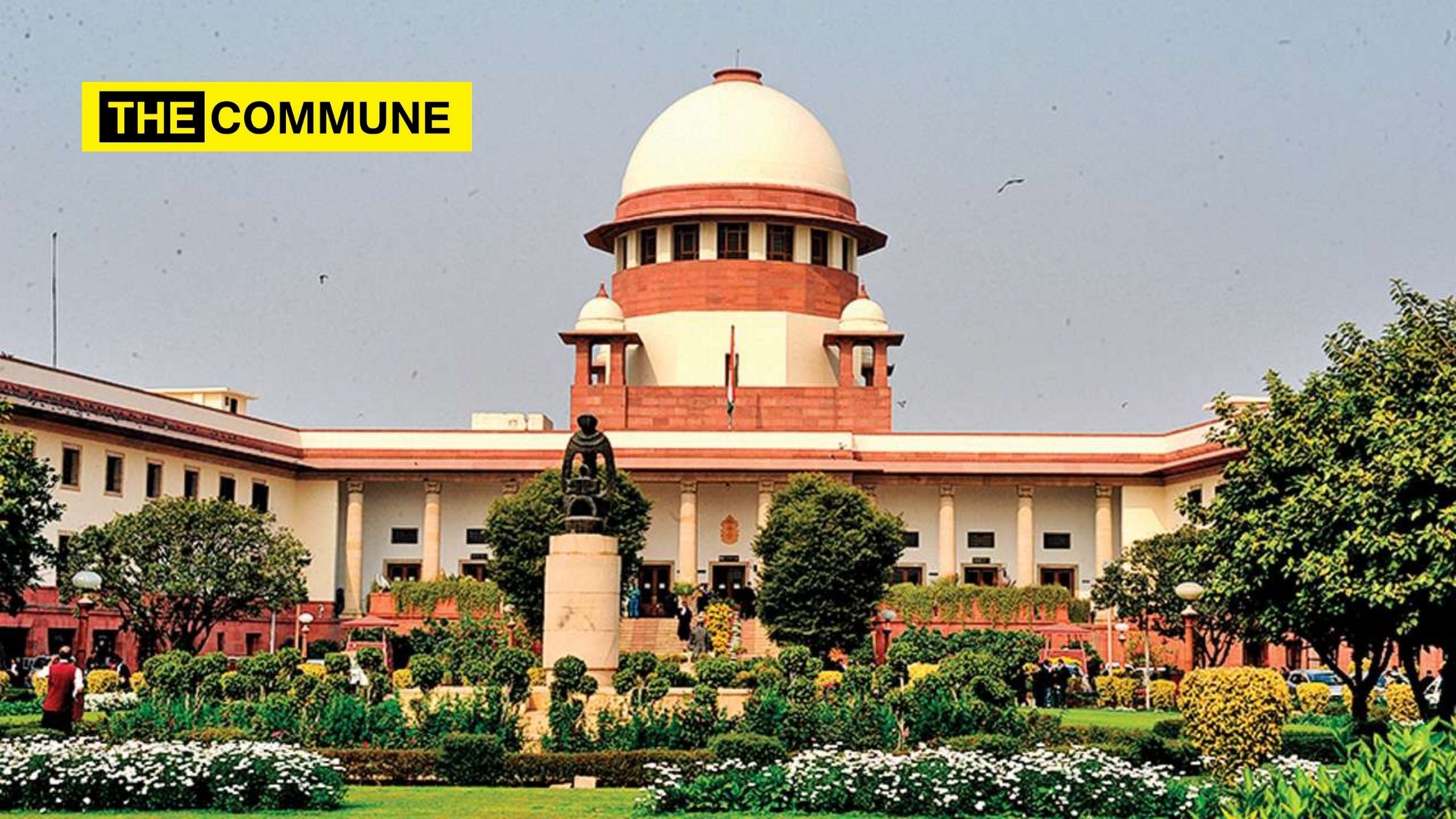
The Supreme Court has observed that no voter or candidate has a vested right to have a particular constituency reserved for Scheduled Castes (SC) or Scheduled Tribes (ST), holding that the manner and timeframe for rotation of reserved seats fall within the discretion of the State government, as reported in LiveLaw.
A Bench of Justice Joymalya Bagchi and Justice V. Mohana made the observation while dismissing a special leave petition challenging Rule 12 of the Maharashtra Zilla Parishads and Panchayat Samitis (Manner and Rotation of Reservation of Seats) Rules, 2025.
The petitioner had initially approached the Bombay High Court seeking to strike down Rule 12 as unconstitutional and violative of Article 14. However, the High Court dismissed the petition, observing that no person could claim a right to have a particular constituency reserved. It also noted that changes in population percentages since the previous census and the redrawing of constituency boundaries could affect the reservation pattern.
The High Court had observed:
“In this regard, it is necessary to mention here that the State Government for the first time has decided to change the areas of constituencies and therefore, the new constituencies would definitely get changed on the basis of geographical limits. Consequently, reservation of seat would also be changed. Therefore, as on today, it cannot be said that whether particular area would be reserved for particular category or not. The guesswork which the petitioners have done is not the ground to declare Rule (XII) as contrary to the Constitution or arbitrary on its face.”
During the hearing before the Supreme Court, Senior Advocate Vipin Sanghi, appearing for the petitioner, argued that Rule 12 made the concept of rotation illusory. He submitted that the petitioner belonged to a constituency that had never been reserved and that, just when its turn for reservation was approaching, the State had decided to restart the rotation process.
Responding to the submission, Justice Bagchi observed:
“Rule 4(2) of 1961 Rules and Article 243(r) speak of rotation but the mechanism of rotation is within the discretion of the state government and that is where Rule 12 is within the jurisdiction of the state government”.
Sanghi clarified that the petitioner was not challenging the validity of the Rule itself but was questioning the manner in which the rotation process had been altered.
“They have played fraud. I am in a constituency where percentage is low. This has never been reserved. When my turn to be reserved comes, they say we will start afresh. Which means that this constituency would never get reservation”, the senior counsel submitted.
Justice Bagchi then questioned whether the petitioner had any enforceable right to have the constituency reserved.
“Do you have a right to have your constituency reserved? No. It is the cutoff date. It can always be shifted by the government”, the judge remarked.
Sanghi responded by asking, “Can the state take away the rotation which has been going on?”
The Supreme Court ultimately dismissed the special leave petition but clarified that the dismissal would not prevent the petitioner from making a representation to the government seeking reconsideration of the reservation rotation scheme.
In its order, the Bench held that the petitioner’s argument that Rule 12 made rotation illusory did not account for the absence of any vested right to have a particular constituency reserved.
The Court observed:
“We have considered the submission advanced by Mr Sanghi that Rule 12 of the 1961 Rules, having shifted the cutoff date for rotation of constituencies for the purpose of reservation, make the very concept of rotation illusory. Though the argument is attractive at the first blush, the same fails to take into consideration that no voter or candidate can have a vested right to have a particular constituency reserved.
What the Constitution and 1961 Rules prescribe is a proportionate reservation of seats vis-a-vis the proportion of SC/ST in the total population of the local body concerned.
It is nobody’s case that the reservation of seats for SC/ST have followed the same proportion vis-a-vis population. It is also correct that […] prescribes a rotation of the reserved seats as per descending order of the SC/ST population. However, the manner and the time frame within which such reservation and such rotation is to be made is only within the discretion of the government and in exercise of such discretion, Rule 12 prescribed the next prospective election post 2025 Amendment as the first election.
We find no reason to hold that said Rule runs counter to either the concept of reservation of rotation of seats. Dismissed. Needless to mention, dismissal of the petition shall not stand in the way of the petitioner’s representation for reconsideration of the scheme of rotation of reserved seats as per law.”
Subscribe to our channels on WhatsApp, Telegram, Instagram and YouTube to get the best stories of the day delivered to you personally.