The Madras High Court on Monday (2 November 2026) strongly criticised the practice of police registering criminal cases against people who criticise or abuse the ruling party, observing that the police must remain independent of the political party in power, as reported in The Hindu.
“Police must serve the State, which endures, and not the party in government, which changes,” Justice N. Ramesh said while granting anticipatory bail to D. Sudha, a 60-year-old DMK councillor of the Greater Chennai Corporation, who was accused of abusing Tamil Nadu Chief Minister C. Joseph Vijay.
The judge observed that police personnel often register cases against opposition members based on complaints from the ruling party, while seldom taking similar action against members of the ruling party on complaints from the opposition.
“An even hand between the ruling party and its opponents is not a courtesy the police extend; it is a condition of their constitutional legitimacy,” he said.
Justice Ramesh agreed with the submission of Sudha’s counsel, A. Damodaran, that the case did not warrant her arrest or custodial interrogation. He also observed that criminal defamation proceedings would be the appropriate legal remedy in cases of this nature, rather than invoking criminal investigation and the threat of arrest.
The judge said that an insult to a public dignitary should not automatically be turned into a public order offence to enable the police to deploy coercive powers.
He also noted that political discourse increasingly takes place on social media, with major political parties operating organised social media teams, popularly known as IT wings, which regularly troll and abuse political opponents.
Justice Ramesh Questions Police Action Against Economist Kalaiyarasan
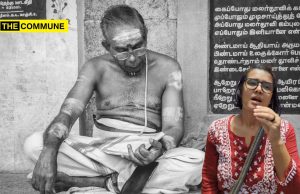
The court also referred to the recent incident involving Madras Institute of Development Studies (MIDS) Associate Professor A. Kalaiyarasan, who was picked up from his Adyar residence in Chennai at 5 a.m. on 28 October 2026.
Police personnel in plainclothes had taken the economist into custody over a fake Instagram account that allegedly used his photograph to abuse a TVK MLA. The police later released him after establishing that the account was fake. A minister subsequently acknowledged the lapse, and Chief Minister Vijay invited the professor for a meeting.
However, Justice Ramesh questioned the circumstances in which the police had acted.
“The grace shown at the end does not answer the questions being raised: On what verification were plainclothes officers sent to a citizen’s doorstep at dawn over a social media comment? And what action has followed against those who so acted?”
The judge further observed, “An apology, however high its source, is not accountability, and a remedy that depends on the Chief Minister’s personal intervention is not a remedy at all. Secondly, that gentleman’s eminence secured his release within hours and an audience at the Secretariat; a common citizen with no access to power, taken at dawn on the same mistaken complaint, would have tasted the lock-up, the remand and the long road of a trial before anyone asked whether the account was even his.”
Highlighting the need for equal treatment of citizens, regardless of their social standing or political access, he said:
“The measure of a police force is not how it treats the eminent when the press is watching, but how it treats the unknown when nobody is watching. It is against that measure that the handling of political speech—this case included—falls to be judged.”
Court Refuses to Gag DMK Councillor
While the court did not condone the abusive language allegedly used by Sudha against the Chief Minister, including calling him a “dog” and a “corpse”, Justice Ramesh said that those holding public office must be prepared to face criticism and ridicule.
“Those who hold high office in a Republic hold it on the term that they will be criticised, lampooned and, not rarely, abused. The office is not so fragile that a Ward Councillor’s invective at a party meeting can shake it, and the State diminishes the office it claims to protect when it answers words of that kind with the machinery of arrest.”
He added that governments should respond to criticism through their performance and arguments, and resort to defamation law where necessary.
“A government confident of itself must meet criticism with argument, mockery with performance, and abuse— where it truly crosses the line—with the remedy the law of defamation provides. Magnanimity towards political speech is not a grace the State may extend or withhold; it is what the Constitution expects of those who hold power over their critics.”
The court directed Sudha to appear before the investigating officer daily until further orders. However, it refused to impose a gag order restraining her from making objectionable speeches in the future.
Explaining its decision, the judge said, “A court that gags a politician as the price of liberty does indirectly what Article 19 (freedom of speech and expression) of the Constitution forbids the State to do directly. The petitioner’s volunteered undertaking to exercise restraint is recorded; it is her promise, not my condition.”
Subscribe to our channels on WhatsApp, Telegram, Instagram and YouTube to get the best stories of the day delivered to you personally.