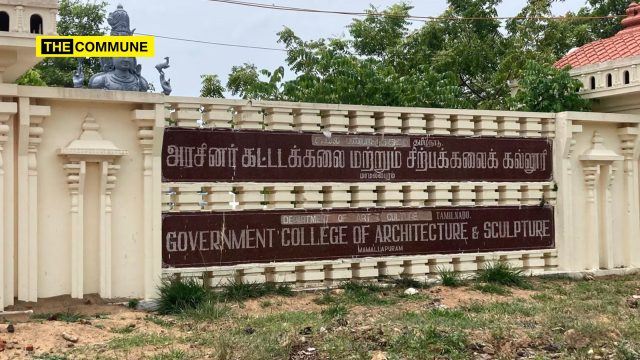
The Government College of Architecture and Sculpture in Mamallapuram, a premier institution dedicated to preserving Tamil Nadu’s traditional temple architecture and sculptural heritage, is facing serious challenges due to an acute shortage of teaching staff and inadequate infrastructure. Social activists and students have alleged that the institution is gradually deteriorating because of official neglect and a lack of understanding of its cultural importance, as reported in Dinamalar.
Established in 1957 and currently functioning under the Tamil Nadu Department of Art and Culture, the college was created to preserve and impart training in traditional architectural and sculptural practices that flourished during the Pallava period. The institution has earned recognition as Asia’s only college exclusively dedicated to traditional arts and heritage crafts.
The college offers four-year degree programmes in Traditional Architecture (B.Tech), Stone Sculpture, Stucco Sculpture, Metal Sculpture, Wood Sculpture, Traditional Painting and Fine Arts (BFA). Students who have completed Higher Secondary education are eligible for admission. At present, around 227 students are enrolled in various courses.
Despite growing interest among students in learning traditional arts and heritage crafts, faculty recruitment has remained stagnant for years. Several teaching and training positions that fell vacant following retirements have not been filled.
For the current academic year, the college has sanctioned intake capacity for 60 students across various disciplines, including Traditional Architecture, Stone Sculpture, Stucco Sculpture, Metal Sculpture, Wood Sculpture, and Painting.
According to college records, the institution has a total sanctioned strength of 67 posts, including principal, lecturers, instructors and administrative staff. However, more than 50 of these positions remain vacant. The situation is particularly severe in the teaching faculty, with only three lecturers and two instructors currently serving the entire institution.
The college has also been functioning without a permanent principal for more than a decade. Since the retirement of the last principal in 2015, the institution has been managed by an officer holding additional charge. To address the shortage, the administration has once again invited applications to appoint ten part-time teachers for the current academic year.
Students allege that nearly 90 percent of teaching positions remain vacant, severely affecting the quality of education. They claim that part-time faculty members are appointed every year but often leave midway, disrupting academic continuity and making it difficult to complete coursework and prepare for examinations.
அழிக்கப்படுகிறதா பாரம்பரிய சிற்ப கலை?
ஆசிய கண்டத்திலேயே கட்டடக்கலை மற்றும் சிற்பக் கலையை கற்பித்து தரப்படும் கல்லூரி தமிழகத்தில் மாமல்லபுரத்தில் அமைந்துள்ளது.
இவ்வளவு சிறப்பு மிக்க இந்த கல்லூரியில் 90 சதவீதத்திற்கும் மேல் பேராசிரியர்கள் மற்றும் அந்த கல்லூரிக்கு முதல்வரே இல்லை… pic.twitter.com/xH0yIkf0uL
— H Raja (@HRajaBJP) June 15, 2026
Students have also raised concerns about poor infrastructure and inadequate basic facilities. They say several buildings on the campus have deteriorated, while drinking water and sanitation facilities remain insufficient. The campus itself is reportedly poorly maintained, with overgrown vegetation and neglected surroundings.
“Today, the only thing left is the pride of being Asia’s only traditional arts college. Nearly 90 percent of the teachers are absent. We are struggling to study properly. The institution functions only in name. The old buildings are dilapidated, and basic facilities are inadequate. Authorities should appoint teachers and improve infrastructure considering the college’s historical importance,” students said.
Social activists have echoed these concerns, pointing to the condition of the campus and buildings as evidence of official indifference. They argue that the institution, which plays a crucial role in preserving Tamil Nadu’s traditional architectural and sculptural heritage, deserves greater attention and investment.
Meanwhile, college authorities stated that they have repeatedly urged the government to fill vacant teaching and non-teaching posts. They added that proposals for new classroom buildings have already been prepared and construction work will begin once Coastal Regulation Zone (CRZ) clearance is obtained.
Subscribe to our channels on WhatsApp, Telegram, Instagram and YouTube to get the best stories of the day delivered to you personally.