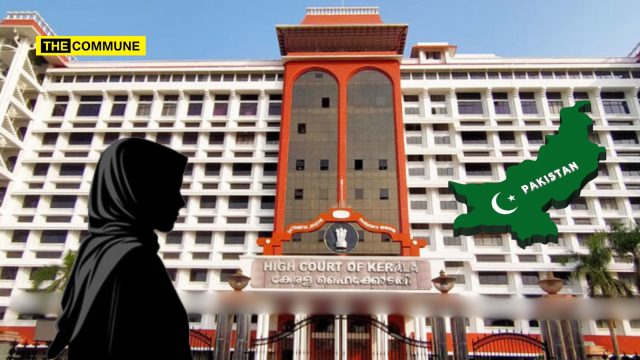
The Kerala High Court has held that a foreign national cannot claim a legal right to have a visa application considered merely because she is married to an Indian citizen, as reported in LiveLaw.
Justice Bechu Kurian Thomas dismissed a writ petition filed by a married couple, where the wife was a Pakistani national, after she was unable to submit an application for an Indian visa to attend her brother-in-law’s wedding.
The Court held that entry of foreign nationals into India and the grant of visas are matters falling within the sovereign functions of the State, particularly where considerations of national security and foreign policy are involved.
The Court observed, “no foreign national has an inherent or legally enforceable right to seek entry into India and the issuance of a tourist Visa, as it is a sovereign function of the State, deeply rooted in considerations of national security, foreign policy and administrative discretion. No foreign national, even if he/she is the spouse of an Indian citizen, has a vested right to demand that he/she should be permitted to enter the country”
Court Relies On Order Suspending Visa Services For Pakistani Nationals
The Court noted that following the Pahalgam terror attack on 22 April 2025, the Central Government had issued an order under Section 3 of the Foreigners Act, 1946, suspending visa services for Pakistani nationals.
The order, produced before the Court as Exhibit R4(a), provided that visas issued to Pakistani nationals, except medical, long-term, diplomatic and official visas, would be revoked with effect from 27 April 2025. It further stated that visa services for Pakistani nationals would remain suspended and that, unless the order was revoked, no visa could be processed or issued to a Pakistani national.
Against this backdrop, the High Court held that a Pakistani national could not demand that her visa application be processed while the government order remained in force.
The Court observed, “Section 3 of the Foreigners Act, 1946, confers a wide power upon the Central Government to regulate immigration. The said power is a facet of the sovereign function of the State. After security concerns were raised pursuant to certain attacks, at Pahalgam on 22.04.2025, the Central Government issued the order on 25.04.2025, suspending all Visa services to Pakistani Nationals. The said order continues to remain in force. As long as the order issued under Section 3 of the Foreigners Act, 1946 remains in force, no Pakistani National can demand that his/her application for Visa be processed”
The Bench therefore rejected the argument that the petitioners were entitled even to have a visa application considered.
The Court framed the issue in the following terms: “Can a foreign national demand that he/she should be given an opportunity to submit an application for obtaining an appropriate Visa to enter India and have it considered? Would the foreign national have a right for such consideration if he/she happens to be the spouse of an Indian citizen?…the questions…are answered in the negative.”
Pakistani Wife Wanted To Attend Brother-In-Law’s Wedding
The first petitioner was an Indian citizen, while the second petitioner was a Pakistani woman. The couple had married in Dubai and were residing abroad.
The Pakistani woman sought to travel to India to attend her husband’s brother’s wedding. However, she was unable to find any procedure through which she could even submit an application for a visiting visa or another category of visa.
The couple therefore approached the Kerala High Court challenging the inability to submit and process the visa application.
The petitioners argued that denying the second petitioner even an opportunity to apply for and have a visa application considered violated Articles 14 and 21 of the Constitution.
They further submitted that although she presently intended to visit India to attend a wedding, she would require a long-term visa because she was married to an Indian citizen. The petitioners consequently sought a direction that she be treated as eligible for such a visa or, at the very least, that her application for a long-term visa be considered.
Centre Opposes Plea
The Union Government opposed the petition, arguing that no foreign national can claim an independent right to enter or remain in India except in accordance with the law and the government’s applicable policy decisions.
The Centre submitted that the grant of a visa is within the discretion of the Central Government and that possession of a visa is a condition precedent for a foreign national to enter India.
The Union Government relied on Exhibit R4(a), the order issued under Section 3 of the Foreigners Act, 1946.
Under the order, all visas issued to Pakistani nationals, other than medical, long-term, diplomatic and official visas, were revoked with effect from 27 April 2025, while visa services for Pakistani nationals were suspended.
The order further stated that no visa could be processed or issued to a Pakistani national unless the order was revoked.
Entry Of Foreigners Is Sovereign Function: Court
After considering the submissions, the Kerala High Court held that the regulation of the entry, stay, movement and departure of foreign nationals in India falls within the exclusive sovereign authority of the Union.
The Court observed, “the regulation of entry, stay, movement and departure of foreigners into and from India, is an exclusive sovereign function of the Union. The said power flows from its obligation to safeguard the sovereignty, integrity, security and public order of the nation as specified in the erstwhile Foreigners Act, 1946 (which has been replaced with effect from 01-09-2025, by the Immigration and Foreigners Act, 2025).”
The Bench also considered judgments of the Delhi High Court in Sheena Naz & Anr. v. Union of India & Ors. and Tanveer Wasim Safdar @ Tan France v. Union of India and Others.
On the petitioners’ reliance on Articles 14 and 21, the Court held that the constitutional provisions could not provide the Pakistani national with a right to demand entry or visa processing in the circumstances of the case.
The Court stated, “The right to liberty under Article 21 can be deprived on the basis of a procedure established by law. Ext.R4(a) having been issued in exercise of the powers under Section 3 of the Foreigners Act, 1946, is a procedure established by law. Further, Article 14 of the Constitution of India cannot be claimed by the second petitioner as she is not in India presently. Though Article 14 applies to non-citizens also, the same can be claimed only within the territory of India and while they are inside the country.”
The High Court accordingly dismissed the writ petition.
Subscribe to our channels on WhatsApp, Telegram, Instagram and YouTube to get the best stories of the day delivered to you personally.