A Chief Minister is not above the Constitution. A State Government is not above the Supreme Court. And the Executive cannot pick and choose which judicial orders it wishes to obey.
Yet, that is precisely the constitutional crisis unfolding in Tamil Nadu under Chief Minister C. Joseph Vijay.
The Thirupparankundram Deepam controversy is no longer merely about where a ceremonial lamp should be lit. It is about whether an elected government can openly disregard the directions of the highest court in the country, deploy its police machinery against those demanding compliance, and get away with it by invoking law and order and communal harmony.
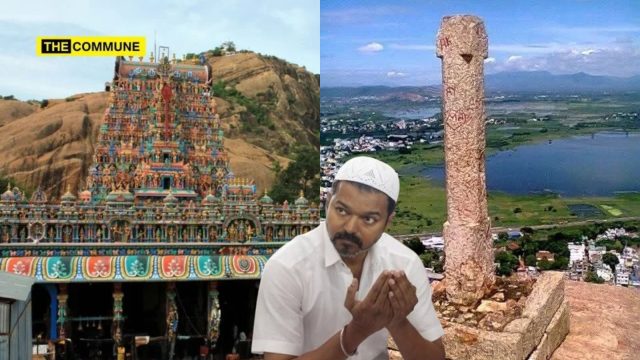
On 20 November 2026, the Supreme Court permitted a one-time lighting of the Karthigai Deepam at the traditional Deepathoon atop Thirupparankundram hill on November 24, subject to strict safeguards. The Court specifically directed the District Collector to coordinate the arrangements and constitute a restricted team to perform the ceremony.
The Madras High Court subsequently made the position even clearer. On 24 November 2026, when apprehensions arose that the Supreme Court’s directions would not be implemented, the Madurai Bench directed the Collector, Police Commissioner and temple authorities to ensure compliance.
The High Court also invoked Article 144 of the Constitution, which obligates all civil and judicial authorities in India to act in aid of the Supreme Court. It categorically reminded the Collector that a pending review petition was no ground for refusing to implement the Supreme Court’s order.
There was little room for administrative ambiguity.
Yet, the government went ahead with the traditional lighting near the Uchi Pillayar Temple, leaving the Deepathoon unlit.
The administration’s response to those who protested this refusal was equally disturbing. Police personnel were deployed in thousands. Prohibitory orders were imposed. Around 300 protesters, including BJP leaders Pon. Radhakrishnan and Rama Srinivasan, were detained.
A police banner warning protesters that they would be forcibly dispersed using batons was also displayed.
The irony is difficult to miss. The government that was expected to facilitate the implementation of a Supreme Court order had an extensive police operation ready to deal with those protesting its non-implementation.
This is an alarming exercise of executive power against the backdrop of judicial directions.
The Constitution Is Not Optional For Chief Ministers
Article 144 is not an ornamental provision. It exists precisely to ensure that the Supreme Court’s authority is respected, and its orders are carried out by every authority in the country.
The State Government may disagree with a judicial order. It may challenge it. It may seek a review. It may place its objections before the Supreme Court.
What it cannot do is simply refuse to implement an operative order because it finds compliance politically inconvenient.
The TVK government had already filed a review petition challenging the Supreme Court’s interim arrangement. That was its constitutional right. But filing a review petition does not automatically suspend the order under challenge.
The Madras High Court explicitly reminded the administration of this elementary legal position.
If the government believed that implementing the order would create a law-and-order problem, it had the option of approaching the Supreme Court and seeking appropriate directions. The Supreme Court’s own order provided for the Collector to approach it in case of exigency.
Instead, the administration proceeded with the ritual at the customary location and left the court-permitted Deepathoon lighting unfulfilled.
The distinction between disagreeing with a court and disobeying a court is fundamental to constitutional democracy. The former is permissible. The latter invites judicial scrutiny and, where the legal requirements are established, contempt proceedings.
Today It Is A Deepam. Tomorrow It Could Be Anything.
Those defending the government’s conduct need to consider the precedent they are normalising.
What happens when a State Government decides that an inconvenient Supreme Court order can be ignored?
Today, it may be an order concerning a Hindu religious practice. Tomorrow, it could concern environmental protection, property rights, minority rights, personal liberty or any other matter where the Executive finds judicial intervention politically inconvenient.
Would those celebrating the government’s conduct today accept the same standard if a government belonging to another political party refused to implement a Supreme Court order that they supported?
The argument that previous governments have also failed to implement judicial orders is equally meaningless. Two wrongs do not make a right. Past violations cannot become a licence for future violations.
Constitutional compliance cannot depend on the political identity of the government in power or the religious identity of those seeking justice.
The judiciary does not derive its authority from the goodwill of the ruling party. The Executive derives its powers from the Constitution and is bound by the constitutional framework within which it operates.
When this relationship breaks down, the consequences extend far beyond one dispute.
Vijay Cannot Outsource His Constitutional Responsibility
It is possible that Chief Minister Joseph Vijay received poor advice from political allies, coalition partners or bureaucrats. It is possible that competing political considerations influenced the administration’s decision.
But none of these possibilities absolves the Chief Minister or his government of constitutional responsibility.
Ultimately, the Executive is responsible for the decisions it takes and the actions of its administration. A Chief Minister cannot hide behind advisers, coalition compulsions or the prospect of political backlash when the question concerns compliance with an order of the Supreme Court.
The government had choices. It could have complied with the interim order while preserving its right to pursue the review petition. It could have approached the Supreme Court if it believed the prescribed arrangements were impossible to implement. It could have sought further judicial directions.
What it could not legitimately do was treat the order as optional.
The responsibility of the government is not merely to manage political constituencies. It is to uphold the Constitution, protect the rights of citizens and ensure that public institutions function within the law.
The Indian Republic Must Respond
The ball is now in the Supreme Court’s court.
The District Collector has been directed to submit a compliance report within three days. The administration must explain why it defied the Court’s directions and left the Deepathoon unlit. The Supreme Court must identify those responsible and consider contempt proceedings wherever warranted.
This is no longer just about a lamp. It is about whether a State Government can brazenly disregard the highest court in the land and get away with it.
If Vijay’s government can pick and choose which court orders to obey, what remains of the rule of law? What stops another government from doing the same on an issue of its choosing?
An electoral mandate is not a licence to defy the Constitution. Political compulsions are no defence for judicial disobedience.
Joseph Vijay is not above the Constitution. His government is not above the Supreme Court. The Indian Republic must make that abundantly clear.
Subscribe to our channels on WhatsApp, Telegram, Instagram and YouTube to get the best stories of the day delivered to you personally.